

Sample Category Title
Euro Strength Accelerates ahead of EU Inflation Data
The euro continued rallying ahead of key economic data from the euro area. Eurostat will publish the flash consumer inflation data from the bloc. Analysts expect the data to show that the headline CPI rose from 7.4% to 7.7%, which will be the biggest increase ever recorded. The core CPI, which excludes the volatile food and energy products, is expected to move from 3.5% to 3.7%. This increase is expected to be broad-based, with companies like Italy and France expected to show robust inflation growth. On Monday, data from Spain and Germany showed that inflation kept rising in May. The situation will continue worsening as the EC considers a ban on Russian energy.
Global stocks continued rising as investors cheered the ongoing China reopening and new stimulus. In a statement during the weekend, Shanghai’s Vice Mayor said that authorities will loosen restrictions under which companies are able to resume their work. Another catalyst for the rally is recent data from the US that showed that consumers boosted their spending even as the cost of living rose. Still, there are concerns that the challenges that caused the slump were still in place. They include the hawkish Fed and the ongoing crisis in Ukraine.
The Australian dollar continued its uptick after a series of important economic data from the country. According to the Australian Bureau of Statistics, building approvals returned to growth after slumping by 18.5% in March. Similarly, companies saw their gross operating profits jump by over 4% in the fourth quarter. Meanwhile, data from China revealed that the manufacturing sector rose slightly in May as some manufacturers restarted their plants. Later today, some of the top data to watch will be the latest German unemployment rate and the Bank of England mortgage approvals and lending data.
EURUSD
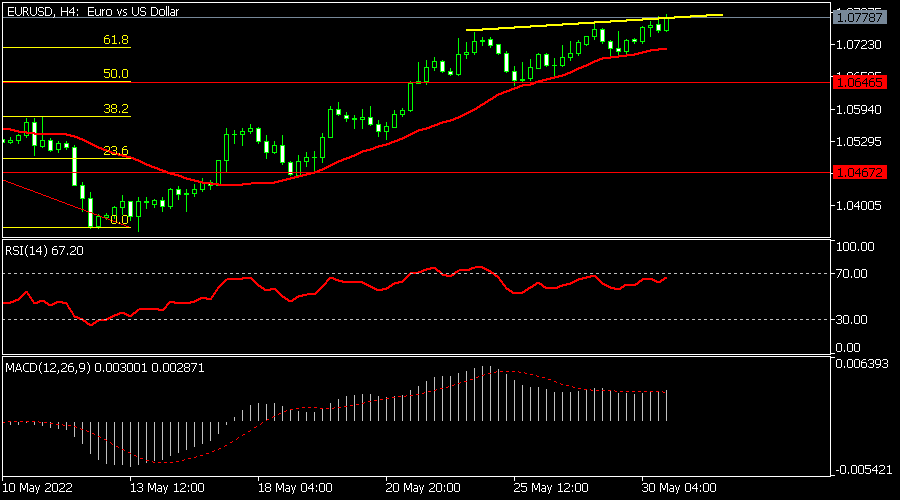
The EURUSD pair continued its bullish trend ahead of the preliminary EU inflation data. It is trading at 1.0778, which was slightly above the ascending trendline shown in yellow. The price is also being supported by the 25-day moving average and the 61.8% Fibonacci retracement level. The MACD is slightly above the neutral level. Therefore, the pair will likely continue rising as talk of a hawkish ECB continues.
EURJPY
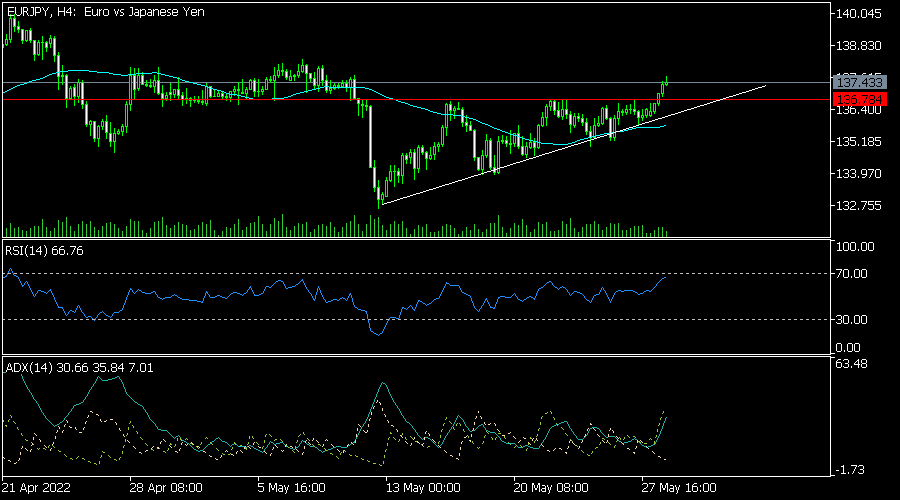
The EURJPY pair continued rising as it moved to the highest level since May 17. It moved above the important resistance level at 136.78, which was the highest level on May 24. It has moved above the key resistance level at 136.78 and the ascending trendline shown in white. The Relative Strength Index (RSI) has moved close to the overbought level while the ADX index pointed upwards. Therefore, the pair will likely keep rising in the near term.
USDCAD
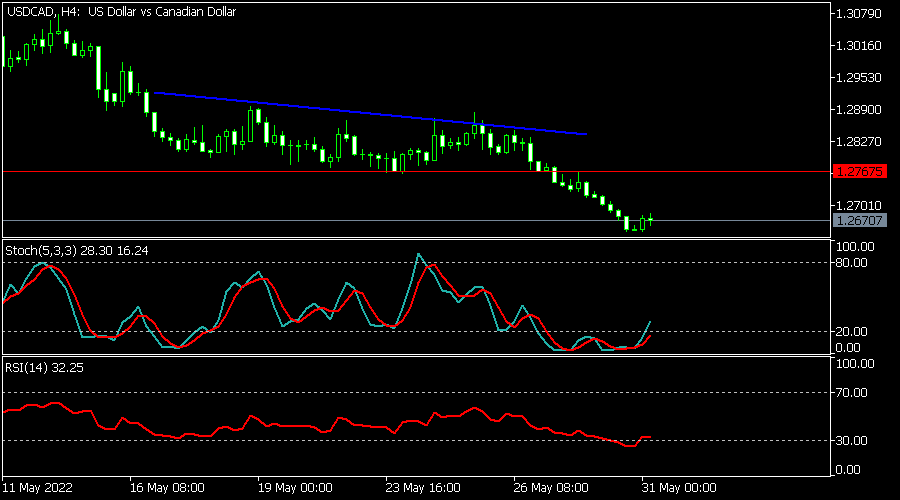
The USDCAD pair continued moving in a bearish trend as the US dollar decline accelerated. It dropped to a low of 1.2658, which was the lowest level since April 25. The pair managed to move below the important support level at 1.2767, which was the lowest level on May 25. It remains below the 25-day and 50-day moving averages while the Stochastic Oscillator and the Relative Strength Index (RSI) have moved to the oversold level. Therefore, the pair will likely continue with its bearish trend.
ECB Villeroy: Latest inflation figures confirm necessity of gradual but resolute monetary normalization
ECB Governing Council member Francois Villeroy de Galhau said today, "the latest inflation figures for May, in France and in the other countries, confirm the rise that we expected, and the necessity of a gradual but resolute monetary normalization."
Still, he emphasized that rates "that have been exceptionally accommodative for borrowers since 2015 will remain favorable and very supportive for the entire economy compared to historical norms."
"Clarity is needed: the increase in rates in an orderly and well-managed way will be favorable for the financial sector," Villeroy said. "It should support the profitability of French banks by increasing net activity margins."
Crypto Market Pushes Back from the Bottom
Bitcoin jumped 7% on Monday, ending the day at around $31.2K. On Tuesday morning, positive momentum persisted, with the rate climbing above $32.0K, a 20-day high.
Ethereum added 8.2%, while other top-ten altcoins gained between 4.9% (BNB) and 14.8% (Cardano).
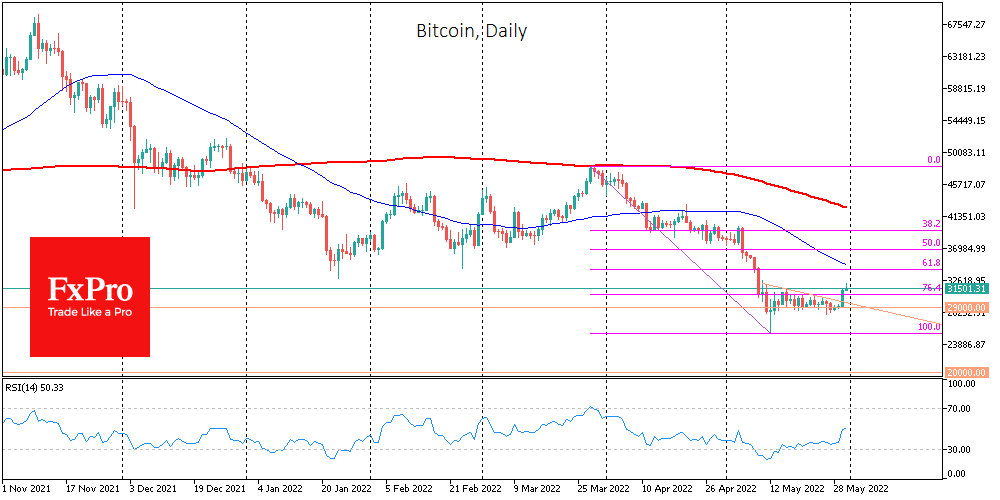
The total capitalisation of the crypto market, according to CoinMarketCap, rose 4.3% overnight to $1.31 trillion, with the Bitcoin Dominance Index rising 0.1 points to 46%. The Cryptocurrency Fear and Greed Index was up 6 points to 16 by Tuesday but still in “extreme fear”.
Due to the US bank holiday, markets were minimally active on Monday, but the momentum was on the plus side. At first, the emerging rebound from the bottom may be self-sustaining, as many market participants believe that the crypto market has corrected enough to become attractive for long-term buying. However, fundamentals such as halving, soft monetary policy or accelerated adoption are needed for growth to continue. But the latter is not easy right now.
Bank of America CEO Brian Moynihan has stated that the bank has no plans to introduce cryptocurrencies in the foreseeable future because the industry is too strictly regulated.
After the Terra project collapsed, CFTC Commissioner Caroline Pham compared investing in crypto assets to buying lottery tickets, which can be expected to both win and lose.
Real Vision CEO Raoul Pal reiterated that in the long term, Ethereum, the leading smart contracts platform, will surpass bitcoin in terms of market capitalisation, trading volume and number of active wallets.
SkyBridge Capital founder Anthony Scaramucci noted the interest of large investors in spot bitcoin ETFs and suggested they could be launched as early as this year. Payments service MoneyGram plans to launch Stablecoin transfer services in partnership with Stellar.
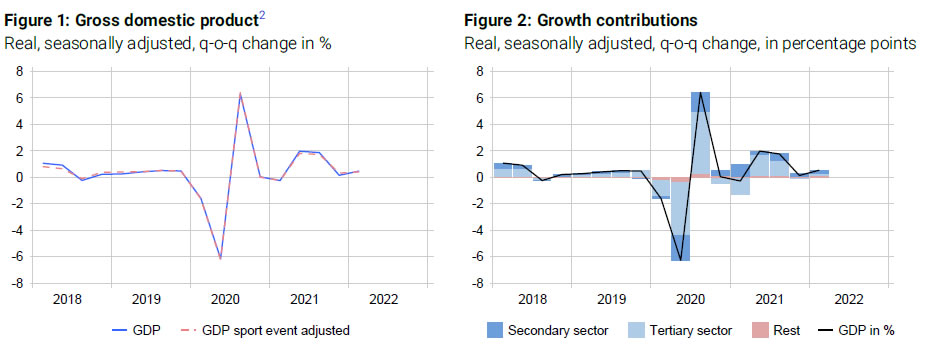
Swiss GDP grew 0.5% qoq in Q1, above expectations
Swiss GDP grew 0.5% qoq in Q1, above expectation of 0.3% qoq. Recovery was driven largely by the industrial sector, with manufacturing up 1.7%. This was accompanied by 1.4% rise in goods exports. But overall trade dropped -0.1%. Public health measures had significantly less impact on the economy, and accommodation and food services was the only sector to see a noticeable decline (−2.2%). In other areas of private consumption (+0.4%), there were signs of some normalization.
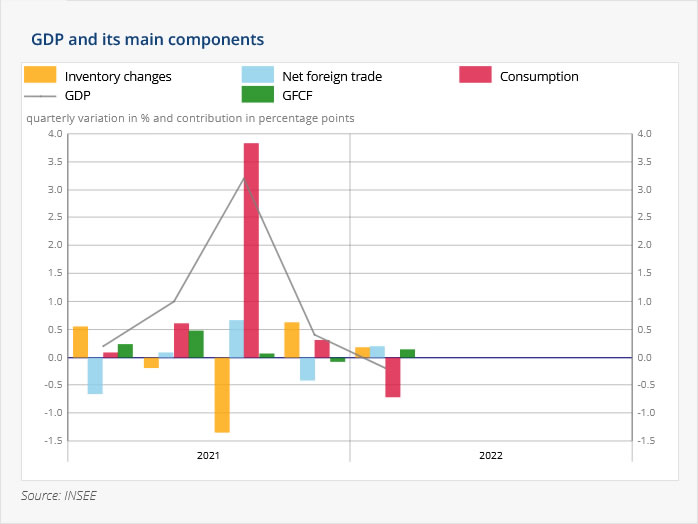
France GDP dropped -0.2% in Q1, consumer spending dropped -0.4% in Apr
France GDP contracted -0.2% qoq in Q1, revised down from 0.0% qoq. The contraction was linked to weakness of household consumption (-1.5%). General government's consumption expenditure rose 0.2%. Total gross fixed capital formation rose 0.6%. Exports rose 1.2% with net foreign trade up 0.2%.
Also from France, consumer spending dropped -0.4% mom in April, below expectation of 0.4% rise.
Daily Technical Analysis
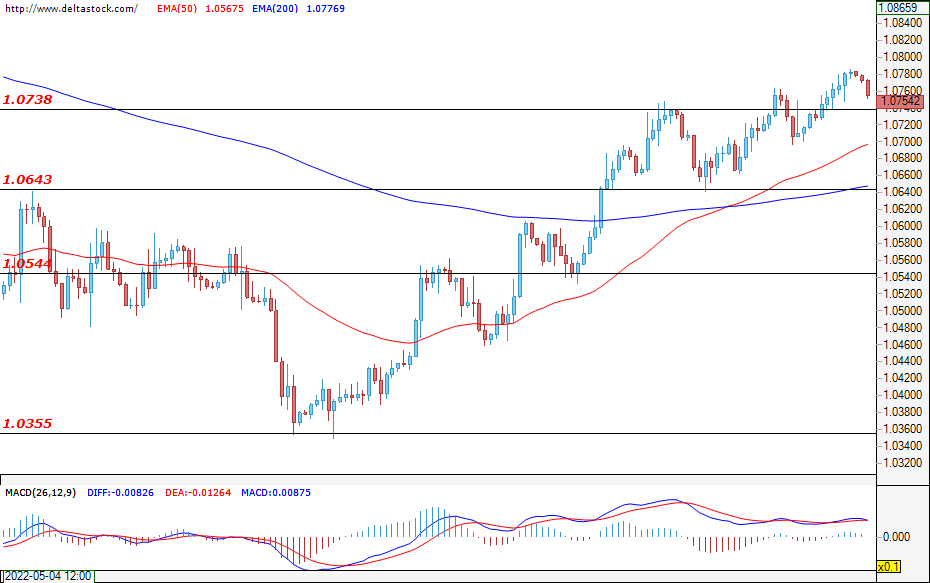
EUR/USD
The bulls managed to breach the resistance at 1.0738, and during the early hours of today`s trading session, the pair is trading above the mentioned zone. A confirmation of the breach could lead to a more sustained rally of the euro against the dollar and a move towards the upper target at 1.0825. If the bullish momentum fades, then the bears could test the support at 1.0643. А successful breach for them could deepen the decline towards the next zone at 1.0544 and could lead to change in the current short-term positive sentiment of the market participants. The most important news for today is the EU CPI due at 09:00 GMT, which could rise well above 8%, signalling the ECB that it might have to become much more aggressive in its efforts to curb inflation.
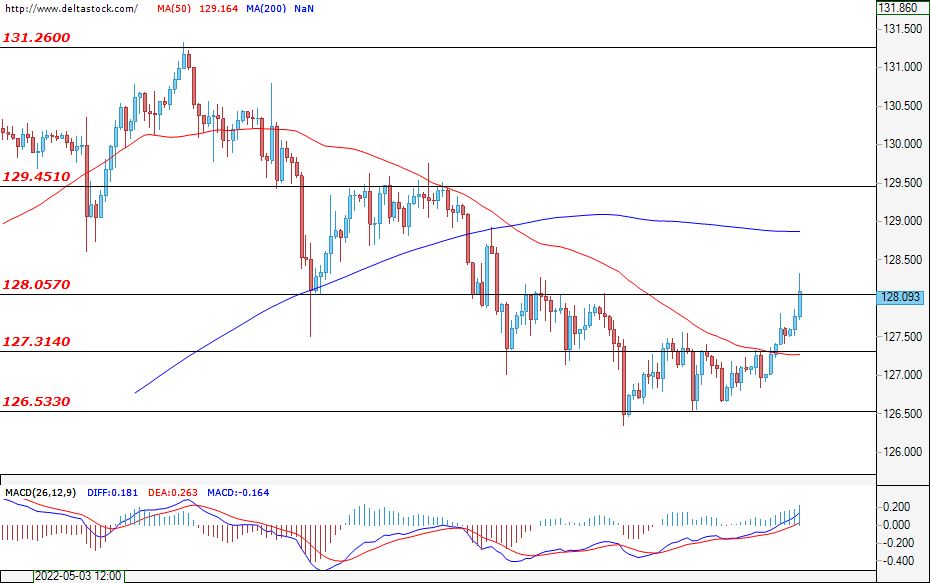
USD/JPY
After the bulls prevailed during yesterday's trading session, the dollar recovered some of its recent losses against the yen and the pair tested the resistance zone at 128.05. If the bullish attack continues, then a confirmation of the breach could easily lead to a continuation of the rally and a test of the zone at 129.45. If the bears re-enter the market, then a violation of the support zone at 127.31, followed by a successful test of the lower level at 126.43, would mark the current move as corrective and would most likely strengthen the negative expectations for the future path of the currency pair.
GBP/USD
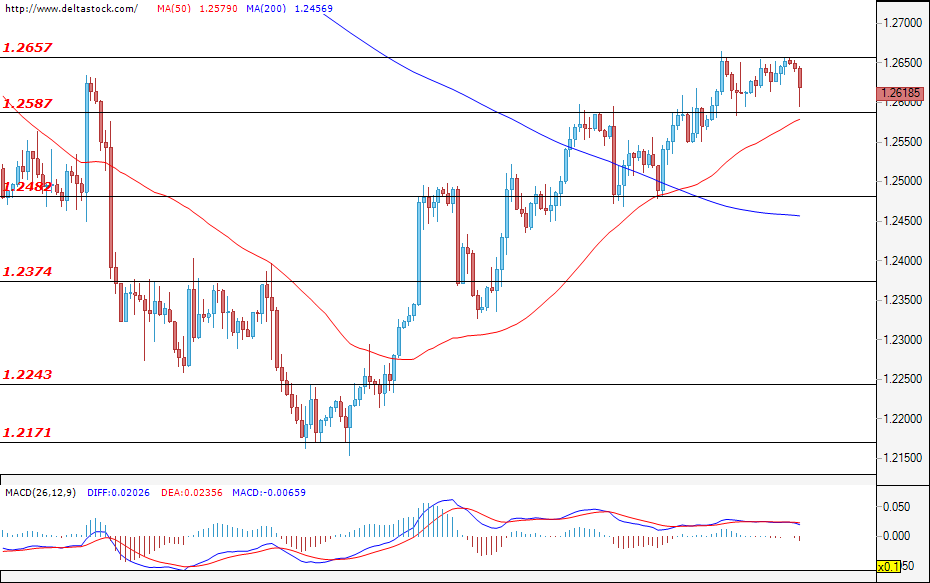
The resistance zone at 1.2657 withheld the bullish attack, and during the early hours of today`s trading, the Cable consolidated around the current level at 1.2612. At the time of writing, a new attempt for a breach of the aforementioned level is the most likely scenario, but only a successful violation could lead to new gains for the sterling against the dollar and a move towards the resistance from April 2022 – the zone at 1.2770. The first support can be found at the level of 1.2587, followed by the lower support at 1.2482.
EUGERMANY40
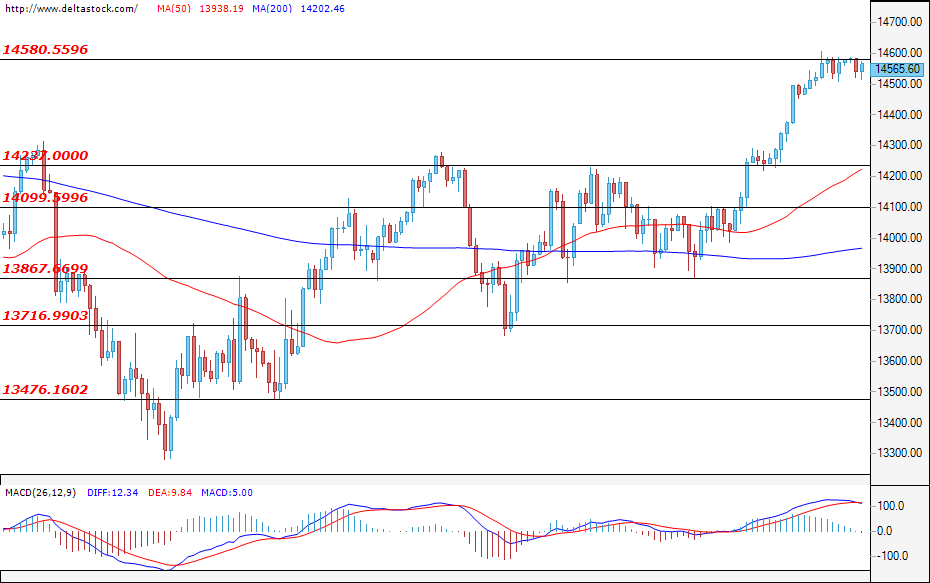
The sentiment remained unchanged, and after the positive start of the trading week, the EUGERMANY40 is now trading just under the resistance zone at 14580. A successful breach of the mentioned level for the bulls would strengthen the positive expectations for the future path of the index and could easily lead to new gains and continue the rally towards the upper important zone at 14800. Worse-than-expected unemployment change data for Germany (today; 07:55 GMT) could help the bears to enter the market. Their first target is expected to be the support at 14237, followed by the lower level at 14099.
US30
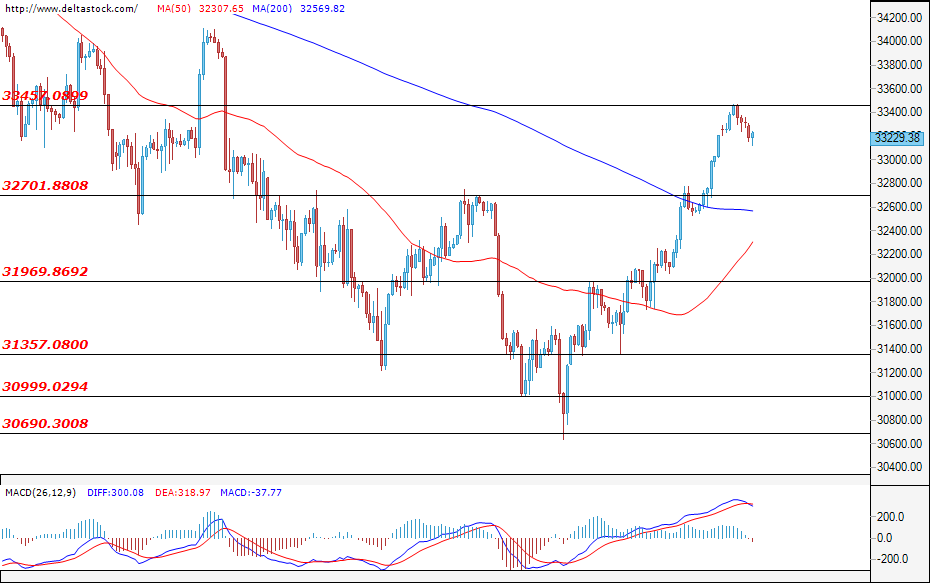
The rebound of the world's leading markets for a second trading day led to a massive rally for the American index, and after the test of the resistance zone at 33457, the price consolidated just below it. A new attack for the buyers and a successful breach of the zone at 33457 could easily lead to new gains and could pave the way for a test of the important resistance at 34070. If the bullish momentum fades, then the bears could head the index for a test of the support at 32701. A violation of the lower target at 31969 could lead to a change in the current short-term positive sentiment of the market participants.
EU Reached Agreement to Cut 90% of Oil Imports from Russia
Markets
Surprisingly high and accelerating inflation in Belgium, Spain and Germany defined an exclusively European trading session yesterday (US closed for Memorial Day). European/German yields were already headed north at the open in an attempt to shake off the recent status quo. The inflation figures generated additional momentum with traders ramping up ECB normalization bets. Yields shot up between 6.9-11.1 bps in Germany, the front-end underperforming. European swap yields printed gains ranging from 2.7 bps (30y) to 8 bps (3y).
Brent oil prices extended their recent rise to well north of $120/b, helping yields push higher too. There was probably some speculation involved about the EU ready to ban Russian oil imports. This was indeed eventually agreed upon late yesterday evening (cf. infra).
Rich interest rate support hurled EUR/USD beyond the intermediate 1.0758 resistance to close at 1.0779. We spotted a pinch of general dollar weakness too, losing against eight of the G10 peers. The trade-weighted index tested 101.27 support (23.6% retracement of the 2021-2022 rise).
The battle for EUR/GBP 0.85 continues with the pair yesterday again closing above (0.852). PM Johnson is back in the spotlights, with more Conservative MP’s calling for him to quit following the partygate scandal yesterday. Some senior MP’s said Johnson was likely to face a vote of no confidence as leader of the party if the Tories lose two parliamentary by-elections (in Tiverton and Honiton) next month. It’s worth following up.Asian equities trade mixed this morning. Japan underperforms while China (+1% +) profits from better-than-expected PMI readings (see below). US bond yields jump up to 10 bps in a catch-up move with Fed Waller adding to the move yesterday by backing 50 bps hikes for “several meetings”. Bund futures extend their downtrend. The dollar is this morning’s best performer. DXY rises to 101.59, EUR/USD slips to 1.075.Today’s economic calendar contains US Conference Board consumer confidence, expected lower at 103.8 from 107.30. House price data may be interesting to take a closer look at too with some other housing series suggesting an over-the-peak market. T
he European inflation figure will grab most headlines though. Expected at 7.8% y/y we see risks for an upward surprise into the 8% following yesterday’s national releases. It may not prompt a reaction as big as yesterday but it should keep (European) yields supported anyway, especially with crude/commodity prices rising further. EUR/USD came close but never really tested the 1.08 big figure yesterday. We’re keen to find out whether the data today is the trigger needed. Resistance at 1.0806 should be taken out for the technical picture to turn neutral.
In Central-Europe we watch for the Hungarian central bank to slow the tightening pace at its meeting.
News Headlines
The EU reached an agreement that is expected to cut 90% of European oil imports from Russia by the end of the year. It is seen as removing a big obstacle for a sixth package of EU sanctions against Russia. According to the agreement, EU oil imports via tankers which amount to about two thirds of Russian oil import will halt immediately. On third of the import comes via the Druzhba pipeline. When German and Poland stop buying Russian oil via this pipeline by the end of the year, EU oil imports from Russia will be reduced by 90%. 10% of the imports via the Druzhba pipeline will be temporarily exempted to address concerns of Hungary and other regional countries that argued it was unable to immediately replace its Russian oil imports. The price of Brent crude oil rose further overnight reaching $123 p/b this morning.
According to the official China PMI’s, the pace of contraction of the Chinese economy slowed in May. The measure for activity in the manufacturing sector rose from 47.4 to 49.6. The non-manufacturing sector jumped from 41.9 to 47.8, bringing the composite index 48.2. The data suggest that the worst of the impact of the corona lockdowns might be over as authorities resort to measures to support activity. However, with indices still in contraction territory, the recovery might remain slow and it will remain difficult for China to reach the 5.5% growth target this year. The yuan is trading marginally strong at USD/CNY 6.665 this morning.
Caution Returns as Inflation Fears Mount
Stocks in Asia were shaky on Tuesday morning following the lack of cues from Wall Street overnight due to the Memorial Day holiday in the US.
Nevertheless, there is a sense of caution in the air after red-hot inflation readings from Germany sparked concerns over how aggressive the ECB should be in taming the inflation beast. Surging oil prices have rubbed salt into the wounds, compounding inflation fears after the European Union agreed to cut oil imports from Russia. In the currency space, the dollar rose slightly but is still heading towards its first monthly decline in five months, while gold prices remain trapped within a range. With inflation fears chipping away at risk appetite, European futures are pointing to a negative open this morning.
A cautious outlook is likely to remain the name of the game for the rest of the week as investors juggle inflation concerns, recession fears, and ongoing geopolitical risks. Sentiment could also be influenced by key economic reports from major economies, including the US jobs report on Friday.
German inflation nears 50-year high
Last week, ECB President Lagarde heightened expectations around the bank raising interest rates in July and September. Those expectations have been boosted by the latest inflation figures from Germany, which revealed consumer prices rose 7.9% in May from 7.4% in April, its fastest pace since the beginning of 1974. Given how geopolitical risks and upward pressure on energy, commodity, and food prices may feed the inflation beast, this will pressure the ECB to act.
This morning sees the release of the latest Eurozone inflation data with expectations of another record high. Looking at the technical picture, EURUSD could challenge 1.0850 if 1.0700 proves to be reliable support.
Will the US jobs report offer the dollar a lifeline?
The dollar is set for a monthly decline despite rallying to levels not seen in 20 years two weeks ago.
Buying sentiment towards the greenback took a hit last week as the less hawkish-than-feared Fed minutes kept bulls at bay. However, king dollar could have an opportunity to fight back if the monthly US payrolls report on Friday exceeds expectations. Markets are expecting the US economy to have created 329k jobs in May with the unemployment rate dropping to 3.5% and average hourly wages seen rising 0.4%.
Regarding the technical picture, the Dollar Index (DXY) certainly needs some love. Prices are under pressure on the daily charts with 101.00 acting as the next key level of interest. If bulls are able to fight back and keep above this level, then a move towards 103.00 could be on the cards.
Commodity spotlight – Oil
Oil bulls are certainly in high spirits after the EU agreed to cut oil imports from Russia. This development comes at a time when demand is expected to rise amid the US and European summer driving season.
The global commodity is likely to extend gains thanks to the improving demand outlook and signs of tight supply amid ongoing geopolitical risks. Although fundamentals are favouring bulls, there are some themes that could create some obstacles down the road. If China is forced to renew Covid-19 restrictions, this could weigh on the demand outlook, especially if they continue to impact growth on the world’s largest energy consumer.
Looking at the technical picture, Brent seems to be pushing higher on the daily charts. If the upside momentum holds, prices could test $123.70 and $130.00 respectively. Sustained weakness below $120 could encourage a decline back towards $114.40 and $100.00.
Another High EA Inflation Print Awaits
Market movers today
The key data release today will be the Euro Area Flash HICP for May. Following the high country releases (more below), we see significant upside risks to our original expectations at 8.1% y/y and core inflation at 3.6% y/y. Overnight, Chinese Caixin Manufacturing PMI will also be released. The official PMI manufacturing released this morning was still in contractionary territory of 49.6, but higher than the previous month at 47.4.
The National Bank of Hungary will have a monetary policy meeting, consensus is looking for a 60bp hike to 6.00%.
The 60 second overview
European inflation: The European country inflation releases were significantly higher than anticipated, which gives material upside risk to today's inflation pricing. Spanish inflation rose to 8.5% (from 8.3% in April) and core inflation rose to 4.9% from 4.4% in April while German HICP inflation rose at 8.7% yoy. On a month-on-month term the figures rose markedly, with Germany at 1.1% and Spain at 0.8%. Interestingly, the pace of service inflation declined slightly to 2.9% from 3.2% in April, yet the goods rose markedly by 13.6% up from 12.2% in April in Germany. With the inflation figures set for another record high today, the pressure increases on ECB to tighten its policies - however, we do not believe this will be the case for next week's ECB meeting to announce a policy rate hike, not least after Lagarde's de facto rate hike decision last week in the blog post.
Risk appetite continued its generally positive tone in the past days as the COVID-restrictions easing in China gave positive winds to the otherwise relative sour risk sentiment that has prevailed in May. Overnight risk appetite (Asian equity indices) were mixed.
EU summit: At the EU leaders' summit, it was agreed to ban seaborne oil into the EU, while an exemption for pipeline oil was made. The latter was a compromise particular for Hungary. As a result, oil prices jumped overnight by almost 2% to stand at USD123 per barrel.
Fed: Fed's Waller was more hawkish than his usual tone and said that he wants 50bp hikes for 'several meetings' and argueed for the 50bp size to be the going size until inflation comes down closer to the 2% target.
FI: European curves bear flattened from the start as markets digested the weekend news of easing Covid restrictions in China as well as the inflation prints from Spain, Germany and Belgium all coming in higher than anticipated. US cash markets were closed for Memorial Day.
FX: A weakening of EUR/USD amid newfound stability in equities and rising oil appear well in line with how spot has been priced over the last 1½ years and gives some indication that the recent uptick in EUR/USD is merely a blip and not a new trend, in line with our view.
Credit: Yesterday, credit markets had another strong session and continued in the risk-on mode. CDS indices were both tighter with iTraxx Main 2.4bp lower at 84.4bp, while Xover was 10.3bp lower at 420.5bp. The best performing sector within the IG space was Financials and within the Xover space, Communications and Energy were clear outperformers.
Oil Rallies as Europe Partially Bans Russian Oil, High Inflation Worries
German inflation hit a fresh record high of 8.7% in May, above the 8.1% penciled in by analysts. The data gave a boost to the European Central Bank (ECB) hawks and helped the EURUSD extend gains to 1.0780.
The ECB will likely stick to a series of 25bp hikes until the end of the year, but there is a rising expectation that the ECB could raise the rates by 50bps in the June meeting, and the money markets price in 110+bp hikes from June to the year end. And the pricing could get more aggressive as the Europeans finally start taking concrete action about the Russian sanctions.
The partial ban
Yesterday, the European leaders finally announced their decision to partially ban Russian oil.
Supplies from sea will no longer be purchased, while the pipeline supplies will be abandoned gradually.
As such, Europe will reduce two thirds of its oil imports from Russia, which will reportedly cost Russia around $10 billion in lost revenue.
Of course, the news suggests that the inflation situation in Europe, and in the West, could get worse before it gets better. Due today, the inflation in Eurozone will likely confirm a further rise to 7.7% and maybe, even more, in May preliminary reading.
Even though we saw some easing in US inflation figures earlier this month, the relentless positive pressure on oil prices is very much worrying across the Atlantic as well. The barrel of US crude extended gains to near $120 per barrel on the news of the European ban of the Russian oil, and Brent crude spiked above $123 per barrel.
Even though oil advanced to levels that look interesting for selling a top, the positive pressure is too strong for betting on a downside correction in the short run. Shorting oil has become a risky bet, as following the European ban, there is a stronger case building for a further extension of the gains.
Will European ban affect OPEC decision?
Will the European decision to ban the Russian oil would impact the OPEC’s decision about production; would the OPEC nations pump more to replace the Russian oil for European exports?
They probably won’t for two reasons. First, the OPEC sticks to its OPEC+ agreement since the beginning of the war in Ukraine, showing a solid support for Russia in this battle. Therefore, they won’t necessarily applause the European decision to ban a partner’s oil. And second, the OPEC nations don’t necessarily have the capacity to replace the Russian oil, as they already struggle meeting their own quotas since months.
And if we leave the Ukraine war aside for a minute, it’s, in all cases, better for the OPEC countries to pump less and sell their oil at a higher price. In this sense, the Ukraine war and the OPEC’s close ties with Russia are a great excuse to keep production tight, and collect the money.