

Sample Category Title
ECB Panetta: Policy normalization needs to be clearly defined
ECB Executive Board member Fabio Panetta said in a speech, "the very shocks that have led to a surge in inflation (in Eurozone) are also depressing output". Hence, "the inflation path is starting from a much higher point but the medium-term inflation outlook is characterised by high uncertainty." Policy normalization needs to be "clearly defined".
Panetta explained that normalization does not mean moving to a "neutral" policy stance. it shouldn't be assessed against "unobservable reference points" such as neutral rate. And, it "does not imply adjusting unconventional instruments more rapidly than conventional ones".
Normalization is "a process of gradually reducing that stimulus in a way that firmly anchors the inflation path at 2% over the medium term", he said.
NZDUSD Increases above 0.6500 in Short-term Bounce
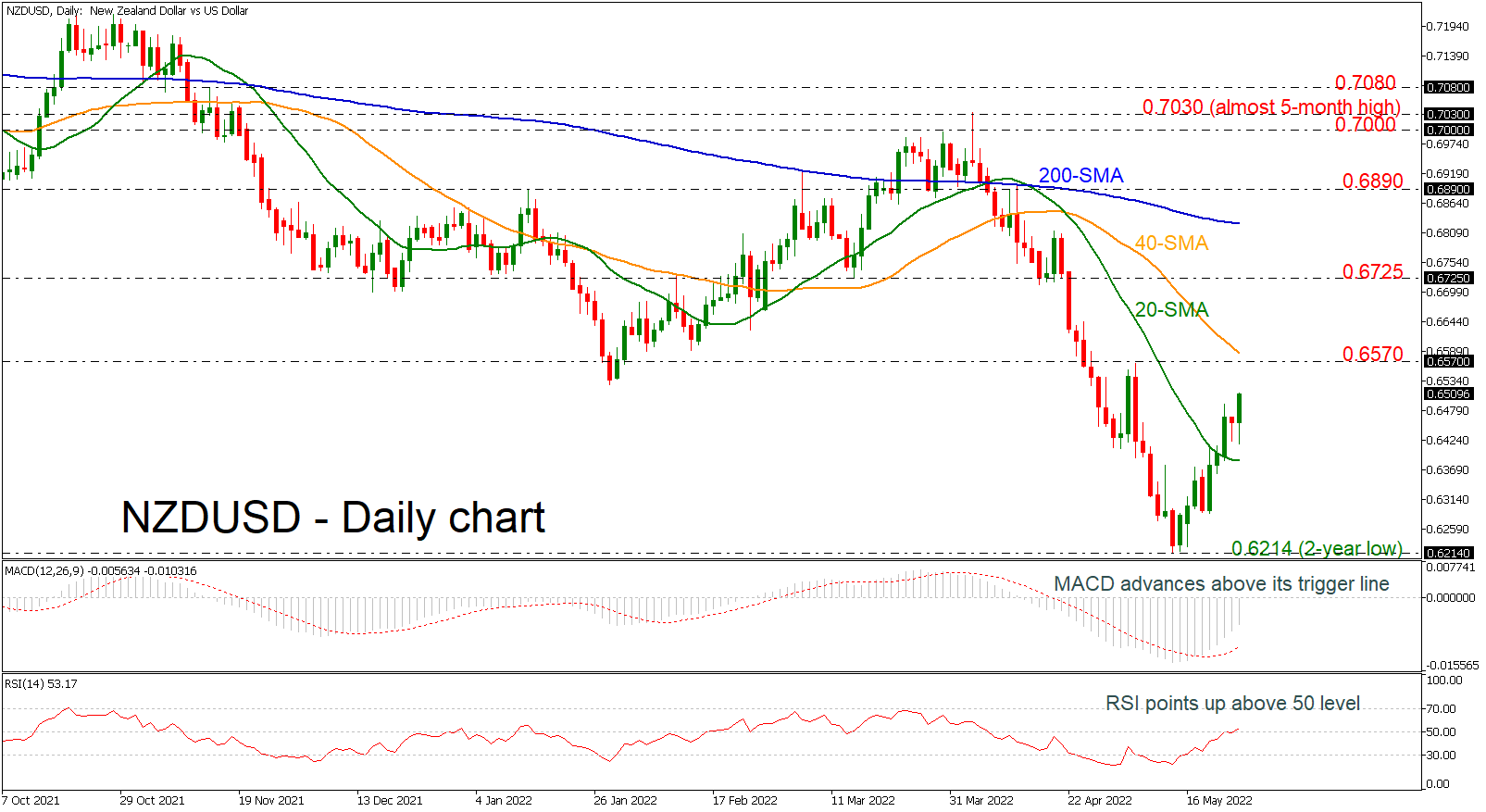
NZDUSD is ticking higher above 0.6500 again after the bounce off the two-year low of 0.6214. The technical indicators are showing more positive signs, as the MACD is advancing above its trigger line in the negative region, while the RSI is pointing upwards after the jump above the neutral threshold of 50. Also, the pair advanced above its 20-day simple moving average (SMA), confirming the recent positive bias in the short-term.
A move to the upside may meet resistance around 0.6570, this being a top from the previous high on May 5. Slightly above this level, the 40-day SMA at 0.6585 and the 0.6725 level could act as an additional barrier in case of stronger bullish movement.
On the other hand, immediate support to further declines may be taking place around the two-year low of 0.6214 ahead of steeper declines until the 0.5920, registered in May 2020.
Overall, in the short-term outlook, the market is bullish; however, in a longer timeframe, NZDUSD is still negative and only a jump above the 200-day SMA may change this view.
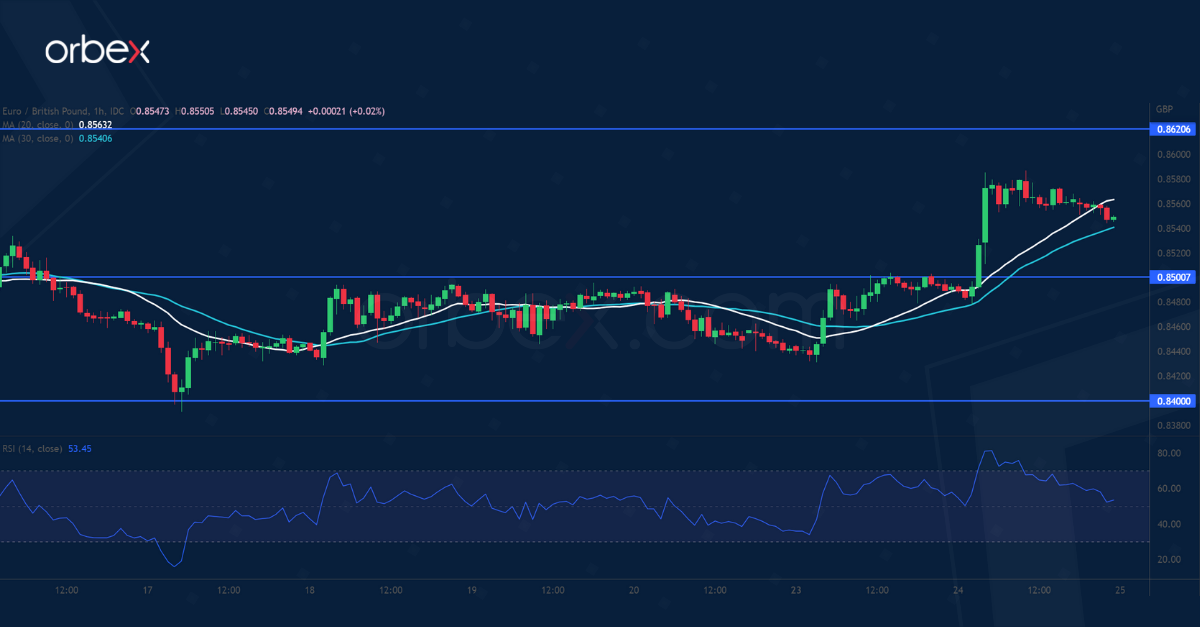
EUR/GBP Attempts Bullish Reversal
The euro continues higher fuelled by the ECB’s latest hawkish hint. Sentiment stayed bullish after the pair found support over 0.8400. A pop above 0.8530 suggests that sellers scrambled to cover their positions. The RSI’s overbought situation may temper the upward drive momentarily. As the dust settles, the bulls may look to accumulate above 0.8500 ahead of their final breakout attempt. A close above 0.8620 could trigger an extended rally above 0.8720, setting the tone for a bullish reversal in the medium-term.
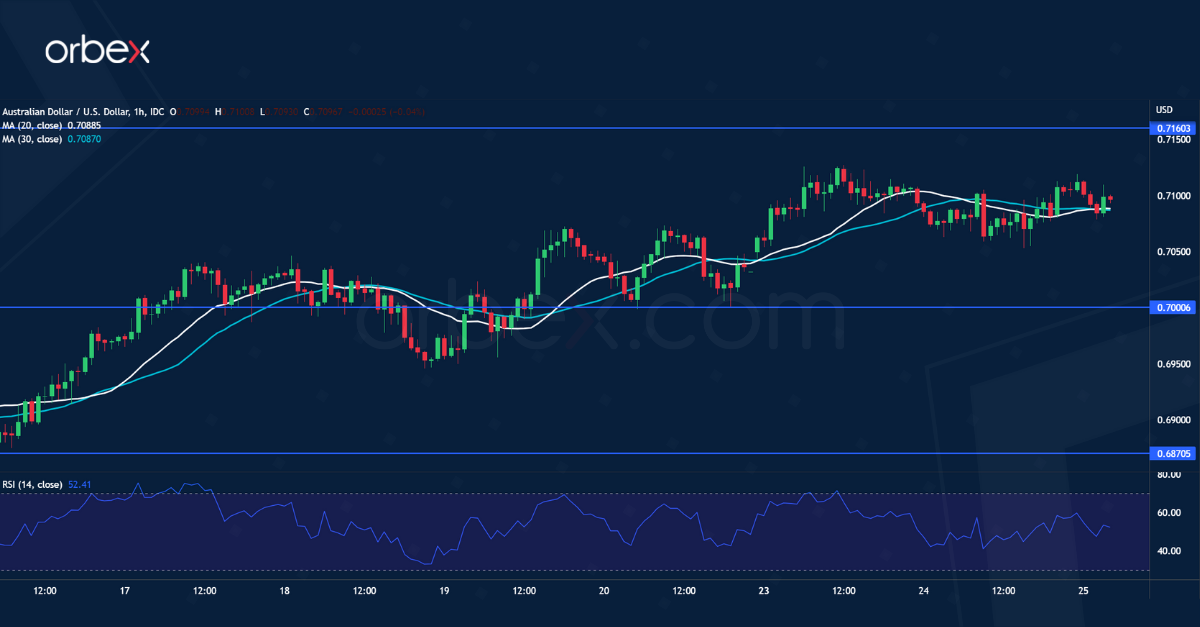
AUD/USD Tests Resistance
The Australian dollar continues to recover as commodities bounce higher. The rebound gained traction after it broke above the first resistance at 0.7050. A combination of short-covering and fresh buying has sent the aussie to the key supply zone near 0.7160. A bullish close would send the pair 100-pip higher to the last hurdle at 0.7260, the bears’ stronghold on the daily chart. Strong selling pressure could be expected due to bearish inertia. The psychological level of 0.7000 is the first support.
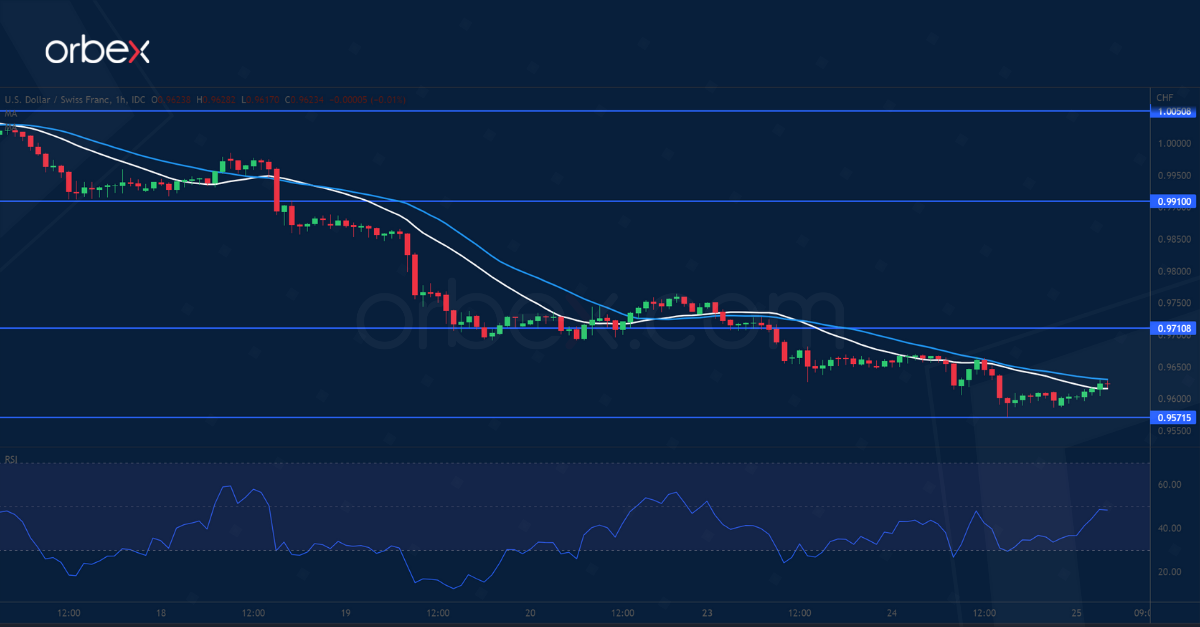
USD/CHF Struggles for Bids
The Swiss franc rallied further after the SNB said it would tighten if inflation persisted. The pair has given up more than half of its gains from the past month. A fall below 0.9710 which sits on the 30-day moving average has put the bulls on the defensive. The discount and the RSI’s repeatedly oversold condition may attract some bargain hunters, but buyers need to clear the support-turn-resistance at 0.9710 before a rebound could take shape. On the downside, a break below 0.9570 would deepen the correction to 0.9500.
Daily Technical Analysis
EUR/USD
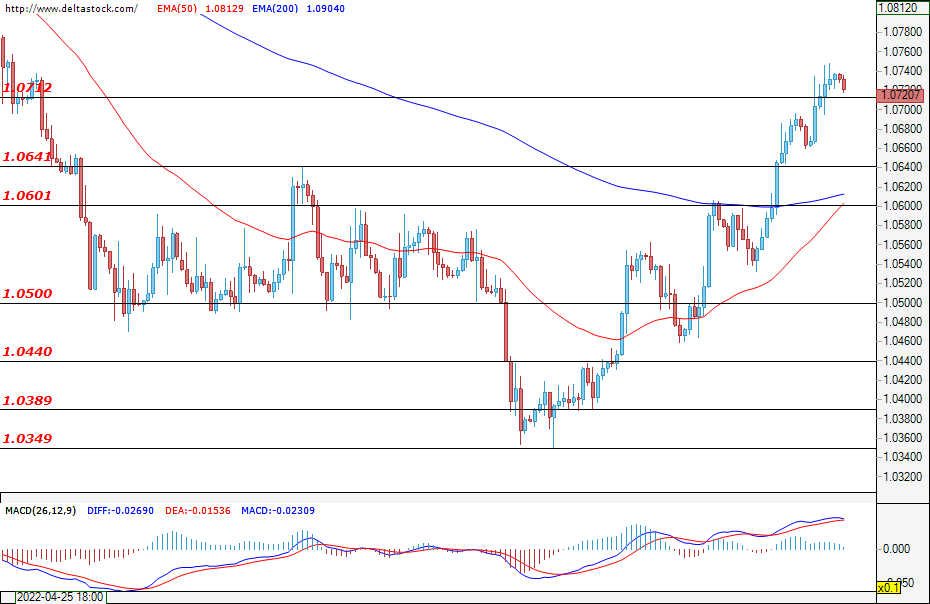
The euro continued to gain ground against the greenback and the currency pair tested the resistance zone at 1.0712. A confirmation of the breach could easily lead to a continuation of the recovery and could result in a rally towards the important zone at 1.0770. If the bullish momentum fades, then the bears could head the EUR/USD towards a test of the support zone at 1.0641. A successful violation of the lower target at 1.0601 may prompt a change in the current sentiment of the market participants and could deepen the decline towards 1.0500.
USD/JPY
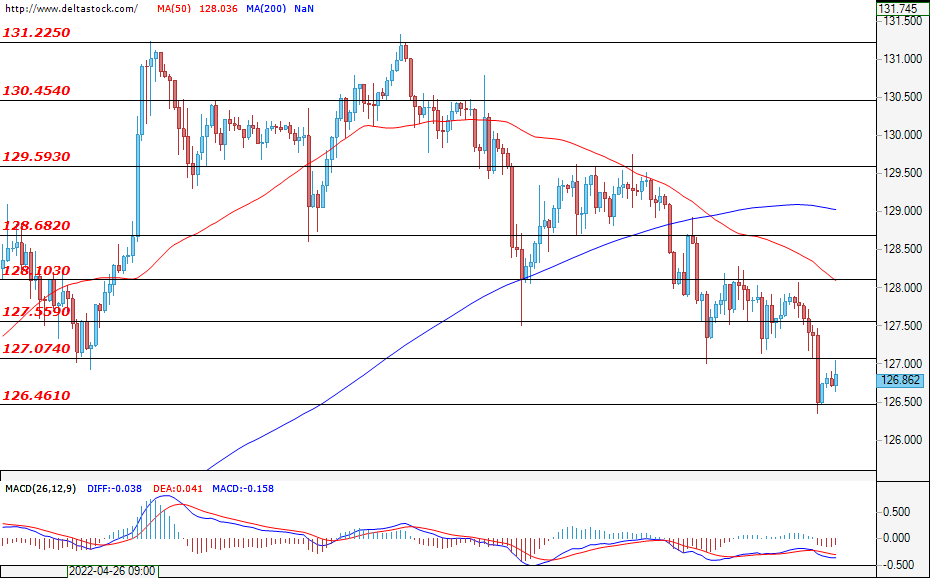
The sellers prevailed during yesterday's session, and after the successful breach of the support at 127.07, the Ninja tested the lower zone at 126.46. During the early hours of today’s session, the pair is trading above the mentioned level, but if the bearish attack continues, its potential violation could easily lead to new losses and could strengthen the negative expectations for the future path of the USD/JPY. The first target for the buyers is the zone at 127.07, which is now acting as resistance, followed by the upper level at 127.55.
GBP/USD
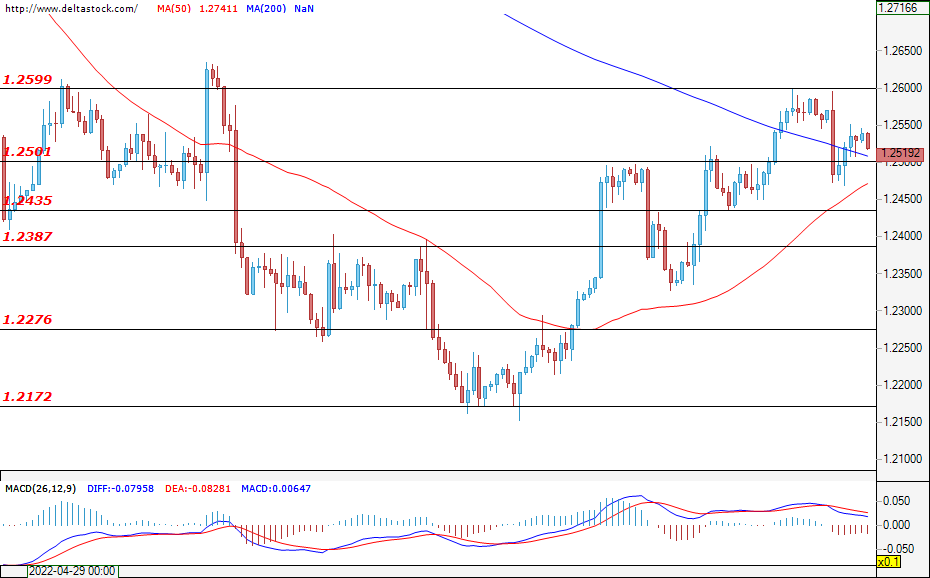
The bears could not gain enough momentum to successfully breach the support zone at 1.2501, and during the early hours of today’s session, the Cable is trading just above the mentioned level of support.. A new bearish attack is the most probable scenario, but only a violation of the mentioned zone could deepen the decline and could lead to a move towards the support at 1.2435. If the bulls enter the market, then a breach of the important resistance at 1.2599 could strengthen the positive expectations and could result in a rally towards the levels from April at around 1.3000.
EUGERMANY40
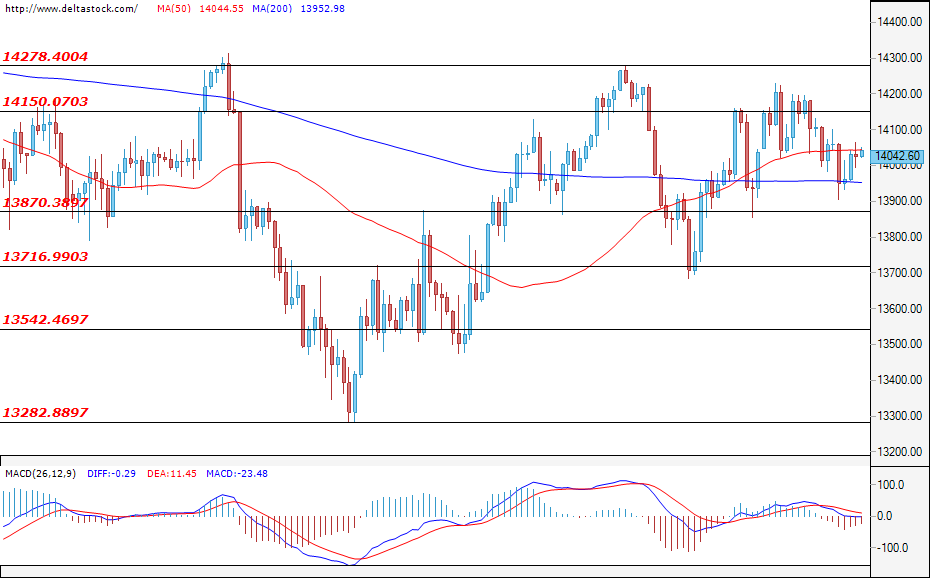
Neither the bulls, nor the bears managed to prevail and the German index remained limited in the zone between 13870 and 14150. A successful breach of the upper border at 14150, followed by a violation of the next target at 14278, could easily lead to new gains and could continue the recovery for the index towards 14400.The first support is the zone at 13900. A breach of the lower level at 13716 would strengthen the negative expectations of the market participants and could pave the way for the EUGERMANY40 for a test of the major support at 13542.
US30
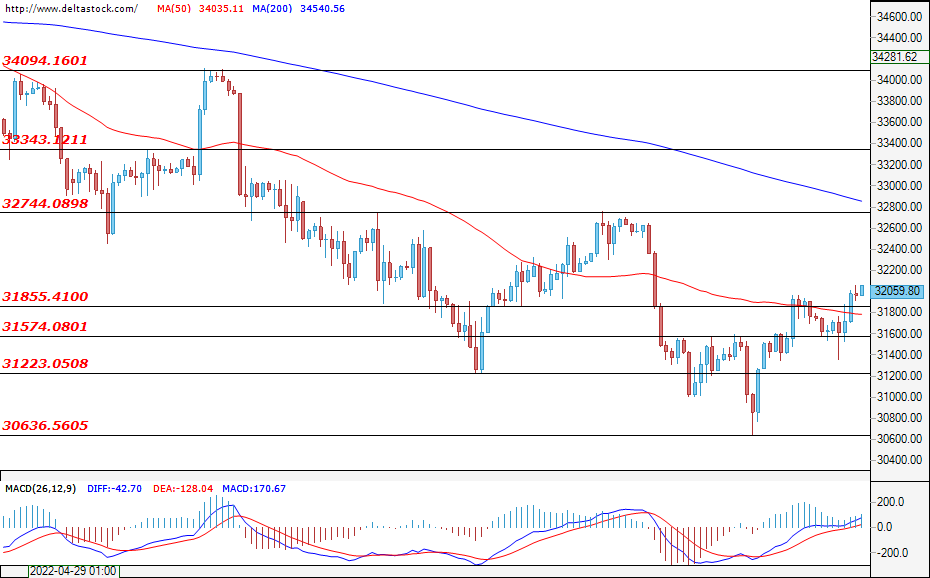
The U.S. index regained some of its recent losses and re-tested the resistance zone at 31855. If the breach is confirmed, then this could easily lead to а more sustained rally and an attack on the upper target at 32744. If the bears prevail, however, then a violation of the support zone at 31574, followed by a successful test of the lower zone at 31223, would mark the current move as corrective and the US30 could head towards the local bottom at 30636. Today, increased volatility can be expected around the release of the FOMC meeting minutes at 19:00 GMT.
USD/JPY Pair Moved into a Bearish Zone Below $130.00
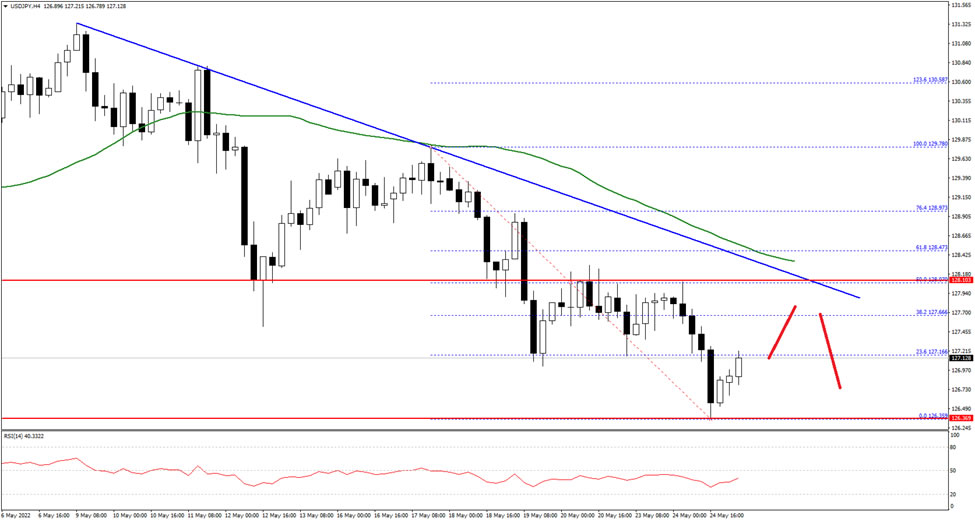
The US Dollar started a fresh decline from well above 131.20 against the Japanese Yen. The USD/JPY pair traded below the 130.00 support zone to move into a bearish zone.
The pair even traded below the 128.20 support and the 50 hourly simple moving average. It tested the 126.40 support zone and is currently correcting higher. On the upside, an immediate resistance is near the 127.15 level.
The first major resistance near the 128.00 zone and a trend line on the hourly chart. A clear break above the 128.00 resistance could push the price towards 128.80. The next major resistance is near the 130.00 level.
On the downside, an initial support is 126.75 on FXOpen. The next major support sits near the 126.40 level, below which there is a risk of more downsides towards the 125.00 level.
Germany Gfk consumer confidence rose to -26, war and inflation still weighing
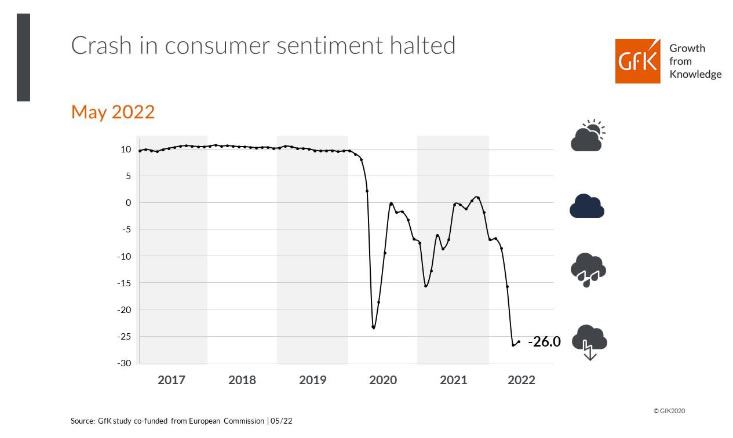
Germany Gfk consumer confidence for June rose slightly from -26.6 to -26.0, worse than expectation of -25.6. In May, economic expectations rose from -16.4 to -9.3. Income expectations rose from -31.3 to -23.7. Propensity to buy dropped from -10.6 to -11.1.
"Although this means that the consumer climate has improved slightly, consumer sentiment is still at an all-time low," explains Rolf Bürkl, GfK consumer expert. "Despite further easing of pandemic-related restrictions, the war in Ukraine and especially high inflation are weighing heavily on consumer sentiment."
Continuation of USD Correction Accompanied by Further Euro Comeback
Markets
Of late markets were mainly driven by global sentiment and by investors pondering the impact of central banks tightening to cap inflation. In this complex, markets are giving ever more weight to activity data. Yesterday’s EMU PMI’s didn’t cause a big reaction. The EMU composite PMI slowed more than expected from 55.8 to 54.9. Still both the manufacturing (54.4) and services index (56.3) stayed at comforting levels, even as the outlook deteriorates. Except for some further euro gains, the direct market impact was modest.
It was US data that further deteriorated an already fragile investor sentiment. The US composite PMI dropped from 56.0 to 53.8 mainly due to a decline in the services measure (53.5). Minutes later, the Richmond manufacturing index nosedived (-9 from 14). Markets rarely react much to housing data. However, the decline in April US new homes sales was too big to ignore (-16.6% M/M), extending a 10.5% setback in March.
US equities touched intraday lows after the data, but recouped part of the losses later closing between +0.15% (Dow) and -2.35% (Nasdaq). Uncertainty on growth also caused a sharp bull flattening move with US yields declined between 14.2 bps (2-y) and 8.7 bps (30-y).
The decline in EMU yields was more modest. ECB’s Lagarde and Villeroy confirmed a lift-off with gradual rate hikes starting in July/ September. However, hawks (Holzmann, Kazaks) kept the debate on a 50 bps hike open. German yields due to the risk-off lost between 5.2 bps (5-y) and 3.2 bps (30-y).
On FX, a continuation of the USD correction was accompanied by a further euro comeback. DXY slid from 102+ to close at 101.85. USD/JPY fell below 127 (close 126.83). EUR/USD confirmed its break beyond 1.0642 to close at 1.0736. Sterling had to fight an uphill battle. A stronger euro, a sharp drop in the services PMI and ‘balanced’ comments from governor Bailey pushed EUR/GBP to the high 0.85 area (close 0.8565).This morning, sentiment in Asia improves after yesterday’s WS selling. Regional equities mostly gain between 0.5% and 1.0%, the Nikkei underperforming (-0.1%). US yields and the dollar regain modest ground after yesterday’s setback (USD/JPY 127.0, DXY 101.95, EUR/USD 1.071).
Later today, the US durable goods orders (exp 0.6%) and Minutes of the May 4 Fed meeting will be published. We don’t expect them to provide much new insights as the market focus is gradually turning to growth rather than inflation. Maybe also keep an eye at the US mortgage applications. There are again plenty of ECB speakers including Lagarde, Lane, Knot and Holzmann. Will the hawks continue to ‘challenge gradualism’?
On interest rate markets, we look out whether the US 2-y yield can hold above 2.5%. For the 10-y, 2.72% is an important reference. If not, the dollar slide might also continue. For EUR/USD next reference is 1.0806, but that maybe is a bit too far short-term. For now the downside in EMU yields looks better protected compared to their US counterparts.
News Headlines
The Reserve Bank of New Zealand continued to frontload monetary tightening with a 50 bps hike bringing the OCR at the lower end of the estimated 2-3% neutral rate. The RBNZ aims to constrain demand which is supported by a strong labour market, continued fiscal support and strong terms of trade, until there is a better match with still-disrupted supply. While the RBNZ notes strong headwinds coming from heightened uncertainty and high inflation dampening global and domestic consumer confidence, it expects to tighten monetary conditions in a much more aggressive way than projected back in February. The RBNZ foresees an additional 200 bps hikes by the first half of 2023. Previously, the peak policy rate was seen in the second half of 2024 near 3.5%. Higher projected inflation of 6.9% this year (+0.3 ppts) and 4.4% in 2023 (+1.2 ppts) explain the twist. The kiwi dollar extends its recent rebound from the low 0.62 mid-May to 0.65 this morning. New Zealand ST swap rates soar more than 20 bps.
Solid Rally in Fixed Income on the Back of Negative Sentiment in Equities
Market movers today
In Germany and France, we get consumer confidence surveys for June and May, respectively. However, while these surveys have painted a bleak picture of the state of the consumer, actual spending has held up quite well so far.
In the US, the FOMC minutes may contain some details on the discussions but nothing which should move markets significantly, in our view, as we have a pretty good idea of what the Fed wants to do over the next few meetings, although we will be looking for mentioning of a possible 75bp hike and some QT details. We also get core capex expenditures in April.
As Danske Morning Mail will not be released the next two days due to holidays in Denmark, a key focus in the US on Friday is the personal consumption expenditure data for April, which includes the Federal Reserve's preferred inflation measure, PCE core. Another key element is to see how goods and service consumption are faring amid the full opening of the US economy after the COVID-19 pandemic.
The 60 second overview
Another volatile trading session in the global financial markets yesterday with equity markets declining, while bond prices were rising and 10Y US Treasuries ended the day at 2.76%. This morning 10Y Treasuries have remained at 2.76% in Asian trading hours. There have been modest gains in Asian equity markets this morning after the sell-off yesterday.
The Reserve Bank of New Zealand hiked the official cash rate (OCR) by 50bp to 2.00% overnight, in line with expectations and market pricing. However, RBNZ also signalled more aggressive front-loading of coming rate hikes and higher terminal rate, as the updated rate path indicates that the OCR will reach 3.75% in Q1 2023. The broad-based rise in inflationary pressures, further uptick in inflation expectations and tight labour market conditions warrant more aggressive tightening even despite the rising recession risks. RBNZ projects that inflation will peak during Q2, but it also sees unemployment rate starting to rise from Q3 onwards as rising costs and tighter financial conditions weigh on aggregate demand. NZD FX gained support from the hawkish decision, but the current environment of slowing growth and tightening financial conditions does not appear favourable for NZD especially vis-à-vis USD despite the projected rapid hiking cycle.
Today, we have a string of speeches from ECB officials including Lagarde, and the market will be looking for comments on monetary policy after Lagarde pre-committed to a rate hike of 25bp in July.
The risk of a Russian default is moving closer as the US government has said it will let a sanctions waiver expire today at noon. The sanctions waiver had allowed Russia to pay bond holders through American banks. Hence, Russia may default during the summer as this waiver has expired.
FI: Yesterday, there was a solid rally in the fixed income markets on the back of the negative sentiment in the equity market. 10Y German government bond yields declined some 6bp and ended again below 1%. 10Y Treasuries declined 10bp. The 2-10Y curves flattened in Europe from the long end and the Bund ASW-spread widened almost 2bp, but has been range-trading around the 75bp-level.
FX: GBP, SEK and CHF gained the most among G10 currencies yesterday, where GBP, CAD and NZD were biggest losers. Of noticeable moves, the move in EUR/USD above 1.07, EUR/GBP up towards 0.86 and USD/JPY below 127.
Credit: Credit spreads as measured by EUR CDS indices were slightly wider yesterday, with iTraxx Main widening 2bp to 98bp and Crossover wider by 7bp to 479bp. Nonetheless, the primary market was busy and saw issuance of bank and insurance Tier 2, marking the return of EUR capital trades for the first time since early April.