Sample Category Title
(RBNZ) Monetary conditions tighten by more and sooner
The Monetary Policy Committee today increased the Official Cash Rate (OCR) to 2.0 percent. The Committee agreed it remains appropriate to continue to tighten monetary conditions at pace to maintain price stability and support maximum sustainable employment. The Committee is resolute in its commitment to ensure consumer price inflation returns to within the 1 to 3 percent target range.
Consistent with the economic outlook and risks ahead, monetary conditions need to act as a constraint on demand until there is a better match with New Zealand's productive capacity. A larger and earlier increase in the OCR reduces the risk of inflation becoming persistent, while also providing more policy flexibility ahead in light of the highly uncertain global economic environment.
The level of global economic activity is generating rising inflation pressures, exacerbated by ongoing supply disruptions driven by both COVID-19 persistence and the Russian invasion of Ukraine. The latter continues to cause very high prices for food and energy commodities.
The pace of global economic growth is slowing. The broad-based tightening in global monetary and financial conditions is acting to slow spending growth, accentuated by the high costs of basic food and energy staples. European geopolitical uncertainty is also weighing heavily on business confidence and investment intentions worldwide. Likewise, COVID-19 restrictions in significant regions of China are exacerbating supply chain disruptions and adding cost and complexity to trade.
In New Zealand, underlying strength remains in the economy, supported by a strong labour market, sound household balance sheets, continued fiscal support, and a strong terms of trade. The reduction in COVID-19 health-related restrictions is also enabling increased economic activity, including hospitality and tourism.
However, headwinds are strong. Heightened global economic uncertainty and higher inflation are dampening global and domestic consumer confidence. Asset prices, in particular house prices, have also declined, reflecting in part higher mortgage interest rates and increased supply of housing.
On balance, a broad range of indicators highlight that productive capacity constraints and ongoing inflation pressures remain prevalent. Employment remains above its maximum sustainable level, with labour shortages now the major constraint on production. The Reserve Bank's core inflation measures are above 3 percent.
The Committee agreed to continue to lift the OCR at pace to a level that will confidently bring consumer price inflation to within the target range. The Committee viewed the projected path of the OCR as consistent with achieving its primary inflation and employment objectives without causing unnecessary instability in output, interest rates and the exchange rate. Once aggregate supply and demand are more in balance, the OCR can then return to a lower, more neutral, level.
Summary Record of Meeting
The Monetary Policy Committee discussed developments affecting the outlook for inflation and employment in New Zealand. Members noted that current inflation and employment were above their target and sustainable levels respectively. Members agreed that while the direction of their monetary policy decision was clear, the extent and timing of future increases in the Official Cash Rate (OCR) still depends on the economic outlook and avoiding major risks.
The Committee agreed that global economic activity was slowing more than previously expected, and that further weakening in global economic growth was likely. Members noted that while international fiscal and monetary policy actions have partly cushioned the effect of the COVID-19 pandemic on household incomes and employment so far, significant and ongoing disruption is now being felt.
The recent rise in global inflation pressures has led central banks to raise their policy interest rates and signal further tightening to come. These measures have been aimed to deliberately slow demand to be more consistent with the current constrained supply capacity of goods and services.
The Committee noted that the disruption caused by the Russian invasion of Ukraine has added to the underlying global inflation pressures. The cost of living has risen significantly, in particular due to shortages of food and fuel. This rise in costs is necessitating lower non-essential spending in households globally. High global commodity prices are likely to persist for some time, creating long-lasting cost pressure for firms and households, even as general consumer price inflation slows.
Economic activity globally, and especially in China at present, is still being severely disrupted by COVID-19. Members agreed that China's regional health-related economic restrictions are having a direct impact on global growth, supply chain efficiency, and New Zealand's trade outlook. New Zealand's trade performance is strongly linked to China's economy.
The recent rise in central banks' policy interest rates, and forward guidance for more increases, has led to a significant fall in global equity prices, albeit from high levels. The Committee noted that a rise in official rates creates a higher hurdle for investment decisions.
Members discussed developments in the New Zealand economy. It was noted that rising global interest rates have narrowed interest rate differentials with New Zealand, adding to downward pressure on the New Zealand dollar exchange rate. The Committee noted that the lower New Zealand dollar raises import prices – exacerbating the effect of elevated global prices.
The Committee agreed that both high food and energy costs, and rising mortgage interest rates for those with debt, will affect household budget decisions and lead to less discretionary spending. Members noted that over the past year or so, wage growth has been less than consumer price inflation, adding further pressure on discretionary spending.
Recent and expected increases in mortgage interest rates are likely to contribute to falls in house prices, further reducing households' willingness to spend. It was agreed that household consumption was likely to be relatively subdued in coming quarters. The Committee noted that house prices are now headed toward a more sustainable level.
The Committee noted the Government's Budget announcements. It was agreed that fiscal policy is currently supporting economic activity, but that this stimulus is expected to reduce in coming years. The current level of fiscal spending is contributing to a modest increase in demand. This is expected to diminish over time as a result of the end to the large, broad based, fiscal support packages the Government delivered during the initial phase of the COVID-19 economic response.
The Committee noted that measures of core consumer price inflation are above their target range. Surveyed measures of near-term inflation expectations are also high, in line with actual consumer price inflation. It was noted, however, that the medium-term measures of inflation expectations have remained near the centre of the target range, albeit heightened somewhat. The Committee agreed that it was critical for these medium-term inflation expectations to remain around 2 per cent.
Members also noted the factors responsible for the current elevated consumer price inflation. New Zealand's inflation rate reflects a relatively similar contribution of global imported price pressures and domestic price pressures. They observed that a key factor contributing to domestic inflation pressure is housing – including both the cost of construction and the operating costs of dwellings in general.
On the costs of construction, members noted that the growing delay in accessing key building materials is significantly slowing activity, and increasing the financial risks associated with construction. The Committee observed that these delays, cost pressures, and associated uncertainty could limit the conversion of building permits into dwellings, exacerbating the pressure on housing supply.
Members agreed that employment is above its maximum sustainable level, as highlighted by a suite of indicators. They agreed that rising wage pressures are an expected outcome, with access to labour the key constraint on firms' productive capacity. With the global labour market tight, people are also more willing and able to take up new roles for higher wages.
The Committee noted that the reopening of the border should see a return to a net inflow of migrants into New Zealand over the next two years. Over time, this net immigration will help to ease New Zealand's labour shortages. More immediately there is an outflow of New Zealanders creating supply capacity constraints. With the international border reopening, more immigrants will also bolster demand ahead of supply capacity as they settle. It was agreed that these patterns of migration will have an uncertain net effect on inflation pressure, as they will affect both supply and demand in the economy. As a result, these dynamics do not play a key role in determining monetary policy at present.
The Committee noted the weaker outlook for employment growth in New Zealand, which is likely to be outpaced by labour force growth. As a result of the increase in labour supply, measured unemployment is expected to rise to around levels more consistent with maximum sustainable employment.
The Committee discussed the future path of the OCR based on the outlook for inflation and employment pressures. Members noted that both inflation and employment are currently higher than previously expected, and that this strength is broad-based, arising from a range of economic factors.
Members agreed that a higher level of the OCR is necessary to ensure annual consumer price inflation returns to within its target range over the next two years. They agreed this was also consistent with ensuring employment remained near its maximum sustainable level.
Members discussed their 'least regrets' framework which in the current context amounted to the risk of tightening policy 'too little, too late' versus 'too much, too soon'. The Committee agreed that at present, with persistent cost pressures and rising inflation, the risk of moving too slowly and not far enough remained the most costly option.
On the risk of doing too much too soon, the Committee acknowledged that raising the OCR steeply puts pressure on some households' spending decisions, especially those that are highly indebted.
However, members noted that, on average, household balance sheets are healthy. Banks have been testing mortgage lending for higher interest rate possibilities – consistent with current projected levels – before recent home loans were made. They also noted that house prices are expected to remain above their pre-pandemic level. The Committee also noted that while higher interest rates will increase firms' hurdle to investing, recent business surveys suggest labour shortages are the main constraint preventing an increase in production.
The Committee agreed that stabilising inflation is its priority. Members agreed that raising the OCR by more and sooner was consistent with avoiding higher future costs to employment and the economy in general as a result of high inflation. Stable inflation expectations will be a key indicator that the current monetary policy strategy is working.
The Committee agreed to maintain its approach of briskly lifting the OCR until convinced that monetary conditions were sufficient to constrain inflation expectations and bring consumer price inflation to within the target range. Once aggregate supply and demand are more in balance, the OCR can then return to a lower, more neutral, level. The Committee viewed the projected path of the OCR as consistent with achieving their primary inflation and employment objectives without causing unnecessary instability in output, interest rates and the exchange rate.
On Wednesday 25 May, the Committee reached a consensus to increase the OCR to 2.0 percent.
Gold Report: Bullish Interest in Play?
Gold managed to move in positive territory in the previous week, rebounding from a 4-week losing streak. Yesterday, Monday the 23rd Gold jumped to a new weekly high price reigniting further bullish expectations for the precious metal. However, the market remains overflooded with great uncertainty over various subjects making the future direction of gold’s price an enigma for most traders. In this report, we will carefully analyze and breakdown the most important information needed to trade the Gold market carefully, including both technical and fundamental aspects.
A factor that may have supported Gold prices in the short term, may have been the weakening of the greenback. In the second half of May, the USD Index has been captured by some bearish tendencies. This may be a technical correction for the Index, as it has been ascending for the past 6 consecutive weeks until the 8th of May. Yet traders may be content to observe the adverse relationship the metal keeps with the USD, as it could potentially support Gold’s price further. The US economic releases in the past week may have contributed somewhat to the Dollar’s weakening, with a few data including the NY Fed manufacturing, the Existing Home Sales and the Philly Fed Business Index figures moving lower compared to previous months.
On a different note, a major subject that seems to counter the general investor confidence and at the same time lift economic risk supporting Gold prices, are the ongoing supply chain disruptions. Covid-19 restrictions in some parts of the world along with the war in Ukraine, have kept this challenge alive in the medium to long-term, putting limits on business activities. In order to mend the gap with supplies, some large companies are now investing huge amounts of funds to receive supplies domestically or to be able to create them themselves. Yet, capital expenditures of these firms are increasing drastically and already higher inflationary pressures, maybe increasing costs to the point where profitability maybe tested. These firms are investing in the future and can perhaps become self-sufficient, bringing down costs in the long term but in the meantime seem to be pushing the margins to the limit.
In addition, the idea that some major economies might be heading into a recession is echoed more and more in the most recent weeks. Even though we might need actual figures to confirm for such a scenario, some economic slowdown has been observed in China, the UK, the US and the Eurozone increasing possibilities for solidifying the downturn. However, in our view the prementioned subjects are also running in the background possibly making things somewhat worse than they really are.
The economic releases in the following days are rather important and traders should keep an eye on the new figures, as they could create volatility for Gold. During the 25th of May we get the FOMC minutes for its meeting in May. On the 26th of May we get the highly important US GDP 2nd Estimate rate for Q1 along with the weekly Initial Jobless claims figure. On the 27th of May, we get the US Consumption Adjusted and Core PCE Price Index rates both for April along with the Final UoM Consumer Sentiment figure. Finally, on Monday the 31st we get the noteworthy US Consumer Confidence figure for May.
Technical Analysis
XAUUSD Daily
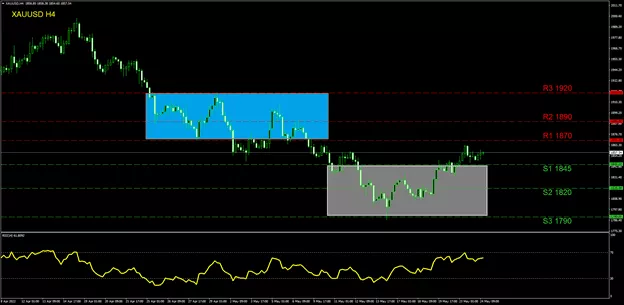
Since the 16th of May Gold has managed to perform consecutive sessions upwards turning previous resistances into support levels. If this trend continues, we may see the price action engaging the (R1) 1870 resistance level which was used previously in the start of May. Above the (R1) we see the price action moving into a range that was used for most of the period towards the end of April and the beginning of May, which is highlighted with blue on our chart. On the other hand, if a trend to the downside prevails, we may see the (S1) 1845 support level being tested. Below the (S1) we may see the price action falling into territory that was traded for 10 consecutive days in May. which led to a momentary touch of the (S3) 1790 support level, which is also the lowest point Gold has dropped to since the start of the current year. Despite the recent upward movement, Gold in our opinion remains in a selling momentum since the start of March. For us to change our current selling view to a buying one, we would like to see a clear testing of the (R3) 1920 barrier, setting it as a barometer for the strength of the bulls. Yet on a H4 chart basis, the RSI indicator continues to move above 63 implying some bullish interest may be in play.
Eco Data 5/25/22
[php_everywhere instance="1"]
GBPCHF Wave Analysis
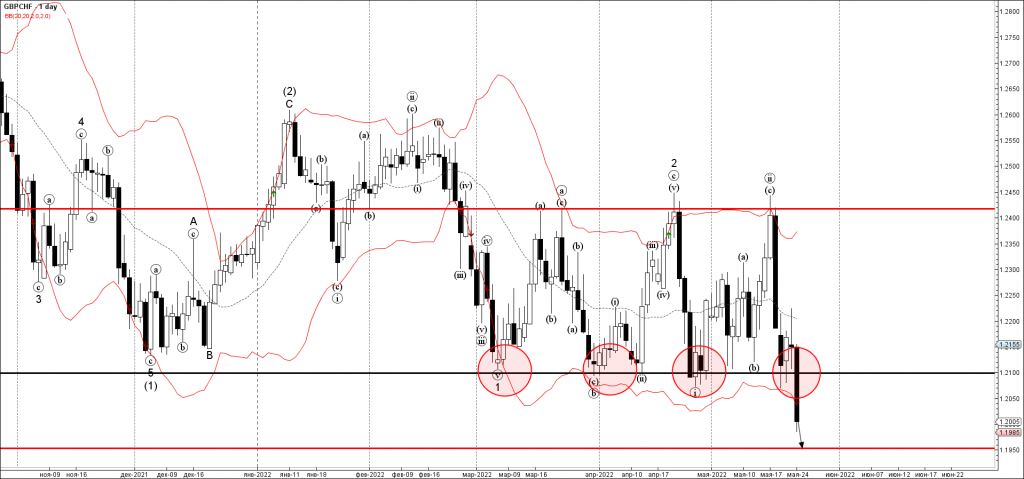
- GBPCHF under bearish pressure
- Likely to fall to support level 1.1955
GBPCHF currency pair under the bearish pressure after the price broke below the key multi-month support level 1.2100 (lower boundary of the sideways price range from the start of March).
The breakout of the support level 1.2100 continues the active impulse waves (iii), 3 and (3).
GBPCHF currency pair can be expected to fall further toward the next support level 1.1955.
Gold Wave Analysis
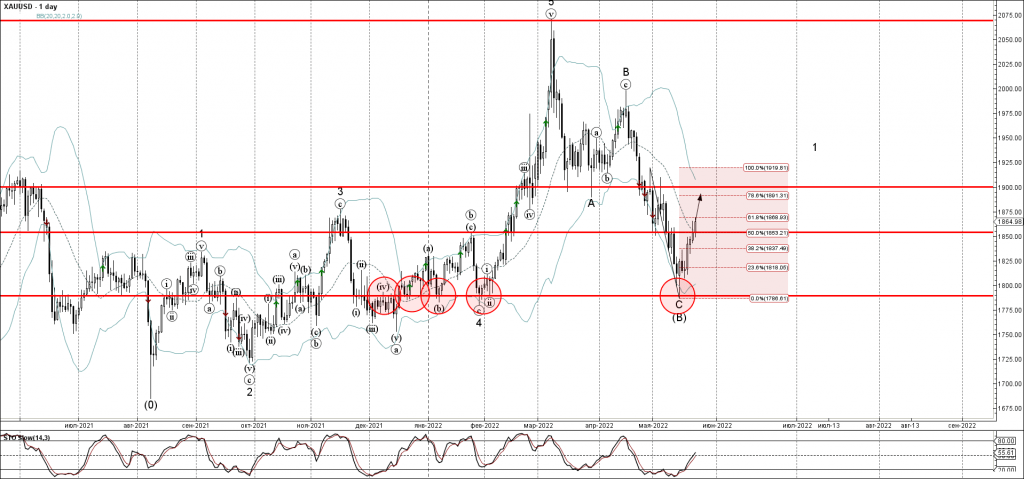
- Gold broke resistance level 1855.00
- Likely to test resistance level 1900.00
Gold continues to rise after the earlier breakout of the resistance level 1855.00 (former support from the start of May) and the 50% Fibonacci correction of the downward impulse from last month.
The breakout of the resistance level 1855.00 should accelerate the active impulse waves 1 and (C).
Gold can be expected to rise further toward the next resistance level 1900.00 (former support from the middle of March).
USD/JPY – Head and Shoulders Breakout?
Major correction on the cards?
The rally in USDJPY from early March to early May was huge, driven by a combination of a soaring greenback and a BoJ determined to support its yield curve control policy tool.
But the last couple of weeks have brought some relief in the pair, driven primarily by the dollar paring gains against the broader market.
And the pair may have just broken below an interesting technical support level that could signal a more significant correction.
A head and shoulders appears to have formed over the last month and the break of the neckline is potentially in progress.
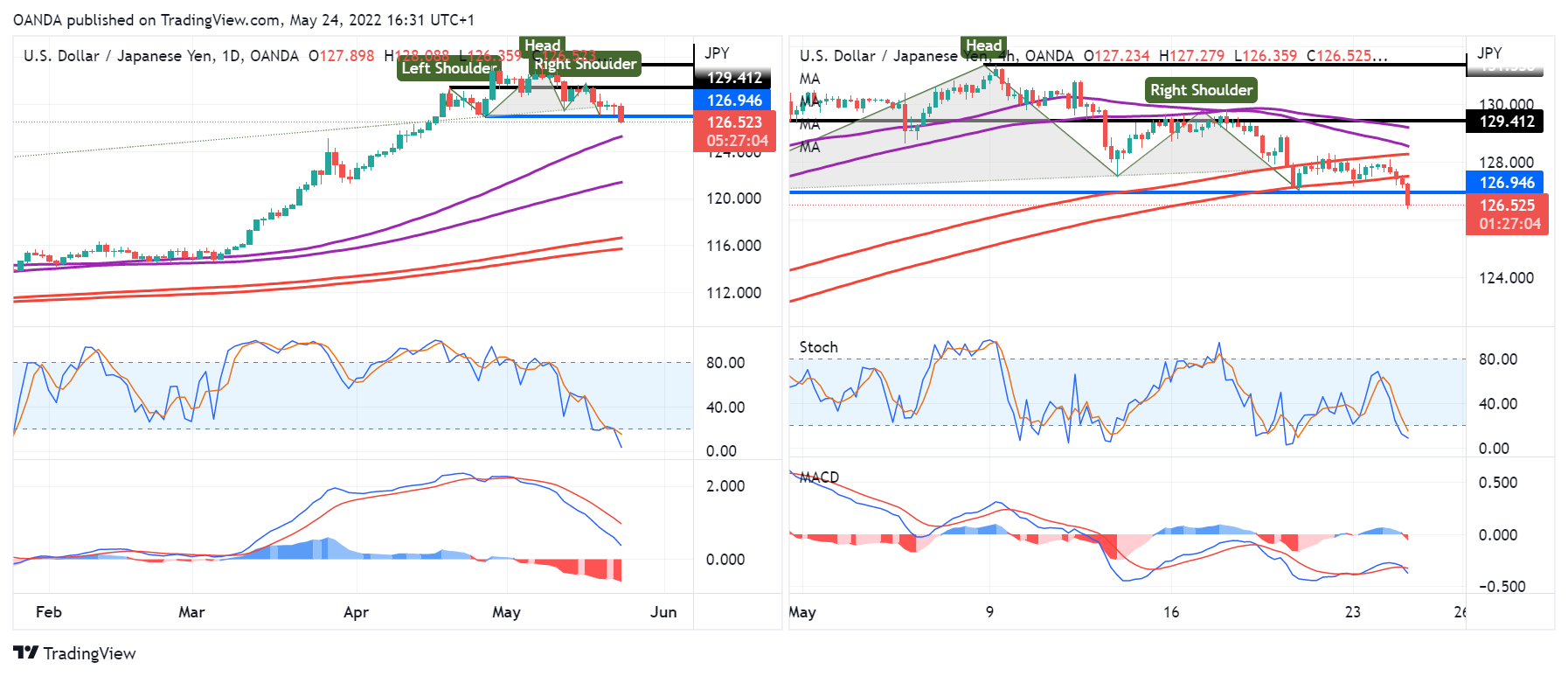
This also comes immediately following the break of the 200/233-period SMA band on the 4-hour chart which did provide support for most of the last week before finally giving way.
If this breakout holds, it could potentially point to quite a significant correction based on the size of the head and shoulders formation and the projections that could indicate.
Oil Possibly Locked in the $100-130 Range for Years
Crude oil has added for the fourth consecutive trading session. However, the rise in quotes has been tempered by comments from the German economy minister, claiming that the EU could agree on an embargo on Russian oil within days.
However, movements in oil have become more subdued not only because the embargo topic has been discussed for many weeks, having ceased to be a fresh driver.
The fundamental balancing act for the market is the continued sales from the strategic oil reserve of the USA and several other countries. In addition, China is showing a stronger-than-forecast slowdown due to strict anti-viral restrictions. The global economy is experiencing a slowdown due to high prices and disrupted supply chains.
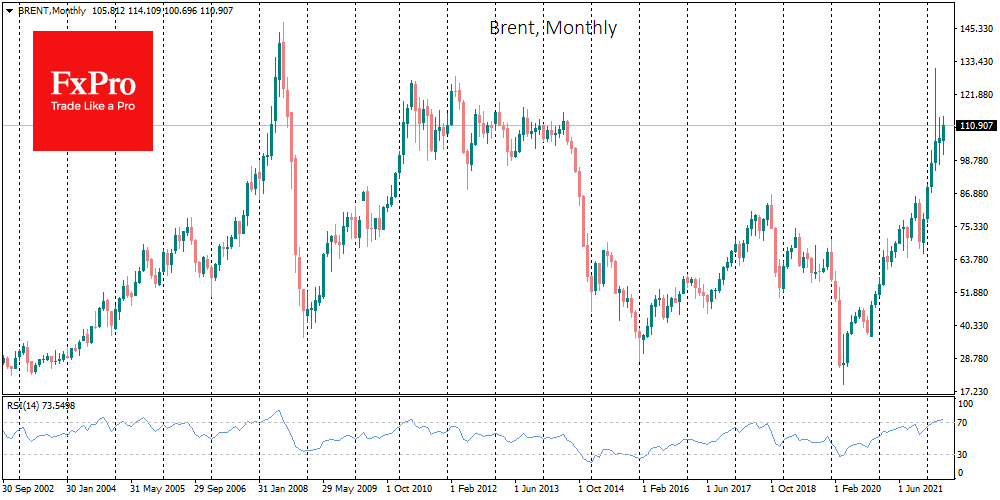
Technically oil remains in a medium-term upward range. Bulls in WTI and Brent continue to buy oil on declines towards the 50-day average.
The oil price is now at levels near $110 for WTI and $111 for Brent, near the peak area of the last two months. It will take a meaningful bullish driver for quotes to manage to consolidate above this area this time.
If the resistance is broken through, we might see oil take to the new horizon with the potential of rapid appreciation up to $120 or even $130 in a couple of weeks.
This looks a lot like what we saw in 2009-2010 when a similar post-crisis recovery in prices started to slow economies and inflation, locking oil into a three-and-a-half-year $100-130 range and eventually crawling back towards the lower end of that range as production capacity recovers.
EUR/GBP – Further Gains to Come?
Hawkish ECB boost the single currency
The euro has caught a strong bid against the pound in recent days on the back of some very hawkish commentary from the ECB and poor economic data in the UK.
The ECB will become the latest central bank to concede on the inflation argument and raise rates in July and September, as per President Christine Lagarde’s blog, although some support an even more aggressive approach.
That’s boosted the euro at a time when the UK economy is facing the prospect of a recession, with PMI data today highlighting the struggles already appearing in the all-important services sector.
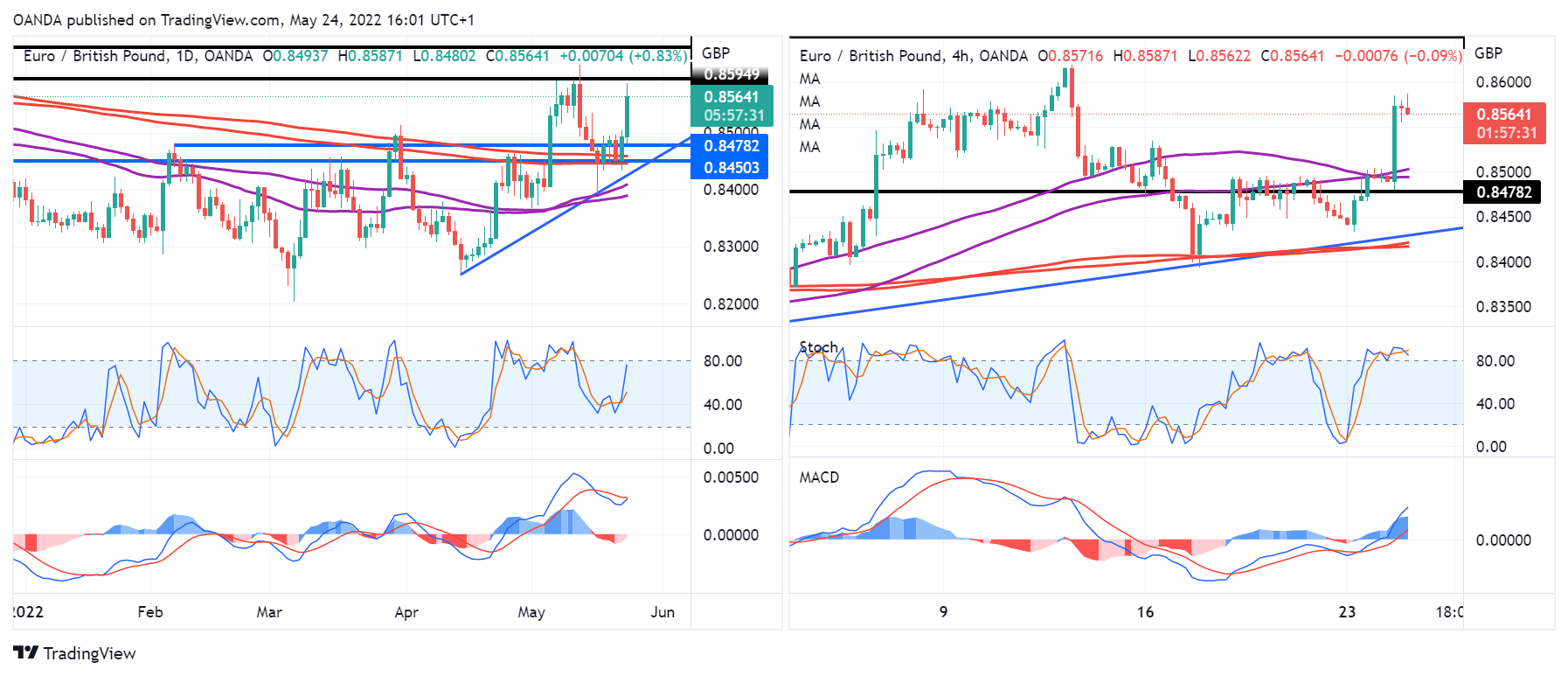
EURGBP has rallied strongly on the back of this, holding above the 200/233-day SMA band in the process and pushing a breakout of the recent highs. It also broke above the 55/89-period SMA band on the 4-hour chart in the process which has capped its rallies over the last week.
The next test for the pair is 0.86 and 0.8650 which has been a key area of resistance on numerous occasions over the last year, with 0.87 potentially offering further resistance above.
Eventually, the euro area and others will likely be dragged into the recession conversation which may see the bullish case wane but for now, it’s interest rates that are dominating the conversation and giving the euro a major lift.
USD/JPY: Bears Resume after a Brief Pause, Eye Key Supports at 125 Zone
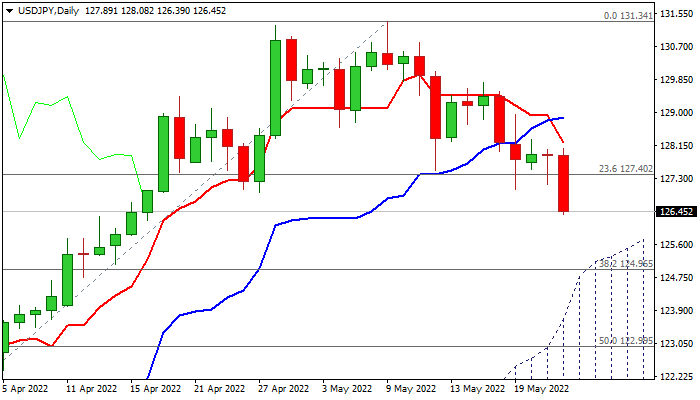
Bears tightened grip on Tuesday after being congested in past three days, sending the pair to five-week low and signaling an extension of corrective pullback from new 20-year high (131.34).
Profit-taking after strong bullish acceleration in past two months (the pair was up 13% in Mar/Apr) contributed to the recent easing, also signaled by a double-top pattern on daily chart.
Falling daily Tenkan-sen crossed below Kijun-sen, adding to negative signals, generated on break of a double-Fibo supports at 127.40 zone (23.6% of 114..64/134.34 / 38.2% of 121.27/131.34 upleg) and rising bearish momentum.
Bears eye key supports at 114.96/77 (Fibo 38.2% of 114.64/131.34/ top of rising and thickening daily cloud0 where stronger headwinds could be expected, while break here would sideline larger bulls and open way for stronger correction.
Near-term bias is expected to remain with bears while the price action stays below broken Fibo support at 127.40.
Res: 126.94; 127.02; 127.40; 128.22
Sup: 126.31; 125.23; 124.96; 124.77
Euro Rises to 1-Month High on Lagarde
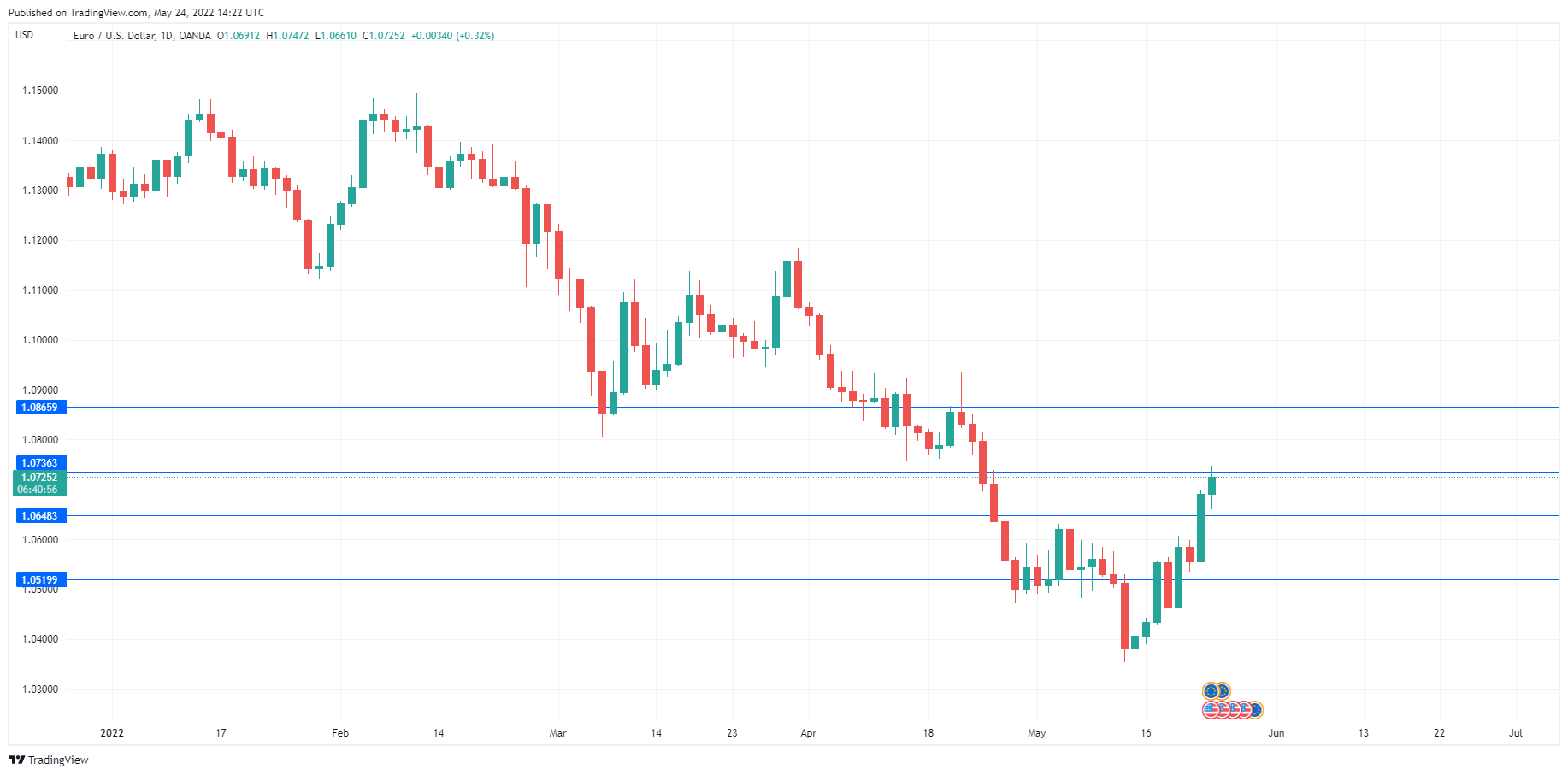
The euro has extended its gains on Tuesday. EUR/USD has broken above the 1.07 line for the first time since April 26th.
ECB’s Lagarde sends euro soaring
The euro was red hot on Monday, as EUR/USD jumped 1.29%, its best one-day showing this year. The upswing was courtesy of ECB President Christine Lagarde, who detailed the Bank’s rate plans in a blog post. This unusual move certainly caught the attention of the markets, who gave the euro a massive thumbs-up.
Lagarde has been a strong supporter of an accommodative policy and rather dismissive about inflationary pressures. However, Lagarde has had to recalibrate as eurozone inflation continues to accelerate. The war in Ukraine has resulted in soaring oil and food prices, and there are no indications that the conflict will end anytime soon. The ECB has been sending signals that it planned to tighten policy, and Lagarde’s post confirms the shift in policy.
The ECB will embark on its rate-tightening cycle in July and will exit negative rates in September. Interestingly, the Bank will continue its QE programme, which raises the question of whether the ECB’s moves are really that aggressive. Perhaps the new stance is mostly symbolic until we see a significant increase in rates. Judging by the euro’s sharp climb, however, the markets sense that Lagarde is signalling a significant shift from the ECB.
The euro is flexing some muscle, but I would maintain that risk is tilted to the downside in the medium term. The US dollar has lost ground against most of the majors over the past few days, as fears of a US recession have escalated. Still, the Fed is committed to significant tightening in the next few months, and higher US rates should provide a boost for the greenback.
EUR/USD Technical
- The euro is putting pressure on resistance at 1.0736. Above, 1.0820 is a multi-decade breakout line
- There is support at 1.0648 and 1.0519