Sample Category Title
Is EUR/USD Truly Out for the Doghouse?
ECB talk of ending negative interest rates by Q3 with the possibility of positive rates in the not-to-distant future has got EUR/USD all fired up after what has been an abysmal year in terms of performance. The recent consolidation in short-dated US yields have also lent their support to the single currency, which surpassed the prior 5 May 1.06420 swing high on Monday. Has EUR/USD really switched from downtrend to uptrend?
Perhaps, but you may want to wait for more confirmation that things have changed, before raising your convictions. For one, no matter the higher time frame, be it daily or weekly EUR/USD is well below its 200 exponential moving averages, which are still downward sloping. Were price to surpass the last March weekly swing high of 1.11849, I’d certainly have a lot more confidence that something big is brewing.
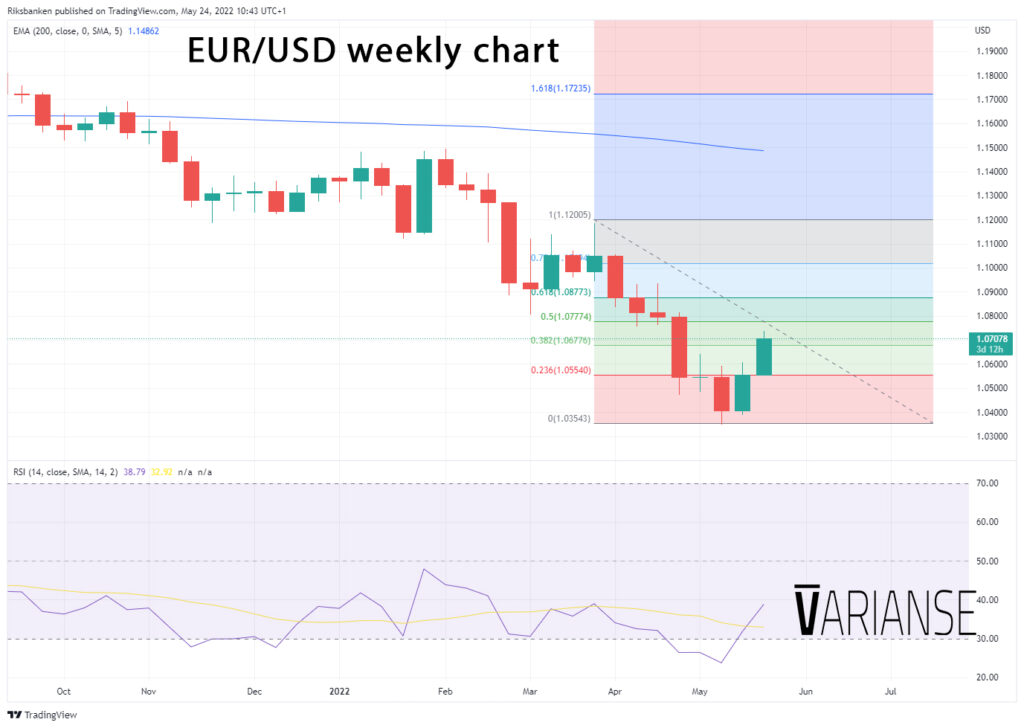
EUR/USD, however, is still a considerable distance from those levels and are of little help to those who are considering buy orders. For them, the 50% and 61.8% Fibonacci retracement levels of 1.07774 and 1.08773, respectively (between the March swing high of 1.11849 and May swing low of 1.03492) may be of more interest.
If these levels fail to hold as resistance, the odds that EUR/USD is truly changing tend are likely to increase dramatically. They may also be ideal place to scale out of positions if you do have the gumption to go long EUR/USD at recent levels. That said, given the size of the last impulsive wave downwards relative to the prior corrective wave, there is good chance EUR/USD could find itself range bound for a reasonable period of time, ahead of any potential change in trend.
GBPUSD’s Broader Bearish Bias Under the Microscope
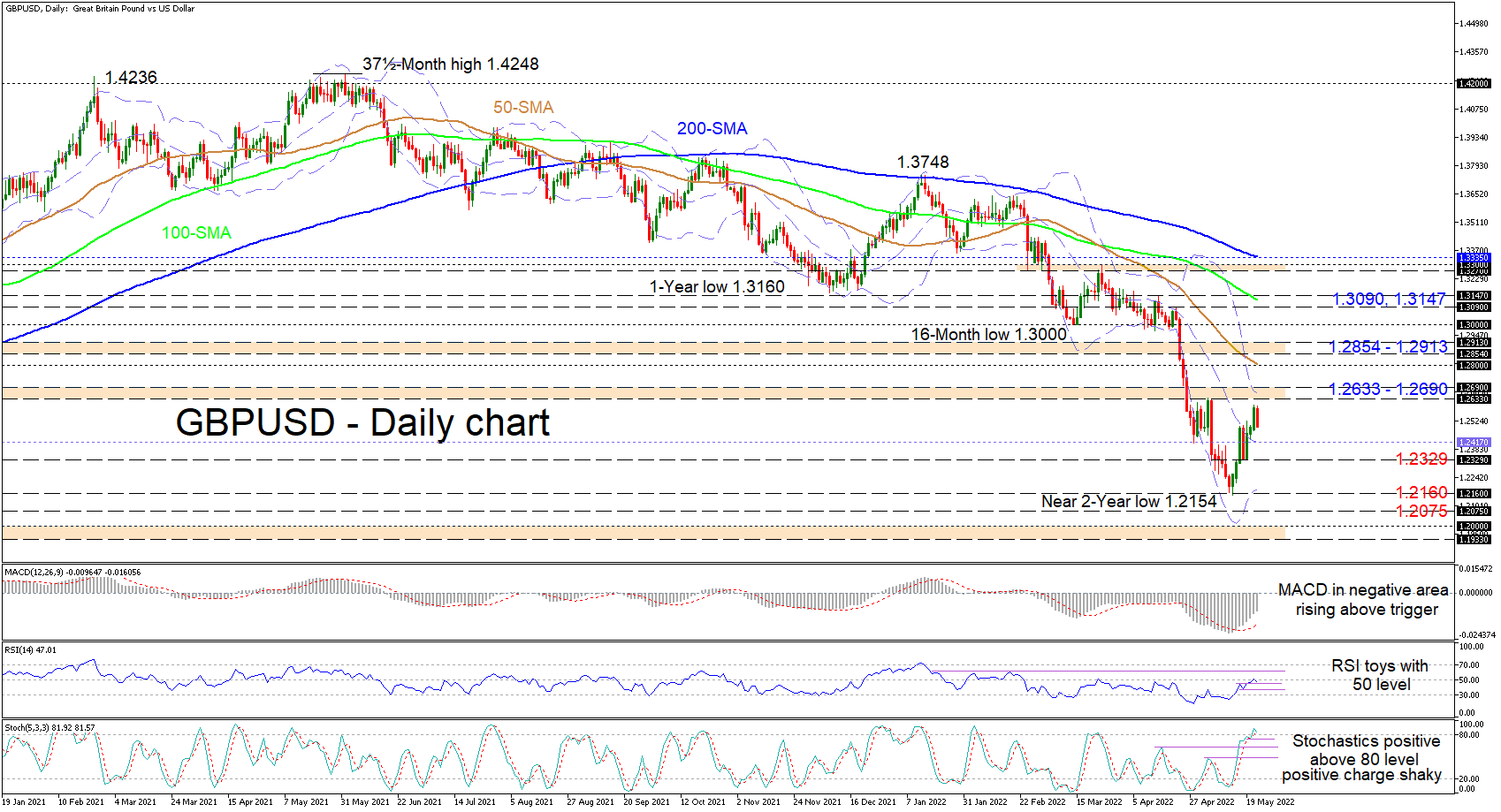
GBPUSD is struggling to climb towards the upper Bollinger band which is residing within the 1.2633-1.2690 resistance zone following a price bounce in the vicinity of the 1.2160 support, logged back in May 2020. The diving simple moving averages (SMAs) are still backing the downward trend despite significant developments in the pair, after bouncing around two-year low levels.
Lately, the short-term oscillators have been indicating a constant dwindling in negative momentum, but sellers are starting to push back. The MACD is distancing itself above its red trigger line in negative territory, while the RSI is flirting with the 50 threshold. Meanwhile, the stochastic oscillator has been maintaining a sturdy positive charge in the overbought section, but this promotion of additional upside price action is now being questioned with the dipping in the %K line.
To the upside, tough resistance could originate from the nearby 1.2633-1.2690 boundary, which also encapsulates the upper Bollinger band. Conquering this barrier, the bulls may then target the falling 50-day SMA around the 1.2800 handle before challenging the 1.2854-1.2913 resistance border that stretches back to mid-October 2020. If positive pressures endure, the pair could lift higher to test the 1.3000 hurdle where March and April lows previously froze.
On the flipside, if buying interest continues to fade, support could commence around the mid-Bollinger band at 1.2417 ahead of the 1.2329 low. Steering even lower may boost negative movement in the pair with sellers aiming for the reinforced 1.2160 support, where the lower Bollinger band currently resides and marginal price slippage occurred, recording a near two-year low of 1.2154. If the pair remains heavy and sinks past these obstacles, which would revive the broader bearish trend, the 1.2000 mark could promptly come under attack.
Summarizing, GBPUSD is exhibiting a stubborn broader bearish bias below the 1.2633-1.2690 resistance obstacle and the falling SMAs. A dip in the pair past the mid-Bollinger band may strengthen selling pressures. That said, buyers’ confidence is likely to improve should they manage to steer the price over the 1.2633-1.2690 border, but for optimism to return in the pair, the price would need to pilot back to the 1.3000 price zone.
S&P 500 Avoids Bear Market as Volatility Eases
The S&P 500 index avoided moving to a bear market as investors reacted to a relatively positive statement by Joe Biden on tariffs. It rose by more than points on Monday. Similarly, the Dow Jones and the Nasdaq 100 indices rose by over 700 points and 145 points, respectively. At the same time, the US dollar index retreated while bond yields rose. In a statement, Biden said that his administration was considering doing away with Trump’s tariffs. Many officials in Washington believe that these tariffs amounted to an unnecessary tax, and they hope that removing them will lead to lower inflation.
The euro rallied against other currencies as investors reacted to a highly hawkish blog post by Christine Lagarde of the ECB. In it, she explained the reasoning behind the bank’s most recent decisions. She also signaled that the bank would embrace a more hawkish tone in the coming months as it continues to battle the soaring inflation. She said that the bank will start hiking interest rates in July and then exit negative rates in September. The currency will today react to her statement in which she will likely explain her case. Markit will also publish the flash manufacturing and services PMI data from the bloc.
There will be several economic data releases today. The most important will be the latest flash manufacturing and services PMI numbers from Europe and the US. In the UK, economists expect the data to reveal that the manufacturing and services PMIs increased slightly to 56 and 59, respectively. In the euro area, analysts expect the data to show that the two declined to 54.9 and 57.5. The other important number will be the latest new home sales from the US. These numbers are expected to show that the housing sector is slowing down. Finally, Jerome Powell and Christine Lagarde will talk.
EURUSD
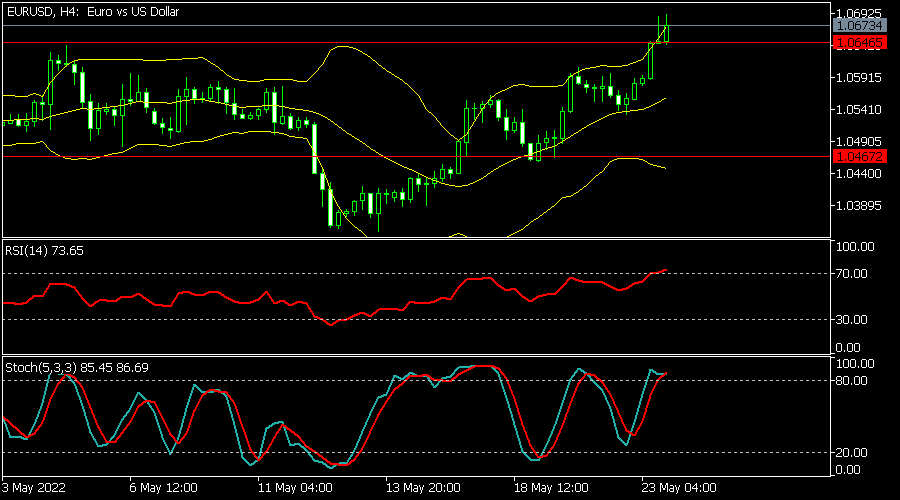
The EURUSD pair rose to a high of 1.0675 after the hawkish statement by Christine Lagarde. It was the highest level since late April. On the four-hour chart, the pair is along the upper side of the Bollinger Bands. The pair has also formed what looks like an inverted head and shoulders pattern. The Stochastic Oscillator and the Relative Strength Index have moved above the overbought level. Therefore, the pair will likely keep rising.
GBPUSD
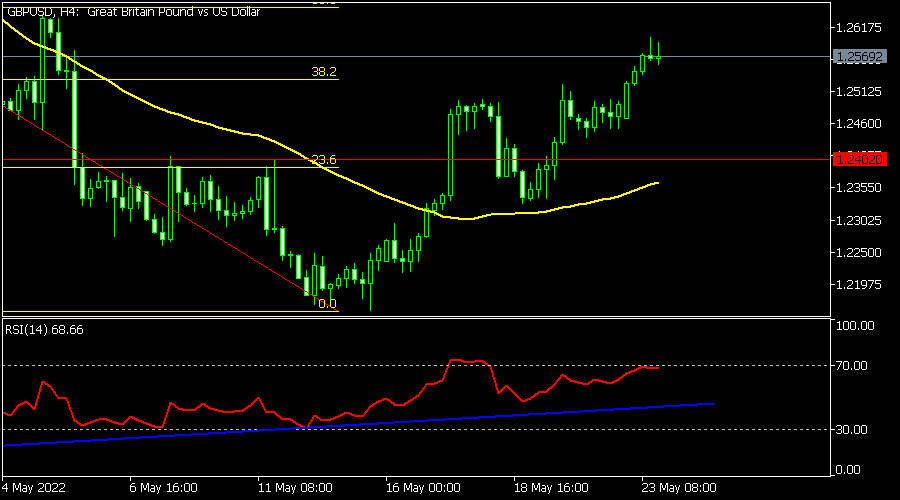
The GBPUSD pair has been in a strong bullish trend in the past few days. On Monday, the pair moved above the important resistance level at 1.2500. It has moved above the 38.2% Fibonacci retracement level. It has also risen above the 25-day and 50-day moving averages while the Relative Strength Index (RSI) is approaching the overbought level. The bullish momentum will likely continue.
USDJPY
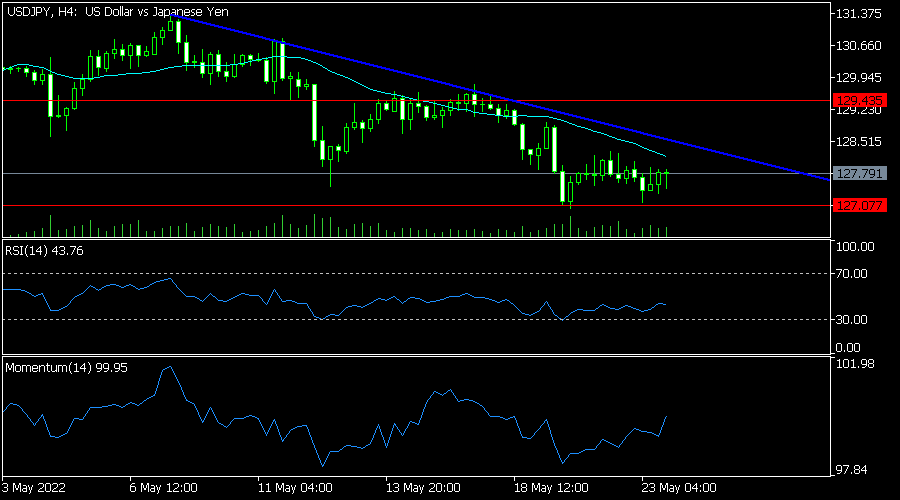
The USDJPY pair has moved sideways in the past few days. The pair is trading at 127.8, which is slightly above the key support at 127.0. It has formed a descending triangle pattern. Also, it has declined below the 25-day and 50-day moving averages. The RSI and the momentum have moved slightly upwards. Therefore, the pair will likely have a bearish breakout in the near term.
GBP/CHF breaking down after PMI shocker
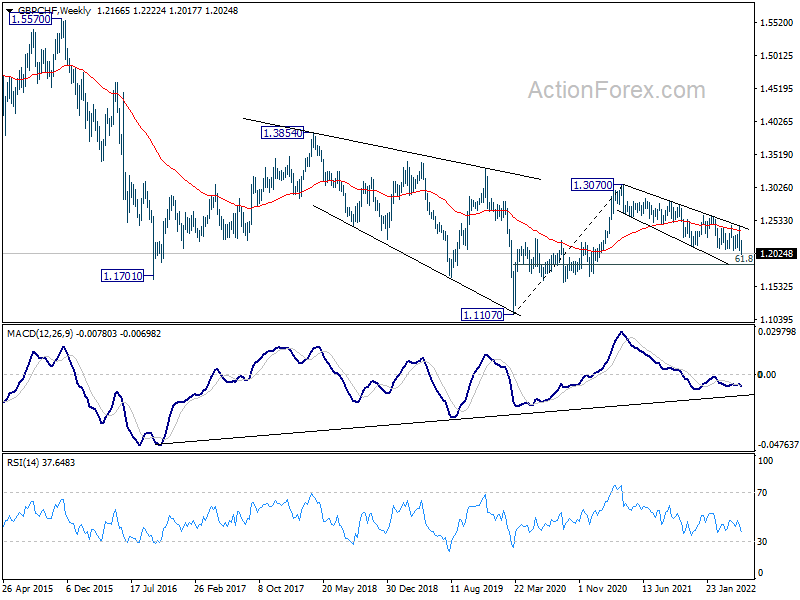
Sterling tumbles broadly after the shockingly poor PMI services reading. GBP/CHF is finally accelerating down as the downtrend from 1.3070 extends. Near term outlook will now remain bearish as long as 1.2222 resistance holds. Next target is 61.8% retracement of 1.1107 to 1.3070 at 1.1857.
It's too early to exclude the case that fall from 1.307 is merely a corrective mode. However, the multiple rejection by 55 week EMA is clearly a bearish sign. Sustained break of 1.1857 would set up even deeper decline back to 1.1107 (2020 low).

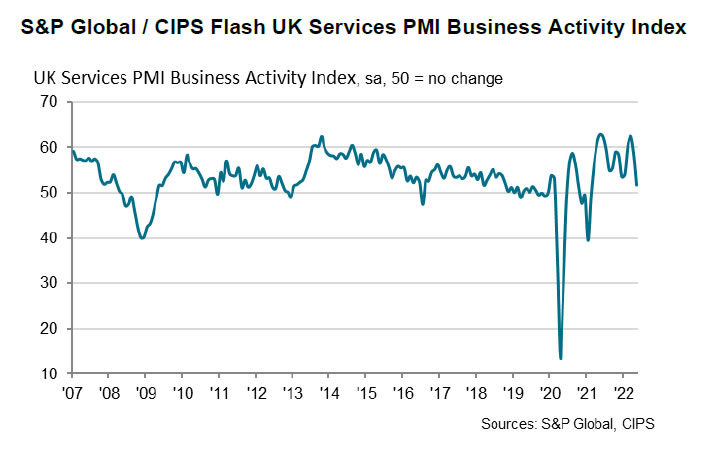
UK PMI manufacturing dropped to 54.6, services collapsed to 51.8
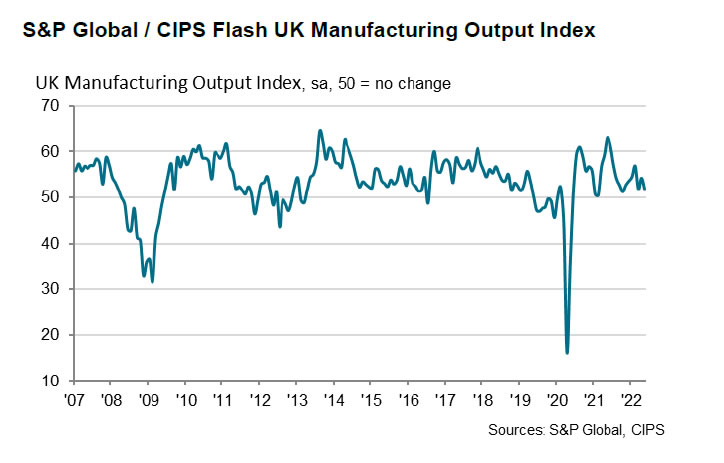
UK PMI Manufacturing dropped from 55.8 to 54.6 in May, below expectation of 55.1, hitting a 16-month low. PMI Services dropped sharply from 58.9 to 51.8, well below expectation of 57.3, a 15-month low. PMI Composite dropped from 58.2 to 51.8, also a 15-month low.
Chris Williamson, Chief Business Economist at S&P Global Market Intelligence said:
"The UK PMI survey data signal a severe slowing in the rate of economic growth in May, with forward-looking indicators hinting that worse is to come. Meanwhile, the inflation picture has worsened as the rate of increase of companies' costs hit yet another all-time high. The survey data therefore point to the economy almost grinding to a halt as inflationary pressure rises to unprecedented levels.
"The tailwind from the reopening of the economy has faded, having been overcome by headwinds of soaring prices, supply delays, labour shortages and increasingly gloomy prospects. Companies cite increasingly cautious moods among households and business customers, linked to the cost-of-living crisis, Brexit, rising interest rates, China's lockdowns and the war in Ukraine.
"There are some signs that the rate of inflation could soon peak, with companies reporting price resistance from customers, and it is likely that the slowing in demand will help pull prices down in coming months. However, the latest data indicate a heightened risk of the economy falling into recession as the Bank of England fights to control inflation."

Bitcoin’s Tedious Walk Around $30K
Bitcoin continues its tedious walk around $30K in a narrow range of $28.6-30.6K. Ethereum lost 0.4%, while other leading altcoins in the top 10 fell between 1% (XRP) and 2% (Solana). The exception was Binance Coin (+2.9%).
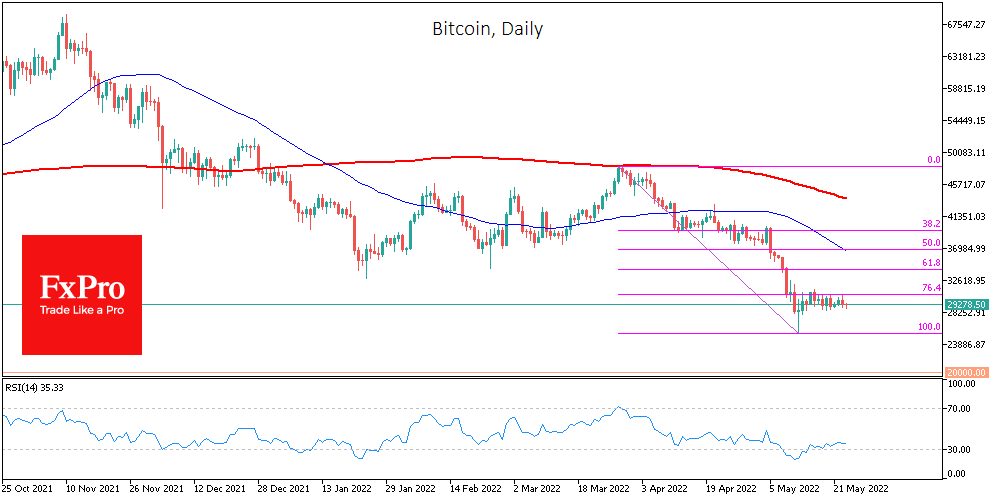
The total capitalisation of the crypto market, according to CoinGecko, fell 0.8% overnight to $1.33 trillion. The Bitcoin Dominance Index fell 0.5% to 42.1%. The cryptocurrency Fear and Greed Index was up 2 points to 12 by Tuesday and remains in “extreme fear”.
The dynamics of the first cryptocurrency in recent days seem to have become determined by the balance of power between bulls and bears, but not the stock market dynamics. The latter showed gains on Monday, while bitcoin reversed from the upper end of its range for the past two weeks.
CoinShares data for last week showed a record weekly outflow of institutional investors from crypto funds since the start of the year. Funds are operating cautiously, and their actions may be holding back growth while buying on the dips comes from retail and crypto whales. Thus, the market is distilled from sporadic participants who want to “ride the wave” but are not crypto enthusiasts by nature.
Without the hype inherent in the golden days’ for crypto, the flow of money into the industry is drying up, a cruel test of strength. Over the past two weeks, investors have withdrawn more than $10bn (13%) from Tether’s USDT stable coin. According to Gary Gensler, head of the SEC, many crypto-sphere projects are about to fall.
But that is not stopping lobbyists from promoting cryptocurrencies as a long-term investment vehicle. A bill has been introduced in the US House of Representatives that could lift restrictions on crypto investments by pension funds.
Global Growth Fears Strain Sentiment
Asian shares and US equity futures flashed red on Tuesday morning despite the rally on Wall Street overnight. Investors seem to be on edge this morning, adopting a defensive approach towards risk amid fears over the global economic outlook and concerns around inflation. These negative themes have overshadowed yesterday’s optimism offered by President Joe Biden’s comments on removing some tariffs on Chinese imports. The overnight warning from Snap that it was unlikely to meet revenue and profit forecasts added to the risk-off mood, pulling US futures lower.
European markets are expected to open softer with the negative sentiment sending investors towards safe haven assets. In the currency space, the euro held near one-month highs on expectations of the ECB raising interest rates in July. The safe-haven dollar attempted to stabilise while gold traded around $1855.
It is fair to say that market sentiment remains fragile with inflation jitters, global growth concerns, Covid lockdowns in China, ongoing geopolitical risks, and Fed policy fears creating a poisonous cocktail. Last week, the S&P 500 briefly fell into bear market territory. Should caution remain the name of the game over the next few days, the benchmark index could find itself back in that psychological “red zone”.
On the data front, investors will direct their attention towards the flash PMI data for the Eurozone, United Kingdom, and the US. These reports may provide the first major clues as to the health of the economy in May amid ongoing geopolitical risks, inflation fears, and growth concerns. May’s PMI data may offer valuable insight into how the Ukraine-Russia developments and China’s lockdown have impacted supply chains and fanned inflationary pressures.
Are Euro bulls back in town?
Buying sentiment towards the euro received a major boost yesterday after ECB President Lagarde heightened expectations around the bank raising interest rates in July and September. German business sentiment also unexpectedly improved in May.
Nevertheless, the ECB is still lagging behind the Federal Reserve which is expected to raise rates by 50 bps at its next two meetings in July and September. Given how the European Union recently cut its forecasts for economic growth amid ongoing geopolitical risks and disruptions to energy supplies, this could limit the euro’s upside.
Looking at the technical picture, EURUSD seems to be experiencing a technical bounce on the daily charts with prices trading above the 1.0640 level. The key question is whether the current move is a rally to higher levels or just a “dead cat bounce”. A breakout above 1.0750 may open the door towards 1.0850. Should 1.0640 prove to be unreliable support, the EURUSD could sink back towards 1.0500.
Commodity spotlight – Oil
Oil prices were under pressure on Tuesday, dropping over 1% as global growth concerns and China’s Covid-19 curbs fueled concerns about the demand outlook.
The sell-off came even as China attempted to cushion the impact of lockdowns by rolling out stimulus measures to support businesses and stimulate demand. The global commodity is likely to remain volatile due to the various forces influencing its supply and demand dynamics. On the geopolitical front, the EU’s proposal to ban Russian oil has reached a stalemate due to Hungary’s opposition and is unlikely to be approved when the bloc’s leaders meet next week.
WTI continues to linger around the sticky $110 level. Sustained weakness below this point could encourage a decline towards $105 and $100
Commodity spotlight – Gold
The next few days could be volatile for gold. Several key themes continue to pull and tug at gold prices, dictating the short to long-term outlook. These include recession fears, inflation jitters, Russia-Ukraine developments, China’s Covid-19 crises, and Fed hike expectations. While gold seems to be pushing higher, the Federal Reserve’s aggressive approach towards higher-interest rates could act as a major roadblock for the zero-yielding metal. Alternatively, the developments revolving around Ukraine-Russia and global growth fears may cushion the metal’s downside losses.
Technically, a breakout above $1855 could trigger a move towards $1885 and $1900. Sustained weakness under $1855 is seen opening the doors towards $1820 and $1800.
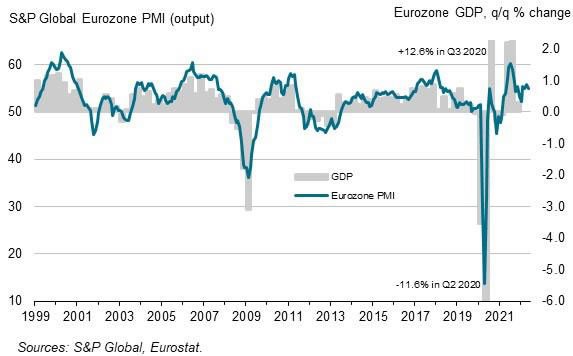
Eurozone PMI composite dropped to 54.9, beleaguered manufacturing offset by buoyant service
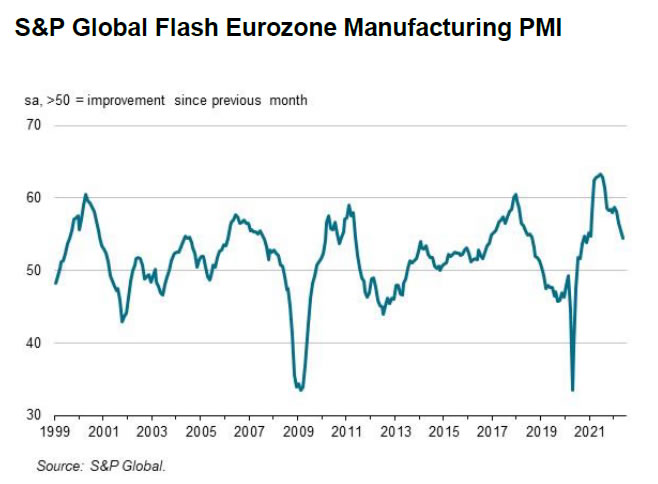
Eurozone PMI Manufacturing rose dropped from 55.5 to 54.4 in May, below expectation of 54.9, hitting an 18-month low. PMI Services dropped from 57.7 to 56.3, below expectation of 57.5. PMI composite dropped from 55.8 to 54.9.
Chris Williamson, Chief Business Economist at S&P Global Market Intelligence said:
"The eurozone economy retained encouragingly resilient growth in May, as a beleaguered manufacturing sector was offset by a buoyant service sector.... Thanks to buoyant demand for services, particularly from households, the PMI data are consistent with the economy growing at a solid quarterly rate of 0.6% so far in the second quarter....
"Although there are signs that inflationary pressures could be peaking, with input cost inflation down for a second successive month and supply constraints starting to be less widely reported, inflationary pressures remain elevated at previously unprecedented levels. Such high price pressures, accompanied by the reassuringly resilient GDP growth signalled by the surveys, looks set to tilt policymakers at the ECB towards a more hawkish stance."
ECB Lagarde: We’re moving very likely into positive at the end of Q3
In a Bloomberg TV interview, ECB President Christine Lagarde said, "we're moving (deposit rate) very likely into positive territory at the end of the third quarter."
"When you're out of negative (rates) you can be at zero, you can be slightly above zero. This is something that we will determine on the basis of our projections and ... forward guidance," she explained.
Still, Lagarde emphasized the graduality and ECB's policy adjustments. "I don't think we are in a situation of surging demand at the moment," Lagarde said. "It's definitely an inflation that is driven by the supply side of the economy."
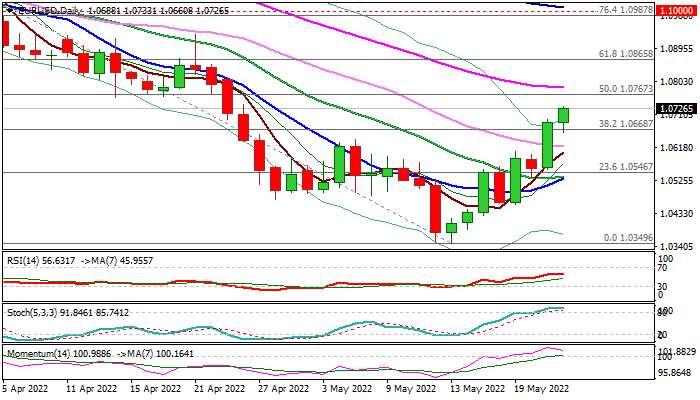
EUR/USD: Extended Recovery Eyes Pivotal Barrier at 1.0767
The Euro keeps firm tone in early Tuesday and rises above 1.07 mark, in extension of Monday’s 1.2% rally.
Fresh risk appetite and hawkish comments from the ECB underpin recovery, but so far positive fundamental factor is weighed by escalating tensions between the US and China.
On the other side, technical studies on daily chart are mixed as bullish momentum started to fade and stochastic is overbought, while moving averages (10,20,30) are in bullish setup and offer support.
Recovery faces pivotal barrier at 1.0767 (50% of 1.1184/1.0349 bear-leg / weekly Tenkan-sen) break of which would keep bulls in play for stronger correction.
Traders focus on the economic data today, with German / EU PMI’s being the top releases in European session, while US PMI’s and the speech of Fed Chair Powell will be in focus in the US session.
Res: 1.0767; 1.0786; 1.0800; 1.0865
Sup: 1.0700; 1.0668; 1.0621; 1.0546