

Sample Category Title
EUR/GBP Daily Outlook
Daily Pivots: (S1) 0.8388; (P) 0.8415; (R1) 0.8432; More...
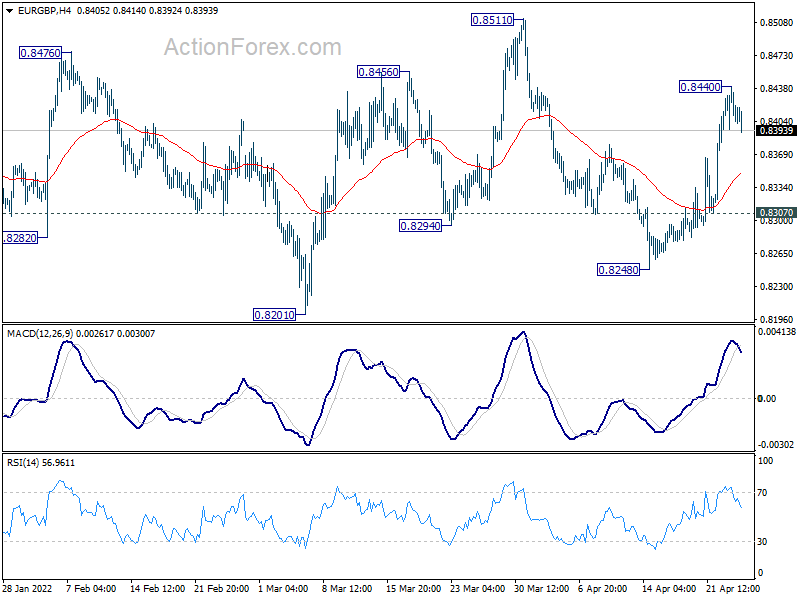
Intraday bias in EUR/GBP is turned neutral with a temporary top formed at 0.8440. Another rise will remain mildly in favor with 0.8307 minor support intact. Above 0.8440 will target 0.8511 resistance. Further break of 0.8511 will reaffirm that 0.8201 is a medium term bottom, and target 0.8697 medium term fibonacci level next. On the downside, below 0.8307 will turn bias back to the downside for 0.8248 support instead.
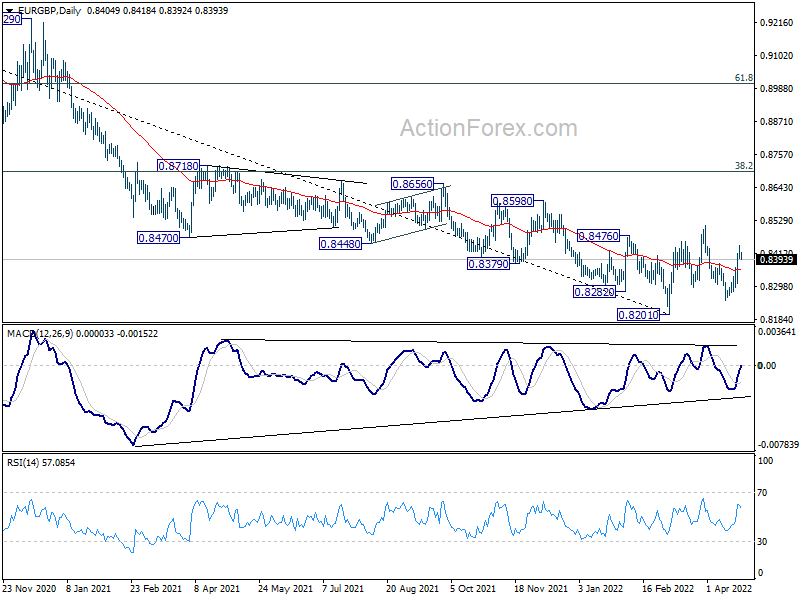
In the bigger picture, a medium term bottom could be in place at 0.8201, on bullish convergence condition in daily and weekly MACD. Rise from there could either be a correction to the down trend from 0.9499 (2020 high), or a medium term up trend itself. In either case, further rise should be seen to 38.2% retracement of 0.9499 to 0.8201 at 0.8697. Sustained break there will target 61.8% retracement at 0.9003.
EUR/CHF Daily Outlook
Daily Pivots: (S1) 1.0232; (P) 1.0291; (R1) 1.0337; More....
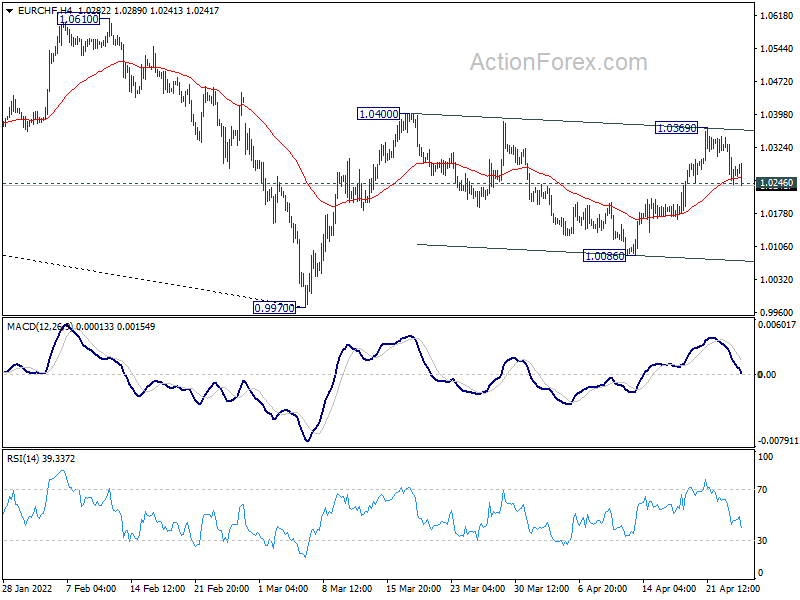
EUR/CHF's break of 1.0246 dampens the bullish view and argues that corrective pattern from 1.0400 is extending with another falling leg. Intraday bias is back not the downside for 1.0086 support. On the upside, though, break of 1.0400 resistance will resume the rebound from 0.9970 to 1.0610 structural resistance instead.
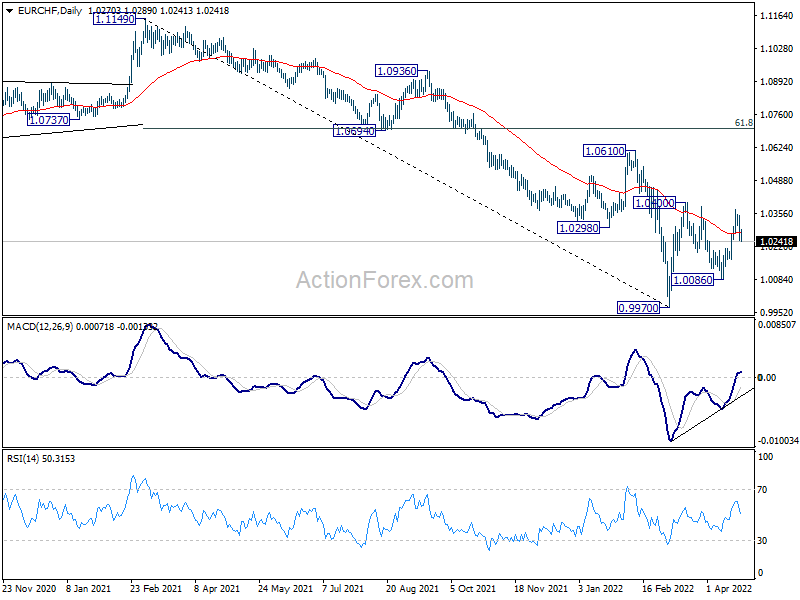
In the bigger picture, long term down trend from 1.2004 (2018 high) is still in progress. Next target is 100% projection of 1.2004 to 1.0505 to 1.1149 at 0.9650. In any case, sustained break of 1.0505 support turned resistance (2020 low) is needed to be the first sign of medium term bottoming. Otherwise, outlook will remain bearish.
USD/CAD Daily Outlook
Daily Pivots: (S1) 1.2702; (P) 1.2740; (R1) 1.2773; More...
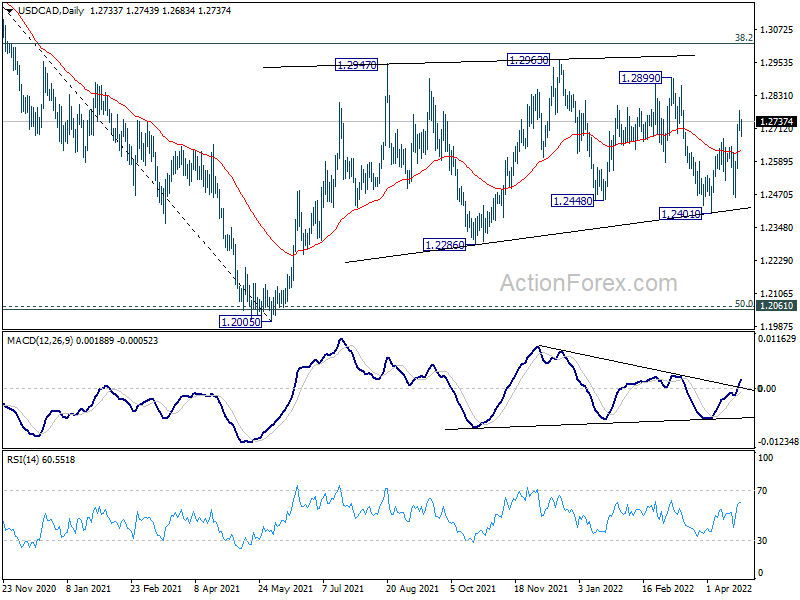
Intraday bias in USD/CAD remains on the upside with 1.2652 minor support intact. Rebound from 1.2401 should target 1.2899 resistance next. On the downside, however, break of 1.2652 minor support will mix up the near term outlook and turn intraday bias neutral again.
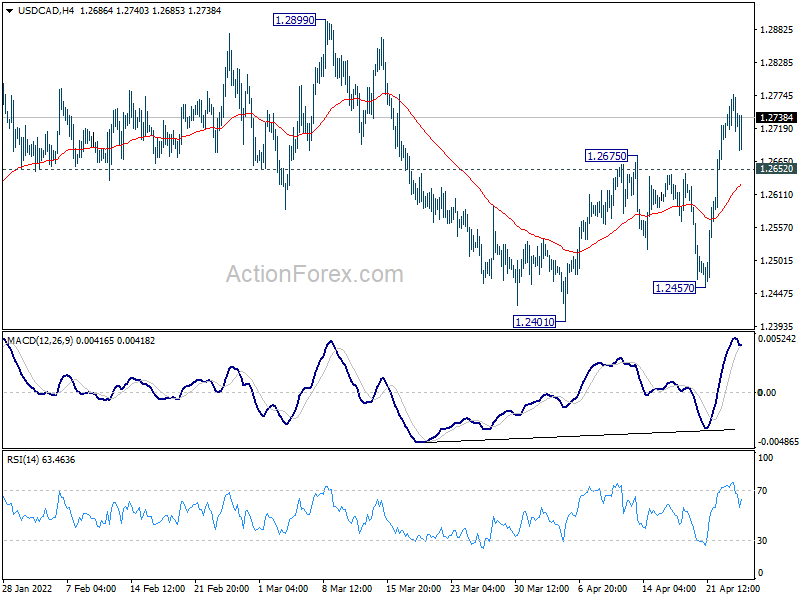
In the bigger picture, focus stays on 38.2% retracement of 1.4667 (2020 high) to 1.2005 (2021 low) at 1.3022. Sustained break there should confirm that the down trend from 1.4667 has completed after defending 1.2061 long term cluster support. Further rise would then be seen towards 61.8% retracement at 1.3650. However, rejection by 1.3022 will maintain medium term bearishness. Break of 1.2005 will resume the down trend from 1.4667 and that carries larger bearish implications too.
AUD/USD Daily Report
Daily Pivots: (S1) 0.7125; (P) 0.7191; (R1) 0.7247; More...
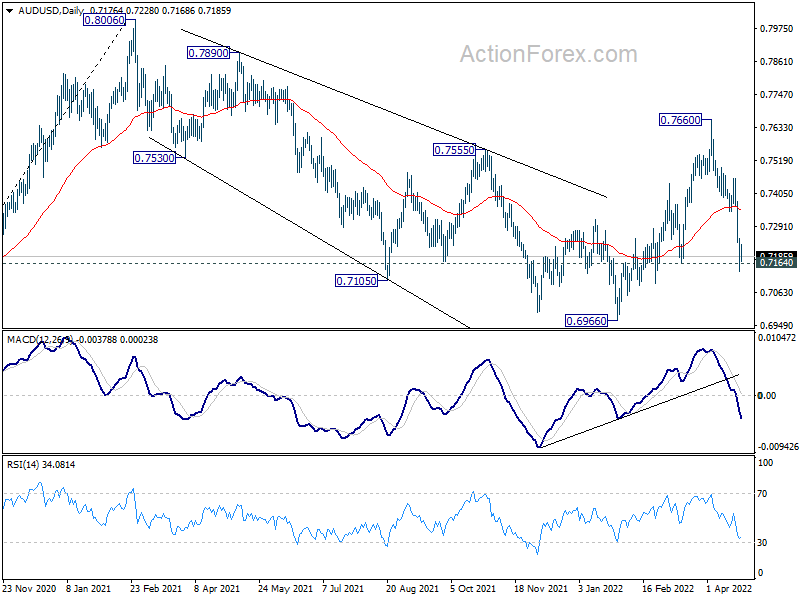
Intraday bias in AUD/USD remains on the downside at this point. Sustained break of 0.7164 support will confirm that whole rebound from 0.6966 has completed at 0.7660. More importantly, such development will suggest that larger correction from 0.8006 has already started the third leg. Deeper decline would be seen back to retest 0.6966 low next. On the upside, above 0.7250 minor resistance will turn intraday bias neutral first.
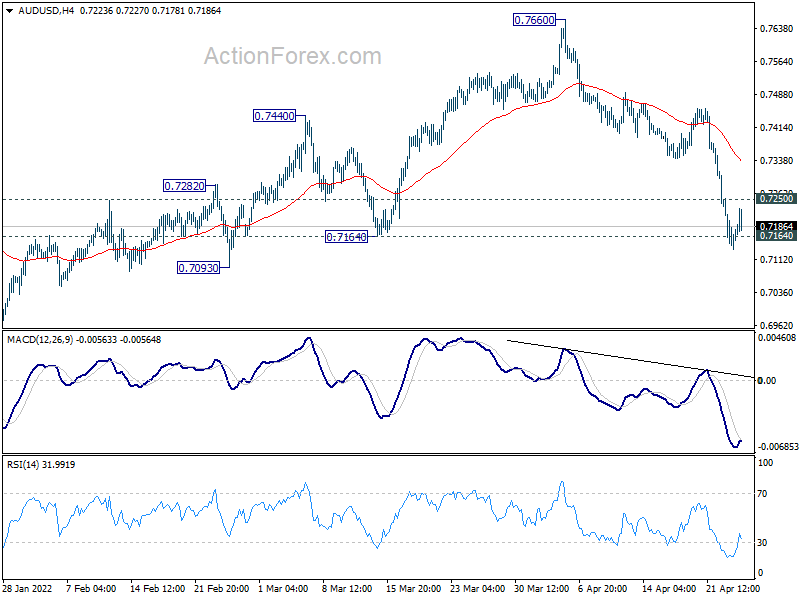
In the bigger picture, price actions from 0.8006 are seen as a corrective pattern to rise from 0.5506 (2020 low). Break of 0.7164 will suggest that such correction is still in progress, with fall from 0.7660 as the third leg. Next target will be 50% retracement of 0.5506 to 0.8006 at 0.6756. On the upside, break of 0.7660 will revive that case that the correction has already completed at 0.6966.
USD/JPY Daily Outlook
Daily Pivots: (S1) 127.48; (P) 128.18; (R1) 128.82; More...
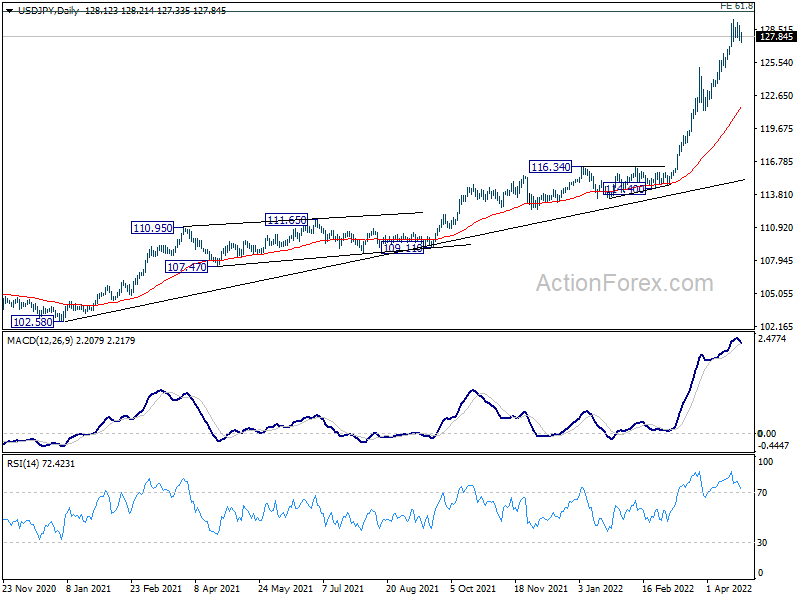
USD/JPY is staying in consolidation from 129.39 and intraday bias remains neutral first. Downside of retreat should be contained above 125.09 resistance turned support to bring another rally. On the upside, above 129.39 will target 130.04 long term projection level next.
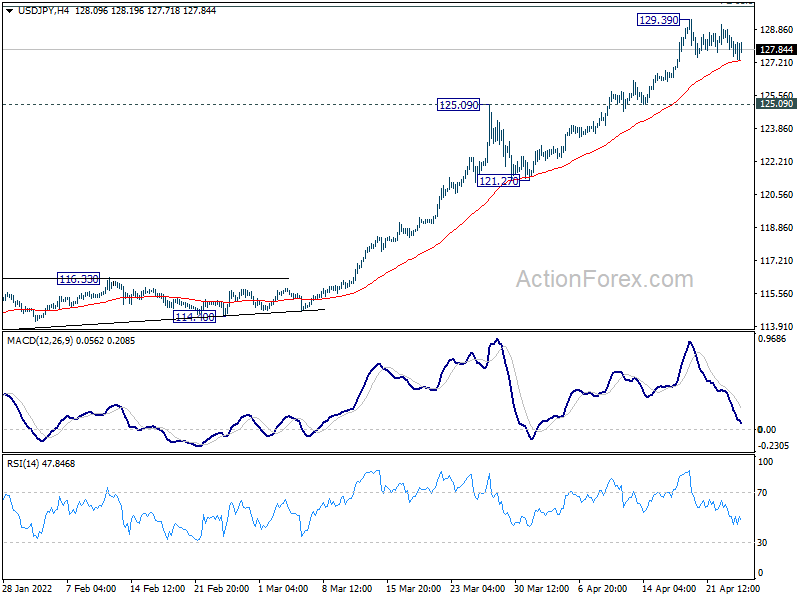
In the bigger picture, the break of 125.85 resistance (2015 high) suggests that whole up trend from 75.56 (2011 low) is resuming. Further rise should be seen to 61.8% projection of 75.56 (2011 low) to 125.85 (2015 high) from 98.97 at 130.04. Sustained break there wave the way to 147.68 (1998 high). For now, this will remain the favored case as long as 121.27 support holds.
USD/CHF Daily Outlook
Daily Pivots: (S1) 0.9564; (P) 0.9580; (R1) 0.9614; More....
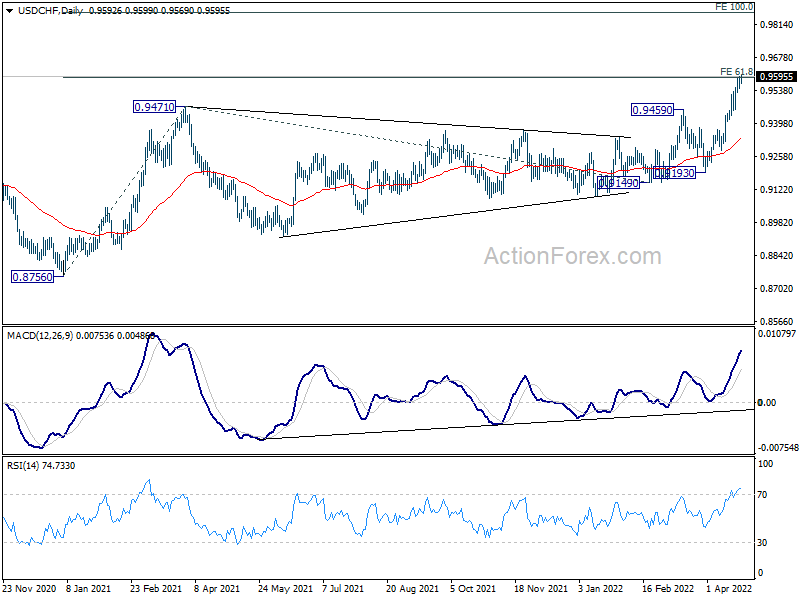
Intraday bias in USD/CHF stays on the upside for the moment. Sustained break of 0.9591 medium term projection level will pave the way to next at 0.9864. On the downside, break of 0.9542 minor support will turn intraday bias neutral to bring consolidations. But downside of retreat should be contained above 0.9372 resistance turned support to bring another rally.
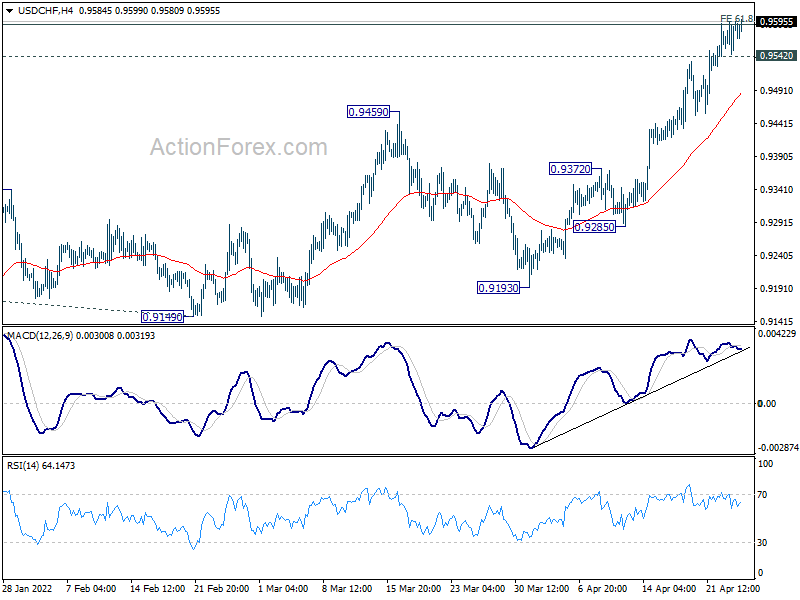
In the bigger picture, down trend from 1.0342 (2016 high) could have completed with three waves down to 0.8756 (2021 low) already. Rise from 0.8756 is likely a medium term up trend of its own. Sustained break of 61.8% projection of 0.8756 to 0.9471 from 0.9149 at 0.9591 will pave the way to 100% projection at 0.9864. This will now remain the favored case as long as 0.9193 support holds.
GBP/USD Daily Outlook
Daily Pivots: (S1) 1.2679; (P) 1.2762; (R1) 1.2826; More...
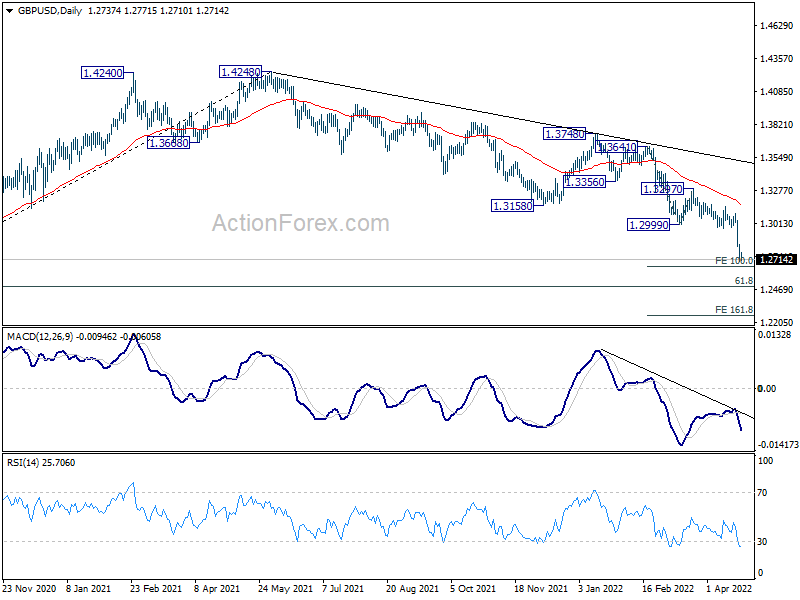
Intraday bias in GBP/USD remains on the downside for 100% projection of 1.3641 to 1.2999 from 1.3297 at 1.2655. Sustained break there will target 161.8% projection at 1.2258. On the upside, above 1.2822 minor resistance will turn intraday bias neutral and bring consolidation first, before staging another decline.
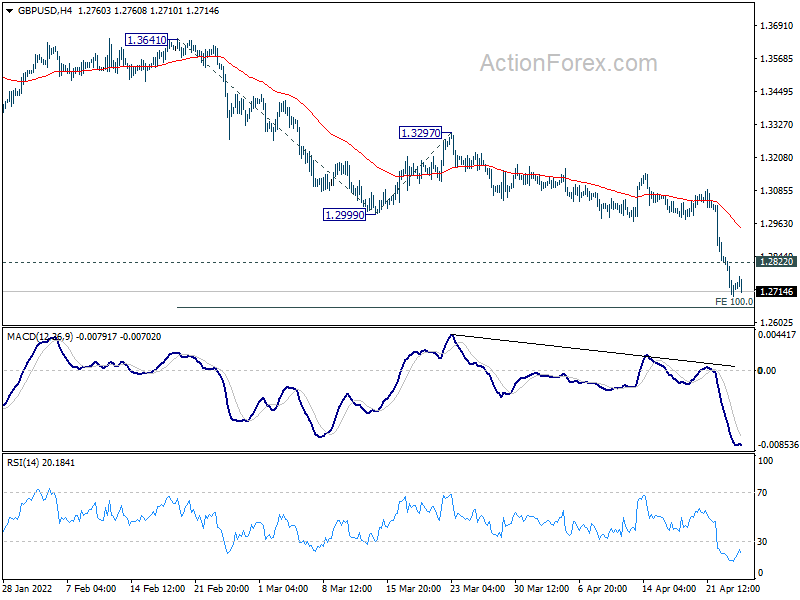
In the bigger picture, rise from 1.1409 (2020 low) has completed at 1.4248, ahead 1.4376 long term resistance (2018 high). Decline from 1.4248 could still be a corrective move, or it could be the start of a long term down trend. In either case, deeper decline would be seen back to 61.8% retracement of 2.1161 to 1.1409 at 1.2493. In any case, break of 1.3158 support turned resistance is needed to be the first sign of medium term bottoming. Otherwise, outlook will stay bearish in case of rebound.
Daily Technical Analysis
EUR/USD
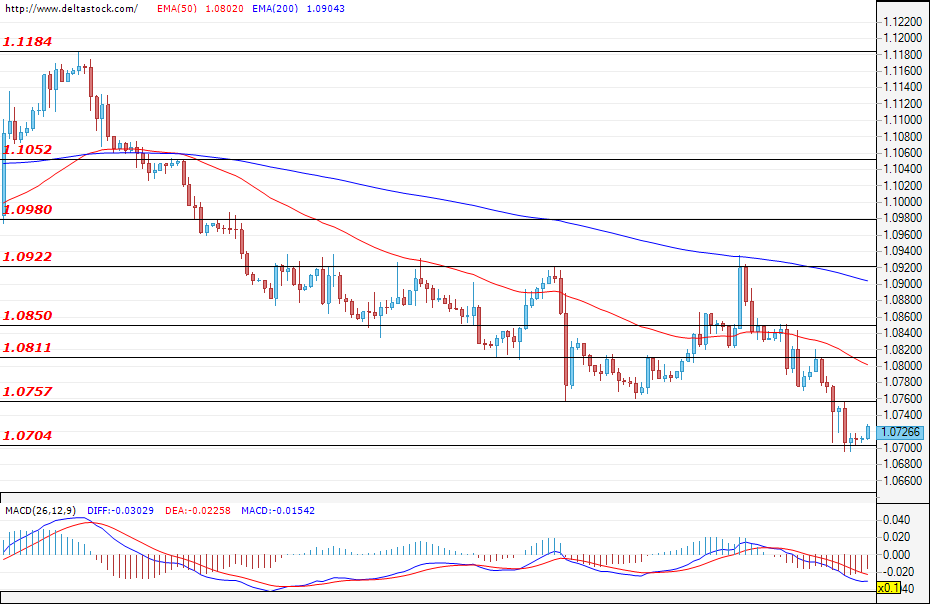
After the breach of the important support at 1.0757, the Euro lost quite a bit of ground against the dollar and the pair tested the support zone at 1.0704. During the early hours of today`s trading, the EUR/USD consolidated around the mentioned level and if the bearish attack continues and this level falls, then the pair will most likely head towards the lows from Мarch 2020 at around 1.0650. The first target for the bulls is the mentioned level at 1.0757, which is currently acting as resistance, followed by the target at 1.0811.
USD/JPY
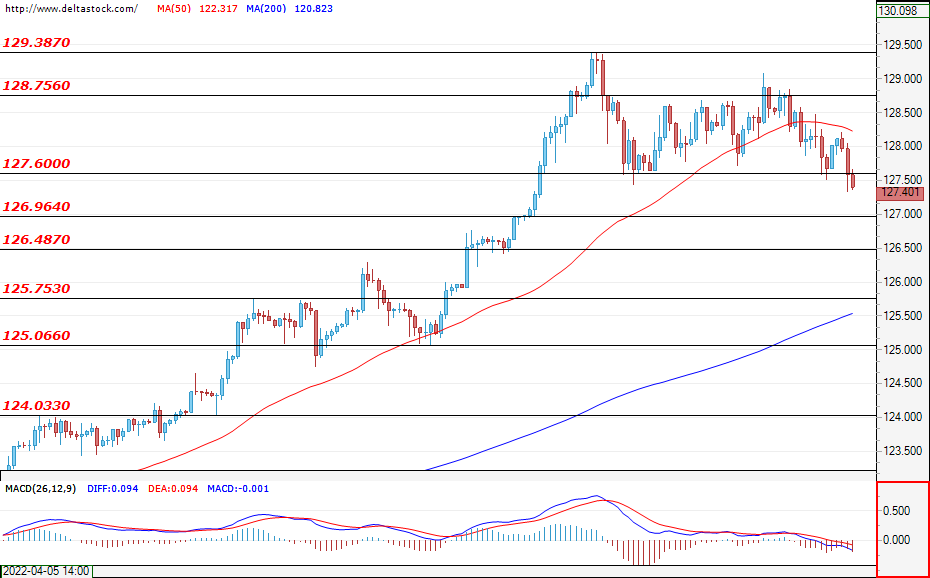
The bears prevailed, and during the early hours of today`s trading, the currency pair fell below the lower border of the range between 127.60 and 128.75. A confirmed breach here could easily deepen the decline and lead to a sell-off towards the support zone at 126.96, followed by the level at 126.48. If the bulls enter the market, then a violation of the important resistance at 128.75 could easily pave the way for a new attack on the high at 129.38 and would strengthen the positive expectations for the future path of the Ninja.
GBP/USD
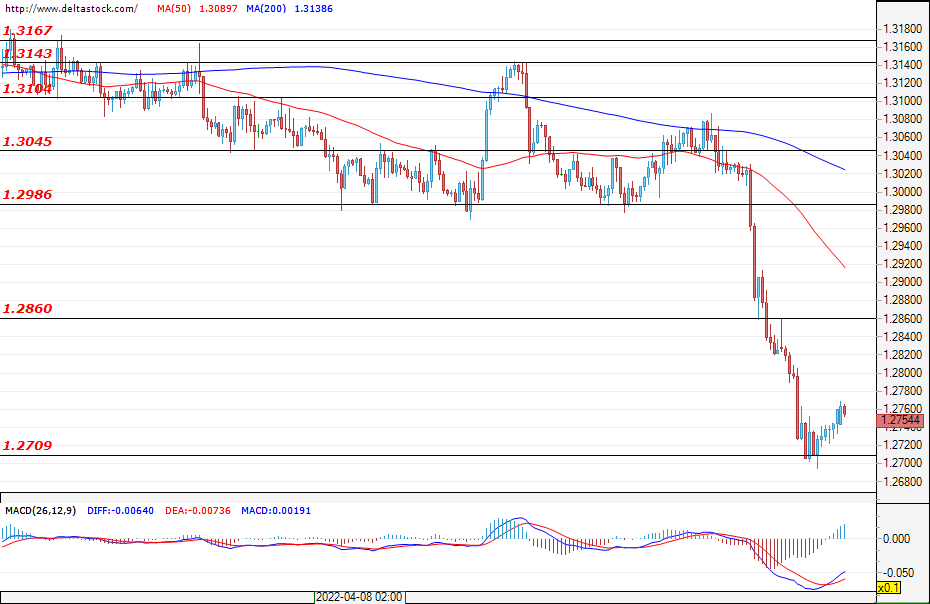
The depreciation for the pound against the dollar was limited to the support zone at 1.2709, and at the time of writing the analysis, the Cable is holding positions above the aforementioned level. If the bearish momentum fades and the bulls prevail, then they could lead the pair towards the resistance level at 1.2986, but only a successful violation of the target at 1.3045 could lead to a change in the current sentiment of the market participants. If the sellers remain in control, however, then a new breach attempt of the zone at 1.2709 would be the most probable scenario. If confirmed, this breach could prolong the sell-off and could easily lead to future losses towards 1.2670 for the sterling.
EUGERMANY40
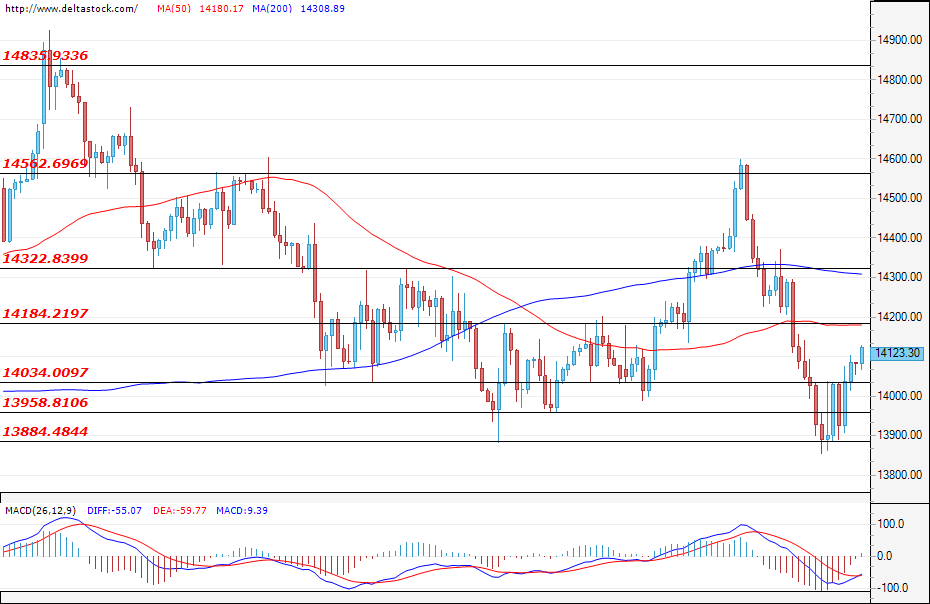
The German index regained some of its recent losses, and after the breach of the resistance at 14034, the price headed for a test of the next target at 14184. A successful violation of the mentioned level could easily lead to a rally and could continue the recovery towards the major zone at 14322. If the bears enter the market instead and manage to violate the level at 14034, then their next support can be found at 13958, followed by the lower target at 13884.
US30
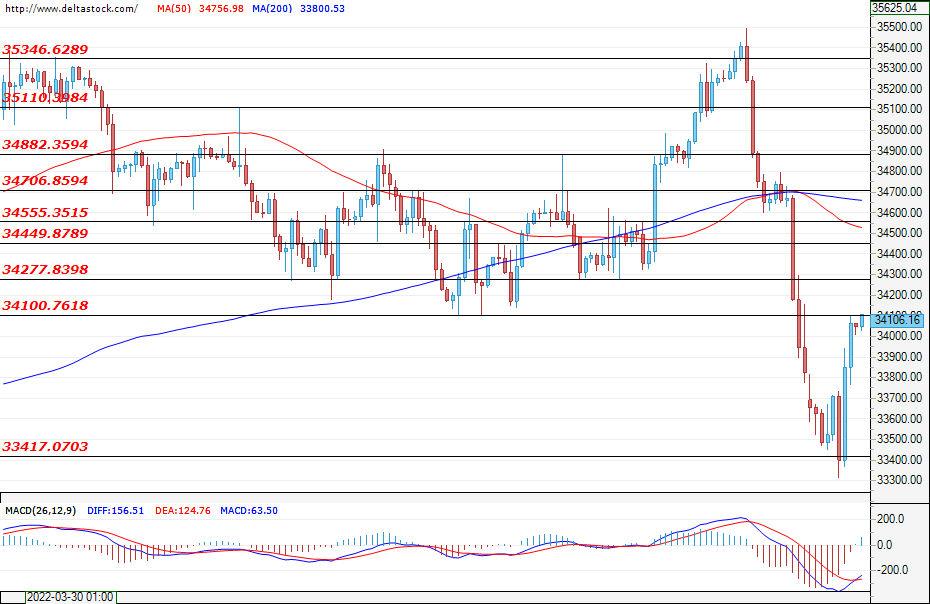
During the tech sector earnings, the sell-off was limited around the zone at 33400, after which the U.S. index staged a massive rally. A successful breach of the resistance zone at 34100 could easily lead to more gains and could head the price for a test of the higher level at 34277, followed by the one at 34449. If the mentioned zone at 34100 defends against the bullish attack, then a new attempt at breaching the low at 33417 would be the most probable scenario, marking the current move as a corrective one.
Why Not Lock in Some Gains Awaiting Some Fresh Guidance?
Markets
A Chinese growth slowdown ranks as one of the biggest risks to future global growth. March data already showed the impact of lockdowns in Shanghai (still in place), with an outbreak in Beijing over the weekend adding to worries. Risk sentiment soured in Asian and European dealings with main equity indices losing over 2%. Wall Street eventually made it off the intraday lows to close in positive territory in an intriguing comeback.
Core bonds corrected significantly higher following last week’s sharp hawkish repositioning. The decline at the longer end tenors was mostly driven by a decline in inflation expectations resulting from uncertainty around future growth/demand. European bonds significantly outperformed US Treasuries, again risk sentiment turned after the European bell (thus pulling US T’s off best intraday levels). US yields eventually closed 4 bps (2-yr) to 8.3 bps (7-yr) lower with the belly of the curve outperforming the wings. German yields lost 8.3 bps (30-yr) to 16.3 bps (5-yr). The UK Gilt curve bull steepened with yields sliding by 9 bps (30-yr) to 15.5 bps (2-yr).
The dollar remains markets’ favorite both in the risk-off setting and because of the Fed’s determination to tackle the inflation problem. The trade-weighted greenback (DXY) closed at 101.86, eying the 2020 top at 102.98. EUR/USD closed at a new cycle low of 1.0713 from an open at 1.0807. Commodities and commodity-related currencies suffered a setback as well. Brent crude for example touched $100/b from a >$105/b open, before bouncing back above $103.
Asian markets this morning join WS’s better shape yesterday evening. Core bonds are slipping away again. It’s still early days, but it could be that yesterday’s moves on bond markets was some profit taking on short positions with markets gradually keeping next week’s FOMC meeting in mind. The trend on bond markets has been very strong with an aggressive Fed tightening cycle discounted by now. Why not lock in some gains awaiting some fresh guidance? The dollar stabilizes near yesterday’s closing levels.
Today’s eco calendar is interesting in the US with March durable goods orders, housing data, consumer confidence and Richmond Fed manufacturing. We especially eye consumer confidence to see how Joe Sixpack stomachs the inflation surge. The US Treasury starts its end-of-month refinancing operation with a $48bn 2-yr Note auction. It will be interesting to see whether demand picks up at current absolute yield levels (2.64%). It might be just a little bit too early with US money markets pricing a 3%+ policy rate peak next year. Q4 corporate earnings and a speech by ECB Villeroy are wildcards.
News Headlines
South Korean GDP expanded by 0.7% q/q in the first quarter of this year, or 3.1% y/y. The quarterly increase was exclusively driven by net-exports, adding 1.4 ppts to the headline figure. Private consumption (-0.2 ppts) and gross capital formation (-0.5 ppts) were a drag as the country in Q1 grappled with the highest virus tally ever. Economic momentum is set to hold up in the current quarter, thanks to a rebound in consumption and ongoing strong exports. This allows for the central bank of Korea to continue its hiking cycle (policy rate now 1.5%) to tackle above-target inflation (4.1% in March). A key risk going forward is China’s growth slowdown affecting exports. Rising commodity prices meanwhile will impact both consumption and inflation and increase the BoK’s policy dilemma. The SK won trades stoic around USD/KRW 1248.5 this morning. Barring the volatile period in the early pandemic days, that is near the weakest level for the won since 2010.
Bank of Canada governor Macklem was the most explicit about another 50 bps rate hike at the next policy gathering in June yet. Speaking at a parliamentary committee hearing, he said the MPC “will be considering taking another 50-basis point step”. The idea of an even larger hike (eg. 75 bps) floated last week would be “very unusual”, Macklem said. Canadian short-term swap yields fell almost 10 bps but were already declining before his speech. Markets did price in lower odds of such even larger increase. Instead they stick to three consecutive 50 bps hikes at every meeting through September. The Canadian dollar eased to USD/CAD 1.273.
China Reacts to Financial Stress
Market movers today
We have a number of US data releases today. Consumer confidence from Conference Board, durable goods orders, new home sales and house prices will add more information on the state of the economy. Most interesting will probably be new home sales following the sharp rise in mortgage rates, although the biggest impact will probably not be felt until we get the April and May data. US 30-year mortage rates have increased from 3.25% to 5.25% since the beginning of the year pushing up the cost for new home buyers.
China's covid development and how much the virus spreads in Beijing is also worth watching.
The 60 second overview
Volatile markets: global growth concerns have increasingly become a market theme. Over the last week concerns have been amplified by China's zero Covid-policy and continued aggressive tightening signals from central banks such as the Fed and the ECB. Assets that tend to trade closely in tandem with the cyclical outlook have performed poorly, market volatility has increased and the broad USD is one of the few assets that has performed recently.
Markets will continue to follow Chinese developments closely amid China expanding coronavirus testing to most of Beijing which could precede a shut-down of the city similar to Shanghai. A possible shutdown risks putting further upside pressure on global supply chain issues and removes demand from the physical commodity market as evident from the recent setback to commodity prices.
Chinese authorities react: Overnight, the People's Bank of China has reacted to the financial stress in Chinese markets by pledging its support to the real economy. In a statement, the central bank announced new liquidity measures and stated that it "will step up the prudent monetary policy's support to the real economy, especially for industries and small businesses hit hard by the pandemic". Markets have reacted positively to the statement this morning: we see some stabilisation in the heavily battered Chinese equity market, broader equity futures are trading in green and yields are rebounding somewhat after a sharp setback in yesterday's session
CNY and global inflation: Following the sharpest weekly decline in the CNY since 2015 the Chinese authorities yesterday announced a decline in the FX reserve requirement ratio (RRR). The change means that Chinese banks need not hold as much foreign exchange incentivising domestic CNY buying. We do not believe that China minds a weaker CNY but the pace of the latest decline has likely been a worry. Given the importance of the Chinese economy for global growth and not least global goods production changes to the currency is important for global inflationary pressures. All else equal a weaker CNY acts as a dis-inflationary force and is likely welcome by central banks around the world fighting high imported inflationary pressures.
Equities: In our opinion there were no news out yesterday justifying the elevated volatility in equity markets. In our book this comes down to massive uncertainty among investors with the overshadowing question being whether central banks can orchestra a soft landing. Sector and style performance were very different on the two sides of the Atlantic with Min Vol outperforming. Min Vol is getting a lot of support from the combination of elevated uncertainty and stagflation.
FI: Sour risk sentiment on growth concerns from China due to Covid outbreak has sent European rates massively lower this week - bar this morning's stabilization. Being the most growth/policy segment of the curve, the 5y point in Germany ended 16bp lower yesterday, but also the shorter (2y lower by 13bp) and longer end (30y lower by 8bp) of the curve moved lower. Despite a pro-EU outcome of the French election, we did not see a noteworthy outperformance of French bonds. BTPs-Bund spreads widened 4bp to 174bp, which is the widest since Q2 2020. From a near-term macro aspect, we expect the high volatility to continue, with no particular circuit breaker in sight this week, hence we keep an eye out for next week's Fed meeting where a 50bp hike and QT announcement is widely expected.
FX: For once JPY was top performing G10 currency in part on the back of the drop in oil prices with Scandies losing out. EUR/USD drifted lower and close to the 1.07 mark.
Credit: The credit markets remain choppy. Yesterday iTraxx main widened 2.3bp to 84.3bp while Xover widened 10.6bp to 398.6bp. The subdued sentiment is also taking its toll on the primary markets where we see limited new issue printing.