Sample Category Title
Dollar Gaining Ground on Fed
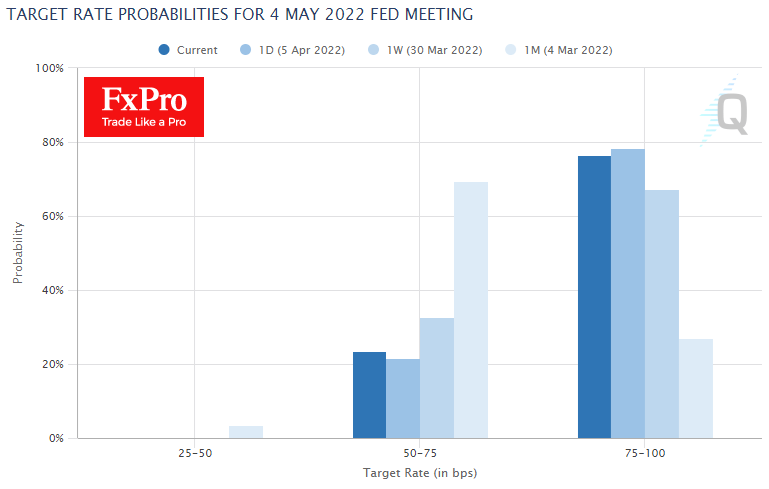
The dollar is rising against most of its major rivals on the latest hawkish comments from the Fed. The futures market lays a 77% chance of a 50-point rate hike at the next meeting in a month from 27% a month ago.
FOMC member Lael Brainard said yesterday that she expects a combination of balance sheet cuts and rate hikes to make Fed policy more neutral later this year. Although no 50-point hike follows directly from those words, markets are paying attention to the tightening of rhetoric rather than the Fed trying to cool the panic around inflation as it did last year.
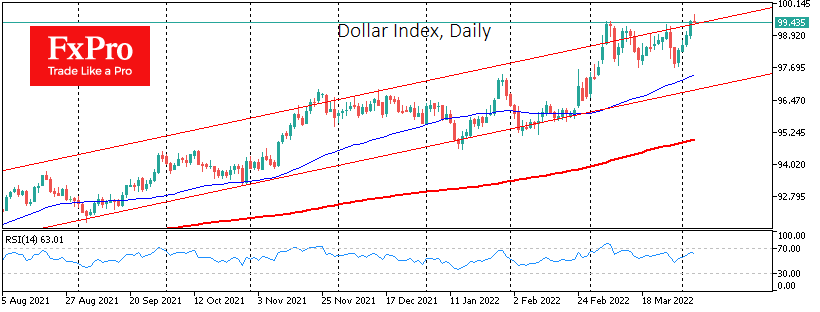
A breeding ground for a new wave of dollar strength is being created in this environment. On Wednesday morning, the dollar index to a basket of FX’s six most popular currencies hit new highs in May 2020, climbing to 99.7. Rising US bond yields in response to a more hawkish Fed tilt feed interest in dollar assets with more attractive yields.
Separately, investors are “voting” for America against Europe because of the economic outlook. The imposition of sanctions, injury to business, and supply chain disruptions are affecting prices and materially shrinking the economy. This situation leads to monetary policy in the Eurozone promising to remain more accommodative for the foreseeable future to maintain growth and reduce the debt servicing costs of governments.
High inflation increases the tolerance of the US Federal Reserve and the Treasury for a rising dollar. Policies now support the competitiveness of US exports, and a stronger dollar will help curb rising import prices.
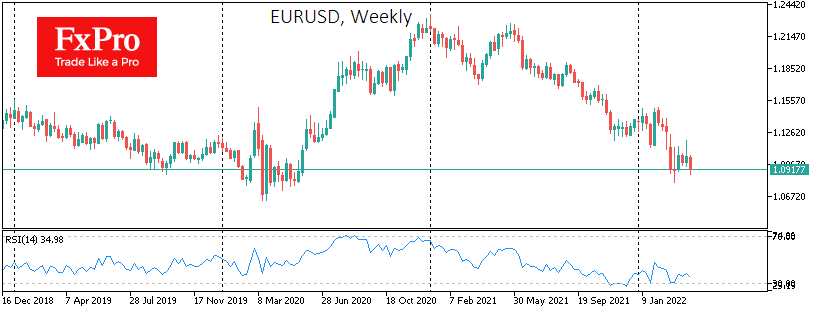
With such inputs, we should not be surprised if EURUSD rewrites the March lows in the coming days, dropping below 1.0800 and then diving further in search of a bottom until the end of the year with the potential for declines as low as 1.04-1.05.
NZDUSD’s Bullish Tone Persists But Ascent Gets Delayed
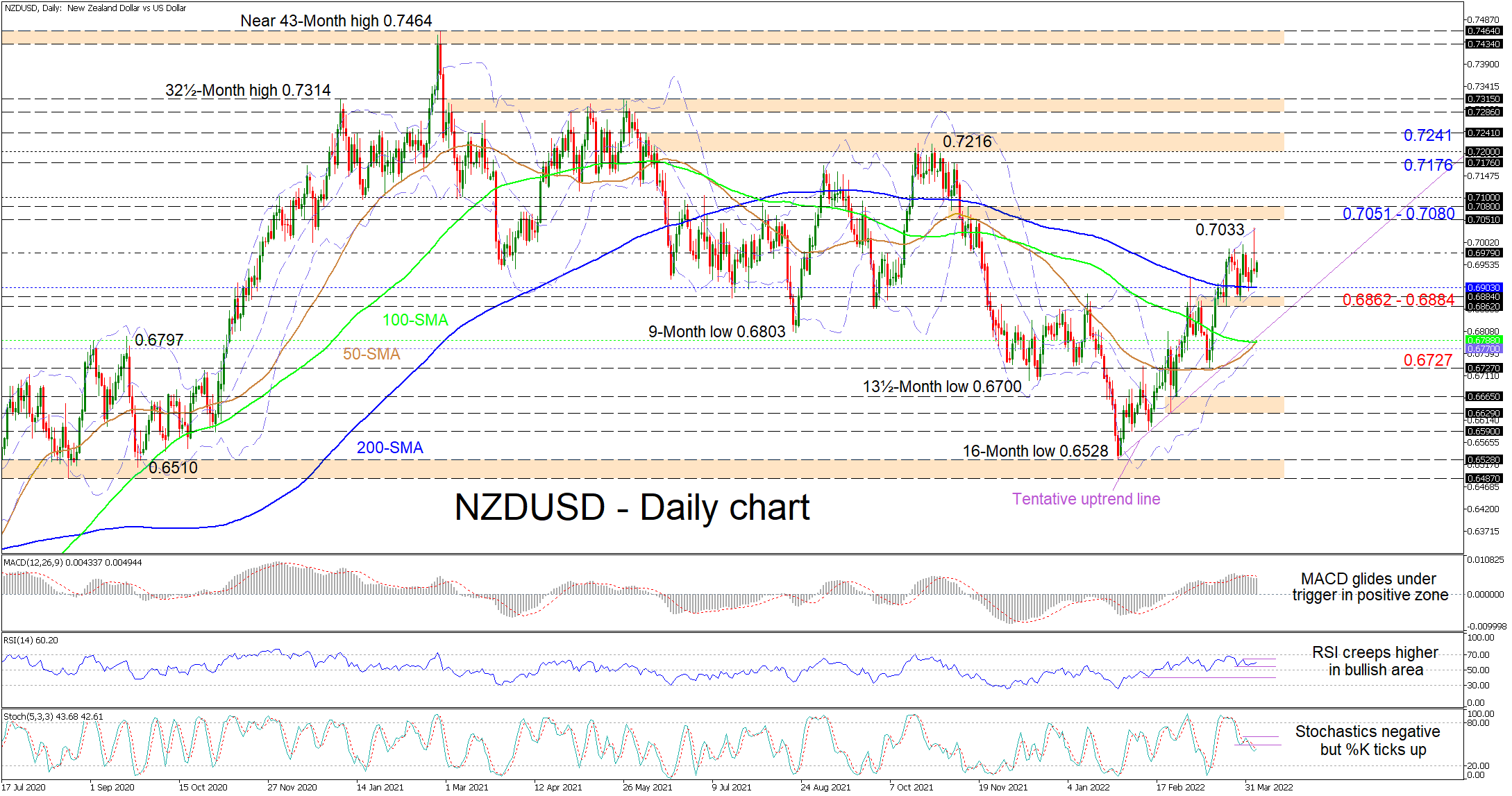
NZDUSD’s upside momentum has softened above the simple moving averages (SMAs) after a persisting two-month uptrend spiked toward the upper Bollinger band at 0.7033. The negative slopes of the longer-term 200- and 100-day SMAs have eased, while the upturn in the 50-day SMA and its bullish crossover of the 100-day SMA reaffirms that the near-term uptrend from the 0.6528 trough is strengthening.
The short-term oscillators are conveying that the recent weakness in upside momentum may be short lived. The MACD, in the positive region, has slipped slightly beneath its flattened red trigger line, while the RSI has started to renew a positive bearing in the bullish section. Furthermore, the negative charge of the stochastic oscillator looks shaky as the upturn in the %K line is transmitting messages of growing positive drive.
If the pair recovers from yesterday’s weakness, an initial step above the 0.6979 barrier could push buyers to test the upper Bollinger band at 0.7033 before tackling the 0.7051-0.7080 resistance band linked to the levels from November 2021. Now, should the bulls repower the recent uptrend by piloting beyond the 0.7100 handle too, the pair may then navigate towards the 0.7176 high prior to confronting the 0.7200-0.7241 resistance barricade, which involves highs from June and October 2021.
Otherwise, if bullish drive struggles to improve further, downside constraints may commence from the 200-day SMA at 0.6903 and the mid-Bollinger band ahead of the 0.6862-0.6884 support border, which is reinforced by a tentative uptrend line pulled from the 16-month low of 0.6528. In the event sellers manage to drive the price below this critical section and the diagonal support, the bears could then aim for a zone of support linking the converged 50- and 100-day SMAs around 0.6788 and the lower Bollinger band at 0.6770. From here, pushing lower, the key 0.6727 trough from March 15 may draw focus.
Summarizing, NZDUSD is sustaining a bullish bias above the SMAs, the mid-Bollinger band and the 0.6862-0.6884 minor foundation. That said, a dive in the price past the 0.6727 trough could ramp up worries about negative tendencies.
ECB Panetta: Holding inflation at 2% with high imported inflation could induce domestic deflation
ECB Executive Board member Fabio Panetta said in a speech that the high inflation in Eurozone is "mostly due to global factors – including the increase in the prices of oil, gas and other commodities – over which monetary policy has little leverage." And it "does not fundamentally result from an economy that is running above potential".
Therefore, "asking monetary policy alone to bring down short-term inflation while inflation expectations remain well anchored would be extremely costly". Monetary tightening would not affected imported energy and food prices, but "massively suppress domestic demand to bring down inflation".
"And with the current levels of imported inflation, in order to hold headline inflation to 2%, we would need domestic inflation to be deeply negative. In other words, we would induce domestic deflation," he added.
Panetta suggested that "fiscal policy can help mitigate the challenge of higher inflation by containing the effects of higher energy prices". On the other hand, "Monetary policy will play its role, adjusting policy in line with the medium-term inflation outlook. "
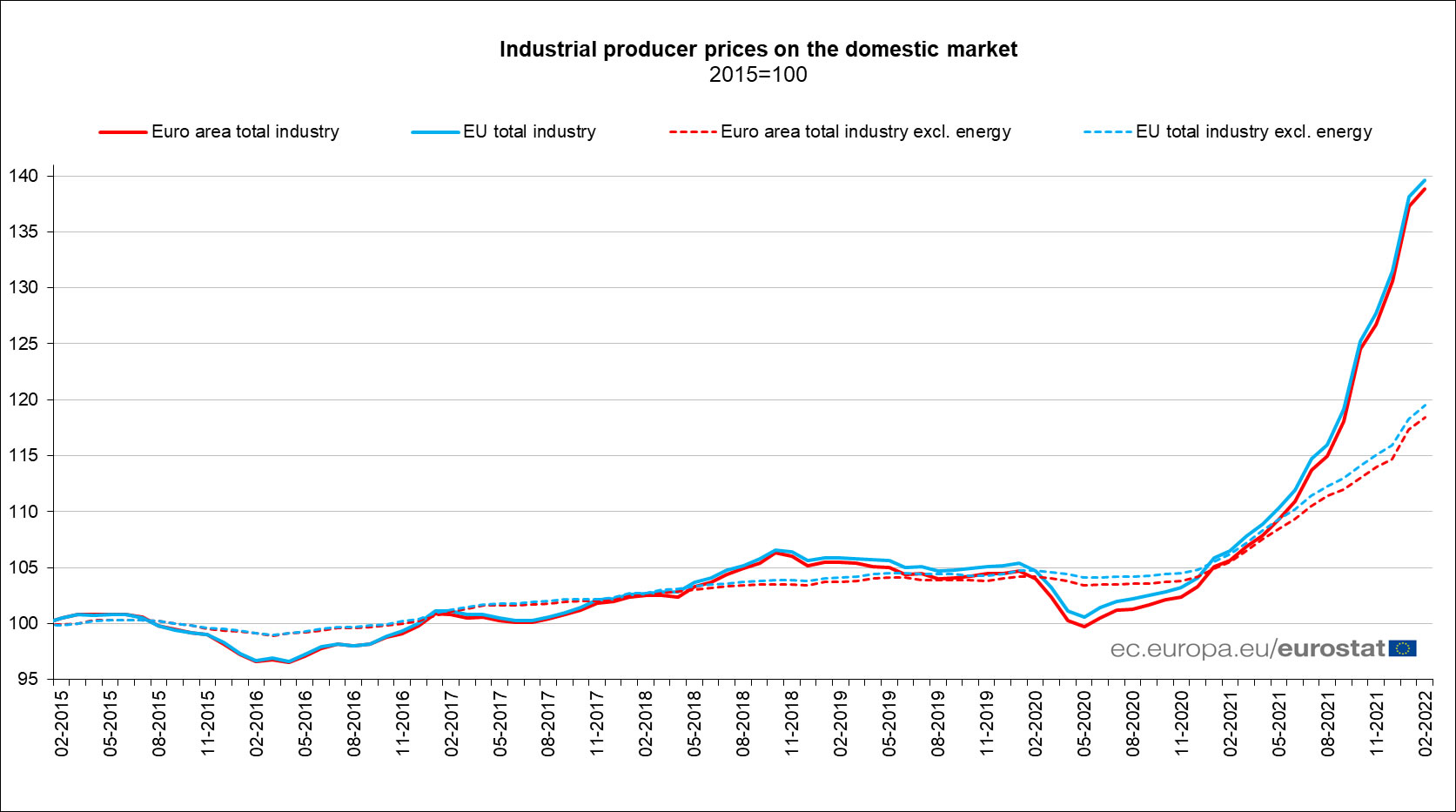
Eurozone PPI rose 1.1% mom, 31.4% yoy in Feb
Eurozone PPI rose 1.1% mom, 3.1.4% yoy in February, below expectation of 1.3% mom, 31.6% yoy. For the month, industrial producer prices increased by 1.6% for intermediate goods, by 1.3% in the energy sector, by 0.8% for non-durable consumer goods, by 0.6% for durable consumer goods and by 0.3% for capital goods. Prices in total industry excluding energy increased by 0.9%.
EU PPI rose 1.1% mom, 31.1% yoy. The highest monthly increases in industrial producer prices were recorded in Slovakia (+13.6%), Slovenia (+5.7%) and Greece (+4.8%). Decreases were observed in Ireland (-8.1%), Finland (-0.5%), Latvia (-0.3%), and Bulgaria (-0.1%).
UK PMI construction unchanged at 59.1, but optimism tumbled
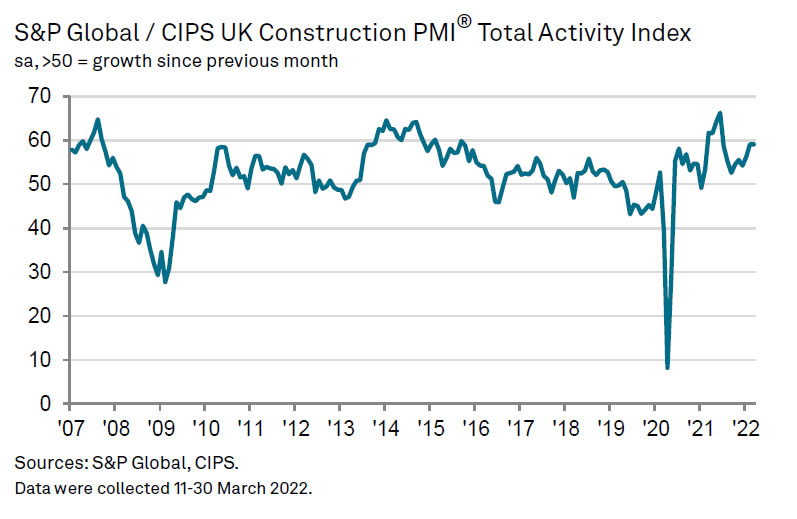
UK PMI Construction was unchanged at 59.1 in March, better than expectation of 57.3. The latest reading signalled the join-fastest rate of output growth since June 2021. However, business optimism dropped to 17-month low.
Tim Moore, Economics Director at S&P Global: "Escalating fuel, energy and commodity prices led to the fastest rise in costs for six months. Intense inflationary pressures appear to have unnerved some construction companies. Business optimism slipped to its lowest since October 2020 on concerns that clients will cut back spending in response to rising prices and heightened economic uncertainty."
USD/JPY Pair Moved into a Bullish Zone above $123.20
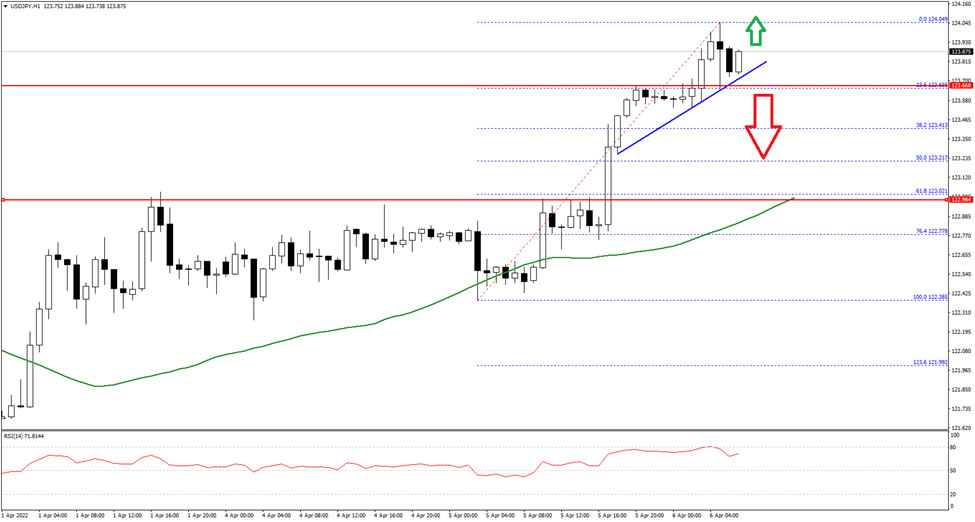
The US Dollar started a steady upward move above the 123.00 resistance against the Japanese Yen. The USD/JPY pair traded above the 123.20 level to move into a bullish zone.
The pair even traded above 123.80 and settled above the 50 hourly simple moving average. A high is formed near 124.04 and the pair is now consolidating gains. An immediate support is near 123.80 and a connecting bullish trend line on the hourly chart.
The next major support sits near the 123.20 level, below which there is a risk of more downsides. In the stated case, the pair could decline towards the 123.00 level.
On the upside, an immediate resistance is near the 124.00 level. A clear break above the 124.00 resistance could push the price towards 124.40 on FXOpen. The next major resistance is near the 124.80 level or 125.00.
ECB de Guindos: Green energy is a key priority for environment and security
ECB Vice President Luis de Guindos said in a speech, "for the euro area, the financial stability impact of the war has so far been relatively contained." And, "markets have generally been functioning well", with "no dash for cash".
"While both banks and non-banks have been affected – especially the few that have large direct exposures to Russia and Ukraine – the economic fallout has not had a sizeable impact on the EU banking or financial systems as a whole," he added.
But he also noted, "the invasion of Ukraine also demonstrated how vulnerable Europe is due to its high dependency on fossil fuel imports from Russia. Speeding up the green transition is a key priority from this perspective too – not only to address the urgent environmental and climate challenges we face, but also to help increase our energy security and protect the EU economy from energy price spikes."
Gold Extends Sideways Move But Downside Risks Remain
Gold has been trending downwards since early March when the price peaked at the 19-month high of 2,070. Although the price managed to halt its decline and currently experiences a consolidation phase, the technical picture seems to be deteriorating for the precious metal.
The momentum indicators suggest that bearish forces continue to hold the upper hand. Specifically, the MACD histogram is currently beneath both zero and its red signal line, while the RSI is hovering in the negative zone.
Should selling interest intensify further, the price could encounter immediate support at the recent low of 1,915. Falling beneath this floor, the bears could target the 1,910 barrier before the spotlight turns to the March low of 1,890. Further downside moves may then cease at the 1,878 hurdle.
Alternatively, if buyers re-emerge and regain control, initial resistance could be met at the recent high of 1,945. Conquering this barricade, the price might ascend towards the March peak of 1,965. Higher, 2,010 could prove to be a tough obstacle for the bulls before 2,052 appears on the radar.
Overall, gold has been rangebound in the last three weeks, but broader near-term risks remain tilted to the downside. Therefore, a dive beneath the 1,890 floor is needed to boost sellers' hopes for a sustained downtrend.

Daily Technical Analysis
EUR/USD
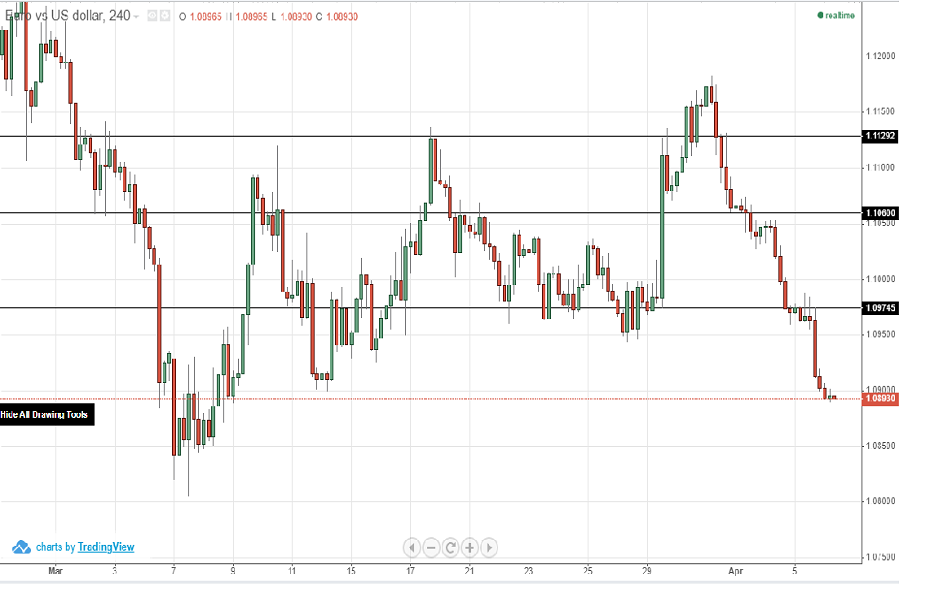
At the beginning of the European session, the bulls' attempts to break the levels around 1.0981 were rejected and the single European currency continued its downward trend. The full control of the bears over the market continued and, during the breach of the temporary supports on 1.0960, the sell-off deepened with full force to 1.0900. The strength of the dollar is huge and the pressure against the euro may continue to the levels from March around 1.0805. However, forming a bottom and a scenario in which the pair returns above the key level of 1.0900 should not be ruled out.
USD/JPY
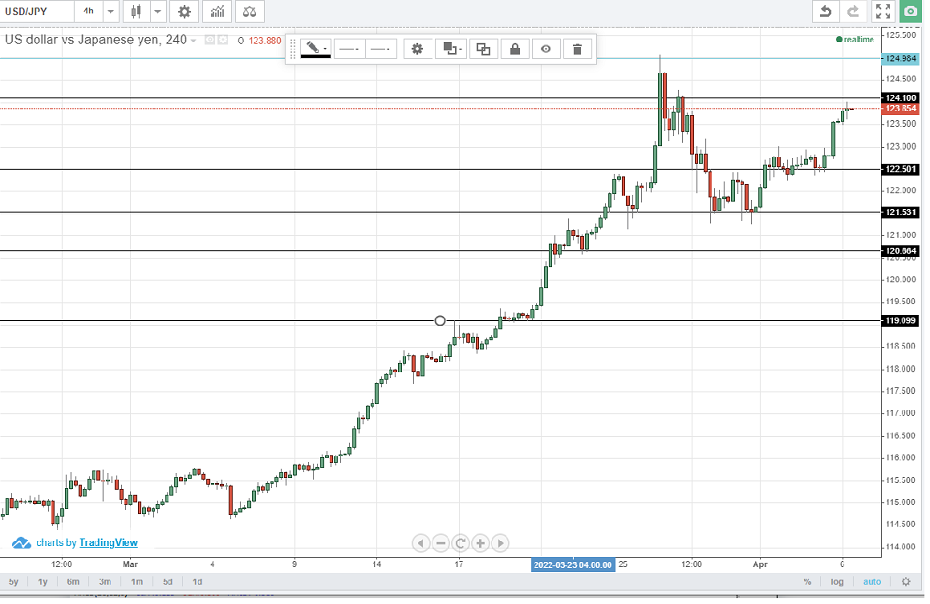
The uptrend of the dollar against the yen was restored after the corrections last week, despite threats of intervention by the Bank of Japan. The ninja's weakness continued and the session ended at 123.65, just 100 pips before the 124.65 peak reached last week. There is a high probability of reaching the six-year high of 125.10, but if the bank's protections are urgently activated, we can see a reversal of the trend and a decline in the dollar with a second price test around 121.70.
GBP/USD
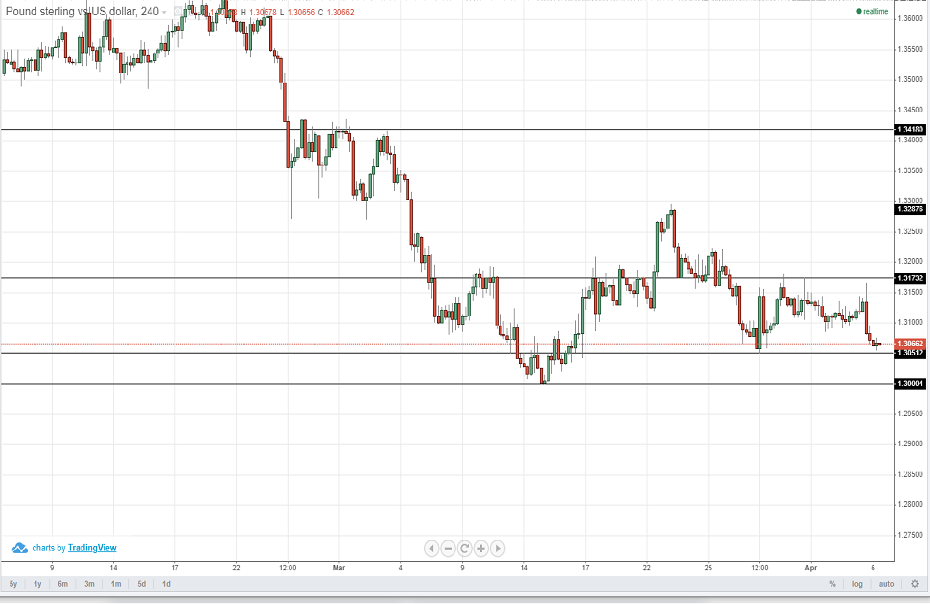
The pound suffered a turbulent trading day, reaching a peak of 1.3167 during the European session, but after the opening of the U.S. stock market, the bears gained convincing control and the trend reversed. We saw a break of all supports which led to closing around the levels at 1.3071. If the strength of the dollar continues, we can see a retest of the bottom 1.3101 from mid-March, but attempts to build support around 1.3068 should not go unnoticed as it lures the bulls.
EUGERMANY40
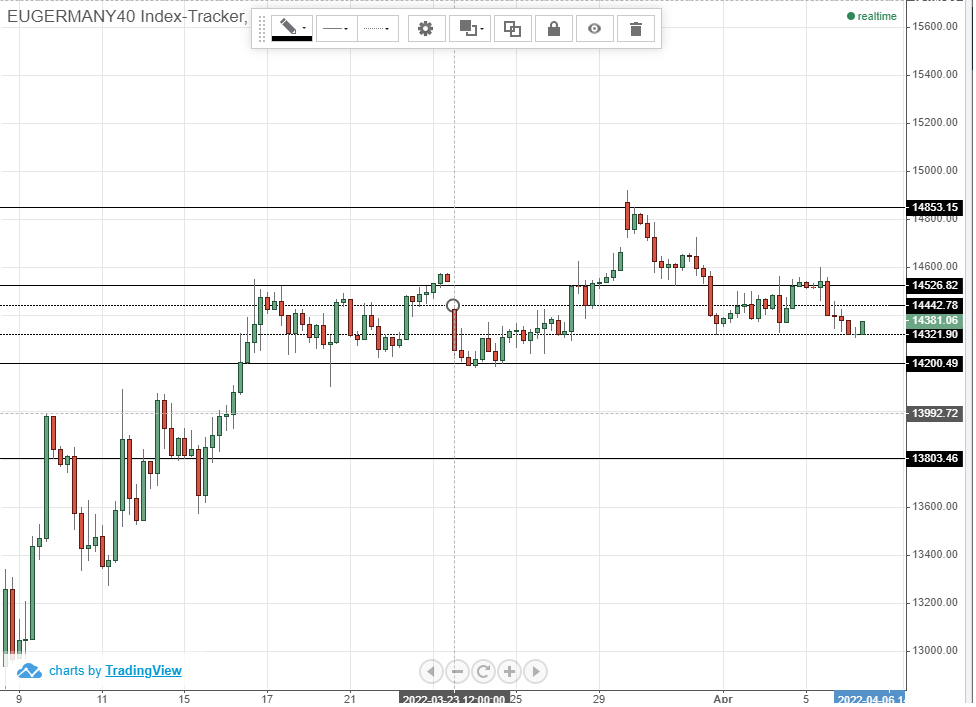
The German index suffered a highly volatile session, reaching 14,605 in the first hour of the European session, but immediately after that, the level didn't hold ground and we saw deepening of the declines started earlier this month, leading to prices of 14,339 at the close of the European stock market. This key level may boost the bulls, as on March 31 and see a rebound, but everything depends on the comments about the invasion of Ukraine, which strongly influence future plans for the development of the German economy and its energy independence.
US30
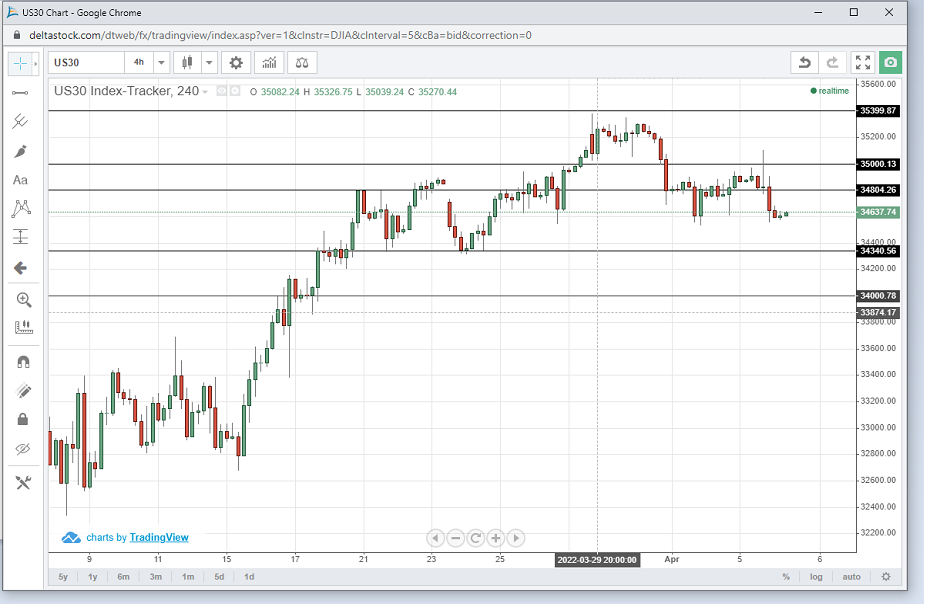
The blue chip index's session moved at the same pace as the other indices. With the opening of the US session we saw upward movements reaching 35,100, but soon after we saw a continuation of the previous trend and US30 reached its bottom of 34,600 where it found support. Traders assess inflation and expectations of a rise in the Fed's key interest rate, as well as the yield on US bonds as volatility is expected to remain high, especially after the Fed meeting minutes (18:00 GMT).
Nasdaq 100 Retreats as Fed Hints at More Tightening
American stocks wavered on Tuesday as the Federal Reserve prepared to accelerate its tightening process. In a statement, Lael Brainard said that the bank will be aggressive in its bid to combat inflation. In addition to a 0.50% rate hike, she said that the Fed will begin a rapid reduction of its $9 trillion balance sheet as soon as in May. Further, she said that the bank was prepared to take stronger actions when it comes to tightening policy. She joins several other Fed officials who have warned about the need for more aggressive rate hikes. Still, with the yield curve inverting, the biggest challenge for the Fed is that higher rates could lead to a recession.
The euro declined sharply as geopolitical events between the Eurozone and Russia accelerated. In a statement on Tuesday, Brussels said that it was ready to launch new sanctions on Russia. The new restrictions would see the bloc ban coal imports and closure of its ports to Russian vessels. The bloc will also ban transactions with four of its biggest lenders. Other restrictions will be on Russian transport operators from the EU. Still, there are concerns that these restrictions will also affect the EU as its energy costs jump. As such, analysts expect that the EU will see a recession in the coming months.
The US dollar rose slightly in the overnight session after strong US services PMI data. According to the Institute of Supply Management, the pace of growth in the services sector increased in March as the impact of Covid faded. The PMI rose to 58.3 from the previous 56.5. Still, most service providers are also being impacted negatively by the ongoing supply chain challenges and costs. New orders, backlogs, and hiring rose in March Later today, the US will publish the latest oil inventories numbers while the Fed will release its minutes.
EURUSD
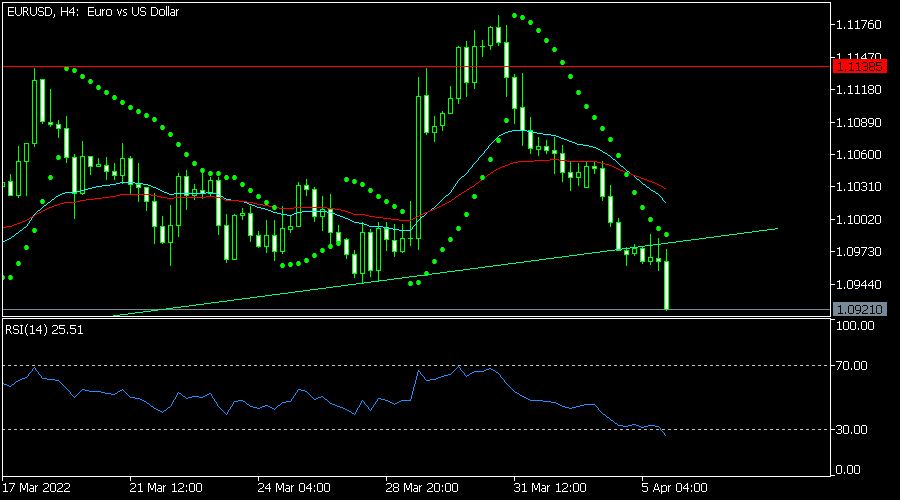
The EURUSD pair made a bearish breakout ahead of the new EU sanctions on Russia. The pair fell to a low of 1.0920, which was the lowest level since March 11. It declined below the support shown in green. At the same time, the pair dropped below the 23.6% Fibonacci retracement level and the 25-day moving average. Therefore, it will likely keep falling now that bears have prevailed.
XAUUSD
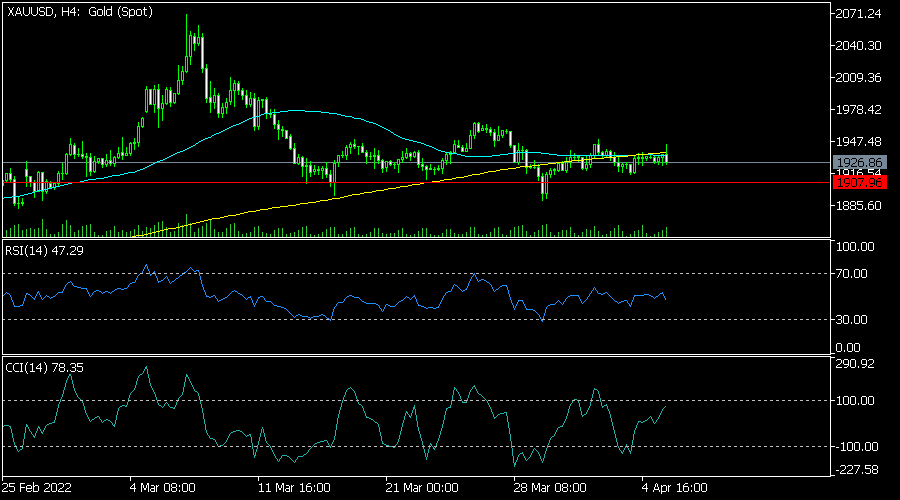
The XAUUSD pair remained in a tight range in the overnight session. It is trading at 1,926, where it has been in the past few days. This price is substantially lower than the YTD high of 2,070. It is also consolidating along the 25-day moving average while the Relative Strength Index (RSI) has moved to the neutral level of 50. The pair will likely remain in a consolidation phase ahead of the upcoming Fed minutes.
EURCHF
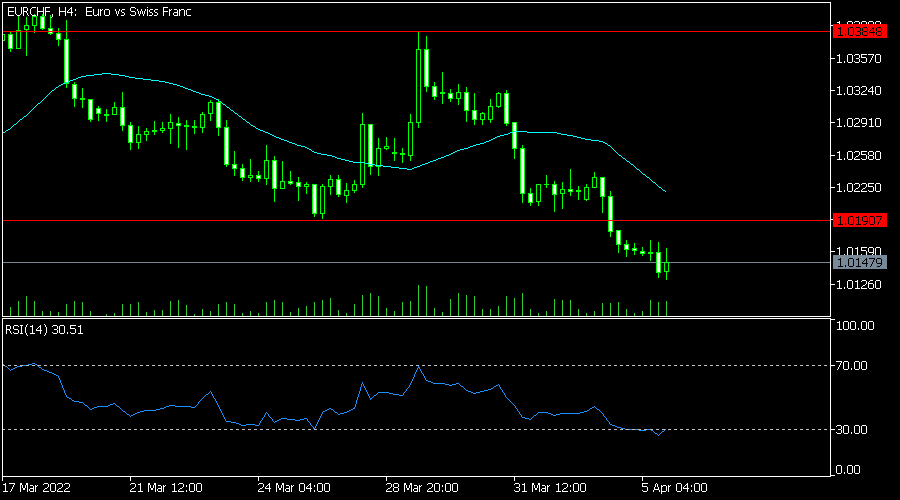
The EURCHF pair declined as Eurozone conditions worsened. The pair moved to a low of 1.0147, which is significantly lower than the March high of 1.0384. It has moved below the important support level at 1.0190. Further, the pair has declined below the 25-day and 50-day moving averages. Therefore, it will likely keep falling as bears target the support at parity.