Sample Category Title
Risk On, But Market Optimism about a Diplomatic Solution Could be Premature
Market movers today
Focus remains on possible peace negotiations between Russia and Ukraine. Yesterday, we published the first part of a series of publications where we analyse the implications from the war in Ukraine, Research Russia-Ukraine: Updated scenarios and implications for commodity markets, 9 March. In our main scenario, we do not expect the conflict to spread to other countries and see commodity prices broadly moderating over the next six months. Also, as uncertainty mounts and inflationary pressures increase, have a look at our piece Research Global: Rising recession risk as yet another supply shock hits, 9 March.
A key event today will be the ECB meeting, where we will get important signals on how the ECB sees the current trade-off between inflation and growth. We expect the ECB to continue its path towards entering a 'neutral' monetary policy calibration and formally set an end date for the APP programme (in September this year), due to the high inflation pressure, but fall short of giving a firm indication of an upcoming rate hike, see ECB Preview - Inflation forces the normalisation process to continue, 3 March.
We also get US CPI. Although the data is for February and not incorporate the latest increase in commodity prices, it will give important input on the underlying inflation pressure.
The 60 second overview
Risk on: Markets turned risk on yesterday as President Zelenskyi's deputy chief of staff Ihor Zhovkva hinted they would be open for diplomatic talks regarding the country's neutrality, echoing comments made earlier in an ABC interview by Zelenskyi. Zhovkva said that the country is ready for a diplomatic solution but that they would not surrender a 'single inch' of their territory. As a pre-condition for any talks he called for an immediate ceasefire and withdrawal of Russian troops. Markets have clearly interpreted Ukrainian comments as encouraging signals that the two countries could be approaching some kind of an agreement. We still remain sceptical towards any diplomatic solution in the very short term, but as we discuss in our Research Russia-Ukraine: Updated scenarios and commodity price implications, 9 March, we think there will eventually be a truce and Ukraine will be forced into making painful concessions.
War developments: Ukrainian President Zelenskyi said at least 35,000 people were evacuated via the humanitarian corridors established on Wednesday despite problems in evacuations around the cities of Kyiv, Kharkiv and Mariupol. Russian air strike into a maternity and children's hospital in Mariupol has been widely condemned and Zelenskyi has accused the Russian army of a war crime. The White House made a warning yesterday evening that Russia could use chemical or biological weapons in a false-flag operation in Ukraine.
Oil market: Extreme volatility continues in oil markets as Brent prices fell from USD 130 to around USD 110 yesterday. The United Arab Emirates said they will encourage fellow OPEC members to increase production in the middle of the supply crunch and price boom caused by the war in Ukraine and the sanctions against Russia. The UAE's energy minister came out later and softened the comments saying the UAE remains committed to the OPEC+ agreement. According to sources, UAE had not consulted other OPEC members before making the statement, and Saudi Arabia, the de facto leader of the group, had no immediate response. The UAE has less room to raise output than Saudi Arabia, which thus far has been reluctant to ramp up production.
Equities: Tuesday finally brought a rebound, with European and US markets significantly higher. Peculiar sector mix with growth sectors rebounding hand in hand with oversold banks and autos. Defensives generally lagged, and energy the only sector lower. S&P gradually improved over the session S&P 500 2.6%, Nasdaq 3.6%, Russell 2000 2.7% and Dow 2%. Asian markets are mostly following the rebound this morning but US futures have dipped slightly lower.
FI: Yesterday, the risk sentiment turned strongly positive and yields across Europe rose sharply. 10Y German yield rose nearly 10bp with Italy tightening 4bp. The shorter rates rose slightly more than longer rates, flattening the curve by 1-2bp, on the outlook for central banks to be more hawkish on targeting the high inflation if global uncertainty will improve. Also on the back of positive risk sentiment, credit spreads tightened in line with rising equities and German ASW levels dropped 3bp.
FX: SEK and EUR gained vis-à-vis JPY and USD yesterday, which marked a first sign of turnaround in risk sentiment and stabilisation of commodity markets. EUR/USD remains bellwether for risk sentiment and trend in commodity markets; hence, unsurprisingly it bounced above 1.10.
Credit: The mood improved significantly in credit markets yesterday where particularly CDS indices saw substantial tightening. iTraxx Xover tightened 35.5bp and Main 7.3bp. Performance in cash space was somewhat less strong, but HY bonds still tightened 20bp and IG 1bp.
Nordic macro
Today brings Norwegian inflation data for February. Price rises have been volatile over the past couple of months but basically somewhat higher than expected. Part of the reason is that strong global price pressures have meant that import prices have held up better than might have been expected given the strengthening of the NOK during the autumn. We also know from various surveys that there are still substantial cost pressures working their way through the value chain, and wage growth looks set to be higher than anticipated last year. We therefore predict core inflation of 0.7% m/m in February, taking the annual rate up from 1.3% to 1.6%, with risk clearly tilted to the upside. This would once again be well above Norges Bank's December forecast (1.2% y/y for February) and contribute to the expected upward revision of the bank's rate path at the March meeting. That said, core inflation is still moderate and below the 2% target, so there is no reason for Norges Bank to panic.
US Oil Breaks Support
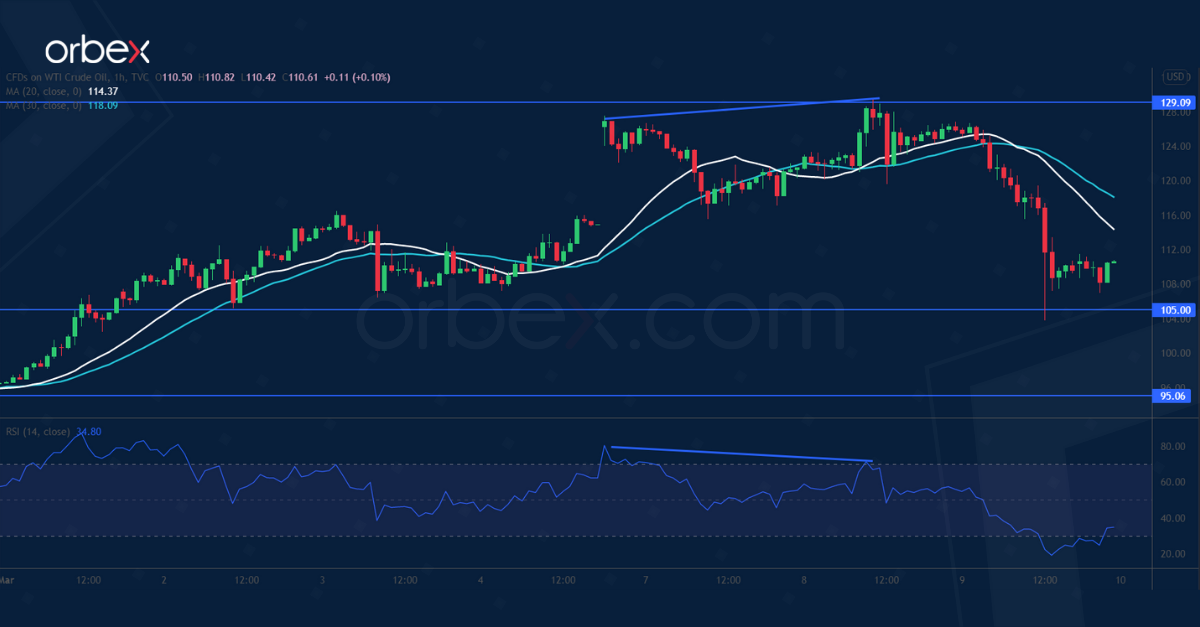
WTI crude tumbled after the UAE said consider boosting production.
The parabolic climb came to a halt at 129.00 and pushed the RSI into an extremely overbought condition on the daily chart. A bearish RSI divergence suggested a loss of momentum and foreshadowed a correction as traders would be wary of chasing the rally.
A fall below 115.00 led buyers to bail out, triggering a wave of liquidation. 105.00 is the next support and a breakout could bring the price back to 95.00 near the 30-day moving average.
GBP/USD Inches Higher
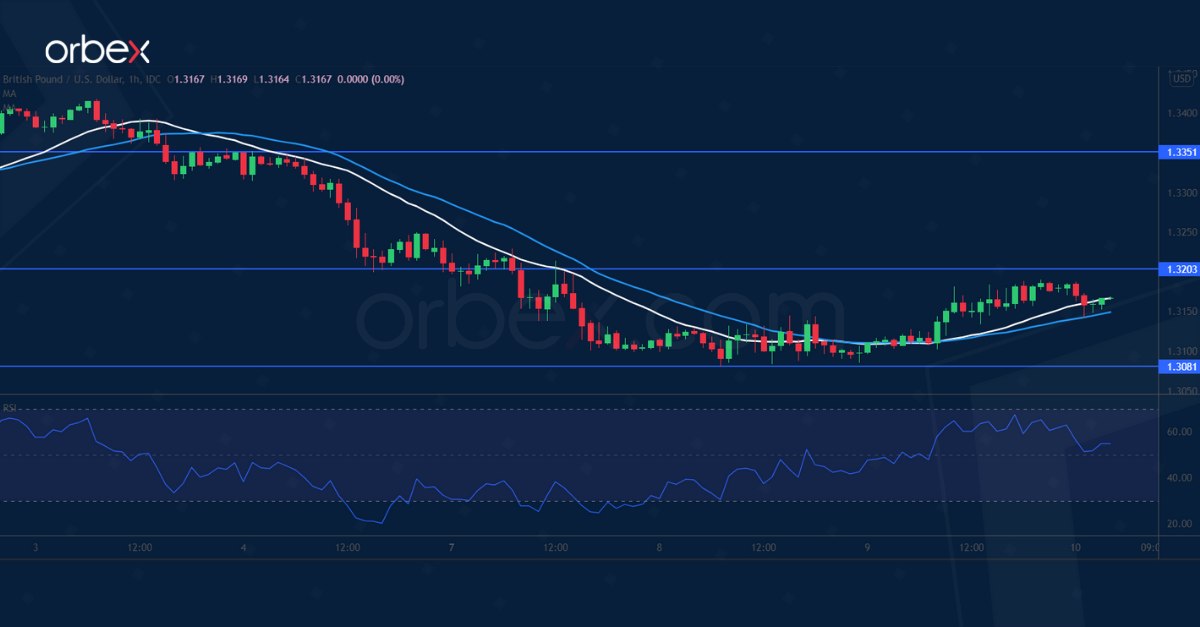
The sterling claws back losses as risk appetite makes a timid return across the board.
Following a three-month-long rebound on the daily chart, a lack of support at 1.3200 and a bearish MA cross shows strong selling pressure. A bounce-back above 1.3200 may only offer temporary relief as sellers potentially look to fade the rebound.
1.3350 is a key hurdle that sits along the 20-day moving average. 1.3080 is fresh support and its breach could trigger a new round of sell-off below the next daily support at 1.2880.
EUR/USD Bounces Back
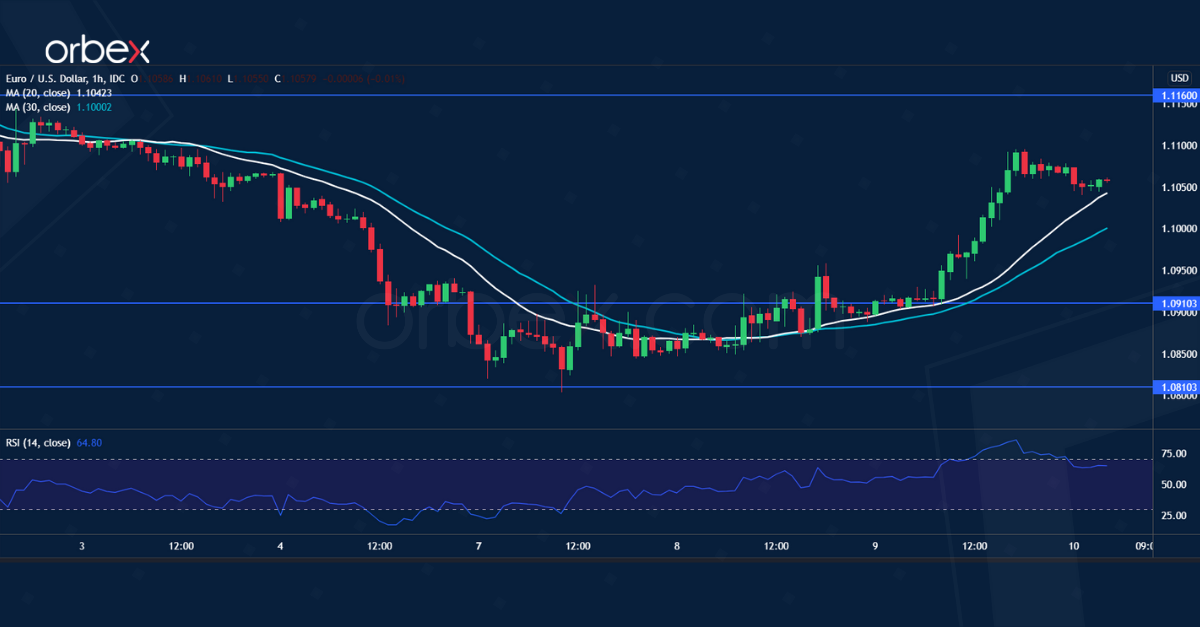
The euro rallies on news that the EU may issue a joint bond to fund energy and defense.
The pair found bids near May 2020’s lows (1.0810). An oversold RSI on the daily chart prompted sellers to take profit, easing the downward pressure. A rally above the immediate resistance at 1.0940 and a bullish MA cross may improve sentiment in the short term.
However, buyers will need to clear the support-turned-resistance at 1.1160 before they could hope for a meaningful rebound. 1.0910 is the support in case of a pullback.
Daily Technical Analysis
EUR/USD
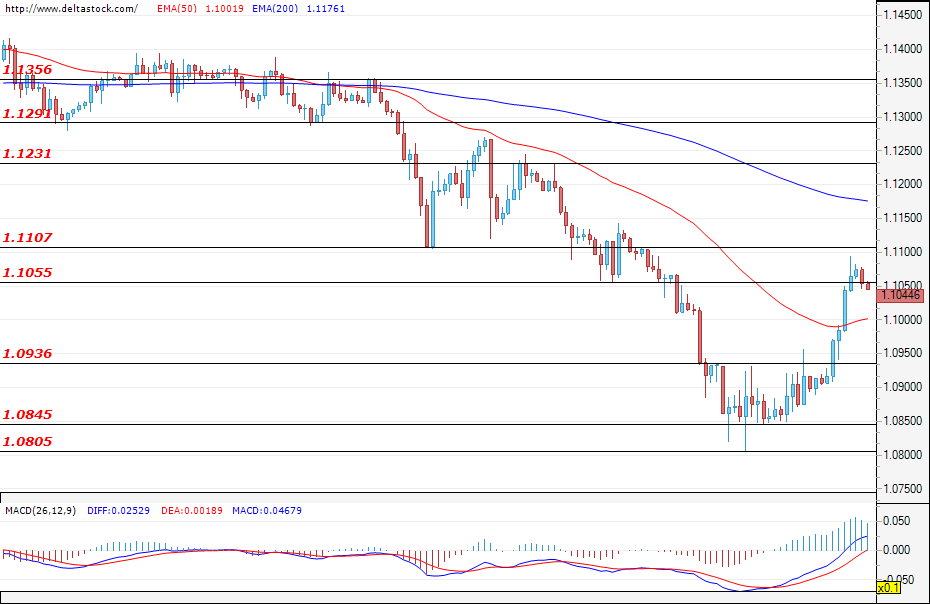
The European common currency recovered quite a bit of its recent losses against the greenback, and during the early hours of today`s trading, the pair tested the resistance zone at 1.1055. A confirmation of the breach, followed by a violation of the target at 1.1107, would strengthen the positive expectations for the future path of the pair and could easily lead to a rally towards the level at 1.1231. If the bullish momentum fades and the bears take control of the market, then the sell-off will most likely resume towards the support at 1.0936. A breach of the mentioned level could deepen the decline towards the major support at 1.0845. Today, an increase in market volatility could be expected around the announcement of the European Central Bank Interest Rate Decision (10:00 GMT), as well as during that of the U.S. Initial Jobless Claims data (13:30 GMT).
USD/JPY
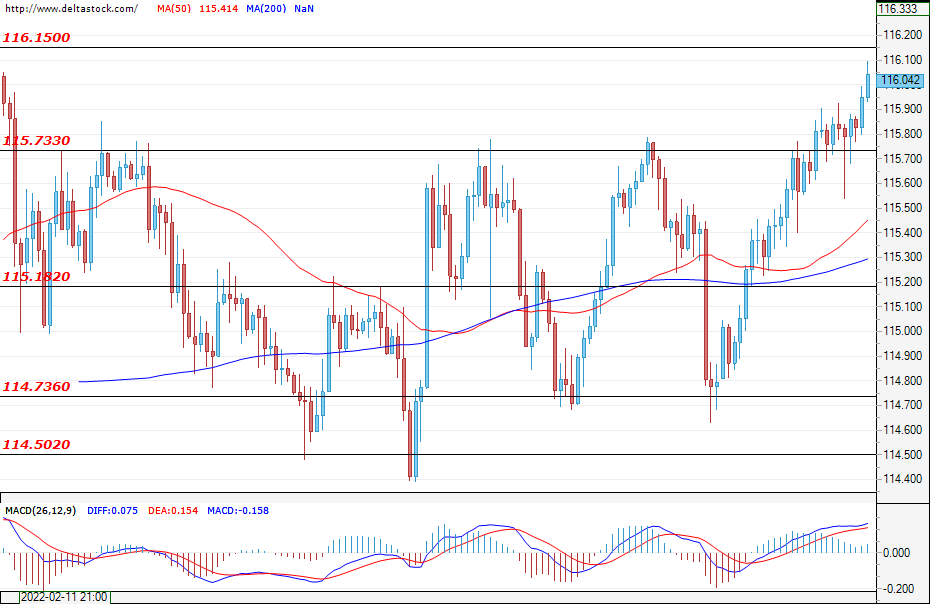
The bullish sentiment remained intact and the dollar continued to gain ground against the yen. At the time of writing the analysis, the USD/JPY is headed for a test of the resistance zone at 116.15. A successful breach here could strengthen the positive expectations for the future path of the pair and could easily lead to new gains for the Ninja. The first target for the bears is the support zone at 115.73, followed by the lower level at 115.18.
GBP/USD
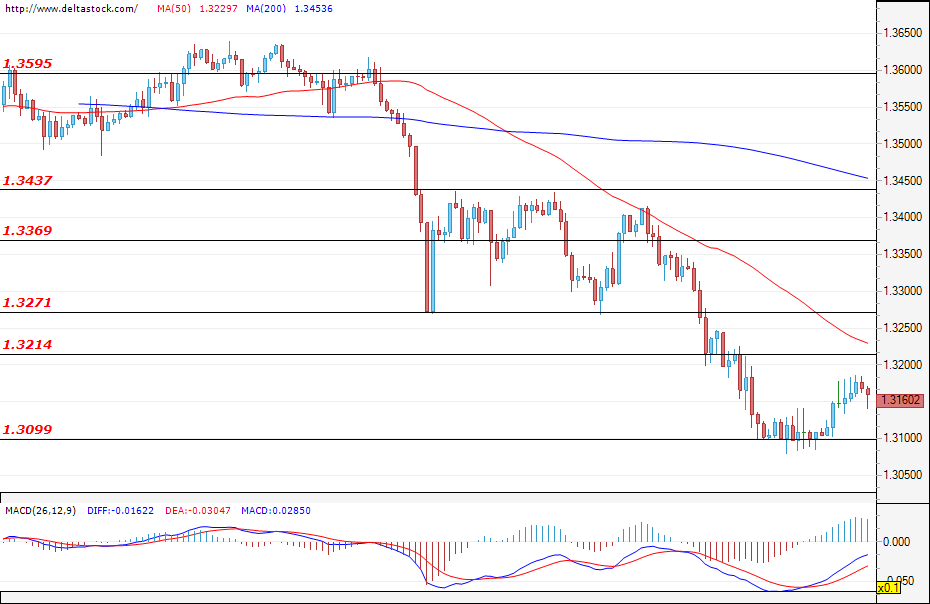
The support zone at 1.3099 successfully withheld the bearish attack and the pound appreciated against the dollar. At the time of writing, volatility has subsided and a violation attempt of the resistance zone at 1.3214 is the most probable scenario. A breach of the aforementioned zone could lead to a continuation of the recovery and a move towards the zone at 1.3271. If the bears re-enter the market and manage to take the pair below the support zone at 1.3099, then the sell-off could pick up some steam and head towards the levels at around 1.3000.
EUGERMANY40
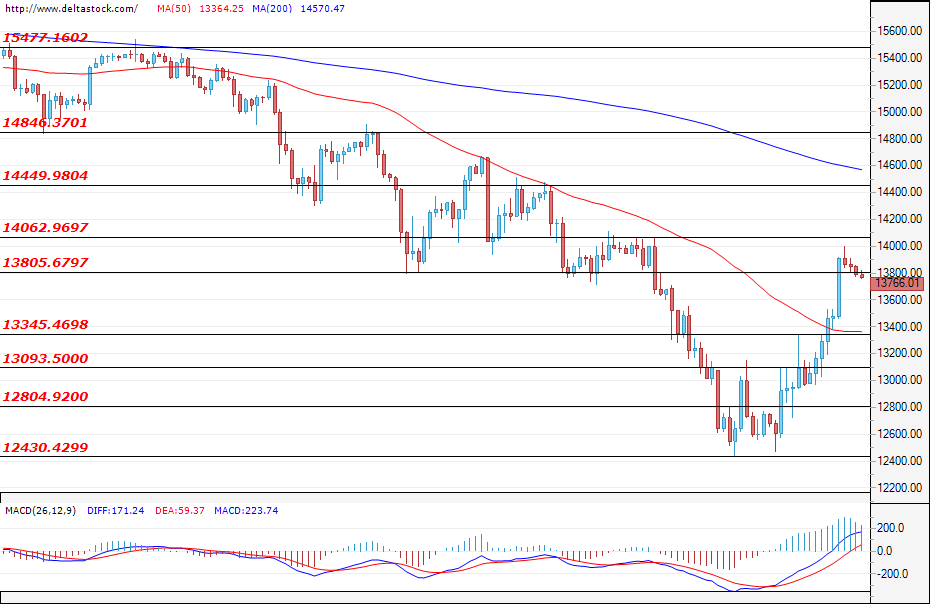
The German index staged a once-in-a-decade rally, and at the time of writing, the EUGERMANY40 is still holding onto its gains. If the bulls continue to dominate and manage to push through the resistance level at 14062, then the rally will most likely continue towards the resistance at 14449. At the time of writing, a corrective move, resulting from the extreme price action yesterday, is currently in the works and the bears could make a push towards the support at 13345.
US30
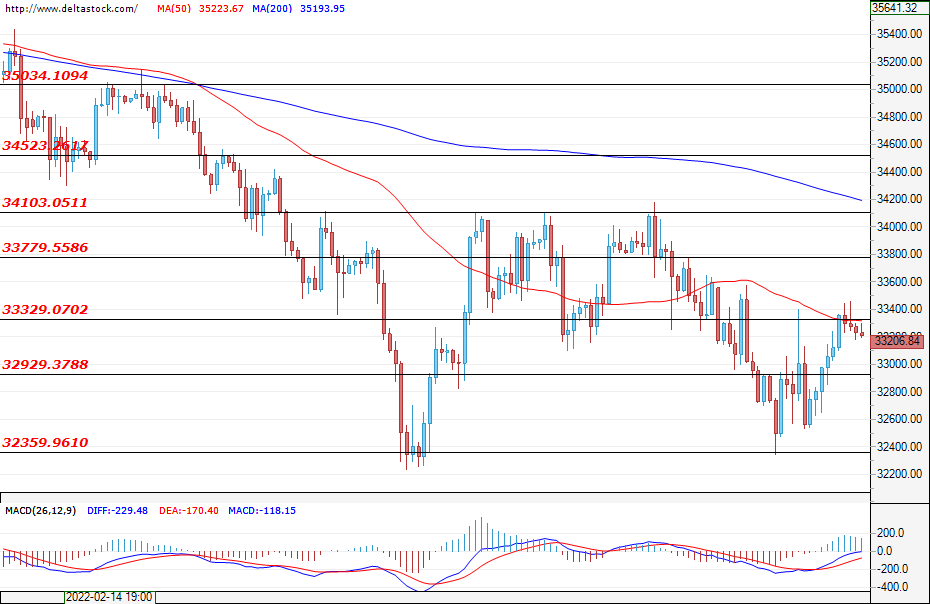
The bulls did not manage to gain enough momentum to successfully breach the resistance zone at 33329, but during the early hours of today's session, the US30 is still trading just below it. A new bullish move is a highly probable scenario, but only a violation of the mentioned level could continue the recovery and lead to a test of the next resistance zone at 33779. Worse-than-expected data for the U.S. Initial Jobless Claims (today; 13:30 GMT) could help the bears prevail. Violation of the support at 32929, followed by a breach of the lower target at 32359, could easily deepen the sell-off and strengthen the negative expectations for the future path of the index.
Chance for a Hawkish ECB Surprise
Markets
Full-blown risk-on. Equities rallied like there was no tomorrow with gains in Europe reaching almost 8% (German Dax) and up to 3.6% on Wall Street (Nasdaq). The EuroStoxx50 (+7.44%) convincingly smashed resistance at 3608 and a minor reference located at 3742.5. It still trades below the pre-pandemic high though. Commodities including the likes of oil (Brent $111/b) and gas declined 13% and 27% respectively, easing concerns of its impact on the economy even though some damage has already been done. Gold was pummeled back below $2000/ounce.
Safe haven flows to core bonds reversed with German Bunds slightly underperforming USTs. The curve in Germany bear flattened with yields surging 12.3 bps at the front end (2y) and 10.4-10.7 bps in the 10y-30y sector. European swap yields added 3.6 (2y) to +-7 bps for longer tenors. The 10y yield even closed at a new recovery high (0.90%). US yields rose 8.2-10.8 bps across the curve with a late-session sprint after a $34bn 10y auction tailed slightly.
There was no stopping the euro yesterday. It excelled vs. almost all major peers. EUR/USD rebounded almost two big figures from 1.089 to close at 1.1076, thereby taking out first resistance of 1.104. EUR/JPY and EUR/CHF surged to well above 128 and 1.02 respectively. EUR/GBP closed near the 0.84 area – the highest level in a month. Central-European currencies extended a sharp comeback after hitting 9-month (CZK) or even record lows (HUF and PLN).
The trigger for such huge market moves was probably a combination of elements. Investors apparently concluded that the barrage of western sanctions and Russian countermeasures may at least take a break after some of the most harshest were already taken by now. Ukraine also kept the door open to discuss country neutrality, a key demand by Russia to stop the war. Specifically for Europe, preliminary plans for another joint bond issuance to finance the energy transition and defense spending boosted risky assets in the region.
Whatever the reason, it is also supporting Asian-Pacific markets this morning. Stocks jump with Japan outperforming (+4%). Core bonds lick their wounds. The euro retains most of its stunning gains yesterday as it awaits the ECB policy meeting later today.The March ECB meeting should have been an official turning point in monetary policy. However, the war in Ukraine spewed an enormous layer of uncertainty over the economy. But it also spurred commodity prices significantly, putting already-elevated inflation under additional upward pressure which will have to be addressed one way or another.
As a compromise, policy normalization plans as hinted by president Lagarde in February will probably be merely postponed until the ECB has a bit more clarity on the situation. This could be just one month (next meeting April 14). In any case, our scenario of ending QE in Q3 followed by a rate hike in Q4 still stands. In light of recent market talk, we thus see a chance for a hawkish surprise.
The market reaction, however, will be clouded by the release of US CPI (7.9% consensus) around the same time. We believe the upward surprise here has to be sizeable for markets to reconsider a 50 bps hike by the Fed next week.
News Headlines
In South Korea, the candidate of the conservative opposition Yoon Suk-yeol won the election to become president of the country. He secured the victory over the candidate of the ruling centre left democratic party by a historic low margin of 1.0%. The new president will have try to unify the country after a bitter political fight. However, he faces challenges to implement a new policy as the party of former president Moon retains a majority in Parliament. Important domestic policy issues include energy policy, housing and real estate prices and taxes. The new president is seen as favouring a more market oriented, less regulatory approach. With respect to international policy, he is expected to take a tougher stance in its policy to China and North Korea.The February wholesale prices suggest that inflation is also gradually reaching Japan, even before the sharp rise in commodity prices. Japan PPI wholesale prices jumped 0.8% M/M to be up 9.3% Y/Y, according to data from the Bank of Japan, the fastest pace since 1980! Higher import prices (25.7% Y/Y) are filtering into domestic economic activity. With wage rises still modest, inflation is at risk to further weigh on already mediocre consumer spending.
War and Inflation
The mind-blowing rally in the European and US stock markets was quite hard to explain.
The optimism from the announcement that the EU would issue a massive joint bond to finance the skyrocketing costs of energy, and defense could have helped improve the market mood. And the fact that the oil prices didn’t spike further following the announcement that the US and the UK would ban the Russian oil certainly amplified gains. And the selloff in both the EuroStoxx and the S&P500 and like were so steep that the correction has been proportional to the loss of blood weeks prior to yesterday’s jaw-dropping rally.
Could it last? Not sure.
Good news
Limited rally in oil prices following the embargo on Russian oil has been a sign that a part of the bad news was already and broadly priced in.
But it’s certainly too early to uncork the champagne, as the tighter global supply and oil producer countries’ difficulties - and little willpower - to increase production will certainly play in favour of an extended period of expensive oil. We may, however, hope the prices would top near $140/150 range and not progress toward the $200 per barrel. This morning oil is recovering losses it made yesterday.
ECB to change plans amid war, but in what direction?
The European Central Bank (ECB) meets for the first time since the Ukrainian war started, and its decision will be important to give us an idea on where the policymakers stand faced with a war on the continent.
There are two forces that will be strongly playing against each other due to the war. First, the war will certainly slow down the post-pandemic economic recovery and the businesses will need support to keep their head above water.
But then, the war will also boost the already high inflation through significantly higher energy and commodity prices, and will limit the ECB’s scope of action – even more so as the EU countries are now preparing to issue a massive joint bond, which would further boost inflation and leave the ECB between a rock and a hard place.
The EURUSD rebounded past the 1.10 mark after testing the 1.08 support at the start of the week. The ECB announcement will certainly give a fresh short-term direction to the single currency. The minutes of the February meeting, and the comments we heard from Christine Lagarde at her latest ECB presser were pointing that the European policymakers were preparing to announce their first step of the policy normalization in the Eurozone in March. The latest economic projections will take the uptick in inflation into account, and that would certainly point to a tighter policy stance to cool down the price pressure.
But then, the ECB must find a balance between the economic implications of the Ukrainian war, and a potentially uncontrollable rise in inflation levels. Activity on the Eurozone sovereign bonds are back in the positive hinting that despite the war, the ECB could choose to fight back inflation, and hint at a first rate hike by the end of summer. If that’s the case, the EURUSD has potential to jump back above the 1.12 mark.
More inflation
The US will be revealing its latest CPI data today, and analysts expect a further progress in the US inflation to the 7.9% level. Given the actual circumstances, it is of course very well possible that we see an unpleasant surprise, which would send the US inflation above the 8% psychological mark.
The question is, by how much the rise in inflation could change the Federal Reserve (Fed) expectations. As it’s the case for the ECB, the Fed will also be closely monitoring the economic implications of the Ukrainian war, and will certainly not be in a position to normalize its policy as aggressively as we thought at the start of the year.
A further uptick in US inflation data could still revive the Fed hawks, but there is little room to play for the Fed hawks. Still, we saw an alarming flattening in the US yield curve lately, where the spread between the 2 and the 10-year yields flattened, hinting that the Fed will still choose to fight inflation even with a slower growth in perspective. Therefore, a higher-than-expected inflation figure will certainly weigh on the investor mood.
The US dollar index eased to 98 as a result of a broad rally in equity and currency markets. Gold slipped below the $2000 per ounce, while Bitcoin couldn’t hold the $40K support on rumours that the US regulation may not be harmful to cryptocurrencies. I believe that yesterday’s unexplained optimism could give way to a soft session, as the news and fundamentals give little reason for optimism right now.
GBP/JPY Daily Outlook
Daily Pivots: (S1) 151.87; (P) 152.32; (R1) 153.19; More...
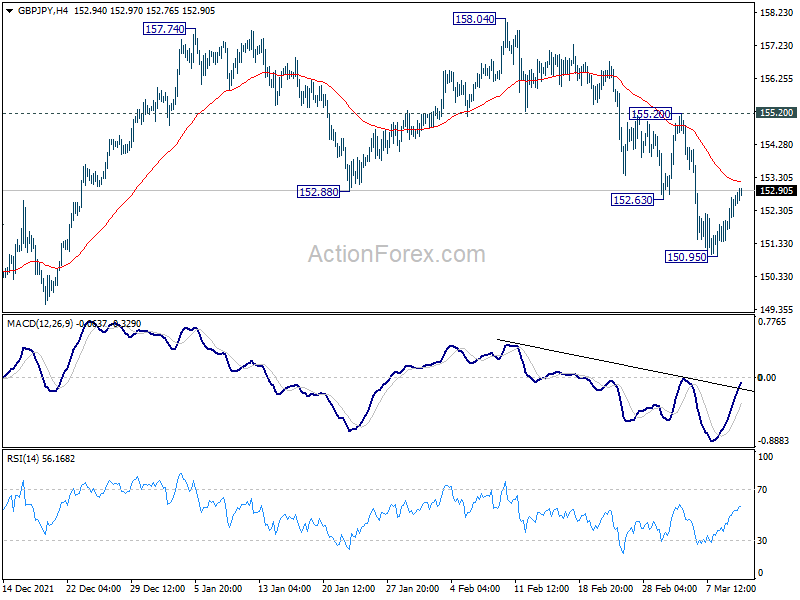
Intraday bias in GBP/JPY remains neutral for consolidation above 150.95. Further decline is still expected as long as 155.20 resistance holds. On the downside, break of 150.95 will resume the fall from 158.04, as the the third leg of the consolidation pattern from 158.19, to 148.94 support.
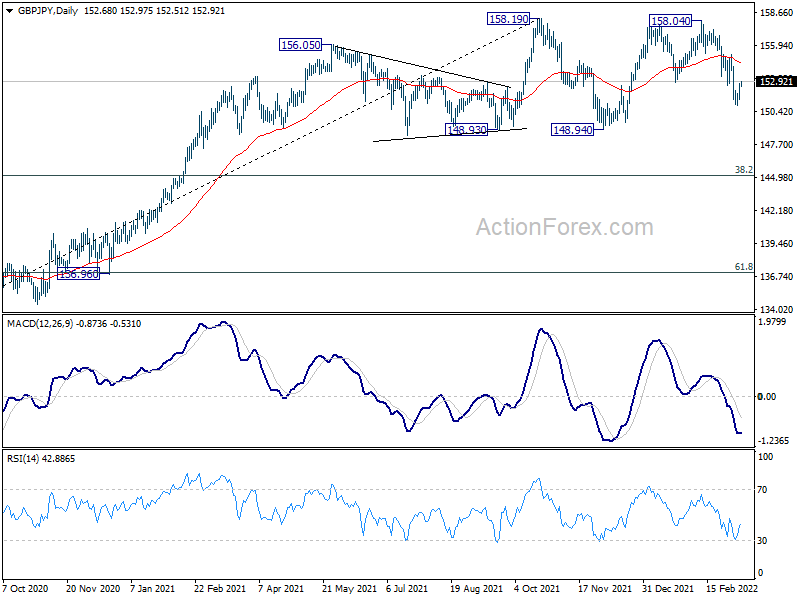
In the bigger picture, price actions from 158.19 are seen as developing into a consolidation pattern to up trend from 123.94 (2020 low). Downside should be contained by 38.2% retracement of 123.94 to 158.19 at 145.10 to bring rebound. Firm break of 158.19 will resume the up trend to long term fibonacci level at 167.93. However, sustained break of 145.10 will raise the chance of trend reversal and target 61.8% retracement at 137.02.
EUR/JPY Daily Outlook
Daily Pivots: (S1) 126.71; (P) 127.59; (R1) 129.17; More....
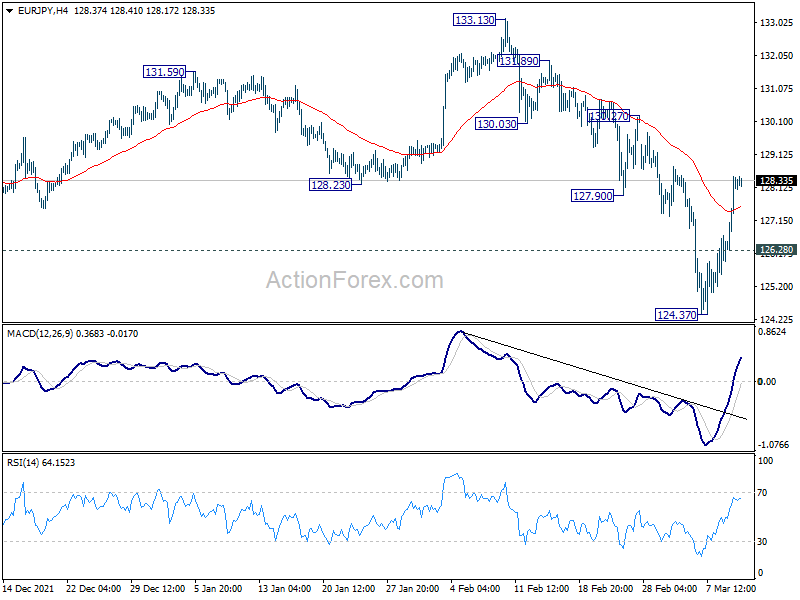
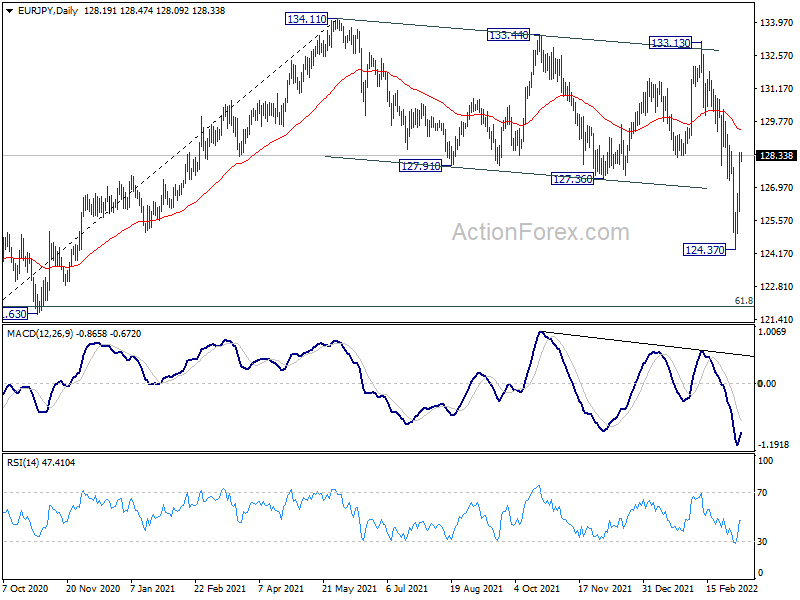
EUR/JPY's break of 127.90 support turned resistance argues that fall from 133.13 has completed at 124.37 already. Intraday bias is mildly on the upside for 130.27 resistance first. Break there will target 133.13 structural resistance next. On the downside, break of 126.28 minor support will revive near term bearishness and target 124.37 low again.
In the bigger picture, the break of 127.36 support turned resistance mixed up the medium term outlook. But still, outlook is neutral at best for now until there is clear sign of up trend resumption. Corrective pattern from 134.11 could still extend further, sideway or downward. Break of 124.37 will target 61.8% retracement of 114.42 to 134.11 at 121.94.
EUR/GBP Daily Outlook
Daily Pivots: (S1) 0.8338; (P) 0.8378; (R1) 0.8439; More...
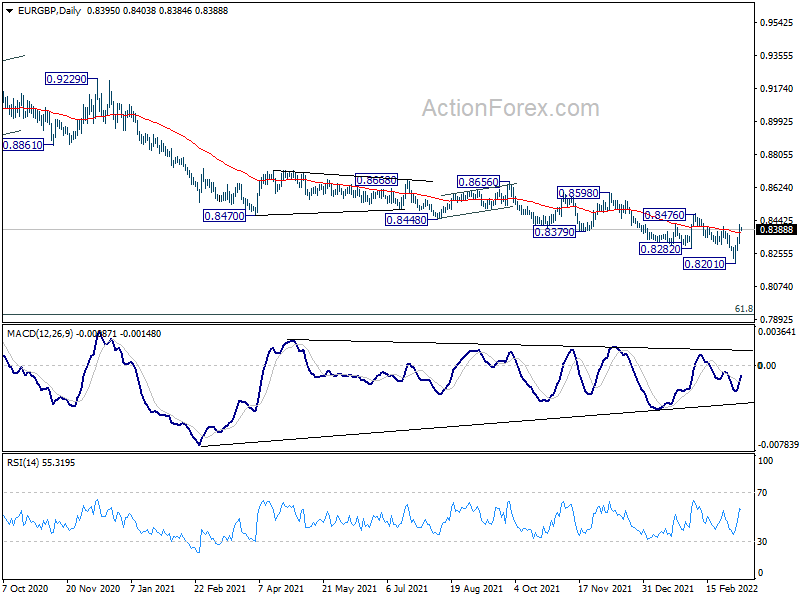
Intraday bias in EUR/GBP stays mildly on the upside at this point. Further rise would be seen to 0.8476 key structural resistance at 0.8476. Firm break there will carry larger bullish implication. On the downside, break of 0.8315 minor support will retain near term bearishness, and bring retest of 0.8201 low.
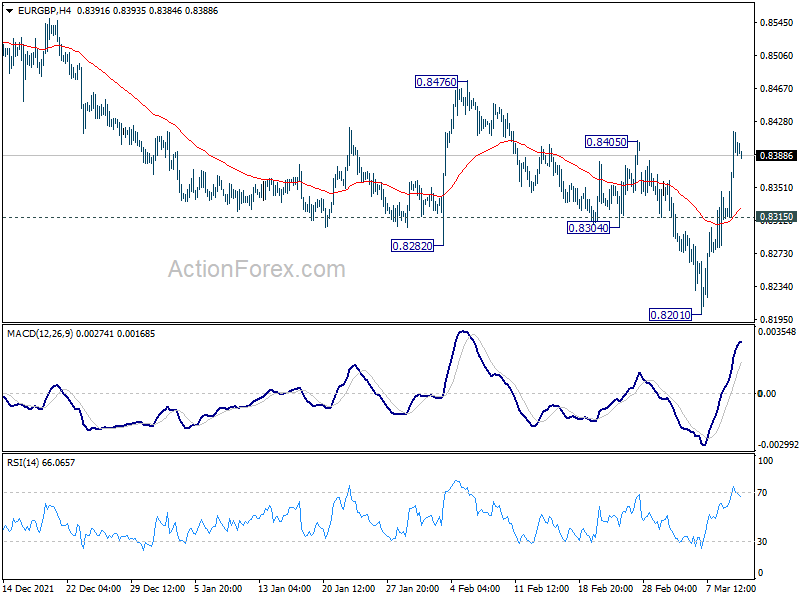
In the bigger picture, the down trend from 0.9499 is expected to continue as long as 0.8476 resistance holds. Sustained trading below 0.8276 support will argue that the whole up trend from 0.6935 (2015 low) has reversed. Deeper fall should be seen to 61.8% retracement of 0.6935 to 0.9499 at 0.7917 next. However, firm break of 0.8476 will indicate medium term bottoming at least. Focus will be back on 55 week EMA (now at 0.8534) for more evidence of bullish reversal.