Sample Category Title
Dollar Fights Back on Strong NFP and Wage Growth
Dollar is rebounding strongly in early US session following much better than expected job and wage growth. The greenback is apparently turning the tide against all major currencies, except Euro. The common currency is still the runaway winner for the week, as boosted by surprised hawkish turn in ECB. In other markets, DOW futures took a deep dive after the release on concern of aggressive Fed tightening. 10-year yield looks set to break through 1.9 handle.
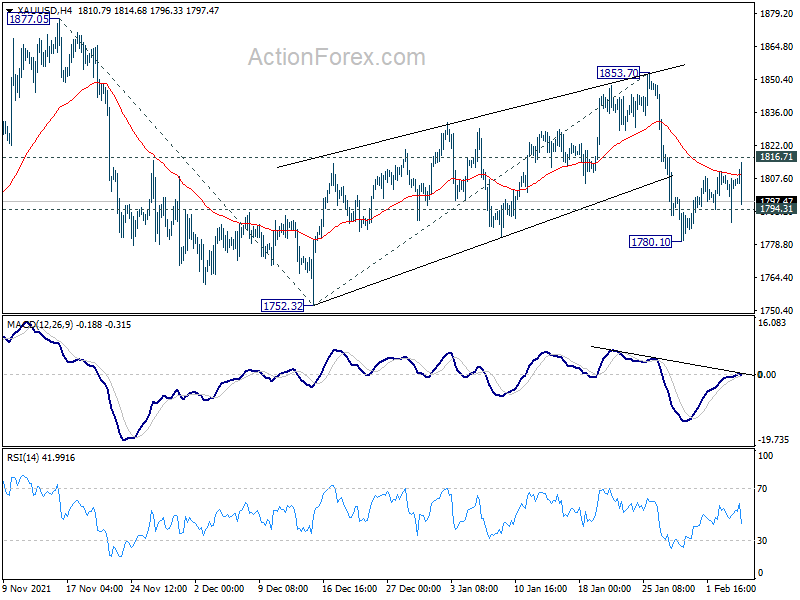
Technically, we'll pay attention to whether Gold would finally break through 1794.31 with conviction this time, after a false break earlier in the week. If happens, that would help solidify the case for a Dollar comeback. Gold should then dive through 1780.01 to resume the fall from 1853.70 to 1752.32 support next.
In Europe, at the time of writing, FTSE is down -0.10%. DAX is down -1.66%. CAC is down -0.92%. Germany 10-year yield is up 0.0540 at 0.199, pressing 0.2 handle. Earlier in Asia, Nikkei rose 0.73%. Hong Kong HSI rose 3.24%. Singapore Strait Times dropped -0.24%. China was still on holiday. Japan 10-year JGB yield rose 0.212 to 0.201, regained 0.2 handle.
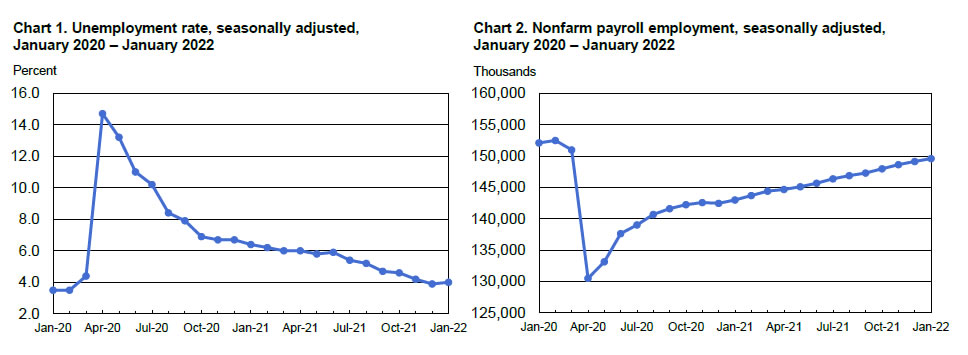
US non-farm payroll grew 467k, wage growth strong too
US non-farm payroll employment grew 467k in January, well above expectation of 150k. Prior month's figure was also revised sharply up from 199k to 510k. Employment was still down -2.9m or -1.9% from its pre-pandemic level in February 2020.
Unemployment rate, however, ticked up from 3.9% to 4.0%, versus expectation of 3.9%. Participation rate rose from 61.9% to 62.2%. Average hourly earnings posted strong growth of 0.7% mom, above expectation of 0.5% mom.
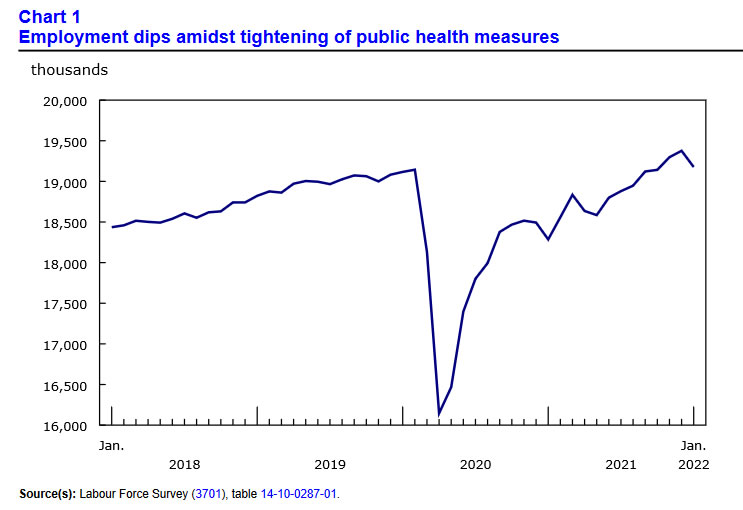
Canada employment dropped -200k in Jan, unemployment rate jumped to 6.5%
Canada employment dropped -200k in January much worse than expectation of -121k. Part-time jobs dropped -117k while full-time jobs dropped -83k.
Unemployment rate rose by 0.5% to 6.5%, higher than expectation of 6.0%. That's the first increase since April 2021. Labor force participation rate dropped -0.4% to 65.0%.
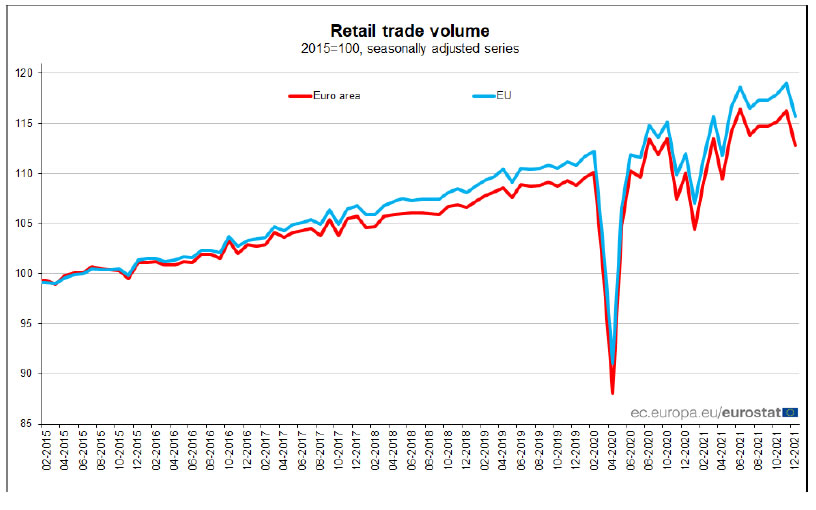
Eurozone retail sales dropped -3.0% mom in Dec, EU down -2.8% mom
Eurozone retail sales dropped -3.0% mom in December, much worse than expectation of -0.5%. Retail trade decreased by -5.2% for non-food products and by -0.3% for food, drinks and tobacco, while it increased by 0.1% for automotive fuels.
EU retail sales dropped -2.8% mom. Among Member States for which data are available, the largest monthly decreases in the total retail trade volume were registered in the Netherlands (-9.2%), Spain (-5.7%) and Germany (-5.5%). The highest increases were observed in Latvia (+7.2%), Slovenia (+2.1%), Bulgaria and Hungary (both +1.0%).
Also released, Germany factory orders rose 2.8% mom in December, versus expectation of 0.5% mom. France industrial output dropped -0.2% mom in December, below expectation of 0.5% mom.
UK PMI construction rose to 56.3, overall cost inflation eased
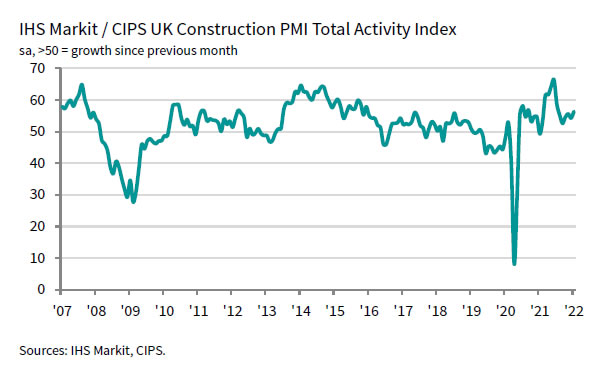
UK PMI Construction rose from 54.3 to 56.3 in January, above expectation of 54.3. Markit said the sector gained momentum after subdued end to 2021. Commercial activity helped to offset weaker rise in house building. Cost inflation dipped to 10-month low as supply issues eased.
Tim Moore, Director at IHS Markit said: "UK construction companies started the year on a strong footing as business activity picked up speed and new orders expanded to the greatest extent since last August... Higher energy, transport and raw material bills led to across the board increases in input prices during January, but fewer supply issues helped ease the overall rate of cost inflation to its lowest since March 2021."
BoJ Kuroda: Hard to see inflation sustainably reach target without wages rise
BoJ Governor Haruhiko Kuroda told the parliament today that inflation remains subdued in Japan because of the delay in recovery from pandemic, the public's deflationary mindset and firms' assumption that prices won't rice much.
"In Japan, nominal wages haven't risen much. It's hard to see inflation sustainably reach our 2 per cent target unless wages rise in tandem with prices," he said.
"It's important to maintain powerful monetary easing to support the economy, and help generate steady wage and price growth."
GBP/USD Mid-Day Outlook
Daily Pivots: (S1) 1.3549; (P) 1.3589; (R1) 1.3639; More...
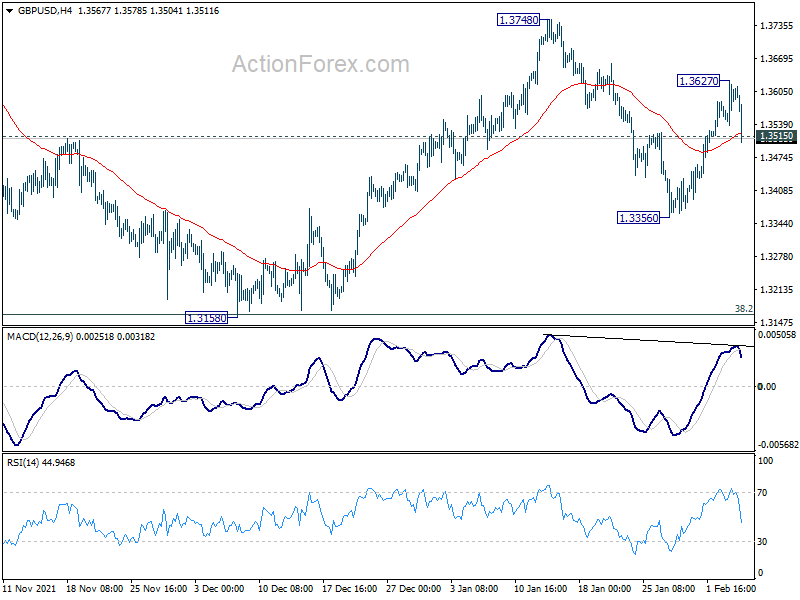
GBP/USD's sharp fall and break of 1.3515 minor support suggests that rebound from 1.3356 has completed at 1.3627 already. Intraday bias is back on the downside for 1.3356 support first. Break will resume the decline from 1.3748 to retest 1.3158 low. On the upside, however, above 1.3627 will resume the rebound for 1.3748 resistance instead.
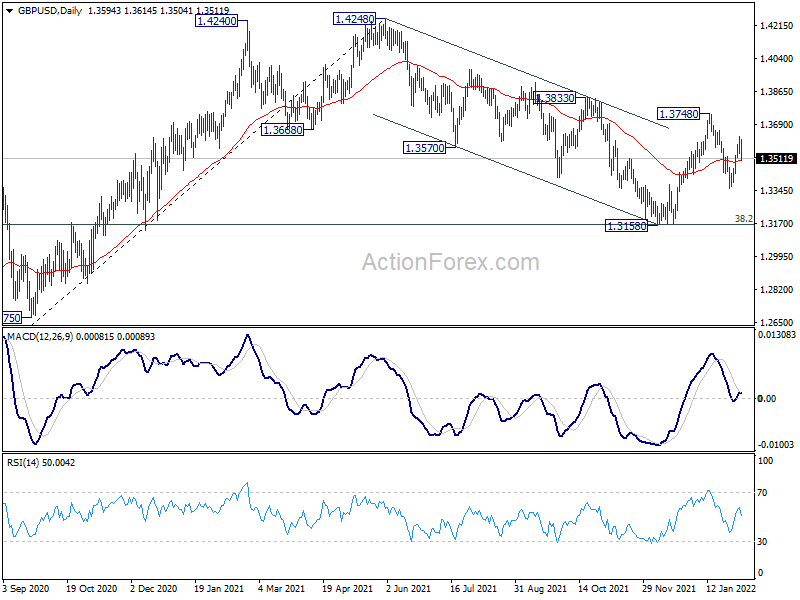
In the bigger picture, as long as 38.2% retracement of 1.1409 to 1.4248 at 1.3164 holds, up trend from 1.1409 (2020 low) is still in progress. On resumption, next target will be 38.2% retracement of 2.1161 to 1.1409 at 1.5134. Nevertheless sustained break of 1.3164 will argue that whole rise from 1.1409 has completed and bring deeper fall to 61.8% retracement at 1.2493.
Economic Indicators Update
| GMT | Ccy | Events | Actual | Forecast | Previous | Revised |
|---|---|---|---|---|---|---|
| 21:45 | NZD | Building Permits M/M Dec | 0.60% | 0.60% | ||
| 00:30 | AUD | RBA Monetary Policy Statement | ||||
| 07:00 | EUR | Germany Factory Orders M/M Dec | 2.80% | 0.50% | 3.70% | |
| 07:45 | EUR | France Industrial Output M/M Dec | -0.20% | 0.50% | -0.40% | |
| 09:30 | GBP | Construction PMI Jan | 56.3 | 54.3 | 54.3 | |
| 10:00 | EUR | Eurozone Retail Sales M/M Dec | -3.00% | -0.50% | 1.00% | |
| 13:30 | USD | Nonfarm Payrolls Jan | 467K | 150K | 199K | 510K |
| 13:30 | USD | Unemployment Rate Jan | 4.00% | 3.90% | 3.90% | |
| 13:30 | USD | Average Hourly Earnings M/M Jan | 0.70% | 0.50% | 0.60% | 0.50% |
| 13:30 | CAD | Net Change in Employment Jan | -200.1K | -121.5K | 54.7K | |
| 13:30 | CAD | Unemployment Rate Jan | 6.50% | 6.00% | 5.90% | |
| 15:00 | CAD | Ivey PMI Jan | 55.1 | 45 |
Canada employment dropped -200k in Jan, unemployment rate jumped to 6.5%
Canada employment dropped -200k in January much worse than expectation of -121k. Part-time jobs dropped -117k while full-time jobs dropped -83k.
Unemployment rate rose by 0.5% to 6.5%, higher than expectation of 6.0%. That's the first increase since April 2021. Labor force participation rate dropped -0.4% to 65.0%.
US non-farm payroll grew 467k, wage growth strong too
US non-farm payroll employment grew 467k in January, well above expectation of 150k. Prior month's figure was also revised sharply up from 199k to 510k. Employment was still down -2.9m or -1.9% from its pre-pandemic level in February 2020.
Unemployment rate, however, ticked up from 3.9% to 4.0%, versus expectation of 3.9%. Participation rate rose from 61.9% to 62.2%. Average hourly earnings posted strong growth of 0.7% mom, above expectation of 0.5% mom.
EURCAD Rockets to Descending 200-day SMA
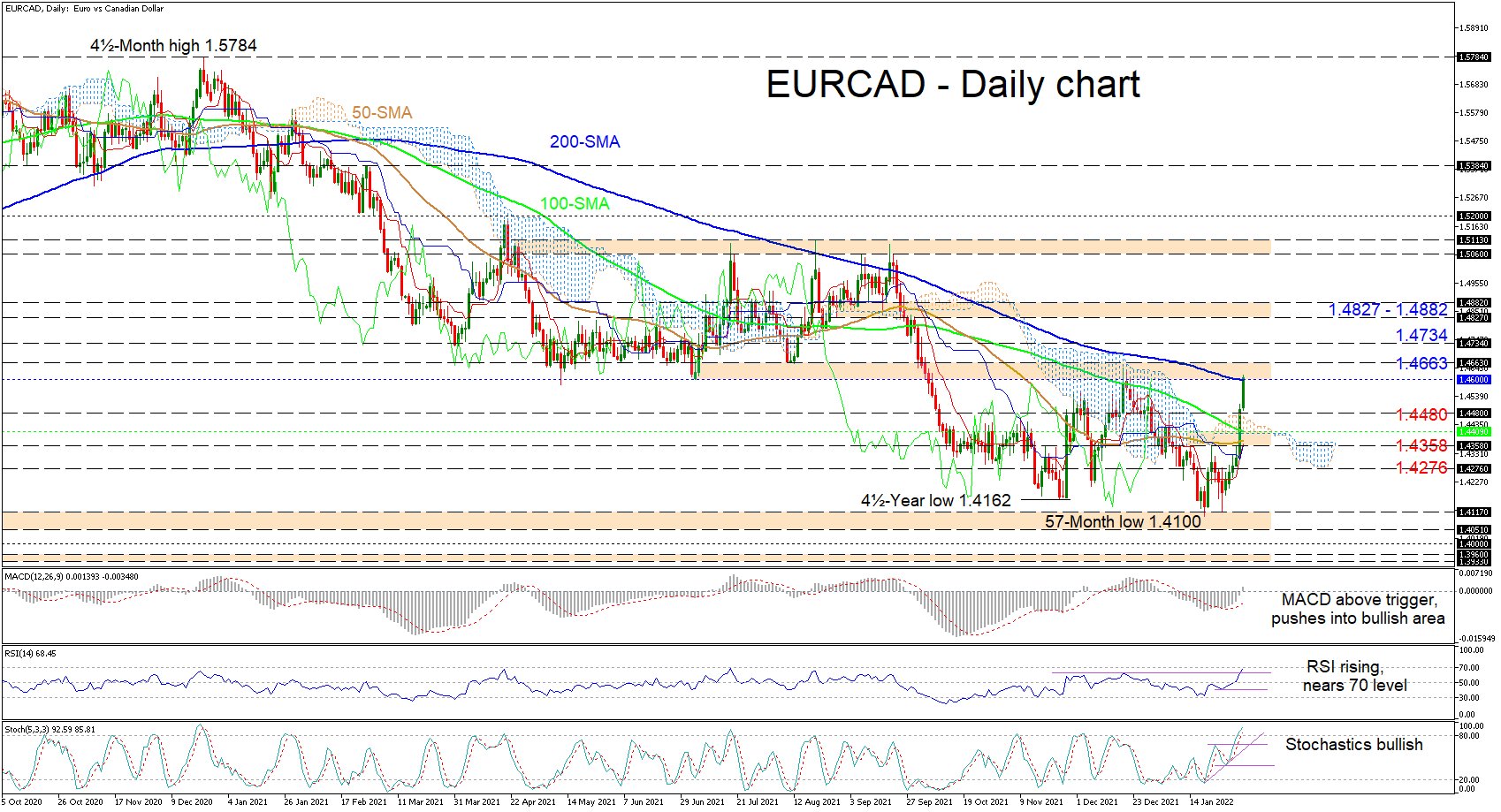
EURCAD bullish demeanour has strengthened significantly as the pair recently surged from the more than 5-year low of 1.4100 and is now tackling the 200-day simple moving average (SMA) at 1.4600. The longer-term 100- and 200-day SMAs endorse the broader bearish trend, while the upturn in the 50-day SMA, is reflecting the bullish correction in the pair.
The rising Ichimoku lines and the short-term oscillators suggest upside forces are persisting. The MACD, above its red trigger line, is climbing north of the zero threshold, while the RSI is heading higher for the 70 overbought level. Furthermore, the strong positive charge of the stochastic oscillator suggests the price could recoup extra ground.
In order for the positive trajectory to endure, the bulls would need to surpass the immediate tough resistance between the 200-day SMA at 1.4600 and the 1.4663 barrier. Successfully overcoming this section could revive optimism in the pair, cheering buyers to confront the 1.4734 obstacle prior to challenging the 1.4827-1.4882 boundary.
Alternatively, if price gains are curbed by the current 1.4600-1.4663 resistance region, a retreat in the pair may meet initial support at the 1.4480 level. Next, sellers may struggle to drive the pair beneath the buffer zone from the 100-day SMA at 1.4409 until the 1.4358 barrier. Breaching this key zone that includes the 50-day SMA, the Ichimoku lines and the Ichimoku cloud’s floor, the price could then test the 1.4276 support before pursuing the multi-year low levels.
Summarizing, EURCAD’s broader bearish bias is currently being challenged around the 1.4600-1.4663 region. That said, a break above this resistance obstacle could reinforce upside impetus, while a dive beneath the 1.4358-1.4409 support may signal growing negative pressures.
Eurozone retail sales dropped -3.0% mom in Dec, EU down -2.8% mom
Eurozone retail sales dropped -3.0% mom in December, much worse than expectation of -0.5%. Retail trade decreased by -5.2% for non-food products and by -0.3% for food, drinks and tobacco, while it increased by 0.1% for automotive fuels.
EU retail sales dropped -2.8% mom. Among Member States for which data are available, the largest monthly decreases in the total retail trade volume were registered in the Netherlands (-9.2%), Spain (-5.7%) and Germany (-5.5%). The highest increases were observed in Latvia (+7.2%), Slovenia (+2.1%), Bulgaria and Hungary (both +1.0%).
EURAUD Unlocks 4-Month High Above Symmetrical Triangle
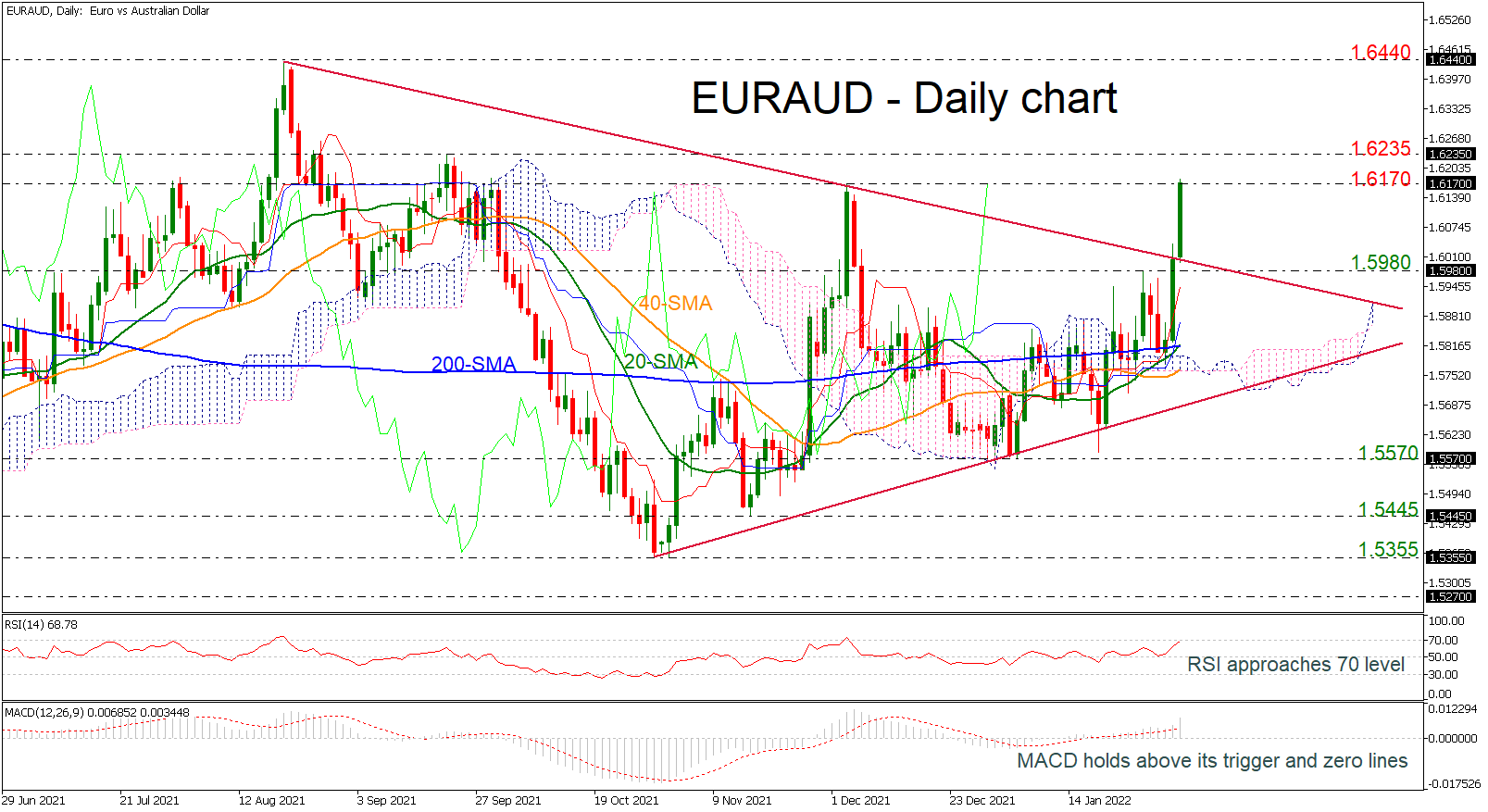
EURAUD is surging to a fresh four-month highs around 1.6175, jumping above the symmetrical triangle with strong momentum. The technical indicators are feeding prospects for a possible positive trade; the RSI is holding well above 50, while the MACD continues to strengthen in bullish territory and above its trigger and zero lines. Also, from the Ichimoku indicators, the red Tenkan-sen keeps rising higher than the blue Kijun-sen. Yet, the pair is facing strong resistance near its previous peak of 1.6170.
A failure to overcome the 1.6170 barrier could send the price down to 1.5980, a challenging point over the last two months. Lower support could be next found around the 200-day simple moving average (SMA) at 1.5815, while a decisive close below the Ichimoku cloud could spark a steeper sell-off until 1.5570.
Alternatively, if 1.6170 proves easy to get through, the spotlight will turn to the 1.6235 area. On top of that, the bulls would need to clear the 1.6440 barrier to push the rally towards the 1.6600 peak.
In the medium-term picture, EURAUD is turning positive after violating the downtrend started from the 1.6440 peak. Should the market continue the upward pattern, the outlook may turn brighter. A run above 1.6440 would turn the outlook strongly bullish.
Euro Rockets as Lagarde Talks Hawkish
The euro has posted slight gains in the European session, as it trades around 1.1450. Thursday was an absolute barn-burner, as EUR/USD surged 1.18%, its best one-day performance since December 2020.
Lagarde beats a retreat on rates
The ECB did not raise rates at its meeting on Thursday, but some tweaks in the statement and hawkish comments from ECB President Lagarde were enough to send the euro soaring. Investors snapped up euros as the ECB essentially caved in due to inflationary pressures. Lagarde said that risks to inflation outlook were tilted to the upside in the near term, and acknowledged that inflation would persist longer than previously expected. Lagarde added that inflation was projected to fall in H2 of 2022, but investors weren’t listening as they stampeded out the door to dump dollars and buy euros. The markets also picked up on what Lagarde didn’t say, as she omitted her previous guidance that a rate hike was “very unlikely” in 2022.
If Lagarde, who has been very dovish, intended to show a more hawkish side at the meeting, the markets got the message loud and clear. The markets have now priced in 40 basis points of hikes this year, up from 25 basis points before the ECB decision. The March meeting will be carefully watched as the ECB will release updated economic forecasts, which could impact on the timing of a rate hike.
The US nonfarm payroll report is often the highlight of the trading week, but this time around the markets are more focused on interest rate guidance and next week’s US inflation report. The ADP employment report showed a massive loss of jobs, at -301 thousand. This was the sharpest decline since April 2020, when the Covid pandemic started. The markets aren’t bracing for a repeat from the NFP, but expectations are low, with a consensus of 150 thousand.
- EUR/USD broke above resistance at 1.1428 on Thursday. Next, we find resistance at 1.1510 and 1.1640
- There is support at 1.1287 and 1.1205

UK PMI construction rose to 56.3, overall cost inflation eased
UK PMI Construction rose from 54.3 to 56.3 in January, above expectation of 54.3. Markit said the sector gained momentum after subdued end to 2021. Commercial activity helped to offset weaker rise in house building. Cost inflation dipped to 10-month low as supply issues eased.
Tim Moore, Director at IHS Markit said: "UK construction companies started the year on a strong footing as business activity picked up speed and new orders expanded to the greatest extent since last August... Higher energy, transport and raw material bills led to across the board increases in input prices during January, but fewer supply issues helped ease the overall rate of cost inflation to its lowest since March 2021."
ECB Flips the Hawkish Switch, US Jobs Coming Up
- Nonfarm payrolls likely to disappoint, might even turn negative
- ECB opens door for rate hikes and faster taper, euro soars
- BoE raises rates, announces balance sheet reduction
Weak payrolls unlikely to keep dollar down
The latest US employment report will be in the spotlight today. Nonfarm payrolls are forecast to have risen by 150k in January, but market participants are probably positioned for a much weaker print by now.
Nonfarm payrolls are calculated from survey data, which is collected in the second week of each month. In January, this was the week when covid cases peaked as Omicron spread uncontrollably. If someone was out sick during this week and was not getting paid sick leave, they would be counted as unemployed.
Hence, this could artificially skew nonfarm payrolls lower this month, and even a negative number cannot be ruled out. The case for a disappointing print is supported by several labor market indicators, such as the ADP report, jobless claims, and the employment index of the ISM services survey.
In the markets, the knee-jerk reaction in the dollar might be negative as trading algorithms react to a disappointing nonfarm payrolls print. However, any weakness is unlikely to last long, since a soft number wouldn’t represent the true state of the labor market, which is actually quite tight.
Indeed, Fed officials like Thomas Barkin have already said they would view any disappointment as a temporary setback given the covid numbers for the month. For the Fed, wage growth is the most important metric at this stage of the cycle, and if that fires up today, it could overshadow any misfortune in payrolls.
ECB opens door to higher rates
The European Central Bank poured gasoline on speculation that higher interest rates are on the menu for this year, stressing that inflation may be stickier than expected and that monetary policy will likely have to respond. Reports after the meeting said “a sizable minority” of policymakers had pushed for immediate action, and that tapering will likely be accelerated next month.
In essence, the ECB wants to speed up the taper process so that it has the option to raise rates later in the year, if the inflation outlook demands it. All this ignited a stampede in the market as traders rushed to price everything in, catapulting European yields higher and sending the euro into overdrive.
Around 50 basis points of rate hikes are now priced in by year end, which is probably on the optimistic side of what is possible given the state of the economy but not completely unrealistic. While euro/dollar is riding this ECB repricing higher, the big picture hasn’t fundamentally changed so long as euro area wage dynamics remain muted, and another hot US inflation print next week could turn the momentum around.
BoE hikes, stocks ride the rollercoaster
The Bank of England did not disappoint either. It raised rates by a quarter-point and announced plans to reduce its balance sheet, but sent a very hawkish message with four of the nine officials voting for an even larger rate increase to combat inflation.
The message was loud and clear - inflation may be persistent, so all options are on the table. Markets are currently pricing in another five rate hikes for this year, which seems a little aggressive. The pound spiked higher on the news but quickly surrendered most of its gains, with euro/sterling reversing in spectacular fashion after the ECB also raised the stakes.
In the equity space, Wall Street lost ground as higher yields and the fallout from Facebook dampened the mood, although some blockbuster results from Amazon after the bell seem to have restored order to the force. Finally, oil prices continue to trade like a rocket ship, encouraged by signs that OPEC members might not have the firepower to meet their production quotas.
GBPJPY Buyers Dominate after Bounce on MAs
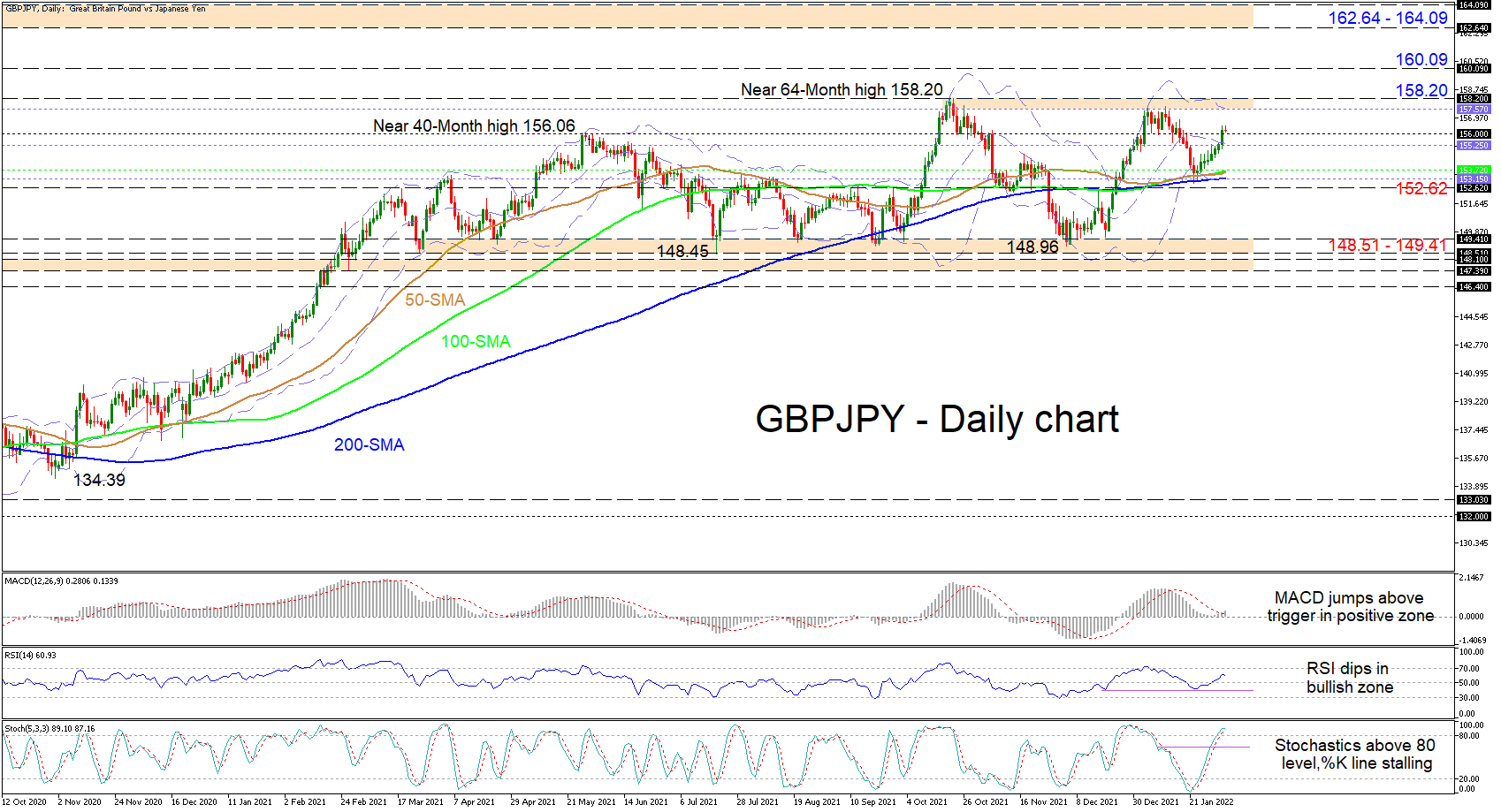
GBPJPY has recorded eight consecutive green candles after rebounding off the simple moving averages (SMAs), but the positive drive has diminished significantly following the breach of the 156.00 level. Nonetheless, the gradual incline in the SMAs, is suggesting that the neutral-to-bullish mood remains active.
The short-term oscillators mirror the bullish demeanour in the pair but are currently reflecting a slight waning in upside momentum. The MACD, a tad above zero, is endorsing positive momentum with its climb back above its red trigger line. Currently, the RSI in the bullish region has marginally rolled over and in the overbought territory, the stochastic %K line is stalling, thus together promoting lifeless upside forces.
Lifting off the 156.00 handle, the pair could encounter preliminary bullish constraints around the 157.57-158.20 zone, formed by the upper Bollinger band and the more than 5-year high of 158.20. Conquering this tough barrier, which has restrained the pair to a broad trading range since October 2021, the price could challenge the 160.09 high from back in June 2016, where the pair collapsed 27 full points. Should this resistance fail to terminate additional gains from evolving, the price may then seek out the 162.64-164.09 obstacle, which is linked to an area of highs over the March-May 2016 period.
Otherwise, if the price slips beneath the 156.00 hurdle, prompt footing could arise from the mid-Bollinger band at 155.25. In the event the mid-Bollinger band is overlooked, a dive in the price may then encounter a hardened area of support stretching from the 100-day SMA at 153.72 until the 152.62 barrier. If selling pressures break down this buffer zone, which encompasses the 50- and 200-day averages, the lower Bollinger band and the January 24 trough, the price may snowball towards the 148.51-149.41 base that has held since March 2021.
Summarizing, GBPJPY is exhibiting a neutral-to-bullish bias north of the SMAs and the fresh trough at 152.89. A break above the portrayed ceiling of 157.57-158.20 could juice up the bullish bias, while a retreat stretching beneath the 152.62 barrier may reinforce negative tendencies.