

Sample Category Title
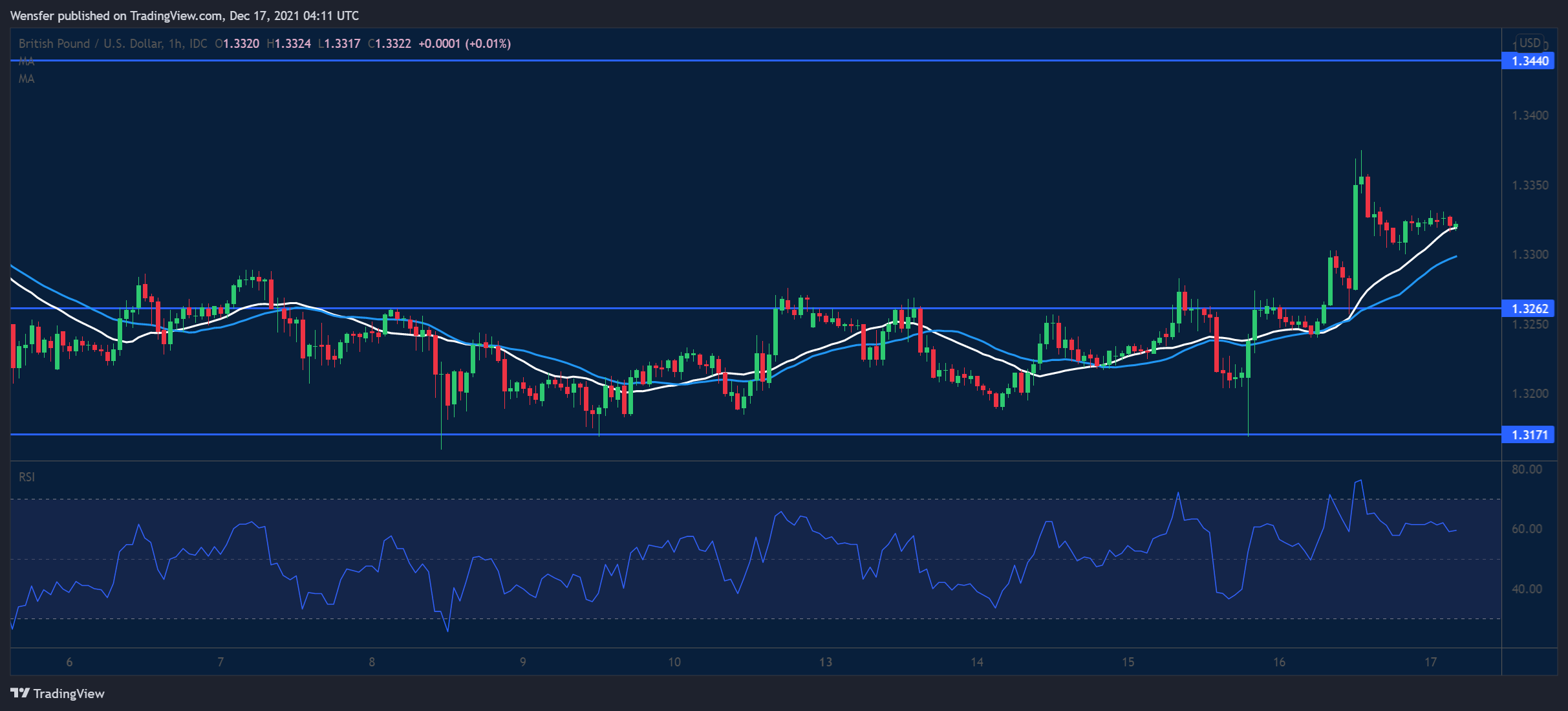
GBP/USD Attempts Bullish Reversal
Sterling surged after the Bank of England raised its interest rates to 0.25%. The pound has been treading water above 1.3170. The sellers’ struggle to push lower and the buyers’ attempts above 1.3260 suggest that the mood could be improving.
A break above 1.3300 has prompted the bears to cover, attracting momentum traders in the process with 1.3440 as the next target. That said, an overbought RSI may cause a temporary pullback as intraday traders take profit.
1.3260 has become the closest support.
EUR/GBP Daily Outlook
Daily Pivots: (S1) 0.8463; (P) 0.8496; (R1) 0.8537; More...
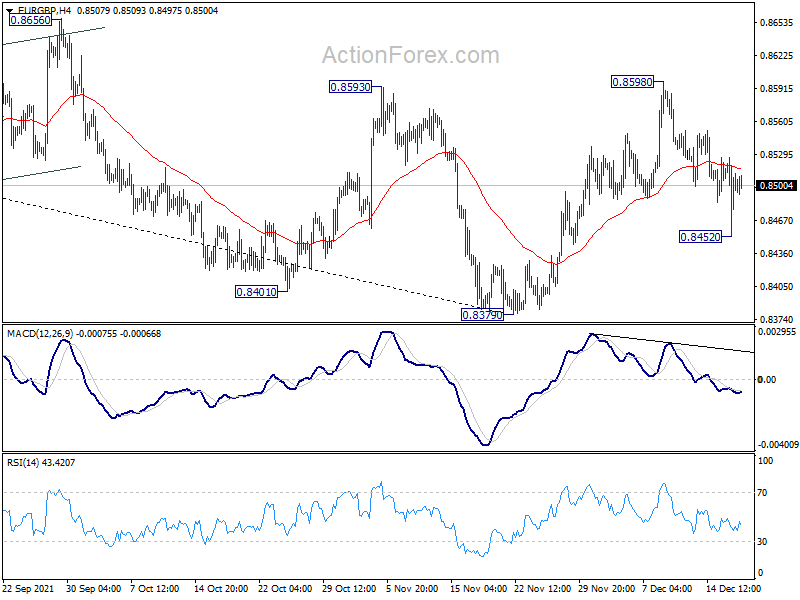
Despite dipping to 0.8452, EUR/GBP quickly recovered. Intraday bias remains neutral first. On the upside, firm break of 0.8593 resistance will be the first sign of larger bullish reversal and target 0.8656 resistance next. On the downside, however, break of 0.8452 will turn bias back to the downside to retest 0.8379 low instead.
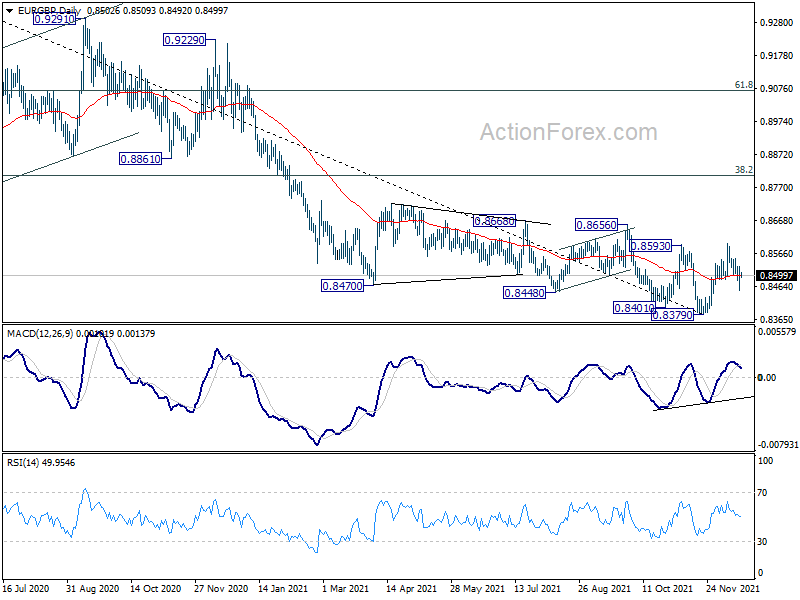
In the bigger picture, price actions from 0.9499 (2020 high) are still seen as developing into a corrective pattern. Deeper fall could be seen as long as 0.8593 resistance holds, towards long term support at 0.8276. We'd look for bottoming signal around there to bring reversal. Meanwhile, firm break of 0.8593 will now be an early sign of medium term bottoming. Further break of 0.8656 will pave the way to 38.2% retracement of 0.9499 to 0.8379 at 0.8807.
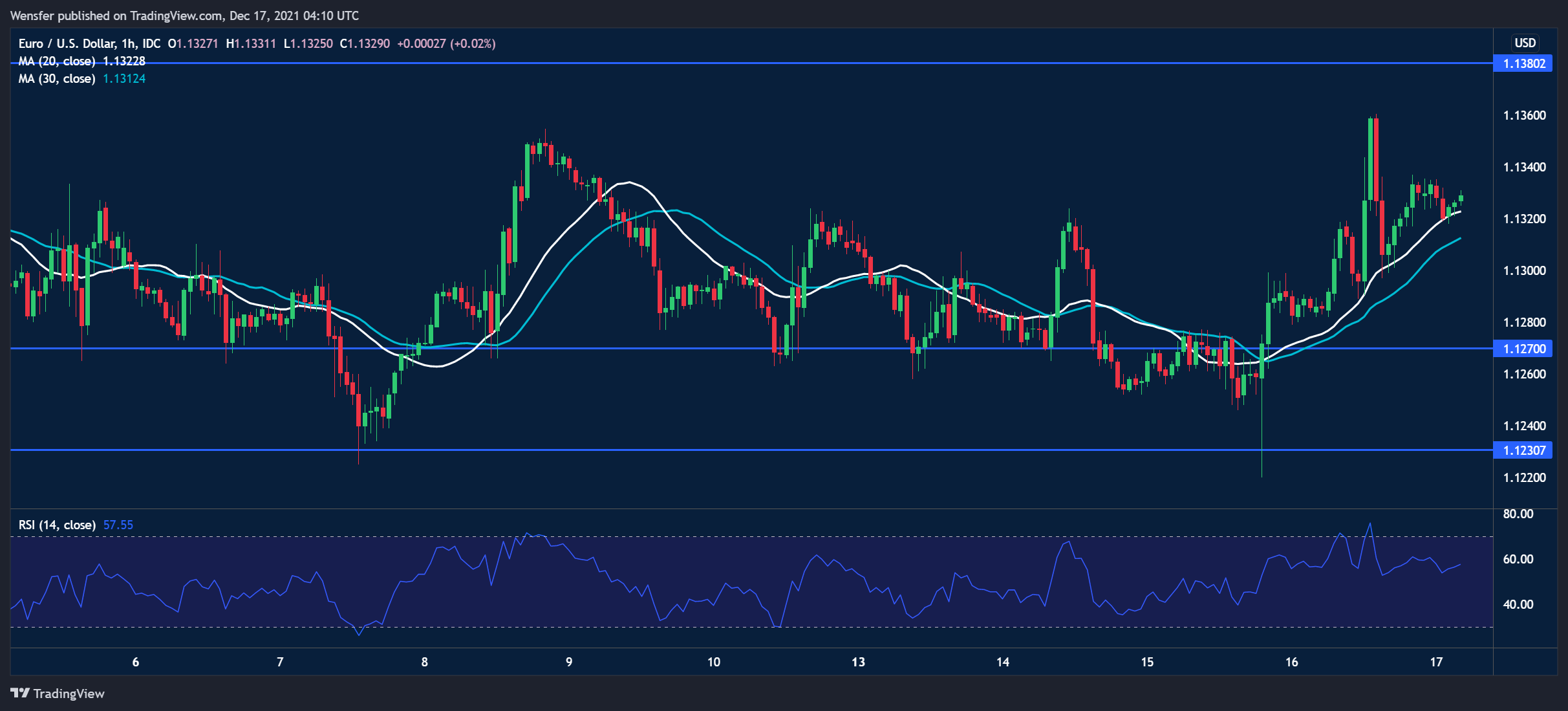
EUR/USD Tests Key Supply Zone
The euro jumped after the ECB announced it will cut its bond-buying program. The pair’s latest retreat seems to have been an accumulation phase for the bulls.
Strong buying interest lies in the demand zone around 1.1230. A break above 1.1320 has put buyers back in the control room. 1.1380 from a previously botched reversal attempt is a major hurdle ahead.
Its breach may trigger an extended rally towards 1.1460. The RSI’s overextended situation has caused a brief pullback with 1.1270 as a key support.
XAUUSD Is Possibly Bullish
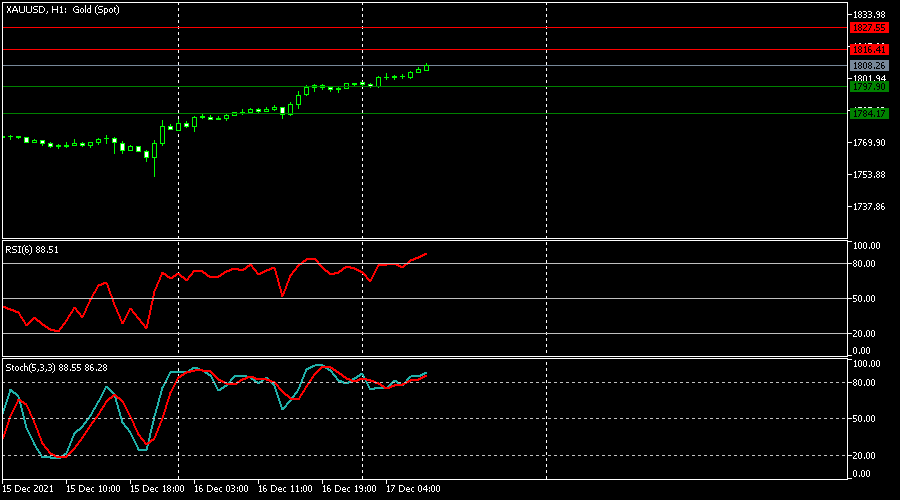
Technical analysis
The RSI is at the overbought zone.
The Stochastics is at the overbought zone.
Most likely scenario – BUY
Target prices: 1,816.41 1,827.55
Alternative scenario – SELL
Target prices: 1,797.90 1,784.17
Key levels
Support 1,797.90 1,784.17
Resistance 1,816.41 1,827.55
Daily Technical Analysis
EUR/USD
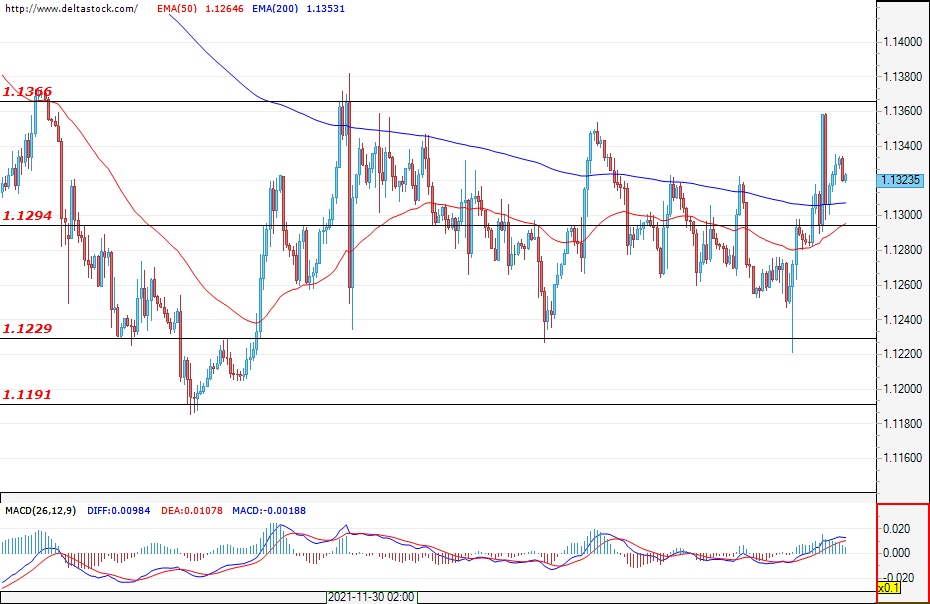
Current level - 1.1323
The euro managed to close the last session in the green, with the global picture remaining unchanged. On the higher time frames, the pair formed a range with support at 1.1230 and resistance at around 1.1365. In the shorter time frames, the market shows early indications of a change in sentiments and the possibility of a potential rally. It seems that the bulls are ready to defend their positions around 1.1230 after the false breach of the zone. The current formation suggests the potential for a larger leg up, but in order for this to happen, the area of 1.1365 must be cleared first. In such a scenario, an attack on the next resistance at around 1.1510 can be expected. Today, increased activity can be expected around the release of the CPI data for the Eurozone at 10:00 GMT.
| Resistance | Support | ||
| intraday | intraweek | intraday | intraweek |
| 1.1360 | 1.1460 | 1.1294 | 1.1190 |
| 1.1360 | 1.1510 | 1.1230 | 1.1100 |
USD/JPY
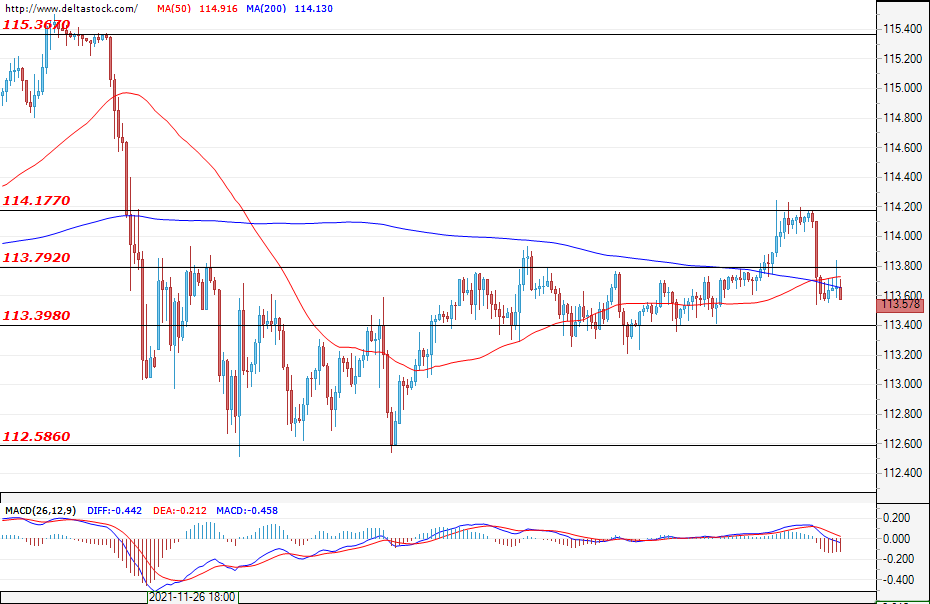
Current level - 113.57
After prolonged consolidation, the bulls failed to make significant movement and their attack was stopped in the area at around 114.17. Sentiments are in favor of the pair declining and the expectations are for a new wave of sell-offs. Today's decision of the Central Bank of Japan to keep interest rates unchanged did not have much of an impact on the Ninja. It is possible that the bears will launch an attack on the support at 113.40, and if successful, the next target of the movement may be the lows at around 112.58. If this scenario does not materialise, it is possible that the market will remain indecisive and trading activity could remain limited between the support at 113.40 and the resistance at 114.17.
| Resistance | Support | ||
| intraday | intraweek | intraday | intraweek |
| 113.80 | 115.37 | 113.40 | 112.58 |
| 114.17 | 115.37 | 112.58 | 110.80 |
GBP/USD
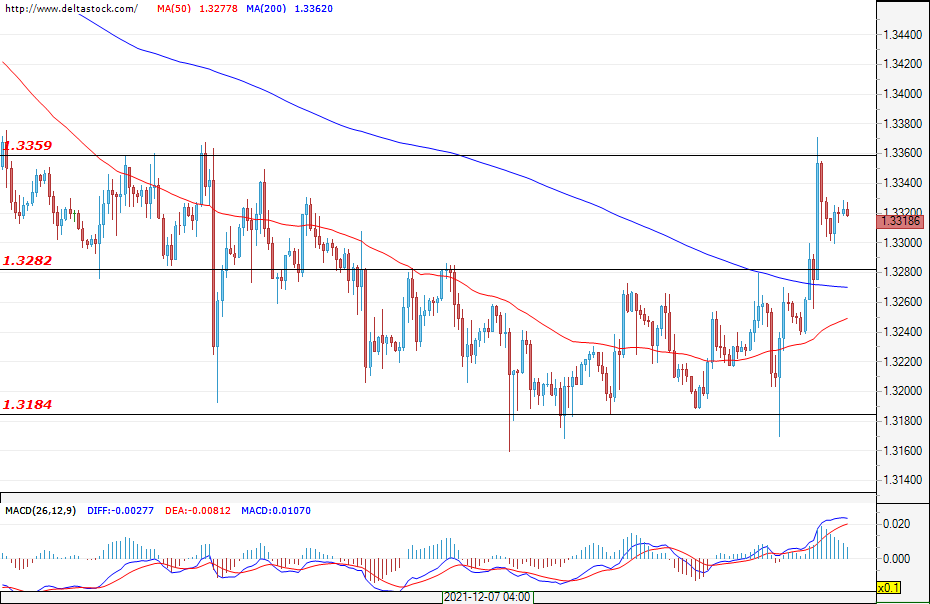
Current level - 1.3318
The sterling continued the series of back-to-back gains for the week, and the surprise rate hike by the Bank of England led the pair towards the resistance at 1.3360. The pair breached the structure at around 1.3260 - 1.3280, with the market signalling for a mood change and a potential reversal of the pair’s direction. The first daily support is found at 1.3280 and it is possible that this area could be tested. If the bullish attitudes are preserved, a new attack on the 1.3360 zone is possible. In case of a breach of this level, an increase towards 1.3500 can be expected. The key support for the bulls is found at around 1.3184.
| Resistance | Support | ||
| intraday | intraweek | intraday | intraweek |
| 1.3360 | 1.3500 | 1.3280 | 1.3180 |
| 1.3440 | 1.3500 | 1.3240 | 1.3100 |
Policy Remains Highly Accommodative Despite High Nominal Growth
Markets
Yesterday, multiple central banks including the Bank of England and the ECB met for their last meeting of the year. For most of them, accelerating inflation put policy normalization on top of the agenda. The BoE took a qualitative step. As the asset purchase program has been completed, Bailey an Co immediately moved to a next phase, raising the policy rate by 15 bps to 0.25%. While the impact of ending the furlough scheme was still a concern at the November meeting, persistent strong labour data and inflation accelerating above 5% this time forced the BoE to prioritize inflation. The Bank didn’t give clear guidance on the timing of further hikes. However, with inflation expected to stay at current or higher levels until April, follow-up action might already come in spring or earlier. UK yields initially jumped up to 9 bp higher, but gains evaporated in a broader risk-off move. Initial gains of sterling (against the euro) were also reversed after the ECB policy announcement. EUR/GBP closed at 0.8505, only little changed from Thursday (0.8515). The ECB laid out the roadmap for policy as net PEPP purchases will stop end March 2022. However, Lagarde and Co delivered a recalibration, rather than a qualitative step to profound policy normalization. PEPP reinvestments even will be extended at least till the end of 2024. Net PEPP purchases in the first quarter of next year will slow from current pace. To secure a smooth transition post PEPP, purchases under APP will be raised to € 40bln p/m in Q2 to be reduced back to € 20bln in Q4. Omicron/the development of the pandemic remain a key source of uncertainty and the ECB still sees the need for continued policy accommodation. Growth is expected to stay strong (5.1% 2021; 4.2% 2020; 2.9% 2023). Inflation was upwardly revised to 2.6% this year, 3.2% next year but is expected to return below target (1.8%) in 2023 and 2024. The ECB will evaluate policy metrics on a quarterly basis, but Lagarde reiterated that rate hikes in 2022 are unlikely. Yesterday’s ECB action is subject to divergent interpretation. Policy remains highly accommodative despite high nominal growth. At the same time, some market participates will consider it as potentially opening the door toward (accelerated?) policy normalization next year. German yields initially jumped 5+ bps, but also didn’t withstand a deepening US risk-off correction (Dow -0.8%; Nasdaq -2.47%). German yields closed between -0.1 bp (2-y) and +4.1 bps (30-y). US yields declined between 8.1 bps (5-y) and 0.75 bps (30-y). Both for the German and the US 10-y yield the technical picture remains fragile. The former struggles to regain the -0.35%. The US 10-y yield is at risk to fall below the 1.41% support. A break would bring this month’s low (1.33%) on the radar.
On FX, the ‘ECB roadmap’ triggered a EUR/USD short-squeeze with the pair touching the 1.136 area. Momentum slowed soon, but the sharp decline in US yields weighed on the dollar and allowed EUR/USD to close well north of 1.13 (1.1330). EUR/USD created some breathing space off the 1.1186/1.1222 support area, but only a sustained break above 1.1385 would signal that the single currency could enter calmer waters. The trade-weighted dollar (DXY 95.94) trades off the recent highs. For this index, 95.51 is first important reference on the charts.
News headlines
The Bank of Japan kept the policy rate steady at -0.10% and the 10y yield target at 0%. It did scale back some of its stimulus measures. The quota for extra purchases of corporate bonds introduced after the pandemic struck will end in March next year. Outstanding corporate holdings from then on will gradually be rolled off to about half of the 11tn today. Its emergency funding scheme providing loan support ends as planned on March 2022 for large enterprises but has been extended by six months for SMEs. Monetary policy support is very generous still though as inflation remains subdued while omicron poses new threats. The Japanese yen trades little changed near USD/JPY 113.5.
Mexico’s central bank raised the policy rate by 50 bps to 5.5% yesterday. The bigger-than-expected hike was warranted by increasing inflation forecasts and upside risks as well as other central banks (including the Fed) moving towards a faster tightening pace. The central bank projects prices to rise with a peak rate of 7.1% in Q4 this year and will only ease close to the 3% target in 2023. Officials left the door open for more hikes, most likely in clips of 50 bps. The Mexican peso yesterday strengthened, sending USD/MXN below 21.
Norges Bank And BoE Hike, ECB Keeps Optionality
Market movers today
- After the frenzy of central bank meetings, focus turns today back to economic releases.
- In Germany the IFO business climate survey for December is expected to fall back a bit as the Covid-19 weigh on sentiment.
- We also get the final HICP inflation number for November, where in particular the core part will be in focus.
- Russia's central bank rounds off this intense central bank week, where expectations are for a full percentage point hike (to 8.50%) to tame inflation running well-above the bank's target.
The 60 second overview
Norges Bank delivered a 25bp rate hike yesterday and maintained a firm tightening bias. They maintained guidance of a continued normalisation of monetary policy and signalled the next hike in the cycle in March 2022 with the executive board concluding. The rate path and forward guidance on policy rates was very close to our expectations and we expect three hikes next year (March, June while September/December is roughly equal probability).
ECB highlighted its data dependent means flexibility and optionality. ECB ended its PEPP as expected in March 2022 and an extended PEPP reinvestment guidance by one year to 'at least until' December 2024. Specifically for Greece, the reinvestment can be moved across time, jurisdictions, asset class. On APP, ECB kept the APP still being open ended, and pre-committed to a gradual purchase pace through 2022. The inflation outlook was revised up significantly in 2022 and 2023, and combined with the progress on economic recovery it was an important factor behind the decision to slow asset purchases. Especially the forecasts for headline inflation (3.2%) and core inflation (1.9%) during 2022 stand out.
Bank of England (BoE) unexpectedly hiked rates 15bp to 0.25% in an 8-1 vote, and a complete shift from November (where it was a 2-7 vote for a hike). A rate hike was expected in February, but BoE seems more concerned about persistent inflation. We also saw the latest print surprised to the upside. We still believe markets are pricing in too many rate hikes from the BoE, and the hiking cycle will be more gradual.
Bank of Japan decided to taper its purchases of commercial papers and corporate bonds to pre-pandemic levels in March 2022 as planned. It extended the part of its emergency funding scheme towards small and medium sized businesses another six months beyond the March 2022 deadline and lefts its QQE with yield curve policy unchanged, confirming its dovish position among major centrals banks.
Geopolitics: The EU leaders met yesterday to discuss the escalating conflict in Ukraine against Russia. For now, the EU leaders rattled with the sables by threatening Russia with sanctions, severe costs etc., but fell short of actually delivering measures.
Equities: Equity performance flipped on Thursday, with US reversing the Fed rally and growth/tech under renewed scrutiny. Rotation was massive, with best performing financials beating worst performing tech by 4 percentage points. This spread was also evident between US indexes; S&P500 closed down -0.9%, Nasdaq a massive -2.5%, Russell 2000 -2% while Dow closed unchanged. Asian markets are following the move lower this morning and US futures point lower.
FI: Markets were in a 2bp range from the morning digesting the FOMC messages from Wednesday night. The unexpected BoE hike and the ECB's leaning hawkish change in keeping optionality and flexibility resulted in a strong bear steepening of the curves coming from the long end. The less than expected QE volume next year led to underperformance of peripheral spreads and especially BTPs (BTPs-Bund spread 4bp wider on the day). However, Greece was the exception and a main performer as PEPP reinvestment can be moved across jurisdictions. The GGB-Bund spread tightened 3bp. After the 'super Thursday', markets needs to find its footing as year-end approach, which may result in erratic moves.
FX: In a very eventful day across markets, the lesson in FX markets was clear: rate hikes are on balance positive for a currency but the global investment environment is ultimately a more important driver. For instance both EUR/NOK and EUR/GBP ended the session virtually unchanged despite a sharp widening of rates spreads on Bank of England and Norges Bank as the souring of the global environment dominated price action.
Credit: Sentiment remained upbeat in credit yesterday with iTraxx Xover tightening 7.6bp and Main 1.7bp. Cash bond were less strong and HY bonds tightened 1.5bp and IG 0.5bp.
Nordic macro
Last night, the Danish Ministry of Finance published a revised estimate for the borrowing requirement in 2022. The revision is due to the budget act being passed this week. The revision for both 2021 and 2022 relative to the estimate made in August shows a significant improvement in the public finances as the deficit in 2021 at DKK 28bn is turned into a surplus of DKK 77bn. In 2022, there was a surplus of DKK 18bn, this is now a surplus of DKK 46bn.
Surprise, Surprise
Risk sentiment turned suddenly sour on Thursday. Nasdaq tanked 2.5% and the S&P500 slid close to 0.87% from ATH levels, as investors weighed the possible negative impacts of a tighter Federal Reserve (Fed) policy, the rising omicron cases, and the fact that Biden’s $2 trillion won’t pass the legislation this year.
Volatility is rising again, lowering the predictability of what may happen next. Although this week gave little answer about whether we will see a Santa rally, we now have a clearer roadmap about what should happen on the US monetary policy front. Therefore, there is chance of seeing one last record before we close the year on the index level.
In the medium run, the rally in US equities should continue even with tighter monetary conditions for two reasons. First, even with a twice-faster QE tapering, the Fed will be expanding its balance sheet over the next couple of months. And second, the company earnings have been sufficiently strong this year, comforting that things should not come down crashing overnight. So, despite the expectation that higher interest rates should benefit to value names, the US big tech companies, which are strong enough to survive a 100-200 basis points hike over the next two years, should continue doing well.
We may however see a stronger volatility and more frequent downside corrections on index level, but I am not sure the bumps on the road would prevent the S&P500 and Nasdaq from gaining another 5 to 7% which would bring the S&P500 to 4900/5000 range and Nasdaq to 16600-16800 band.
BoE: What a surprise
The Bank of England (BoE) raised its rate by 15 basis points to 0.25% and became the first major central bank to raise the rates. Government Bailey pointed at the ‘persistent inflation’ after the latest data showed that inflation in Britain advanced past the 5% in November.
The British pound took the opportunity to rebound from a year low against the US dollar. The latest BoE move should be a pivot point for sterling, as the bold move from the BoE should give the market’s reins to the hawks and encourage a further recovery in Cable toward the 1.35.
The FTSE on the other hand should continue benefiting from a relatively cheap pound and the fact that the higher rates will grandly benefit to its bank-heavy portfolio. As such, I expect the FTSE 100 to at least advance towards the pre-pandemic levels in the coming months.
Let’s give it another name
Across the Channel, the European Central Bank (ECB) also did a hawkish tweak to its policy, but that tweak was much less impressive. The ECB announced the end the PEPP program by next March, but added that the bank would double the APP purchases to ease the transition.
Say that again! The ECB will stop buying the bonds under the name of PEPP program, and they will continue buying bonds under the name of APP program, hoping to fool Mr. Inflation and convince him to go away.
And oh, that’s not all. The ECB will continue investing cash from maturing bonds for longer and will keep the PEPP emergency scheme suspended, and ready to be deployed at short notice in the event of turbulence.
The latest changes are better than nothing and should give a bullish swing to the euro, yet they won’t be enough to keep the ECB doves safe for the next meetings.
EUR/AUD Daily Outlook
Daily Pivots: (S1) 1.5690; (P) 1.5743; (R1) 1.5827; More...
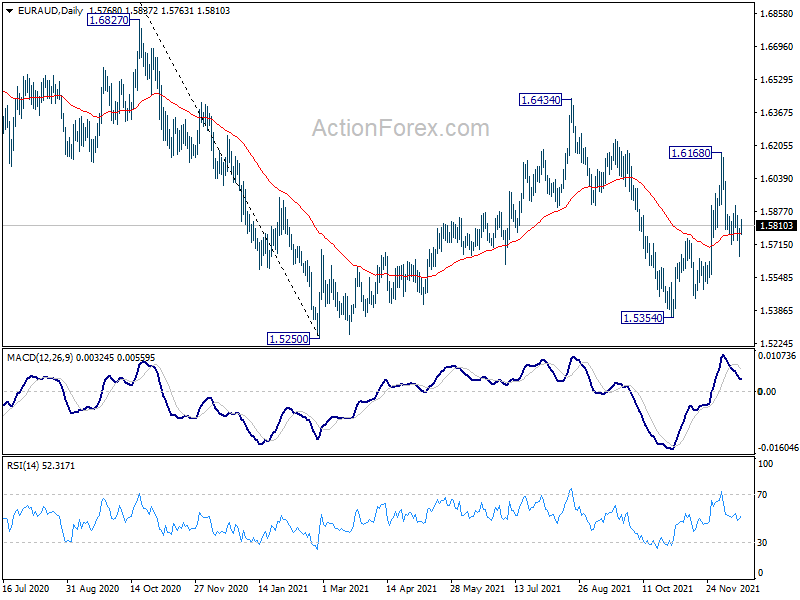
Despite dipping to 1.5655, EUR/AUD quickly recovered. Intraday bias remains neutral first. On the downside, break of 1.5655 will revive the case that rebound from 1.5354 has completed, and bring retest of this support. On the upside, break of 1.6168 will resume the rise from 1.5354 to 1.6434 resistance.
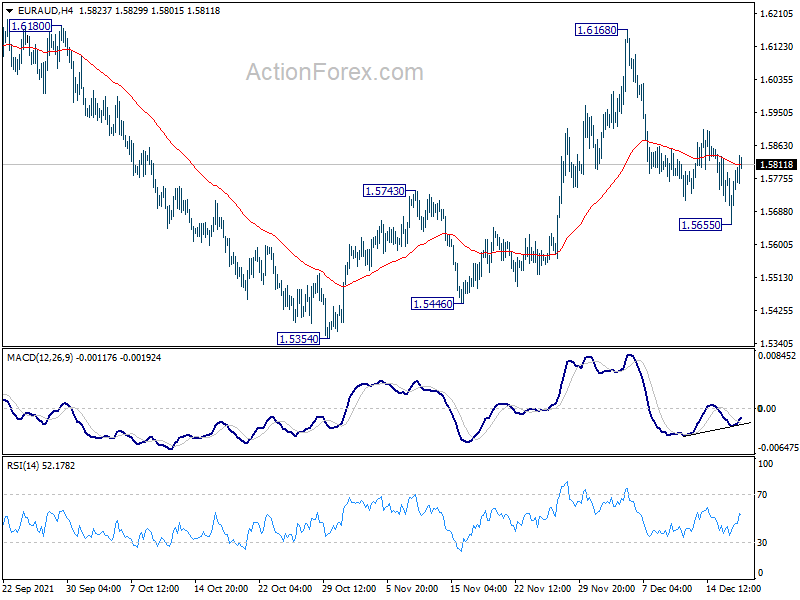
In the bigger picture, medium term outlook is neutral for the moment. Rise from 1.5354 is seen as the third leg of the corrective pattern from 1.5250 low. Further rise cannot be ruled out, but even in that case, strong resistance should be seen at 38.2% retracement of 1.9799 to 1.5250 at 1.6988. Larger down trend from 1.9799 is in favor to extend through 1.5250 at a later stage.
EUR/CHF Daily Outlook
Daily Pivots: (S1) 1.0396; (P) 1.0432; (R1) 1.0453; More....
No change in EUR/CHF's outlook as consolidation from 1.0365 is still extending. Further decline is expected as long as 1.0511 resistance holds. On the downside, break of 1.0365 will resume larger down trend from 1.1149 to 161.8% projection of 1.1149 to 1.0694 from 1.0936 at 1.0200 next.
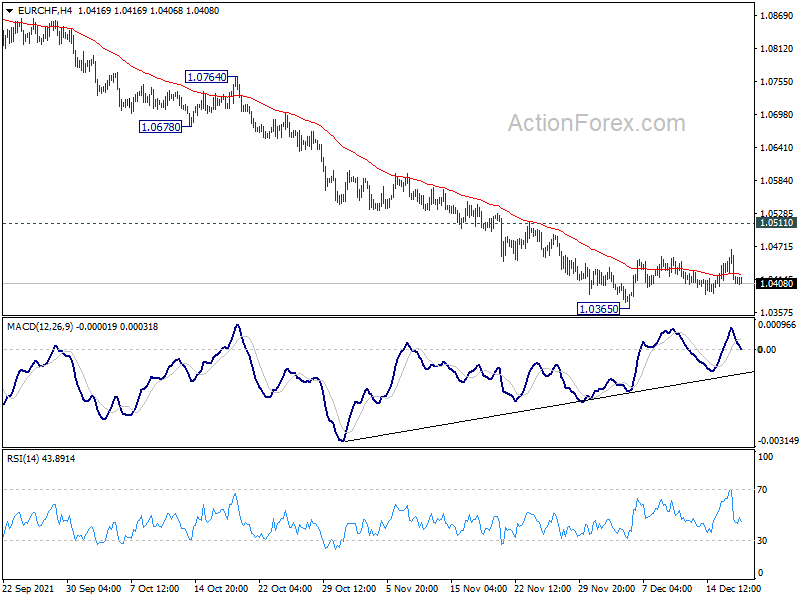
In the bigger picture, long term down trend from 1.2004 (2018 high) is now extending. Next target is 61.8% projection of 1.2004 to 1.0505 to 1.1149 at 1.0223. On the upside, break of 1.0694 support turned resistance is needed to be the first sign of medium term bottoming. Otherwise, outlook will remain bearish even in case of rebound.
