

Sample Category Title
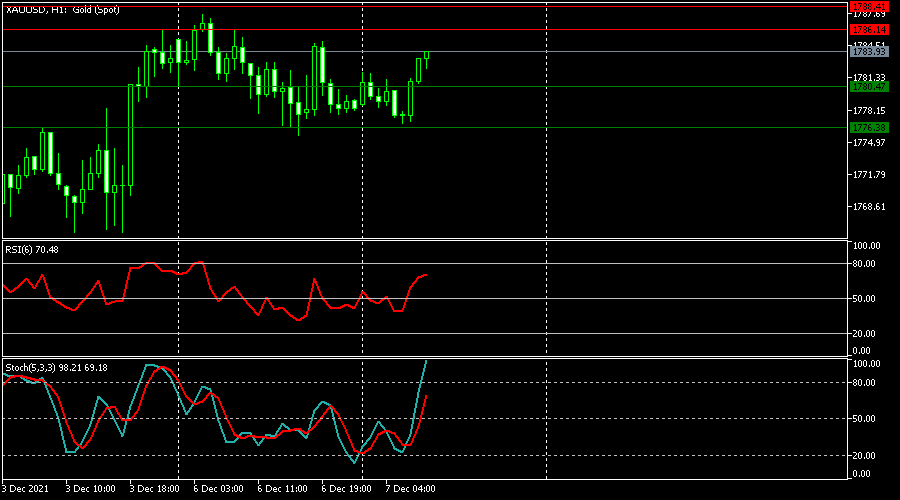
XAUUSD Is Possibly Bullish
Technical analysis
The RSI is above level 50.
The RSI is at the overbought zone.
Most likely scenario – BUY
Target prices: 1,786.14 1,788.41
Alternative scenario – SELL
Target prices: 1,780.47 1,776.38
Key levels
Support 1,780.47 1,776.38
Resistance 1,786.14 1,788.41
Core Bonds Inch Lower
Markets
There was a bit more hesitation compared to when delta emerged, but it seems that omicron for now simply provided a buying opportunity. Yesterday’s optimism arose from early hospital data in South Africa and US medical advisor Fauci on Sunday being hopeful that omicron is only causing mild symptoms. The PBOC during the day cut the RRR with 50 bps, freeing up liquidity to support the economy. It helped shape the constructive risk setting too. Bargain hunters scooped up heavy-hit stocks, led by travel and airlines. Equities jumped from <1% to >2% in Europe and the US. Core bonds fell with USTs hugely underperforming the Bund. US yields added 4.3 bps (2y) to 9.9 bps (20y). The 10y clawed its way back above recently broken neckline support of 1.41%. Most of the US action happened after the European close. German yields thus missed out on the yield rally, rising a mere 1.7 bps at the short end. Being delivered after-market, ECB’s Holzzman’s interesting speech also didn’t affect European bonds (yet). He said Interest rates could be increased while net purchases are still in progress - if I’m not mistaken, the Swedes did something like that in early 2020 and, contrary to what some feared, capital markets weren’t disrupted. It’s the first call from within the Governing Council to abolish the long-standing sequence between asset purchases and interest rate hikes. Holzmann thinks it’s very unlikely for inflation to be below 2% in 2022 as a whole and expects supply bottlenecks to persist. In such circumstances he clearly likes to have the option to raise raising rates even if bonds are still being bought. Turning to FX markets, the Japanese yen and Swiss franc reversed Friday’s gains. Searing US yields also gave the USD an edge despite the risk-on. The trade-weighted DXY went from 96.11 to 96.33. EUR/USD drifted south of 1.13. Sterling strengthened from EUR/GBP 0.856 to 0.8507. BoE’s Broadbent in a balanced speech declined to answer whether a rate hike is needed in December. Omicron needs time to be assessed, part of inflation is going to subside before any rate increase had time to take effect but tight labour markets pose upside risks to wage costs. Apart from second-tier European data (ZEW), the economic calendar eyes meagre, putting sentiment at the driver’s seat. A very upbeat Asian session inspired by strong Chinese trade data and yesterday’s EU/US performance is set to spill over back into European dealings again. Core bonds inch lower. German Bunds may underperform after missing out on the US and Holzmann’s speech yesterday. First resistance in the US 10y stands at 1.48%. -0.347% is looked at in the German 10y. The combination with risk-on may help an ailing euro though first meaningful resistance in EUR/USD is still a long way off (1.1422).
News headlines
The Australian central bank (RBA) kept its policy rate unchanged this morning at 0.1%. The new policy statement dropped several small references arguing to keep monetary policy as long as possible very accommodative. Next to that, it even turned somewhat more upbeat. The emergence of the Omicron strain is a new source of uncertainty, but it is not expected to derail the recovery. A further pick-up in wages growth is expected as the labour market tightens. The Board will consider the bond purchase program at the February 2022 meeting, with a sudden stop rather than tapering probably amongst the possibilities. The RBA will not increase the cash rate until actual inflation is sustainably within the 2%-3% target range. This will require the labour market to be tight enough to generate wages growth that is materially higher than it is currently. This is likely to take some time and the Board is prepared to be patient. AUD/USD tested the 0.70 big figure yesterday morning, but is currently back up to 0.7080.
Hungarian deputy MNB-governor Virag said this morning that the central bank will front-load as much of the interest rate hikes as necessary to defeat inflation, “no matter how long the road ahead of us is”. He referred to having the fastest real rate increase in CEE, which would surely help prop up the ailing currency. He also suggested a faster exit from other stimulus measures. The forint is already slightly stronger in Asian trading with EUR/HUF falling from 366 to 365. Follow-up action is likely once European dealings get going.
EUR/USD Daily Outlook
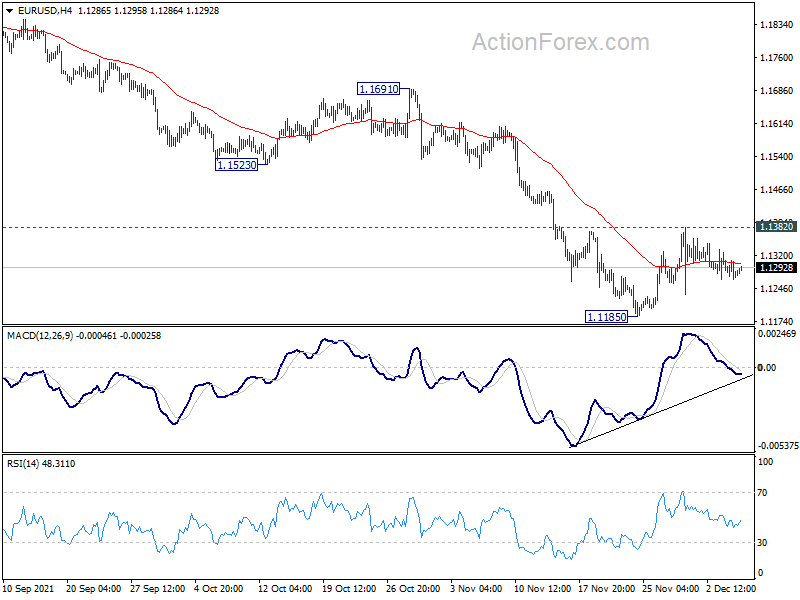
Daily Pivots: (S1) 1.1264; (P) 1.1288; (R1) 1.1309; More...
Intraday bias in EUR/USD remains neutral as range trading continues. On the upside, firm break of 1.1382 resistance should confirm short term bottoming at 1.1186. Intraday bias will be turned back to the upside for 55 day EMA (now at 1.1480). On the downside, break of 1.1185 will resume larger fall from 1.2348.
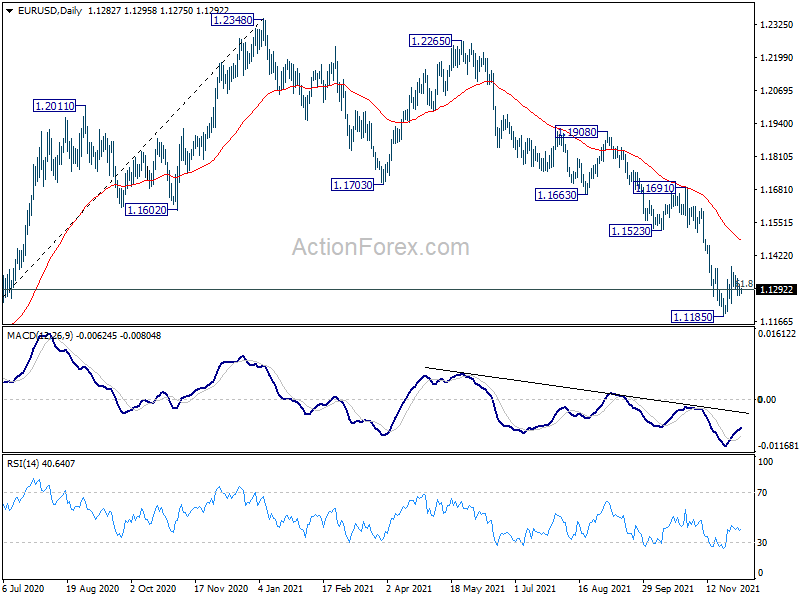
In the bigger picture, there are various ways of interpreting the fall from 1.2348 (2021 high). It could be a correction to rise from 1.0635 (2020 low), the fourth leg of a sideway pattern from 1.0339 (2017 low), or resuming long term down trend. In any case, outlook will now stay bearish as long as 1.1703 support turned resistance holds. Sustained break of 61.8% retracement of 1.0635 to 1.2348 at 1.1289 would pave the way back to 1.0635.
GBP/USD Daily Outlook
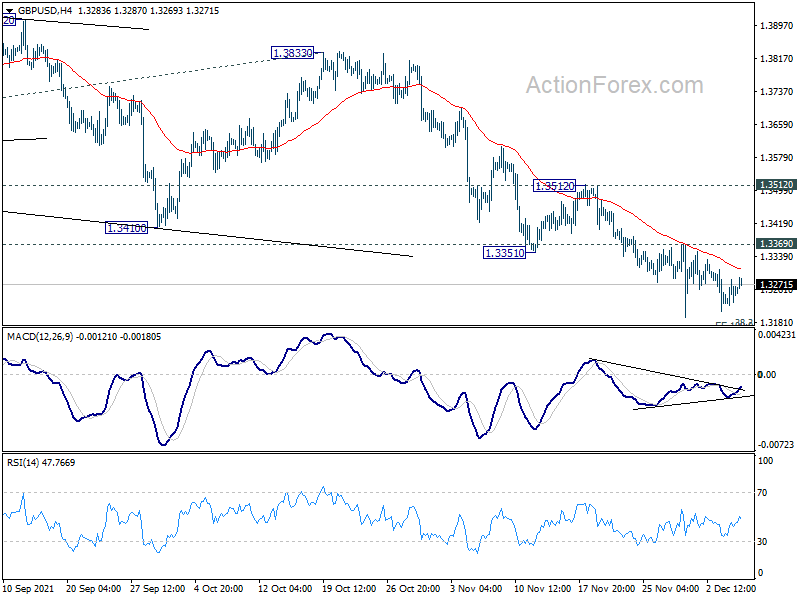
Daily Pivots: (S1) 1.3227; (P) 1.3256; (R1) 1.3295; More...
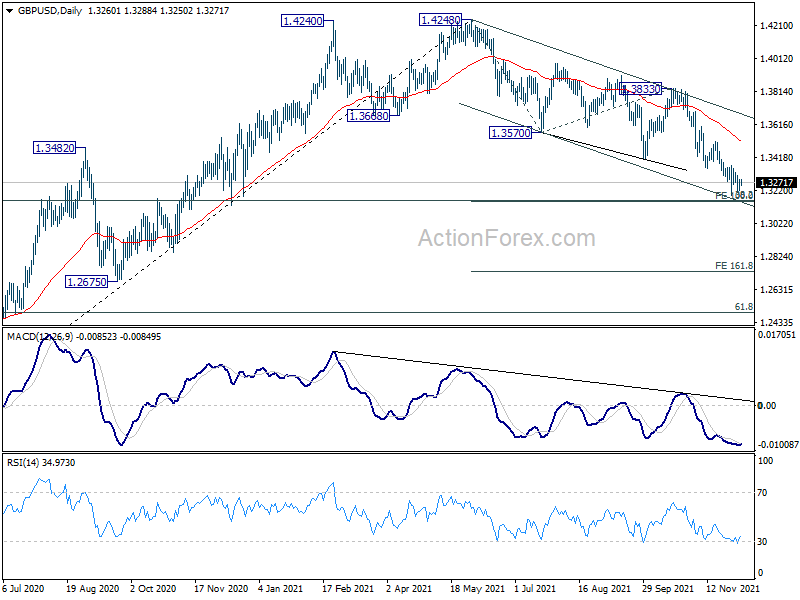
Intraday bias in GBP/USD remains neutral at this point. On the downside, sustained break of 1.3164 medium term fibonacci level will carry larger bearish implication, and target 161.8% projection of 1.4248 to 1.3570 from 1.3833 at 1.2736. Nevertheless, break of 1.3369 minor resistance will turn bias back to the upside for 1.3512 resistance first.
In the bigger picture, immediate focus is now on 38.2% retracement of 1.1409 to 1.4248 at 1.3164. Sustained break there will argue that whole rise from 1.1409 has completed at 1.4248, ahead rejection by 1.4376 long term resistance. That will revive some medium term bearishness and and target 61.8% retracement at 1.2493.
USD/CHF Daily Outlook
Daily Pivots: (S1) 0.9194; (P) 0.9232; (R1) 0.9292; More....
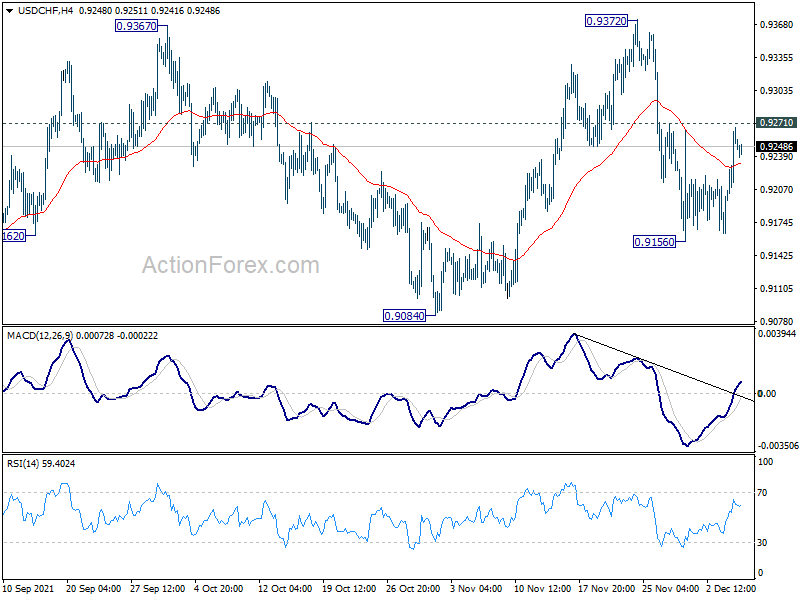
Intraday bias in USD/CHF remains neutral for the moment. On the upside, break of 0.9271 minor resistance will suggest that the pull back from 0.9372 is finished. Intraday bias will be turned back to the upside for 0.9372. On the downside, below 0.9156 will target 0.9084 support. Firm break there should confirm that choppy rise from 0.8925 has completed, and suggests that fall from 0.9471 is resuming. Deeper decline would be seen through 0.8925.
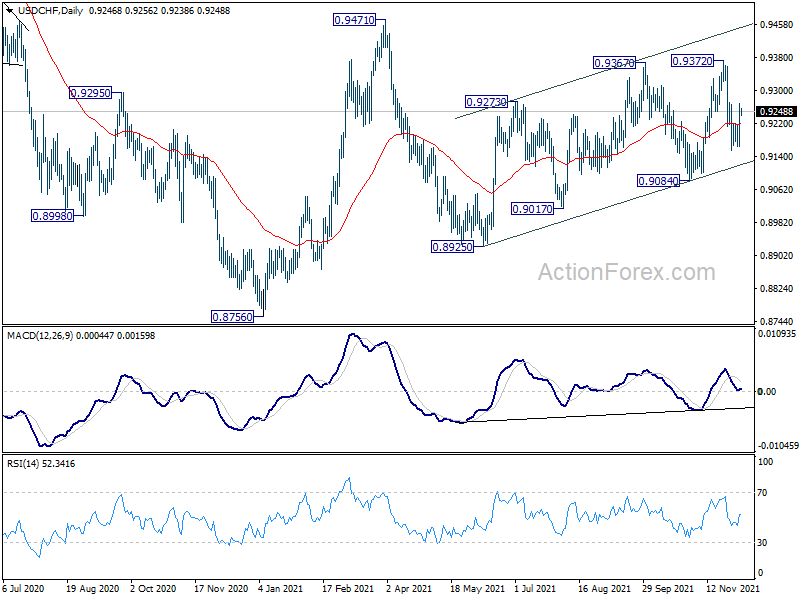
In the bigger picture, the corrective structure of the rebound from 0.8925 argues that fall from 0.9471 is not complete yet. It could either be the second leg of pattern from 0.8756 (2021 low), or resuming larger down trend from 1.0237 (2018 high). We'd pay attention to the downside momentum and assess the odds later. But for now, medium term outlook will be neutral at best as long as 0.9471 resistance holds.
USD/JPY Daily Outlook
Daily Pivots: (S1) 113.04; (P) 113.30; (R1) 113.75; More...
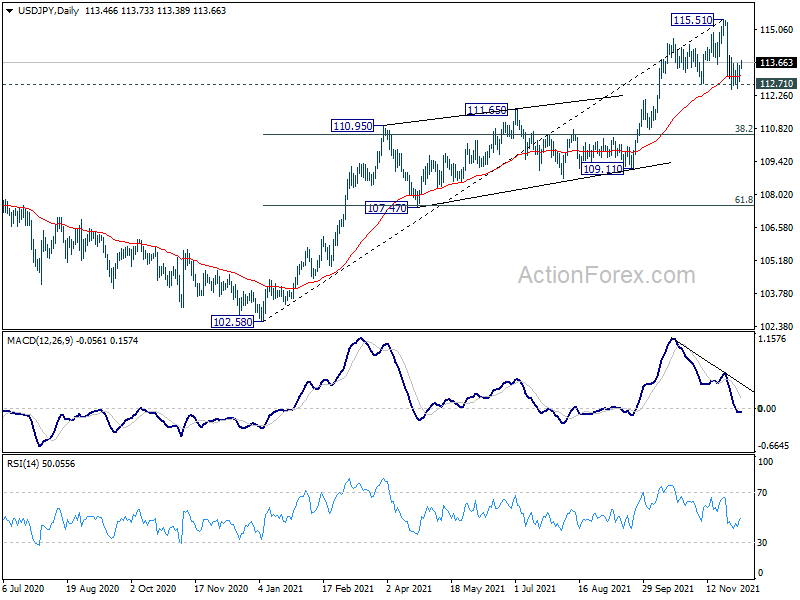
Intraday bias in USD/JPY remains neutral and outlook is unchanged. On the downside, sustained break of 112.71 will argue that it's already correcting whole rise from 102.58. Deeper fall would be seen to 38.2% retracement of 102.58 to 115.51 at 110.57. On the upside, break of 113.94 minor resistance will turn bias back to the upside for retesting 115.51 high instead.
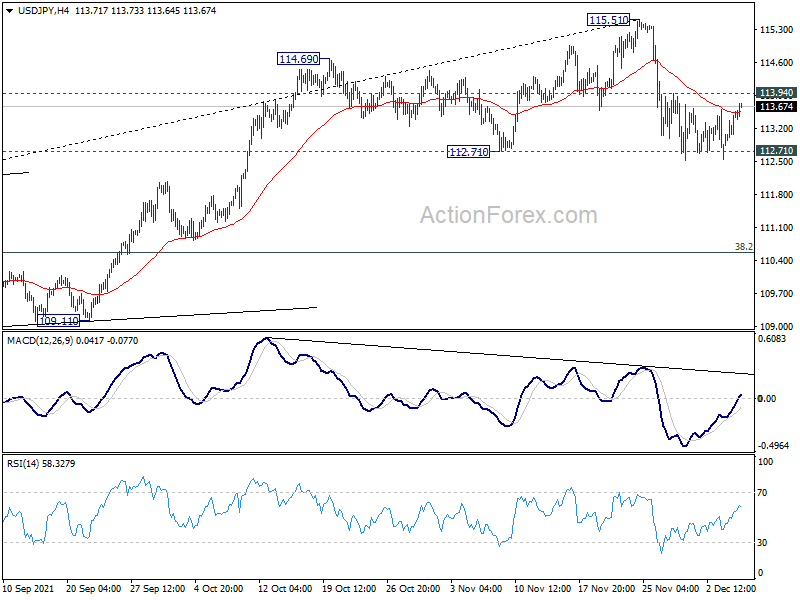
In the bigger picture, no change in the view that rise from 102.58 is the third leg of the up trend from 101.18 (2020 low). Such rally should target a test on 118.65 (2016 high) on resumption. However, firm break of 109.11 structural support will argue that the trend might have reversed and bring deeper fall to 107.47 support and possibly below.
USD/CAD Daily Outlook
Daily Pivots: (S1) 1.2726; (P) 1.2784; (R1) 1.2815; More...
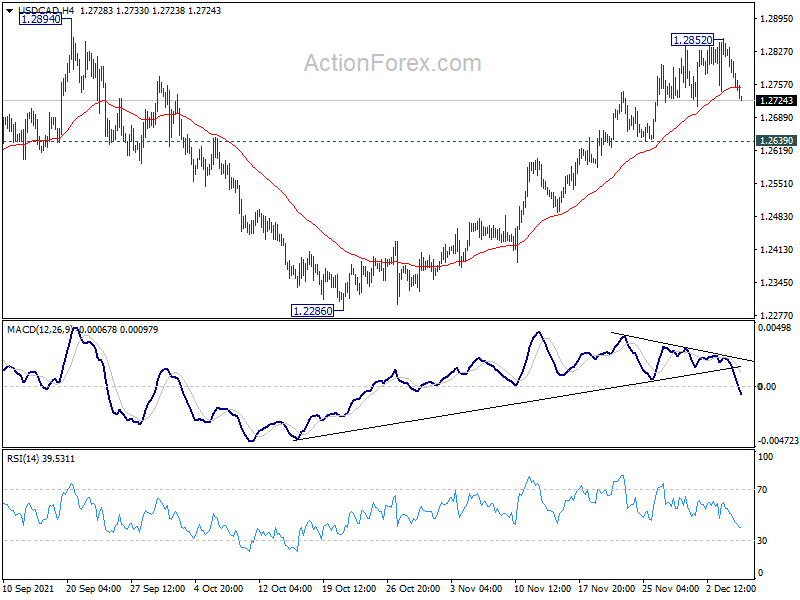
Intraday bias in USD/CAD is turned neutral with current retreat. But further rise is in favor as long as 1.2639 support holds. Above 1.2852 will resume the rise from 1.2286 to 1.2894/2947 resistance zone. Break there will target 1.3022 long term fibonacci level next. However, break of 1.2639 will indicate short term topping, and turn bias back to the downside for 55 day EMA (now at 1.2593).
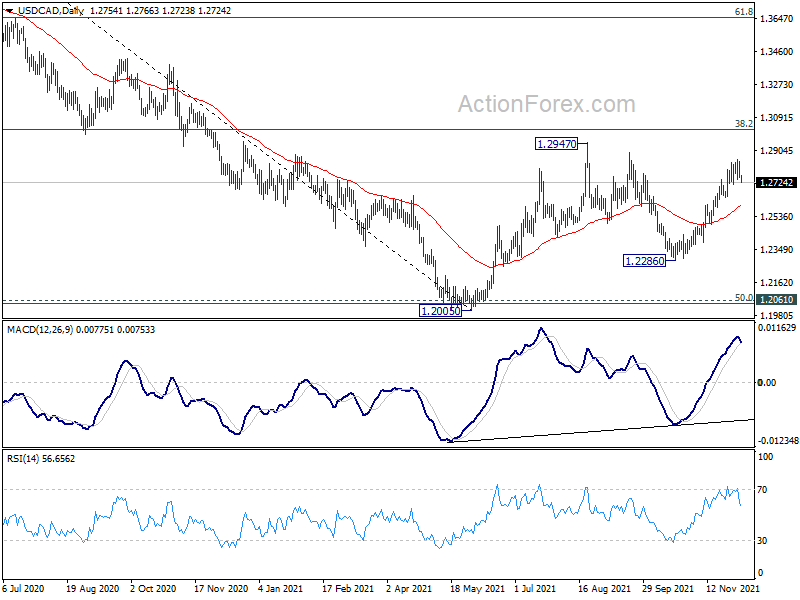
In the bigger picture, medium term outlook is neutral for now. The pair drew support from 1.2061 cluster and rebounded. Yet, upside was limited below 38.2% retracement of 1.4667 to 1.2005 at 1.3022. On the upside, firm break of 1.3022 should affirm the case of medium term bullish reversal. However, break of 1.2286 will turn focus back to 1.2005 low again.
EUR/GBP Daily Outlook
Daily Pivots: (S1) 0.8487; (P) 0.8521; (R1) 0.8541; More...
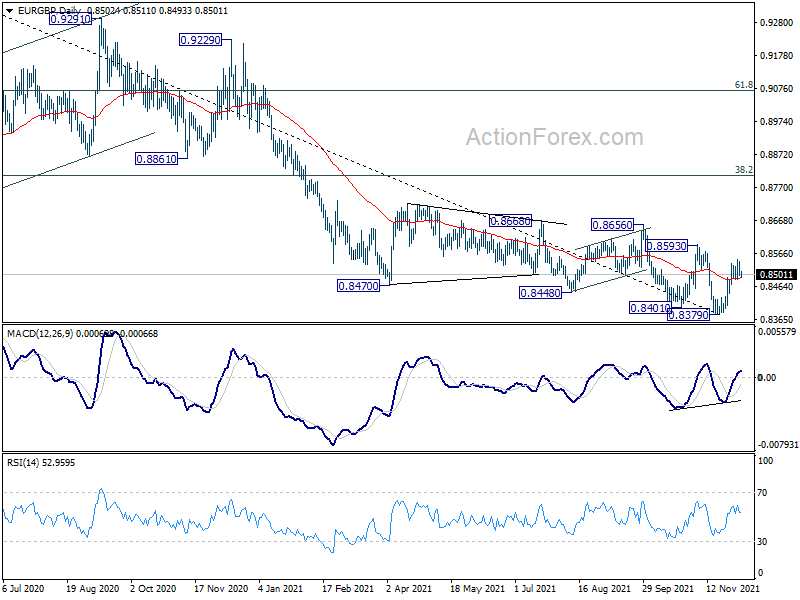
Intraday bias in EUR/GBP is turned neutral again with current retreat. On the upside, above 0.8549 temporary top will target 0.8593 structural resistance. Sustained break there will be the first sign of larger bullish reversal and target 0.8656 resistance next. On the downside, break of 0.8487 minor support will turn bias back to the downside for 0.8379 low instead.
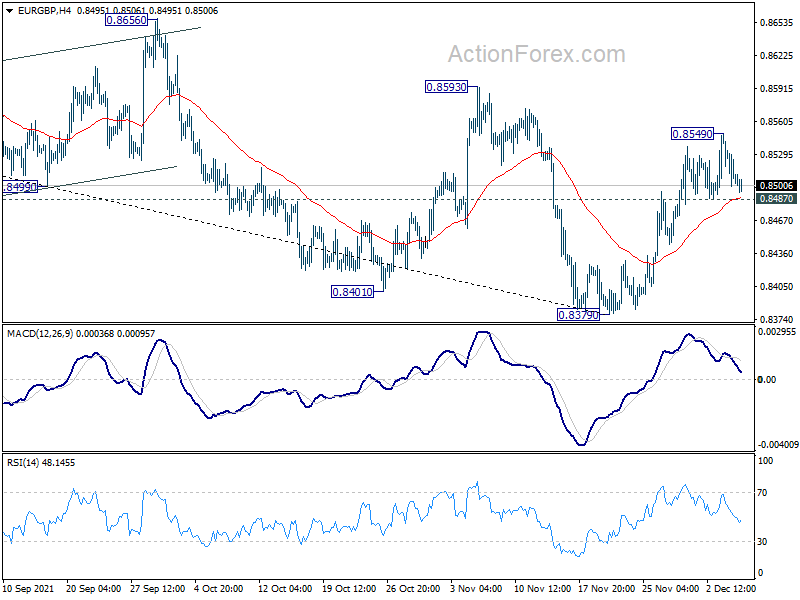
In the bigger picture, price actions from 0.9499 (2020 high) are still seen as developing into a corrective pattern. Deeper fall could be seen as long as 0.8593 resistance holds, towards long term support at 0.8276. We'd look for bottoming signal around there to bring reversal. Meanwhile, firm break of 0.8593 will now be an early sign of medium term bottoming. Further break of 0.8656 will pave the way to 38.2% retracement of 0.9499 to 0.8379 at 0.8807.
EUR/AUD Daily Outlook
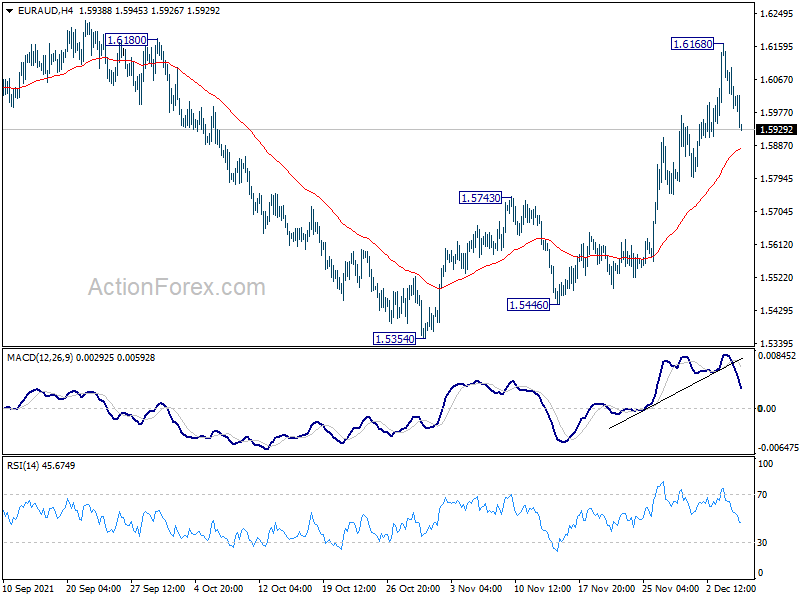
Daily Pivots: (S1) 1.5943; (P) 1.6052; (R1) 1.6112; More...
Intraday bias in EUR/AUD is turned neutral will current retreat. Another rise would be mildly in favor as long as 1.5743 resistance turned support holds. Break of 1.6168 will resume the rise from 1.5354 to 1.6434 high. However, firm break of 1.5743 will indicate that such rebound is over and bring deeper fall back to 1.5250/5354 support zone.
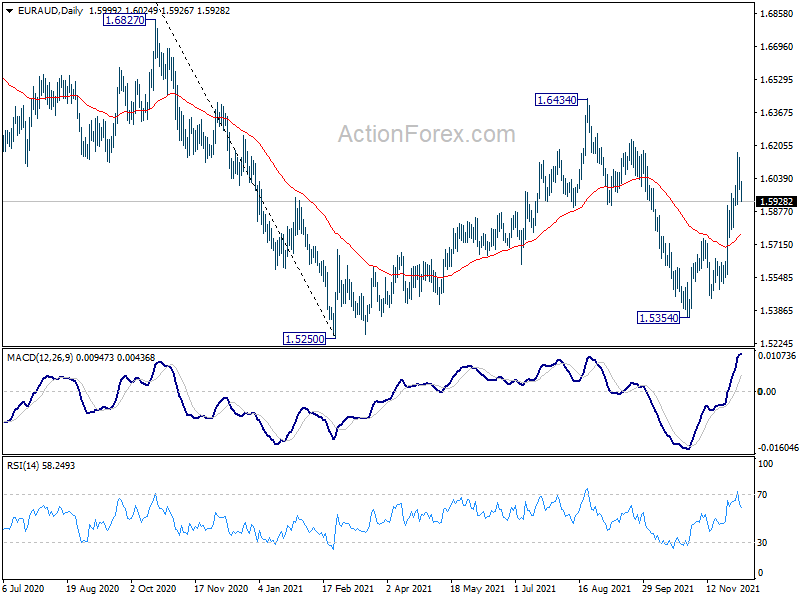
In the bigger picture, medium term outlook is neutral for the moment. Rise from 1.5354 is seen as the third leg of the corrective pattern from 1.5250 low first. Further rise could be seen through 1.6434 towards 38.2% retracement of 1.9799 to 1.5250 at 1.6988. On the downside, however, sustained trading below 55 day EMA (now at 1.5759) will turn focus back to 1.5250 low instead.
A Fragile Improvement In Market Mood
Equities, especially the reopening stocks, benefit from encouraging news that the omicron symptoms are rather ‘mild’ and that the People’s Bank of China loosens its purse’s strings to provide support to the Chinese economy which is being shaken by a terrible property crisis, along with the coronavirus and the broad crackdown on its most valuable tech companies.
Of course, yesterday’s rebound is not necessarily a sign that a further and a sustainable recovery is underway, as the delta variant is presently wreaking havoc across the globe and the market volatility remains high.
Also, no headline addresses the major concern of the week: the rising US inflation, which is a big threat to the investor mood, as the US CPI data is due Friday, and the expectation is an advance to a strong 6.7%. The latter means that we could see wild mood swings into the second half of the week.
Gold has been in retreat during a period of extra low yields and rising inflationary pressures. Therefore, there is little reason it would rebound now that the US yields press higher, and the inflation expectations will likely start easing with prospects of a tighter Fed policy and easing commodity prices. We should continue seeing a solid resistance into the $1800 mark.
Evergrande
News that the Chinese Evergrande took another 20% hit yesterday didn’t have a material impact on the market mood; it only boosted the expectations of a dovish PBoC at a time the Federal Reserve (Fed) is seen doing just the contrary.
The latter also means that either the broad price action doesn’t reflect the risk of a domino effect from an eventual Evergrande fall, or the cheap PBoC liquidity is sweet enough to cover up the bitter taste of Evergrande news.
Bitcoin
With the improved risk sentiment, we see the price of Bitcoin advance past the $51K mark. Bitcoin is a high-risk asset, however, there is clear evidence that Bitcoin is paving its way to the traditional finance, and that institutional investors are increasingly on board. It still doesn’t make it a hedge against inflation, nor a safe haven, but it makes it a stronger alternative investment vehicle where we could see the size of one-off drops reduce over time.