Sample Category Title
USDCHF Ticks Higher As Bullish Forces Consolidate
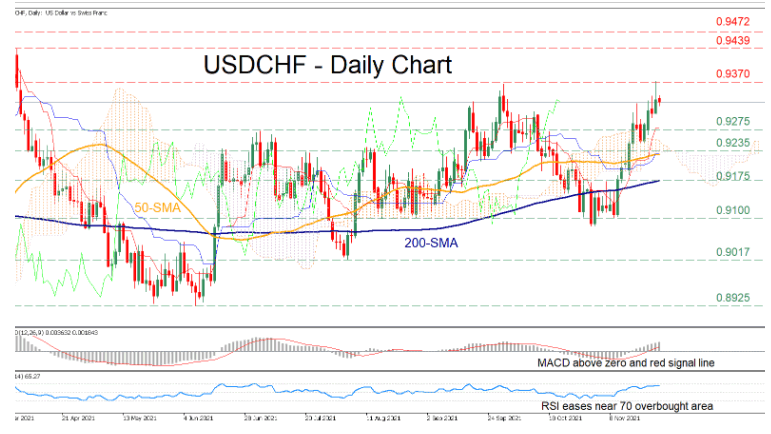
USDCHF has been charging higher since June after the price failed to pierce through the 0.8925 region. Although the medium-term uptrend faced a moderate pullback in October, buyers retook control and pushed the price higher.
The pair is likely to continue its ongoing ascent as the immediate bias seems bullish as well. The short-term oscillators further reinforce this view, with the MACD histogram being above both zero and its red signal line, while the RSI is flatlining near the 70-overbought area.
Should the buying pressure intensify even further, immediate resistance could be met at the recent high of 0.9370. Clearing this hurdle would reinforce the resumption of both the medium- and short-term uptrend, setting the stage for the 0.9390 level. Higher up, the price rally might encounter a tougher test at the 0.9472 hurdle.
On the flipside, if positive momentum fades, the price could decline towards the 0.9275 barrier. A violation of this level might send the price to test 0.9235 or even lower challenge the 0.9175 region, where the 200-day simple moving average (SMA) is currently found. Diving beneath these levels, the bears might then target the 0.9100 psychological mark, which is slightly higher than the November low.
In brief, USDCHF is sustaining a bullish tone, while momentum indicators suggest that it could propel even higher. Only a break below the 0.9100 region could alter its outlook to negative.
US Dollar Rallies Once Again
FOMC minutes, PCE boost dollar
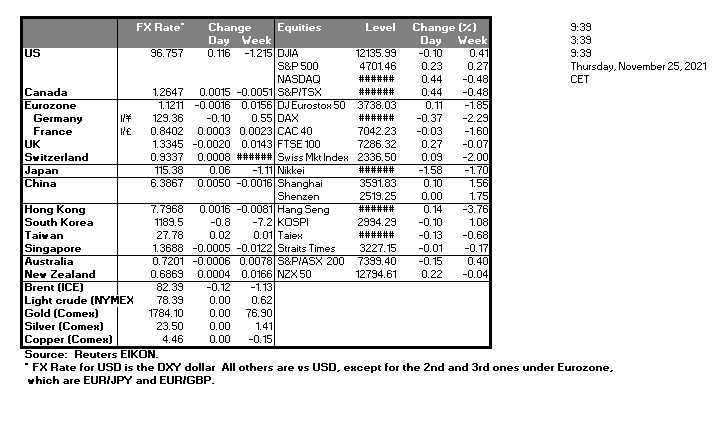
The US dollar rallied once again overnight after a more hawkish tone to the FOMC minutes and higher than expected PCE data. Some pre-holiday risk-hedging buying may also have flowed through currency markets with the US dollar being the market’s favourite way to play the inflation/Fed-taper trade at the moment, especially with the euro languishing under a virus cloud. The dollar index rose by 0.35% t0 96.86 but has eased back to 96.75 in Asia as US stock index futures continue to rally. With volumes sure to be muted for the rest of the week, the US dollar remains vulnerable to a downside correction, with the dollar index’s relative strength index (RSI) remaining in very overbought territory. Nevertheless, the index remains a buy-on-dips and could well move through 97.00 into next week.
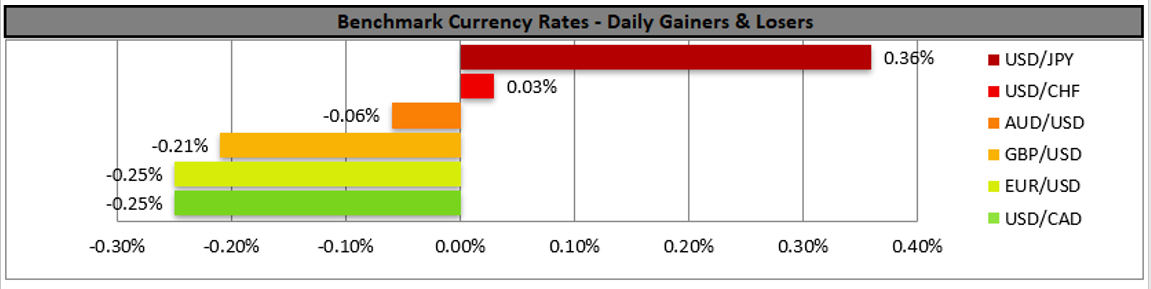
Interestingly, despite a flattening of the US yield curve overnight, USD/JPY continued to move higher, rising 0.25% to 115.40, which, in my mind, reinforces the upside bias to the cross. Resistance is nearby at 115.50 and a rise through that opens the door to 118.00 in the coming weeks, assuming US yields remain firm. Support remains at 115.00 and 113.50.
EUR/USD retreated in the face of US dollar strength once again overnight, weighed down by dovish ECB officials and virus restriction concerns. The single currency fell 0.43% to 1.1200 overnight before climbing to 1.1415 in Asia today. It remains on track to test 1.1160 this week. That in turn sets up a potential retest of 1.1000. Only a reversal of US yields lower alleviates the negative outlook, although the Covid-19 situation will cap any gains. GBP/USD fell in sympathy, easing 0.37% to 1.3330 before rising to 1.3345 in Asia. Short-covering, like the euro, is likely to be temporary and sterling remains vulnerable to a test of 1.3300, being guilty by geographic association with the euro.
The Australian and New Zealand dollars eased overnight, AUD/USD falling 0.45% to 0.7200, and NZD/USD tumbling by 1.10% to 0.6870 as markets voiced their disappointment over the 0.25% hike yesterday by the RBNZ. A cautious risk sentiment atmosphere, with the US on holiday, is likely to cap any gains in either currency. Both are in danger of retesting 2021 lows at 0.7100 and 0.6800, respectively, with the kiwi the more vulnerable of the two with no RBNZ meeting until February.
The PBOC set a weaker yuan fixing at 6.3980 today, adding another CNY 100 billion in liquidity via the repos. However, USD/CNY refuses to take the bait with USD/CNY trading OTC at 6.3880 and remaining anchored below 6.3900. That continues to provide some support to regional Asian currencies, which mostly traded sideways overnight and today. One exception is the Malaysian ringgit which has fallen 0.40% to 4.2260 today. The Korean won is holding steady at 1189.90 the Bank of Korea policy hiked rates by 0.25% with a hawkish outlook. USD/Asia dips should find plenty of support if the USD/MXN price action overnight is anything to go by. We could see a couple of days of consolidation though before the US dollar uptrend resumes next week.
USD Supported By Confident Fed And Strong Data
The USD gained against a number of its counterparts yesterday after the release of strong US economic data and the Fed’s November meeting minutes which showed a rather confident Fed. The minutes showed that a number of policymakers of the bank were open to the idea of expediting the tapering of the bank’s QE program, indicative of the climate in the meeting which could result in a faster tightening of the bank’s QE program. Also, it should be noted that some of the financial data yesterday came out stronger than expected as the initial jobless claims figure dropped below 200k, a low level not seen since 1969 making headlines, while consumption for October also accelerated more than expected and the University of Michigan Consumer Sentiment for November improved in comparison to the preliminary release. Other data provided mixed signals moderating somewhat USD’s bullish tendencies. Today given the lack of high impact US financial data we expect the greenback to be influenced by fundamentals. Also please note that it’s Thanksgiving holiday in the US and Black Friday is to follow, so some abnormal trading conditions may occur.
The USD index continued to rise yesterday breaking the 96.65 (S1) resistance line, now turned to support. We remain bullish for the index as long as it remains above the upward trendline incepted since the 10th of November. Please note that the RSI indicator below our 4-hour chart is between the readings of 50 and 70 confirming the bullish sentiment yet in a declining slope, which could imply that the bulls may be loosing some steam. Should the buying interest continue be present for the greenback, we may see the index aiming if not reaching the 97.30 (R1) resistance line. Should sellers be in charge of the index’s direction we may see it breaking the 96.65 (S1) support line the prementioned upward trendline and take aim if not reach the 96.15 (S2) support level.
Pandemic, ECB weigh on EUR
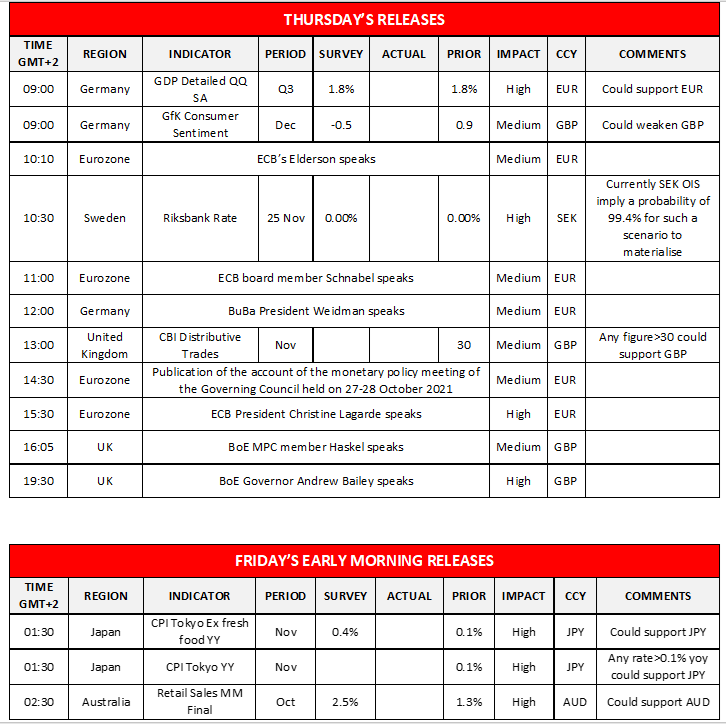
Despite some stabilisation against the USD yesterday the common currency’s slide lower against the USD and the GBP continued. Today we note the release of Germany’s Detailed GDP rate for Q3 and Germany’s forward looking GfK consumer sentiment for December. Monetary wise for EUR traders, we note the speeches of ECB policymakers Elderson, Schnabel and President Lagarde, while BuBa President Weidman is also scheduled to speak. Also, we note the publication of the account of the monetary policy meeting of the Governing Council held on 27-28 October 2021. Overall, should a dovishness be detected in Lagarde’s speech or in the minutes, we may see the common currency sliding while a more hawkish approach by BuBa president Weidman could support EUR. On the fundamental level, the path of the pandemic in Europe remains the main worry for EUR traders and could weigh, as a number of European governments are considering lockdown measures to curb the spreading of the disease.
EUR/USD continued to drop yesterday breaking below the 1.1225 (R1) support line, now turned to resistance. We maintain a bearish outlook for the pair as long as it remains below the downward trendline incepted since the 10th of November. Please note that the RSI indicator runs along the reading of 30 confirming the bearish sentiment yet may also imply that it is near oversold levels. Should the bears actually maintain control over the pair we may see it aiming if not breaking the 1.1165 (S1) support line. Should the bulls take over, we may see the pair reversing course breaking the prementioned downward trendline, the 1.1225 (R1) resistance line and aim for the 1.1300 (R2) level.
Other market highlights for today
Today we also note the release of UK’s CBI distributive trades for November and the scheduled speeches of BoE’s Haskel and BoE Governor Bailey. In tomorrow’s Asian session we get Japans’ Tokyo CPI rates for November and Australia’s final retail sales for October
USD Index H4 Chart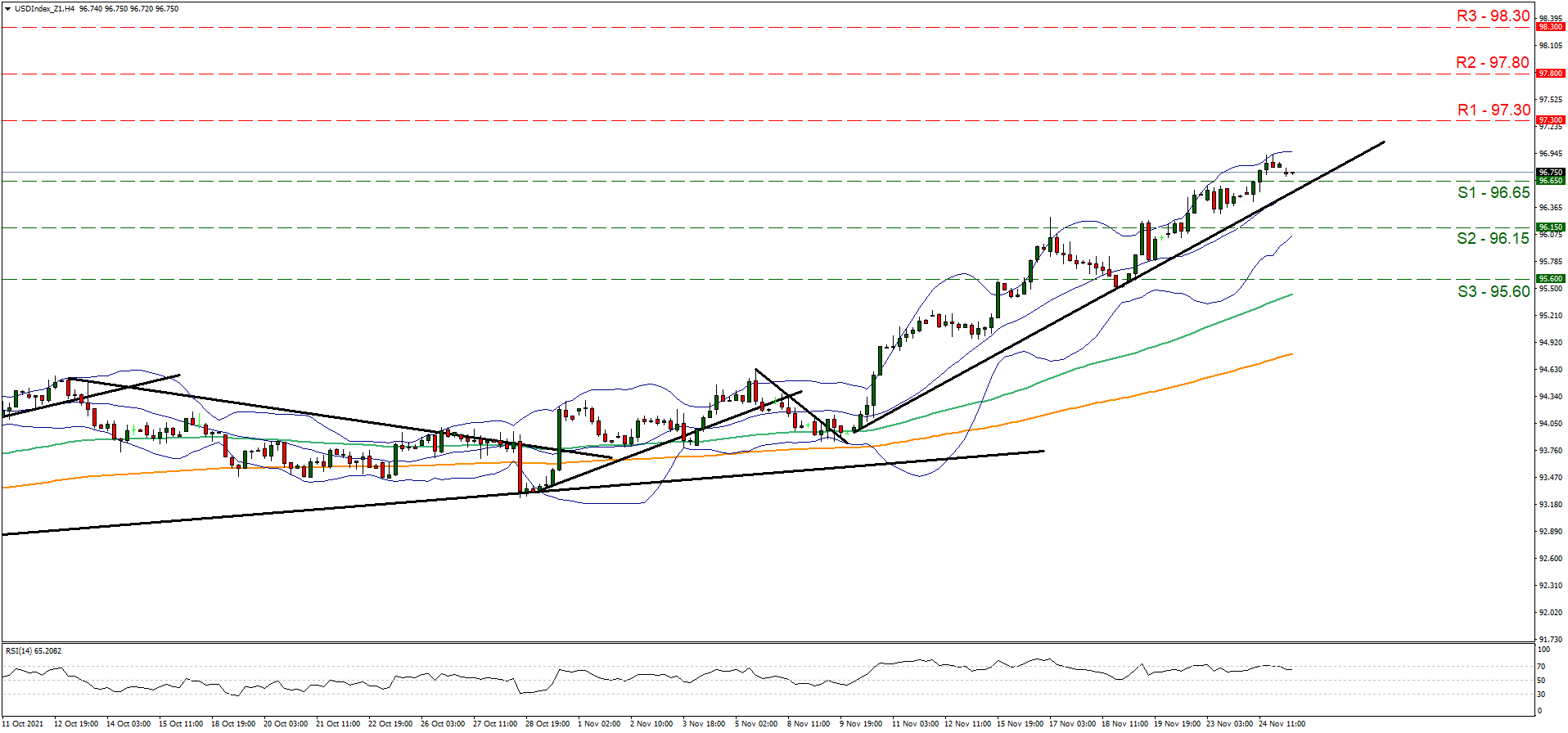
Support: 96.65 (S1), 96.15 (S2), 95.60 (S3)
Resistance: 97.30 (R1), 97.80 (R2), 98.30 (R3)
EUR/USD H4 Chart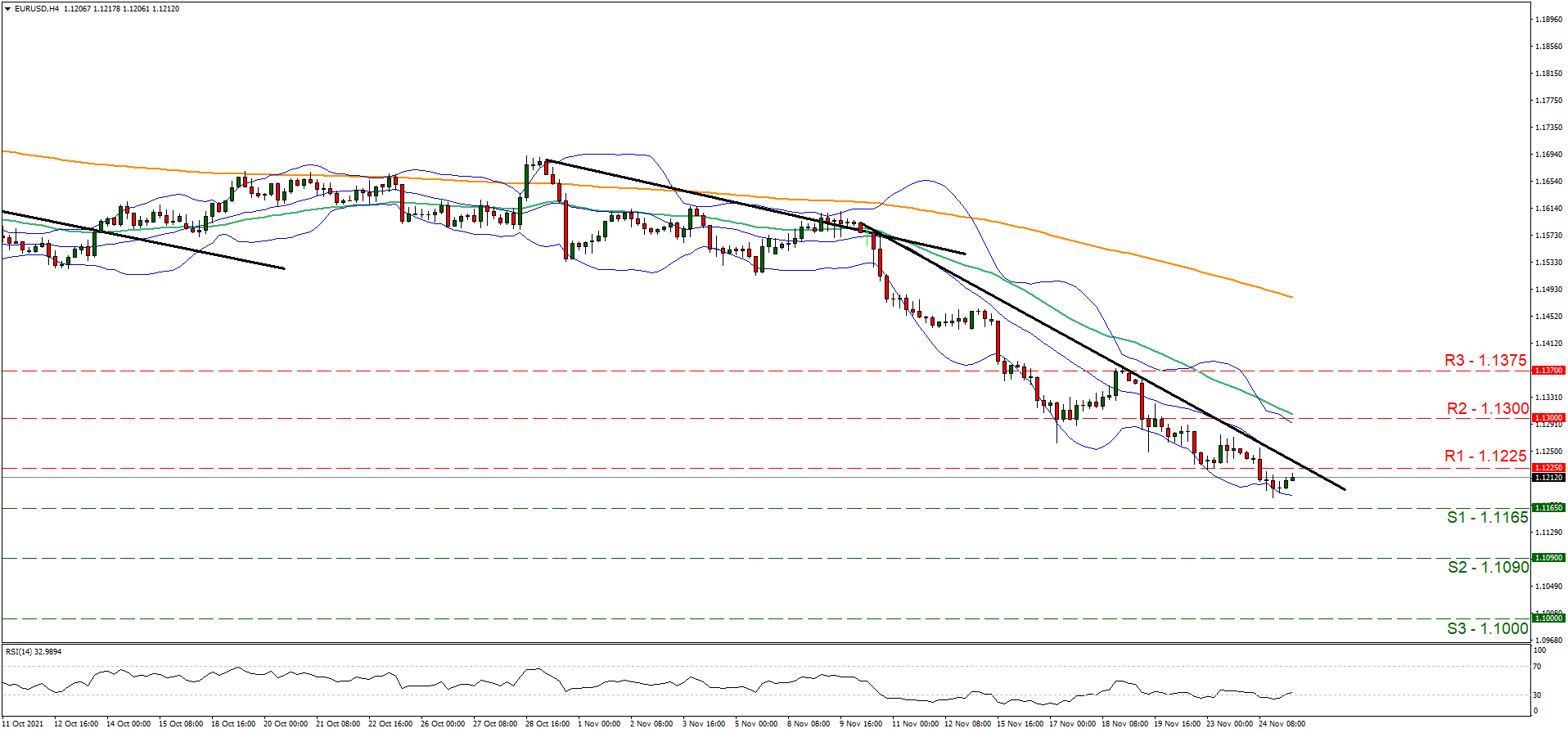
Support: 1.1165 (S1), 1.1090 (S2), 1.1000 (S3)
Resistance: 1.1225 (R1), 1.1300 (R2), 1.1375 (R3)
Fed May Raise Interest Rates If Inflation Continues To Rise
The US stock market ended Wednesday's trading without a single dynamic. The oil and gas, technology, and financial sectors demonstrated positive dynamics. Negative dynamics were in the health care and consumer goods sectors. The Dow Jones decreased by 0.03% at the close, the S&P 500 increased by 0.23%, and the NASDAQ added 0.44%.
The number of new jobless claims in the US was 199,000; analysts expected 260,000. The estimate of the U. GDP growth was improved to 2.1% from 2% in the third quarter; a revision to 2.2% was expected. The US household income increased by 0.5% in October as compared to the previous month according to the US Department of Commerce. At the same time, Americans' spending increased by 1.3%. Sales of new homes in the US in October increased by 0.4% over the previous month to 745,000 in annual terms.
Federal Reserve meeting minutes showed that policymakers are willing to raise interest rates if inflation continues to rise. Fed officials concluded that easing inflationary pressures may take longer than they had previously estimated.
European stock indexes were also traded without a single dynamic yesterday. Germany's DAX decreased by 0.37%, France's CAC 40 decreased by 0.03%, Spain's IBEX 35 lost 0.26%. Meanwhile, the British FTSE 100 gained 0.37%, the Italian FTSE MIB jumped by 0.63%. Investors are still closely watching the situation with the spread of COVID-19 in the region. Germany said it would impose a full isolation today. Germany's Ifo business climate fell for the fifth month in a row to 96.5 in November against expectations of 96.6. According to the national statistics office Insee, the value of the business confidence index in France increased to 109 points in November from 107 points a month earlier. Meanwhile, the number of people sickened by COVID-19 on Tuesday in France for the first time since August exceeded 30 thousand people.
Oil stabilized after the US announced an agreed release of strategic stocks with other countries, which failed to meet expectations. The focus is now on OPEC+ and how the group will respond to the move. The alliance has said that releasing reserves is an unwarranted move because of current market conditions. In addition, they suppose that OPEC+ may have to revisit plans to increase supply at its monthly meeting. OPEC+ is scheduled to meet Dec. 1-2.
New White House sanctions on Nord Stream 2 seem likely to have limited effect but will exacerbate the political problems that Europe's supply chain faces ahead of an uncertain winter.
Asian stock indexes are growing today. Japan's Nikkei 225 index has increased by 0.67% since the market opened, Hong Kong's Hang Seng has added 0.24%, and Australia's ASX 200 has added 0.11%. Meanwhile, China's benchmark CSI 300 index has decreased by 0.41%. The growth leaders among Asian companies were Sony and Alibaba.
Main market quotes:
- S&P 500 (F) 4,701.46 +10.76 (+0.23%)
- Dow Jones 35,804.38 −9.42 (−0.03%)
- DAX 15,878.39 −58.61 (−0.37%)
- FTSE 100 7,286.32 +19.63 (0.27%)
- USD Index 96,82 +0.33 (+0.34%)
Important events for today:
- Germany GDP (q/q) at 09:00 (GMT+2);
- Eurozone ECB Monetary Policy Meeting Accounts At 14:30 (GMT+2);
- Eurozone ECB President Lagarde’s Speech at 15:30 (GMT+2);
- UK BoE Gov Andrew Bailey’s Speech at 19:00 (GMT+2).
Asian Markets A Mixed Bag
Asia equity markets are having a mixed day
The buy-the-dippers couldn’t help themselves on Wall Street overnight as both the Nasdaq and S&P 500 shrugged of inflationary data retraced some of their losses overnight, helped by a retracement low in 30-year yields, flattening the yield curve. The S&P 500 rose 0.23% while the Nasdaq finished 0.44% higher. The Dow Jones was weighed down by retail names but finished only 0.03% lower. In Asia, futures have climbed once again, the Dow and S&P futures rising 0.30%, with Nasdaq futures 0.15% higher.
With the US on holiday, Asian markets have been left to their own devices leading to a very mixed day across the region. The Nikkei 225 has climbed 0.75% following Wall Street, while the Kospi is 0.40% lower following a BoK rate hike and hawkish comments afterwards from the BOK Governor.
In China, the Shanghai Composite is flat while further US tech company bans see the CSI 300 fall by 0.30%. Hong Kong is remarkably quiet, the Hang Seng up just 0.10% today.
ASEAN markets are equally mixed. Singapore is having a quiet day, down 0.15%. The city-state is rapidly reopening its economy internationally and recovering domestic demand should outperform the export sector in Q1 2022. The Singapore/Malaysia partial reopening of the land border on 29 November being but one example. The Monetary Authority of Singapore has started tightening monetary policy via the NEER. The MAS will likely remain hawkish at its next policy decision in Q2 of 2022.
Kuala Lumpur is down 0.15% and Taipei is up just 0.10%. Jakarta has climbed 0.55% higher while Bangkok is flat and Manila is 0.65% lower. Australian markets are content to mark time as the side-ways price action this week continues. Both the ASX 200 and All Ordinaries creeping 0.10% higher.
With a US holiday dampening activity today, European markets are likely to struggle once again, as potentially wider virus restrictions across the continent continue to dampen sentiment.
The Analytical Overview Of The Main Currency Pairs
The EUR/USD currency pair
Technical indicators of the currency pair:
Prev Open: 1.1246
Prev Close: 1.1200
% chg. over the last day: -0.41%
The Euro fell to a new yearly low after disappointing data from the Ifo business climate in Germany. The Ifo business climate in Germany declined for the 5th month in a row to 96.5 in November against expectations of 96.6. Germany said it will implement a full isolation today.
Trading recommendations
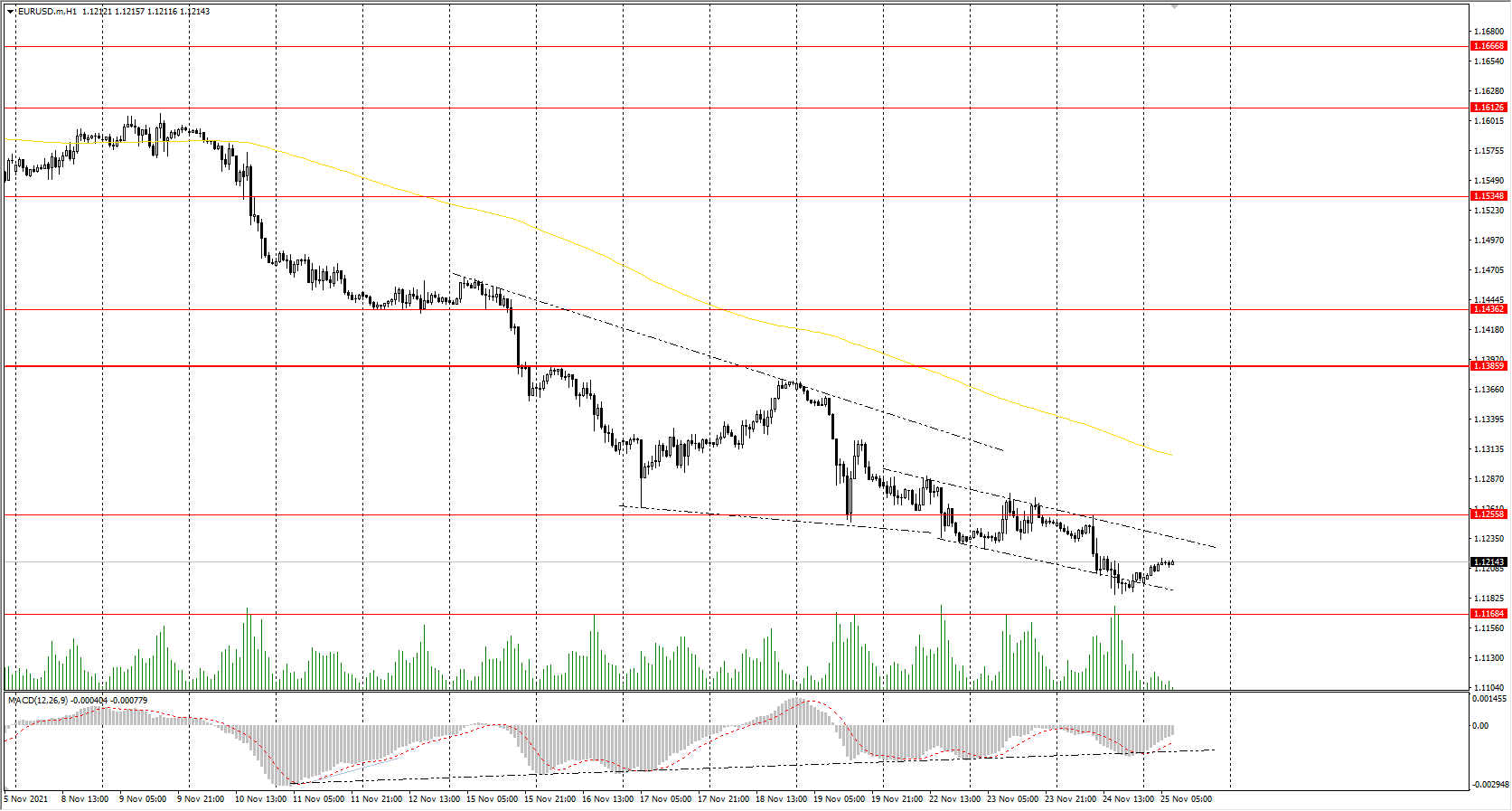
Support levels: 1.1168
Resistance levels: 1.1256, 1.1386, 1.1436, 1.1535, 1.1613, 1.1667, 1.1717
From a technical point of view, the EUR/USD is bearish on the hour time frame. The Euro continues to show weakness, the price is slowly declining, and buyers' attempts to buy back the movement give only a small intraday bounce. The MACD indicator has become inactive, but there are signs of divergence at several timeframes, so traders should expect a technical rebound. Under such market conditions, traders should consider sell positions from the resistance levels near the moving average since the price has strongly deviated from the averages. Buy trades should be considered only from the support levels of the higher time frame, given the buyers’ initiative, but only with short targets.
Alternative scenario: if the price breaks out through the 1.1386 resistance level and fixes above, the mid-term uptrend will likely resume.
News feed for 2021.11.25:
- Germany GDP (q/q) at 09:00 (GMT+2);
- Eurozone ECB Monetary Policy Meeting Accounts At 14:30 (GMT+2);
- Eurozone ECB President Lagarde’s Speech at 15:30 (GMT+2).
The GBP/USD currency pair
Technical indicators of the currency pair:
Prev Open: 1.3373
Prev Close: 1.3327
% chg. over the last day: -0.34%
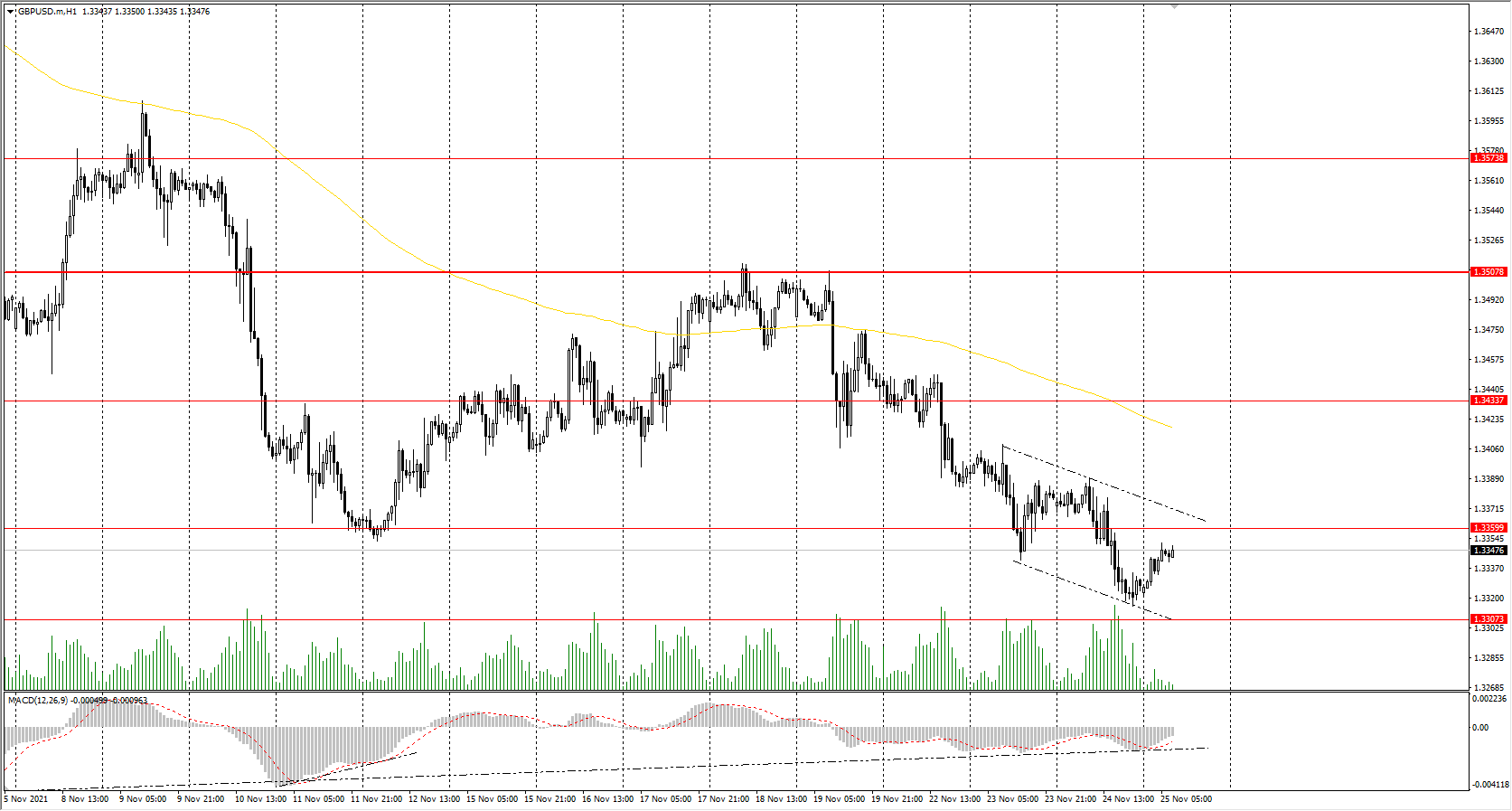
The British pound also could not resist the strength of the US dollar. Despite rising Brent crude oil prices and rising business activity in the country, the British pound is also declining. Even the expectation of an interest rate hike from the Bank of England is not supporting the pound.
Trading recommendations
Support levels: 1.3307
Resistance levels: 1.3360, 1.3434, 1.3507, 1.3575, 1.3685, 1.3748
On the hourly time frame, the trend on GBP/USD is bearish. The MACD indicator has become inactive but is signaling divergence on several time frames. Under such market conditions, traders should consider sell positions from the support levels around the moving average. It is important for the buyers to get the price back above the 1.3360 level, so buy trades should be considered only if the price returns to the 1.3360-1.3507 corridor, given the buyers’ initiative.
Alternative scenario: if the price breaks out through the 1.3507 resistance level and consolidates above, the bullish scenario will likely resume.
News feed for 2021.11.25:
- UK BoE Gov Andrew Bailey’s Speech at 19:00 (GMT+2).
The USD/JPY currency pair
Technical indicators of the currency pair:
Prev Open: 115.12
Prev Close: 115.40
% chg. over the last day: +0.24%
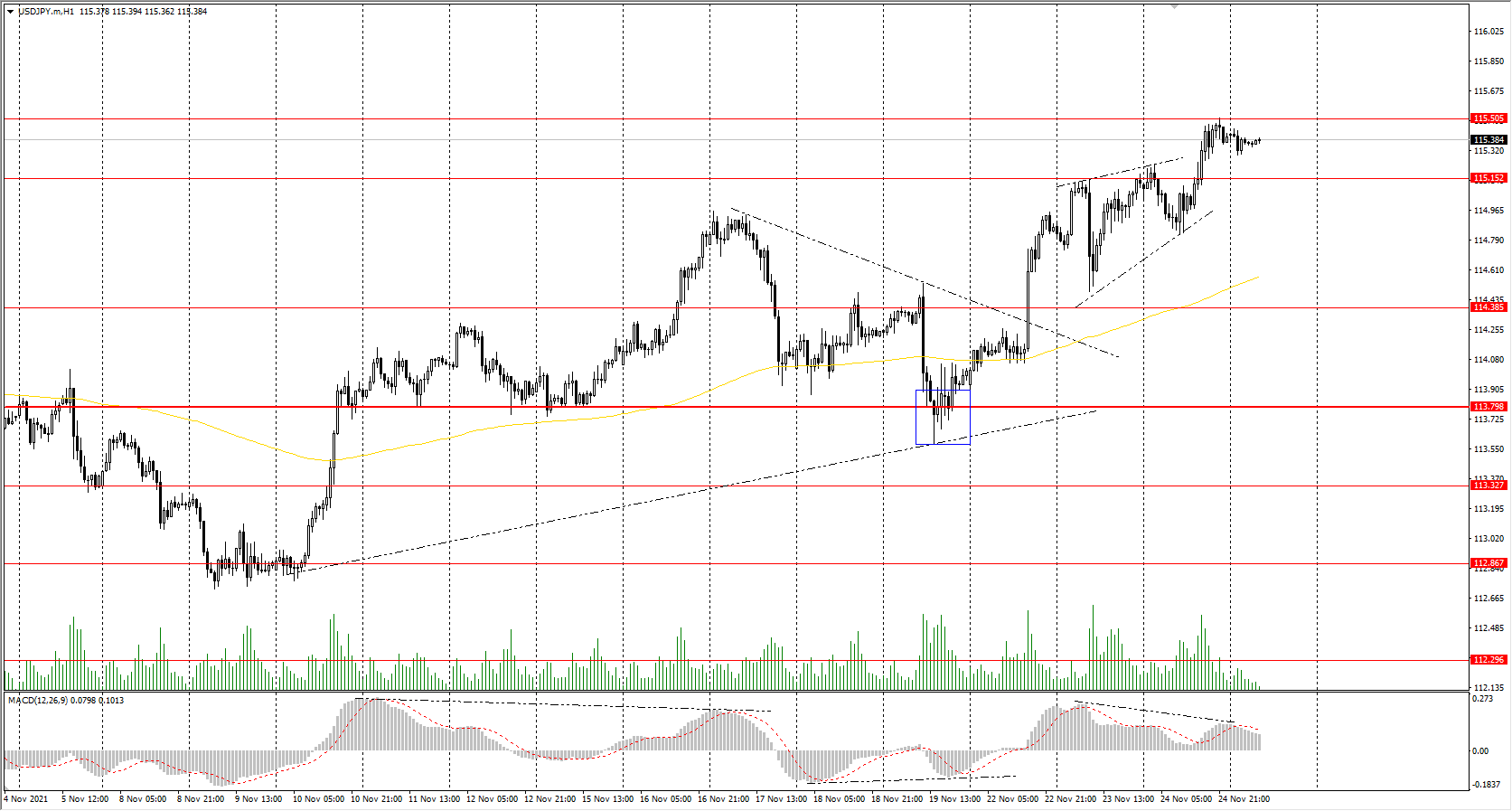
Japan decided to issue ¥22.1 trillion ($192 billion) in new government bonds to finance an additional budget for the current fiscal year through next March to help finance the COVID-19 pandemic economic stimulus package. The ¥31.6 trillion ($274 billion) supplementary budget, expected to be approved by the Cabinet on Friday, will be used mainly for coronavirus measures. Some analysts have questioned the need for so much spending now, given that the worst of the pandemic appears over and the economy was forecast to rebound on its own.
Trading recommendations
Support levels: 115.15, 114.38, 113.79, 113.32, 112.87, 112.30
Resistance levels: 115.50
The global trend on the USD/JPY currency pair is bullish. The MACD indicator is positive, but there are the first signs of divergence. Under such market conditions, it’s better to look for buy positions from the buyers' initiative zone near the moving average. Sell positions should be considered from the resistance levels of higher time frames, given there is sellers' initiative, but only with short targets.
Alternative scenario: if the price falls below 113.79, the uptrend will likely be broken.
The USD/CAD currency pair
Technical indicators of the currency pair:
Prev Open: 1.2666
Prev Close: 1.2664
% chg. over the last day: -0.02%
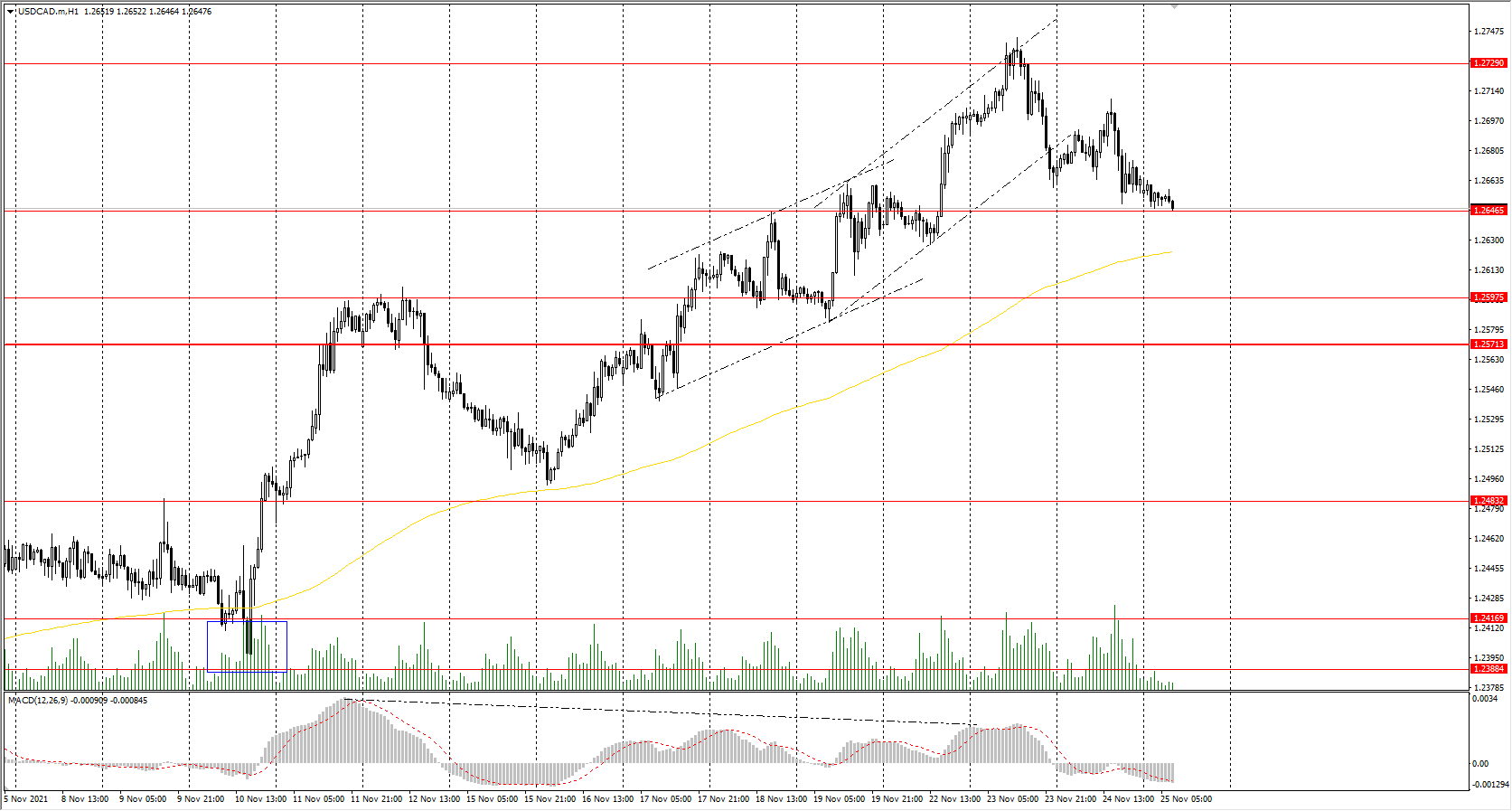
The Canadian dollar is the only currency that opposes the dollar index growth and shows some strength because of oil prices growth. Yesterday, both the dollar index and oil prices increased. As a result, the USD/CAD currency pair was trading flat. Fundamentally, both the dollar index and oil quotes tend to grow, so the USD/CAD may form a wide flat.
Trading recommendations
Support levels: 1.2646, 1.2598, 1.2571, 1.2483, 1.2416, 1.2388
Resistance levels: 1.2729
From a technical point of view, the trend of the USD/CAD currency is bullish. The MACD indicator has become negative. Under such market conditions, it is better to look for buy trades from the support levels near the moving average. Sell deals should be considered from the resistance levels of the higher time frames.
Alternative scenario: if the price breaks down through the 1.2571 support level and fixes below, the downtrend will likely resume.
The Silence Of The Turkeys
Even Hannibal Lecter would be “cutting back” at Thanksgiving this year, with the American Farm Bureau Federation calculating that the average components of Thanksgiving dinner are 15% higher this year than 2020. As Americans head of to a price inflated helping of turkey, cranberry sauce and something called a green bean casserole, inflation was very much in the minds of markets from last night’s pre-holiday US data dump.
FOMC hint at faster tapering
Although Durable Goods disappointed, when automobiles and Boeing aeroplanes are stripped out, the number looked pretty good. Elsewhere, the inflationary signals were more Hannibal and less Clarice. Personal Income and Personal Spending both rose by more than forecast and the PCE Price Index, a Fed favourite, also exceeded expectations, rising to multi-decade highs on a YoY basis. The FOMC minutes suggested the doves are in retreat as well. The committee noted that inflationary expectations in the near term could exceed forecasts and that a faster tapering is not out of the question.
It is probably the last item that weighed on markets the most. Once again, currency markets were the pressure relief valve, with the US dollar spiking once again, helped along by a soggy German IFO, fears of virus lockdowns and ECB officials pouring cold water on rate hikes. Front end yields squeezed higher in response as the FOMC maintained a 2.0% inflation target for the end of 2022. Stock markets ignored the data as investors dipped their toes back into the S&P 500 and Nasdaq waters ahead of the US holiday, unable to resist a cranberry sauce-covered buy-the-dip moment.
Another Turkey that benefited from a Silence of the Turkey was Turkey. President Erdogan managed to talk the Turkish lira 12% lower on Monday, but some silence yesterday saw the lira close 7.0% higher versus the greenback. I rather suspect the stay is temporary though, and that financial markets intend to keep eating the lira with some fava beans and a nice chianti once the Thanksgiving leftovers are consumed.
Another emerging market, perhaps more pertinent to Asia, Mexico, also saw plenty of action. The Fed taper-trade has not been kind to the Mexican peso this week. The peso finished 1.0% lower at 21.4200 after the Mexican President appointed the Deputy Finance Minister, who has zero experience in central banks or monetary policy, as the next central bank Governor. Nothing beats learning on the job, I guess. As a developing market and a major oil producer with a high beta to the US economy, Mexico could well be a template for many parts of ASEAN and the Mexican peso is now 3.0% lower for the week. China, once again, set a weaker yuan fixing today, and with that shield eroding, a taper-trade could be coming to a country near you if you are sitting in Asia.
Two countries that will probably buck that trend in regional Asia are Singapore and South Korea. Singapore is rapidly reopening its economy internationally and recovering domestic demand should outperform the export sector in Q1 2022. The Singapore/Malaysia partial reopening of the land border on 29 November being but one example. Notably, both the Monetary Authority of Singapore and the Bank of Korea have started tightening monetary policy. The MAS tightened via the NEER recently (look this one up readers, like communicating with Mrs Halley, it’s complicated), and the BOK hiked by another 0.25% to 1.0% this morning. The BOK Governor was hawkish in his outlook, and you can be sure the MAS will be at its next biannual policy decision in Q2 2022. For the rest of Asia though, policy settings look set to remain dovish, and if the Fed taper is accelerated at the December meeting, Asian FX could be in for a torrid finish to the year.
Elsewhere, New Zealand’s Balance of Trade and Australia’s Capex has passed without incident. Rising exports flattered the New Zealand Balance of Trade, while Australian Capex was a Q3 print and thus, was eroded by the New South Wales and Victoria lockdowns. Better times will come as Australia reopens. Both the Australian and New Zealand dollars continue to look vulnerable though, in no small part due to their hawkishly dovish fence-sitting central banks. Mostly though, their roles as global risk sentiment barometers leave them at the coal-face of the reality of the Fed taper.
Turning to China, the China Securities Journal is running a story that more fiscal stimulus could be on the way. With the PBOC adding liquidity via the repo today and setting a weaker yuan fix, China markets should have plenty of reasons to be happy. Instead, investors seemed more focused on three other developments. Firstly, indebted property developer Kaisa Group is offering to swap USD 400 million of Singapore Exchange-listed notes for longer maturities. The wording of the offer feels more like playing Russian roulette with 5 bullets in the 6 chambers. Take the offer or we won’t be able to pay the note when it expires on 7 December.
China’s property sector woes haven’t gone away, which leads me to the next point. A group of US Federal Reserve researchers have found substantial downside risks to China’s growth outlook. That won’t bother Beijing, but the banning of 12 more China companies by the US overnight might well do. Finally, spare a thought for JP Morgan overlord, Jamie Dimon, who may be feeling like more Jamie Ma than Jamie Dimon this morning, after joking that a 100-year old JP Morgan would outlast the 100-year old Chinese Communist Party. There’s nothing like being a Dimon in the rough.
Daily Technical Analysis
EUR/USD
Current level - 1.109
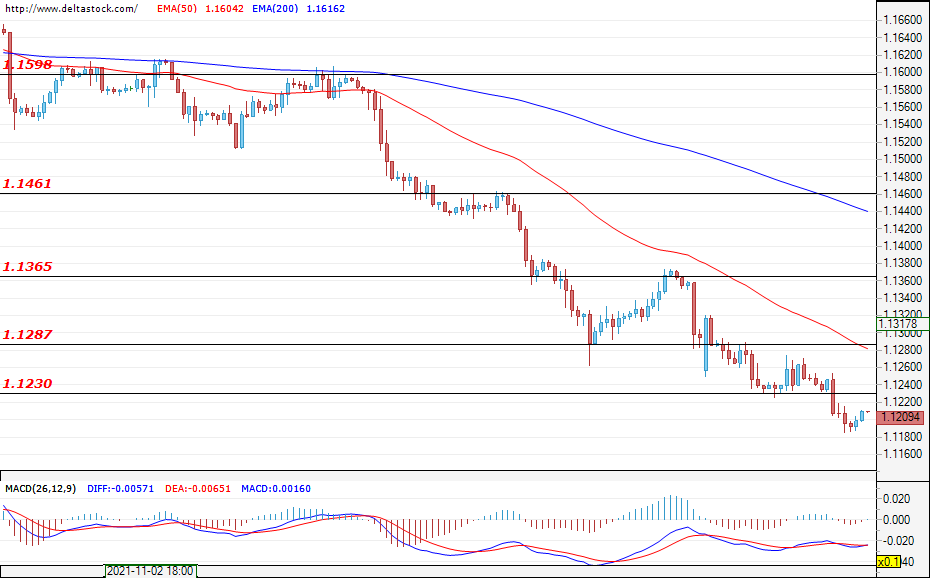
The common European currency continued to lose ground against the dollar and the pair breached the last support zone at 1.1230 as speculations mounted for an earlier-than-expected interest hike by the Fed. A confirmation of the breach would lead to new losses for the EUR/USD and could easily head the pair towards 1.1125. The first target for the bulls is the mentioned level at 1.1230, which is now acting as a resistance, followed by the zone at 1.1290.
| Resistance | Support | ||
| intraday | intraweek | intraday | intraweek |
| 1.1230 | 1.1365 | 1.1180 | 1.1125 |
| 1.1287 | 1.1461 | 1.1125 | 1.1060 |
USD/JPY
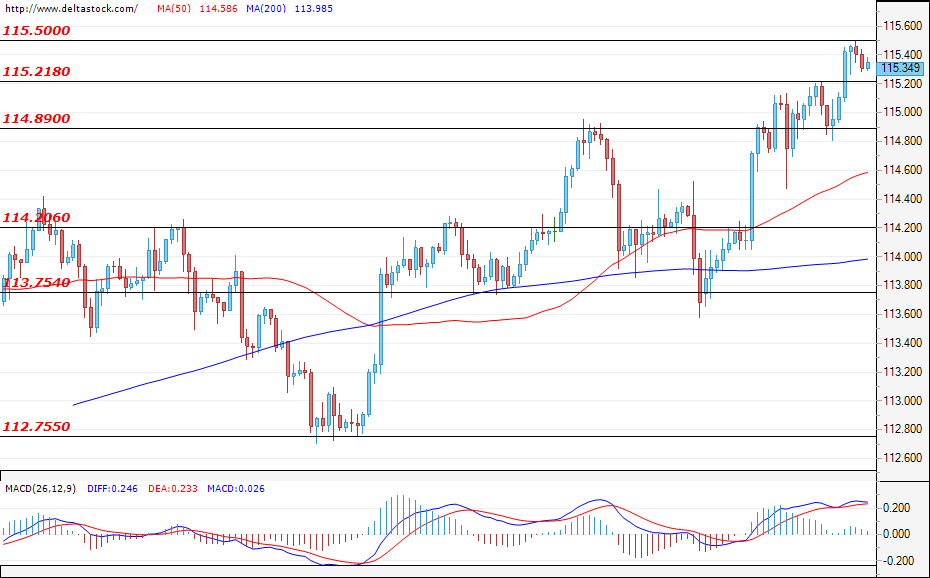
Current level - 115.34
The bulls managed to gain enough momentum and, after the successful violation of the resistance zone at 115.21, the currency pair tested the next target at 115.50. At the time of writing the analysis, the Ninja is hovering around 115.34 and a new attack on the last resistance is a highly probable scenario. A breach for the buyers would easily continue the rally and lead to new gains for the dollar against the yen. If the bears enter the market, the correction could be limited down to the support at 114.89.
| Resistance | Support | ||
| intraday | intraweek | intraday | intraweek |
| 115.50 | 116.50 | 115.21 | 114.20 |
| 116.50 | 117.00 | 114.89 | 113.75 |
GBP/USD
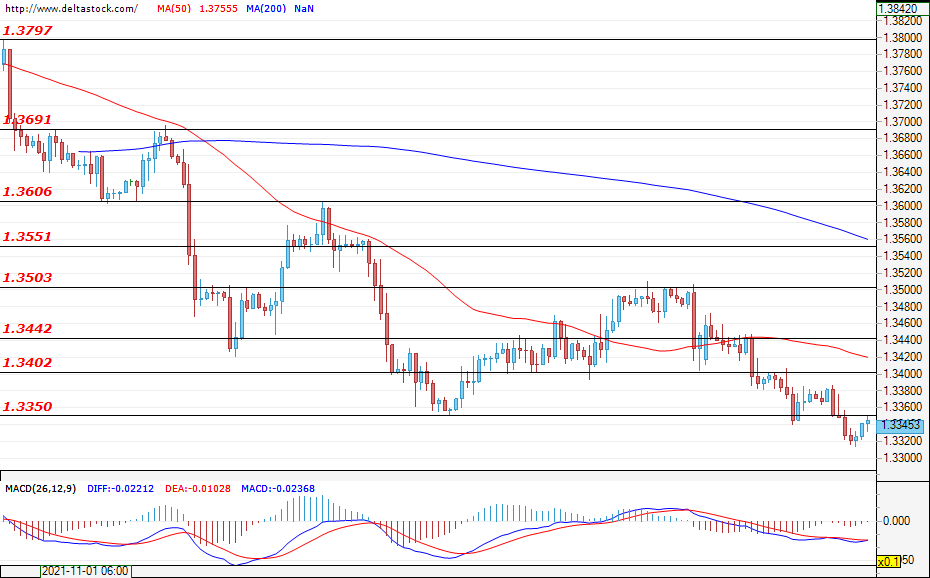
Current level - 1.3345
The breach of the support at 1.3350 is being confirmed and, during the early hours of today`s trading, the price is hovering just below the mentioned zone. If the bulls prevail, a retracement could lead to a test of the close resistance zone at 1.3402. Only a violation of the zone at 1.3442, followed by a breach of the upper target at 1.3500, could strengthen the positive expectations for the future path of the GBP/USD. If the bears remain in control and the breach of 1.3350 is confirmed, new losses for the pound against the dollar and a move towards 1.3300 can be expected.
| Resistance | Support | ||
| intraday | intraweek | intraday | intraweek |
| 1.3400 | 1.3500 | 1.3320 | 1.3200 |
| 1.3440 | 1.3550 | 1.3300 | 1.3060 |
GBP/JPY Daily Outlook
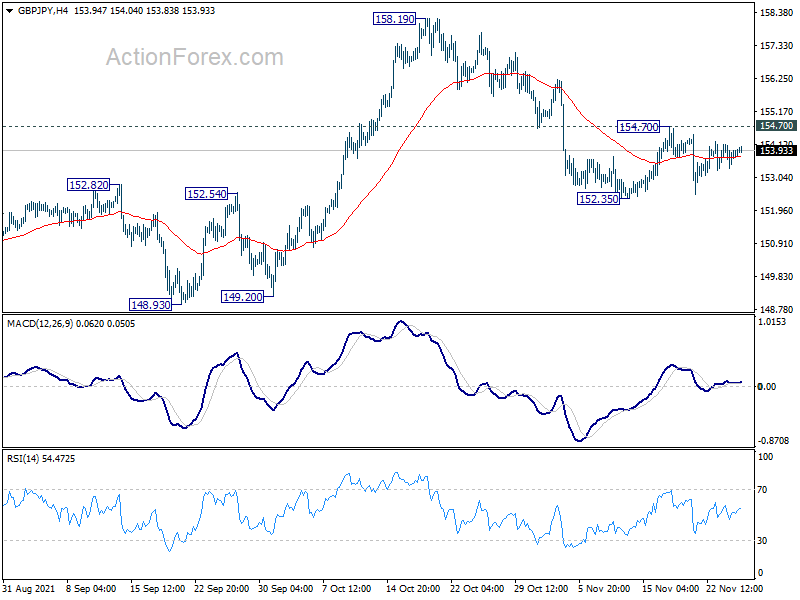
Daily Pivots: (S1) 153.42; (P) 153.79; (R1) 154.19; More...
Intraday bias in GBP/JPY remains neutral at this point and more sideway trading could be seen. With 154.70 resistance intact, further decline remains mildly in favor. On the downside, break of 152.35 will resume the decline from 158.19 to 148.93 key support next. On the upside, however, break of 154.70 will turn bias back to the upside for retesting 158.19 high instead.
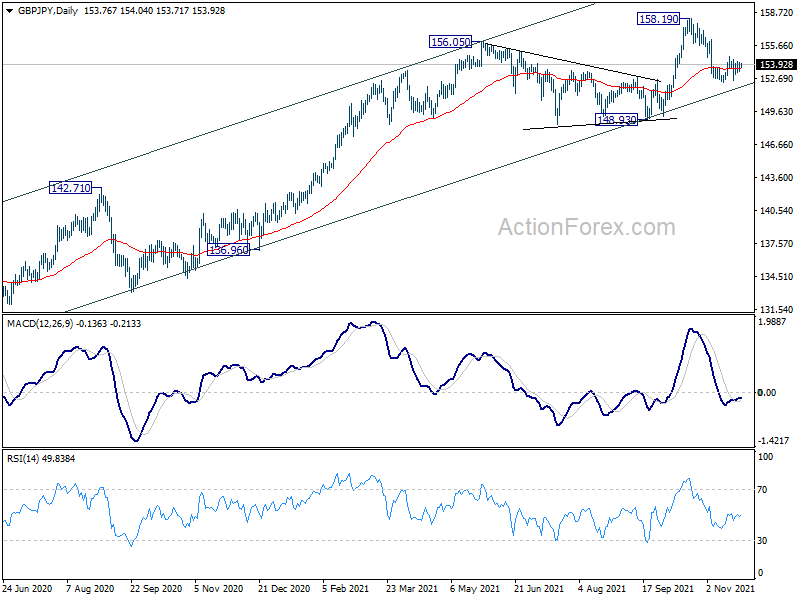
In the bigger picture, rise from 123.94 is seen as the third leg of the pattern from 122.75 (2016 low). Further rally is still expected as long as 148.93 support holds. However, firm break of 148.93 will argue that the medium term trend has reversed and bring deeper fall back to 142.71 resistance turned support first.
EUR/JPY Daily Outlook
Daily Pivots: (S1) 128.79; (P) 129.17; (R1) 129.65; More....
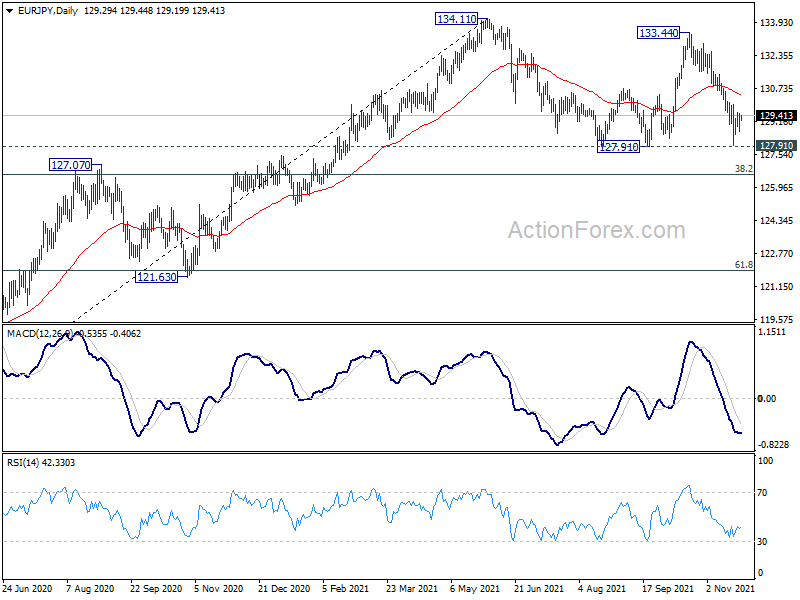
Range trading continues in EUR/JPY and intraday bias remains neutral first. On the upside, break of 129.97 resistance will indicate short term bottoming, and turn bias back to the upside for rebound back towards 133.44 high. On the downside, however, break of 127.91 will extend the whole corrective pattern from 134.11, to 126.58 medium term fibonacci level next.
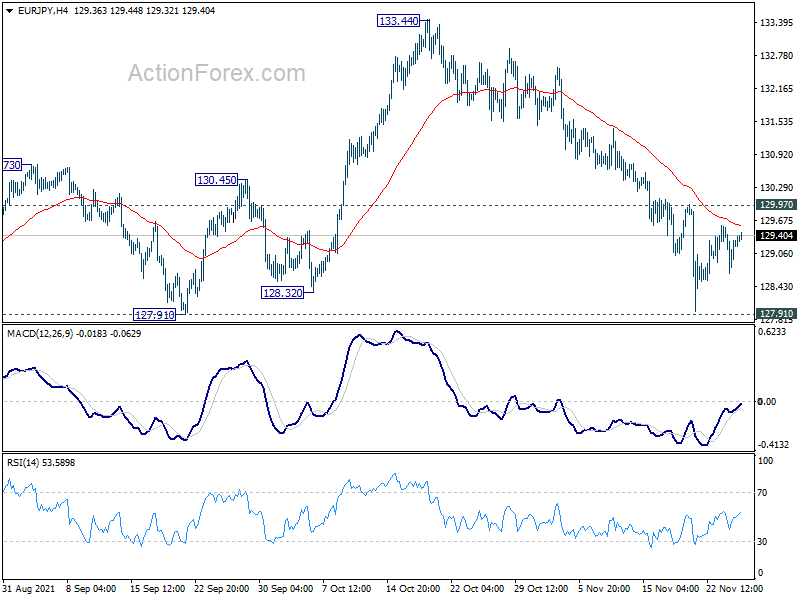
In the bigger picture, as long as 38.2% retracement of 114.42 (2020 low) to 134.11 at 126.58 holds, up trend from 114.42 is still in favor to continue. Break of 134.11 will target long term resistance at 137.49 (2018 high). However, sustained break of 126.58 will raise the chance of medium term bearish reversal. In this case, deeper decline would be seen to 61.8% retracement at 121.94, and possibly below.