Sample Category Title
The Silence Of The Turkeys
Even Hannibal Lecter would be “cutting back” at Thanksgiving this year, with the American Farm Bureau Federation calculating that the average components of Thanksgiving dinner are 15% higher this year than 2020. As Americans head of to a price inflated helping of turkey, cranberry sauce and something called a green bean casserole, inflation was very much in the minds of markets from last night’s pre-holiday US data dump.
FOMC hint at faster tapering
Although Durable Goods disappointed, when automobiles and Boeing aeroplanes are stripped out, the number looked pretty good. Elsewhere, the inflationary signals were more Hannibal and less Clarice. Personal Income and Personal Spending both rose by more than forecast and the PCE Price Index, a Fed favourite, also exceeded expectations, rising to multi-decade highs on a YoY basis. The FOMC minutes suggested the doves are in retreat as well. The committee noted that inflationary expectations in the near term could exceed forecasts and that a faster tapering is not out of the question.
It is probably the last item that weighed on markets the most. Once again, currency markets were the pressure relief valve, with the US dollar spiking once again, helped along by a soggy German IFO, fears of virus lockdowns and ECB officials pouring cold water on rate hikes. Front end yields squeezed higher in response as the FOMC maintained a 2.0% inflation target for the end of 2022. Stock markets ignored the data as investors dipped their toes back into the S&P 500 and Nasdaq waters ahead of the US holiday, unable to resist a cranberry sauce-covered buy-the-dip moment.
Another Turkey that benefited from a Silence of the Turkey was Turkey. President Erdogan managed to talk the Turkish lira 12% lower on Monday, but some silence yesterday saw the lira close 7.0% higher versus the greenback. I rather suspect the stay is temporary though, and that financial markets intend to keep eating the lira with some fava beans and a nice chianti once the Thanksgiving leftovers are consumed.
Another emerging market, perhaps more pertinent to Asia, Mexico, also saw plenty of action. The Fed taper-trade has not been kind to the Mexican peso this week. The peso finished 1.0% lower at 21.4200 after the Mexican President appointed the Deputy Finance Minister, who has zero experience in central banks or monetary policy, as the next central bank Governor. Nothing beats learning on the job, I guess. As a developing market and a major oil producer with a high beta to the US economy, Mexico could well be a template for many parts of ASEAN and the Mexican peso is now 3.0% lower for the week. China, once again, set a weaker yuan fixing today, and with that shield eroding, a taper-trade could be coming to a country near you if you are sitting in Asia.
Two countries that will probably buck that trend in regional Asia are Singapore and South Korea. Singapore is rapidly reopening its economy internationally and recovering domestic demand should outperform the export sector in Q1 2022. The Singapore/Malaysia partial reopening of the land border on 29 November being but one example. Notably, both the Monetary Authority of Singapore and the Bank of Korea have started tightening monetary policy. The MAS tightened via the NEER recently (look this one up readers, like communicating with Mrs Halley, it’s complicated), and the BOK hiked by another 0.25% to 1.0% this morning. The BOK Governor was hawkish in his outlook, and you can be sure the MAS will be at its next biannual policy decision in Q2 2022. For the rest of Asia though, policy settings look set to remain dovish, and if the Fed taper is accelerated at the December meeting, Asian FX could be in for a torrid finish to the year.
Elsewhere, New Zealand’s Balance of Trade and Australia’s Capex has passed without incident. Rising exports flattered the New Zealand Balance of Trade, while Australian Capex was a Q3 print and thus, was eroded by the New South Wales and Victoria lockdowns. Better times will come as Australia reopens. Both the Australian and New Zealand dollars continue to look vulnerable though, in no small part due to their hawkishly dovish fence-sitting central banks. Mostly though, their roles as global risk sentiment barometers leave them at the coal-face of the reality of the Fed taper.
Turning to China, the China Securities Journal is running a story that more fiscal stimulus could be on the way. With the PBOC adding liquidity via the repo today and setting a weaker yuan fix, China markets should have plenty of reasons to be happy. Instead, investors seemed more focused on three other developments. Firstly, indebted property developer Kaisa Group is offering to swap USD 400 million of Singapore Exchange-listed notes for longer maturities. The wording of the offer feels more like playing Russian roulette with 5 bullets in the 6 chambers. Take the offer or we won’t be able to pay the note when it expires on 7 December.
China’s property sector woes haven’t gone away, which leads me to the next point. A group of US Federal Reserve researchers have found substantial downside risks to China’s growth outlook. That won’t bother Beijing, but the banning of 12 more China companies by the US overnight might well do. Finally, spare a thought for JP Morgan overlord, Jamie Dimon, who may be feeling like more Jamie Ma than Jamie Dimon this morning, after joking that a 100-year old JP Morgan would outlast the 100-year old Chinese Communist Party. There’s nothing like being a Dimon in the rough.
Daily Technical Analysis
EUR/USD
Current level - 1.109
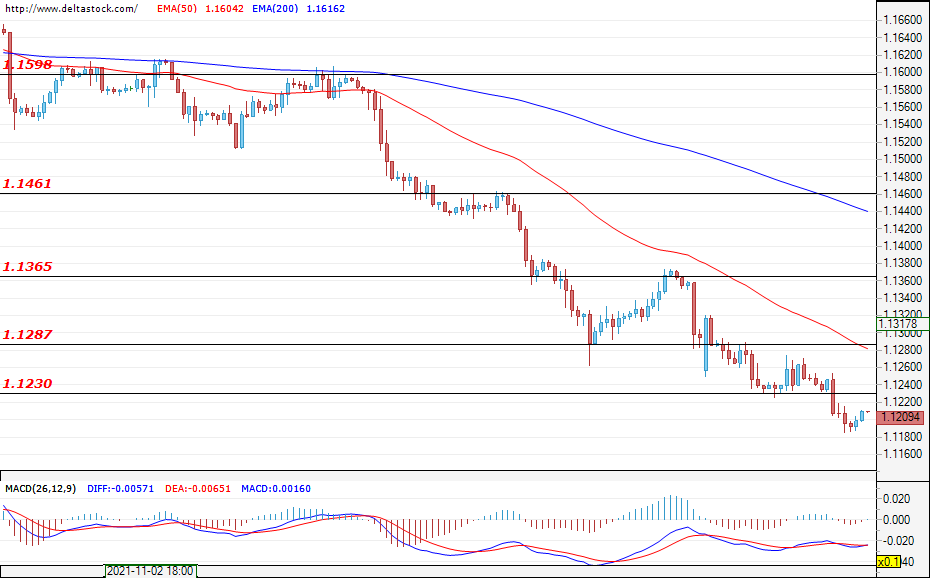
The common European currency continued to lose ground against the dollar and the pair breached the last support zone at 1.1230 as speculations mounted for an earlier-than-expected interest hike by the Fed. A confirmation of the breach would lead to new losses for the EUR/USD and could easily head the pair towards 1.1125. The first target for the bulls is the mentioned level at 1.1230, which is now acting as a resistance, followed by the zone at 1.1290.
| Resistance | Support | ||
| intraday | intraweek | intraday | intraweek |
| 1.1230 | 1.1365 | 1.1180 | 1.1125 |
| 1.1287 | 1.1461 | 1.1125 | 1.1060 |
USD/JPY
Current level - 115.34
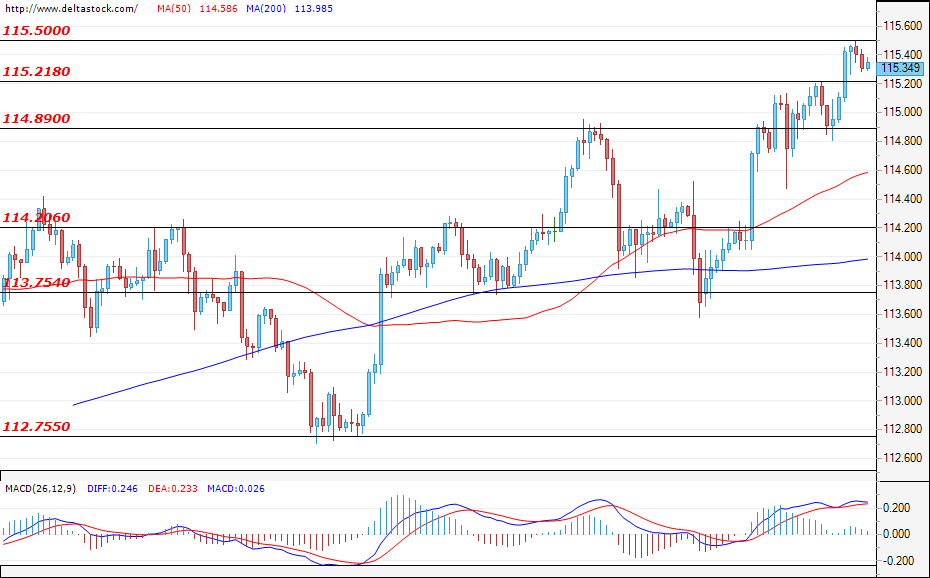
The bulls managed to gain enough momentum and, after the successful violation of the resistance zone at 115.21, the currency pair tested the next target at 115.50. At the time of writing the analysis, the Ninja is hovering around 115.34 and a new attack on the last resistance is a highly probable scenario. A breach for the buyers would easily continue the rally and lead to new gains for the dollar against the yen. If the bears enter the market, the correction could be limited down to the support at 114.89.
| Resistance | Support | ||
| intraday | intraweek | intraday | intraweek |
| 115.50 | 116.50 | 115.21 | 114.20 |
| 116.50 | 117.00 | 114.89 | 113.75 |
GBP/USD
Current level - 1.3345
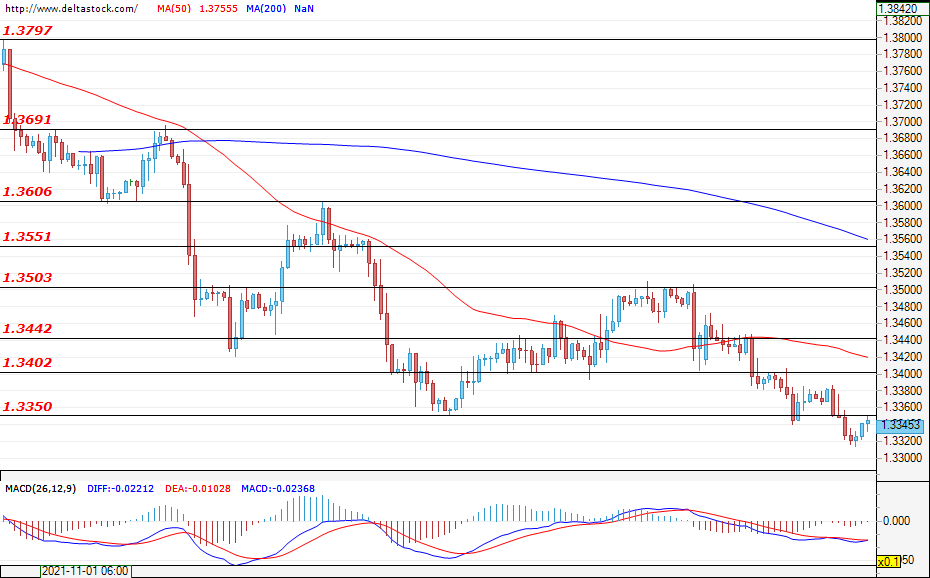
The breach of the support at 1.3350 is being confirmed and, during the early hours of today`s trading, the price is hovering just below the mentioned zone. If the bulls prevail, a retracement could lead to a test of the close resistance zone at 1.3402. Only a violation of the zone at 1.3442, followed by a breach of the upper target at 1.3500, could strengthen the positive expectations for the future path of the GBP/USD. If the bears remain in control and the breach of 1.3350 is confirmed, new losses for the pound against the dollar and a move towards 1.3300 can be expected.
| Resistance | Support | ||
| intraday | intraweek | intraday | intraweek |
| 1.3400 | 1.3500 | 1.3320 | 1.3200 |
| 1.3440 | 1.3550 | 1.3300 | 1.3060 |
GBP/JPY Daily Outlook
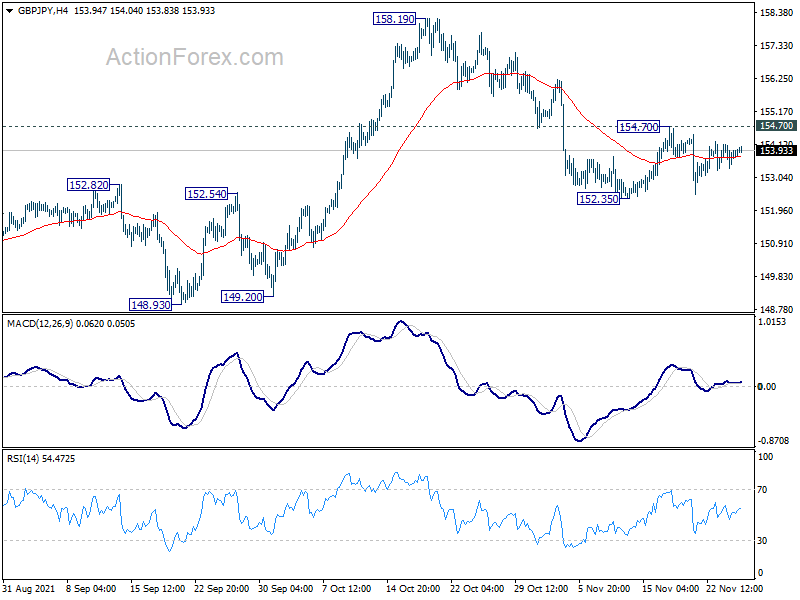
Daily Pivots: (S1) 153.42; (P) 153.79; (R1) 154.19; More...
Intraday bias in GBP/JPY remains neutral at this point and more sideway trading could be seen. With 154.70 resistance intact, further decline remains mildly in favor. On the downside, break of 152.35 will resume the decline from 158.19 to 148.93 key support next. On the upside, however, break of 154.70 will turn bias back to the upside for retesting 158.19 high instead.
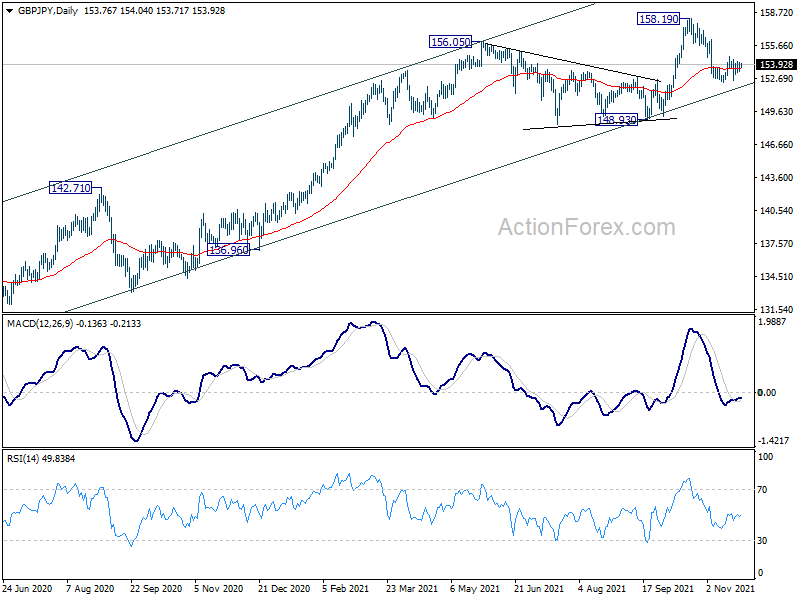
In the bigger picture, rise from 123.94 is seen as the third leg of the pattern from 122.75 (2016 low). Further rally is still expected as long as 148.93 support holds. However, firm break of 148.93 will argue that the medium term trend has reversed and bring deeper fall back to 142.71 resistance turned support first.
EUR/JPY Daily Outlook
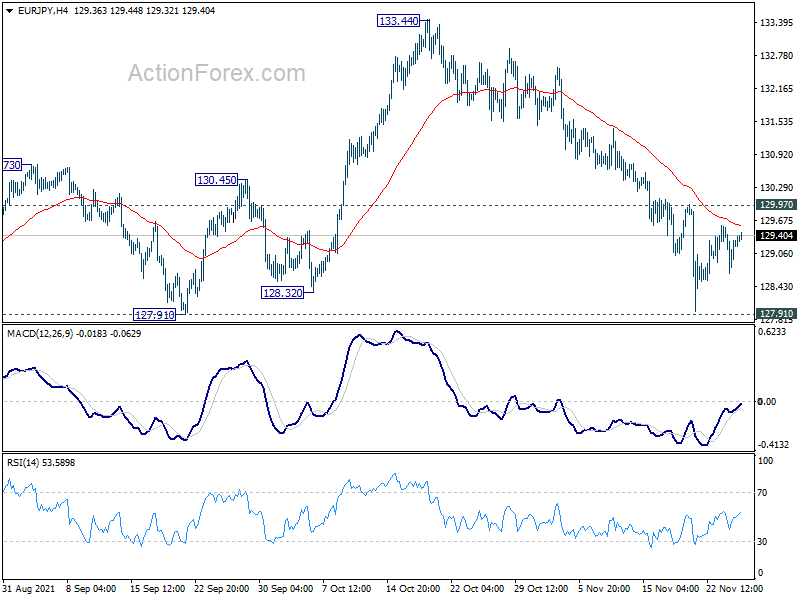
Daily Pivots: (S1) 128.79; (P) 129.17; (R1) 129.65; More....
Range trading continues in EUR/JPY and intraday bias remains neutral first. On the upside, break of 129.97 resistance will indicate short term bottoming, and turn bias back to the upside for rebound back towards 133.44 high. On the downside, however, break of 127.91 will extend the whole corrective pattern from 134.11, to 126.58 medium term fibonacci level next.
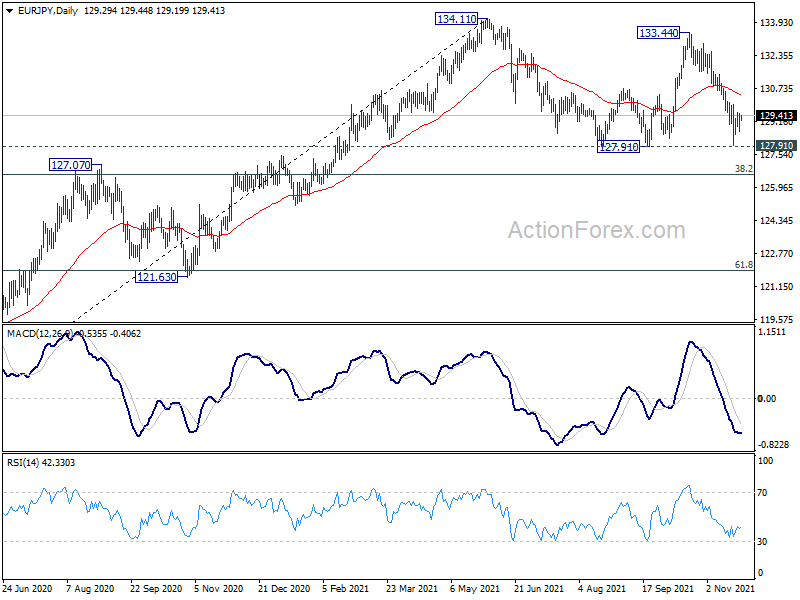
In the bigger picture, as long as 38.2% retracement of 114.42 (2020 low) to 134.11 at 126.58 holds, up trend from 114.42 is still in favor to continue. Break of 134.11 will target long term resistance at 137.49 (2018 high). However, sustained break of 126.58 will raise the chance of medium term bearish reversal. In this case, deeper decline would be seen to 61.8% retracement at 121.94, and possibly below.
EUR/GBP Daily Outlook
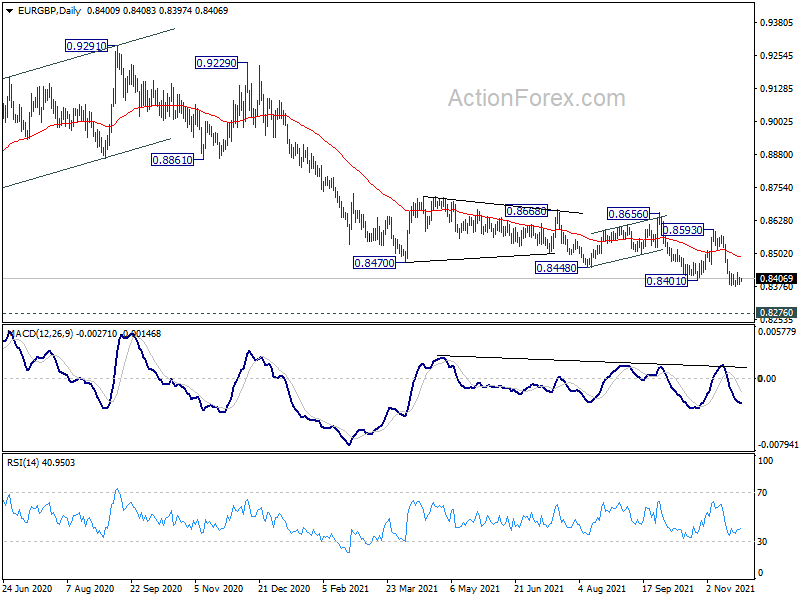
Daily Pivots: (S1) 0.8388; (P) 0.8401; (R1) 0.8417; More...
Intraday bias in EUR/GBP remains neutral for the moment. In case of another recovery, upside should be limited by 4 hour 55 EMA (now at 0.8427). On the downside, break of 0.8381 will resume larger down trend from 0.9499. Intraday bias will be back to the downside for 0.8276 key long term support.
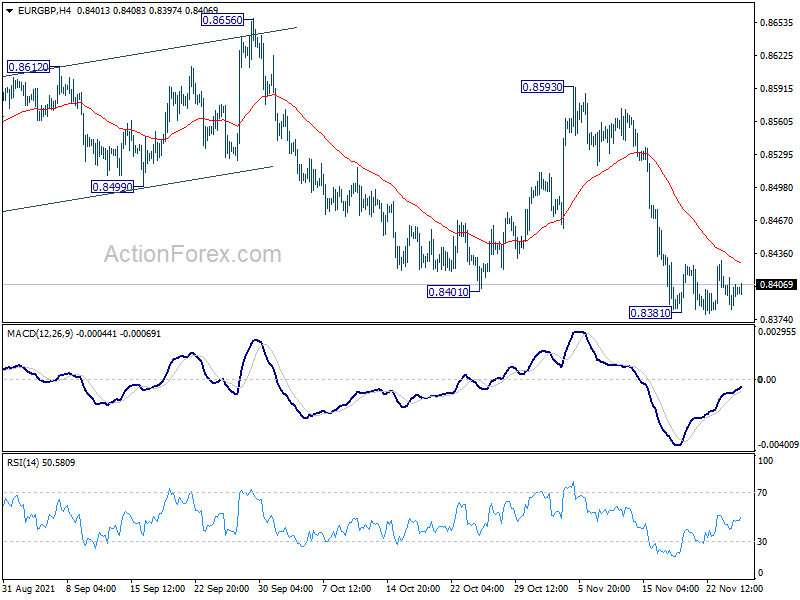
In the bigger picture, price actions from 0.9499 (2020 high) are still seen as developing into a corrective pattern. Deeper fall could be seen as long as 0.8593 resistance holds, towards long term support at 0.8276. We'd look for bottoming signal around there to bring reversal. However, sustained break of 0.8276 will but a sign of long term bearish reversal.
EUR/AUD Daily Outlook
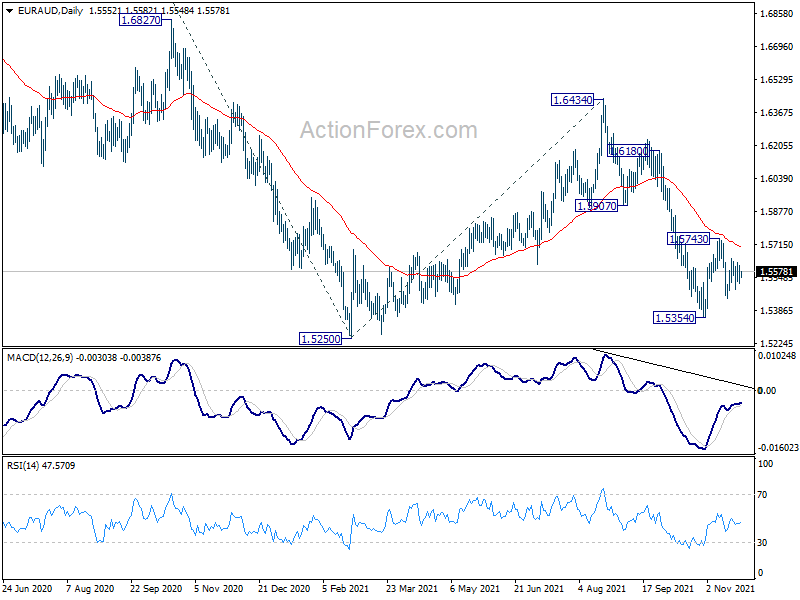
Daily Pivots: (S1) 1.5522; (P) 1.5566; (R1) 1.5611; More...
Outlook in EUR/AUD is unchanged and intraday bias remains neutral first. Further fall is expected as long as 1.5743 resistance holds. On the downside, break of 1.5354 will resume whole fall from 1.6434 to retest 1.5250 low. Nevertheless, break of 1.5743 will turn near term outlook bullish for 1.5907 resistance instead.
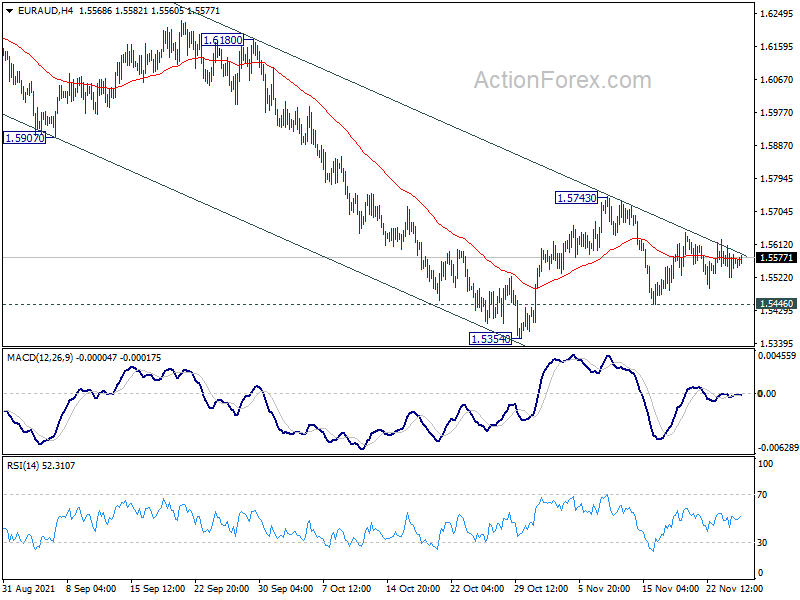
In the bigger picture, the down trend from 1.9799 (2020 high) is in progress. Firm break of 1.5250 low will confirm resumption and target 61.8% retracement of 1.1602 (2012 low) to 1.9799 at 1.4733. Sustained break there could bring more downside acceleration to 61.8% projection of 1.9799 to 1.5250 from 1.6434 at 1.3623. In any case, break of 1.6434 resistance is needed to signal medium term bottoming, or outlook will stay bearish.
EUR/CHF Daily Outlook
Daily Pivots: (S1) 1.0443; (P) 1.0473; (R1) 1.0491; More....
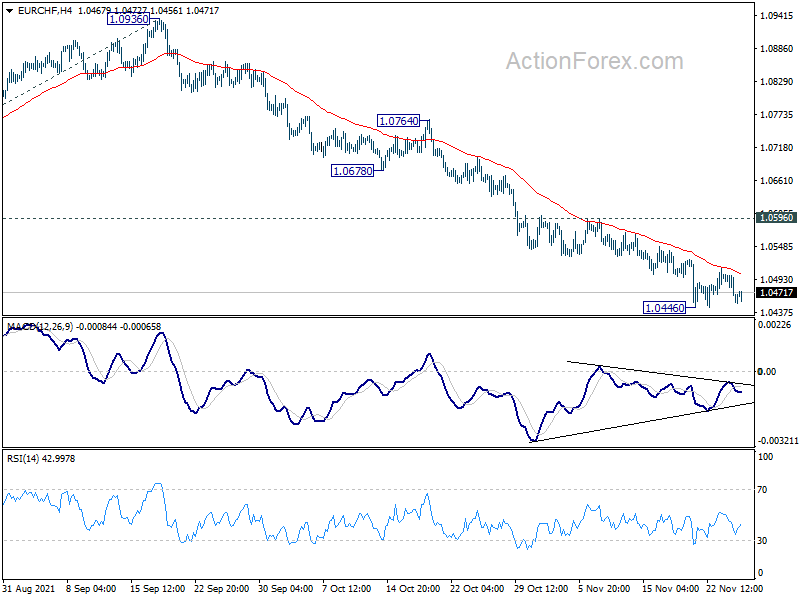
Intraday bias in EUR/CHF remains neutral first, and further decline is expected with 1.0596 resistance intact. Break of 1.0446 will resume the down trend from 1.1149 to 161.8% projection of 1.1149 to 1.0694 from 1.0936 at 1.0200 next. Nevertheless, break of 1.0596 will indicate short term bottoming and turn bias back to the upside for stronger rebound.
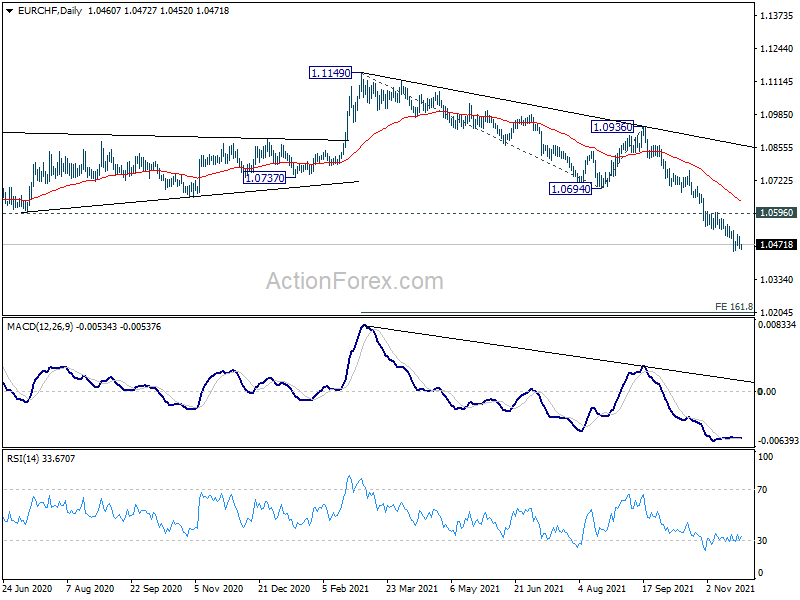
In the bigger picture, down trend from 1.2004 (2018 high) should be resuming with break of 1.0505 (2020 low). Next target is 61.8% projection of 1.2004 to 1.0505 to 1.1149 at 1.0223. On the upside, break of 1.0694 resistance is needed to be the first sign of medium term bottoming. Otherwise, outlook will remain bearish.
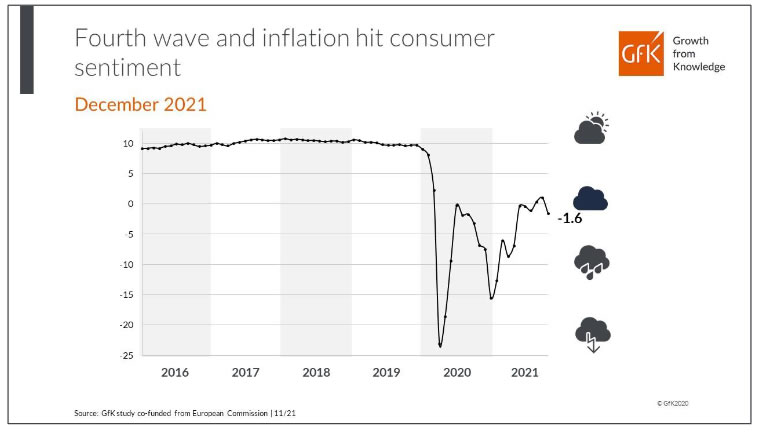
Germany Gfk consumer sentiment dropped to -1.6, squeezed from two sides
Germany GfK consumer confidence for December dropped to -1.6, down from 1.0, below expectation of -0.3. That's also the lowest level in six months. For November, economic expectations dropped from 46.6 to 31.0. Income expectations dropped from 23.3 to 12.9. Propensity to buy dropped from 19.4 to 9.7.
"Consumer sentiment is currently being squeezed from two sides. On the one hand, the number of cases in the fourth wave of the coronavirus pandemic is exploding, which threatens to overwhelm the health system and could lead to further restrictions. On the other hand, the purchasing power of consumers is dwindling due to a high inflation rate of four percent" explains Rolf Bürkl, GfK consumer expert. "The outlook for the upcoming Christmas season is now somewhat bleak."
AUDUSD Wipes Out October’s Gains, Bias Cautiously Bearish
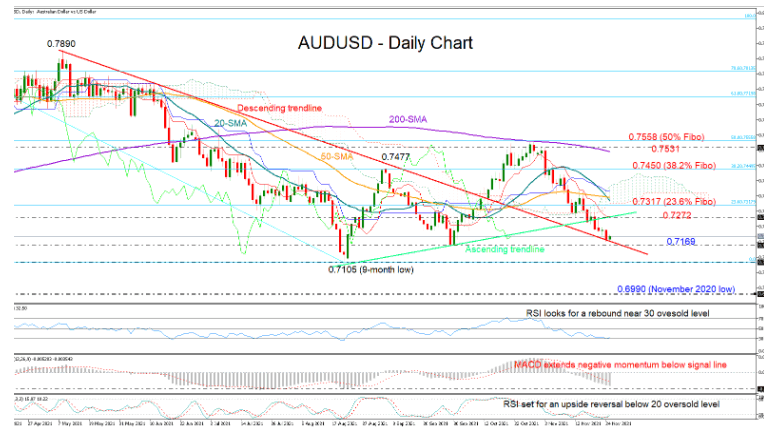
AUDUSD has fully reversed October's rise, with the price extending its decline marginally below the 0.7200 level and near the swing low of 0.7169 on Wednesday.
The area overlaps with the broken descending trendline, which could switch roles from resistance to support in order to boost the pair up to the ascending trendline and the red Tenkan-sen, both currently around 0.7272. A steeper rebound could meet the 20- and 50-day simple moving averages (SMAs) near the 23.6% Fibonacci retracement of the 0.8006 – 0.7105 downleg at 0.7317, while another step higher from here, could see an acceleration towards the 38.2% Fibonacci of 0.7450.
The RSI and the Stochastics are backing the above positive scenario since the indicators look set to depart from oversold levels. Yet, the negative momentum in the MACD suggests the bears could remain in charge for a bit longer.
If the pair retreats below 0.7169, the way would clear towards the August low of 0.7105. A break below that floor could stretch the 2021 downtrend to 0.6990 taken from the November 2020 low.
Summarizing, AUDUSD is looking cautiously bearish in the short-term picture. Failure to hold above 0.7169 could bring the broader downtrend back under the spotlight.
Crude Oil Defies STR Release As Opec Weighs Change Of Policy
The price of crude oil was little changed as the market continued reflecting on the coordinated release of strategic reserves (STR). The market believes that the release of these reserves will not push prices lower since it was smaller than expected. Meanwhile, according to the Wall Street Journal, top OPEC+ members were considering a move to pause their recent efforts to increase production. Russia and Saudi Arabia are supportive of the measure in a bid to maintain higher prices. On the other hand, some members like the United Arab Emirates (UAE) believe that the strategic pause will not be needed.
US stocks declined sharply after strong economic data from the United States. These numbers signalled that the Federal Reserve would move to tighten conditions faster than expected. Data showed that initial jobless claims declined to the lowest level in more than 50 years. Other numbers revealed that household incomes rose slightly in October even as spending jumped. Similarly, the country’s trade deficit narrowed while durable goods orders jumped. A hawkish Fed tends to be bearish for stocks.
The euro declined slightly after Germany got a new government, the first in 16 years. This happened after social democrats, greens, and liberals agreed to form the so-called ‘traffic light’ government. Olaf Scholtz will become the new chancellor while the greens and liberal democrats will get five and four ministerial posts each. This centre-left government will be the first such alliance in history. The currency will react to the latest German GDP data. The numbers are expected to show that the economy expanded by 2.5% in the third quarter. Another catalyst will be the latest minutes of the European Central Bank.
EURUSD
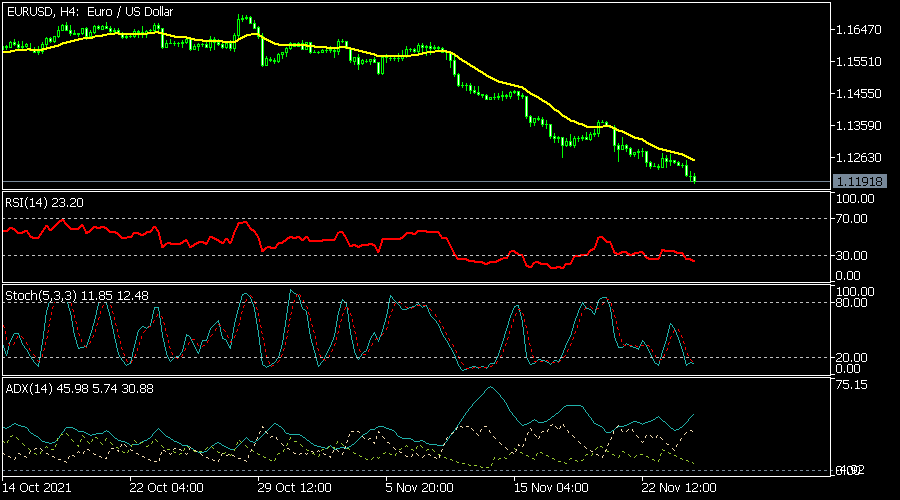
The EURUSD pair has been in a strong bearish trend in the past few weeks. It is trading at 1.1190, which is the lowest level since June last year. The pair has moved below the 25-day moving average. At the same time, the Average Directional Index (ADX) has risen to 45, signalling that the bearish trend is still strong. The RSI and Stochastic have also moved to the oversold level. Therefore, the sell-off will likely keep falling today.
GBPUSD
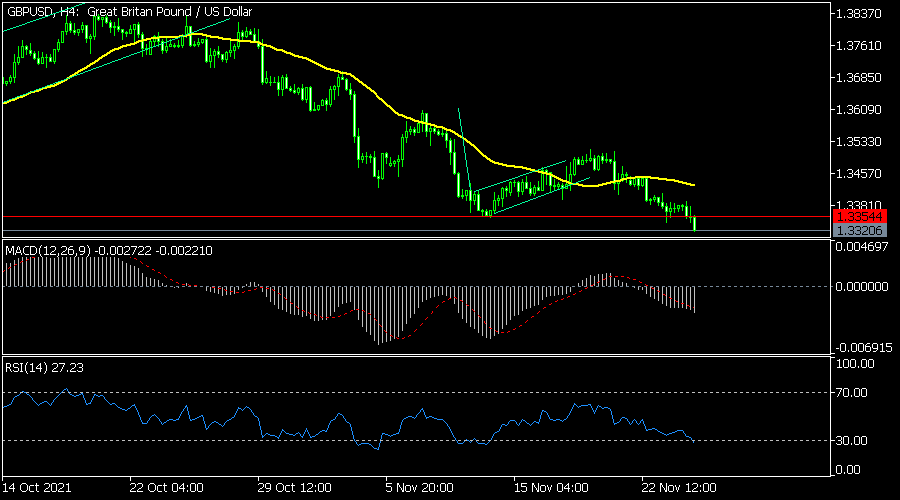
The GBPUSD pair broke out below the bearish flag pattern earlier this week. It then continued the sell-off and managed to move below the key support at 1.3354, which was the lower side of the flag post. It has moved below the 25-day moving average while the MACD has moved below the neutral level. The RSI has also dropped below the oversold level. Therefore, the pair will likely keep falling for now.
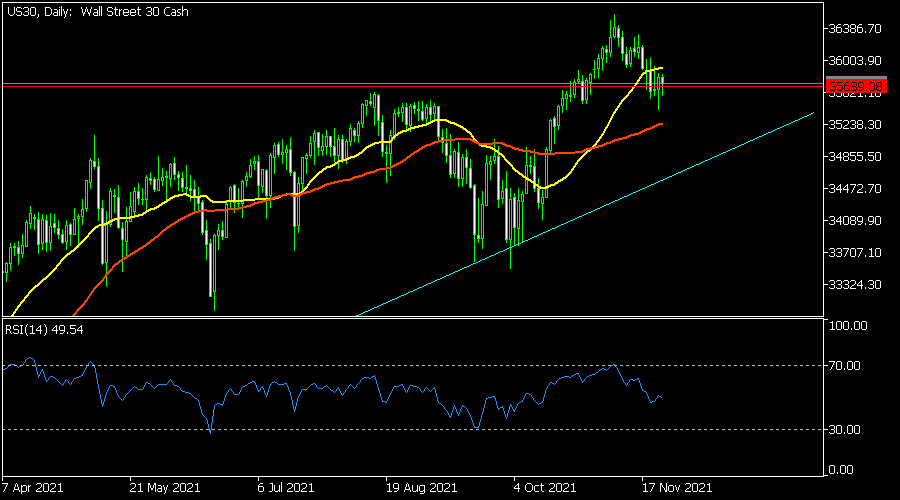
US30
The Dow Jones declined slightly after strong US economic data. The pair is trading at a key support level at $35,690. This was the highest level on August 13th. It is still above the ascending trendline and the 50-day moving average. The Relative Strength Index (RSI) is also pointing lower. The index futures will likely see little action today as the US celebrate the Thanksgiving holiday.