Sample Category Title
Dollar Rules The FX Skies, Equities Undecided
- Dollar remains king as Fed shockwaves reverberate
- Stocks caught in limbo, oil prices wary of supply risks
- Second-tier data coming up today, but could be crucial
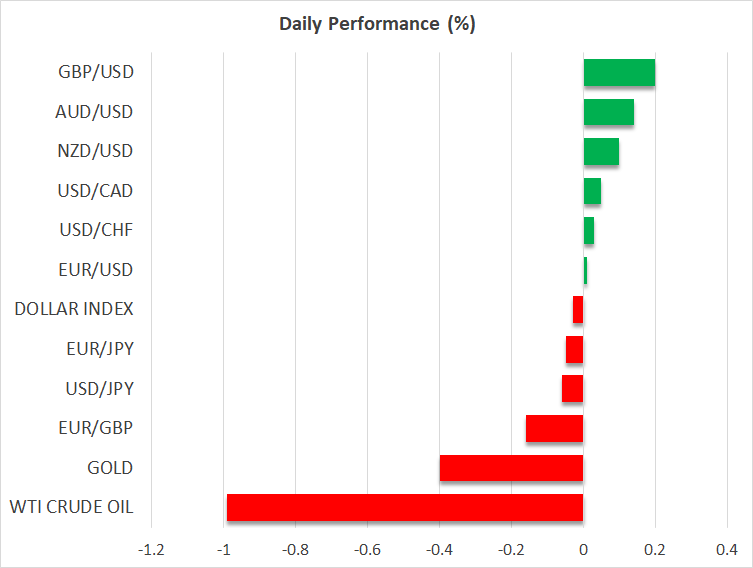
Dollar reigns supreme
The trading week is coming to a close with the dollar ruling the skies over the FX battleground, after a shocking acceleration in US inflation reignited expectations for faster Fed rate increases and served as jet fuel for the reserve currency. Markets are currently split on whether the FOMC will hike rates twice or three times next year.
As such, next week’s retail sales could be crucial in tipping the scales. Credit card data from J.P. Morgan Chase points to a solid October for spending but an incredible November as some consumers may have started holiday shopping early, fearful of delayed deliveries. Therefore, there might be more good news on the way for the dollar.
In contrast, the euro is still grappling with several risks. The spiral in energy prices could squeeze European consumers, soaring covid cases in Germany have revived fears of stricter measures that cool growth, and China’s slowdown is bad news for demand in Europe’s largest export market.
Taken together, these suggest the ECB could disappoint market expectations for a minor rate increase next year while there’s still scope for a third Fed rate hike to be priced in, keeping the risks surrounding euro/dollar tilted to the downside.
Stocks in a dilemma
Wall Street didn’t do much yesterday. The Dow Jones was dragged lower by a sharp decline in Disney shares after the entertainment conglomerate reported disappointing growth in streaming, but some relief in mega-cap tech stocks pulled the Nasdaq higher. The S&P 500 was somewhere in the middle, closing almost unchanged.
Equity markets seem caught between opposing forces. Record low real yields, a frenzy in corporate buybacks, and fresh fiscal stimulus are colliding with fears over fading central bank liquidity, a slowdown in earnings next year, and weaker growth in China.
It’s a tough environment to navigate and sky-high valuations don’t make it any easier. The bottom line? The risk of a correction from such elevated levels is uncomfortably high, but any drawdown would likely be seen as a buying opportunity for many traders as there’s still no alternative to equities while real yields are so depressed.
Oil under pressure
In the energy market, oil prices remain on the retreat. There’s growing speculation that the White House could release the ‘kraken’ soon, or in other words the Strategic Petroleum Reserves, to cool oil prices and by extension inflation. Making a deal with Iran is another alternative.
The Canadian dollar is feeling the heat of softer oil prices and the stronger US dollar, but admittedly, the nation’s economy is just too strong to worry about a sustained downtrend. The Bank of Canada will likely be the leader among the major central banks in this normalization cycle, an assessment that markets agree with considering the five rate increases already priced in for next year.
As for today, the highlights will be the University of Michigan consumer sentiment survey and the JOLTS labor market report. These are typically second-tier US economic data, but they could attract special attention this time with the spotlight falling on inflation expectations and the job quit rate. New York Fed President John Williams will also deliver remarks at 17:10 GMT.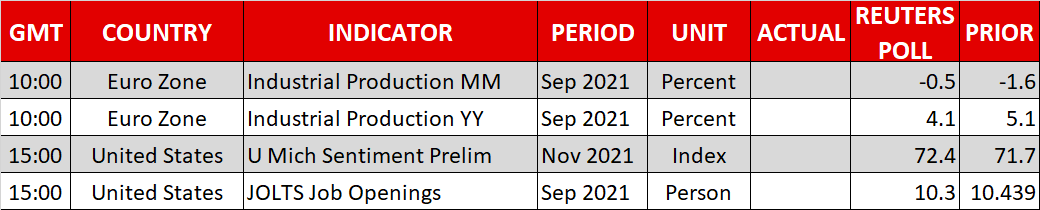
GBPJPY Set For Neutral Close But Bears Still Present
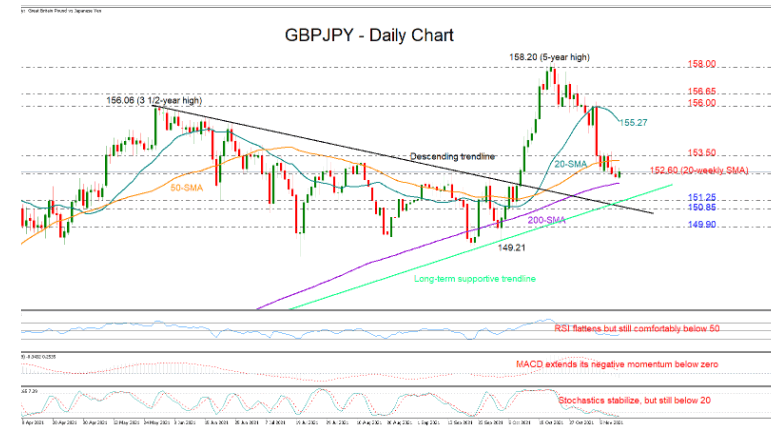
GBPJPY returned to Monday’s opening price on Friday, aiming for a neutral weekly close around 152.60, where the 20-period simple moving average (SMA) has been buffering negative movements since the start of October in the weekly chart.
The price has erased a large portion of the October rally and the momentum indicators keep the short-term bias tilted to the downside. Both the RSI and the fast-Stochastics are making attempts for an upside reversal, though they are still comfortably dipped in the bearish territory, while the MACD continues to dig southwards in the negative region, suggesting the bears are still present.
A decisive close below the 200-day SMA at 152.15 could motivate fresh selling towards the crucial long-term supportive trendline at 151.25 drawn from the 2020 bottoms. Slightly lower, the broken descending trendline stretched from 150.85 could provide another opportunity for a rebound, preventing an outlook deterioration and a drop towards the 149.90 region.
Should buyers take control, the price may push for a close above the nearby resistance of 153.50. Piercing that bar, buying forces could amplify towards the 20-day SMA currently at 155.35. A step higher from here could get congested within the 156.00 – 156.65 area before the focus shifts to the top of 158.20.
In brief, the sell-off in GBPJPY could get more legs in the short term unless the price manages to recover above 152.60.
A Sharp Increase In The Dollar Index May Provoke Capital Outflows From Stock And Bond Markets And Weaken Other...
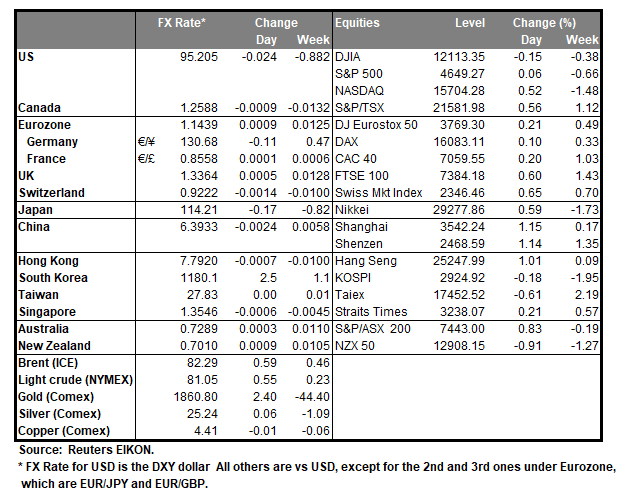
The US stock indices traded yesterday without a single trend. The Dow Jones index decreased by 0.44%, the S&P 500 added 0.06% and the Nasdaq technology increased by 0.52%. The dollar is strengthening due to the expectation of a rate hike soon after the Fed ends its stimulative bond buying cuts. This risks triggering capital outflows from emerging market assets, while negatively affecting stocks, bonds, and other currencies.
On Thursday, US President Joe Biden signed a law preventing companies such as Huawei Technologies Co and ZTE Corp, considered security threats, from getting licenses for their new equipment from US regulators.
Major European stock indexes mostly rose yesterday. The British FTSE 100 increased by 0.6%, Germany's DAX and France's CAC 40 added 0.1%, and 0.2%, Italy's FTSE MIB increased by 0.3%, only Spain's IBEX decreased by 0.5%.
According to the survey of economists, the inflation rate in the Eurozone is expected to be 3.1% in the 1st quarter, 2.7% in the 2nd quarter, and 2.1% in the 3rd quarter of 2022 (against 2.5%, 2.2%, and 1.6% in the previous forecast, respectively). Inflation in the Eurozone may exceed forecasts if supply chain disruptions persist.
The European Union is discussing imposing sanctions against Russian Aeroflot because of the migration crisis on the Belarusian-Polish border. The United States and the United Kingdom may join the restrictive measures.
Gold increased to $1,865 an ounce Thursday, its highest since mid-June, as traders continue to buy gold actively as a hedge against inflation. But many analysts don't see any further upside for gold as tighter monetary policy drives up government bond yields, which as a rule, tend to decrease precious metal prices.
Commercial oil inventories increased by 18.5 million barrels in September but were still 163 million barrels lower than 2015-2019. According to Bloomberg analysts, Russia and the US will increase oil supplies in 2022.
Yesterday, Asian stock indexes traded flat after Chinese real estate developer Evergrande could avoid default. China Evergrande Group must pay another $366 million in interest payments on its obligations. Evergrande was able to prevent default with payments at the last minute overdue bonds on Wednesday. However, Evergrande is far from successful as it strives to sell its own assets to try to get ahead of its payment schedule. The company raised $144 million in recent days by selling its stake in the Internet company Hengten Networks Group.
Hong Kong's Hang Seng technology index Increased by 2% in morning trading. Shares of Alibaba in Hong Kong added 0.74% after orders rose to $84.54 billion in the 11.11 sale as compared to 74 billion dollars a year ago.
Goldman Sachs has become more optimistic about Chinese stocks affected by a series of regulatory shocks and the debt crisis of the real estate sector this year, as Beijing is going to ease regulatory pressure on the economy.
Main market quotes:
- S&P 500 (F) 4,649.27 +2.56 (+0.055%)
- Dow Jones 35,921.23 −158.71 (−0.40%)
- DAX 16,083.11 +15.28 (+0.095%)
- FTSE 100 7,384.18 +44.03 (+0.60%)
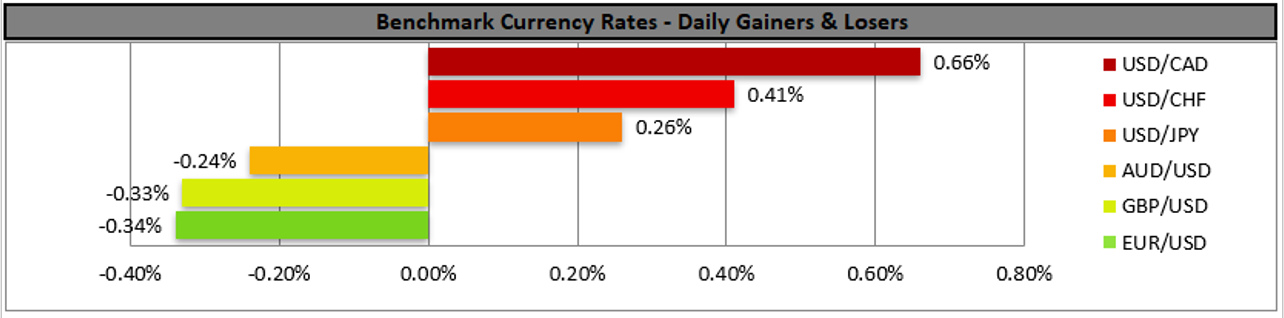
- USD Index 95.18 +0.33 (+0.34%)
Important events for today:
- China Unemployment Rate (m/m) at 04:30 (GMT+2);
- Eurozone Industrial Production (m/m) at 12:00 (GMT+2);
- US JOLTs Job Openings (m/m) at 17:00 (GMT+2);
- US Michigan Consumer Sentiment (m/m) at 17:00 (GMT+2);
- US FOMC Member Williams’s Speech at 19:10 (GMT+2).
USD Continues To Gain On Tight Inflation
The USD continued to gain against a number of its counterparts yesterday in the aftermath of the release of October’s US CPI rates. Overall market mood remained unchanged also given that no high impact US financial data were released yesterday. On a fundamental level we note the thawing of tensions in the US-Sino relationships which started with the announcement of the collaboration of the two countries in an effort to reduce emissions. The issue though may continue as US President Biden and Chinese Leader Xi Jinping are scheduled to address leaders of the Pacific Rim late today and should the tensions in the relationships of the two countries ease further, we may see the USD experiencing some safe haven outflows. On the other hand, markets today may be more interested in the release of the preliminary US University of Michigan for November and the JOLTS job openings figure for September. On the monetary front we highlight the speech of New York Fed President Williams, and should he maintain the Fed’s usual narrative about the temporary nature of inflation we may also see the USD retreating somewhat due to the bank’s dovishness.
The USD index continued to rise yesterday breaking the 95.10 (S1) resistance line, now turned to support. We tend to maintain our bullish outlook for the index currently, yet we note that the RSI indicator below our 4-hour chart has clearly surpassed the reading of 70, implying that the index is overbought and could have a correction lower. Should the bulls actually maintain control over the index’s direction, we may see it aiming if not breaking the 95.60 (R1) resistance line. Should the bears say enough is enough and take over, we may see the index breaking the 95.10 (S1) support line and aim for the 94.60 (S2) level.
EUR remains soft
The common currency continued to weaken against the USD yesterday and JPY yet gained against the pound as UK’s GDP rates for September and Q3 seemed to disappoint pound traders. The path of the pandemic is once again worrisome for the Zone and especially Germany as the number of daily cases in the largest economy of the Eurozone has reached record high levels. Fundamentally the energy crunch and supply shortages may still be clouding the economic recovery of the Zone. On a monetary level we highlight ECB’s dovishness. We emphasize ECB’s chief economist Philip Lane’s comments earlier this week, implying that a rate hike could prove to be counterproductive and note that he could be making some statements today, and should he reiterate the same narrative, we may see EUR slipping. On the other hand EUR traders may be keeping also an eye out for today’s release of the Eurozone’s industrial production growth rate for September.
EUR/USD continued to weaken yesterday breaking the 1.1445 (R1) support line now turned to resistance. We tend to maintain our bearish outlook yet please note that the pair has reached a 15 month low, and the bears seem to have slowed their pace. Also the RSI indicator below our 4-hour chart has reached below the reading of 30 also implying that the pair may be oversold. Should the selling interest be maintained we may see the pair aiming if not breaching the 1.1370 (S1) support line. If the current trend is reversed, we may see the pair breaking the 1.1445 (R1) resistance line and aim for the 1.1520 (R2) resistance level.
Today’s events and expectations
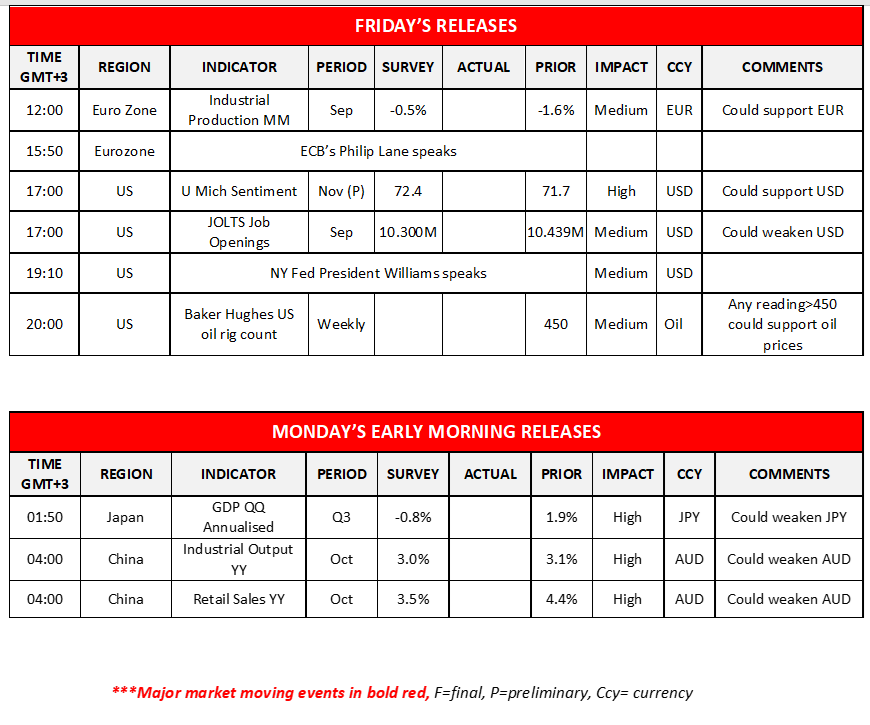
Today during the European session we note Eurozone’s industrial production for September and ECB’s Lane speech later on. In the American session, we note the release of the preliminary University of Michigan consumer sentiment for November and September’s JOLTS Job openings figure while oil traders may keep an eye out for the weekly Baker Hughes oil rig count. On the monetary front please note that NY Fed President Williams is scheduled to speak. During Monday’s Asian session we highlight the release of Japan’s GDP rates for Q3 and from China we get the industrial output growth rate as well as the retail sales rate, both being for October.
USD Index H4 Chart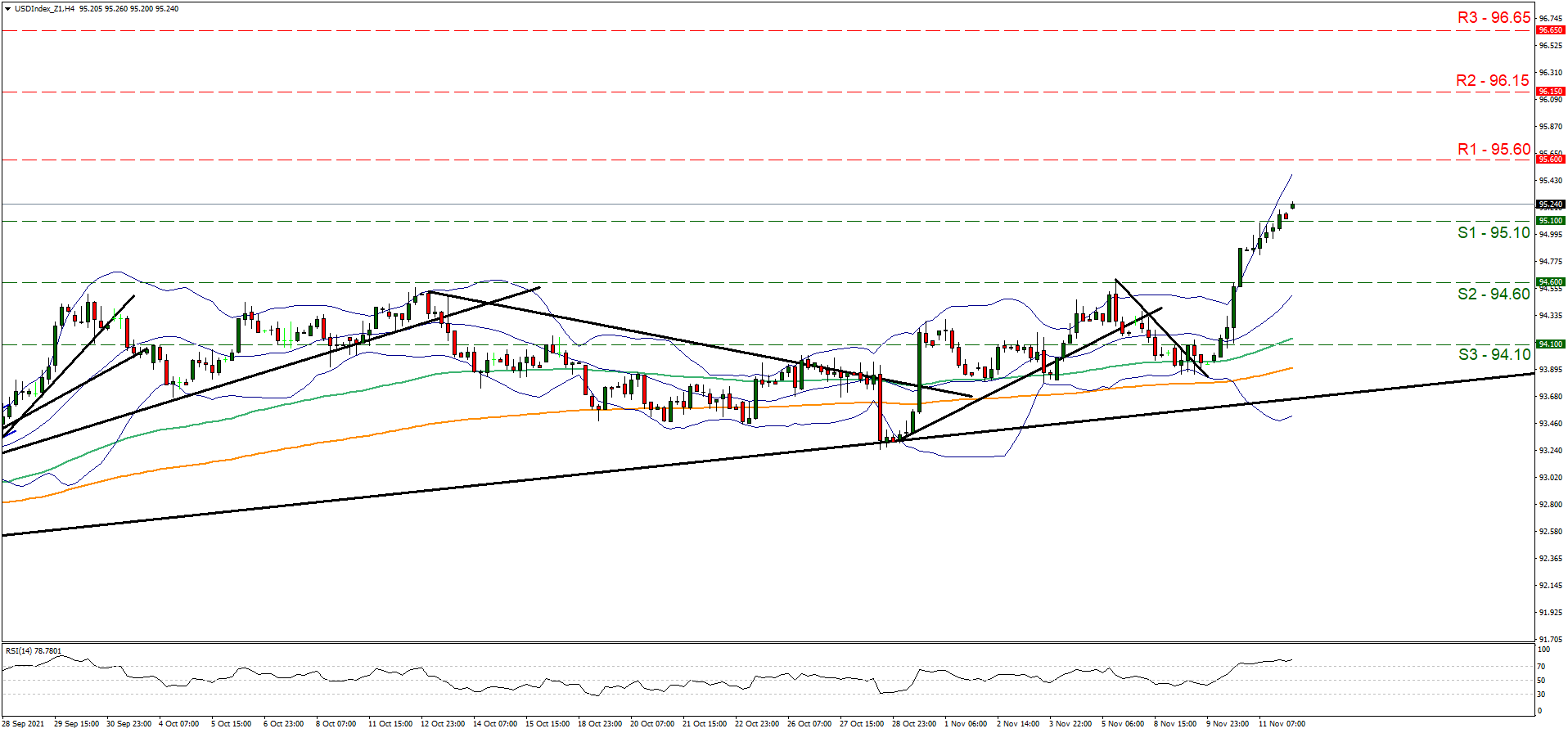
Support: 95.10 (S1), 94.60 (S2), 94.10 (S3)
Resistance: 95.60 (R1), 96.15 (R2), 96.65 (R3)
EUR/USD H4 Chart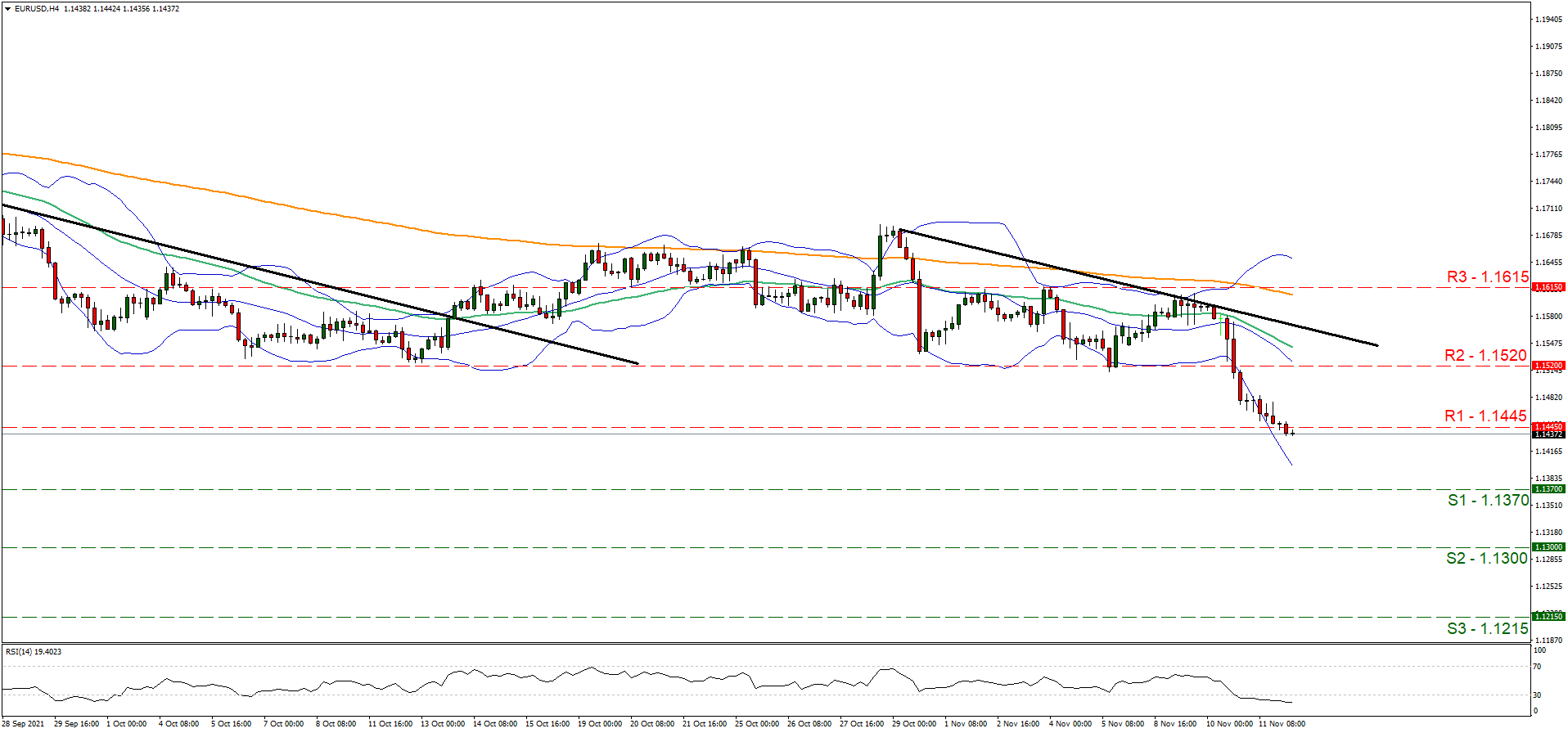
Support: 1.1370 (S1), 1.1300 (S2), 1.1215 (S3)
Resistance: 1.1445 (R1), 1.1520 (R2), 1.1615 (R3)
GBP/USD Outlook: Cable Is Consolidating Above New 11-Month Low
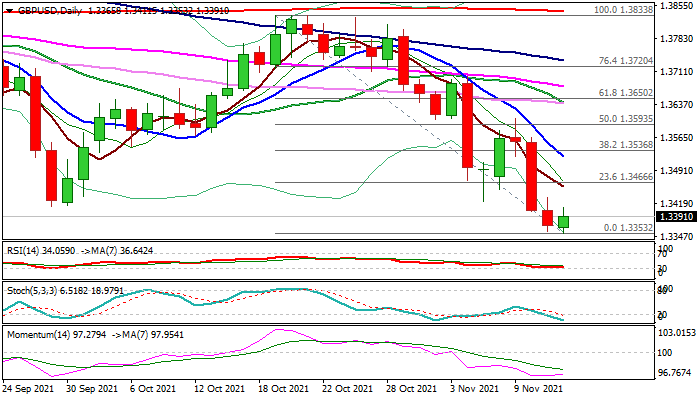
Bears are taking a breather in early Friday after hitting new 11-month low, as traders collect profits from almost 1.4% drop in past two days.
Upticks are expected to offer better levels to re-enter bearish market, as weekly studies remain in full bearish setup and the pair is on track for the third consecutive weekly fall, although bears require weekly close below former low at 1.3411 (Sep 29) to confirm negative stance and signal bearish continuation which could extend towards 1.3200 (weekly cloud base).
This also marks an initial resistance which has been cracked, bringing in focus the next barrier at 1.3466 (Fibo 23.6% of 1.3833/1.3353 fall).
Extended upticks should remain capped under 1.3525/36 pivots (falling 10DMA / Fibo 38.2% of 1.3833/1.3353) to keep bears in play, however, failure to register a weekly close below 1.3411 would delay bears for extended consolidation.
Res: 1.3433, 1.3466, 1.3500, 1.3525.
Sup: 1.3353, 1.3280, 1.3200, 1.3164.
Australian Dollar Stems Bleeding
After three losing sessions, the Australian dollar has steadied. AUD/USD is currently trading at 0.7305, up 0.17% on the day. In the Asian session, the Aussie dropped to 0.7277, its lowest level in a month.
The Australian dollar didn’t get any help from the October employment report, which was showed total employment declining and the unemployment rate rising. The economy shed 46.3 thousand jobs, marking a third straight decline. Unemployment rose to 5.2%, up sharply from 4.6%. The markets gave a thumb down to the news, sending the Australian dollar below the symbolic 0.73 level.
It’s hard to sugarcoat the dismal job numbers, but help may be on the way, with the lockdowns being lifted in Sydney and Melbourne. As the economy continues to re-open, we can expect employment data to improve.
Will RBA sound more hawkish in December?
The RBA is carefully monitoring inflation levels, which have been on an upswing and could become a major headache for the central bank. Core CPI has broken above 2%, the RBA’s lower limit of its inflation target. As well, the Melbourne Institute consumer inflation expectations for November surged to 4.6% y/y, the third straight month above the 4% level. If inflation and inflation expectations continue to climb, the RBA will find it difficult to convince the markets that inflation is transitory and may have to make a hawkish shift at its policy meeting in December.
We continue to see a disconnect between RBA guidance and market expectations, but the central bank is starting to sound more hawkish. In its quarterly summary of the economy, the RBA acknowledged that inflation has risen into its 2-3% target band, a full two years earlier than anticipated. Governor Lowe had insisted that rates would not rise before 2024, but in the summary, the bank said that a rate hike was possible in late 2023. Still, the markets remain much more hawkish and have priced in several rate hikes for 2022, with the cash rate projected to approach 1.0% by the end of next year.
AUD/USD Technical
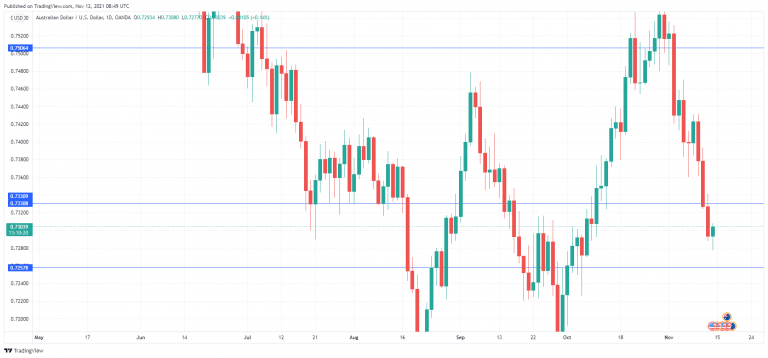
- 0.7330 is a weak resistance line and could be tested during the day. 0.7506 is next
- There are support lines at 0.7254 and 0.7154
US 100 Tests Demand Zone
The Nasdaq 100 suffers losses as high inflation dents risk appetite.
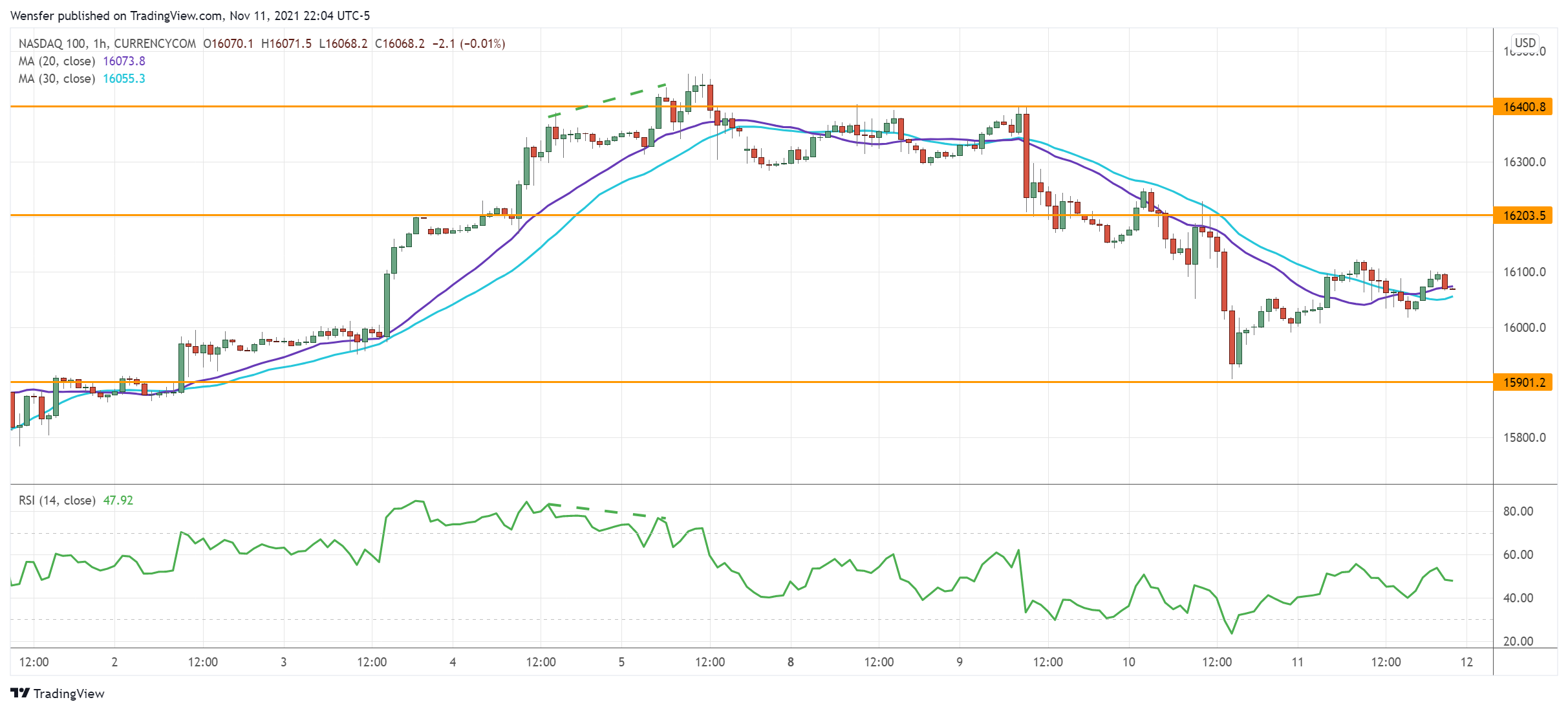
An RSI divergence showed a deceleration in the uptrend, a sign that the rally has overheated. Subsequently, a drop below 16200 has prompted leveraged buyers to exit for fear of a correction.
As the RSI inched into the oversold territory, the index saw bids near the breakout zone (15900) from earlier this month. The support-turned-resistance at 16200 is the first hurdle. Then the bulls will need to clear 16400 before the rally can resume.
AUD/USD Struggles For Support
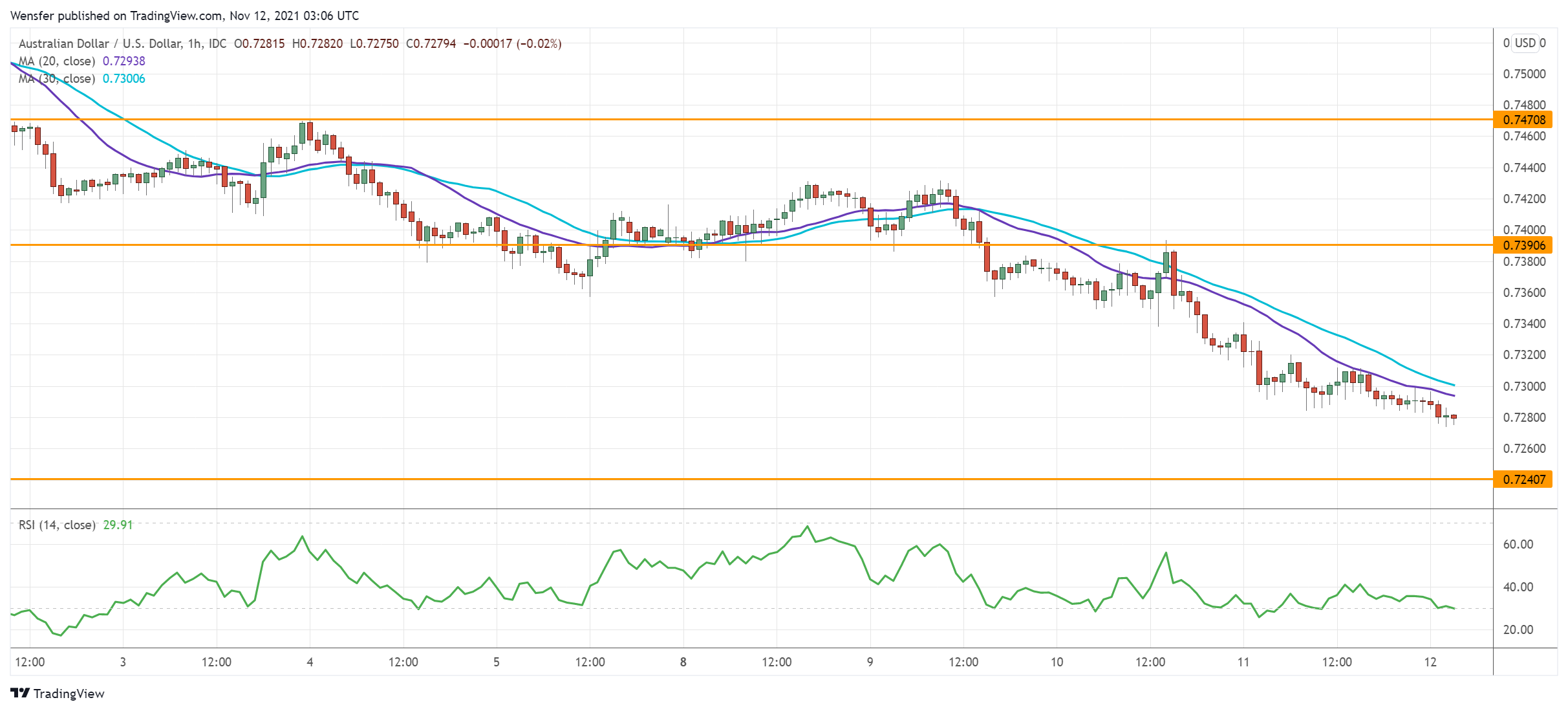
The Australian dollar came under pressure after the unemployment rate returned above 5% last month.
The sell-off continued after a brief pause over the 30-day moving average near 0.7390, turning the latter into a fresh resistance. The lack of support suggests increasingly downbeat sentiment.
The base of October’s bullish breakout at 0.7240 is the next support. The RSI’s oversold situation may cause a limited rebound from the round number at 0.7300, though it is likely to turn out to be a dead cat bounce.
GBP/USD Buried In Bearish Territory
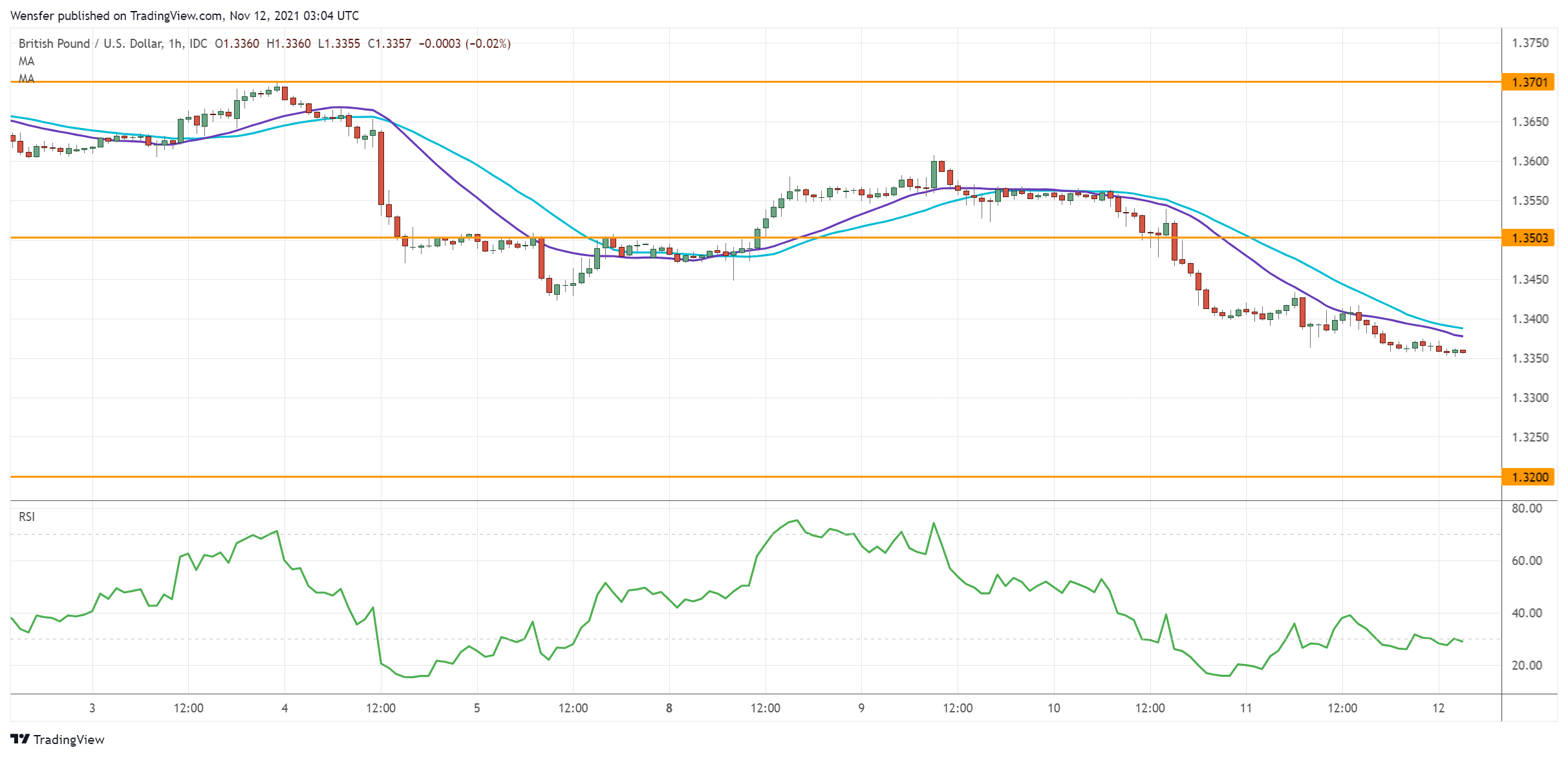
The pound continues to retreat after Britain’s growth fell short of expectations in Q3. A break below September’s low at 1.3420 has invalidated the latest rebound, putting buyers on the defensive once again.
The RSI’s double bottom in the oversold area may ease the bearish push momentarily. A bounce could be an opportunity to sell into strength.
1.3500 is the immediate resistance. On the downside, renewed momentum would drive price action towards last December’s lows around 1.3200.
The Analytical Overview Of The Main Currency Pairs
The EUR/USD currency pair
Technical indicators of the currency pair:
Prev Open: 1.1475
Prev Close: 1.1449
% chg. over the last day: -0.23%
Europe's GDP forecasts continue to fall as the economic recovery slows and the number of Covid cases reaches an all-time high. The German government's economic advisory group lowered its 2021 economic growth forecast to 2.7%. Eurozone inflation could exceed forecasts if supply chain disruptions persist.
Trading recommendations
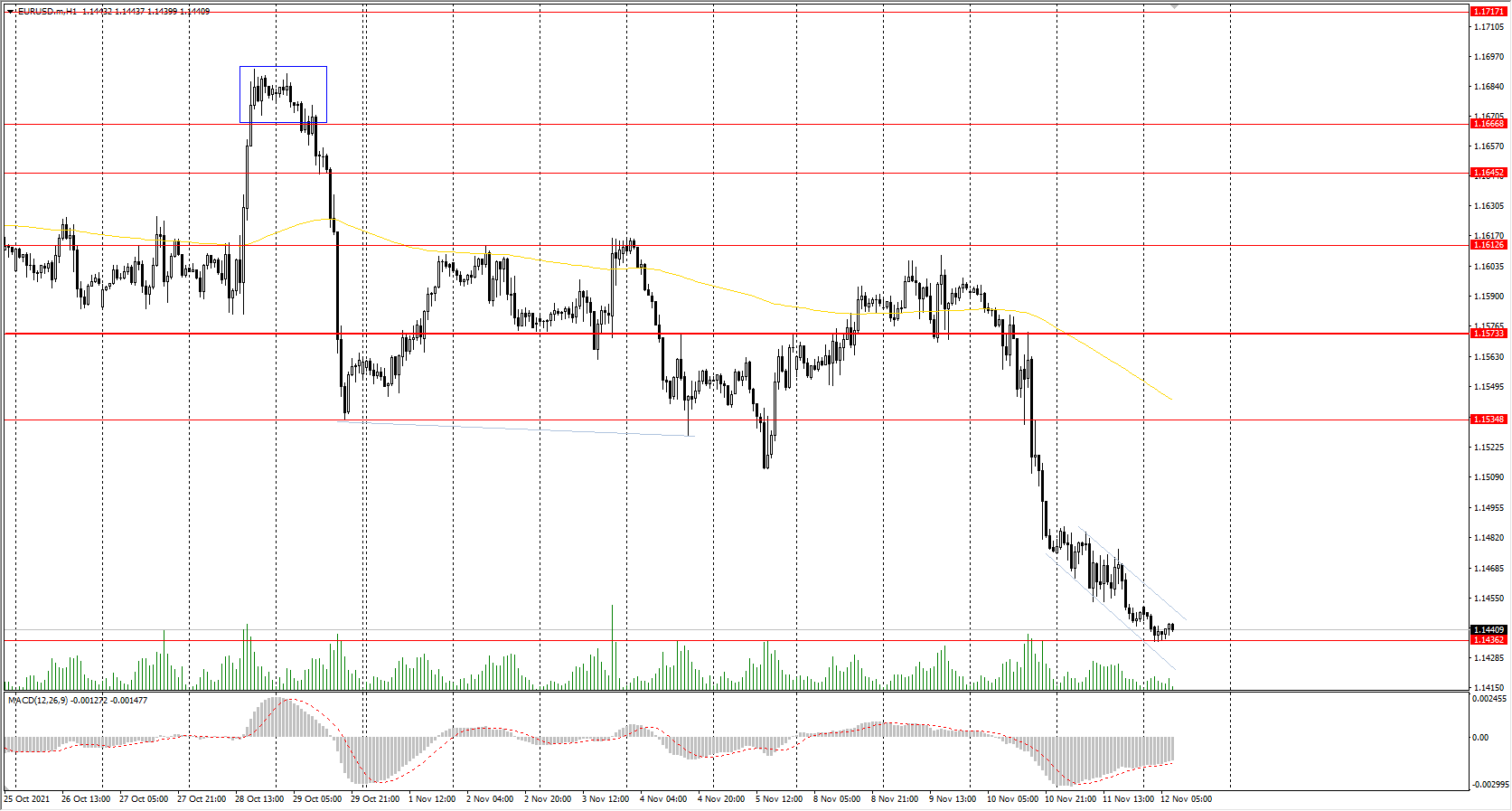
Support levels: 1.1436
Resistance levels: 1.1535, 1.1573, 1.1613, 1.1645, 1.1667, 1.1717, 1.1772
From the technical point of view, the EUR/USD on the hour time frame is bearish. The MACD indicator has become negative, but there is a divergence on the higher time frames. Under such market conditions, traders should consider sell positions from the resistance levels near the moving average, as the price has deviated strongly from the averages. Buy trades should be considered only from the support levels of the higher time frame, given the buyer’s initiative.
Alternative scenario: if the price breaks out through the 1.1573 resistance level and fixes above, the mid-term uptrend will likely resume.
News feed for 2021.11.12:
- Eurozone Industrial Production (m/m) at 12:00 (GMT+2);
- US JOLTs Job Openings (m/m) at 17:00 (GMT+2);
- US Michigan Consumer Sentiment (m/m) at 17:00 (GMT+2);
- US FOMC Member Williams’s Speech at 19:10 (GMT+2).
The GBP/USD currency pair
Technical indicators of the currency pair:
Prev Open: 1.3403
Prev Close: 1.3365
% chg. over the last day: -0.28%
UK GDP growth for the quarter was only 1.3% (forecast 1.5%, previous 5.5%). Industrial production data also showed a decline in activity. All these factors indicate a clear slowdown in the economy.
Trading recommendations
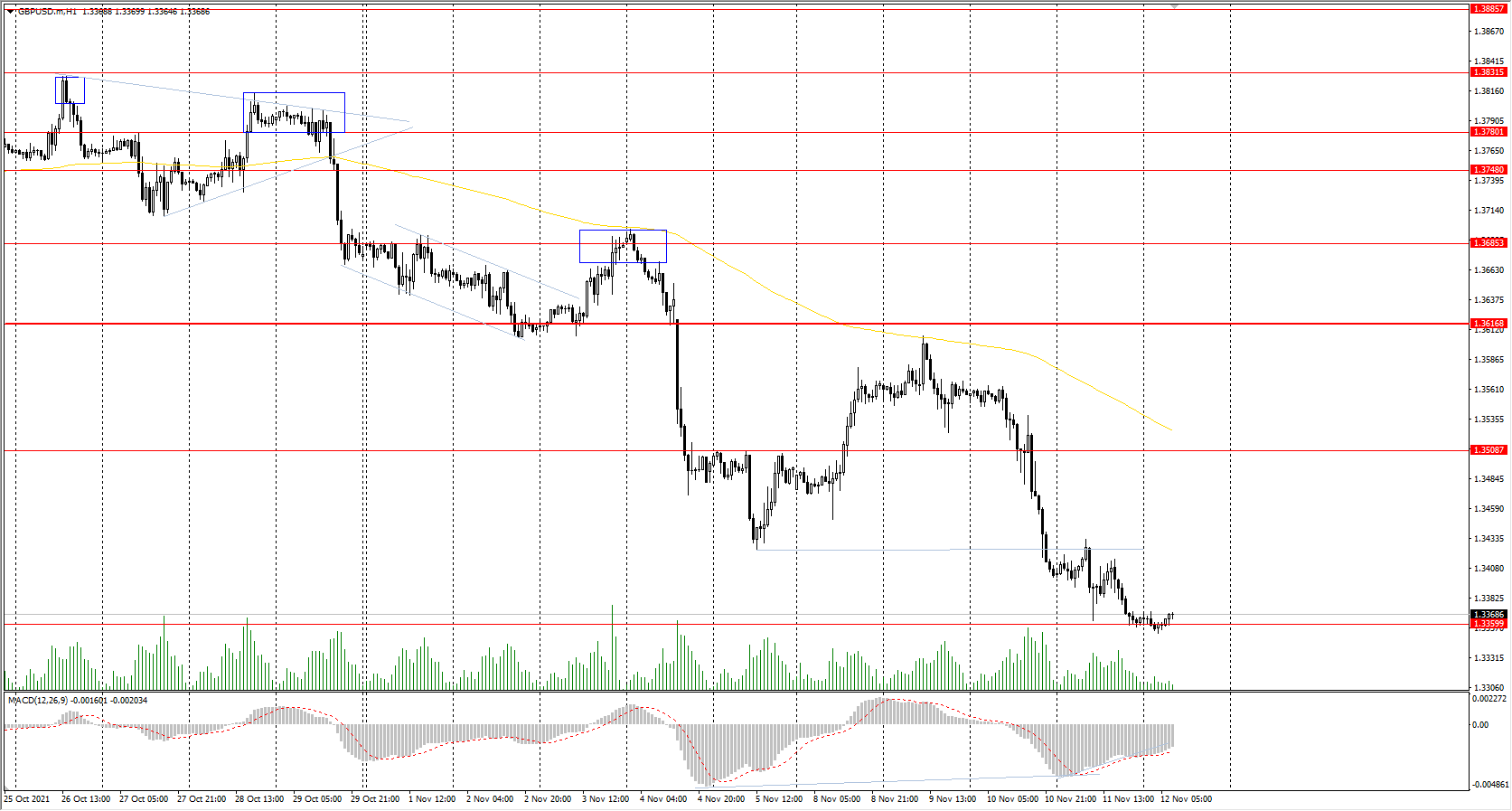
Support levels: 1.3360
Resistance levels: 1.3508, 1.3616, 1.3685, 1.3748, 1.3780, 1.3831, 1.3886
On the hourly time frame, the trend on GBP/USD is bearish. The MACD indicator has become negative, but there is a divergence on the higher time frames. Under such market conditions, traders should consider sell positions from the resistance levels near the moving average, as the price has deviated strongly from the averages. Buy trades should be considered only from the support levels of the higher time frame, given the buyer’s initiative.
Alternative scenario: if the price breaks out through the 1.3617 resistance level and consolidates above, the bullish scenario will likely resume.
The USD/JPY currency pair
Technical indicators of the currency pair:
Prev Open: 113.90
Prev Close: 114.06
% chg. over the last day: +0.14%
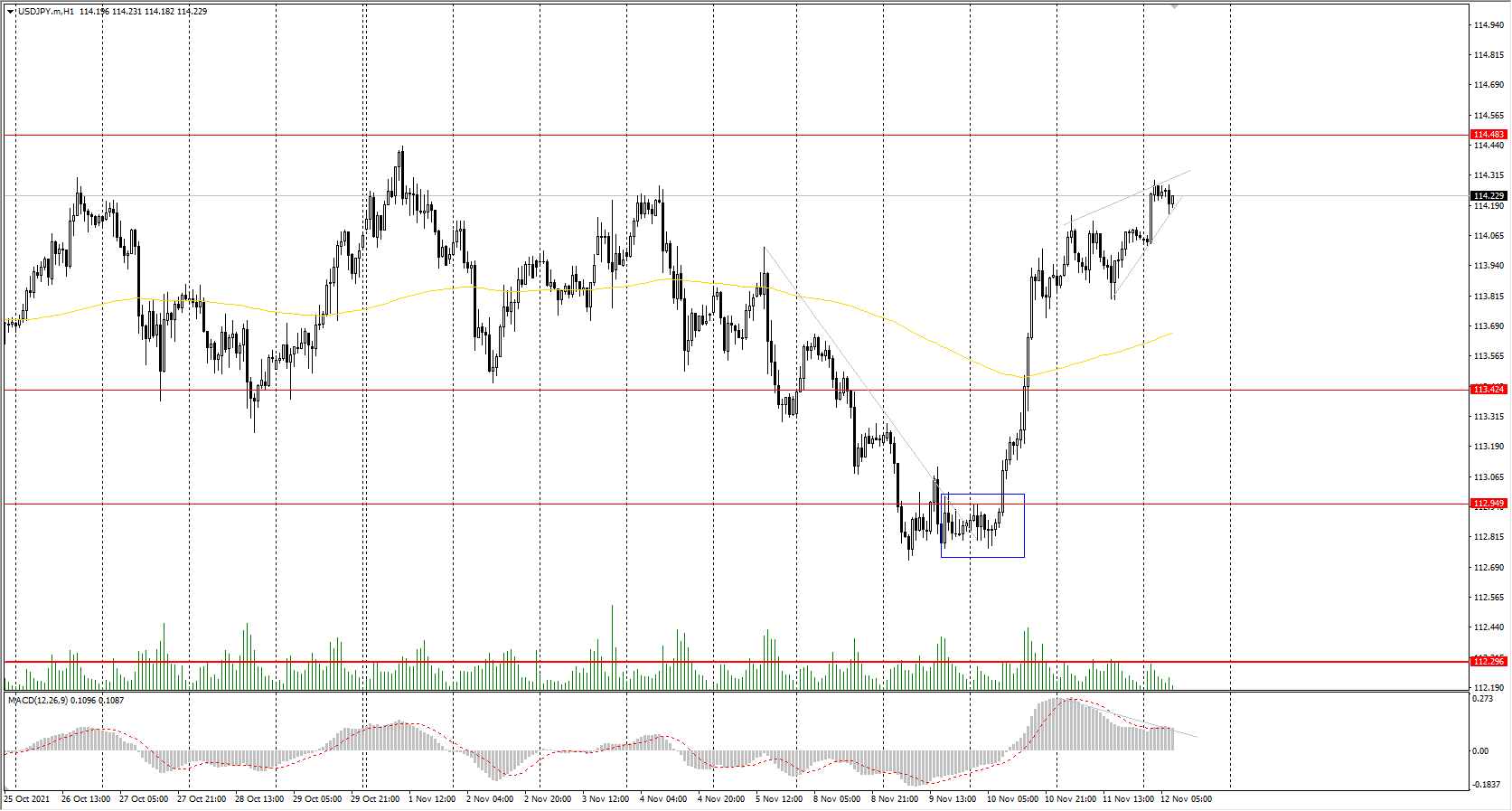
At the moment, there are no fundamental reasons for the USD/JPY quotes to go down in the mid-term, as the Bank of Japan has kept its monetary policy soft until the end of the year. At the same time, the Fed is already cutting QE and is likely to accelerate cuts due to a sharp rise in inflation. Also, Japan's new government will present a new tens of billions of dollars stimulus program in the coming days, which will eventually lead to a lower national exchange rate.
Trading recommendations
Support levels: 113.42, 112.95, 112.30, 111.53, 110.99, 110.65
Resistance levels: 114.48, 115.15
The global trend on the USD/JPY currency pair is bullish. The local trend has also changed to upward. But the MACD indicator shows a divergence, which suggests that a technical correction downwards should be expected soon. Under such market conditions, it’s better to look for buy positions from the buyers' initiative zone near the moving average. Sell positions should be considered from the resistance levels of higher time frames, given there is sellers' initiative, but only with short targets.
Alternative scenario: if the price falls below 112.30, the uptrend will likely be broken.
The USD/CAD currency pair
Technical indicators of the currency pair:
Prev Open: 1.2493
Prev Close: 1.2579
% chg. over the last day: +0.69%
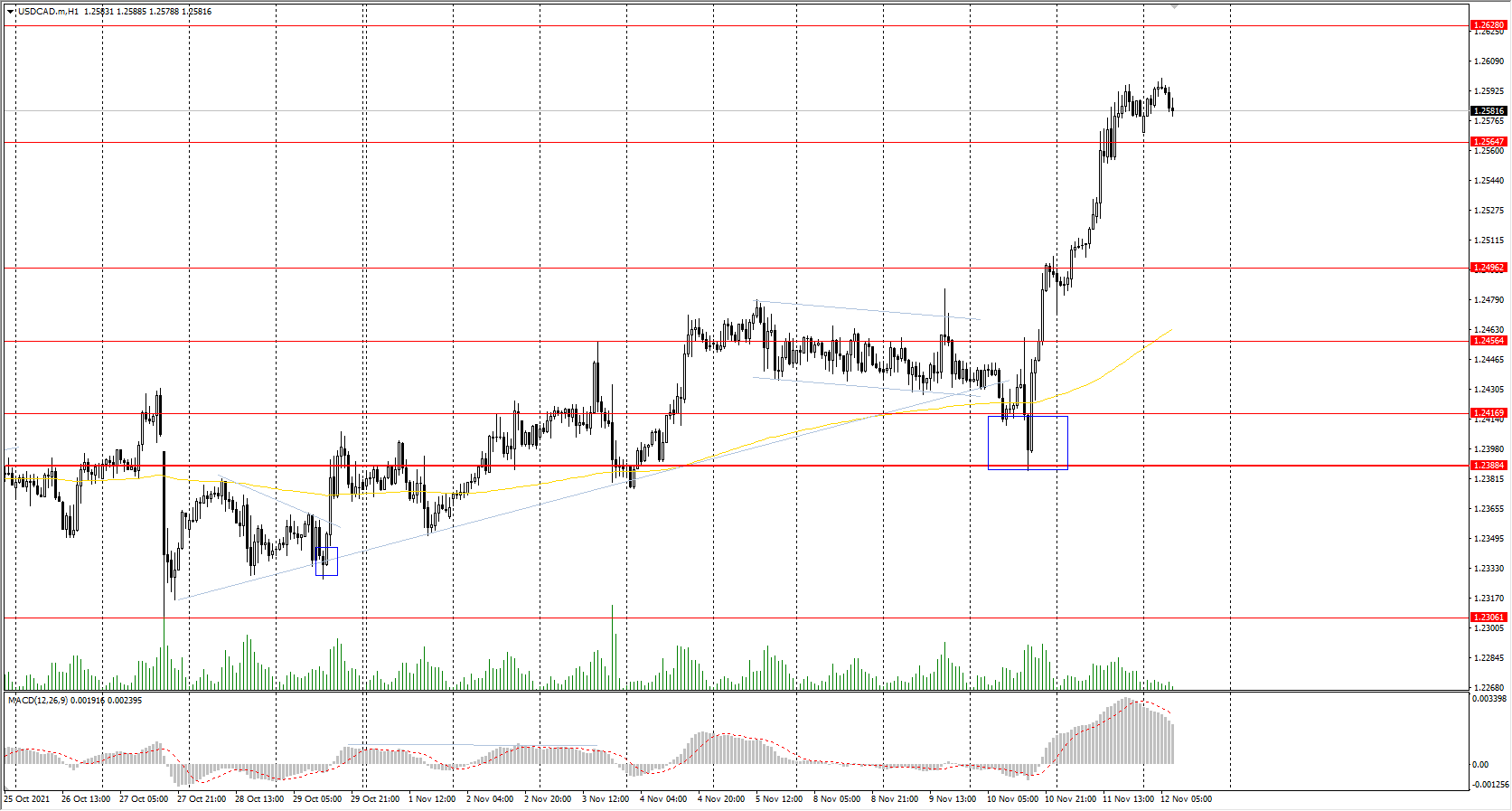
The Canadian dollar is a commodity currency, so the USD/CAD currency pair highly depends on the dynamics of the dollar index and oil prices. Against the inflation growth in the USA, the dollar index is increasing, while oil quotes are decreasing. As a result, the USD/CAD are showing steady growth.
Trading recommendations
Support levels: 1.2564, 1.2496, 1.2456, 1.2417, 1.2388
Resistance levels: 1.2628, 1.2729, 1.2774
From a technical point of view, the trend of the USD/CAD currency is bullish. The MACD indicator is in the positive zone, but there are signs of overbought. Under such market conditions, it is better to look for buy trades from the support levels near the moving average, as the price has deviated strongly from its averages. Sell deals should be considered from the resistance levels of the higher time frame.
Alternative scenario: if the price breaks down through the 1.2388 support level and fixes below, the downtrend will likely resume.