

Sample Category Title
USD/JPY Daily Outlook
Daily Pivots: (S1) 113.79; (P) 114.05; (R1) 114.41; More...
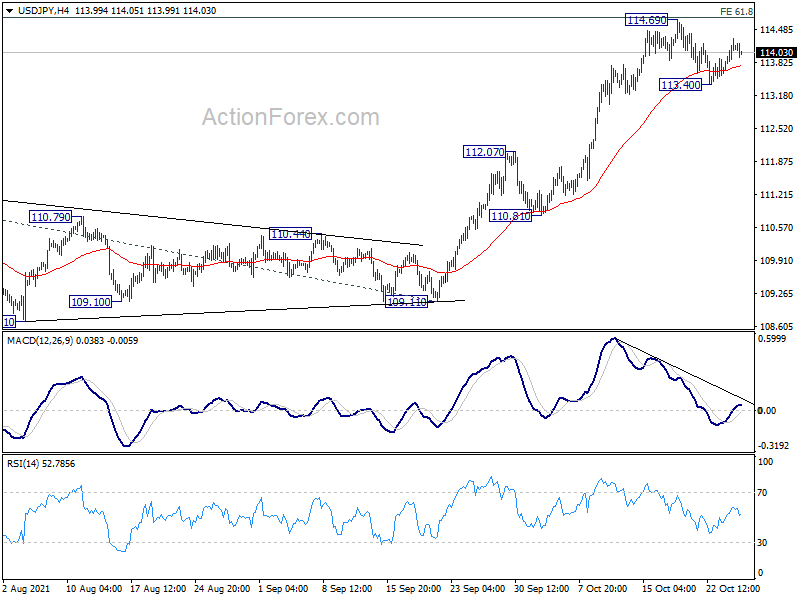
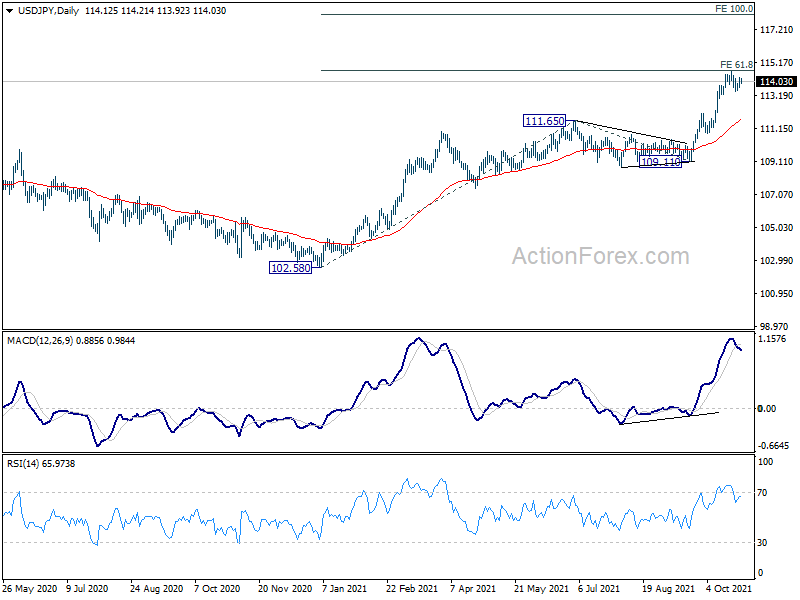
USD/JPY is staying in consolidation from 114.69 and intraday bias remains neutral. On the upside, firm break of 114.69 will resume the larger up trend to 100% projection of 102.58 to 111.65 from 109.11 at 118.18 next. In case of another fall as correction extends, should be contained above 112.07 resistance turned support to bring rise resumption.
In the bigger picture, corrective decline from 118.65 (2016 high) should have completed at 101.18 already. Rise from the 102.58 is seen as the third leg of the up trend from 101.18. Next target is 114.54 resistance and then 118.65 high. This will now be the preferred case as long as 109.11 support hold, even in case of deep pull back.
AUD/USD Daily Report
Daily Pivots: (S1) 0.7483; (P) 0.7504; (R1) 0.7524; More...
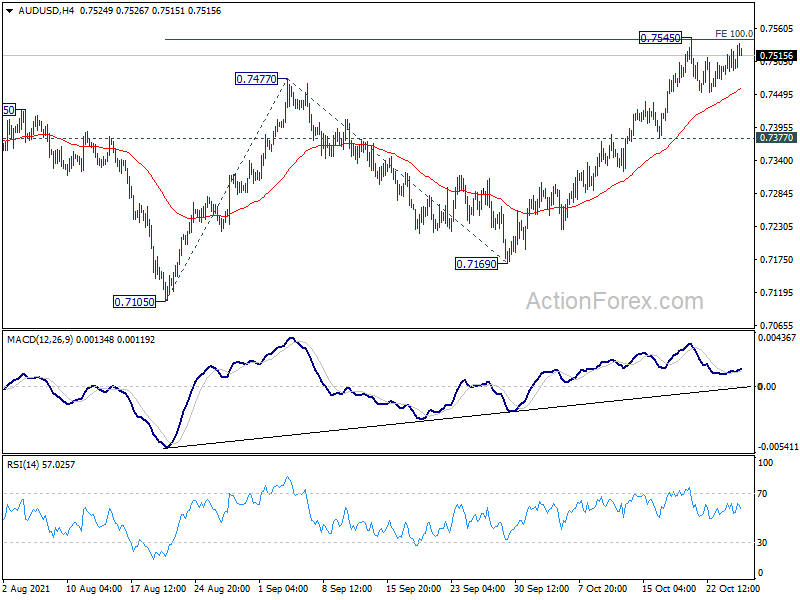
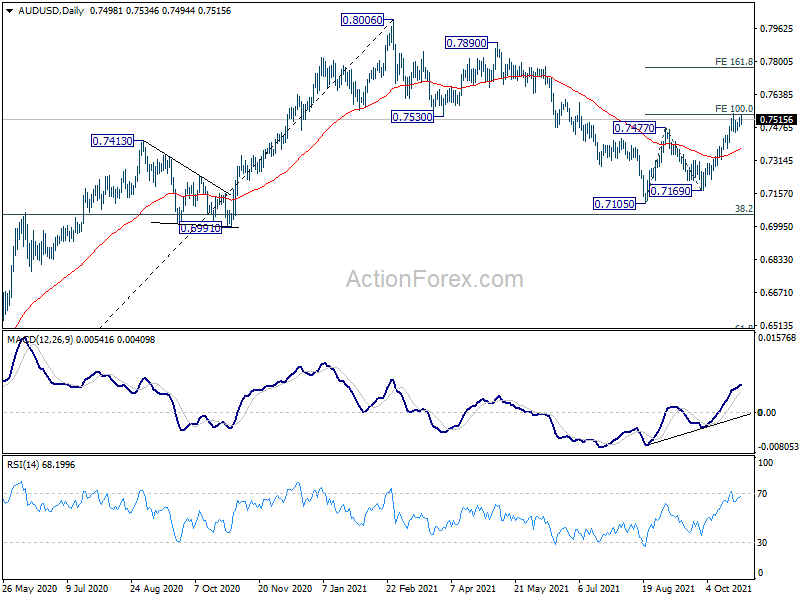
Intraday bias in AUD/USD remains neutral as consolidation from 0.7545 temporary top is still extending. In case of another retreat, downside should be contained by 0.7377 support to bring another rally. On the upside, break of 0.7454 will resume the rise from 0.7105 to 161.8% projection of 0.7105 to 0.7477 from 0.7169 at 0.7771.
In the bigger picture, with 0.6991 cluster support (38.2% retracement of 0.5506 to 0.8006 at 0.7051) intact, we're seeing price action from 0.8006 as a correction only. That is, up trend from 0.5506 low would resume after the correction completes. In that case, main focus will be 0.8135 key resistance (2018 high). Sustained break there will carry larger bullish implications. However, sustained break of 0.6991 will argue that the whole medium term trend has indeed reversed.
USD/CAD Daily Outlook
Daily Pivots: (S1) 1.2360; (P) 1.2379; (R1) 1.2407; More...
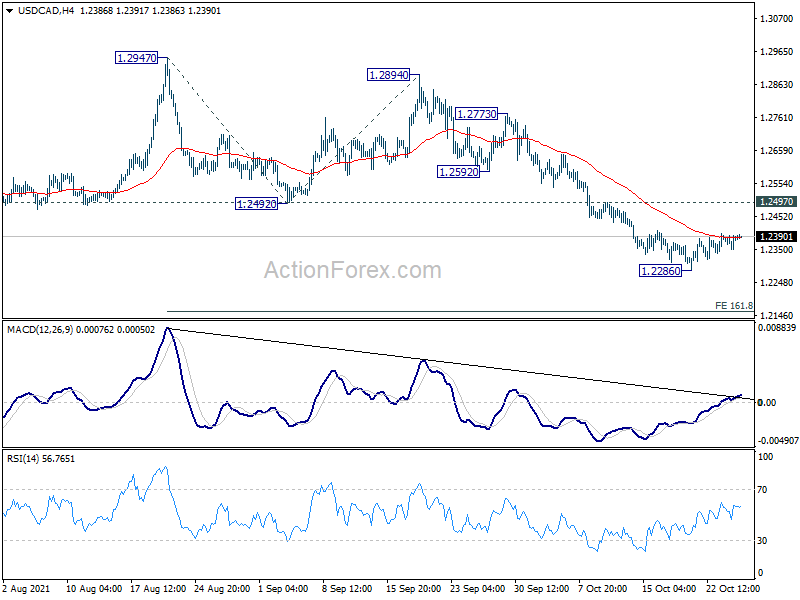
Intraday bias in USD/CAD remains neutral at this point, as consolidation form 1.2286 temporary low is extending. Upside of recovery should be limited by 1.2497 resistance to bring fall resumption. On the downside, break of 1.2286 will resume the fall from 1.2947 to 161.8% projection of 1.2947 to 1.2492 from 1.2894 at 1.2158 next.
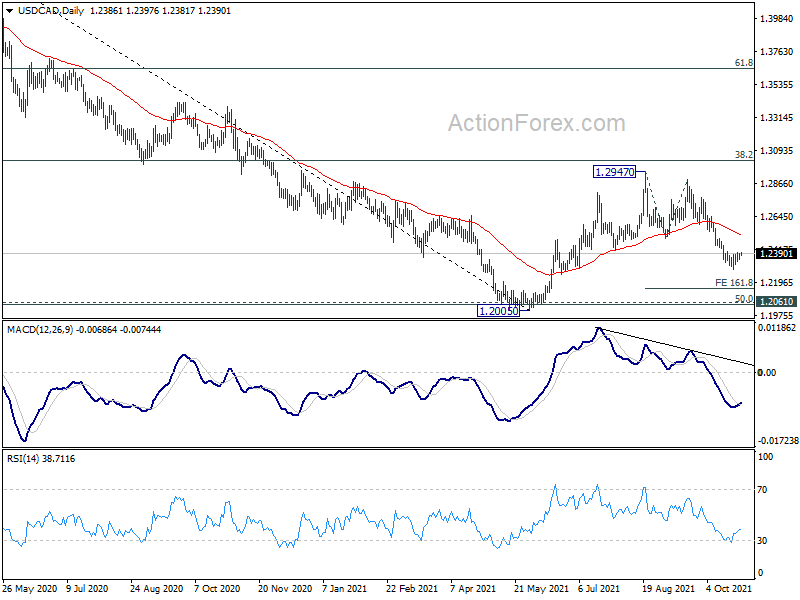
In the bigger picture, the rejection by 38.2% retracement of 1.4667 to 1.2005 at 1.3022 argues that rebound from 1.2005 is merely a corrective rise, which is complete. More importantly, the down trend from 1.4667 (2020 high) is not over yet. Sustained break of 1.2005 will extend the down trend to next long term fibonacci level at 61.8% retracement of 0.9406 to 1.4689 at 1.1424. In any case, outlook will not turn bullish as long as 1.2947 resistance holds.
AUD Mildly Higher after CPI, CAD Consolidates as BoC Awaited
Australian Dollar rises broadly today with support from strong inflation data. But upside is capped by mildly negative investment sentiment in Asia. While DOW and S&P 500 made new records overnight, there is no follow through in risk-on sentiment. Overall currency markets are mixed, with Yen as second strongest so far. Dollar is the weakest followed by Canadian Dollar. The Loonie is looking forward to BoC tapering and forward guidance.
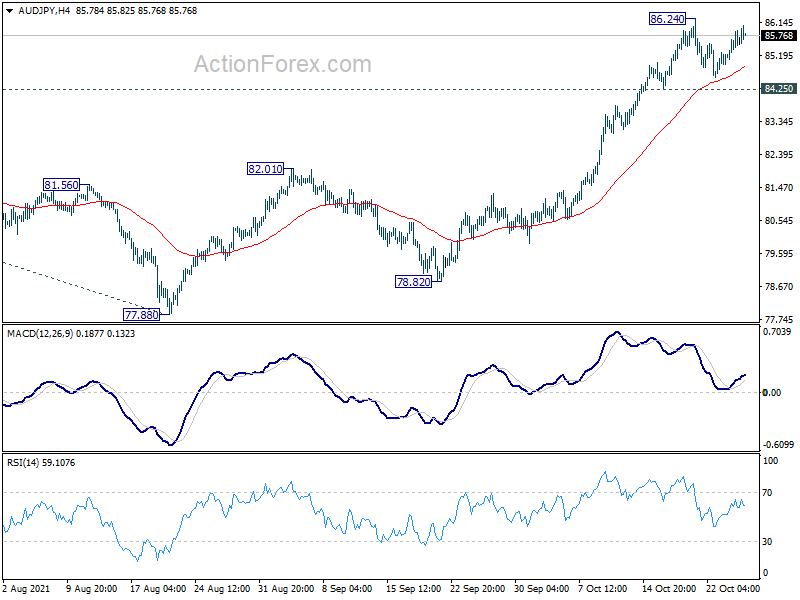
Technically, while Aussie rises, both AUD/USD and AUD/JPY are stuck in near term range. Focus will be on 0.7545 temporary top in AUD/USD and 86.24 in AUD/JPY. Firm break of these levels together should confirm underlying rally in Aussie, that could be seen elsewhere, in particular against Euro.
In Asia, at the time of writing, Nikkei is down -0.41%. Hong Kong HSI is down -1.46%. China Shanghai SSE is down -0.90%. Singapore Strait Times is up 0.61%. Japan 10-year JGB yield is down -0.0004 at 0.104. Overnight, DOW rose 0.04%. S&P 500 rose 0.18%. NASDAQ rose 0.06%. 10-year yield dropped -0.016 to 1.619.
Australia trimmed mean and weighted median CPI rose to highest in over 5 yrs
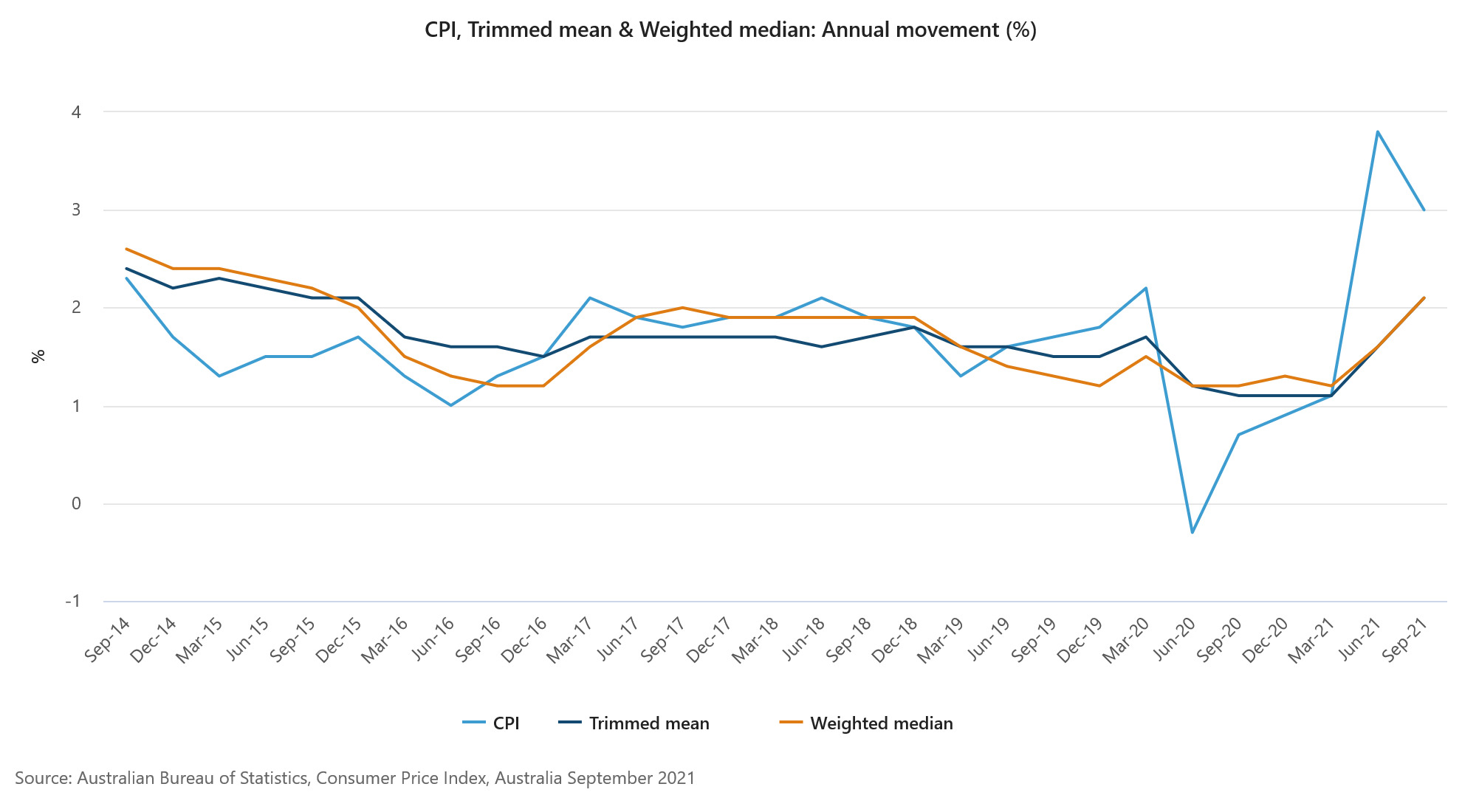
Australia CPI rose 0.8% qoq in Q3, matched expectations. Over the 12-month period, headline CPI slowed from 3.8% yoy to 3.0% yoy. Trimmed mean CPI jumped from 1.6% yoy to 2.1% yoy. Weighted median CPI rose from 1.6% yoy to 2.1% yoy too. Both trimmed mean and weighted mean CPI readings were highest in over five years, and the first annual movements above 2% since September 2015 quarter.
Head of Prices Statistics at the ABS, Michelle Marquardt said the most significant price rises in the September quarter were new dwellings (+3.3 per cent) and automotive fuel (+7.1 per cent).
New Zealand reports record imports and trade deficit in Sep
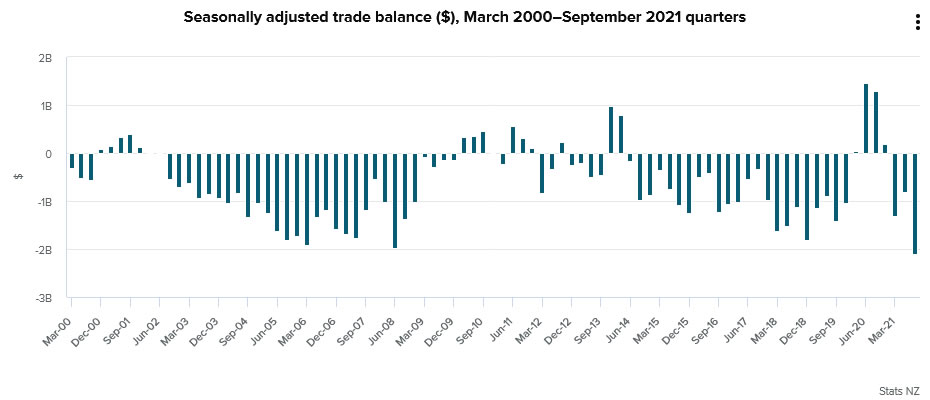
New Zealand goods exports rose 10% yoy or NZD 387B to NZD 4.4B in September. Goods imports rose 30% yoy or NZD 1.5B to NZD 6.6B. Trade deficit came in at NZD -2.2B, versus expectation of NZD -0.8B. The set of data marked the third successive month of record imports, resulting in a record trade deficit.
Exports to China rose 25%, to Australia dropped -8.4%, to US rose 23%, to EU rose -10%, and to Japan dropped -5.5%. Imports from China rose 48%, from EU rose 29%, from Australia rose 28%, from US dropped -2.1%, from Japan rose 41%.
"These three consecutive record months for imports are a reflection of both the higher prices New Zealanders are paying for consumer goods, and strong demand for capital goods such as machinery used in construction, and passenger vehicles," international trade manager Alasdair Allen said.
New Zealand ANZ business confidence dropped to 13.4 in Oct
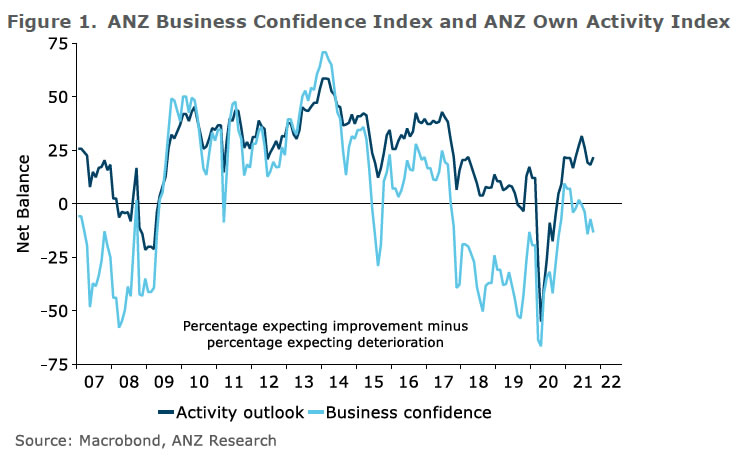
New Zealand ANZ Business Confidence was finalized at -13.4 in October, down from September's -7.2. Own Activity Outlook rose from prior month's 18.2 to 21.7. Export intentions rose from 7.4 to 8.6. Investment intentions rose from 9.2 to 13.8. Employment intentions dropped from 14.1 to 10.9. Cost expectations rose from 84.2 to 87.2. Pricing expectations rose from 58.1 to 65.5. Inflation expectations rose further from 3.02 to 3.45.
ANZ said: "Despite living week to week to some extent, firms appear to be getting on with it as best they can. There are clearly challenges, with costs extremely high and profits expected to fall, but more positively, activity expectations, investment intentions and employment intentions are holding up. The COVID situation remains unpredictable, however, and we'll be watching closely for any evidence of that uncertainty derailing plans."
BoC to taper again, CAD/JPY in consolidation but stays bullish
BoC is widely expected to continue tapering today, by announcing to lower weekly asset purchases by CAD 2B to CAD 1B. Also, the central bank would set the plan to end QE in December. Markets are currently pricing in three rate hikes in 2022, and would be eager to see any adjustment in the forward guidance to affirm such expectations. But BoC would probably hold their cards until December, and just reiterate that policy rate would stay at "the effective lower bound until economic slack is absorbed so that the 2 percent inflation target is sustainably achieved".
Some previews on BoC:
- BoC Preview – Further QE Tapering
- Bank of Canada Preview: When is BoC Looking to Raise Rates?
- Bank Of Canada Meeting: Tapering And Rate Hike Timeline On The Agenda
- Forward Guidance: BoC to Ease Off the Monetary Policy Accelerator
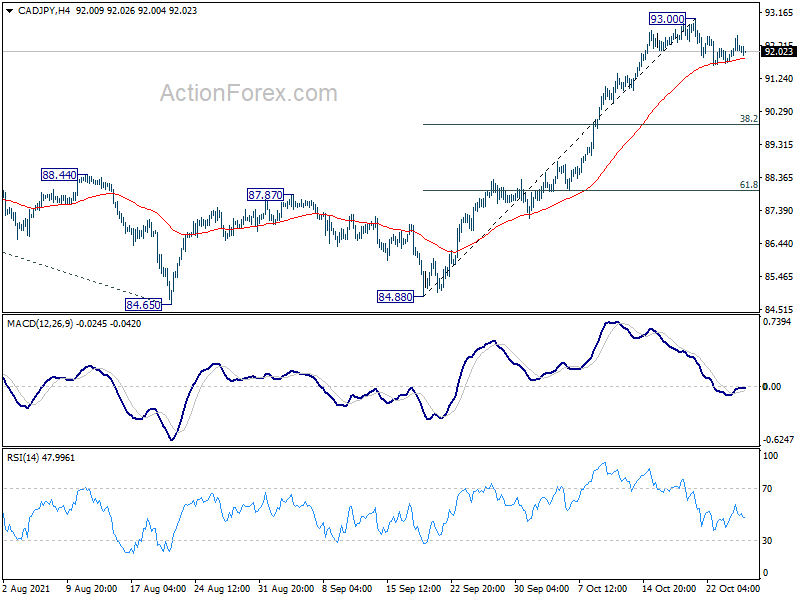
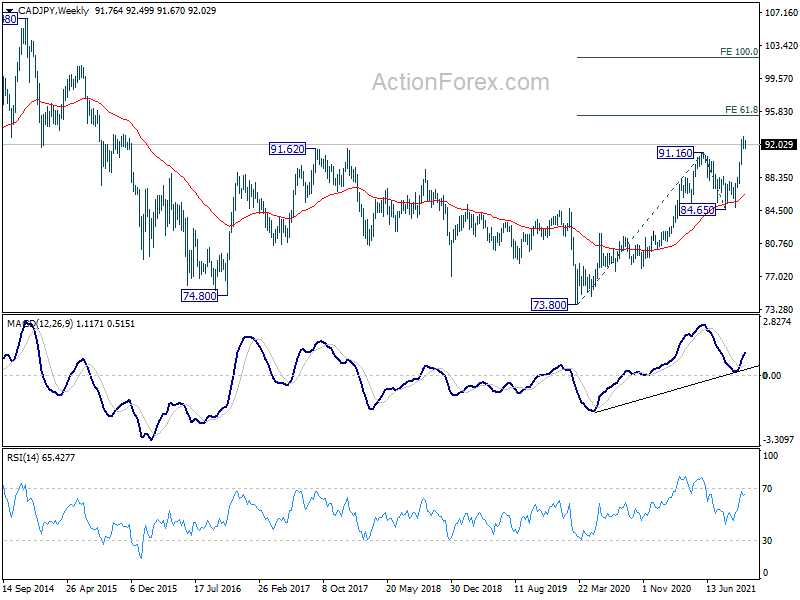
CAD/JPY turned into sideway consolidations after hitting 93.00 last week, but overall bullish outlook is unchanged. Deeper pull back cannot be ruled out. But downside should be contained by 38.2% retracement of 84.88 to 93.00 at 89.89 to bring rebound. Meanwhile, break of 93.00 will resume larger up trend from 73.80. Next target is 61.8% projection of 73.80 to 91.16 from 84.65 at 95.37.
Looking ahead
Germany will release Gfk consumer sentiment in European session. Eurozone will release M3 money supply. Swiss will release Credit Suisse economic expectations.
Later in the day, US will release durable goods orders, trade balance and wholesale inventories. Canada will release BoC rate decisions.
USD/CAD Daily Outlook
Daily Pivots: (S1) 1.2360; (P) 1.2379; (R1) 1.2407; More...
Intraday bias in USD/CAD remains neutral at this point, as consolidation form 1.2286 temporary low is extending. Upside of recovery should be limited by 1.2497 resistance to bring fall resumption. On the downside, break of 1.2286 will resume the fall from 1.2947 to 161.8% projection of 1.2947 to 1.2492 from 1.2894 at 1.2158 next.
In the bigger picture, the rejection by 38.2% retracement of 1.4667 to 1.2005 at 1.3022 argues that rebound from 1.2005 is merely a corrective rise, which is complete. More importantly, the down trend from 1.4667 (2020 high) is not over yet. Sustained break of 1.2005 will extend the down trend to next long term fibonacci level at 61.8% retracement of 0.9406 to 1.4689 at 1.1424. In any case, outlook will not turn bullish as long as 1.2947 resistance holds.
Economic Indicators Update
| GMT | Ccy | Events | Actual | Forecast | Previous | Revised |
|---|---|---|---|---|---|---|
| 21:45 | NZD | Trade Balance (NZD) Sep | -2171M | -762M | -2144M | -2139M |
| 23:01 | GBP | BRC Shop Price Index Y/Y Sep | -0.40% | -0.50% | ||
| 0:00 | NZD | ANZ Business Confidence Oct | -13.4 | -8.6 | ||
| 0:30 | AUD | CPI Q/Q Q3 | 0.80% | 0.80% | 0.80% | |
| 0:30 | AUD | CPI Y/Y Q3 | 3.00% | 3.80% | 3.80% | |
| 0:30 | AUD | RBA Trimmed Mean CPI Q/Q Q3 | 0.70% | 0.50% | 0.50% | |
| 0:30 | AUD | RBA Trimmed Mean CPI Y/Y Q3 | 2.10% | 1.60% | 1.60% | |
| 6:00 | EUR | Germany Gfk Consumer Confidence Nov | -0.4 | 0.3 | ||
| 8:00 | CHF | Credit Suisse Economic Expectations Oct | 25.7 | |||
| 8:00 | EUR | Eurozone M3 Money Supply Y/Y Sep | 7.70% | 7.90% | ||
| 12:30 | USD | Durable Goods Orders Sep | -1.10% | 1.80% | ||
| 12:30 | USD | Durable Goods Orders ex Transportation Sep | 0.40% | 0.30% | ||
| 12:30 | USD | Goods Trade Balance (USD) Sep P | -88.2B | -87.6B | ||
| 12:30 | USD | Wholesale Inventories Sep P | 1.00% | 1.20% | ||
| 14:00 | CAD | BoC Interest Rate Decision | 0.25% | 0.25% | ||
| 14:30 | USD | Crude Oil Inventories | -0.4M | |||
| 15:00 | CAD | BoC Press Conference |
BoC to taper again, CAD/JPY in consolidation but stays bullish
BoC is widely expected to continue tapering today, by announcing to lower weekly asset purchases by CAD 2B to CAD 1B. Also, the central bank would set the plan to end QE in December. Markets are currently pricing in three rate hikes in 2022, and would be eager to see any adjustment in the forward guidance to affirm such expectations. But BoC would probably hold their cards until December, and just reiterate that policy rate would stay at "the effective lower bound until economic slack is absorbed so that the 2 percent inflation target is sustainably achieved".
Some previews on BoC:
- BoC Preview – Further QE Tapering
- Bank of Canada Preview: When is BoC Looking to Raise Rates?
- Bank Of Canada Meeting: Tapering And Rate Hike Timeline On The Agenda
- Forward Guidance: BoC to Ease Off the Monetary Policy Accelerator
CAD/JPY turned into sideway consolidations after hitting 93.00 last week, but overall bullish outlook is unchanged. Deeper pull back cannot be ruled out. But downside should be contained by 38.2% retracement of 84.88 to 93.00 at 89.89 to bring rebound. Meanwhile, break of 93.00 will resume larger up trend from 73.80. Next target is 61.8% projection of 73.80 to 91.16 from 84.65 at 95.37.
Australia trimmed mean and weighted median CPI rose to highest in over 5 yrs
Australia CPI rose 0.8% qoq in Q3, matched expectations. Over the 12-month period, headline CPI slowed from 3.8% yoy to 3.0% yoy. Trimmed mean CPI jumped from 1.6% yoy to 2.1% yoy. Weighted median CPI rose from 1.6% yoy to 2.1% yoy too. Both trimmed mean and weighted mean CPI readings were highest in over five years, and the first annual movements above 2% since September 2015 quarter.
Head of Prices Statistics at the ABS, Michelle Marquardt said the most significant price rises in the September quarter were new dwellings (+3.3 per cent) and automotive fuel (+7.1 per cent).
Australia Q3 CPI – As Expected but a Surprising Bump in Core Inflation
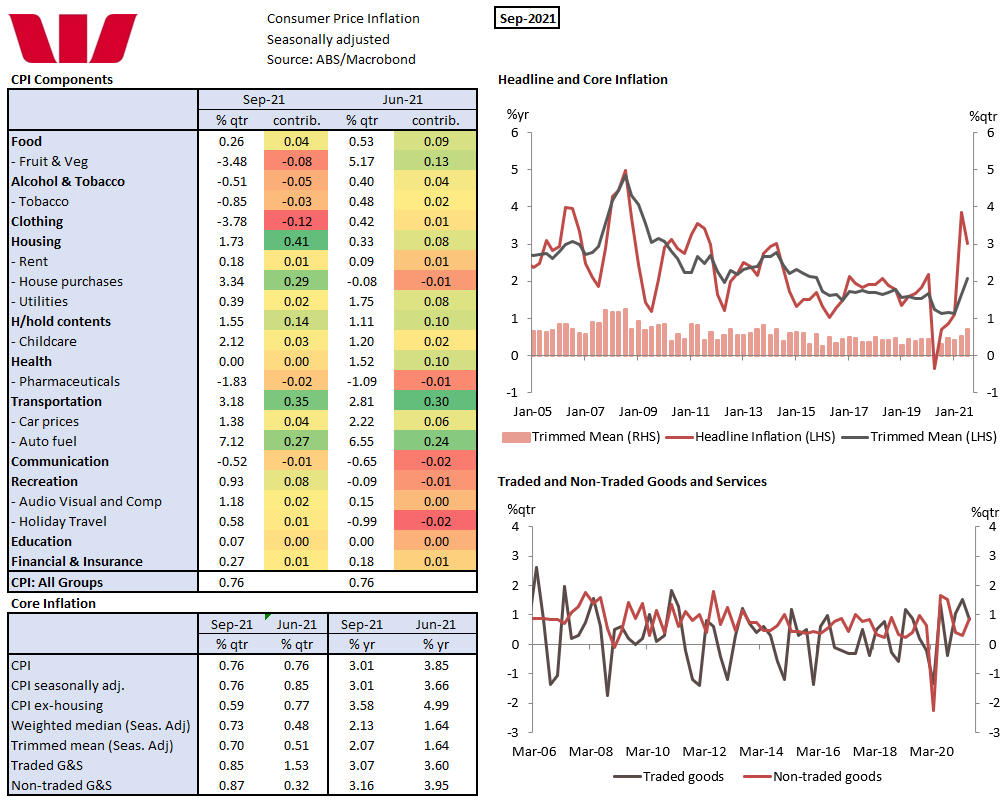
Headline CPI 0.8%qtr/3.0%yr; trimmed mean 0.70%qtr/2.1%yr, weighted median 0.73%qtr/2.1%yr.
Inflation came as expected with the September quarter CPI lifting 0.8% vs. Westpac and market forecast of 0.8%. At two decimal places it was 0.76% so a soft 0.8%.
The annual pace eased back from 3.8%, the fastest pace in 12 years, to 3.0%. As we noted in the June CPI update, the acceleration to almost 4%yr was due to base effects of the negative prints in 2020 due to government grants and subsidies. As such, this was expected to be a transitory blip in inflation.
The big surprise was the 0.7% rise in the trimmed mean taking the annual pace to 2.1%yr. This is the first time the trimmed mean inflation has been greater than 2.0%yr since September 2015. At two decimal places the trimmed mean rose 0.70%; for note the weighted median gained 0.73% for 2.1%yr.
The ABS reports that most significant price rises were for new dwelling purchase by owner-occupiers 3.3% (greater than Westpac’s forecast for 1.8%) and auto fuel 7.1% (Westpac forecast 5.9%).
In our preview we argued there was a high degree of uncertainty about dwelling prices as the current level of dwelling prices in the CPI are 4.7% below where they could be without the application of the HomeBuilder (and state government) grants. Our forecast for a 1.8% rise in dwelling prices incorporated a 1.5% rise in the underlying price paid by consumers with a smaller share of sales being supported by grants. In the end the ABS reported that the underlying prices paid rose 3.0% so most of the gain was fundamental with only a small proportion due the unwinding of the grants. This means the wedge between the prices paid and prices reported in the CPI is still a significant 3.7%.
On the low side of expectations for the quarter was alcohol & tobacco (-1.5% vs 0.9%), clothing & footwear (-3.8% vs 0.2%) and car prices (1.4% vs 2.4%).
The ABS reports that strong demand and supply disruptions have put upward pressure on prices for durable goods such as furniture and motor vehicles since the start of the COVID-19 pandemic. On the high side of expectations, as well as the already note dwelling prices (3.3% vs 1.8%) and auto fuel (7.1% vs 5.9%) there was audio visual & computing (1.2% vs 0.3%) and household contents & services (1.6% vs 0.7%). We will break down the granular data in our deeper dive to see if there are any signs this may be more than just a transitory bounce in prices post the re-opening of the economy.
The September quarter CPI was still under the push/pull influence of changing government support, subsidies and grants even if it has significantly fade. Now we are starting to see signs of prices adjust as the economy reopens just as there are global supply chain disruptions and local labour shortages. We are currently looking for core inflation to peak at just under 3% in late 2022 before easing back though 2023 and thus will be looking for signs in the September quarter CPI that we have to adjust our thinking.
New Zealand ANZ business confidence dropped to 13.4 in Oct
New Zealand ANZ Business Confidence was finalized at -13.4 in October, down from September's -7.2. Own Activity Outlook rose from prior month's 18.2 to 21.7. Export intentions rose from 7.4 to 8.6. Investment intentions rose from 9.2 to 13.8. Employment intentions dropped from 14.1 to 10.9. Cost expectations rose from 84.2 to 87.2. Pricing expectations rose from 58.1 to 65.5. Inflation expectations rose further from 3.02 to 3.45.
ANZ said: "Despite living week to week to some extent, firms appear to be getting on with it as best they can. There are clearly challenges, with costs extremely high and profits expected to fall, but more positively, activity expectations, investment intentions and employment intentions are holding up. The COVID situation remains unpredictable, however, and we'll be watching closely for any evidence of that uncertainty derailing plans."
New Zealand reports record imports and trade deficit in Sep
New Zealand goods exports rose 10% yoy or NZD 387B to NZD 4.4B in September. Goods imports rose 30% yoy or NZD 1.5B to NZD 6.6B. Trade deficit came in at NZD -2.2B, versus expectation of NZD -0.8B. The set of data marked the third successive month of record imports, resulting in a record trade deficit.
Exports to China rose 25%, to Australia dropped -8.4%, to US rose 23%, to EU rose -10%, and to Japan dropped -5.5%. Imports from China rose 48%, from EU rose 29%, from Australia rose 28%, from US dropped -2.1%, from Japan rose 41%.
"These three consecutive record months for imports are a reflection of both the higher prices New Zealanders are paying for consumer goods, and strong demand for capital goods such as machinery used in construction, and passenger vehicles," international trade manager Alasdair Allen said.
The Technology Currency
We often talk about commodity currencies and low-yielding currencies but the technology currency is rarely touted. In mid US session, AUD and CHF are the only gaining currencies vs USD, while JPY and EUR are the weakest. US new home sales shot up 14% in Sep, while DAX and Nasdaq lead indices. The 2nd Premium DAX long hit its final target for a total of +500 pts from the earlier trade.
The handful of megacap technology equities are in a class of their own. The 12% rise in Tesla on Monday was one of the single largest market cap gains in any stock, ever. It's now larger than all other car companies combined. Apple, Facebook, Microsoft, Google and Amazon are in a similar class.
What they all have in common is that they're American and act like magnets for capital, particularly when they began to run. We've talked about it before but an underrated factor driving US dollar gains is financial flows into equities and derivatives. The stock market casino operates primarily in US dollars.
The Nasdaq is now less than 2% away from breaking the August record highs and we're nearing the positive Nov-Dec seasonal period. It's tough for the dollar to make gains against commodity currencies and EM in a growth-positive environment but it can continues to make gains against the euro and yen.
The rally in tech also points to the steadily improving mood. That's something that both reflects and will feedback into the real economy. Look for improving US consumer confidence on Tuesday.