Sample Category Title
USD/CHF Daily Outlook
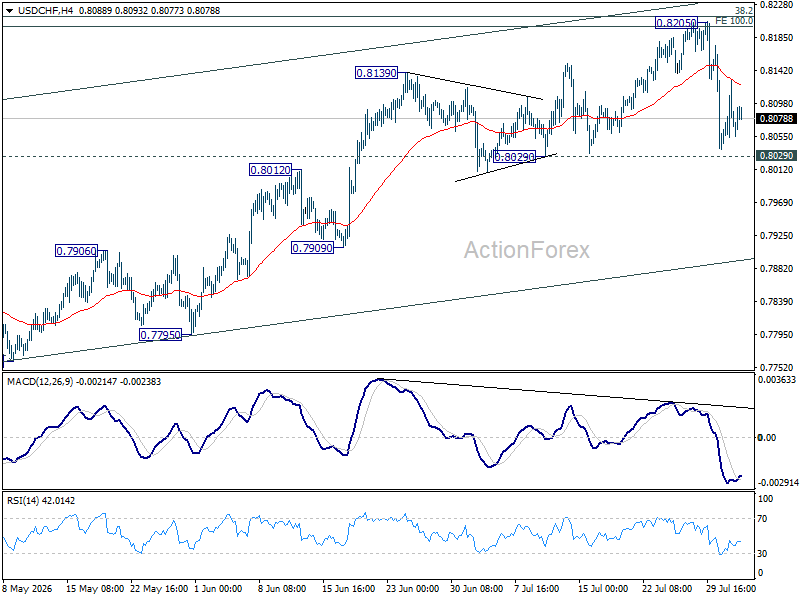
Intraday bias in USD/CHF remains neutral and more consolidations could be seen below 0.8205. Further rally is in favor with 0.8029 support intact. Firm break of 0.8205 will extend the rally from 0.7603 to 161.8% projection 0.7603 to 0.8041 from 0.7600 at 0.8469. However, decisive break of 0.8029 will bring deeper fall to channel support (now at 0.7911).
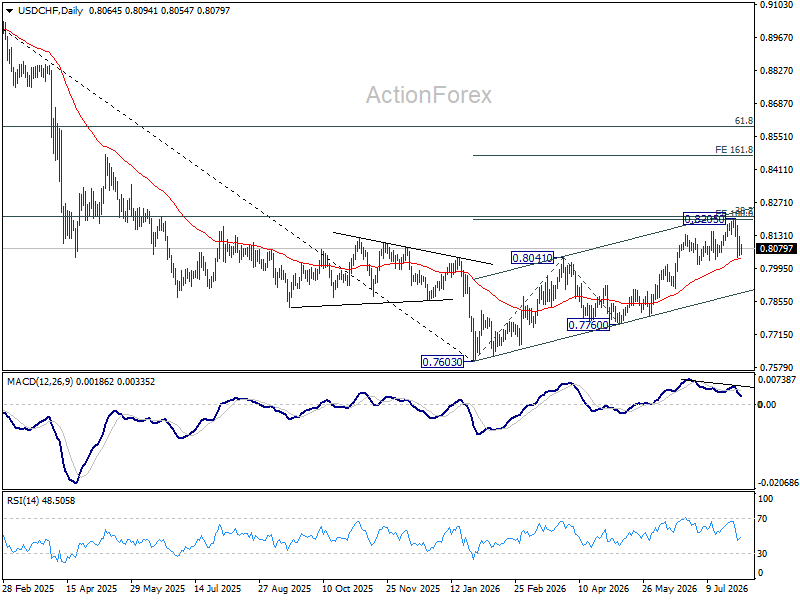
In the bigger picture, focus is now on 38.2% retracement of 0.9200 (2025 high) to 0.7603 at 0.8213. Decisive break will argue that USD/CHF is reversing the medium term trend, and turn focus to 0.8332 support turned resistance (2023 low) for confirmation. Nevertheless, rejection by 0.8213 will maintain medium term bearishness for another fall through 0.7603 at a later stage.
AUD/USD Daily Report
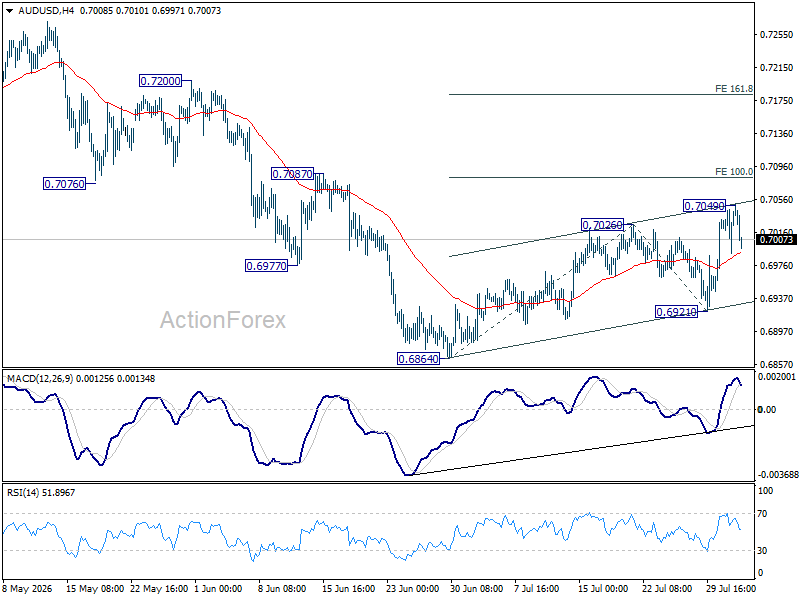
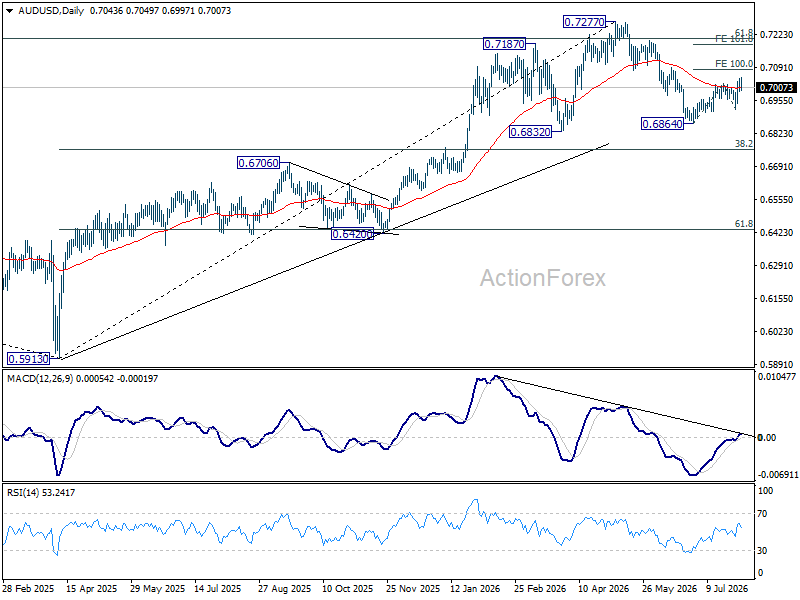
Intraday bias in AUD/USD is turned neutral first with current retreat. On the upside, above 0.7049 will extend the rebound from 0.6864 to 100% projection of 0.6864 to 0.7026 from 0.6921 at 0.7083. However, firm break of 0.6921 will argue that the rebound has completed and bring retest of 0.6864 low.
In the bigger picture, price action from 0.7277 medium term top is seen as developing into a correction to rise from 0.5913 only. While deeper decline cannot be ruled out, downside should be contained by 38.2% retracement of 0.5913 to 0.7277 at 0.6756 to bring rebound. Consolidations would continue below 0.7277 for a while, before an eventual upside breakout.
USD/CAD Daily Outlook
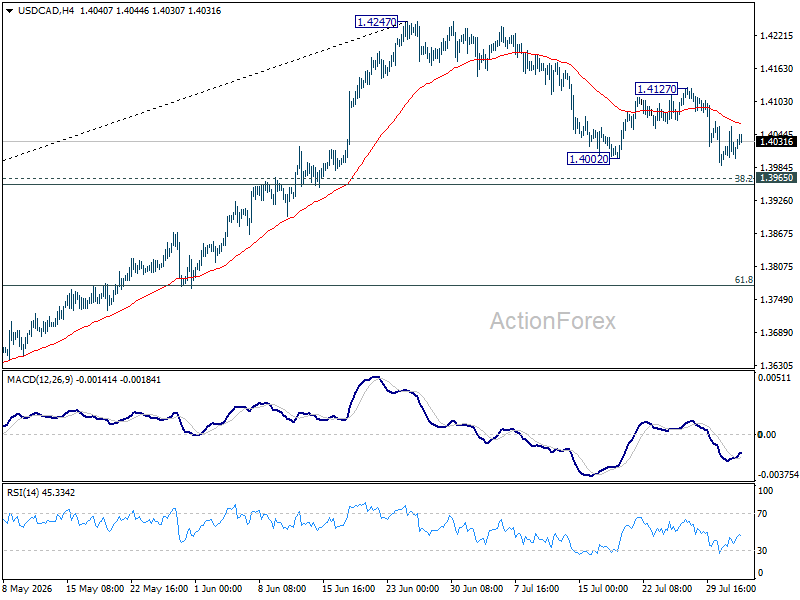
USD/CAD's corrective fall fro 1.4247 could extend lower. But downside should be contained by 1.3965 cluster support (38.2% retracement of 1.3480 to 1.4247 at 1.3954 to bring rebound. Firm break of 1.4127 will bring stronger rally to retest 1.4247 high. However, sustained break of 1.3954/65 will bring deeper fall to 61.8% retracement at 1.3773, and argue that rebound from 1.3480 might have completed.
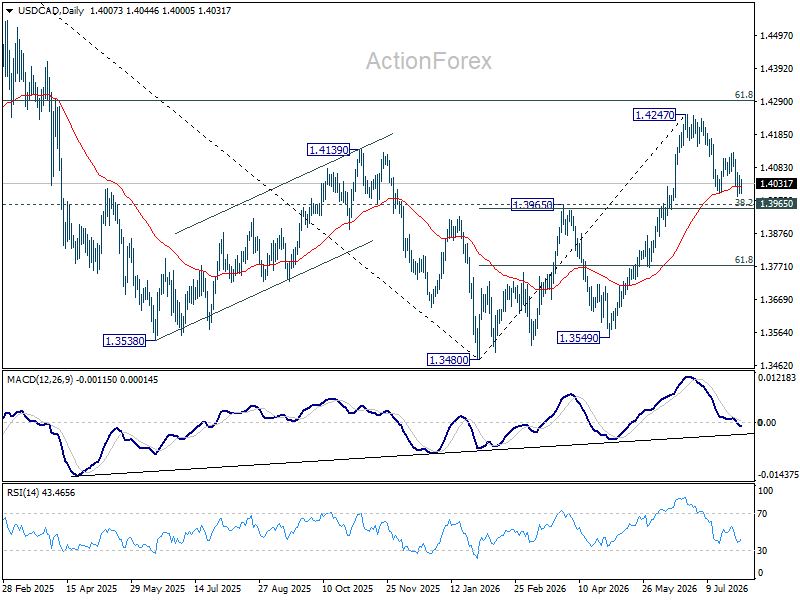
In the bigger picture, fall from 1.4791 medium term top has completed as a three wave correction to 1.3480. It's still early to judge if rise from there a corrective bounce, or resumption of the larger up trend from 1.2005 (2021 low). But in either case, sustained break of 61.8% retracement of 1.4791 to 1.3480 at 1.4290 will pave the way to retest 1.4791 high. However, rejection by 1.4290 will argue that fall from 1.4791 is going to extend with another leg through 1.3480 instead.
GBP/JPY Daily Outlook
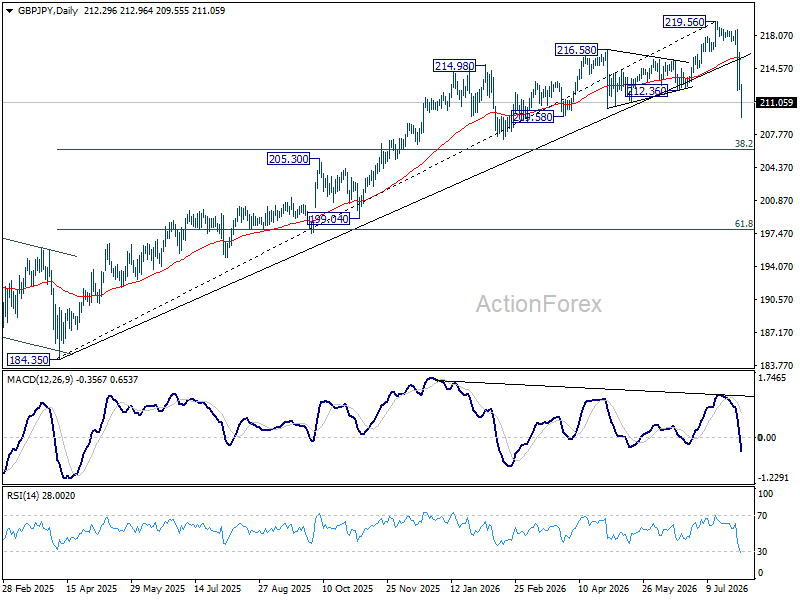
GBP/JPY's decline continues today, and the strong break of 212.367 support confirms that it's already correcting whole up trend from 184.35 to 219.56. Intraday bias stays on the downside for 38.2% retracement of 184.35 to 219.56 at 206.10. On the upside, above 212.33 minor resistance will turn intraday bias neutral again first.
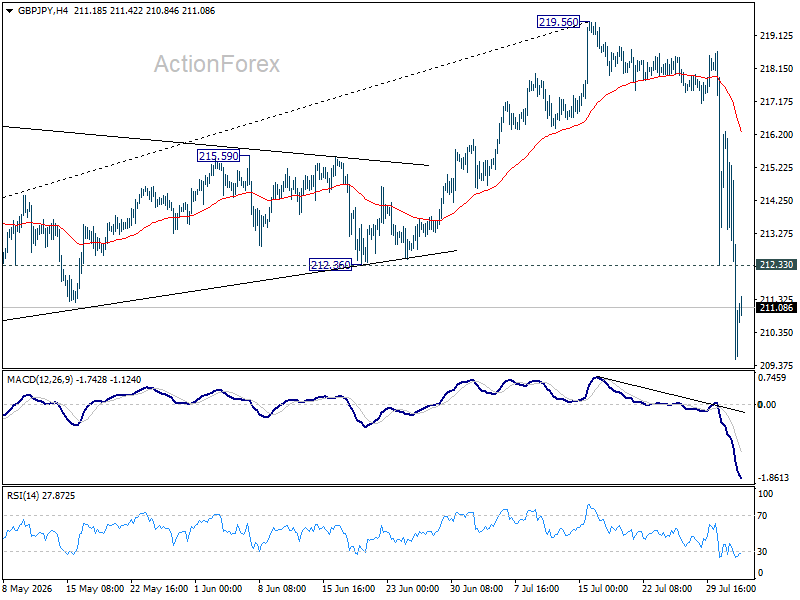
In the bigger picture, as long as 55 W EMA (now at 208.85) holds, the long term up trend is still expected to continue. But some more consolidations should be seen below 219.56 medium term top first. However, sustained break of 55 W EMA will argue that it's already in a medium term down trend to 184.35 support and below.
EUR/JPY Daily Outlook
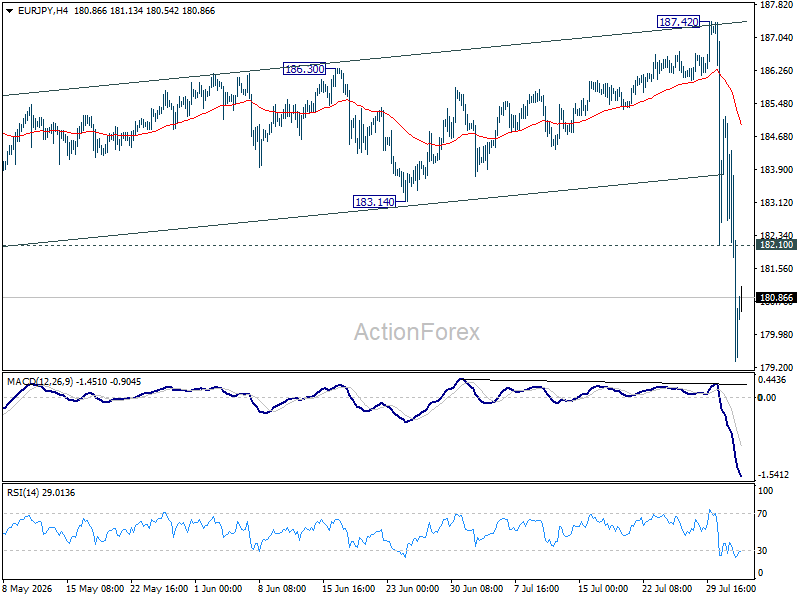
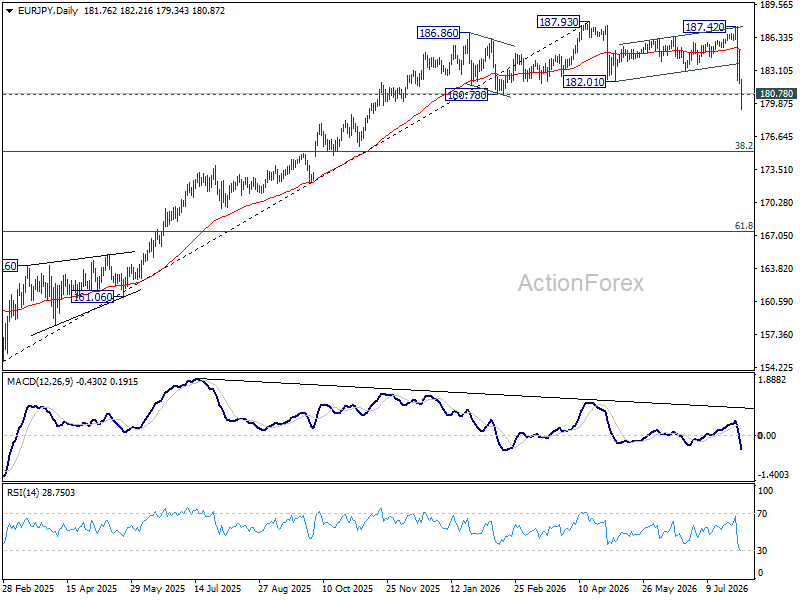
EUR/JPY's decline continues today and intraday bias remains on the downside. Sustained trading below 180.78 support will will indicate that it's already correcting the whole rise from 154.77 to 187.93. Deeper fall should then be seen to 38.2% retracement of 154.77 to 187.93 at 175.26. For now, risk will stay on the downside as long as 182.10 minor resistance holds, in case of recovery.
In the bigger picture, uptrend from 114.42 (2020 low) is still expected to resume at a later stage to 78.6% projection of 124.37 (2022 low) to 175.41 (2025 high) from 154.77 at 194.88. However, sustained break of 55 W EMA (now at 180.26) will argue that it's already in a medium term down trend to 175.41 resistance turned support and below.
EUR/GBP Daily Outlook
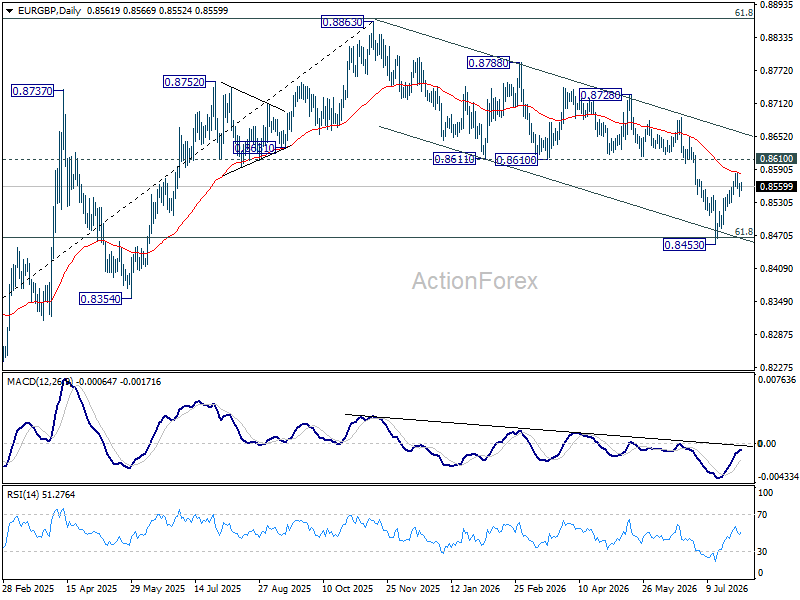
Intraday bias in EUR/GBP remains neutral for the moment. While another rise cannot be ruled out, strong resistance should be seen from 0.8610 support turned resistance to limit upside. On the downside, break of 0.8258 support will argue that the corrective rebound from 0.8453 has completed, and turn bias back to the downside for retesting this low.
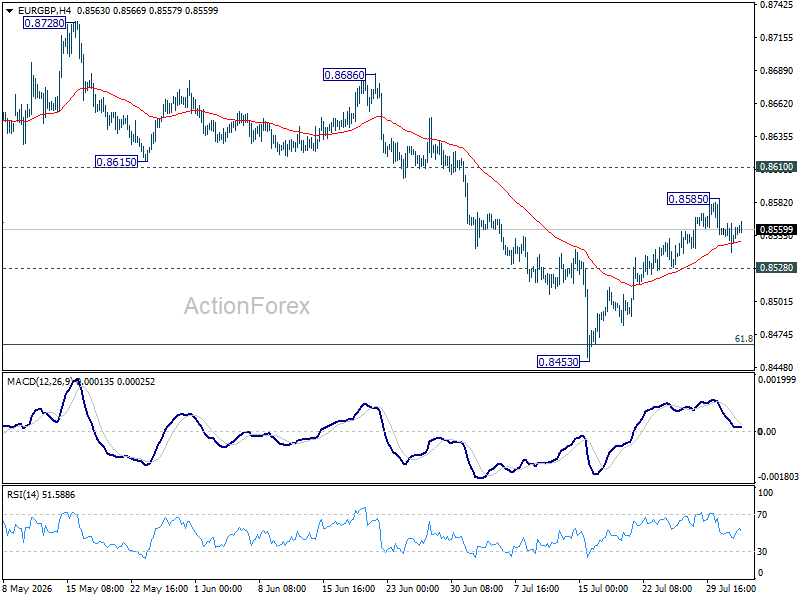
In the bigger picture, rise from 0.8221 (2024 low) should have completed at 0.8863, just ahead of 38.2% retracement of 0.9267 (2025 high) to 0.8221 at 0.8867. Deeper fall would be seen back to 0.8221. For now, outlook will be neutral at best as long as 0.8610 support turned resistance hold.
EUR/AUD Daily Outlook
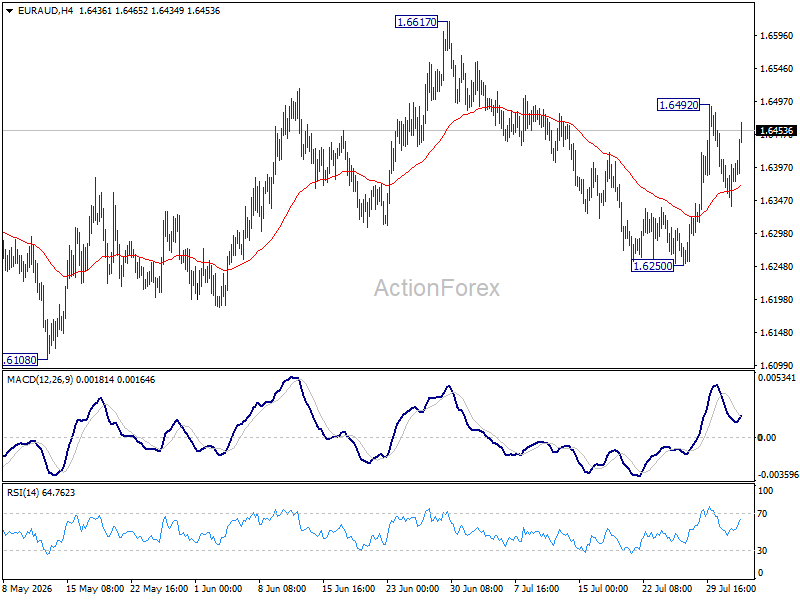
EUR/AUD rebounded strongly after drawing support from 55 4H EMA (now at 1.6371), but stays below 1.6492 resistance. Intraday bias remains neutral first. Near term corrective pattern from 1.6108 (or 1.6125) is still extending. On the upside, above 1.6492 will target 1.6617 resistance first. On the downside, break of 1.6250 will bring deeper fall back to retest 1.6108 low.
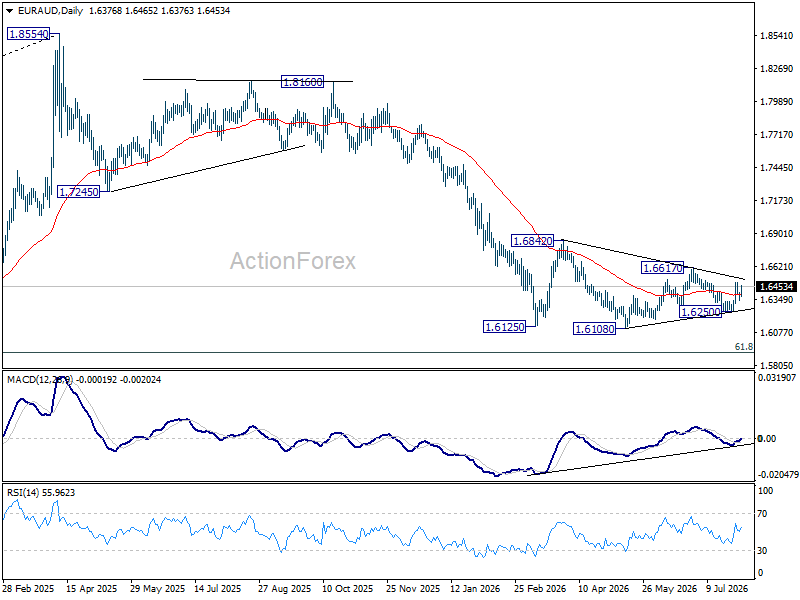
In the bigger picture, outlook will stay bearish as long as 1.6842 resistance holds. Fall from 1.8554 (2025 high) is expected to continue to 61.8% retracement of 1.4281 to 1.8554 at 1.5913. Decisive break there will pave the way back to 1.4281 (2022 low). However, firm break of 1.6842 should confirm medium term bottoming, and bring stronger rally.
EUR/CHF Daily Outlook
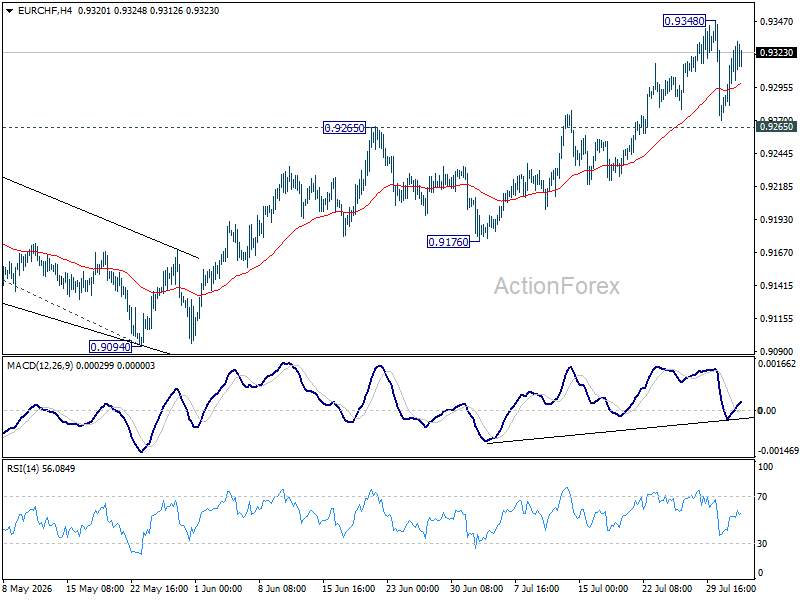
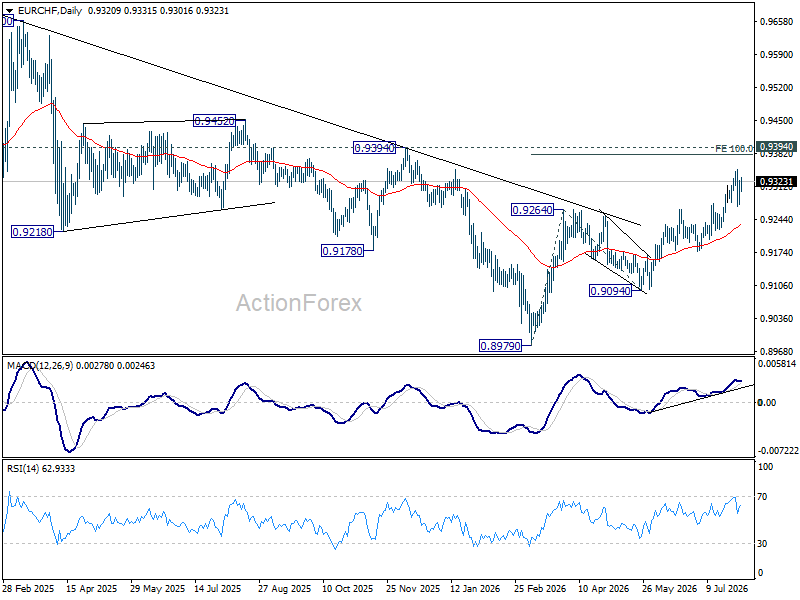
EUR/CHF is extending consolidations below 0.9348 and intraday bias remains neutral. Further rally is expected as long as 0.9265 resistance turned support holds. Break of 0.9348 will extend larger rally from 0.8979 to 100% projection of 0.8979 to 0.9264 from 0.9094 at 0.9379. However, firm break of 0.9265 will indicate that deeper correction is underway to 55 D EMA (now at 0.9234).
In the bigger picture, considering bullish divergence condition in W MACD, rise from 0.8979 medium term bottom should at least be reversing the fall from 0.9928, with prospect of developing into a medium term up trend. Firm break of 0.9394 resistance will add more credence to this case. For now risk will remain on the upside as long as 0.9094 support holds, in case of retreat.
Gold Analysis: Is the Correction Over, or Just Catching Its Breath?
Gold has had a rough year. After hitting an all-time high near $5,602 in January, the metal has since dropped roughly 27% from that peak, weighed down by rising Treasury yields, a firmer dollar, and cooling demand for safe-haven assets.
This week brought a fresh twist. Gold climbed back above $4,050 on Monday after President Trump signaled that peace talks with Iran would resume, following pressure from regional allies like Saudi Arabia to pause military strikes. The news pushed oil prices lower and eased inflation fears, but it also reduced some of the safe-haven demand that had been supporting gold.
Despite the sharp correction, most analysts still expect gold's long-term uptrend to eventually reassert itself. In the near term, though, all eyes are on Friday's US jobs report, the week's key catalyst: a weak print could revive rate-cut expectations and give gold fresh support, while a strong one could extend the current pullback.
Technical Analysis of XAU/USD Chart
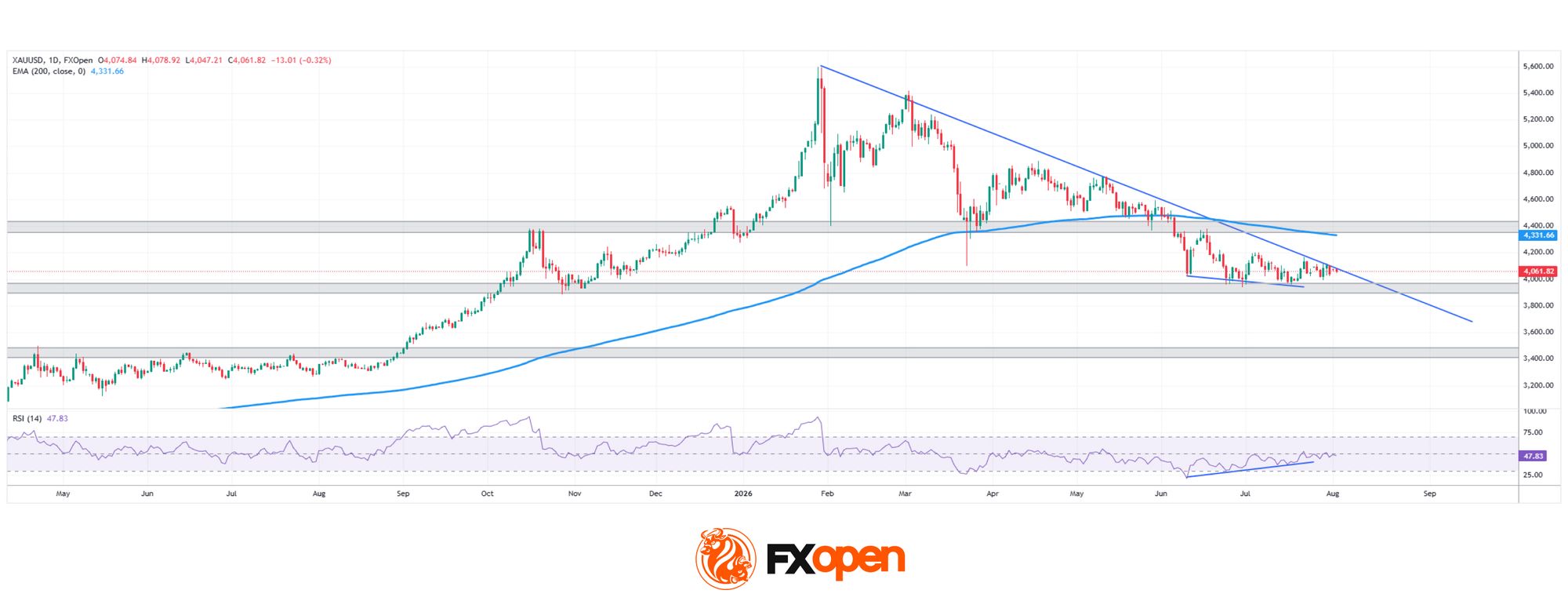
As the XAU/USD chart shows, gold remains locked in a broader downtrend since January's record high, currently testing the descending trendline from below while holding just above the 3,900-4,000 support zone.
Bullish Scenario
Gold has already shown signs of life bouncing from the 3,900-4,000 support, and the RSI divergence lends some credibility to this reaction. Should price break decisively above the descending trendline, the next real test becomes the 4,400 resistance zone, where the 200-period EMA also converges—a level that has proven highly significant over recent months. A confirmed break above this confluence would mark a meaningful shift in gold's broader structure.
Bearish Scenario
Should gold instead reject the trendline once again, price risks getting trapped between resistance above and support below. In that scenario, Friday's NFP report looms as a potential catalyst: a strong print could tip the balance, breaking the 3,900-4,000 support and opening the path toward the next meaningful level, the former resistance-turned-support zone at 3,400-3,500.
With price squeezed between a stubborn trendline and a battle-tested support, and a major data release just days away, gold's next move could finally answer the question traders have been asking since January's peak: is the correction over, or just catching its breath?
Start trading commodity CFDs with tight spreads (additional fees may apply). Open your trading account now or learn more about trading commodity CFDs with FXOpen.
This article represents the opinion of the Companies operating under the FXOpen brand only. It is not to be construed as an offer, solicitation, or recommendation with respect to products and services provided by the Companies operating under the FXOpen brand, nor is it to be considered financial advice.
Brent Oil Price Falls on Fresh US-Iran Peace Deal Optimism
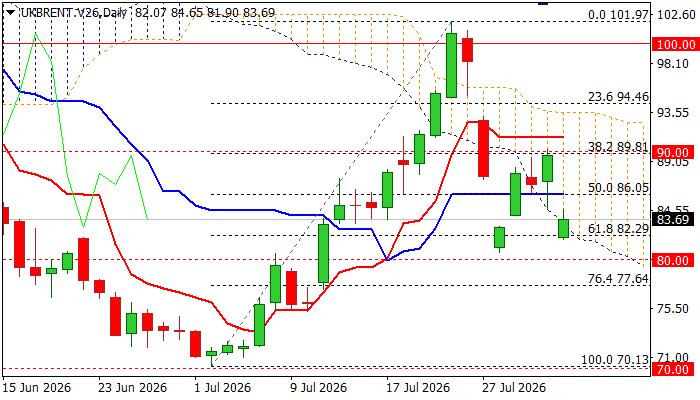
Brent price fell $7 on gap-lower opening on Monday, deflated by the latest de-escalation in the Middle East after President Trump called off the latest planned attack on Iran and announced fresh round of peace talks starting today.
Adding to renewed pressure on oil prices was decision of OPEC+ to increase production by 188.000 barrels per day from September.
Fresh optimism over potential peace solution for the war provided relief, as the price fell away from dangerous $100 zone which was violated on July 23/24 but without sustained break higher.
Markets remain cautiously optimistic after several attempts to stop the war failed and keep hopes that the US and Iran would this time reach a deal and prevent deepening crisis, which many analysts expect to be worse than the one in 2008.
The most sensitive points of all peace talks remain the situation of control of Hormuz strait and Iran’s nuclear program (red lines for Iran, but also key points for the US), with maximal demand from the US on these questions and Iran’s reluctance to compromise, warn that the whole process may fail again.
Daily studies weakened following a double rejection at $90 resistance zone (Thu/Fri) and subsequent acceleration lower, as south-heading 14-d momentum hits the centreline and the price broke below daily cloud.
Bears eye key near-term supports at $80.66/50 (July 28 low / 200DMA) and $80.00 (psychological) break of which to signal continuation of descend from 101.97 (July 23 peak) on completion of bearish failure swing pattern and unmask $70 zone (July 2 low / psychological).
Broken cloud base reverted to initial resistance ($83.48), followed by broken daily Kijun-sen ($86.05) which should cap corrective upticks.
Res: 83.48; 86.05; 86.70; 90.00
Sup: 80.50; 80.00; 75.28; 71.92