Sample Category Title
Eco Data 8/4/26
| GMT | Ccy | Events | Act | Cons | Prev | Rev |
|---|---|---|---|---|---|---|
| 23:50 | JPY | Monetary Base Y/Y Jul | -13.80% | -13.00% | -13.70% | |
| 12:30 | CAD | Trade Balance (CAD) Jun | 3.9B | 3.0B | 4.2B | 3.7B |
| 12:30 | USD | Trade Balance (USD) Jun | -73.3B | -73.0B | -77.6B | |
| 13:30 | CAD | Manufacturing PMI Jul F | 53.5 | 50.2 | 53 | |
| 14:00 | USD | Factory Orders M/M Jun | -0.30% | 0.50% | -1.30% | -1.10% |
| 23:50 | JPY |
| Monetary Base Y/Y Jul | |
| Actual | -13.80% |
| Consensus | -13.00% |
| Previous | -13.70% |
| 12:30 | CAD |
| Trade Balance (CAD) Jun | |
| Actual | 3.9B |
| Consensus | 3.0B |
| Previous | 4.2B |
| Revised | 3.7B |
| 12:30 | USD |
| Trade Balance (USD) Jun | |
| Actual | -73.3B |
| Consensus | -73.0B |
| Previous | -77.6B |
| 13:30 | CAD |
| Manufacturing PMI Jul F | |
| Actual | 53.5 |
| Consensus | 50.2 |
| Previous | 53 |
| 14:00 | USD |
| Factory Orders M/M Jun | |
| Actual | -0.30% |
| Consensus | 0.50% |
| Previous | -1.30% |
| Revised | -1.10% |
Japanese Yen Rallies for the Third Straight Day Against US Dollar and Euro
USDJPY edged higher from new lowest level in almost three months, following three-day sharp fall on coordinated intervention by Japan’s authorities and US central bank, to support weakening yen.
Massive intervention buying lifted yen against US dollar (nearly 5%) and Euro (4.2%), with yen’s weekly gains of 3.9% vs dollar and 3.1% vs Euro.
The authorities signaled that further intervention cannot be ruled out that keeps near-term focus at the downside, with current (still mild) bounce, seen as positioning for fresh push lower for both currency pairs (USDJPY and EURJPY).
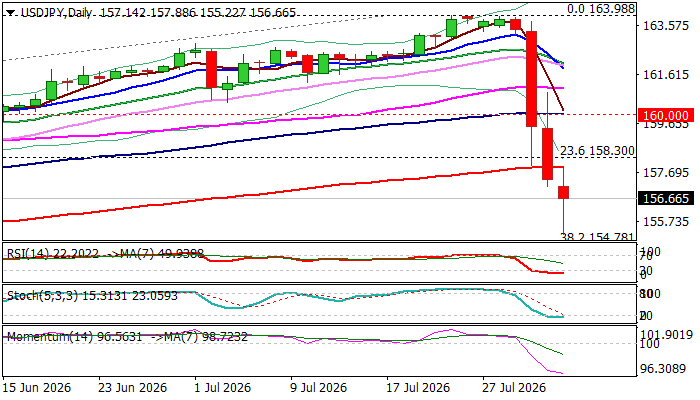
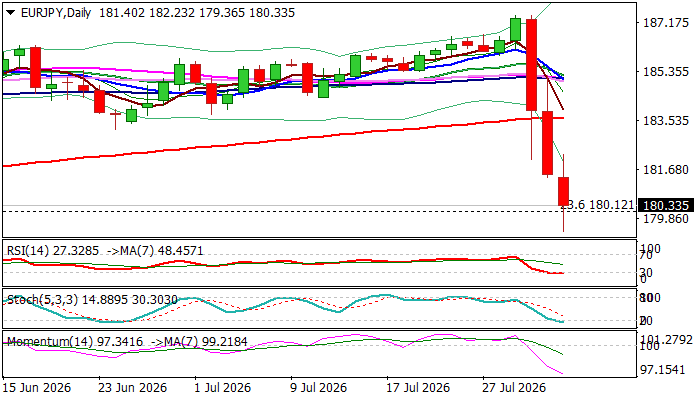
The USDJPY surged through daily Ichimoku cloud (spanned between 160.67 and 158.48), broke through 200DMA (157.92) and trendline support (157.10), while EURJPY broke 200DMA support (183.62), to hit the lowest since 17 Nov 2025 (179.36) on Monday.
Technical picture on daily chart turned bearish for both pairs, but stretched indicators after sharp fall suggest that bears may take a breather, though with limited upticks, due to persisting risk for possible further intervention.
USDJPY – broken 200DMA turned to solid resistance which capped today’s action and should ideally limit upticks, guarding next significant barrier at 158.48, provided by the base of thick daily cloud.
Fresh bears eye next pivotal supports at 155.02/154.78 (May 6 low / Fibo 38.2% of 139.88/163.98 rally) break of which to generate stronger reversal signal and support scenario of direction change of 16-month uptrend.
EURJPY- upticks should ideally hold below 182.50 zone (Fibo 38.2% of 187.43/179.36 post-intervention fall) to keep bears intact for firm break through cracked 180 psychological support and acceleration towards 175.28 (Fibo 38.2% of 154.79/187.94) and 172.70 (100WMA) in extension.
US ISM Manufacturing Hits Three-Year High, Employment Returns to Growth
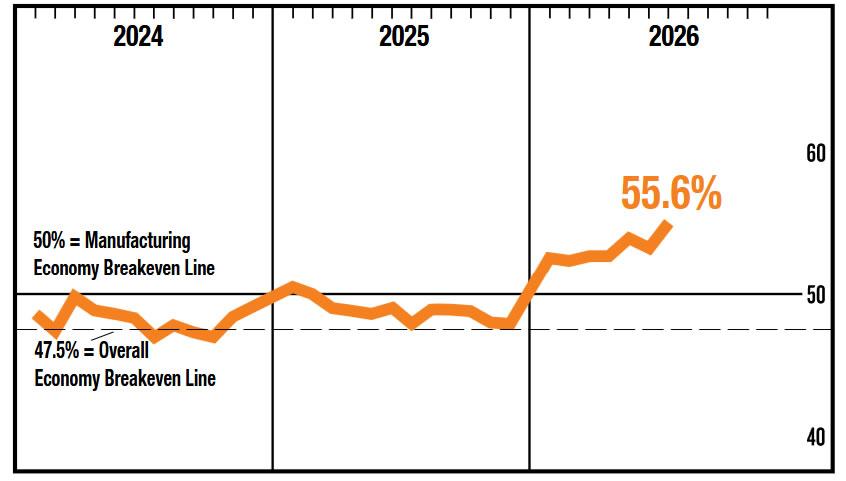
US manufacturing gathered further momentum in July, with the ISM Manufacturing PMI rising to 55.6 from 53.3, its highest reading since May 2022 and well above market expectations. According to ISM, the latest reading is historically consistent with annualized real GDP growth of around 2.8%, reinforcing signs that the US economy entered the third quarter on a solid footing despite elevated interest rates and geopolitical uncertainty.
The improvement was broad-based, led by a sharp acceleration in production. The Production Index jumped 6.3 points to 58.5, its highest level in almost five years, extending expansion to a ninth consecutive month. The labor market also showed renewed strength, with the Employment Index climbing to 52.8 from 49.7, returning to expansion territory for the first time in 33 months and reaching its highest level since August 2022. Together with stronger new orders and export demand, the survey points to improving manufacturing activity rather than a temporary rebound.
Inflation pressures, however, remained an important feature of the report. Although the Prices Index eased to 71.1 from 73.0, it remained firmly elevated. ISM said price increases continued to be driven by higher steel and aluminum costs, tariffs on imported goods and rising petroleum-based product prices linked to the Middle East conflict. Just over half of respondents reported paying higher prices in July, down from June but still indicative of widespread cost pressures across the manufacturing sector.
The report strengthens the case that the US economy remains resilient while inflation risks have yet to disappear. For the Federal Reserve, the combination of stronger production, expanding employment and still-elevated input prices leaves the door open to another rate hike should inflation remain stubborn.
Economic Data
| Indicator | Actual | Expected | Previous |
|---|---|---|---|
| ISM Manufacturing PMI | 55.6 | 54.0 | 53.3 |
| S&P Global Manufacturing PMI | 53.9 | 53.8 | 53.8 |
| Production | 58.5 | — | 52.2 |
| New Orders | 56.7 | — | 56.0 |
| Employment | 52.8 | — | 49.7 |
| Prices Paid | 71.1 | 70.0 | 73.0 |
| New Export Orders | 53.0 | — | 48.5 |
| Backlog of Orders | 55.0 | — | 50.5 |
Key Takeaways
- ISM Manufacturing PMI jumped from 53.3 to 55.6, the highest reading since May 2022, pointing to a further acceleration in US factory activity.
- ISM estimates the July PMI is historically consistent with 2.8% annualized real GDP growth, suggesting manufacturing continues to support overall economic expansion.
- Production surged from 52.2 to 58.5, its highest level in nearly five years, while the Employment Index returned to expansion at 52.8, its first expansionary reading in 33 months.
- Demand remained healthy, with New Orders rising to 56.7, New Export Orders returning to expansion at 53.0, and Backlog of Orders climbing to 55.0, indicating factories continue to receive more work than they can immediately process.
- Inflation pressures eased only modestly. Prices Paid fell from 73.0 to 71.1 but remained elevated, with respondents continuing to cite tariffs, higher steel and aluminum prices, and Middle East-related energy costs as key drivers.
- Overall, the report portrays an economy with strong manufacturing momentum and persistent inflationary pressures, giving the Fed greater flexibility to tighten policy if upcoming inflation data fail to improve.
Fed’s Williams Looks Beyond Oil Shock, Focuses on Core Inflation Trend
New York Fed President John Williams said he remains confident inflation will gradually resume its decline, arguing that the recent surge in energy prices is unlikely to derail the broader disinflation process. Speaking to Reuters on Friday, Williams said that if energy prices and tariffs have peaked and the economy remains resilient, "some of the big drivers that pushed up inflation... will not be at play as much," while "some of the disinflationary forces that we've been seeing should reassert themselves." He added that his personal forecast is for inflation to ease during the second half of this year and decline further next year.
Rather than focusing on temporary supply shocks, Williams emphasized that the Fed is watching whether underlying inflation is returning sustainably toward target. "I am... focused quite a bit on what are we seeing in the core inflation data over the next several months," he said, adding that policymakers need evidence inflation is on "a disinflationary path consistent with us achieving our 2% inflation goal on a sustained basis by 2028." Williams reiterated that the current policy stance is "well positioned" following last week's decision to leave the federal funds target range unchanged at 3.50%-3.75%.
Still, Williams made clear that the Fed remains prepared to tighten policy again if inflation fails to cooperate. "If the economy is not on a trajectory that will bring inflation back down to 2%... it would absolutely be appropriate to act," he said. While acknowledging uncertainty surrounding the Middle East conflict, Williams said he does not expect it to generate persistent inflationary pressure under his base case, assuming shipping disruptions eventually ease. He also stressed that the Fed will make its own policy assessment rather than follow financial market pricing, saying it would "absolutely not" be bound by investors' expectations.
Key Takeaways
- Williams remains confident that inflation will continue to ease, expecting disinflationary forces to reassert themselves if energy prices and tariffs stabilize.
- The Fed's primary focus has shifted to core inflation, with Williams emphasizing that the next several months of underlying inflation data will determine whether inflation is on a sustainable path back to the 2% target.
- He reaffirmed that current monetary policy is "well positioned" after last week's decision to leave rates unchanged at 3.50%-3.75%.
- Despite his constructive inflation outlook, Williams made clear that further rate hikes remain on the table if inflation fails to move convincingly toward target.
- Williams views the inflation impact of the Middle East conflict as likely temporary under his base case, assuming shipping disruptions eventually ease.
- He also stressed that the Fed will not be guided by market pricing, reiterating that policy decisions will be based on the Fed's own assessment of incoming economic data.
The Crypto Market Is Moving in the Opposite Direction to Equities
Market Overview
The crypto market’s market capitalisation has fallen by 1% over the past 24 hours, returning to levels last seen in mid-July. The positive momentum the market showed in the first half of last week failed to take hold. Once again, we are seeing a negative correlation with the Nasdaq 100 index, this time in the form of falling cryptocurrencies while shares rise. Could this be becoming the new norm?
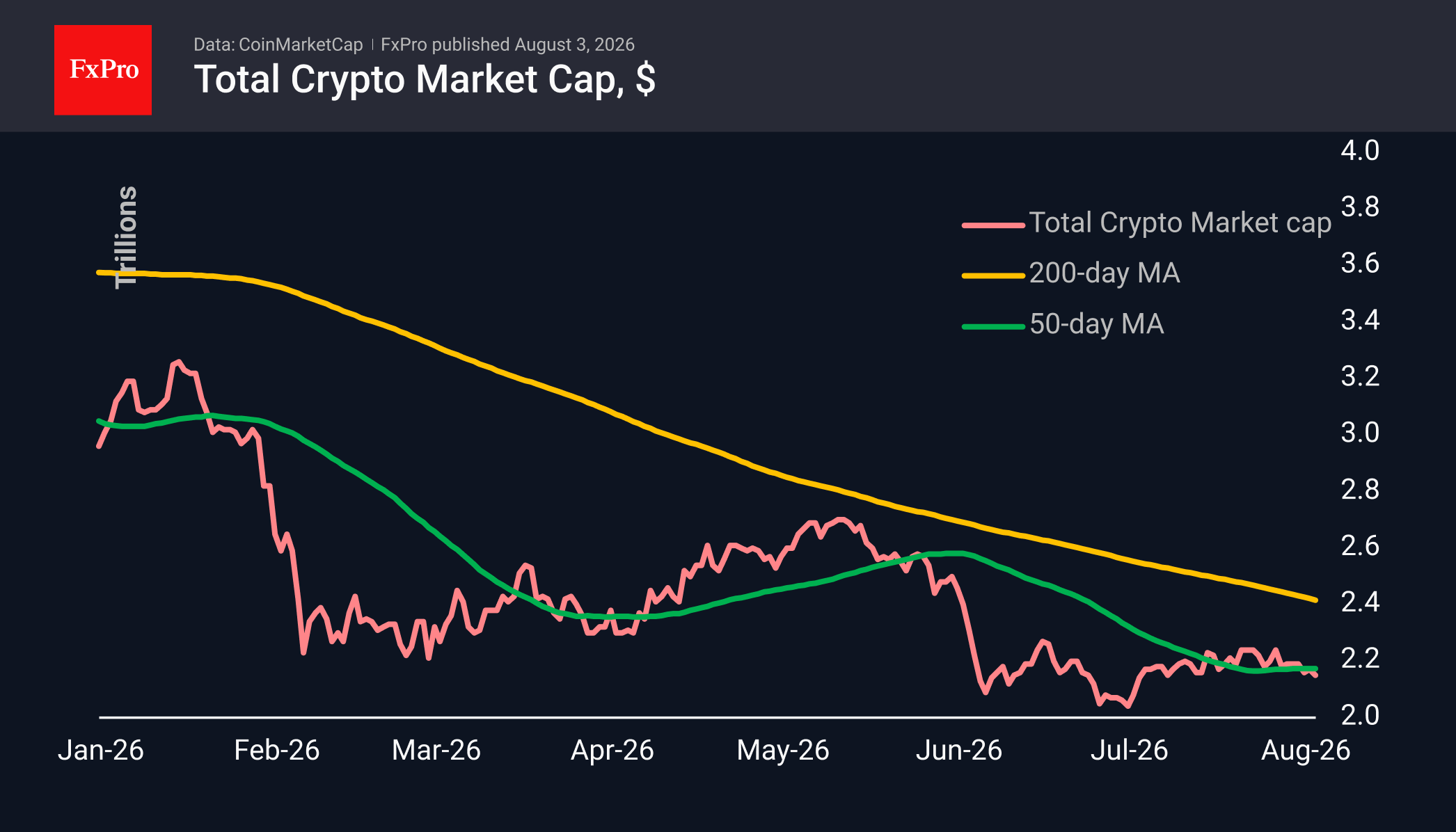
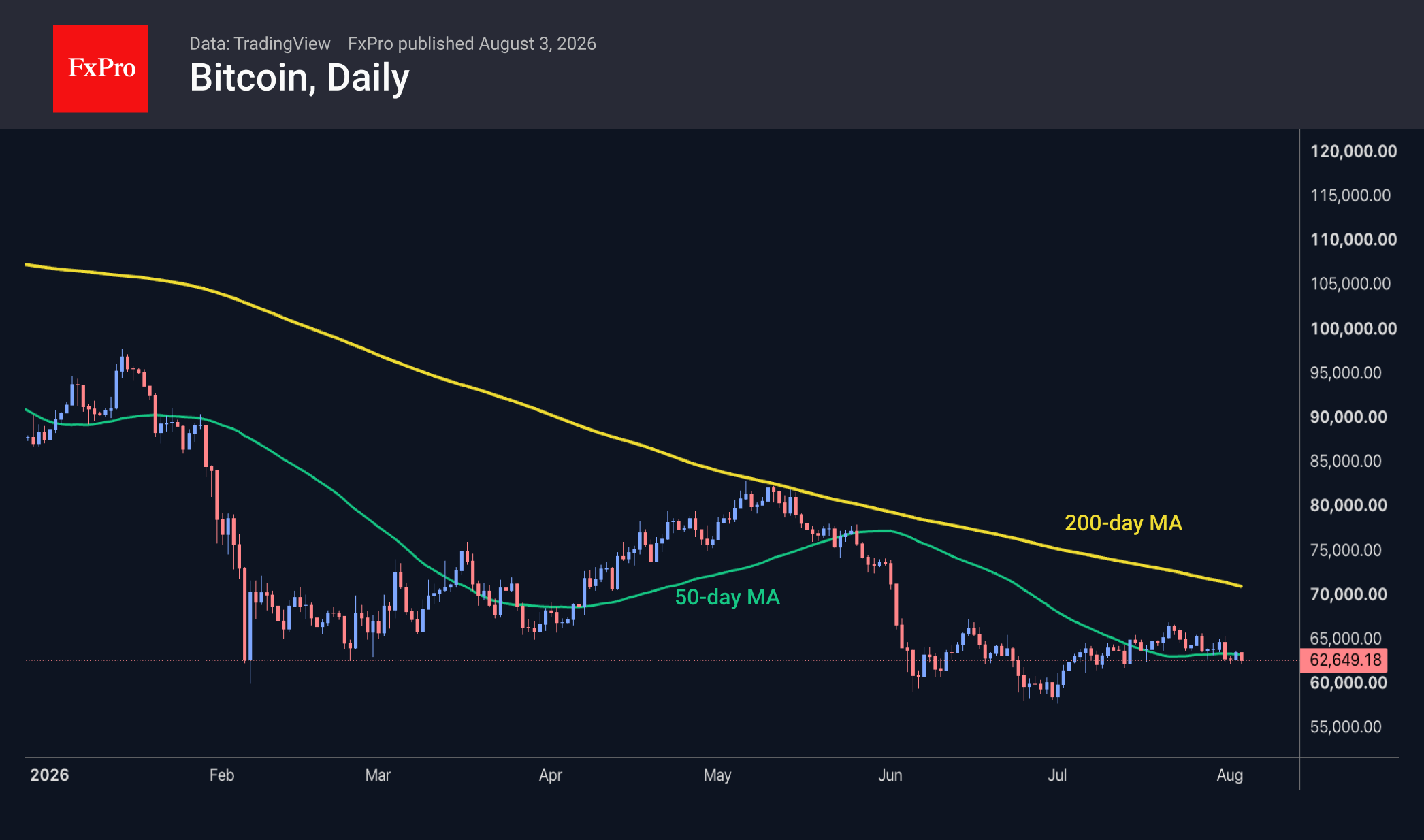
Bitcoin is dragging the entire market down to last week’s lows after falling below $63K. A brief and tentative rebound on Sunday proved to be a failed attempt to return above the 50-day moving average. Such a plunge clearly highlights the difficulties faced by the bulls in their attempt to convince the wider market of a reversal in the bear market that began last September.
Bitcoin rose by 7.3% in July to $62.9K, following its steepest monthly decline in four years in June. From a seasonal perspective, August is considered the most unfavourable month for BTC. Over the past 15 years, Bitcoin has ended the month with gains on only five occasions and has fallen ten times. Meanwhile, the last four years have all been unfavourable for Bitcoin. The average decline was 13.8%, while the average gain was 14%.
News Background
Strategy reported a net loss of $8.2 billion for the second quarter, compared with a profit of $10 billion for the same period last year. The main reason for this was the so-called unrealised, ‘paper’ losses due to the fall in the value of Bitcoin held in reserves.
Strategy will continue to sell Bitcoin as commercially viable, but is no longer committed to automatically reinvesting all capital raised through share sales into BTC, as stated by the company’s CEO, Phong Le. The primary objective will be to bring the price of STRC preferred shares back into the $99–100 range.
US Treasury Secretary Scott Bessent has called on the Senate to put the CLARITY Act to a vote without delay and accused the Democrats of dragging out the process for political reasons. He pointed out that the House of Representatives approved the bill over a year ago.
Quantum Solutions, Japan’s largest public holder of Ethereum, has announced the sale of 1,000 ETH for $1.9 million. The company intends to use the proceeds to fund data centre services for the development of its artificial intelligence business.
Tether’s excess reserves halved over the quarter, falling to $4.11 billion. The volume of USDT in circulation rose by $446 million over the quarter to $184.6 billion. The number of users increased by more than 30 million, exceeding 650 million, said Tether CEO Paolo Ardoino.
The FxPro Analyst Team
The Dollar Is Propping Up the Yen
- US involvement in currency interventions is weakening the dollar.
- The ‘hawkish’ tone of Fed members gave only temporary support for the greenback.
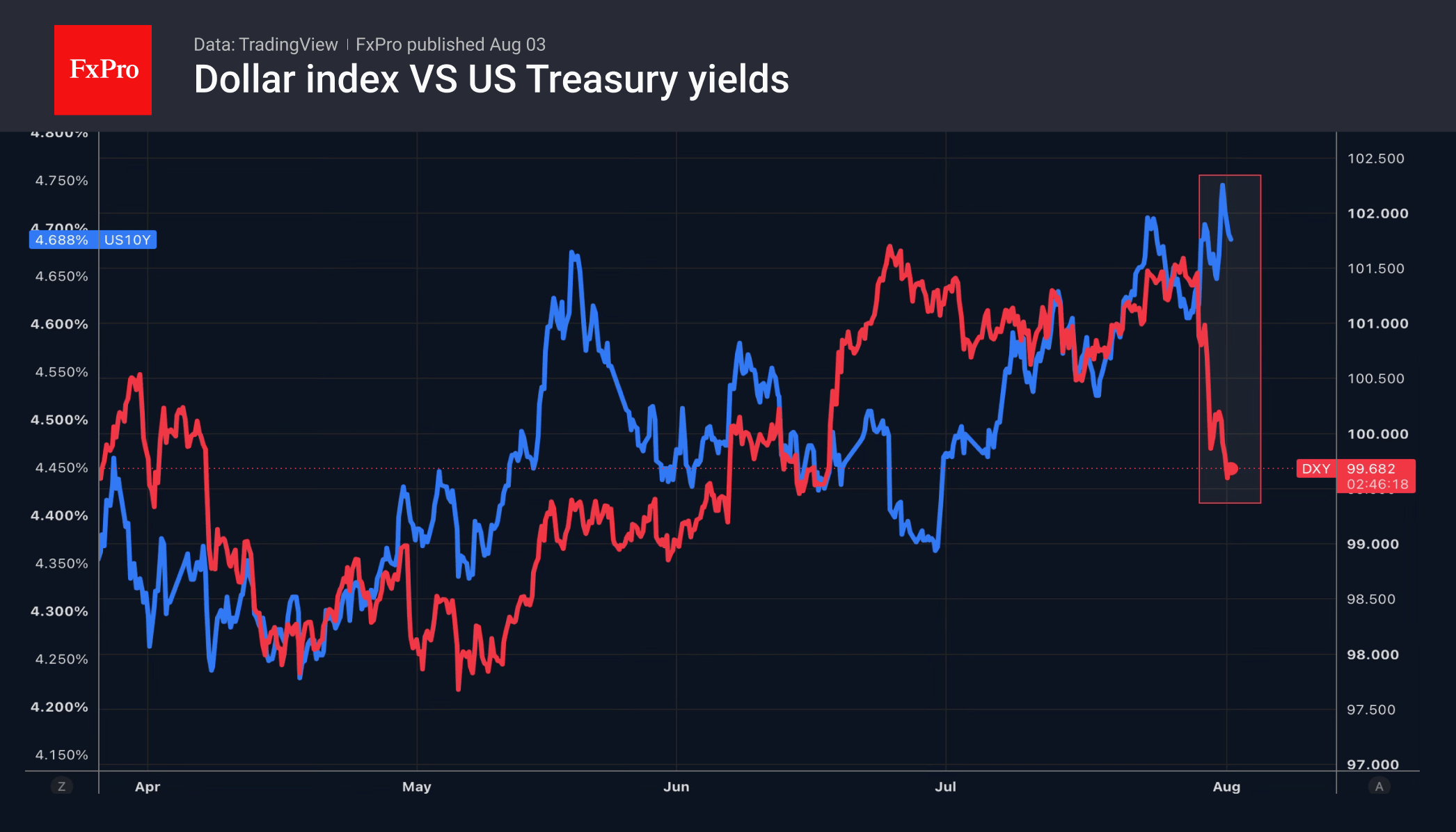
The US dollar recorded its worst monthly performance since April amid doubts over Kevin Warsh’s hawkish views and the US’s intention to shift from air strikes to diplomacy in the Middle East. Speculators are unwinding their net long positions in the greenback, which had been at record levels since 2015. The USD index is falling even against a backdrop of high Treasury bond yields. The simultaneous sell-off of both the currency and Treasuries points to a decline in confidence in the policies pursued by the White House and the Fed.
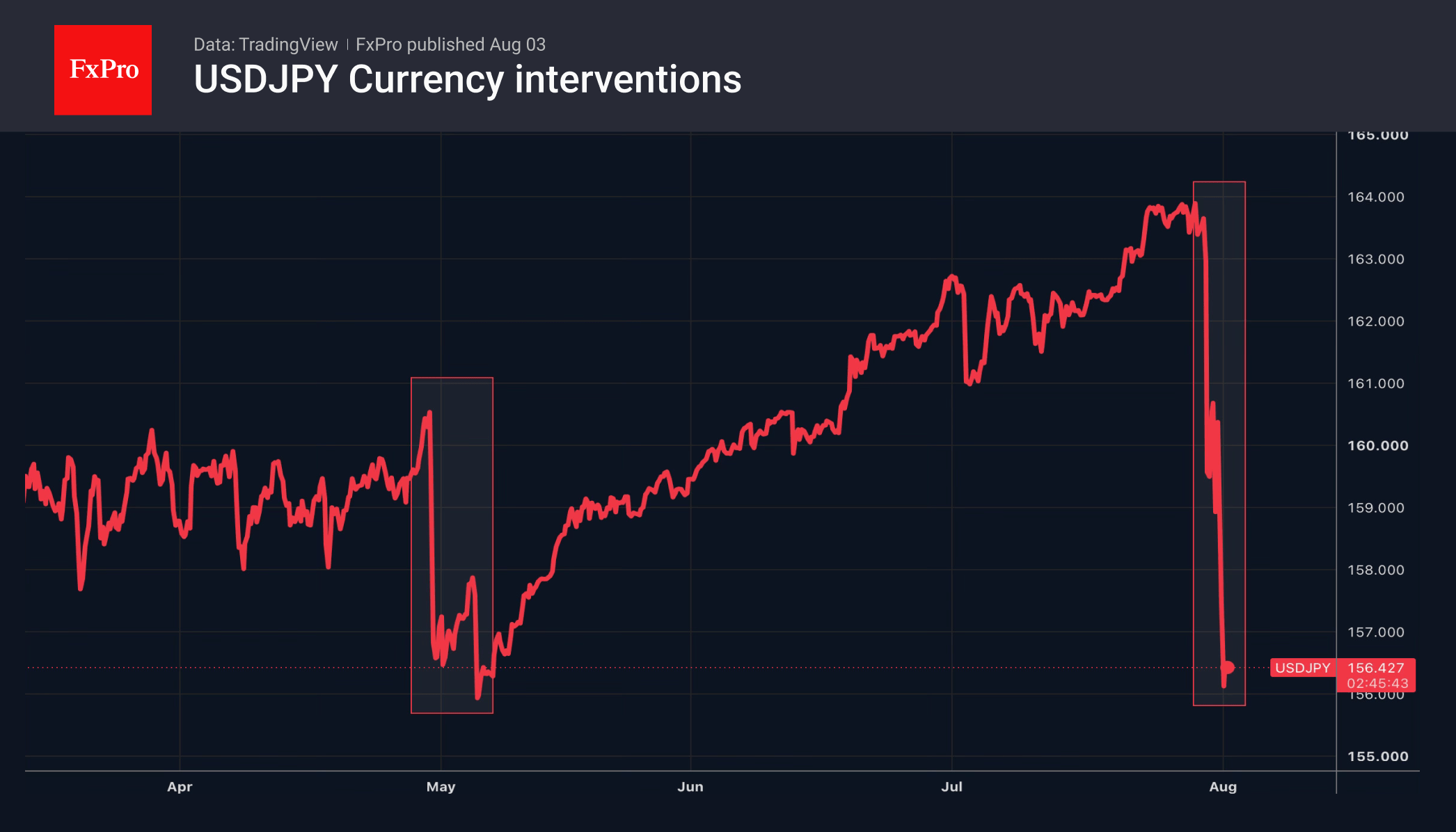
Investors are concerned about the U.S. participation in currency interventions coordinated with Japan. Over three trading days, USDJPY plummeted to its lowest level since early May. The scale of intervention on the first of these days is estimated at $54 billion. Washington makes no secret of its presence on the forex market. US Treasury Secretary Scott Bessent stated that the Treasury would not hesitate to re-enter the foreign exchange market. Donald Trump described the intervention as a sign of friendship with Tokyo.
The Bank of Japan did not need to adopt hawkish rhetoric to strengthen the yen, keeping its overnight rate at 1%. Kazuo Ueda stated that greater attention needed to be paid to the acceleration in price growth. This was interpreted as a signal that monetary policy would be tightened in the autumn. The BoJ is unlikely to wait until December, as most Bloomberg experts predict.
Will it follow the Fed’s path of monetary tightening? Judging by the hawkish comments from dissenting voices such as Neel Kashkari, Beth Hammack, and Lorie Logan, the central bank would do well to raise rates in small steps rather than by 50 or 75 basis points if inflation spirals out of control. Tom Barkin believes that the time is coming to reverse the monetary policy easing measures implemented at the end of 2025.
Such rhetoric from FOMC officials allowed the USD index to recoup almost half of the losses incurred during trading on 30 July. However, coordinated currency interventions and a rally in US stock indices brought everything back to square one. The dollar plummeted to its lowest levels since mid-June.
TACO, or ‘Trump Always Chickens Out’, could add fuel to the sell-off. The US President has called off planned strikes against Iran to engage in negotiations. The White House is prioritising diplomacy, which is leading to a fall in oil prices and putting pressure on the greenback.
The FxPro Analyst Team
Yen Strength Squeezes Into Crosses as USD/JPY Defends 155… For Now
Why confirmed US-Japan intervention pushed Yen strength into the crosses instead of breaking USD/JPY below 155
Why it matters: The pattern suggests traders don't yet believe intervention was designed to force USD/JPY meaningfully below 155, just to prevent a rapid return above 160. Whether that adjustment mechanism, squeezing carry trades in the crosses, continues, or USD/JPY eventually breaks 155 outright, is one of the more important themes to watch this week.
Also today:
- Oil gapped lower again to as low as $81.55 as the US cancelled planned strikes and Trump signaled talks with Iran, though Tehran says no direct negotiations are planned yet.
- A week of top-tier US data begins today with ISM Manufacturing, building toward Friday's non-farm payrolls, which will shape the Fed's flexibility heading into next week's CPI report rather than settle September policy on its own.
Confirmed Intervention Marks a Break From Japan's Usual Playbook
The week's opening session was dominated by an unusually explicit display of currency cooperation between Washington and Tokyo. Both governments confirmed they had jointly intervened to support the Yen last week, marking the first coordinated operation since 2011. More striking than the intervention itself was the speed of the confirmation. Rather than adhering to Japan's long-standing strategy of refusing to comment on intervention, officials on both sides moved quickly to acknowledge the operation, reinforcing the message that they stand ready to act again if necessary. The shift suggests policymakers are placing greater value on intervention credibility than on strategic ambiguity.
USD/JPY Stalls at 155 as Yen Strength Squeezes Into the Crosses
That message initially extended last week's Yen rally, pushing USD/JPY lower in early trading. Yet the decline stalled just ahead of the key 155 support area, where buyers emerged before the pair could test the level decisively. The price action is notable because it suggests traders remain reluctant to challenge what has become an important technical level. For now, the market still appears to believe the objective of last week's intervention was to prevent another rapid return above 160 rather than engineer a sustained move below 155.
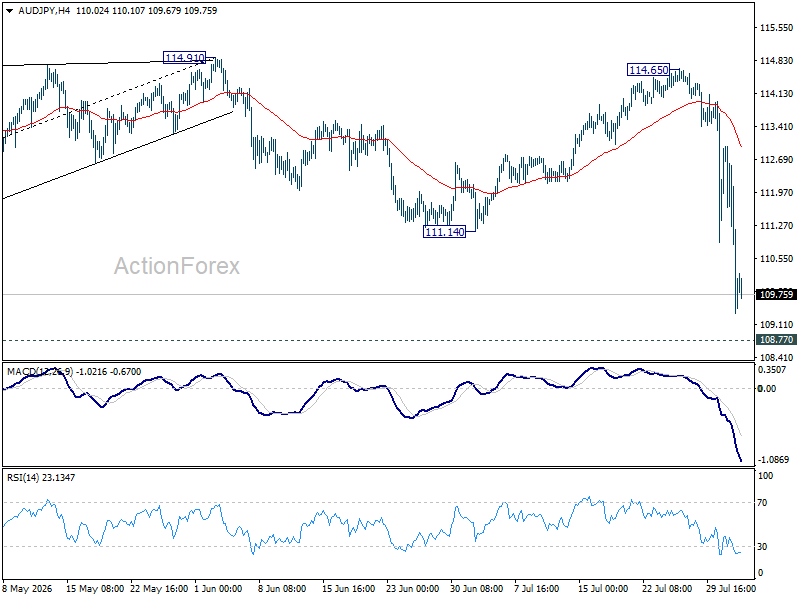
Instead of forcing USD/JPY through support, demand for the Japanese currency found another outlet. Yen strength was effectively squeezed into the crosses, with high-yielding currencies bearing the brunt of the adjustment. AUD/JPY led losses, followed by NZD/JPY, while GBP/JPY, CAD/JPY and CHF/JPY also declined sharply. The pattern points to a broader reduction in Yen-funded carry trades rather than outright Dollar weakness. Whether this remains the preferred adjustment mechanism, or whether USD/JPY eventually breaks below 155, will be one of the more interesting themes to watch in the days ahead.
Crosses Under Pressure
- AUD/JPY: led losses among Yen crosses
- NZD/JPY: second-sharpest decline
- GBP/JPY, CAD/JPY, CHF/JPY: also declined sharply
Oil Gaps Lower Again as Diplomatic Signals Conflict
Oil markets also began the week with another sharp gap lower. Brent crude, which closed above $90 last week, briefly fell to as low as $81.55 before stabilizing around the $83 area. As in recent weeks, the move reflected hopes of easing tensions in the Middle East after the US cancelled planned military strikes over the weekend. President Donald Trump said negotiations with Iran would begin on Monday, again raising expectations of a diplomatic breakthrough.
Tehran, however, continued to offer a far more cautious assessment. Iranian Foreign Ministry spokesperson Esmail Baghaei said there were no immediate plans for direct negotiations with Washington, reiterating that discussions remain limited to Omani mediation over the Strait of Hormuz. The conflicting narratives have become a familiar feature of this crisis. Markets appear reluctant to react aggressively to political statements alone, preferring to wait for tangible evidence of changes in shipping conditions or energy flows before reassessing geopolitical risk.
A Week Packed With Top-Tier US Data
Attention now shifts firmly to a week packed with top-tier US economic data. ISM Manufacturing kicks things off today, followed by ISM Services, ADP employment and Friday's non-farm payrolls. Fed funds futures continue to price a little over a 60% probability of a September rate hike, indicating markets still lean toward further tightening but without strong conviction.
That makes this week's data particularly important, not because they are likely to determine September policy on their own, but because they will shape how much flexibility the Federal Reserve has heading into next week's CPI report. A strong run of data would reinforce confidence in the economy and leave policymakers well positioned to tighten again should inflation remain sticky. Conversely, softer readings would raise the bar for another hike.
This Week's US Data Calendar
- Today: ISM Manufacturing
- This week: ISM Services, ADP employment
- Friday: Non-farm payrolls
- Fed funds futures: a little over 60% probability of a September hike
Currency Performance Today
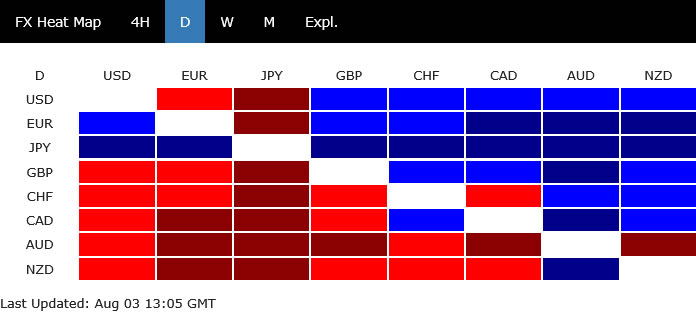
For the day so far, Yen is currently the strongest, followed by Euro, and then Dollar. Aussie is the worst, followed by Kiwi, and the Swiss Franc. Sterling and Loonie are positioning in the middle.
Related Coverage
Yen & Precious Metals Deep Dives
- Read the deeper dive into why Japan and the US broke decades of strategic ambiguity to confirm intervention this fast, and what holding above 155 would signal: Why Did Japan and the US Confirm Intervention So Fast? Can USD/JPY Hold 155?.
- See why Gold has stopped reacting to oil, yields and the Dollar, and what could finally break its trading range: Why Gold Ignores Oil, Yields and Dollar, and What Could Finally Break the Range.
Global Manufacturing PMI Roundup
- Read why the UK's softer PMI headline masks the fastest factory output growth in almost two years: UK PMI Manufacturing at Four-Month Low, but Faster Output Growth Points to Resilient Recovery.
- See why Eurozone factory output hit a 52-month high, and why the recovery still isn't being driven by fresh demand: Eurozone PMI Manufacturing at Three-Month High, but Recovery Still Lacks Fresh Demand.
- Read how AI and semiconductor demand are offsetting Middle East-related cost pressures in Japan's factory sector: Japan PMI Manufacturing Finalized at 54.5, AI Demand Offsets Middle East Headwinds.
- See why Australia's manufacturing rebound to a six-month high still comes with a fragility warning: Australia Manufacturing PMI Finalizes at Six-Month High, Yet Inflation and Supply Risks Limit Confidence.
- Read the three encouraging trends inside China's slower manufacturing expansion: China's Manufacturing Expansion Slowed, but Three Trends Offer Encouragement.
Inflation Data
- See why Swiss inflation's slip to 0.4% is concentrated in imported goods, not domestic price pressures: Swiss CPI Slips to 0.4% in July on Lower Fuel and Airfare Costs.
Frequently Asked Questions
Q: Why did USD/JPY stall at 155 instead of continuing lower after confirmed intervention?
A: Buyers emerged just ahead of the 155 support area before the pair could test it decisively, suggesting traders remain reluctant to challenge what has become an important technical level. The market still appears to believe last week's intervention was aimed at preventing a rapid return above 160, not at engineering a sustained move below 155.
Q: Why is Yen strength showing up in crosses like AUD/JPY instead of pushing USD/JPY lower?
A: Instead of forcing USD/JPY through support, demand for the Japanese currency found another outlet in the crosses. AUD/JPY led losses, followed by NZD/JPY, GBP/JPY, CAD/JPY and CHF/JPY, a pattern that points to a broader reduction in Yen-funded carry trades rather than outright Dollar weakness.
Q: Why did Brent gap lower again despite Iran signaling no immediate direct talks with the US?
A: The gap reflected hopes of easing tensions after the US cancelled planned military strikes over the weekend and President Trump said negotiations with Iran would begin Monday. Iran, however, offered a more cautious assessment, with its Foreign Ministry saying discussions remain limited to Omani mediation over the Strait of Hormuz. Markets have grown reluctant to react aggressively to political statements alone, preferring tangible evidence of changes in shipping conditions or energy flows.
Key Takeaways
- Confirmed intervention marks a real shift in strategy: Japan and the US jointly confirmed last week's coordinated Yen-buying operation, the first since 2011, and did so far faster than Japan's usual practice of strategic ambiguity.
- USD/JPY is defending 155, not breaking it: The pair stalled just ahead of the support zone as buyers emerged, suggesting markets see intervention's goal as capping a return above 160, not forcing a sustained move below 155.
- Yen strength got squeezed into the crosses instead: AUD/JPY, NZD/JPY, GBP/JPY, CAD/JPY and CHF/JPY all fell sharply, pointing to a broader unwind of Yen-funded carry trades rather than Dollar weakness.
- Oil's gap lower reflects hope, not confirmation: Brent fell as low as $81.55 on prospects of US-Iran talks, but Iran's Foreign Ministry says no direct negotiations are planned yet, just Omani mediation, keeping the conflicting-narrative pattern intact.
- This week's US data matters more for Fed flexibility than for a September verdict: ISM Manufacturing, ISM Services, ADP and Friday's payrolls will shape how much room the Fed has heading into next week's CPI report, with Fed funds futures currently pricing just over 60% odds of a September hike.
What to Watch Next
Whether USD/JPY eventually breaks below 155 or continues bleeding out through the Yen crosses is one of the week's key technical questions. On the data side, today's ISM Manufacturing kicks off a run of releases culminating in Friday's non-farm payrolls, all of which will help determine how much flexibility the Fed has heading into next week's CPI report.
EUR/USD Daily Outlook
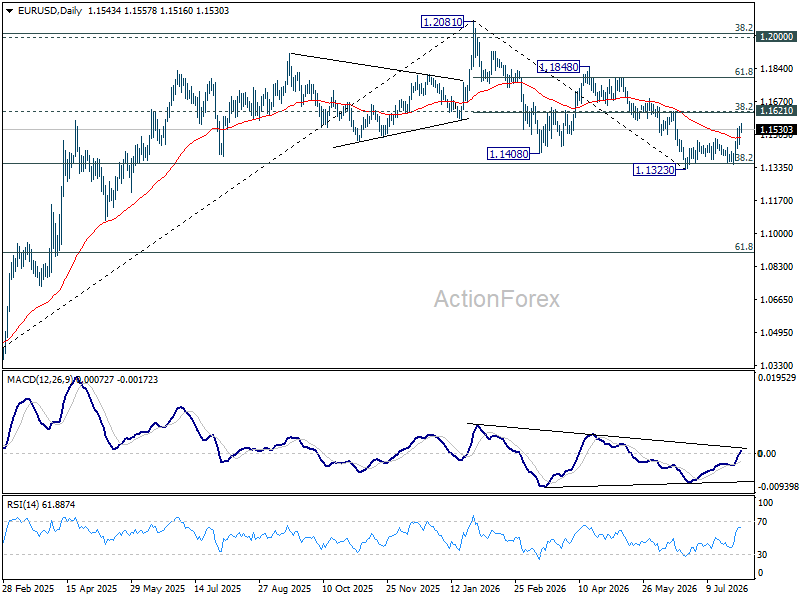
Intraday bias in EUR/USD remains on the upside for the moment. Rebound from 1.1323 should target r 1.1621 cluster resistance (38.2% retracement of 1.2081 to 1.1323 at 1.1613). Decisive break there will solidify this bullish case and target 61.8% retracement at 1.1791. Nevertheless, break of 1.1454 minor support will turn bias back to the downside for 1.1323/1352 support zone instead.
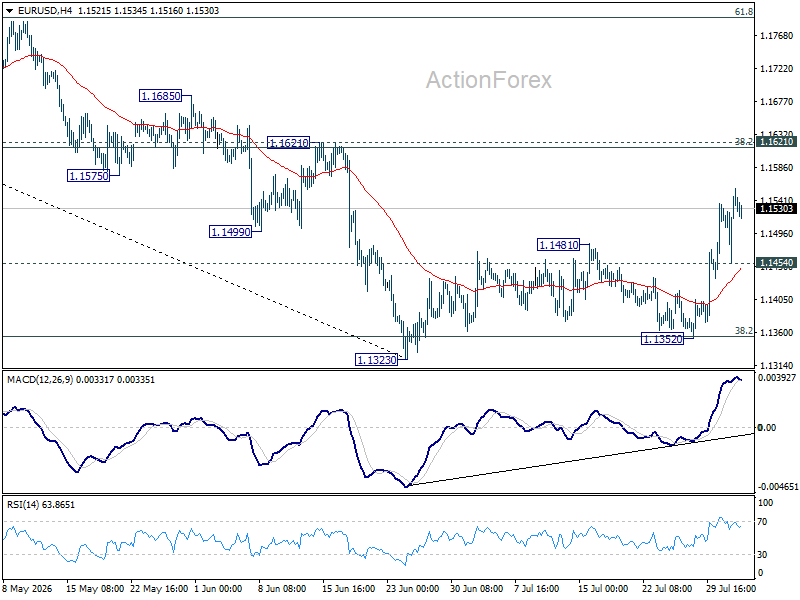
In the bigger picture, focus is staying on 38.2% retracement of 1.0176 to 1.2081 at 1.1353. Decisive break there will revive the case of medium term bearish trend reversal after rejection by 1.2 key cluster resistance level. Further fall should be seen to 61.8% retracement at 1.0904. Nevertheless, strong rebound from 1.1353, followed by break of 1.1621 resistance, will retain medium term bullishness.
USD/JPY Daily Outlook
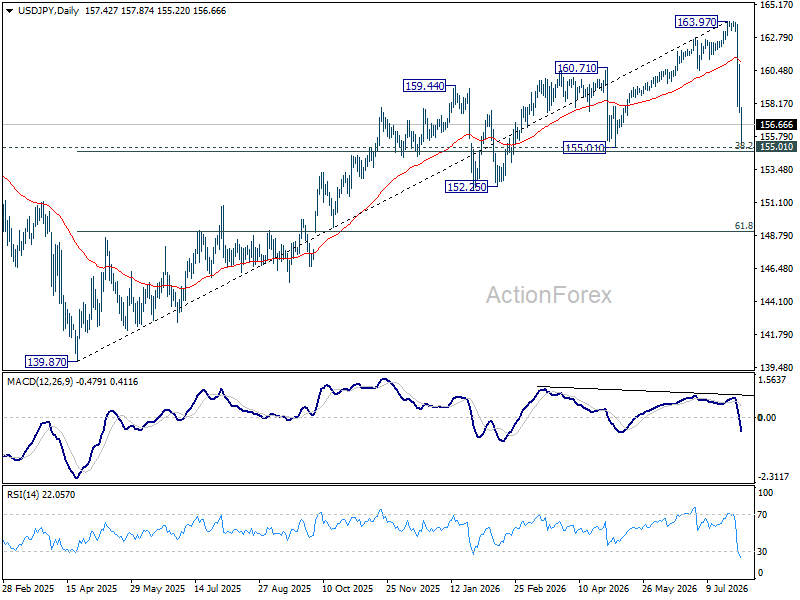
USD/JPY's fall from 163.97 extends lower today. While further decline could be seen, strong support is still expected from (38.2% retracement of 139.87 to 163.97 at 154.76) bring rebound, at least on first attempt. On the upside, above 157.95 minor resistance will turn intraday bias neutral first. However, sustained break of 154.76/155.01 will pave the way to 61.8% retracement at 149.07.
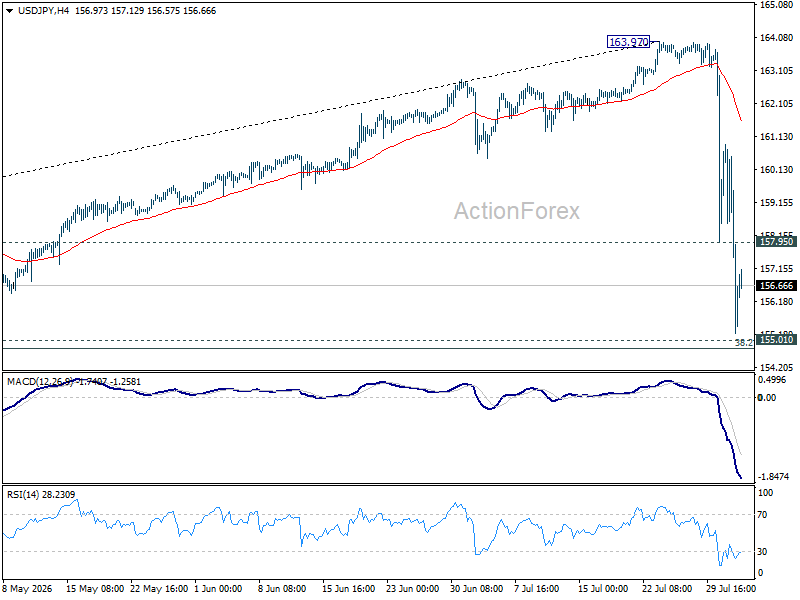
In the bigger picture, as long as 155.01 structural support holds, the larger up trend is still expected to continue through 163.97 after current correction completes. However, firm break of 155.01 will raise the chance that USD/JPY is already in a larger scale correction, and open up deeper fall back to 139.87 (2025 low) in the medium term.
GBP/USD Daily Outlook
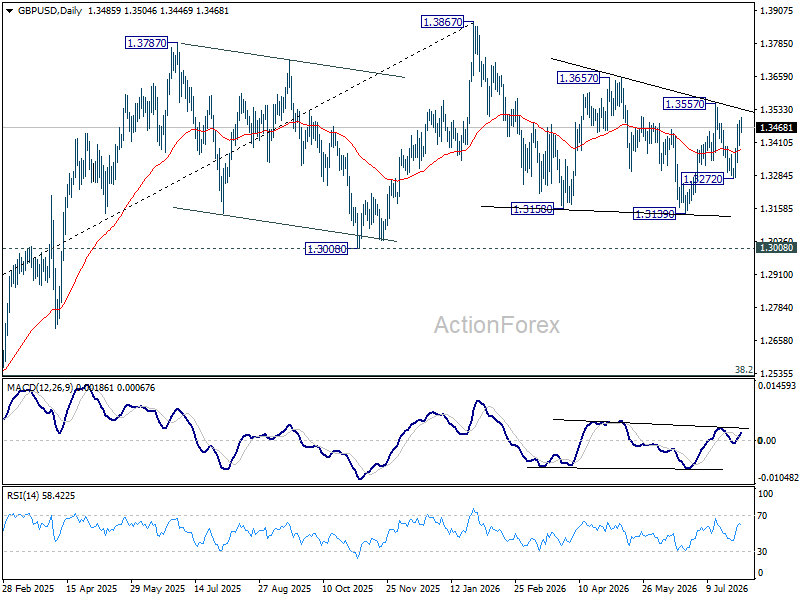
Intraday bias in GBP/USD stays neutral at this point. Overall, corrective pattern from 1.3867 is still extending. On the upside, break of 1.3557 will extend the rise from 1.3139 to 1.3657 resistance first. On the downside, below 1.3272 will target 1.3139 support.
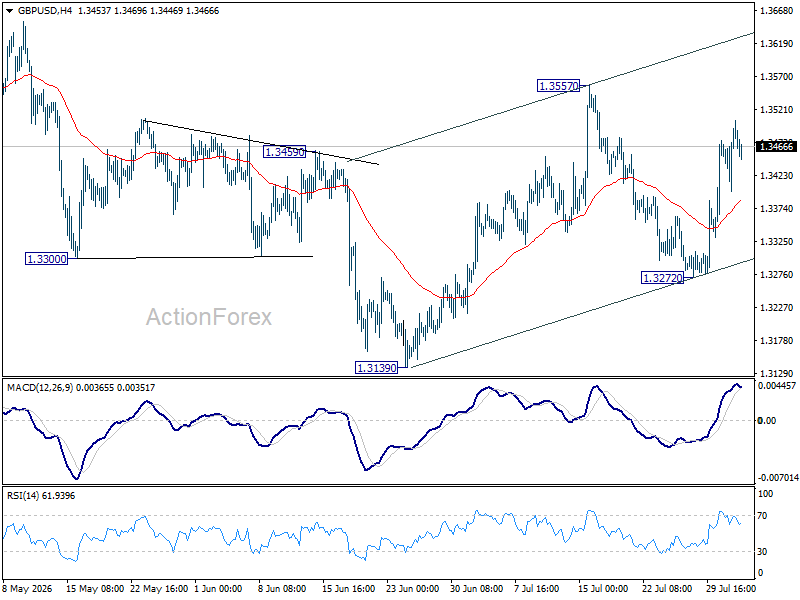
In the bigger picture, price actions from 1.3867 are a corrective pattern within the broader up trend from 1.0351 (2022 low). With 1.3008 support intact, medium term bullishness is maintained and break of 1.3867 is in favor for a later stage, towards 1.4248 key resistance (2021 high). However, firm break of 1.3008 will at least bring deeper fall to 38.2% retracement of 1.0351 to 1.3867 at 1.2524, with increased risk of bearish reversal.