

Sample Category Title
USD/CAD Daily Outlook
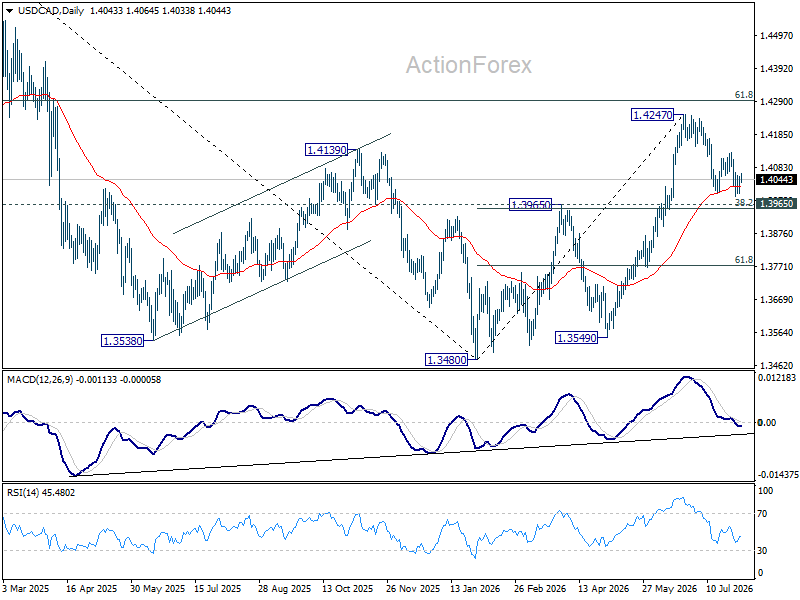
No change in USD/CAD's outlook. While corrective fall from 1.4247 might extend lower, downside should be contained by 1.3965 cluster support (38.2% retracement of 1.3480 to 1.4247 at 1.3954 to bring rebound. Firm break of 1.4127 will bring stronger rally to retest 1.4247 high. However, sustained break of 1.3954/65 will bring deeper fall to 61.8% retracement at 1.3773, and argue that rebound from 1.3480 might have completed.
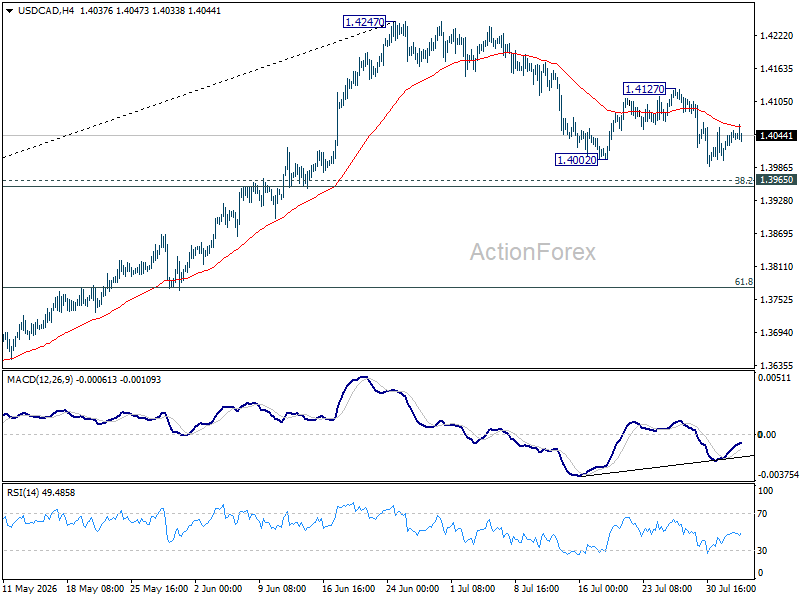
In the bigger picture, fall from 1.4791 medium term top has completed as a three wave correction to 1.3480. It's still early to judge if rise from there a corrective bounce, or resumption of the larger up trend from 1.2005 (2021 low). But in either case, sustained break of 61.8% retracement of 1.4791 to 1.3480 at 1.4290 will pave the way to retest 1.4791 high. However, rejection by 1.4290 will argue that fall from 1.4791 is going to extend with another leg through 1.3480 instead.
GBP/JPY Daily Outlook
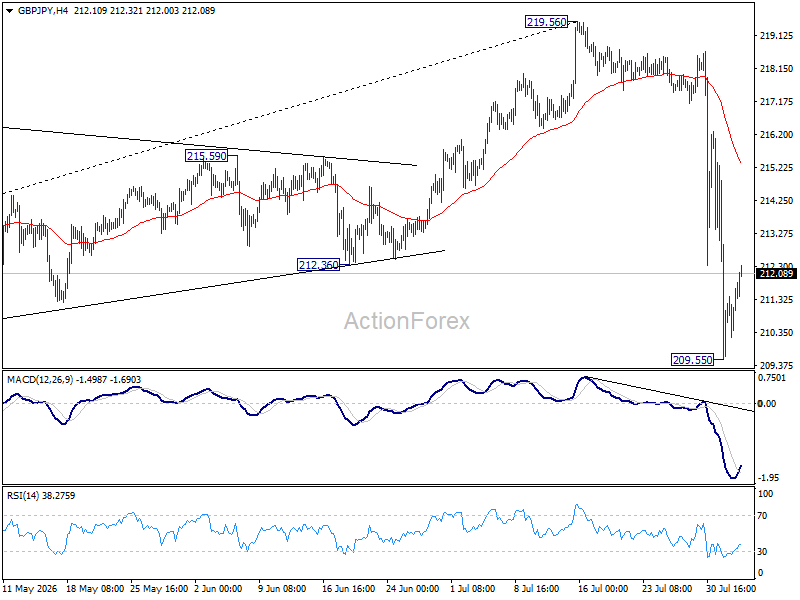
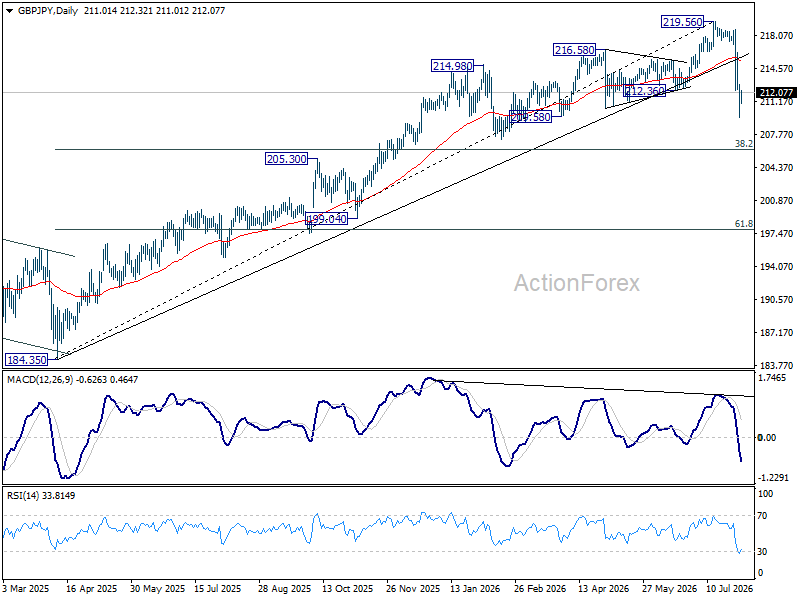
Intraday bias in GBP/JPY is turned neutral with current recovery and some consolidations would be seen above 209.55 temporary low. Risk will stay on the downside as long as 55 4H EMA (now at 215.33) holds. Below 209.55 will extend the fall from 219.56 to 38.2% retracement of 184.35 to 219.56 at 206.10.
In the bigger picture, as long as 55 W EMA (now at 208.85) holds, the long term up trend is still expected to continue. But some more consolidations should be seen below 219.56 medium term top first. However, sustained break of 55 W EMA will argue that it's already in a medium term down trend to 184.35 support and below.
EUR/JPY Daily Outlook
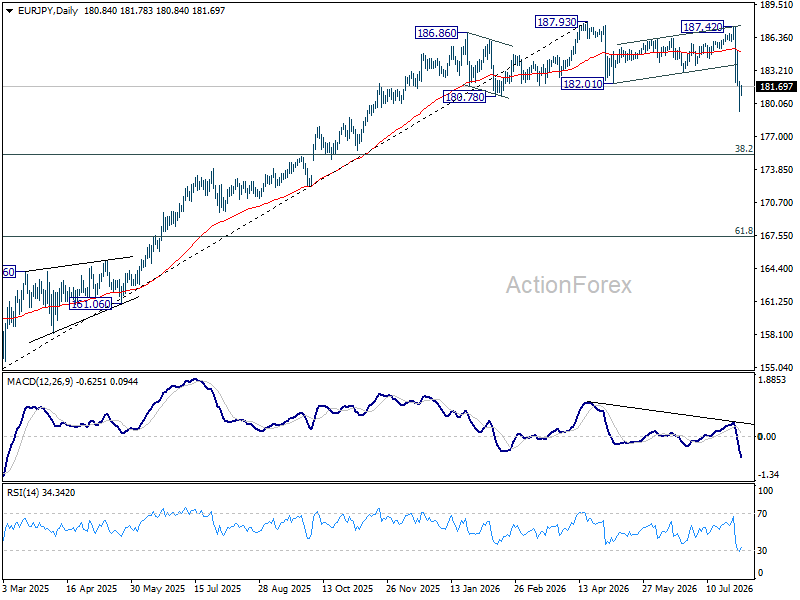
Intraday bias in EURJPY is turned neutral first with current recovery. Some consolidations would be seen above 179.34 temporary low. But risk will remain on the downside as long as 55 4H EMA (now at 184.22) holds. Below 179.34 will extend the decline from 187.93 to 38.2% retracement of 154.77 to 187.93 at 175.26.
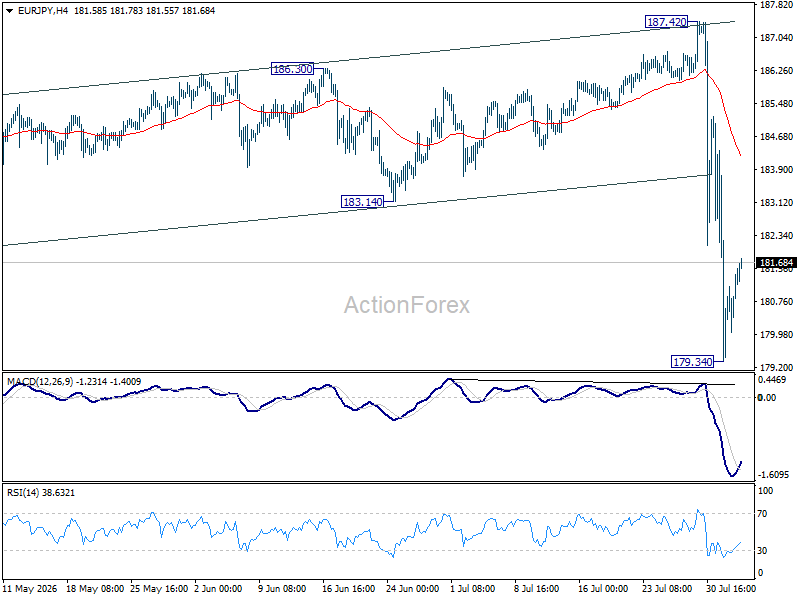
In the bigger picture, uptrend from 114.42 (2020 low) is still expected to resume at a later stage to 78.6% projection of 124.37 (2022 low) to 175.41 (2025 high) from 154.77 at 194.88. However, sustained break of 55 W EMA (now at 180.26) will argue that it's already in a medium term down trend to 175.41 resistance turned support and below.
EUR/GBP Daily Outlook
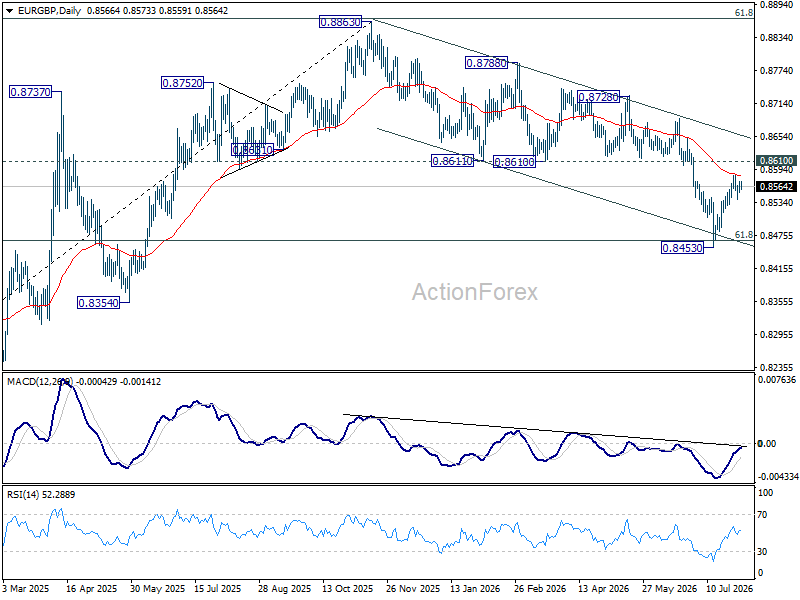
Intraday bias in EUR/GBP remains neutral at this point. While another rise cannot be ruled out, strong resistance should be seen from 0.8610 support turned resistance to limit upside. On the downside, break of 0.8258 support will argue that the corrective rebound from 0.8453 has completed, and turn bias back to the downside for retesting this low.
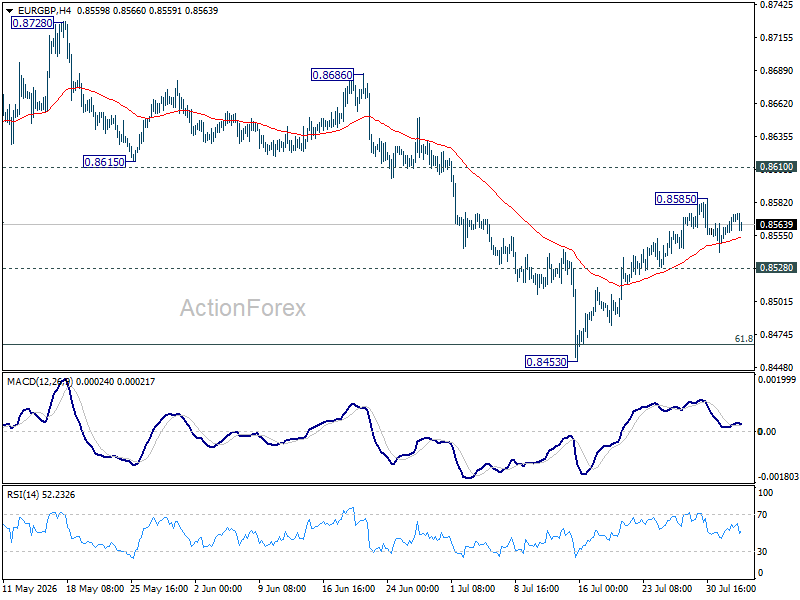
In the bigger picture, rise from 0.8221 (2024 low) should have completed at 0.8863, just ahead of 38.2% retracement of 0.9267 (2025 high) to 0.8221 at 0.8867. Deeper fall would be seen back to 0.8221. For now, outlook will be neutral at best as long as 0.8610 support turned resistance hold.
EUR/AUD Daily Outlook
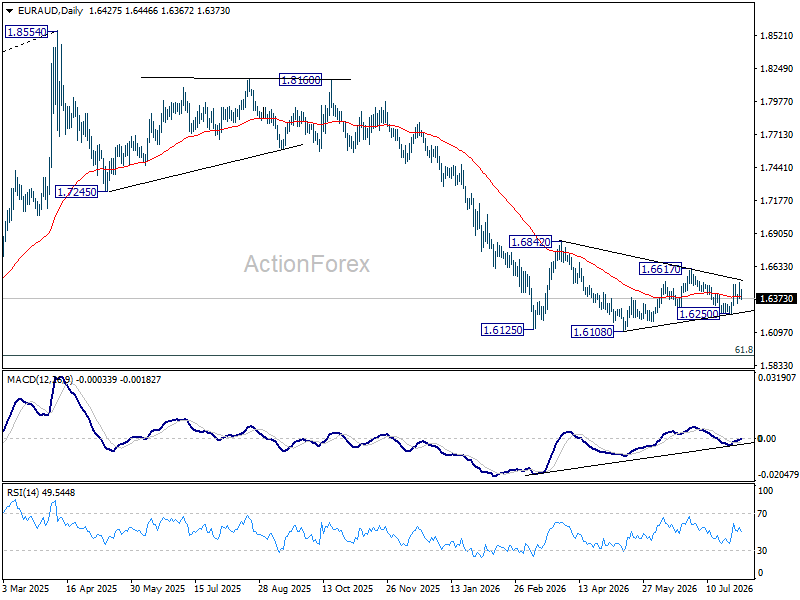
EUR/AUD retreated after edging higher to 1.6503 and intraday bias remains neutral. Overall, near term corrective pattern from 1.6108 (or 1.6125) is still extending. On the upside, above 1.6503 will target 1.6617 resistance first. On the downside, break of 1.6250 will bring deeper fall back to retest 1.6108 low.
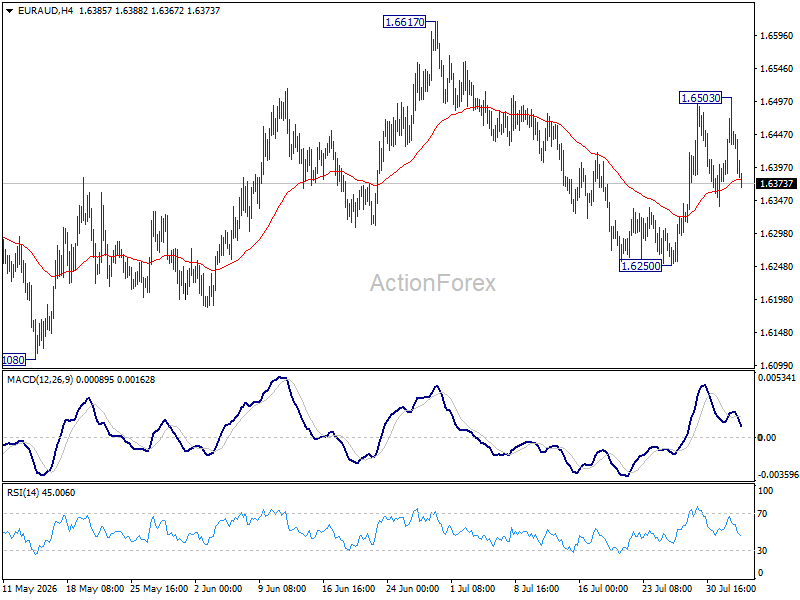
In the bigger picture, outlook will stay bearish as long as 1.6842 resistance holds. Fall from 1.8554 (2025 high) is expected to continue to 61.8% retracement of 1.4281 to 1.8554 at 1.5913. Decisive break there will pave the way back to 1.4281 (2022 low). However, firm break of 1.6842 should confirm medium term bottoming, and bring stronger rally.
EUR/CHF Daily Outlook
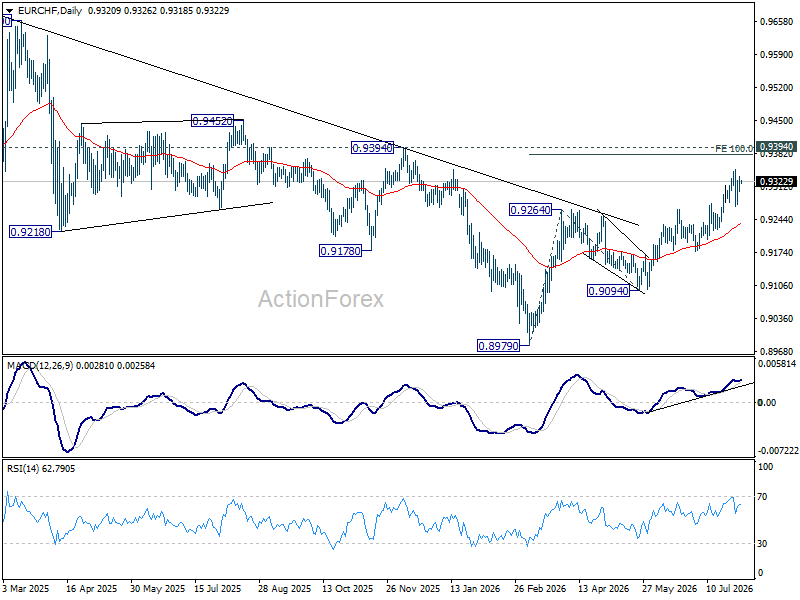
Intraday bias in EUR/CHF remains neutral as consolidations continue below 0.9348. With 0.9265 support intact, further rally is expected. On the upside, firm break of 0.9348 will extend larger rally from 0.8979 to 100% projection of 0.8979 to 0.9264 from 0.9094 at 0.9379. However, firm break of 0.9265 will indicate that deeper correction is underway to 55 D EMA (now at 0.9237).
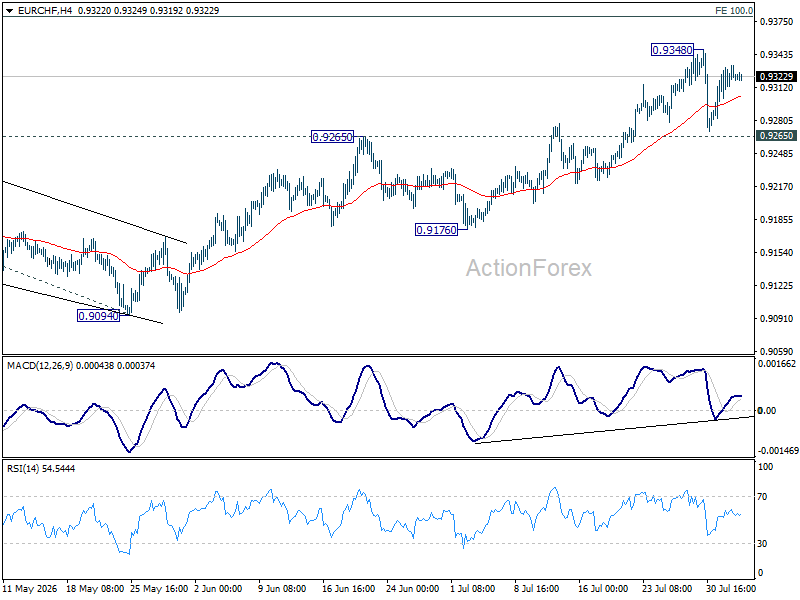
In the bigger picture, considering bullish divergence condition in W MACD, rise from 0.8979 medium term bottom should at least be reversing the fall from 0.9928, with prospect of developing into a medium term up trend. Firm break of 0.9394 resistance will add more credence to this case. For now risk will remain on the upside as long as 0.9094 support holds, in case of retreat.
GBP/USD: The Triangle That Could Define the Rest of 2026
The pound just closed its strongest week against the dollar in months, ending July up more than 1% and holding just below $1.35. Two factors are driving the move. First, political risk has faded: the UK appointed its seventh prime minister in a decade, and the new government's pledge of fiscal discipline has reassured markets. Second, the Bank of England surprised with a more hawkish tone than expected—policymakers voted 6-3 to hold rates steady, but three members pushed for a hike, a stronger signal of resolve than markets had priced in.
The dollar, meanwhile, has had a rough few sessions. Following the Fed's decision to hold rates for a fifth consecutive meeting, Chair Kevin Warsh offered little clarity on the path ahead, leaving investors questioning whether the central bank is doing enough to bring inflation back to target. The dollar index posted its worst weekly performance in three months as a result, though roughly two-thirds of the market still expects a September hike.
With both central banks striking cautiously hawkish tones but offering little forward guidance, GBP/USD's next move looks set to hinge on incoming US labor data.
Technical Analysis of GBP/USD
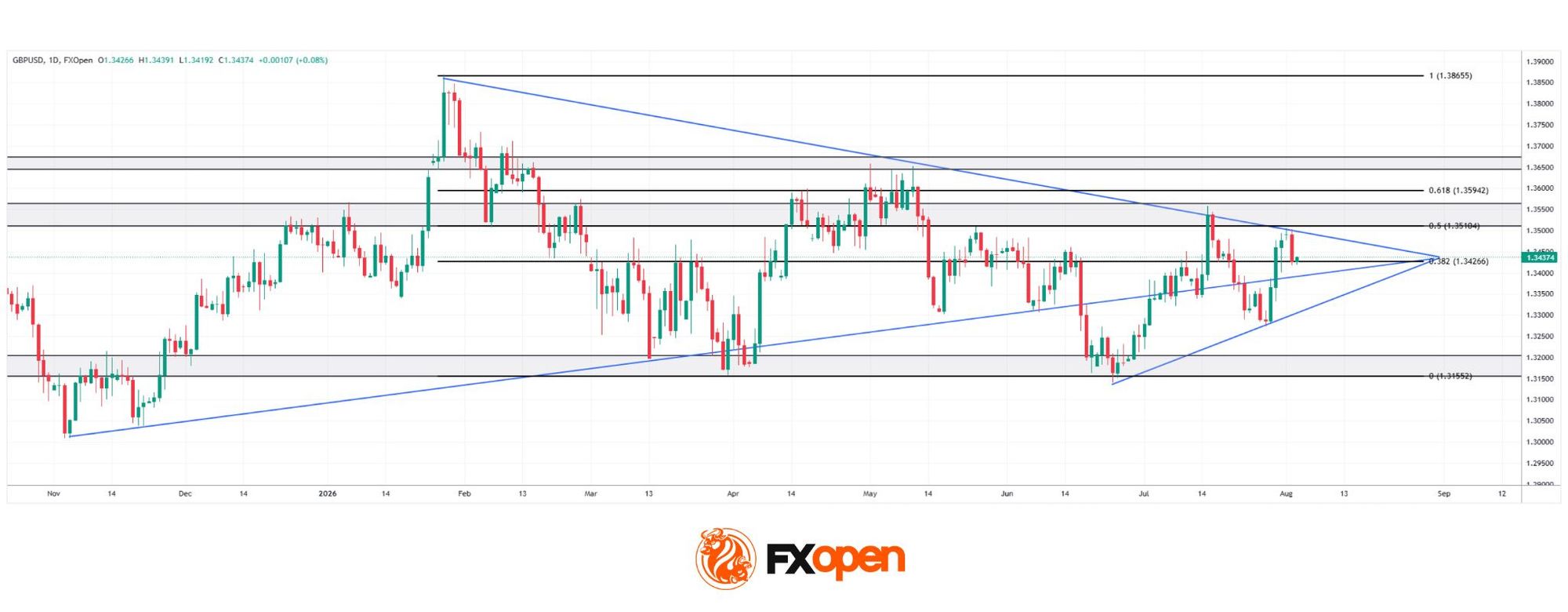
As the GBP/USD chart shows, the pair has been compressing into a broad symmetrical triangle since January's highs, with price now converging near the 0.382 Fibonacci retracement around 1.3427, exactly where the two trendlines meet. This narrowing structure suggests a decisive breakout may be approaching after months of range-bound trading.
Bullish Scenario
Should buyers push through the descending trendline and reclaim the 0.5 Fibonacci retracement near 1.3510, the path would open toward the 0.618 level around 1.3594, with a stronger move potentially targeting the 1.3865 highs from January if fundamental momentum aligns.
Bearish Scenario
Conversely, a break below the ascending trendline would expose the 1.3200 support zone, with a more significant breakdown risking a retest of the 1.3155 low that anchored this entire triangle formation.
With price coiled right at the apex of this multi-month triangle, and both the Fed and incoming labor data serving as potential catalysts, GBP/USD looks primed for its next major directional move—will the pound extend its recent strength, or is the dollar poised for a comeback?
Trade over 50 forex markets 24 hours a day with FXOpen. Take advantage of low commissions, deep liquidity, and spreads from 0.0 pips (additional fees may apply). Open your FXOpen account now or learn more about trading forex with FXOpen.
This article represents the opinion of the Companies operating under the FXOpen brand only. It is not to be construed as an offer, solicitation, or recommendation with respect to products and services provided by the Companies operating under the FXOpen brand, nor is it to be considered financial advice.
GBP/USD Under Pressure: Pound Lags Behind Peers
GBP/USD held steady at 1.3426 on Tuesday, with the pound lagging behind other currencies despite a broader decline in the dollar.
Market sentiment improved following a drop in oil prices, as investors grew hopeful that the US and Iran may reach an agreement to restore shipping through the Strait of Hormuz. Such a development would reduce inflation risks and the likelihood of further rate hikes.
Additional pressure on oil prices came from Donald Trump’s statement on Monday regarding the resumption of negotiations with Tehran, which eased fears of a fresh wave of conflict.
The outcome of last week’s Bank of England meeting reinforced the view that the regulator is in no rush to tighten policy. As a result, markets have scaled back expectations of a rate hike in 2026, which continues to weigh on sterling.
Technical Analysis
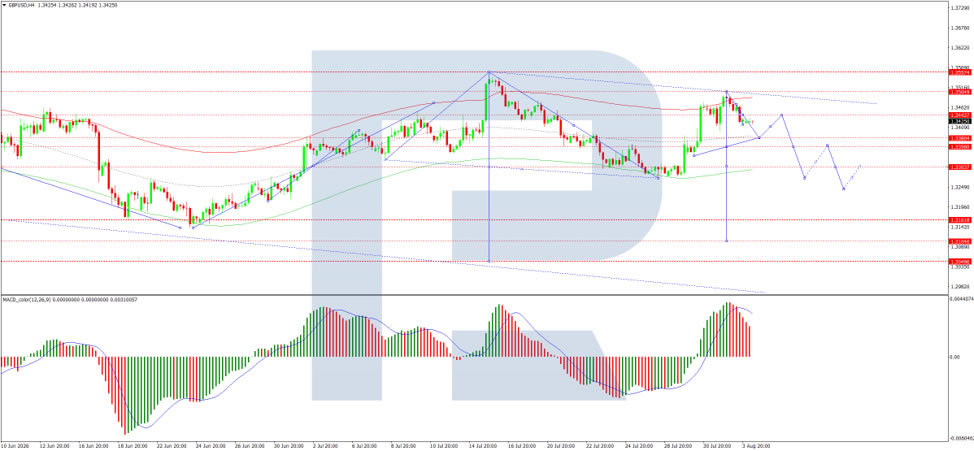
On the H4 GBP/USD chart, the market is forming a move lower towards 1.3380. A broad consolidation range around the 1.3440 level is taking shape. An upside breakout would open the way for a move towards 1.3500, while a downside breakout would suggest a move towards 1.3300, with scope for the trend to extend to 1.3190. The MACD indicator supports this scenario, with its signal line above zero and pointing downwards.
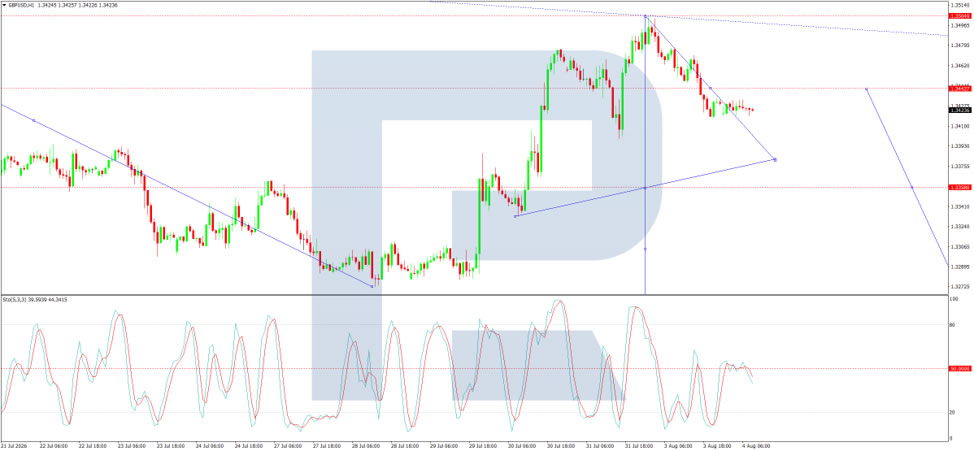
On the H1 chart, the market has formed a compact consolidation range around the 1.3420 level, currently extending down to 1.3418. A move higher towards 1.3442 is expected, followed by a decline to 1.3380. The Stochastic oscillator confirms this scenario, with its signal line below 50 and pointing downwards towards 20, indicating increasing short-term downside pressure.
Conclusion
GBP/USD is struggling to gain traction, with sterling underperforming compared to other currencies despite a broadly weaker dollar. The pound has failed to benefit from improving risk sentiment, driven by hopes of a US–Iran deal that could ease oil prices and inflation concerns. However, the Bank of England’s cautious stance, reinforced by last week’s policy meeting, continues to weigh on the currency, with markets scaling back expectations for 2026 rate hikes. Technically, the pair appears to be consolidating near 1.3420, with potential for a pullback towards 1.3380–1.3300. The pound’s relative weakness may persist until clearer signals emerge on the BoE’s policy trajectory or geopolitical tensions ease further.
Two Things Stand Between GBP/CAD and an Upside Breakout
TL;DR: GBP/CAD looks ready to resume its uptrend after rebounding from the 55-day EMA, but a sustained breakout depends on two separate forces — Friday's volatile Canadian jobs report and whether oil's renewed strength above $86 continues to support the Canadian Dollar.
Why the Correction May Already Be Over
After nearly a month of consolidation, GBP/CAD is showing signs that its broader uptrend may be ready to resume. The pair has rebounded convincingly after holding the 55-day EMA, suggesting the pullback from 1.9042 was a healthy correction rather than a change in trend. A retest of the July high now looks likely. Whether GBP/CAD can convert that into a sustained breakout, however, will depend on two very different forces: this week's Canadian labor market data and the direction of oil prices.
Force One: The Scheduled Risk — A Volatile Canadian Jobs Report
The first is the easier of the two to assess. Canada's July employment report is expected to show job growth of 15k, with the unemployment rate holding steady at 6.5%. Those numbers would broadly indicate a labor market that remains stable despite slowing economic momentum. Yet recent history suggests caution — Canada's employment data have repeatedly produced large surprises this year, swinging from an unexpected -18k decline in April to an 88k surge in May, before moderating to 18k in June. That volatility means another downside surprise cannot be dismissed.
A softer employment report would likely weaken the Canadian Dollar by reinforcing the Bank of Canada's patient policy stance. The BoC has kept rates unchanged for five consecutive meetings since its October 2025 rate cut, repeatedly signaling it's prepared to look through temporary inflation shocks as long as underlying price pressures remain contained. Weak labor market data would support that approach by reducing the urgency for any policy tightening — and could provide the catalyst for GBP/CAD to revisit 1.9042.
Force Two: The Unscheduled Risk — Oil's Renewed Grip on the Canadian Dollar
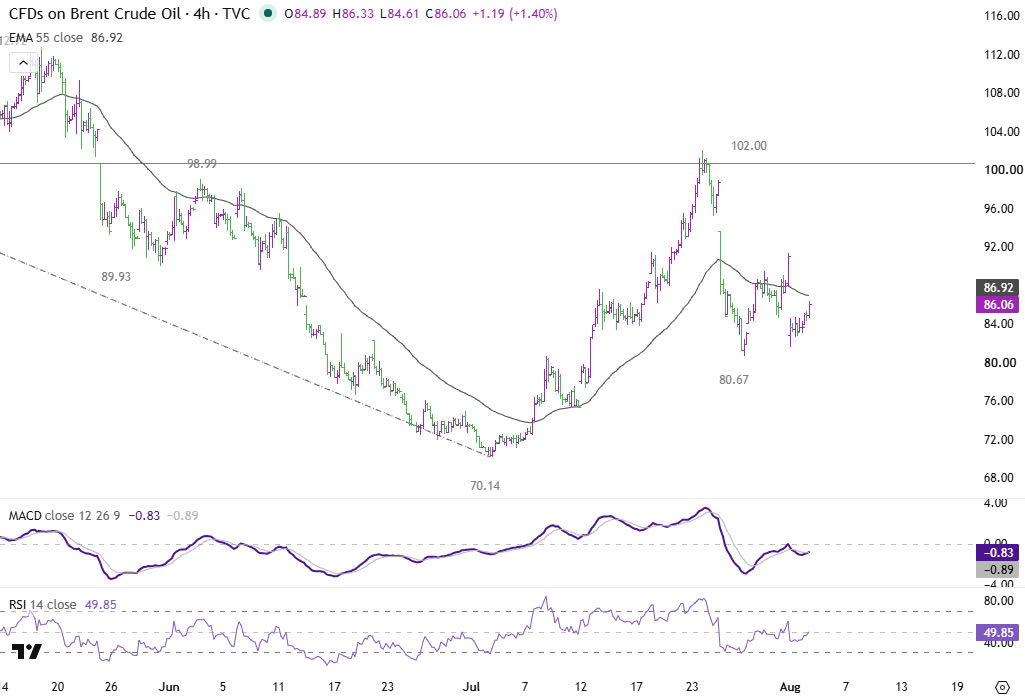
The bigger challenge lies beyond Friday's data. The main reason GBP/CAD lost momentum after reaching 1.9042 in early July was the sharp reversal in oil prices. Brent crude had bottomed near $70 before surging above $100 following the collapse of the 60-day US-Iran ceasefire, restoring strong support for the commodity-linked Canadian Dollar and forcing GBP/CAD into a month-long consolidation.
The pair's rebound from 1.8709 has coincided with Brent's retreat from above $100 to around $80, which eased some of that support for the Canadian Dollar. But oil has since recovered above $86 as geopolitical tensions remain unresolved, once again acting as a headwind for Sterling. The current advance in GBP/CAD therefore looks less constrained by Canadian domestic fundamentals than by the renewed resilience of crude prices.
Why the Geopolitical Backdrop Hasn't Actually Changed
The geopolitical backdrop has changed little despite alternating headlines from Washington and Tehran. President Donald Trump has shifted from projecting confidence in imminent negotiations to warning that Iran faces a "last chance," while Tehran continues to insist there are no immediate plans for direct talks with the United States, limiting engagement to Oman's mediation over the Strait of Hormuz. The fundamental disagreement over the future of the waterway remains unresolved, leaving markets reluctant to remove the geopolitical premium embedded in oil prices.
That distinction is important. A weak Canadian employment report may be enough to propel GBP/CAD back toward 1.9042, but it's unlikely to be sufficient for a sustained breakout if Brent remains elevated. For Sterling bulls, Friday's jobs report could provide the trigger — but whether the rally extends beyond the July high will depend far more on whether oil prices retreat again, which in turn requires credible progress toward renewed US-Iran negotiations rather than another round of conflicting political statements.
ActionForex's Technical View on GBP/CAD
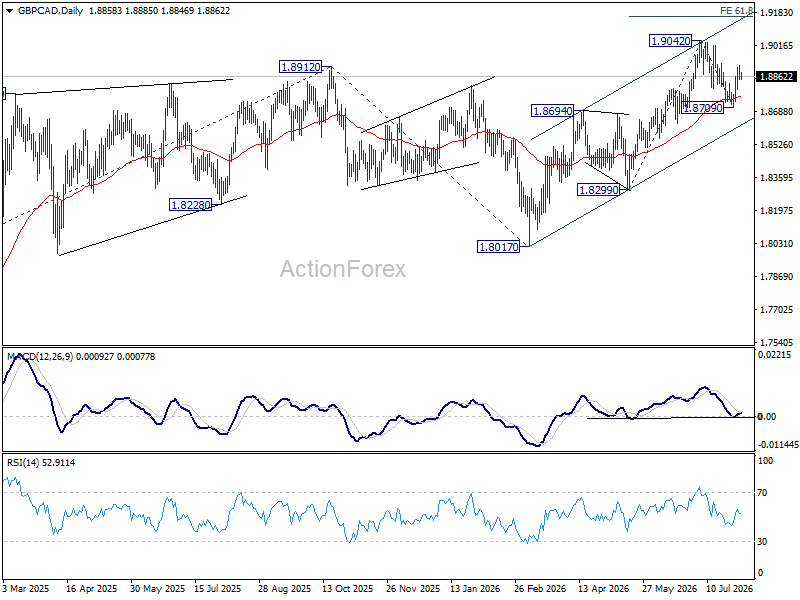
The technical outlook reflects that balance between constructive momentum and lingering macro risks. GBP/CAD remains firmly within the rising channel from 1.8017, and this week's rebound from the 55-day EMA, now around 1.8716, strengthens the case that the correction ended at 1.8709. A break above 1.9042 would open the way toward the 61.8% projection of 1.8299 to 1.9042 from 1.8709, at 1.9168, in the near term.
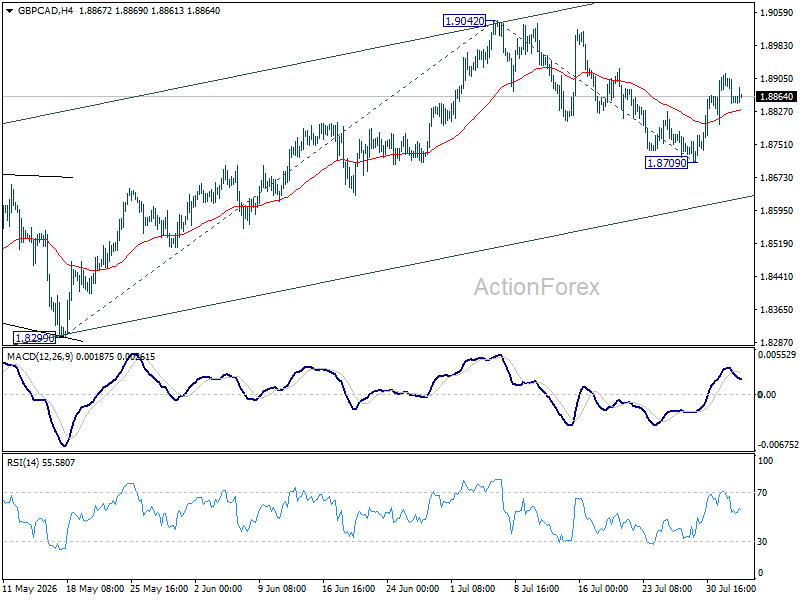
However, rejection by 1.9042 will set up another leg to extend the corrective pattern, with risk of a deeper fall through 1.8709. In that case, strong support should be seen from the rising channel floor, now at 1.8617, to bring a rebound.
Key Takeaways
- GBP/CAD's rebound from the 55-day EMA suggests the pullback from 1.9042 was a correction, not a trend change, with a retest of the July high likely.
- Canada's July jobs report (consensus: 15k job growth, 6.5% unemployment) carries elevated surprise risk given three large misses already this year.
- A weak jobs print could push GBP/CAD back toward 1.9042, but a sustained breakout depends more on oil, which has recovered above $86 after briefly easing from $100.
- The US-Iran standoff over the Strait of Hormuz remains unresolved despite shifting rhetoric, keeping a geopolitical premium embedded in oil and a headwind on Sterling.
- 1.9042 is the key resistance; a break opens 1.9168, while rejection risks a deeper pullback toward 1.8709, with the rising channel floor at 1.8617 as the next support.
Gold: the Calm Before the Storm
- Citi believes that gold’s consolidation will end with a rise towards $4,500 per ounce.
- The precious metal managed to find a bottom thanks to strong Chinese demand and the uncertainty surrounding the Fed.
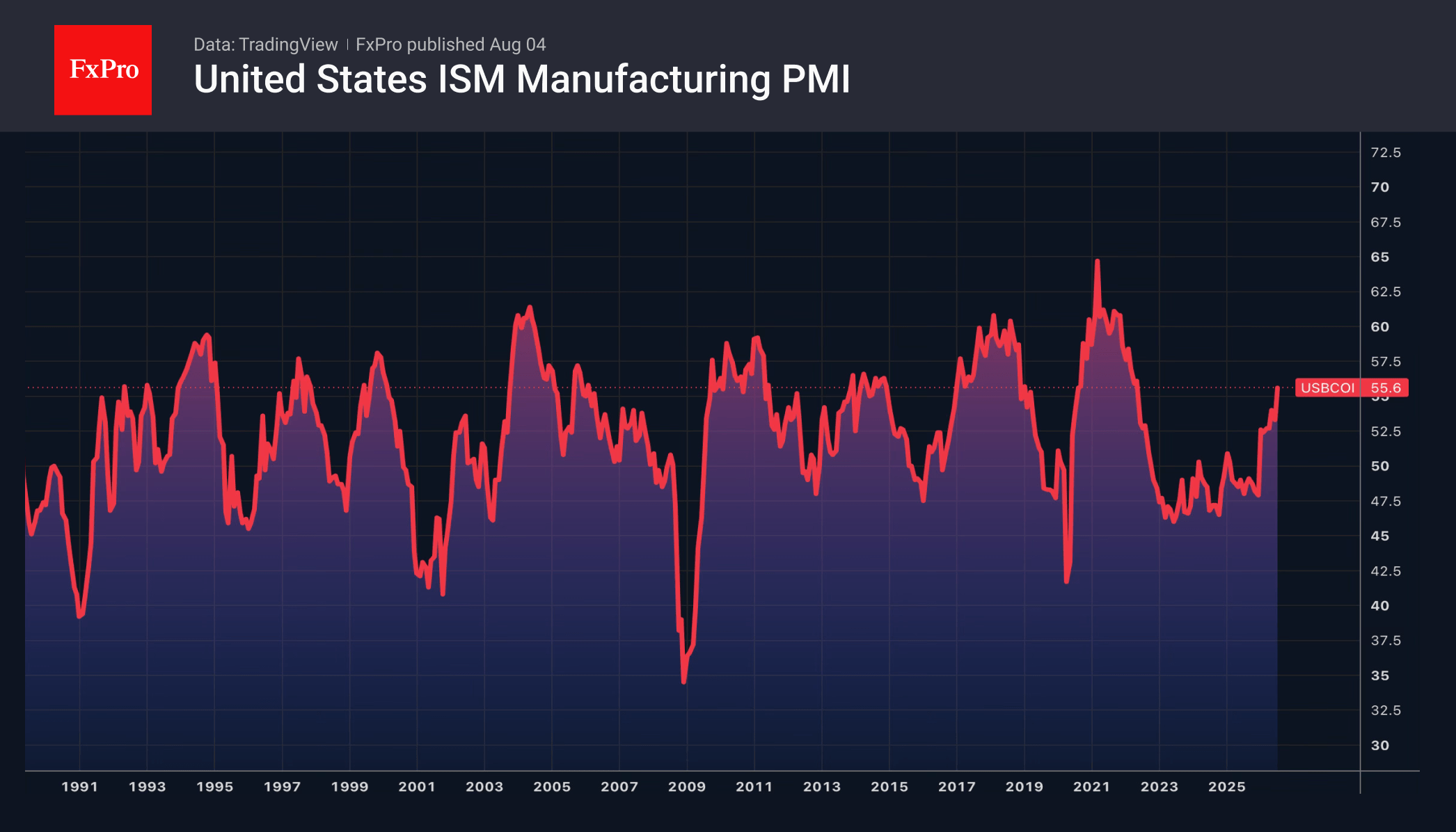
The US dollar has managed to find a floor thanks to strong business activity data in the manufacturing sector and a resurgence of market interest in artificial intelligence. The S&P 500 has approached a record high, with the three-day increase in the market capitalisation of the ‘Magnificent Seven’ proving to be the largest in history. Along with the resurgence of the AI boom, the theme of American exceptionalism has also returned.
Markets continue to discuss Kevin Warsh’s reforms. The Fed Chair wants rising Treasury yields to tighten financial conditions and curb inflation. Investors see that the central bank is in no hurry to raise rates and are increasing the risk premiums on Treasuries. Yields are rising. The Fed’s passivity is weakening the US dollar.
However, other FOMC members may not support the restructuring initiated by Kevin Warsh. John Williams, President of the Federal Reserve Bank of New York, noted that monetary policy is in the right place. But this is only because inflation is behaving as expected. If its behaviour changes, the central bank will be forced to make adjustments.
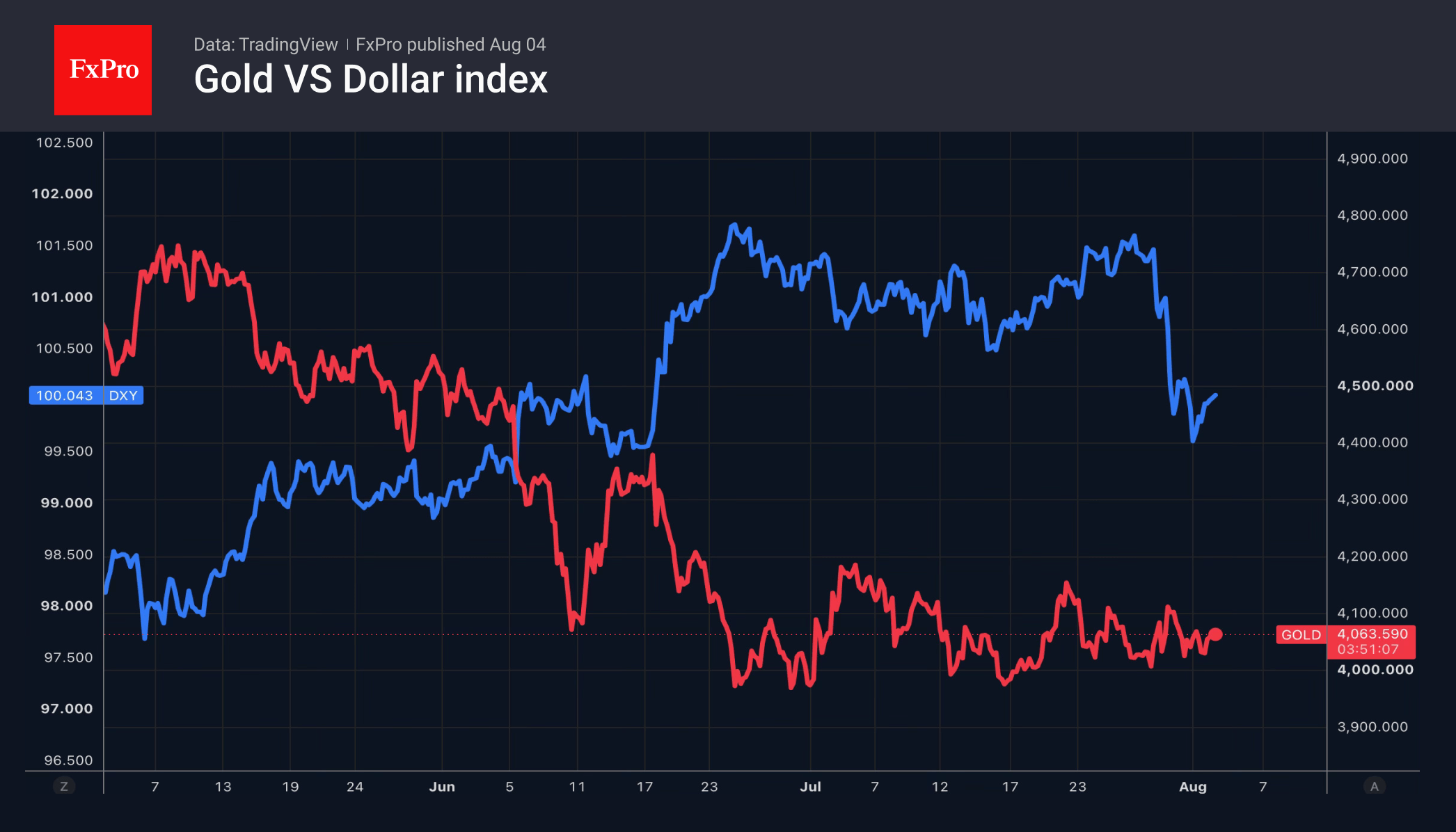
The uncertainty surrounding the Fed’s new approaches is affecting not only the dollar and Treasury yields, but also gold, which is closely linked to them. For the first time since February, the precious metal has closed the month in positive territory and is finding support in the de-escalation of the conflict in the Middle East. Although Iran maintains that it is not in talks with the US, it has noted progress in its dialogue with Oman regarding the reopening of the Strait of Hormuz. This reduces the risks of rising oil prices and accelerating inflation. If this is the case, the likelihood of the Federal Reserve tightening monetary policy should decrease.
Gold is finding support in Asia. Capital inflows into Chinese ETFs have now continued for the 14th consecutive day, as institutional investors snap up the precious metal as it approaches the psychologically significant level of $4,000 per ounce. Goldman Sachs believes that increased central bank buying of bullion is offsetting the negative impact of geopolitical tensions and rumours of a Fed rate hike. Citi forecasts that XAUUSD may stabilise at current levels or even fall. However, in the fourth quarter, gold is expected to return to the $4,500 mark.
The FxPro Analyst Team