

Sample Category Title
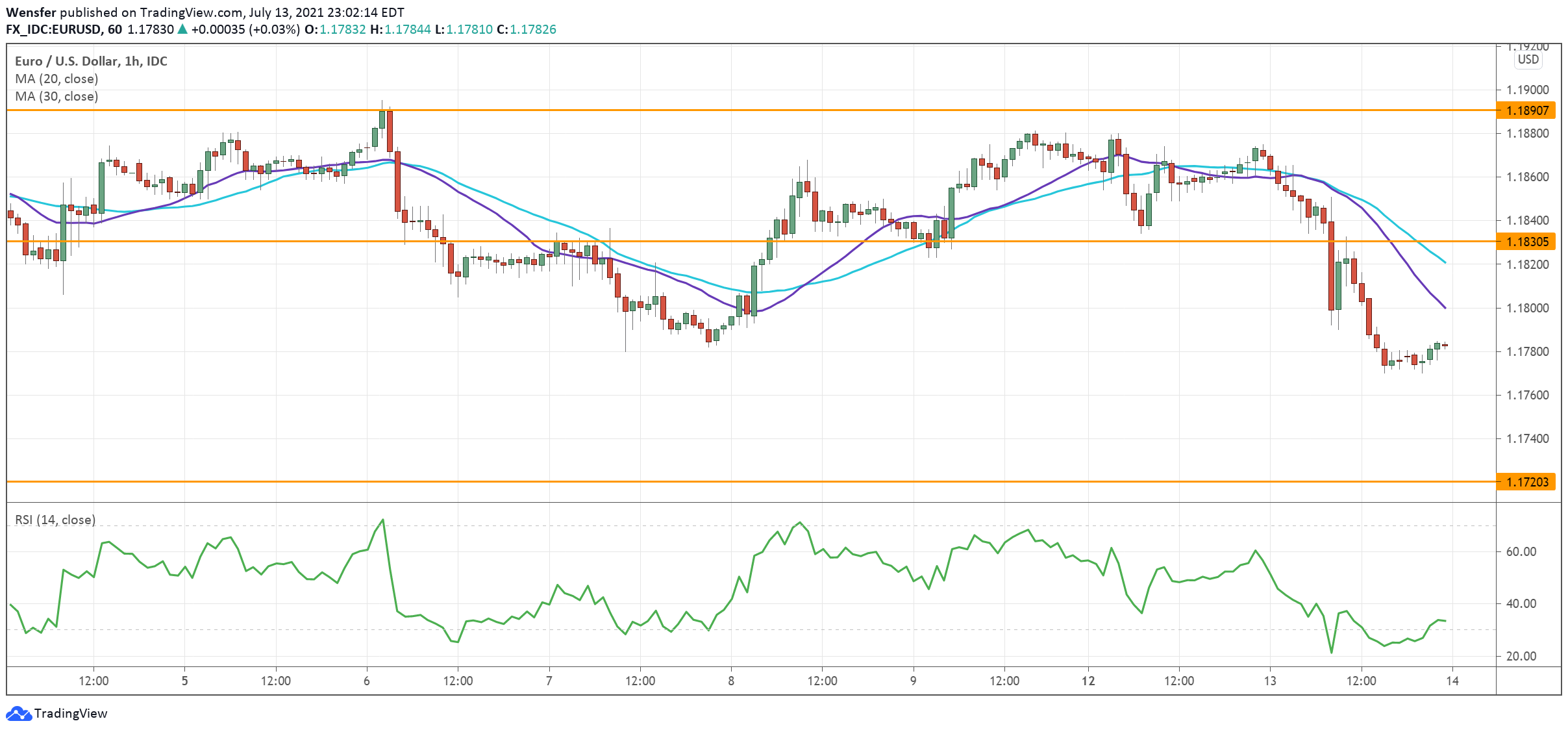
EUR/USD Tumbles Through Supports
The US dollar advanced as the US June CPI data beat expectations.
The pair has met stiff selling pressure in the supply zone around 1.1890 once again. Sentiment towards the euro is downbeat as long as it remains under the daily resistance at 1.1970.
The bears have seen recent rebounds as opportunities to sell into strength.
Below 1.1780 sellers have gained conviction and may push towards 1.1720 even though short-term traders may lift their feet off the pedal as the RSI goes oversold. A rebound is likely to be capped by 1.1830.
AUDUSD Is Possibly Bullish
Technical analysis
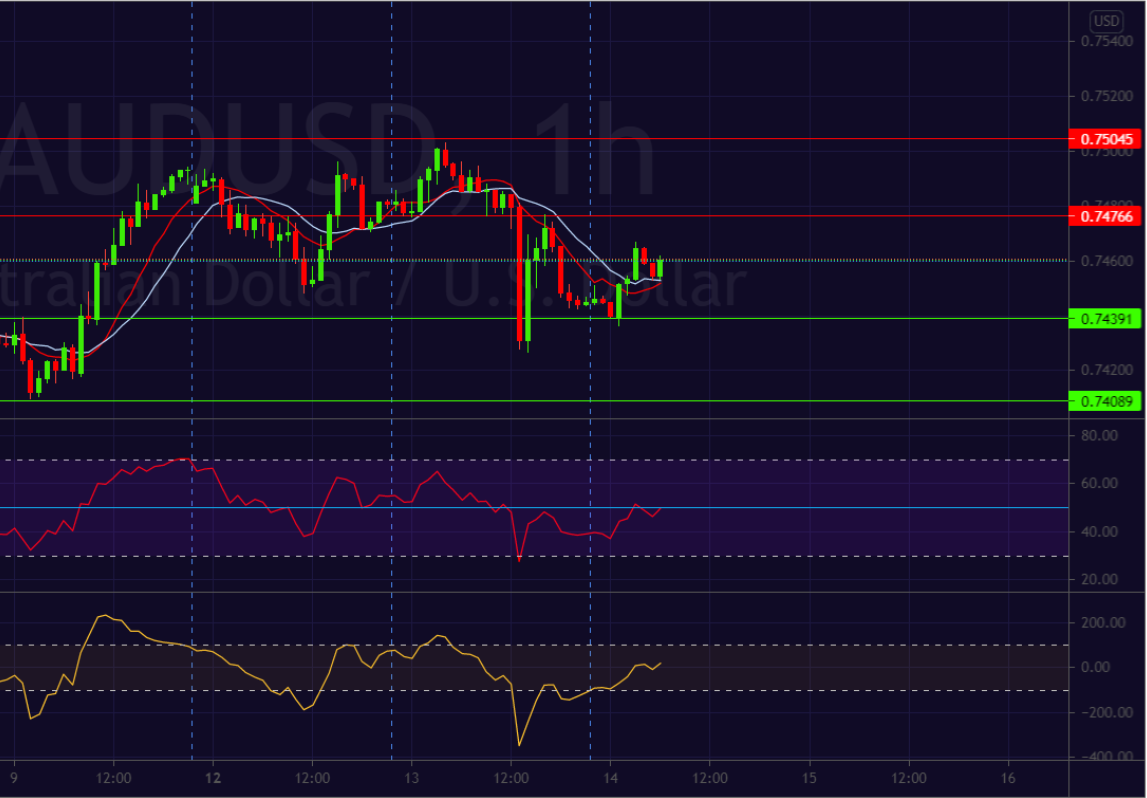
The RSI is trying to break line 50, together with the CCI above 100, indicating that the uptrend may prevail
The price is above MA(10), and MA(15) tends to cross, which may be suitable for opening long orders.
What the possible outcomes are
Australian consumer sentiment rebounded in July, giving some support to AUDUSD, after the pair's sharp decline upon U.S. CPI high numbers.
AUDUSD may rise towards the first resistance level of 0.74766. If the pair can advance beyond the first resistance level, then the next logical move is to the second resistance level of 0.75045.
Alternatively, the AUDUSD may decline towards the first support level of 0.74391. If the price drops below that level, we can expect a continued downtrend towards the second support level of 0.74089.
Key levels
Support 0.74391 0.74089
Resistance 0.74766 0.75045
EURUSD Bearish Under 1.1845
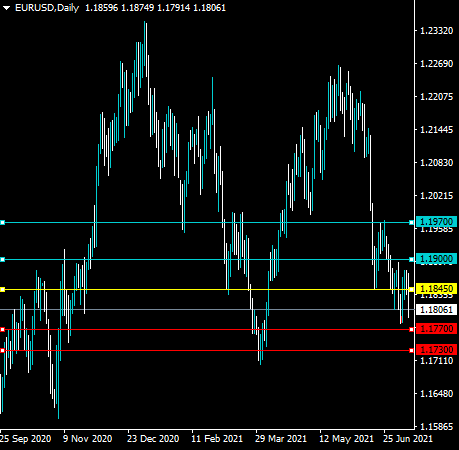
The euro currency has fallen sharply against the US dollar after another very strong monthly and annual CPI inflation report from the US economy. The EURUSD pair has a bearish short-term trading bias while the daily candle continues to close below the 1.1845 level. The EURUSD pair could fall towards the 1.1730 support area this week if the 1.1770 support level is broken.
The EURUSD pair is only bullish while trading above the 1.1845 level, key resistance is found at the 1.1900 and 1.1970 levels.
EURUSD pair is only bearish while trading below the 1.1845 level, key support is found at the 1.1770 and 1.1730 levels.
CADJPY 86.50 Possible
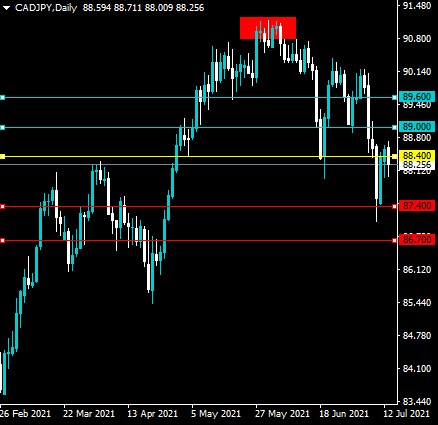
The Canadian dollar remains under technical pressure against the Japanese yen ahead of today’s Bank of Canada interest rate decision. The daily time frame shows that a large head and shoulders pattern is still in play and has yet to reach its full downside target. According to the overall size of the bearish price pattern the CADJPY pair could still fall towards the 86.50 support level.
The CADJPY pair is only bullish while trading above the 88.40 level, key resistance is found at the 89.00 and the 89.60 levels.
If the CADJPY pair trades below the 88.40, sellers may test the 87.40 and 86.70 support levels.
GBPUSD Potential Triple-Bottom
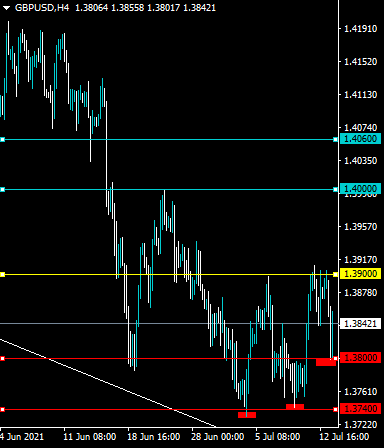
The British pound is attempting to recover from the 1.3800 level against the US dollar currency ahead of the United Kingdom CPI inflation report. The four-hour time frame shows that if GBPUSD bulls can defend the 1.3740 level then a triple-bottom pattern could be forming. A powerful counter rally in the GBPUSD pair could take hold if this bullish price pattern is confirmed.
The GBPUSD pair is only bullish while trading above the 1.3900 level, key resistance is found at the 1.4000 and the 1.4060 levels.
If the GBPUSD pair trades below the 1.3900, sellers may test the 1.3800 and 1.3740 support levels.
NZDUSD Spikes As RBNZ Scales Down Its Asset Purchase Program
US stocks declined while the greenback soared after the latest US consumer price index (CPI) data. The Bureau of Labor Statistics (BLS) data showed that the headline consumer inflation rose by 5.4% in June, the highest level since August 2008. This increase was mostly due to soaring prices for used cars as the sector continued facing significant supply costs. This increase was also due to the rising commodity prices, robust consumer demand, and ongoing logistics challenges. According to the WSJ, economists expect that the economy expanded at a 9.1% annual rate in the second quarter. This will be the fastest quarterly increase since the early 1980s. Therefore, the Fed will be under pressure to act in the next few months to curb prices.
The Dow Jones, S&P 500, and Nasdaq 100 futures bounced back in the overnight session after Senate budget committee approved a $3.5 trillion plan. The new package will see the government spend money to fund climate, education, and anti-poverty programs. The indices also tilted higher as the bank earnings season kicked off. Goldman Sachs and JP Morgan released strong earnings, helped by the deal making segment. Goldman made more than $5.49 billion profit on a revenue of $15.39 billion. JP Morgan, on the other hand, made a profit of $11.95 billion and revenue of $30.48 billion. This happened as the global deal volume surged to $1.42 trillion in the quarter. Later today, companies that will publish their results are Blackrock, Citigroup, and PNC Financial.
The NZDUSD pair jumped in early trading after relatively hawkish New Zealand central bank news. The bank decided to leave the interest rate unchanged at 0.25%. The key point of the decision was that the bank decided to halt its Large Scale Asset Purchase (LSAP) program later this month. It attributed this to the strong recovery of New Zealand’s economy. Later today, the Bank of Canada and Turkish Central Banks will deliver their decisions. The UK will also publish the latest inflation data while the Fed will release its Beige Book.
NZDUSD
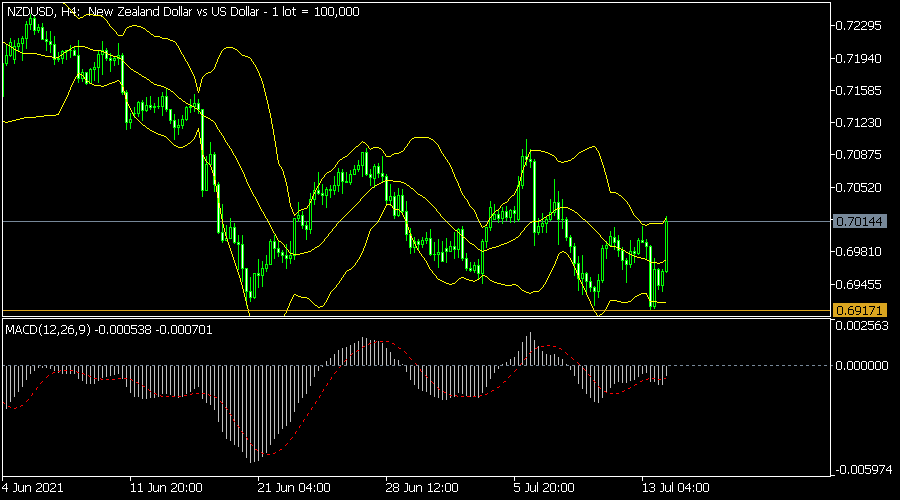
The NZDUSD spiked after the RZ decision. It rose to 0.7013, which was higher than this week’s low of 0.6917. On the four-hour chart, the pair moved to the upper side of the Bollinger Bands. It also rose above the 25-day moving average. Notably, it has also formed Gartley’s XABCD pattern, which is typically a bullish sign. Therefore, the pair will likely keep rising as bulls target the next key resistance at 0.7050.
EURUSD
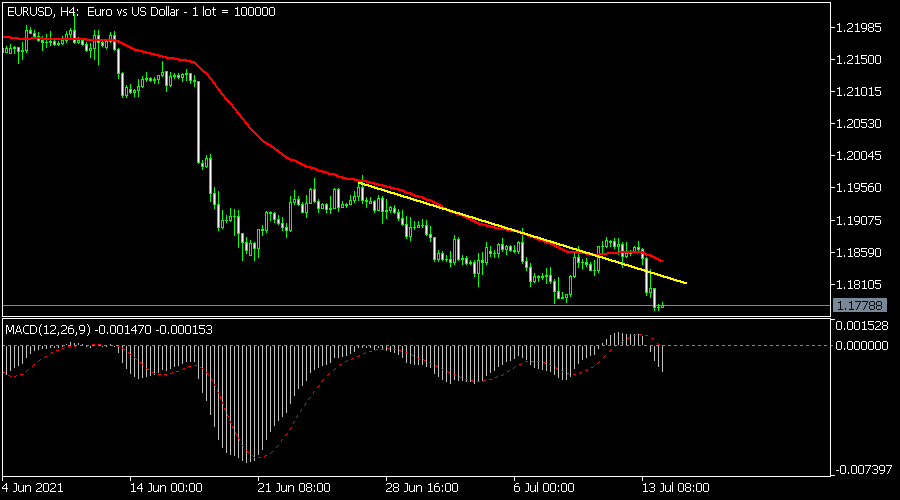
The EURUSD pair declined sharply after strong US inflation data. The pair fell to 1.1776, which was the lowest level since April 1. The pair moved below the important support at 1.1750 and the short and longer-term moving averages. The MACD and the Relative Strength Index (RSI) have also declined. Therefore, the pair will likely keep falling as bears target the next key support at 1.1700.
US30
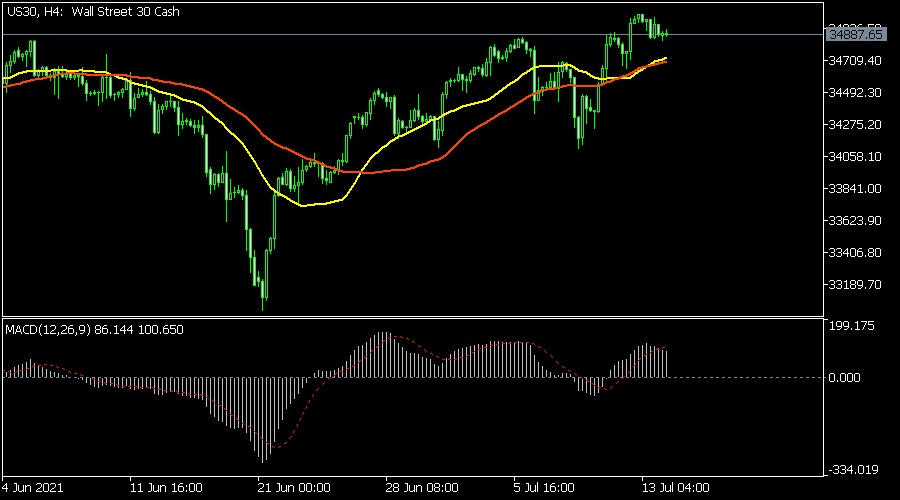
The Dow Jones declined to a low of $34,890 on Tuesday. It then erased some of those gains after the new $3.5 trillion spending package. The index remains above the 25-day and 50-day moving averages while the MACD has continued rising. As a result, there is a possibility that it will keep rising as bulls target the next key resistance at $35,000.
EUR/USD Daily Outlook
Daily Pivots: (S1) 1.1741; (P) 1.1808; (R1) 1.1844; More...
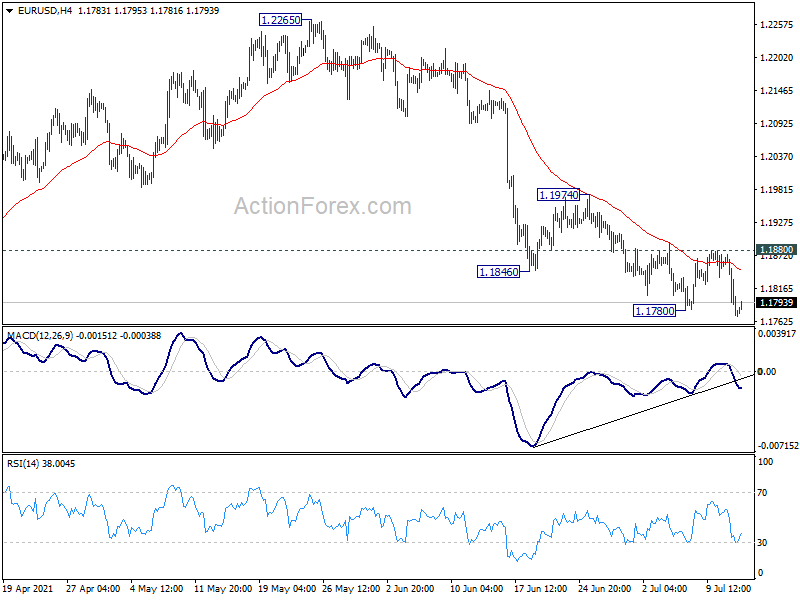
Intraday bias in EUR/USD is back on the downside with break of 1.1780. Fall from 1.2265, as the third leg of correction from 1.2348, would target 1.1703 support. On the upside, though, break of 1.1880 resistance should indicate short term bottoming, and bring stronger rebound to 1.1974 resistance first.
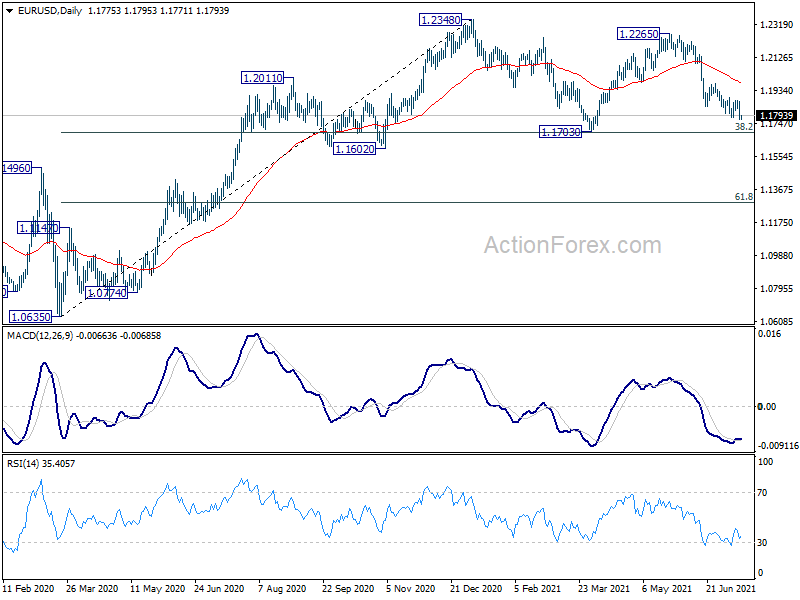
In the bigger picture, rise from 1.0635 is seen as the third leg of the pattern from 1.0339 (2017 low). Further rally could be seen to cluster resistance at 1.2555 next, (38.2% retracement of 1.6039 to 1.0339 at 1.2516). This will remain the favored case as long as 1.1602 support holds. Reaction from 1.2555 should reveal underlying long term momentum in the pair. However sustained break of 1.1602 will argue that the rise from 1.0635 is over, and turn medium term outlook bearish again.
GBP/USD Daily Outlook
Daily Pivots: (S1) 1.3776; (P) 1.3840; (R1) 1.3881; More....
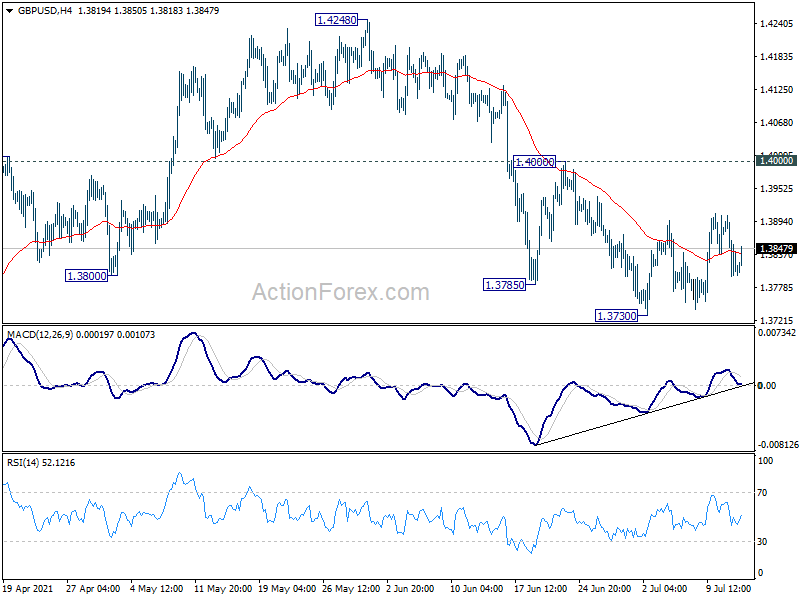
Intraday bias in GBP/USD remains neutral first and range trading continues above 1.3730 support. On the downside, break of 1.3730 will resume the fall from 1.4248, as the third leg of the consolidation pattern from 1.4240, to 1.3668 support and possibly below. On the upside, break of 1.4000 will turn bias back to the upside for retesting 1.4240/8 resistance zone instead.
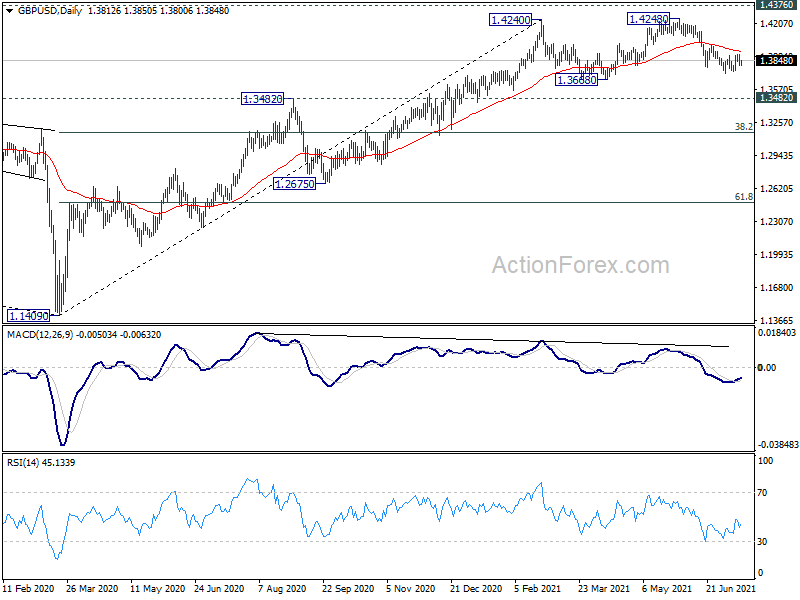
In the bigger picture, as long as 1.3482 resistance turned support holds, up trend from 1.1409 should still continue. Decisive break of 1.4376 resistance will carry larger bullish implications and target 38.2% retracement of 2.1161 (2007 high) to 1.1409 (2020 low) at 1.5134. However, firm break of 1.3482 support will argue that the rise from 1.1409 has completed and bring deeper fall to 1.2675 support and below.
USD/CHF Daily Outlook
Daily Pivots: (S1) 0.9153; (P) 0.9177; (R1) 0.9211; More....
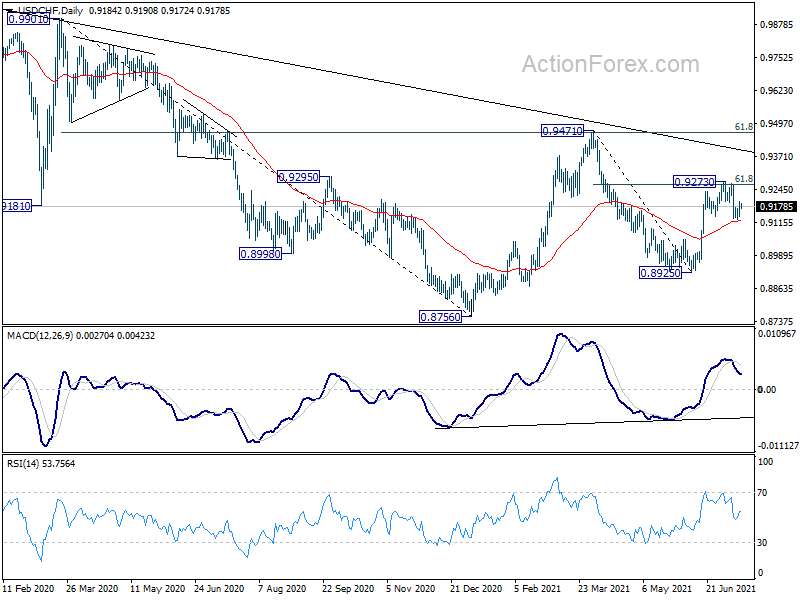
Intraday bias in USD/CHF remains neutral at this point. On the downside, sustained trading below 55 day EMA (now at 0.9126) will affirm the case that rebound from 0.8925 has completed at 0.9273. Deeper fall would then be seen back to retest 0.8925 low. On the upside though, break of 0.9273 and sustained trading above 61.8% retracement of 0.9471 to 0.8925 at 0.9262 will target 0.9471 resistance next.
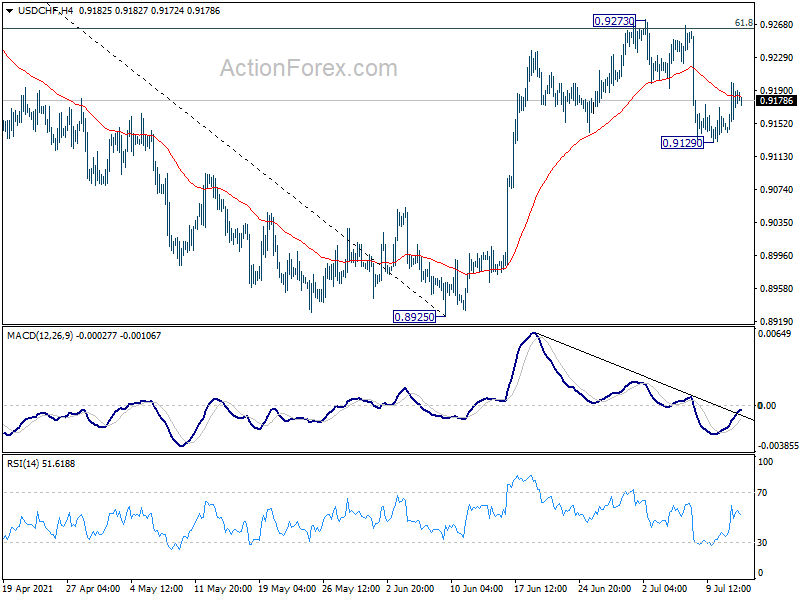
In the bigger picture, medium term outlook is currently neutral with focus on 0.9471 resistance. Sustained break there will indicate completion of whole decline from 1.0342 (2016 high). Medium term outlook will be turned bullish for a test on 1.0342 high. But, rejection by 0.9471 again will revive bearishness for another fall through 0.8756 low.
NZD/USD Jumps Beyond 0.70, Up From 0.6948
Markets
Tepid demand at a 30-yr US Bond sale managed to do what the hottest US (core) CPI print since 1991 couldn’t: Push the (very) long end of the US yield curve higher. It turned out to be an interesting trading day yesterday. Headline (0.9% M/M & 5.4% Y/Y) and core (0.9% M/M & 4.5% Y/Y) June US CPI inflation surprised friend and foe and forced analysts to redefine for the umpteenth time this year their definitions of “transitory” and to recalculate “peak” inflation levels. The market reaction was again peculiar. 5%+ inflation prints in the past used to trigger heavy bond and stocks sale. This time around US equities barely noticed the thrill while the US yield curve turned into bear flattening mode. Short term US money markets already discount a first rate hike by December 2022, but the (long) US Treasuries soon recovered from a knee-jerk reaction lower. At current absolute yield levels and with such a CPI reading, we’d still expected more of a bear steepening or at least simultaneous move across the curve. Eventually it turned out to be a matter of time before the (very) long end capitulated. The final act of the US Treasury’s mid-month refinancing operation ($24bn 30-yr bond sale) stopped significantly through the WI bid (2.4 bps) with the lowest bid cover since July 2019. At this long tenor, 2% seems to be a tipping point for investors, especially hours after such inflation reading. Daily changes on the US yields curve eventually ranged from +2.6 bps for the 2-yr to around +5 bps for the 5-yr to 30-yr part of the curve. German yields ended nearly flat on the day, but Bunds did dip lower in lockstep with US Treasuries after the official European close so that effect will show in today’s numbers. The US dollar benefited mostly from higher ST US yields after the CPI print. The trade-weighted dollar (DXY) closed recorded the strongest close (92.75) since early April and test the 92.85 recent high. It’s the final (minor) hurdle ahead of the YTD high at 93.44. The technical picture for EUR/USD is more or less similar: a 1.1776 close (even below the recent low of 1.1782) which brings the YTD low of 1.1704 on the radar. The single currency eventually lost out against sterling as well. EUR/GBP closed at 0.8525 which is the softest since April as well. Ahead of today’s inflation numbers and tomorrow’s labour market reports, EUR/GBP has its eyes on the 0.8471 YTD low as well. Other items on the calendar include US June producer prices, day one of Fed Chair Powell’s semi-annual testimony before US Congress, more Q2 earning results, and the release of the Fed’s Beige Book. We especially look at US publications and expect markets to gradually become more sensitive to the inflation theme again.
News headlines
The ECB is having a meeting today at which it will decide whether to move to an explanatory phase in the creation of a digital euro. President Lagarde expects the committee to give green light for two years of exploration that ultimately could be followed by a virtual euro by the middle of this decade. Aside from being a cleaner and greener alternative that would complement traditional money, a digital euro also has monetary policy consequences as shown in an ECB report last year. It could remove some of the hurdles to cut interest rates further below zero since digital euros can’t easily be hoarded. It would also make helicopter money easier to implement, though the ECB has said before that’s government policy rather than something for the central bank to decide.
The Reserve Bank of New Zealand hit the QE brakes during the policy meeting this morning. The central bank said it would halt purchases by July 23. Economic conditions since late 2020 have persistently beat expectations. The RBNZ as a result sees more persistent CPI pressures over time due to rising domestic capacity pressures and growing labour shortages. Risks of deflation and high unemployment therefore receded, meaning a “least regrets” policy could be reduced sooner. This marks a great shift with the “considerable time and patience” in the previous statement. The central bank kept the policy rate unchanged at 0.25%. With today’s decision, however, markets en masse brought forward their expectations of a first rate hike to November this year. Kiwi bond rates surged up to 11 bps (short end). NZD/USD jumps beyond 0.70, up from 0.6948.