Sat, Apr 11, 2026 20:56 GMT
More

    Sample Category Title

    Global Markets Look Beyond Trump’s Inauguration as Local Drivers Take the Lead

    ActionForex

    Global markets are buzzing in anticipation of Donald Trump’s inauguration on January 20, yet the latest developments suggest investors may already be looking past the immediate impact. Despite speculation surrounding Trump’s policies—particularly tariffs—various benchmarks and asset classes are charting their own directions based on localized drivers and monetary policy expectations.

    In the US, the strong bounce in major stock indexes owes something to hopes of expansive fiscal stimulus under Trump. However, a significant portion of the rally can be traced to an improving inflation outlook and the view that Fed remains on track to further monetary easing. Additionally, the lack of significant concern over tariffs impacting inflation suggests that investors may not see Trump's trade policies as an immediate threat to the US economy.

    Meanwhile record-breaking runs in FTSE and DAX signal distinct optimism. UK investors are banking on additional BoE easing after disappointing GDP, retail sales, and CPI data highlighted ongoing struggles. Germany’s DAX is supported by ECB’s dovish leanings as well as hopes of a political turnaround after snap elections in Germany in February. Market enthusiasm for Europe clearly isn’t driven by any expectation of beneficial tariffs; rather, local factors are in control.

    Japan, not a prime target of Trump’s tariff rhetoric, saw Nikkei weighed down by intensifying speculation about a looming Bank of Japan rate hike. This dynamic stands in sharp contrast to the overarching risk-on atmosphere elsewhere.

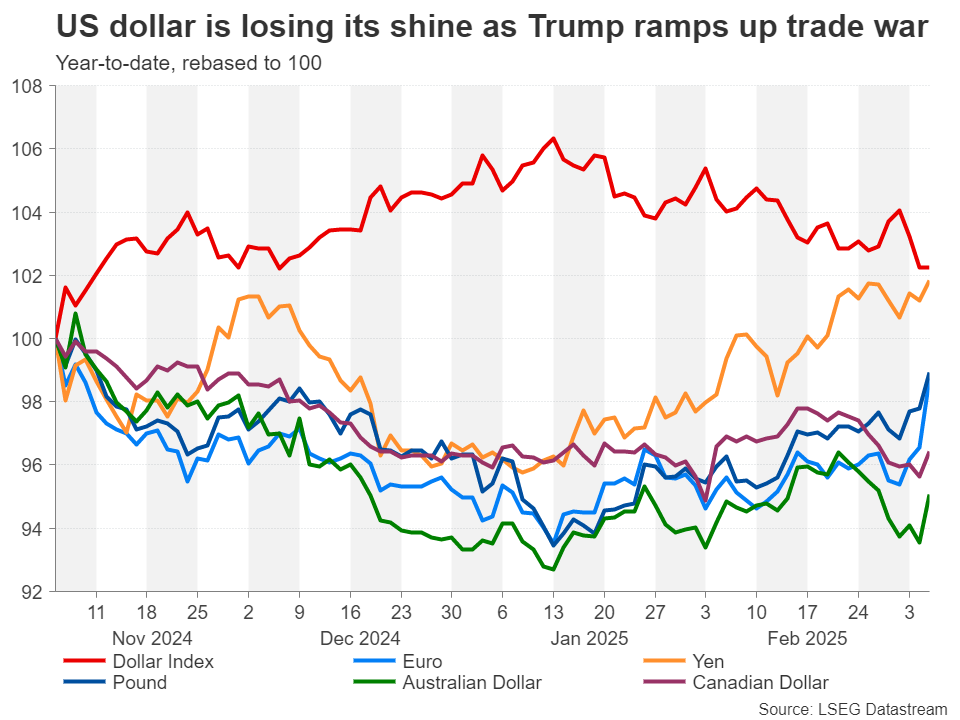
    In the currency markets, Yen emerged as the strongest performer last week, propelled by bets on BoJ action. Australian and New Zealand dollars followed suit, aided by the broader risk-on mood. On the weaker side of the spectrum, Canadian Dollar was the worst-performing currency, finally something reflecting potential vulnerability to Trump's trade policies as BoC may have underestimated the economic risks posed by tariffs. Sterling also underperformed while Dollar was similarly subdued. Euro and Swiss Franc ended the week in middle positions.

    Risk Appetite Returns: DOW, S&P 500, NASDAQ End Week with Solid Gains

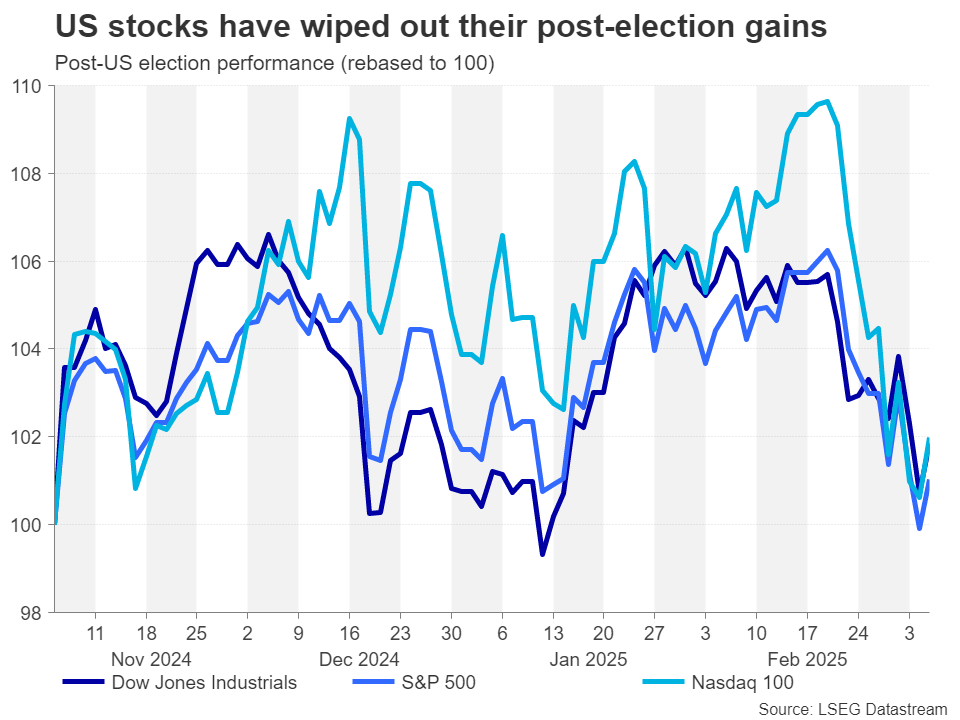
    Risk-on sentiment returned to US equity markets this week, with all three major indexes posting strong gains. DOW surged 3.69% for the week, S&P 500 rose 2.91%, and NASDAQ climbed 2.45%. Technically, the robust rebound eased fears of an imminent bearish reversal, affirming that recent pullbacks were likely just corrections within a broader uptrend.

    Market attention was drawn to Fed Governor Christopher Waller’s remarks at CNBC's "Squawk on the Street", interpreted by some as a dovish tilt. He expressed confidence that the inflationary stickiness seen in 2024 will begin to "dissipate" in 2025 and described himself as "more optimistic" about inflation than many of his Fed colleagues. Waller indicated the potential for three or four 25bps rate cuts this year, contingent on favorable inflation data.

    However, it should emphasized that Waller also tempered this optimism with caution, acknowledging that “If the data doesn’t cooperate, then you’re going to be back to two, maybe even one”.

    Waller left the door open for a rate cut in March, remarking that such a move "cannot be completely ruled out." However, the message underlying was still consistent with market expectation that May or June might be more likely.

    Overall, despite the dovish interpretation by some, Waller's comments suggest a flexible, data-dependent approach rather than a clear commitment to easing. The comments also largely aligned with market pricing.

    Nonetheless, inflation data for December did provide some relief. While, headline CPI rose from 2.7% to 2.9% yoy, core CPI edged down from 3.3% to 3.2%. This incremental progress reduces pressure on the Fed to maintain restrictive policy for an extended period. More importantly, that makes a return to tightening less likely.

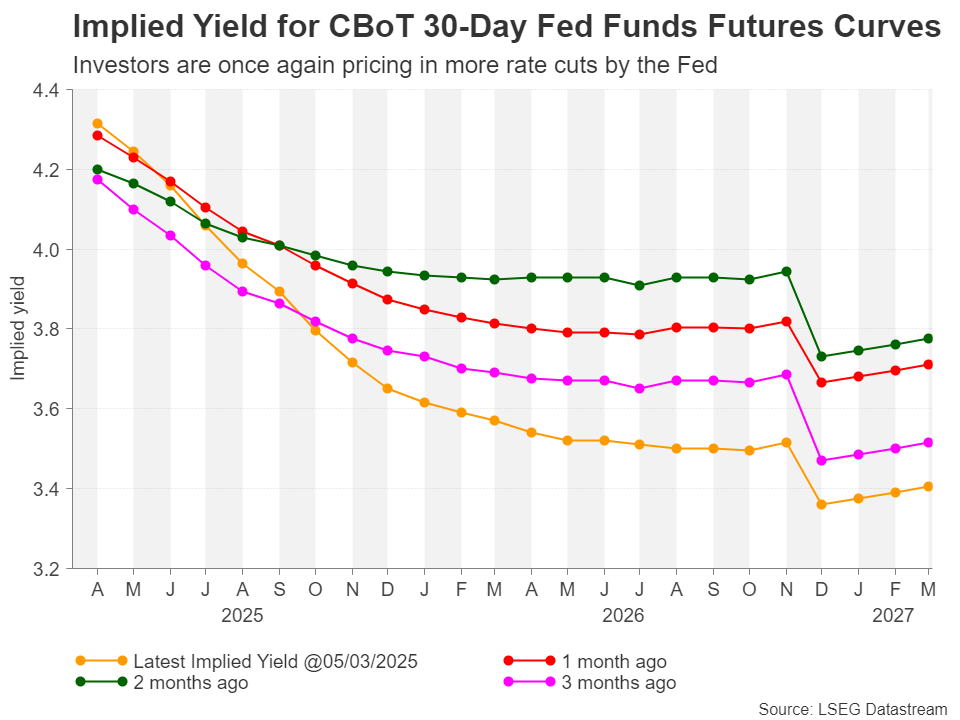
    Futures pricing didn't change much over the week, reflecting a 97.9% chance that Fed will hold rates steady at 4.25–4.50% at the January meeting, with a 72.4% chance of another hold in March. The probability of a May rate cut stands at 44%, rising to 66% by June. By year-end, markets still project a 52.1% chance of just one rate cut, reducing rates to 4.00–4.25%.

    Technically, DOW's break of 55 D EMA (now at 43038.33) suggests that pullback from 45073.63 has completed at 41844.98 already. The medium term channel holds intact, as well as the up trend. Whether DOW is ready for another record run through 45073.63 would depend on the momentum of the next rise.

    But even in case that corrective pattern from 45073.63 is going to extend with another falling leg, downside looks more likely than not to be contained by cluster support level at around 40k, with 39889.05 resistance turned support, and 38.2% retracement of 32327.20 to 45073.63 at 40204.49.

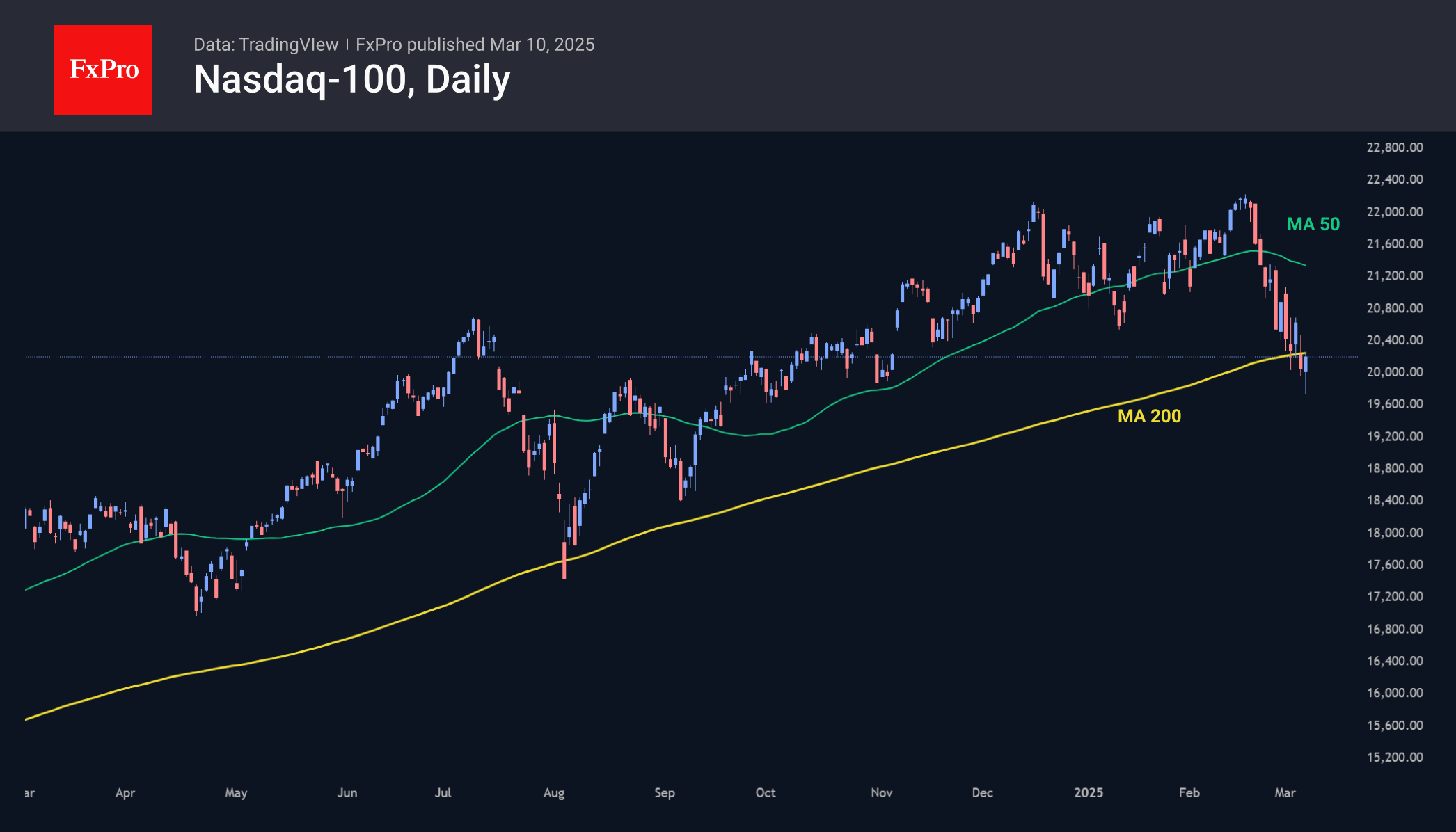
    NASDAQ's price actions from 20204.58 are also clearly corrective looking so far, with notable support from 18671.06 resistance turned support. With this support intact, larger up trend should resume through 20204.58 sooner rather than later.

    Yields and Dollar Index Form Short-Term Top With Improved Risk Sentiment

    Improved risk sentiment in US markets has triggered pullback in both 10-year Treasury yield and the Dollar Index, suggesting a temporary pause in their recent rally.

    Technically, a short term top is likely in place at 4.809 in 10-year yield, considering that D MACD has crossed below signal line. More consolidations should follow in the near term below 4.809, with risk of deeper pull back to 55 D EMA (now at 4.434). But outlook will continue to stay bullish as long as 38.2% retracement of 3.603 to 4.809 at 4.348 holds. Another rally through 4.809 to retest 4.997 high is expected, though breaking the psychological 5% level may prove challenging without stronger momentum.

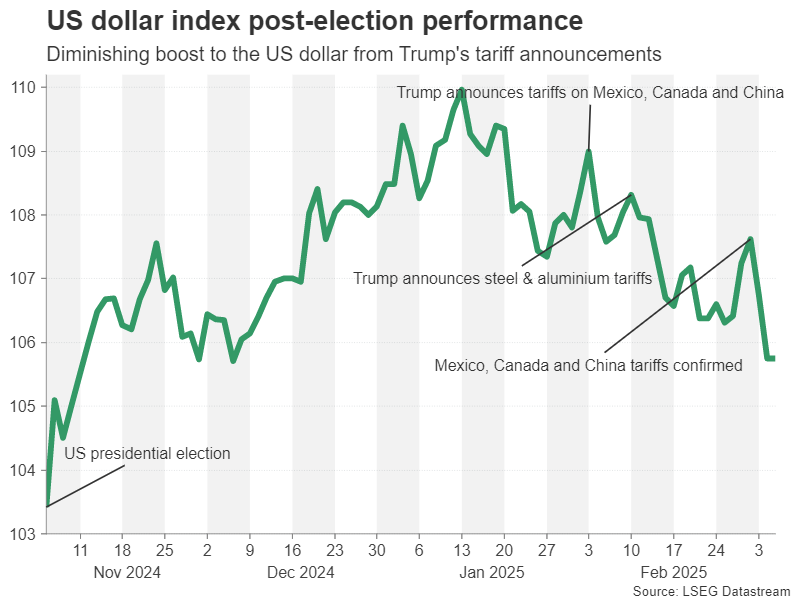
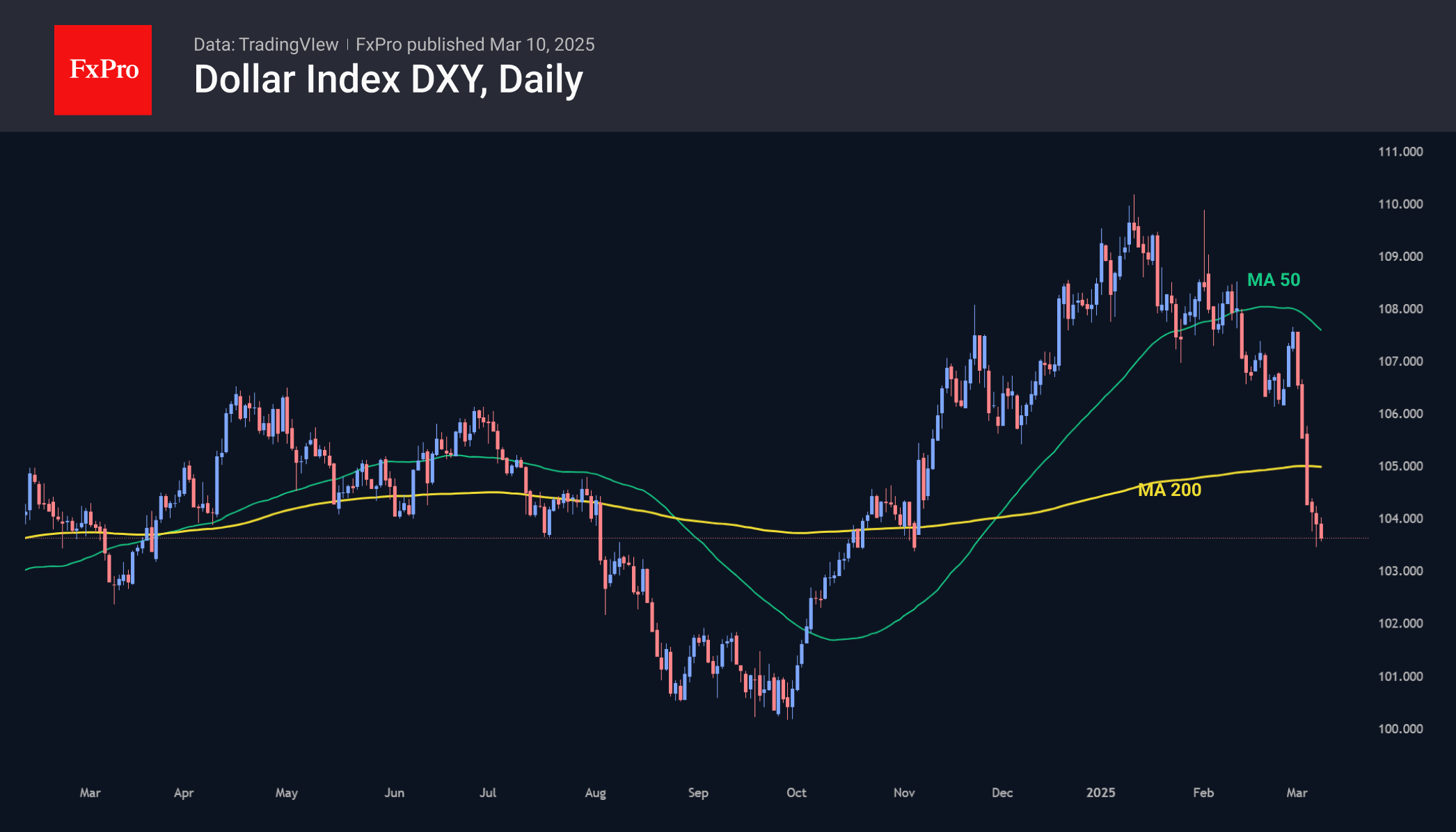
    Dollar Index could have formed a short term top at 110.17 too, just ahead of 61.8% projection of 100.15 to 108.87 from 105.42 at 110.31, with D MACD crossed below signal line. Deeper retreat could be seen to 108.07 resistance turned support, or even further to 55 D EMA (now at 107.15). But near term outlook will stay bullish as long as 38.2% retracement of 100.15 to 110.17 at 106.34 holds. Firm break of 110.17 will resume the rally to 100% projection at 113.34.

    FTSE and DAX Surge to Record Highs

    Risk-on sentiment was also evident in the European equity markets, with FTSE 100 and DAX surged to new record highs. The optimism was fueled by expectations of rate cuts, positive economic projections, and hopes for political stability.

    In the UK, a trio of softer economic data—GDP, retail sales, and CPI—reinforced market expectations for BoE easing. Markets now anticipate more than 75 basis points of rate cuts throughout 2025, compared to just 50 basis points priced in the prior week. A 25bps rate cut in February is now universally expected.

    Supporting this sentiment, IMF upgraded its UK growth forecast for 2025 by 0.1 percentage points to 1.6%, making the UK the third-fastest-growing G7 economy after the US and Canada. IMF attributed this optimism to increased government investment, improved household finances, and anticipated rate cuts.

    That's a strong nod to the Labour government despite wide criticism on its Autumn Budget. Meanwhile, IMF also projects BoE’s headline rate to fall from 4.75% to 3.75% by year-end.

    Technically, FTSE's break of 8474.41 confirmed that triangle consolidation from there has completed at 8002.34, and larger up trend has resumed. Next target is 61.8% projection of 7404.08 to 8474.41 from 8002.34 at 8663.80.

    In Germany, DAX surged to new record on improving risk appetite and expectations of continued ECB easing.

    ECB’s December meeting minutes leaned towards the dovish side, and revealed discussions about a more aggressive 50-basis-point cut. The central bank ultimately favored a measured approach, with consensus on a more controlled pace of easing, to allow for checkpoints to confirm that disinflation remains on track.

    While IMF downgraded its 2025 growth forecasts for Germany and France, the outlook still points to modest recovery. Germany, previously expected to grow by 0.8%, is now forecasted to expand by just 0.3%, marking a slow rebound from two years of contraction. France’s growth forecast was also reduced by 0.3 percentage points to 0.8%. The positive side of the forecasts is that both economies are expected to regain some footing this year.

    It should also be noted that markets are probably pricing in a degree of optimism around the February 23 snap elections, which could lead to greater political stability and more consistent economic policies in Germany.

    Technically, DAX should now be on track to 100% projection of 14630.21 to 18892.92 from 17024.82 at 21287.52 next.

    Nikkei Weighed by BoJ Hike Risks, SSE Struggles to Rebound

    Investor sentiment in Asia, however, was much less optimistic, with Japan facing headwinds from growing expectations of Bank of Japan policy normalization, while China’s economic recovery struggles to inspire confidence amid external pressures.

    In Japan, speculation over a rate hike at the upcoming January 23–24 BoJ meeting has intensified. Governor Kazuo Ueda and Deputy Governor Ryozo Himino have repeatedly hinted at the possibility of policy tightening, with analysts interpreting their comments as preparation for market adjustments.

    Additionally, reports suggest BoJ is likely to raise its inflation forecasts in its quarterly outlook, highlighting upside risks fueled by the persistently weak Yen and elevated import costs. Internally, BoJ policymakers believe that stabilizing inflation expectations around the 2% target could allow short-term rates to rise as high as 1% without hindering economic growth.

    Traders are pricing in an 80% chance of a rate hike from 0.25% to 0.50%.

    Nikkei weakened for the week on expectations of BoJ's normalization move, but stayed above 37651.07 support.

    Outlook is unchanged that price action from 42426.77 are developing in to a medium term three wave consolidation pattern, with rebound from 31156.11 as the second leg.

    For now, another rally cannot be ruled out, but strong resistance should emerge below 42426.77 to limit upside. Firm of 37651.07 support will in turn indicate that the third leg has likely commenced, and bring deeper fall to 35253.43 support and below

    In China, Shanghai SSE Composite struggled to generate meaningful gains other than a mild recovery.

    China'seconomy grew 5.4% yoy in Q4, lifting full-year GDP growth to 5.0%, matching the government’s target.Meanwhile, market rumors suggest Beijing is hesitant to use Yuan depreciation as a tool to counter tariffs from a second Trump presidency. Analysts believe sharp currency depreciation, as seen during Trump’s first term, could harm the struggling economy more than it would help.

    However, market confidence remains subdued, and the stock market recovery appeared technical rather than driven by fundamentals.

    SSE found support at the 50% retracement level of 2,635.09 to 3,674.40 at 3154.74, but remained capped below 55 D EMA (now at 3279.16).

    Risk remains on the downside for the near term for SSE. Break of 3140.90 will extend the corrective fall from 3674.40 to 61.8% retracement at 3032.11. Nevertheless, sustained break above the 55 D EMA will indicate that stronger near term rebound is underway back towards 3494.86 resistance.

    USD/CAD Weekly Outlook

    USD/CAD's late break of 1.4466 resistance confirms larger up trend resumption. Initial bias is back on the upside this week for 1.4667/89 long term resistance zone. For now, outlook will stay bullish as long as 1.4302 support holds, in case of retreat.

    In the bigger picture, up trend from 1.2005 (2021) is in progress for retesting 1.4667/89 key resistance zone (2020/2015 highs). Decisive break there will confirm long term up trend resumption. Next target is 100% projection of 1.2401 to 1.3976 from 1.3418 at 1.4993. Medium term outlook will remain bullish as long as 1.3976 resistance turned holds (2022 high), even in case of deep pullback.

    In the longer term picture, price actions from 1.4689 (2016 high) are seen as a consolidation pattern, which might have completed at 1.2005. That is, up trend from 0.9506 (2007 low) is expected to resume at a later stage. This will remain the favored case as long as 1.3418 support holds.

    USD/CAD Weekly Outlook

    USD/CAD's late break of 1.4466 resistance confirms larger up trend resumption. Initial bias is back on the upside this week for 1.4667/89 long term resistance zone. For now, outlook will stay bullish as long as 1.4302 support holds, in case of retreat.

    In the bigger picture, up trend from 1.2005 (2021) is in progress for retesting 1.4667/89 key resistance zone (2020/2015 highs). Decisive break there will confirm long term up trend resumption. Next target is 100% projection of 1.2401 to 1.3976 from 1.3418 at 1.4993. Medium term outlook will remain bullish as long as 1.3976 resistance turned holds (2022 high), even in case of deep pullback.

    In the longer term picture, price actions from 1.4689 (2016 high) are seen as a consolidation pattern, which might have completed at 1.2005. That is, up trend from 0.9506 (2007 low) is expected to resume at a later stage. This will remain the favored case as long as 1.3418 support holds.

    GBP/JPY Weekly Outlook

    GBP/JPY's fall from 198.94 continued last week despite some loss of downside momentum. Further fall is expected to 188.07 support this week. Firm break there will argue that corrective pattern from 180.00 has finished too, and larger decline from 208.09 might be ready to resume. On the upside, above 193.01 resistance will turn intraday bias neutral first.

    In the bigger picture, price actions from 208.09 are seen as a correction to whole rally from 123.94 (2020 low). The range of consolidation should be set between 38.2% retracement of 123.94 to 208.09 at 175.94 and 208.09. However, decisive break of 175.94 will argue that deeper correction is underway.

    In the longer term picture, while a medium term top was formed at 208.09 (2024 high), it's still early to conclude that the up trend from 122.75 (2016 low) has completed. But GBP/JPY is at least in a medium term corrective phase, with risk of correction to 55 M EMA (now at 173.41).

    EUR/JPY Weekly Outlook

    EUR/JPY's extended decline last week suggests that rebound from 156.16 has already completed at 164.89. But downside momentum remained unconvincing. Also, with a temporary low formed at 159.74, initial bias is neutral this week first. On the downside, below 159.74 will target 156.16 support. On the upside, break of 162.89 will bring retest of 164.89 instead.

    In the bigger picture, price actions from 175.41 are seen as correction to rally from 114.42 (2020 low). The range of consolidation should have been set between 38.2% retracement of 114.42 to 175.41 at 152.11 and 175.41 high. However, decisive break of 152.11 would argue that deeper correction is underway.

    In the long term picture, while 175.41 is at least a medium term top, it's still early to conclude that up trend from 94.11 (2012 low) has completed. A medium term corrective phase is in progress with risk of deeper fall back to 55 M EMA (now at 148.21).

    EUR/GBP Weekly Outlook

    EUR/GBP's rally from 0.8221 continued last week but failed to sustain above 0.8446 resistance and turned sideway. Initial bias remains neutral this week first. On the upside, decisive break of 0.8446 will target 0.8624 key cluster resistance zone. However, break of 0.8403 support will indicate short term topping after rejection by 0.8446. Intraday bias will be back on the downside for 55 D EMA (now at 0.8335).

    In the bigger picture, considering bullish convergence condition in D MACD, decisive break of 0.8446 resistance and 55 W EMA (now at 0.8446) should confirm medium term bottoming at 0.8221, just ahead of 0.8201 key support (2022 low). Further rally should be seen towards 0.8624 key resistance, even as a correction to the down trend from 0.9267 (2022 high). Overall, however, medium term outlook will be neutral at best until decisive break of 0.8624 cluster zone (38.2% retracement of 0.9267 to 0.8221 at 0.8621). Risk will stay on the downside even in case of strong rebound.

    In the long term picture, price action from 0.9499 (2020 high) is seen as part of the long term range pattern from 0.9799 (2008 high). Range trading should continue between 0.8201 and 0.9499, until there is clear signal of imminent breakout.

    EUR/AUD Weekly Outlook

    EUR/AUD's consolidation from 1.6800 extended last week and outlook is unchanged. Initial bias stays neutral this week first. For now, strong support is still expected from 38.2% retracement of 1.5963 to 1.6800 at 1.6480 to contain downside. On the upside, firm break of 1.6800 will resume the rally from 1.5963. However, sustained break of 1.6480 will bring deeper correction 61.8% retracement at 1.6283 instead.

    In the bigger picture, EUR/AUD is holding on to 1.5996 key support despite brief breach. Larger up trend from 1.4281 (2022 low) is still in favor to resume through 1.7180 at a later stage. Nevertheless, sustained break of 1.5995 will indicate that such up trend has completed and deeper decline would be seen.

    In the longer term picture, rise from 1.4281 is seen as the second leg of the pattern from 1.9799 (2020 high), which is part of the pattern from 2.1127 (2008 high). As long as 55 M EMA (now at 1.6073) holds, this second leg could still extend higher. However, sustained trading below 55 M EMA will open up the bearish case for extending the decline through 1.4281 low.

    EUR/CHF Weekly Outlook

    EUR/CHF stayed in consolidation below 0.9444 last week and outlook is unchanged. Initial bias remains neutral this week first. Rebound from 0.9204 is seen as a corrective move and could extend above 0.9440 But upside should be limited by 0.9481 fibonacci resistance. On the downside, firm break of 0.9336 support will argue that the correction has completed, and turn bias back to the downside for 0.9284 support first.

    In the bigger picture, while corrective rebound from 0.9204 might extend higher, strong resistance could be seen from 38.2% retracement of 0.9928 to 0.9204 at 0.9481 to limit upside. Down trend from 0.9928 (2024 high) is still in favor to resume through 0.9204/9 support zone at a later stage.

    In the long term picture, fall from 1.2004 (2018 high) is part of the multi-decade down trend. Corrective pattern from 0.9407 (2022 low) might have completed with three waves to 0.9928. Decisive break of 0.9252 (2023 low) will confirm long term down trend resumption to 61.8% projection of 1.1149 to 0.9407 from 0.9928 at 0.8851. For now, outlook will stay bearish as long as 0.9928 resistance holds, even in case of strong rebound.

    Summary 1/20 – 1/24

    Monday, Jan 20, 2025
    GMT Ccy Events Consensus Previous
    23:50 JPY Machinery Orders M/M Nov -0.70% 2.10%
    00:01 GBP Rightmove House Price Index M/M Jan -1.70%
    01:00 CNY 1-y Loan Prime Rate 3.10% 3.10%
    01:00 CNY 5-y Loan Prime Rate 3.60% 3.60%
    04:30 JPY Tertiary Industry Index M/M Nov 0.10% 0.30%
    04:30 JPY Industrial Production M/M Nov F -2.30% -2.30%
    07:00 EUR Germany PPI M/M Dec 0.30% 0.50%
    07:00 EUR Germany PPI Y/Y Dec 1.10% 0.10%
    07:30 CHF PPI M/M Dec 0.20% -0.60%
    07:30 CHF PPI Y/Y Dec -1.50%
    15:30 CAD BoC Business Outlook Survey
    21:30 NZD Business NZ PSI Dec 49.5
    GMT Ccy Events
    23:50 JPY Machinery Orders M/M Nov
        Forecast: -0.70% Previous: 2.10%
    00:01 GBP Rightmove House Price Index M/M Jan
        Forecast: Previous: -1.70%
    01:00 CNY 1-y Loan Prime Rate
        Forecast: 3.10% Previous: 3.10%
    01:00 CNY 5-y Loan Prime Rate
        Forecast: 3.60% Previous: 3.60%
    04:30 JPY Tertiary Industry Index M/M Nov
        Forecast: 0.10% Previous: 0.30%
    04:30 JPY Industrial Production M/M Nov F
        Forecast: -2.30% Previous: -2.30%
    07:00 EUR Germany PPI M/M Dec
        Forecast: 0.30% Previous: 0.50%
    07:00 EUR Germany PPI Y/Y Dec
        Forecast: 1.10% Previous: 0.10%
    07:30 CHF PPI M/M Dec
        Forecast: 0.20% Previous: -0.60%
    07:30 CHF PPI Y/Y Dec
        Forecast: Previous: -1.50%
    15:30 CAD BoC Business Outlook Survey
        Forecast: Previous:
    21:30 NZD Business NZ PSI Dec
        Forecast: Previous: 49.5
    Tuesday, Jan 21, 2025
    GMT Ccy Events Consensus Previous
    07:00 GBP Claimant Count Change Dec 10.3K 0.3K
    07:00 GBP ILO Unemployment Rate (3M) Nov 4.30% 4.30%
    07:00 GBP Average Earnings Excluding Bonus 3M/Y Nov 5.50% 5.20%
    07:00 GBP Average Earnings Including Bonus 3M/Y Nov 5.60% 5.20%
    07:00 GBP Claimant Count Rate Dec 4.60%
    10:00 EUR Germany ZEW Economic Sentiment Jan 15.1 15.7
    10:00 EUR Germany ZEW Current Situation Jan -93 -93.1
    10:00 EUR Eurozone ZEW Economic Sentiment Jan 16.9 17
    13:30 CAD CPI M/M Dec -0.70% 0.00%
    13:30 CAD CPI Y/Y Dec 1.70% 1.90%
    13:30 CAD CPI Median Y/Y Dec 2.50% 2.60%
    13:30 CAD CPI Trimmed Y/Y Dec 2.50% 2.70%
    13:30 CAD CPI Common Y/Y Dec 1.90% 2.00%
    21:45 NZD CPI Q/Q Q4 0.50% 0.60%
    21:45 NZD CPI Y/Y Q4 2.10% 2.20%
    GMT Ccy Events
    07:00 GBP Claimant Count Change Dec
        Forecast: 10.3K Previous: 0.3K
    07:00 GBP ILO Unemployment Rate (3M) Nov
        Forecast: 4.30% Previous: 4.30%
    07:00 GBP Average Earnings Excluding Bonus 3M/Y Nov
        Forecast: 5.50% Previous: 5.20%
    07:00 GBP Average Earnings Including Bonus 3M/Y Nov
        Forecast: 5.60% Previous: 5.20%
    07:00 GBP Claimant Count Rate Dec
        Forecast: Previous: 4.60%
    10:00 EUR Germany ZEW Economic Sentiment Jan
        Forecast: 15.1 Previous: 15.7
    10:00 EUR Germany ZEW Current Situation Jan
        Forecast: -93 Previous: -93.1
    10:00 EUR Eurozone ZEW Economic Sentiment Jan
        Forecast: 16.9 Previous: 17
    13:30 CAD CPI M/M Dec
        Forecast: -0.70% Previous: 0.00%
    13:30 CAD CPI Y/Y Dec
        Forecast: 1.70% Previous: 1.90%
    13:30 CAD CPI Median Y/Y Dec
        Forecast: 2.50% Previous: 2.60%
    13:30 CAD CPI Trimmed Y/Y Dec
        Forecast: 2.50% Previous: 2.70%
    13:30 CAD CPI Common Y/Y Dec
        Forecast: 1.90% Previous: 2.00%
    21:45 NZD CPI Q/Q Q4
        Forecast: 0.50% Previous: 0.60%
    21:45 NZD CPI Y/Y Q4
        Forecast: 2.10% Previous: 2.20%
    Wednesday, Jan 22, 2025
    GMT Ccy Events Consensus Previous
    00:00 AUD Westpac Leading Index M/M Dec 0.10%
    07:00 GBP Public Sector Net Borrowing (GBP) Dec 13.7B 11.2B
    13:30 CAD Industrial Product Price M/M Dec 0.80% 0.60%
    13:30 CAD Raw Material Price Index Dec 0.40% -0.50%
    23:50 JPY Trade Balance (JPY) Dec -0.64T -0.38T
    GMT Ccy Events
    00:00 AUD Westpac Leading Index M/M Dec
        Forecast: Previous: 0.10%
    07:00 GBP Public Sector Net Borrowing (GBP) Dec
        Forecast: 13.7B Previous: 11.2B
    13:30 CAD Industrial Product Price M/M Dec
        Forecast: 0.80% Previous: 0.60%
    13:30 CAD Raw Material Price Index Dec
        Forecast: 0.40% Previous: -0.50%
    23:50 JPY Trade Balance (JPY) Dec
        Forecast: -0.64T Previous: -0.38T
    Thursday, Jan 23, 2025
    GMT Ccy Events Consensus Previous
    13:30 USD Initial Jobless Claims (Jan 17) 220K 217K
    13:30 CAD Retail Sales M/M Nov 0.10% 0.60%
    13:30 CAD Retail Sales ex Autos M/M Nov 0.00% 0.10%
    15:00 EUR Eurozone Consumer Confidence Jan P -14.5 -14.5
    15:30 USD Natural Gas Storage -258B
    22:00 AUD Manufacturing PMI Jan P 47.8
    22:00 AUD Services PMI Jan P 50.8
    23:30 JPY National CPI Y/Y Dec 2.90%
    23:30 JPY National CPI Core Y/Y Dec 3.00% 2.70%
    23:30 JPY National CPI Core-Core Y/Y Dec 2.70%
    GMT Ccy Events
    13:30 USD Initial Jobless Claims (Jan 17)
        Forecast: 220K Previous: 217K
    13:30 CAD Retail Sales M/M Nov
        Forecast: 0.10% Previous: 0.60%
    13:30 CAD Retail Sales ex Autos M/M Nov
        Forecast: 0.00% Previous: 0.10%
    15:00 EUR Eurozone Consumer Confidence Jan P
        Forecast: -14.5 Previous: -14.5
    15:30 USD Natural Gas Storage
        Forecast: Previous: -258B
    22:00 AUD Manufacturing PMI Jan P
        Forecast: Previous: 47.8
    22:00 AUD Services PMI Jan P
        Forecast: Previous: 50.8
    23:30 JPY National CPI Y/Y Dec
        Forecast: Previous: 2.90%
    23:30 JPY National CPI Core Y/Y Dec
        Forecast: 3.00% Previous: 2.70%
    23:30 JPY National CPI Core-Core Y/Y Dec
        Forecast: Previous: 2.70%
    Friday, Jan 24, 2025
    GMT Ccy Events Consensus Previous
    JPY BoJ Interest Rate Decision 0.50% 0.25%
    00:01 GBP GfK Consumer Confidence Jan -18 -17
    00:30 JPY Manufacturing PMI Jan P 49.7 49.6
    00:30 JPY Services PMI Jan P 50.9
    08:15 EUR France Manufacturing PMI Jan P 42.1 41.9
    08:15 EUR France Services PMI Jan P 49.4 49.3
    08:30 EUR Germany Manufacturing PMI Jan P 42.9 42.5
    08:30 EUR Germany Services PMI Jan P 51.1 51.2
    09:00 EUR Eurozone Manufacturing PMI Jan P 45.3 45.1
    09:00 EUR Eurozone Services PMI Jan P 51.4 51.6
    09:30 GBP Manufacturing PMI Jan P 46.9 47
    09:30 GBP Services PMI Jan P 50.6 51.1
    13:30 CAD New Housing Price Index M/M Dec 0.20% 0.10%
    14:45 USD Manufacturing PMI Jan P 49.4
    14:45 USD Services PMI Jan P 56.8
    15:00 USD Existing Home Sales M/M Dec 4.16M 4.15M
    15:00 USD Existing Home Sales Change M/M Dec 4.80%
    15:00 USD Michigan Consumer Sentiment Jan F 73.2 73.2
    GMT Ccy Events
    JPY BoJ Interest Rate Decision
        Forecast: 0.50% Previous: 0.25%
    00:01 GBP GfK Consumer Confidence Jan
        Forecast: -18 Previous: -17
    00:30 JPY Manufacturing PMI Jan P
        Forecast: 49.7 Previous: 49.6
    00:30 JPY Services PMI Jan P
        Forecast: Previous: 50.9
    08:15 EUR France Manufacturing PMI Jan P
        Forecast: 42.1 Previous: 41.9
    08:15 EUR France Services PMI Jan P
        Forecast: 49.4 Previous: 49.3
    08:30 EUR Germany Manufacturing PMI Jan P
        Forecast: 42.9 Previous: 42.5
    08:30 EUR Germany Services PMI Jan P
        Forecast: 51.1 Previous: 51.2
    09:00 EUR Eurozone Manufacturing PMI Jan P
        Forecast: 45.3 Previous: 45.1
    09:00 EUR Eurozone Services PMI Jan P
        Forecast: 51.4 Previous: 51.6
    09:30 GBP Manufacturing PMI Jan P
        Forecast: 46.9 Previous: 47
    09:30 GBP Services PMI Jan P
        Forecast: 50.6 Previous: 51.1
    13:30 CAD New Housing Price Index M/M Dec
        Forecast: 0.20% Previous: 0.10%
    14:45 USD Manufacturing PMI Jan P
        Forecast: Previous: 49.4
    14:45 USD Services PMI Jan P
        Forecast: Previous: 56.8
    15:00 USD Existing Home Sales M/M Dec
        Forecast: 4.16M Previous: 4.15M
    15:00 USD Existing Home Sales Change M/M Dec
        Forecast: Previous: 4.80%
    15:00 USD Michigan Consumer Sentiment Jan F
        Forecast: 73.2 Previous: 73.2

    Markets Weekly Outlook – Trump 2.0 Takes Flight as BoJ Decision Looms

    • It was a strong week for US stocks and gold, with the S&P rising about 3% by the end of the week.
    • Markets are bracing for potential volatility and policy surprises as Donald Trump is inaugurated as US President.
    • The Bank of Japan (BoJ) meeting on January 24th is a key event, with potential for an interest rate hike.
    • The S&P 500 is showing positive signs, potentially entering a bullish phase if it closes above a key resistance level.

    Week in Review: Moderating US Inflation and Strong Earnings Keep Sentiment Positive

    Markets bid farewell to the last trading week before Trump 2.0 as incoming US President Donald Trump will be inaugurated on Monday. Markets have been bracing for volatility and potential surprises in policy as Trump returns to the White House.

    US inflation data showed positive signs this week and was backed up by some dovish commentary from Federal Reserve policymakers. However, by the end of next week we could all be singing from a different hymn sheet and thus caution remains.

    US Equities enjoyed a positive week as strong corporate earnings from the country’s biggest banks helped propel US indices higher. TSMC also provided a positive outlook for 2025 from a demand perspective that boosted hopes around AI spending and growth prospects. At the time of writing the S&P 500 was up 3% for the week.

    The S&P 500 banking index (.SPXBK) and regional banks (.KRX) outpaced the main indexes this week, gaining approximately 6.1% and 7.6%, respectively.

    Source: LSEG (click to enlarge)

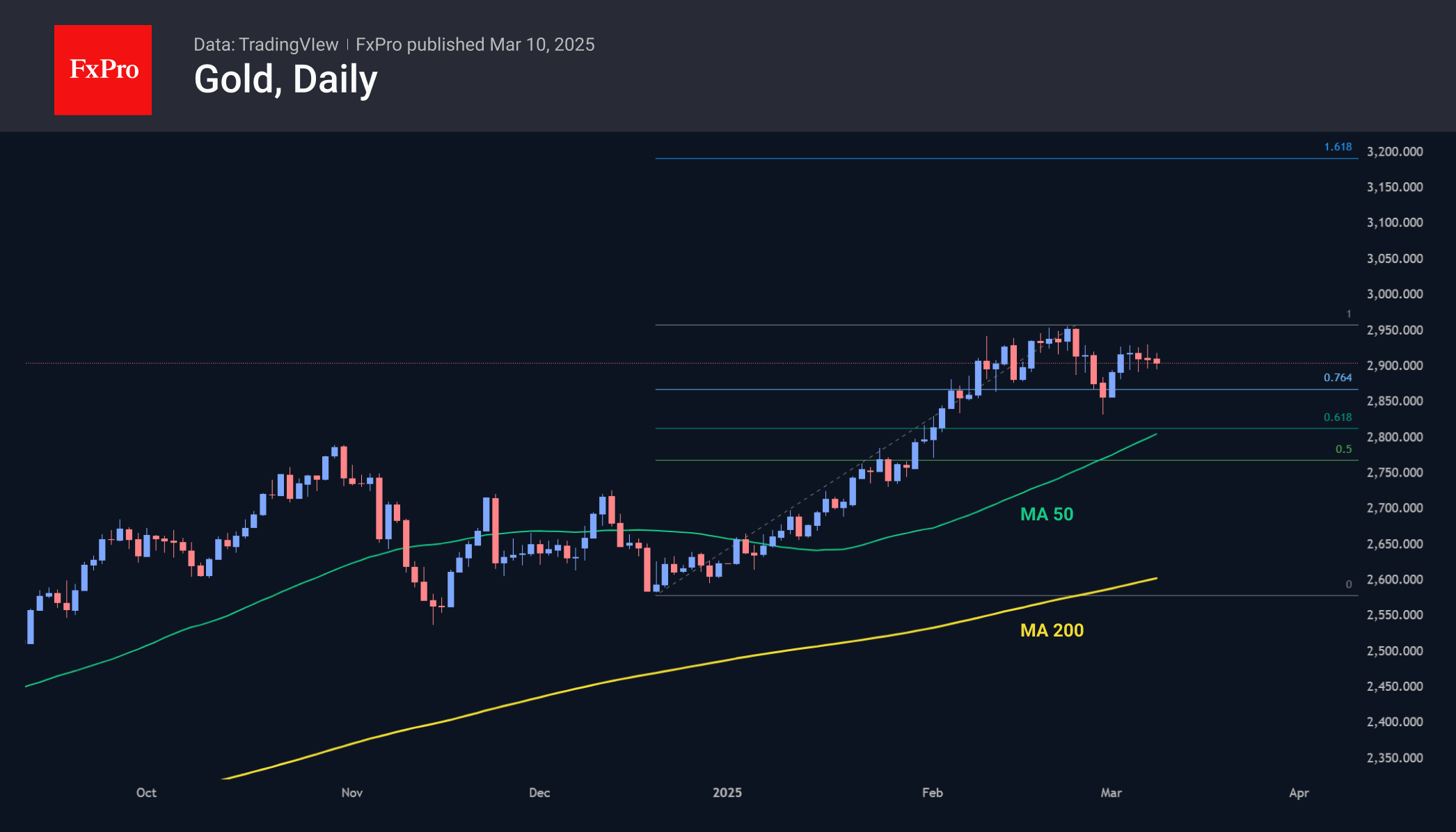
    Gold rose this week and reclaimed the $2700/oz level as the precious metal continues to find demand thanks to global uncertainties. This week the precious metal was also boosted by increased optimism around US rate cuts for 2025.

    Oil prices continue to hold the high ground thanks to new Russian sanctions as well potential sanctions on Iran when President Trump assumes office. Oil prices have added 1.87% this week following the successive week of gains. If President Trump reverses the no drilling mandate passed by President Biden recently that could lead to a drop in prices.

    On the FX front, the US Dollar has struggled this week but it hasn’t been a smooth move lower. Markets still see a stronger USD in 2025 and that could in part explain the grind lower and why it didn’t gather any real steam.

    The crypto market is back on the up this week with Bitcoin eyeing a move above the 105k handle at the time of writing. XRP has continued its rise as markets also bet on a pro crypto policy under President Trump’s administration.

    All asset classes and Global markets await the inauguration of Donald Trump as they wait with bated breath for his long promised policy proposals, The proposals are likely to shape market dynamics in the months ahead and remain crucial.

    The Week Ahead: Trump Inauguration and BoJ Hold the Keys

    Asia Pacific Markets

    The main focus this week in the Asia Pacific region is the Bank of Japan’s meeting on January 24. Recent inflation and wage figures look promising and back its plan to increase interest rates at next week’s meeting.

    Earlier today we heard rumors from Nikkei that the majority of BoJ board members are set to approve a rate hike next week.

    After Friday’s release of data, which saw Chinese GDP come in better than expected. The economy grew by 5.4% in the fourth quarter compared to a year ago, up from 4.6% in the third quarter and higher than the 5.0% estimate. This was the fastest growth since the second quarter of 2023.

    Following a data heavy week China’s schedule for new updates slows down. On Monday, the loan prime rates will be announced, but no changes are expected since the People’s Bank of China left key rates the same. Attention will turn to Trump’s inauguration and whether he will announce any immediate tariffs on China.

    In the Asia Pacific region New Zealand inflation will be the highest impact data release and could provide the NZD with some impetus moving forward.

    Europe + UK + US

    In developed markets, the US inauguration will no doubt be at the forefront as well as any immediate moves by the incoming administration. This has the potential to overshadow any data releases.

    The US will also be releasing S&P Manufacturing and Services PMI data on Friday.

    In Europe and the UK, we also have a S&P manufacturing data which would give further insights into the Euro Area economy. There are also two speeches from ECB President Christine Lagarde on Wednesday and Friday.

    Chart of the Week

    This week’s focus is on the S&P 500 as it looks to record a daily candle close above a key level that would put bulls firmly in control.

    The S&P 500 is currently trading above the previous swing high at 5980 with a daily candle close above leading to change in structure.

    This would be key as the optimism for stocks under the incoming President remains high. The S&P found support at the back end of the week after breaking above the 20-day SMA after strong bank earnings helped the index move higher.

    There is more earnings due next week with further strong performances from the likes of Netflix likely to propel the S&P 500 toward its all time highs .

    Immediate resistance rests at 6025 before the all time highs of 6094 comes into focus.

    On the downside, support rests at the 20-day SMA which lines up with support at 5910 before 5840 and 5757 become areas to focus on.

    S&P 500 Daily Chart – January 17, 2025

    Source:TradingView.Com (click to enlarge)

    Key Levels to Consider:

    Support

    • 5910
    • 5840
    • 5757

    Resistance

    • 6025
    • 6094
    • 6170

    The Weekly Bottom Line: U.S. Economy Sails into Trump’s Presidency at Cruising Speed

    Canadian Highlights

    • Donald Trump will be inaugurated on Monday, and Canadians are bracing for the economic threats in recent weeks to turn into action through a flurry of executive orders.
    • Canada is economically tied to the U.S., with $1.9 billion in daily goods and services exported to its southern neighbour. That amounts to over 20% of GDP.
    • While we aren’t expecting the worst-case scenario on tariffs, even a tapered down set of tariffs could be enough to send temporary shockwaves through the economy and financial markets.

    U.S. Highlights

    • December’s CPI report brought some modestly positive news on inflation. The headline CPI came in as expected and even better core inflation had a softer month after a string of hot readings.
    • Retail sales also saw a solid gain in December. While consumers reduced spending at restaurants and bars, it’s likely they were just busy shopping.
    • Fed officials continued to emphasize that the economy remains solid and that the central bank can afford to be patient with further interest rate cuts.

    Canada – Ready or Not, Here He Comes

    Donald Trump will be inaugurated on Monday, and Canadians are bracing for the economic threats in recent weeks to turn into action through a flurry of executive orders. While we aren’t expecting the worst-case scenario, even a tapered down set of tariffs could be enough to send temporary shockwaves through the economy and financial markets. To assess the magnitude of this threat, here are the areas of economic growth and jobs most at risk on Trump’s return to the White House.

    Three-quarters of Canadian exports head south of the border. This amounts to $1.9 billion in daily goods and services exports, meaning that exports to the U.S. account for over 20% of Canada’s GDP. Breaking it down by sector, energy is by far the largest contributor in dollar terms, making up more than a quarter of total exports. However, non-energy exports are also highly vulnerable. As shown in Chart 1, sectors ranging from motor vehicles to forestry have more than 80% of their production destined for the U.S. An estimated 46k companies in Canada depend on exporting to the U.S., supporting around 2 million jobs (nearly 10% of total employment).

    Geographically, the risk is widespread. All provinces have exposure to U.S. tariffs, ranging from B.C. lumber to Quebec metals to Nova Scotia live animal exports. However, Ontario tops the list in terms of total dollars due to its diversified industries being deeply integrated with its southern neighbour. Motor vehicle and parts manufacturing may get most of the attention, but Ontario is also home to significant production of machinery, base metals, chemicals, and even food/beverage. While many of these goods are a part of well-established integrated supply chains, it won’t assuage fears, as nearly a million jobs in the province are tied to U.S. trade. Alberta is another key province to flag given its energy concentration. There’s speculation that Trump may give Canadian oil a “carve out” from tariffs to prevent rising gasoline prices for American consumers, but still, there are over 300k jobs in Alberta tied to exports.

    What President Trump ultimately implements is highly uncertain. Our baseline assumption is that Canada avoids blanket tariffs and instead faces temporary sector-specific threats as leverage for broader negotiations. However, we must also prepare for a worst-case scenario: a blanket 25% tariff with Canadian retaliation. Such an outcome would almost certainly push the Canadian economy into recession, driving the unemployment rate above 8%. However, some of the downside would be mitigated by government action, with discussions well underway on support to affected businesses and consumers. The Bank of Canada would also create a cushion by accelerating rate cuts, as would an inevitably weaker currency. A larger interest rate gap with the U.S. and the nature of this risk could cause the Loonie to test the historical low of 62 U.S. cents. This would also provide a cushion for Canadian exporters.

    This is the playing field for Canada. The country faced similar risks in 2016, when Trump defied economic logic by igniting a trade war with China and imposing tariffs on specific Canadian exports. While fears were running high and many forecasters slashed their GDP outlooks, the economic impact was less severe than anticipated, as Trump’s goal was to secure a deal.

    This time, Canadian officials must be strategic. Short-term supports may be necessary to assist industries and workers, but the government cannot miss acting on long-term opportunities. This crisis creates a burning platform that could enable bold action to build out Canada’s competitive advantages, such as reducing regulatory barriers/red tape, and improve tax competitiveness to incent business investment.

    As the old Churchill saying goes: “Never let a good crisis go to waste”.

    U.S. – The U.S. Economy Sails into Trump’s Presidency at Cruising Speed

    This week was the final “quiet period” before a storm of headlines and announcements from the White House next week, following Trump’s inauguration. The incoming president inherits a robust economy, with this week’s data confirming that momentum remained strong through the end of last year.

    Building on last week’s unexpectedly strong job gains, the retail sales report added more good news, signaling strong consumer spending over the holiday season. Retail sales rose by 0.6% in December, following a 0.9% gain in November. The “control group”—which excludes volatile categories like gasoline, autos, and building supplies—showed even stronger growth at 0.7%. Growth was broad-based, with especially strong spending on discretionary items like furniture, clothing, and sporting goods.

    Anecdotal evidence from the Fed’s Beige Book, released this week, confirmed robust consumer spending at year-end, noting that “consumer spending has moved up moderately, with most districts reporting strong holiday sales that exceeded expectations.” This suggests that consumers ended 2024 on a high note, and it’s easy to see why. The labor market remained strong, continuing to add jobs at a good clip, while inflation has subsided (particularly in the goods category), and household wealth remains elevated (Chart 1). Even with recent volatility in the equity market, the S&P 500 is still up some 25% from a year ago. All in all, we expect inflation-adjusted consumer spending to rise somewhere in 3%-3.5% range for the fourth quarter, roughly in line with the previous quarter. Homebuilding activity also ended 2024 on a high note, breaking a three-month streak of declining housing starts.

    This week’s CPI report provided a bit of good news on the inflation front, alleviating some concerns that had flared in recent months. Core CPI (excluding food and energy) increased by 0.2% from the previous month, and the 12-month inflation rate edged down to 3.2%, after holding at 3.3% for three consecutive months (Chart 2). However, this is unlikely to affect the Fed’s decision at its next meeting on January 29th. For one, CPI is not the Fed’s preferred inflation gauge; that’s the core PCE deflator, and the December PCE data won’t be available before the Fed’s next rate decision. Additionally, there’s nothing in the recent data that would prompt the Fed to change course, especially with inflation risks from Trump’s economic policies.

    Fed speakers this week reiterated that the economy is performing well. FOMC member Barkin noted, “you keep seeing good numbers on retail sales, unemployment, and the like… Demand is good, solid, fine.” While the FOMC member Williams stated that the monetary policy is in “a very good position”, and the Fed “can take the time to analyze the incoming data”. Given the potential policy shifts under the new administration, the Fed will have plenty to assess in the coming months.