Sample Category Title
RBA Bullock: Economy needs to grow at a below trend pace for a while
In a speech, RBA Deputy Governor Michele Bullock noted the economy needs to "grow at a below trend pace for a while" to bring demand and supply into better balance. Only that will give "the greatest chance of securing sustainable full employment into the future."
Bullock explained, "For monetary policy... We think of full employment as the point at which there is a balance between demand and supply in the labour market (and in the markets for goods and services) with inflation at the inflation target."
"In recent months, the balance between labour demand and supply has improved somewhat," she noted. "Nevertheless, the labour market remains tight."
Also, "for the first time in decades, firms' demand for labour exceeds the amount of labour that people are willing and able to
"At the same time, with demand for goods and services high relative to the economy's capacity to supply those things, inflation is well above the 2–3 per cent target range."
PBoC cuts two key lending rates
China's PBoC executed cuts to two of its pivotal lending rates today, marking the first time such adjustments have been made in 10 months since last August.
The Chinese central bank opted to reduce one-year loan prime rate by -10 bps, taking it down from 3.65% to 3.55%. Concurrently, it also implemented a -10 bps cut to five-year loan prime rate, adjusting it from 4.3% to 4.2%.
These measures follow other recent actions aimed at easing monetary policy. Only last Thursday, PBOC made its first cut to one-year medium-term loan facility in 10 months. Furthermore, the bank reduced its seven-day reverse repurchase rate on the preceding Monday.
RBA minutes: Finely balanced arguments for hold and hike
Minutes from RBA's June 6 monetary policy meeting reveal an active debate over whether to hold or raise the cash rate by 25bps.
As stated in the minutes, "Members recognised the strength of both sets of arguments, concluding that the arguments were finely balanced." However, they ultimately determined that a rate increase was the stronger course of action at this meeting.
Recent data indicating that inflation risks had begun tilting to the upside were a key influence on the board's decision. As they noted, "Given this shift and the already drawn-out return of inflation to target, the Board judged that a further increase in interest rates was warranted."
Such a move would bolster confidence that inflation would indeed return to the target range "over the period ahead", they reasoned.
At the meeting, RBA raised cash rate target by 25bps to 4.10%.
(RBA) Minutes of the Monetary Policy Meeting of the Reserve Bank Board
Sydney – 6 June 2023
Members present
Philip Lowe (Governor and Chair), Michele Bullock (Deputy Governor), Mark Barnaba AM, Ian Harper AO, Carolyn Hewson AO, Steven Kennedy PSM, Iain Ross AO, Carol Schwartz AO
Members granted leave of absence to Alison Watkins AM in accordance with section 18A of the Reserve Bank Act 1959.
Others present
Luci Ellis (Assistant Governor, Economic), Christopher Kent (Assistant Governor, Financial Markets)
Anthony Dickman (Secretary), David Norman (Acting Deputy Secretary)
Penelope Smith (Head, International Department), Carl Schwartz (Acting Head, Domestic Markets Department), Meredith Beechey Osterholm (Deputy Head, Economic Research Department)
International economic developments
Members commenced their discussion of the global economy by noting that inflation in many economies remained well above central banks' targets. Although headline inflation had continued to decline as energy prices fell and food price inflation eased, members noted that core inflation had remained sticky and shown little sign of easing. Services inflation, which had become the primary source of inflationary pressures across advanced economies, had continued at a high rate. This partly reflected strong wages growth, which remained above rates consistent with inflation targets in many economies. This, in combination with subdued growth in labour productivity, had resulted in a rapid rise in unit labour costs over the preceding year. Members acknowledged the implications of this for Australia, given the high degree of commonality in inflation experience globally since the pandemic. While central banks in advanced economies expected inflation to return to target, most do not see this as likely to occur in the coming year.
Members noted that economic growth in advanced economies was slowing gradually as contractionary monetary policy settings took effect. GDP in major advanced economies had risen only slightly in the March quarter and had declined in some euro area countries. Consumption growth had been subdued in the March quarter and indications were that this had continued into the June quarter. Business investment was yet to surpass pre-pandemic levels in most advanced economies. Other indicators of economic activity had been more resilient in recent months. Housing prices appeared to have stabilised in several countries, following significant declines over 2022, and survey measures of business conditions pointed to services sector activity having increased further in May.
In China, the growth momentum had waned in April after a strong bounce-back following the end of pandemic restrictions and the reopening of the international border in late 2022. As a result, the strength of the economic recovery had become more uncertain than a month earlier. Retail sales and industrial production had declined markedly in April and conditions in the property market had deteriorated.
Members noted that the price of iron ore had been broadly stable over the prior month, despite the soft run of Chinese data. More broadly, the soft outlook for global growth had led to falls in a range of commodity prices since the start of the year. Bulk commodity prices had declined and were now close to pre-pandemic levels. Prices of energy commodities had declined the most, with thermal coal and spot prices for liquified natural gas falling in response to relatively high levels of inventories and broader concerns about the outlook for growth. Oil prices had also fallen. If sustained, these declines would further dampen consumer price inflation globally over the second half of the year.
Domestic economic conditions
Members noted that growth in economic activity in Australia had slowed since mid-2022, as the post-pandemic recovery in spending faded and the substantial tightening in monetary policy worked its way through the economy. The national accounts, to be released the day after the meeting, were expected to show only modest growth. Members noted that the new policies announced in the Australian Government Budget had not had a material effect on the staff forecasts for economic activity and inflation.
There was growing evidence that household consumption growth had been subdued in the first half of 2023. Retail volumes had declined in the March quarter, despite strong population growth, and liaison with retailers suggested that conditions had softened further in the June quarter. Growth in spending on consumer services, including cafes and restaurants, had generally slowed but by less than other forms of consumption. Members discussed the significant financial pressure facing many households and the effect of this on communities and the economy as a whole. They also discussed the unevenness in household spending, noting that some households had drawn on the substantial additional savings built up during the pandemic, while other households were facing considerable budget constraints.
National housing prices had increased in recent months and households' expectations for future rises in housing prices had strengthened. Members noted that, if sustained, this would imply less of a drag on consumption in the year ahead than had previously been envisaged. The increase had been broadly based across capital cities in May and was consistent with developments in a number of other countries. Members discussed the reasons for the unexpected strength in housing prices. They noted that strong population growth had supported demand for housing and that this was largely affecting the established housing market. Expectations that the interest rate cycle was near its peak might also have played a role. Orders for newly constructed housing remained weak and residential construction firms continued to report that high materials costs and shortages of skilled tradespeople were contributing to low margins and delays in work being completed.
Members noted that the labour market remained very tight. Nonetheless, conditions had eased slightly, alongside slower growth in economic activity. Employment growth over the prior six months had been a little less than growth in the working-age population over that period. Firms in the Bank's liaison program had reported some improvement in labour availability. Acknowledging that the monthly data are volatile, members noted that the unemployment rate had ticked up to 3.7 per cent in April and the number of people employed had been little changed.
A range of measures suggested that wages growth had been in the 3½ to 4 per cent range. The pace of increase in the Wage Price Index (WPI) had risen to 3.7 per cent over the year to the March quarter, broadly in line with earlier expectations. The average size of wage changes in the private sector for those who received an increase had remained at around 4 per cent for the third consecutive quarter. In the public sector, wages growth had picked up to 3 per cent and a further increase was expected. Information from the Bank's liaison program was also signalling that firms' expectations were for wages growth to remain stable at around current levels over the year ahead.
The recent Annual Wage Review decision of the Fair Work Commission (FWC) had increased award wages by 5.75 per cent. This was higher than the expectation embedded in staff forecasts and would add directly to WPI growth in the September quarter, relative to the prior forecasts. In addition to this, a range of public sector enterprise agreements were being negotiated and it appeared likely that some of these would contain wage rises of at least 4 per cent for the first year, followed by smaller increases in subsequent years. Members observed that the FWC decision would support wages growth for around 30 per cent of workers (but a significantly smaller share of the total wage bill) whose wages are either directly or indirectly affected by award rates. Recently struck enterprise bargaining agreements would similarly see wages growth for those on enterprise bargaining agreements rise from current levels. Members observed that it was understandable that the lowest paid workers would be compensated for high inflation, but that it would be concerning if wages across a broad range of jobs were to become implicitly indexed to high inflation.
Timely indicators pointed to a gradual easing in inflation in the June quarter. The monthly CPI indicator for headline inflation had increased to 6.8 per cent over the year to April, a little higher than had been expected. However, this was partly due to the timing of price changes for volatile items, and growth in the indicator excluding volatile items and holiday travel had slowed, particularly in six-month-annualised terms. The easing in global upstream cost pressures and the more recent declines in commodity prices and shipping rates could be expected to lower firms' costs, but the easing in consumer goods price inflation had been limited. Members acknowledged that additional information on the momentum of services prices inflation would become available over subsequent months.
Members noted that there were various other considerations that created upside risk for inflation. Retail electricity prices had risen over the preceding year, but – unlike in other countries – there would be an even larger increase in the year ahead. Rent inflation had been high in April, reflecting very tight rental market conditions across the capital cities, and appeared to be drifting up further. There had also not been as clear a moderation in goods price inflation in Australia as there had been in some other countries. In considering the outlook for inflation, members discussed the importance of productivity growth, noting that output per hour worked had not increased over the preceding three years.
International financial markets
Members commenced their discussion of international financial conditions by observing that the US Federal Reserve, the European Central Bank, the Bank of England, Norges Bank and the Reserve Bank of New Zealand (RBNZ) had increased policy rates further over the prior month to address high and persistent core inflation. Some central banks, including the RBNZ, had communicated that policy rates were now likely to be sufficiently restrictive or close to sufficiently restrictive. However, central banks had also emphasised that policy rates were unlikely to decline over coming months, in contrast to market-implied expectations.
Market expectations for the path of central bank policy rates had shifted higher over the prior month in response to stronger-than-expected inflation and labour market data. The suspension of the US debt ceiling and easing of concerns about stress in some parts of the US banking system had also contributed to these moves.
Government bond yields in advanced economies had also increased over the prior month. Members noted that the increase in nominal yields mostly reflected higher real yields, while market measures of longer term inflation expectations remained anchored in most economies. This implied that markets expected central banks to raise policy rates sufficiently to return inflation to target.
Private sector financial conditions had been little changed. US funding markets had stabilised after the banking stress in March and deposit outflows from banks had slowed. Members noted that US banks' funding costs were likely to remain under pressure for some time, particularly for smaller banks.
In China, financial conditions had remained accommodative, with bond yields having declined a little in response to concerns around the strength of the economic recovery and expectations of further policy easing. Credit growth had eased alongside a slump in property sales and many highly leveraged property developers continued to face considerable financial stress.
The Australian dollar had ended the month little changed on a trade-weighted basis. Members observed that there had been two countervailing forces on the exchange rate over preceding months. Interest rate differentials between Australia and major advanced economies had generally been supportive, and members noted that the Australian dollar had appreciated noticeably in response to the decision to raise the cash rate in May. Meanwhile, the decline in commodity prices and concerns about the strength of China's economic recovery had weighed on the value of the Australian dollar.
Domestic financial markets
Members noted that increases in the cash rate continued to be passed through to higher lending rates. Scheduled mortgage payments had increased further and equated to around 9 per cent of household disposable income in April. The increase in average variable mortgage lending rates over the tightening phase had been less than the rise in the cash rate, reflecting competition in the banking sector. There were, however, some signs that competition for borrowers had started to ease. The continuing rollover of low fixed-rate loans into higher rate loans would contribute to a further increase in scheduled payments over the months ahead. Members noted that, based on increases in the cash rate to date, payments were projected to rise to the equivalent of around 10 per cent of household disposable income by the end of 2024.
Net flows into borrowers' offset and redraw accounts remained positive to April, although extra mortgage payments were well below the highs seen during the pandemic. Increases in scheduled mortgage payments would reduce some borrowers' ability to make these extra payments, but higher rates were also creating an incentive to hold savings in these accounts. The value of non-performing housing loans had risen a little but from a very low level. Measures of personal insolvencies also remained at low levels.
Members observed that new housing loan commitments had stabilised over preceding months, following declines of around 30 per cent from the peak in early 2022. Commitments had steadied among both owner-occupiers and investors, and across states. This pattern was consistent with housing prices having steadied after prior declines. Housing credit growth was also showing signs of levelling out after a period of deceleration.
Members noted that the decision to increase the cash rate in May had been unexpected by many market participants and contributed to bond yields in Australia rising by around 30 basis points over the prior month. For the June meeting, markets were pricing in about a 50 per cent chance of an increase in the cash rate and a little less than half of market economists expected an increase. These expectations had increased over the prior week, following the release of the monthly CPI and the FWC's decision. Further ahead, around half of economists surveyed expected 50 basis points of tightening by August, which was broadly in line with the probability implied by market pricing.
Considerations for monetary policy
In turning to the policy decision, members noted that inflation had passed its peak but remained well above target and was forecast to return to the top of the target range only by mid-2025. There was little spare capacity in the economy, with the unemployment rate very low. At the same time, members noted that consumer spending had softened significantly, with both higher interest rates and high inflation weighing on household purchasing power. Members observed that the economy still looked to be traversing a narrow path on which inflation comes back to target while the unemployment rate rises but remains low. They noted that there were significant risks and uncertainties to staying on this path.
Members discussed two options: increasing the cash rate by 25 basis points; or holding the cash rate unchanged.
The case for raising the cash rate by a further 25 basis points focused on the increased risk that inflation would take longer to return to target than had been expected. Members observed that inflation was already projected to be above target for a number of years and was expected to take somewhat longer to return to target in Australia than in some other countries. This extended timeframe reflected the Board's desire to bring inflation down while, at the same time, preserving as many of the gains in employment as possible. While this remained the Board's objective, members noted that a more prolonged period of above-target inflation would increase the risk that firms' and households' expectations for inflation rise. If this occurred, high inflation would become more persistent with the result that interest rates would need to be higher for longer. This would increase the risk of a sharp rise in unemployment.
In discussing the risks to the inflation outlook, members observed that the monthly indicator of headline inflation had surprised on the upside in April and that the decline in goods price inflation had been less than observed in other countries. In addition, services price inflation had not yet shown signs of moderating and the evidence from abroad suggested that it may prove to be persistent.
Members noted that wages growth was still consistent with the inflation target, provided productivity growth picked up to around the average pace that had been recorded before the pandemic. While future trends in productivity were uncertain, the outcomes over recent times had been disappointing. Members discussed the possibility of implicit indexation of wages to past high inflation and the potential for this to become widespread. Similarly, members observed that some firms were indexing their prices, either implicitly or directly, to past inflation. These developments created an increased risk that high inflation would be persistent, which would make it more difficult to keep the economy on the narrow path.
Members observed that the resumption of growth in housing prices would – if sustained – imply less drag on consumer spending in the coming year than had been envisaged. Members also noted that the stabilisation in housing loan approvals suggested that financial conditions may not have been as tight as they had previously judged. The downside risks to global growth had also abated a little as conditions in the US banking sector had stabilised.
Members concluded that these developments had shifted the balance of risks on inflation to the upside compared with a month earlier, although they also noted that there were some downside risks to inflation, including from developments in global markets and the slowdown in household spending in Australia.
The case for holding the cash rate unchanged at this meeting rested on the slowing in the economy and the possibility that the significant increases in interest rates to date would lead to the economy slowing more sharply than expected. Members noted that consumption growth was already quite weak, especially in per capita terms. Real disposable incomes were falling, especially for home loan borrowers, and many renters were experiencing difficult financial conditions. Members also noted that the scale of increase in the cash rate over the preceding year, lags in the transmission of monetary policy through the economy and the large number of fixed-rate loans scheduled to expire over coming months would see financial conditions tighten further. Given these developments, there was a risk of the economy slowing and unemployment rising by more than expected.
Members also discussed some of the downside risks to inflation. They observed that commodity prices had fallen quite significantly over preceding months, as had the price of international shipping, which could be expected to reduce pressure on consumer prices over time. Members noted that medium-term inflation expectations in financial markets had been little changed to date and that the moderation occurring in headline inflation could mitigate the risk of inflation expectations rising. They also observed that the staff forecasts had overestimated wages growth for a prolonged period prior to the pandemic and that productivity could prove stronger than expected.
In light of these considerations, members discussed the possibility of holding the cash rate unchanged at this meeting and then reconsidering at subsequent meetings, with the benefit of additional data.
Members recognised the strength of both sets of arguments, concluding that the arguments were finely balanced. They judged, though, that the case to raise the cash rate at this meeting was the stronger one.
The Board affirmed that its priority is to return inflation to target within a reasonable timeframe. The recent data suggested that inflation risks had shifted somewhat to the upside. Given this shift and the already drawn-out return of inflation to target, the Board judged that a further increase in interest rates was warranted. This increase would provide greater confidence that inflation would return to target over the period ahead. An extended period of high inflation would distort the economy and exacerbate cost-of-living pressures, hurting those on low incomes the most. Sustained high inflation would also lead to even higher interest rates in the future and a worse outlook for the labour market.
In taking the decision to increase interest rates again, members acknowledged the considerable uncertainty regarding the outlook for household spending and the financial stresses facing some households. Given this, they agreed to continue to monitor trends in household spending closely and consider the implications for the inflation outlook, as well as developments in the global economy and the domestic labour market. Members reaffirmed their determination to return inflation to target and their willingness to do what is necessary to achieve that.
Members agreed that the Governor's speech the following day would provide an opportunity to explain the decision in more detail.
The decision
The Board decided to increase the cash rate target by 25 basis points to 4.1 per cent and to increase the interest rate on Exchange Settlement balances by 25 basis points to 4 per cent.
GBP/USD: Dips Turn Attractive In Near-Term
Key Highlights
- GBP/USD climbed above the 1.2750 and 1.2800 resistance levels.
- A major bullish trend line is forming with support near 1.2765 on the 4-hour chart.
- EUR/USD started a downside correction from the 1.0970 zone.
- Gold price is facing heavy resistance near the $1,965 level.
GBP/USD Technical Analysis
The British Pound started a major increase above the 1.2720 resistance against the US Dollar. GBP/USD settled above 1.2700 to move into a bullish zone.
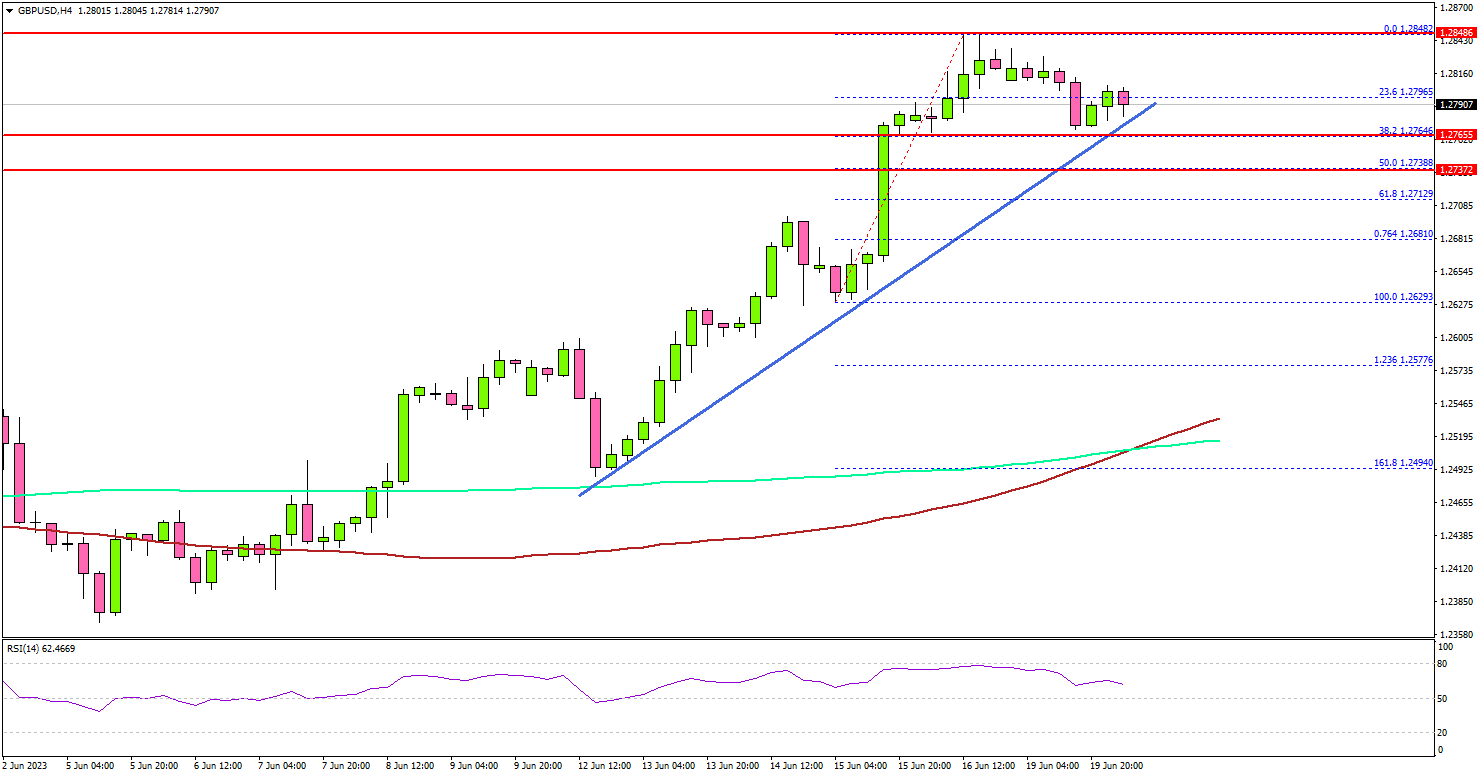
Looking at the 4-hour chart, the pair gained pace above the 1.2800 resistance. It traded as high as 1.2848 and settled well above the 100 simple moving average (red, 4 hours) and the 200 simple moving average (green, 4 hours).
Recently, there was a minor downside correction below 1.2800. The pair dipped below the 23.6% Fib retracement level of the upward move from the 1.2629 swing low to the 1.2848 high.
Immediate support is near the 1.2770 level. There is also a major bullish trend line forming with support near 1.2765 on the same chart. It is close to the 38.2% Fib retracement level of the upward move from the 1.2629 swing low to the 1.2848 high.
The next major support is near the 1.2715 level. If there is a downside break below the 1.2715 support, the pair could decline toward the 1.2650 support.
Any more losses might send GBP/USD toward 1.2600. If there is a fresh increase, the pair could face resistance near 1.2850. The first major resistance is near the 1.2920 level. If there is a move above the 1.2920 resistance, the pair could rise toward 1.3000.
Looking at EUR/USD, the pair rallied above the 1.0900 resistance zone and recently started a short-term downside correction.
Economic Releases
- Euro Zone Current Account for April 2023 - Forecast €30.1B versus €31.6B previous.
NZDJPY Wave Analysis
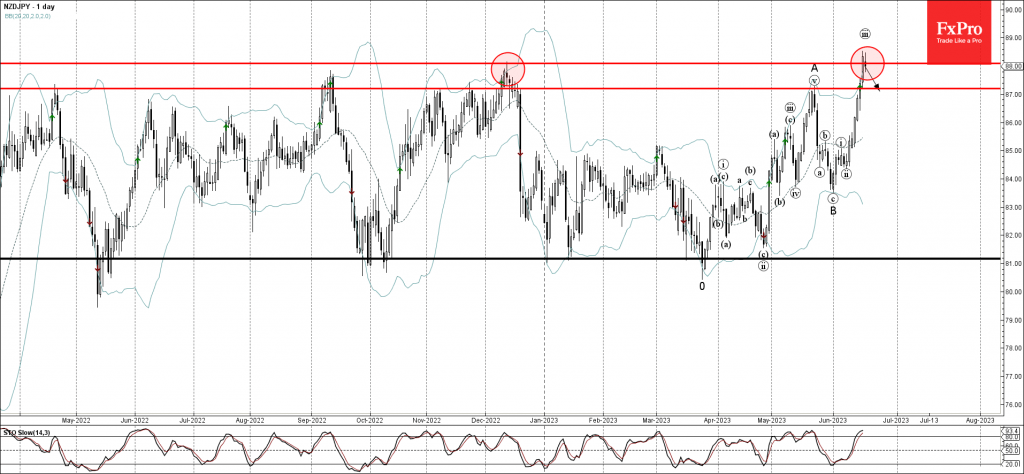
- NZDJPY reversed from resistance level 88.00
- Likely to fall to support level 87.20
NZDJPY currency pair recently reversed down after the pair failed to keep the ground above the key resistance level 88.00 (former multi-month high from last December).
The downward reversal from the resistance level 88.00 stopped the 2 of the earlier upward impulse waves – C and (iii).
Given the overbought daily Stochastic, NZDJPY can be expected to fall further toward the next support level 87.20 (former top of the previous impulse wave A).
EURAUD Wave Analysis
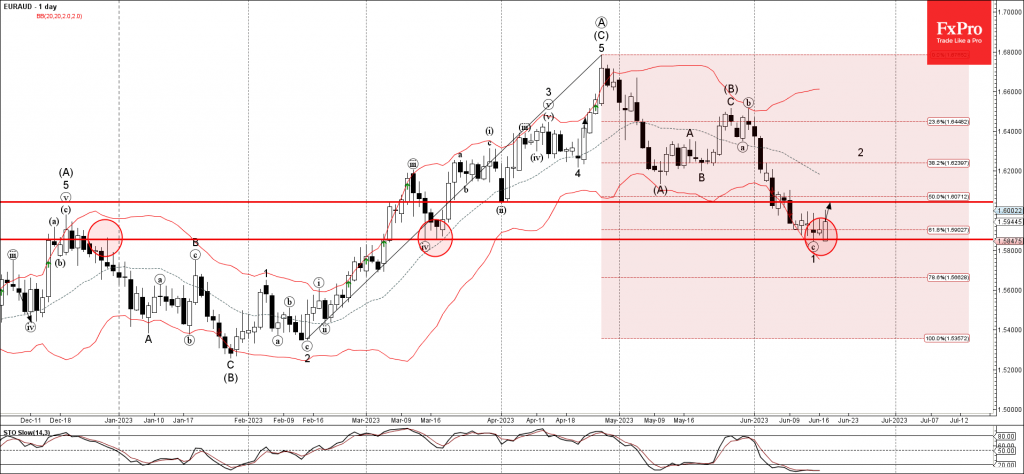
- EURAUD reversed from support level 1.5855
- Likely to rise to resistance level 1.6045
EURAUD currency pair recently reversed up from the key support level 1.5855 (former support from March), strengthened by the lower daily Bollinger Band and by the 61.8% Fibonacci correction of the upward impulse from February.
The upward reversal from the support level 1.5855 started the active corrective wave 3.
Given the still oversold daily Stochastic, EURAUD can be expected to rise further toward the next resistance level 1.6045, former support from April.
Will the BoE Appear Hawkish Enough to Push the Pound Higher?
With the Bank of England (BoE) dropping calls that the UK is facing its longest recession since records began, investors are hoping, or even demanding, of more aggressive action. With that in mind, Thursday’s monetary policy decision at 11:00 GMT may attract special attention as traders may be eager to see whether Bailey and co will rise to the occasion. However, they will be already locked in front of their screens as just the day before, the UK CPIs for May are coming out.
Bailey and co under pressure to tame inflation
When they last met, BoE policymakers delivered their 12th successive rate hike, abandoning their recession calls and signaling that they will not hesitate to raise interest rates should inflation pressures persist.
Around two weeks after the decision, the inflation numbers for April revealed that the headline CPI slowed by less than expected, to 8.7% year-on-year from 10.1%, but what was much more worrisome was the unexpected acceleration in underlying inflation to 6.8% y/y from 6.2%. This suggested that price pressures are becoming more embedded in the broader economy, and that the decline in the headline rate was just the result of a slowdown in the prices of volatile items like energy.
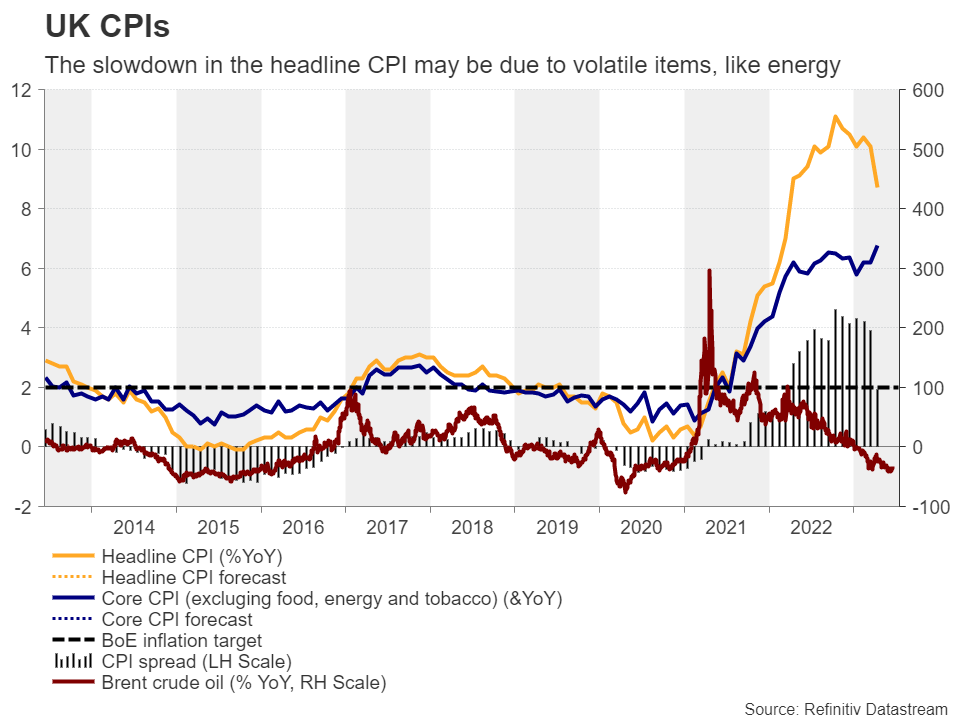
So, after being criticized by politicians for his response to persistently high inflation, Governor Bailey is now under pressure to rise to the occasion and deliver not only another rate hike but also a message that is hawkish enough to satisfy everyone that’s been questioning the BoE’s ability to produce results.
Investors expect several more hikes
Market participants are also demanding more by the BoE. They are now pricing in around 140bps worth of additional rate increases, and that’s even after the PMIs for May disappointed. Perhaps, investors remained content with the fact that the composite index continued pointing to expansion, which enhances the view that the UK economy may have avoided a recession.
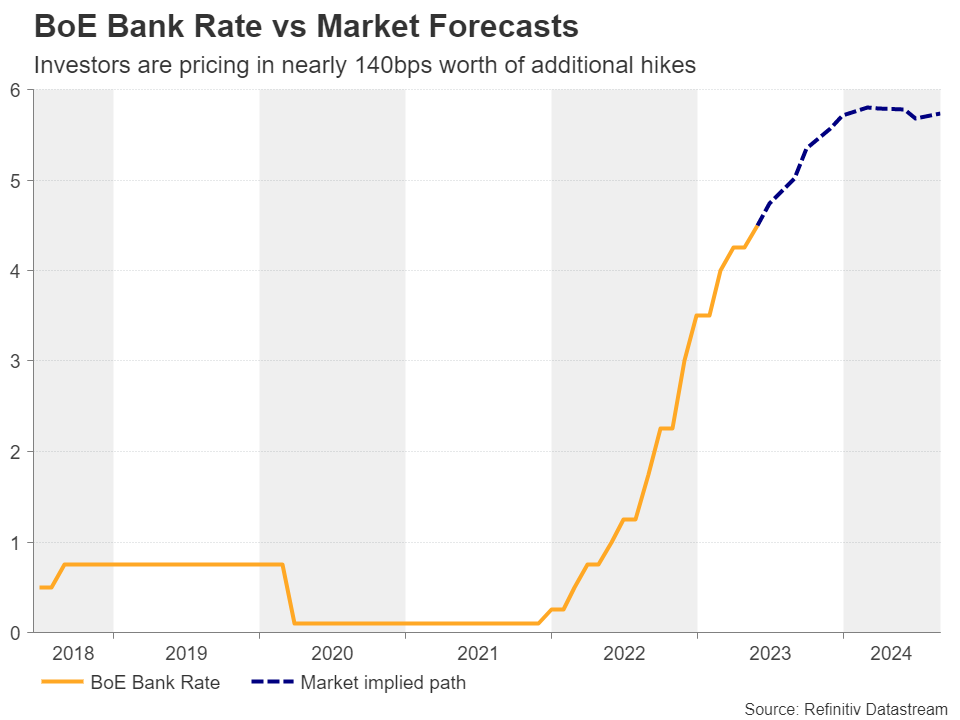
What may have also convinced them to maintain their hike bets is the employment report for April, which revealed a stronger-than-expected acceleration in wage growth and a small decline in the unemployment rate. Accelerating wages could translate into accelerating consumer demand and thereby higher inflation.
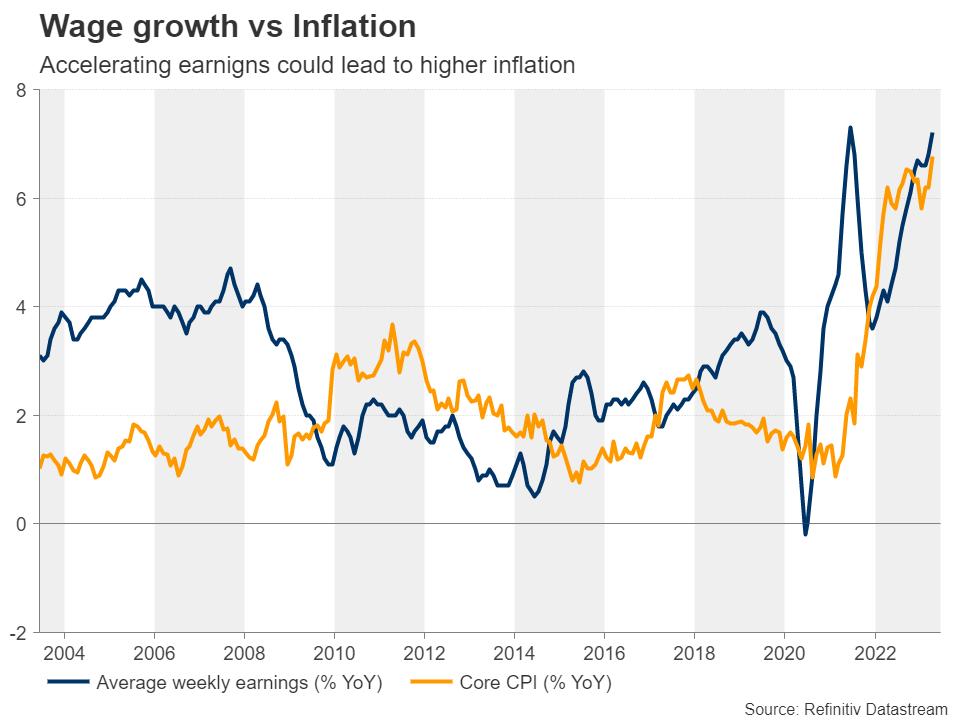
Therefore, pound traders will stay locked in front of their screens from the day before the meeting decision, when the UK CPI data for May are released. The headline rate is expected to have declined to 8.5% y/y from 8.7% and the core to have held steady at 6.8%, a combination that’s very unlikely to encourage market participants to scale back their hike bets.
Spotlight to fall on the accompanying statement
Putting all the aforesaid information into the same equation, a 25bps hike on its own on Thursday is unlikely to help the pound extend its latest gains. Actually, it could even trigger a small setback as traders assign a 25% probability for a bigger 50bps hike. With neither updated economic projections nor a news conference, the spotlight is likely to quickly turn to the accompanying statement.
If officials turn more hawkish and say that they will continue raising rates until inflation is brought to heel, instead of noting that they will not hesitate to do so if price pressures persist, investors may feel comfortable adding to their long pound positions. The currency could gain the most against the wounded yen, which accelerated its tumble on Friday after the Bank of Japan kept its ultra-loose monetary policy untouched, maintaining its pledge to continue “patiently” with monetary policy easing.
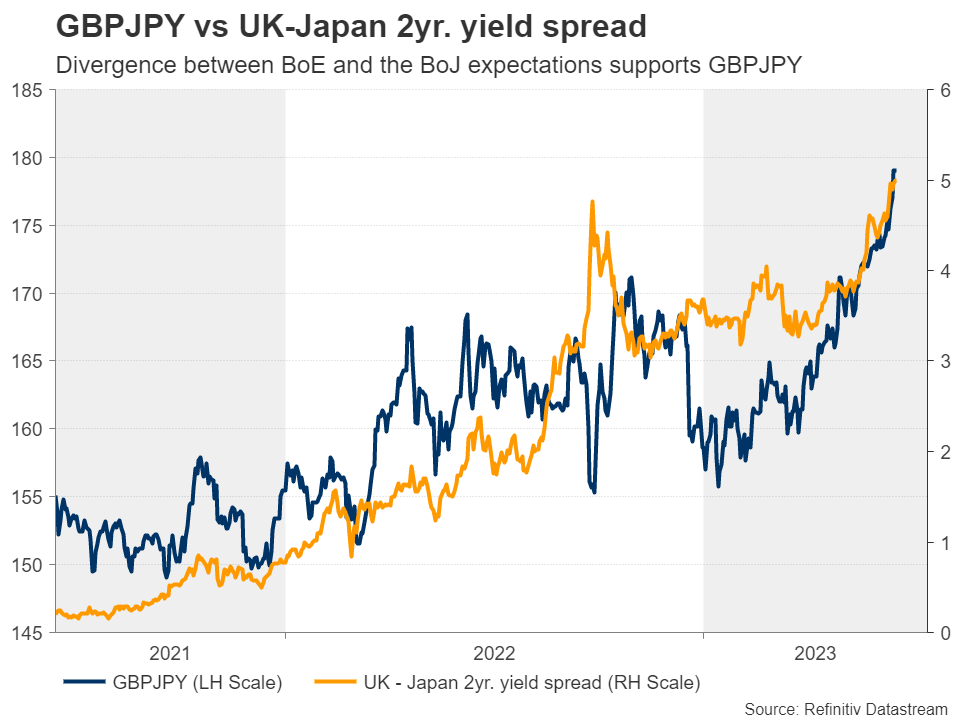
Pound/yen could extend steep rally
Pound/yen has been in a rally mode since last Tuesday and on Friday, it emerged above the 180.50 barrier, marked by the inside swing lows of September 7 and October 2, 2015. This, combined with the fact that the pair is trading above the steep uptrend line drawn from the low of March 24, paints an overly positive picture and a hawkish BoE may encourage traders to begin a journey towards the 188.00 zone, which acted as a ceiling back between August and November 2015.
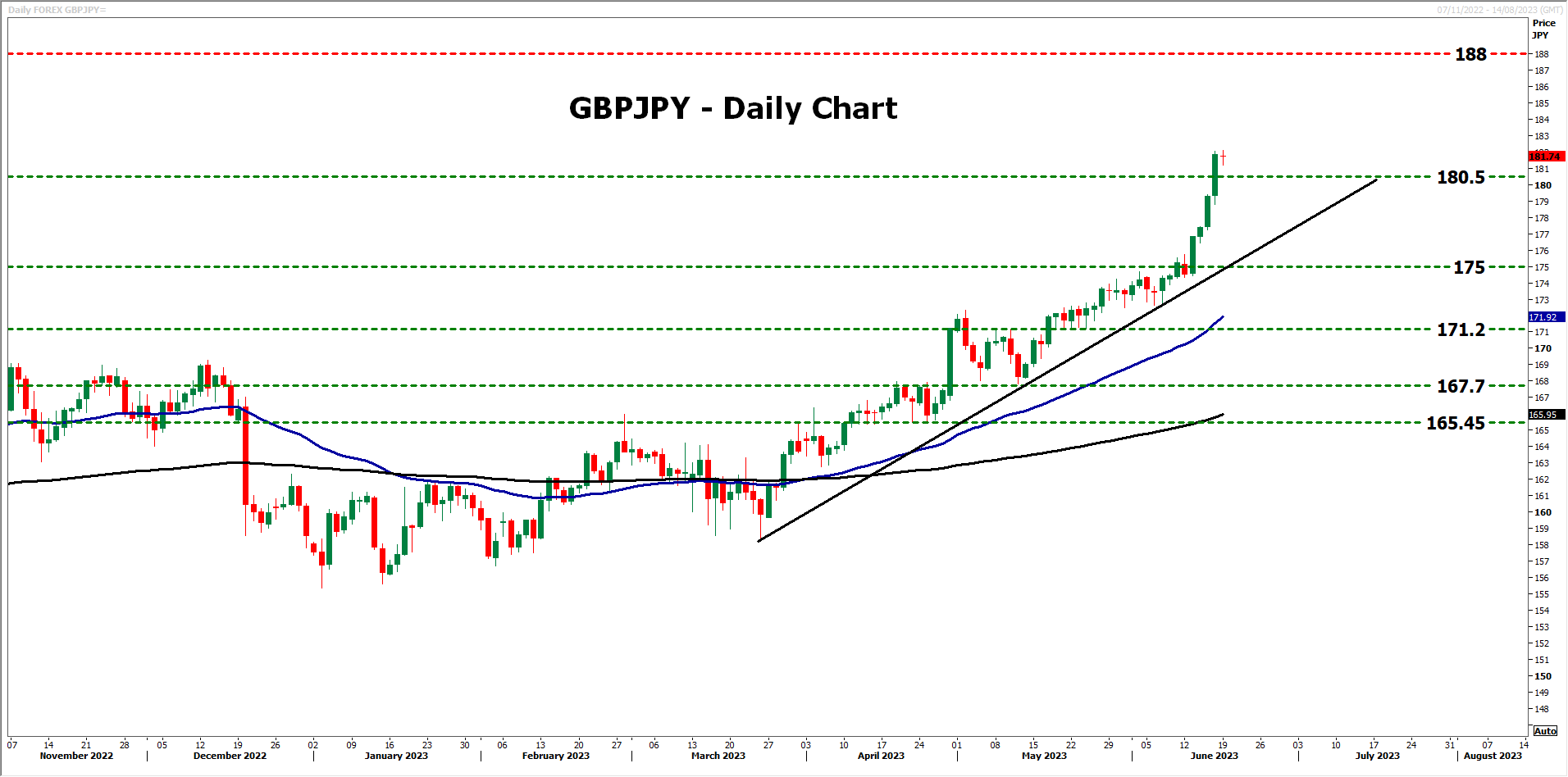
Now, in the case of the Bank disappointing those expecting a more aggressive stance, the pair is likely to fall off the cliff and perhaps break the uptrend line. It could find initial support at around 175.00, but if the bulls are not willing to enter the action around there, the tumble may extend towards the 171.20 territory, which offered support between May 18 and 24.
USD/JPY Mid-Day Outlook
Daily Pivots: (S1) 140.47; (P) 141.19; (R1) 142.54; More...
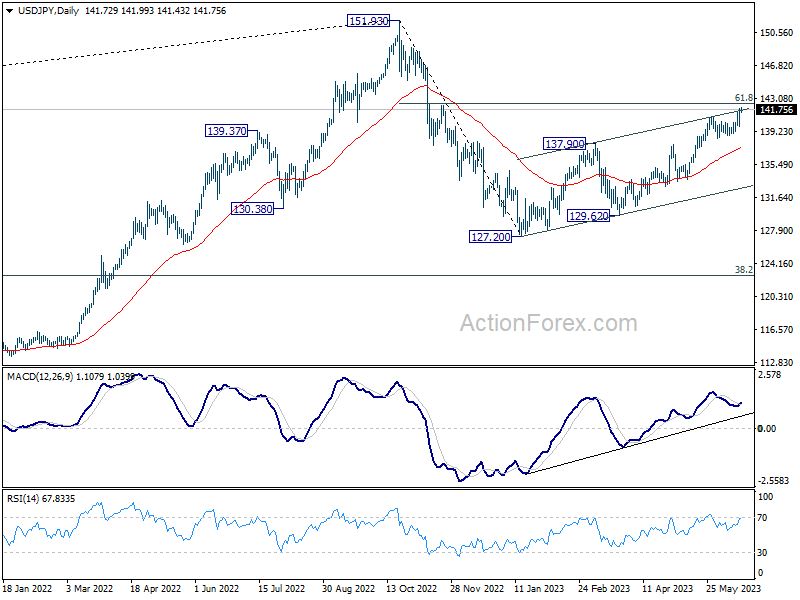
USD/JPY's rally is still in progress. Intraday bias remains on the upside for 61.8% retracement of 151.93 to 127.20 at 142.48 next. Sustained break there will pave the way back to retest 151.93 high. However, rejection by 142.48, followed by break of 139.27 will indicate short term topping and turn bias back to the downside.
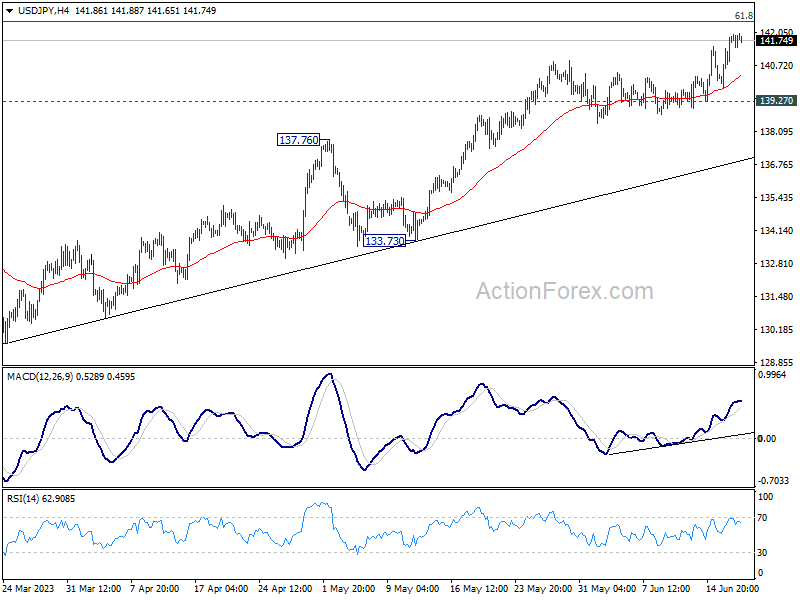
In the bigger picture, rise from 151.93 are seen as a corrective pattern to up trend from 102.58. The first leg has completed at 127.20. Rebound from there is seen as the second leg, and should be limited below 151.93. Sustained trading below 55 D EMA (now at 137.47) will argue that the third leg has started back to 127.20 and possibly below.