

Sample Category Title
DAX Jumps After Chinese Manufacturing PMI Improves
European equity markets have started the week with strong gains, and the German DAX is up 1.13% in Monday trade. Currently, the DAX is trading at 11.652, up 1.1% on the day. In economic news, German and eurozone manufacturing PMIs missed their estimates, with readings of 44.1 and 44.7, respectively. The Eurozone CPI Flash Estimate inflation in March came in at 1.5%, just shy of the estimate of 1.4%. On Tuesday, the eurozone releases PPI.
German and eurozone manufacturing sectors remain mired in contraction territory. This is largely due to the global trade war, which has lowered the demand for exports, such as German cars and auto parts. German manufacturing PMI dropped to 44.1, losing ground for an eighth straight month. This reading was the lowest since 2012. The all-eurozone release has also been steadily falling and is pointing to significant weakness in manufacturing.
The German markets ignored the weak eurozone numbers, focusing on Chinese data instead. The Chinese Caixin Manufacturing PMI didn’t sparkle, but improved to 50.8 and easily beat the estimate of 50.1 points. Investors cheered as the indicator climbed to an 8-month high, after posting three successive releases indicating contraction. The Chinese economy has been hit hard by the trade war with the U.S., and a piece of good news was enough to raise the confidence levels of investors.
The Analytical Overview Of The Main Currency Pairs
The EUR/USD currency pair
Technical indicators of the currency pair:
Prev Open: 1.12276
Open: 1.12274
% chg. over the last day: -0.04
Day's range: 1.12198 – 1.12430
52 wk range: 1.1214 – 1.2557
EUR stabilized after a long fall during the last two weeks. Right now the quotes are consolidating between 1.12100 and 1.12450. The EUR is under pressure due to weak economic releases. In March the Germany's industrial PMI fell from 44.7 to 44.1. The investors are waiting for additional drivers. You should open positions from the key levels.
The Economic News Feed for 01.04.2019:
Consumer Price Index (EU) – 12:00 (GMT+2:00);
Retail Sales Report (US) – 15:30 (GMT+2:00);
Industrial PMI by ISM (US) – 17:00 (GMT+2:00);
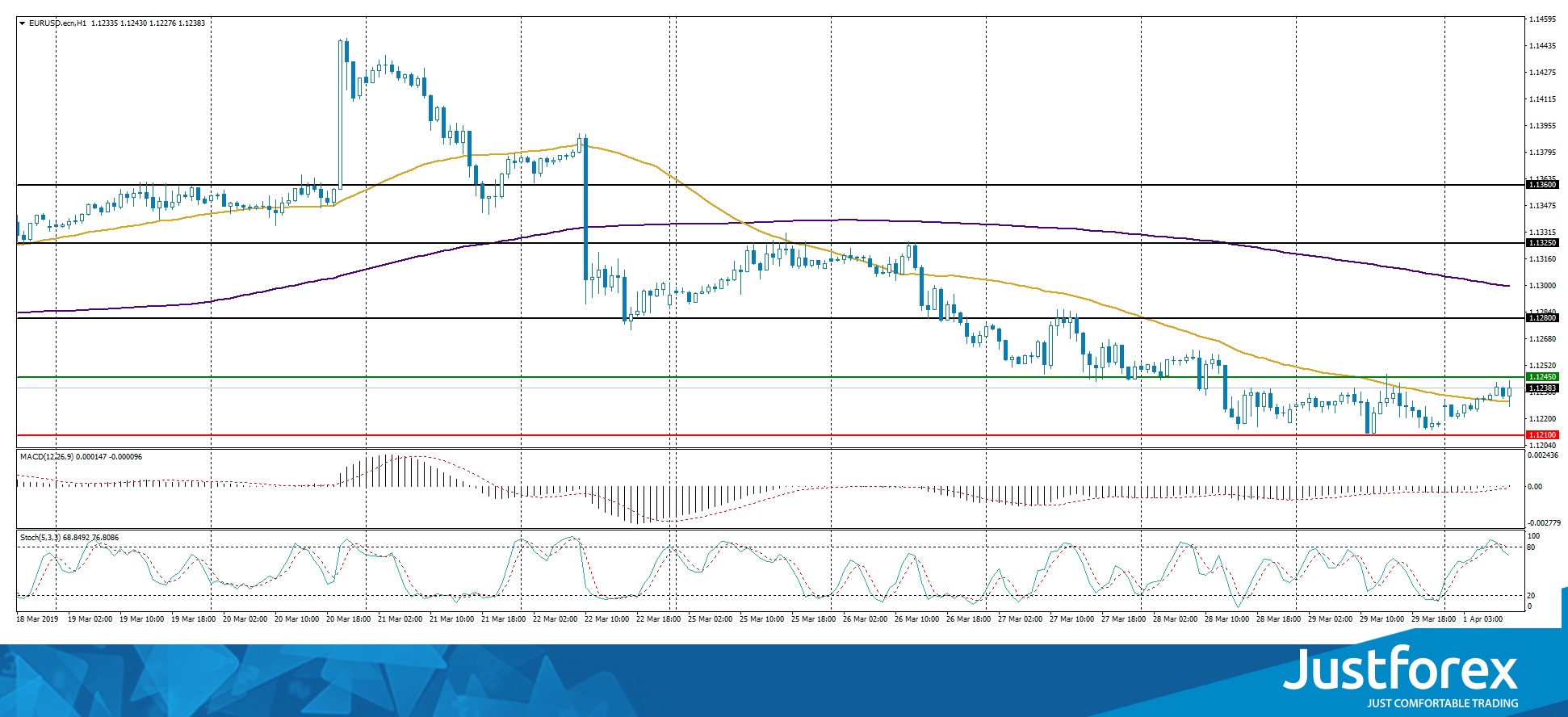
The indicators do not provide precise signals, the price has crossed 50 MA.
The MACD histogram is close to 0.
The Stochastic Oscillator started to leave the overbought zone, the %K line is below the %D line which points to the bearish mood.
Trading recommendations
Support levels: 1.12100, 1.11800, 1.11500
Resistance levels: 1.12450, 1.12800, 1.13250
If the price fixes below 1.12100, expect the quotes to fall toward 1.11800-1.11500.
Alternatively, the quotes can correct toward 1.12800-1.13000.
The GBP/USD currency pair
Technical indicators of the currency pair:
Prev Open: 1.30477
Open: 1.30395
% chg. over the last day: -0.08
Day's range: 1.30095 – 1.30839
52 wk range: 1.2438 – 1.4378
GBP/USD has an ambiguous technical picture. The trading instrument is moving sideways. The GBP remains under pressure as investors are waiting for the relevant info regarding Brexit. Last week The British Parliament refused Theresa May's deal for the third time. If the solution isn't found soon, the UK will leave the EU without a deal on April 12. The local support and resistance levels are 1.30300 and 1.30800. You should open positions from these levels.
At 11:30 (GMT+3:00) the UK will publish the industrial PMI.
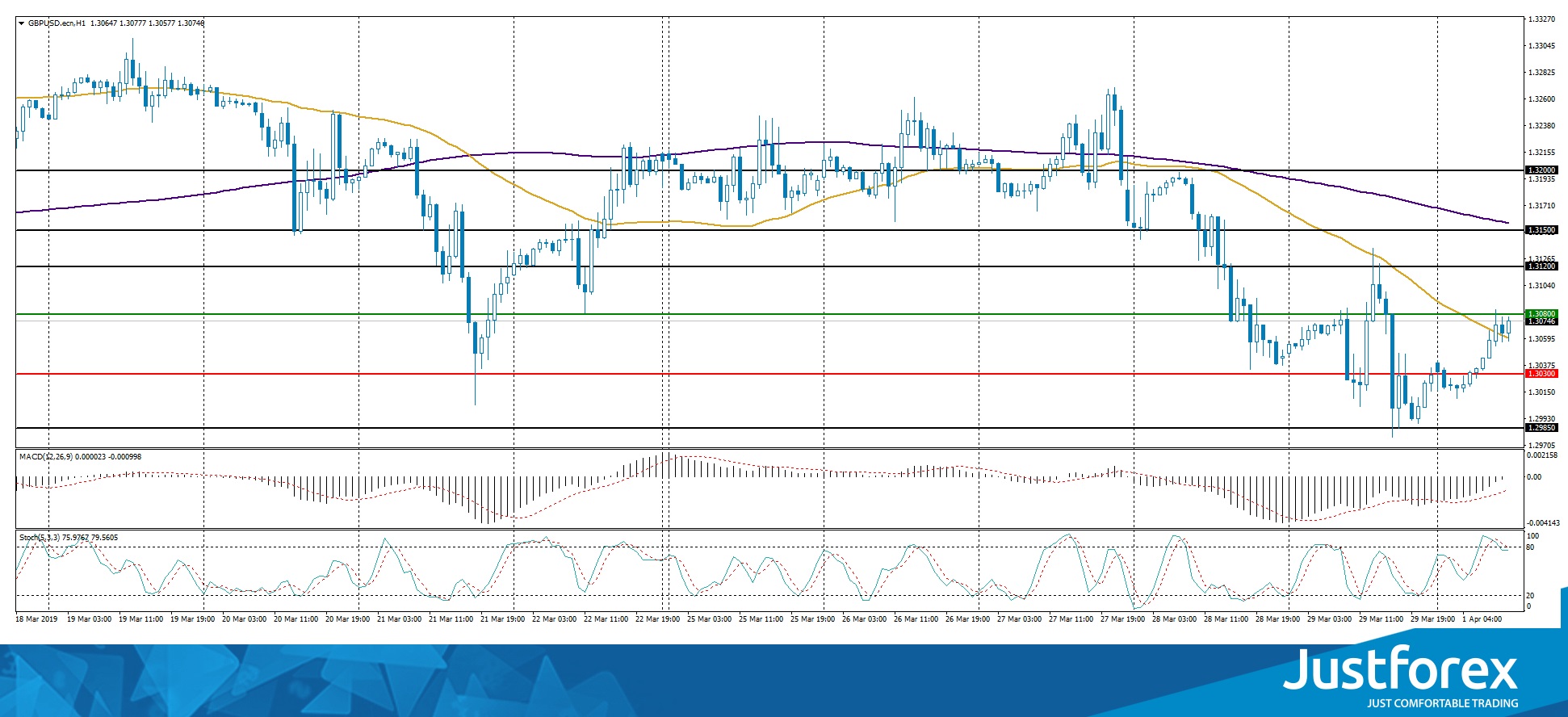
The indicators do not provide precise signals, the price has crossed 50 MA.
The MACD histogram is close to 0.
The Stochastic Oscillator is near the overbought zone, the %K line is crossing the %D line. There are no signals at the moment.
Trading recommendations
Support levels: 1.30300, 1.29850
Resistance levels: 1.30800, 1.31200, 1.31500
If the price fixes below 1.30300, expect the quotes to fall toward 1.29800-1.29600.
Alternatively, the qutoes can grow toward 1.31200-1.31500.
The USD/CAD currency pair
Technical indicators of the currency pair:
Prev Open: 1.34325
Open: 1.33465
% chg. over the last day: -0.68
Day's range: 1.33384 – 1.33565
52 wk range: 1.2248 – 1.3664
USD/CAD is in the middle of an agressive sell-off. The CAD fell by more than 80 points. The CAD is supported by the positive GDP reports. Right now the quotes are consolidating around 1.33400 and 1.33750. The trading instrument has a tendency to descend, you should open positions from the key levels.
Keep an eye on the US economic reports.
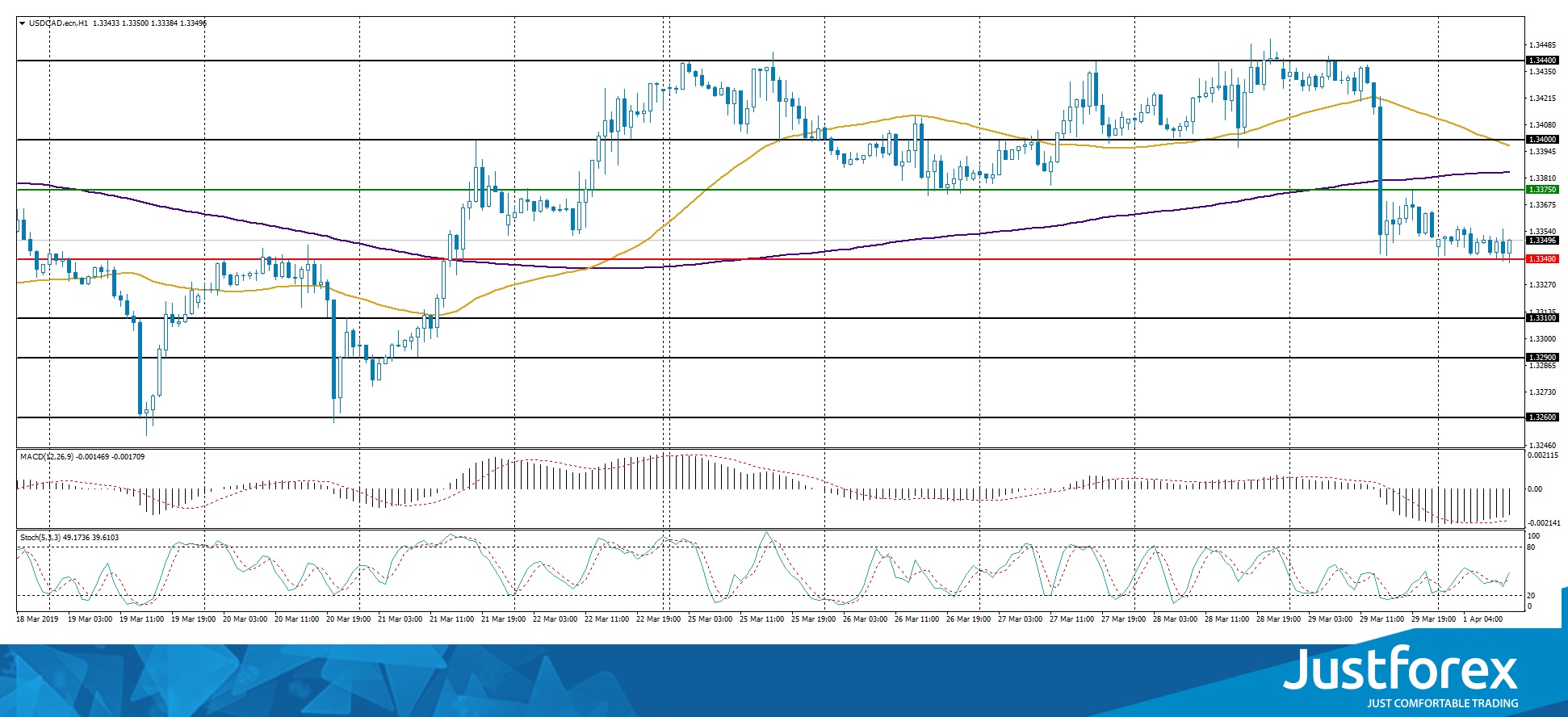
The price fixed below 200 MA which points to the power of the buyers.
The MACD histogram is in the negative zone but above the signal line which gives a weak signal to sell USD/CAD.
The Stochastic Oscillator is in the neutral zone, the %K line is crossing the %D line. There are no signals at the moment.
Trading recommendations
Support levels: 1.33400, 1.33100, 1.32900
Resistance levels: 1.33750, 1.34000, 1.34400
If the price fixes below 1.33400, expect the quotes to fall toward 1.33100-1.32900.
Alternatively, the quotes can grow toward 1.34000.
The USD/JPY currency pair
Technical indicators of the currency pair:
Prev Open: 110.457
Open: 110.630
% chg. over the last day: +0.10
Day's range: 110.533 – 110.929
52 wk range: 104.56 – 114.56
The USD/JPY technical picture remains ambiguous. The trading instrument is consolidating. Right now the key support and resistance levels are 110.500 and 110.900. The financial market participants are waiting for additional drivers. Keep an eye on the US Treasury bonds. You should open positions from the key levels.
The Economic News Feed for 01.04.2019 is calm.
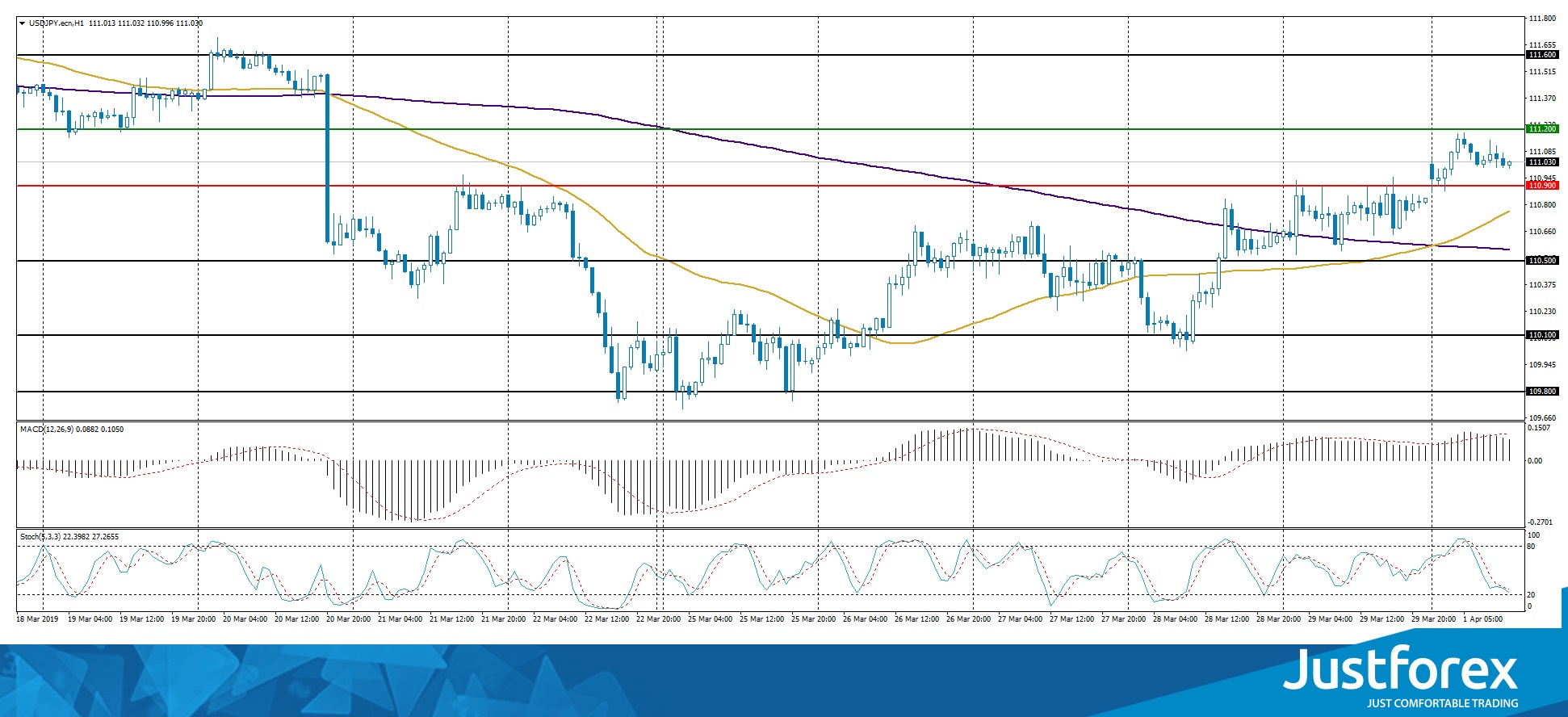
The indicators do not provide precise signals, the 50 MA is crossing 50 MA.
The MACD histogram is in the positive zone but below the signal line which gives a weak signal to buy USD/JPY.
The Stochastic Oscillator is in the neutral zone, the %K line is above the %D line which points to the bullish mood.
Trading recommendations
Support levels: 110.500, 110.100, 109.800
Resistance levels: 110.900, 111.200
If the price fixes above 110.900, expect the quotes to grow toward 111.200-111.500.
Alternatively, the quotes can fall toward 110.100-109.800.
The Dollar Index Is Maintaining Local Highs
On Friday, the US dollar strengthened against a basket of major currencies amid optimistic data. New home sales rose to 667K in February instead of the forecasted value of 620K. Previous data has also been revised upwards from 697K to 636K. At the moment, the dollar index (#DX) is maintaining local highs. Currency majors are consolidating. This week, trade negotiations between the US and China will be in the focus of attention. Vice Premier of the People's Republic of China, Liu He, will meet with US Trade Representative, Robert Lighthizer, and US Treasury Secretary, Steven Mnuchin, in Washington.
Investors are still focused on the uncertainty concerning Brexit. On Friday, March 29, British lawmakers rejected Prime Minister Theresa May’s deal for the third time. Financial market participants fear that they will not be able to conclude an agreement on the Brexit terms by April 12. At the same time, the European Commission is ready for such a course of events and considers non-deal Brexit to be the most probable option.
Today, during the Asian trading session, economic data from Japan and China has been published. Thus, Tankan large manufacturers index slowed down in Q1 and counted to 12 instead of 13. Tankan large non-manufacturers index also decreased to 21 instead of 22. Chinese Caixin manufacturing PMI rose to 50,8 in March, while investors expected 50.1. These statistics support the Australian dollar. German manufacturing PMI slowed down in March and counted to 44.1 instead of 44.7.
The "black gold" prices are growing. At the moment, futures for the WTI crude oil are testing the mark of $60.70 per barrel.
Market Indicators
- On Friday, the bullish sentiment was observed in the US stock market: #SPY (+0.63%), #DIA (+0.80%), #QQQ (+0.76%).
- The 10-year US government bonds yield is recovering. At the moment, the indicator is at the level of 2.43-2.44%.
The news feed on 01.04.2019:
- Consumer price index in the Eurozone at 12:00 (GMT+3:00);
- Retail sales in the US at 15:30 (GMT+3:00);
- ISM manufacturing PMI at 17:00 (GMT+3:00).
Markets Enter Rally Mode After China Bounces Back
Global stock markets are all green as a surprising rebound from China and progressive trade deal signs prompted a strong risk-on start to the trading week. The positive tone also saw global yields firm up with the 10-year Treasury note and German bund both rallying over 3 basis points. Today’s move in yields also took the 10-year Treasury and 3-month bill spread out of inversion territory.
- EUR – Steady despite falling inflation and softer PMI data
- Turkey – Erdogan’s big defeats
- Brexit – Indicative votes to decide how soft of a Brexit
- Oil – Chinese PMI readings keep rally going
- Gold – Declines despite falling dollar
EUR
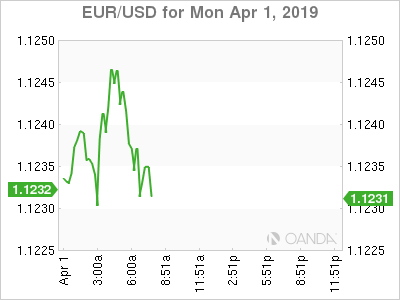
The euro held steady despite dismal final German manufacturing data and eurozone inflation falling to an 11-month low. The better than expected manufacturing data out of China, first expansion since October, helped balance out the negative news flow from Europe.
Germany remains the posterchild victim of the global trade war and the March manufacturing reading showed the 3rd straight contraction and worst print since end of 2012. Markets may have mispriced how weak Germany has become, but that may not matter if the US and China are able to forge ahead with a trade deal in the coming months. Any major setback in trade talks, could be the straw that break’s Germany’s back into a recession.
TRY
Turkish votes show dissatisfaction with President Erdogan, in what was the first round of voting following last year’s transition from a Parliamentary system to a Presidential one. Erdgoan appears to poised to lose local elections in Ankara and possibly in Istanbul. Regardless of the final tally in Instanbul, Erdogan will need to deliver economic reforms. He will have four years until Turks return to the poll.
Turkey stole the headlines last week, after authorities prevented investors from shorting the lira last week. Such measures are risks one deals with when dealing with emerging market currencies. As countries tries to defend their respective currencies from short-selling, the longer-term effect is they could permanently scare away investors.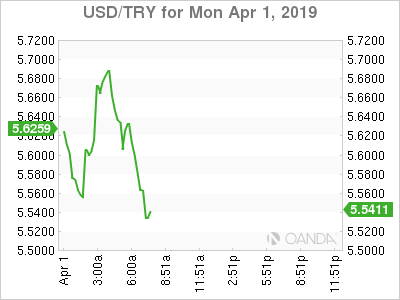
Brexit
A second attempt of alternative Brexit options will be voted on in Parliament, with hopes to see finally agree upon something. The March 27th round of indicative votes saw none of the eight options receive a majority but did see narrow defeats on getting a customs union with the EU and a referendum on any deal.
Today, the House of Commons will debate a plethora of options with many focused on a customs union and single market options. The customs union option lost by six votes last time, but that would result in the UK losing control of independent trade policy. And if PM May decides to move forward with that policy, she will split her party.
11 days away from crashing out mean the British pound risks should go up as Parliament remains deadlocked. The market remains firmly convinced that the UK will not leave the EU without a deal, so we would should not be surprised if we finally see some repricing here.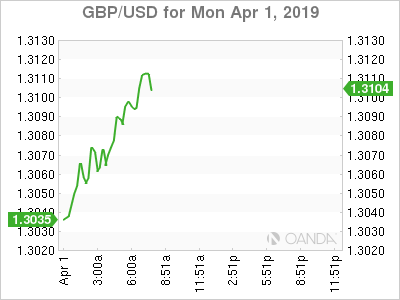
Oil
West Texas Intermediate crude’s rally keeps on going as the dollar fell and risk assets rallied following a better than expected rebound in China. China’s manufacturing PMI posted its biggest rise since 2012, a possible sign that sentiment is stabilizing.
Positive steps in the trade war between China and the US are also supporting oil prices. China’s Ministry of Finance noted China will continue suspending tariffs on US autos and auto parts. Trade talks will resume on Wednesday, when China’s trade delegation will arrive in Washington.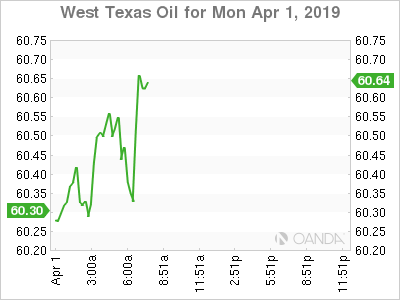
Gold
Gold prices are softer on the day, despite a falling dollar as investors focus on the rebound with global bond yields. The precious metal in 2019 has seen most of its gains capped on China-US trade deal optimism. Continued upside surprises with Chinese data and progressive trade talks continue to prevent gold from breaking out higher.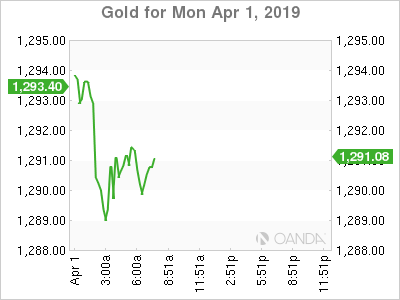
EUR/USD – Euro Holds Owns Despite Soft Manufacturing PMIs
After a tough week, EUR/USD has started the week with slight gains. Currently, the pair is trading at 1.1235, up 0.15% on the day. On the release front, it’s a busy day. German and eurozone manufacturing PMIs missed their estimates, with readings of 44.1 and 44.7, respectively. The Eurozone CPI Flash Estimate inflation in March came in at 1.5%, just shy of the estimate of 1.4%. In the U.S., retail sales are expected to tick up to 0.3%. On Tuesday, the eurozone releases PPI and the U.S. posts durable goods orders.
German and eurozone manufacturing sectors remain mired in contraction territory. This is largely due to the global trade war, which has lowered the demand for exports, such as German cars and auto parts. German manufacturing PMI dropped to 44.1, losing ground for an eighth straight month. This reading was the lowest since 2012. The all-eurozone release has also been steadily falling and is pointing to significant weakness in manufacturing.
Investors are keeping a close eye on the ebb and flow of the U.S.-China trade talks, which continues to affect the markets. The negotiations between the sides continues and there have been reports of progress. However, optimism waned on Thursday, after a senior U.S. official said that it could be months before a deal is reached. As long as uncertainty continues to swirl around the talks, traders can expect swings in the currency markets.
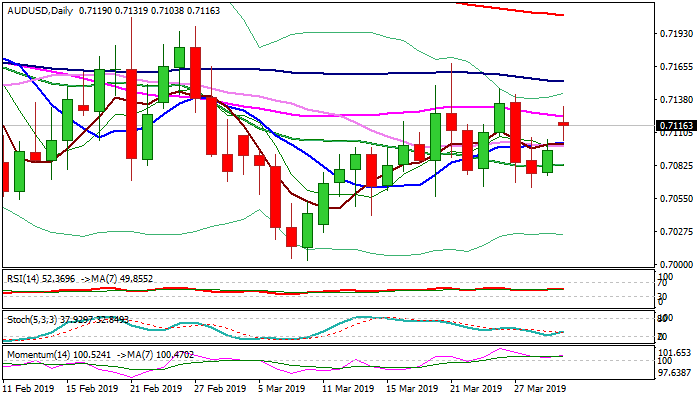
AUD/USD Outlook: Aussie Stands At The Front Foot On Fresh Risk Mode Ahead Of RBA
The Aussie dollar extends recovery above 0.71 handle on Monday, boosted by renewed risk appetite.
Recovery emerged from solid Fibo support at 0.7066 on Friday, where two-day fall bottomed.
Overall tone is still neutral as the price action remains within larger 0.7056/0.7168 range and daily MA’s are in mixed setup while momentum is flat.
Focus turns towards tomorrow’s RBA monetary policy meeting, outcome of which will be released in early hours of Asian session.
The central bank is expected to keep interest rate unchanged at 1.5% but the statement might give more hints about RBA’s next steps.
Traders suspect that surprise dovish turn by RBNZ last week may affect the outlook of Australian central bank and potential dovish turn would have negative impact on Aussie.
However, the central bank may not feel urgency in softening its tone as labor sector remains strong and improvement in property market has been noted.
Eventual break from recent congestion, limited by 20SMA at the downside and capped by 100SMA would provide clearer direction signal.
Break lower would expose strong 0.70 support zone (8 Mar low / daily cloud base) while sustained break above range upper boundary (also daily cloud / 100SMA) would unmask 200SMA (0.7208).
Res: 0.7131, 0.7147, 0.7156, 0.7168
Sup: 0.7101, 0.7084, 0.7056, 0.7042
Yield Curve Inversion Disappears, While Brexit Is Markets Biggest Worry
Monday April 1: Five things the markets are talking about
Will we see the same in Q2?
Optimism about trade talks amongst the world’s two largest economies coupled with the Fed signalling a temporary halt to interest-rate hikes pushed some stateside equity indexes to their best Q1 in a decade, and this despite investors grappling with slowing global growth and the uncertainties surrounding Brexit.
Better manufacturing data out of China over the weekend has helped push equity markets into to the ‘black’ on day one of a new quarter. With a plethora of central banks turning more supportive for markets by extending their expansionary monetary policies, a number of investors have been fearful of missing the move.
Note: The Caixin-Markit China manufacturing purchasing managers index rose in March above 50 to 50.8.
Inversion disappears
Providing more investor confidence is the fact that the yield on U.S 10-year Treasury’s has backed up +3 bps to +2.446%, climbing back above the yield on three-month T-Bills and ending the inversion of the yield curve that last week signalled the possibility of a recession in the market.
Brexit unknown
The U.K Parliament is expected to vote today on a short list of options for how the U.K could leave the E.U, including perhaps one that combines a customs union pact with a second referendum. There is talk of a possible third general election in four-years gathering steam. Minus a deal, Britain is set to crash out of the EU on April 12 with expected “dire financial consequences.”
On tap: U.S retail sales, U.S ISM manufacturing PMI & RBA rate statement (Apr 1), AUD Annual budget release, AUD retail sales & U.S core durable goods (Apr 2), U.K Parliament Brexit vote (Apr 3), CNY Bank holiday (Apr 4), CAD & U.S employment, AUD Parliamentary elections (Apr 5).
1. Stocks rally on strong Chinese data
In Japan, the Nikkei has rallied on day one of the new fiscal year overnight as hopes for Sino-U.S trade talk hopes and factory activity surveys lifted China-related stocks, helping to offset weak domestic corporate sentiment. The Nikkei share average ended +1.4% higher, while the broader Topix closed out +1.5% higher.
Down-under, Aussie shares closed at a three-week high overnight, after Chinese factory surveys on the weekend supported broader investor sentiment, with miners notching strong gains on firm iron ore prices. The S&P/ASX 200 index rose +0.59% at the close of trade. The benchmark was little changed on Friday. In S. Korea, the Kospi index gained +1.3%.
In China, stocks jumped overnight with the Shanghai Composite Index hitting its highest in 10 months, while blue-chips touched a 12-month peak, on signals of an economic recovery (see below) and the progress in Sino-U.S. trade talks. The Shanghai Composite and the blue-chip CSI300 indexes closed up +2.6%. While in Hong Kong, shares rose to their highest point in nine-months. At the close of trade, the Hang Seng index was up +1.8%.
In Europe, regional indices trade higher across the board with positive PMI data out of China providing global equities the ‘bid.’
U.S stocks are set to open in the ‘black’ (+0.75%)
Indices: Stoxx600 +1.07% at 383.12, FTSE +0.89% at 7,343.76, DAX +1.39% at 11,686.44, CAC-40 +1.10% at 5,409.54, IBEX-35 +0.79% at 9,317.00, FTSE MIB +0.86% at 21,469.50, SMI +0.37% at 9,512.50, S&P 500 Futures +0.75%
2. Oil prices rise on supply worries, gold lower
Oil prices have rallied overnight, adding to their Q1 gains when the major benchmarks posted their biggest increases in nearly a decade, as worries about supplies outweigh uncertainties of a slowing global economy.
Also providing support to ‘black gold’ is the encouraging data out of China on the weekend. Positive Chinese factory gauges and signs of progress in Sino-U.S. trade talks is lending a hand.
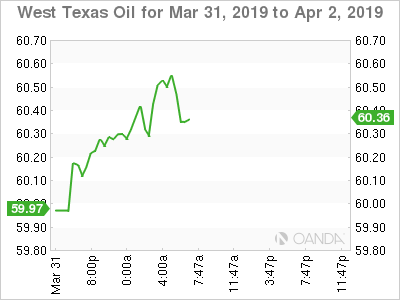
Brent crude for June is up +64c, or +1%, at +$68.22 a barrel, after having rallied +27% in Q1. U.S West Texas Intermediate (WTI) futures rose +43c, or +0.7%, to +$60.57 barrel, after posting a rise of +32% in Q1.
U.S sanctions on Iran and Venezuela along with supply cuts by OPEC+ have helped support prices this year, overshadowing concerns about global growth and the Sino-U.S trade war.
Crude oil bears believe price gains will be capped by potential softness in the global economy as well as the ability of U.S oil producers to ramp up production when prices spike.
However, providing support is that U.S production has also steadied, data Friday showed that U.S domestic output edged lower in January to +11.9M bpd. Also, according to Baker Hughes energy services U.S energy firms last week reduced the number of oil rigs operating to the lowest level in 12-months, cutting the most rigs in a quarter in three-years.
Ahead of the U.S open, Gold prices have inched down as investor appetite for riskier assets has improved a tad on signs of progress in trade negotiations and stronger economic data. Spot gold has slipped -0.1% to +$1,290.98 per ounce, after touching its lowest since March 8 at +$1,286.35 in Friday’s session. U.S gold futures are down -0.3% at +$1,294.90 an ounce.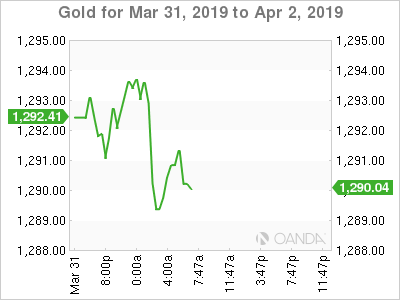
3. Sovereign bond yields push back
Euro zone government bond yields have backed up in early Q2 trading as an unexpected rally in Chinese factory activity data over the weekend eased fears about global recession risks, taking the shine off safe-haven bond markets.
The German 10-year Bund yield fell -26 bps in March into negative territory in their biggest monthly fall in three-years.
This weekend’s data has brought some calm back to global markets.
China’s Caixin/Markit Manufacturing Purchasing Managers’ Index (PMI) expanded at the strongest pace in eight-months in March, rising to 50.8 from 49.9 in February – the strongest print since July 2018.
Germany’s benchmark 10-year bond yields have backed up +3 bps to -0.04%, pulling away from its three-year low yield of -0.09% last week. Elsewhere in Europe, the 10-year bucket has pushed back +2 to +3 bps on the day.
Elsewhere, the yield on 10-year Treasuries has jumped +4 bps to +2.44%, the highest in more than a week, while in the U.K, the 10-year Gilt yield has jumped +3 bps to +1.028%, also the highest in more than a week.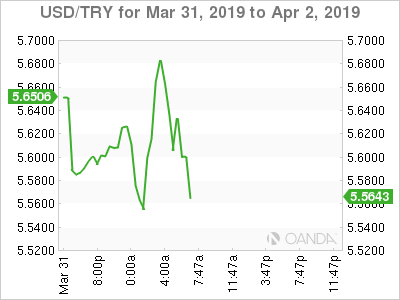
4. Turkey Lira under pressure from Erdogan loss
Turkey President Recep Tayyip Erdogan has supposedly lost control of the capital, Ankara, in local held elections yesterday, which has sent TRY to a one-week low of TRY5.6860. It’s suggested that Erdogan limited access to TRY last week to prevent speculators from “shorting” it and devaluing it before the elections, in fear that his party AKP may lose the majority in the capital.
Note: Both Erdogan’s party and the opposition party claim to have won the majority of Turkey’s largest city, Istanbul. The lira has managed to retrace some of its losses, with USD/TRY last up +0.4% at 5.6169.
A stronger-than-expected U.K manufacturing purchasing managers’ survey sent sterling only briefly higher this morning, with GBP/USD rising to £1.3090 from £1.3074 beforehand. The PMI rose to a 13-month high of 55.1 in March, from 52.1 in February. Market consensus was looking for a fall to 50.9. The increase largely reflected Brexit-related stockpiling, with stocks rising at record rates. EUR/GBP is last flat at €0.8600.
EUR/USD is steady despite data this morning showing that Eurozone inflation missed expectations and remains below ECB target for the fourth consecutive month (see below). The pair is hovering around €1.1245.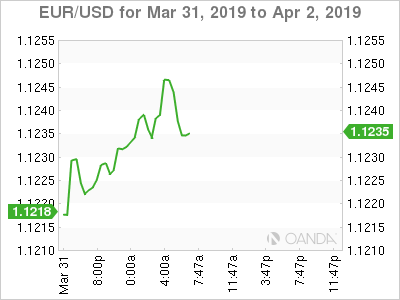
5. Eurozone inflation falls further below ECB target
The annual rate of inflation in the eurozone fell further below the ECB’s target last month, even as unemployment continued to fall and energy prices rose.
According to the European Union’s statistics agency this morning, it said consumer prices in the 19 countries that use the ‘single unit’ were +1.4% higher than a year earlier, a decline from 1.5% in February.
However, more concerning for the ECB is the decline in the core-rate of inflation – which excludes food and energy – to +0.8% from +1% in February, its lowest level in 11-months.
The fall in the core rate leaves it far from the ECB’s target of just under +2%, and reflects slower price rises for both services and manufactured goods.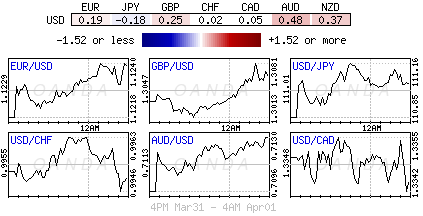
BDI: Disorderly Brexit could slash Germany GDP by 0.5% to just 0.7% in 2019
President Federation of German Industries (BDI), Dieter Kempf, warned that "in the case of the disorderly exit of the British from the EU in the current year threatens a relapse to only 0.7 percent increase in gross domestic product" in Germany. That would be 0.5% lower than current forecast of 1.2% growth for 2019.
Kempf also complained that "the extension of the time limit for the self-imposed departure of the British from the EU continues the exhausting uncertainty for our companies". And, "there is a risk that British policymakers once again buy expensive time at the expense of the economy - without wanting to take responsibility for the bill."
Forex Technical Analysis: EUR/USD, USD/JPY, GBP/USD
EUR/USD
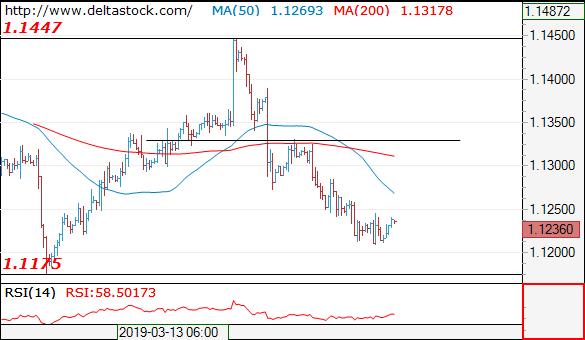
Current level - 1.1236
The minor resistance at 1.1250 should allow a rise for a test of 1.1330. Crucial on the downside is 1.1175 low.
| Resistance | Support | ||
| intraday | intraweek | intraday | intraweek |
| 1.1250 | 1.1570 | 1.1175 | 1.1175 |
| 1.1330 | 1.1830 | 1.1175 | 1.0860 |
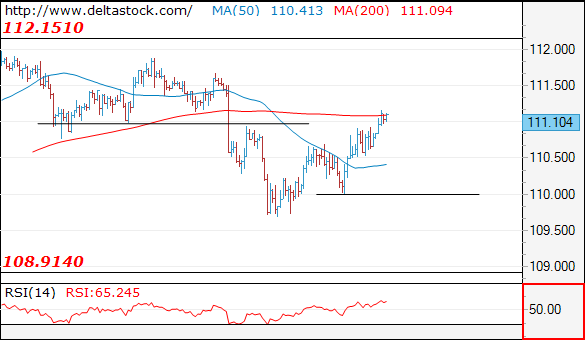
USD/JPY
Current level - 110.10
I favor a reversal around these levels, for a break through the crucial 110.50, towards 109.70 low.
| Resistance | Support | ||
| intraday | intraweek | intraday | intraweek |
| 111.20 | 113.00 | 110.50 | 108.90 |
| 112.15 | 114.50 | 108.90 | 107.40 |
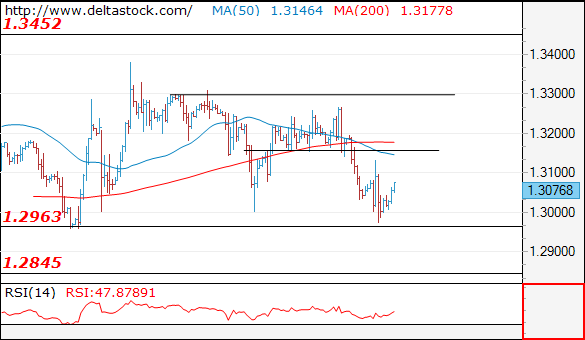
GBP/USD
Current level - 1.3076
My outlook is positive above 1.2960, for another test of 1.3150 area, en route to 1.3300 zone.
| Resistance | Support | ||
| intraday | intraweek | intraday | intraweek |
| 1.3150 | 1.3450 | 1.2960 | 1.2800 |
| 1.3300 | 1.3450 | 1.2960 | 1.2610 |
Brexit Joke On Market
Brexit joke on market
1st April and the UK remains part of the EU. I guess the joke is on us. However, the sterling is no longer getting the “kick the can” bounce. Prior to last week, GBP had benefited from delays as the perception was that the longer Brexit was postponed the higher likelihood of an “ultra-soft” or even No-Brexit result. Yet following the third defeat of the Prime Minister May's Withdrawal Agreement the GBP reaction was negative. Despite growing narrative (supported by wide protests), none of the eight options offered to PMs reached a majority. While permanent custom union and 2nd referendum got the closest, the hidden vote to reject Brexit did not appear. Our view is that should a vote go to the people it’s unlikely that Brexit will reverse. Today, MPs will get another vote, where the outlook for a consensus on a permanent custom union has improved. Yet the conservative party and cabinet remain divided and May is likely to call a new election rather face down a rebellion. Political chaos will not have a clear negative effect on sterling as the UK marches toward 12th April deadline. The choice between hard Brexit and present agreement is difficult. Least ugly contests generally increase the likelihood for a random event to blow apart any smooth forecast (baseline May Withdrawal Agreement will get the votes). With a limited event calendar, RBA and inflation reads will dominate it seem we are stuck watching the UK politics.
Italy under water as ongoing crisis weighs on the economy
The Italian crisis saga is not over. The economy has consistently grown at a slower pace than the euro zone due to structural inefficiencies while heavy pressures induced by the European Commission with regard to the budget deficit target is expected to resume in 2H 2019. Yet a break-up of the ruling anti-establishment 5-Star Movement and right-wing League following European elections starting in 23 May 2019 would be seen as a positive headline as most polls favor a centre-right majority.
Despite a major slowdown of the Eurozone globally, it appears that Italy remains one of the most exposed country within the single market. The debt is second-highest after Greece, with a debt equal to 132.10% of GDP, while a risk of rating downgrade would put additional pressure on already vulnerable Italian banks. Indeed, Italian government bonds heavy reliance on domestic demand and more specifically Italian banks (along 10%) poses further worries. The potential overshoot of the 2.04% of GDP deficit target (estimated above 3%) could not only prompt up sanctions from Brussels but also trigger a wave of rating downgrades, which should ultimately weigh on Italian banks whose reliance on Italian state creditworthiness is at its peak. Overall, the Italian economy is expected to show a slight recession in 1Q 2019 while a rebound in the automotive industry and exports to China as well as ECB monetary policy should provide short-term support for Q2. However, impending confrontation with Brussels as well as autumn rating agency credit assessment should weigh on the economy in 2H 2019.
Currently trading at 1.1245, EUR/USD is heading along 1.1256 short-term.