Sample Category Title
EUR/USD Daily Outlook
Daily Pivots: (S1) 1.1345; (P) 1.1378; (R1) 1.1394; More.....
EUR/USD's fall from 1.1514 is still in progress and intraday bias remains on the downside for 1.1289 support. Firm break there will argue that corrective pattern from 1.1251 has completed. And, in that case, larger decline from 1.2555 is ready to resume through 1.1251 low. On the upside, above 1.1411 minor resistance will probably extend the correction pattern with another rise towards 1.1569 resistance.
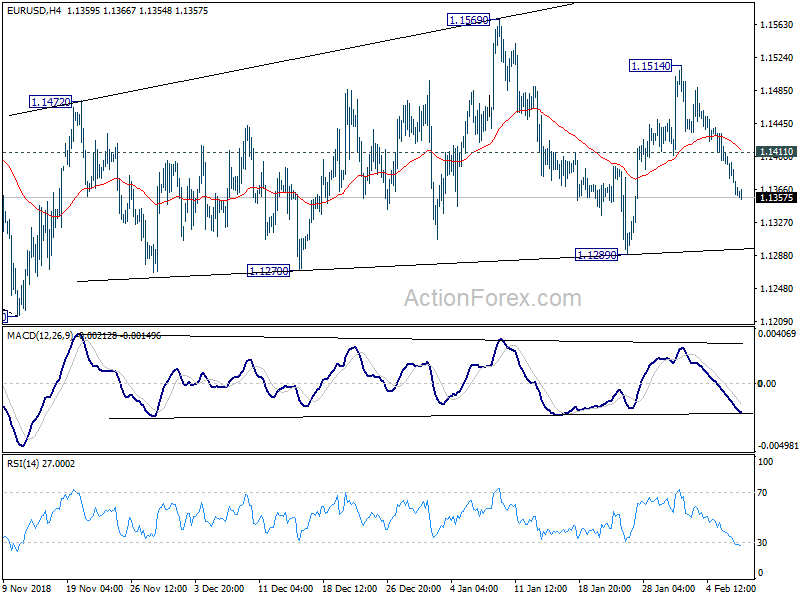
In the bigger picture, as long as 1.1814 resistance holds, down trend down trend from 1.2555 medium term top is still in progress and should target 61.8% retracement of 1.0339 (2017 low) to 1.2555 at 1.1186 next. Sustained break there will pave the way to retest 1.0339. However, break of 1.1814 will confirm completion of such down trend and turn medium term outlook bullish.
GBP/USD Daily Outlook
Daily Pivots: (S1) 1.2910; (P) 1.2944; (R1) 1.2964; More....
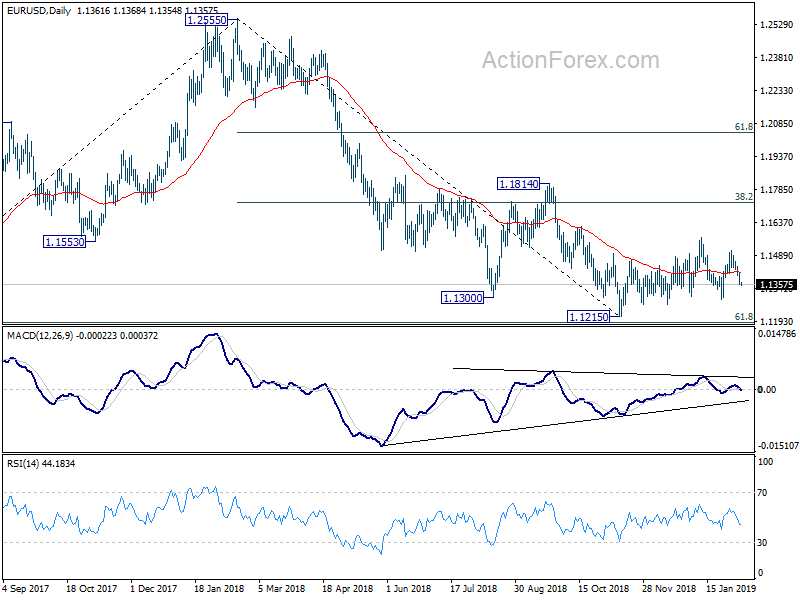
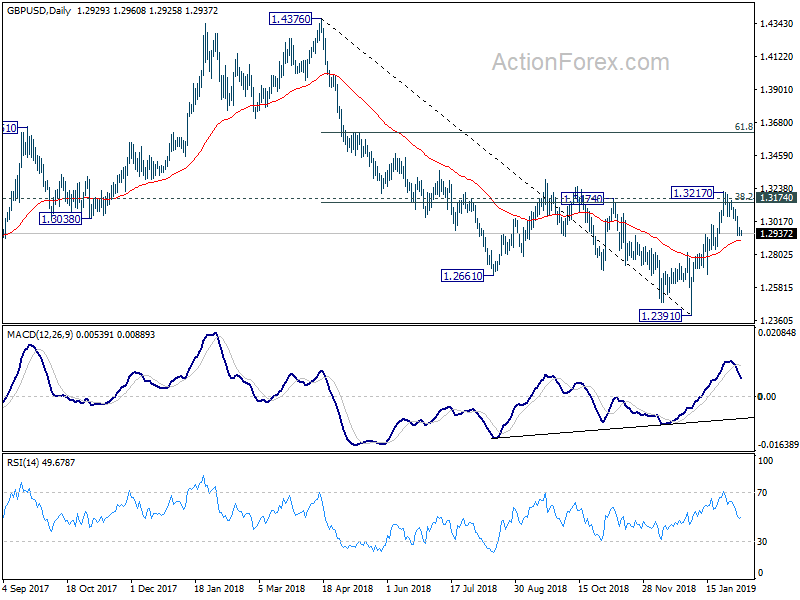
GBP/USD's decline from 1.3217 is still in progress and intraday bias stays on the downside for 1.2814 resistance turned support. As noted before, rebound from 1.2391 has completed at 1.3217, after rejection by 1.3174 key resistance. Firm break of 1.2814 will bring retest of 1.2391 low. On the upside, above 1.2997 minor resistance will turn intraday bias neutral first. But break of 1.3217 resistance is needed to confirm resumption of the rebound. Otherwise, risk will now stay on the downside in case of recovery.
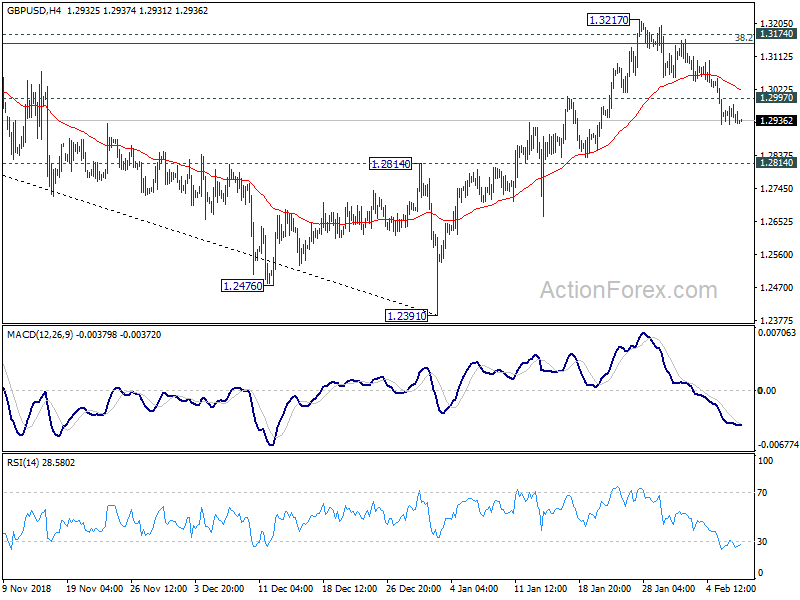
In the bigger picture, the rejection by 1.3174 key resistance revived the original view on GBP/USD. That is, decline from 1.4376 is possibly resuming long term down trend from 2.1161 (2007 high). Firm break of 1.2391 will solidify this bearish case and target 1.1946 (2016 low). However, decisive break of 1.3174 will invalidate this bearish case again and turn outlook bullish.
Sterling Range Bound ahead of BoE Super Thursday, New Zealand Dollar Dives after Job Data
Sterling is generally steady today and gyrates in tight range. UK events are the major focuses with BoE Super Thursday featured. UK Prime Minister Theresa May will also visit Brussels to seek alternative arrangements on Irish border backstop. For now, the recovery in the Pound is rather weak. Real strength is indeed seen in Dollar and Yen. Staying in the currency markets, New Zealand Dollar is the weakest one for today, suffering heavy selling after job data miss. Australian Dollar follows after another batch of weak economic data too.
Technically, GBP/USD and GBP/JPY could be eyeing 1.2814 and 140.62 support levels. There is still some distance from these two levels. But break will solidify near term bearishness for the pound. Meanwhile, AUD/USD is now close to 0.7076 while EUR/AUD is close to 1.6038. Break of these levels will also solidify near term bearishness for Aussie.
In Asia, Nikkei closed down -0.59%. Japan 10-year JGB yield is up 0.0113 at -0.004, staying negative. Singapore Strait Times is up 0.69%. Hong Kong and China are still on lunar new year holiday. Overnight, DOW dropped -0.08%. S&P 500 dropped -0.22%. NASDAQ dropped -0.36%. 10-year yield was flat at 2.702 after dipping to 2.673.
BoE to stand pat and publish new forecasts, reiterate Brexit uncertainty
It's another BoE Super Thursday today with rate decision as well as quarterly inflation report. BoE is widely expected to keep Bank rate unchanged at 0.75%. The asset purchase target will also be held at GBP 435B. The decisions are very likely to be unanimous.
BoE might revise down both GDP and inflation forecasts. But it should be emphasized that such forecasts are based on scenario of a smooth Brexit. Hence, reactions to any revision to the forecasts could be temporary as the biggest question of Brexit won't be answered by these figures.
And, as BoE noted repeatedly, "The broader economic outlook will continue to depend significantly on the nature of EU withdrawal, in particular: the form of new trading arrangements between the European Union and the United Kingdom; whether the transition to them is abrupt or smooth; and how households, businesses and financial markets respond."
Also, "The appropriate path of monetary policy will depend on the balance of the effects on demand, supply and the exchange rate. The monetary policy response to Brexit, whatever form it takes, will not be automatic and could be in either direction."
We'd expect BoE to reiterate such messages in today's statement.
Here are some previews:
- BOE Preview – Downgrade on Economic Outlook as Brexit Remains Uncertain
- BoE to Strike Cautious Tone as Brexit Uncertainty Reigns
UK PM May to work urgently with EU on Brexit deal changes
UK Prime Minister Theresa May is travelling to Brussels to meet EU leaders to convince them to tweak the Irish backstop arrangement. And as the March 29 formal Brexit date is approaching, May is expected to ask European Commission President Jean-Claude Juncker, European Council President Donald Tusk and the European parliament's Antonio Tajani to work "urgently".
According to her office, May is expected to tell the parliament that the "The government now wants urgently to work with the EU to secure such changes ... We must show determination and do what it takes to now get the deal over the line." While the expectation on the meeting is low, May would describe today's meeting as "part of a process leading to the government bringing back" a new vote on a Brexit agreement as soon as possible.
Fed Powell: It's important to earn and deserve trust that Fed is non-political
Speaking at a town hall to a group of educators, Fed Chair Jerome Powell repeated the assessment that the US economy is "now in a good place". While there were some "big events" like Brexit, "the system has been strong". He also emphasized that the essence of his job is to "earn and deserve trust" of American people to Fed that, it's "working on their behalf in a non-political way" to support the economy.
Looking forward, Powell said income inequality and sluggish productivity are the biggest challenges of the next decade. He noted "We want prosperity to be widely shared. We need policies to make that happen." And, "There are policies that we need to do that everyone should be able to agree on that will change mobility, improve people's chances and enable people to better take part in the workforce of the future."
Separately, Fed Governor Randal Quarles warned that "right now China is a downdraft as we think about what the potential impact for that is on our economy." Though, the U.S. outlook "is still very solid" given the labor market in particular.
New Zealand unemployment rate rose to 4.3%, NZD extends decline
New Zealand unemployment rate rose to 4.3% in Q3, up from 4.0%, notably higher than expectation of 4.1%. Looking at the details, labor force participation rate dropped -0.1% to 70.9%. Employment rate dropped -0.4% to 67.8%. Total labor force rose 12k but there was only 2k growth in the number employed Annual wage inflation accelerated by 0.1% to 1.9%.
NZD/USD extends this week's sharp decline after the release and is heading to 0.6551 support next.
Elsewhere...
Australia AiG performance of construction index recovered to 43.1 in January. NAB business confidence dropped to 1 in Q4. Japan leading indicator dropped to 97.9 in December. BoE rate decision and ECB monthly bulletin will be the main feature in European session. Germany will release industrial production and Swiss will release foreign currency reserves. Later in the day, US will release jobless claims.
GBP/USD Daily Outlook
Daily Pivots: (S1) 1.2910; (P) 1.2944; (R1) 1.2964; More....
GBP/USD's decline from 1.3217 is still in progress and intraday bias stays on the downside for 1.2814 resistance turned support. As noted before, rebound from 1.2391 has completed at 1.3217, after rejection by 1.3174 key resistance. Firm break of 1.2814 will bring retest of 1.2391 low. On the upside, above 1.2997 minor resistance will turn intraday bias neutral first. But break of 1.3217 resistance is needed to confirm resumption of the rebound. Otherwise, risk will now stay on the downside in case of recovery.
In the bigger picture, the rejection by 1.3174 key resistance revived the original view on GBP/USD. That is, decline from 1.4376 is possibly resuming long term down trend from 2.1161 (2007 high). Firm break of 1.2391 will solidify this bearish case and target 1.1946 (2016 low). However, decisive break of 1.3174 will invalidate this bearish case again and turn outlook bullish.
Economic Indicators Update
| GMT | Ccy | Events | Actual | Forecast | Previous | Revised |
|---|---|---|---|---|---|---|
| 21:30 | AUD | AiG Performance of Construction Index Jan | 43.1 | 42.6 | ||
| 21:45 | NZD | Unemployment Rate Q4 | 4.30% | 4.10% | 3.90% | 4.00% |
| 21:45 | NZD | Employment Change Q/Q Q4 | 0.10% | 0.30% | 1.10% | 1.00% |
| 21:45 | NZD | Labor Cost Private Sector Q/Q Q4 | 0.50% | 0.60% | 0.50% | |
| 0:30 | AUD | NAB Business Confidence Q4 | 1 | 3 | ||
| 5:00 | JPY | Leading Index CI Dec P | 97.90% | 97.90% | 99.10% | |
| 7:00 | EUR | German Industrial Production M/M Dec | 0.80% | -1.90% | ||
| 8:00 | CHF | Foreign Currency Reserves Jan | 729B | |||
| 9:00 | EUR | ECB Monthly Economic Bulletin | ||||
| 12:00 | GBP | BoE Rate Decision | 0.75% | 0.75% | ||
| 12:00 | GBP | BoE Asset Purchase Target Feb | 435B | 435B | ||
| 12:00 | GBP | MPC Official Bank Rate Votes | 0--0--9 | 0--0--9 | ||
| 12:00 | GBP | MPC Asset Purchase Facility Votes | 0--0--9 | 0--0--9 | ||
| 12:00 | GBP | BoE Inflation Report | ||||
| 13:30 | USD | Initial Jobless Claims (FEB 2) | 220K | 253K | ||
| 15:30 | USD | Natural Gas Storage | -173B |
EURUSD Heavily Bearish Below 1.1300
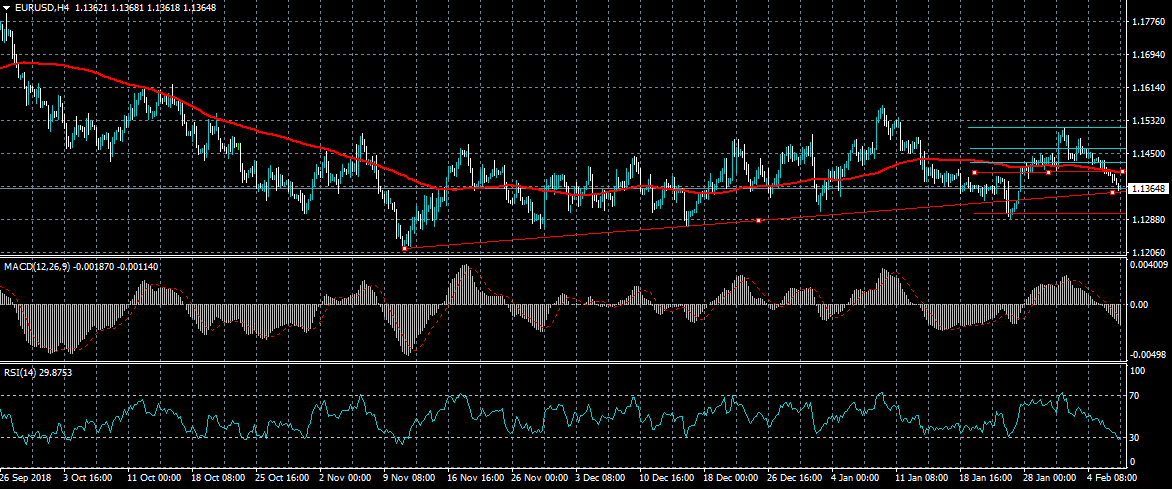
The euro currency continues to drift lower against the US dollar on Thursday, with the pair edging closer to important trendline support. A sustained break below the 1.1360 level exposes the pair to further losses towards the 1.1300 level, which is a major technical level for the EURUSD. Buyers ultimately need to move price back above the 1.1410 level to negate short-term bearish pressures.
The EURUSD pair is bearish while trading below the 1.1360 level, key technical support is found at the 1.1330 and 1.1300 levels.
If the EURUSD pair holds above the 1.1360 level, buyers may test towards the 1.1390 and 1.1410 resistance levels.
GBPUSD Further Bearish Below 1.2900
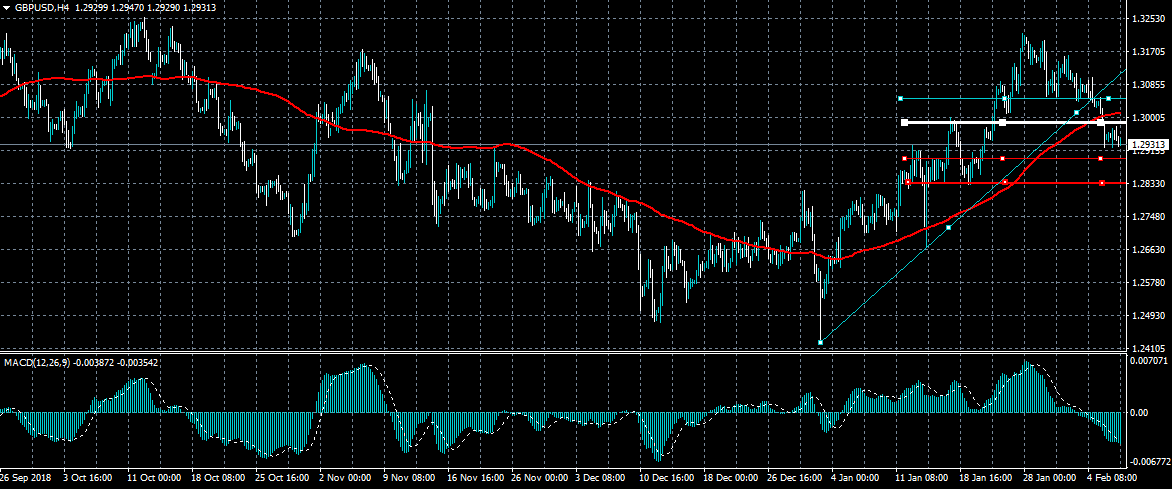
The British pound remains weak against the US dollar on Thursday, with traders now awaiting the Bank of England rate decision and the outcome of British PM Theresa May’s Brexit negotiations with EU leaders. If the GBPUSD pair falls below the 1.2900 level, further losses towards the 1.2830 level appear likely. Buyers need to move price above the 1.2990 level to negate the bearish sentiment surrounding the pair.
The GBPUSD pair is heavily bearish while trading below the 1.2990 level, key technical support is found at the 1.2900 and 1.2830 levels
If the GBPUSD pair trades above the 1.2990 level, key resistance is found at the 1.3020 and 1.3055 levels.
BTCUSD Slight Bearish Bias
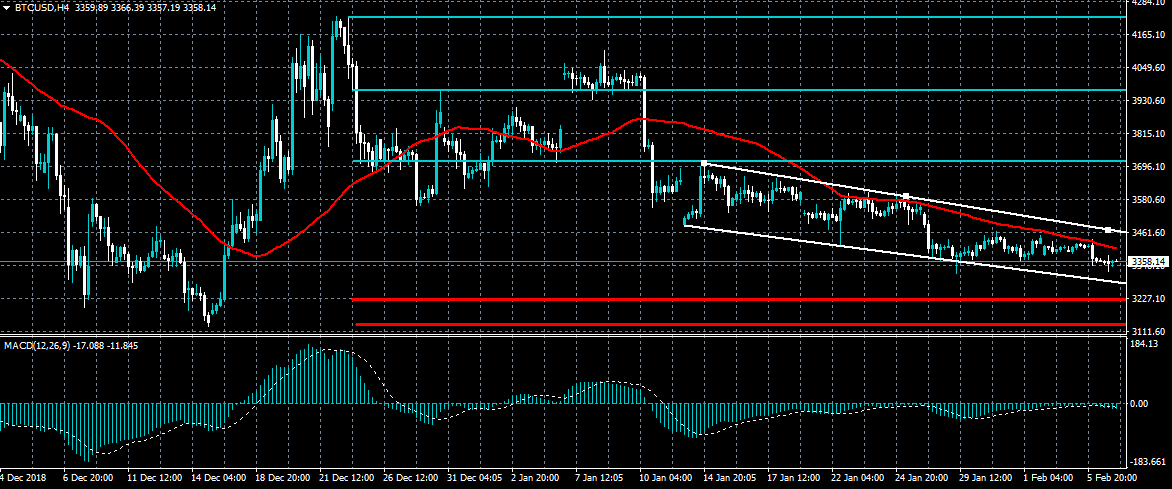
Bitcoin continues to trade in an increasingly narrow price range, with the number one cryptocurrency seemingly trapped inside a descending price channel. Given the general bearish bias towards the cryptocurrency market, an eventual test of the BTCUSD pairs 2018 trading low seems the most likely scenario. Technical indicators remain flat on the four-hour time frame as traders await a clear breakout from the descending price channel.
The BTCUSD pair is only bearish while trading below the $3,300 level, key technical support remains at the $3,200 and $3,100 levels.
If the BTCUSD pair trades above the $3,460 level, key resistance is found at the $3,660 and $3,980 levels.
Sterling Falls Ahead Of BOE Decision
Sterling remained closer to the two-week low as investors continue to worry about the probability of a no-deal Brexit. This week, the European Union has warned about the increasing chances of having a no deal arrangement. Today, investors will focus on the Bank of England (BOE), which will release the interest rates decision. The bank is expected to leave interest rates unchanged at 0.75%. Traders will keep a close eye on the bank’s view of Brexit and outlook for the year.
The kiwi declined today after weak employment numbers. The unemployment rate for New Zealand increased to 4.3%, which was higher than the expected 4.1%. In January, the unemployment rate announced was 3.9%. The participation rate declined to 70.90% from 71.10% for the third quarter. The participation rate shows the number of people who are working, willing to work, and are actively looking for work. The employment change for the fourth quarter increased by 0.1%, which was lower than the expected 0.3%. The labor cost index for the quarter increased by 0.5%, which was lower than the consensus estimate of 0.6%.
It will be another important day for the euro as investors expect key data from the region. In the morning, the region will release the economic forecast. This forecast comes as recent data has shown increased weakness in the region. Today, the German industrial production is expected to grow by 0.7% after contracting by -1.9% in November. Exports are expected to contract by minus 0.3%. In France, the trade deficit is expected to improve slightly to $4 billion. Italian retail sales look to remain unchanged.
EUR/USD
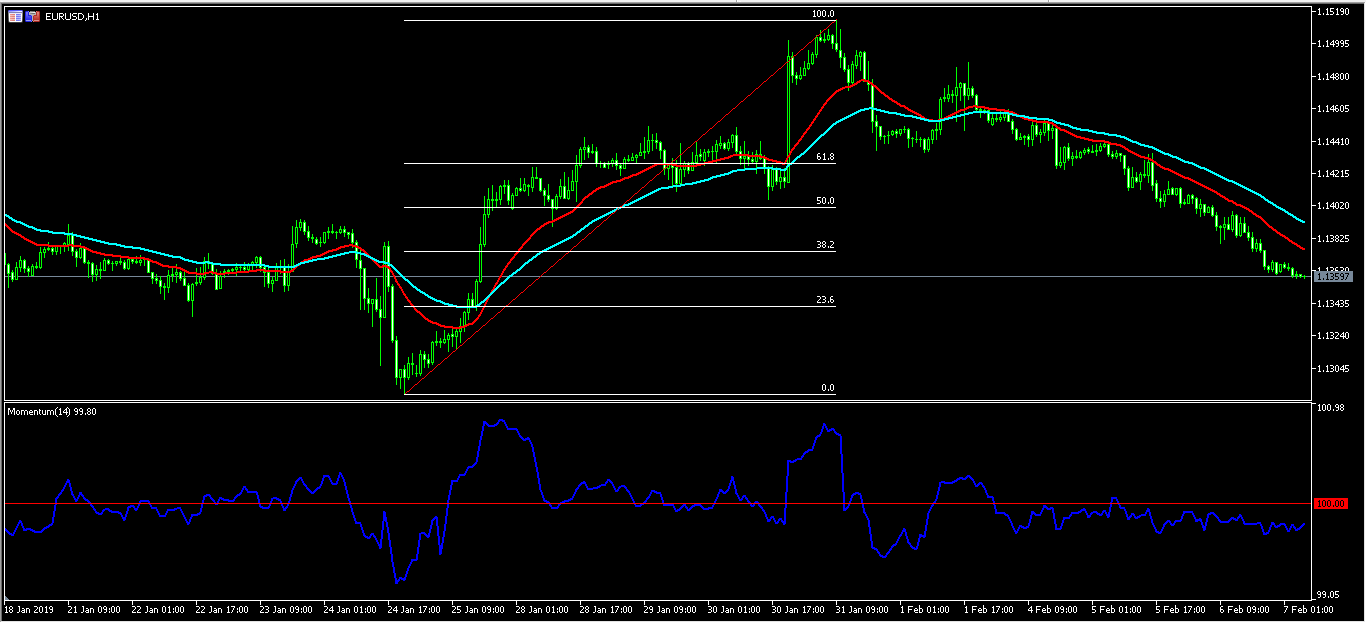
The EUR/USD pair continued to decline and is currently trading at 1.13600, which is between the 23.6% and 38.2% Fibonacci Retracement level. The pair is below the short and long-term moving averages, while the momentum indicator has remained below the 100 level. The pair will likely continue moving lower today to test the 23.6% Fibonacci level of 1.1340.
GBP/USD
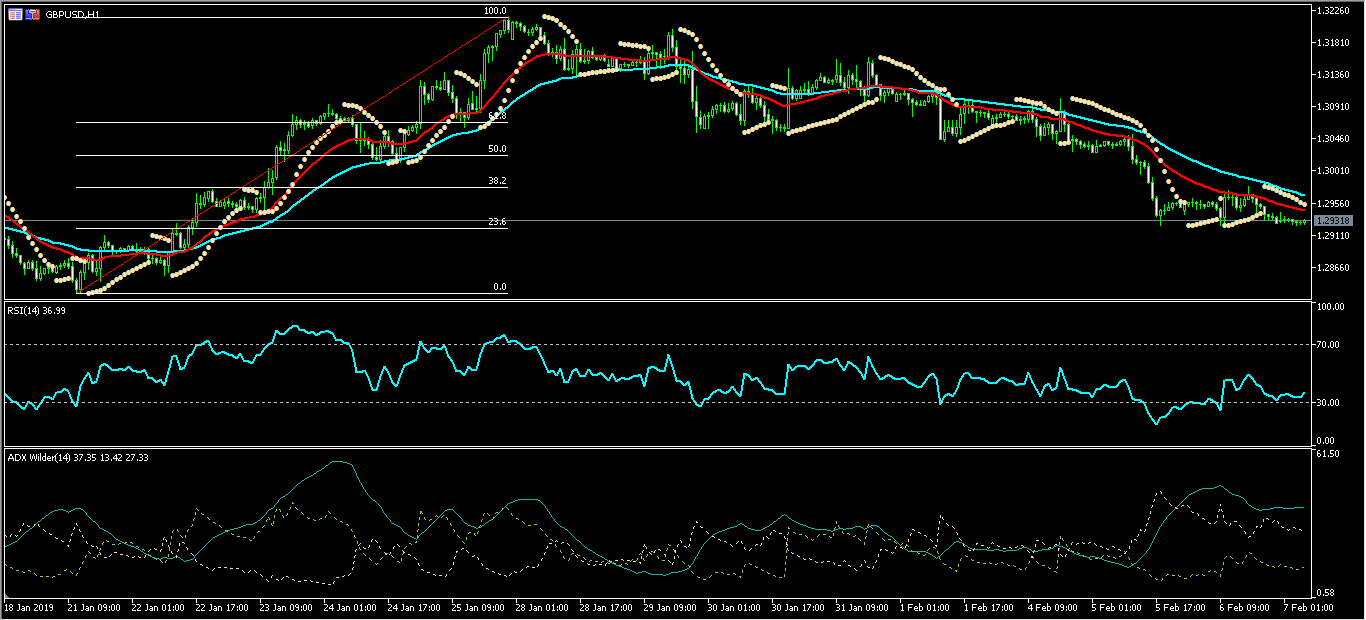
The GBP/USD pair declined and is currently trading at 1.2930, which is slightly above the 23.6% Fibonacci Retracement level. The pair is below the 25-day and 50-day EMA while the RSI has remained above the oversold level of 30. The Parabolic SAR and the ADX are showing that the pair could continue to decline. There is a likelihood that the pair will continue declining to the 1.2900 level, which is an important psychological level.
NZD/USD
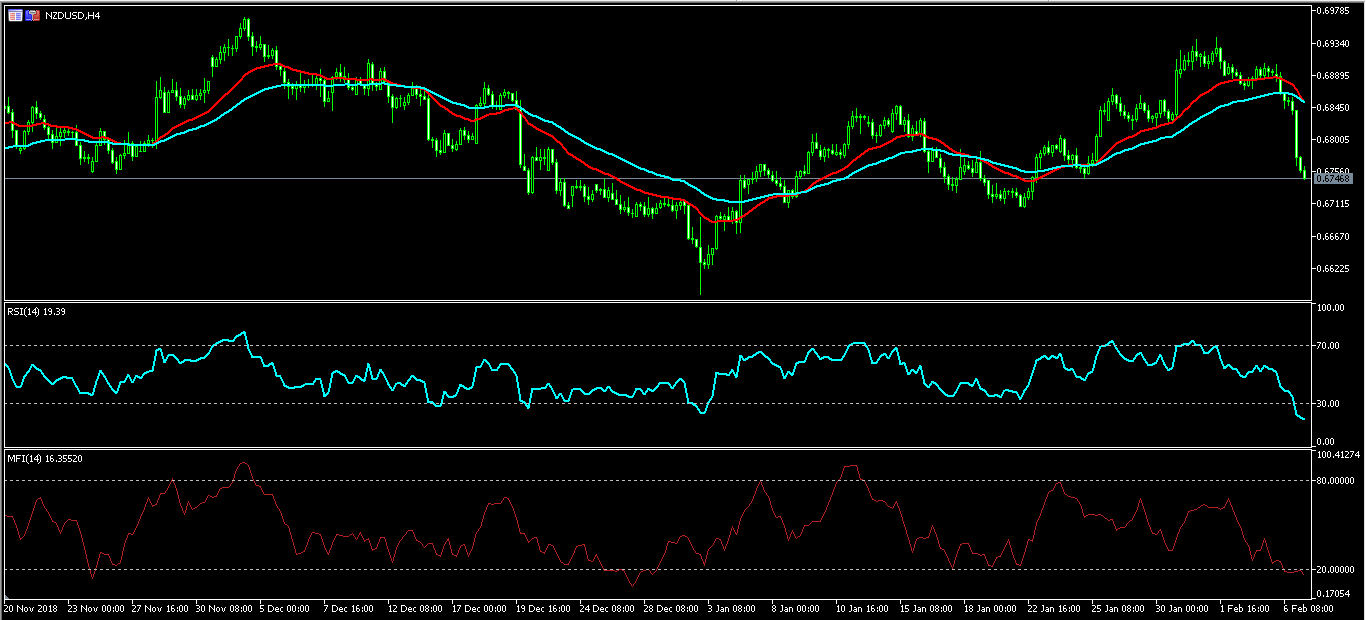
The NZD/USD pair declined sharply after the weaker jobs numbers. The pair reached an intraday low of 0.6747, which was the lowest level since 25th January. This price is below the 25-day and 50-day EMAs, while the RSI has declined to 19, which is an oversold level. The same is true with the money flow index, which has declined to the oversold level. The pair will likely continue to move lower as investors start to consider the increasing chances of a rate cut.
Brexit In Focus As Theresa May Visits Brussels
Market movers today
Today's key event will be the Bank of England meeting. Amid the ongoing Brexit uncertainty, we expect the Bank of England to be on hold until November. The new forecasts are likely to show a downward revision to the growth and inflation paths.
Watch out for Brexit headlines, as Theresa May is expected back in Brussels today, trying to garner support for concessions on the Irish border backstop (see Brexit Monitor: May has two and half weeks to renegotiate the backstop, 30 January) . She is scheduled to meet Commission President Juncker at 11:00 CET.
In Germany, yesterday's factory order data pointed to tentative signs that the car sector recovery started to pick up speed at the end of 2018. It will be interesting to see whether today's December industrial production data shows a similar trend and whether the big drop in pharma production in November has reversed (see Research Germany - The epicentre of the euro area slowdown, 27 January).
Later in the morning, the European Commission will also release its new economic forecasts. Markets will particularly pay attention to the extent of cuts to the euro area growth prospects.
In Sweden, house prices and budget balance figures for January are in focus, while industrial production data is due out in Norway and Denmark.
Selected market news
According to The Telegraph (paywall), PM Theresa May is preparing to delay the second vote on her Brexit deal from next week until the end of February (which means Article 50 deadline is likely to be extended, at least for technical reasons, as the UK would need more time to pass the necessary legislation), as PM May is still negotiating with the EU (although EU Council President Donald Tusk's comments yesterday have not made life easier for May, see YouTube clip). Labour leader Jeremy Corbyn has also presented new demands for supporting a Brexit deal. Corbyn still wants a permanent customs union with the EU and wants the UK to stay closely aligned to the single market (see all demands in The Guardian ), something the Conservative Brexiteers will never support. With less than two months to go, the UK remains divided and pressure is increasing. Note that Theresa May is expected to visit Brussels today.
US equities were softer yesterday with NASDAQ taking the lead down on weak earnings reports. The market also continues to focus on the trade war concerns and the risk of a new government shutdown looming. The risk of the latter is still high given that the State of the Union gave little hope of a compromise. The weaker risk appetite gave some support to US Treasuries and EUR/USD edged lower. The negative sentiment has been carried over to Asia and Nikkei is down this morning. Note that Hang Seng is closed due to Chinese New Year. Yesterday, the strong demand for European bonds continued as Italy sold EUR8bn in a new 30Y bond and attracted bids for more than EUR41bn.
Elliott Wave View Suggest FTSE Close Reaching Extreme
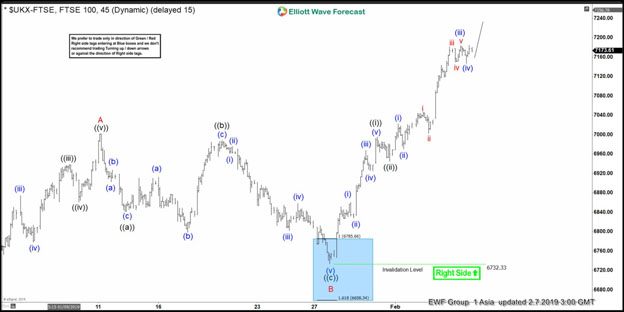
FTSE short-term Elliott wave view suggests that a rally from 12/27/2018 low (6536.53) is unfolding as a zigzag structure where initial rally to 7001.94 high ended wave A in 5 waves structure. Down from there, wave B unfolded as a Flat correction where wave ((a)) ended at 6841.74 low. Wave ((b)) bounce ended at 6987.93 high in lesser degree flat correction. Wave ((c)) ended in lesser degree 5 waves at 6732.33 low, which also completed wave B pullback. After reaching the blue box area at 6785.66-6658.34 100%-161.8% Fibonacci extension area of ((a))-((b)).
Up from there, wave C remain in progress as impulse structure where wave ((i)) ended at 6994.88 high. Wave ((ii)) pullback ended at 6945.05 low and ((iii)) remain in progress looking for more upside towards 7191.16-7473.95 100%-161.8% Fibonacci extension area of wave A-B to reach the extreme from 12/27/2018 low. Afterwards, index is expected to resume the downside or should do a 3 wave pullback at least. Near-term cycle from 12/27/2018 low is mature already with a minimum number of swings in place but as far as a pivot from 6732.33 low expect index to extend higher.
FTSE 1 Hour Elliott Wave Chart
Germany’s Factory Orders Surprisingly Declined In December
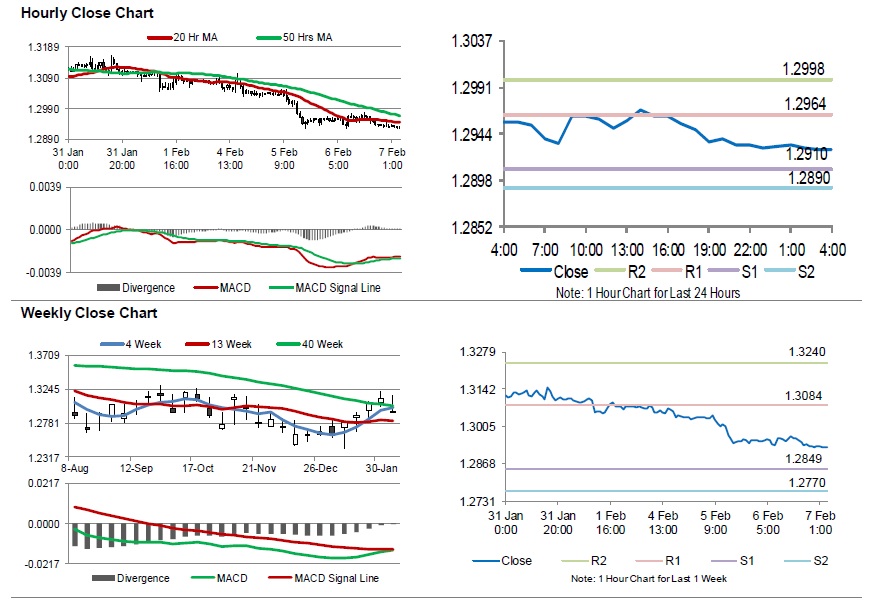
For the 24 hours to 23:00 GMT, the EUR declined 0.34% against the USD and closed at 1.1367.
In economic news, Germany's factory orders unexpectedly dropped 1.6% on a monthly basis in December, signalling further signs of economic slowdown and defying market consensus for a gain of 0.3%. In the preceding month, factory orders had recorded a revised fall of 0.2%.
In the US, data indicated that the US trade deficit narrowed to $49.3 billion in November, following a deficit of $55.5 billion in the previous month. Market participants had expected the nation to post a deficit of $54.0 billion. Moreover, the nation's MBA mortgage applications fell 2.5% on a weekly basis in the week ended 01 February 2019, hitting its lowest level in 10 months and compared to a drop of 3.0% in the prior week.
In the Asian session, at GMT0400, the pair is trading at 1.1359, with the EUR trading 0.07% lower against the USD from yesterday's close.
The pair is expected to find support at 1.1345, and a fall through could take it to the next support level of 1.1330. The pair is expected to find its first resistance at 1.1388, and a rise through could take it to the next resistance level of 1.1416.
Going forward, traders would keep an eye on Germany's industrial production for December, set to release in a while. Later in the day, the US consumer credit for December followed by initial jobless claims, will garner significant amount of investors' attention.
The currency pair is trading below its 20 Hr and 50 Hr moving averages.