Sample Category Title
Gold Spot The Downside Prevails
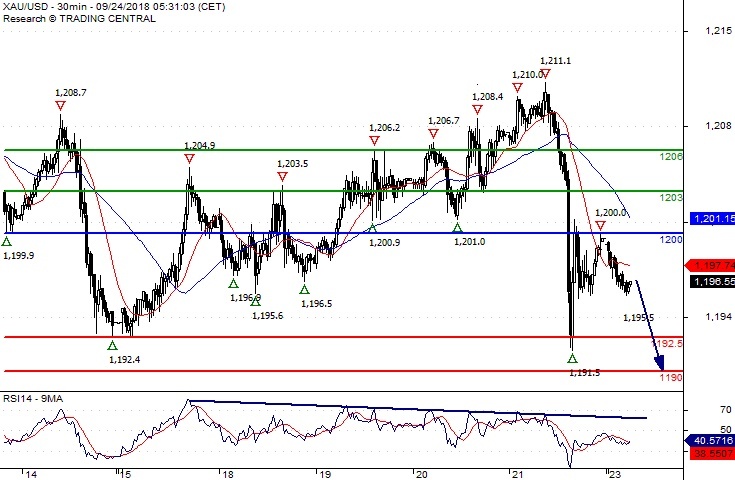
Pivot (invalidation): 1200.00
Our preference Short positions below 1200.00 with targets at 1192.50 & 1190.00 in extension.
Alternative scenario Above 1200.00 look for further upside with 1203.00 & 1206.00 as targets.
Comment The RSI is capped by a bearish trend line.
Asian Markets Fall As China Halts Trade Talks With US
Asian markets declined today after China halted all trade talks with the United States. The latest development came less than a week after the US initiated a 10% tariff on Chinese goods worth more than $200 billion. China responded by raising tariffs worth $60 billion on American goods.
After weeks of major gains, sterling fell sharply after the European Union rejected Theresa May's Chequers deal. In a statement, EU negotiators told May that her plan ‘won't work'. This was a setback for pro-EU members who were hopeful of a new deal. The decline of the sterling was also a setback to sterling's bulls, who had just received better-than-expected inflation and retail sales numbers. Today, the Bank of England (BoE) will release the Financial Stability Report (FSR), which will give an update on the status of the economy. Industrial trends data from the Confederation of British Industry will also be made available.
The euro declined today during the Asian session as traders wait for the business climate data from Germany and a speech from European Central Bank (ECB) president Mario Draghi. Ifo data is expected to show that the business climate in Germany was at 103.2 in September. This will be lower than the August climate data of 103.8. This year, the business climate data has been lower than last year because of the ongoing trade conflict between the US and its rivals and allies.
EUR/USD
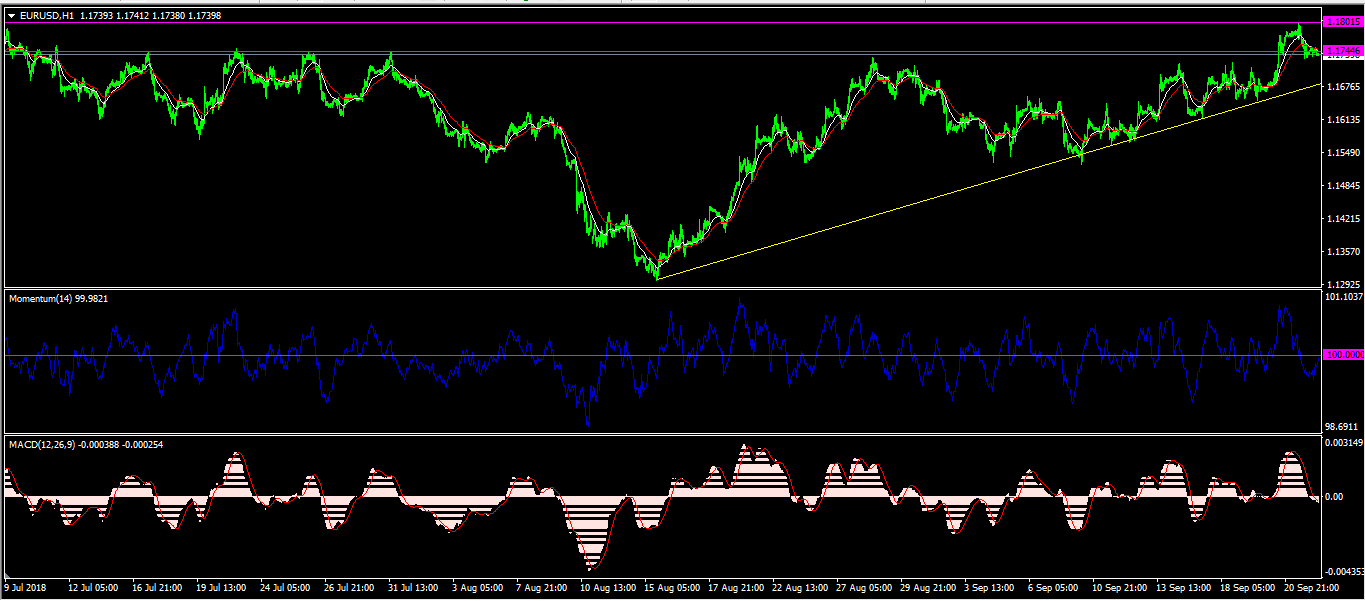
On Friday, the EUR/USD pair reached a high of 1.1802, which was the highest level since June this year. Today, it fell to an important support of 1.1740 during the Asian session. As the decline happened, the momentum indicator fell below the 100 level on an hourly chart but is currently rising. The MACD too fell below the neutral rate. With no major data from the US and EU expected today, the pair will likely remain within the range of 1.1800 and 1.1740.
GBP/USD
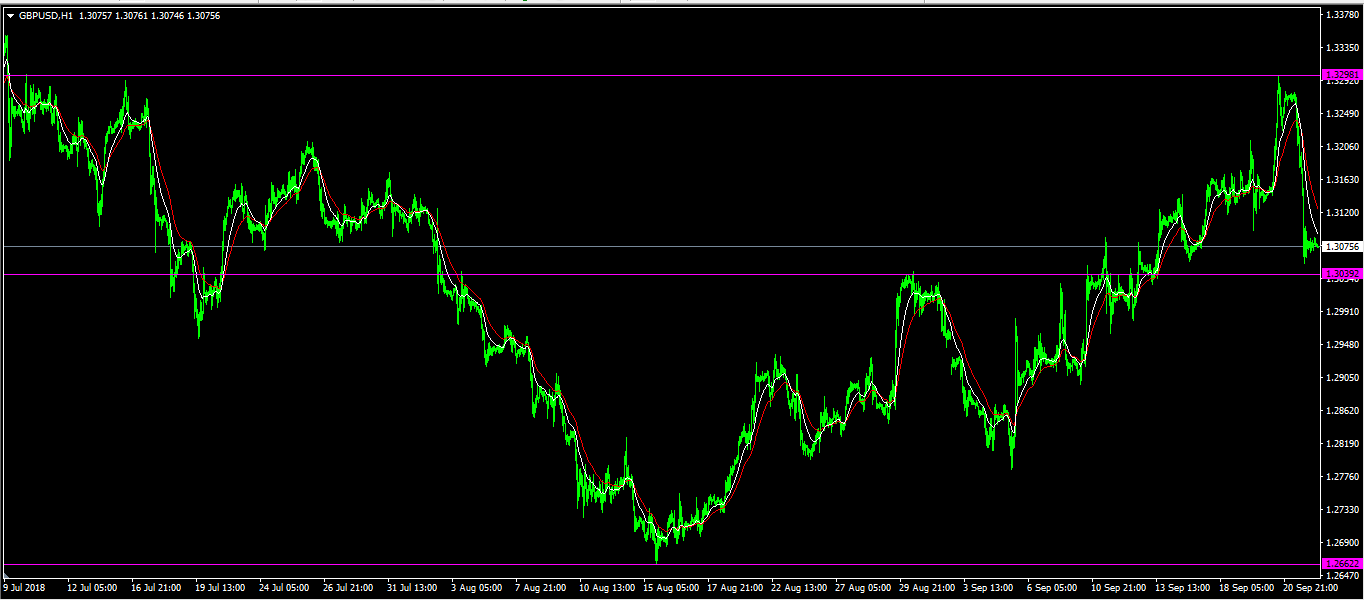
Last week, the sterling rallied and reached a high of 1.3298. This was the highest level since July this year. On Friday, it fell sharply after hopes of a Brexit deal faded. Today, it is trading at 1.3075. From a technical perspective, this decline was expected because the pair had just ‘completed' the cup pattern, meaning that the handle pattern was inevitable. While the previous upward trend could continue, if it falls further, it will test the support of 1.3040.
XAU/USD
On Friday, gold declined sharply to a low of $1190. Today, the XAU/USD pair traded within this narrow range during the Asian session, even after a bullish feature by Barron's. On the daily chart, the current level is slightly below the 23.6% Fibonacci Retracement level. The current price is also along the 28 and 14-day EMA. There is a likelihood that the pair will trade above the 1200 level as traders wait for the Fed decision later this week.
GBP/USD Major Bearish Reversal After Hitting 1.33 Target
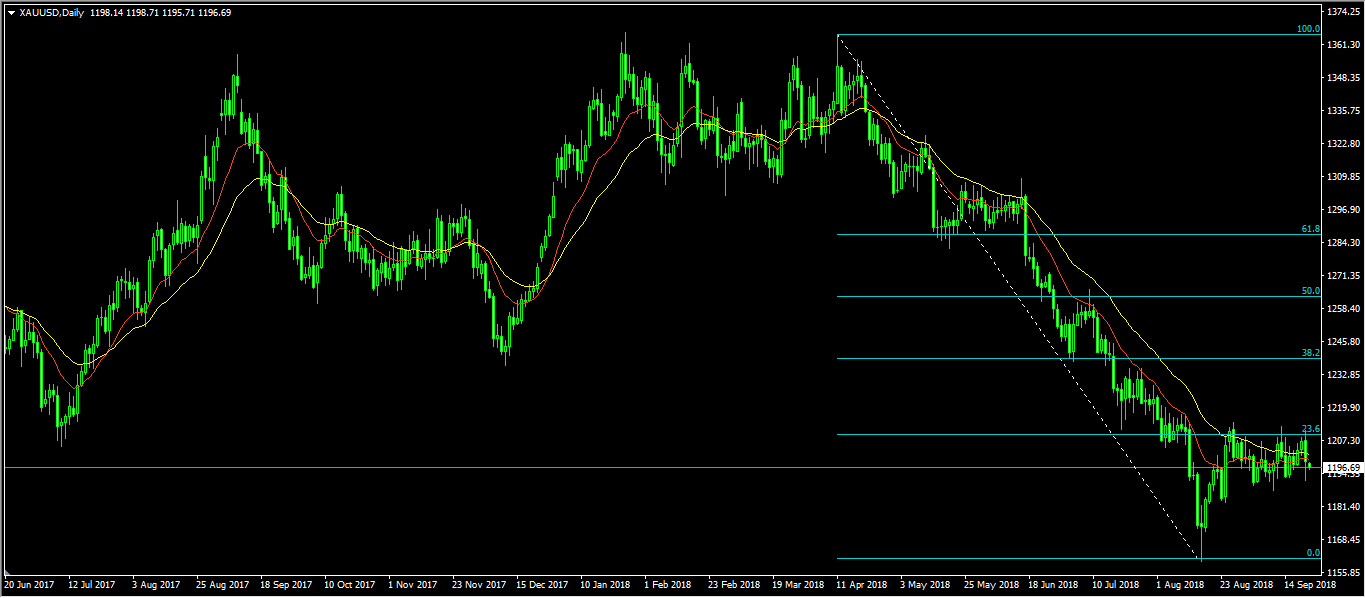
The GBP/USD made a strong bearish bounce at the main target around 1.3275-1.33 and price has broken below the support trend line (dotted blue) for a potential bearish reversal.
The GBP/USD could have completed that bullish correction within wave 4 (pink) and could be ready for a bigger bearish reversal.
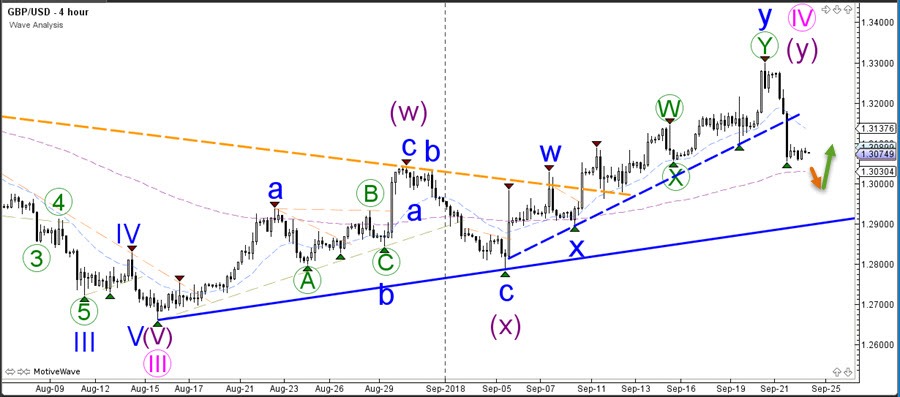
The GBP/USD could be in a wave 3 or 4 (green) as long as price stays below the 61.8% Fibonacci resistance level. One more bearish wave could complete a wave 5 (green) of a larger wave 1. An ABC could then occur within wave 2 before a larger downtrend continues. A break above the previous top indicates an invalidation of the downtrend.
Currencies: Dollar Decline To Slow? Fed Policy Decision Looms
Rates: FOMC and Italian budget vital this week
Trading might be subdued in the run-up to this week’s main events: the FOMC meeting and the Italian 2019 budget release. First time forecasts of the 2021 policy rate will determine the short term faith of US yields. We expect the 2021 projection to at least match the 2020 one, keeping upward yield momentum alive.
Currencies: Dollar decline to slow? Fed policy decision looms.
On Friday, sentiment on risk gradually turned less positive, capping further EUR/USD gains. Today, trade tensions might again become more important for global risk sentiment. USD investors will also make up their mind on the Fed guidance at Wednesday’s policy decision. Sterling is again in the defensive as the brexit stalemate persists.
The Sunrise Headlines
- US equity markets closed last week’s trading week mixed, with technology sector underperforming. Asian exchanges opened with losses this morning as well, with Japanese and Chinese markets closed for Autumn celebrations.
- The US ($200bn) and Chinese ($60bn) tariffs kicked in today with neither sides backing down. Beijing called off talks with the US, planned for this week. Trump repeated his intentions to impose tariffs on all Chinese import (+$256bn).
- Chaos in the UK. Hard Brexiteers Boris Johnson and David Davis are backing an alternative Canada-style plan challenging May’s Chequers-plan. May, on her turn, is said to prepare for a possible election in November to save her job.
- Iran’s president Rouhani will travel to New York on Tuesday to attend the United Nations General Assembly. It remains uncertain whether Rouhani will meet US President Trump, with both countries remaining in deadlock.
- Trade talks between the US and Japan continue today, after US president Trump and his Japanese counterpart Abe held constructive talks yesterday on trade and the denuclearization process of North Korea.
- OPEC+ has answered US President Trump’s cry for lower oil prices, but failed to deliver specific output volumes. The group said it would boost output only if customers requested it. Oil prices remain elevated, paying almost $80 p/b.
- Today’s eco calendar is very thin, with German IFO business sentiment for September and a speech by ECB president Draghi at a ECON Committee Meeting in Brussels. The US holds a $37bn 2-yr Note auction
Currencies: Dollar Decline To Slow? Fed Policy Decision Looms
Dollar decline slows. Focus turns to the Fed.
On Friday, global sentiment was positive for most of the European session. Recent dominating market themes, including uncertainty on trade, stayed low profile. However, this time, the euro couldn’t benefit. EMU PMI’s showed a manufacturing led decrease but had little impact on trading. The euro ceded ground early in US dealings. This decline accelerated after a statement from UK PM May, confirming the deadlock in the brexit talks. EUR/USD tested the 1.18 area early in the session but turned south later to close the session at 1.1749. A loss of momentum on US equity markets also capped the euro. USD/JPY reversed earlier risk-on gains and finished the day at 112.60. Overnight, several Asian markets including mainland China and Japan are closed. However, trade tensions are apparently again becoming more important for global trading as China called of a new round of talks with the US. This is weighing on risky assets, including US equity futures. For now the impact on global FX is modest. The HKD is still looking for a new equilibrium after Friday’s rally. EUR/USD is hovering in the mid 1.17 area. The yen rallied sharply early this morning, but already returned to Friday’s closing levels. Later today, the IFO business confidence is expected to ease moderately (from 103.8 to 103.2) and ECB’s Draghi will speak in Brussels. However, global risk sentiment might become again more important. Markets will also look forward to Wednesday’s Fed policy decision. Especially, the 2021 dots might be important for sentiment on interest rate markets and for the dollar. The dollar probably needs a signal from the Fed that the US economic cycle will last long enough to keep 2021 policy rates more or less at the 2020 level. This is possible, but not sure. USD investors might stay in some kind of wait-and- see modus going into Wednesday’s policy decision. In a day-to-day perspective, we don’t see a strong reason for the dollar to lose further ground beyond EUR/USD 1.18.
On Friday, sterling fell off a cliff as UK PM May had to admit that Brexit negotiations were still in a stalemate. Today and later this week, Brexit will again be the extensively debated within the government/conservative party and at the congress of the labour party. It looks that chances on harder Brexit are on the rise. If so, this might keep sterling in the defensive. A return of EUR/GBP to the 0.91 area might be on the cards
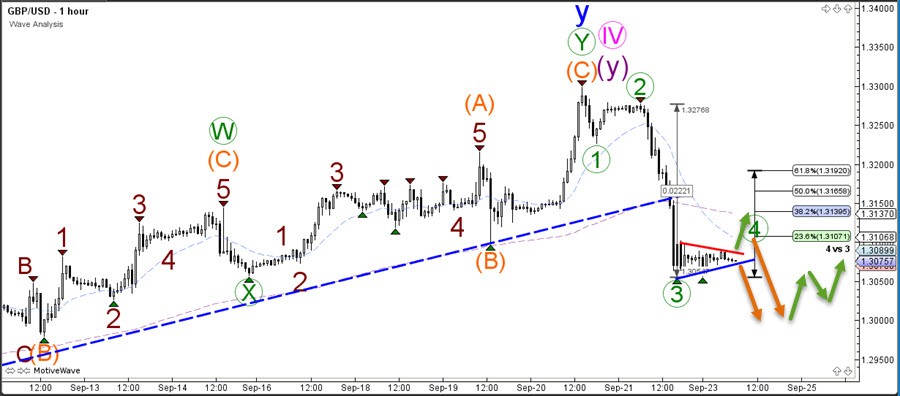
DXY (USD trade-weighted): dollar decline slows ahead of Fed meeting
EURUSD Bounces Off 1.1800, Inverse Head And Shoulders Pattern Remains In Play
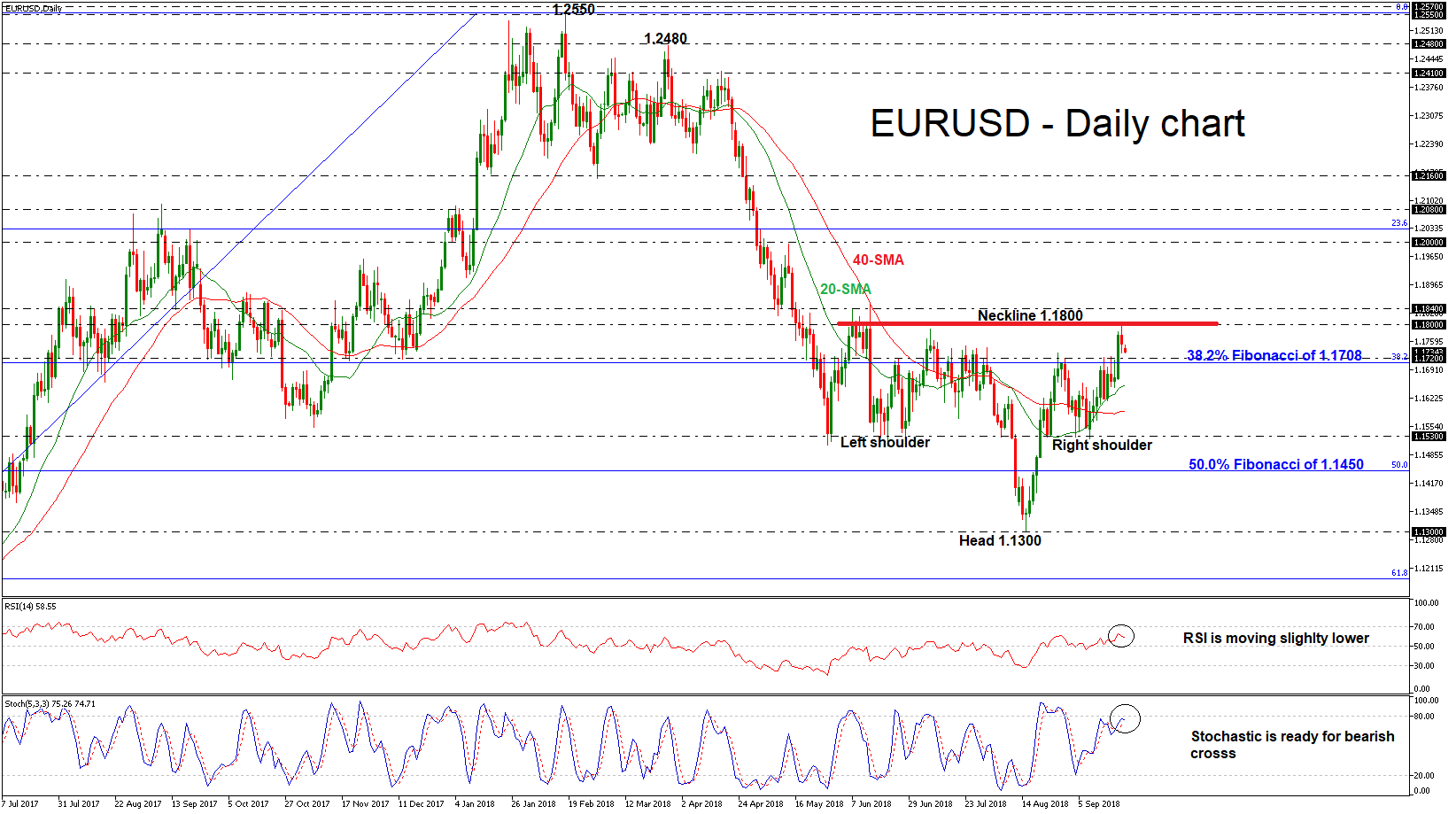
EURUSD has traded lower after the bounce off the 1.1800 strong psychological level on Friday, while it opened with a small negative gap in Monday’s European session. However, the pair remains in the inverse head and shoulders pattern with the neck line now being the aforementioned handle.
In the short-term, the negative bias is likely to stay in place as the RSI continues to slope down around its 50 neutral level and the stochastic oscillator is in progress to post a bearish cross within the %K and %D lines. Despite the negative signals, the 20-day simple moving average (SMA) posted a bullish cross with the 40-day SMA in the previous sessions.
In the wake of further negative pressures and a drop below the 1.1720 support and the 38.2% Fibonacci retracement level of the upleg from 1.0340 to 1.2550, near 1.1708, could push the price until the 20-SMA of 1.1653 and then towards the 40-SMA of 1.1590 at the time of writing. In case of steeper declines the price could hit the 1.1530 barrier before heading towards the 50.0% Fibonacci of 1.1450.
On the flipside, as the pair stands above the SMAs a bullish tendency is also possible towards 1.1800 again and then until the 1.1840 hurdle. A violation of this region could increase chances for more gains, probably until the 1.2000 round level.
To conclude, the world’s most traded currency holds within the inverted head and shoulders pattern since June and a climb above the neckline would confirm the scenario for a reversal of the bearish structure in the medium-term.
Risk Aversion Returns As Trade Tariffs Take Effect, Brent Tests 2018 Highs
Politics and trade tensions are expected to be the keymarket drivers this week. President Trump’s tariffs on $200 billion worth of Chinese goods came officially into effect today with China poised to retaliate on $60 billion in U.S. goods. While these actions seem to be already priced in, investors are becoming increasingly worried that the trade war may enter phase III. With Beijing canceling planned trade talks on Saturday and the U.S. State Department imposing sanctions against China’s defense agency, relations between the two largest economies in the world may further deteriorate. While markets in mainland China, Japan, and South Korea are shut for a public holiday, investor skepticism was reflected in Hong Kong stocks and commodity currencies which fell in early Monday trade. Whether the pain will begin reflecting in Wall Street depends on what happens next. If President Trump follows through on his promises to impose further tariffs on the remaining $267 billion of Chinese imports, investors may consider it as a signal to move out of U.S. equities.
Brent crude was back above $80 early Monday in another attempt to retest May’s highs of $80.50 after OPEC+ stopped short of promising additional extra output in a meeting in Algiers on Sunday. On Thursday, President Trump tweeted: “We protect the countries of the Middle East, they would not be safe for very long without us, and yet they continue to push for higher and higher oil prices! We will remember. The OPEC monopoly must get prices down now!”. However, OPEC and friends do not see the need to drive production higher as markets remain well supplied. OPEC’s decision might lead to further overshooting in Brent Crude as a break above $80.50 would encourage technical buying with $85 a key level to be watched.
Sterling was holding steady after wiping out all the gains it built during the week before Friday. Markets thought that we might finally be seeing a Brexit breakthrough at the Salzburg Summit on Friday. Instead, the summit increased the chance of a no-deal Brexit as EU leaders slammed Theresa May’s ChequersBrexit proposal with the Irish border remaining akey barrier to a deal. With no tier one economic data on the calendar, expect GBPUSD to weaken further this week with a possible test below 1.3.
USD/JPY Bounces At 88.6% Fibonacci And Tests Trend Line
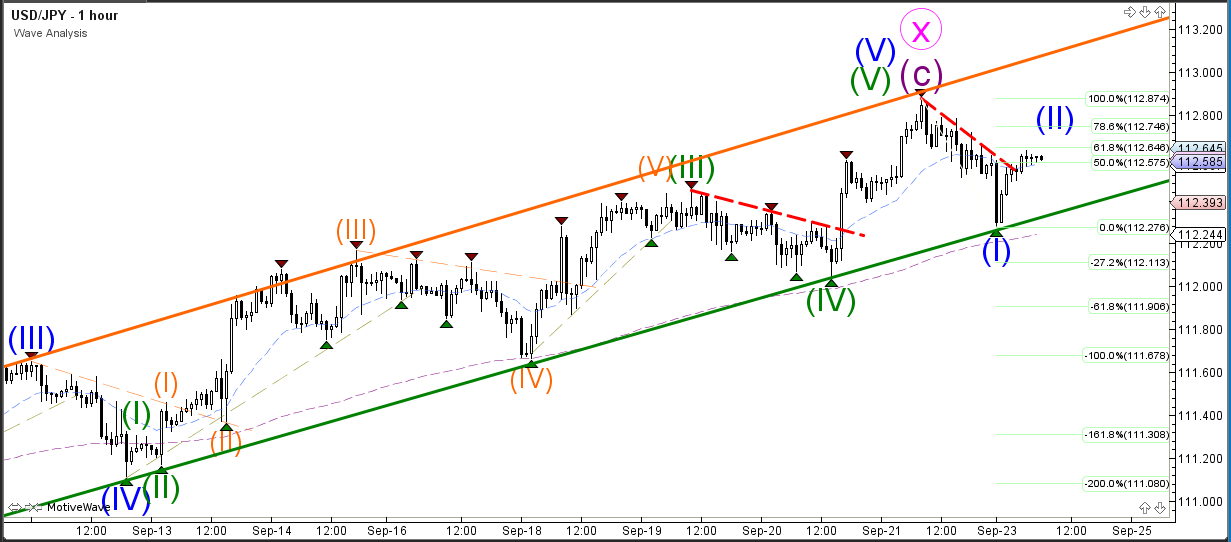
The USDJPY bounced at the support trend line (green) of the bullish channel after a bearish bounce at the 88.6% Fibonacci resistance retracement level. The price however will need to break below the support trend line (green) before a reversal becomes more likely. A failure to break below the support could indicate an uptrend continuation, and an invalidation of the wave X (pink).
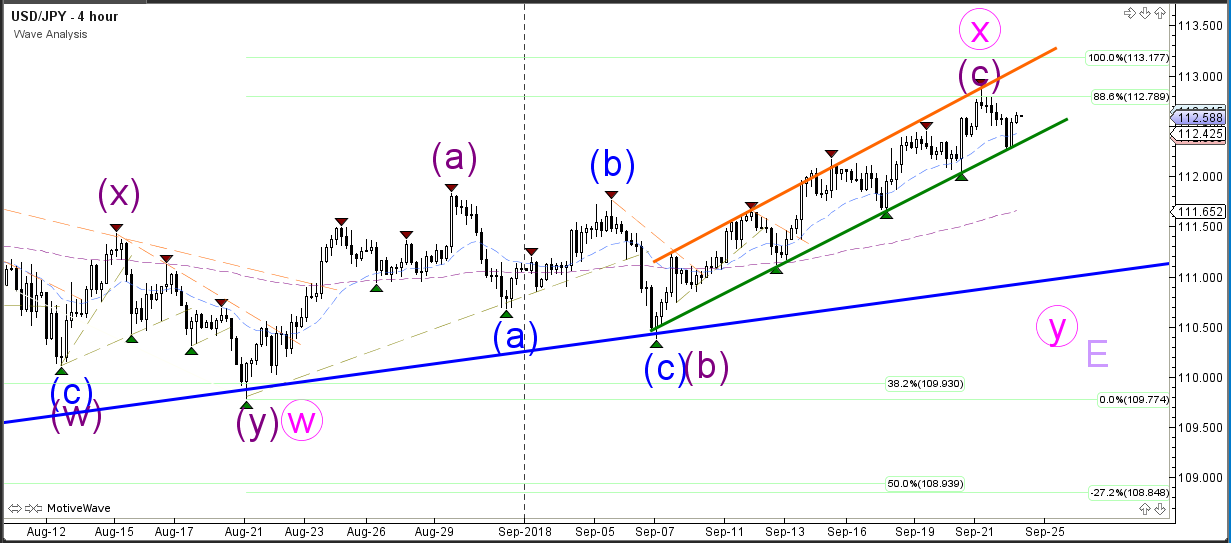
The USDJPY is probably in a wave 1-2 (blue) as long as the price stays below the 100% Fibonacci level. A bullish breakout above that level makes a wave X (pink) on the 4 hour chart less likely. A break below the support line (green) could make a wave 3 more likely.
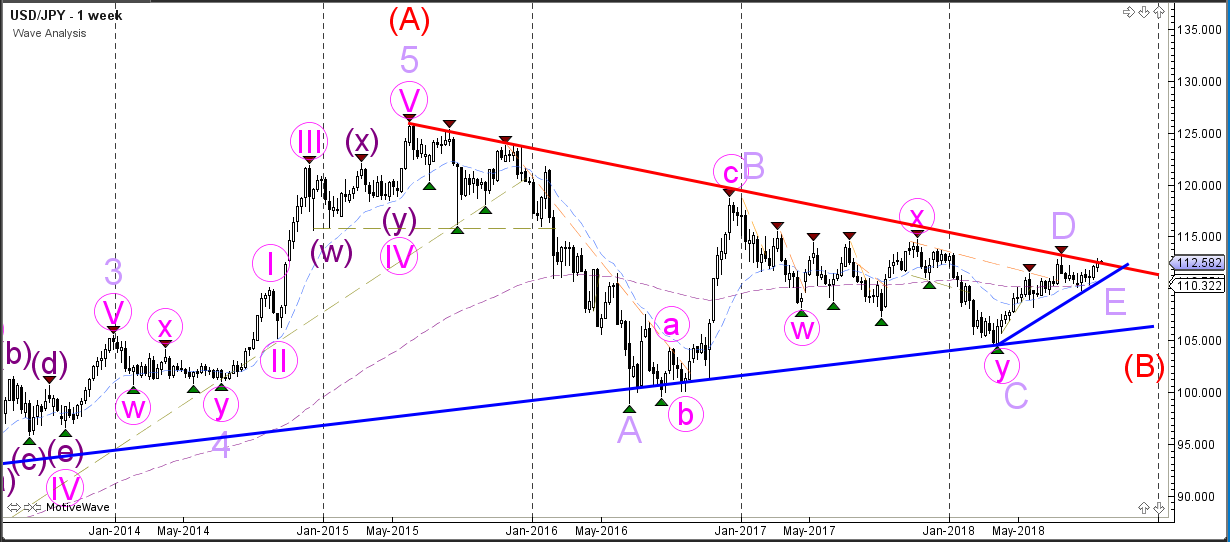
The USDJPY is retesting a key resistance trend line (red). A bearish bounce could indicate a bearish continuation within wave E (light purple) whereas a bullish breakout could invalidate the wave E and expand the wave D (light purple).
XAUUSD Intraday Analysis
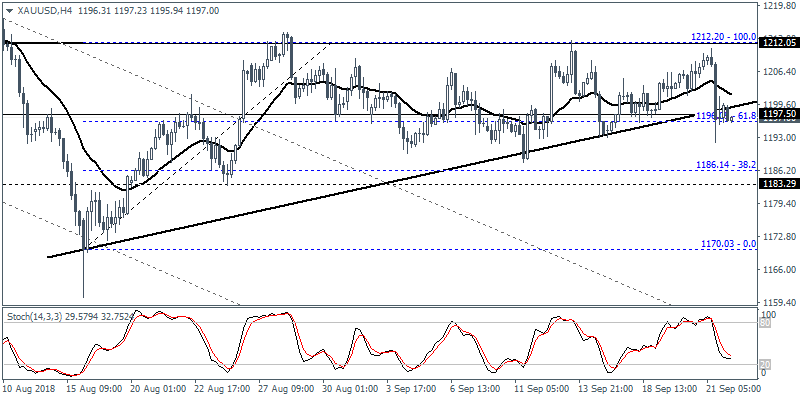
XAUUSD (1197.00): Gold prices fell sharply on Friday, but price action was contained near the 1196.00 region. The ascending triangle pattern is still valid, and we expect the rebound to push gold prices higher to 1212.20 region. A breakout above 1212.20 could trigger the ascending triangle pushing the price toward 1238.00 region which marks the minimum upside bias.
GBPUSD Intraday Analysis
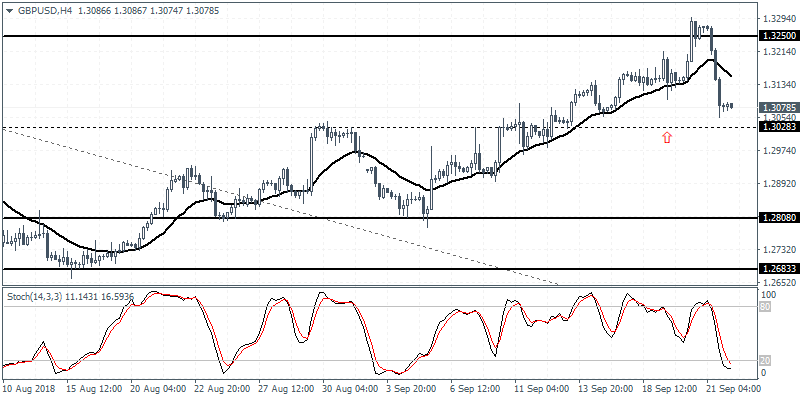
GBPUSD (1.3078): The GBPUSD extended sharp declines on Friday. The currency fell on the Brexit negotiations hitting an impasse. However, the technical bias remains to the upside. The current decreases could see the GBPUSD stall near 1.3208 where support is likely to be formed. A rebound off this level will mark a retest of the previously held resistance level. To the upside, 1.3250 will remain a key obstacle. Clearing this resistance could push GBPUSD to further gains
GBP/JPY Daily Outlook
Daily Pivots: (S1) 146.24; (P) 147.99; (R1) 148.97; More...
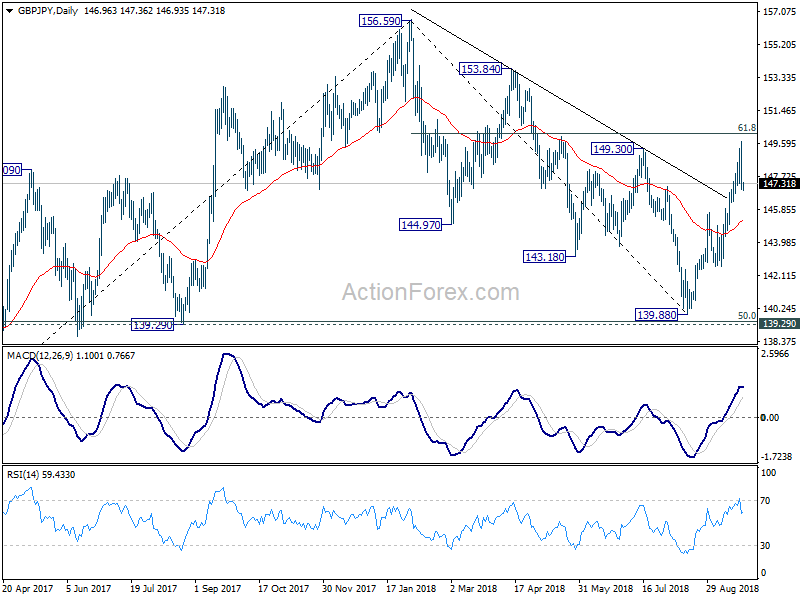
Intraday bias in GBP/JPY remains neutral for the moment. Further rise is still expected as long as 145.67 resistance turned support holds. Break of 149.70 will target 153.84/156.69 resistance zone. However, break of 145.67 will suggests that the rebound from 139.88 has completed and turn near term outlook bearish again.
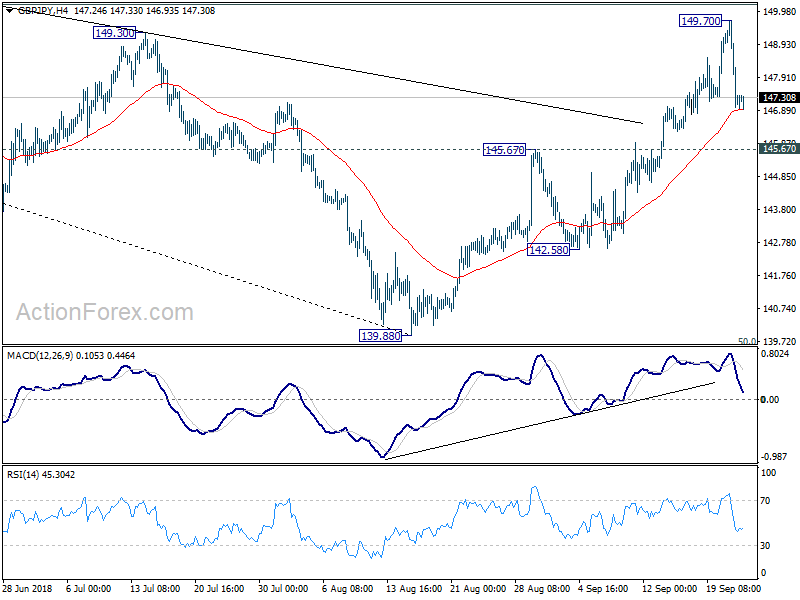
In the bigger picture, current development suggests that GBP/JPY has successfully defended 139.29 cluster support (50% retracement of 122.36 to 156.59 at 139.47). And, the rally from 122.36 (2016 low) is still intact. Such medium to long term rise would extend through 156.96 high. This will now be the preferred case as long as 145.67 near term support holds. However, break of 145.67 will turn focus back to 139.29/47 key support zone.