

Sample Category Title
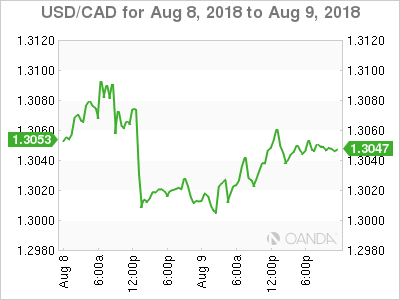
USD/CAD Plummets on Canadian Jobs Report
Canadian jobs market is on fire
By the numbers:
- Canada Jul Net Jobs +54,100 From Jun
- Canada Jul Net Jobs Forecast At +17,000
- Canada Jul Full-Time Jobs -28,000; Part-Time +82,000
- Canada Jul Jobless Rate 5.8%; Jun 6.0%
- Canada Jul Jobless Rate Forecast At 5.9%
- Canada Jul Avg Hourly Wages +3.2% From Year Ago
- Canada Labor Force +19,100 In Jul From Jun
- Canada Jul Participation Rate At 65.4% Vs 65.5% In Jun
Job creation flew by market expectations in July as large gains in part-time and public sector positions helped push down the unemployment rate by two-tenths.
Canada added a net +54.1K jobs in July on a seasonally adjusted basis. The market was looking for a net gain of +17K.
Canada’s new jobless rate fell to +5.8% in July, down from +6% in June. The market was looking for an unemployment rate of +5.9%.
The loonie is off from its intraday low of C$1.3122 and currently trading C$1.3062 immediately after the release.
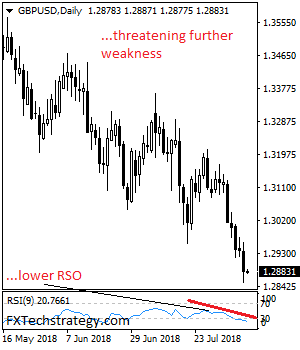
GBPUSD: Bearish, Extends Weakness
GBPUSD: The pair continues to retain its downside pressure selling off further on Friday. Support lies at the 1.2750 level where a break will turn attention to the 1.2700 level. Further down, support lies at the 1.2650 level. Below here will set the stage for more weakness towards the 1.2600 level. Conversely, resistance stands at the 1.2850 levels with a turn above here allowing more strength to build up towards the 1.2900 level. Further out, resistance resides at the 1.2950 level followed by the 1.3000 level. On the whole, GBPUSD remains biased to the downside medium term.
US core CPI accelerated to 2.4%, Canada job grew massive 54.1k.
US headline CPI rose 0.2% mom, 2.9% yoy in July. The year-over-year rate was unchanged from June's 2.9% yoy and missed expectation of 3.0%.
However, core CPI rose 0.2% mom, 2.4% yoy. The year-over-year rate accelerated from June's 2.3% yoy and beat expectation of 2.3% yoy.
Canada employment grew 54.1k in July, more than double of expectation of 24.0k. Unemployment dropped from 6.0% to 5.8%, matched expectation.
Dollar strengthens mildly after the release, and there is prospect of extending today's rise against the vulnerable Euro, Sterling and Aussie.
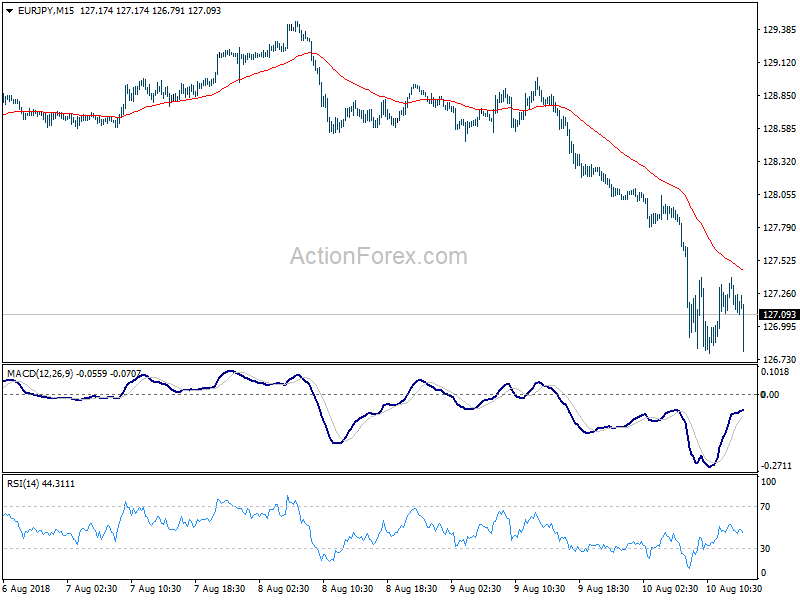
Euro dips as Turkish President Erdogan asks citizens to buy Lira to response to economic attack
Turkish President Tayyip Erdogan delivers a crisis speech in the northeastern city of Bayburt as the Lira extends recent free fall on US sanctions. Erdogan urges again the Turks to reach for their foreign exchange savings, and exchange dollar and gold for Lira. He said this is the most effective response to the west.
And he said the economic attack against Turkey is due to "small differences of opinion" with certain powers. He condemned that such attacks damaged their relationship with Turkey to a point where it's impossible to repair.
EUR/JPY spikes lower after the speech but quickly recovers.
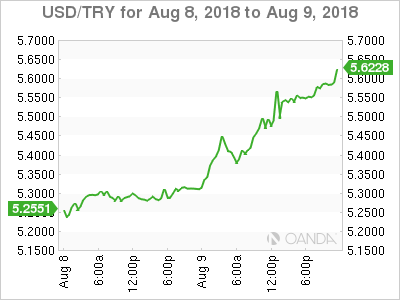
Turkish Lira Plummeting Further into Crisis Ensures a Brutal Conclusion to Eventful Week
Emerging market currencies are ending the week with a brutal sea of red across the board, with consistent losses throughout Asia, while the South African Rand and Turkish Lira are leading the way with losses within the EMEA. The Rand dived more than 1.10% on a lack of risk appetite, whereas the Turkish Lira is the talk of the town after plunging an astonishing 10%.
For a brief moment the Russian Ruble looked like it would be an exception to the rule of currency market weakness, with the currency trying to regain its initial losses in the aftermath of new US sanctions on Russia a few days back, but I would expect the Ruble to remain under pressure as “risk off” limits attraction to emerging assets.
Obviously the talk across the global markets and investors around the world will be the freefall of the Turkish Lira. The last time I can remember a currency exploding into a similar acceleration of weakness to what we have seen in the past 24 hours is the Russian Ruble crisis that transpired late in 2014.
The Turkish Lira is in a state of crisis, as a result of investor confidence in Turkish assets remaining at alarmingly low levels. It is astonishing that no matter how punished the Lira looks, traders are showing absolutely no indication that they are finished with pricing in “bad news” into the market.
The issue that global investors now need to take into consideration is that the recipe for a currency crisis in Turkey is now presenting a risk of a contagion knock-on effect across other markets. This is just another threat that traders need to factor in, when you consider that the markets are already overwhelmed with prolonged tension around the global trade war narrative, and the unpredictable nature of the Trump Administration that has seen a threat of sanctions on Turkey, new sanctions imposed on Russia and re-imposed sanctions on Iran in just over one week.
Simply put, there are a lot of different risks that investors are needing to monitor on a constant basis right now.
A limited volume of these headline risks stem from macro-fundamentals, but an overwhelming majority of them are encouraged by a mixture of both geopolitical tensions and political risk. Due to the uncertain nature of both geopolitical and political risks, which are remaining rampant themes across global headlines, it is difficult to foresee when the current investor mindset towards taking on “risk” will actually change.
This means that we can expect a prolonged mixed sentiment towards global stocks, low attraction towards emerging market currencies but a stronger Dollar and Japanese Yen.
Both the Euro and British Pound have suffered from fears of a contagion knock-on effect from the Turkish Lira crisis. There are fears that European markets are more exposed to Turkey shocks than has been priced in, while traders are jumping on any opportunity to sell the Pound at present.
The Pound has itself tumbled from 1.30 to marginally above 1.27 within a matter of days. The British Sterling desperately requires some positive news around Brexit negotiations, otherwise the negative investor sentiment presents a risk that Pound selling could accelerate further down than the 1.20 ladder within a matter of weeks.
For currency traders, the one trend that seems to be consistent and supported from investors is that they remain positive on the Greenback. The US Dollar surged to new 2018 highs in the early hours of Friday morning on a mixture of concerns over the currency situation in Turkey, consistent expectations on the performance of the US economy and the outlook that the United States should be better prepared to handle the negative headwinds from a trade war, in comparison to those economies that it targets.
Turkey Investors Take a Bath
Today’s sharp slide in the Turkish lira (currently down -6% at $5.9446, but was down -15% at $6.200 at one point) has obviously seeped through into broader financial markets, causing the USD and JPY to jump on safe haven flows and equities to fall, while the EUR (€1.1469) is stung by concerns over European banks’ exposure to Turkey.
Today’s dramatic drop was instigated by a Financial Times report that the European Central Bank (ECB) is examining the Turkish exposure of several of the region’s banks.
“The ECB’s banking watchdog is monitoring the situation in Turkey and is in contact with eurozone banks about their individual exposures to the country.”
Nevertheless, it’s believed that the level of overall exposure of European banks to Turkey remains limited.
The markets biggest concern is whether President Erdogan is threatening the independence of the Central Bank of the Republic of Turkey (CBRT).
The central bank left interest rates unchanged last month, and the belief is that political pressure is keeping the central bank from taking the necessary steps.
Now the train of thought is that an emergency interest rate hikes during this current currency crisis might only provide fleeting relief. They are expected to raise interest rates over the next week or two.
The market is currently waiting for Turkey’s Finance Minister to unveil their new economic model – odd’s are it will do nothing to stem the tide of negativity towards emerging market currencies at the moment.
Euro Struggles At 1-Year Lows Amid Political Noise, US CPI Inflation Next In Focus
Here are the latest developments in global markets:
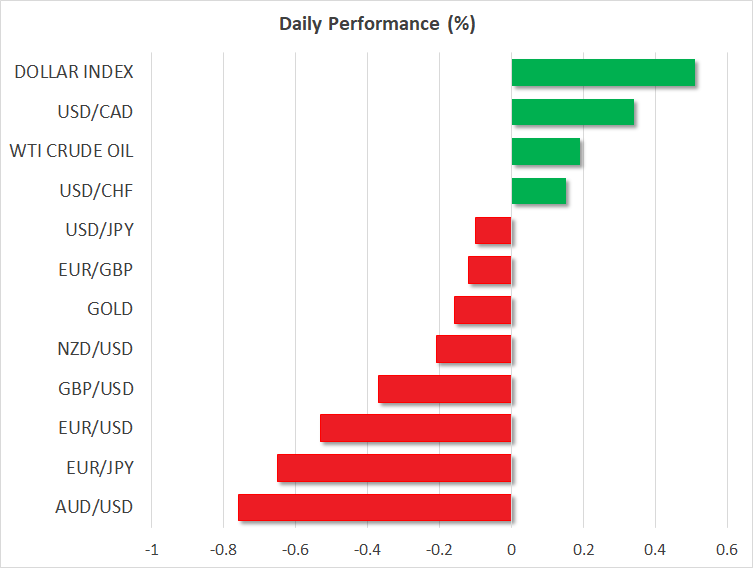
FOREX: The US dollar index, which measures the dollar’s strength against a basket of six major currencies, headed higher by 0.55% on Friday, while dollar/yen fell by 0.08% below the 111.00 handle as demand for safe havens and upbeat Japanese flash Q2 GDP growth figures provided support to the yen. The euro dropped to the weakest level in a year, probably on the ECB’s concerns that the plunge in the Turkish lira could expose Eurozone banks (see below), while the central bank also warned on Thursday that Trump’s trade frictions could destabilise the global economy as tariffs are set to reach the highest level in 50 years. Euro/dollar dipped by 0.54% today, extending losses below the 1.1500 psychological level to reach one-year lows at 1.1431. Moreover, pound/dollar plunged to a new more-than-a-one-year low, losing 0.40% on the day, despite Britain’s preliminary UK Q2 GDP growth figures rising as expected and manufacturing and industrial productions stats growing faster than projected. The antipodean currencies posted sell-offs as well. Aussie/dollar plummeted by 0.87%, hitting a 19-month low, while kiwi/dollar dived by 0.35% to a new more than two-and-a-half-year low. Meanwhile, dollar/lira skyrocketed on Friday by 6.61%, posting a fresh record high above 6.000.
STOCKS: European equities have been declining considerably on Friday at 1100 GMT. The pan-European STOXX 600 dropped by 0.84% and the blue-chip Euro STOXX 50 declined by 1.35%, with basic materials and technology leading the losses. The German DAX 30 dived by 1.54%, recording a one-month low, while the French CAC 40 tumbled by 1.10%. The Italian FTSE MIB lost 1.56%, while UK’s FTSE 100 saw a softer loss of 0.68%. Futures tracking US stock indices were all in the red, pointing to a negative open.
COMMODITIES: Oil prices were recording moderate gains at 1100 GMT as renewed US sanctions against Iran which took effect on Tuesday could slash Iranian oil supply. West Texas Intermediate (WTI) crude oil and the London based Brent were up at $66.97 (+0.24%) and at $72.29 (+0.31%) per barrel respectively. In precious metals, gold was down by 0.12% at $1210/ounce, holding near its multi-month lows.
Day ahead: US CPI to pick up steam; political & trade tensions in focus
US consumer prices and Canadian employment figures will attract the most interest in terms of data releases later in the day, with trade and political developments also being under the spotlight as tensions between the US and the rest of the world are rising.
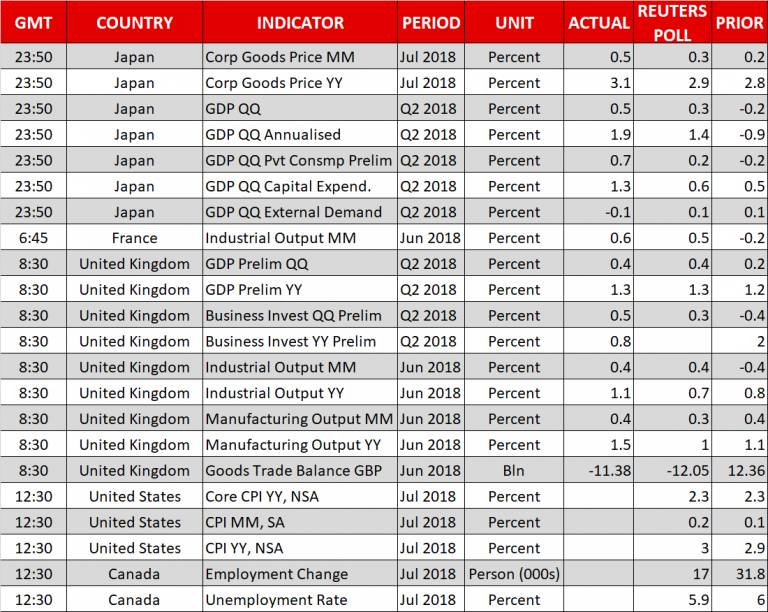
At 1230 GMT, the US Bureau of Statistics is expected to say that consumer prices have picked up speed for the fifth consecutive month in July, rising from 2.9% year-on-year (y/y) to 3.0%, the highest growth recorded since January 2012. Excluding volatile items, however, the core equivalent is said to remain unchanged at 2.3% y/y, near 1 ½-year highs. While CPI figures are not the Fed’s preferred inflation measure, the gauge is still closely monitored by policymakers and any improvement in the numbers could signal rising inflationary pressures. Therefore, in the wake of stronger CPI prints, optimism on the US economy could strengthen and the dollar could move higher on growing speculation that the Fed’s preferred PCE inflation measure could gain positive momentum as well, increasing the odds for two additional rate hikes this year.
On the trade front, the US dispute with China continues to escalate, with the latter showing no signs of simply giving in to US demands.
In geopolitics, the Trump administration is warning to unleash new sanctions against Russia, aiming to punish the nation for allegedly poisoning a former Russian spy in Britain earlier this year. The message was echoed in Russia, with the Russian Prime Minister, characterizing the US’ stance as a declaration of an economic war. In the wake of the news, dollar/rouble hit an almost two-year high at 67.15 today. In the meantime, the Turkish lira was also under severe pressure, plunging to a fresh record low against the greenback as talks over the detention of a US pastor in Washington between a Turkish delegation and US officials failed to lead to a constructive outcome. At 1100 GMT, a speech by the Turkish President could add further volatility to the Turkish currency. Note that the lira’s underperformance raised fears in the eurozone as well, with the ECB expressing concerns that the downfall could leave Eurozone banks exposed to default loans by Turkish borrowers according to a Financial Times report. Moreover, any deterioration in Turkey’s economic conditions could affect the country’s ability to accommodate migrant flows.
In Canada, loonie traders will be eyeing July’s employment report which is expected to show an increase in employment by 17k positions, almost half the 31.8k rise seen in June. But the unemployment rate could bring some smiles to BoC policymakers’faces as this is anticipated to pull back to 5.9% after reaching 6.0% in June.
In oil markets, Baker Hughes is scheduled to report on US active rigs for oil drilling at 1700 GMT.
Concerns Over Possible Turkey Contagion Sparks Some Safe-Haven Flows, UK Data Generally Data Vindicates The Recent BOE Rate Hike
Notes/Observations
- Concerns over European banking exposure to Turkey spark contagion fears; safe-have flow sends German 10-year Bunds yields testing 3-week lows
- EUR/USD break below the pivotal 1.15 level, opens the door to potentially retest the financial crisis low of 1.05
- Turkish lira currency opened the session in a free-fall and losing more than 13% before recovering
- Russia RUB currency (Ruble) at 2 year lows as recent US sanctions dim any hopes of a thaw in relations
- UK Q2 GDP data vindicates the recent BOE rate hike as annual pace of growth moved off recent 5-year lows); focus remains on Brexit negotiation
Asia:
- Japan Q2 Preliminary GDP Q/Q: 0.5% v 0.3%e; GDP Annualized Q/Q: 1.9% v 1.4%e
- RBA Quarterly Statement on Monetary Policy (SOMP) reiterates stance that it did not see a strong case to adjust interest rates in the short term. Reiterated view that higher interest rates were likely appropriate at some point
Europe:
- ECB said to be concerned about the exposures that Unicredit and BBVA have to Turkey
Americas:
- Fed's Evans (non-voter): US economy performing very well, 1 or 2 more hikes reasonable by year end
Economic Data:
- (FI) Finland Jun Industrial Production M/M: 1.6% v 0.4% prior; Y/Y: 5.4% v 2.3% prior
- (NO) Norway July CPI M/M: 0.7% v 0.3%e; Y/Y: 3.0% v 2.6%e
- (NO) Norway July CPI Underlying M/M: 0.6% v 0.3%e; Y/Y: 1.4% v 1.2%e
- (NO) Norway July PPI (including Oil) M/M: 1.1% v 2.2% prior; Y/Y: 22.6% v 20.0% prior
- (DK) Denmark July CPI M/M: 0.8% v 0.5%e; Y/Y: 1.1% v 0.8%e
- (DK) Denmark July CPI EU Harmonized M/M: 0.8% v 0.6%e; Y/Y: 0.9% v 0.7%e
- (RO) Romania July CPI M/M: -0.5% v -0.2%e; Y/Y: % v 5.1%e
- (FR) France Jun Industrial Production M/M: 0.6% v 0.5%e; Y/Y: 1.7% v 1.4%e
- (FR) France Jun Manufacturing Production M/M: 0.6% v 0.0%e; Y/Y: 1.6% v 0.5%e
- (FR) France Q2 Preliminary Private Sector Payrolls Q/Q: 0.2% v 0.3%e; Wages Q/Q: 0.4% v 0.4%e
- (TR) Turkey Jun Current Account: -$3.0B v -$3.0Be
- (CN) Weekly Shanghai copper inventories (SHFE): 171.1K v 192.8K tons prior
- (SE) Sweden July CPI M/M: 0.5% v 0.5%e; Y/Y: 2.1% v 2.0%e (2nd straight month above target)
- (SE) Sweden July CPIF M/M: 0.5% v 0.5%e; Y/Y: 2.2% v 2.2%e, CPI Level: 330.33 v 330.22e
- (IT) Italy Jun Trade Balance: €5.1B v €3.4B prior; Trade Balance EU: €1.5B v €1.0B prior
- (RU) Russia Narrow Money Supply w/e Aug 3rd: 10.25T v10.26 T prior
- (UK) Jun GDP M/M: 0.1% v 0.2%e
- (UK) Q2 Preliminary GDP Q/Q: 0.4% v 0.4%e; Y/Y: 1.3% v 1.3%e
- (UK) Q2 Preliminary Private Consumption Q/Q: 0.3% v 0.4%e, Government Spending Q/Q: 0.4% v 0.3%e, Gross Fixed Capital Formation Q/Q: 0.8% v 0.7%e, Exports Q/Q: -3.6% v +0.7%e, Imports Q/Q: -0.8% v +0.8%e
- (UK) Q2 Preliminary Total Business Investment Q/Q: 0.5% v 0.4%e; Y/Y: 0.8% v 2.0% prior
- (UK) Jun Industrial Production M/M: 0.4% v 0.3%e; Y/Y: 1.1% v 0.7%e
- (UK) Jun Manufacturing Production M/M: 0.4% v 0.3%e; Y/Y: 1.5% v 1.0%e
- (UK) Jun Construction Output M/M: +1.4% v -0.4%e; Y/Y: 2.2% v 0.7%e
- (UK) Jun Visible Trade Balance: -£11.4B v -£12.0Be, Overall Trade Balance: -£1.9B v -£2.5Be, Trade Balance Non EU: -£2.9B v -£3.6Be
- (UK) Jun Index of Services M/M: 0.0% v 0.2%e v; 3M/3M: 0.5% v 0.6%e
- (HK) Hong Kong Q2 GDP Q/Q: -0.2% v +0.2%e; Y/Y: 3.5% v 3.9%e
Fixed Income Issuance:
(IN) India sold total INR120B vs. INR120B indicated in 2023, 2028, 2035 and 2055 bonds
(IT) Italy Debt Agency (Tesoro) sold €6.0B vs. €6.0B indicated in 12-month Bills; Avg Yield: % v 0.337% prior; Bid-to-cover: x v 2.01x prior
SPEAKERS/FIXED INCOME/FX/COMMODITIES/ERRATUM
Equities
- Indices [Stoxx600 -0.8% at 386.8, FTSE -0.6% at 7693, DAX -1.6% at 12470, CAC-40 -1.2% at 5438, IBEX-35 -1.1% at 9648, FTSE MIB -1.4% at 21323, SMI -0.9% at 9067 S&P 500 Futures -0.5%]
- Market Focal Points/Key Themes: European Indices trade lower across the board with reports of ECB concern on some banks exposure to Turkey setting the negative tone. BNP Paribas, Unicredit and BBVA trade lower being among the mentioned banks in this report. On the earnings front Bechtle trades higher after earnings, while Novozymes, Hella, Hapag Lloyd, Innogy and Datetwyler among the names trading lower. K+S trades shaply lower after guiding its full year EBITDA below forecasts. Looking ahead notable earner include Applied industries Tech and Meredith Corp.
Movers
- Consumer Discretionary Bechtle [BC8.DE] +4.8% (Earnings), Hella [HLE.DE] -2.2% (Earnings)
- Materials K+S [SDF.DE] -10% (Guides below consensus)
- Financials TLG Immobilien [TLG.DE] +3.0% (Earnings), BBVA [BBVA.ES] -3.2%, Unicredit [UCG.IT] -3.1%, BNP Paribas [BNP.FR] -3.6% (mentioned in ECB sources piece related to exposure to Turkey)
- Industrials Hapag Lloyd [HLAG.DE] -1.2% (Earnings)
- Healthcare Novozymes [NZYMB.DK] -2.4% (Earnings)
Speakers
- Italy Dep PM Di Maio (Five Star party leader): Should scrap the balance budget clause in Constitution but this is not a immediate priority
- Italy govt said to plan 2019 budget deficit to GDP ratio at 1.7% (increased from 0.8%)
- Czech Central Bank (CNB) Aug Minutes had policy makers prefer rate hikes in smaller, gradual steps. Saw a risk of excessive FX moves in reaction to larger hikes
- Turkey President Erdogan reiterated view that attempts to exert economic pressure on Turkey were futile
- Russia Economy Ministry forecast Aug CPI between 2.9-3.1%. A weaker RUB currency (Ruble) could help boost CPI in H2 but saw the impact from weaker FX being limited and pass-through effect had declined in 2017-18 period
- Russia Central Bank: Could change volume of daily FX purchases to limit currency market volatility
- Japan LDP party politician Ishiba confirmed his intentions to run for LDP leader (**Reminder: LDP party expected to hold its leadership elections on Sept 20th, as PM Abe was seeking his third consecutive term)
- IEA Monthly Oil Report raised its 2018 global oil demand from 99.1M bpd to 99.2M bpd and 2019 global oil demand from 100.5M bpd to 100.7M bpd. It did maintain itss 2019 global oil demand growth forecast at 1.5M bpd. Trimmed Non-Opec suplly from 62.0M bpd to 61.8M bpd. Non-OPEC compliance with production cuts declined to 44% in July
Currencies
- USD at 1-year highs on safe haven flows. EU session began with a heightened amount of risk aversion as contagion concerns stemming from the Turkey market meltdown.
- EUR/USD broke a key technical level below the 1.15 level after reports circulated that ECB was concerned about the exposures that Unicredit, BNP Paribas, and BBVA have to Turkey. Dealers noted that a weekly close below 1.15 could open the door for a significant move lower in the coming weeks. Some press reports on the Italian budget also provided a headwind for the Euro as the new Italian govt looks to fight the EU on deficit rules
- GBP/USD was at 1-year lows ahead of key UK economic data. The in-line UK GDP reading and better production and trade data seemed to vindicate the recent BOE rate hike but did not provide any relief to the pound’s recent spat of weakness. Pair trading in the mid-1.27 area just ahead of the US morning as focus remains on Brexit negotiations
- Risk aversion flows also help the JPY currency. USD/JPY was lower by 0.4% to test 110.60 in the session. The yen was also aided by better-than-expected Q2 GDP data during the Asian session
- TRY currency (Lira) fell over 13% against the USD at test a record low just under 6.29 over concerns about the souring relations between Turkey and the US and over runaway inflation. Markets for the time being ignored Turkey Fin Min Albayrak pending plan regarding a new economic model but speculation was abound that the CBRT could hike by 500bps to counter FX and inflationary concerns
Fixed Income
- Bund Futures trades at 163.01 up 43 ticks as European stocks trade lower as concerns over European banking exposure to Turkey spark contagion fears. A move back above 163.25 would target 164.25 then 164.75, with a move below 162.50 targeting 161.45 then 160.45.
- Gilt futures trades at 123.47 up 39 ticks as the UK economy rebounds with 0.4% growth, but manufacturing falls into recession, with continuing upside targeting 123.18 then 124.44, with a move lower seeing initial support at 122.23 then 121.85.
- Friday 's liquidity report showed Thursday's excess liquidity rose from €1.903T to €1.903T. Use of the marginal lending facility fell from €35M to €M.
- Corporate issuance saw 3 issuers raise $4.8B in the primary market. For the week ended Aug 8th Lipper fund flows reported IG funds show outflows of $962M, with High Yield fund show inflows of $828M .
Looking Ahead
- (TR) Turkey Fin Min Albayrak announces new economic model
- 05:30 (ZA) South Africa to sell ZAR600M in I/ L 2029, 2033 and 2050 bonds
- 06:00 (PT) Portugal July Final CPI M/M: No est v -0.6% prelim; Y/Y: No est v 1.6% prelim
- 06:00 (PT) Portugal July Final CPI EU Harmonized M/M: No est v -0.4% prelim; Y/Y: No est v 2.2% prelim
- 06:00 (UK) DMO to sell €5.5B in 1-month, 3-month and 6-month bills (£2.0B, £2.0B and £1.5B respectively)
- 06:45 (US) Daily Libor Fixing
- 07:00 (BR) Brazil Aug IGP-M Inflation (1st Preview): 0.2%e v 0.4% prior
- 07:30 (IN) India Weekly Forex Reserves
- 08:00 (BR) Brazil Jun Retail Sales M/M: +0.1%e v -0.6% prior; Y/Y: 2.4%e v 2.7% prior
- 08:00 (BR) Brazil Jun Broad Retail Sales M/M: +2.1%e v -4.9% prior; Y/Y: 3.1%e v 2.2% prior
- 08:00 (IN) India Jun Industrial Production Y/Y: No est v 3.2% prior
- 08:15 (UK) Baltic Dry Bulk Index
- 08:30 (US) July CPI M/M: 0.2%e v 0.1% prior; Y/Y: 2.9%e v 2.9% prior
- 08:30 (US) July CPI Ex Food and Energy M/M: 0.2%e v 0.2% prior; Y/Y: 2.3%e v 2.3% prior
- 08:30 (US) July CPI Index NSA: 251.968e v 251.989 prior, CPI Core Index SA: 257.794e v 257.305 prior
- 08:30 (US) July Real Avg Weekly Earnings Y/Y: No est v 0.2% prior; Real Avg Hourly Earning Y/Y: No est v 0.0% prior
- 08:30 (CA) Canada July Net Change in Employment: +17.0Ke v +31.8K prior; Unemployment Rate: 5.9%e v 6.0% prior
- 08:30 (CL) Chile Central Bank Economists Survey
- 08:30 (CL) Chile Central Bank Traders Survey
- 09:00 (MX) Mexico Jun Industrial Production M/M: 0.0%e v 0.1% prior; Y/Y: 0.3%e v 0.3% prior, Manufacturing Production Y/Y: 2.7%e v 2.8% prior
- 09:00 (RU) Russia Jun Trade Balance: $15.5Be v $15.2B prior; Exports: $37.3Be v $36.5B prior; Imports: $22.0Be v $21.4B prior
- 12:00 (IS) Iceland July International Reserves (ISK): No est v 682B prior
- 12:00 (US) USDA World Agricultural Supply and Demand Estimate (WASDE) Crop
- 13:00 (US) Weekly Baker Hughes Rig Count data
- 14:00 (US) July Monthly Budget Statement: -$76.0Be v -$42.9B prior
- (PE) Peru Jun Trade Balance: No est v $0.4B prior
Forex Technical Analysis: EUR/USD, USD/JPY, GBP/USD
EUR/USD
Current level - 1.1450
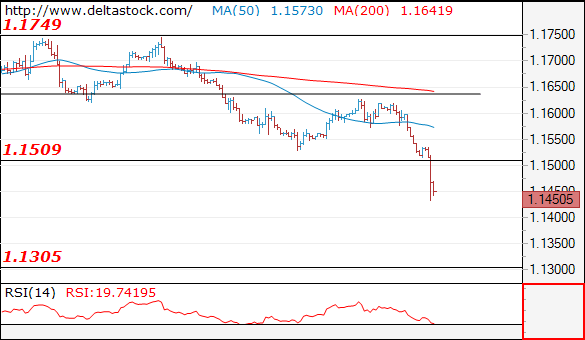
The slide through 1.1509 shows, that the prolonged consolidation since the end of May is over and the outlook is bearish, for a dip to 1.1300 area. Initial hurdle lies at 1.1510.
| Resistance | Support | ||
| intraday | intraweek | intraday | intraweek |
| 1.1510 | 1.1750 | 1.1430 | 1.1300 |
| 1.1640 | 1.1830 | 1.1300 | 1.1300 |
USD/JPY
Current level - 110.87
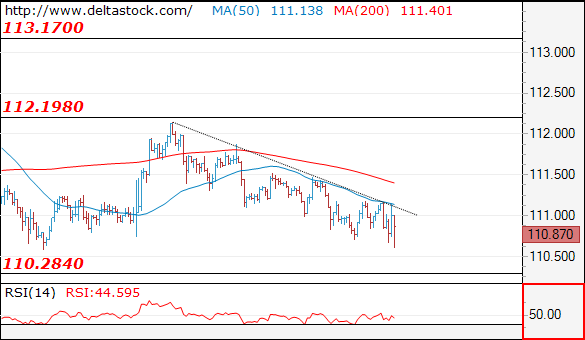
The downtrend is still intact, but a break through 111.20 will signal a reversal for 113.20.
| Resistance | Support | ||
| intraday | intraweek | intraday | intraweek |
| 111.20 | 114.50 | 110.25 | 110.25 |
| 113.20 | 114.50 | 110.25 | 109.30 |
GBP/USD
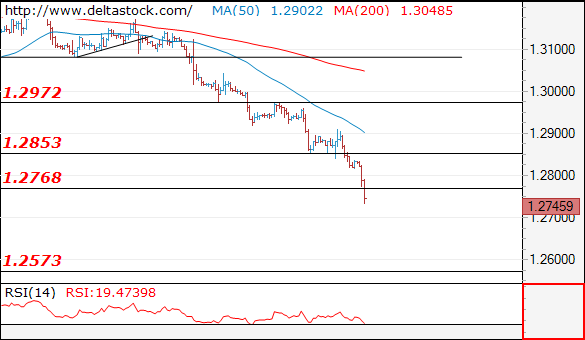
Current level - 1.2745
The downtrend is intact, heading towards 1.2570-2620 area. Initial resistance lies at 1.2770, followed by the crucial one at 1.2850.
| Resistance | Support | ||
| intraday | intraweek | intraday | intraweek |
| 1.2770 | 1.2970 | 1.2730 | 1.2570 |
| 1.2850 | 1.3210 | 1.2630 | 1.2570 |
Swiss Franc Safety Amid TRY Collapse
Swiss franc safety
Mounting uncertainty in Europe has driven investors back into CHF. This, after steady Euro appreciation and EUR/CHF reaching the psychological 1.2 threshold, after the Swiss National Bank shifted its comment from “highly overvalued” to “highly valued” and slowed its FX intervention. The CHF title of safe-haven currency marginally eroded as geopolitical and trade tensions limited effect on investor’s appetite for CHF.
Now CHF has become regionalized: the safe haven during European risks. This new reality was highlighted by CHF strengthening during Italian elections. The concentration of European risk in the current environment has sent EUR/CHF down to 113.98. The SNB is still ready to intervene if necessary. We doubt the SNB will stand in front of a European crisis to secure CHF, but where is the pain threshold: 112, 111, 110?.
Foreign exchange markets are in a full-blown risk off trading. Extreme market pressure on Russia and Turkey has spread fears of contagion. Over the next weeks markets will turn their focus on Italy. The new government is expected to provide a budget for 2019, indicating how closely officials would stick to their expensive spending promises. Any extreme unfunded deficit spending will add to domestic turmoil and conflict with the EU.
Turkish lira hits new low
The spotlight is over Turkey, as the US is threatening to impose further sanctions against the country. Additionally, today’s Turkish economic model presentation is expected to disappoint investors, as economic growth forecast declined from prior estimates of 5.50% to less than 4%. Inflation remains largely above the 5% target set by the Turkish central bank (July CPI y/y: + 15.85%), a target that the country never reached since 2011, thus casting doubt over the Turkish central bank independence for managing Turkey’s monetary policy.
Accordingly, Turkish lira continues to lose ground against major currencies. USD/TRY is falling by over -6% intraday and -55.38% year to date. Therefore, if Finance Minister Berat Albayrak (Erdogan’s son in law) maintains an over optimism stance by overdoing the good health of Turkish banking system, the TRY downward move should strengthen further, as optimism does not mean rate hike any time soon. In addition, knowing Erdogan’s view to that regard, there is close to no hope to see any move in that direction.
Currently trading along 6, a historical high, the USD/TRY pair could be reaching the 6.20 range in the short-term.
EUR/USD at one-year low
Trading at the weakest range since mid-July 2018, the single currency is facing difficult times. Rumors surrounding a spill over on European banks of the Turkish lira situation being the main driver of the steep decline. According to an FT article, ECB’s Single Supervisory Mechanism warns that three large European banks are “particularly exposed” to the lira movement, as they allegedly are important lenders to turkey, though the situation is not viewed as “critical” by the monetary authority.
Following the news, the EUR/USD dropped by over -0.60% in early trading session, an excessive move that will most probably go the other way – at least until next week Italian budget plan for 2019, as Italy’s anti-establishment coalition is expected to negotiate further flexibility with regard to EU budget restrictions for its members.
Currently trading along 1.1450, EUR/USD is expected to bounce back along the 1.15 range