Sample Category Title
Eurozone GDP Moderates in Q1, While Inflation Remains Low
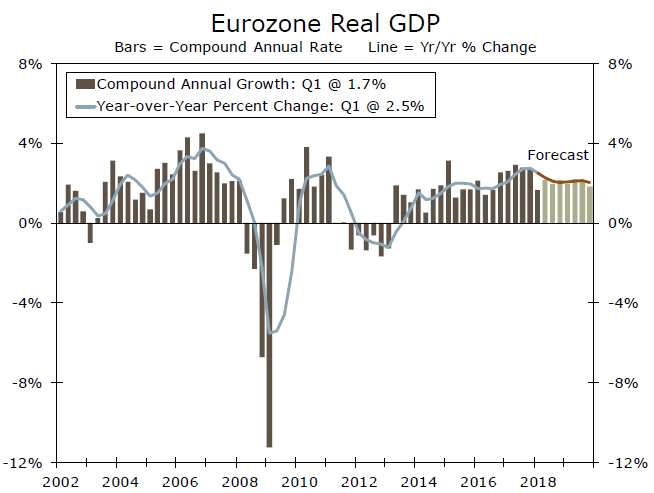
Real GDP in the Eurozone grew 0.4 percent in Q1, largely matching consensus estimates. Although we look for the Eurozone's expansion to remain in place, persistently low inflation remains a roadblock for the ECB.
Eurozone GDP Decelerates Slightly in Q1
Data released today showed that real GDP in the Eurozone grew 0.4 percent in Q1 (1.7 percent annualized), largely in line with consensus expectations. While data on underlying demand components is not available at this time, today's print shows that growth in the Eurozone likely peaked toward the end of 2017. We look for GDP growth to slow modestly this year to roughly 2 percent from 2.5 percent in 2017, especially as we also look for global growth to converge toward its long-run trend after surprising to the upside last year. But we forecast the Eurozone's expansion to remain intact. As noted below, the monetary policy environment should remain supportive of growth, and fiscal policy is also generally not restricting growth at present.
Monthly Data Corroborate Q1 Slowdown
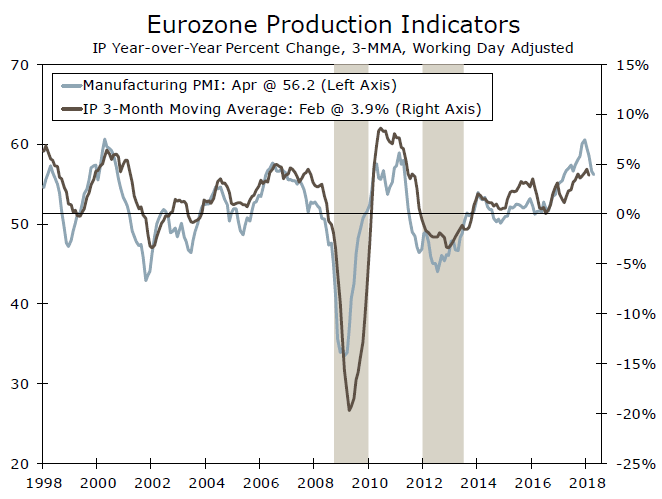
Monthly data largely support the modest deceleration in Q1. Growth in industrial production has been negative through the first two months of the year, and the manufacturing PMI has also moderated slightly following record highs above 60 seen at the end of 2017 (middle chart). Growth in real retail sales has also been lackluster so far this year, and will likely be reflected in slower personal consumption growth for Q1. However, the unemployment rate continues to decline, and the overall growth rate registered in Q1 is still above the Eurozone economy's potential growth rate, meaning the output gap should gradually continue to narrow.
Low Inflation Means Slow and Steady for the ECB
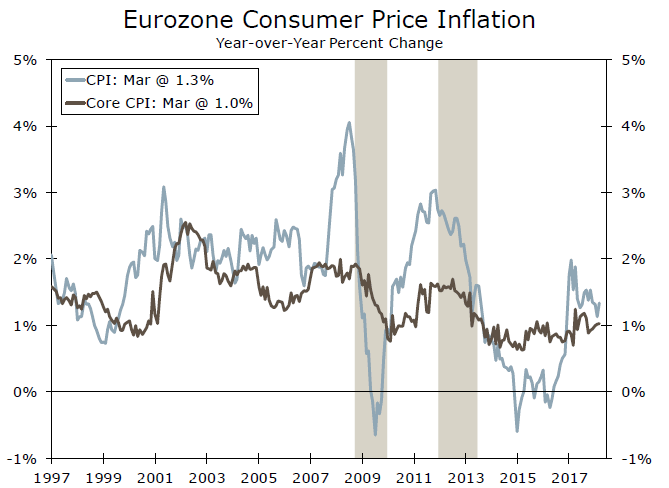
While growth in the Eurozone largely remains solid even with the Q1 slowdown, inflation continues to be persistently below the European Central Bank's (ECB) "below, but close to, 2 percent target," proving a roadblock to more rapid policy normalization. Consumer price inflation rose 1.3 percent year over year in March, and has remained below 2 percent since early 2017 (bottom chart). Core inflation has been hovering around 1 percent, and the consensus looks for it to drop to 0.9 percent in April.
Given below-target inflation, the ECB has continued its asset purchase program and maintained record-low interest rates even as other large central banks have begun to remove accommodation. In the press conference following the ECB's latest decision on April 26, President Draghi stated that, "an ample degree of monetary stimulus remains necessary for underlying inflation pressures to continue to build up." We look for the ECB to continue its €30 billion per month pace of asset purchases through September, before tapering further to €10-€15 billion per month through the end of the year. The ECB has also signaled that it is in no hurry to tighten policy even after it ends its bond-buying program. We look for it to raise the deposit rate from -0.40 percent to -0.20 percent sometime next spring, then hike its main refinancing rate next summer.
WTI Crude Oil Futures Remain Under Pressure; Creates Narrow Range in Near Term
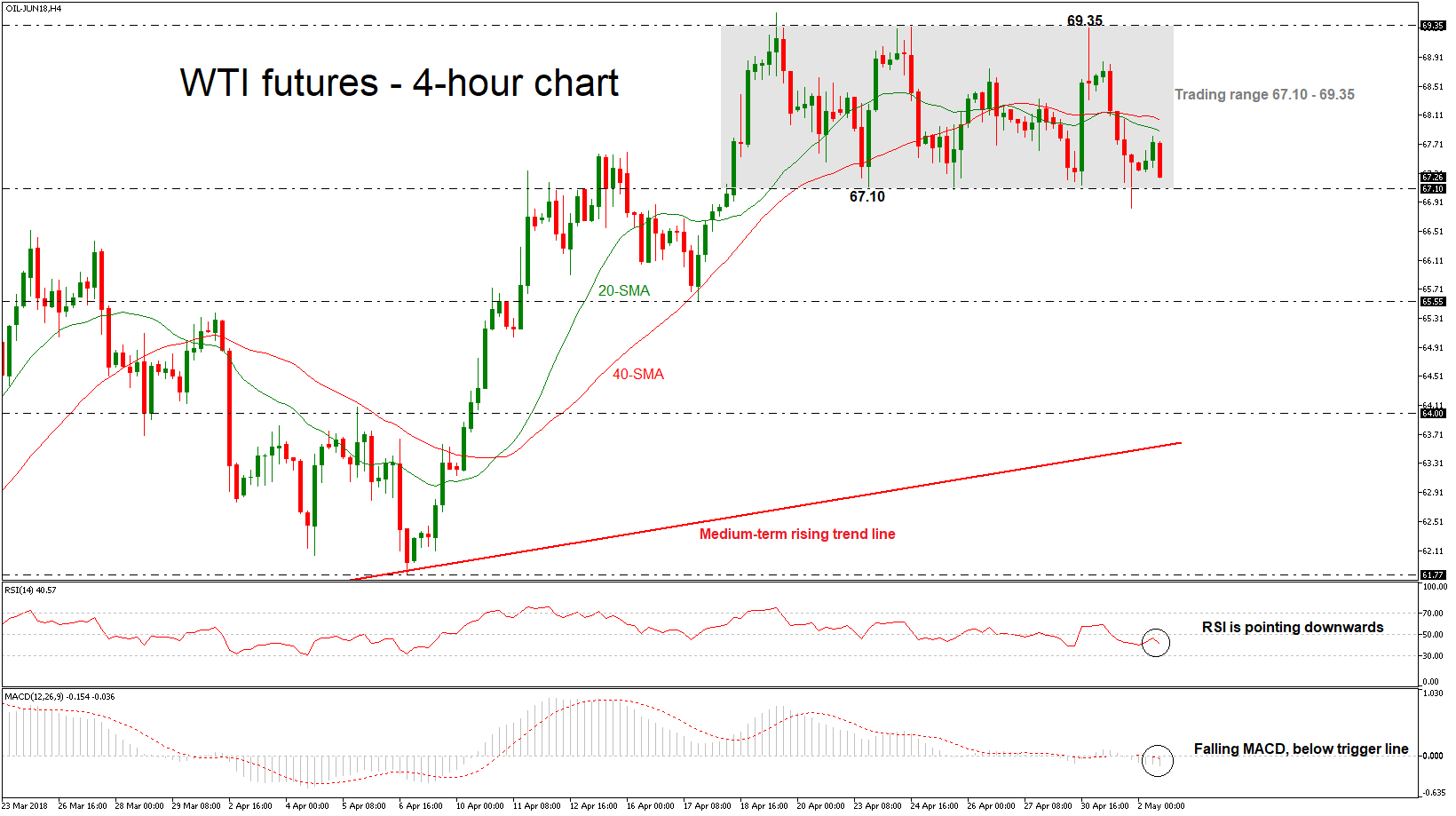
WTI futures have been holding within a consolidation area since April 18 with upper boundary the 69.35 resistance level and lower boundary the 67.10 support, while the 20- and 40-simple moving averages in the 4-hour chart are acting as a strong mid-level of the channel. In the short-term, the technical indicators turned their momentum to negative.
Looking at momentum oscillators though, they suggest further declines may be on the cards in the short-term. The RSI is below its neutral 50 line, detecting negative momentum, and is also pointing downwards. The MACD, already negative, lies below its trigger line.
In case of further declines in the oil and a slip below the lower band, immediate support may be found near the latest lows at 65.55. A downside break of that zone would open the way for the April 5 peak of 64.00.
However, if buyers manage to push the price above the moving averages, it could challenge the upper boundary of the trading range of 69.35, increasing the probability for further bullish extensions. A potential upside violation of this level would open the way towards the 70.00 handle.
It is worth mentioning that WTI crude oil has been developing within an uptrend since June 2017, hitting several times the medium-term ascending trend line.
GBPUSD retreats after slipping below uptrend line
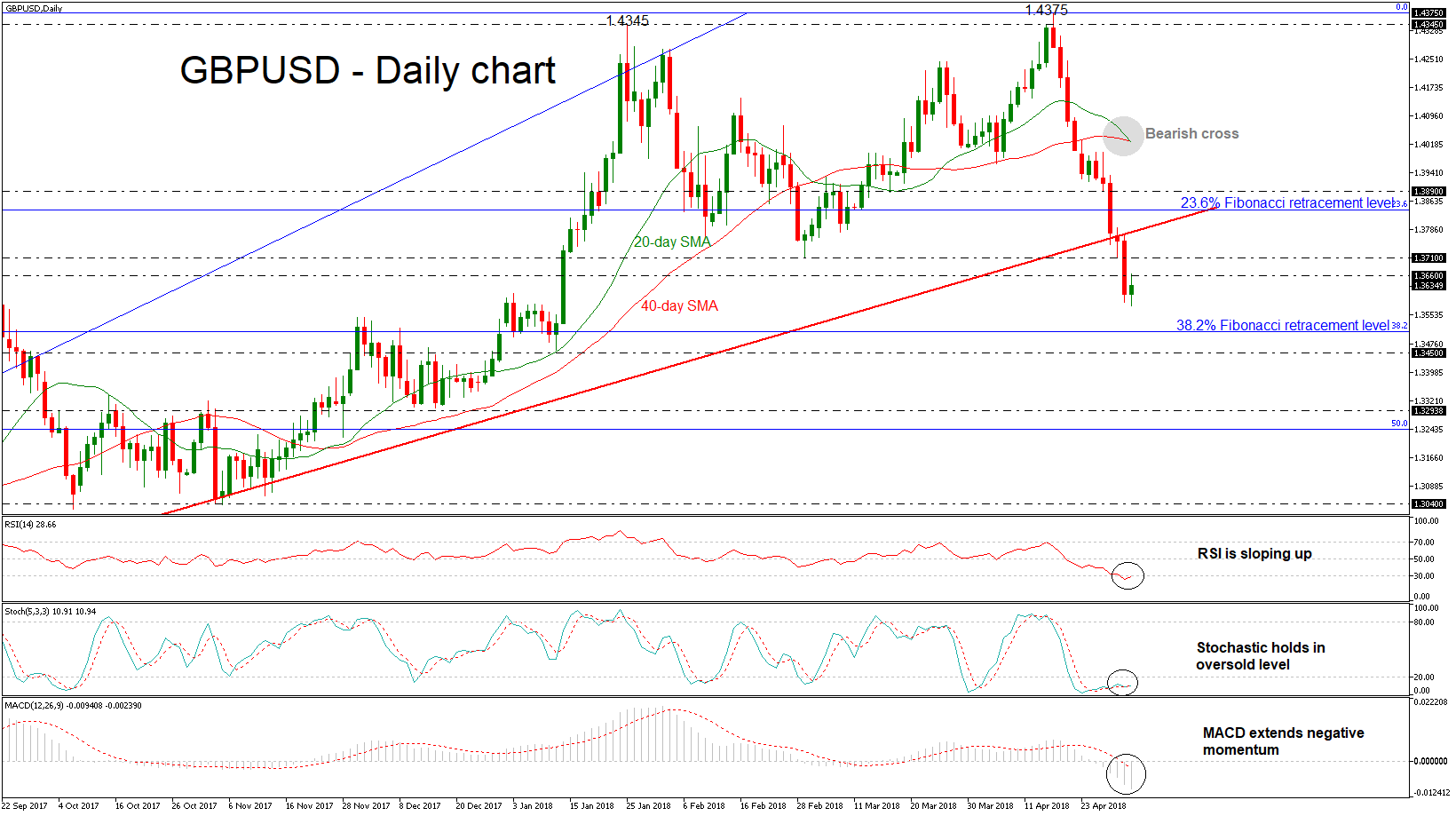
GBPUSD dived over the last two weeks after the bounce off the 1.4375 resistance level, while during yesterday’s daily session the price dropped below the long-term ascending trend line, shifting the bullish outlook to bearish. However, during Wednesday’s session, the pair is paring some losses after reaching an almost 16-month low of 1.3579.
The RSI has fallen into oversold territory but is sloping slightly to the upside. The stochastics are still in oversold levels, with the indicator turning slightly upwards, while the MACD supports a bearish picture since the index continues to increase negative momentum below its red-signal line. Additionally, the 20-day simple moving average is about to post a bearish cross with the 40-day SMA, confirming the recent bearish structure.
Should the market extend losses, support could be met at the 38.2% Fibonacci retracement level of the upleg from 1.2100 to 1.4375 at 1.3508. Steeper decreases could drive the price towards the next immediate support at 1.3450.
Conversely, if the pair bounces up, immediate resistance could be met at 1.3710 taken from the low on March 1. A jump above this obstacle could drive cable north towards the 23.6% Fibonacci mark of 1.3840, signaling a continuation of the upward movement.
EUR/USD Mid-Day Outlook
Daily Pivots: (S1) 1.1953; (P) 1.2018 (R1) 1.2056; More....
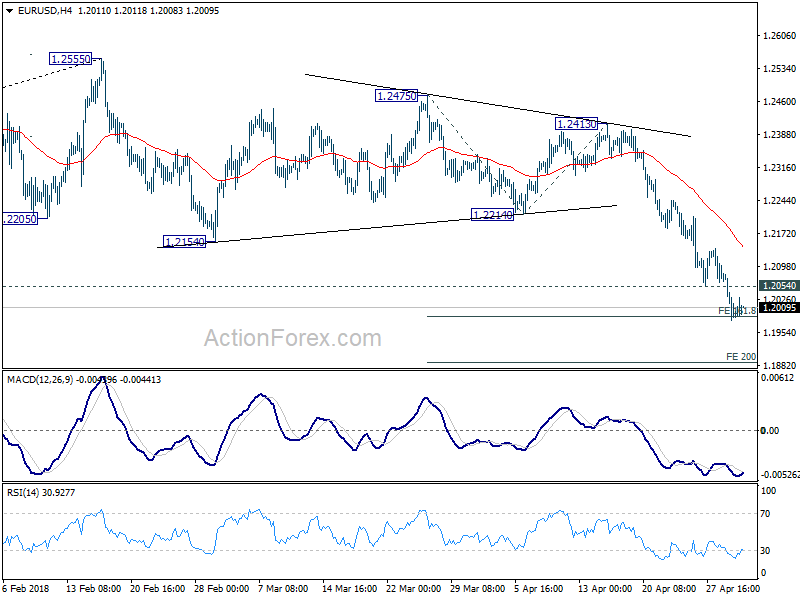
With 1.2054 minor resistance intact, intraday bias in EUR/USD remains on the downside. Break of 161.8% projection of 1.2475 to 1.2214 from 1.2413 at 1.1991 will target 200% projection at 1.1891 next. On the upside, above 1.2054 minor resistance will indicate temporary bottoming and turn bias neutral for consolidations. But upside of recovery should be limited well below 1.2214 support turned resistance to bring another decline.
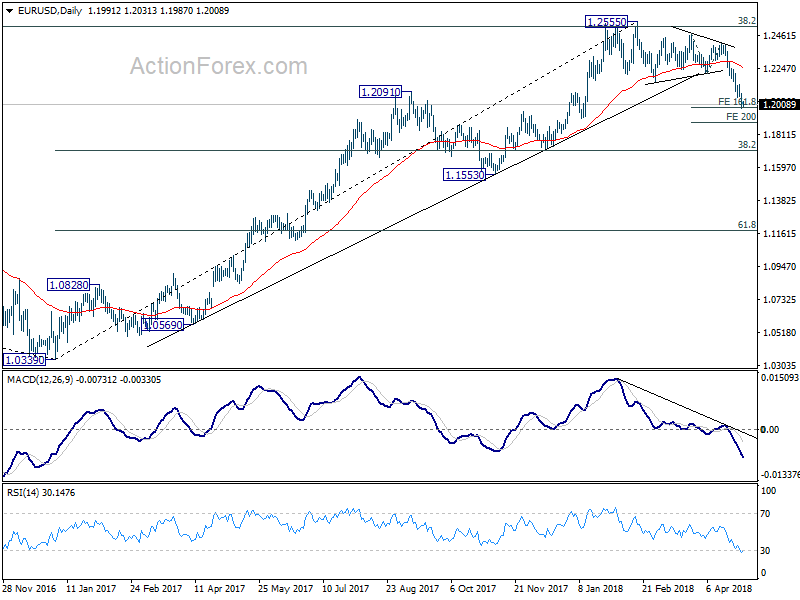
In the bigger picture, current decline and firm break of 1.2154 support confirms rejection by 38.2% retracement of 1.6039 (2008 high) to 1.0339 (2017 low) at 1.2516. A medium term top should be in place at 1.2555 and deeper decline would be seen back to 38.2% retracement of 1.0339 to 1.2555 at 1.1708 first. We'll look at the structure and momentum of such decline before decision if it's an impulsive or corrective move.
USD/CHF Mid-Day Outlook
Daily Pivots: (S1) 0.9916; (P) 0.9943; (R1) 0.9992; More...
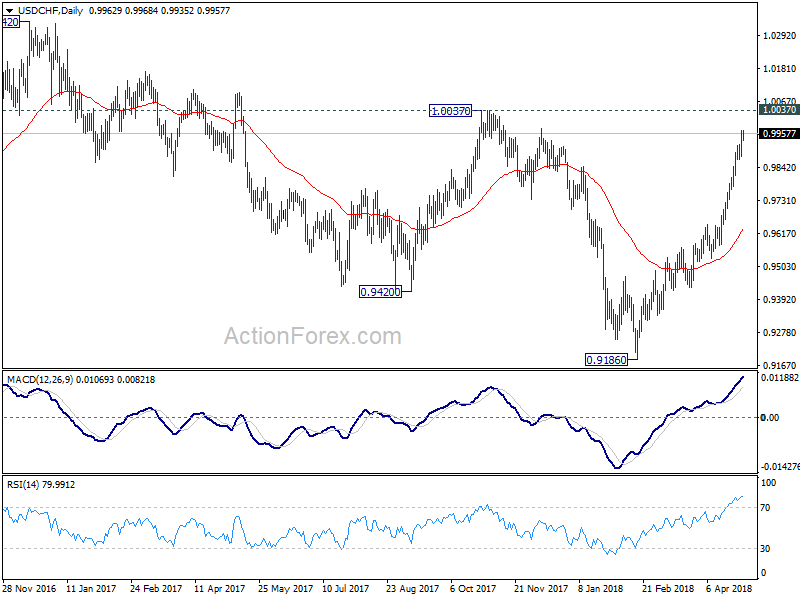
With 0.9919 minor support intact, intraday bias in USD/CHF remains on the upside. Current rally from 0.9186 would target 1.0037 resistance. Decisive break there will pave the way to key resistance level at 1.0342. On the downside, below 0.9919 minor support will turn intraday bias neutral again and bring consolidation, before staging another rise.
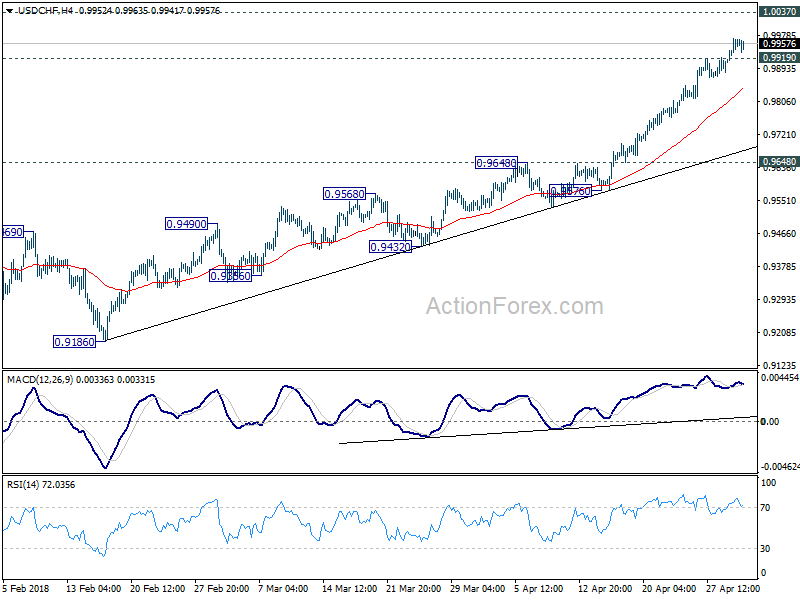
In the bigger picture, medium term decline from 1.0342 has completed with three waves down to 0.9186. Rise from there is currently viewed as a leg inside the long term range pattern. Hence, while further rally would be seen, we'd be cautious on strong resistance from 1.0342 to limit upside. For now, further rise is expected as long as 0.9648 resistance turned support holds, even in case of pull back.
USD/JPY Mid-Day Outlook
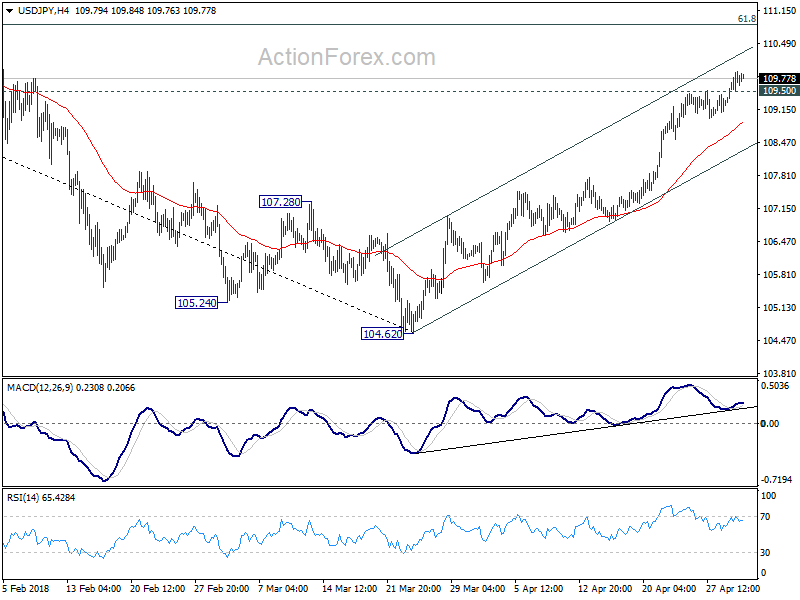
Daily Pivots: (S1) 109.43; (P) 109.65; (R1) 110.09; More...
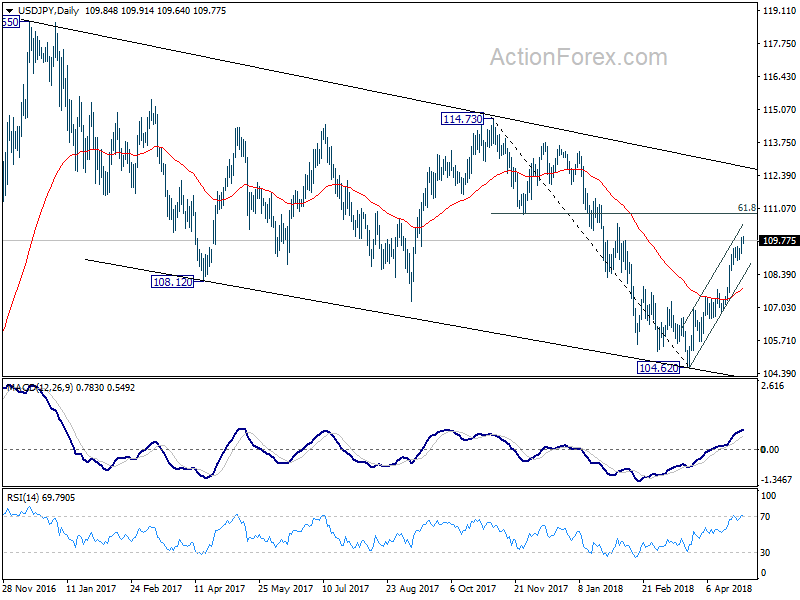
USD/JPY's rise from 104.62 is still in progress and intraday bias remains on the upside. Current rally would target 61.8% retracement of 114.73 to 104.62 at 110.86 next. On the downside, below 109.50 minor support will indicate temporary topping. And, intraday bias would be turned neutral for consolidation, before staging another rise.
In the bigger picture, break of 108.12 support turned resistance now suggests that corrective fall from 118.65 (2016 high) has completed with three waves down to 104.62. And, rise from 98.97 (2016 low) could be resuming. Focus is back on 114.73 resistance and break there will pave the way to 118.65 and above. This will now be the preferred case as long as USD/JPY stays above 55 day EMA (now at 107.78).
GBP/USD Mid-Day Outlook
Daily Pivots: (S1) 1.3544; (P) 1.3658; (R1) 1.3729; More...
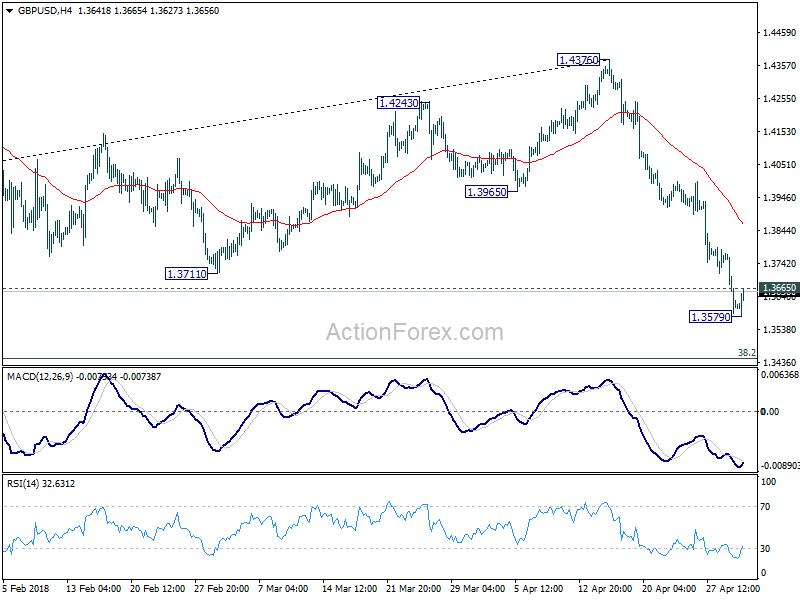
Touching of 1.3665 minor resistance suggests temporary bottoming at 1.3579. Intraday bias in GBP/USD is turned neutral first. Some consolidations could be seen. But even in case of strong rebound, upside should be limited by 4 hour 55 EMA (now at 1.3817) to bring fall resumption. Below 1.3579 will extend the decline from 1.4376 to 1.3448 fibonacci level next.
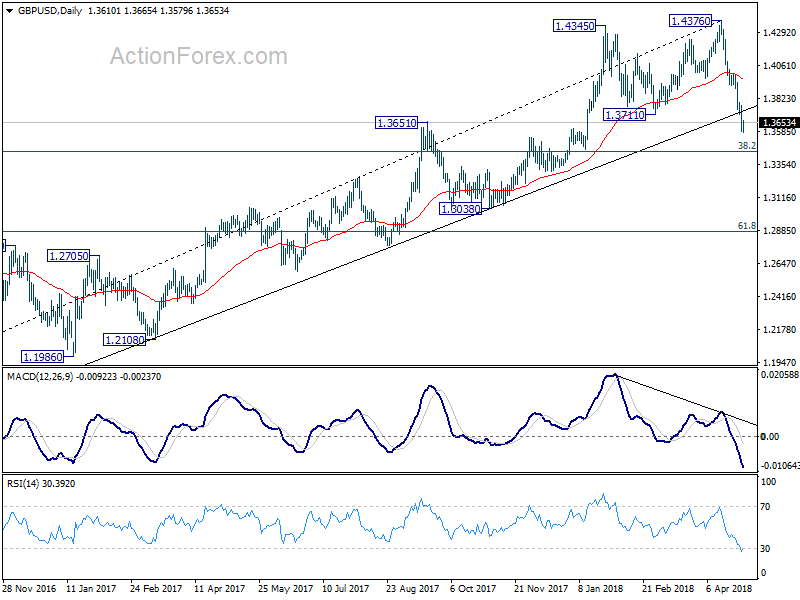
In the bigger picture, current development suggests that whole medium term rebound from 1.1936 (2016 low) has completed at 1.4376 already, with trend line broken, on bearish divergence condition in daily MACD, after rejection from 55 month EMA (now at 1.4248). Deeper decline should be seen to 38.2% retracement of 1.1936 (2016 low) to 1.4376 at 1.3448 first. Break will target 61.8% retracement at 1.2874 and below. Outlook will stay bearish as long as 55 day EMA (now at 1.3955) holds, even in case of strong rebound.
Euro and Sterling Recovered on Economic Data, Dollar Patiently Awaits FOMC
Dollar is trading slightly lower today as markets digest recent against ahead of FOMC rate decision and statement. Slightly better than expected ADP employment is shrugged of by the markets. Euro survived the test of GDP data and recovers mildly. Sterling also gets some support from better than expected UK construction PMI. While there is expectations for Fed will comment of recent economic data, the markets might eventually leave with empty hands. And traders could need to sit through a quiet session.
In other markets, DAX surges strongly today and is up 1.2% at the time of writing. But CAC is just up 0.15% while FTSE is up 0.32%. US futures point to a flat open as markets stay cautious. Gold recovers mildly today but struggles to stay above 1310 handle so far. It will likely continue to press 1300 psychological level.
US ADP added 204k in April, little sign of slowdown
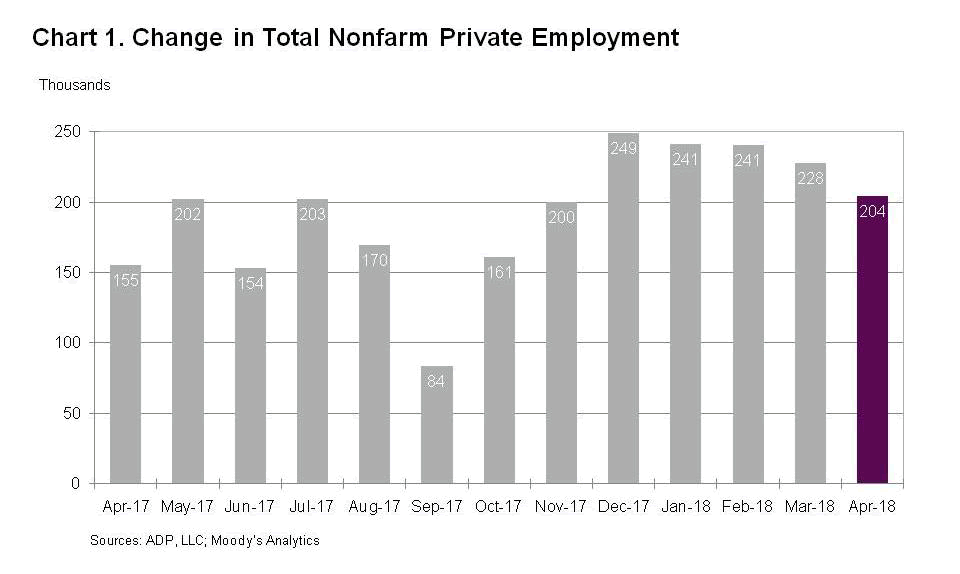
US ADP private sector employment rose 204k in April, slightly above expectation of 200k. Ahu Yildirmaz, vice president and co-head of the ADP Research Institute said in the released that "the labor market continues to maintain a steady pace of strong job growth with little sign of a slowdown". Mark Zandi, chief economist of Moody's Analytics also noted that "At this pace, unemployment will soon be in the threes, which is rarified and risky territory, as the economy threatens to overheat."
Fed to leave rate hike for June FOMC meeting
There have been both positive and negative data released from the US since the March FOMC meeting. We expect policymakers to view slowdown in GDP growth as driven by temporary factors which should not affect the monetary policy outlook. Meanwhile, the central bank would likely acknowledge recent pickup in core inflation and wage growth, hailing them as reasons supporting further gradual rate hike: The median dot plot suggested three rate hikes this year while the market has increasingly priced in four. We expect the Fed to leave the policy rate unchanged at 1.50-1.75% at today's meeting, leaving the rate hike (+25 bps) for June, when the updated staff projections would also be published. More in FOMC Preview: Focuses on Inflation and Shrugs Off Temporary Disruption on Growth.
More on FOMC:
- FOMC Preview: No Rate Hike Expected, But Hawkish Fed Likely
- More Hawkish Fed Eyed at May FOMC Meeting as Dollar Headed for Best Month in a Year
Eurozone GDP growth met expectation, unemployment rate unchanged
Eurozone GDP growth slowed to 0.4% qoq in Q1. But that was inline with expectation. Unemployment rate was unchanged at 8.5% in March, staying at the lowest level since December 2008, meeting expectation. PMI manufacturing was revised up to 56.2 in April, from 56.0. Chris Williamson, Chief Business Economist at IHS Markit noted that "the manufacturing sector saw growth weaken further at the start of the second quarter, but let's not lose sight of the fact that the overall pace of expansion remains encouragingly solid." Still, " the trend in the surveys in coming months will provide important clues as to the degree to which underlying demand may be waning and the extent to which policymakers should be concerned about the health of the economy."
Released from Swiss, PMI manufacturing rose to 63.6 in April versus expectation of 59.8. Retail sales dropped -1.8% yoy in March versus expectation of 0.3% yoy. SECO consumer confidence dropped to 2 in April, below expectation of 4.
UK construction PMI: Recovery was somewhat underwhelming
UK PMI construction rose to 52.5 in April, up fro 47.0 and beat expectation of 50.5. That's also the highest reading in 5 months. Tim Moore, Associate Director at IHS Markit, however, noted that "the recovery from March's low point is somewhat underwhelming and provides an indication that the construction sector has been treading water at the very best in recent months." Also, "survey respondents noted that heightened economic uncertainty continued to hold back construction growth in April, with risk aversion among clients leading to delays with spending decisions on new projects."
China Caixin PMI manufacturing: Uncertainty in exports increased significantly
The China Caixin PMI manufacturing rose to 52.5 in April, up from 51.0, above expectation of 50.9. Dr. Zhengsheng Zhong, Director of Macroeconomic Analysis at CEBM Group, warned that "manufacturers are facing a sharply deteriorating foreign demand environment as new export orders declined for the first time in 17 months in April." And, while overall operating conditions improved, "uncertainty in exports has increased significantly, and the dependence of the Chinese economy on domestic demand is rising."
Released from Japan, consumer confidence dropped to 43.6 in April, down from 44.3 and missed expectation of 44.5. Monetary base rose 7.8% yoy in April, well below expectation of 9.2% yoy.
New Zealand unemployment rate dropped to lowest since 2008
New Zealand employment rose 0.6% qoq in Q1, in line with expectation. Unemployment rate dropped to 4.4%, below expectation of 4.5%. That's also the fifth consecutive quarter of decline in unemployment rate, and it hit lowest level since December 2008. In addition, the underutilization rate dropped to 11.9%, down from 12.2%. That reflects 9200 fewer people are were underemployed. Labour force participation rate dropped 0.1% to 70.8%. Employment rate was unchanged at 67.7%.
GBP/USD Mid-Day Outlook
Daily Pivots: (S1) 1.3544; (P) 1.3658; (R1) 1.3729; More...
Touching of 1.3665 minor resistance suggests temporary bottoming at 1.3579. Intraday bias in GBP/USD is turned neutral first. Some consolidations could be seen. But even in case of strong rebound, upside should be limited by 4 hour 55 EMA (now at 1.3817) to bring fall resumption. Below 1.3579 will extend the decline from 1.4376 to 1.3448 fibonacci level next.
In the bigger picture, current development suggests that whole medium term rebound from 1.1936 (2016 low) has completed at 1.4376 already, with trend line broken, on bearish divergence condition in daily MACD, after rejection from 55 month EMA (now at 1.4248). Deeper decline should be seen to 38.2% retracement of 1.1936 (2016 low) to 1.4376 at 1.3448 first. Break will target 61.8% retracement at 1.2874 and below. Outlook will stay bearish as long as 55 day EMA (now at 1.3955) holds, even in case of strong rebound.
Economic Indicators Update
| GMT | Ccy | Events | Actual | Forecast | Previous | Revised |
|---|---|---|---|---|---|---|
| 22:45 | NZD | Unemployment Rate Q1 | 4.40% | 4.50% | 4.50% | |
| 22:45 | NZD | Employment Change Q/Q Q1 | 0.60% | 0.60% | 0.50% | 0.40% |
| 23:01 | GBP | BRC Shop Price Index Y/Y Apr | -1.00% | -1.00% | ||
| 23:50 | JPY | Monetary Base Y/Y Apr | 7.80% | 9.20% | 9.10% | |
| 01:45 | CNY | Caixin PMI Manufacturing Apr | 52.5 | 50.9 | 51 | |
| 05:00 | JPY | Consumer Confidence Apr | 43.6 | 44.5 | 44.3 | |
| 05:45 | CHF | SECO Consumer Confidence Apr | 2 | 4 | 5 | |
| 07:15 | CHF | Retail Sales Real Y/Y Mar | -1.80% | 0.30% | -0.20% | |
| 07:30 | CHF | PMI Manufacturing Apr | 63.6 | 59.8 | 60.3 | |
| 07:45 | EUR | Italy Manufacturing PMI Apr | 53.5 | 54.5 | 55.1 | |
| 07:50 | EUR | France Manufacturing PMI Apr F | 53.8 | 53.4 | 53.4 | |
| 07:55 | EUR | Germany Manufacturing PMI Apr F | 58.1 | 58.1 | 58.1 | |
| 08:00 | EUR | Eurozone Manufacturing PMI Apr F | 56.2 | 56 | 56 | |
| 08:30 | GBP | Construction PMI Apr | 52.5 | 50.5 | 47 | |
| 09:00 | EUR | Eurozone Unemployment Rate Mar | 8.50% | 8.50% | 8.50% | |
| 09:00 | EUR | Eurozone GDP Q/Q Q1 A | 0.60% | 0.40% | 0.60% | |
| 09:00 | EUR | Italian GDP Q/Q Q1 P | 0.30% | 0.30% | 0.30% | |
| 12:15 | USD | ADP Employment Change Apr | 204K | 200K | 241K | 228K |
| 14:30 | USD | Crude Oil Inventories | 1.0M | 2.2M | ||
| 18:00 | USD | FOMC Rate Decision | 1.75% | 1.75% |
EC President Juncker repeated: We refuse to negotiate with the US under threat
European Commission President Jean-Claude Juncker told the European Parliament today that EU will continue the negotiations with the US regarding the steel tariffs. But he emphasized that "we refuse to negotiate under threat".
Juncker reiterated the call to make the tariff exemption permanent. And he criticized that "the U.S. measures cannot be justified on the basis of national security."
Trump extended the temporary exemption of steel tariffs on EU, Mexico and Canada till June 1.
US ADP private sector employment rose 204k , little sign of slowdown
US ADP private sector employment rose 204k in April, slightly above expectation of 200k.
Quotes from the release:
Ahu Yildirmaz, vice president and co-head of the ADP Research Institute-
- "The labor market continues to maintain a steady pace of strong job growth with little sign of a slowdown
- "However, as the labor pool tightens it will become increasingly difficult for employers to find skilled talent.
- Job gains in the high-skilled professional and business services industry accounted for more than half of all jobs added this month.
- The construction industry, which also relies on skilled labor, continued its six month trend of steady job gains as well."
Mark Zandi, chief economist of Moody's Analytics-
- "Despite rising trade tensions, more volatile financial markets, and poor weather, businesses are adding a robust more than 200,000 jobs per month.
- At this pace, unemployment will soon be in the threes, which is rarified and risky territory, as the economy threatens to overheat."