Sample Category Title
Pound Shrugs Off Dismal UK Retail Sales
The British pound is showing slight losses in the Thursday session. In North American trade, GBP/USD is trading at 1.3175, down 0.22% on the day. On the release front, British retail sales declined 0.8%, well below the forecast of -0.1%. In the US, unemployment claims plunged to 222 thousand, well below the estimate of 240 thousand. Manufacturing data was also strong, as the Philly Fed Manufacturing Index jumped to 27.9, crushing the estimate of 21.9 points. On Friday, the UK releases Public Sector Net Borrowing, with the deficit expected to climb to GBP 5.7 billion. The US will release Existing Home Sales and Fed Chair Janet Yellen speaks at an event in Washington.
The British consumer is feeling squeezed, with inflation running above wage growth. Although Britain's labor market remains tight, strong employment picture has failed to translate into strong wage growth. This is even more perplexing in the case of the UK, where inflation is running at clip of 3 percent, well above the Bank of England's target. When inflation is taken into account, wages actually declined 0.4% compared to a year ago. Consumer are also facing more expensive imports, with the British pound losing 12 percent in value since the Brexit vote in June 2016. September retail sales reflected a downturn in consumer spending, with a sharp decline of 0.8 percent, the highest decline since May. The BoE is widely expected to raise rates at the November 2 meeting, but some BoE policymakers remained concerned that the economy is showing signs of weakness and a rate hike should be postponed.
Are the Brexit talks dead in the water? The two sides have little progress to show after several rounds of negotiations. Prime Minister Theresa May is keen to talk trade with the Europeans, but the latter have conditioned trade talks on progress being reached on a number of issues, such as Britain's payment when it leaves the European Union, the status of the border with Northern Ireland and the jurisdiction of the European Court of Justice on European citizens living in the UK. The two sides remain far apart on all of these issues, and each party has criticized the other for lack of flexibility The lack of progress means that the possibility of a 'hard Brexit', in which Britain would leave with no deal being reached, is growing. BoE Governor Mark Carney acknowledged on Tuesday that the Bank has made contingency plans in case there is no agreement. However, British businesses are lobbying hard for an agreement, and want a 2-year interim period, such as a temporary customs union with the EU, in order to soften the blow of leaving the EU.
The markets are keeping a close eye on who will replace Janet Yellen as head of the powerful Federal Reserve. Yellen is due to finish her 3-year term in February 2018. Yellen is apparently interested in serving a second term, but President Trump likely has other ideas. Trump has not been complimentary towards Yellen, although Yellen can point to an impressive resume. She has ended quantitative easing, raised interest rates and started to unwind the Fed's balance sheet. Trump's shortlist includes Jerome Powell, Kevin Warsh and John Taylor. Trump may lean towards Taylor, an economist who is considered more hawkish on policy than Yellen. Under Taylor, interest rates would likely move substantially higher than the current 1.25%, and a rate hike early in 2018 could strengthen the US dollar.
The Spanish Crisis in Focus
The common currency resumed positive dynamics following the Spanish Prime minister's comments on the possible limitation of Catalan autonomy due to the Spanish constitution. The decision about these limitations may be taken as early as this Saturday. Investors mostly ignored positive news from the US where the number of initial unemployment claims decreased to 222,000 against the 240,000 forecasted and the Philly Fed Manufacturing index which grew to 27.9 in October, compared to 23.8 in the previous period. The growth potential of the euro is likely to be limited by tensions around the events in Catalonia and also with the possibility of another round of monetary tightening in the US in December. Tomorrow traders are likely to pay attention to news on the current account balance in the Eurozone.
The bulls were not able to push the aussie quotes higher despite positive data from the labour market in Australia. The unemployment rate fell by 0.1% in September to 5.5% and the number of employed increased by 19,800 compared to the 14,100 forecasted. Data from Australia's major trading partner also cheered the aussie bulls. Industrial production growth in China accelerated to 6.6% in August which is 0.6% more than in July and 0.2% above the average prediction. There was a slight slowdown in Chinese economic growth to 6.8% in the third quarter which is 0.1% less than in the second quarter.
The USD/JPY showed a confident descending move on the background of rising tensions in Spain and due to the threat of a conflict between the US and North Korea. The trade balance in Japan reduced to 0.24 trillion yen in September compared to 0.31 trillion yen in August, but this result was not able to change the mood of the market as it sought out a safe haven in the yen.
EUR/USD
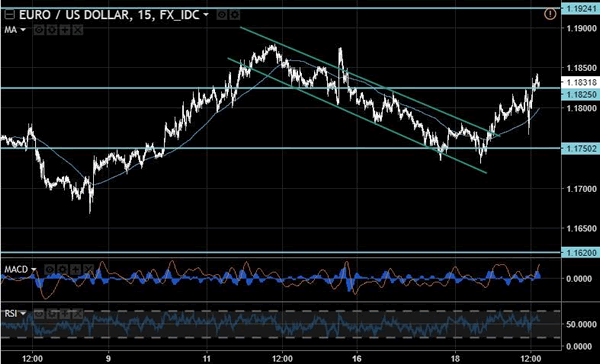
The EUR/USD price left the limits of the local descending channel and was able to break through the resistance at 1.1825. This is forming the stimulus for continued price growth with the closest targets at 1.1925 and 1.2000. The RSI on the 15-minute chart is growing but has not reached the overbought zone yet indicating that the upward impulse is not exhausted. In case of a fall resuming, the quotes may return to 1.1750.
AUD/USD
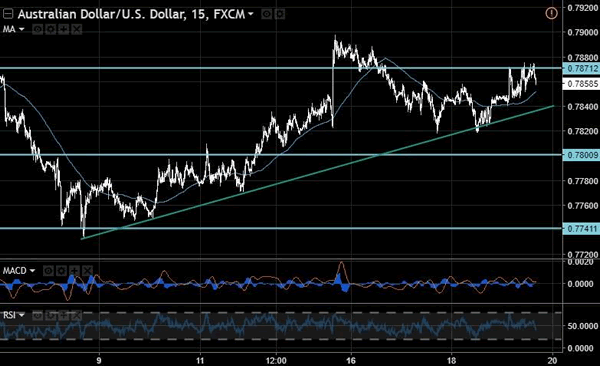
The AUD/USD keeps testing the resistance level at 0.7870. In case of its breaking and overcoming 0.7900, the bulls are likely to push the quotes higher up to 0.8000. On the other hand, in order to change the current positive trend to negative, the price has to leave the boundaries of the channel and break through the local low mark at 0.7820. The immediate goals in this scenario will be 0.7740 and 0.7700.
USD/JPY
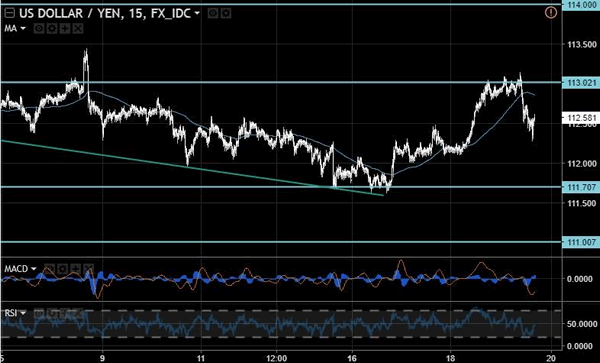
The USD/JPY demonstrated a powerful descending impulse after some consolidation near the 113.00 mark. In case of maintaining the current movement, the next target will be 111.70 and breaking through this line is likely to force the bears to pull the quotes down to 111.00 and 110.30. After a strong fall, we are likely to see an upward rebound on the background of profit taking.
Elliott Wave Analysis: GBPUSD Update
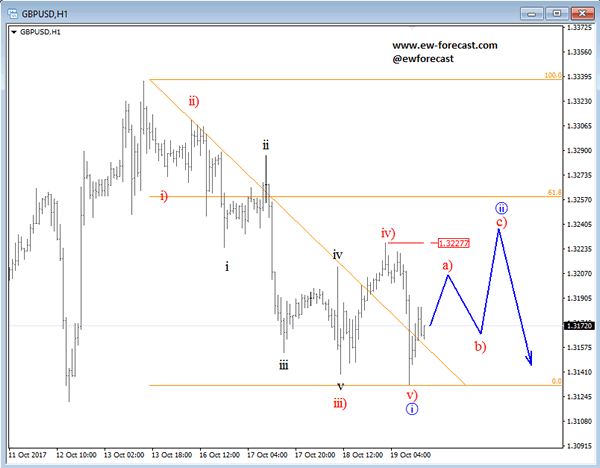
GBPUSD can be trading at the start of a three-wave recovery, which we see it as bigger degree wave two. Ideally a five-wave decline had fully unfolded within the previous blue wave one, and now a three-wave temporary rise may follow on the pair. Possible resistance for the upcoming wave ii can be around the Fibonacci ratio of 61.8 and near the former swing high of wave iv) at 1.3228 level.
GBPUSD, 1H
Canadian Inflation and Retail Sales Data Eyed Before BoC Meeting
Inflation and retail sales numbers out of Canada on Friday will be scrutinized for clues to a possible year-end rate hike by the Bank of Canada, following recent remarks from BoC Governor Stephen Poloz that suggested a pause after two consecutive hikes.
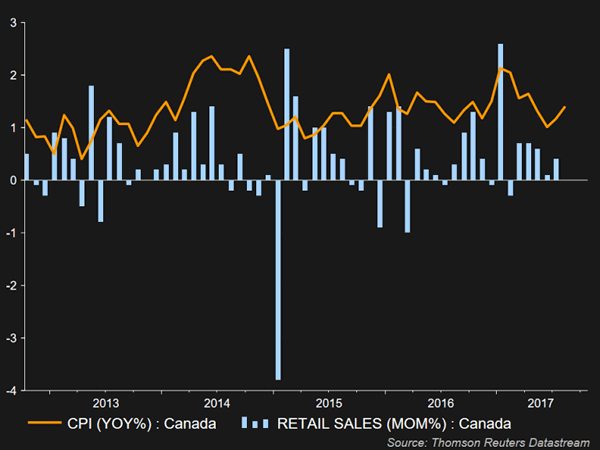
The Canadian dollar has rallied by over 7% against its US counterpart this year as growth in the country has exceeded expectations, prompting the central bank to raise rates by a total of 50 basis points to 1.00%. However, inflation remains subdued despite the strengthening economy. Headline CPI stood at 1.4% year-on-year in August and is expected to rise to 1.6% in September. The Bank of Canada's core measure of inflation is even lower, standing at just 0.9% in August.
Retail sales on the other hand have been buoyant, reaching a 1½-year high of 7.8% y/y in August, helped by a steady decline in the number of people out of work. In July, retail sales grew by a bigger-than-expected 0.4% month-on-month and another solid month is forecast for August. Friday's figures are expected to show August retail sales rising by 0.5% m/m.
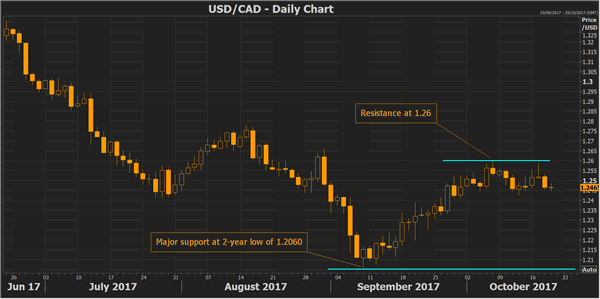
The loonie should gain some support from the CPI and retail sales data, as it would likely reinforce expectations that more rate hikes are on the way. The Canadian currency has come under pressure this week on fears that the United States would pull out of NAFTA after a contentious round of talks for renegotiating the trade agreement. Its losses were halted at the support level of C$1.26 per US dollar.
A stronger-than-forecast set of figures could push the loonie back towards September's two-year high of C$1.2060 per US dollar. A clearer picture on the probability of further rate hikes should emerge from next week's BoC policy meeting on October 25. No change in rates is forecast at the October meeting but the December 6 meeting remains very much in play, with the market implied odds of a rate hike hovering just below 50%.
Trade Idea Wrap-up: USD/CHF – Stand aside
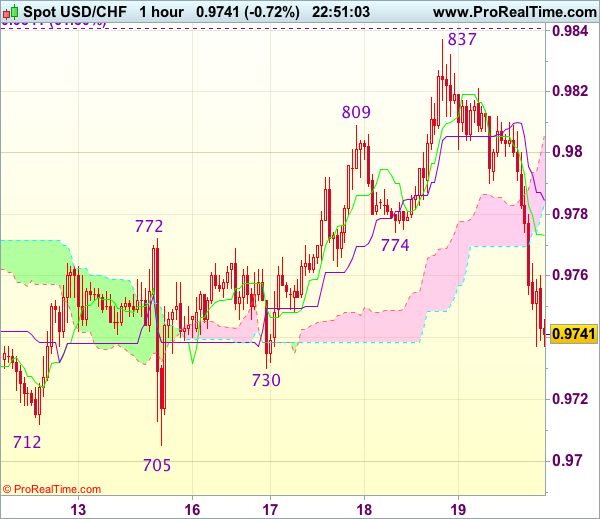
USD/CHF - 0.9750
Most recent candlesticks pattern : N/A
Trend : Up
Tenkan-Sen level : 0.9772
Kijun-Sen level : 0.9785
Ichimoku cloud top : 0.9808
Ichimoku cloud bottom : 0.9764
New strategy :
Stand aside
Position : -
Target : -
Stop : -
Despite rising to 0.9837, the greenback failed to penetrate this resistance and has retreated sharply, dampening our bullishness and signaling recent upmove is not ready to resume yet, hence near term downside risk remains for weakness to 0.9730 support, however, as broad outlook remains consolidative, reckon downside would be limited and support at 0.9705 should hold from here, bring rebound later.
On the upside, expect recovery to be limited to the Kijun-Sen (now at 0.9785) and reckon 0.9810 would hold and bring another decline later. Above 0.9810 would bring a retest of said strong resistance at 0.9837 but break there is needed to confirm recent rise from 0.9421 low has resumed for headway to 0.9870 and possibly towards 0.9900. As near term outlook is mixed, would be prudent to stand aside for now.
Trade Idea Wrap-up: GBP/USD – Sell at 1.3285
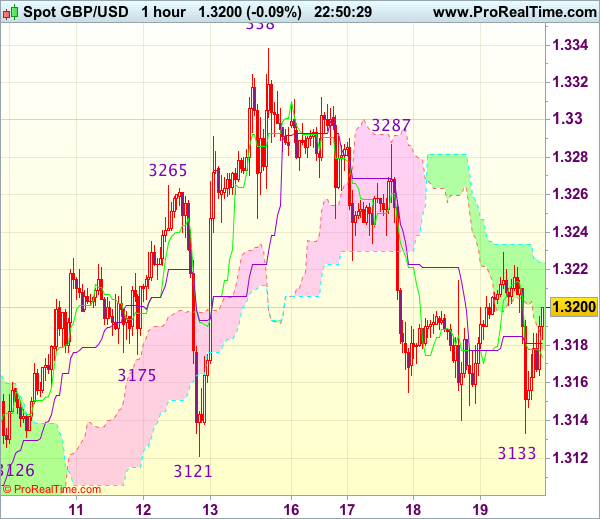
GBP/USD - 1.3205
Most recent candlesticks pattern : N/A
Trend : Near term up
Tenkan-Sen level : 1.3172
Kijun-Sen level : 1.3181
Ichimoku cloud top : 1.3224
Ichimoku cloud bottom : 1.3177
Original strategy :
Sell at 1.3265, Target: 1.3145, Stop: 1.3300
Position : -
Target : -
Stop : -
New strategy :
Sell at 1.3285, Target: 1.3165, Stop: 1.3320
Position : -
Target : -
Stop : -
Although cable fell briefly to 1.3133 in London morning, lack of follow through selling and current rebound suggest consolidation would be seen and recovery to 1.3220-25 cannot be ruled out, however, reckon upside would be limited to 1.3255-65 and resistance at 1.3287 should hold, bring another decline later, below said support at 1.3133 would extend the fall from 1.3338 to support at 1.3121, however, break there is needed to retain bearishness and bring further subsequent decline to 1.3090-00.
In view of this, wee are looking to sell cable on further subsequent recovery as resistance at 1.3287 should cap upside, bring another decline later. Only a firm break above said resistance at 1.3287 would abort and signal low is formed instead, bring rebound to 1.3300 and possibly test of resistance at 1.3312.
Kiwi Bears Take Charge on New Government Announcement; Pound Slips after Retail Sales Slump
The kiwi posted additional long red candles during the European session after the kingmaker New Zealand First party backed the opposition party early today, forming a new coalition government. The pound fully reversed yesterday's gains in the wake of worse-than-expected retail sales.
September's British retail sales tumbled by 0.8% from August, surprising analysts who had projected a smaller contraction of 0.1% as the pound's weakness raised import costs and hence hit consumers' wallets. The previous reading was also revised downwards from 1.0% to 0.9%. On an annual basis, retail sales grew at a slower pace at 1.2%, missing the forecast of a growth of 2.1%. The three-month average growth also narrowed, slowing to 1.5% y/y – a four-year low. Excluding auto sales and fuel, consumers' spending declined by 0.7% m/m, driving the yearly gauge lower to 1.6%.
Meanwhile in Brussels, the UK Prime Minister is preparing to address EU leaders in a bid to unlock Brexit talks and move negotiations to the next stage of UK's future relationship with the block. Yet, rumors are for the negotiations to remain deadlocked until December, with a senior EU diplomat claiming early today that trade talks have a 50-50 chance to start by year-end.
The pound pulled back by 0.15% to $1.3184 as the data pared the odds for further rate hikes in 2018. Still, chances for a rate rise at the BOE's meeting in November stood around 80%.
The Catalan leader, Charles Puigdemont, missed the second deadline today imposed by the Spanish government, refusing to renounce independence and eventually having to face the consequences. Instead, he sent a letter to the Spanish Prime Minister, Mariano Rajoy, early on Thursday, warning a declaration of a unilateral independence if Madrid keeps blocking dialogue. In response, Rajoy said that he would hold a cabinet meeting on Saturday to activate Article 155 which has never invoked before, allowing the Spanish government to impose direct rule over Catalonia.
With markets having already priced in Catalonia's story, with risks remaining if situations escalate, the euro jumped to a one-week high of $1.1849 as Reuters poll of economists showed that the ECB will announce on October 26 its decision to trim monthly asset purchases from 60 billion euros to 40 billion in January.
While US stocks were weakening, upbeat readings on US initial jobless claims and business conditions measured by the Philadelphia Fed survey did little for the dollar. The number of Americans applying for unemployment benefits for the week ending October 14 reached the lowest in more than 44 years at 222,000 – probably affected by the Columbus Day holiday on Monday of that week. Projections were for claims to rise by 244,00 from the downwardly revised 244,000recorded in the week before. The four-week average measure which wipes out weekly volatility dropped by 19,500 to 248,250.
In another report, the Philadelphia Fed Manufacturing index jumped by 4.1 points to a five-month high of +27.9, beating the forecast of +22.0.
Back in Washington, the Senate is expected to vote on the 2018 budget resolution, which if approved would allow the Republicans to pass their proposed tax overhaul through the chamber without support from the Democrats.
The dollar index was down by 0.21% on the day at 93.16. Dollar/yen declined by 0.44% to 112.40 after reaching a two-week high of 113.14 earlier in the day.
The kiwi dipped further into losses, touching a fresh five-month low of $0.7014 and being 1.8% down on the day on the news that the leader of the Labour Party, Jacinda Ardern, would enter into a coalition with the First Partyto govern for the next three years, succeeding Prime Minister Bill English of the National Party. Markets are also nervous on what this would mean for the country's monetary policy.
In energy markets, investors engaged in profit-taking amid tensions in the Middle East, sending oil prices to one-week low levels despite OPEC Secretary General Mohammad Barkido saying on Thursday that oil markets are rebalancing at an "accelerating pace". WTI crude slipped by 1.40% to $51.31 per barrel and Brent fell by 1.40% to $57.33.
Gold surged by 0.55% to an intra-day high of $1,289.56 per ounce before it slipped back to $1,287.45.
Trade Idea Wrap-up: EUR/USD – Exit short entered at 1.1850
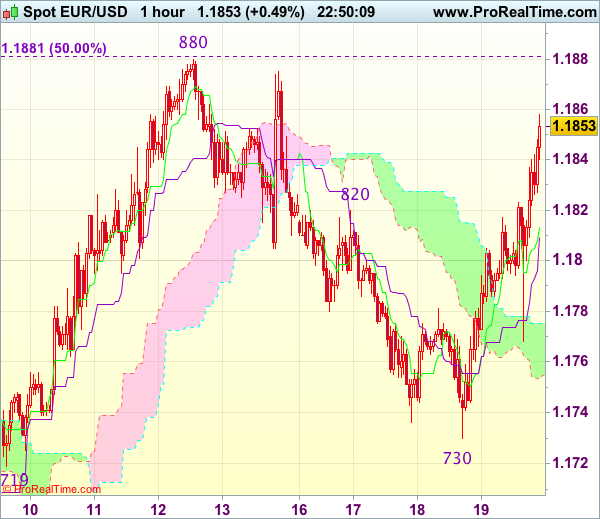
EUR/USD - 1.1848
Most recent candlesticks pattern : N/A
Trend : Near term up
Tenkan-Sen level : 1.1813
Kijun-Sen level : 1.1809
Ichimoku cloud top : 1.1775
Ichimoku cloud bottom : 1.1755
Original strategy :
Sold at 1.1850, Target: 1.1750, Stop: 1.1885
Position : - Short at 1.1850,
Target : - 1.1750
Stop : - 1.1885
New strategy :
Exit short entered at 1.1850,
Position : - Short at 1.1850
Target : -
Stop : -
As the single currency found renewed buying interest at 1.1768 earlier today in European session and has rallied, dampening our bearishness and near term upside risk remains for the rebound from 1.1730 to extend gain to resistance at 1.1880 but break there is needed to retain bullishness and signal another leg of erratic upmove from 1.1669 low is underway for gain to 1.1900-10 first.
In view of this, would be prudent to exit short entered at 1.1850 and stand aside for now. Below 1.1820 would bring weakness to 1.1800 but said support at 1.1768 should remain intact, bring another rise later. Only a drop below this support would revive bearishness for weakness to 1.1730-40, break there would extend fall to 1.1700 but said recent low at 1.1669 should remain intact.
Yen Improves Despite Strong US Data
The Japanese yen has gained ground on Thursday, erasing most of the losses which marked the Wednesday session. In the North American session, USD/JPY is trading at 112.41, down 0.45% on the day. In economic news, unemployment claims plunged to 222 thousand, well below the estimate of 240 thousand. There was more good news, as the Philly Fed Manufacturing Index jumped to 27.9, crushing the estimate of 21.9 points. On Friday, the US will release Existing Home Sales and Fed Chair Janet Yellen speaks at an event in Washington.
Who will replace Janet? The markets are keeping a close eye on who will replace Janet Yellen as head of the powerful Federal Reserve. Yellen is due to finish her 3-year term in February 2018. Yellen is apparently interested in serving a second term, but President Trump likely has other ideas. Trump has not been complimentary towards Yellen, although it's hard to argue that Yellen has done an admirable job. Yellen has ended quantitative easing, raised interest rates and started to unwind the Fed's balance sheet. Trump's shortlist includes Jerome Powell, Kevin Warsh and John Taylor. Trump may lean towards Taylor, an economist who is considered more hawkish on policy than Yellen. Under Taylor, interest rates would likely move substantially higher than the current 1.25%, and a rate hike early in 2018 could strengthen the US dollar.
Japan's economy has impressed in 2017, and an important reason for the rebound has been the manufacturing sector. Manufacturing indicators are pointing upwards and recent polls are pointing to strong optimism among manufacturers. A Reuters poll released on Tuesday showed that manufacturer confidence in October was at its highest level since 2007, echoing a Bank of Japan survey taken earlier in October. Automobile and electric machinery exports remain strong and have helped boost the manufacturing sector. The BOJ holds a policy meeting on October 30-31, at which time it will set interest rates and will also publish its long-term economic and price forecasts. We can expect the economic forecasts to be more positive than the inflation projection. With the BoJ forecasting that inflation will not reach 2 percent until fiscal year 2020, it's a safe bet that the bank's accommodative policy will not be tightened any time soon.
Economic Growth in China Remains Largely Unchanged in Q3
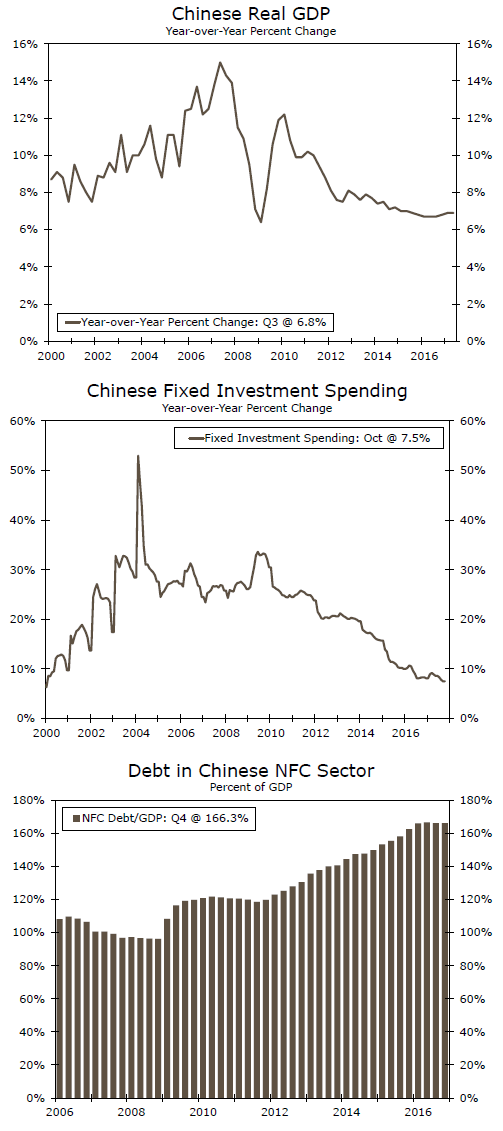
Chinese real GDP growth met expectations in Q3, rising 6.8 percent year-over-year. The deceleration in fixed investment spending in China continued, however, as a result of both secular and cyclical trends.
Chinese GDP Growth Slows Slightly in Q3
Data released today showed the Chinese economy growing 6.8 percent on a year-ago basis in Q3, matching the Bloomberg consensus forecast (top chart). The print marks a 0.1 percentage point slowdown from the 6.9 percent pace registered through the first two quarters of the year.
Although a breakdown of GDP into its demand components is not yet available, sector level data indicate that growth was largely steady in the key sectors of the Chinese economy. Growth in the secondary industry, which includes mining/quarrying, manufacturing, construction and utilities production, ticked lower by 0.1 percentage point to 6.3 percent on a year-over-year, year-to-date basis. The momentum may have reversed course late in the quarter, however, as Chinese industrial production data released in a separate report today showed output climbing 6.6 percent year-over-year in September, a marked improvement from the 2017 low of 6.0 percent growth in August. Growth in the tertiary industry, or the service sector, was modestly stronger, as was output in the primary sector, which includes agriculture, forestry and fishing.
Economic growth in China has firmed in 2017 relative to last year's pace amid the stronger global growth environment. At present, we expect real global GDP to accelerate about half a percentage point in 2017 from the growth rate registered in 2016. Even with the faster growth at home and abroad, fixed investment spending in China has continued to decelerate (middle chart). Some of the slowdown has been the continuation of a secular trend; investment spending has decelerated for most of this cycle as the Chinese economy continues the steady transition towards a more consumption-oriented growth model. To that point, retail sales data released today showed continued double-digit year-to-date growth through the month of September. More recently, investment spending growth has continued to slow as Chinese policymakers have moved to tighten policy amid concerns that the credit expansion, that occurred when the economy was slowing, might lead to debt imbalances.
Outlook Is for Modestly Slower Growth in China in 2018
As we have highlighted in previous reports, the leverage in the nonfinancial corporate sector in China, particularly for state-owned enterprises (SOEs) is an area we have identified as a potential risk to the outlook (bottom chart).* At the ongoing 19th Party Congress, the signals from leaders have suggested that policymakers will not move anytime soon to scale back the SOEs. We do not believe the corporate leverage/SOE challenges are likely to cause an implosion in the Chinese economy anytime soon, but they do represent both a downside risk to the outlook and a secular drag on the economy's potential growth rate. We continue to expect real GDP in China to decelerate modestly in 2018 to a 6.3 percent pace.