Sample Category Title
Dollar Could Get a Boost from Friday’s US Jobs Data
- Markets are preparing for next week’s US election
- Key US data on Friday, a week before the Fed meeting
- Another strong set of data could endanger the Fed rate cut
- The dollar could get a meaningful boost against the yen
US election in the spotlight
The US presidential election continues to monopolize the market’s interest. While the outcome is uncertain, most investors have a pretty good idea of the economic agendas of both candidates. Former president Trump is probably gearing up for a repeat of his first term of protectionism and trade wars, while Vice President Harris is expected to continue in President Biden’s footsteps.
Amidst these developments, the Fed is meeting next week. While its easing path might potentially be affected by the US election result, next week’s decision will most likely depend on the economic progress made since mid-September.
Will the US data continue to surprise?
Since the September 18 Fed gathering, US data has been decent with inflation, retail sales and durable goods orders surprising on the upside. However, the labour market remains the critical factor in the Fed's decision-making process. In this context, on Friday, the October jobs report will be published.
Economists forecast an 115k rise in non-farm payrolls, following a sizeable 254k increase in September, with both the unemployment rate and average earnings growth expected to remain stable at 4.1% and 4% respectively. It is worth nothing that there is a small possibility of this data being affected by the recent Hurricane Helene.
Wednesday’s ADP print and Thursday’s weekly jobless claims figures have potentially opened the door to an upside surprise on Friday, despite the fact that market participants are fully aware of the very weak correlation between the ADP report and the non-farm payroll data.
Could next week’s Fed rate cut be under threat?
The market is very confident that, regardless of Friday’s data, a rate cut will be announced next week, currently assigning a 95% probability for this move. However, following the stronger US data in mid-October, certain Fed hawks openly talked about a pause in November.
A strong set of figures, especially a non-farm payrolls print above 250k, could really add weight to their arguments. While the Fed rate cut seems to be safe at this stage, a decision taken with a slight majority could mean that the Fed’s rates outlook is more uncertain than currently foreseen.
On the flip side, a downside surprise in Friday’s data releases would confirm the universally expected outcome of the November 7 Fed meeting, potentially forcing the hawks to take a back seat and just follow Chairman Powell’s lead.
Dollar/yen rally pauses temporarily
The constant stream of strong US data, the imminent US election and the inconclusive outcome of the recent Japanese general election have pushed dollar/yen higher. Another positive set of US data releases on Friday could add to the recent bullish move with dollar bulls trying to push dollar/yen comfortably above the 154.52 level. On the other hand, weaker data prints could open the door to a selloff, which could become more protracted if the bears manage to break below the 151.54-151.94 area.
US Stocks Feel Selling Pressure
Indices
The major US indices began the week with an attempt to return to growth but were choked by selling. Once again, the laggard was the Dow Jones, which slipped below last week’s lows, losing 3% from its previous high on 21 October to levels near 42000. The Nasdaq100 briefly approached 20700, almost repeating its mid-July high, but the cold reception to reports from heavyweights Microsoft, Meta, and others triggered a fresh wave of selling.
Back then, the Nasdaq100 went down 18% from its July highs, close to bear market territory, and tested the strength of its 200-day moving average before turning upwards. Nowadays, the 200-day moving average is at 18900, and the bear market threshold is at 16600.
Historical seasonality is now on the side of the bulls, both in the six-month outlook and for the rest of the year. But many remember well that the 2022 bear market began in November 2021 with a peak in the Nasdaq.
Stocks
The outgoing week had the most weighted companies reporting. Their combined capitalisation exceeded 50% of the weight of all S&P 500 constituents. The market’s reaction to the performance of the heavyweights was mixed.
Alphabet has been working on the efficiency of its A.I. solutions, with a focus on lowering the asking price and creating value for advertisers. It seems this shift in focus to practical implementation was needed by investors, who rewarded the company with a 6% rise in its share price after the report, with a slight pullback the next day.
It’s a different story for Microsoft, which lost up to 5% in after-hours trading on unimpressive results from its Azure cloud business. We also see a 5% drop in net margin to 34 billion for the quarter, compared to Alphabet’s 13% rise to 28 billion.
Meta impressively beat forecasts but is losing ground after the report. We attribute this to the outperformance of the share price, which was most pronounced in the second half of the year. Since the beginning of the year, Meta shares have gained more than 70%, while Alphabet has gained 26%, and Microsoft has gained just 16%. By comparison, the benchmark S&P500 is up 23% over the same period.
Nasdaq-100 Wave Analysis
- Nasdaq-100 reversed from resistance level 20600.00
- Likely to fall to support level 20000.00
Nasdaq-100 index recently reversed down from the major resistance level 20600.00 (which stopped the previous sharp upward impulse wave (A) at the start of July), strengthened by the upper daily Bollinger Band.
The downward reversal from the resistance level 20600.00 created the daily Japanese candlesticks reversal pattern Bearish Engulfing.
Given the strength of the resistance level 20600.00 and the triple bearish divergence on the daily Stochastic indicator, the Nasdaq-100 index can be expected to fall further to the next round support level 20000.00 (which stopped the earlier wave ii).
EURCAD Wave Analysis
- EURCAD broke resistance level 1.5085
- Likely to rise to resistance level 1.5175
EURCAD currency pair recently broke the resistance level 1.5085 (which reversed the price in the middle of October).
The breakout of the resistance level 1.5085 was preceded by the breakout of the daily Triangle from September – which accelerated the active wave ii.
Given the continuation of the bearish Canadian dollar sentiment, EURCAD currency pair can be expected to rise to the next resistance level 1.5175 (the former monthly high from September and the target for the completion of the active wave ii).
Oil: Bullish Impulse Expected
Yesterday, West Texas Intermediate (WTI) crude oil was trading at $68.17 per barrel, up by 0.37% over the last 24 hours. So far this year, WTI prices have fallen by 7.18%. Similarly, Brent crude oil was priced at $71.87 per barrel, marking a 0.35% increase in the past day, but it's still down 9.09% year-to-date.
WTI oil hit a 52-week low of $64.78 on September 10, 2024, while Brent reached its low of $68.33 on September 11, 2024. This year's highest prices for WTI and Brent were $87.85 and $92.58, respectively, back in April, which is about 22% higher than where prices currently stand. Historically, Brent crude reached an all-time high of $147.50 per barrel in 2008, whereas WTI prices once dropped as low as negative $40 during the COVID-19 pandemic due to storage issues in the U.S.
XBRUSD – H4 Timeframe
The 4-hour timeframe chart of XBRUSD shows prices reacting to the demand zone at the base of the previous low. After the price broke above the previous high at the highlighted arrowed lines, it slipped back down to retest the demand zone in preparation for a bullish impulse. It is expected that the price will reach the previous high as its initial target.
Analyst's Expectations:
- Direction: Bullish
- Target:77.34
- Invalidation:69.53
XTIUSD – H4 Timeframe
The price action on West Texas Oil's (WTI) 4-hour timeframe perfectly mirrors all the details from our analysis of Brent. As the price reacted initially from the demand zone, the price is expected to continue on its bullish trajectory until it reaches the previous high.
Analyst's Expectations:
- Direction: Bullish
- Target:73.49
- Invalidation:65.05
Gold & Dollar: Safe-Haven Retreats
Dollar
The dollar index corrected after four consecutive weeks of gains. This is typical when national currencies and bond markets come under pressure ahead of important elections. The U.S. is facing this right now, although the dollar is often seen as a safe haven in times of market turmoil. In this case, gold and cryptocurrencies are temporarily trying out that role. However, we would advise against getting carried away with the idea of a dollar crash or a catastrophic U.S. debt default. This idea seems to have damaged most of today’s investors.
It is more reasonable to see the DXY decline as a pullback after a month of growth. The tactical targets for this correction are 103.8 and 102.8. The former is 76.4% of the initial advance and the 50-week moving average. The latter represents a pullback to 61.8% of the advance, which could fully recharge buyers.
Gold
Gold is in its fourth consecutive week of gains, the last three of which have been in the mode of regularly updating all-time highs. In futures, the price rose above $2800 per troy ounce, while the spot price stalled slightly as it approached this level. The current rally began in October last year with the first signs of a monetary policy shift. In less than thirteen months, the price has risen by 50%.
On a weekly basis, the RSI index has breached the 80 mark. This is only the sixth time in the last fifteen years. Corrections have always followed, with the lowest being a 5% correction in April this year. On other occasions, pullbacks have been between 8% and 20%. But there is an important caveat to this tactic. A signal for a correction begins when the asset returns from overbought territory; before this point, going against the trend is challenging, as price changes can be highly volatile due to waves of short-position margin calls.
Sunset Market Commentary
Markets
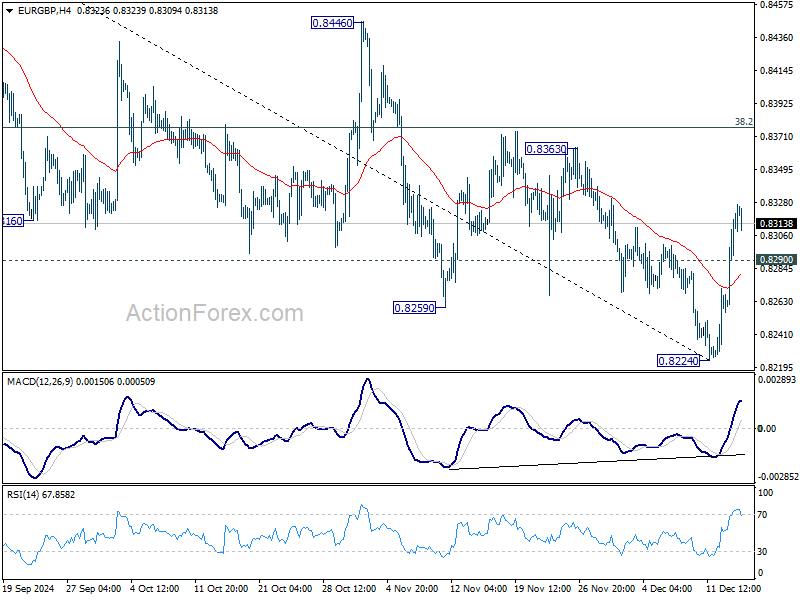
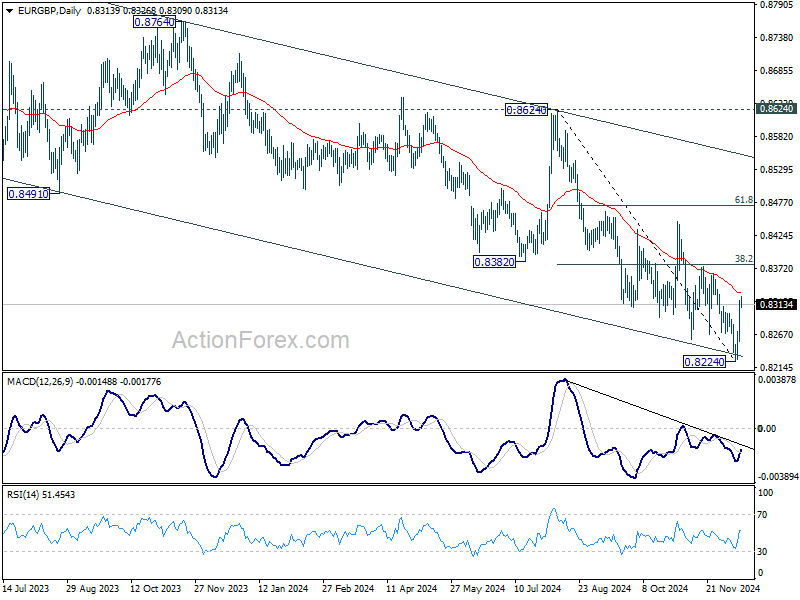
The fall-out of Reeves’ “one of the largest fiscal loosenings of any fiscal event in recent decades” on UK bond markets went into a second day. Gilt yields sprint another 10.1 (30-yr) to 19 (2-yr) bps higher with new YtD highs for all maturities >5 years. The front-end is heavily influenced by central bank expectations. Markets trim their Bank of England easing bets at a lightning pace, with currently only expecting an amount of 83 bps over the next 12 months. This compared to (an already meagre) 100 bps yesterday and 114 bps the day before. Just month ago, the counter stood at +/- 150 bps. Despite this lofty front-end support, sterling loses out both against the dollar and the euro. That suggests a lot of risk premia is behind the rise at the long end, which isn’t per se a good thing for GBP(or any other currency). EUR/GBP is advancing towards the 0.84 big figure. Breaking higher ahead of the weekend would turn the technical picture more neutral for the pair. In other core markets, Bunds heavily underperform US Treasuries. Yesterday’s stronger-than-expected Q3 GDP numbers and reaccelerating inflation (headline back at 2%, core stable at 2.7%, services at 3.9%) challenges markets (perhaps too) pessimistic view on the euro area economy. German yields add another 1.2 (30-yr) to 8.9 bps (2-yr). Germany’s 10-yr (+3.5 bps) spread vs swap (+0.1 bps) is <2 bps away from turning positive again for the first time in the history of the euro. With Germany’s 10-yr used as the key benchmark to measure risk premia against, this is more than symbolically important. Treasury yields add between 0.7 and 3.7 bps across the curve. US eco data included a slightly lower-than-expected Employment Cost Index of 0.8% vs 0.9% consensus for Q3. That was offset by an unexpected drop in jobless claims from 228k to 216k – the lowest since May of this year. PCE deflators for September could be derived from yesterday’s Q3 outcome so they came in broadly in line with expectations. The Japanese yen outperforms global peers in currency markets though moves are contained. USD/JPY eases to 153.04 in the wake of the BoJ’s policy meeting this morning. Governor Ueda confirmed hikes will continue if the inflation outlook materializes. EUR/USD stands pat at 1.085, awaiting its next potential mover: tomorrow’s October payrolls report.
News & Views
Polish inflation accelerated from 0.1% M/M in September to 0.3% in October (vs 0.4% consensus). The annual figure ticked higher, from 4.9% Y/Y to 5% Y/Y in which is the highest since December of last year. The increase was driven by food prices (4.7% Y/Y to 4.9% Y/Y) and energy prices (11.5% Y/Y from 11.4% Y/Y; low base effect in October 2023). Core inflation will only be published mid-November but likely remained stuck above 4% Y/Y. Elevated price pressure is the key reason why the National Bank of Poland didn’t restart its cutting cycle yet, pointing to the March 2025 inflation report as potential kick-off point. Markets recently started erring to the side of a quicker start on the back of some disappointing eco numbers. The Polish zloty remains in the defensive, caught by international moves and changes on NBP thinking, with EUR/PLN (4.35) gradually returning to the YTD highs around 4.40.
The Norges bank announced that it will purchase FX on behalf of the government equivalent to NOK 150mn per day in November. That’s down from 400mn/day in October and the lowest level of FX buying since March 2022. The Norges Bank carries out FX transactions related to petroleum revenue spending over the central government budget and saving in the government pension fund. The lower volume is linked to a revision to this year’s fiscal spending in the latest budget plan. There is some speculation that the Norges Bank could morph into a net seller of FX from next year on linked to a shift in the government’s liquidity management policy. A possible announcement is due in December or January and could help the ailing Norwegian currency which is amongst this year’s weakest performing currencies losing over 6% against the euro. EUR/NOK is closing in on the 2023 & 2024 highs around 12.
Canada’s Economy Flatlined in August, With a Pickup Expected in September
Canadian economic growth stalled in August after modest GDP growth in July. This print landed in line of Statistics Canada's advanced guidance and consensus expectations. Early estimates from Statistics Canada point to decent growth in September (0.3% m/m).
August's reading was broad-based, with output expanding in 12 of 20 industries. A 0.1% m/m gain in the services sector offset the drag in goods-producing industries (-0.4% m/m).
On a weighted basis, the manufacturing sector posed the biggest headwind for August activity, falling 1.2% m/m with most subcomponents also seeing declines. Elsewhere on the goods side, mining/quarrying/oil & gas (+0.6% m/m) and construction activity (0.3% m/m) rebounded from their declines in July.
On the services side, August's rail strike led to a 7.7% m/m drop in rail transportation activity, extending losses from July's wildfire-induced slide in rail activity. The public administration sector was up for a fourth consecutive month (0.5% m/m), while finance and insurance (0.5% m/m) and retail trade (0.6% m/m) also helped push the overall services sector into positive territory.
Behind the advanced reading of a pickup in growth in September is an increase in the finance and insurance sector as well as construction and retail trade. Weaker expected activity in the mining/oil & gas sector offset some of the growth.
Key Implications
Today's GDP data confirm economic momentum is cooling after somewhat decent growth in the second quarter. Even with current guidance pointing to a strong bounce back in September, downward data revisions to prior months has third quarter growth tracking around 1.0% quarter-on-quarter (q/q) annualized. This poses downside risk to the Bank of Canada's recently revised Q3 forecasts of 1.5% (down from a hefty 2.8% previously).
The BoC's next rate decision isn't until mid-December and there is still a lot of data to digest between now and then. We don't think this will ring any alarm bells for the Bank but it puts more emphasis on their fears around a weakening economy. That said, we think the cumulative 125 bps of cuts delivered to date will do it's part in reigniting economic activity into the end of they year. Looking ahead, more cuts are on the way, with the focus now shifting to upcoming labour market and inflation data.
U.S. Personal Income and Spending Growth Picks Up in September
Personal income grew 0.3% month-on-month (m/m) in September, up slightly from July's 0.2% gain and bang on market expectations.
Accounting for inflation and taxes, real personal disposable income grew a modest 0.1% for a fourth consecutive month.
Consumer spending was robust in September. Personal consumption expenditures grew by 0.5% m/m, above the market expectations for 0.4% growth. This was also a marked acceleration relative to the 0.3% pace in August.
Stripping out inflation, spending rose 0.4% m/m in real terms – an improvement relative to the 0.2% gain recorded in August. A gain in spending volumes was supported by much higher outlays on goods, which rose by 0.7% m/m, while services increased by 0.2% m/m.
The Fed's preferred inflation metric, the core PCE price deflator, rose 0.3% m/m – ahead of the market expectations for 0.2% increase. Year-over-year, core PCE inflation came in at 2.7%, unchanged for the third consecutive month.
Consumers set aside less for the rainy day. The personal savings rate declined to 4.6% in September (down from 4.8% in August and 4.9% in July).
Key Implications
Today's monthly income and spending data showed that consumers have ended Q3 on a strong note. Indeed, consumer spending has been remarkably resilient in the last two quarters. As we noted in our recent report, there are several reasons consumers may have more momentum than previously anticipated, such as a notable upgrade to personal income in H1-2024 and a larger cushion of savings.
Looking ahead to the fourth quarter, monthly spending data is expected to be distorted by the impacts of Hurricanes Helene and Milton, with clean-up and rebuilding efforts likely to boost spending in the short term. However, as these effects subside, we expect spending to moderate closer to a 2% pace throughout 2025, as the economy remains on track for a soft landing. With inflationary pressures easing and the labor market gradually softening, we expect the Fed to cut the fed funds rate by 25 basis points next week.