Tue, Apr 07, 2026 04:35 GMT
More

    Sample Category Title

    Foreign Exchange Market Commentary

    EUR/USD

    After spending the day in a tight 40 pips range, the EUR/USD pair soared to a fresh 1-month high above 1.0760, following comments from ECB's Nowotny, governor of the Austrian National Bank and a member of the Governing Council , after he said that rate hikes could be done in a different manner from Fed, and that a "rate increase may be on the way." The greenback remained weak after Wednesday's Fed's decision, whilst the common currency find support in the Dutch election's outcome, as the far-left Party for Freedom came in second with 20 seats, whilst the ruling party won 33 seats, bringing some relief to the EU, diminishing fears that populism is taking over Europe.

    In the data front, EU February final inflation figures matched expectations, with inflation confirmed at 2.0% in the month against 1.8% in January. In the US, and for the week ending March 11, initial jobless claims were of 241,000, down 2,000 from the previous week, although above market's expectations of 240K. Housing starts surged to a fresh 4-month high to a 1.288 million annualized rate, surpassing expectations, although Building permits missed expectations, surging by 1.213 million.

    As for the technical outlook, the EUR/USD pair retains a bullish stance as it held well above 1.0700, now breaking also above the previous weekly high. In the 4 hours chart, the 20 SMA heads north after advancing beyond the 100 and 200 SMAs, whilst technical indicators have resumed their advances near overbought territory, favoring additional gains for the upcoming sessions, towards 1.0820, the 50% retracement of the post-US election decline.

    Support levels: 1.0745 1.0710 1.0660

    Resistance levels: 1.0785 1.0820 1.0860

    USD/JPY

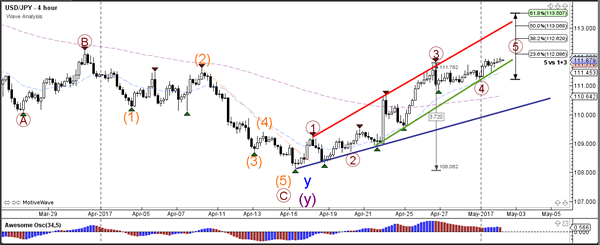
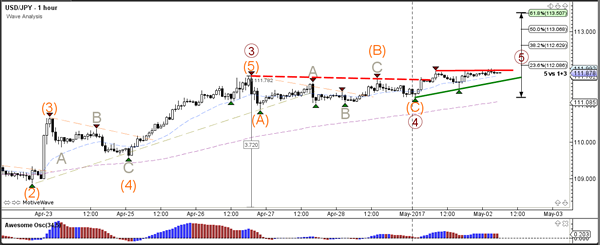
    The USD/JPY pair established around 113.25 ahead of Friday's opening, recovering partially from a fresh 2-week low of 112.90 achieved at the beginning of the day. The Bank of Japan has its monetary policy meeting right after US Federal Reserve one, but decided to make no changes to its ongoing stimulus programs. In fact, Governor Kuroda said that an uptick in inflation towards 1% won't immediately trigger an interest rate hike, indicating that the Central Bank has no plans to modify the monetary status quo, and that the economy still needs massive stimulus to fight deflation. Despite soft, US housing and employment data was enough to prevent the pair from falling further, albeit not enough to revert the negative tone triggered by the Fed. Technically, the 4 hours chart shows that selling interest contained advances around a horizontal 200 SMA, in the 113.50 region, while the 100 SMA stands above it, also lacking directional strength. Indicators in the mentioned chart have bounced modestly from oversold readings, but are far from suggesting a change in the dominant trend. Renewed selling interest below the mentioned daily low should see the pair resuming its decline towards 112.00 a long term Fibonacci support.

    Support levels: 112.90 112.50 112.10

    Resistance levels: 113.50 114.00 114.50

    GBP/USD

    The GBP/USD pair soared to a fresh 2-week high of 1.2376, holding nearby at the end of the day. The rally came after the BOE's monetary policy meeting, as despite the Central Bank left its policy unchanged, there was one dissenter among the MPC member, Christine Forbes. Forbes considered that given that inflation is projected to remain above-target for the next years, while growth is showing signs of slowing, a rake hike was compelling. Additionally, the Minutes of the meeting said that “with inflation rising sharply, and only mixed evidence on slowing activity domestically, some members noted that would take relatively little further upside news on the prospects for activity or inflation for them to consider that a more immediate reduction in policy support might be warranted.” Brexit jitters have been left aside temporarily, although they may return to the market once the Central Banks´ feast euphoria eases. The 4 hours chart shows that the pair has settled above 1.2345, the 50% retracement of the January rally and February's monthly low, while the price has advanced far above a bullish 20 SMA, and also beyond the 200 SMA for the first time this March. Technical indicators in the mentioned time frame have lost upward momentum and turned fat in overbought territory, not enough to confirm a downward move. Additional advances expose the 1.2425 level, the 38.2% retracement of the same rally.

    Support levels: 1.2345 1.2300 1.2260

    Resistance levels: 1.2380 1.2425 1.2470

    GOLD

    Gold prices continued advancing this Thursday, with spot reaching $1,233.62 a troy ounce, to settle at 1,226.60. The sharp advance in the commodity came after the US Federal Reserve indicated that they won't accelerate the pace of tightening. Gains were contained by increasing optimism after Dutch elections that fueled demand for higher yielding assets. The daily chart for the commodity shows that the price settled below its 20 DMA and a Fibonacci resistance, the 23.6% retracement of the latest daily bullish run at 1,230.10, holding also far below a bearish 200 DMA, currently at 1,250.65. This last, capped February's rally. In the same chart, technical indicators have extended their recoveries, with the Momentum still below the 100 level and the RSI at 53. In the 4 hours chart, the price is struggling around the 100 and 200 SMAs, both converging around 1,227.00, while technical indicators have turned modestly lower, still holding within overbought territory. Should the price extend beyond the mentioned 1,230.10, the risk turns towards the upside for this Friday.

    Support levels: 1,223.15 1,212,90 1,203.30

    Resistance levels: 1,230.10 1,242.50 1,250.65

    WTI CRUDE

    Crude oil prices managed to extend their advances at the beginning of the day, but later retreated, with West Texas Intermediate crude futures settling at $48.70 a barrel after peaking at 49.60 at the beginning of the day. Concerns about rising output in the US weighed on the commodity, despite the latest EIA report showing that stockpiles decreased for the first in the past ten weeks. The daily chart shows that the commodity advanced briefly, but settled below the 200 DMA, currently at 49.10, while technical indicators have turned flat in oversold territory after a modest upward correction, indicating that buying interest remains limited. In the 4 hours chart, the price is standing a few cents above a flat 20 SMA, while technical indicators have pulled back towards their mid-lines, now attempting to bounce, but still within neutral territory.

    Support levels: 48.00 47.30 46.65

    Resistance levels: 49.10 49.75 50.50

    DJIA

    US indexes closed mixed, but not far from their daily openings. The Nasdaq Composite advanced less than 1 point, and closed at 5,900.76, while the S&P and the Dow closed in the red, with the first down 3 points to 2,381.38 and the DJIA shedding 15 points or 0.07%, to 20,934.55, as investors continued to digest the latest Fed's announcement. Within the Dow, most members closed lower, with oil-related equities leading the decline as the commodity failed to extend its latest recovery. El du Pont was the worst performer, closing 1.08% lower, followed by Chevron that shed 0.94%. Financials were among the best performers, with American Express up 0.68% and Goldman Sachs adding 0.58%. The index's daily chart shows that it held again above its 20 DMA that anyway has partially lost its upward strength, whilst technical indicators erased the positive momentum gained on Wednesday, although hold within positive territory. In the 4 hours chart technical indicators have also lost their bullish strength, now flat above their mid-lines, whilst the 20 and 100 SMAs converge at 20,900, providing an immediate support that if broken, could lead to a deeper correction.

    Support levels: 20,900 20,852 20,817

    Resistance levels: 20,978 21,015 21,064

    FTSE 100

    The FTSE 100 closed at a record high of 7,415.95, up by 47 points or 0.64%. The index got a boost from mining-related equities, as a weaker dollar fueled the recovery of base metals. The Footsie reached an all-time high of 7,445, although a strong advance in the Pound weighed on equities mid London session. The top performers were Anglo American closing the day 8.62% higher, Glencore adding 5.01% and Antofagasta surging by 4.65%. Hikma Pharmaceuticals was the worst performer, down by 4.66%. The daily chart shows an increasing upward potential, as the Momentum indicator finally advanced from neutral territory, heading now north at fresh 2-month highs, whilst the RSI indicator also heads sharply higher around 68, and the index holds above all of its moving averages. In the 4 hours chart, technical indicators resumed their advances within positive territory after correcting overbought conditions, whilst the 20 SMA has accelerated its advance below the current level, supporting additional advances as long as Pound's rally remains contained.

    Support levels: 7,399 7,363 7,338

    Resistance levels: 7,445 7,480 7,510

    DAX

    The German DAX added 73 points to settle at 12,083.18, with all of the broad-based European indexes closing with gains this Thursday, fueled by previous Wall Street's gains, and with optimism surging in the region after the ruling party defeated its populist competitor in the Dutch elections. Within the DAX, Deutsche Lufthansa was the best performer, adding 4.18%, followed by Deutsche Post that gained 1.87%. Heidelberg Cement led decliners, down 1.83%. The DAX closed off an multi-month high of 12,177, level last seen in March 2015. Holding near the mentioned close, the daily chart shows that the benchmark posted a higher high and a higher low daily basis, holding above bullish moving averages, whilst technical indicators head north within positive territory, favoring additional advances ahead. In the 4 hours chart, the index also stands above bullish moving averages, with the 20 SMA now at 12,018, whilst technical indicators have turned flat within positive territory after correcting overbought conditions.

    Support levels: 12,059 12,018 11,977

    Resistance levels: 12,099 12,140 12,178

    The Big Turn

    Reversing a trade like EUR/USD is like turning an ocean liner - it's a slow process. Positive signals continue to trickle in as the euro was one of the top performer along with GBP and EUR on Thursday while the kiwi lagged. The Asia-Pacific calendar is light but expect many comments from finance ministers in the day ahead with the G20 meetings ramping up. A new Premium trade has been added, backed by 3 charts and 6 factors and is considered a partial hedge to yesterday's trade.

    The second day of March madness in financial markets was all about the Bank of England. Forbes delivered a surprise by voting for a rate hike and that gave the pound a lift. In an op-ed, she said Brexit uncertainty has held down wages and that inflation is coming.

    But the ECB's Nowotny and Praet that have our attention. Praet said the outlook is now better than it has been in many years and Nowotny said a rate increase may be on the way. He also said the deposit rate/refi rate corridor could narrow.

    In addition, the Dutch election results argue that populism is on the wane and French polls have been steady. Perhaps what's been most impressive was the euro's resilience in early March. EUR/USD gained despite hawkish Fed talk and great US data.

    We will be watching the economic data closely in the weeks ahead but we don't see the comments from Nowotny and Praet as a coincidence. They are two of the most-experienced core members of the ECB and they aren't prone to comments that stray from Draghi's thinking.

    An extended policy of easing has submarined the euro from 1.60 to 1.06 and even if there is no scope for a full retracement, some stability or a hawkish turn from the ECB could easily mean 1.15 or 1.20.

    Another central bank that is overdue for a hawkish comment, or at least a less-dovish one, is the Bank of Japan. That didn't happen Thursday and Kuroda was defiant but the shift in global central banking tone is beginning to look like dominos falling and when the BOJ changes, yen crosses will have a long way to fall.

    Market Morning Briefing

    STOCKS

    Equity indices are almost mixed. Dax could face some rejection near current levels while Dow and Nikkei could remain stable. Shanghai and Nifty are trading strong and looks bullish amongst others.

    Dow (20934.55, -0.07%) is stuck within important resistance and support levels of 21200 and 20800 respectively and needs a clear break on either side just now to decide on further direction. However, we prefer a break on the upside in the early next week.

    Dax (12083.18, +0.61%) has come up to test resistance near 12200 and while that holds, a small dip is possible. A break above 12200 could be bullish towards 12400.

    Nikkei (19523.17, -0.34%) is stuck within the narrow 19600-19400 region and could spend a couple of sessions in this range. Medium term looks bullish towards 19900-20000 levels on a break above 19600.

    Shanghai (3270.35, +0.05%) could be headed higher while above 3250. Looking at the weekly line chart, the index looks bullish for the medium term. We could expect a rise towards 3300 just now with a higher target of testing 3400 in the medium term.

    Nifty (9153.70, +0.76%) has risen sharply this week maintaining above the 8930 support level on the Weekly candles. Our initial target of 9130 has been broken yesterday and we now look towards 9280 in the coming sessions.

    COMMODITIES

    Gold (1227) is trading below 1240, which is the pivot of its recent trading range of 1213-1266.This could open up lower supports at 1213 and 1200 respectively. While 1200 may hold for a few sessions, considering the short term oversold state, but the chances of seeing 1180 and lower levels are much greater now.

    Silver (17.31) is also trading within the range of 16.81-17.45.In case of any short covering, the upside in the near term may be limited for bullion. The trend is bearish in the near to medium term time frame and any corrective bounce may face selling pressure at the higher levels.

    Copper (2.67) was unable to close above its pivot at 2.72 of its recent trading range of 2.55-83. We will remain bearish while it is trading below 2.70-72.Only a close above 2.72 could negate our short term bearish view.

    Brent (51.77) and WTI (48.83) both are still within their narrow trading channel of 50-52.50 and 47.5-50. It may consolidate within these levels for few more sessions though the possibility of a decline towards channel supports can’t be ruled out. We will remain bearish while Brent and WTI are trading below 53 and 50 levels respectively.

    FOREX

    Further weakness overnight for the Dollar against the Euro (1.0775), but some recovery against the Yen (113.45). The Dollar Index (100.26) trades lower while the Euro-Yen (122.23) trades higher. As mentioned yesterday, break below 100.40 on Dollar Index sets up a near term target of 99.00. Further weakness below 99, although possible, may take time to materialise.

    The Euro-Yen looks like it wants to test 123, a move that may be driven more by Dollar-Yen (113.45) if it manages to remain above 21-week Moving Average Support near 113.00

    Near term Resistance is coming up near 1.08 on the Euro, so be careful about chasing the market and buying late. While below 1.08, we could see a corrective dip towards 1.07-1.06 again. That said, in case there is a strong break above 1.08, the focus will shift upwards to 1.10. For that to happen, the Dollar Index may need to break below 99, which may take time.

    The Pound (1.2350) has broken above the resistance at 1.23 mentioned yesterday and is close to testing near term Resistance at 1.2410-20, which might hold on first testing. An eventual break, if seen, will pull the Pound up towards 1.26. The Euro-Pound (0.8721) is relatively bullish while the Pound-Yen (140.15) is trading sideways.

    Important Resistance is seen near 0.7725 on the Aussie (0.7685) which is holding for now. In case it is broken some more upside towards 0.7810-20 may be possible, but that too may hold.

    In sum, although the current Dollar weakness can persist for a day or two, be aware of Support at 99 on the Dollar Index and Resistances at 1.08 on the Euro, at 1.24 on the Pound and 0.7725 on the Aussie.

    Dollar-Rupee trades near 65.35 on the NDF. Possibly the RBI will try to limit its downside for the while.

    INTEREST RATES

    The US yields recovered a bit yesterday but continues to trade below the immediate resistance levels. The yields could come off a little more in the near term before again heading towards respective resistance levels.

    The Japanese yields have paused after the recent fall in the last few sessions and could possibly move up a little in the near term. The 5Yr (-0.13%), 10Yr (0.08%) and the 30Yr (0.84%) are almost stable compared to yesterday’s levels.

    The UK 10-5Yr (0.65%) has recovered as expected and could move up towards 0.70-0.75% in the coming sessions. That could possibly help the yields also to recover a bit on the higher side.

    Fed Pullback Brings USD/JPY Longs into Play

    We've been following the current USD/JPY narrative on the blog for a while now, with price above a higher time frame support level, but now capped inside a range as it tries to work its way higher.

    Obviously yesterday's USD negative Fed rate hike kept price within this range and brought price back down again.

    But to me, so long as we're above this following daily level…

    USD/JPY Daily:

    …then long are in play, and any short term pullback such as this is there to be bought.

    Short term pullbacks to levels such as this…

    USD/JPY 4 Hourly:

    …where price is obviously at least starting to react.

    Just keep in mind that earlier in the week I've been talking about shorting EUR/JPY.

    West Texas Crude Edges Lower on Mixed US Data

    West Texas crude has edged lower in the Thursday session, as WTI/USD stays close to the $49 level. In North American trade, WTI crude futures are trading at $48.69. Brent Crude is trading at $51.81, as the Brent premium stands at $3.11. On the release front, Building Permits fell to 1.21 million, missing the estimate of 1.26 million. The Philly Fed Manufacturing Index dropped sharply to 32.8, above the forecast of 30.2 points. On the labor front, unemployment claims ticked down to 241 thousand, beating the forecast of 245 thousand. On Friday, the US will publish the UoM Consumer Sentiment report.

    WTI crude remains under pressure and continues to trade below the $50 level. WTI plunged 8.7 percent last week and dipped below the $47 level on Tuesday. This was in response to reports that Saudi Arabia has increased oil production above 10 million barrels a day, raising concerns about a global oil glut. Meanwhile, US Crude Oil Inventories finally reversed directions, posting a drawdown of 0.2 million barrels, compared to an estimate of 3.3 million. This decline comes after the indicator posted 11 surpluses in the past 12 weeks, reflective of increasing US shale production. The string of surpluses has dampened OPEC's hopes of raising prices, as the cartel cut production levels at the beginning of January. OPEC's cuts had raised expectations that crude would rise above $60 a barrel, but oil prices continue to lose ground in 2017.

    There were no raised eyebrows when the Federal Reserve raised rates by a quarter-point on Wednesday, as the markets had priced a rate hike at over 90%. The rate hike, the second in just three months, raised the raised the benchmark lending rate to a 0.75%-1% range. What was not expected, however, was the sharp drop of the dollar against its major rivals. The markets were hoping that a red-hot US economy would propel the Fed to accelerate its pace of monetary tightening. There was disappointment as Fed Chair Janet Yellen reiterated that further rate hikes would be done gradually, pushing the dollar on Wednesday. As well, the US dollar may have lost ground due to traders and investors acting on "buy on rumor, sell on fact". This larges-scale selling of US dollars after the Fed hike has sent the US dollar broadly lower, with the pound gaining 1.7 percent since the Fed announcement.

    Sterling Supported by Somewhat Hawkish BoE Minutes


    Headlines

    European equity markets gain moderate ground today, but are off intra-day highs in the wake of yesterday's WS gains. US equities open slightly higher.

    The BoE held its benchmark rate steady, with one dissenter in favour of higher rates, but signalled that an increase may not be far off: "Some members noted that it would take relatively little further upside news on the prospects for activity or inflation for them to consider that a more immediate reduction in policy support might be warranted".

    US eco data printed close to consensus. The Philly Fed Business Outlook declined less than expected from a historically high 43.3 in February to 32.8 in March. Weekly jobless claims stabilised at 241k. Housing data were mixed with higher housing starts than forecast, but weaker building permits, a reversal from last month.

    Norway's central bank kept its key interest rate on hold as expected, and said it expects to keep the deposit rate at 0.5% for longer than previously forecast, even while recognising that "persistently low interest rates may lead to financial system vulnerabilities". EUR/NOK rose from 9.10 to 9.15.

    The Swiss National Bank highlighted continued global political uncertainty as it stuck to its ultra-loose monetary policy designed to stem demand for the safe-haven Swiss franc. The central bank is braced for the outcome of European elections this year which could trigger an upsurge in demand for the franc should nationalists perform well.

    The Trump administration unveiled a "hard-power budget" plan that slashes spending at the Environmental Protection Agency by 30% and at the state department by 29%. Those cuts would help fund a huge increase for the Pentagon and the department of homeland security, which would see their budgets rise by 9% and 7% respectively.

    The protectionist stance of the new US administration could complicate G20 talks this week and force policymakers to leave out the disputed trade issue, German FM Schaeuble told Reuters in an interview.

    British PM May told the Scottish government "now is not the time" for a second independence referendum, saying it would be unfair for people to vote without knowing the conclusion of Brexit talks. Scottish First Minister Sturgeon has called for a referendum before the end of the two years of talks set out under Article 50.

    Rates

    FOMC gains partly erased; Dutch election relief

    Global core bonds lost ground today with Bunds underperforming US Treasuries. Markets were relieved that Dutch candidate Wilders failed to win the Dutch elections, while they also lost some of yesterday exaggerated (?) post-FOMC gains. At the time of writing, the German yield curve trades 3.5 bps (2-yr) to 5 bps (30-yr) higher. The US yield curve bear steepens with yields 2.7 bps (2-yr) to 4 bps (30-yr) higher. On intra-EMU bond markets, 10-yr yield spread changes versus Germany are nearly unchanged with Portugal underperforming (+25 bps), perhaps in the run-up to tomorrow's rating decision by S&P (BB+, stable outlook).

    Intraday, European equity markets started on a bright note. The relief rally after Rutte's Dutch election victory weighted on the Bund. US Treasuries partly returned some of the post-FOMC gains. After all, the FOMC still intends to accelerate its tightening cycle. Short term, key US yield resistance levels just proved to be a bridge too far. The acceleration of EMU inflation to the ECB's 2% inflation target in February was confirmed. US eco data printed near consensus (see headlines) and also failed to inspire trading. After opening losses, US Treasuries stabilized before Bunds. Deteriorating risk sentiment and declining oil prices eventually also put a floor for the Bund though.

    The French treasury taps the on the run 3-yr OAT (€3.98B 0% Feb2020), on the run 5-yr OAT (€2.1B 0% May2022) and off the run OAT (€0.92B2.25% Oct2022). The combined amount sold was the maximum of the targeted €6-7B. The auction bid cover was 1.87, slightly below the average at French auctions. Additionally, the French treasury raised €1.82B via inflation-linked bonds. The Spanish debt agency sold the on the run 5-yr Bono (€1.67B 0.4% Apr2022), on the run 30-yr Obligacion (€0.67B 2.9% Oct2046) and two off the run Obligacions (€1.39B 1.3% Oct2026 & €1.08B 5.15% Oct2028). The total amount raised was near the upper bound of the €4-5B target range with a plain vanilla auction bid cover of 1.47.

    Currencies

    USD stabilizes after post-FOMC losses

    Today, the dollar managed to stabilize versus euro and yen, following substantial losses in the aftermath of the FOMC decision yesterday eve. The USGerman yield differential was little changed today after narrowing yesterday. US eco data were close to expectations and thus largely ignored. European equities started strongly in the wake of WS gains, but eased, giving back half of the initial gains. Similarly, peripheral spread narrowing was soon erased. So, no full-blown risk-on session. EUR/USD moved in a 1.0710 to 1.0740 range and trades currently at 1.0730, 5 pips below opening levels. Aside of a brief dip lower at the European open, USD/JPY traded in the 113.20 to 113.55 range and is now quoted at 113.32, virtually unchanged from opening levels.

    Overnight, Asian equities joined the post-Fed equity rally in the US yesterday eve. The dollar held near yesterday's lows. The decline of core bond yields and of the dollar supported equities. Commodities/commodity related assets also performed well. The BOJ left its policy rate (-0.1%) and the target level for the 10y government bond yield (0.0%) unchanged. The market reaction was very limited. USD/JPY traded in a 113.55/15 sideways range. EUR/USD maintained its post-Fed gains, trading sideways in a narrow 1.0720/45 range.

    The Fed decision and the outcome of the Dutch parliamentary election (with a "bad" result for the far-right anti-euro PVV party of Wilders) caused a nice risk-on environment at the European open. Equities showed gains of 1% (or more). Core European yields gradually rebounded, contrary to the drop of US yields yesterday evening. Intra-EMU sovereign spreads narrowed modestly, but gradually lost gains. Even so, it didn't provide a clear driver for USD or euro trading. EUR/USD held a very tight range in the lower part of the 1.07 big figure. Post-Fed USD softness initially pushed USD/JPY briefly to the 113 area, but the rise in core yields and the equity rally propelled the pair back to the mid 113.50 area.

    During the US session, the US eco data (see headlines) were again close to expectations. US Treasuries stabilized and US equity futures lost the Asian gains. In this context EUR/USD and USD/JPY meandered in their tight intraday range, but to its soft dollar side.

    Sterling supported by somewhat hawkish BoE Minutes

    EUR/GBP and cable held very tight ranges this morning as investors awaited the BoE policy decision. The BoE as expected left its policy unchanged. However, Kristin Forbes dissented in favour of a rate hike and the Minutes contained a note of concern on inflation. "some members noted that it would take relatively little further upside news on the prospects of activity or inflation for them to consider that a more immediate reduction in policy support might be warranted." This took sterling traders awry and triggered some frenetic sterling buying. EUR/GBP dropped from 0.8740 to about 0.8680, where a pause occurred. Cable jumped from about 1.2260 to 1.2360, prolonging yesterday's post-FOMC dollar triggered cable rally. The moves are technically insignificant, but a short term high in EUR/GBP (around 0.8790) may now be in place.

    Bank of England Review – Maintains Neutral Stance with Hawkish Twist

    In line with our expectations the Bank of England (BoE) made no policy changes at its March meeting and reiterated its neutral stance by repeating it could move 'in either direction'.

    However, there was a hawkish twist. First, Kristin Forbes (a known hawk) voted for a March hike. Note, though, that she is leaving the BoE on 30 June 2017, which makes her hawkish stance less important. Second, the statement revealed that 'some members noted that it would take relatively little further upside news…for them to consider that a more immediate reduction in policy support might be warranted'.

    We still expect the BoE to remain on hold for the next 12 months. While we think it is unlikely the BoE will tighten monetary policy in a time of elevated political uncertainty, we think we need to see substantially slower growth and/or higher unemployment before easing becomes likely again. Also, BoE Governor Mark Carney has said that one of the reasons the UK has been resilient to Brexit uncertainties so far is due to the significant monetary easing from the BoE.

    Note that the BoE reaction function has changed since the financial crisis: BoE puts more weight on growth/unemployment relative to inflation(see also a speech by former Monetary Policy Committee member Martin Wealehere, 18 July 2016). In our view, the BoE seems to be more worried about slower growth than too-high inflation if this is only temporary.

    We still see risks skewed on the upside for EUR/GBP

    EUR/GBP moved slightly lower and Gilt yields ticked 4bphigher driven by the more hawkish tone in the statement, where Kristin Forbes voted for a 25bp rate hike this time. Note, however, that Forbes is a known hawk and leaves the BoE this summer.

    The market is now pricing in an accumulated 8bprate hike from the BoE in 2017 and 26bpby the end of 2018. We still think the market's pricing is too hawkish, suggesting little support for the GBP driven by higher UK interest rates ahead. Hence, relative rates, in our view, favour lower GBP/USD, as the Fed is slightly underpriced, while risks stemming from relative rates are more balanced for EUR/GBP, as the market has turned too hawkish on the ECB pricing as well, with a 10bp rate hike priced by March 2018.

    EUR/GBP has fallen back below our 1-3M target of 0.87. As such, we still see risks skewed on the upside for EUR/GBP, as we expect GBP to underperform vis-à-vis the USD and EUR in coming weeks and following the triggering of Article 50.

    However, the Brexit risk premium priced on GBP has increased over the past two to three weeks and, given that investors are very short GBP, according to IMM, further GBP short covering could pave the way for a short-term correction lower in EUR/GBP.

    Three main triggers for BoE

    The summary of the BoE meeting in March contained three main triggers for changes to the BoE's current monetary policy stance.

    1. CPI inflation.
    2. Wage growth.
    3. Private consumption.

    Higher CPI inflation and/or higher wage growth than currently expected would increase the likelihood of a hike.

    Slower private consumption growth than expected would increase the likelihood of a cut.

    Too hawkish BoE pricing, in our view

    BoE February Projections

    BoE expects CPI inflation to move higher from here

    In connection with its March meeting, the BoE stated that its 'February projections remained broadly on track'.

    In the latest Inflation Report, the BoE projects CPI inflation will increase significantly from here due to the weaker GBP, which has pushed up import prices.

    The BoE expects inflation to peak around 2.8%.

    The BoE expects the overshooting of inflation to be temporary, i.e. it expects inflation to fall back to 2% beyond the forecast horizon.

    BoE expects GDP growth to slow in coming years to around 1.5%

    The BoE now expects GDP growth of 0.6% in Q1 17, which is 0.1pp higher than projected in the February Inflation Report.

    We are more pessimistic on GDP growth than the BoE. Note that PMIs suggest that GDP growth has been in the range of 0.3-0.4% in Q1 17 - see page 13.

    The BoE projects GDP growth will slow in coming years due to the following.

    1. Slower private consumption growth.
    2. Slower business investments.

    BoE expects unemployment rate to stabilise above NAIRU

    At the March meeting, the BoE stated that its 'February projections remained broadly on track'.

    The BoE no longer expects the unemployment rate to rise significantly as in previous inflation reports.

    One reason for this is that the BoE has revised down its NAIRU estimate from 5.0% to 4.5%, i.e. there is currently more slack left in the labour market than it estimated previously.

    Macro Charts

    GDP growth has been resilient to Brexit uncertainties

    PMIs suggest Q1 GDP growth in the range of 0.3-0.4% q/q

    Inflation expected to rise supported by weak GBP

    End of food and energy deflation

    Inflation expectations have rebounded

    Netherlands Election: Populism Faces First Defeat at the Polls

    Election Highlights

    Yesterday Dutch voters rejected the populist, right-wing rhetoric of Geert Wilders of the Freedom Party (PVV), choosing to stand with the tried and true rule of a coalition of centrist parties. The People's Party for Freedom and Democracy (VVD), the centre-right leaning party whose leader is the incumbent prime minister, is currently projected to have won the most seats at 33 – eight seats less than it previously held (final results on the distribution of seats are expected within a week). While the PVV is projected to win the second most seats at 20, they are unlikely to be invited to participate in coalition talks. The Labour Party (PvdA) suffered a historic defeat, as voters supported less established left-leaning parties.

    While talks to form a new coalition government have begun, it could take months before a government is in place. In fact, since World War II it has taken an average of 72 days for a coalition government to form in the Netherlands. Although we won't know the exact composition of the coalition government, we do know that it will likely require the participation of at least four parties. Note that in the Netherlands a coalition government needs 76 out of 150 seats in the Dutch parliament for an absolute majority.

    Financial markets have reacted positively to the election result, with the EURUSD firming after exit polls in the Netherlands suggested that the PVV was not on pace to win much more than 20 seats. Moreover, bond spreads between Dutch and German bunds have narrowed a touch.

    The focus now shifts to the French Presidential elections, with the first round slated for April 23rd.

    Next steps for the new coalition government: budget finances, euro, and immigration

    Now that the election is over, the difficult task of governing begins. The larger number of coalition partners will make it more difficult for the new government to appoint a cabinet and push through the structural economic reforms necessary to counter headwinds to growth from an aging labour force and weak productivity growth.

    Fortunately, government finances in the Netherlands have improved considerably since the Great Recession, with the primary budget deficit turning to a surplus for the first time last year. Undoubtedly, the return to surplus was largely driven by economic growth about twice its trend pace, estimated at about 1% in 2016.

    Despite this improvement, there are some signs of economic slack in the Netherlands. Most evidently, the unemployment rate has yet to return to its pre-recession average despite a pronounced decline in the participation rate similar to that experienced in the United States. Estimates of the output gap confirm that there is still excess supply. However, another year of 2% growth – twice the pace of trend – will likely eliminate it.

    Looking further ahead, the consensus forecast suggests that economic growth will slow to 1.3% by 2019, suggesting that the improvement in government finances coming from above-trend growth will soon have to yield to a more cost conscious, active management by fiscal authorities. This too could prove very challenging given the need for approval by a multitude of parties.

    The two main issues that the populist PVV heavily campaigned on were a referendum on the Netherlands remaining part of the EU and immigration reform. At this time, there is no indication that a coalition government will consider holding a referendum on EU or euro membership in the near future. However, in late February the Dutch legislature approved the investigation by the Council of the State (its legal advisor) to have it review whether it's legally possible for the Netherlands to withdraw from the euro. It should be noted that referendums in the Netherlands are advisory only, as stated in the Advisory Referendum Act. Moreover, referenda can only be held over newly adopted laws or treaties, making a referendum on changes to any past EU treaties illegal, barring legislative changes. Given the legislative challenges and lack of support in both houses of parliament, it's unlikely that the Netherlands will be able to hold a binding referendum on the euro or EU membership in the next couple of years.

    The other common theme amongst populist political parties in advanced economies involves a reduction in immigration. Population statistics for the European Union (EU) (as of January 1, 2015) suggest that about 11.8% of the Dutch population was born abroad: 3.1% in the EU, and the remaining 8.7% born in a country outside of the EU. The percentage of non-EU born citizens is similar to that of its immediate neighbours (Belgium: 8.5%; France: 8.6%). Much of the immigration into the Netherlands and elsewhere in core EU nations has been in the key 16-35 year old demographic, and the influx of youth is needed to help stave off the secular decline in the labour force. However, the perception of the newcomers' lack of desire to integrate will continue to sow anxiety amongst native born Dutch, particularly those who see themselves competing for jobs and housing. Should the Netherlands materially slow immigration, it would work against efforts to boost its labour force. According to OECD estimates, trend labour force growth has fallen from about 1.0% in the early 2000s to 0.4% in 2016. Given its importance to sustaining the labour force and helping the supply side of the economy, immigrant settlement and naturalization will have to become a priority not only for the new coalition government in the Netherlands, but other core EU nations facing similar structural declines.

    While the populist threat has been extinguished in the Netherlands, attention turns to France's election

    France is set to vote in the first and second round Presidential elections on April 23rd and May 7, respectively. Recent polls suggest that Marine Le Pen, the leader of the Front Nationale (FN) party, could take the first vote, but is unlikely to win the second vote against any other candidate. While odds are low of a Le Pen victory, the experience of 2016 does suggest that anything can happen. Even if Marine Le Pen were to win the presidency, she would likely lack the support of the French legislature to push for a referendum on EU or euro membership. We will preview the French election in a forthcoming note.

    Pound Gains Continue on Split BoE Rate Vote

    GBP/USD has posted gains on Thursday, continuing the upward movement which marked the Wednesday session. In North American trade, the pair is trading at 1.2360. On the release front, the BoE maintained the benchmark lending rate at 0.25%. The vote was expected to be unanimous, but one MPC member voted in favor of raising rates by a quarter-point. In the US, Building Permits fell to 1.21 million, missing the estimate of 1.26 million. The Philly Fed Manufacturing Index dropped sharply to 32.8, above the forecast of 30.2 points. On the labor front, unemployment claims ticked down to 241 thousand, beating the forecast of 245 thousand. On Friday, the US will publish the UoM Consumer Sentiment report.

    There was a surprise from the Bank of England on Thursday. The Monetary Policy Committee did not alter interest rates, which have been pegged at 0.25 percent since August 2016. However, one member of the MPC, Kristen Forbes, voted in favor of a 0.25% rate hike, while the other 8 members voted to maintain rates at their current level. This move helped boost the pound above 1.2350 for the first time since March 1. The markets had predicted that the vote in favor of maintaining the rate would be unanimous at 9-0. The BoE is likely to face more pressure to raise rates, as inflation continues to climb. The minutes acknowledged higher inflation levels, noting that inflation could exceed the 2% target by the summer, given the depreciation in the British pound.

    There were no raised eyebrows when the Federal Reserve raised rates by a quarter-point on Wednesday, as the markets had priced a rate hike at over 90%. The rate hike, the second in just three months, raised the raised the benchmark lending rate to a 0.75%-1% range. What was not expected, however, was the sharp drop of the dollar against its major rivals. The markets were hoping that a red-hot US economy would propel the Fed to accelerate its pace of monetary tightening. There was disappointment as Fed Chair Janet Yellen reiterated that further rate hikes would be done gradually, pushing the dollar on Wednesday. As well, the US dollar may have lost ground due to traders and investors acting on "buy on rumor, sell on fact". This larges-scale selling of US dollars after the Fed hike has sent the US dollar broadly lower, with the pound gaining 1.7 percent since the Fed announcement.

    Trade Idea Wrap-up: USD/CHF – Sell at 1.0020

    USD/CHF - 0.9955

    Most recent candlesticks pattern : N/A

    Trend                                    : Near term down

    Tenkan-Sen level                  : 0.9980

    Kijun-Sen level                    : 1.0025

    Ichimoku cloud top                 : 1.0088

    Ichimoku cloud bottom              : 1.0085

    Original strategy :

    Sell at 1.0030, Target: 0.9930, Stop: 1.0065

    Position : -

    Target :  -

    Stop : -

    New strategy  :

    Sell at 1.0020, Target: 0.9920, Stop: 1.0055

    Position : -

    Target :  -

    Stop : -

    As the greenback has fallen again after brief recovery, suggesting the decline from 1.0171 top is still in progress and bearishness remains for further weakness to 0.9920-25, however, loss of near term downward momentum should prevent sharp fall below 0.9900 and reckon 0.9870-75 would hold from here, risk from there has increased for a strong rebound later.

    In view of this, would not chase this fall here and would be prudent to sell dollar on recovery as the Kijun-Sen (now at 1.0025) should limit upside and bring another decline. Only above previous support at 1.0060 (now resistance) would abort and signal low is formed instead, risk rebound to 1.0090-95 first.