Sample Category Title
AUD Drops To 0.7620 As US Fed Rate Expectations Soar
News and Events:
AUD ready for debasement
The Australian dollar has been the best performing currency among the G10 complex since the beginning of the year. The Aussie rose more 6% against the greenback and recovered from around $0.72 to around $0.77 at the beginning of February. This sustainable appreciation of the Aussie is mostly the results of two factors: Firstly, the broad dollar depreciation was especially marked against high-yielding currencies such as the Aussie and the Kiwi but also against safe haven currencies such as the Japanese yen and the Swiss franc. Secondly, the sharp increase in iron prices - together with the broad-based recovery in commodity prices - has helped boost expectations for the country’s growth outlook. Indeed, the Aussie is highly dependent on exports (around 20% of GDP) and its dependence on China’s health is also very high as roughly 34% (12-month average) of its exports go to the “Middle Kingdom”.
Despite this encouraging note, dark clouds are gathering on the horizon as the two factors mentioned above are losing momentum. Indeed, China’s iron ore port inventory rose dramatically this year and reached almost 130 million tons as of February 24th. On the other hand, over the same period, steel production continued to inch lower, suggesting that there is a strong imbalance between demand and supply. Finally, on a trade-weighted basis the Aussie is back to levels last seen in summer 2015, which makes the RBA very unhappy with the situation. Indeed, the central bank has reiterated many times that the Aussie is overvalued and may be ready to take some action to adjust this situation. Taking into account the two factors exposed above, we believe that the Aussie rally has come to an end and that a correction is looming. We do not exclude the RBA to cut rates next week but in our opinion it appears very unlikely as US-AUD rates continue to converge. We anticipate AUD/USD to return quickly toward $0.75 and do not rule out further weakness for the pair should the dollar rally continue with $0.74 as the next target.
Overvalued ILS
Expectation for a 25bp Fed rate hike in March has surged to approximately 80% probability from 30% only two weeks ago. US short-end yields have risen 5-10bp, giving USD further support (US 2yr yields now at 1.28%). Global stock markets continue to rally with the Dow ripping through the 21k level. The catalyst remains shaky as traders are pointing to the conciliatory President Trump joint session of congress address as providing markets time to focus on solid US economic data and hawkish Fed rhetoric. Incoming data from the manufacturing sectors indicates steady improvement as ISM manufacturing index increased to 57.5 against 56.2 expectations. EM currencies have been surprisingly resilient to the USD rally given the importance of US rates as primary driver of EM FX. Given the rise in rates we are suspect that the Israeli Shekel (ILS) strength against the USD is overdone. The Bank of Israel has been in a defensive position fighting to weaken the ILS. The central bank has purchased $50 million in January totaling around $2.6bn in foreign currencies. While on Monday, the BoI held it benchmark interest rates at 0.1% focusing on the weak inflation outlook rather than on solid growth. The Israeli economy accelerated above expectations to 4% in 2016, yet data suggests a deceleration in 2017 (especially factoring the uncompetitive ILS). Current central bank projections indicate a 15bp hike in Q4 and another in 2018. A widening US-ILS yields spread suggests that USDILS should trade higher near-term.
Bank of Canada keeps rates unchanged
Yesterday the USDCAD surged above 1.33 after the Bank of Canada held rates its unchanged at 0.5%.
We believe that the BoC is still in wait and see mode since Donald Trump’s ascension to the oval office. The Fed is now expected to increase rates by March and there is clear monetary policy divergence between the US and Canada for the time being.
Trump’s policies are likely to weigh on the Canadian economy and the key issue remains around the NAFTA (North American Free Trade Agreement), which is likely to be renegotiated. The global outlook has not changed much and what the new US president will deliver is of very high interest for Canadian policymakers.
In any case, one cannot blame Trump for subdued economic conditions in Canada, whose central bank revealed in a short statement that its forecasts are in line with recent data.
It is nonetheless clear that fundamentals are mixed. Canadian wage growth has hardly picked up. However, it is worth noting that inflation spiked in January to its highest level in two years but we believe that this is a temporary effect due to higher commodity and oil prices.

Today's Key Issues (time in GMT):
- 4Q F GDP QoQ, exp 0,70%, last 0,70% EUR / 08:00
- 4Q F GDP YoY, exp 3,00%, last 3,00% EUR / 08:00
- Feb Unemployment MoM Net ('000s), exp 4,6, last 57,3 EUR / 08:00
- Jan Retail Sales Real YoY, last -3,50%, rev -4,10% CHF / 08:15
- 4Q Current Account Balance, last 56.7b, rev 59.3b SEK / 08:30
- Feb Reserve Fund, last $16.2b RUB / 08:50
- Feb Wellbeing Fund, last $72.5b RUB / 08:50
- Jan P Unemployment Rate, exp 12,00%, last 12,00%, rev 11,90% EUR / 09:00
- Feb Markit/CIPS UK Construction PMI, exp 52, last 52,2 GBP / 09:30
- Jan PPI MoM, exp 0,70%, last 0,70% EUR / 10:00
- Jan PPI YoY, exp 3,20%, last 1,60% EUR / 10:00
- Jan Unemployment Rate, exp 9,60%, last 9,60% EUR / 10:00
- Feb CPI Estimate YoY, exp 2,00%, last 1,80% EUR / 10:00
- Feb A CPI Core YoY, exp 0,90%, last 0,90% EUR / 10:00
- Feb 28 FGV CPI IPC-S, exp 0,32%, last 0,40% BRL / 11:00
- Jan Electricity Consumption YoY, last -1,00% ZAR / 11:00
- Jan Electricity Production YoY, last 0,80% ZAR / 11:00
- Feb 24 Foreigners Net Bond Invest, last $166m TRY / 11:30
- Feb 24 Foreigners Net Stock Invest, last -$50m TRY / 11:30
- COPOM Minutes BRL / 11:30
- Feb 24 Gold and Forex Reserve, last 393.5b RUB / 13:00
- Feb Markit Brazil PMI Manufacturing, last 44 BRL / 13:00
- Dec GDP MoM, exp 0,30%, last 0,40% CAD / 13:30
- Dec GDP YoY, exp 1,70%, last 1,60% CAD / 13:30
- 4Q Quarterly GDP Annualized, exp 2,00%, last 3,50% CAD / 13:30
- Feb 25 Initial Jobless Claims, exp 245k, last 244k USD / 13:30
- Feb 18 Continuing Claims, exp 2060k, last 2060k USD / 13:30
- Feb 26 Bloomberg Consumer Comfort, last 48 USD / 14:45
- Feb Foreign Reserves, exp 459, last 457,8 DKK / 15:00
- Feb Change in Currency Reserves, last 1.8b DKK / 15:00
- Currency Flows Weekly BRL / 15:30
- Bank of Canada Deputy Governor Timothy Lane Speaks in Montreal CAD / 17:45
- Feb Imports Total, exp $11050m, last $12187m BRL / 18:00
- Feb Exports Total, exp $14540m, last $14911m BRL / 18:00
- Feb Trade Balance Monthly, exp $3325m, last $2725m BRL / 18:00
- ECB's Lautenschlaeger Speaks in London EUR / 19:30
- Feb ANZ Job Advertisements MoM, last -0,20% NZD / 21:00
- 4Q Value of All Buildings SA QoQ, exp 1,50%, last 1,40% NZD / 21:45
- Feb AiG Perf of Services Index, last 54,5 AUD / 22:30
- Feb Commodity Price Index YoY, last -9,10% BRL / 23:00
- Feb Commodity Price Index MoM, last -1,13% BRL / 23:00
- Jan Formal Job Creation Total, exp -35575, last -462366 BRL / 23:00
The Risk Today:
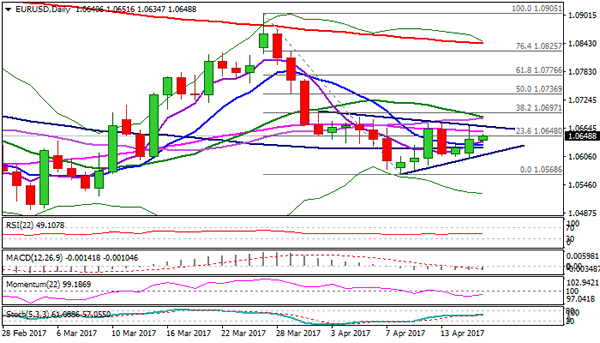
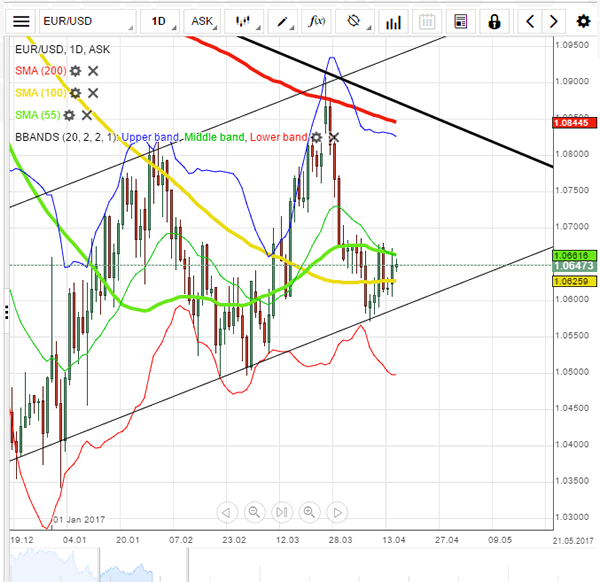
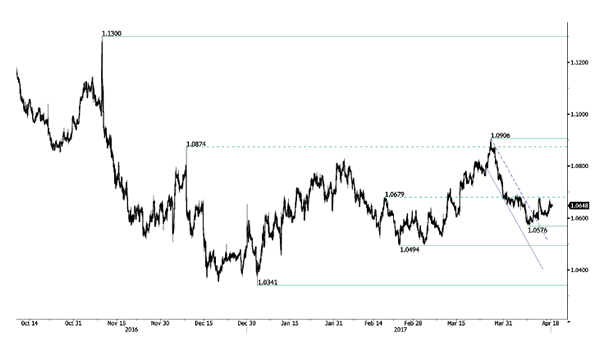
EUR/USD remains trapped in a sideways range below 1.0600. Hourly resistance is given at 1.0679 (16/02/2017 high) while hourly support can be found at 1.0521 (15/02/2017 low). The technical structure suggests deeper weakening. In the longer term, the death cross late October indicated a further bearish bias. The pair has broken key support given at 1.0458 (16/03/2015 low). Key resistance holds at 1.1714 (24/08/2015 high). Expected to head towards parity.
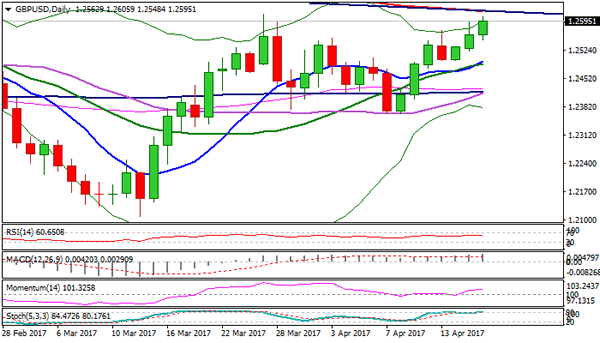
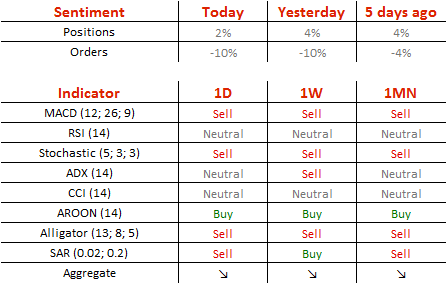
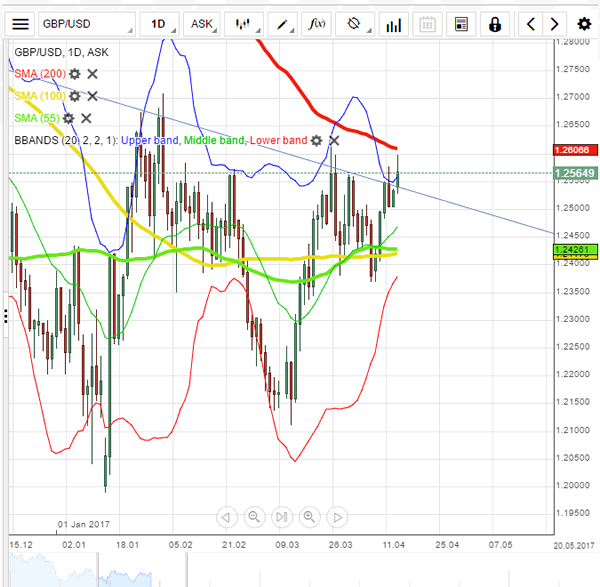
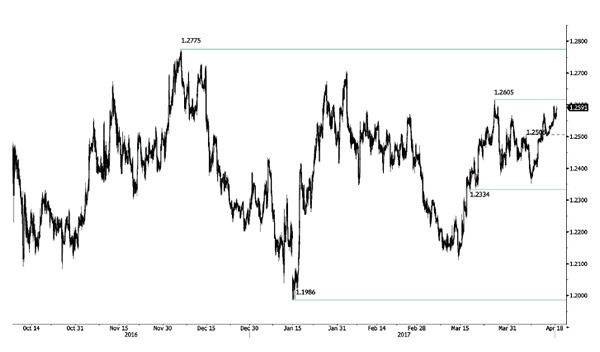
GBP/USD has broken trend support area defined by 1.2426 (17/0272017 low). Hourly resistance is given at 1.2582 (09/02/2017 high) while support area is given around 1.2400. Key support is given at 1.2347 (07/02/2017 low). The pair is still lying below strong resistance given at 1.2771 (05/10/2016 high). The long-term technical pattern is even more negative since the Brexit vote has paved the way for further decline. Long-term support given at 1.0520 (01/03/85) represents a decent target. Long-term resistance is given at 1.5018 (24/06/2015) and would indicate a long-term reversal in the negative trend. Yet, it is very unlikely at the moment.
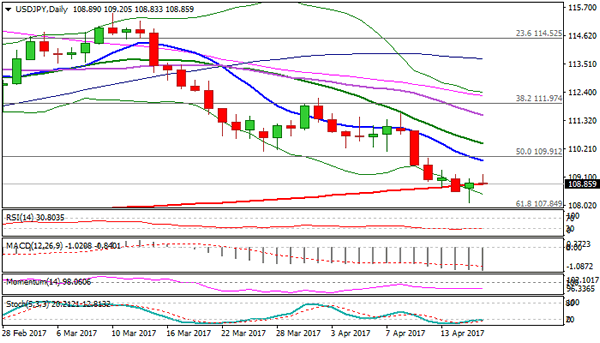
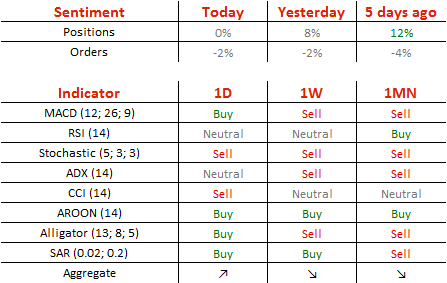
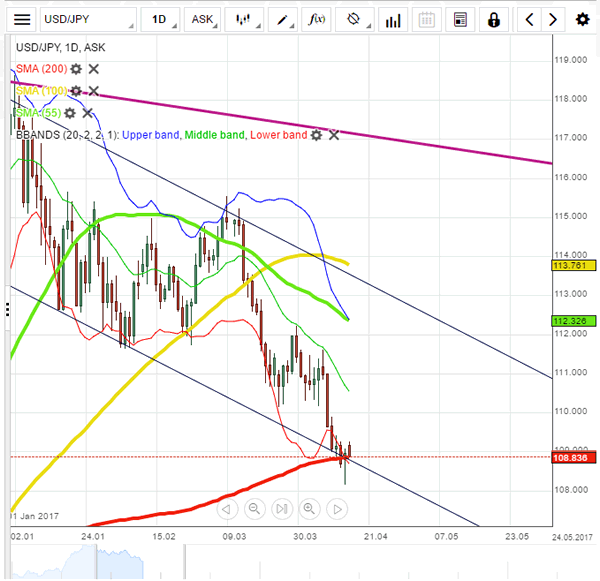
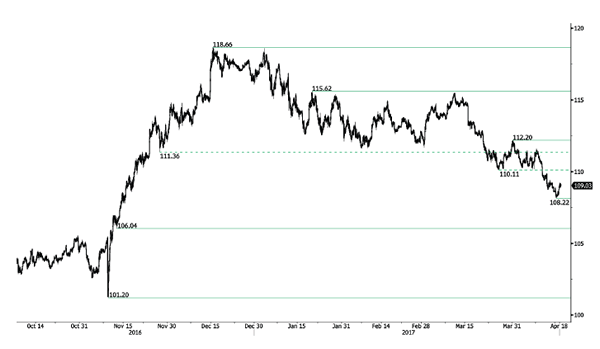
USD/JPY is showing limited short -terms buying interest after reversing off base lows. Key resistance is given at 115.62 (19/01/2016 high). The technical structure suggests further consolidation below 115.00. We favor a long-term bearish bias. Support is now given at 96.57 (10/08/2013 low). A gradual rise towards the major resistance at 135.15 (01/02/2002 high) seems absolutely unlikely. Expected to decline further support at 93.79 (13/06/2013 low).
USD/CHF continues to improves after testing 1.0021 support. Hourly resistance is implied by upper bound of the uptrend channel. Key resistance is given at a distance at 1.0344 (15/12/2016 high). Expected to see further strengthening. In the long-term, the pair is still trading in range since 2011 despite some turmoil when the SNB unpegged the CHF. Key support can be found 0.8986 (30/01/2015 low). The technical structure favours nonetheless a long term bullish bias since the unpeg in January 2015.
| EURUSD | GBPUSD | USDCHF | USDJPY |
| 1.1300 | 1.3445 | 1.1731 | 121.69 |
| 1.0954 | 1.3121 | 1.0652 | 118.66 |
| 1.0874 | 1.2771 | 1.0344 | 115.62 |
| 1.0529 | 1.2266 | 1.0110 | 114.23 |
| 1.0454 | 1.2254 | 0.9967 | 111.36 |
| 1.0341 | 1.1986 | 0.9862 | 106.04 |
| 1.0000 | 1.1841 | 0.9550 | 101.20 |
Daily Technical Analysis
EURUSD
The EURUSD attempted to push lower yesterday bottomed at 1.0514 but closed a little bit higher at 1.0546. As you can see on my H4 chart below, price is moving inside a bearish channel suggests a bearish phase. The bias is neutral in nearest term probably with a little bearish bias testing 1.0500 – 1.0450 support area and the lower line of the bearish channel which is a good place to buy with a tight stop loss. Immediate resistance is seen around 1.0580. A clear break above that area could trigger further bullish pressure testing 1.0630 resistance area. Overall I remain neutral.

GBPUSD
The GBPUSD continued its bearish momentum yesterday broke below 1.2340 key support and hit 1.2260 earlier today in Asian session. The bias is bearish in nearest term testing 1.2250 – 1.2200 support area. Immediate resistance is seen around 1.2340. A clear break back above that area could lead price to neutral zone in nearest term as direction would become unclear. Overall I remain neutral.

USDJPY
The USDJPY had a bullish momentum yesterday topped at 114.04 and hit 114.15 earlier today in Asian session. The bias remains bullish in nearest term testing 115.00 – 115.60 area which is a good place to sell with a tight stop loss. Immediate support is seen around 113.45. A clear break below that area could lead price to neutral zone in nearest term testing 113.00 or lower. As long as stay below 115.60 I still prefer a bearish scenario.

USDCHF
The USDCHF attempted to push higher yesterday topped at 1.0129 but closed a little bit lower at 1.0088. The bias is neutral in nearest term probably with a little bullish bias testing 1.0140. A clear break above that area would expose 1.0200 region. Immediate support is seen around 1.0065 followed by 1.0030/00 which is a good place to buy with a tight stop loss. Overall I remain neutral.

AUDUSD Is Holding Between Daily Tenkan-Sen And Kijun-Sen But Risk Of Reversal Is Growing
The Aussie is in red today and holding below 20SMA, pressured by Australian trade data miss earlier today.
Downside pressure is increasing after repeated rejections above 0.7700 barrier and subsequent steady descend that took out some important supports.
Near-term studies are bearish and price action is holding within daily Tenkan-sen-sen and Kijun-sen lines (at 0.7686 and 0.7624 respectively) which mark pivotal points.
With near-term focus turned to the downside, immediate risk lies on probe below daily Kijun-sen support that would expose another pivot at 0.7600 (former congestion low / Fibo 23.6% of 0.7158/0.7739), loss of which would generate stronger reversal signal.
The notion is supported by reversal of weekly slow stochastic from overbought zone and triple weekly Doji that gives strong signal of stall of the rally from 0.7159.
Conversely, return and close above daily Tenkan-sen is needed to sideline immediate downside risk.
Res: 0.7686, 0.7705, 0.7739, 0.7758
Sup: 0.7624, 0.7600, 0.7575, 0.7517

USDJPY – Strong Recovery After Rejection Below Daily Cloud Extends
Strong recovery after significant downside rejection below daily cloud turns near-term focus higher.
The rally extends into third day, as Tuesday's long-tailed candle and yesterday's long bullish candle strongly underpin near-term recovery that is now eyeing top of narrowing daily cloud (currently at 114.80).
In addition, daily chart double-bottom, formed at 111.60/67 zone, would also prop bulls for attack at 114.80/94 pivots (daily cloud top/15 Feb spike high), as twist of daily cloud next week is also seen as supportive factor.
Broken bear-trendline off 118.65 offers solid support at 113.60, together with rising cloud base/broken daily Kijun-sen (currently at 113.47) which are expected to ideally contain corrective dips.
Res: 114.30, 114.80, 114.94, 115.36
Sup: 113.60, 113.47, 112.98, 112.75

Cable Broke Below Daily Cloud And Hit Fibo61.8% Support, Further Downside Seen Likely
Cable extends weakness from upside rejection at 1.2568 and broke below daily cloud (spanned between 1.2311/79) to hit strong support at 1.2260 (Fibo 61.8% of 1.1986/1.2704 rally), the lowest level since 19 Jan.
Long bearish candles of past four days maintain strong bearish tone for further weakness.
Close below 1.2260 is needed to signal fresh extension lower and open next target at 1.2155 (Fibo 76.4%), with acceleration towards psychological 1.2000 support, not ruled out.
Twist of daily cloud in two days, ads on negative outlook.
Former strong support, now reverted to resistance, daily 100SMA (currently at 1.2405) is expected to cap extended corrective rallies on oversold slow stochastic on daily chart.
Res: 1.2311. 1.2379. 1.2405. 1.2454
Sup: 1.2260. 1.2200. 1.2155. 1.2100

EURUSD – Bearish Bias Below 55SMA
The Euro maintains bearish bias and probes again below already cracked Fibo 61.8% support at 1.0525, following four consecutive failures to close above 55SMA (currently at 1.0589).
Long upper shadows of daily candles of last Thu/Fri/Mon continue to weigh on the market, along with 10/55SMA bear cross. Eventual close below 1.0525 is needed to confirm bearish stance for attempts through fresh low of 22 Feb at 1.0492 and open way towards 1.0454 (Fibo 76.4% of 1.0339/1.0827 rally).
Yesterday's daily cloud twist supports scenario, as cloud is widening (currently spanned between 1.0605 and 1.0616).
Falling daily Tenkan-sen offer initial resistance at 1.0562, with corrective upticks expected to ideally stay under the cloud.
Recent spike highs at 1.0630 zone that were left on strong upside rejections, mark another pivotal barrier, break above which would activate alternative scenario and neutralize immediate downside threats.
Daily Kijun-sen (currently at 1.0660) and lower tops at 1.0675 mark upper breakpoints.
Res: 1.0562, 1.0589, 1.0616, 1.0630
Sup: 1.0512, 1.0492, 1.0454, 1.0388

Forex Technical Analysis
EUR/USD
Current level - 10527
Yesterday's slide reached a local low at 1.0512 and current rebound should be considered corrective, preceding another leg downwards, to 1.0450. Intraday allow one more upswing before renewal of the downtrend.
| Resistance | Support | ||
| intraday | intraweek | intraday | intraweek |
|
1.0580 |
1.0705 |
1.0512 |
1.0500 |
|
1.0630 |
1.0870 |
1.0450 |
1.0350 |

USD/JPY
Current level - 114.16
The bias remains positive, for a rise towards 114.95, en route to 115.60 area. Crucial support lies at 113.37.
| Resistance | Support | ||
| intraday | intraweek | intraday | intraweek |
|
114.95 |
118.65 |
113.37 |
111.40 |
|
115.60 |
120.00 |
111.60 |
109.80 |

GBP/USD
Current level - 1.2276
The downtrend is intact, ready for a test of 1.2240 support zone. I favor a break through the latter and continuation of the slide towards 1.2120. Initial intraday resistance lies at 1.2325, followed by the crucial 1.2400.
| Resistance | Support | ||
| intraday | intraweek | intraday | intraweek |
|
1.2325 |
1.2570 |
1.2240 |
1.2240 |
|
1.2400 |
1.2705 |
1.2120 |
1.1984 |

USD Extends Gains On Rate Hike Expectations, But No USD Euphoria
Sunrise Market Commentary
- Rates: EMU CPI and Friday’s Yellen speech negative for core bonds
Dovish Fed governor Brainard joined the recent Fed chorus, hinting at a near term rate hike. Ahead of Yellen’s speech tomorrow evening, we expect US Treasuries to remain under downward pressure. The correction lower in the Bund can continue as well, especially if EMU CPI hits the psychological 2%-mark today. - Currencies: USD extends gains on rate hike expectations, but no USD euphoria
Yesterday, USD investors adapted positions to rising chances of a March rate hike. The USD gains were substantial, but not excessive. Both EUR/USD and USD/JPY didn’t break major technical levels. Today, some consolidation might be on the cards as there are no important data in the US. EUR/GBP is nearing a first technical resistance.
The Sunrise Headlines
- US and global equities soared, as data reinforced expectations that a Fed rate hike is imminent. Investors see that as a sign of strengthening economic growth. Asian stocks advance modestly despite a buoyant WS yesterday.
- EU states could regain control over matters ranging from regional development to consumer protection, Jean-Claude Juncker, has suggested, setting out ideas to shore up the bloc after Brexit.
- Fed governor Brainard, a dove, said that the Fed should be prepared to increase its benchmark interest rate “soon” as the job market pushes closer to full employment and inflation moves towards the central bank’s target.
- The kiwi dollar pared some of its losses after RBNZ Governor Wheeler said risks to interest rate moves are equally balanced. NZD/USD trades now around 0.7132.
- UK PM May suffered a defeat on her draft Brexit law after the Lords rebuffed a government plea to leave it intact. It voted in favour of an amendment that protects the right of EU nationals to remain living in the UK after Brexit.
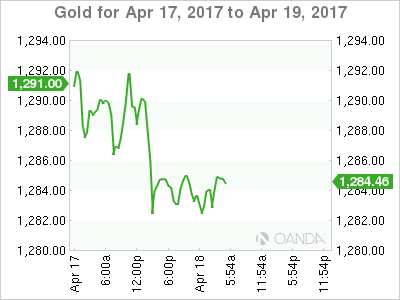
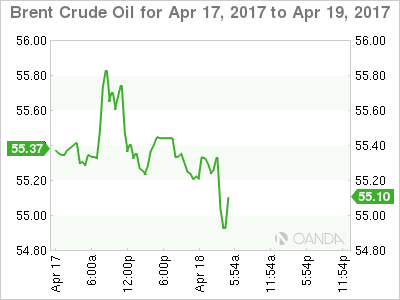
- Brent oil dropped to $56/barrel from $57/barrel after EIA data showed US crude stockpiles rose to a record. Gold spot (1246.90$/ounce) recovered in US trading to snap two days of declines, but slid lower overnight on Fed Brainard.
- Today, the market calendar slows down with only EMU inflation as key economic release ECB Lautenschlaeger speaks after European closure, while France and Spain tap the markets
Currencies: USD Extends Gains On Rate Hike Expectations, But No USD Euphoria
Dollar propelled by March rate hike bets
On Wednesday, the rising probability of a March Fed rate hike propelled the dollar. The US currency (and equities) ignored that US president Trump failed to give details on his economic and fiscal plans. The US Manufacturing ISM was very strong, but at the time of the publication, the dollar had already reached the intraday highs. USD/JPY finished the session at 113.73 (from 112.77). The rise of the dollar against the euro was more modest. EUR/USD closed the day at 1.0547.
Overnight, Fed’s Brainard joined the chorus of Fed speakers advocating a rate hike “soon”. The comments caused a limited further dollar uptick early in Asia. However, FX and interest rate markets have largely discounted a March rate hike. USD/JPY hovers sideways in the 114 area, near the recent highs. EUR/USD stabilizes in the 1.0535 area. Most Asian equities show modest gains (except for mainland China), that fall shy though with WS euphoria yesterday. The more modest risk sentiment might slow further USD gains.
Today, the market expects the February EMU HICP inflation to increase from 1.8% to 2.0% Y/Y. So, the ECB target might be reached. The core is expected stable at a rather low 0.9%. The headline inflation number, together with strong eco data, increases chances that the ECB will prematurely dial back its asset purchases in H2 of 2017. Regarding central bankers, ECB Lautensclaeger, a hawk, will speaks after closure. Yesterday, USD investors adapted positions for a March Fed rate hike. The continuation of the risk rally was also slightly USD positive. The trade-weighted dollar gained about 1% since to the start of the rebound Tuesday. This is a good gain, but shows no USD euphoria. Especially the decline of EUR/USD was moderate. The market was probably still a bit ‘euro short’ due to recent uncertainty on France. Today, we expect some consolidation on yesterday’s rally. (no important US data. 2% EMU inflation in theory could be slightly supportive for the euro). At the same time, the dollar is well supported in a context of rising global yields. Equities remain a wildcard. A correction could cause some modest USD profit taking, but for now there is no clear sign that the reflation trade might change course
Global context. The dollar corrected lower since the start of January, but bottomed early February supported by Trump’s tax promise. Underlying euro weakness due to political uncertainty in the area was a factor too. Over the previous days the focus shifted from US fiscal policy to the Fed talk, preparing markets for a rate hike in the near future. We assume EUR/USD 1.0874 to be a solid resistance and favour a sell EUR/USD on upticks approach. 1.0494 is first intermediate support ahead of the 1.0341 correction low. The downside test of USD/JPY is also rejected. USD/JPY 111.60/111.16 (Range bottom/38% retracement of the 99.02/118.66 rally) remains key support. On the topside 114.96 is a first point of reference. So, USD sentiment is constructive, but for now both EUR/USD and USD/JPY haven’t broken any important technical level yet.
EUR/USD declines as USD rebound, but no important support is broken yet.
EUR/GBP
EUR/GBP nearing first (minor) resistance
Yesterday, the UK manufacturing PMI declined more than expected, but Sterling hardly reacted. Even so, there were tentative signs of underlying sterling softness, as EUR/GBP lost hardly ground despite the EUR/USD decline. Around noon, sterling selling intensified. Uncertainty on the outcome of the Brexit vote in the House of Lords added to sterling caution. Later in the session the Upper House indeed voted for a change in PM May’s Brexit law. The vote probably won’t change the government’s Brexit roadmap in a profound way. Even so, it illustrates that the Brexit process is facing plenty of hurdles. Sterling lost gradually further ground. EUR/GBP finished the day at 0.8579. Cable dropped below the 1.23 level, mostly on USD strength.
Today, the UK construction PMI is expected to decline slightly from 52.2 to 52.00. The report is not so important for markets, but a negative surprise, after yesterday’s miss in the manufacturing measure, might be slightly sterling negative. There will also be headlines on the rejection of the Brexit Bill. Sterling sentiment has softened a bit of late. It was/is difficult for cable to outperform EUR/USD as is often the case with USD strength. Early last week, the euro sell-off pushed EUR/GBP to the 0.84 area, but a sustained break lower didn’t occur. EUR/GBP is currently nearing a first resistance at 0.8592. A break would suggest a further loss of momentum of sterling. Longer term, we have a sterling negative view, as the Brexit will negatively impact the UK economy
EUR/GBP: nearing a first resistance at 0.8592.
Fed Board Governor Brainard Adds to the Drumbeat of Approaching Hikes
Overnight, Fed Governor Lael Brainard added another touch to the positive picture painted by other Fed policymakers on Tuesday, who hinted that a March rate hike may be on the way. In her speech, Brainard said that a rate hike will likely be appropriate soon given improved global conditions and continued growth. She noted that "constraints" of the past two years, caused by problems from Europe to China are easing. With regards to the domestic economy, she noted that the Fed's employment and inflation goals are nearly met, allowing a continued gradual pace of rate increases. Given that Brainard is a Governor, which implies a permanent vote within the Committee, her comments were taken seriously by the market, which is now pricing in a much higher probability for a March hike than yesterday. According to our model which is based on the yields of the Fed funds futures, that probability has risen to 50% from 36%. Despite the recent fuss around the next hike in the Fed funds rate, and the continued increase of the probability for that to happen in March, we still believe that the recent sentiment around that prospect is more optimistic than it should be. We stick to our call that June is a more likely candidate. Despite getting positive vibes from key voting members, we still believe that the overall voting squad within the Committee has turned more dovish this year. After all, this was evident by the latest FOMC meeting minutes. What's more, yesterday's release of the core PCE index, which is the Fed's favorite inflation measure, showed that the rate remained unchanged instead of rising as many had expected. The spotlight now turns to Fed Chair Yellen and Vice Chair Fisher, who are both scheduled to speak on Friday. In order to reevaluate our view, we need to see the two leading Fed officials unleashing equally hawkish signals to those of their colleagues, as well as a strong employment report next week, especially as far as the earnings are concerned.
EUR/USD traded lower during the European morning yesterday, but rebounded later in the afternoon to hit the resistance of 1.0570 (R1). Subsequently, it came back under renewed selling interest and continued lower after Brainard's remarks. Now the pair looks to be headed for another test near the 1.0500 (S1) territory, where we expect investors to settle and wait for Yellen's and Fisher's speeches. If the two top Fed officials share the view that a near-term rate hike has become increasingly likely, then we may see a dip below the aforementioned key support obstacle, something that could open the way for our next support of 1.0450 (S2). With regards to the bigger picture, we still see a longer-term downtrend. Positive vibes from more FOMC members and a potential strong US employment report next week combined with the political uncertainty surrounding the Euro-area could encourage the bears to stay in the driver's seat. This could eventually lead to another test near the 1.0360 territory, defined by the lows of December and January.
BoC remains on hold amid "significant uncertainties"
The Bank of Canada kept its policy unchanged yesterday, as was widely anticipated. The statement accompanying the decision was upbeat on some aspects of the domestic economy. However, it also warned that exports continue to face competitiveness challenges. With regards to the Loonie, the Bank said that both CAD and bond yields have remained at levels similar to the latest meeting, implying that they are still undesirably high. All these echo comments from the previous policy meeting that the strength of the Canadian dollar is muting the outlook for exports. The Bank ended the statement by noting it will remain attentive to the impact of significant uncertainties weighing on the outlook, and that it will continue to monitor the risks. Given the somewhat worried tone, the reaction in the Loonie was negative.
USD/CAD surged after it hit support near the 1.3300 (S2) territory, to break above the resistance (now turned into support) level of 1.3340 (S1) and the longer-term uptrend line taken from the lows of May 2016. Given the recent optimistic signals from the Fed with regards to the next hike, as well as this cautious tone from the BoC, we believe that the pair could continue higher in the days to come. A clear break above 1.3390 (R1) could pave the way for the 1.3460 (R2) area. As for the broader trend in USD/CAD, as long as the pair remains within the sideways range that has contained the price action since September 2016, between 1.3000 and 1.3600, we consider the overall outlook to be neutral. A clear break above 1.3600 is needed to turn the broader path to the upside as well.
Back to the BoC, we believe that a large part of the uncertainty the Bank sees weighing on the domestic outlook relates to the appreciation of the Canadian dollar late last year. Although we do not expect this appreciation to actually lead to a rate cut, we believe that it could keep the tone of the BoC somewhat dovish in the foreseeable future, as they prefer to keep CAD from strengthening too much.
Today's highlights:
During the European day, we get Eurozone's preliminary CPI data for February. The forecast is for the headline rate to have risen further, while the core rate is expected to have remained unchanged for the third consecutive month. ECB President Draghi placed a lot of emphasis on Eurozone's core CPI at the latest policy gathering. He said that although the headline rate has risen recently, that reflects primarily transitory effects. He made it clear that until there are convincing signs of an upward trend in core inflation, the Bank is likely to keep its policy stance unchanged. Therefore, we believe that even though further upturn in the headline CPI rate could support the euro somewhat, if the core rate remains unchanged as expected, any positive reaction in the currency is likely to be only modest. We also get the bloc's unemployment rate and the PPI, both for January.
From the UK, we get the construction PMI for February and expectations are for the index to have held steady from the previous month. We see the risks surrounding that forecast as skewed to the downside, considering the somewhat disappointing manufacturing print for the month. In case of a decline, GBP could come under renewed selling interest.
In the US, initial jobless claims for the week ended February 24th are due out.
From Canada, we get GDP data for Q4. In the absence of a forecast, we see the case for GDP growth to have accelerated from the previous quarter, in line with the BoC view at yesterday's meeting. Accelerating GDP growth could cause the CAD to recover some of its losses from yesterday, but bearing the Bank's discontent with regards to a strong domestic currency, we expect such a reaction to remain short-lived.
We have only one speaker scheduled for today: Fed Board Governor Jerome Powell. Considering that he is also a permanent voting member, investors are likely to scan his speech for any additional signals on a March hike.
Specifics Don’t Matter Any More, Bulls Are All In
Equities analysts and strategists including myself have been arguing for some time that if no further details were provided on how and when the proposed U.S. tax reforms and spending plans will take place, the market rally should take a pause. However, U.S. President Donald Trump provided no new details in his speech to Congress on Tuesday, and yet, stocks surged to new highs.
The only surprise we received was Trump's striking shift in tone which was hugely different from his inaugural address and regular messages on Twitter. But is it enough to justify this rally?
What's even more interesting is markets now consider a tighter monetary policy a sign of confidence in economic growth and thus a reason to continue purchasing stocks, when for years post 2008 crisis it had been considered the most significant motive to dump stocks.
The most asked question we receive on a daily basis is whether this rally still ‘haslegs'? Well, fund flows suggest that investors are still willing to take the risk thatwill potentially lead to higher prices.Sooner or later however, investors will realize that valuations are what matter most inthe longer run.
When looking at S&P 500 Shiller's cyclicallyadjusted price-to-earnings ratio (CAPE) which is currently trading at 29.5 x earnings.This takes us back to April 2002;from April to October 2002, S&P 500 dropped from a high of 1,174 to a low of 768, a total of 34.5%.Since then, the Shiller's CAPE never re-visited these levels until just this week.
Low long-term interest rates do justify to some extent higher valuations. For example, back in April 2002, U.S. 10-year treasury yields were trading above 5% as opposed to 2.46% today, but as the Fed tightens more- “probably three rate hikes in 2017” - then risk-free rates will go higher and investors will require more return on their investments.
If this is the case, then expected earnings and dividends growth will be the key metrics to look for going forward. There's no doubt that improved economic conditions, consumer confidence, and higher inflation will all lead to higher earnings growth, but what markets are currently pricing in is more than just these factors. It's mainly about tax reforms, and assuming a reduction in the U.S. corporate tax from 35% to 20%, although difficult to calculate its impact on earnings, is expected to lift net profits from 10% to 15%, and this is what investors are betting on.
If you still want to ride the current bullish momentum wave, pray that Trump's tax reduction plan succeeds as soon as possible.