

Sample Category Title
USD/CHF Mid-Day Outlook
Daily Pivots: (S1) 0.8573; (P) 0.8630; (R1) 0.8667; More....
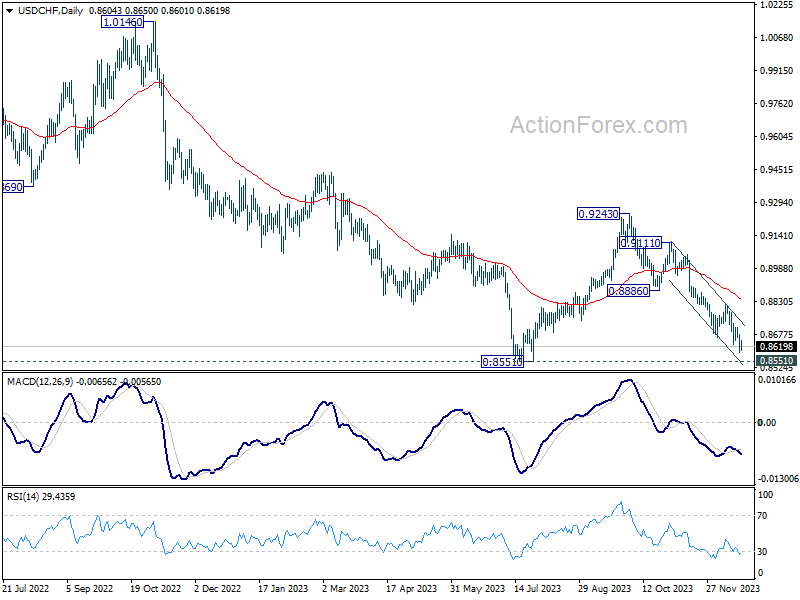
Intraday bias in USD/CHF stays on the downside and outlook is unchanged. Current fall from 0.9243 is in progress for retesting 0.8551 key support next. On the upside, above 0.8710 minor resistance will turn intraday bias neutral again first. But outlook will remain bearish as long as 0.8819 resistance holds.
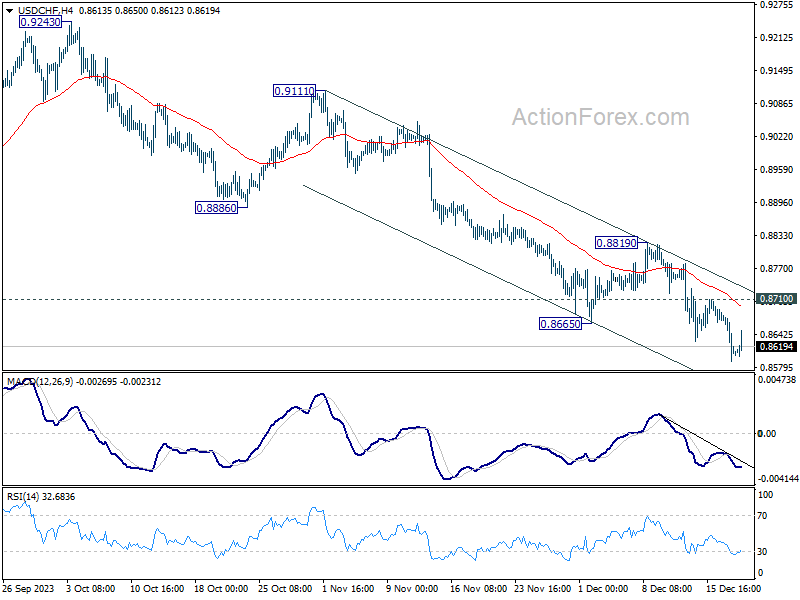
In the bigger picture, price actions from 0.8551 are currently seen as a corrective pattern to the decline from 1.0146 (2022 high). Fall from 0.9243 is seen as the second leg for now. Strong support should be seen 0.8551 to bring rebound. Meanwhile, break of 0.9111 resistance will argue that the third leg has started already, and target 0.9243.
EUR/USD Mid-Day Outlook
Daily Pivots: (S1) 1.0935; (P) 1.0961; (R1) 1.1007; More...
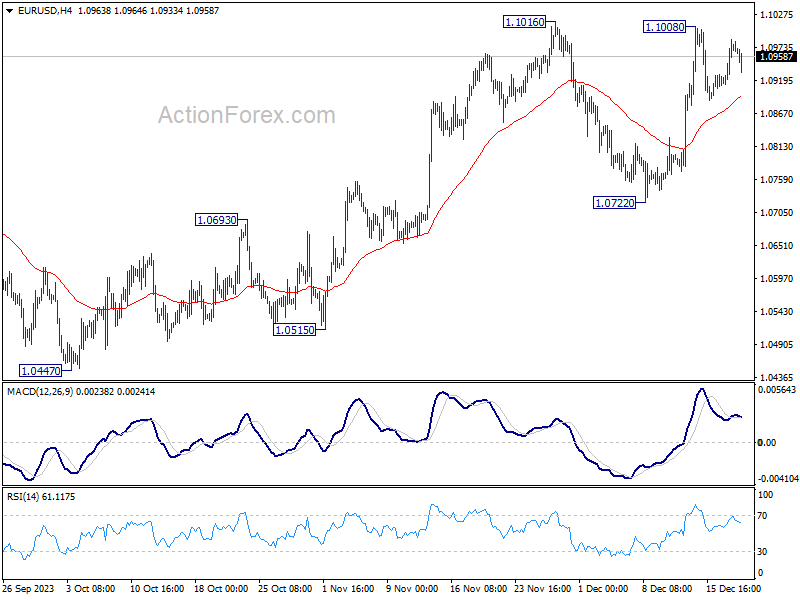
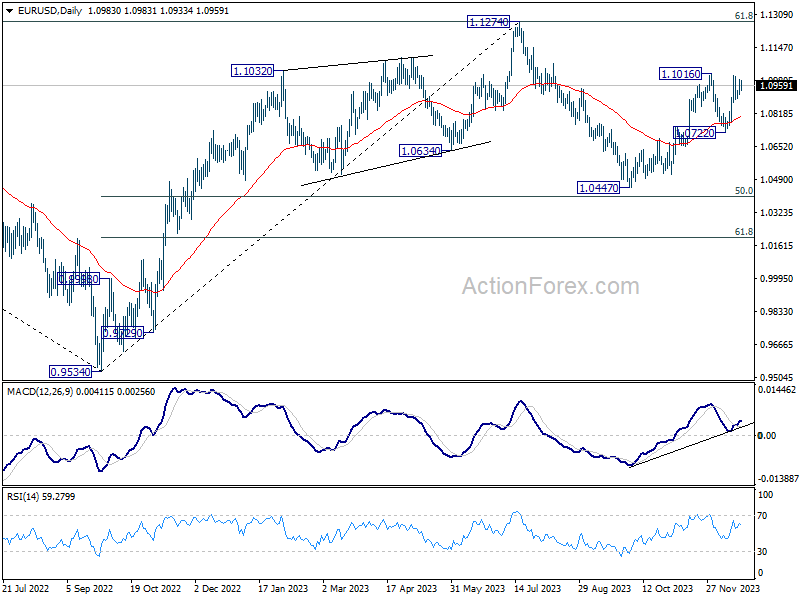
EUR/USD is staying in consolidation from 1.1108 and intraday bias remains neutral. Further rally is expected as long as 1.0722 support holds. On the upside, break of 1.1016 will resume the whole rise from 1.0447 to retest 1.1274 high.
In the bigger picture, price actions from 1.1274 are viewed as a corrective pattern to rise from 0.9534 (2022 low). Rise from 1.0447 is seen as the second leg. While further rally could cannot be ruled out, upside should be limited by 1.1274 to bring the third leg of the pattern. Meanwhile, sustained break of 1.0722 support will argue that the third leg has already started for 1.0447 and below.
GBP/USD Mid-Day Outlook
Daily Pivots: (S1) 1.2661; (P) 1.2711; (R1) 1.2782; More...
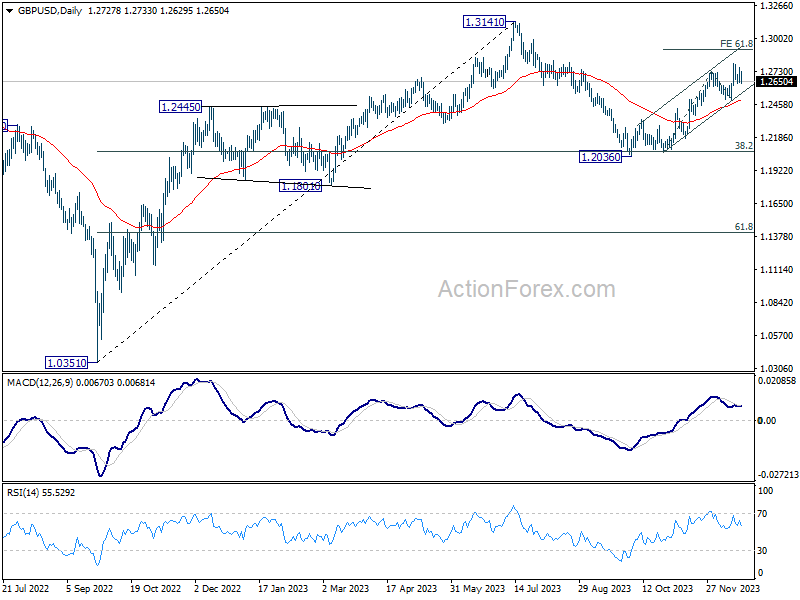
GBP/USD dips notably today but stays well above 1.2499 support. Intraday bias remains neutral first. While more consolidations could be seen, further rally is still expected. On the upside, firm break of 1.2793 will resume the rally from 1.2036. Next target is 61.8% projection of 1.2068 to 1.2731 from 1.2499 at 1.2909.
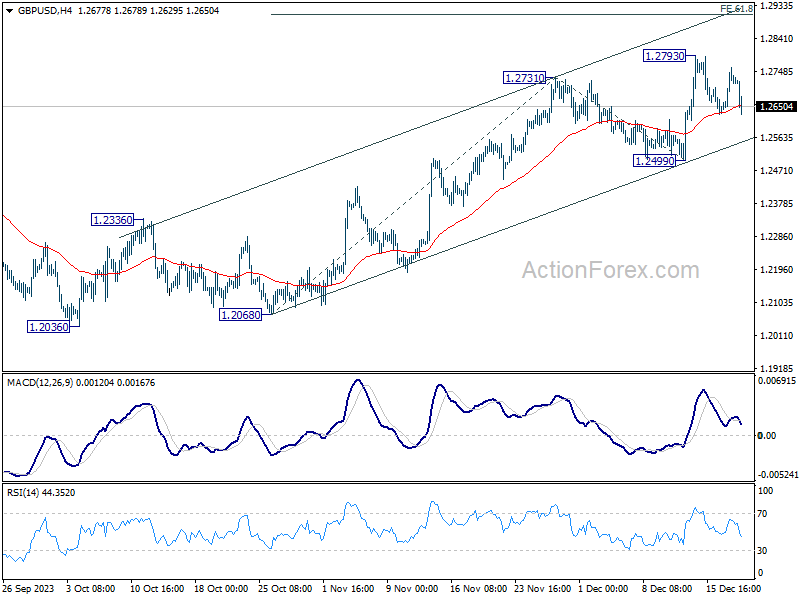
In the bigger picture, price actions from 1.3141 medium term top are seen as a corrective pattern to rise from 1.0351 (2022 low). Rise from 1.2036 is seen as the second leg that's in progress. Upside should be limited by 1.3141 to bring the third leg of the pattern. Meanwhile, break of 1.2499 support will argue that the third leg has already started for 38.2% retracement of 1.0351 (2022 low) to 1.3141 at 1.2075 again.
UK Inflation Data Triggers Sterling Slump and Shift in BoE Rate Cut Expectations
Sterling faced a broad decline today following release of UK CPI data, which indicated that inflation slowed more significantly than anticipated. This unexpected deceleration in inflation has led markets and economists to quickly adjust their expectations for BoE rate cut. The markets are now fully pricing the first 25bps reduction as early as May, with projections suggesting interest rates could drop to 4% or lower by the end of 2024. Notably, Goldman Sachs has also moved forward its forecast for BoE's interest-rate cut from June to May.
In the broader currency market, Swiss Franc and Euro are trailing behind Sterling as the next weakest currencies. Euro's decline is partly attributed to a deeper than expected drop in Germany's PPI in November, signaling potential economic softness in the Eurozone's largest economy. Conversely, Japanese Yen is making a comeback, recovering from its post-BoJ selloff and currently emerging as the strongest performer of the day. New Zealand Dollar and Australian Dollar are also showing firmer positions. Meanwhile, US Dollar's recovery appears to be limited to its performance against European currencies for the time being.
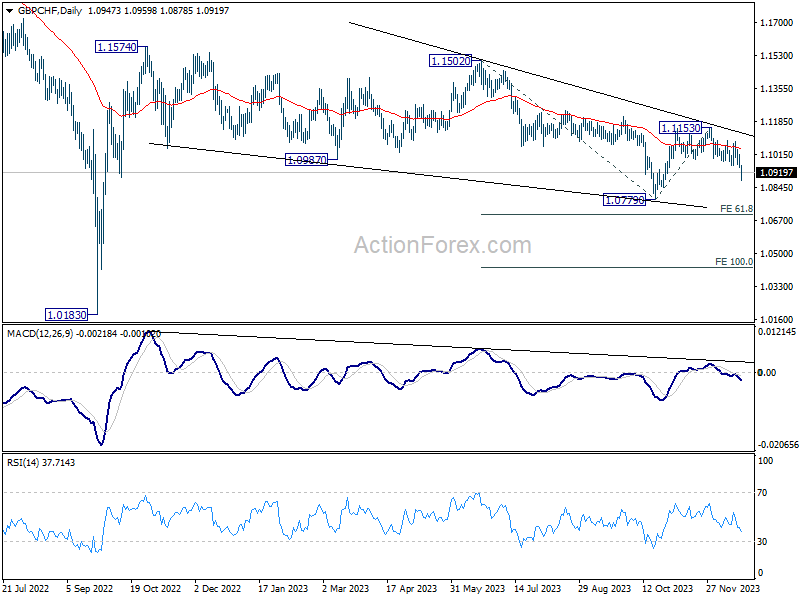
Technically, with today's downside acceleration, GBP/CHF's fall from 1.1153 is more likely resuming the larger down trend from 1.1574. Risk will stay on the downside as long as 55 D EMA (now at 1.1046) holds even in case of recovery. Deeper fall is in expected through 1.0779 support to 61.8% projection of 1.1502 to 1.0779 from 1.1153 at 1.0706 next.
In Europe, at the time of writing, FTSE is up 0.62%. DAX is down -0.03%. CAC is up 0.08%. Germany 10-year yield is down -0.55 at 1.968, back below 2% handle. UK 10-year yield is down -0.118 at 3.540. Earlier in Asia, Nikkei rose 1.37%. Hong Kong HSI rose 0.66%. China Shanghai SSE fell -1.03%. Singapore Strait Times fell -0.28%. Japan 10-year JGB yield fell -0.0708 to 0.563.
Bundesbank's Nagel cautions against premature ECB rate cut expectations
Bundesbank President Joachim Nagel has issued a warning to investors and analysts anticipating an early interest rate cut by ECB.
In an interview, Nagel emphasized the importance of maintaining the current interest rate levels to ensure the effective management of inflation. "We must initially remain at the current interest rate plateau so that monetary policy can fully develop its inflation-dampening effect," he stated.
Nagel's cautionary words to those speculating on an imminent rate cut were stark: "Be careful, some people have already miscalculated that." However, Nagel did acknowledge that interest rates have likely reached their peak, suggesting that while an immediate rate reduction may not be on the horizon, the period of aggressive rate hikes should have come to an end.
UK CPI slows to 3.9% yoy in Nov, core CPI down to 5.1% yoy
UK CPI slowed from 4.6% yoy to 3.9% yoy in November, below expectation of 4.3% yoy. Core CPI (excluding energy, food, alcohol and tobacco) slowed from 5.7% yoy to 5.1% yoy, below expectation of 5.5% yoy. CPI goods fell from 2.9% yoy to 2.0% yoy. CPI services also fell from 6.6% yoy to 6.2% yoy.
ONS noted, "The easing in the annual inflation rates reflected downward contributions from eight divisions, most notably transport, recreation and culture, and food and non-alcoholic beverages. There were no divisions with large offsetting upward effects."
On a monthly basis, CPI was down -0.2% mom, below expectation of 0.2% mom rise.
Germany's Gfk consumer climate rises to -25.1, consumers still have major worries
Germany's Gfk Consumer Climate for January rose from -27.6 to -25.1. In December, income expectations rose from -16.7 to -6.9. Willingness to buy rose from -15.0 to -8.8. Willingness to save rose from 5.3 to 7.3.
"It remains to be seen whether the current increase represents the start of a sustained recovery in consumer sentiment," explains Rolf Bürkl, consumer expert at NIM.
"Consumers still have major worries. Geopolitical crises and wars, sharply rising food prices and discussions around national budget for 2024 continue to cause uncertainty. As a result, the level of consumer sentiment is currently still very low."
Japan's divergent export trend: 26 months of US growth, 12 months of China decline
Japan's trade statistics for November were marked by a slight decline in exports and a more significant drop in imports. Exports fell marginally by -0.2% yoy, totaling JPY 8829B, marking the first drop in three months.
A closer look at export destinations shows contrasting trends. Exports to US continued to grow, marking a 5.3% increase and extending the expansion streak to 26 months. In contrast, exports to China fell by -2.2%, continuing a downward trend for the 12th consecutive month. One of the most notable declines was in food shipments, which plummeted by -60.3%, significantly impacted by China's ban on Japanese seafood imports.
On the import side, Japan saw a more pronounced decline of -11.9% yoy, with total imports amounting to JPY 9597B. This reduction in imports contributed to a trade deficit of JPY -777B for the month.
When adjusted for seasonal variations, exports dropped by -1.8% mom to JPY 8567B, and imports decreased by -2.7% mom to JPY 8976B. Consequently, trade deficit narrowed from JPY -501B to JPY -409B.
Australia's Westpac leading index climbs to 0.3%, signaling stabilization, not an upturn
Westpac Leading Index in Australia showed an encouraging rise from -0.39% to 0.30% in November, marking the first positive, above-trend reading since mid-2022. However, Westpac cautioned that this uptick might be influenced by temporary factors. Also, the shift in underlying momentum, as RBA's tightening begins to slow, is seen more as a stabilization rather than the start of an upturn.
Further, Westpac highlighted weaker conditions in the domestic sphere, particularly impacting the household sector. This weakness is expected to continue into the first half of next year. Hence, Westpac anticipates that barring a "truly disastrous" December quarter CPI update, RBA is likely to maintain its current policy in the upcoming February meeting.
RBNZ's Orr highlights struggle with core inflation and migration impact
RBNZ Governor Adrian Orr, in his address to a parliament select committee today, emphasized there is "still a long way to go" to curb inflation. He added, "it's core inflation that's going to be our challenge ahead".
Orr also noted the complexity of this challenge, pointing out that much of the core inflation factors are entrenched within central and local government influences, including rates and taxes. He cautioned that tackling these elements in the "last five yards on the inflation battle is going to be tough."
Adding to the economic challenges, Orr highlighted the current record-high levels of net inward migration in New Zealand. This surge in migration has surpassed RBNZ's expectations and presents additional complexities for monetary policy, housing demand, asset prices, and the general inflation outlook.
Regarding the country's economic growth, Orr mentioned that GDP was "surprisingly subdued," with a contraction of -0.3% in Q3. He indicated that RBNZ is internalizing this complex situation and will provide more detailed insights in their monetary policy statement due in February.
GBP/USD Mid-Day Outlook
Daily Pivots: (S1) 1.2661; (P) 1.2711; (R1) 1.2782; More...
GBP/USD dips notably today but stays well above 1.2499 support. Intraday bias remains neutral first. While more consolidations could be seen, further rally is still expected. On the upside, firm break of 1.2793 will resume the rally from 1.2036. Next target is 61.8% projection of 1.2068 to 1.2731 from 1.2499 at 1.2909.
In the bigger picture, price actions from 1.3141 medium term top are seen as a corrective pattern to rise from 1.0351 (2022 low). Rise from 1.2036 is seen as the second leg that's in progress. Upside should be limited by 1.3141 to bring the third leg of the pattern. Meanwhile, break of 1.2499 support will argue that the third leg has already started for 38.2% retracement of 1.0351 (2022 low) to 1.3141 at 1.2075 again.
Economic Indicators Update
| GMT | Ccy | Events | Actual | Forecast | Previous | Revised |
|---|---|---|---|---|---|---|
| 23:50 | JPY | Trade Balance (JPY) Nov | -0.41T | -0.75T | -0.46T | -0.50T |
| 00:00 | AUD | Westpac Leading Index M/M Nov | 0.10% | 0.00% | ||
| 07:00 | EUR | Germany Gfk Consumer Climate Jan | -25.1 | -27 | -27.8 | -27.6 |
| 07:00 | EUR | Germany PPI M/M Nov | -0.50% | -0.40% | -0.10% | |
| 07:00 | EUR | Germany PPI Y/Y Nov | -7.90% | -7.50% | -11% | |
| 07:00 | GBP | CPI M/M Nov | -0.20% | 0.20% | 0.00% | |
| 07:00 | GBP | CPI Y/Y Nov | 3.90% | 4.30% | 4.60% | |
| 07:00 | GBP | Core CPI Y/Y Nov | 5.10% | 5.50% | 5.70% | |
| 07:00 | GBP | RPI M/M Nov | -0.10% | 0.30% | -0.20% | |
| 07:00 | GBP | RPI Y/Y Nov | 5.30% | 5.80% | 6.10% | |
| 07:00 | GBP | PPI Input M/M Nov | -0.30% | -0.60% | 0.40% | |
| 07:00 | GBP | PPI Input Y/Y Nov | -2.60% | -3.30% | -2.60% | |
| 07:00 | GBP | PPI Output M/M Nov | -0.10% | -0.10% | 0.10% | 0.30% |
| 07:00 | GBP | PPI Output Y/Y Nov | -0.20% | -0.50% | -0.60% | -0.30% |
| 07:00 | GBP | PPI Core Output M/M Nov | 0.00% | 0.10% | ||
| 07:00 | GBP | PPI Core Output Y/Y Nov | 0.20% | 0.20% | 0.40% | |
| 09:00 | EUR | Eurozone Current Account (EUR) Oct | 33.8B | 27.0B | 31.2B | |
| 13:30 | USD | Current Account (USD) Q3 | -200B | -197B | -212B | |
| 15:00 | USD | Existing Home Sales Nov | 3.78M | 3.79M | ||
| 15:00 | USD | Consumer Confidence Dec | 103.9 | 102 | ||
| 15:00 | EUR | Eurozone Consumer Confidence Dec P | -16.5 | -16.9 | ||
| 15:30 | USD | Crude Oil Inventories | -2.3M | -4.3M | ||
| 18:30 | CAD | BoC Summary of Deliberations |
GER 40 Index Near New Highs at the End of 2023
- GER 40 looks strongly bullish
- However, RSI suggests overbought market
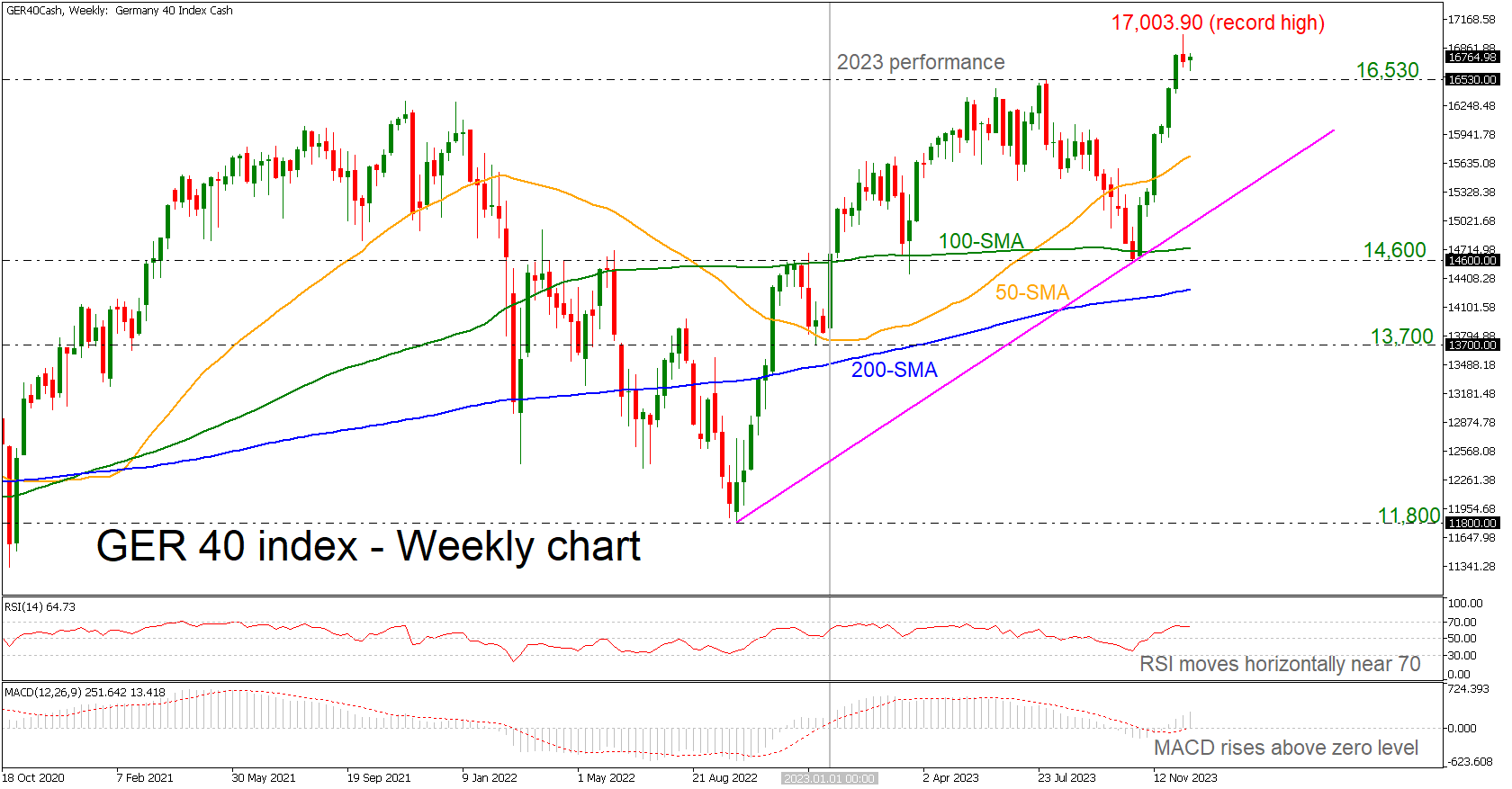
As the 2023 is coming to an end, the GER 40 index added more than 17% after the bounce off the 14,600 support level and the 100-week simple moving average (SMA). The price reached a new high near 17,003.90 in the previous week and lost some of its upside momentum, falling lower.
According to technical oscillators, the RSI is flattening marginally below 70, suggesting a weakening positive bias; however, the MACD is extending the bullish movement above its trigger and zero lines.
If the market extends the bullish action, then the index could rest near the next psychological numbers such as 17,100 and 17,200.
In the negative scenario, a bearish correction could lead the price until the previous high of 16,530 ahead of the 50-week simple moving average (SMA) at 15,710. Beneath that, the long-term ascending trend line at 15,200 may halt the bearish wave before meeting the 14,600 bottom again.
All in all, the GER 40 index is looking strongly positive in the broader outlook and only a decline below the rising trend line and the 200-week SMA at 14,300 may switch the outlook to negative.
GBP/USD – Inflation Surprise Sends Pound Lower
- UK inflation falls to 3.9%, lower than expected
- British pound declines
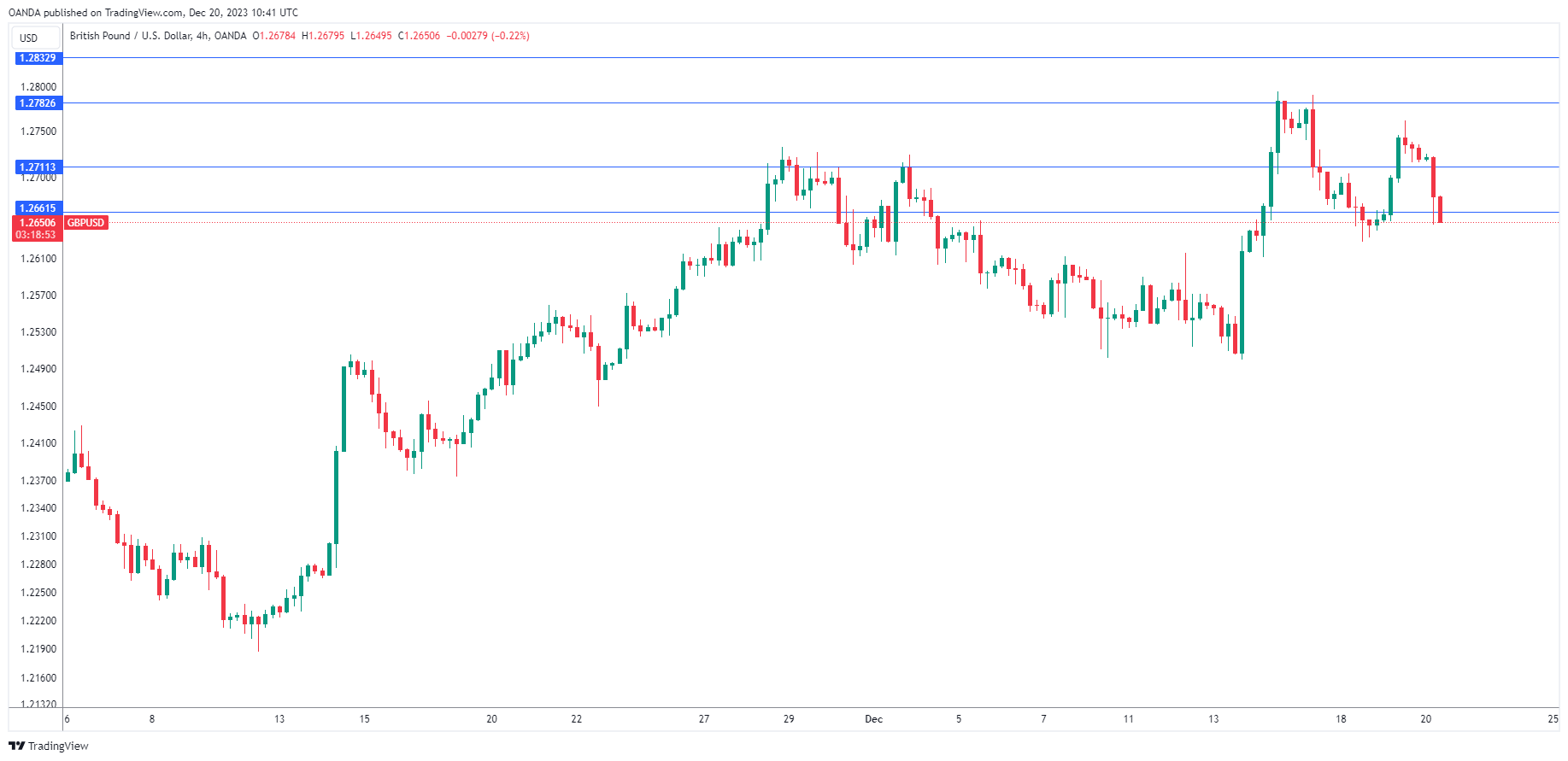
The British pound has declined on Wednesday. In the European session, GBP/USD is trading at 1.2658, down 0.58%.
UK inflation surprises on the downside
UK inflation was lower than expected in November and the surprising release has sent the British pound lower today. Headline CPI eased to 3.9% y/y, down from 4.6% in October and below the consensus estimate of 4.4%. This marked the lowest inflation rate since September 2021. Core CPI rose 5.1% in November, down from 5.7% and below the market consensus of 5.6%. Significantly, both the headline and core readings declined in November on a monthly basis – headline CPI came in at -0.2% and the core rate at -0.3% and both were lower than expected.
The sharp drop in inflation was driven by lower prices across the economy, including food, fuel, transport, recreation and clothing. The Bank of England will be encouraged by the significant decline in Core CPI, which excludes volatile items such as food and energy and is considered a better gauge of inflation trends than headline CPI.
It was just one week ago that the BoE paused rates but Governor Bailey remained hawkish at the meeting and pushed back against rate cut expectations. Bailey said that rates would remain in restrictive territory for an extended period (‘higher for longer’) and the pound reacted to his comments with sharp gains.
Will the soft inflation report change any minds at the BoE? The decline in inflation should put pressure on the BoE to cut rates next year. However, hawkish policy makers can point to Core CPI and argue that at a clip of 5.1%, it is nowhere near the Bank’s target of 2% and now is not the time to signal rate cuts are coming. It will be interesting to see how BoE officials react to the inflation report and whether the central bank adopts a less hawkish stance as a result.
GBP/USD Technical
- GBP/USD has breached support at 1.2711 and 1.2661. The next support level is 1.2590
- 1.2782 and 1.2832 are the next resistance lines
Euro Lower on German PPI Decline
- German PPI eases to 7.9%
- German GfK Consumer Confidence index improves slightly
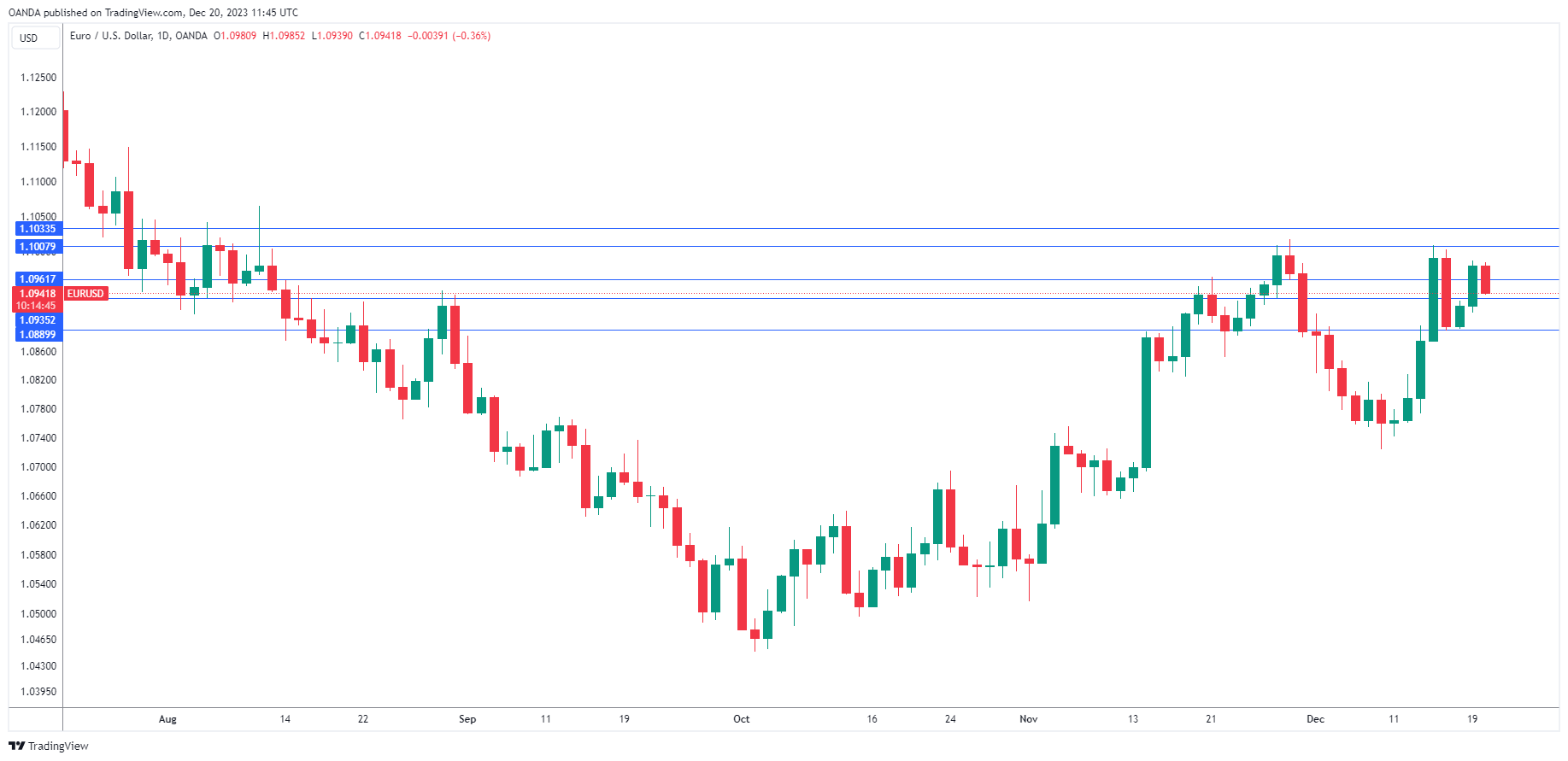
The euro has dropped in Wednesday’s trade. In the European session, EUR/USD is trading at 1.0939, down 0.38%.
German PPI declines by 7.9%
Germany’s producer price index fell by 7.9% y/y in November, another sharp decline after the October reading of -11%. This was lower than the market consensus of -7.5% and marked a fifth straight month of decline. Monthly, PPI dropped 0.5%, more than the consensus estimate of -0.3% and following a 0.1% decrease in October.
The drop in PPI was largely driven by a sharp drop in energy and electricity prices. Germany’s economy remains weak and the decrease in domestic activity and global demand for German products has cooled the economy and resulted in lower inflation in the eurozone’s largest economy. Consumers are feeling squeezed by the cost of living crisis and high borrowing costs and it’s no surprise that German consumer confidence is mired deep in negative territory.
The GfK Consumer Confidence index, released today, showed a slight improvement heading into January, with a reading of -25.1, compared to a revised -27.6 in December and above the market consensus of -27. Recent data out of Germany has not been encouraging. Business confidence remains weak and declined in December. As well, services and manufacturing PMIs pointed to contraction in December.
There is a deep disconnect over rate expectations between the ECB and financial markets. The markets have priced in six rate cuts in 2024, perhaps as early as March. The ECB has tried to dampen rate cut expectations and ECB President Lagarde said that members did not discuss rate cuts at last week’s meeting, at which the central bank held the cash rate at 4.0% for a second straight time. Lagarde received support earlier from ECB member Yannis Stournara this week when he stated that the ECB would need to see inflation sustainably below 3% before it would cut rates..
EUR/USD Technical
- EUR/USD is testing support at 1.0961. Below, there is support at 1.0935 and 1.0889
- 1.1007 and 1.1033 are the next resistance lines
WTI: Oil Price Rises Further on Growing Supply Disruption Concerns
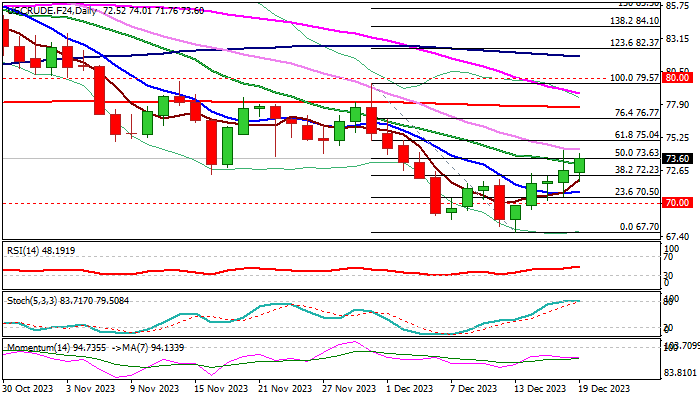
WTI oil price continues to trend higher, extending recovery from Dec 13 low ($67.70) into fifth consecutive day.
Growing tensions on several attacks on ships in the Red Sea, which prompted major shipping companies to reroute, added to fears about supply disruption amid existing conflict in Palestine and further lifted oil prices.
Recovery has so far retraced 50% of $79.57/$67.70 bear-leg, which improved the structure on daily chart, however, momentum indicator is still in the negative territory and stochastic is overbought, warning of possible recovery stall, as larger downtrend from $95.00 (2023 peak of Sep 28) remains intact.
Current corrective phase could extend further to still mark a healthy correction, as pivotal barrier at $77.69 (200DMA) is far and only sustained break here to generate stronger reversal signal and contribute to signals from bear-trap pattern on weekly chart.
Broken Fibo 38.2% level ($72.23) reverted to support which should hold dips and keep near-term bias with bulls, while dip below 10DMA ($70.96) will confirm an end of correction.
Res: 74.29; 75.04; 76.00; 76.77.
Sup: 72.23; 71.76; 70.96; 70.50.
Bundesbank’s Nagel cautions against premature ECB rate cut expectations
Bundesbank President Joachim Nagel has issued a warning to investors and analysts anticipating an early interest rate cut by ECB.
In an interview, Nagel emphasized the importance of maintaining the current interest rate levels to ensure the effective management of inflation. "We must initially remain at the current interest rate plateau so that monetary policy can fully develop its inflation-dampening effect," he stated.
Nagel's cautionary words to those speculating on an imminent rate cut were stark: "Be careful, some people have already miscalculated that." However, Nagel did acknowledge that interest rates have likely reached their peak, suggesting that while an immediate rate reduction may not be on the horizon, the period of aggressive rate hikes should have come to an end.
Nikkei 225 Technical: Potential Major Bullish Breakout After Pull-Back
- Yesterday’s swift rally has led to an overstretched upside momentum condition.
- At the risk of a minor corrective pull-back within its short-term uptrend phase.
- Watch the 33,150 key short-term support.
The price actions of the Japan 225 Index (proxy of the Nikkei 225 futures) have managed to hold above the 32,090 key medium-term support as highlighted in our previous analysis (printed an intraday low of 32,164 on 8 December 2023 before it reversed up by +5.2% to retest its 33 -year high which is the medium-term range resistance of 33,770/825 in place since 16 June 2023.
At a 33-year high with a positive medium-term momentum condition
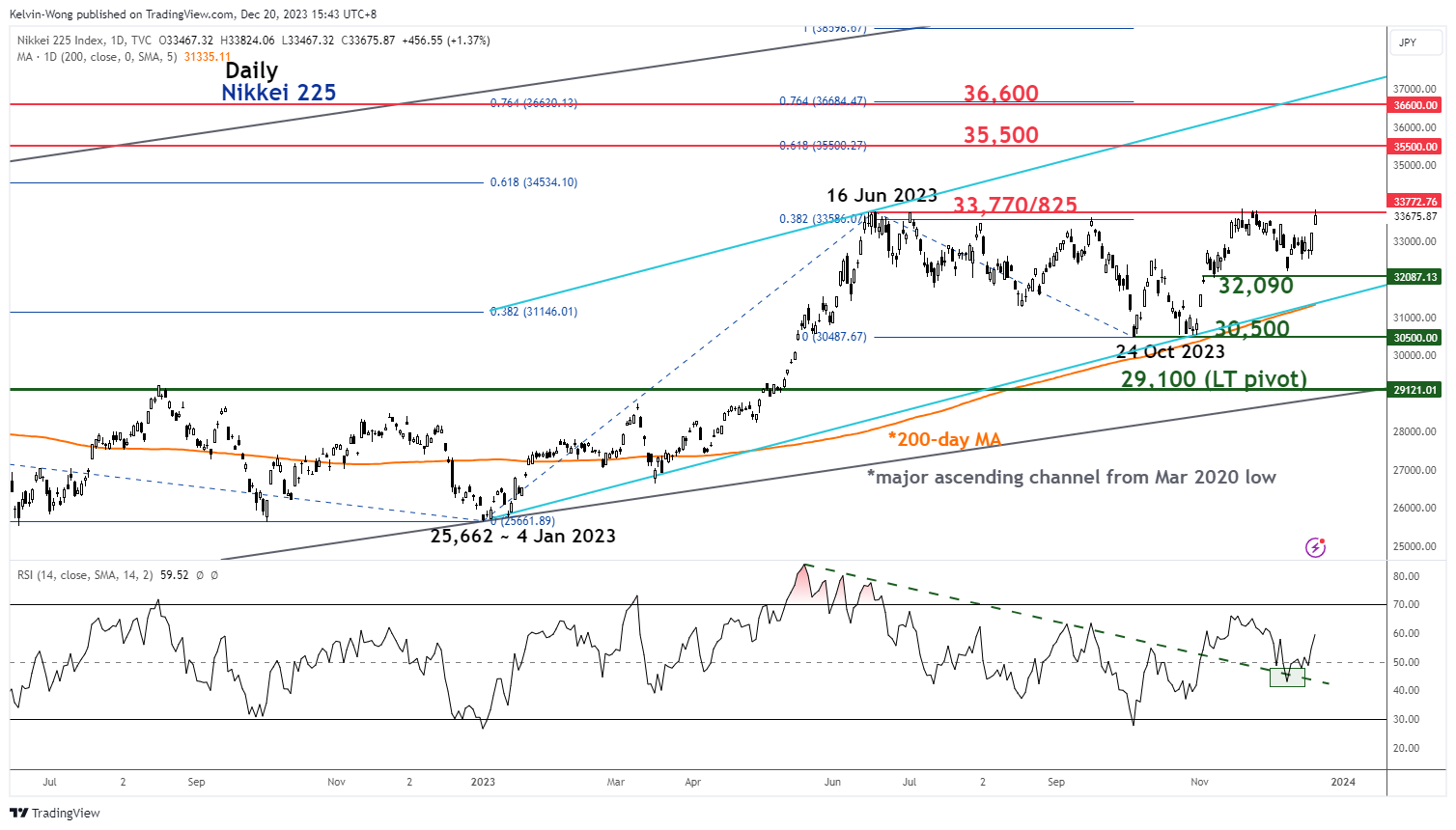
Fig 1: Nikkei 225 major & medium-term trends as of 20 Dec 2023 (Source: TradingView, click to enlarge chart)
This “stubborn level” of 33,770/825 has created a barrier for the bulls thrice on 3 July, 15 September, and 20 November. Hence, right now it will be the fourth test on this barrier today, 20 December at this time of writing.
So, will it be another failure or a bullish breakthrough? The latest reading seen in the medium-term daily RSI momentum indicator has advocated for a potential bullish breakout scenario above 33,770/825.
The daily RSI has managed to stage a rebound after a retest at a parallel pull-back support at the 43 level and has yet to reach its overbought region. These observations suggest that medium-term upside momentum has resurfaced without being overstretched.
Minor corrective pull-back in progress
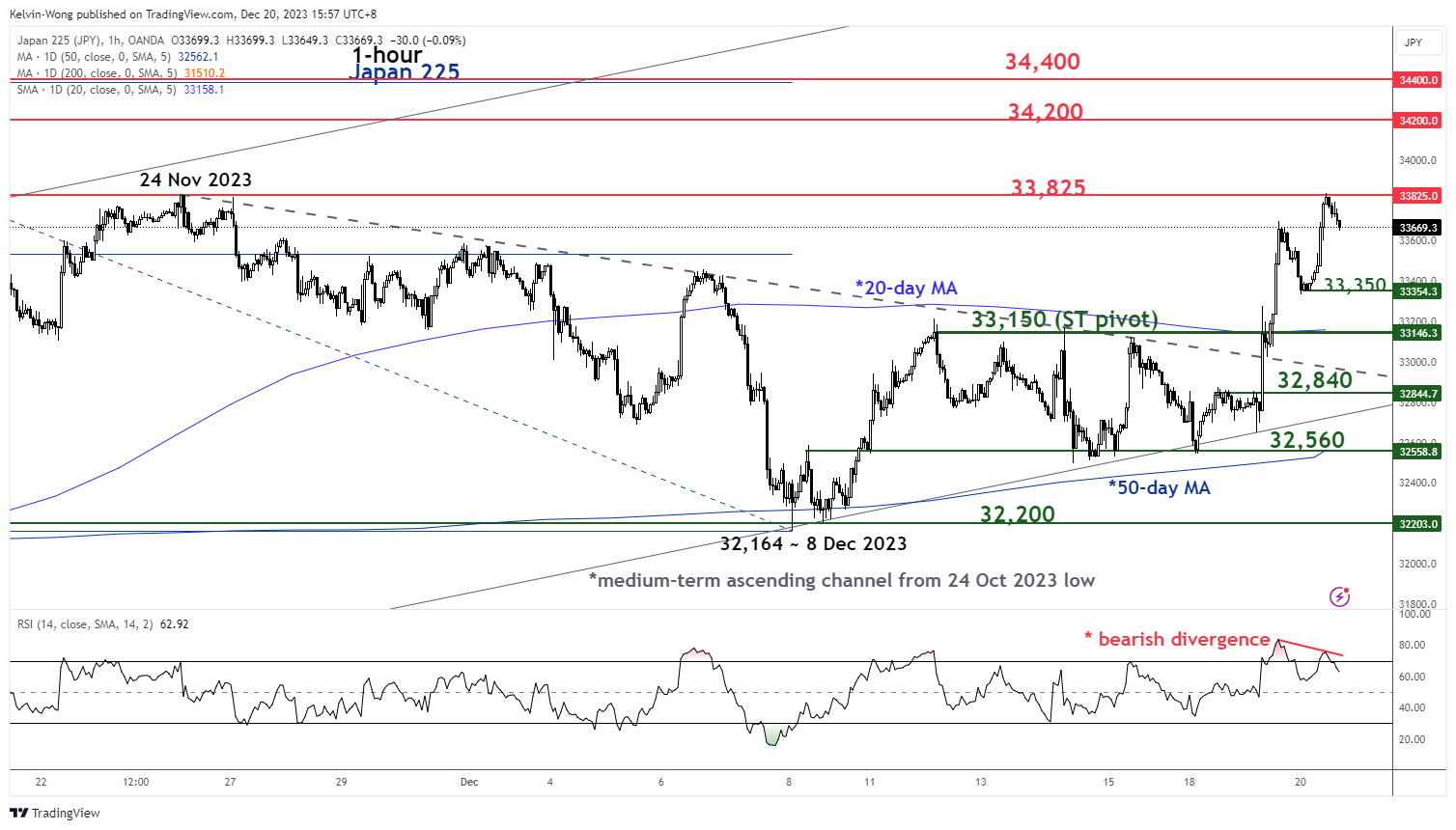
Fig 2: Japan 225 minor short-term trend as of 20 Dec 2023 (Source: TradingView, click to enlarge chart)
Through the lens of technical analysis, price actions do not move in a vertical direction but instead oscillate within trends. The Index has evolved into a short-term uptrend phase from its 8 December 2023 low of 32,164 as price actions surpassed the 20-day moving average.
A point to note that is the rally seen yesterday, 9 December has been reinforced by the Bank of Japan’s monetary policy forward guidance that offered no clear indication of an imminent removal of its short-term negative interest rate policy.
This set of short-term bullish impulsive sequence has been swift which in turn led to an overstretched upside momentum condition as the hourly RSI momentum indicator has just flashed a bearish divergence condition as its overbought region.
Hence, the Index may undergo a minor corrective pull-back at this juncture within its short-term uptrend phase toward the near-term support at 33,350.
If the 33,150 key short-term pivotal support (also the 20-day moving average) manages to hold, the Index may see another probe at 33,825 and above it sees the next intermediate resistance coming in at 34,200 in the first step.
However, a break below 33,150 negates the bullish tone to expose the next immediate supports at 32,840 and 32,560 (50-day moving average).