Sample Category Title
NZD/USD: Correction Nearing Completion,Followed By An Impulse Growth
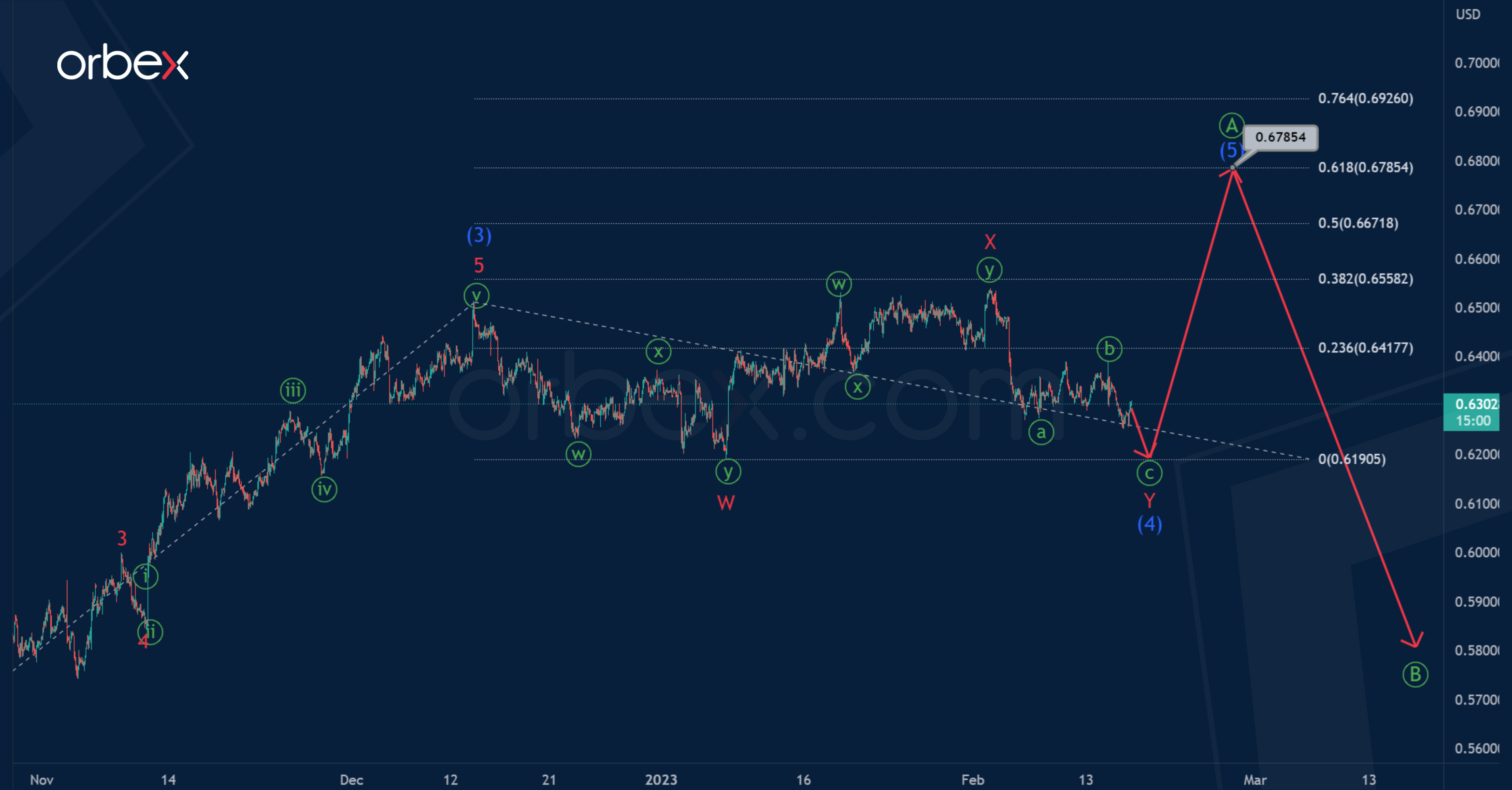
NZDUSD suggests the formation of a new bullish trend.
Most likely, the wave is currently under construction, which may take the form of an impulse of the intermediate degree (1)-(2)-(3)-(4)-(5). It is likely that the long-term intermediate correction (4) will be completed soon. It looks like a double three W-X-Y. The minor wave Y may end at the minimum of the wave W.
In the near future, the price may start moving up in the intermediate wave (5). Its end is expected near 0.678. At that level, wave (5) will be at 61.8% of wave (3).
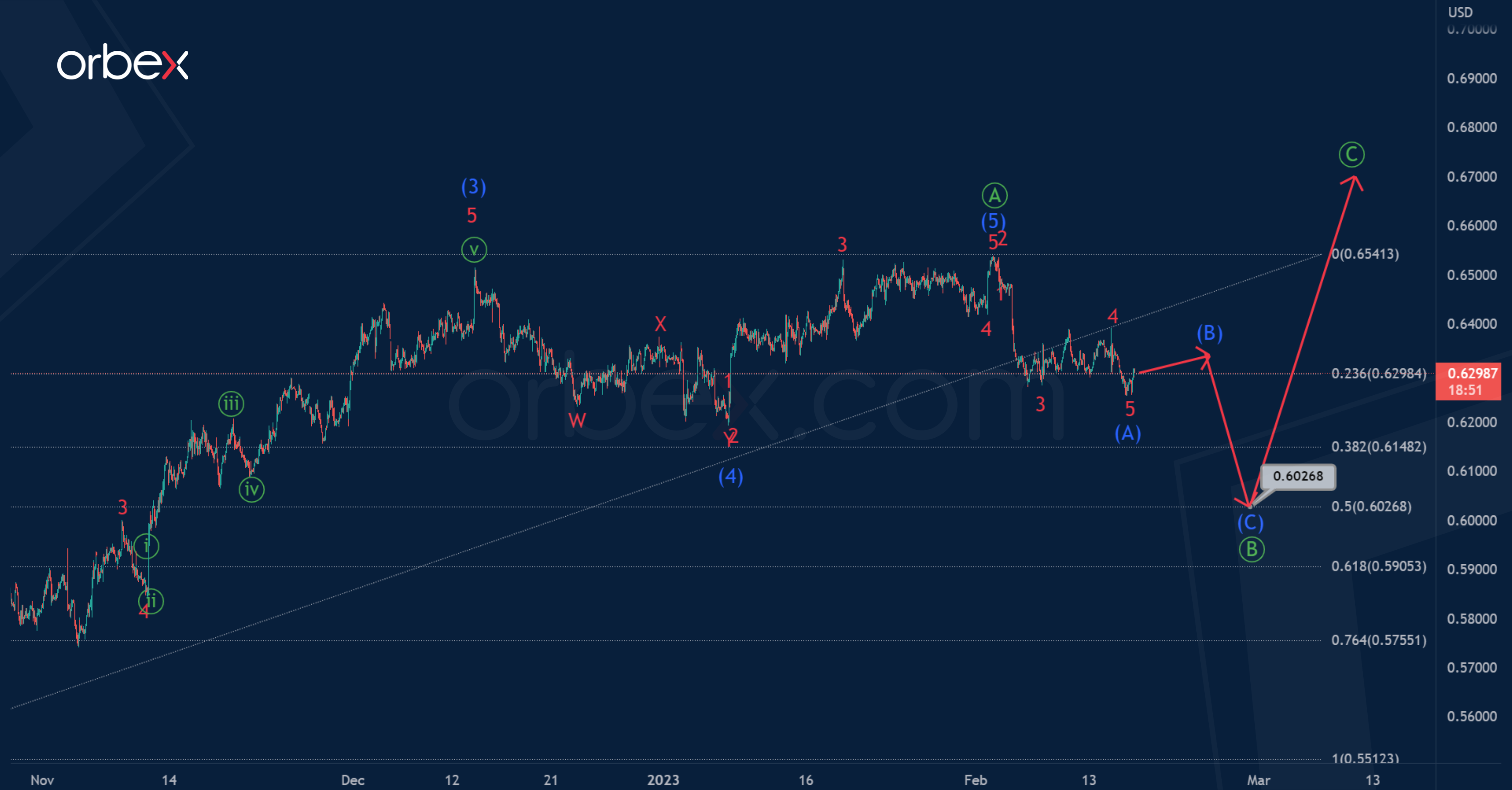
However, the primary wave can be fully completed. It is an intermediate impulse (1)-(2)-(3)- (4)-(5). Thus, in an alternative version of the markup, a bearish correction is under development.
The primary correctionmay take the form of an intermediate zigzag (A)-(B)-(C).
The first wave (A) has come to an end, correction (B) is expected to develop in the near future, after which the decline will continue in impulse (C) approximately to 0.602. At that level, correction will be equal to half of impulse (A).
US Oil Hits Resistance
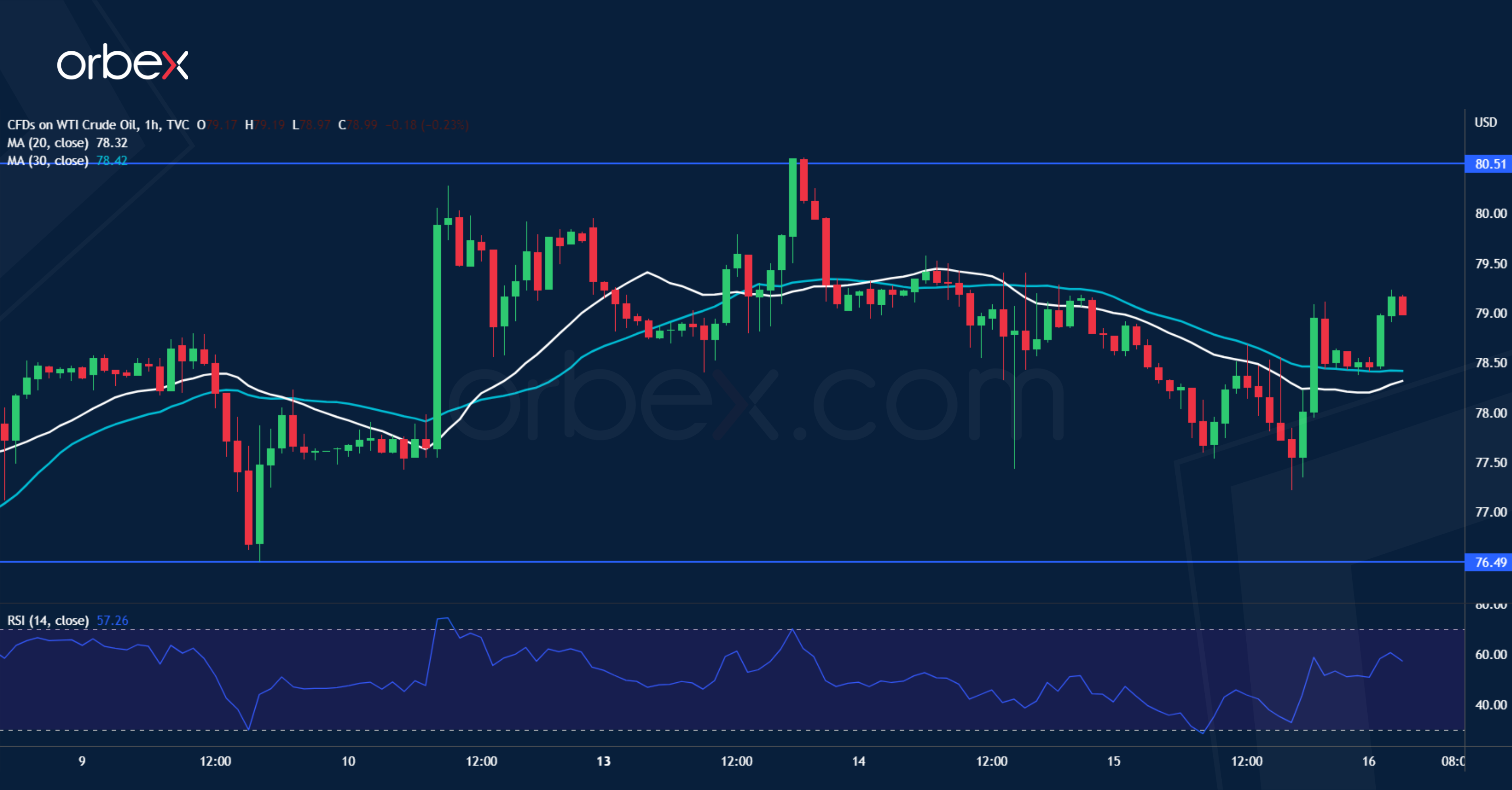
WTI crude struggles after a huge buildup in US stockpiles. The price action is still in a recovery mode following the late January sell-off. The choppy grind into the supply zone around 80.50 and a pullback are a reminder that the market mood is still cautious. 76.50 is the first support and 72.30 the bulls’s last line of defence. A close above said resistance would send the price to the major ceiling at 82.20 which has capped the commodity’s multiple bounces. A bullish breakout would foreshadow a bullish reversal.
USD/CHF Attempts to Recover
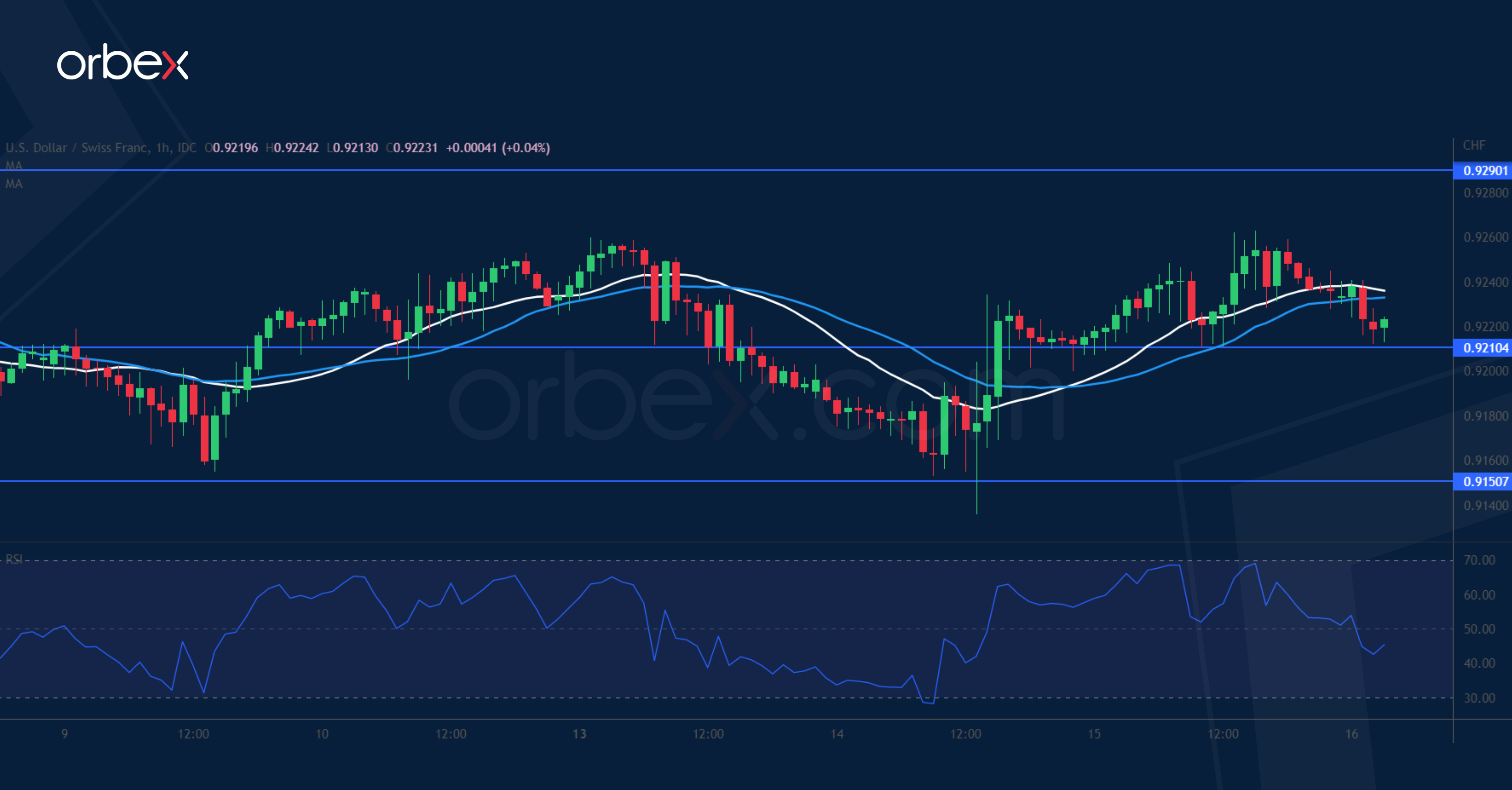
The US dollar advances over robust retail sales figures in January. The selling pressure has eased after the pair tentatively broke above 0.9290 last week. The subsequent fallback found bids at the former resistance near 0.9150, keeping the buy side in the game. 0.9210 is the closest support. The supply zone around 0.9290 is sellers’ last stronghold and its breach would attract momentum buying and open the door to January’s high of 0.9400, and that would be a step closer to a bullish reversal in the medium-term.
GBP/USD Tests Key Support
The pound slipped after January’s CPI came out below expectations. On the daily chart, the pair is still range bound between January’s low (1.1850) and high (1.2450). For intraday traders, a shooting star in the supply zone (1.2260) from a faded bounce indicates solid selling interests. The previous swing low of 1.1960 is a key level to keep the rebound valid. A bearish breakout may trigger a new round sell-off to the critical floor at 1.1850. As the RSI bounces back into neutral territory, 1.2070 is the first resistance.

Higher Core Yields Slightly Favoured the Dollar
Markets
US data continue surprising to the upside. The Fed’s aim to slow demand via higher interest rates apparently didn’t hurt the consumer in a profound way yet. Headline January retail sales jumped 3.0%, admittedly after two monthly declines. Growth was broad-based. Core control group sales rose a bigger than expected 1.7%. The Empire manufacturing survey, while still in negative territory rebounded sharply from -32.9 to -5.8, indicating potential better prospects for the sector, too. Combined with uncomfortably high US CPI inflation published Tuesday, markets realize that the case is building for the Fed to raise rates higher than guided in December and to keep them at that elevated level for longer. US yields closed off the intraday highs, but still gained 1.6 bps (2-y) to 6.6 bps (30-y). The market now sees a about a 50% chance for a final 25 bps hike early summer, after two additional steps in March and May. German yields showed a similar pattern, rising between 2.5 bps (2-y) and 5.6 bps (30-y). So, no further curve inversion. Are markets considering that CB’s will accept inflation to stay above the target for a bit longer, too? Before the EU Parliament, ECB’s Lagarde reiterated the intention to raise the policy rate by another 50 bps in March, but gave no concrete guidance on the path afterward. Good news and expectations for higher rates still hardly hurt equity sentiment. After a negative open, US indices again closed in green (Dow +0.11%; Nasdaq +0.92%). Higher core yields slightly favoured the dollar, but no key resistance levels were broken. DXY tested the 104 area but closed just below. EUR/USD finished at 1.0689, but the 1.0656 correction low stayed out of reach. Softer than expected UK inflation data aborted recent sterling comeback. EUR/GBP jumped higher to close at 0.8883.
Most Asian markets enjoy a risk-on sentiment in the wake of yesterday’s intraday rebound on WS. Treasury yields are easing marginally, as does the dollar (EUR/USD 1.0700, USD/JPY 133.9). Later, the calendar remains interesting. The monthly pace of US PPI inflation (expected at 0.4% M/M) is also expected to reaccelerate. The Philly Fed business outlook and the NY Fed services index, together with the US jobless claims will provide further evidence on the resilience of activity. Positive surprises will cement recent repositioning toward ongoing decisive Fed action. Plenty of Fed and ECB speakers are scheduled to speak. The US 2-y yield (4.61%) has the cycle (closing) peak with reach. The German 10-y (2.47%) and the EMU 10-y swap yield (3.02%) did brake intermediate resistance (2.20% and 2.92%), conforming the upward momentum. Dollar gains stay limited for now, but a break beyond key USD resistance levels (DXY 104 area, EUR/USD 1.0656) might accelerate the greenback’s momentum.
News Headlines
Australian employment fell 11.5k in January, on the account of full-time employment (-43.3k). Part-time jobs rose by 31.8k still. Analysts penciled in 20k job growth. Australia’s participation rate eased from 66.6% to 66.5% and the unemployment rate ticked higher, from 3.5% to 3.7%. Both were seen unchanged prior to the release. The Reserve Bank of Australia at the February meeting took a hawkish pivot, outlining more rate hikes to ensure inflation heads back to target. The move was at least partially inspired on labour market strength and the risk for a wage-price spiral. After today’s data, some doubts arose. Australian government bond yields pared intraday gains that easily went into the double digits. The short end of the curve currently loses a few bps but money markets nevertheless stick to their >4% terminal rate by the summer. The Aussie dollar quickly recovered from a kneejerk move lower on general USD weakness. AUD/USD holds above 0.69.
The US Congressional Budget Office warned that the government’s “ability to borrow using extraordinary measures will be exhausted between July and September”. If the debt ceiling, currently at $31.4tn, isn’t raised, the so-called X-date could even come before July if income tax receipts due in April fall short of current estimates. The discussion to lift the ceiling is at a stalemate. The White House called on Congress to do so unconditionally but Republicans seek to tie it to sweeping budget cuts. The CBO also delivered an update to its economic outlook for this year and the next decade. It estimates the federal budget deficit at $1.4tn this year. Annual deficits could average $2tn over the next 10 years with the cumulative deficit over that period about $3tn higher than previously thought due to recent legislation and increased borrowing costs.
Just Forget About Recession
Do you remember we were predicting a recession, that was supposed to hit the US and the global economy at the start of the year?
A recession that would hit equities and boost bonds?
Well, forget about all that, it’s not happening. And if you look at the data, what’s happening is the exact opposite.
The US jobs data remains strong, inflation continues coming lower but the downtrend gives signs of slowing. And yesterday’s US retail sales data came as a cherry on top, with an eye-popping 3% rise in retail sales last month; it was the biggest jump in the past two years.
The data could be impacted by seasonality, yes, but people spent more in every single category: car purchases soared and housing got a boost on softer mortgage rates over the past couple of months. The only category which was less promising was energy; gasoline sales were flat.
But the part of sales that impacts the GDP calculation – which anyway excludes gasoline, auto, building materials, rose 1.7%.
On the production side, the news is almost as good. Industrial production was unchanged, but it’s mostly because the warm weather caused a 10% drop in utilities. But besides that, manufacturing output increased 1% and mining output rose 2%.
These numbers are clearly not the type of numbers you would expect to see for an economy that’s marching into a recession.
All this is great news, but it’s clearly not what we expected to see.
Equities up, bonds down
Equities gapped lower at the open, but the strength of the economic data got the bulls buying. The S&P500 ended the session 0.28% higher, while Nasdaq 100 stocks added almost 0.80%.
Treasury yields pushed higher however on expectation that the Federal Reserve (Fed) will continue its rate hike policy – and quite aggressively, given that the rate hikes don’t seem to do any harm to the economy.
The US 2-year yield hit 4.70% after the data yesterday, the 10-year advanced past 3.80%.
Deutsche Bank revised its terminal Fed rate from 5.1% to 5.6%. Citi believes that the Fed will end up pushing the rates all the way up to 6%.
Today, the US will reveal the latest producer price inflation data. Producer prices are expected to have ticked higher by 0.4% m-o-m in January, versus a 0.4% retreat printed last month. On a yearly basis, the PPI index is expected to have slowed from 6.2% to 5.4%.
Normally, I would expect a positive PPI surprise – meaning stronger inflation figures - to impact the market mood negatively, but at this point, I am not even sure that it matters.
FX and commo
The US dollar bears gave in to the bullish pressure yesterday, and the resistance near the 50-DMA in the dollar index was finally cleared.
The EURUSD fell to 1.0660 and is struggling around the 1.07 level this morning, with prospect of a further fall as the unexpectedly strong economic data gives that unexpected strength to the greenback. The key support stands at 1.0475, around the major 38.2% Fibonacci retracement which distinguishes the latest positive trend, from a bearish reversal.
The rebound in the dollar-yen gains momentum. The pair traded above the 134 mark yesterday, and the strong US data – which reinforce the Fed hawks’ hands, and no big news from the new BoJ Governor Ueda regarding the bank’s unadopted dovish policy keep pushing the pair higher. Japan announced its largest ever trade deficit today, which is also not supportive news for the yen. Here the key resistance stands at 136.50/137 range, that includes the major 38.2% retracement on the latest selloff and the 200-DMA.
Technically, both for the EURUSD and the dollar-yen, as long as these levels are not breached, there is no change in the trend. But if the US data continues surprising to the upside, there is no guarantee that the dollar will not jump into a bullish trend, yet again.
In precious metals, the positive pressure in the US yields and the stronger dollar continue weighing on gold. The price of an ounce hit $1830 yesterday. $1814 is the key Fibonacci support that should distinguish between the actual positive trend, and a medium-term bearish reversal.
In energy, the barrel of American crude fell to the 50-DMA, as the EIA data revealed an eye-watering 16-mio barrel build in US crude inventories last week. Well, the EIA also insisted yesterday that global oil consumption will climb by 2 mio barrels this year thanks to Chinese reopening. That and the slowing recession odds should normally support the oil bulls, but the 100-DMA, which stands near $81pb, seems difficult to clear from today’s perspective.
As a result, if the major US indices were up yesterday, energy stocks didn’t benefit from a broad-based rally. Devon Energy was one of the worst performers of the S&P500 yesterday with a more than 10% slump in the session, while Occidental Petroleum slid more than 5%.
US Macro Data Continues to Surprise to the Upside
Market movers today
A fairly quiet day on the global data front. The Philly Fed index will give more insights about the performance of the US economy in February, while a range of ECB and Fed speakers are on the wires during the day.
In Norway, Norges Bank's Q1 expectations survey will be important, especially the expectations regarding wages and prices. We also look forward to the Q1 oil investment survey. Central bank governor Ida Wolden Bache's annual address will be a golden opportunity to shed more light on the balancing act currently facing Norges Bank.
Riksbank deputy governor Per Jansson speaks on monetary policy (08:30). He will likely stick to the 'Riksbank script' until the minutes have been published (on Monday). That said, markets may be sensitive to signals or hints of a personal bias, as he is one of the hawkish members.
The 60 second overview
US: The 10y UST yield rose above 3.8% before easing modestly late in yesterday's session, as markets continue to price in tighter financial conditions amid upbeat US macro data. January retail sales came out clearly above expectations, with core sales (excl. motor vehicles & gas stations) rising by 2.6% m/m. While warm weather likely contributed to the upside surprise, sales recovered broadly across all main sectors, which is consistent with the earlier positive signals from leading indicators. The strong momentum appears to have continued in February as well, as NAHB housing market index and NY Fed's Empire Manufacturing index also surprised to the upside. Notably, the prices paid index of the latter rebounded from January lows to 45.0 (above pre-covid average of 26.9). For now, we stick to our call of Fed terminal rate at 5.00-5.25% and no cuts this year.
Global inflation watch: While the recovering macro indicators point towards lower recession risks in the near-term, they also increase the risk of underlying price pressures prolonging from here. In our latest monthly Global Inflation Watch - High services inflation remains a worry for central banks, 15 February, we highlight how core inflation pressures remained sticky in January both in the euro area as well as in the US.
US Budget outlook: The bipartisan US Congressional Budget Office (CBO) warned yesterday that the US treasury could exhaust its ability to pay all its bills between July and September unless the debt ceiling is lifted, or even earlier if the tax revenues in April are lower than expected. The outlook is roughly in line with previous estimates, and while we do expect the ceiling to eventually get lifted, the negotiations are likely to go down to the wire. CBO also warned about the longer-term budget outlook, as the total budget deficit is now seen averaging 5.9% of GDP in 2023-2032, 0.9%-points higher than in the previous May estimates.
Equities: Equities were higher yesterday as key US macro data came in very strong. Data not 1-1 linked to prices and inflation and yields took a breather yesterday. With the combination of strong macro data and limited yield moves, we had all that was needed to bring cyclical outperformance in a classic late-cycle fashion. At sector level, more sectors were lower than higher but as heavy weight tech, consumer discretionary and industrials were higher it was enough to lift most indices. In US Dow +0.1%, S&P 500 +0.3%, Nasdaq +0.9% and Russell 2000 +1.1%.
The positive sentiment continuing in Asia this morning with indices rising the most in a month. US and European futures higher as well this morning.
FI: Yesterday, ECB's Lagarde once again affirmed a 50bp rate hike in March as the price pressure remains high. The comment was made during a speech to the EU parliament. Given earlier comments from other ECB officials, it supports the view that ECB is not done hiking after the March meeting given the current inflationary pressure.
European yields and interest rates also rose yesterday, but this time it was driven more from the long end of the curve given the long end supply from Belgium as well as the upcoming 30Y deal from Italy, that was announced yesterday.
FX: Benign risk sentiment in Asia supports Scandies and EUR/USD is back at 1.07. JPY found some support earlier in this week on the news that Kazuo Ueda had been nominated new head of Bank of Japan, but since then USD/JPY has ventured higher again and is now closing in on January highs, currently the loser within G10 space in February, closely followed by GBP that continues to struggle.
Credit: The EUR credit market benefitted from the overall positive risk sentiment yesterday where iTraxx Xover tightened c.6bp (closing below 400bp) while Main tightened 1.4bp and closed in 75.7bp.
Nordic macro
Sweden: Riksbank deputy governor Per Jansson speaks on monetary policy (08:30). He will likely stick to the 'Riksbank script' until the minutes are published (on Monday). That said, markets may be sensitive to signals or hints of a personal bias given him being one of the hawkish members on the board.
Norway: Norges Bank's Q1 expectations survey will be very important in the current situation. It is a fairly safe bet that expectations for this year will be at least as high as in the previous survey. Particularly interesting will be what level of wage growth the unions envisage. We also look forward to seeing where expectations for next year come out in terms of both wages and prices. Expectations peaking this year and falling next year are an important premise for a reduced risk of persistently high inflation. Central bank governor Ida Wolden Bache's annual address will be a golden opportunity to shed more light on the balancing act currently facing Norges Bank. We would also love to hear the bank's view on whether the long-term neutral real interest rate has changed. Last autumn, the bank estimated that it was between -0.5% and +0.5%. Finally, the Q1 oil investment survey will probably indicate a significant lift in oil investments in 2023, but this has probably already been discounted by most forecasters.
EUR/JPY Daily Outlook
Daily Pivots: (S1) 142.68; (P) 143.06; (R1) 143.77; More....
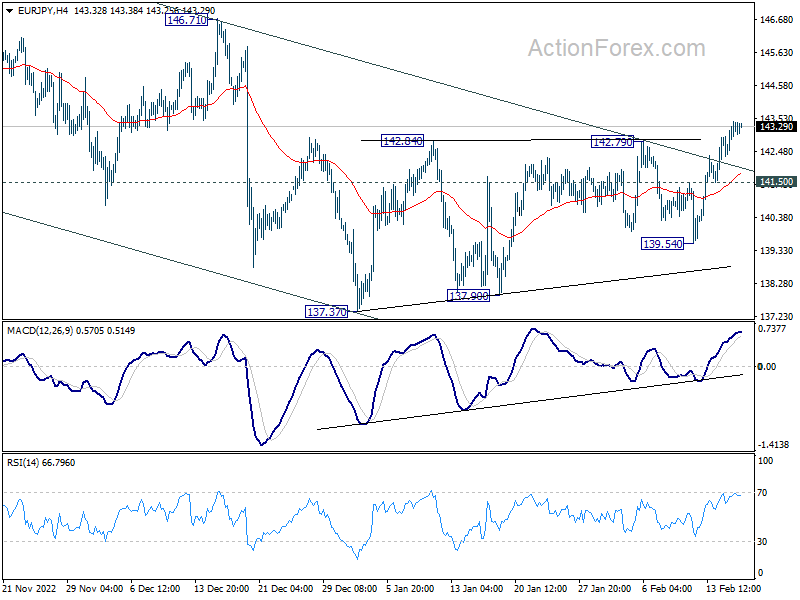
EUR/JPY's break of 142.79 resistance argues that whole correction from 148.38 has completed at 137.37 already. Intraday bias is back on the upside for 146.71 resistance next. On the downside, though, below 141.50 minor support will dampen this bullish view, and turn intraday bias neutral again.
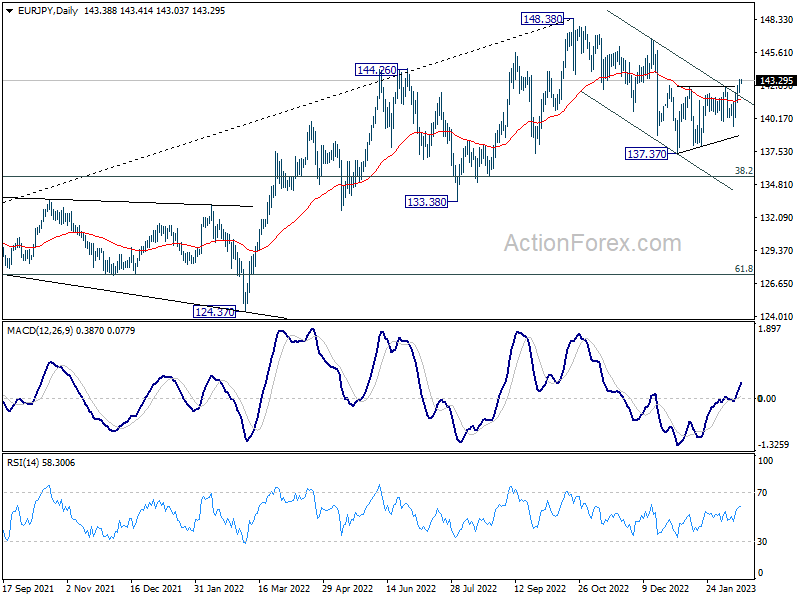
In the bigger picture, as long as 55 week EMA (now at 138.87) holds, larger up trend from 114.42 (2020 low) is still in progress for 149.76 long term resistance. However, firm break of 55 week EMA will bring deeper fall to 38.2% retracement of 114.42 to 148.38 at 135.40. Sustained break there will raise the chance of trend reversal, and target 61.8% retracement at 127.39.
GBP/JPY Daily Outlook
Daily Pivots: (S1) 160.77; (P) 161.46; (R1) 162.14; More...
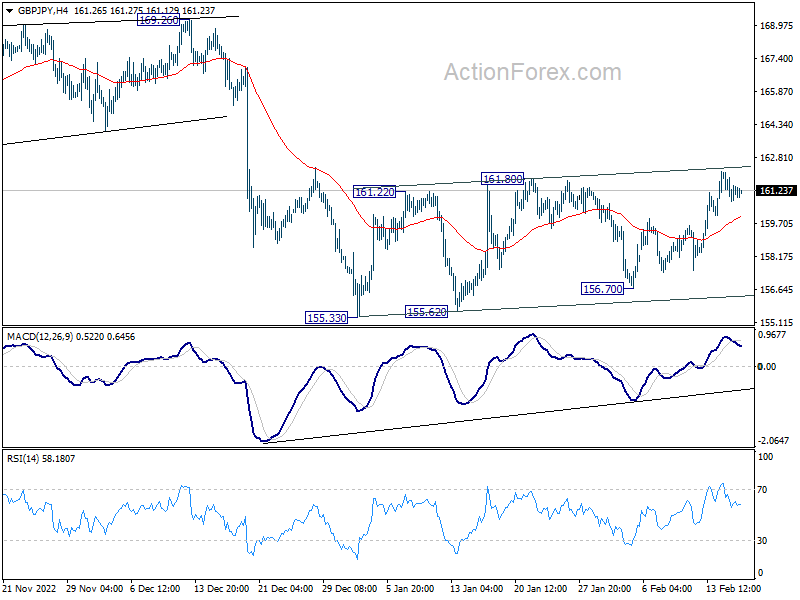
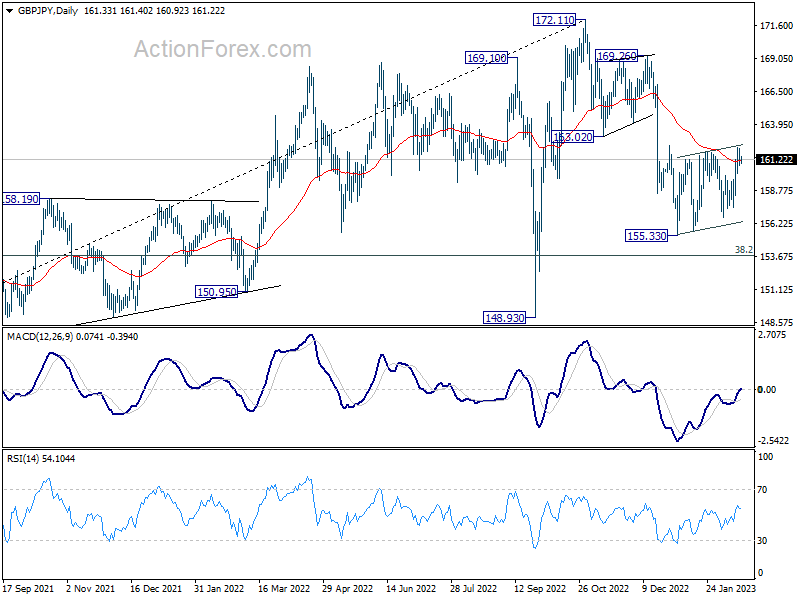
Intraday bias in GBP/JPY stays neutral with focus on 161.80 resistance. Decisive break there, and sustained trading above 55 day EMA (now at 160.99) will argue that whole decline from 172.11 has completed. Bias will be back on the upside for 169.26/172.11 resistance zone. On the downside, break of 155.33 low will resume the fall from 172.11 to 153.70 fibonacci level next.
In the bigger picture, as long as 163.02 support turned resistance holds, decline from 172.11 medium term top is expected to continue to 38.2% retracement of 123.94 to 172.11 at 153.70. Sustained break there will raise the change of trend reversal and target 61.8% retracement at 142.34. Nevertheless, break of 163.02 support turned resistance will argue that the decline has completed, and retain medium term bullishness.
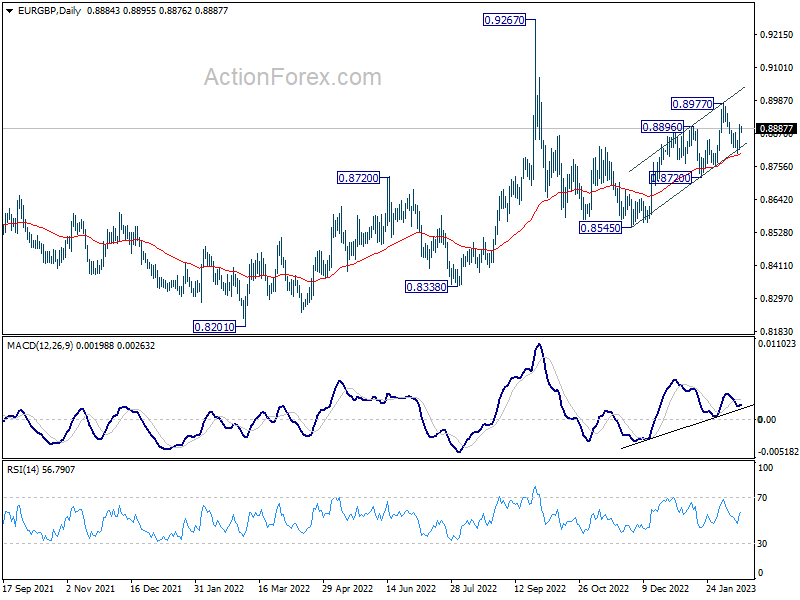
EUR/GBP Daily Outlook
Daily Pivots: (S1) 0.8830; (P) 0.8867; (R1) 0.8917; More...
Break of 0.8873 minor resistance suggests that pull back from 0.8977 has completed at 0.8802, after hitting near term channel support. Intraday bias is back on the upside for retesting 0.8977 first. Firm break there will resume howl rally from 0.8545. However, break of 0.8802 will now be a sign of reversal and turn bias back to 0.8720 support instead.
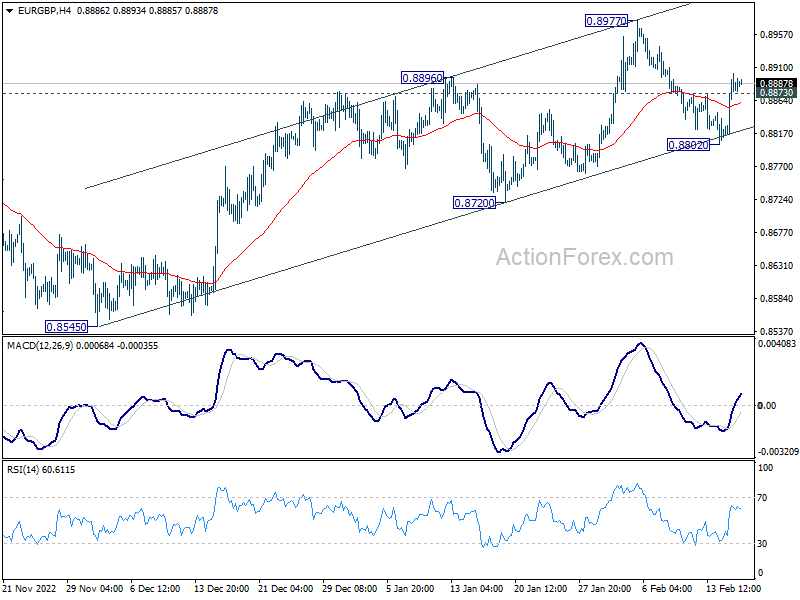
In the bigger picture, the notable support from 55 day EMA (now at 0.8780) retains near term bullishness. Break of 0.8896 should target 0.9267 (2022 high) and possibly above, to resume whole up trend from 0.8201 (2022 low). However, break of 0.8270 support and sustained trading below 55 day EMA will set the stage for 0.8545 and below.