

Sample Category Title
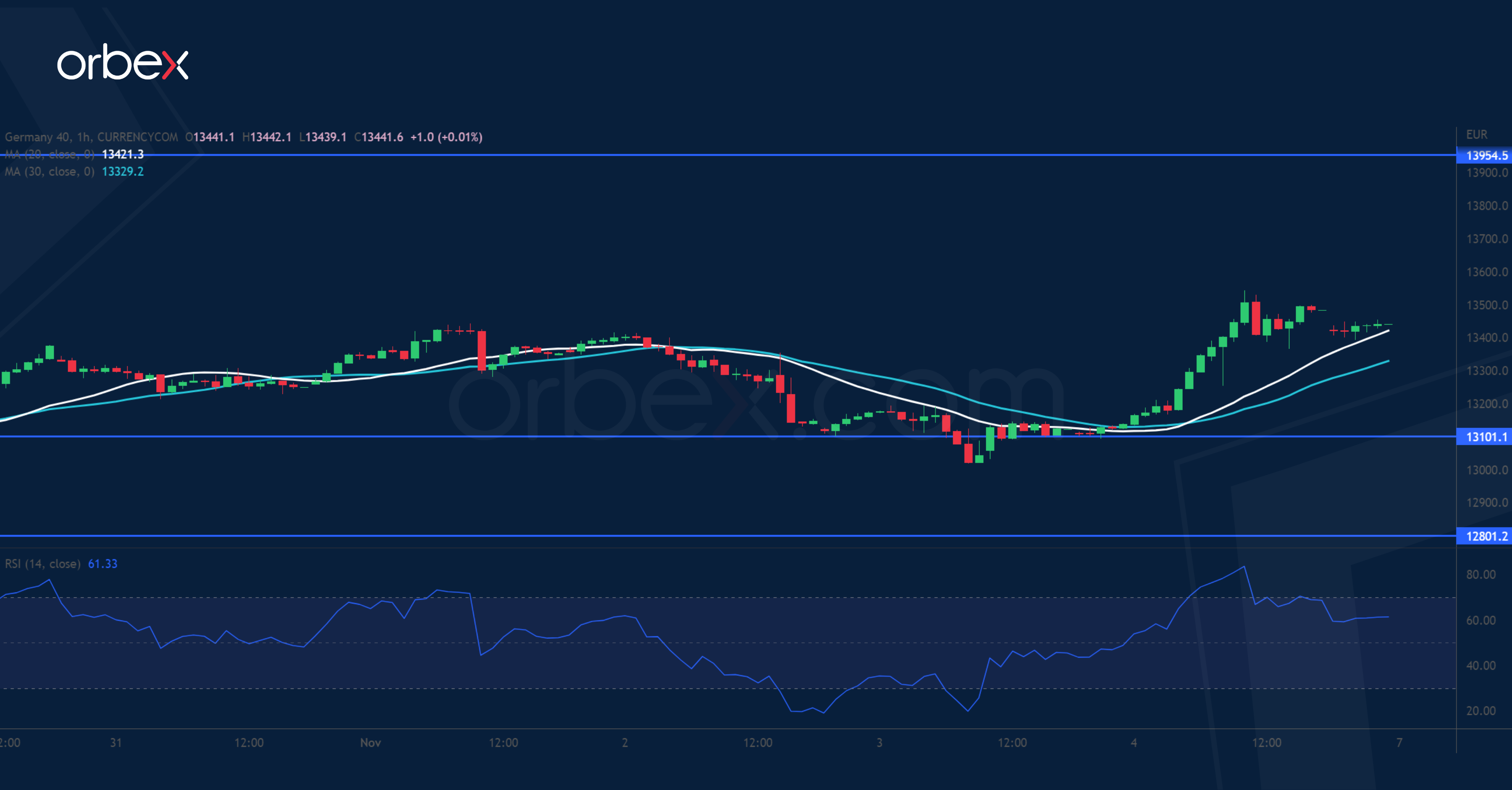
DAX 40 Breaks Major Ceiling
The Dax 40 rallies as mixed US jobs data lift risk appetite across asset classes. The index previously met stiff selling pressure near September’s high around 13450. A combination of profit-taking and fresh selling in this supply zone has weighed on the short-term price action. But the fallback has only shaken out weak hands and the swift recovery with a higher high indicates that the bulls are still in play. The bullish breakout could lift offers to the August high (13950). 13100 is the support should the Dax need some breathing room.
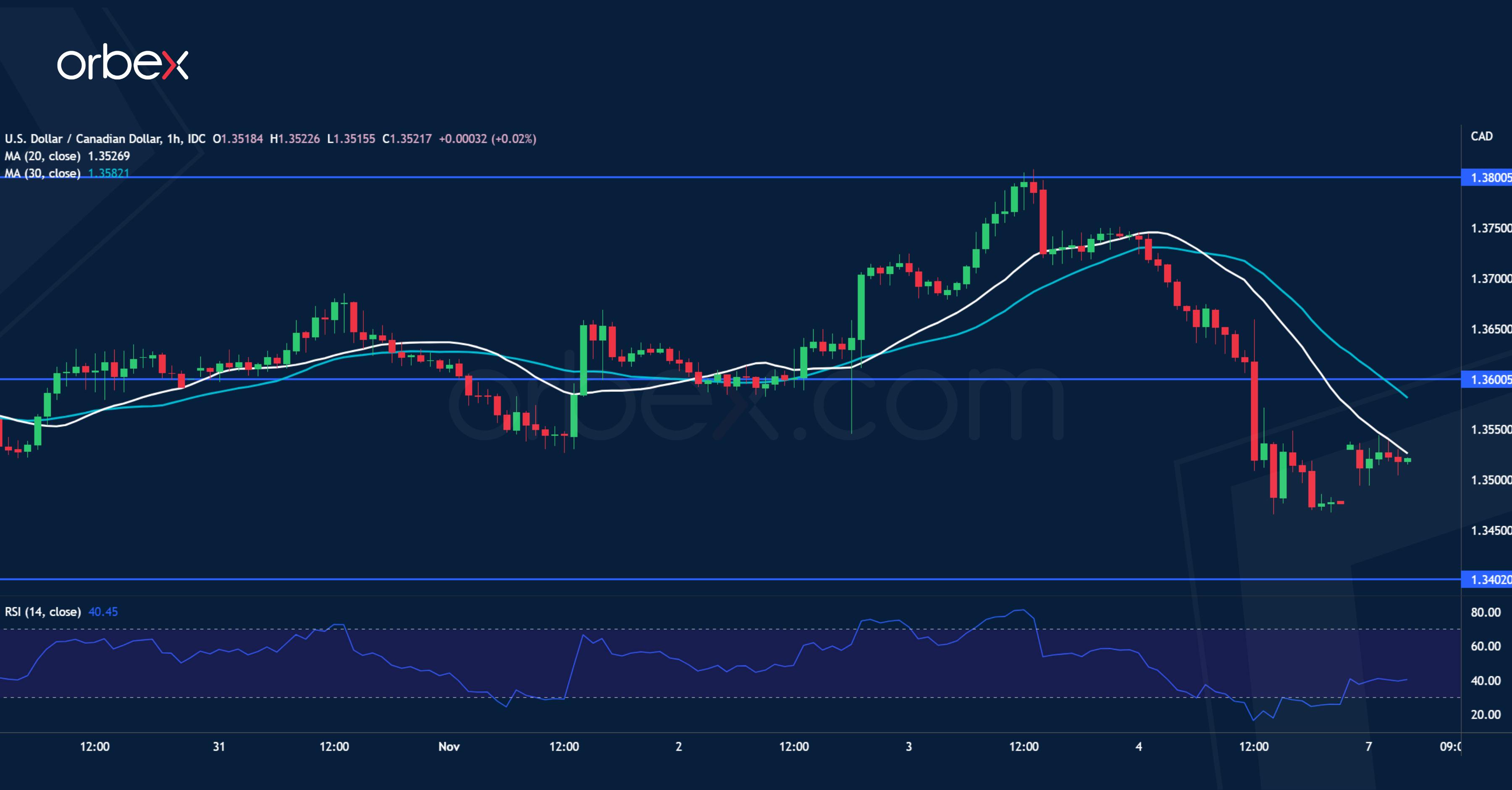
USDCAD Breaks Critical Support
The Canadian dollar soared after solid jobs data raised bets for a large-sized rate hike by the BoC. The pair has been struggling to hold onto its gains above October’s lows (1.3500), which was a critical level to keep the rally relevant in the short-term. A previous rally came under pressure in the supply zone around 1.3800, then a fall below 1.3600 revealed that the bears have regained control. A dip below 1.3500 would extend losses towards 1.3400. An oversold RSI may cause a limited rebound with 1.3600 as the first hurdle.
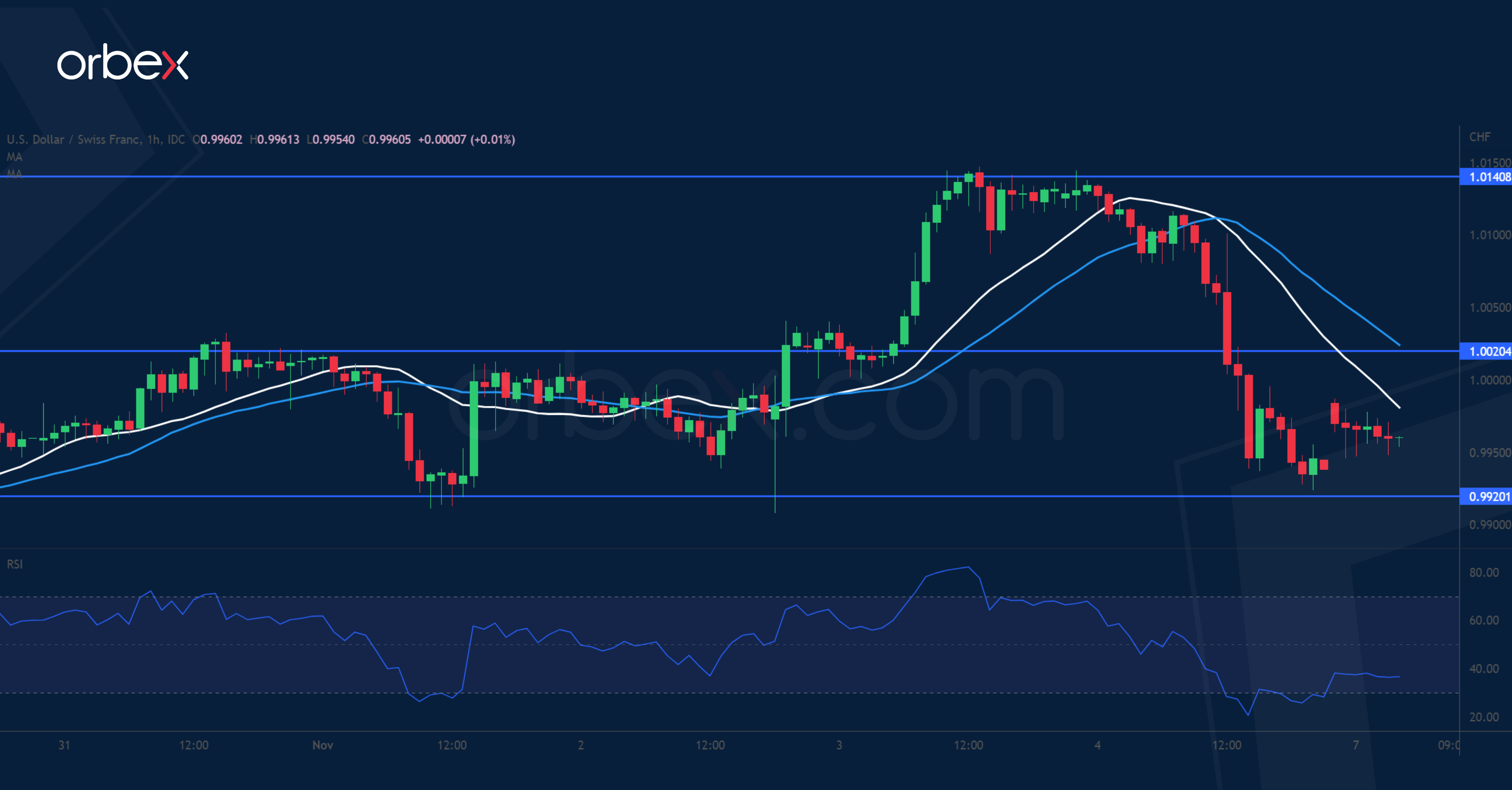
USDCHF Struggles for Support
The US dollar plunged after data showed a higher US unemployment rate in October. A break below 1.0000 could prolong the consolidation as the parity level has been acting like a magnet, pulling the price back and forth. With the RSI deeply in the oversold area. Trend followers may see the pullback as an opportunity to stake in. 0.9920 is the first support and 0.9840 a critical level to keep the price afloat. 1.0020 is a fresh resistance and a bounce above 1.0140 could pave the way for a rally to a six-year high at 1.0350.
EU Says US Breaking WTO Rules With Inflation Reduction Act
Markets
On Friday, the US October payrolls was the first reality check after Fed Chair Powell’s hawkish post-FOMC press conference. The report in globo was stronger than expected with job gains at 265k (vs 193k expected) and a substantial upward revision to the September gain. Wage growth (AHE) also remained solid, gaining 0.4% M/M to be 4.7% higher Y/Y. This for sure isn’t the substantial cooling in labour market conditions that Powell and co deem necessary to slow aggregate demand and finally break the inflationary dynamics. Admittedly, the data from the consumer survey were weaker with the unemployment rate rising from 3.5% to 3.7% and the participation rate easing to 62.2% (from 62.3%), but this for sure isn’t enough to change the Fed call’s for a 5%+ peak policy rate next year. Still the market reaction was a bit counter-intuitive. After a brief moment of hesitation, especially US short-term yields turned south in a remarkable steepening move. Fed’s Barkin in an interview reconfirming the case for a slower pace of rate hikes and leaving open the debate on the peak rate level maybe supported the move. At the end of the day, the US 2-yield eased 5.5 bps while the 30-y still gained 6.5 bps. The US 10-y real yield reversed most of its post-Fed gain (currently 1.67%). German bunds underperformed US Treasuries in a bear steeping moves with yields rising between 4.3 bps (2-y) and 6.4 bps (30-y). The move probably was supported by comments from ECB’s Lagarde as she said that just a removal of policy accommodation won’t be enough bring inflation back to 2.0%.
The constructive bond market reaction to what still is to be considered a solid labour market report also filtered through in other markets. US equity indices gained 1.2%/1.3%. The Eurostoxx50 even closed 2.65% higher. Declining short-term interest rates/differentials and a risk-on sentiment also pushed the dollar off a cliff. The DXY TW index dropped from an open just below 113 to close at 110.87. EUR/USD traded near 0.9750 at the open but finished about 2% higher at 0.9957. Sterling gained against the dollar (cable close 1.1379) but still lost against the euro (EUR/GBP close 0.876) after a soft BoE narrative post Thursday’s BoE decision.
This morning, Asian equity markets show gains of up to 2.8% on the WS performance on Friday and as the debate/speculation on China potentially easing its COVID strategy continues. US Treasuries show no clear trend. The dollar regains modest ground after Friday’s battering. Today, the eco calendar in Europe and the US is almost empty. Later this week, the US mid-term elections and the US October CPI release (Thursday) will take center stage. The US Treasury will sell 3-y, 10-y and 30-y notes. Evidently, MPC members from the ECB, the Fed and the BoE are now again free to give their give after recent policy decisions. Friday’s market reaction suggests that markets might be a bit cautious to already fully embrace the consequences of the Fed 5% message ahead of Thursday’s CPI release. Even so, the downside in yields (both in the US and Europe) should be well protected. Friday’s USD correction - EUR/USD rebound was remarkable. Still we expected the 1.00/1.0095 area to remain tough resistance. EUR/GBP sustainably trading above the 0.8781 neckline would be a positive for the cross rate/further negative for sterling.
News Headlines
The EU says the US is breaking WTO rules with its Inflation Reduction Act and warned it could lead to retaliatory measures from Brussels and other US allies. The IRA contains a $369bn package of subsidies and tax credits for green investments and products made in the US. The EU wants to change nine provisions that contain incentives that affect the manufacturing of products including solar panels, wind turbines and clean hydrogen. It said that if the Act gets implemented, it may result in inefficiencies and market distortions and possibly “trigger a harmful global subsidy race to the bottom on key technologies and inputs for the green transition”.
German finance minister Lindner has budgeted more than €83bn to finance energy price caps for gas (€40bn earmarked) and electricity (€43bn) in 2023, Reuters reported citing documents sent to budget committee lawmakers yesterday. It is part of the €200bn package to help households and businesses with their energy bills unveiled by German chancellor Scholz back in September. The plans are scheduled to run until spring 2024 and the total amount will be borrowed this year as Berlin makes use of the current suspension of the debt limit.
GBP/JPY Daily Outlook
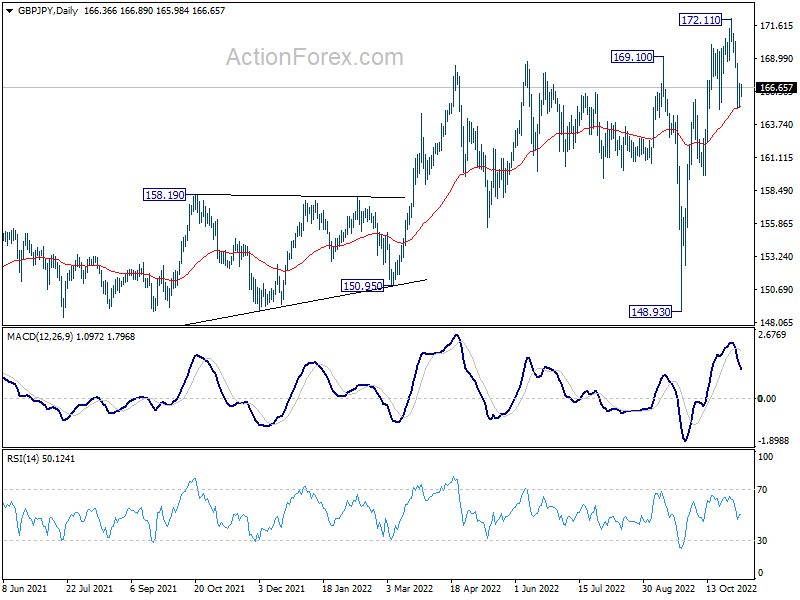
Daily Pivots: (S1) 165.63; (P) 166.31; (R1) 167.47; More...
Intraday bias in GBP/JPY remains neutral for the moment, and further rally is mildly in favor with 164.95 support intact. On the upside, break of 172.11 will resume larger up trend. However, break of 164.95 will bring deeper pull back to 159.71 support and below.
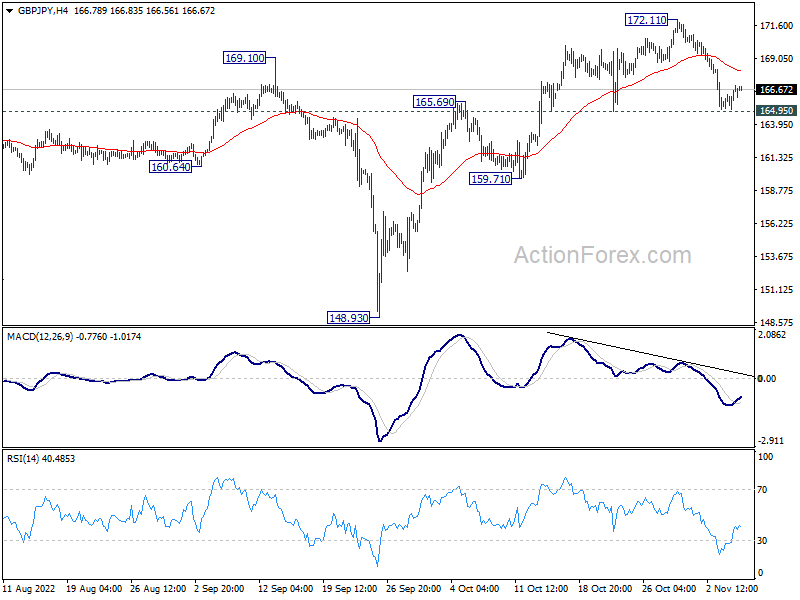
In the bigger picture, up trend from 123.94 (2020 low), as part of the trend from 122.75 (2016 low) is still in progress. Further rise would be seen to 161.8% projection of 122.75 to 156.59 (2018 high) from 123.94 at 178.69. This will now remain the favored case as long as 148.93 support holds.
EUR/JPY Daily Outlook
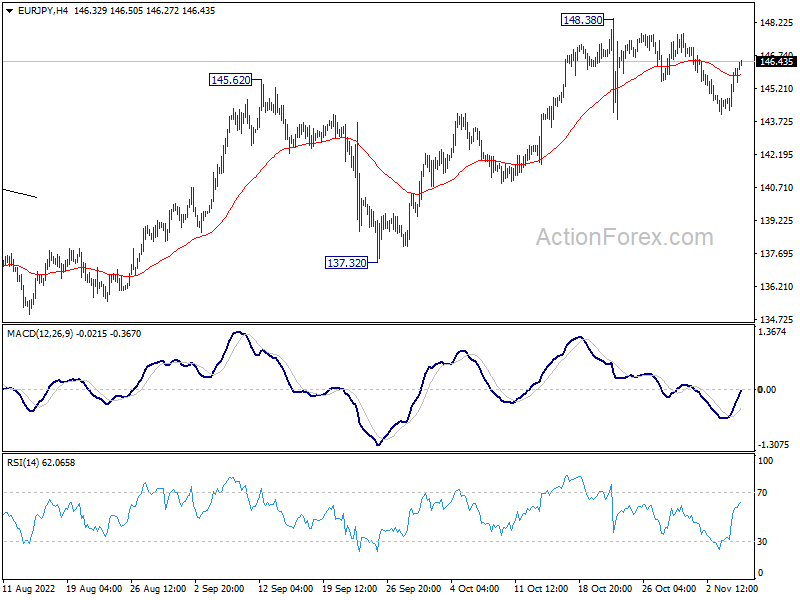
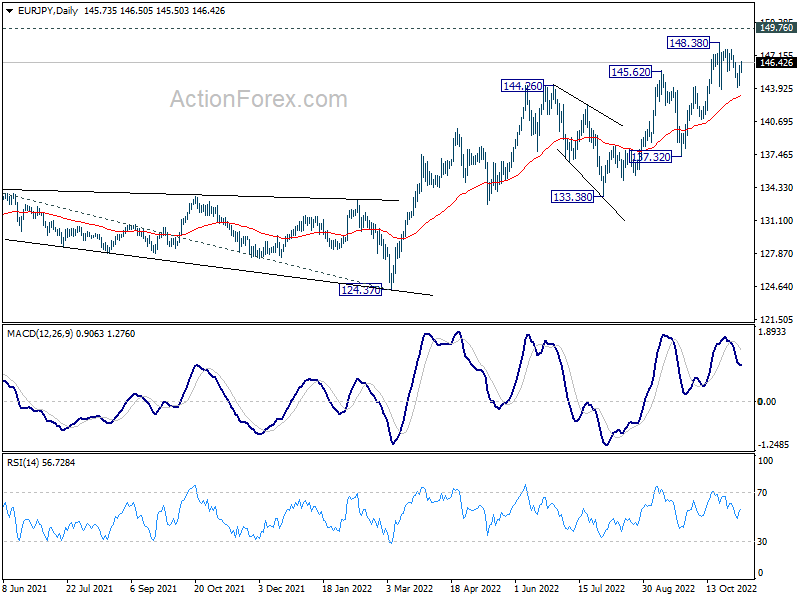
Daily Pivots: (S1) 144.82; (P) 145.48; (R1) 146.72; More....
Intraday bias in EUR/JPY stays neutral first and consolidation from 148.38 could extend. In case of deeper fall, downside should be contained by 55 day EMA (now at 143.27) to bring rise resumption. On the upside, break of 148.38 will resume larger up trend to 149.76 long term resistance next.
In the bigger picture, the up trend from 114.42 (2020 low) is still in progress for 149.76 (2014 high). Decisive break there will pave the way to 161.8% projection of 114.42 to 134.11 from 124.37 at 156.22. This will now remain the favored case as long as 137.32 support holds.
EUR/GBP Daily Outlook
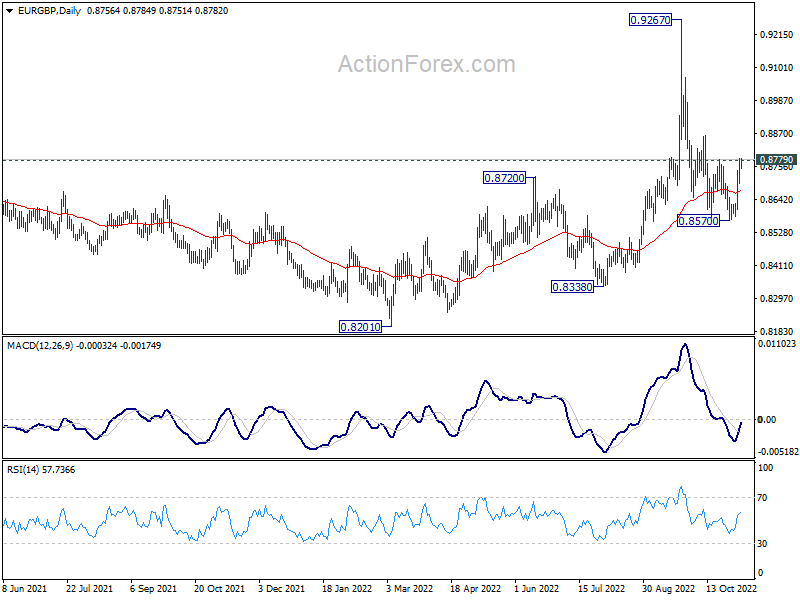
Daily Pivots: (S1) 0.8710; (P) 0.8747; (R1) 0.8795; More...
Immediate focus is now on 0.8779 resistance in EUR/GBP. Firm break there argue that corrective fall from 0.9267 has completed at 0.8570. Intraday bias will be back on the upside for 0.8869 first. Break there will bring retest of 0.9267 high. On the downside, break of 0.8570 will resume the fall from 0.9267 and target 0.8201/8388 support zone.
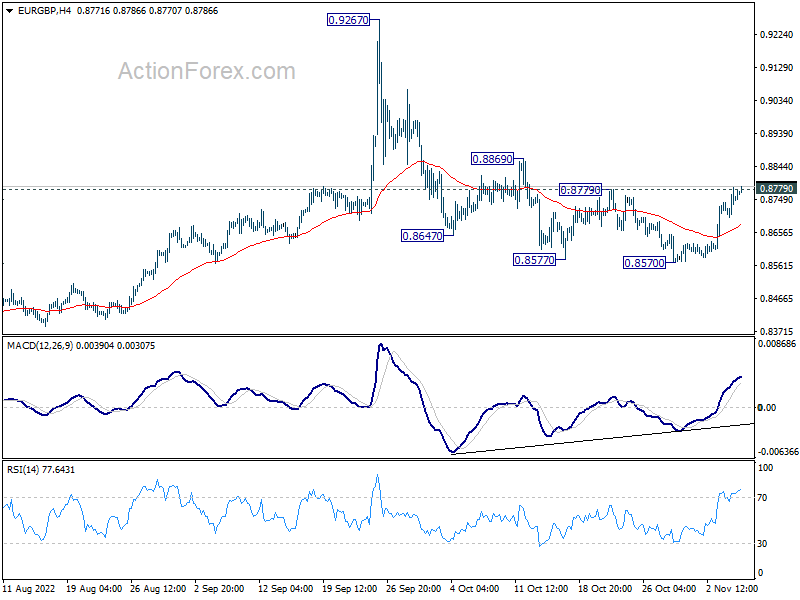
In the bigger picture, current development suggests that fall from 0.9267 is a down leg inside long term range pattern. Deeper fall could be seen towards 0.8201/8338 support zone. But strong support should be seen there to bring reversal.
EUR/AUD Daily Outlook
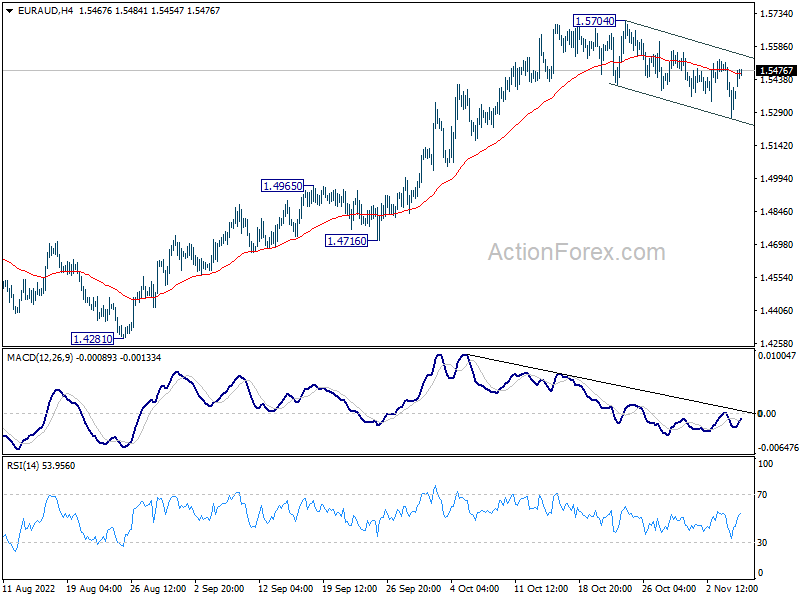
Daily Pivots: (S1) 1.5269; (P) 1.5393; (R1) 1.5513; More...
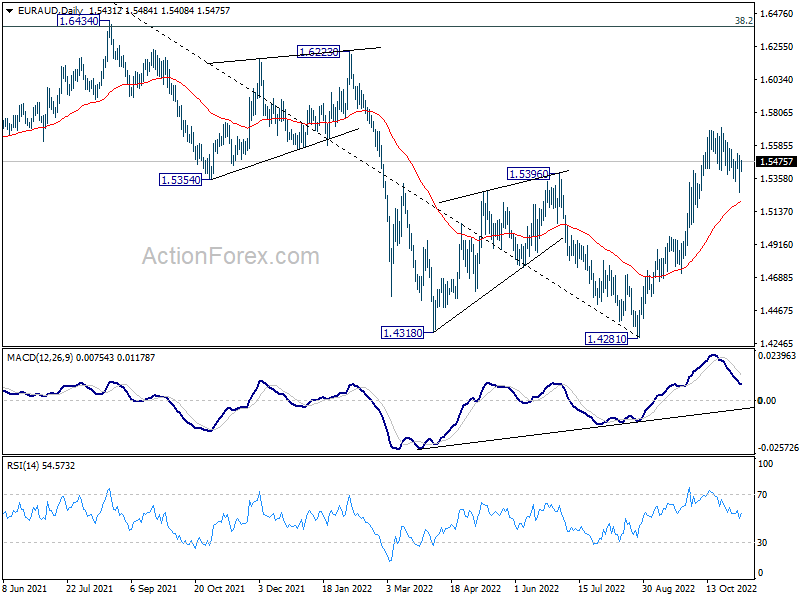
Intraday bias in EUR/AUD stays neutral for the moment. Correction from 1.5704 could extend lower, but downside should contained by 55 day EMA (now at 1.5209) to bring rebound. On the upside, break of 1.5704 will resume the rally from 1.4281.
In the bigger picture, a medium term bottom should be in place at 1.4281, on bullish convergence condition in daily MACD. Further rise would be seen back to 1.6434 key resistance next. Break of 1.4965 resistance turned support is needed to indicate reversal. Otherwise, further rally will remain in favor.
EUR/CHF Daily Outlook
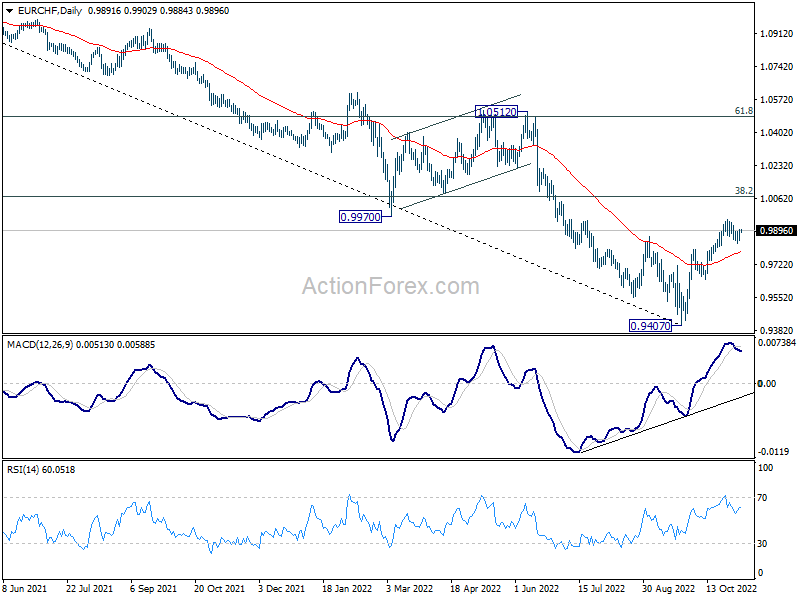
Daily Pivots: (S1) 0.9864; (P) 0.9885; (R1) 0.9922; More....
Intraday bias in EUR/CHF stays neutral for consolidation below 0.9953. Downside of retreat should be contained by 0.9798 resistance turned support to bring rebound. On the upside, break of 0.9953 will resume the rise from 0.9407 to 1.0072 fibonacci level.
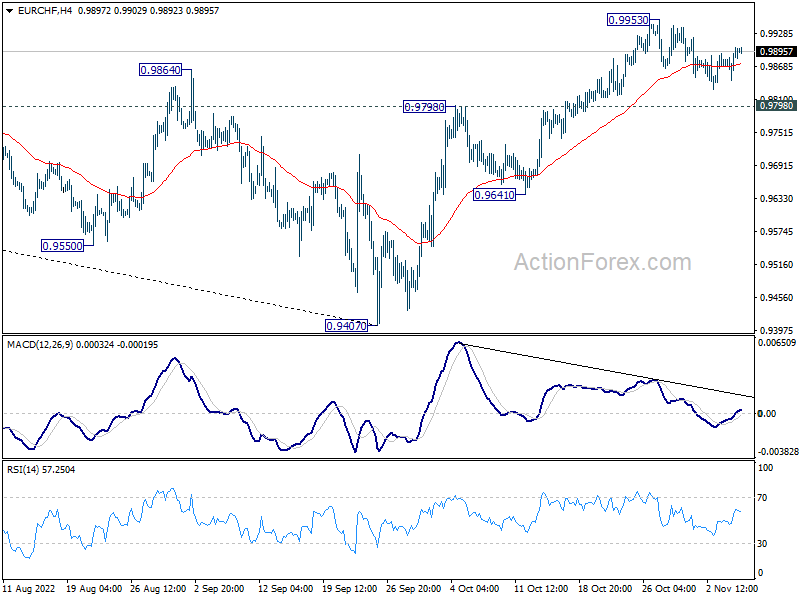
In the bigger picture, a medium term bottom should be in place at 0.9407. Further rally is expected as long as 0.9641 support holds, even as a corrective rebound. Next target 38.2% retracement of 1.1149 to 0.9407 at 1.0072. Reaction from there, as well as 55 week EMA (now at 1.0121) will reveal whether the trend is reversing.
Mixed Sentiment into US CPI and Midterms
Week starts with blurred sentiment on the back of mixed US jobs data, and soft Chinese trade figures.
Chinese exports and imports unexpectedly shrank in October; this was the first synchronized drop since May 2020. The strict Covid curbs in China, combined to rising global inflation and tightening monetary conditions hit both global and domestic demand. A far lower-than-expected trade surplus confirmed how Xi Jinping’s stubborn zero Covid fight is hurting the country’s economy.
And it’s not over. Despite optimism last week that the Covid measures could be wined down slowly to let people and the economy breath, the Chinese officials reiterated that they will ‘unswervingly’ stick to the Covid zero approach. Therefore, expect last week’s gains in Chinese stocks to be given back.
Nasdaq’s Golden China index jumped more than 30% since October dip, but the latest bullish action could simply be another flash in the pan. In fact, China is not expected to ease the Covid curbs at least until the end of this winter…
Then, let’s talk about what happened with the jobs data in the US last Friday
At the first glance, the data was strong, stronger-than-expected, but the market reaction was unexpectedly, surprisingly positive.
NFP printed that the US economy added 261’000 new nonfarm jobs in October versus 200’000 expected by analysts. The wages also grew more than expected last month, by 0.4%, versus 0.3% penciled.
Both data points were unideal for inflation and the Fed expectations, so you would’ve expected a panic selloff, rather than joyful rally in the market.
But the uptick in unemployment number - which rose to 3.7%, from 3.6% printed a month earlier, and the fact that 261’000 job additions was the slowest number since January this year - combined to all the layoff news which could ‘hopefully’ pull next month’s figure below 200’000 – triggered buying.
US equities first rally on the data, then give back gains as the hawkish Fed feelings came back in charge, but then the buyers came back in to lead to a 1.36% advance in the S&P500 before the closing bell. Nasdaq closed 1.56% higher, while the Dow Jones added 1.26%.
But overall, all three of them closed last week with losses. The Dow ended the week 1.4% down, S&P 500 3.4% down and Nasdaq 5.7% down – and the US futures are in the negative at the time of writing.
US midterms and inflation
Let’s admit… Joe Biden didn’t have an easy mandate. First the pandemic, and then the war in Ukraine, and the energy crisis, and the rising inflation, and the rising interest rates, the turmoil in financial markets, skyrocketing mortgage rates, gas prices… it has been a terrible mix for hoping to see a stunning support for these midterms.
Statistically speaking, markets have performed better in the six months following voting, than six months prior to it. The expectation for this week’s midterms is a divided government between the White House and Congress, that could, in return lead to more political impasse and tighter maneuver margin for policies, and a slower economic growth.
But historical data tells us that the stock markets performed better with a divided government in the years following a same party controlling the Senate, the House and the Presidency. This is what we hope will happen this time around, as there is not much juice left to be squeezed after the massive selloff we experienced so far this year in the stock markets, anyway.
On the economic data front, US inflation is expected to have eased from 8.2% to 8.0% in October, core inflation is seen down to 6.5% from 6.6% printed a month earlier.
Stronger-than-expected inflation data could send global stocks lower by the end of this week. Therefore, gains, if any, will likely be vulnerable to a potentially unpleasant US inflation data by Thursday.
And if the data is better than expected? Then, we could see a market rally. Investors are impatient to buy the dip at the current levels. Even if the data beats expectations slightly, it should be enough to send stocks higher.