

Sample Category Title
Fed Daly: 50bps hike in Sep is her baseline
In an FT interview, San Francisco Fed President Mary Daly said , "there's good news on the month-to-month data that consumers and business are getting some relief, but inflation remains far too high and not near our price stability goal,"
"This is why we don't want to declare victory on inflation coming down," she said. "We're not near done yet."
She reiterated her view that rise should rise to just under 3.5% by the end of the year. And her baseline for September FOMC meeting is a 50bps hike.
"There is a lot of uncertainty, so leaping ahead with great confidence that [a 0.75 percentage point rate rise] is what we need and being prescriptive would not be optimal policy," she said.
BTC, ETH Dominance Warn of Cycle Change
Bitcoin has added 7.4% to $24.6K in the last 24 hours. It’s not the magnitude of the move that draws attention but rather the ability to rewrite previous local highs. Ethereum has gained 13% to $1900 in the same time frame. Top altcoins add between 4.7% (BNB) and 13.4% (Solana).
The total capitalisation of the crypto market, according to CoinMarketCap, rose 7.4% to $1.16 trillion overnight.
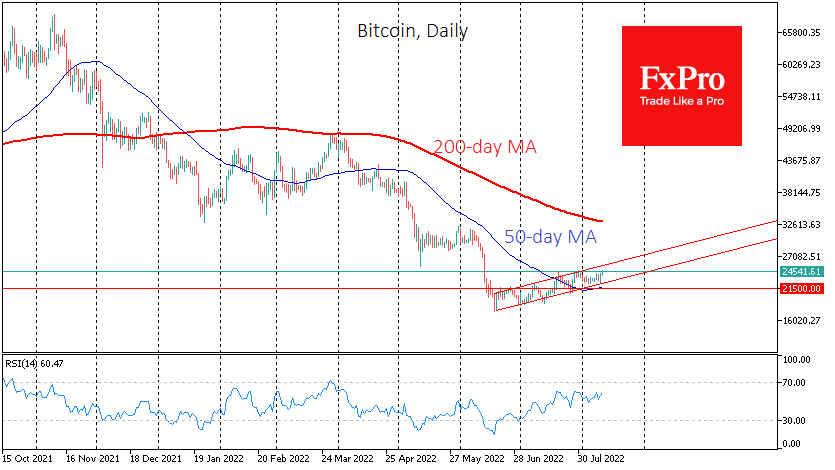
Bitcoin jumped on Wednesday, and stock indices on US inflation data showed a more robust cooling, fuelling speculation that the Fed will soon soften its tone.
On Thursday morning, BTCUSD, after three weeks of unsuccessful attempts, managed to gain ground above $24K and quickly moved into the $24.5K area. These are the highest levels since mid-June when bitcoin literally crashed. Now up to $30K, there are no significant technical obstacles.
On the other hand, the benchmark crypto pair is still moving within a moderate upward trend, with the upper boundary now at $25.5K. Moving within this range, BTCUSD will be at 30K only by October.
Ethereum is showing much more resurgence right now. Expectations of an imminent switch to proof-of-stake are a significant market driver. As a result, ETHUSD has already recouped all losses since June, recovering to previous consolidation levels.
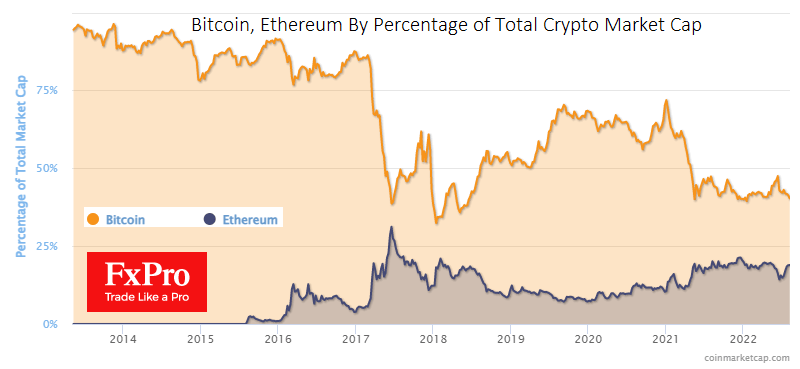
Ether’s dominance has recovered to 19.9%. The second most popular cryptocurrency has not had a sustainable share since 2017, but last year we saw a steady climb towards these levels due to the increased use of Ether in other projects. The next significant milestone for ETHUSD looks to be the $2300 area, where the 200-day moving average and the lows of the dips earlier in the year are concentrated.
We also note the drop in the bitcoin dominance index to 40%. For the past five years, a dip under this mark has often been followed by aggressive profit-taking in altcoins, whether we are in bull or bear markets. In our case, it may not mean the impending collapse of altcoins but rather an acceleration of BTC’s growth.
WTI Oil Futures Gently Move Up; Key Resistance ahead
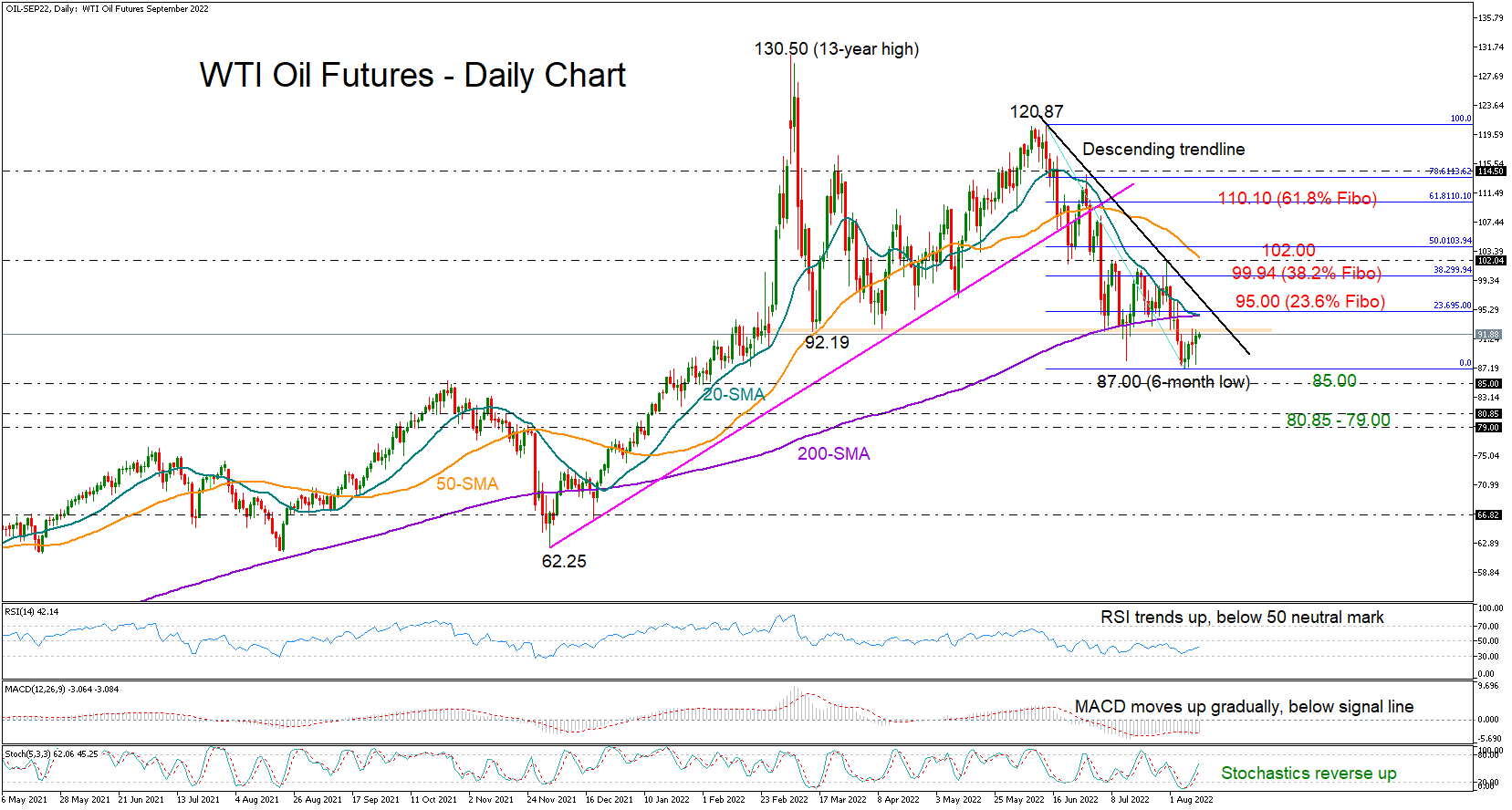
WTI oil futures (August delivery) have been gently crawling up over the past week following the close below the 200-day simple moving average (SMA) and the drop to a six-month low of $87.00/barrel.
The price is currently looking to return above the $92.19 constraining zone, which was the lower boundary of the previous range area, but this will not be enough to boost buying confidence. The bulls will also need to climb above the 20- and 200-day SMAs, which are trying to set a bearish cross near the 23.6% Fibonacci retracement of the latest downtrend around $95.00. The descending trendline drawn from the $120.87 peak could further cement that wall, blocking the way towards the 38.2% Fibonacci of $99.94 and the $102.00 barrier, where the 50-day SMA is currently residing.
The positive momentum in the RSI and the MACD, as well as the upside reversal in the stochastics is reflecting some improvement in market sentiment, though as long as the two former remain in the bearish area, downside corrections are possible. In this case, the price could diminish back to the $87.00 low if the $92.19 zone rejects any additional bullish movements. Lower, the bears will aim to downgrade the long-term outlook back to neutral below $85.00. If they succeed, the sell-off could pick up steam towards the $80.85 – $79.00 region.
In brief, WTI oil futures may attempt to extend their recovery in the coming sessions, though only a decisive close above $95.00 could attract fresh buying interest.
Daily Technical Analysis
EUR/USD
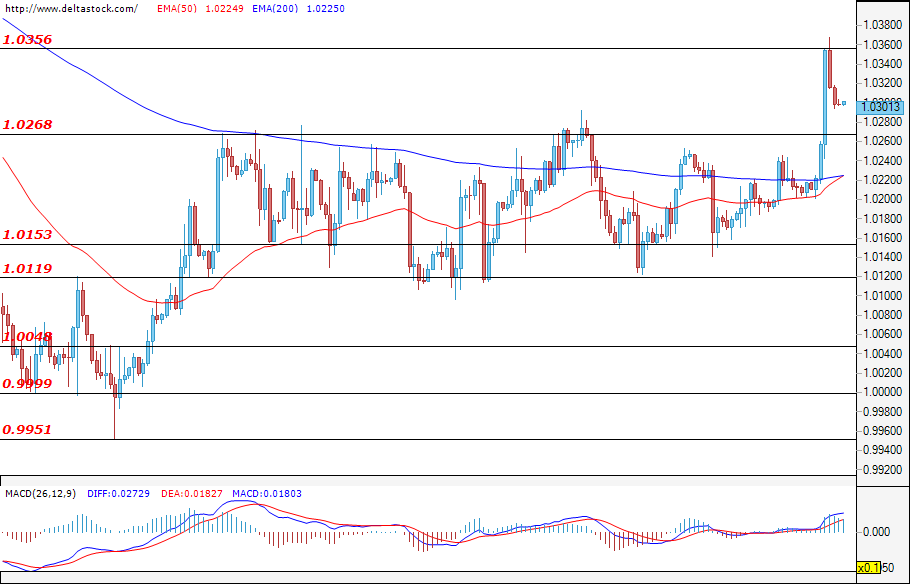
The slightly better-than-expected U.S. CPI data helped the bulls prevail and the European common currency rallied against the U.S. dollar. The pair tested the resistance zone at 1.0356, and during the early hours of today`s trading, the price is hovering around the current level at 1.0301. If the buyers` attack continues, then a new attempt at and a successful breach of the mentioned zone could strengthen the positive expectations for the future path of the EUR/USD and could easily lead to a recovery towards the levels at around 1.0490. If the bears enter the market instead, then their first target can be found at 1.0268. A violation of the lower support at 1.0268 could deepen the correction and could pave the way for a test of the major zone at 1.0119. Important news for investors today is the scheduled announcement of the initial jobless claims data (today; 12:30 GMT).
USD/JPY
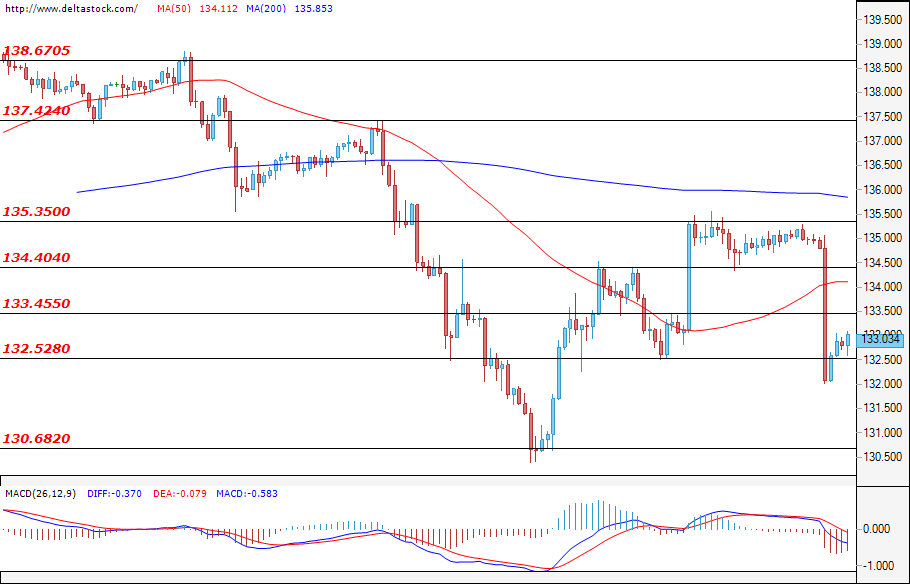
After the sharp decline yesterday, which was limited to the zone at 132.00, the Ninja recovered some of its recent losses. At the time of writing the analysis, the price is consolidating above the zone at 132.50. A breach for the bulls at the resistance level at 133.45 could easily lead the pair to a test of the next target at 134.40, but only a violation of the level at 135.35 could result in a change in the current sentiment of the market participants and a recovery towards the high at 137.42. If the bears re-enter the market, then a new attempt at and a breach of the support at 132.50 could easily deepen the decline and could lead to the pair reaching the low at 130.68.
GBP/USD
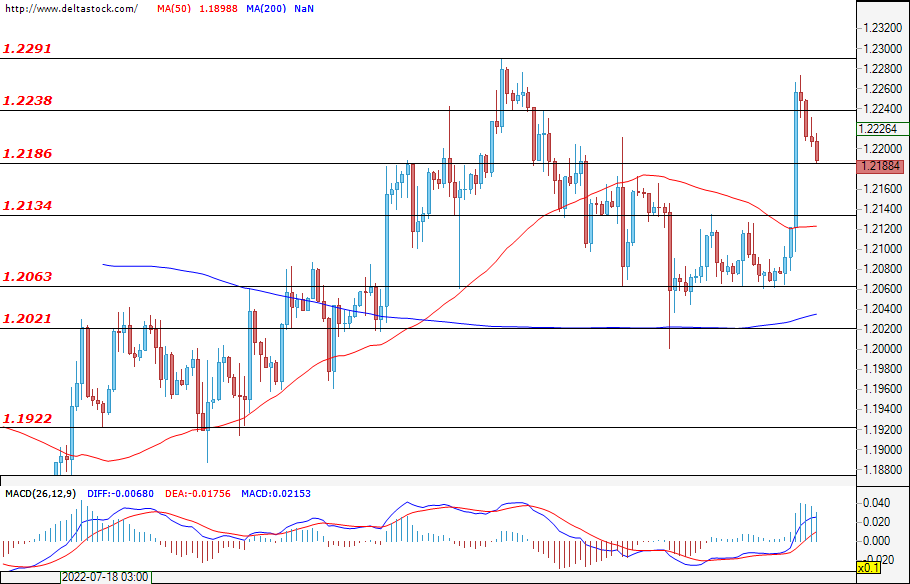
As with the other major currency pairs, the dollar depreciated and the Cable tested the levels from the beginning of August at around 1.2238. If the price remains limited above the zone at 1.2186, which is now acting as a support, then the expectations would be for a new attack on the resistance at 1.2238. A violation here could easily lead to a continual recovery towards the upper target at 1.2291. If the bears manage to prevail and breach the mentioned zone at 1.2186, then the follow-up deeper correction could be limited to the support at 1.2134, followed by the lower level at 1.2063.
EUGERMANY40
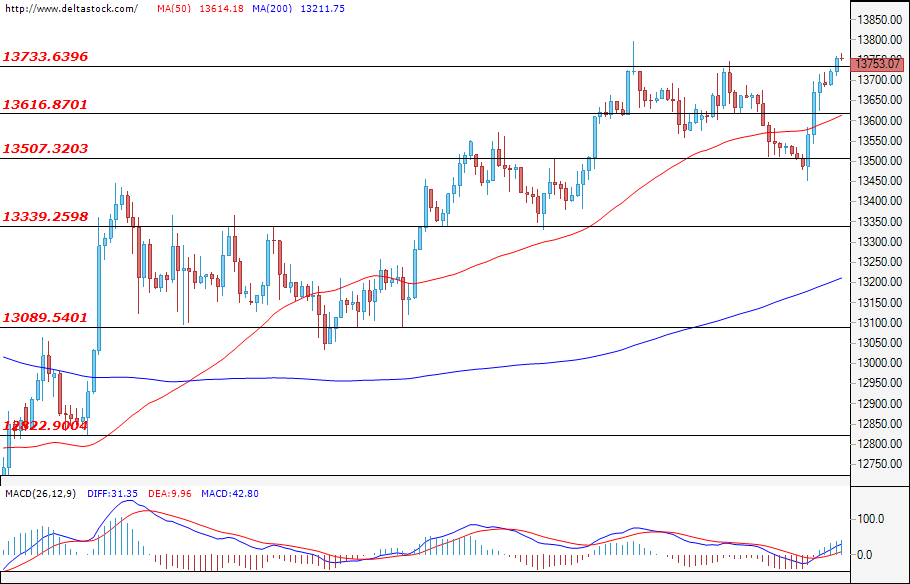
The positive sentiments remained unchanged and the German index tested the resistance zone at 13733. A confirmed breach for the bulls could easily lead to new gains and continue the rally towards the psychological level at 14000. The first support for the bears is the zone at 13616, followed by the lower target at 13507.
US30
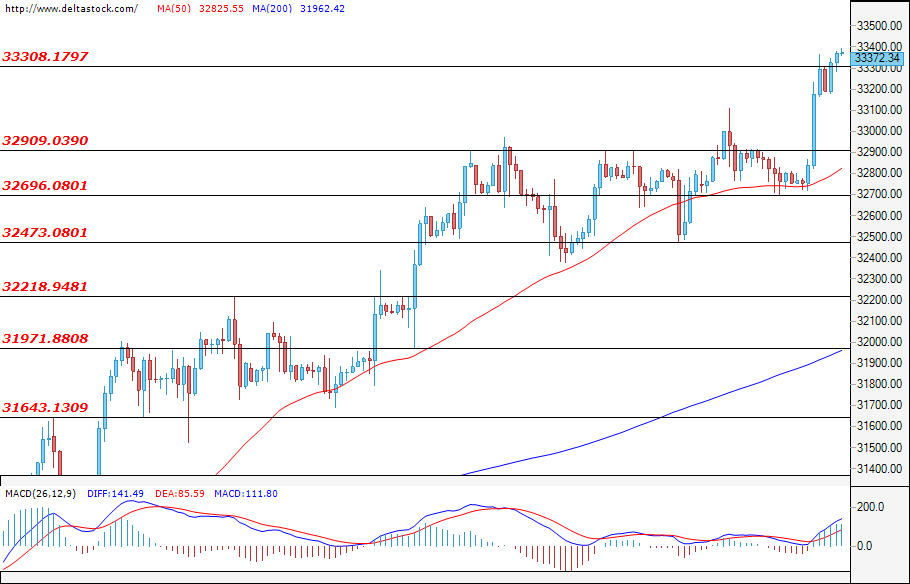
The U.S. index appreciated in value, and after the successful violation of the resistance at 32909, followed by the breach of the upper target at 33309, the price held positions around the current level at 33372. If the bulls continue to prevail, then they could head the index towards the highs from May 2022 at around 14170. Worse-than-expected initial jobless claims data in the U.S. (today; 12:30 GMT) could help the bears to enter the market. A successful test of the support zone at 32909 could lead to a deeper correction and an attack on the lower support at 32475.
US Oil Still Under Pressure
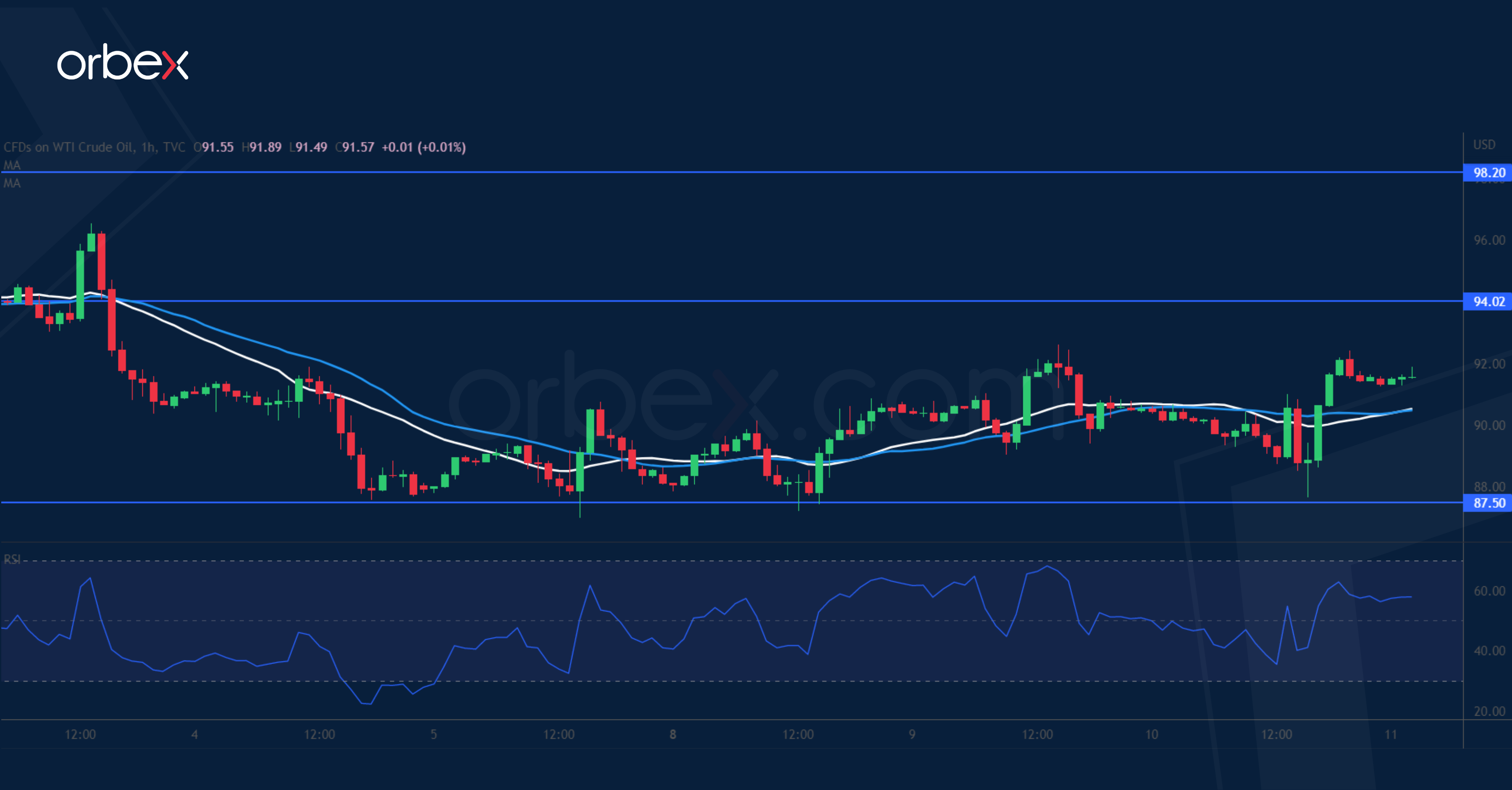
WTI crude struggles as US output hits its highest level since April 2020. The price has been falling along the 20-day moving average, putting it at the risk of a bearish reversal. Short-term price action found some relief at 87.50 but the bears could be waiting to sell into strength. 94.00 has turned into a resistance after it failed to stop the bleeding. Selling could be expected from those looking to join the downtrend. 82.00 would be the target in case of a bearish breakout. The bulls need to clear 98.20 before they could attract attention.
AUD/USD Breaks Higher
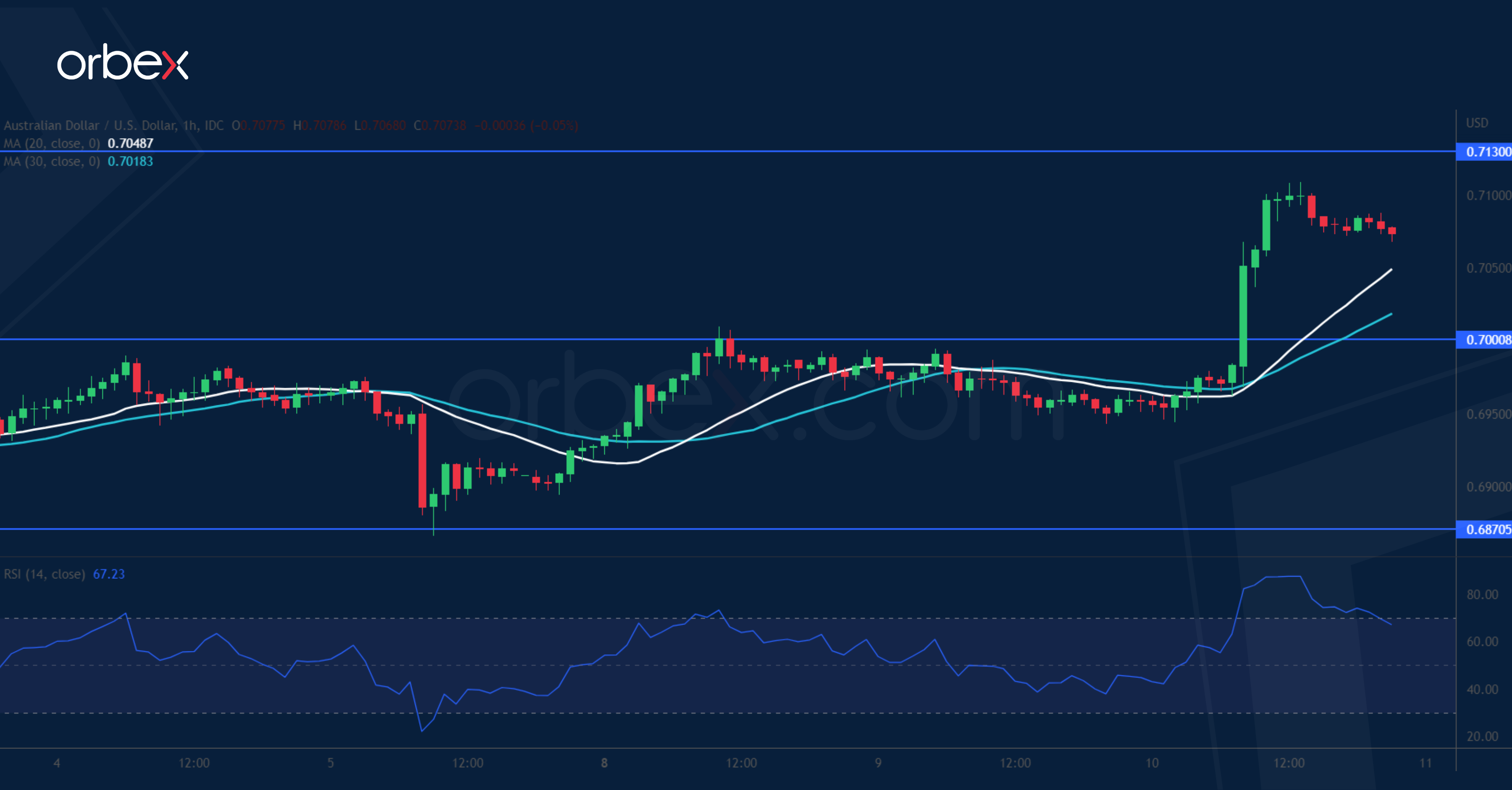
The Australian dollar surged as the US counterpart’s weakness drove traders into riskier assets. After a brief pullback the pair bounced off the demand zone around 0.6870 right over the bullish MA cross on the daily chart. A break above the daily resistance at 0.7050 indicates the bulls’ willingness in pushing higher. 0.7130 is the next hurdle as the RSI went overbought. Its breach could pave the way for a rally to June’s high at 0.7270. The psychological level of 0.7000 is the first support and 0.6870 critical to keep the recovery intact.
GBP/USD Tests Resistance
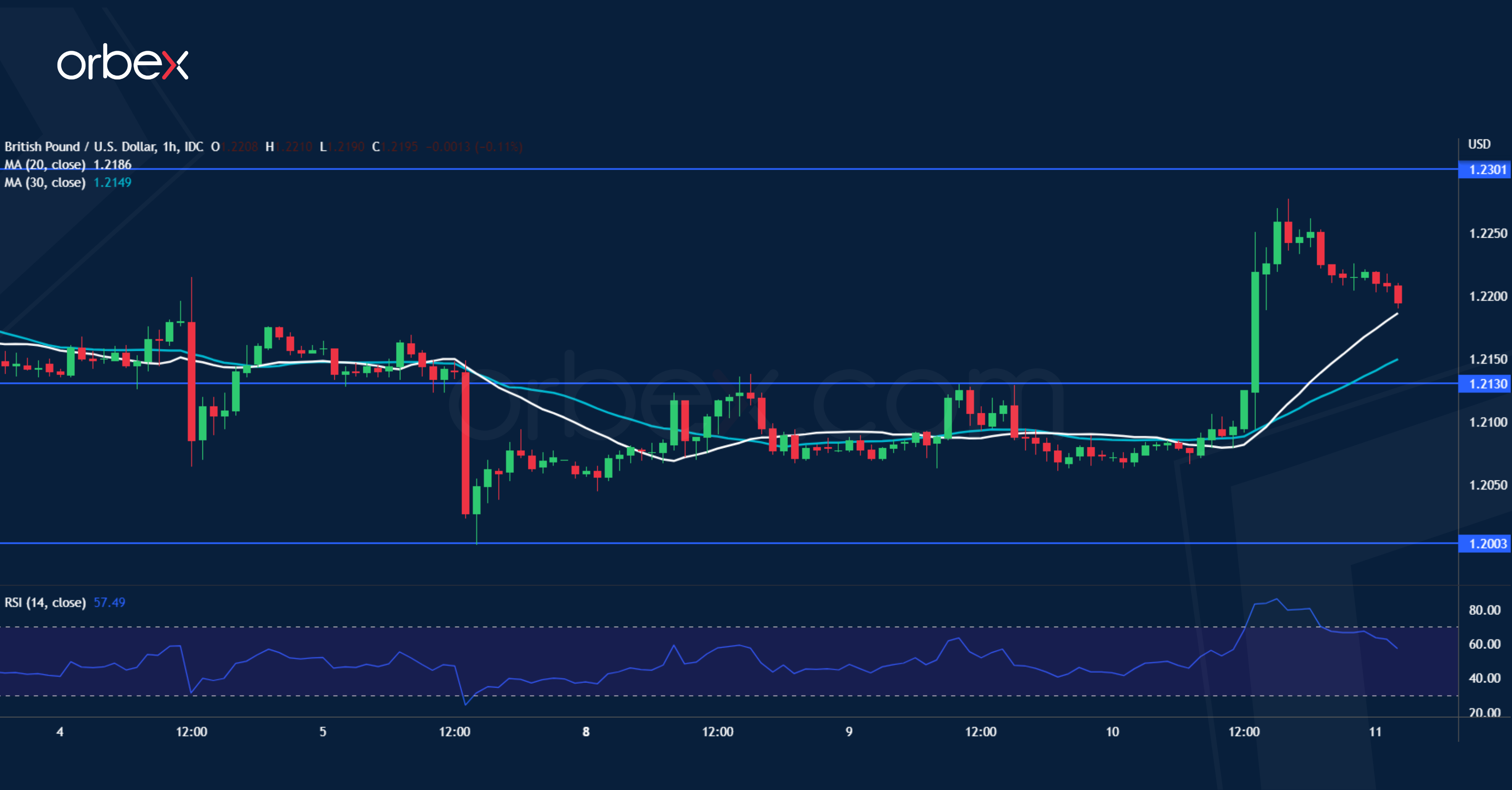
The US dollar tumbled after a slowdown in core inflation in July. A bullish MA cross on the daily chart suggests an improvement in sentiment but the pound needs to consolidate its gains so a rebound could have solid foundations. The pair previously met stiff selling pressure at the daily resistance 1.2300. A bullish breakout would be a decisive moment as it would trigger a runaway rally to May’s high at 1.2660. 1.2130 at the base of the breakout is a key support and the psychological level of 1.2000 a critical floor.
Soft US Inflation Boosts Sentiment
US consumer prices eased in July, and they eased more than expected. The CPI data printed 8.5% on Wednesday, versus 8.7% expected by analysts and 9.1% printed a month earlier. The slower-than-expected inflation figure revived the hope that last month’s 9.1% was maybe a peak, and we could see a potential reversal in inflation trend. And if that’s the case, the Federal Reserve (Fed) could slow down its rate hikes, or opt for smaller hikes. Activity on fed funds futures now gives more chance for a 50bp hike in September’s FOMC meeting, whereas the odds were pointing at a 75bp hike before the CPI print.
Not surprisingly, the US yields pulled lower after the CPI print, the US 10-year yield retreated to 2.67% before rebounding back to 2.80%. The US dollar index slipped below the 50-DMA support for the first time since February this year, and the US stock markets cheered up. The S&P500 jumped 2%, above the critical 4200 resistance and closed the session above this level, as Nasdaq rallied near 3%.
Yet, two FOMC members warned, right after the data, that the war against inflation is not won just yet. It’s of course great to see the latest inflation print come lower-than-expected, but first, one data point doesn’t make a trend, and we had a similar surprise earlier this year, but then inflation spiked to fresh multi-decade highs the following month.
And second, the cooldown in July inflation was mostly due to the softer energy prices, but food prices continued surging, wages and rents remain on a positive path.
The softer-than-expected CPI data weakened the dollar, and sent many majors and gold higher against the greenback yesterday. The price of an ounce of gold advanced to $1807, but bounced lower below the $1800 quickly. Gold remains in a positive short-term trend and could make another attempt on the $1800 offers, if the 50-DMA support holds near $1784.
The EURUSD jumped close to 1.0370 mark, but saw decent resistance above the 50-DMA, which stands at 1.0340. Cable, on the other hand, made another attempt to 1.2272 but failed to extend gains into the 1.23 mark.
It will likely be hard for the pound sterling to post a meaningful recovery even if the dollar softens more, as there are too much political uncertainties in Britain following Boris Johnson’s resignation. Liz Truss, who is leading in polls, is clearly not good encouraging for the pound, as she intends to change the Bank of England’s (BoE) inflation targeting to something more flexible, including money supply, or GDP. The latter could loosen the monetary conditions in an economy that’s already dealing with almost double-digit inflation, and it’s not yet priced in the market valuations. Therefore, and given Britain’s political and monetary situation, even if the US dollar softened, it may not soften too much against the pound.
FTSE 100, on the other, should benefit from firmer energy prices. 75% of the FTSE 100 revenues come from abroad. The British blue-chips limited exposure to British politics, and the pound, should keep the index on track for more gains, if global recession fears remain contained.
Rise and Fall of Inflation
Market movers today
Markets will continue digesting yesterday's US CPI figures, which will be followed by July PPI this afternoon. Consensus is looking for moderating producer price growth in line with the CPI.
Money market players' inflation expectations will be released for Sweden ahead of the actual inflation data tomorrow.
The 60 second overview
Inflation: Inflation was the economic focus point yesterday. In Denmark and Norway, inflation was much higher than expected in July, while in US inflation was lower than expected. For the first time since 2015, inflation in Denmark is now higher than in the US.
Taiwan crisis: Tensions are running high with rising fears of a Chinese invasion of Taiwan. This morning we published a paper where we look closer at the risk of war, see Research China: The risk of a Taiwan war and what it implies - part 1. While risks are rising we still see a rather small probability of a Chinese invasion of Taiwan in the next couple of years (20%) as the costs for China are too high. However, with US and Taiwan having moved closer to China's 'red line' the risk of miscalculations or human error that leads to an unintended war has increased. Also, the risk of a war in the medium to longer term is quite high, in our view. In a coming paper, we will look at what the risk of war means for China and the global economy - and for companies' investment strategies in China.
Equities: Equities notably higher after the US inflation relief. Risk on, with equities higher and cyclical growth stocks outperforming value and defensives by more than 1p.p. globally. What is more, implied volatility dropped below 20 for the first time since April. In other words, the support from bearish positioning that we have seen over summer is closing in. S&P500 jumped 2.1%, Nasdaq 2.9%, small caps outperforming with Russell 2000 3% but Dow 1.6%. US futures are pointing even higher this morning.
FI: Rates markets were all focused on the US CPI figure yesterday. The weaker than expected flat mom figure and 0.3pp in core sent yields sharply lower in a bullish steeper move as repricing the expectations of Fed tightening took place. At one point the 2y UST was 18bp lower and 10y UST 13bp lower. That also took euro rates lower but only by about 8bp in 10y bunds. However, by the end of the day, 10y UST were broadly back to its level pre-inflation release, as after all, inflation still printed at 8.5% yoy and way above the Fed's target while the labour market is very tight. The FOMC will get another inflation and labour market report before its September meeting, which naturally will be important for the size of the next rate hike. We expect the European rates session to start the day with yields up given the UST sold off about 4bp after European close yesterday.
FX: The odd group of NOK, AUD, NZD and JPY rose yesterday vis-à-vis EUR and USD. NOK found support from higher than expected Norwegian inflation in July, while USD lost on lower than expected US inflation.
Credit: Yesterday's data showing cooling inflation in the US also helped propel credit spreads tighter. iTraxx Main tightened by 6bp to 97bp, while Crossover was tighter by a massive 34bp to 485bp.
Nordic macro
Sweden: This week's main number is of course inflation out tomorrow but the inflation expectations survey out today is also of large importance. Despite just the monthly survey i.e. money market players. The 5Y horizon is key for the Riksbank. Last month this one took a surprisingly large jump up to 2.5% from earlier 2.3%, probably starts to be at really uncomfortable levels for the Riksbank. However, lately we have seen a divergence between the mean and the median so despite a large rise in the mean figure, the median continues to be steady at 2% - explained by the large respond spread, with the lowest 5Y forecast at 1.5% and the highest 5Y forecast at 6%. Hence, it is also important to look at the median figure. A larger increase will of course add pressure on the Riksbank. Market is pricing a probability for an interim meeting hike, but we deem the probability for this low as there is only five weeks left until the ordinary September meeting. That said, a high reading today and a high CPIF print on Friday adds pressure on the Riksbank to deliver more at the September meeting than the 50bp implied in the July rate path.
Research China: The Risk of a Taiwan War and What it Implies – Part 1
Tensions are running high with rising fears over a Chinese invasion of Taiwan in the not too distant future. In this paper we look closer at the risk of a war.
While risks are rising we still see a rather small probability of a Chinese invasion of Taiwan in the next couple of years (20%) as the costs for China are too high. However, with US and Taiwan having moved closer to China's 'red line' the risk of miscalculations or human errors that leads to an unintended war has increased.
In addition, the risk of war in the medium to longer term is high in our view, as China is determined on reunification, their military capabilities will improve and they are likely to build more economic resilience against sanctions. At the same time, the West increasingly supports Taiwan as part of a 'democracy vs. autocracy' battle and sentiment among Taiwanese people towards China is gradually worsening, which leaves a peaceful reunification increasingly unlikely.
In a coming paper, we will look at what the risk of war means for China and the global economy - and for companies investment strategy in China.