Sample Category Title
EURUSD Extends Consolidation Slightly Above Parity
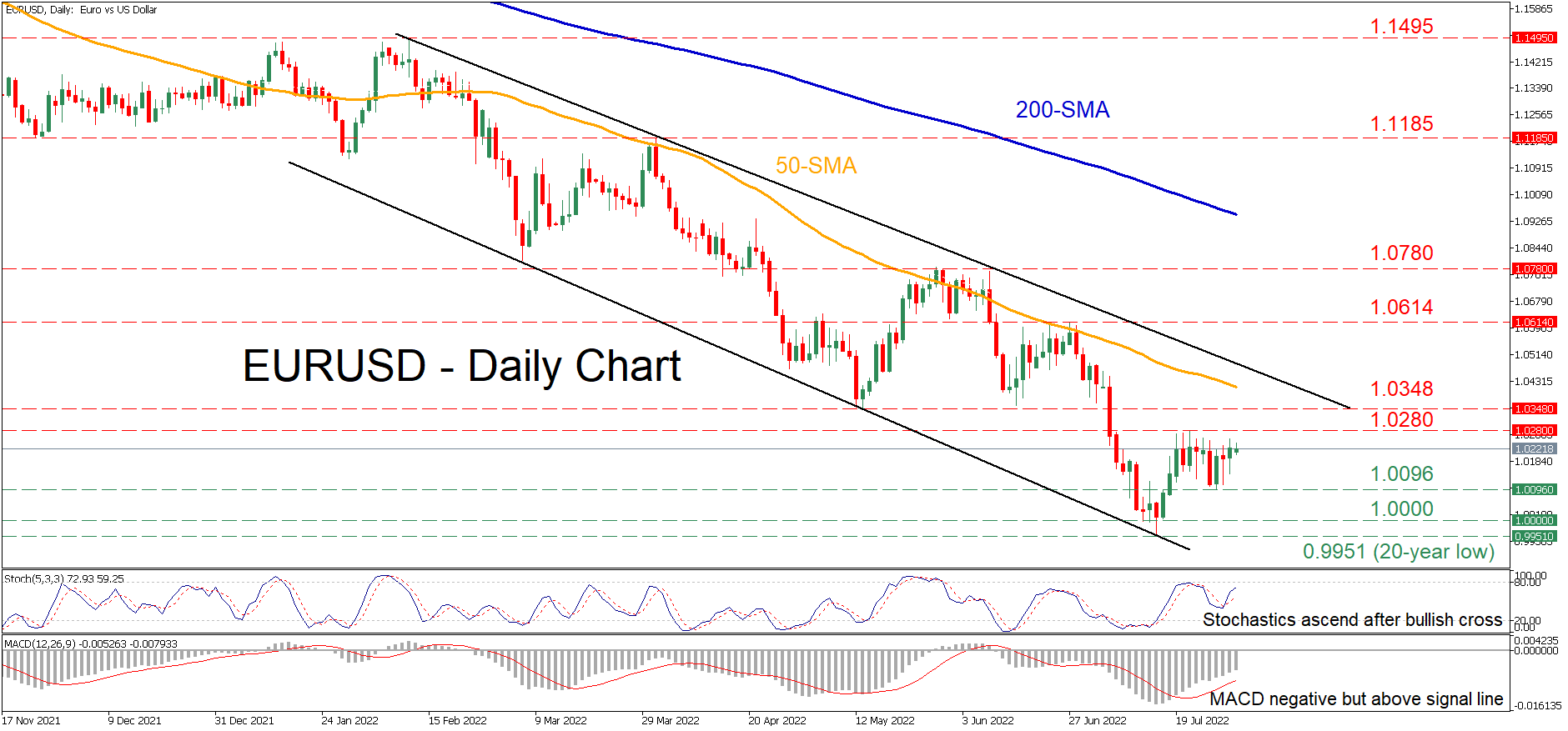
EURUSD has been trading within a tight range after it managed to rebound from the 20-year low of 0.9951. In addition, the price is currently standing below both its descending 50- and 200-day simple moving average (SMAs), endorsing a broader bearish technical picture.
The momentum indicators suggest a cautiously positive near-term tone. Specifically, the stochastic oscillator is sloping upwards after posting a bullish cross, while the MACD histogram has jumped above its red signal line but remains in the negative territory.
Should buying interest intensify, the price could challenge 1.0280, which is the upper boundary of the pair’s recent rangebound pattern. Piercing through this region, the bulls might aim for 1.0348 before the 1.0614 peak appears on the radar. Even higher, 1.0780 could prove to be a tough obstacle for the price to overcome.
On the flipside, bearish actions could send the pair to test the 1.0096 barrier. Sliding beneath that floor, the spotlight may turn to parity, which is considered a crucial psychological mark. A violation of the latter could pave the way for the 20-year low of 0.9951.
In brief, even though EURUSD has merely recovered, the price action remains in its long-term descending channel. Therefore, escaping this pattern to the upside could alter its sentiment to positive.
A Mixed Start to the Week
A mixed start to the week in Asia where Chinese PMIs dampened the mood as the reopening boost to activity quickly faded.
The country was already facing an uphill challenge, to put it mildly, with regards to its growth target this year and the fact that manufacturing activity is slowing again doesn't bode well. While the non-manufacturing survey is much healthier, it also experienced a deceleration last month which further suggests the economy is struggling to get back to full strength.
One positive from the surveys was the improvement in supply chain conditions which should aid the inflation fight around the world. Of course, it is more than just a supply chain problem at this point but every little helps as central banks are forced to hike rates aggressively for fear of inflation becoming entrenched.
The PMI theme continues throughout the European session on Monday, with final manufacturing and services data being released throughout the morning session followed by the US later where the ISM is always of particular interest.
There was a lot of debate last week about whether the US is in recession or not, with one camp pointing to the technical definition of two consecutive negative quarters of growth and the other the strength of the labour market and the consumer. Naturally, the proximity to the midterms aided the discussion.
The same debate is unlikely to rage if (or when) Europe slips into recession and the surveys are expected to highlight the broader weakness this morning. The war in Ukraine is undoubtedly taking its toll; not the mention the constant disruption to gas flows which could lead to rationing this winter, with countries already committed to cutting gas usage by 15%.
With the PMIs expected to post contraction numbers across the bloc, a recession is looking increasingly likely which will be compounded by the ECB being forced to hike rates and stop inflation from getting further out of control. Winter is coming and it promises to be hazardous. Europe will be hoping it just isn't too cold.
An earnings beat but not all good news
HSBC surpassed analyst expectations, reporting profits of $5 billion in the second quarter while assuring investors that it will return to pre-pandemic quarterly dividends early next year. Profits were lower than last year in the first half though as a result of $1.1 billion in expected credit loss and impairments due to the challenging economic environment. While the company is confident in the progress made in its transformation program, there's still clearly some way to go to keep investors on board amid a drive to spin off its Asia business.
Attention turns to OPEC+ meeting
Oil prices are lower at the start of the week as traders eye the next OPEC+ meeting on Wednesday. With the previous agreement having expired as the group has theoretically unwound all of the pandemic production cuts, attention will now shift to how OPEC+ plans to actually hit those targets and whether any further increases will be announced going forward.
Not many have the capacity to do that but some potentially do and President Biden will be hoping his Middle East trip will have helped secure some form of boost - or at least appear that way - that could prove important heading into the midterms in a few months. One US official last week sounded optimistic although reports suggest no increase is likely even if it will be discussed.
Gold recovery may have legs
Gold is a little lower, paring gains after rebounding strongly in the second half of last week. The Fed's data-dependent shift was the latest catalyst for a decline in US yields as traders pared back their expectations for rate hikes going forward. The 10-year is now well off its highs from a couple of weeks ago which is triggering the latest relief rally in the yellow metal.
I'm not entirely convinced by the recent rebound we're seeing throughout the markets as inflation is still extremely high, central banks are far from done with their tightening and the recession narrative just doesn't cut it. Gold is potentially the outlier here as it could benefit from safe-haven flows if countries are thrown into recession and central banks are left to choose between hitting inflation targets or the economy.
A bear-market rally in cryptos?
Bitcoin is another example of an instrument that is performing well and yet I'm struggling to get on board with its justification. It has all the feeling of a bear-market rally, as we may be seeing in equity markets, but that doesn't mean it won't have further to run. It showed a lot of resilience below $20,000 at times as conditions were far from ideal, which may provide some confidence that the worst is behind it but I'm not convinced it is. There may be a few shocks to come in the broader markets this year and cryptos will not be immune to them.
Daily Technical Analysis
EUR/USD
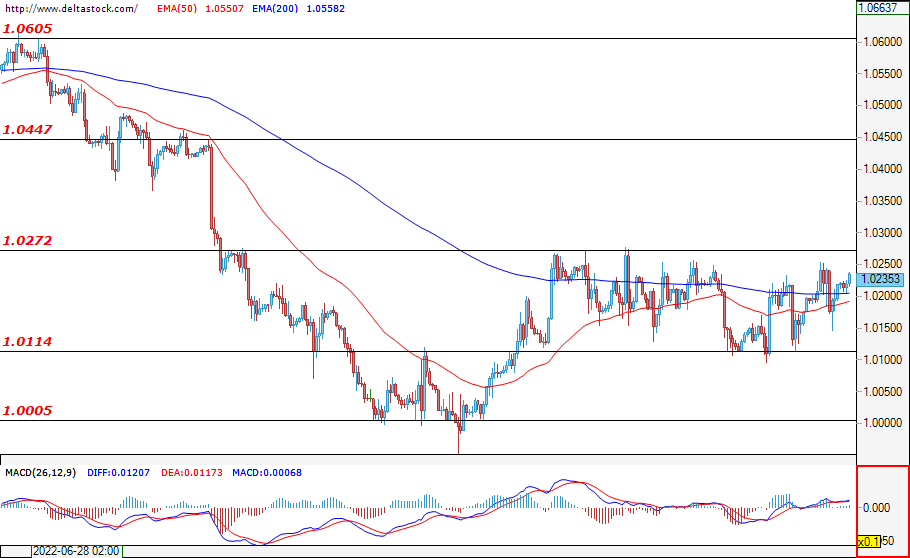
The consolidation of the EUR/USD continued in the early hours of today’s trading session and the pair is still locked in the zone between 1.0114 – 1.0272, as neither the bears, nor the bulls can gain enough momentum to lead the pair out of this range. Only a confirmed breach of either border of the channel may give investors an outlook on the future path of the pair. If the bulls manage to overcome the critical resistance at 1.0272, then an impulsive upward movement towards the next resistance at 1.0446, and even an attack on the next level at 1.0447, can be expected. However, if the bears manage to lead the pair out of this range by violating the support at 1.0114, then the psychological level at 1.0000 could be easily reached and the downtrend may resume, leading to a further depreciation of the single European currency – a highly possible scenario at the moment, considering the overall worsening of the economic situation in the European Union and the surging inflation. The formed consolidation phase seems to be solid and thus fake breaches of the range may occur, so investors need to be cautious when entering their positions.
USD/JPY
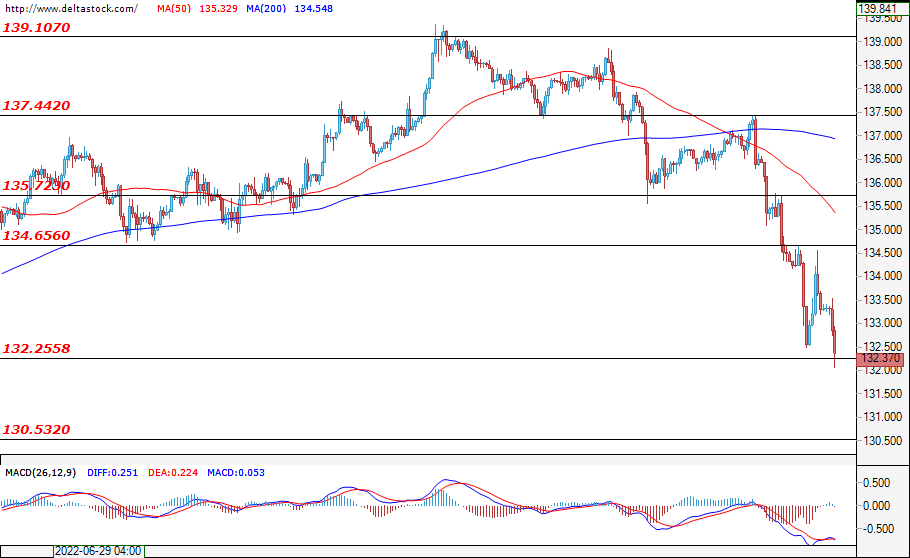
The successful breach of the key support level at 134.65 allowed the bears to test the critical support at 132.25. However, the bears would have to prevail first and thus only a successful breach of this level would pave the way for the USD/JPY towards the support at 130.50. The expectations for today’s trading session are for the pair to bounce back from this support zone and to form a local resistance at around 133.50. A correction towards the resistance at 134.65, before a potential resumption of the downtrend, is highly possible. Only, if the bears manage to violate the support at 132.25, however, may we witness a deepening of the sell-offs and a test of next support at 130.50.
GBP/USD
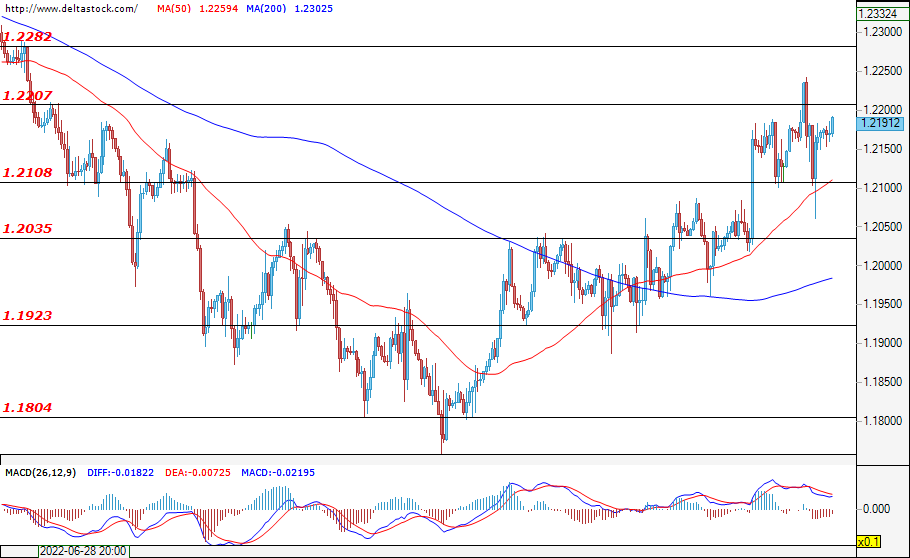
The resistance zone at 1.2200 appeared to be a considerable obstacle for the bulls and the pair is currently holding positions below this level. A consolidation in the 1.2200 – 1.2100 range is a highly possible scenario for today’s trading session. In case of a confirmed breach of the resistance at 1.2200, we may expect a possible bull attack on the next significant resistance at 1.2280. However, the expectations are for the mentioned zone to resist the bull pressure and for the bears to make another attempt to overcome the psychological level at 1.2100, where a successful breach would present sellers with a good opportunity to enter the market and target the key support at 1.2035.
EUGERMANY40
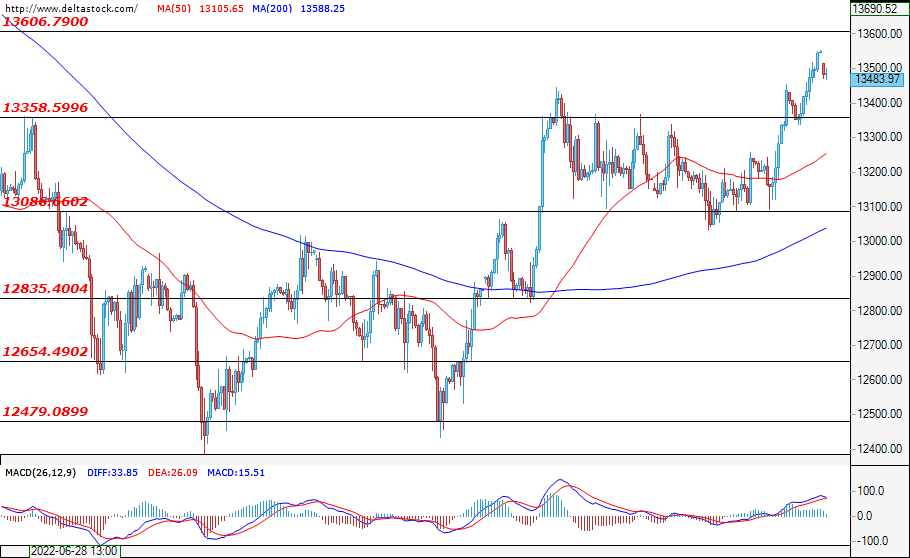
After successfully breaching the resistance zone at 13358, the bulls couldn’t gain enough momentum to reach the next key resistance at 13606. The forecasts for today’s trading session are for the index to remain in the range of 13358 – 13606, and we will most probably witness a slight correction towards the support at 13358. If the bulls prevail and the price increases above the level at 13606, then the most probable scenario would be for a further appreciation towards the next key resistance level at around 13858. A short corrective move towards the support at 13358 would be an opportunity for the buyers to enter the market at better price levels, as the current expectations are for a possible continuation of the uptrend. However, if the price falls below the key support at 13358, then the sellers would most likely target the key support at 13086, where a confirmed breach may give the bears enough incentive to easily lead the price towards the next support at 12835. The most reasonable course of action for investors at the moment is to remain neutral and to wait for a confirmed breach of either the resistance at 13606, or the support at 13358.
US30
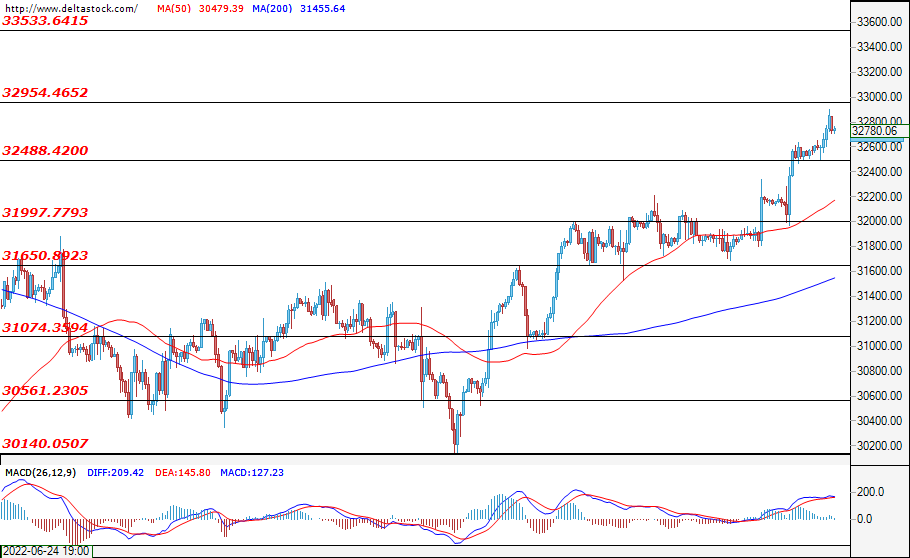
The buyers managed to overcome the critical resistance at 32488 and the price is currently holding above this level. A continuation of the upward movement could be initiated by the buyers, but only а confirmed breach of the psychological level at 33000 would lead to a further increase in the price of the index towards 33533. However, the forecasts are for a reversal, and if the support at 32488 does not resist the sellers’ pressure, then the most likely scenario is for a deeper correction towards the zone at 32000.
US 30 Tests Major Resistance
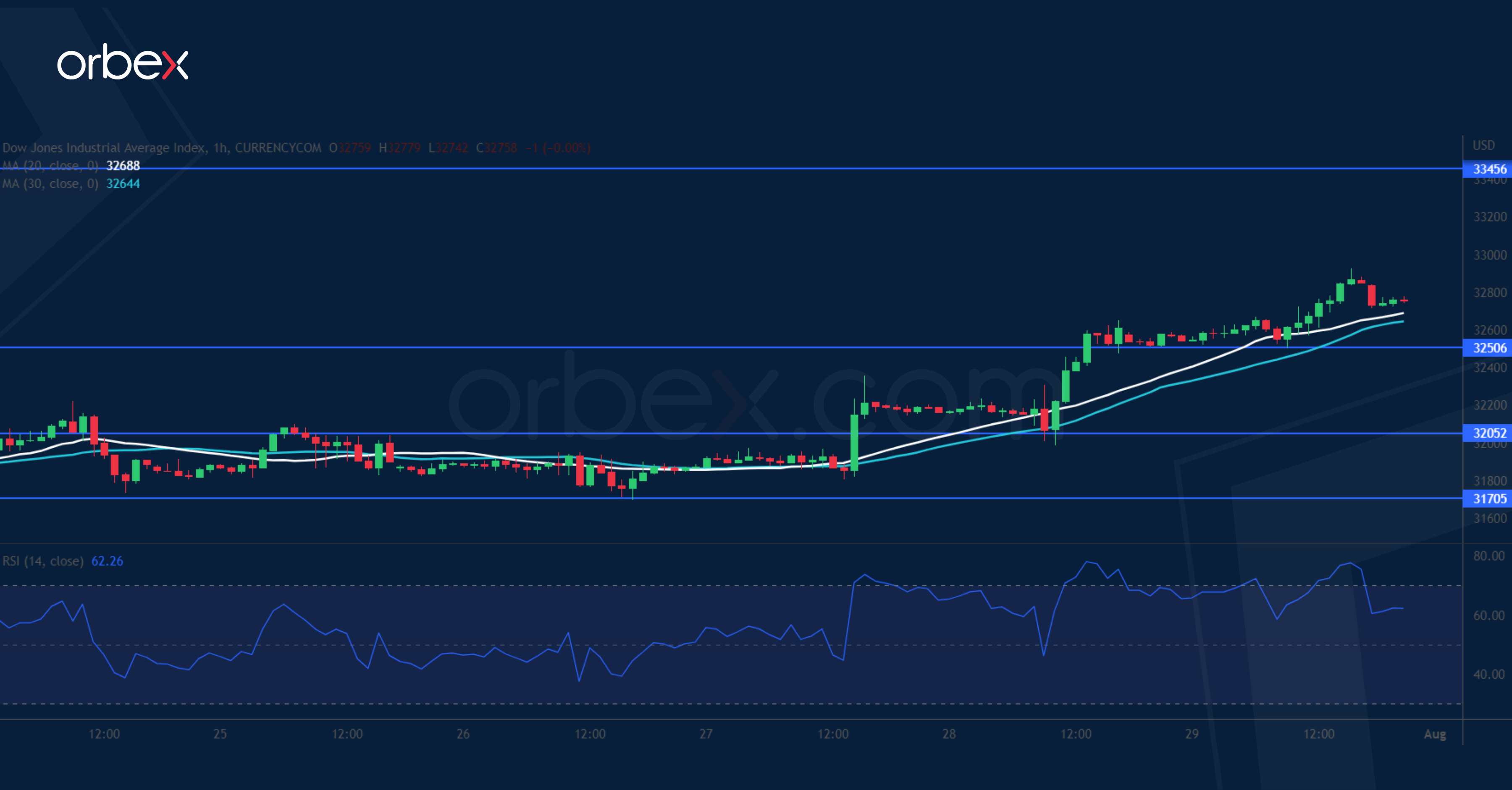
The Dow Jones 30 rallies over expectations of slowing inflation. The index has found support in the former supply zone around 31700, which indicates the bulls’ strong commitment in extending the current recovery. As the index claws back last month’s losses, June’s high at 33450 is a major ceiling and a bullish breakout could ease the downward pressure in the medium-term. As the RSI rises back into the overbought area, intraday buyers may start to take profit, causing a pullback. 32500 is a fresh support should this happen.
EUR/JPY Tests Critical Support
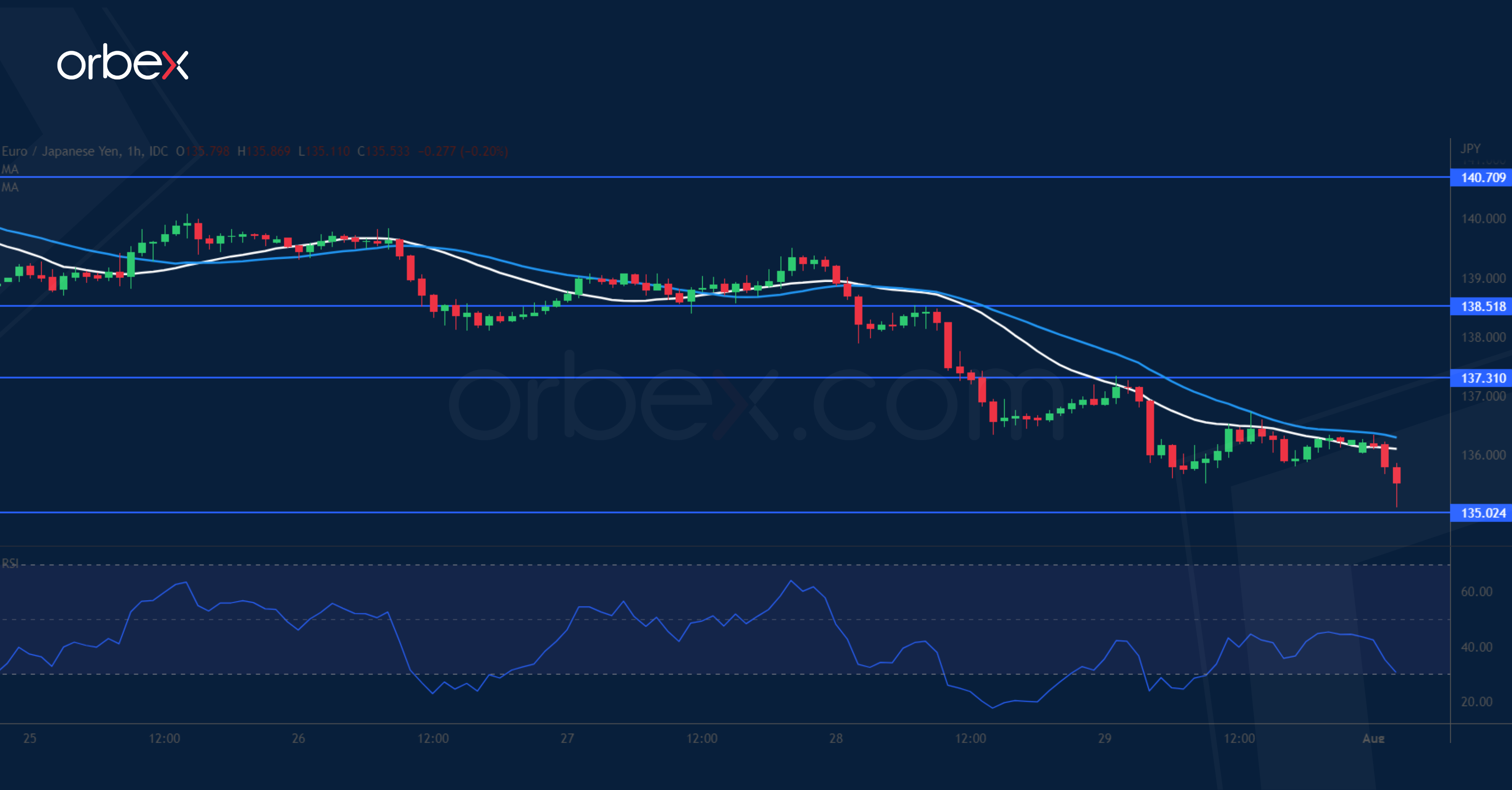
The Japanese yen bounces back as profit-taking turns into a short squeeze. A break below 137.00 has triggered a new round of sell-off, invalidating the July rebound in the process. 135.00 at the origin of the breakout rally in late May is a key level to see whether there are still enough buyers in the market. Otherwise, 133.00 could be next. The RSI’s oversold condition may cause a limited rebound as intraday sellers take profit. Strong pressure could be expected around the support-turned-resistance at 137.30.
USD/CAD Struggles for Support
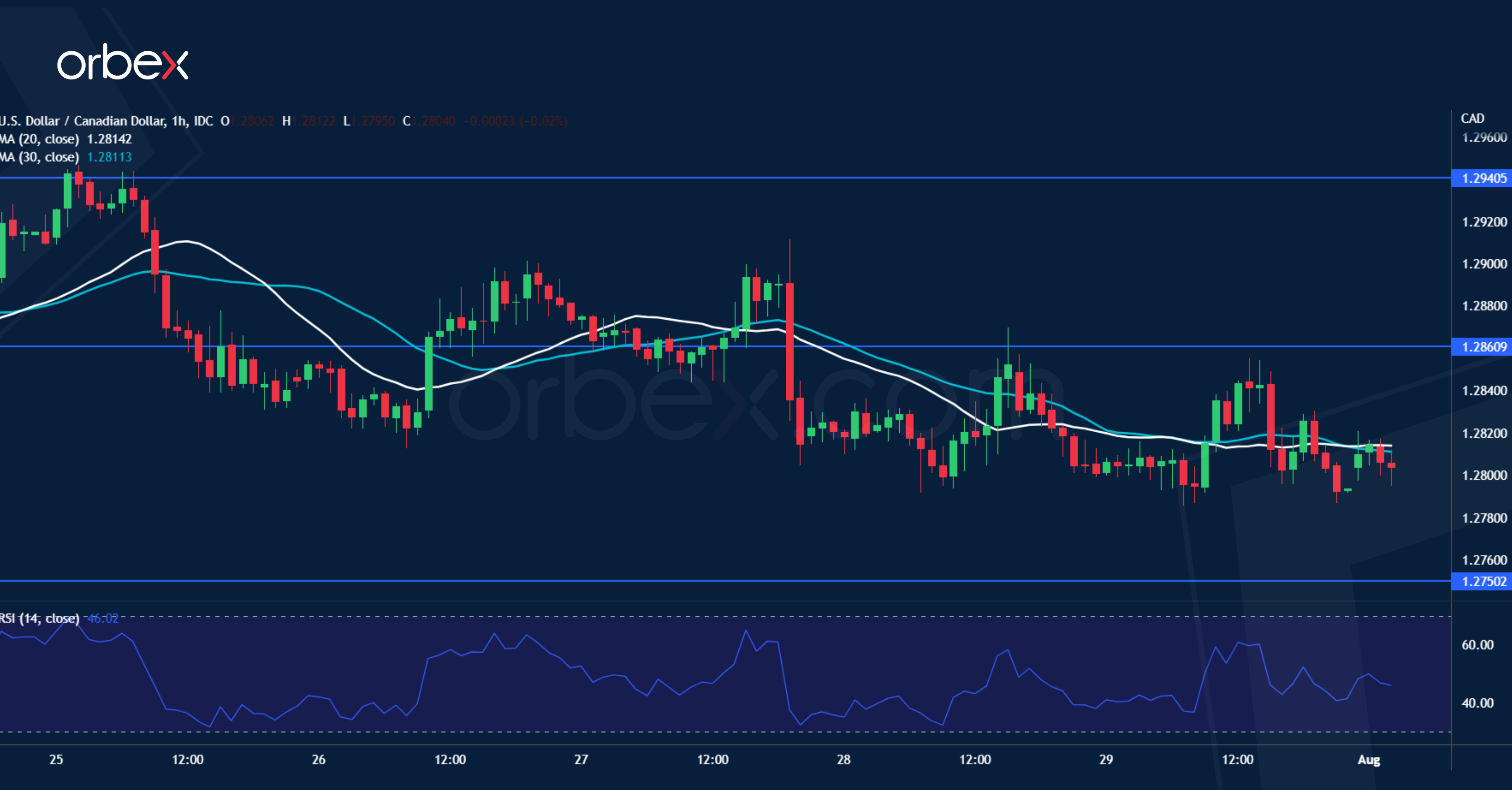
The Canadian dollar consolidated after Canada’s GDP showed signs of slowing down in May. A series of lower lows and a fall below the daily support at 1.2840 further weighed on short-term sentiment. A bearish MA cross on the daily chart suggests possible acceleration to the downside. 1.2750 is the Chartnext support and its breach could trigger a deeper correction towards 1.2600. 1.2860 is the first resistance ahead after a short-lived bounce and the bulls will need to clear 1.2940 before a meaningful recovery could take shape.
Recent Dollar Price Action Suggests Upward Momentum Stalled
Markets
Europe took center stage on Friday. July inflation jumped to 8.9% y/y (8.7% expected) and core inflation hit the 4% mark. Growth in the second quarter also surprised to the upside, expanding 0.7% q/q to be up 4% y/y. That provided merely some temporary comfort to (European) investors. German yields were looking for a countermove after a month full of losses. Advances went as high as 9 bps across the curve but the focus gradually turned back to the bloc’s imminent future, which is not looking too rosy. Eventual yield gains were capped to 3.3 bps at the front end while the 30y shed a similar amount, flattening the curve. The 10y yield stabilized around 0.82% after a steep drop within the downward trend channel in the days before. US Treasuries marginally outperformed with changes varying from +2.2 bps in the 2y but losing between 1.4 and 2.5 bps in the 5y to 30y segment. The employment cost index, which Fed chair Powell referred to during the policy press conference, rose 1.3% (1.2% expected). Spending data and the Fed’s preferred inflation (PCE) gauge beat expectations on all accounts as well. But the Chicago PMI indicated a slowing economy, declining from 56 to 52.1 as inventories, production, backlogs and new orders all fell. This kind of negative economic news in current circumstances serves as a boost to equities. Markets assume this will end up with a Fed tightening less than it currently foresees. This is not what the likes of Kashkari suggested during a weekend interview, but stocks clearly beg to differ. Europe added 1.5% (EuroStoxx50), Wall Street finished as high as 1.9% higher (Nasdaq, best month since April 2020). The dollar traded volatile. The trade-weighted measure first advanced to 106.5 before swapping gains for losses (close 105.8). EUR/USD traded a similar (opposite) pattern and managed a close north of 1.02 still. The yen outperformed again. USD/JPY fell to 133.27.News flow is thin in Asian dealings. A slew of regional PMIs were due, including in South Korea (see below) and China. The one for the latter eased more than anticipated, from 51.7 to 50.4. Output and demand indicators stayed in expansionary territory though at slower rates. Jobs however were shed at the fastest pace since April 2020. It’s causing a slight underperformance of local bourses. The yuan loses against the dollar (USD/CNY 6.75). Confidence indicators remain in the spotlights today, with the July manufacturing ISM due in the US. Looking back at the shocker US PMIs, risks for a negative surprise are mainly focused at the services sector. That said, the figure still has relevance for trading. Core bond yields tried to find a bottom end of last week but in the end it didn’t really convince. US yields this morning add a few bps but again without much conviction. Markets may stay guarded going into the services gauge on Wednesday and the July payrolls on Friday. Recent dollar price action suggests that upward momentum has stalled as markets question the Fed’s aggressive stance. Yet we don’t expect a material retracement any time soon either. EUR/USD is holding north of 1.02 and first resistance at 1.035 is still some way off. Sterling is trading quietly today just south of EUR/GBP 0.84 as it heads into the Bank of England meeting on Thursday. It is widely expected that governor Bailey will step up the tightening pace to 50 bps.
News Headlines
Hungarian central bank vice governor Virag in an interview on Friday said they will continue decisive, step-by-step monetary tightening to achieve price stability once global markets settled. Virag doubled down on the MNB’s commitment to bring inflation back down and to prevent a “self-perpetuating process”. The Hungarian forint stabilized at 404.7 to remain at historically weak levels. Short-term (swap) yields jumped into the double digits, underperforming regional peers.
South Korea’s manufacturing PMI dropped below the 50 boom/bust mark for the first time since September 2020. Output fell for a third consecutive month to 47.3, the lowest since October 2021. New orders declined for the first time in almost two years with demand affected by supply issues and rising costs. Meanwhile, firms signaled a third consecutive reduction in employment levels, often attributed to the non-replacement of voluntary leavers. Today’s PMI reading was accompanied by weaker-than-expected trade data. Imports rose 21.8% y/y compared to the 22.7% expected while exports rose 9.4% y/y (10% consensus).
EUR/USD Aims More Upsides, Gold Climbs Higher
Key Highlights
- EUR/USD started an upside correction above 1.0180.
- GBP/USD gained pace and broke the 1.2050 resistance.
- Gold price started a fresh increase above the $1,740 resistance.
- The US ISM Manufacturing PMI could decline from 53 to 52 in July 2022.
EUR/USD Technical Analysis
The Euro started a fresh recovery wave above the 1.0050 resistance against the US Dollar. EUR/USD climbed above 1.0120 to move into a positive zone.
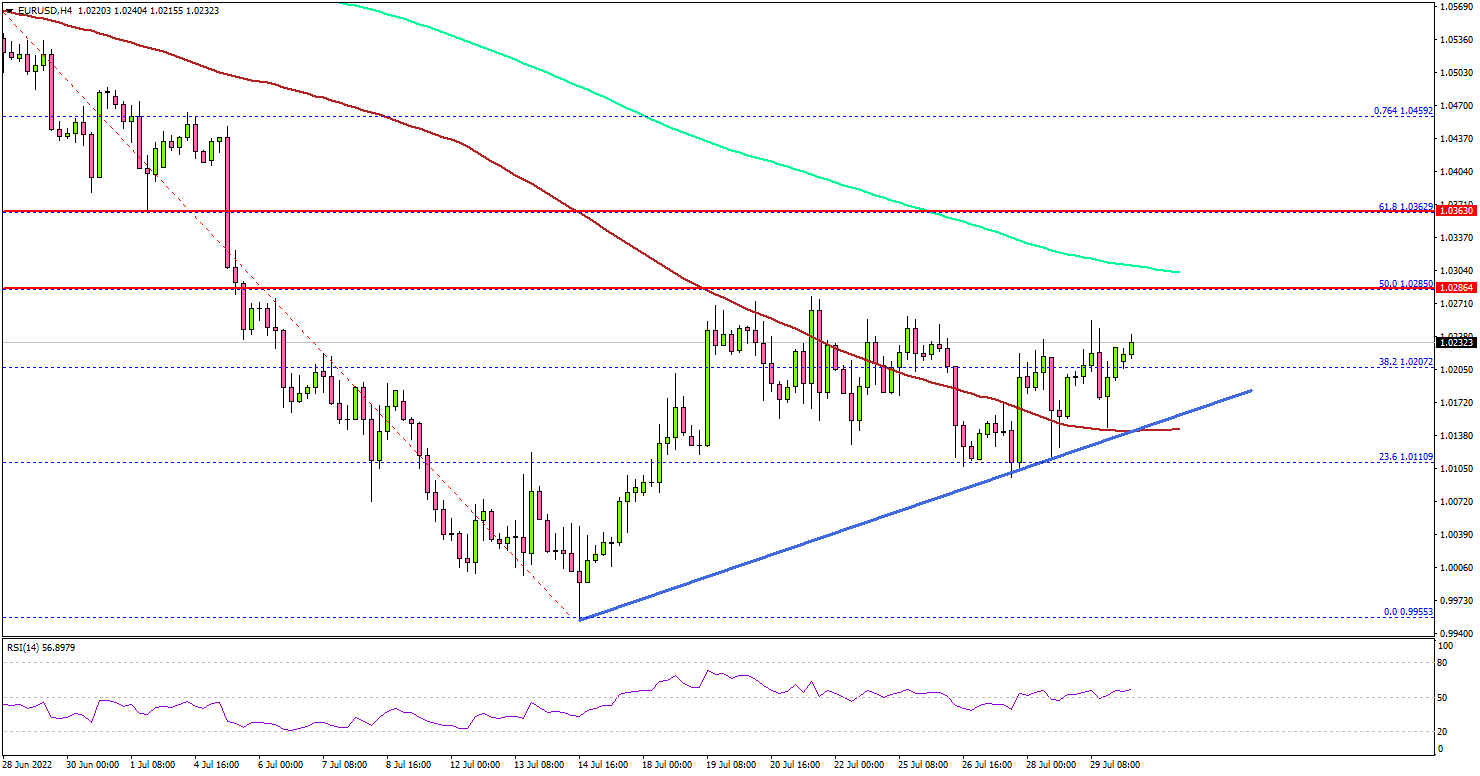
Looking at the 4-hours chart, the pair was able to settle above the 1.0150 level and the 100 simple moving average (red, 4-hours). The pair broke the 38.2% Fib retracement level of the key decline from the 1.0614 swing high to 0.9955 low.
It is now facing resistance near the 1.0285 level. It is near the 50% Fib retracement level of the key decline from the 1.0614 swing high to 0.9955 low.
The next major resistance is near the 200 simple moving average (green, 4-hours) at 1.0300, above which the pair could accelerate higher. Conversely, EUR/USD might fail to climb above 1.0285 and react to the downside.
An initial support is near the 1.0185 level. The next major support is 1.0160 and the 100 simple moving average (red, 4-hours), below which the pair could accelerate lower towards 1.0120. Any more losses might send the pair towards the 1.0050 zone.
Looking at GBP/USD, the pair started a strong recovery wave after it was able to settle above the 1.2000 and 1.2050 resistance levels.
Economic Releases
- Germany’s Manufacturing PMI for July 2022 - Forecast 49.2, versus 49.2 previous.
- Euro Zone Manufacturing PMI for July 2022 – Forecast 49.6, versus 49.6 previous.
- UK Manufacturing PMI for July 2022 – Forecast 52.2, versus 52.2 previous.
- US Manufacturing PMI for July 2022 – Forecast 52.3, versus 52.3 previous.
- US ISM Manufacturing PMI for July 2022 – Forecast 52.0, versus 53.0 previous.
USD/JPY Daily Outlook
Daily Pivots: (S1) 132.27; (P) 133.47; (R1) 134.44; More...
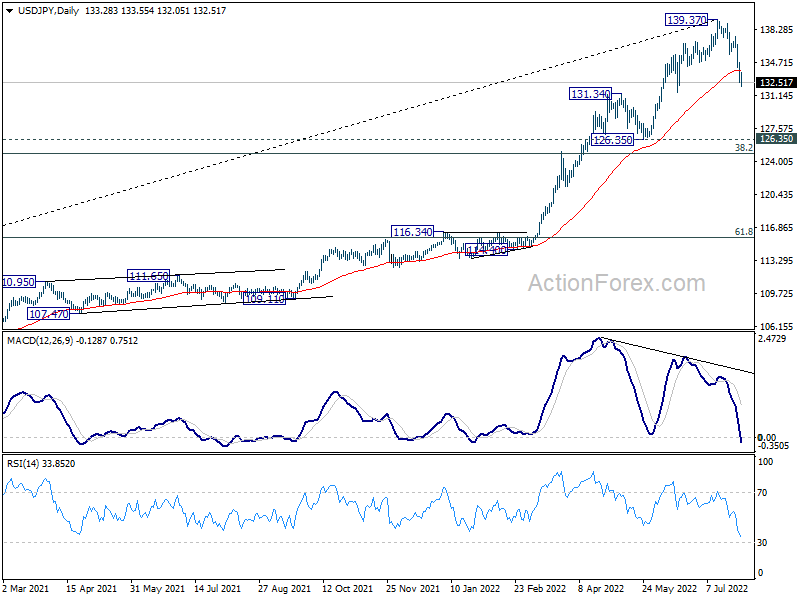
USD/JPY's fall from 139.37 continues today and intraday bias remains on the downside. Deep fall should be seen to 131.34 resistance turned support and below. But strong support is expected above 126.35 to contain downside, at least on first attempt, to bring rebound. On the upside, firm break of 135.55 will bring stronger rise back to retest 139.37 high.
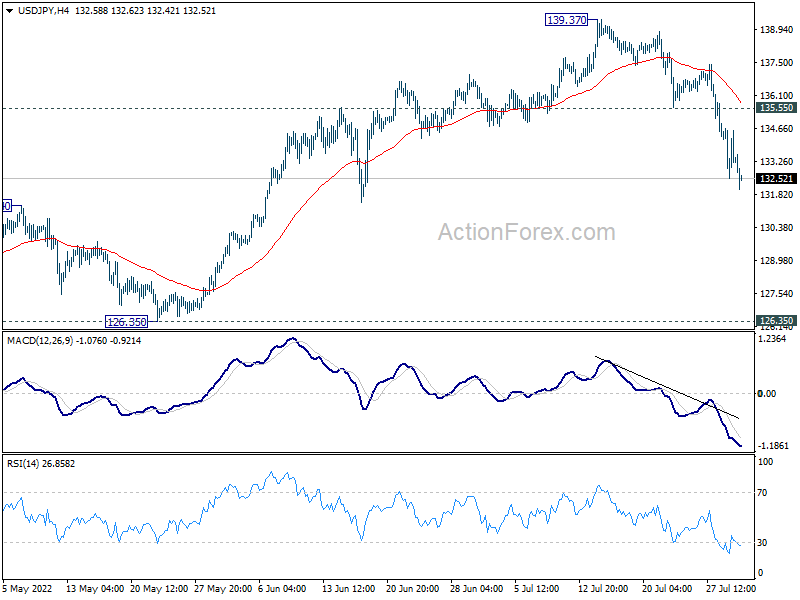
In the bigger picture, a medium term top should be in place at 139.37, on bearish divergence condition in daily MACD. Fall from there could be correcting whole up trend from 101.18 (2020 low). While deeper decline cannot be ruled out, outlook will stays bullish as long as 55 week EMA (now at 121.84) holds. Long term up trend is expected to resume through 139.37 at a later stage, after the correction finishes.
USD/CHF Daily Outlook
Daily Pivots: (S1) 0.9480; (P) 0.9537; (R1) 0.9572; More...
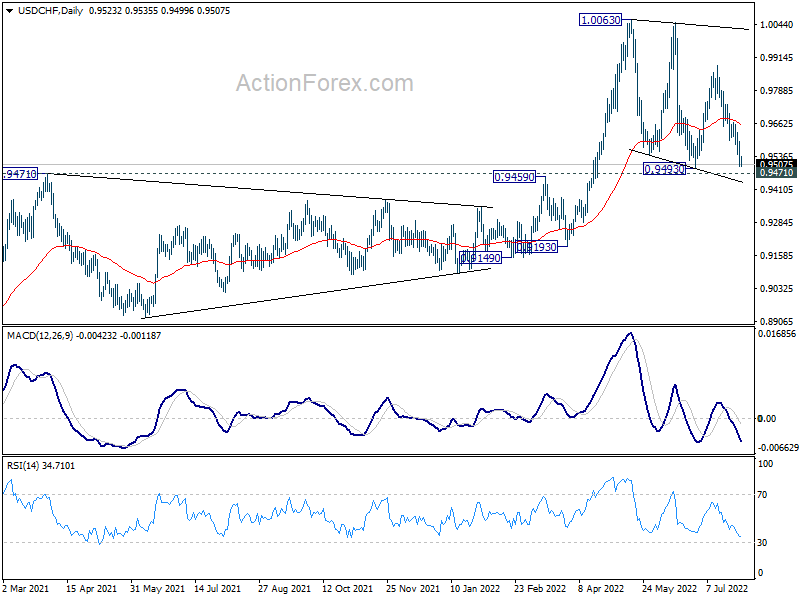
Further decline could be seen in USD/CHF. But price actions from 1.0063 high are still viewed as a consolidation pattern. Hence, strong support should be seen from 0.9471 resistance turned support to bring rebound. On the upside, above 0.9598 minor resistance will turn bias back to the upside for recovery towards 55 day EMA (now at 0.9663) and above. However, sustained break of 0.9471 will carry larger bearish implication and target 0.9193 support next.
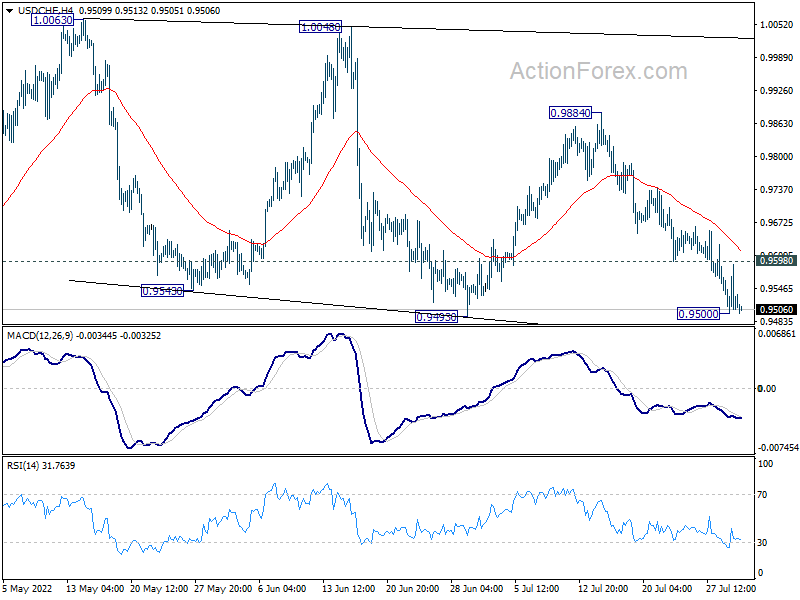
In the bigger picture, medium term up trend from 0.8756 (2021 low) is still in progress. On resumption, next target is 1.0342 (2016 high). Sustained break there will resume long term up trend from 0.7065 (2011 low). This will remain the favored case as long as 0.9471 resistance turned support holds. However, firm break of 0.9471 will raise the chance that such up trend is over.