Sample Category Title
BoJ Kuroda: Excess exchange rate volatility recently is undesirable
BoJ Governor Haruhiko Kuroda told the parliament today that "excess (exchange rate) volatility in a short term as seen recently is undesirable." He pledged to keep a close watch of the impact of the currency moves on the economy and prices. He also added that exchange rate moves should be stable and reflecting economic fundamentals.
On monetary policy, "it's important to back the economic activity with powerful monetary easing," Kuroda reiterated. "It will take time for sustainable, stable inflation to take hold in Japan."
DAX 40 Tests Daily Resistance
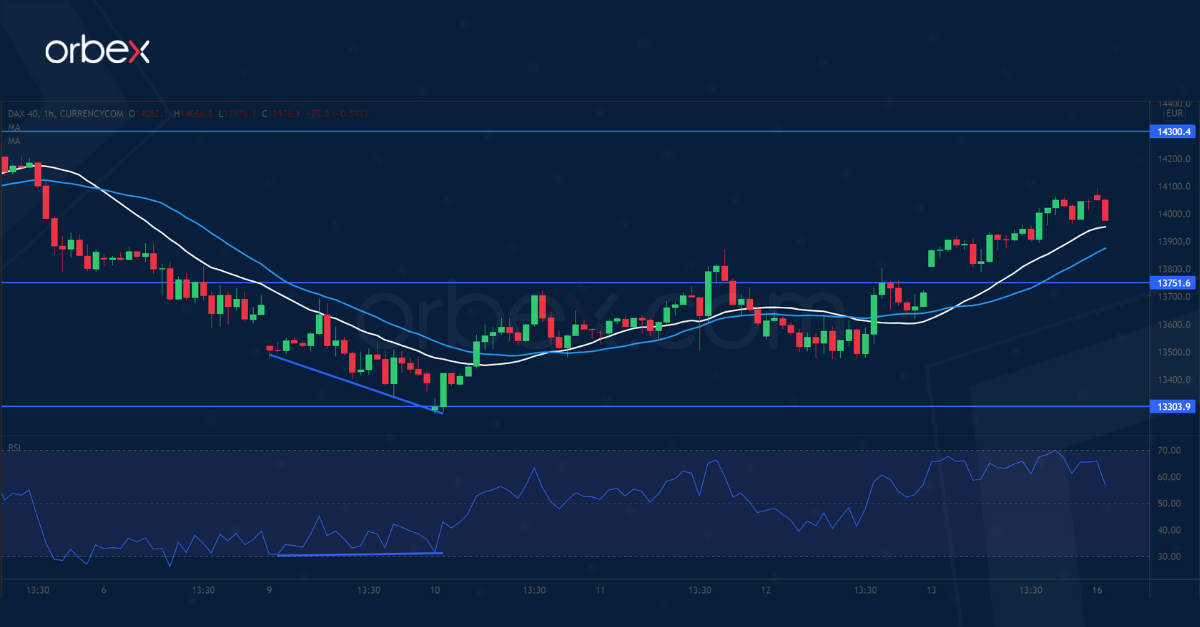
The Dax 40 bounces higher amid bargain hunting after earlier sell-off. The index found support at the base of the mid-March rally at 13300. A bullish RSI divergence revealed a deceleration in the latest sell-off and a close above 13850 prompted sellers to cover their bets. The daily resistance at 14300 is a major hurdle and its breach could turn sentiment around. An overbought RSI may cause a pullback to test buyers’ commitment. 13750 is a fresh support and 13300 a floor to keep the current rebound relevant.
USD/NOK Rides Trendline
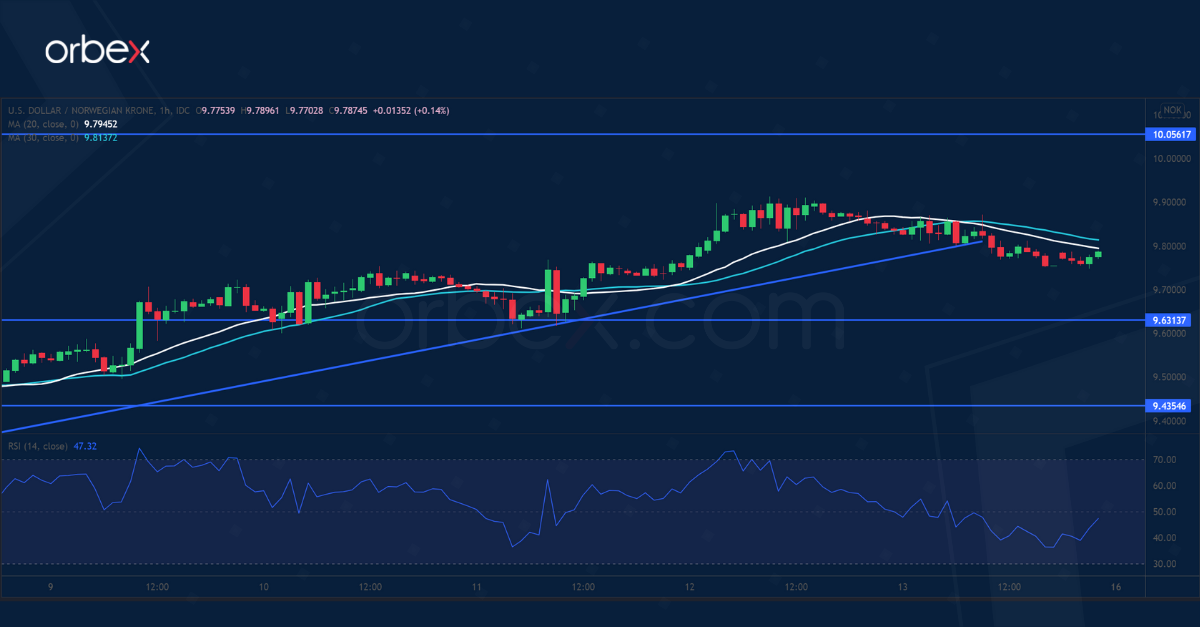
The Norwegian krone recoups losses as oil prices bounce back. The US dollar has been grinding up a rising trend line after a bullish breakout in early May. Sentiment remains extremely bullish and the pair is on its way to the psychological level of 10.0000. The RSI’s repeatedly overbought situation and a break below the trend line may cause a retracement as buyers would be unwilling to chase after higher bids. The demand zone around 9.6300 is a key level to keep short-term sentiment upbeat.
USD/CHF Grinds Higher
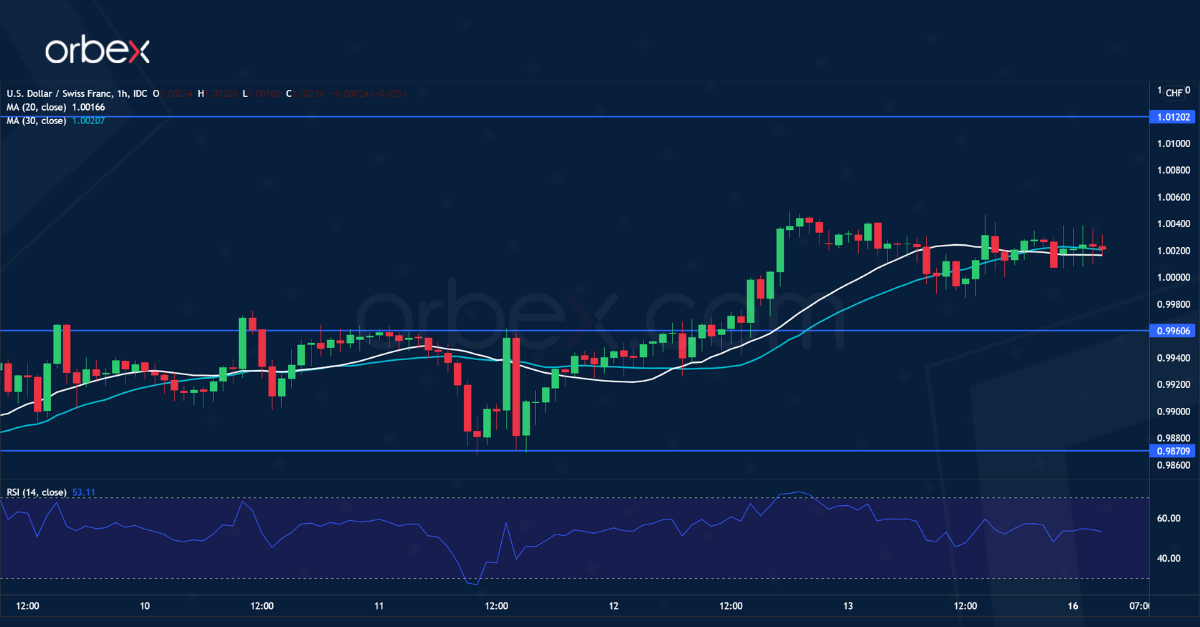
The US dollar consolidates its gains as traders ponder whether inflation has peaked. A close above the parity, last seen in November 2019 indicates strong bullish sentiment. Trend followers have been eager to buy at pullbacks and may continue to do so in this directional market. The RSI’s overbought condition has prompted intraday buyers to take profit. 0.9960 is the closest support and 0.9870 a second line of defence for the bulls. A rebound would bring the greenback back to a three-year high at 1.0120.
Daily Technical Analysis
EUR/USD
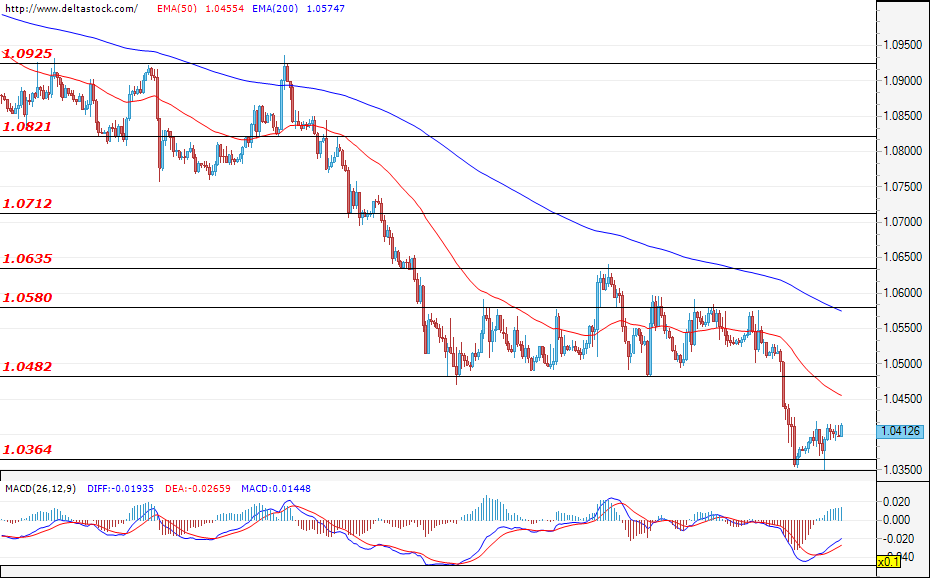
The sell-off slowed down and the decline was limited to the support zone at around 1.0360. The market seems to be oversold and the downward momentum looks to be coming to an end. The EUR/USD is therefore expected to enter a deeper and more complex correction. A new test of the area at around 1.0360 is possible, from where prices are expected to rebound towards the resistance at 1.0480. If a deeper correction develops, then the zone should be extended and the bulls would possibly be limited by the resistance at 1.0580. Around this resistance, a resumption of the downtrend, with a potential target of 1.0300, can also be expected.
USD/JPY
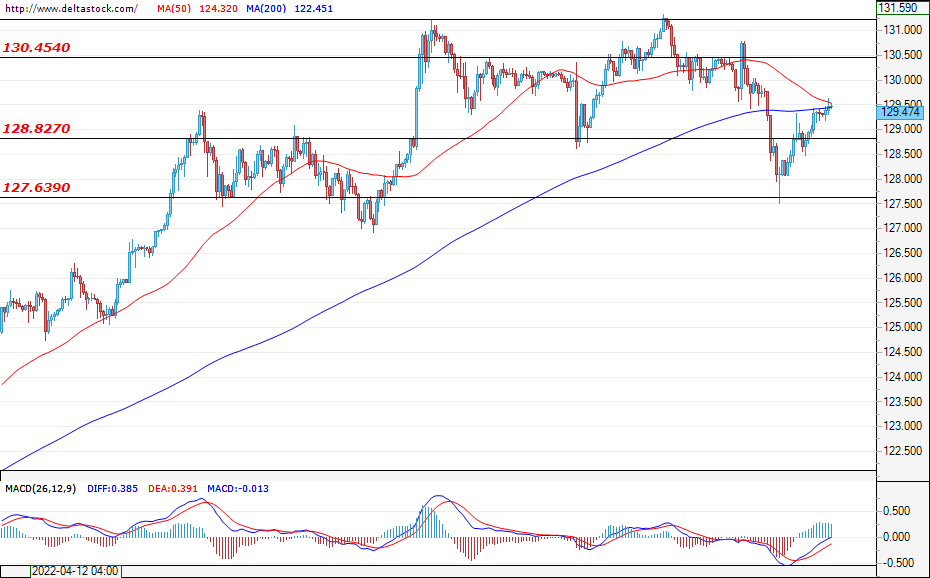
On Friday, the U.S. dollar scored some moderate gains against the yen, which continued during the early hours of today. At the time of writing, the pair is headed towards a test of the resistance at 130.45 and, in case of a confirmed breach, we may expect an upward movement towards the next resistance level at 131.25. However, if the mentioned level resists the bullish pressure, then a corrective movement towards the support at 127.64 is a possible scenario.
GBP/USD
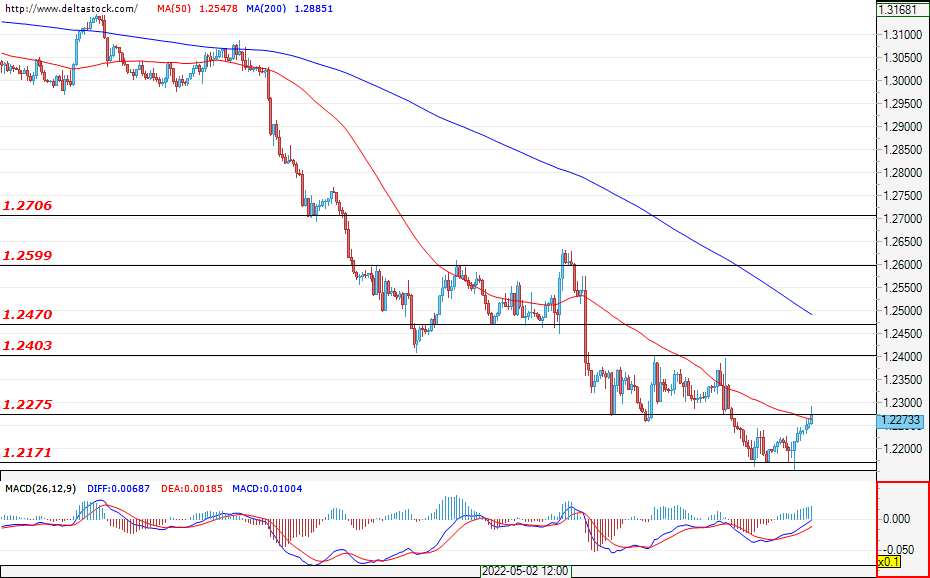
The sterling started to rise at the beginning of the session, reaching the resistance zone at 1.2275 and the expectations are for this level to be violated and for the pair to head towards the next critical resistance at 1.2400. In the opposite direction, only a confirmed breach of the support at 1.2170 would be an opportunity for the bears to attack the psychological level of 1.2100 and confirm the negative market sentiment for the continuation of the downtrend.
EUGERMANY40
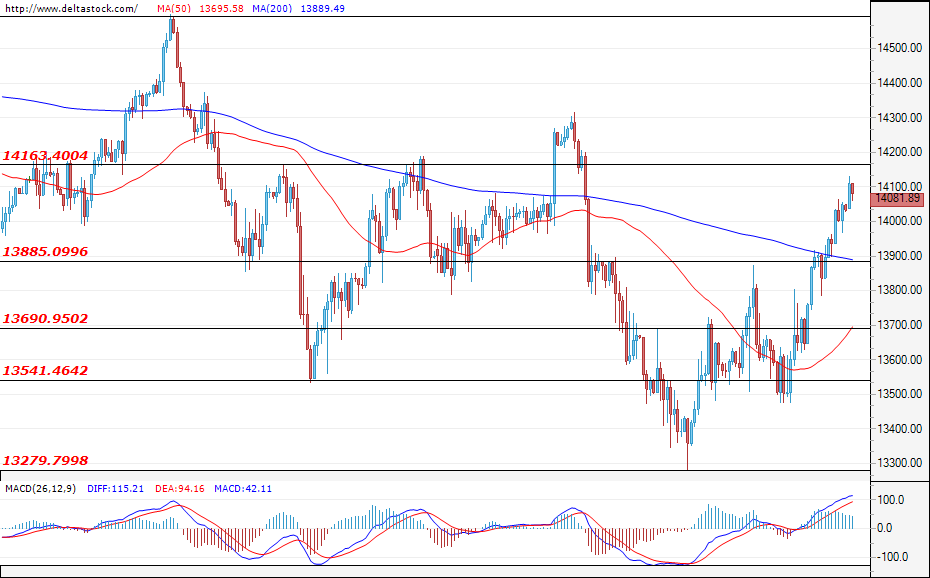
The recovery of the German index continued during the early hours of today’s trading and a potential test of the resistance level at 14163 is highly possible, where a confirmed breach could lead to new profits for the index, heading the price towards the resistance at 14600. However, a short-term correction towards the support at 13885, and even 13300, is not to be excluded as the long-term downtrend is still in place.
US30
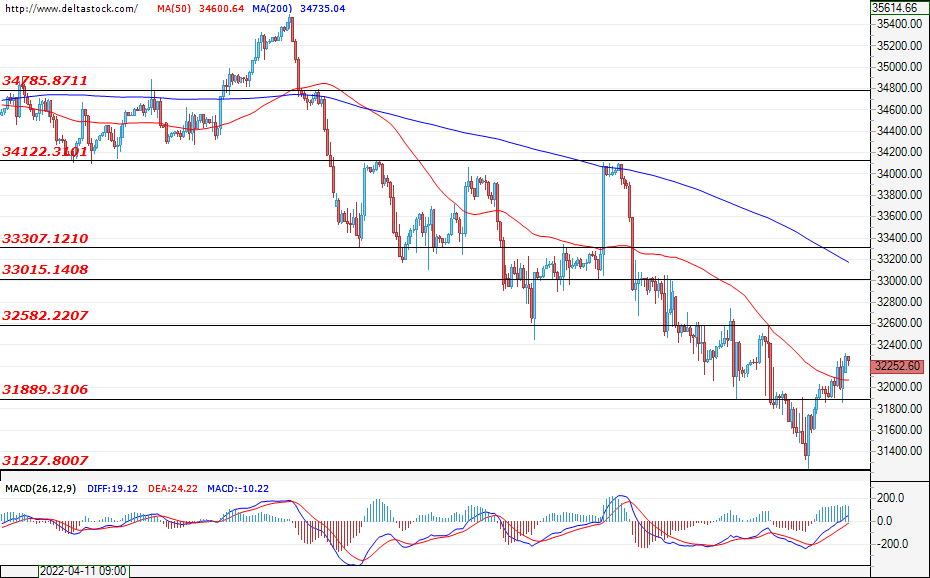
At the time of writing, the U.S. blue-chip stock index is headed towards a test of the resistance at 32580. If the bulls manage to keep the price of the index above the support at 31890 and gain just enough momentum, then we may witness a further move towards 33000. However, if the bears re-enter the market and successfully violate the support at 31900, then we should instead see a decline towards 31220.
EURUSD Muted Between Key Boundaries; Risk Skewed to the Downside
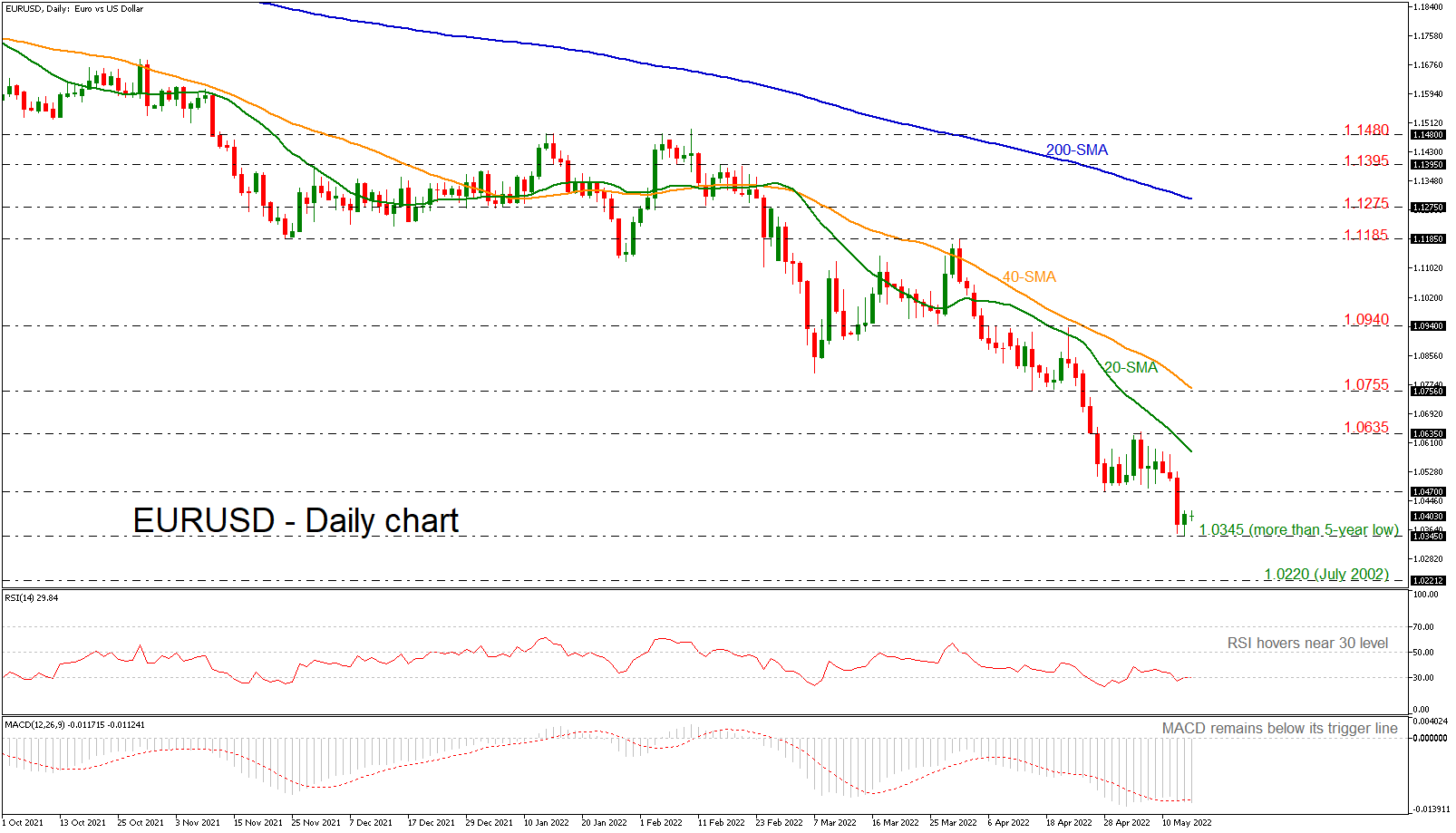
EURUSD declined to its lowest level since January 2017, hitting the 1.0345 support level on Friday. The aggressive selling interest has continued since it began last May, and the technical indicators have been in a negative zone in the last few months as well. The RSI is flattening near its 30 level, while the MACD is still strengthening its bearish momentum below its trigger and zero lines.
Should the latest bottom at 1,0345 crack, the price could initially test the 1.0220 support, taken from the inside swing high on July 2002. Sliding lower, the pair could flirt with the parity level before testing the 0.9600 low from August 2022.
In the positive scenario where the price snaps the 1.0470 barrier and closes above the 20-day simple moving average (SMA) around 1.0580, the next target would be the 1.0635 resistance. Running higher, the bulls will need to drive beyond 1.0755, which overlaps with the 40-day SMA, to access the recent peak of 1.0940.
In brief, despite its resilience above the more-than-five-year low of 1.0345, EURUSD has yet to show any clear signals for bullish corrections, remaining exposed to downside tendency.
Recession Worries Weigh on Sentiment, but Cryptocurrencies Stabilize
New week begins on a negative note; the Friday relief across the US equities, and which was put on the back of Jerome Powell saying that the bigger rate hikes are off the table for now, couldn’t prevent the Dow Jones extended losses for the seventh consecutive week, the longest losing series streak since 2001. Nasdaq fell near 3% and the S&P500 ended last week near 2.5% lower, at the cusp of the bear market.
DataTrek estimates that the S&P500 would need to fall to 3525 level to ‘discount the 50/50’ odds of recession. And odds of recession are mounting. Goldman Sach’s Blackfein said that the chances of recession in the US is getting ‘very, very high’ and Goldman Sachs cut its American growth forecast to 2.4% from 2.6% this year, and from 2.2% to 1.6% for next year.
As a result, the broad-based recession talk is the major catalyzer this Monday.
Activity in US and European futures hint that Friday’s rebound was certainly nothing more than a dead cat bounce.
Recession worries and soft energy prices will likely weigh on the FTSE index, despite a relatively cheap sterling.
Russia is not happy
In the energy markets, the barrel of US crude trades below the $110 mark on recession worries, but the mounting geopolitical tensions in Europe will certainly limit the selloff.
Finland and Sweden, who have been neutral so far, are now willing to join NATO. Plus, Germany decides to cut the Russian gas to the end of the year, if the Russians don’t turn off the tap before that. And the EU is expected to reveal its latest plan about how to reduce its energy dependence. All this to say that the geopolitical tensions will likely keep the oil bulls alert, but clearly not as aggressive as a couple of weeks ago, as the recession worries now loom, and weigh on the energy rally.
Still, iShares Diversified Commodity index rebounded fast since its dip last week, as the narrow supply will continue playing in favour of higher commodity prices in the coming months.
China could be a gamechanger for the recession worries
…if the government decided to stop its unnecessarily costly Covid zero policy. One good news is that Shanghai people now see the light at the end of the tunnel, as the lockdown measures could finally be lifted by the end of this month, if there are no new cases detected, but the risk of similar measures in other big cities, including Beijing are omnipresent.
The Chinese central bank cut the interest rates for new mortgages to boost the housing market and the slowing growth. Let’s hope the Chinese stimulus does a better impact than the rest of its economic and public health policies!
Bitcoin shrugs off the Terra stress
Bitcoin and Ethereum shrugged off the stress of the Terra dollar’s collapse last week, and stabilized above the $30K and the $2000 respectively over the weekend. The consolidation means that the trust in major cryptocurrencies hasn’t been damaged by the Terra incident, yet it’s likely that investors would become pickier when choosing a token to invest in, as the Terra’s collapse showed that the cryptocurrencies, no matter how popular they are, are not risk free.
Moving forward, the major cryptocurrencies will likely benefit from the protection of a strong support. This could lead to a divergence within the industry, and maybe some sector-wide safe haven flows toward Bitcoin and Ethereum.
However, Bitcoin is still far from becoming a haven asset, in proper terms, and it will certainly continue trading parallel to risky assets. Therefore, if we see the equity meltdown extend this week, we could well see Bitcoin slip and consolidate around the $25K, tested last week.
China’s COVID-19 Crash
Market movers today
This week will be a quiet one on data front, but we do look for signals on how the global consumer is holding up in the context of rising prices, as we get retail sales data from the US on Tuesday and the EA consumer confidence data on Friday.
Central banks remain in the spotlight with some Fed speakers on the wires and ECB minutes out on Thursday. For Fed, there seems to be a broad consensus on front-loading rate hikes by hiking 50bp the next two meetings. For ECB, markets will focus on any discussion about the timing and pace of upcoming rate hikes and the Governing Council's concerns about de-anchoring inflation expectations. Final EA HICP print is due on Wednesday.
Also, Finland and Sweden are expected to take further steps towards joining NATO after which NATO is expected to invite countries to accession talks. Focus will be on NATO's current member countries' reactions after Turkish President Erdogan's comments he does not support Finland and Sweden joining the alliance.
The 60 second overview
Macro: China's industrial production plunged 2.9% y/y in April as the economy feels the strains of large Covid-related lockdowns and the global energy crunch. The drop in industrial production surpassed the drop in March 2020, when the first round of lockdowns were imposed and thus underscores the current struggles of the Chinese economy.
Wheat: India on Friday announced it will suspend wheat exports to help manage its food security amid surge in global grain prices. India is not a big wheat exporter, but the fact that a big country scrambles to secure food supply left the market anxious with wheat prices up around 5% this morning.
Fed: On Friday, Cleveland Fed's Mester reiterated Fed is committed to doing what it needs do on inflation and added market has been handling Fed's withdrawal of support.
Oil: The US oil rig count rose further on Friday and continues its trend higher. High oil prices has increased the profit margin on US oil production, which in turn should result in higher production over the coming months.
FI: European rates markets experienced an unusually volatile session last week, with a 35bp trading range from low to highs as markets remain sensitive to global central bank signals and faltering growth outlooks. Most recently, Bloomberg reported that the European Commission's upcoming spring forecasts will see a revision of the European growth down by 1.3pp and 0.4pp in 2022 and 2023, respectively. With central bank meetings still 3.5 weeks away or more, markets will continue to remain sensitive to signals from speakers and no clear calming factor is in sight.
FX: Last week was dominated by growth concerns across asset classes incl. FX. The USD was among the biggest beneficiaries although notably JPY strengthened even more on the drop in yields. Otherwise NOK, AUD, NZD were all among the biggest underperformers.
Credit: Friday the credit market was supported by a general, positive tone in equity markets. Hence iTraxx Xover tightened 14bp to 446bp while Main was 3bp tighter to 92bp.
GBP/JPY Daily Outlook
Daily Pivots: (S1) 157.14; (P) 157.82; (R1) 159.15; More...
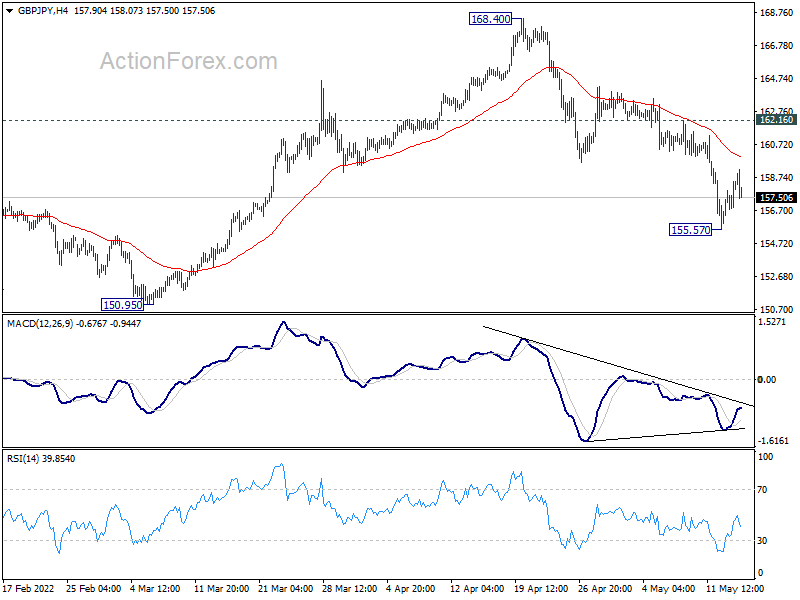
Intraday bias in GBP/JPY remains neutral for the moment. Risk will stay on the downside as long as 162.16 minor resistance holds, as correction from 168.40 could extend. On the downside, below 155.57 will target 150.95 key structural support next.
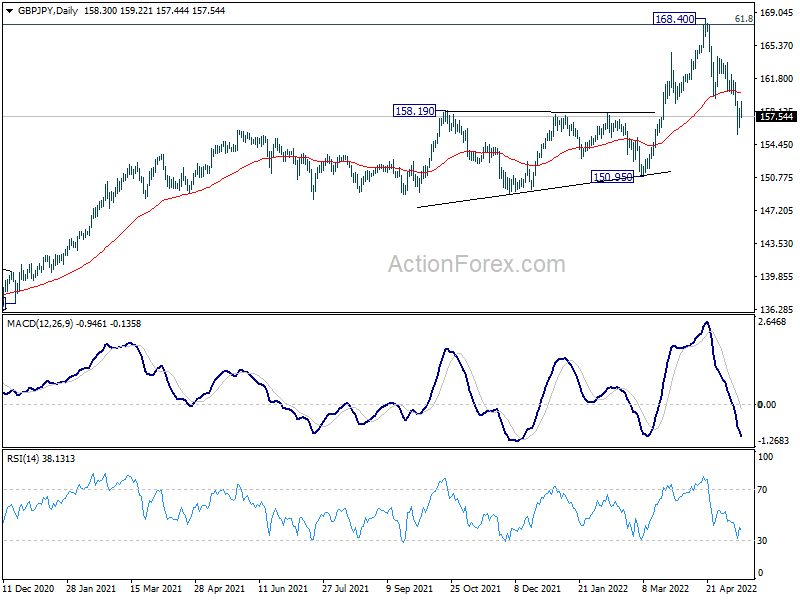
In the bigger picture, up trend from 123.94 (2020 low) is still in progress. Sustained break of 61.8% retracement of 195.86 (2015 high) to 122.75 (2016 low) at 167.93 will be a long term bullish signal, and could pave the way back to 195.86 high. This will now remain the favored case as long as 150.95 support holds, even in case of deep pull back. However, firm break of 150.95 will indicate rejection by 167.93, and bearish trend reversal.
EUR/JPY Daily Outlook
Daily Pivots: (S1) 133.55; (P) 134.15; (R1) 135.15; More....
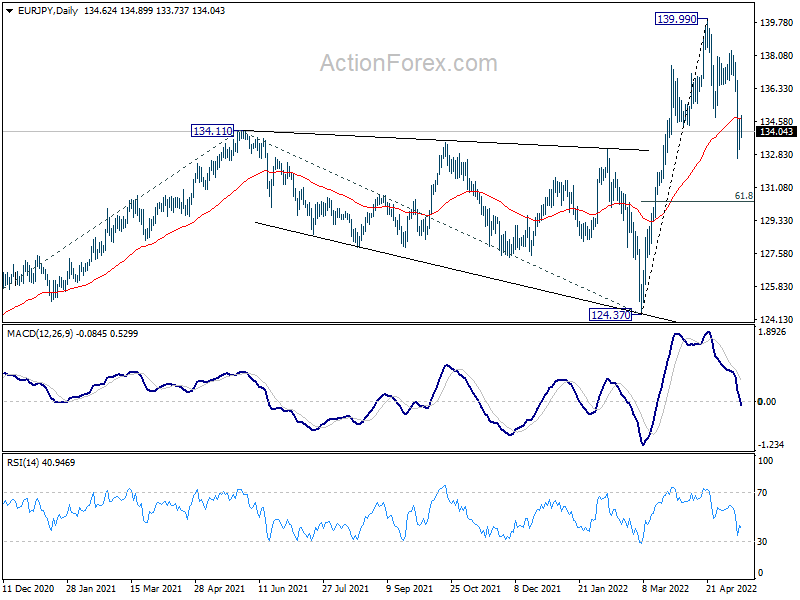
Intraday bias in EUR/JPY remains neutral for the moment. Risk stays on the downside as long as 138.33 resistance holds, as the correction from 139.99 would extend. On the downside, below 132.63 will target 61.8% retracement of 124.37 to 139.99 at 130.33.
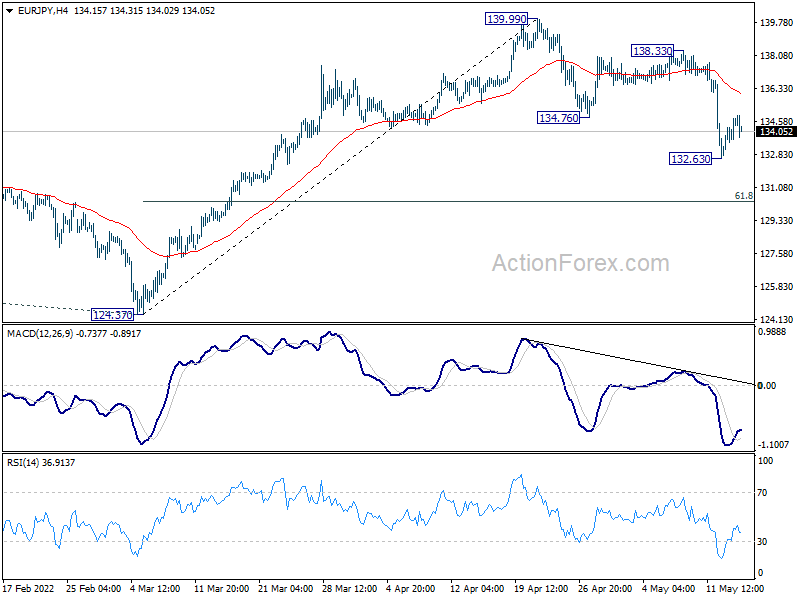
In the bigger picture, up trend from 114.42 (2020 low) is in progress. Such rise is seen as the third leg of the pattern from 109.30 (2016 low). Next target will be 100% projection of 114.42 to 134.11 from 124.37 at 144.06. In any case, outlook will now remain bullish as long as 124.37 support holds, in case of deep pull back.