

Sample Category Title
GBP/JPY Weekly Outlook
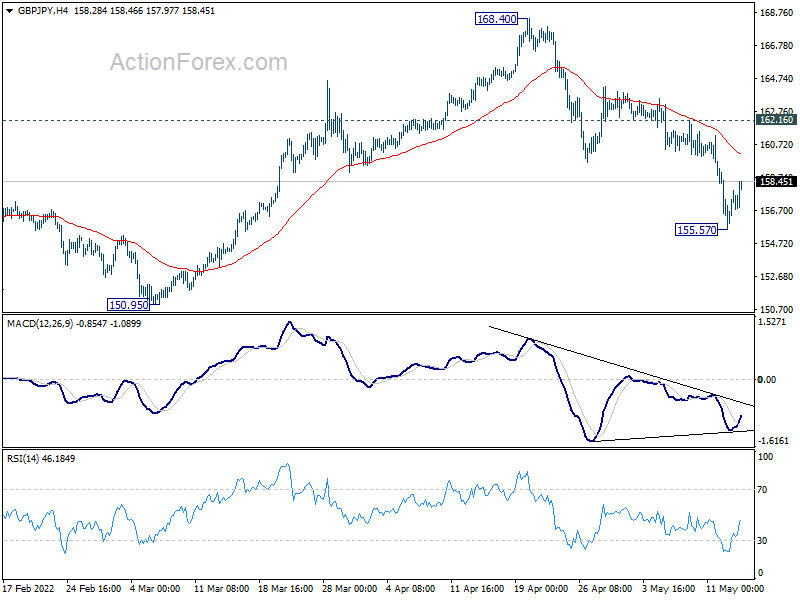
GBP/JPY's correction from 168.40 extended lower last week, but a temporary low should be in place at 155.57. Initial bias is neutral this week first. Risk will stay on the downside as long as 162.16 minor resistance holds. Below 155.57 will target 150.95 key structural support next.
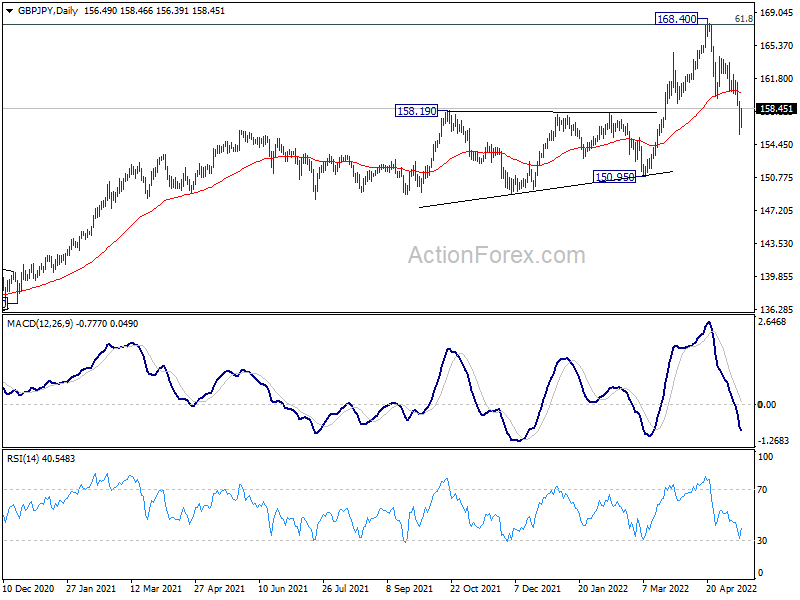
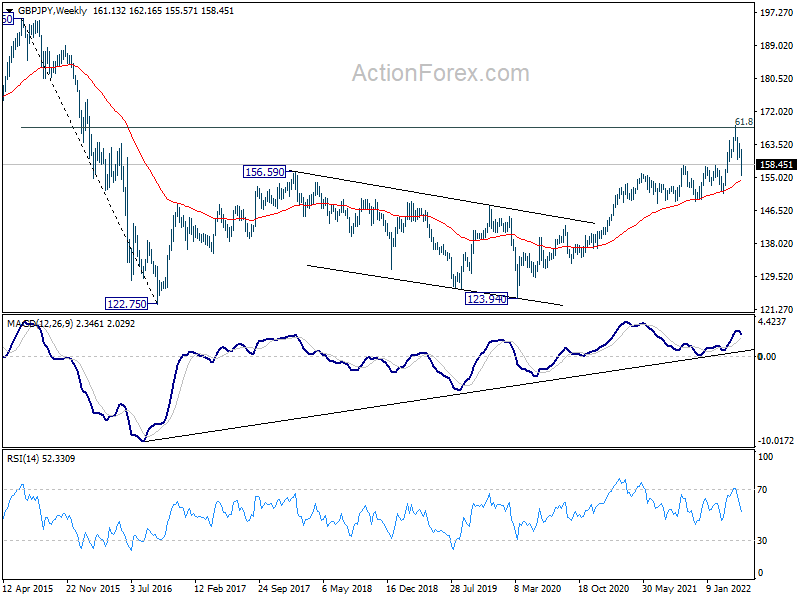
In the bigger picture, up trend from 123.94 (2020 low) is still in progress. Sustained break of 61.8% retracement of 195.86 (2015 high) to 122.75 (2016 low) at 167.93 will be a long term bullish signal, and could pave the way back to 195.86 high. This will now remain the favored case as long as 150.95 support holds, even in case of deep pull back. However, firm break of 150.95 will indicate rejection by 167.93, and bearish trend reversal.
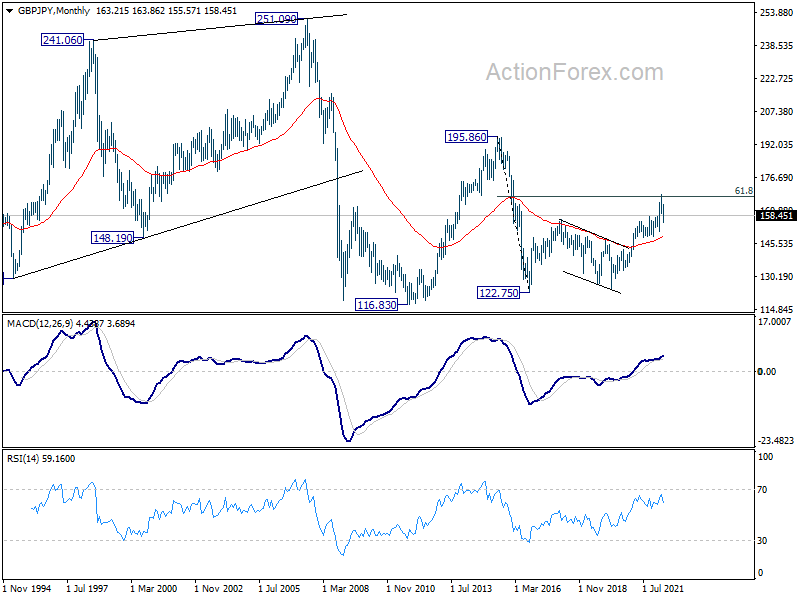
In the longer term picture, rise from 122.75 could be the third leg the the pattern from 116.83 (2011 low). Further rise will remain in favor as long as 55 month EMA (now at 148.31) holds. Sustained break of 61.8% retracement of 195.86 to 122.75 at 167.93. will pave the way to 195.86 (2015 high).
EUR/JPY Weekly Outlook
EUR/JPY's correction from 139.99 extended lower last week, but a temporary low should be in place at 132.63. Initial bias is neutral this week first. Risk stays on the downside as long as 138.33 resistance holds. Below 132.63 will target 61.8% retracement of 124.37 to 139.99 at 130.33.
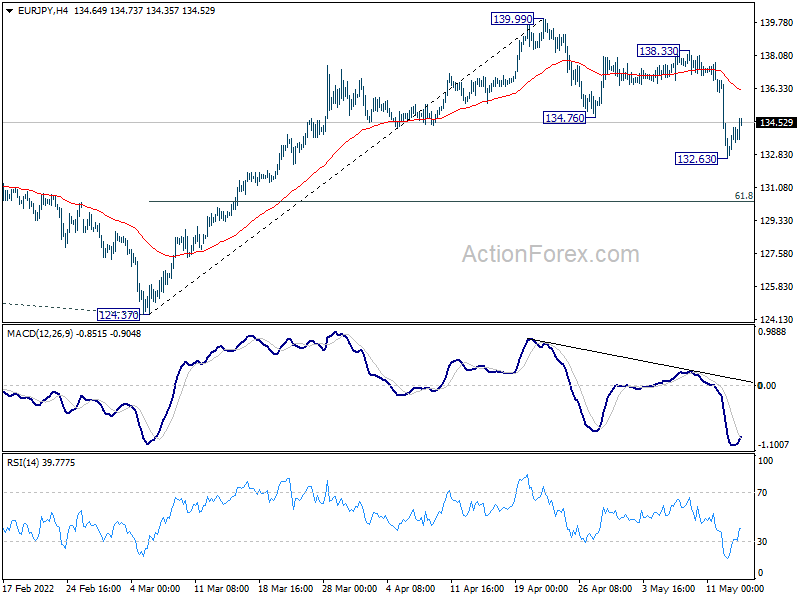
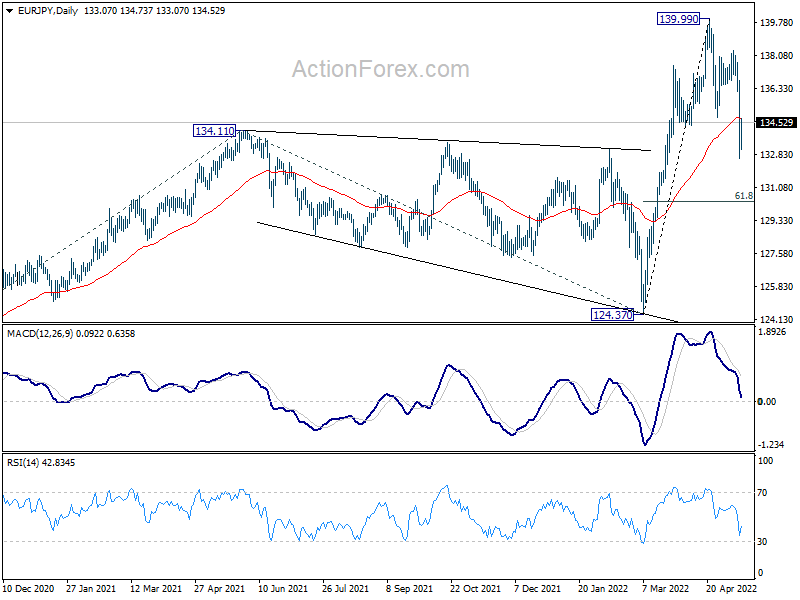
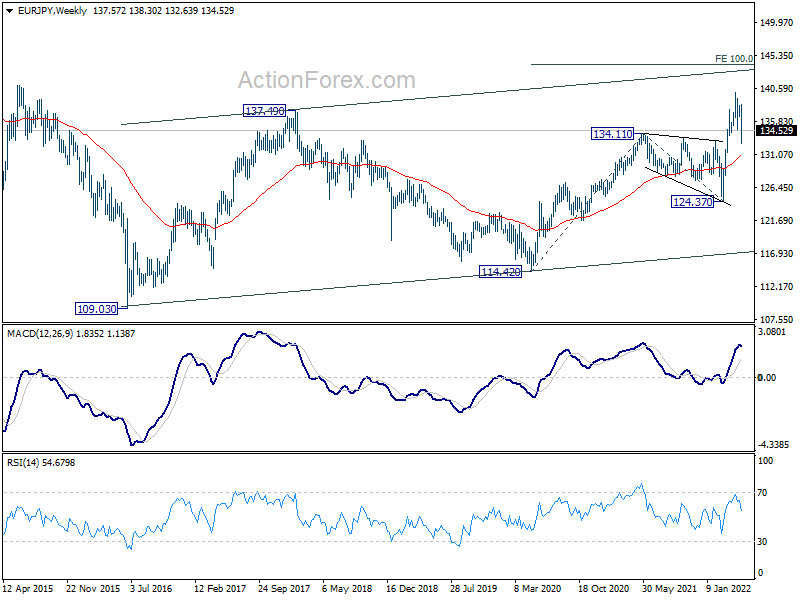
In the bigger picture, up trend from 114.42 (2020 low) is in progress. Such rise is seen as the third leg of the pattern from 109.30 (2016 low). Next target will be 100% projection of 114.42 to 134.11 from 124.37 at 144.06. In any case, outlook will now remain bullish as long as 124.37 support holds, in case of deep pull back.
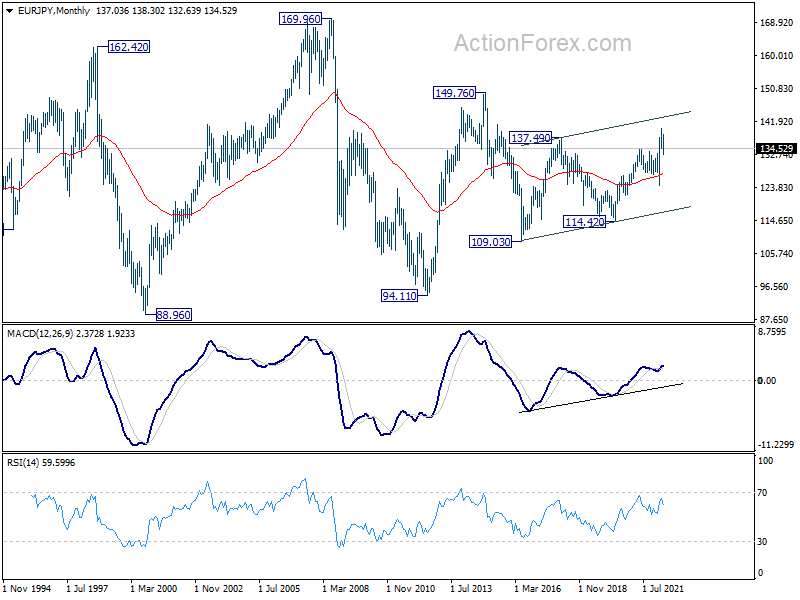
In the long term picture, focus stays on 137.49 resistance (2018 high). Sustained break there will raise the chance that whole rise from 94.11 (2012 low) is resuming through 149.76 resistance. This will be a slightly favored case for now, as long as 124.37 support holds.
EUR/GBP Weekly Outlook
EUR/GBP edged higher to 0.8617 last week but retreated since then. Initial bias remains neutral this week first. Rise from 0.8201 is still in favor to continue as long as 0.8365 support holds. On the upside, break of 0.8617 will resume such rise to 0.8697 medium term fibonacci level. However, break of 0.8365 will dampen this bullish view, and turn bias back to the downside instead.
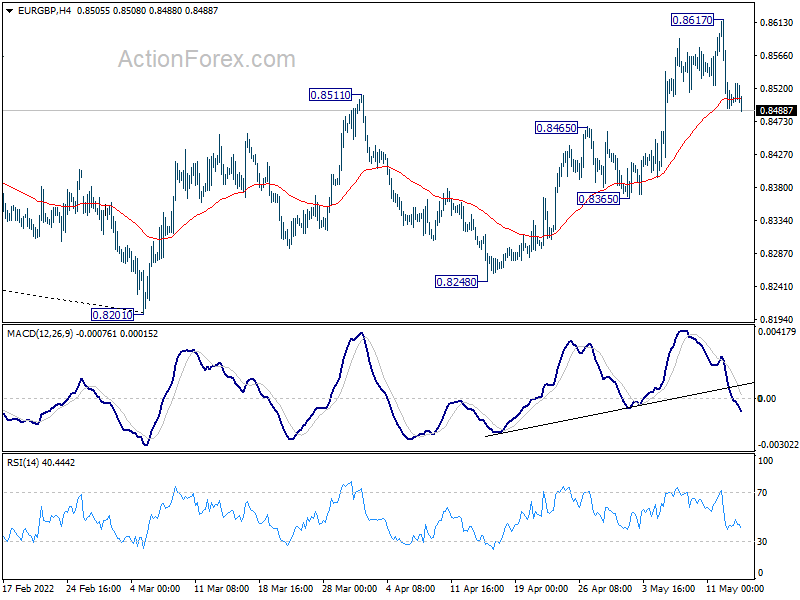
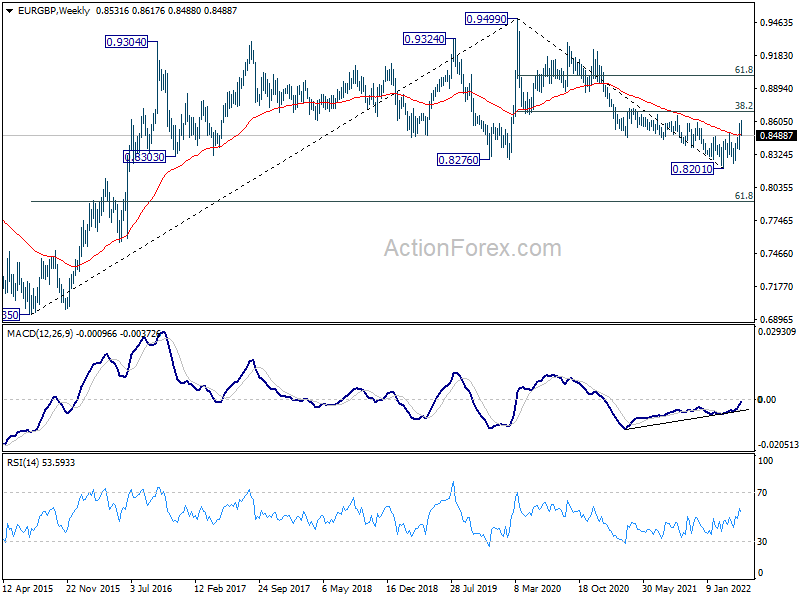
In the bigger picture, a medium term bottom could be in place at 0.8201, on bullish convergence condition in daily and weekly MACD. Rise from there could either be a correction to the down trend from 0.9499 (2020 high), or a medium term up trend itself. In either case, further rise should be seen to 38.2% retracement of 0.9499 to 0.8201 at 0.8697. Sustained break there will target 61.8% retracement at 0.9003.
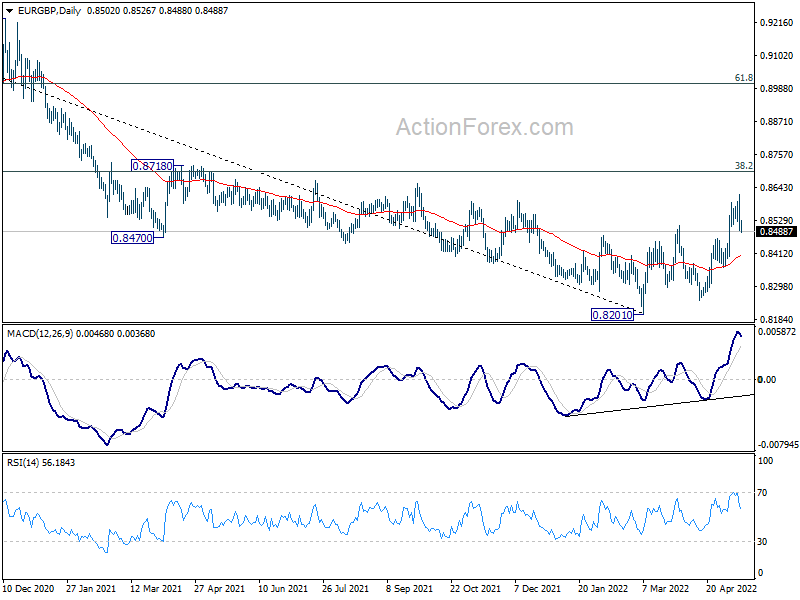
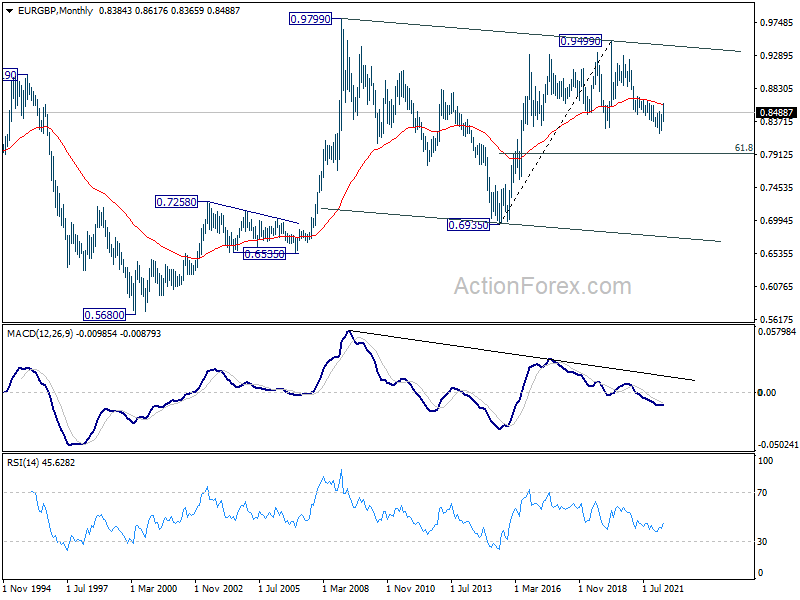
In the long term picture, current development argues that fall from 0.9499 is probably the third leg of the pattern from 0.9799 (2008 high). Sustained break of 61.8% retracement of 0.6935 to 0.9499 at 0.7917 will pave the way back to 0.6935 (2015 low) and probably below. However, sustained trading above 55 month EMA (now at 0.8604) will dampen this bearish view and bring stronger rebound.
EUR/AUD Weekly Outlook
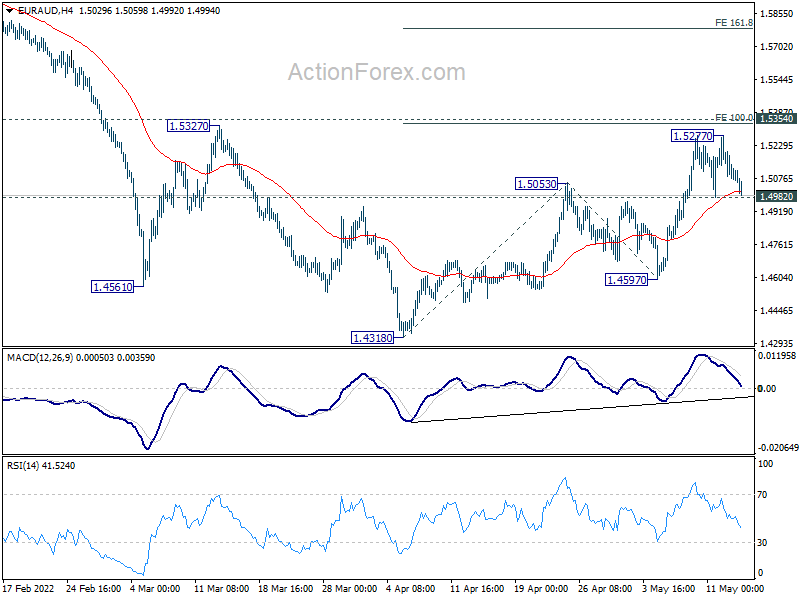
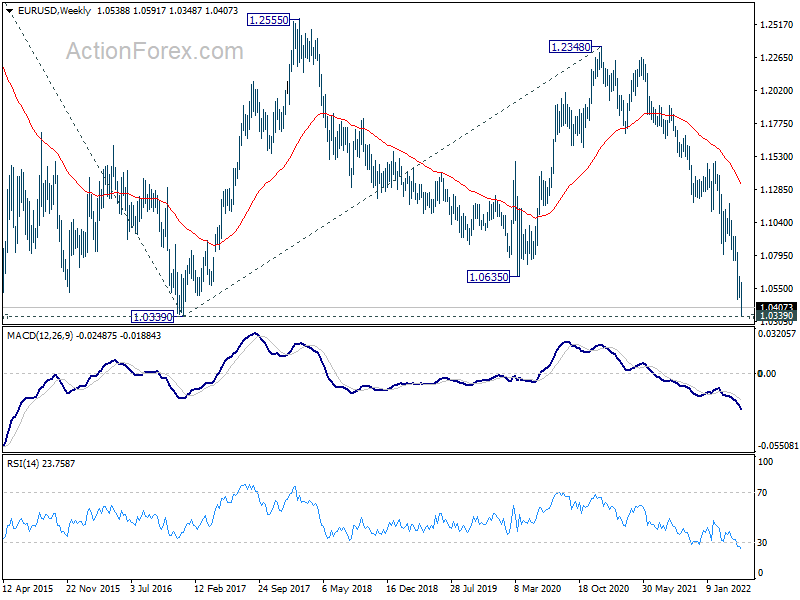
EUR/AUD rose further to 1.5277 last week but retreated since then. Initial bias is neutral this week first. On the downside, break of 1.4982 support will argue that rebound from 1.4318 has completed as a three wave corrective move. That came after missing 1.5354 support turned resistance and 100% projection of 1.4318 to 1.5053 from 1.4597 at 1.5332. Intraday bias will be back on the downside for 1.4597 support first. On the upside, however, firm break of 1.5332/54 will argue that the larger trend is reversing. Next target is 161.8% projection at 1.5786.
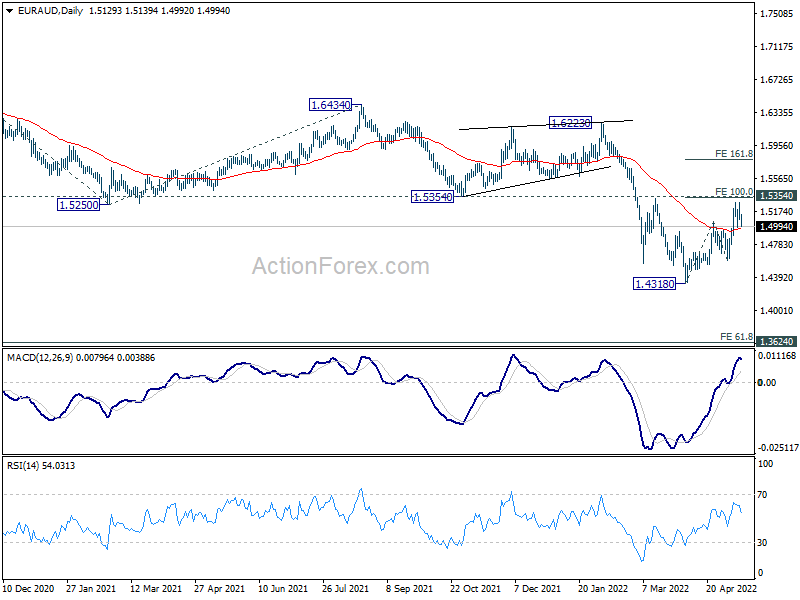
In the bigger picture, as long as 1.5354 support turned resistance holds, larger down trend form 1.9799 (2020 high) is still expected to continue. On resumption, next target is 61.8% projection of 1.9799 to 1.5250 from 1.6434 at 1.3623, which is close to 1.3624 long term support (2017 low). However, firm break of 1.5354 will indicate medium term bottoming and bring stronger rally back to 1.6434 key resistance.
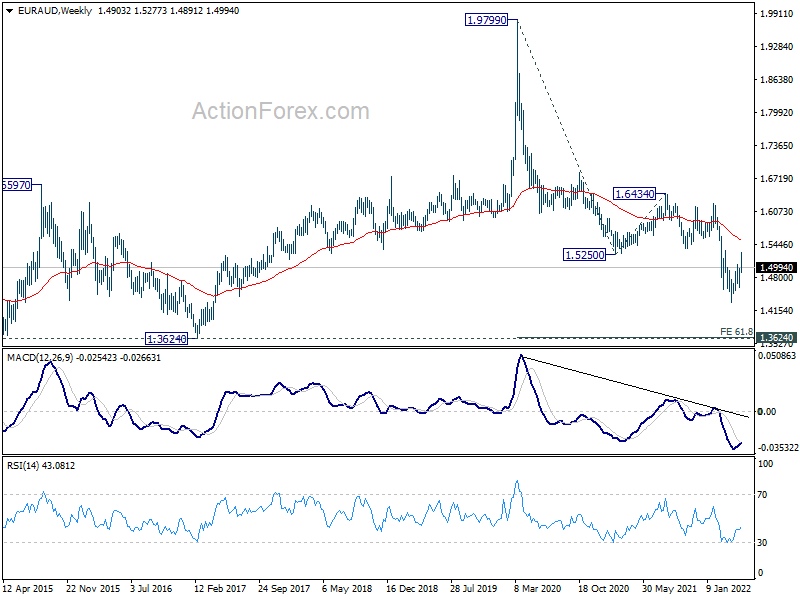
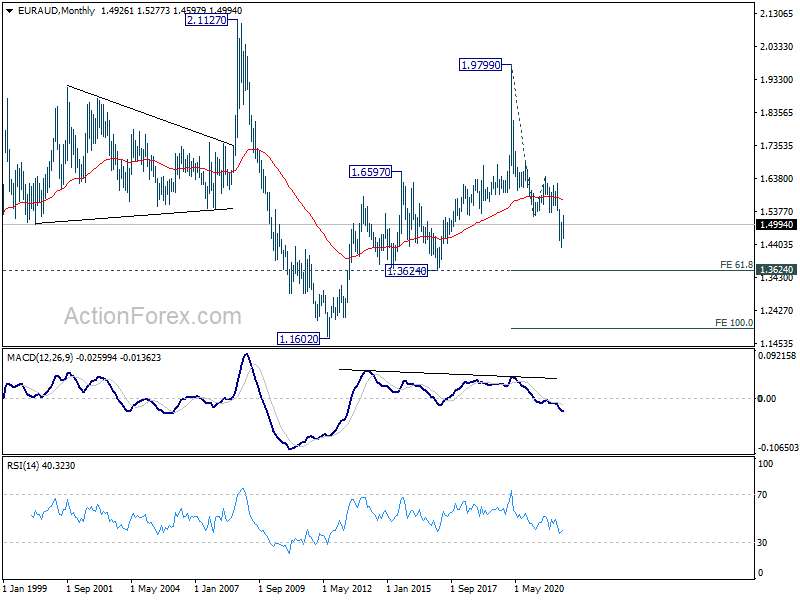
In the longer term picture, fall from 1.9799 (2020 high) is seen as the third leg of the pattern from 2.1127 (2008 high). Deeper fall should be seen to 1.3624 support. Decisive break there would pave the way back to 1.1602 (2012 low).
EUR/CHF Weekly Outlook
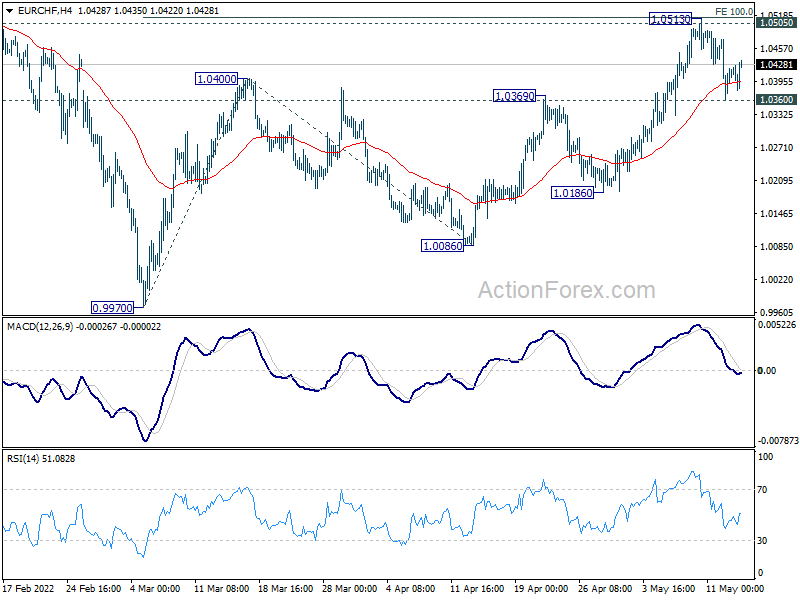
EUR/CHF rose further to 1.0513 last week but retreated sharply since then. Initial bias stays neutral this week first. On the downside, break of 1.0360 will suggest that rebound from 0.9970 has completed as a three-wave corrective move at 1.0513. That came after rejection by 100% projection of 0.9970 to 1.0086 from 1.0400 at 1.0516 and 1.0505. Intraday bias will be turned back to the downside for 1.0186 support first. On the upside, however, sustained break of 1.0505 long term resistance will carry larger bullish implications. Next target is 161.8% projection at 1.0782.
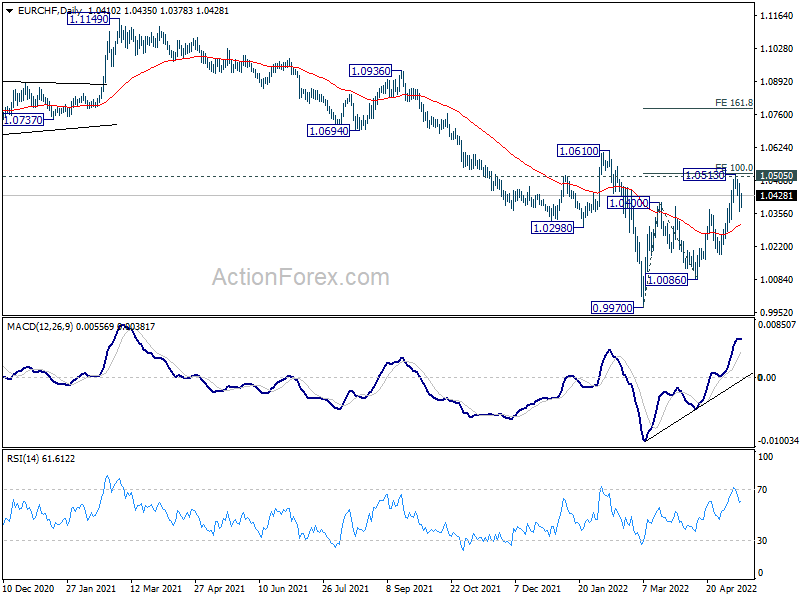
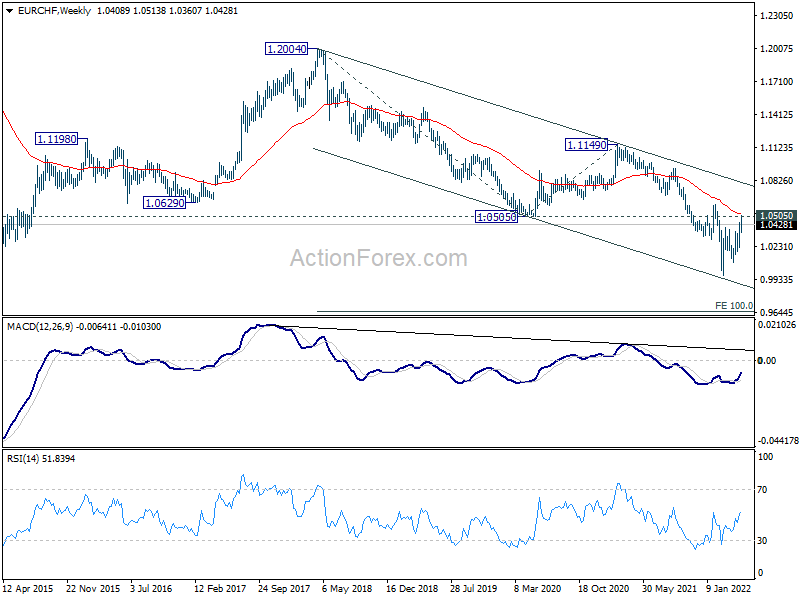
In the bigger picture, as long as 1.0505 support turned resistance (2020 low) holds, long term down trend from 1.2004 (2018 high) is expected to continue. Next target is 100% projection of 1.2004 to 1.0505 to 1.1149 at 0.9650. However, firm break of 1.0505 will suggest medium term bottoming, and bring stronger rebound towards 1.1149 structural resistance.
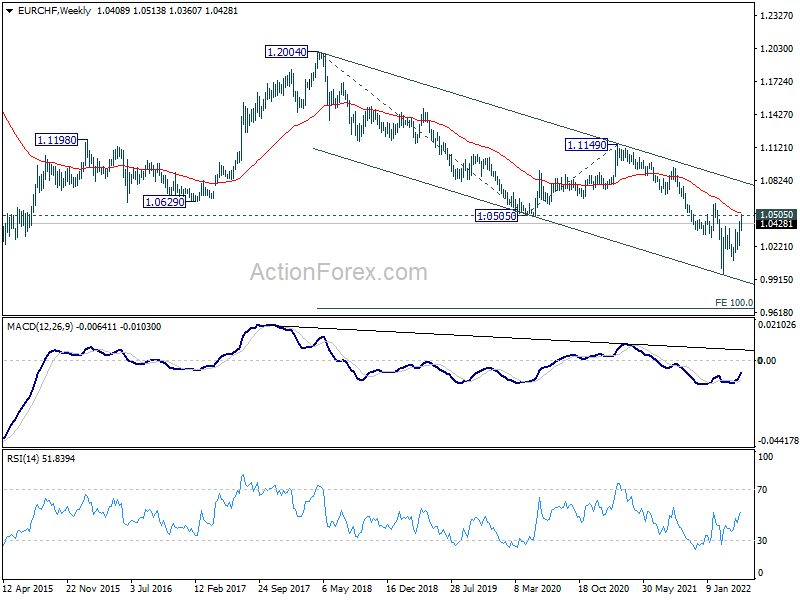
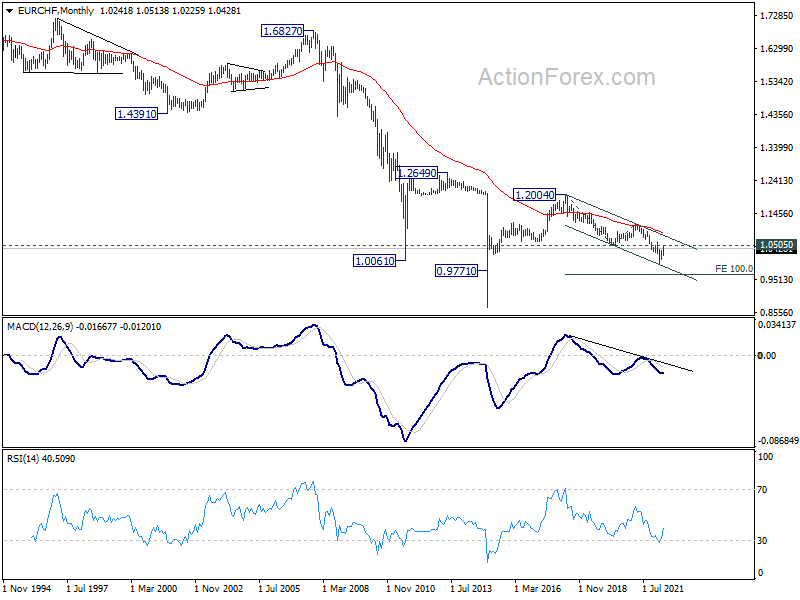
In the long term picture, capped below 55 month EMA, EUR/CHF is seen as extending the multi-decade down trend. There is no prospect of a bullish reversal until some sustained trading above the 55 month EMA (now at 1.0876).
Euro Looking Increasingly Vulnerable, Overall Sentiment to Stabilize after Wild Rides
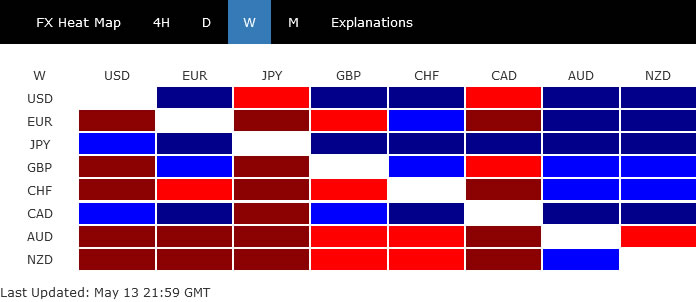
Extreme volatility was seen in the markets last week, in particular in the across the broad rout in cryptocurrencies. Stocks the tumbled sharp but stage a late come back. Gold and silver resumed recent decline. Yen ended as the best performer, helped by both risk aversion and pull back in benchmark treasury yields. However, overall sentiments seemed to have stabilized with help from Fed's clear communications. Yen could turn into range trading, experiencing counter forces of stabilizing risk sentiment and pull back in yields.
Also in the currency markets, Canadian and Dollar were the next strongest. Australian Dollar was the worst performing followed by Kiwi, and then Swiss and Euro. As risk sentiment stabilizes, the decline in Aussie and Kiwi could at least slow, with prospect of stronger recovery. Euro on the other hand, is starting to look increasingly vulnerable. It looks inevitable that Euro will break through 2017 low against Dollar soon. Also the path, there are downside risks in the common currencies in crosses too.
US stocks ready for oversold bounce as Fed outlined its plan clearly
Extreme volatility was seen in most markets last week, from stocks to cryptocurrencies, and to a lesser extent bonds and gold. But overall development towards the end provided hope of some stabilization, at least for the near term. Most importantly, after a chorus of Fedspeaks, the markets are now clear that Fed's plan is to raise interest rate by 50bps in the upcoming meetings, until the outlook changes. Fed funds futures are pricing in 92.5% chance of a 50bps hike in June to 1.25-1.50%, and 86.7% chance of another 50bps hike to 1.75-2.00%.
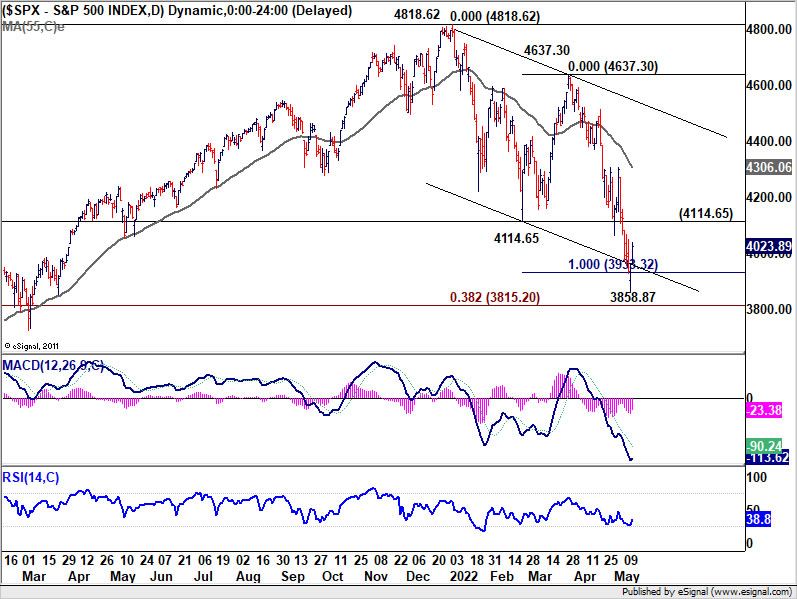
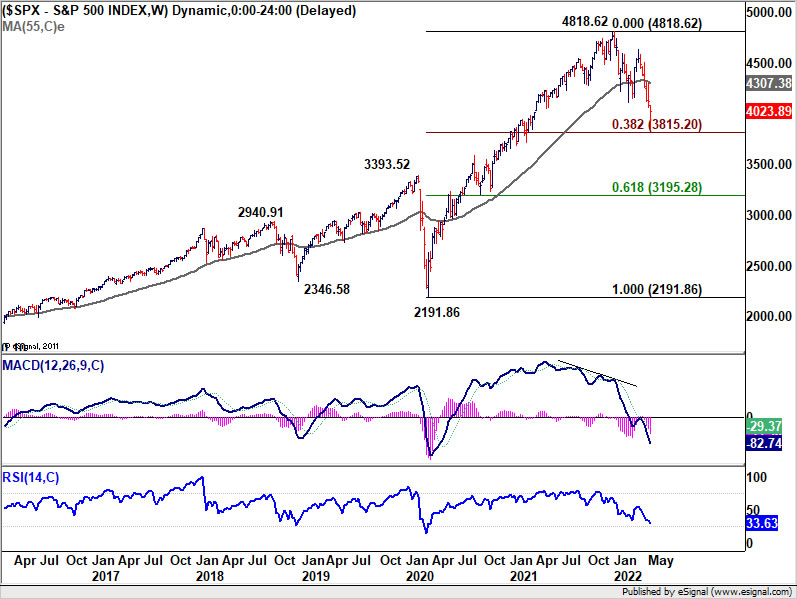
With more certainty on Fed's path, there should be some prospects of an oversold bounce (at least) in US stocks in the coming weeks. For example, S&P 500 has already hit target zone between 100% projection of 4818.62 to 4114.65 from 4637.30 at 3933.32, and 38.2% retracement of 2191.86 to 4818.62 at 3815.20. It has also defended 4000 handle swiftly. Stronger recovery through 4114.65 support turned resistance soon, to confirm short term bottoming at 3858.87.
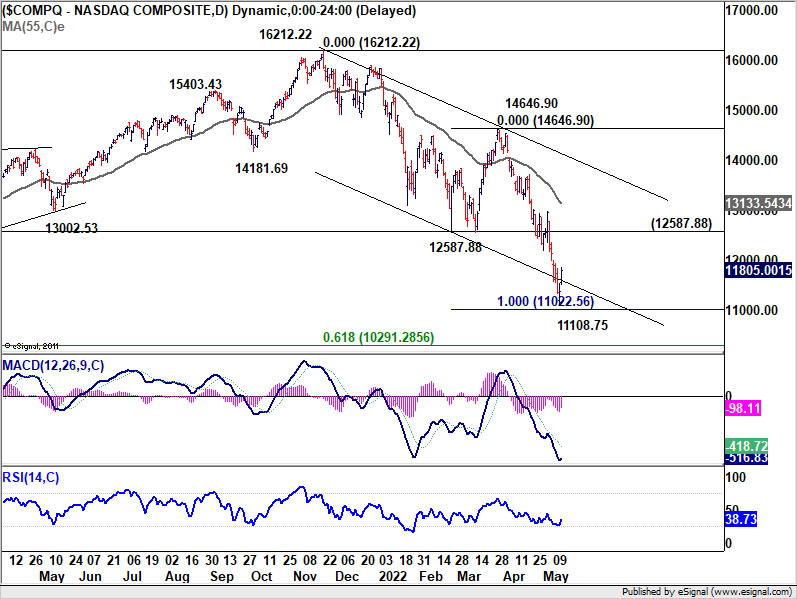
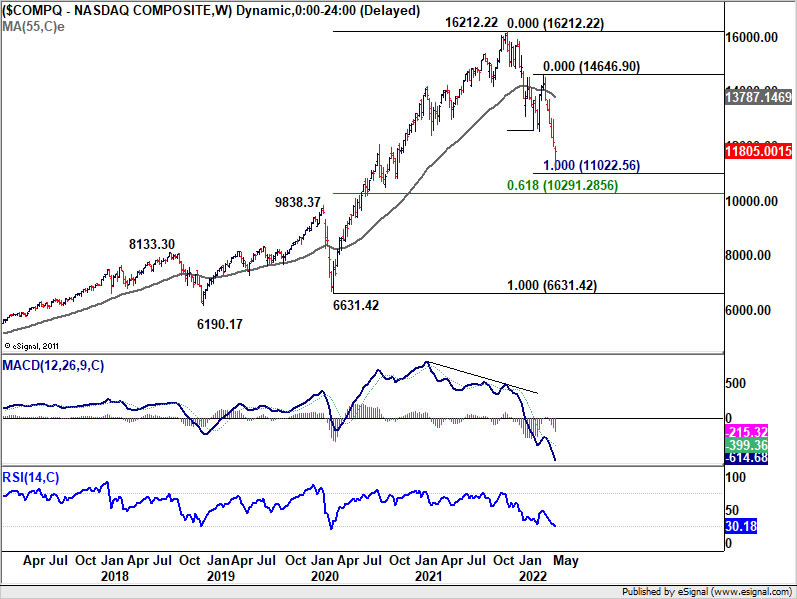
NASDAQ could have formed a short term bottom at 11108.75 too, just ahead of 16212.22 to 12587.88 at 14646.90 at 11022.56. There is prospect of recovering back to 12587.88 support turned resistance and above, for the near term, as a consolidation at least.
10-year yield topped ahead of 2018 high, consolidations first
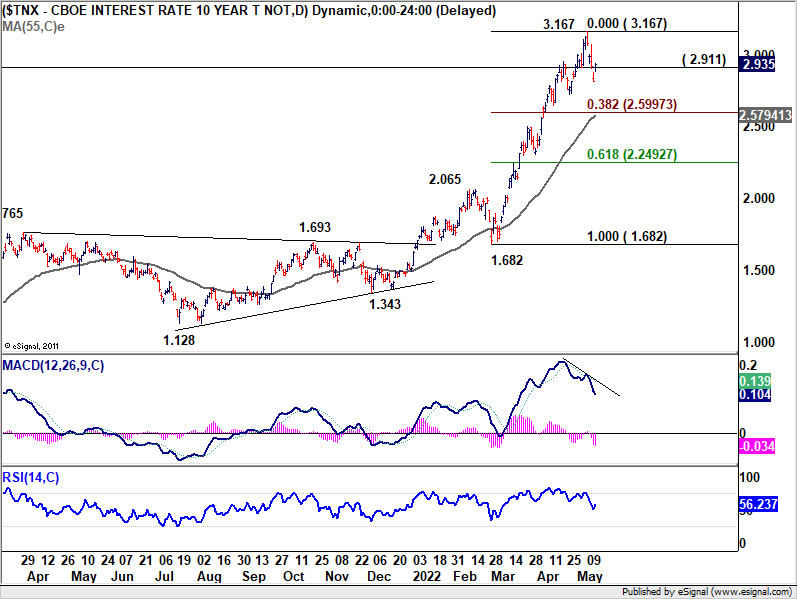
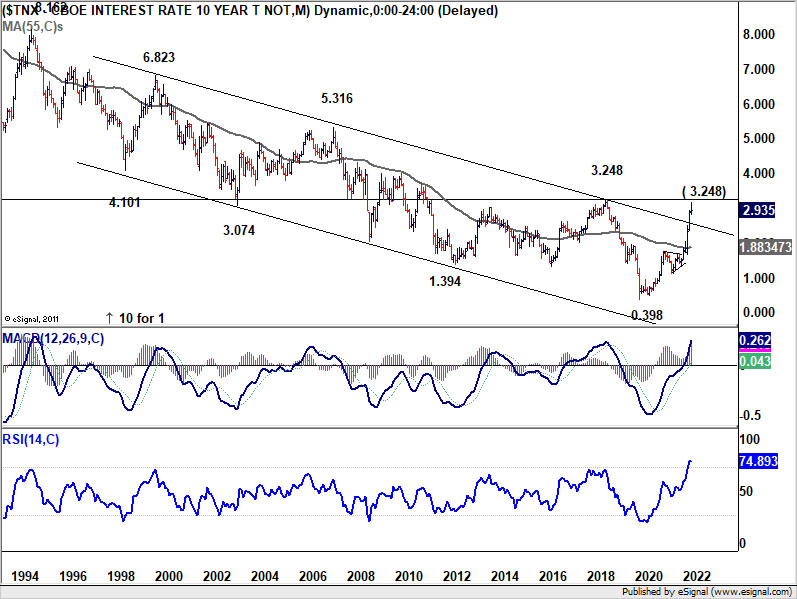
Meanwhile, 10-year yield should have topped for the near term at 3.167, with breach of 2.911 support, on bearish divergence condition in daily MACD. Resistance at 3.248 (2018 high) should prove to be too much for TNX, based on current situations. TNX would probably gyrate lower to 38.2% retracement of 1.682 to 3.167 at 2.599, which is close to 55 day EMA (now at 2.579). Downside should be contained there to set the range, as the corrective pattern unfolds. There is still prospect of break through 3.248, but only at the next stage of developments.
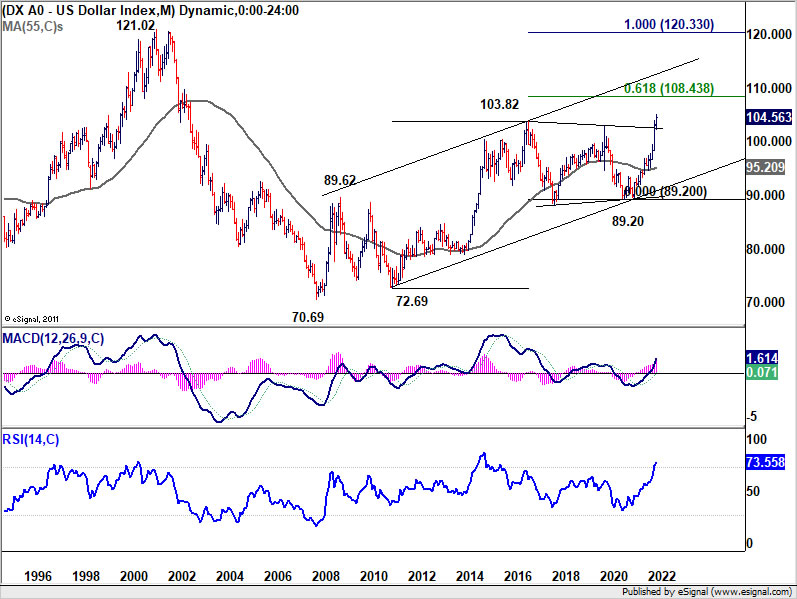
Dollar index ready to extend long term up trend to 108.43
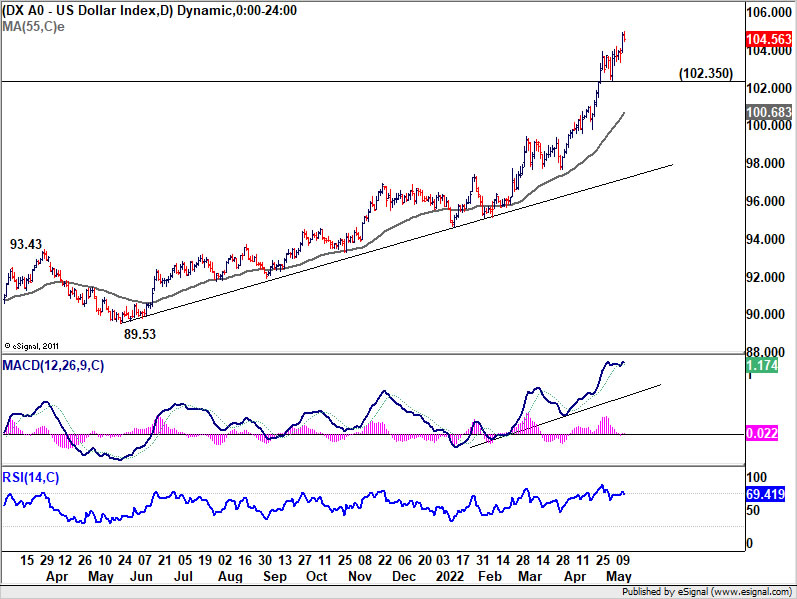
Dollar index's up trend resumed last week and hit as high as 105.00. This time, it's primarily driven by the selloff in EUR/USD. For now, near term outlook will remain bullish as long as 102.35 support holds. Next medium term target will be 61.8% projection of 72.69 to 103.82 from 89.20 at 108.43. That will depend on EUR/USD's final reaction to 1.0339 (2017 low).
Euro looking vulnerable in some crosses
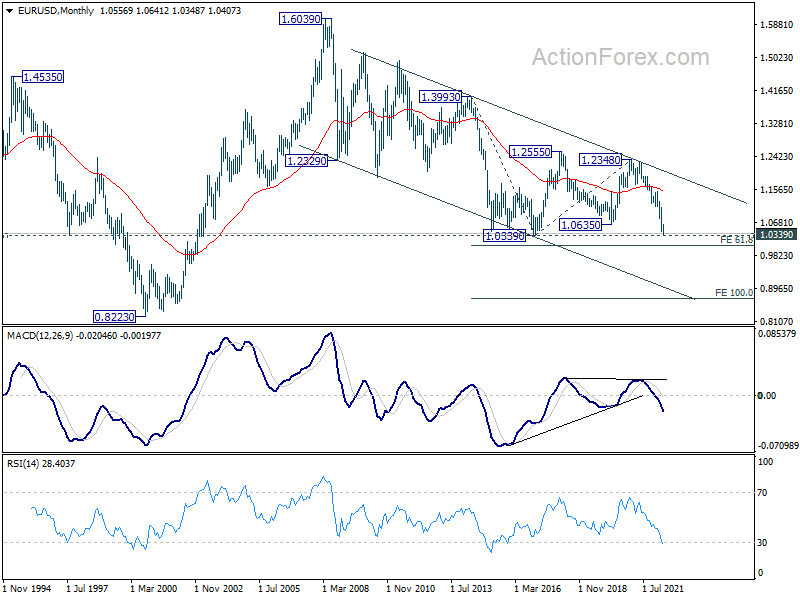
Euro is an immediate focus for the week as selloff could quickly accelerate. Firstly, EUR/USD is in proximity to 2017 low at 1.0339. Decisive break there will resume the down trend from 2008 high at 1.6039, which started more than a decade ago. Secondly, Euro is also looking vulnerable in some crosses.
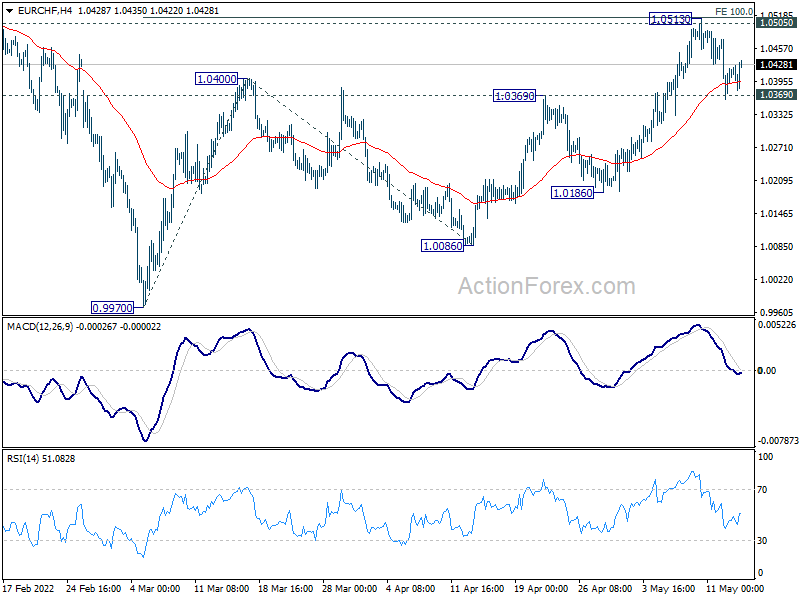
Most importantly, EUR/CHF could have topped at 1.0513, after hitting 1.0505 long term resistance and missing 100% projection of 0.9970 to 1.0086 from 1.0400 at 1.0516. That's in form of a three wave corrective structure too, which affirms medium term bearishness. Firm break of 1.0369 will push EUR/CHF through 1.0186 support, for at least a retest of 0.9970 low. In such case, with reject by 55 week EMA too, EUR/CHF will likely be resuming the down trend from 1.2004 (2018 high).
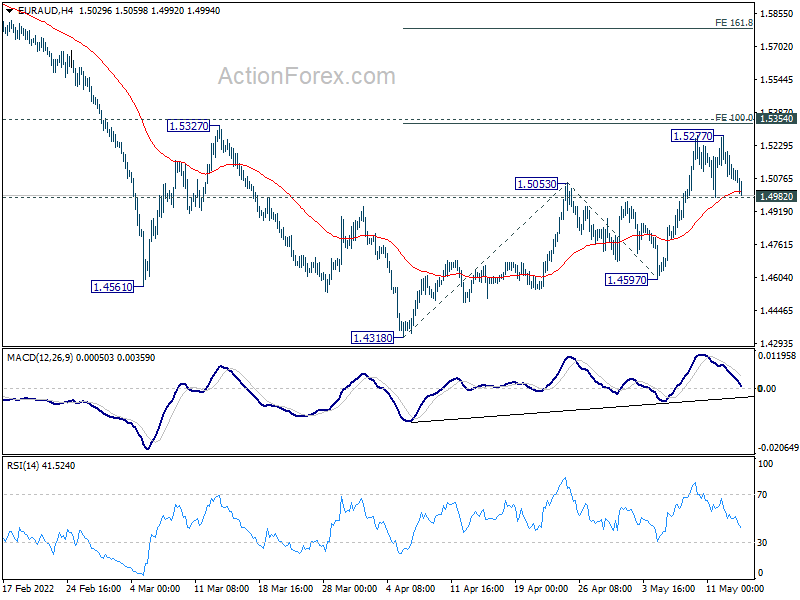
The picture in EUR/AUD is similar. Corrective rebound from 1.4318 could have completed with three waves up to 1.5277, after missing both 100% projection of 1.4318 to 1.5053 from 1.4597 at 1.5332 and 1.5354 resistance. Firm break of 1.4982 low should set the stage for retesting 1.4318 low. IN such case, the down trend from 1.9799 (2020 high) is likely ready to resume towards 1.3624 long term support too.
EUR/USD Weekly Outlook
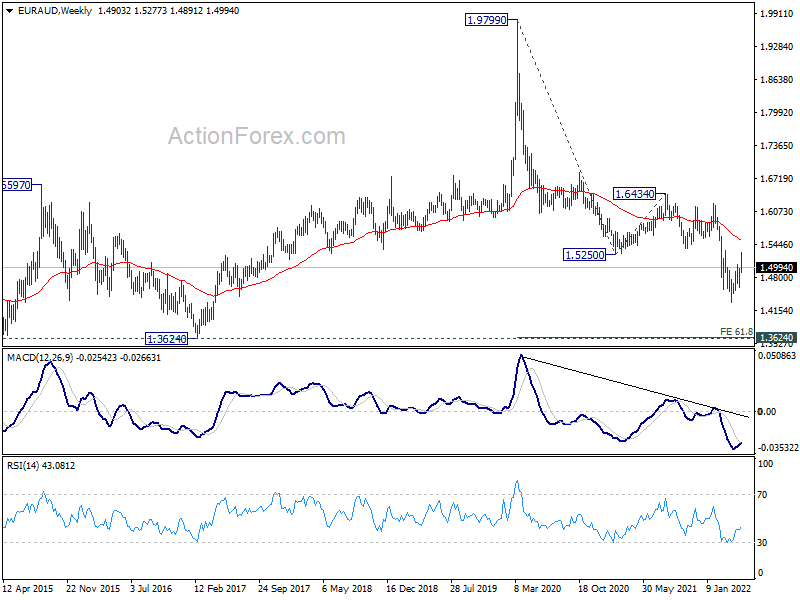
EUR/USD's down trend resumed last week and hit as low as 1.0348. A temporary low is probably formed, just ahead of 1.0399 key support. Initial bias is turned neutral this week for some consolidations. But outlook will stay bearish as long as 1.0641 resistance holds. Decisive break of 1.0339 will carry larger bearish implication and target 161.8% projection of 1.1494 to 1.0805 from 1.1184 at 1.0069. Nevertheless, break of 1.0641 will indicate short term bottoming and turn bias back to the upside for rebound.
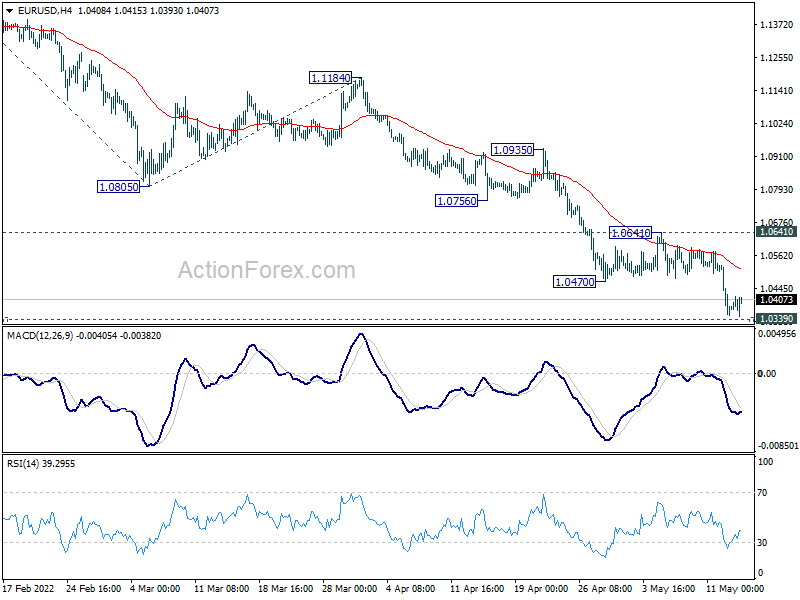
In the bigger picture, break of medium term channel support suggests downside acceleration. Current decline from 1.2348 (2021 high) is probably resuming long term down trend from 1.6039 (2008 high). Decisive break of 1.0339 will confirm this bearish case. Next target is 61.8% projection of 1.3993 to 1.0339 from 1.2348 at 1.0090. This will now remain the favored case as long as 1.0805 support turned resistance holds.
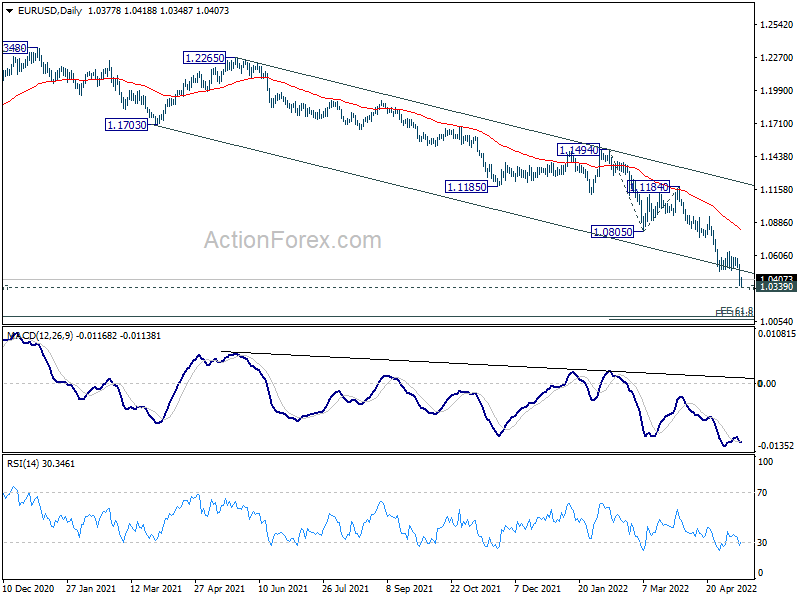
In the long term picture, current development suggests that long term down trend from 1.6039 (2008 high) is ready to resume. Break of 1.0339 will target 61.8% projection of 1.3993 to 1.0339 from 1.2348 at 1.0090. Decisive break there could bring downside acceleration towards 100% projection at 0.8694.
Summary 5/16 – 5/20
Monday, May 16, 2022
[php_everywhere instance="1"]
Tuesday, May 17, 2022
[php_everywhere instance="2"]
Wednesday, May 18, 2022
[php_everywhere instance="3"]
Thursday, May 19, 2022
[php_everywhere instance="4"]
Friday, May 20, 2022
[php_everywhere instance="5"]
Weekly Economic & Financial Commentary: Will Tighter Financial Conditions Lead to a More Dovish Fed?
Summary
United States: Don't Look Down Yet
- Consumer price inflation may have peaked, but the climb down from here will not be free of obstacles. The CPI and PPI rose 0.3% and 0.5%, respectively, in April. Small business optimism stalled during the month, as owners are concerned about their ability to continue to pass on higher costs to consumers.
- Next week: Retail Sales (Tues), Industrial Production (Tues), Housing Starts (Wed)
International: Inflation Plague Continues in Emerging Markets
- Price growth is a global problem; however, inflation seems to be more of a problem across the emerging markets. With commodity prices still high and weak local currencies, most emerging market countries are experiencing above-target inflation.
- Next week: UK CPI (Wed), Japan CPI (Thurs), South Africa Reserve Bank (Fri)
Interest Rate Watch: Will Tighter Financial Conditions Lead to a More Dovish Fed?
- In the post-FOMC meeting press conference last week, Chair Powell indicated that financial conditions would need to tighten to help the Fed restore price stability. The Bloomberg Financial Conditions Index began to tighten early this year when FOMC members signaled that the committee would become more aggressive in battling inflation. This week, conditions tightened further to the least-supportive posture in two years.
Credit Market Insights: Consumer Credit Overdelivers for a Second Month
- Consumer credit grew by a record $52.4B in March as it more than doubled consensus estimates for the second month running. The surge was relatively well-balanced, with revolving credit—mostly linked to credit card spending—rising $31.4B, while nonrevolving credit climbed a slightly lower $21.4B.
Topic of the Week: Fertilizer Crunch Threatens to Drive Food Prices Higher
- Rising food prices continued to sting consumers in April as grocery prices and prices for food away from home rose 1.0% and 0.6%, respectively. A global supply shortage of chemical fertilizers may put further pressure on already strained food commodity markets.
The Weekly Bottom Line: Slight Pullback in Inflation Won’t Change Fed’s Mind
U.S. Highlights
- The consumer price index (CPI) report showed that both overall and core price pressures eased a touch in year-over-year terms in April. Overall inflation fell to 8.3% y/y from 8.5% in the month prior, while core inflation fell to 6.2% from 6.5%.
- The producer price index (PPI) report echoed a similar message, with producer prices decelerating modestly in April to 11% y/y, but remaining near March’s record high of 11.5%.
- Signs of a slight tick down in inflation will do little to dissuade the Fed from removing monetary stimulus expeditiously. Despite staging a notable recovery on Friday, the S&P 500 looks to end the week down over 2%.
Canadian Highlights
- It was a quiet week in terms of economic data in Canada, and volatile equity markets dominated the headlines. Investors remained concerned that the rapid pivot to tighter monetary policy will squander economic growth.
- Higher interest rates are also starting to impact the rate sensitive sectors of economy. Next week’s data on home sales and prices is expected to show that the housing market cooled further in April. Meanwhile, inflation is expected to remain white-hot.
- Given the significant deterioration in Canadian housing affordability and mounting inflationary pressures, some moderation in housing market activity and consumer spending will be a welcome sign for the Bank of Canada.
U.S. - Slight Pullback in Inflation Won’t Change Fed’s Mind
The second week of May carried a light economic calendar, with primary data releases continuing to center on inflation. The consumer price index (CPI) report showed that inflationary pressures eased a bit in April, falling to 8.3% year-on-year (y/y) – down from 8.5% in March (Chart 1). Base effects are likely to have played a favorable role, as price pressures stemming from supply chain disruptions began to manifest in March and April of last year.
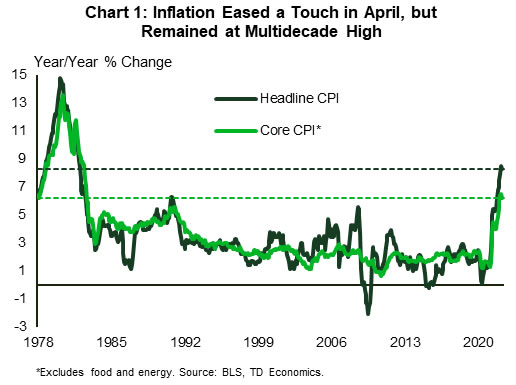
Beneath the headline, food inflation accelerated both in yearly and monthly terms, whereas energy prices eased a touch. Both, however, remain elevated at 9.4% y/y and 30.3% y/y, respectively. Excluding these two volatile categories, core prices also decelerated modestly, falling to 6.2% y/y from 6.5% y/y in March. However, several important categories bucked the trend. On the goods side, new vehicle prices were higher, while medical care, transportation, and shelter were all meaningful contributors on the services side. The transportation category was buoyed from airfares, which continued to rise sharply (18.6% m/m). Meanwhile, market-based measures of strong home price and rent growth suggest that the weighty shelter component has more upside ahead. This, together with the fact that gas prices have resumed their upward climb this month, and that we’re likely to see further upward pressure in food prices from the war in Ukraine, muddy the CPI report’s headline message that inflation may have peaked, making it prudent to wait for further confirmation to this notion.
The producer price index (PPI) report echoed a similar message to last month’s CPI numbers. Producer prices were up 11% from a year ago in April, marking an easing from an upwardly revised 11.5% y/y in March. Core PPI also eased a touch. That being said, April’s PPI showings, which are not far off from the March record highs, indicate that inflationary pressures continue to build in the production pipeline.
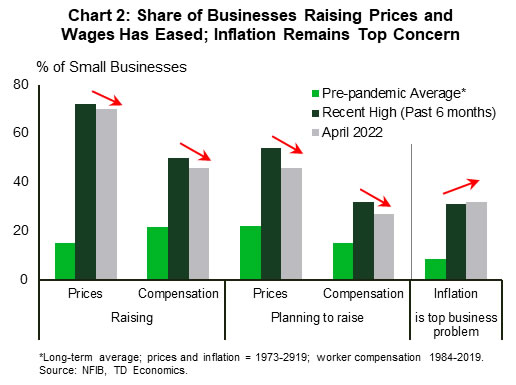
The small business report from the NFIB provided more of the same. In Chart 2 we can see that while the share of businesses raising (and planning to raise) average selling prices and worker compensation have eased from recent highs, they remain well above historical norms. On the other hand, the share of businesses identifying inflation as their top business problem reached a new post-1980 high in April. Another striking feature of the report is the fact that the share of small businesses expecting an improvement in the economy in the months ahead fell to a yet new record low (-50%).
Doubtful expectations about a further improvement in the economy have some basis. Signs of a slight moderation in inflation will do little to dissuade the Fed from removing monetary stimulus expeditiously, which in turn will weigh on economic momentum. In tune with this notion, risk assets continued their downward slide this week. Despite a notable bounce back Friday, the S&P 500 is down 2.6% from last week’s close and roughly 16% from peak. Of course, as Fed Chair Powell noted this week, there’s no guarantee that the Fed will see smooth sailing in its goal to engineer a soft-landing. In a speech Thursday, Chair Powell, who was recently confirmed for a second term, noted that getting inflation back to 2% will cause “some pain”. For now, however, we’re still full ship ahead with another 50-basis point hike in June.
Canada - Assets Under Pressure
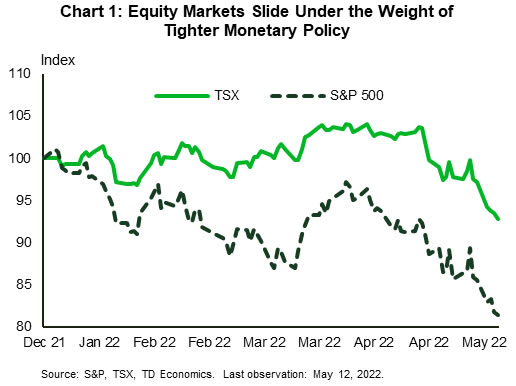
This was a quiet week in terms of economic data in Canada, with volatile financial markets dominating the headlines. Equity markets have been on a shaky foundation since the start of the year, and the sell-off intensified recently. The rapid pivot to tighter monetary policy combined with high oil prices and significant geopolitical risks stemming from the war in Ukraine is worrying investors. Following a brutal start of the week, market jitters finally eased on Friday and the TSX and S&P 500 managed to recover some of the lost ground, but still ended the week lower. Since the start of the year, the indexes were down 7% and 16% respectively (Chart 1).
Equities are hardly the only asset class feeling the pressure. Cryptocurrencies have also been hard-hit since the start of the year underscoring reduced investors' appetite for risky investments. In a more conventional space, home prices may also soon turn lower as higher interest rates do their job in cooling the housing market. Next weeks' data on home sales and prices is expected to show a sizeable drop in resale activity in April and likely, for the first time in two years, a monthly drop in detached home prices.
Even as home prices ease, inflation is remaining white-hot. April's inflation figures will also be on the docket next week. Here consumers are also unlikely to get much of a reprieve. Inflationary pressures are becoming more broad-based with services prices trending higher at the same time as consumer spending is pivoting toward services (Chart 2).
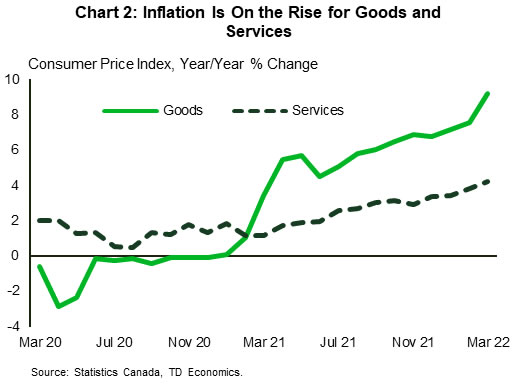
Given the worsening in affordability of Canadian housing, some moderation in prices is a welcome sign. However, the slowdown in the housing market could weigh on economic growth and consumer spending. The housing market has been a big contributor to economic growth in the last couple of years, both directly and indirectly via the positive impact of housing wealth on consumer spending. As home prices surged, the value of households' real-estate related wealth has risen by 48% since 2019Q4, accounting for nearly 60% of overall wealth gains. As a result, with more household wealth now concentrated in real estate (40% versus 35% prior to the pandemic), the fallout from home price declines could be more painful to stomach.
The Bank of Canada isn't worried about those headwinds yet. Indeed, in his speech the BoC deputy governor Tony Gravelle used improved household finances and the accumulation of sizeable liquid assets as an argument why the Bank might need to raise its policy rate above the neutral rate. He said that "parts of the economy may be less sensitive to rate hikes than in the past". Indeed, as long as the labour market stays strong, headwinds emanating from higher rates, inflation and potential wealth losses will remain just headwinds rather than turning into storm for household finances.
Week Ahead – Wall Street Whipsawed
It was a tremendous week of market volatility for every asset class on Wall Street. It is still all about inflation and what will be the reaction from central banks. A challenging inflation and growth mix have driven investor concerns that the Fed won’t be able to deliver a soft landing.
The upcoming week is filled with a wrath of central bank speak, world leaders meet, and economic data that could show signs that the economy is losing momentum. Fed Chair Powell will speak on Tuesday and he is expected to affirm expectations that the Fed will stick with a half-point rate increase in June. Most of the US economic data will likely show that the economy is seeing a slowdown with manufacturing activity and that the housing market is cooling, while the US consumer is still doing its best withstanding widespread price increases.
A big part of the inflation story is energy prices and many traders will pay close attention to both if the EU does delay a ban on Russian oil and if Iran is able to make any progress in reviving its nuclear deal.
Countries
US
The upcoming week is filled with a wrath of economic data and corporate earnings that will provide the latest update on the US consumer. Investors will still fixate over a wrath of Fed speak that should mostly confirm the Fed’s set course of tightening over the next couple of policy decisions.
King dollar has not provided any signs that it is ready to give up its crown, but that could change if risk appetite is able to find its footing. The stock market selloff is showing signs of exhaustion and if investors show they are ready to ‘buy the dip’, the dollar could be ripe for a pullback.
On Monday the Empire Manufacturing Survey is expected to show activity sharply decelerated in May. Tuesday is a big day, as traders will focus on the latest retail sales report that should show April was a better month of spending by the consumer, Walmart reports before the opening bell, and Fed Chair Powell’s gives an afternoon interview with the Wall Street Journal. Wednesday is mostly about housing data that should show that the market is cooling. Thursday will have another release of jobless claims which could show the labor market remains tight.
UK
The BoE may not have been as behind the curve as other central banks but the country is still heading for more than 10% inflation and a recession if the central bank’s forecasts are to be believed. The data next week could indicate how pessimistic or, worse, optimistic these forecasts are. Unemployment, retail sales and CPI inflation make up the UK data dump next week.
We’ll also hear from some policymakers, although the message may not deviate too much from what we heard last week unless the data drastically surprises one way or another. The standout here is naturally the monetary policy report hearing which takes place on Monday in front of the Treasury Select Committee with Governor Andrew Bailey, Deputy Governor Sir Dave Ramsden, Jonathan Haskel and Michael Saunders in attendance.
EU
It would appear the ECB has finally come around to the idea that the inflation problem is not going to solve itself, with numerous policymakers in recent weeks indicating that July is a live meeting once net asset purchases end. Even President Lagarde hinted at such, meaning once again a central bank has eventually come around to the market’s way of thinking. And probably too late to avoid substantial pain. With that in mind, the flash GDP and final inflation data will be eyed but it’s what policymakers have to say that will be most important. And next week, there’s plenty of them making appearances.
The EU is still working towards a Russian oil embargo that is facing opposition from Hungary while companies continue to look for workarounds to the rouble gas payment demands.
Russia
The Russian energy sector remains a key focal point in the markets as the country seeks to make life uncomfortable for “unfriendly” gas purchasers and the EU seeks to ban imports of its oil.
A light data week with preliminary GDP the only notable release on Wednesday.
South Africa
The SARB is expected to raise interest rates by 50 basis points to 4.75% on Thursday in an attempt to finally get to grips with inflation, which is currently running at 5.9%; the upper end of its 3-6% range. April inflation data is released a day before the SARB meeting which may influence how aggressively they hike rates.
Turkey
A quiet week for Turkey with tier three data only on the cards.
China
Shanghai covid-zero restrictions have been extended, and restrictions remain in parts of Beijing and across China. That keeps recession fears front and centre, while another China developer defaulted on foreign debt this week. With no signs of wider spread stimulus from government, the pressure remains on the Yuan. China seems quite happy to let the Yuan weaken, supporting exporters.
Mainland equities have shown an unnatural resilience this past week and I suspect China’s “national team” has been supporting dips. This will continue next week.
It is a heavy week .China data with Industrial Production, Retail Sales and M2 on Monday, and House Price Index Wednesday. All has downside risks and could push equity markets lower. Friday has the 1 and 5-year Loan Prime Rates. Once again, no cut to at least the !-year LPR will be negative for China equities.
Overall China equities and the Yuan remain at the mercy of global sentiment flows and developments in the covid-zero space in China.
India
India’s inflation printed well above forecast this week and a much higher WPI data release on Tuesday could increase the noise for another RBI rate hike in June. That could be supportive of the INR but is likely to be another headwind for equity markets.
Like other emerging markets though, the INR remains at the mercy of which way global sentiment is swinging day-to-day. A rise in oil prices next week will pressure the currency.
Australia
The Australian Dollar remains under pressure as global investor sentiment swings more heavily towards a deeper slowdown in China, and potential stagflation challenges elsewhere. Until that changes, any rally by AUD is likely to be short and sharp.
RBA Minutes on Tuesday could be temporarily positive for the AUD, but negative for equities, if it hints at a more hawkish stance going forward.
Thursday’s Employment data is always good for intraday volatility on the AUD and will have a binary outcome. Higher equals more RBA tightening equals lower equities, higher AUD and vice versa.
New Zealand
The NZD continues to suffer at the hands of negative global investor sentiment and a central bank that continues to be behind the inflation curve. The NZ Services PSI on Monday, Global Dairy Auction on Tuesday, and Balance of Trade on Friday have downside risks which will increase recession noise, weighing on the NZD and local equities.
Japan
USD/JPY remains solidly supported on dips with Thursdays fall looking more corrective than a turn in sentiment. Japans Machinery Orders Thursday, and Inflation on Friday are the main data points, but will have only temporarily impact.
The Nikkei 225 continues to shadow moves by the Nasdaq, while USD/JPY remains supported by the Bank of Japan’s dovish policy stance and the US/Japan rate differential. Only a sharp fall by US yields changes that narrative.
Singapore
The odds of an out of sequence tightening move by the MAS are increasing as the Singapore Dollar remains under heavy pressure, thanks to its proxy role to China. That is undoing the work of the MAS which uses the exchange instead of interest rates to move monetary policy.
Soft Non-Oil Exports on tuesday could put more downward pressure on the currency and local equities.
Markets
Energy
Volatility in energy markets won’t be easing as the demand outlook faces great uncertainty with record gasoline prices, a close eye on China’s COVID situation, refining capacity concerns, and as the EU nations struggle on making progress with a ban on Russian oil. Iran nuclear talks are also approaching a critical juncture, with expectations somewhat pessimistic that a revival is imminent.
Oil will remain a volatile trade but it seems like energy traders should get used to seeing oil over $100 a barrel. The short-term outlook for crude is still mostly bullish as Europe’s air travel is improving, China’s COVID situation will hopefully improve in a few weeks, and peak driving season in the US is expected to be strong even with record high prices.
Gold
Gold’s rollercoaster does not appear to be ending anytime soon. Bond market volatility, especially at the front end of the curve, could still weigh on gold prices. If we’ve seen Treasury yields make a short-term peak here, gold could continue to stabilize above the $1800 level. If the end of week rebound does not have follow through into the new week, gold could see violent technical selling on a break below the $1790 level.
Cryptos
Crypto markets are closely watching stablecoins and making sure further contagion does not hit other parts of the cryptoverse. Bitcoin’s collapse appears to have found tentative support in the mid-$20,000s but confidence that bottom will hold will depend if risk appetite shows sign of returning on Wall Street.
If risk aversion remains the dominant theme for financial markets, Bitcoin could be vulnerable to a retest of the past week’s lows.
Monday, May 16
Economic Data/Events:
- US cross-border investment, Empire manufacturing
- NY Fed President Willliams speaks in NY
- President Biden meets Greek PM at the White House
- Russian Foreign Min Lavrov speaks
- China retail sales, industrial production, jobless, property sales
- EU Commission reveals Spring economic forecast
- Canada existing home sales, housing starts
- Japan PPI, machine tool orders
- New Zealand performance services index
- Turkey current account
- Hedge Funds report 13F filings
Tuesday, May 17
Economic Data/Events:
- US business inventories, retail sales, industrial production
- RBA releases minutes to May policy decision
- Fed Chair Jerome Powell speaks at the Wall Street Journal’s “Future of Everything” conference.
- Chicago Fed President Evans speaks at an event hosted by the Money Marketeers of NYU
- Cleveland Fed President Mester speaks at a virtual panel on inflation hosted by her bank.
- Philadelphia Fed President Harker speaks about health care as an economic driver at the University of Delaware
- Louis Fed President Bullard speaks a virtual conference hosted by the Energy Infrastructure Council
- Riksbank’s Ohlsson speaks about monetary policy in wartime.
- Eurozone GDP
- Hungary GDP
- Thailand GDP
- Italy CPI, Trade
- Australia consumer confidence
- France unemployment
- India wholesale prices
- Japan tertiary index
- Mexico international reserves
- Singapore electronic exports, non-oil exports
- UK jobless claims, unemployment
- Walmart earnings
Wednesday, May 18
Economic Data/Events:
- G7 finance ministers and central bankers meet in Germany
- US housing starts
- Fed’s Harker speaks
- BOE’s Mann speaks at CBI virtual event
- Canada CPI
- UK CPI
- Russia GDP
- Japan GDP
- Australia leading index, wage price index
- China new home prices
- Eurozone new car registrations, CPI
- Japan industrial production, capacity utilization
- South Africa retail sales
- Thailand car sales
- EIA Crude Oil Inventory Report
Thursday, May 19
Economic Data/Events:
- US initial jobless claims, Conference Board leading index, existing home sales
- New Zealand Finance Minister Robertson unveils the 2022 budget
- ECB publishes account of April policy meeting
- EU’s Vestager, ECB’s Holzmann speak at an award ceremony in Vienna
- Riksbank’s Floden speaks about monetary policy.
- Australia unemployment
- China SWIFT global payments
- Hong Kong jobless rate
- Japan core machine orders, trade
- New Zealand PPI
- Singapore GDP
- South Africa rate decision: Expected to raise rates by 50bps to 4.75%
Friday, May 20
Economic Data/Events:
- President Biden begins 4-day trip to South Korea and Japan
- China loan prime rates
- Eurozone consumer confidence
- Japan CPI
- New Zealand trade, credit card spending
- Thailand foreign reserves, forward contracts
Sovereign Rating Updates:
- Ireland (S&P)
- South Africa (S&P)
- Portugal (Moody’s)
- Denmark (DBRS)