Sample Category Title
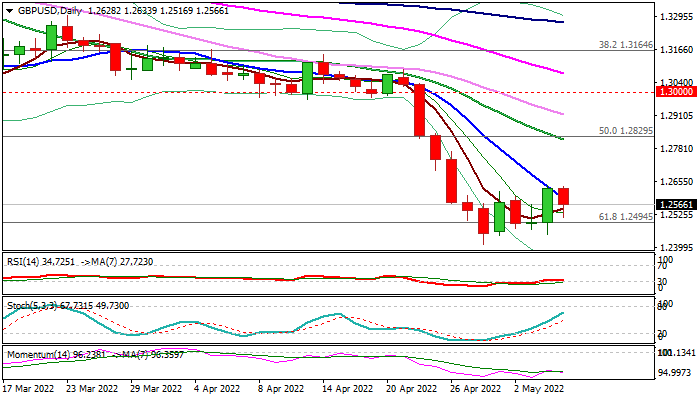
GBP/USD: BoE On Course for 0.25% Hike But Traders Focus on Signals about CB’s Future Steps
Cable edges lower on Thursday, reversing a good part of post-Fed rally, after the US central bank disappointed many who expected more aggressive action and remaining within a consolidation range, which extends into sixth consecutive day.
BoE’s policy meeting is the key event today, with the central bank being on course for the fourth rate hike since December, the fastest increase in borrowing cost in 25 years, with wide expectations for raise by 0.25% raise to 1%.
The central bank faces a problem with balancing between inflation over three times above its target and still rising and threats of slowdown, as their action against high inflation could push the economy into recession.
With the rate hike being already priced, investors will be focusing on BoE’ s comments for signals on further moves, as markets bet on rates rising to 2.25% / 2.5% by December.
Sterling is likely to rise on such scenario, but traders remain cautious on possible ‘dovish hike’ in which the central bank would temper the tone for the period towards the end of the year.
Res: 1.2590; 1.2637; 1.2697; 1.2750
Sup: 1.2516; 1.2450; 1.2411; 1.2359
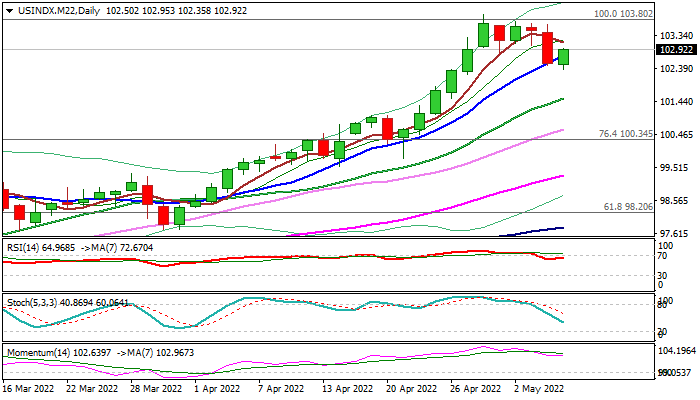
US Dollar Index Outlook: Dollar Regains Traction after Shallow Post-Fed Dip
The dollar regained traction in early Thursday’s trading after post-Fed’s 0.9% drop was contained by rising 10DMA, signaling that weakness is likely to be short-lived and dips to offer better buying opportunities for robust dollar.
In a widely expected action, the US central bank raised its benchmark rate by 50 basis points and showed readiness for 0.5% hikes at upcoming policy meetings in June and July.
The Fed also signaled it would start to reduce its roughly $9 trillion balance sheet as from next month, in attempts to put high inflation under control, balancing between requirement for strong response on rising inflationary pressures and cautiousness to avoid pushing the economy into recession on too strong response.
Fed chair Powell said that the central bank was not planning any stronger hike in coming meetings, pouring cold water on expectations for more aggressive action, after speculations that the central bank may opt for 0.75% raise.
The greenback remains firm despite the Fed’s action disappointed many who bet for hikes above expectations that would further widen the gap between the Fed and other major central banks.
Technical studies remain bullish overall, but show easing bullish momentum that would keep the dollar index in extended consolidation under key barriers at 103.80 (2017/20/22 peaks) before bulls eventually break higher.
Repeated close above 10DMA to signal an end of shallow correction and confirm bulls are intact, while dip below 10DMA would keep a scenario of deeper pullback in play.
Rising 20DMA (101.50) marks next significant support, which guards lower pivots at 100.82/56 (daily Kijun-sen / Fibo 38.2% of 95.12/103.93).
Res: 103.15; 103.80; 103.93; 104.65.
Sup: 102.35; 101.85; 101.50; 101.01.
PMI Shocker from China
The extent of the impact of China’s Covid-zero policies on the domestic economy was highlighted this morning as the Caixin Services PMI for April recorded its second-largest fall on record. Caixin Services PMI fell from 42 to 36.2. It is likely to be one of several headwinds facing China markets in today’s session, as they return from the Labour Day holiday break.
China is tightening Covid-19 restrictions in Beijing and extending them elsewhere as its Covid-zero policy continues to weigh on the domestic economy and exacerbate supply-chain issues internationally. Reuters is also reporting that the US SEC has expanded its list of US-listed Chinese entities that face delisting over audit transparency. Another 80 companies were added today including heavyweights such as JD.Com and Pinduoduo. The massive post-FOMC relief rally staged by US stock markets overnight could pass Chinese markets by today.
Perhaps the only silver lining for the rest of the world around the China slowdown is in the energy space. The EU announced overnight it was moving to enact a ban on Russian oil imports by the end of the year, with exceptions for Hungary and Slovakia. That was enough to torpedo European equities yesterday, but Brent crude finished the day over 5.0% higher. Although I believe the world continues to materially under-price Ukraine/Russia risks in the energy space, the slowdown in China is acting as a brake on rising oil prices.
In the EM space, India surprised markets yesterday with an unscheduled 40bp interest rate hike. That send the SENSEX tumbling, while the Indian rupee surged higher. Having held steady at the recent meeting, it speaks volumes about the inflation stresses that central bankers are facing now that India has shifted its policy bias. India’s RBI has tolerated stagflationary monetary conditions throughout the entire pandemic to keep the lights on in the economy. Its shift is an important one, and it will be interesting to see if other Asian central banks start blinking on inflation as the year progresses. I would expect more rate hikes from South Korea, the picture is muddier for the rest of the region. Especially given that many Asia-bloc countries have a high beta to China, and it continues to face serious downside risks to growth. The post-FOMC rally in Asia FX will be temporary, I believe.
Turning to the FOMC policy decision which has been analysed to death already, it was a case of sell the rumour, buy the fact. The FOMC hiked by 0.50% as expected, with Chairman Jerome Powell signalling that another 0.50% hike is pencilled in for the next two meetings. That sparked a huge relief rally in equity and currency markets, with gold also rallying as the street breathed a collective sigh of relief that 0.75% hikes were unlikely to happen. In fact, Mr Powell didn’t specifically rule out a 0.75% hike next month, citing the need to be “nimble.”
Markets are geniuses at picking out the bits of a story that fit their preferred narrative though. And naturally, we saw the US dollar plummet versus DM and EM currencies, equities rallied aggressively, bond yields eased, although mostly at the short end, and gold and silver posted handsome gains. The FOMC also saved bitcoin’s bacon, which rallied 5.0% higher after threatening a major downside technical breakout earlier in the day. The price action overnight is suggestive of positioning, something I have been telegraphing the last few days, as opposed to a structural change in sentiment.
Lost in the noise, the Fed also announced a start to balance sheet reduction, or quantitative tightening if you want to use a couple of buzzwords that make you sound clever. From June the Fed will start selling USD 45 billion of bonds and MBS’ a month, ramping up to USD 95 billion a month by September. It will be interesting to see if we can avoid a “taper-tantrum” this time. In 2013, the previous exercise was quickly halted as EM started to meltdown, and that was in a low inflationary environment. I would argue that QT could have a far more important downstream impact on markets than Fed Funds rate hikes and has, until now, had its risks discounted like those from the Ukraine/Russia war. The Fed believes it can get away with aggressively tightening and reducing its balance sheet and a soft landing will prevail. Given their track record on “transitory inflation,” I am as nervous as a fat steer at a BBQ festival or using a pedestrian crossing here in Jakarta.
Australia’s trade surplus expanded to AUD 9.314 billion this morning. But it was driven by bloated demand for everything the lucky country grows, pumps, or digs out of the ground. Instead, the headline number was flattered by a 5.0% slump in imports even as exports were almost unchanged. Building Permits also slumped by 18.50% in March. Perhaps we are seeing the first signs that a lower Australian dollar, making imported goodies more expensive, a surging cost of living, and rising financing costs, are starting to drag on the domestic economy, just as the RBA starts to hike rates. Australia will be as insulated as any country from the Ukraine/Russia resource inflation surge that is yet to be fully felt by the global economy, but it won’t be fully immune to those downstream impacts.
Japan, South Korea, and Indonesia are on holiday today, but we have Inflation releases from Thailand, Philippines RPI, India Services PMI and Singapore Retail Sales. The RBI hike yesterday will drown out any noise around the India PMI, but Singapore Retail Sales has definite downside risks as rising costs squeeze discretionary spending on the Red Dot. The MoM for March number is expected to fall by 0.50%, but a much larger fall will weigh on stocks, particularly banks, and may unwind some of the impressive gains the Singapore dollar made overnight.
Later today, we have German Factory Orders although I expect developments around the Europe/Russia oil ban to drown that out. UK Services PMI has downside risks and could weigh on sterling. Later this evening, also from the UK, we will have the results from the Northern Ireland election and a policy decision from the Bank of England. Markets have priced in a 0.25% hike to 1.0% from the BOE. The BOE have been using the Ukraine situation as a reason to reel in hawkish expectation and rightly so. They, like Europe, face least-worst choices in this respect. They should also announce their own plans for balance sheet reduction. A hike of less than 0.25%, a soft approach to QT, and/or a dovish outlook, should stop sterling’s overnight rally in its tracks and resume the downside pressure. The Northern Ireland election could also be sterling negative if Sinn Fein sweeps the vote.
Finally, don’t forget that we also have the US Non-Farm Payrolls data due out tomorrow. Markets are pricing in around 400,000 jobs, steady from last month. We had a very soft ADP Employment print overnight. Although the two are not strongly correlated, and the JOLTS data suggests the labour market remains impressively robust, there is a downside risk to this month’s print now. Perversely, a soft print could be fuel for the fire for the market’s peak rates narrative, sparking another big rally in equities, US bonds, EM, and gold, while punishing the US dollar. To paraphrase the musical Chess, this week really is the show with everything but Yul Brunner.
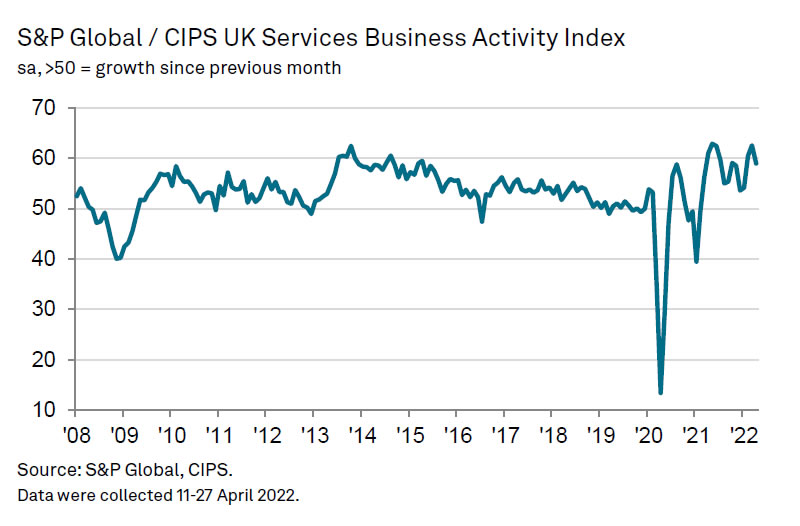
UK PMI services finalized at 58.9, twin headwinds of costs and war
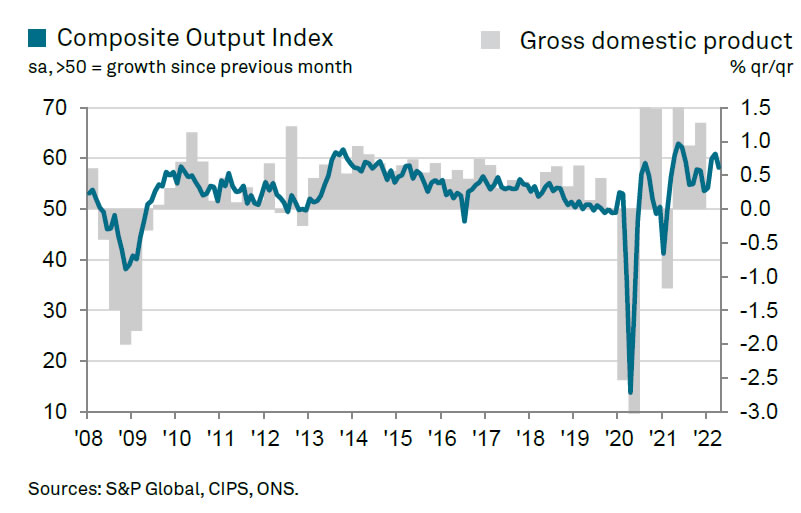
UK PMI Services was finalized at 58.9 in April, down from March's 62.6. S&P Global noted that input cost inflation hit fresh record high. Activity and new business continued to rise, but a reduced rates. Business confidence was lowest in a year-and-a-half. PMI Composite was finalized at 58.2, down from March's 60.9.
Andrew Harker, Economics Director at S&P Global: "The twin headwinds of the cost of living crisis and the war in Ukraine started to bite on the UK service sector during April, as evidenced by a sharp slowdown in new order growth to the lowest in the year so far. Worryingly, companies seem to be expecting impacts to be prolonged, with business confidence dropping to the lowest in a year-and-a-half."
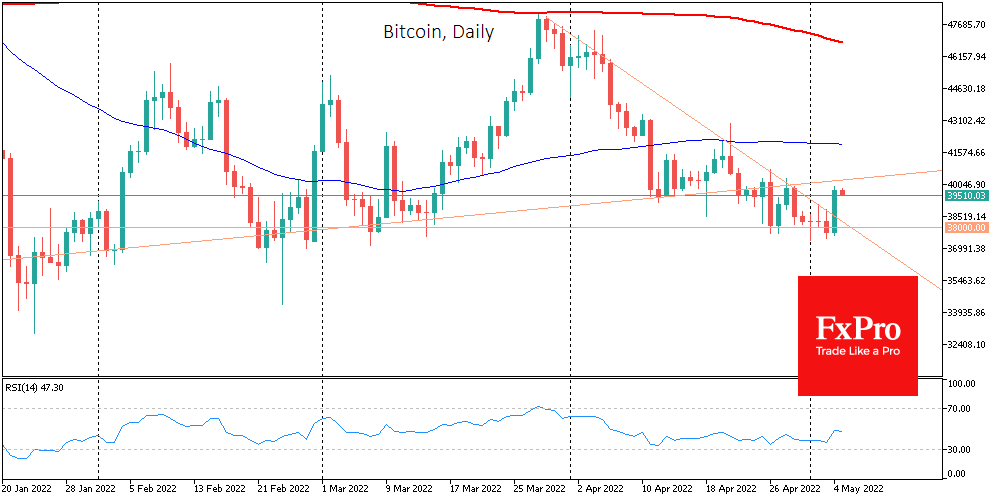
Bitcoin Needs to Consolidate above $40K to Approve the Reversal
Bitcoin soared 4.2% overnight, getting close to the meaningful $40K round level, although there is a $400 retreat from the peaks early on Thursday. Meanwhile, Ethereum strengthened 5.1% overnight and other leading altcoins in the top 10 gained between 4% (Terra) and 14% (Avalanche).
The total capitalisation of the crypto market, according to CoinMarketCap, rose 5% overnight to $1.80 trillion. Bitcoin’s dominance index fell 0.3 percentage points to 41.9%.
The Cryptocurrency Fear and Greed Index was up 6 points to 27 by Thursday and moved up from “extreme fear”. However, it is worth noting that this strengthening hardly fully accounts for the momentum in cryptocurrencies that we saw at the end of Wednesday’s trading day.
Bitcoin rose to its highest level in almost two months amid a sharply weaker dollar and rising stock indices. The US Federal Reserve expectedly raised its rate by 50 points and announced the start of asset sales off the balance sheet. But the extent of the sales initially turned out to be less than expected. The Fed has also rejected a 75-points rate hike at the next meeting, priced in by the markets.
If Bitcoin manages to attract new buyers at levels above $40K by the end of the week, we could see a significant expansion in buyer optimism. Some potential buyers are now waiting for reliable signals to break the downtrend of the last month and a half. Yesterday’s upside momentum took the price above the downtrend line, but a confirmation signal in the form of a rise above the previous local highs is also needed.
According to CoinShares, institutional investors are withdrawing capital from crypto funds in their fourth week. Last week, the net outflow was $120 million, with bitcoin funds facing their most significant capital outflow since June 2021 ($133 million).
The Council of Europe’s Committee of Experts for the Evaluation of Anti-Money Laundering Measures (Moneyval) has called for stricter regulation of cryptocurrencies.
Goldman Sachs Bank made its first-ever bitcoin-backed loan to cryptocurrency exchange Coinbase. Bitcoin miners earned $1.16bn last month, down 4.3% from March.
Cryptocurrencies will become an integral part of any investor’s portfolio over the next few years, according to investment firm Wisdomtree.
WTI Futures Struggle to Surpass 109.20 Level
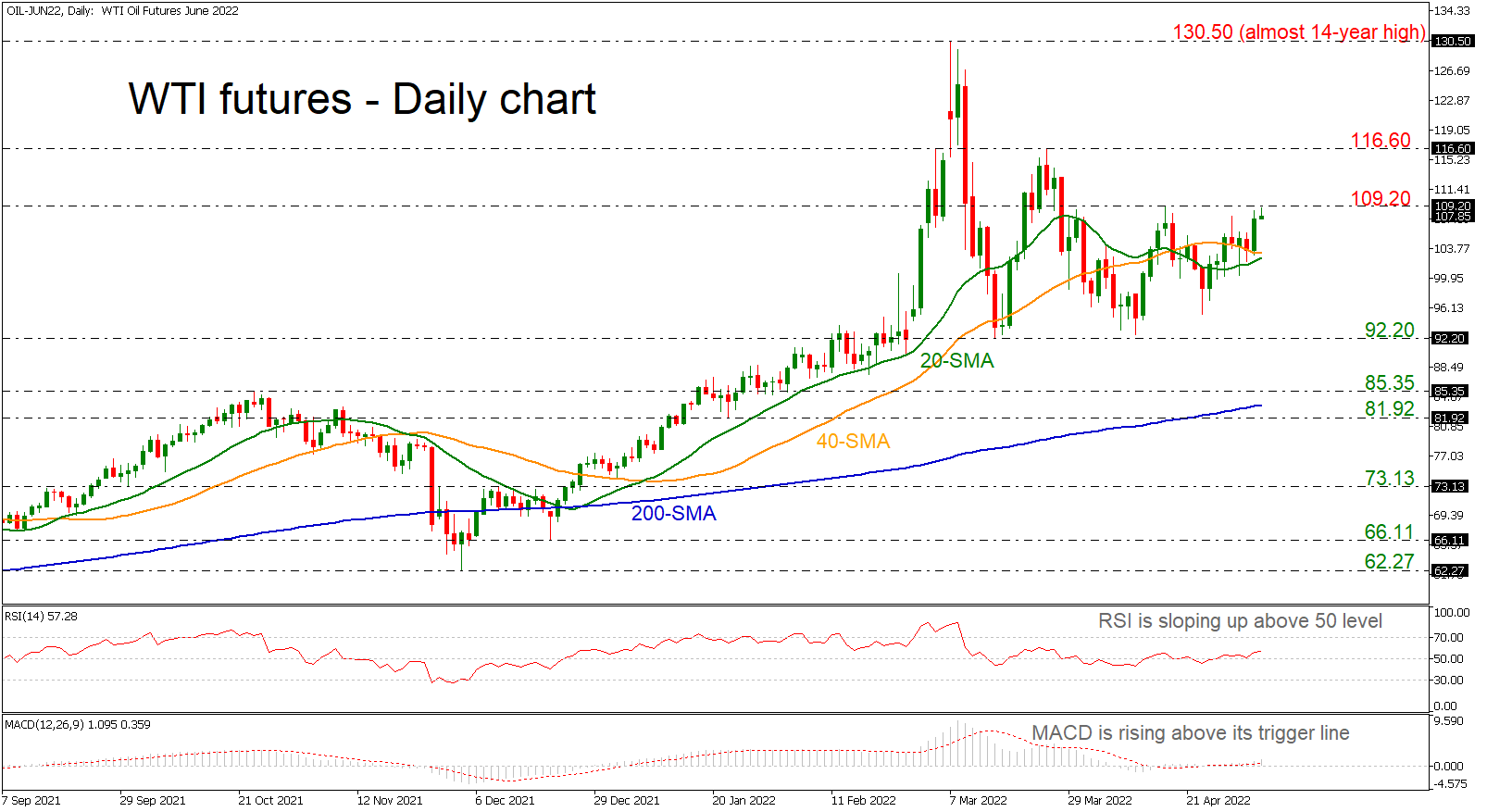
WTI crude oil futures are flirting with the 109.20 resistance, which failed several times in the previous weeks to surpass it. More increases could add some optimism to the bulls for a positive outlook in the short-term and long-term.
The technical indicators are also suggesting a bullish momentum. The RSI is pointing up above the neutral threshold of 50, while the MACD is stretching above its trigger line and zero lines.
On the upside, the price could attempt to overcome the 109.20 high and retest the 116.60 barrier, which if successfully broken, could open the door for the almost 14-year high of 130.50. Should traders continue to buy the pair above that peak, bringing the long-term uptrend back into play, resistance could then run towards the 147.00 area, reached in January 2008.
A reversal to the downside, however, could find immediate support at the 20- and 40-day simple moving averages (SMAs) currently at 103.00 and 102.50. If the latter lines fail to halt the bearish movements, the next target could be the 92.20 support before meeting the 85.35 barrier.
Turning to the short-term trading, the outlook is neutral over the past month and only a decisive close above 109.20 could resume the bullish picture. On the other hand, only a significant decline below 92.20 could shift the outlook to bearish.
GBPUSD Retraces FOMC Bounce, But Will the Bulls Give Up?
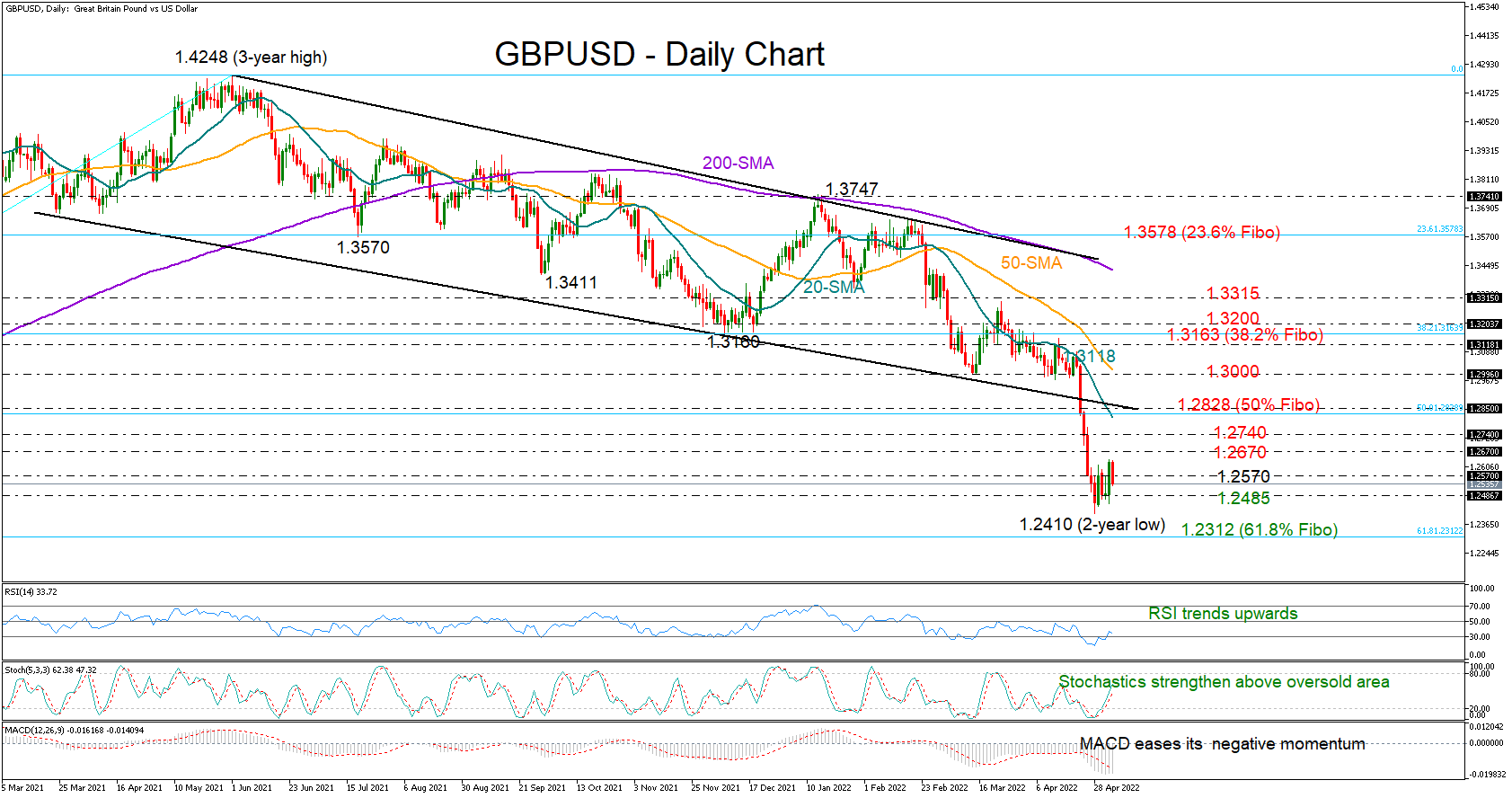
GBPUSD closed confidently above the 1.2570 resistance area on Wednesday after a short period of consolidation, raising hopes that the bounce off 1.2410 may get new legs in the short term ahead of today's BoE policy announcement (12:00 GMT).
The pair is currently giving up some ground, but the positive trajectory in the RSI and the Stochastics, which have recently exited the oversold territory, and the gradual recovery in the MACD, are sending encouraging signals that buying appetite could soon return.
Immediate resistance to upside movements could pop up somewhere between the former barrier of 1.2670 and the 1.2740 mark. An extension above this region could retest the 20-day simple moving average currently (SMA) at 1.2811, while the lower band of the broken bearish channel is within breathing distance at 1.2850 and will be closely watched as any step higher from here could secure an acceleration to 1.3000. The 50-day SMA is nearing that number as well.
In the big picture, substantial efforts will be needed beyond 1.3300 to correct the bearish trend in the market.
In the event selling tendencies persist, pressing the price beneath 1.2485, the focus will shift back to the 1.2312 level, which coincides with the 61.8% Fibonacci retracement of the 2020 rally. Failure to pivot here could see a continuation towards the 1.2074 low from May 2020 and the 78.6% Fibonacci marginally lower at 1.2017.
All in all, despite its current weakness, GBPUSD has strengthened the case for an upside reversal following the cross above 1.2580 yesterday. On the other hand, a drop below 1.2485 could scrap such a scenario.
Daily Technical Analysis
EUR/USD
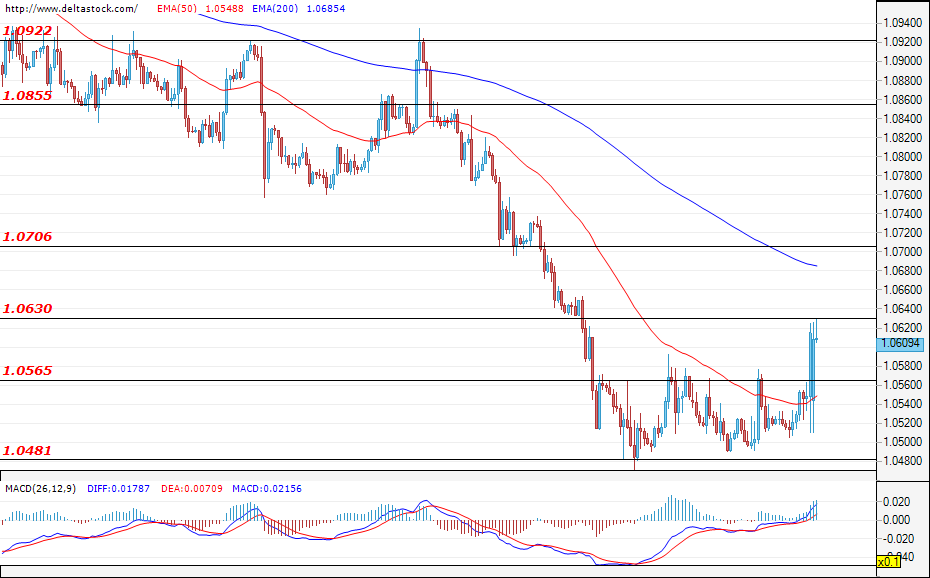
The European session started calmly – with a slight decline towards 1.0510, but after the opening of the U.S. stock exchange at 13:30 GMT, the EUR bulls took control. Any speculative movements prior to the release of the U.S. interest rates were rather weak, but after they were raised by 0.50% to 1.00%, the reaction was immediate and the breach of the previous resistance at 1.0565 was convincing. The statement of Jerome Powell helped calm the dollar even more and the session ended at a high of 1.0630. The macroeconomic calendar shows that the week is expected to continue treading highly volatile waters, and that the NFP data for the U.S. on Friday at 12:30 GMT is likely to further reinforce this volatility. If the expected 3.5% unemployment and the 390,000 new jobs become a fact, then we could see the growth of the single European currency continue towards at least 1.0705, but if the data is even better than expected, then a jump in the dollar and the continuation of the downward trend could be the more likely scenario.
USD/JPY
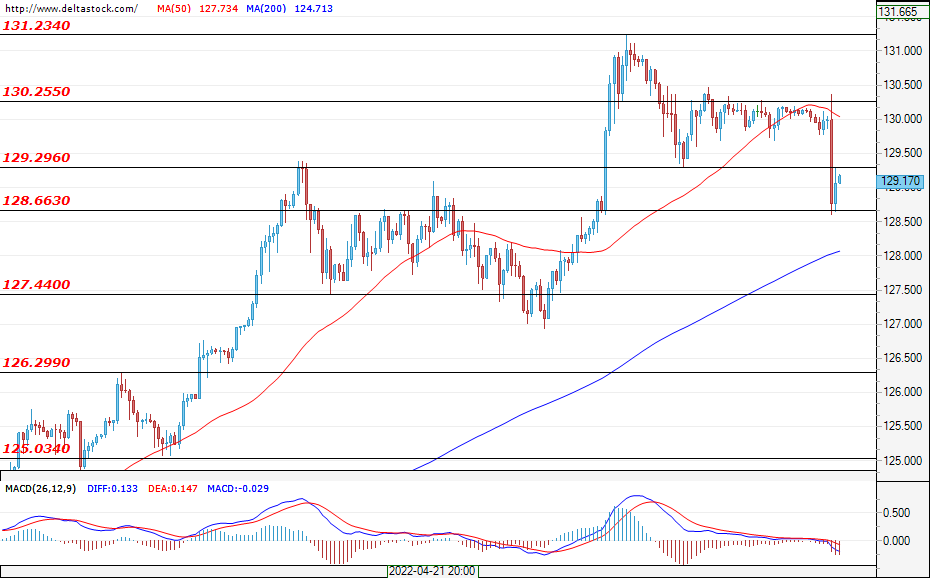
The liquidity was quite scarce throughout the day as Japan celebrated a second public holiday and the banks were closed. The pair was hovering around 130.25, and soon after the U.S. main interest rate increase was announced at 18:00 GMT, the dollar reacted negatively and the USD/JPY entered a strong corrective movement. The yen managed to gain 70 pips on the wings of rising volatility and the decline stopped at around 128.65. The session continued with a slight rebound for the dollar, ending at the previous key level of 129.30. Whether the dollar will recover and move towards new highs above 130.25 or correct further in search of a better price at around 127.45 will depend on traders’ reaction to the U.S. NFP data on Friday at 12:30 GMT. Today's session will most likely remain limited between the levels of 128.65 and 129.30.
GBP/USD
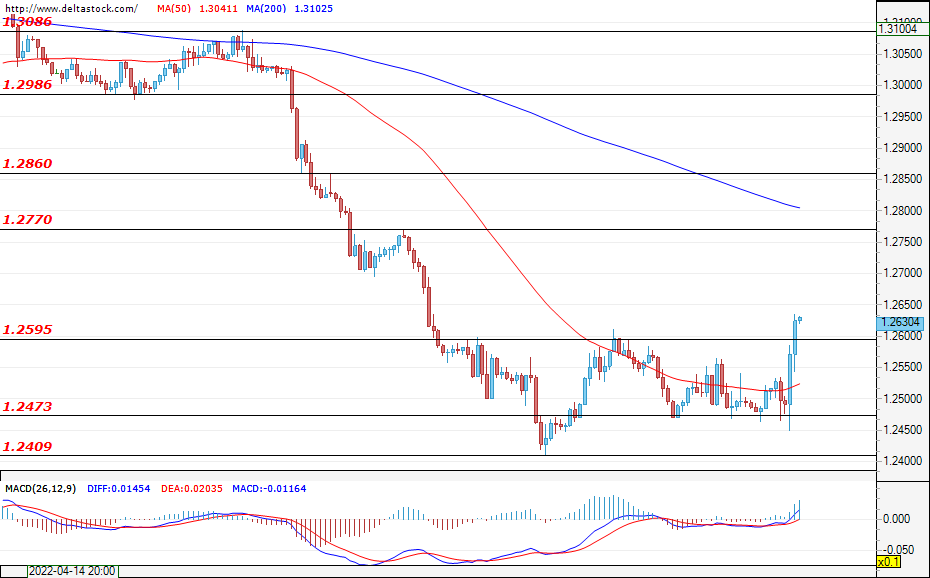
The Cable’s session was hesitant as it initially managed to accumulate 30 pips, but quickly handed them over before the Fed's decision on the key interest rate was released at 18:00 GMT. However, the bulls seized their chance to attack following the negative reaction of the dollar and breached the previous resistance at 1.2595 in a movement, similar to that of the EUR/USD. The rally continued and managed to reach levels of 1.2630, around which the session had ended. Rising inflation in the UK is expected to push the BoE to boost the interest rate by 0.25% to 1.00% today at 11:00 GMT. What the market’s reaction will be, however, is yet to be seen. The probability of an upward movement in the Cable is higher due to the weakened dollar, but the possibility of the dollar rising after Friday's U.S. NFP data report should not be underestimated, with the first support being the level at 1.2595.
EUGERMANY40
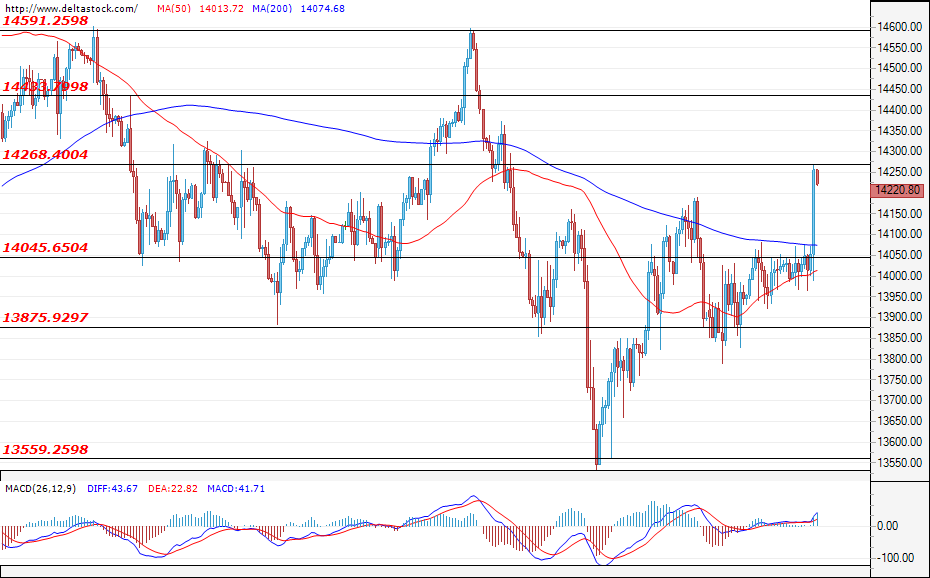
The up-trend movements in the German index had started at the beginning of the week, with short breaks and light corrections in between. Speculation was scarce before the Fed’s interest rate decision. However, the follow-up reaction as the new percentage was announced at 18:00 GMT was not late, and together with the other indices, the EUGERMANY40 managed to breach the resistance of 14045 and rise by 250 points. The bulls stopped their attack at 14270 and the session ended with a minimal correction of 50 points. The index is more likely to continue in the same direction and look for new peaks above 14430, but the expected NFP data on Friday at 12:30 GMTcould lead to a correction and a decline below the level of 13875 due to the currently high correlation with the U.S. indices.
US30
The most expensive index in the U.S. suffered a slight decline as Wall Street opened at 13:30 GMT and continued with a slight speculative trading session in anticipation of the data from the Fed. The downward movement found a bottom at 33035, and soon after the rise of the key interest rate with 0.50% at 18:00 GMT, the resistance at 33350 was breached and we saw an upward momentum in stocks, which led to the index posting its best day in the U.S. equities’ history following a Fed's interest rate decision since 2008. The bulls had full control, and after realising that an increase of 0.75% had not even been discussed by the committee, the blue-chip index reached a peak of 34105. This resistance is key and whether it will be breached will be seen in the coming days. On Friday, the NFP data is expected to set the tone for next week's movements.
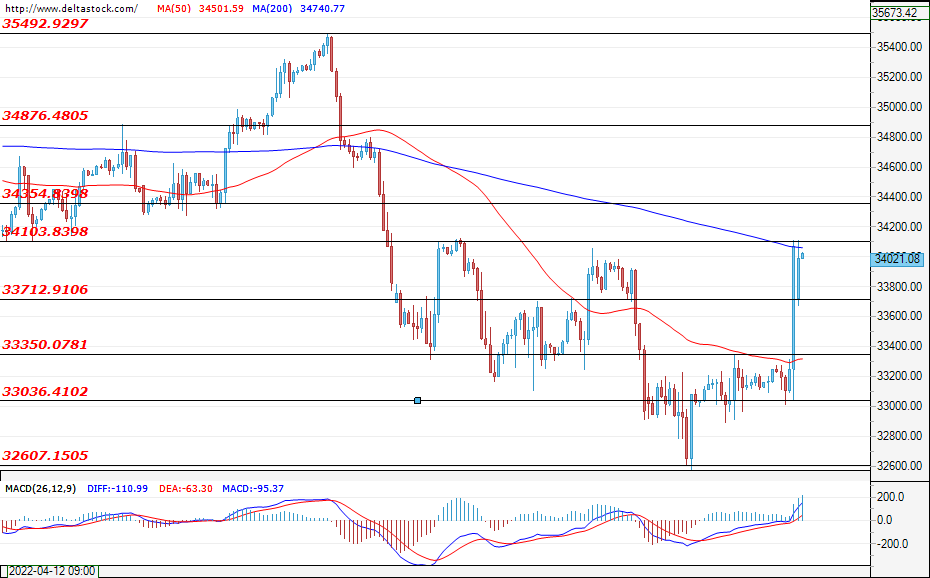
US Dollar Index Retreats after Federal Reserve Statement
The price of crude oil moved upwards after Hungary vetoed a decision by the European Union to ban almost all imports of Russian oil. The country said that banning oil from the country would lead to higher prices and affect its economy. In a statement, the Hungarian foreign minister said that it will only agree with those sanctions if pipeline imports were exempt from the sanctions. Slovakia and Czech Republic have also expressed concerns about banning oil since they rely on the Soviet-era Druzhba pipeline. Meanwhile, data from the EIA showed that inventories rose from over 1.302 million barrels.
The US dollar retreated against other currencies after the Federal Reserve delivered its interest rate decision. As was widely expected, the bank decided to hike interest rates by 0.50%, which was the biggest increase since 2000. The bank will also start implementing its quantitative tightening policy next month. Still, there are concerns that the bank made a bad decision considering that the economy is slowing down. Data published by ADP showed that the private sector added just 247k jobs from the previous 479k. Further numbers revealed that the country’s trade deficit widened to a record $109.8 billion.
The British pound declined ahead of the upcoming Bank of England (BOE) decision. The bank is expected to hike interest rates by 0.25%. If this happens, it will be the fourth interest rate hike since December last year. However, with the UK economy slowing, there is a likelihood that the bank will hint that it will pause increasing rates. The other key events to watch will be the global services and PMI numbers and the Turkish consumer inflation data. The earnings season will continue, with companies like Under Armour, Sprott, DraftKings, and Citrix will publish their results.
XBRUSD
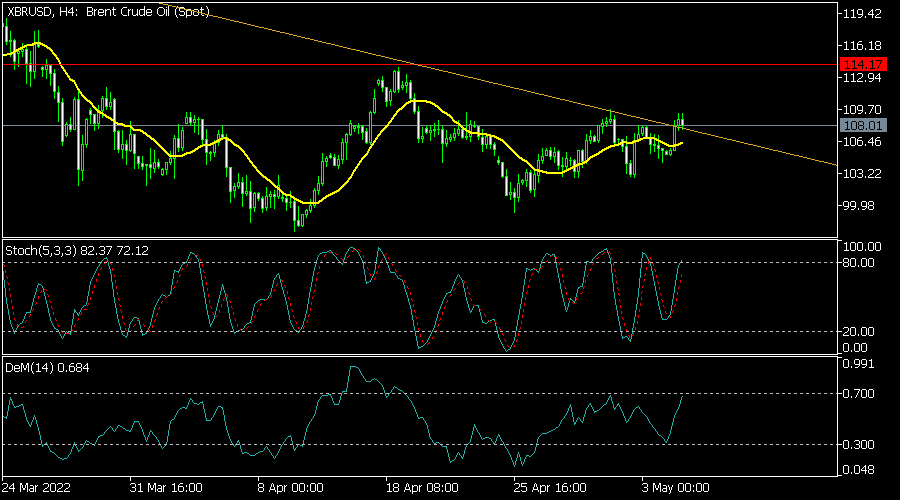
The XBRUSD pair rose slightly after the US inventories numbers. It is trading at 107.91, which was higher than last month’s low of 98.05. It has moved slightly above the descending trendline that is shown in brown. The pair has moved slightly above the 25-day moving average while the Stochastic Oscillator is approaching the overbought level. It will likely continue rising as bulls target the key resistance level at 110.
EURGBP
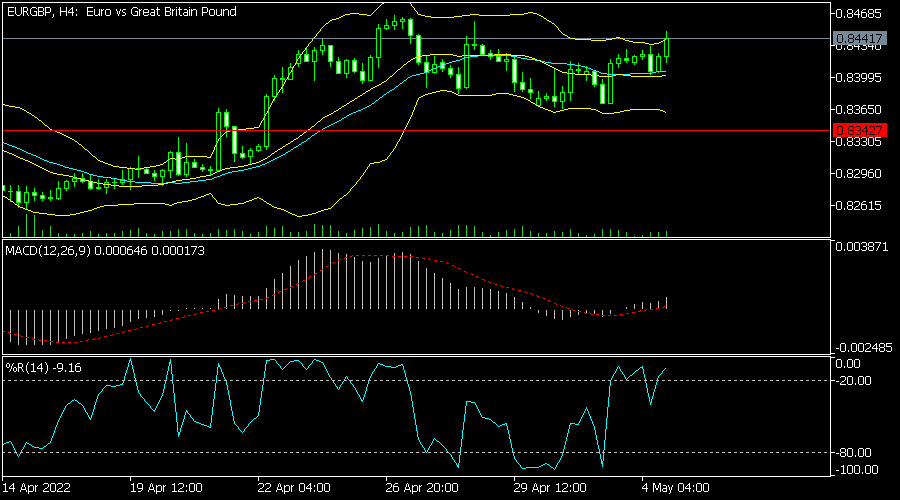
The EURGBP pair tilted upwards ahead of the upcoming Bank of England decision. The pair rose to a high of 0.8445, which was the highest level since April 29. It has moved above the upper side of the Bollinger Bands. At the same time, the MACD has moved slightly above the neutral level while the Williams %R moved to the overbought level. Therefore, the pair will likely keep rising as bulls target the key resistance at 0.8470.
EURUSD
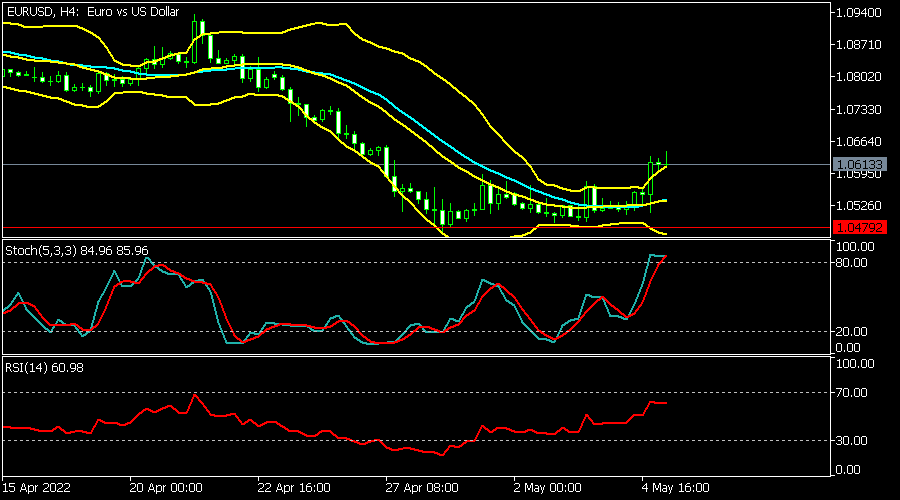
The EURUSD pair rose to a high of 1.0643, which was the highest level in more than week. On the four-hour chart, the pair moved above the dots of the Parabolic SAR. It also moved above the 25-day moving average while the Average Directional Index (ADX) has fallen. The Relative Strength Index (RSI) has also been rising. Therefore, the pair will likely keep rising in the near term as bulls target the key resistance at 1.0700.
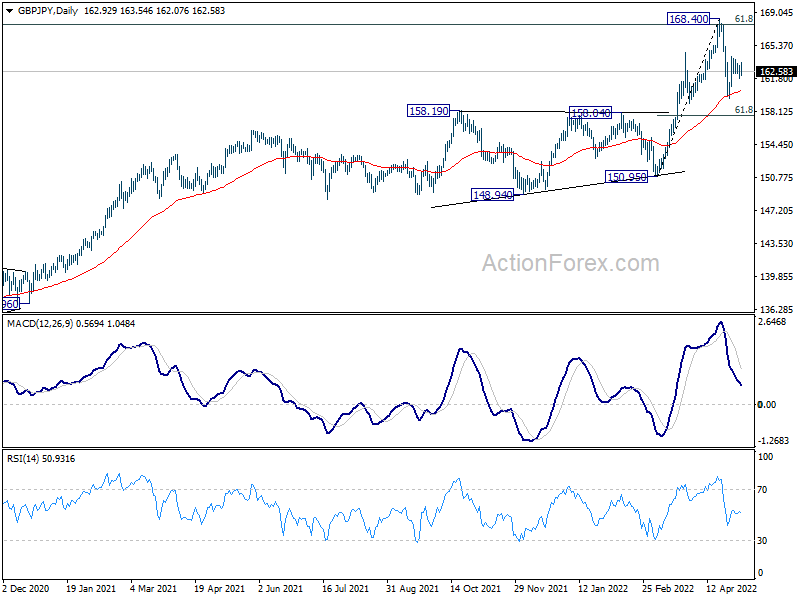
GBP/JPY Daily Outlook
Daily Pivots: (S1) 162.20; (P) 162.70; (R1) 163.61; More...
Intraday bias in GBP/JPY stays neutral as corrective pattern from 168.40 is extending. In case of another fall, downside should be contained by 61.8% retracement of 150.95 to 168.40 at 157.61 to bring rebound. On the upside, firm break of 168.40 will resume larger up trend.
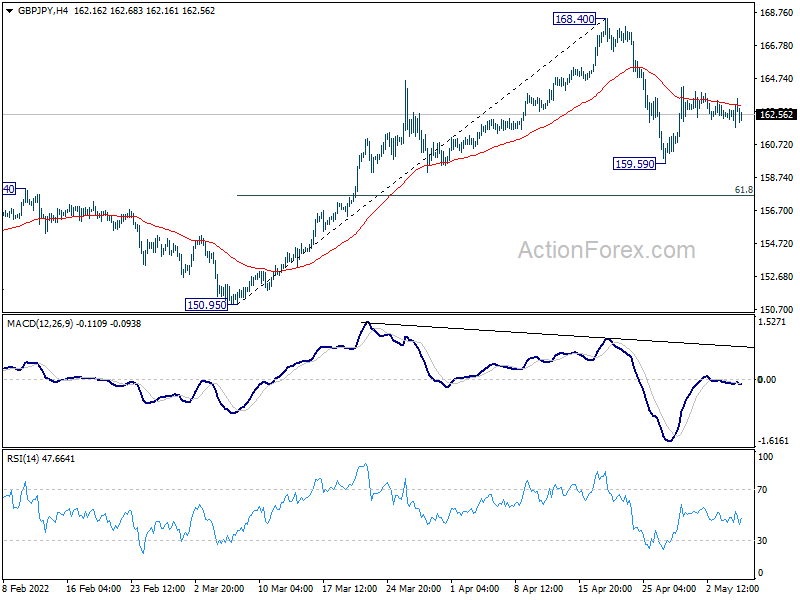
In the bigger picture, up trend from 123.94 (2020 low) is still in progress. Sustained break of 61.8% retracement of 195.86 (2015 high) to 122.75 (2016 low) at 167.93 will be a long term bullish signal, and could pave the way back to 195.86 high. This will now remain the favored case as long as 150.95 support holds, even in case of deep pull back.