Sample Category Title
USD/CHF Mid-Day Outlook
Daily Pivots: (S1) 0.9269; (P) 0.9289; (R1) 0.9323; More....
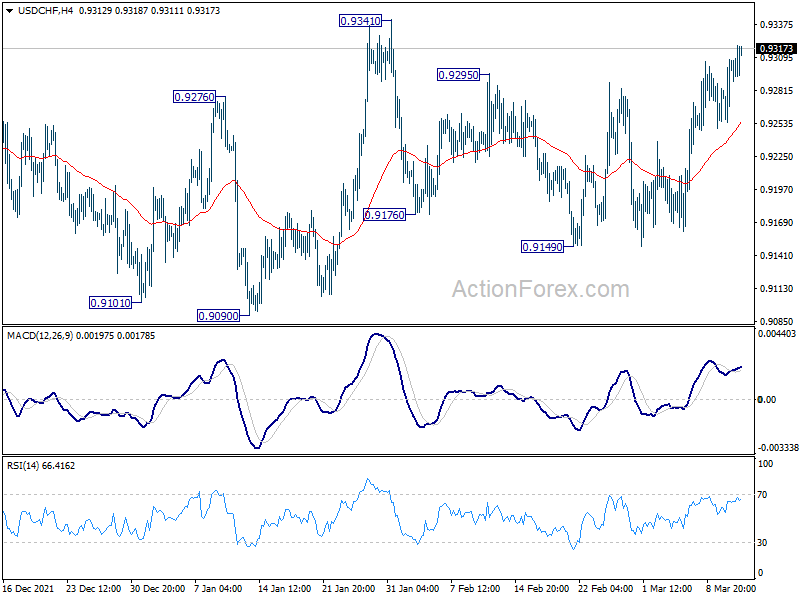
Intraday bias in USD/CHF remains neutral and outlook is unchanged. Choppy rise from 0.8925 would still be in favor to extend higher as long as 0.9090 support holds. Break of 0.9341 will target 0.9372 resistance and then 0.9471. On the downside, however, break of 0.9090 will bring deeper fall back to 0.8925 support.
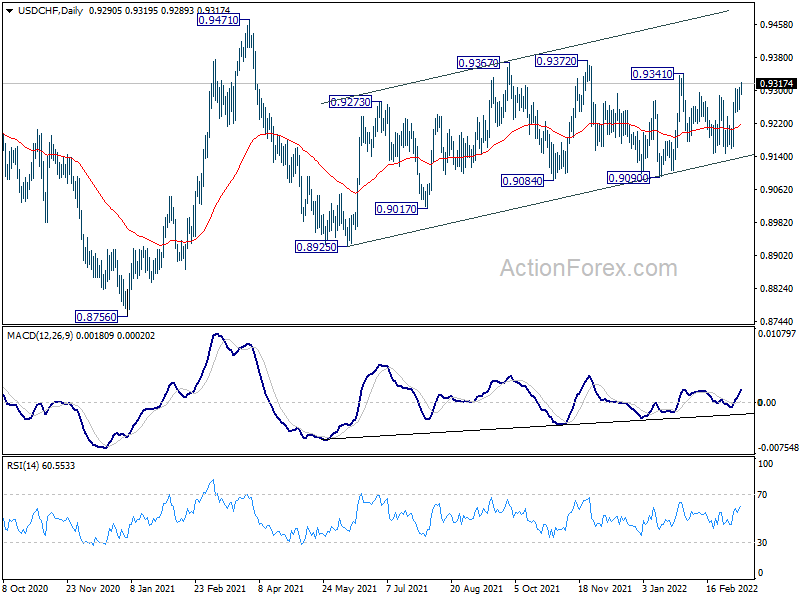
In the bigger picture, medium term outlook will be neutral at best as long as 0.9471 resistance holds. Larger down trend could still extend through 0.8756 (2021 low). However, firm break of 0.9471 will argue that the trend has already reversed and rebound the rally from 0.8756 with another impulsive move.
USD/JPY Mid-Day Outlook
Daily Pivots: (S1) 115.91; (P) 116.05; (R1) 116.29; More...
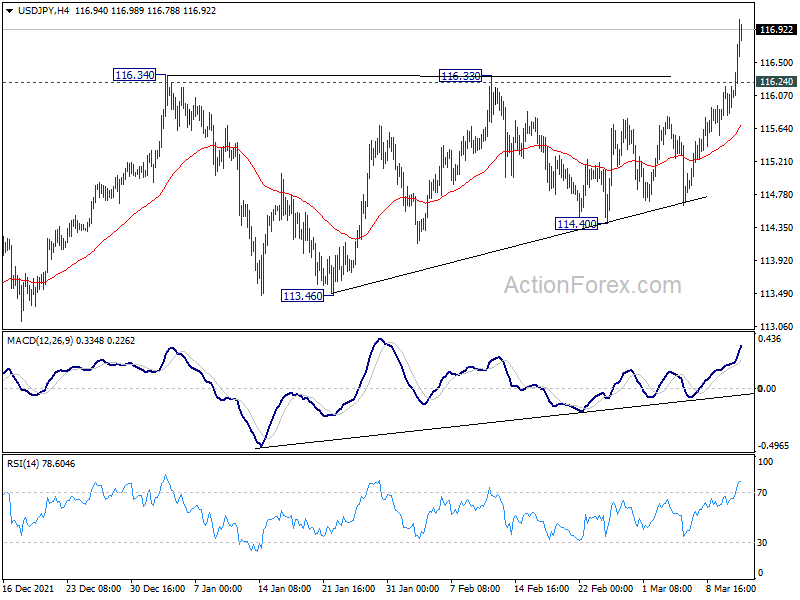
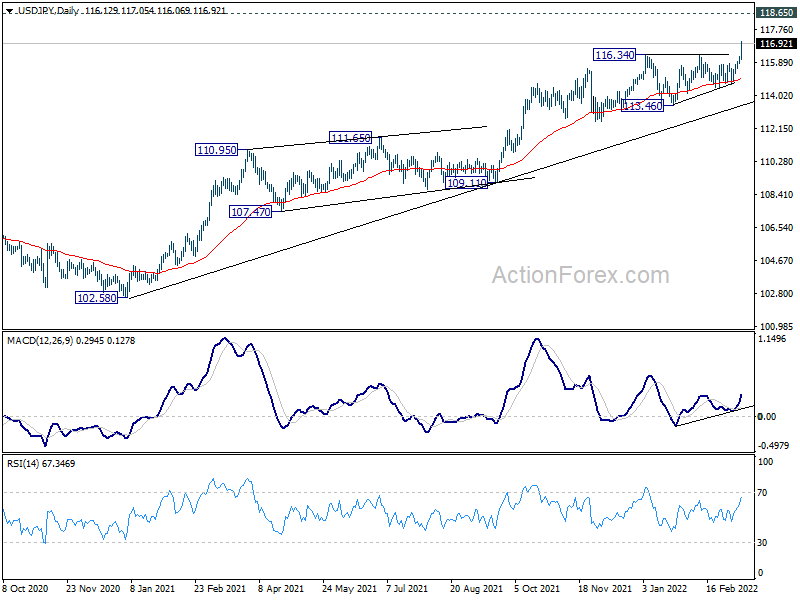
Intraday bias in USD/JPY remains on the upside for the moment. Current rally is part of the up trend from 102.58. Further rise should be seen to next long term resistance at 118.65. On the downside, below 116.24 minor support will turn intraday bias neutral first. But outlook will remain bullish as long as 114.40 support holds, in case of retreat.
In the bigger picture, no change in the view that rise from 102.58 is the third leg of the up trend from 101.18 (2020 low). Such rally should target a test on 118.65 (2016 high). Sustained break there will pave the way to 120.85 (2015 high) and raise the chance of long term up trend resumption. This will remain the favored case as long as 55 week EMA (now at 111.75) holds.
Canadian Dollar Shot Up by All-Round Strong Job Report, Yen Weakness Continues
Canadian Dollar surges sharply after employment data blows past expectations. Sterling and Euro are firm slightly firmer but there is no clear upside momentum. On the other hand, selloff in Yen is still persisting. Dollar is mixed for now. In other markets, Gold is extending the pull back and it's threatening 1960 minor support. WTI crude oil is holding above 106 but looks weak. European indexes are in strong rally today, so are US futures. It looks like markets are going into the weekend with an upbeat mood.
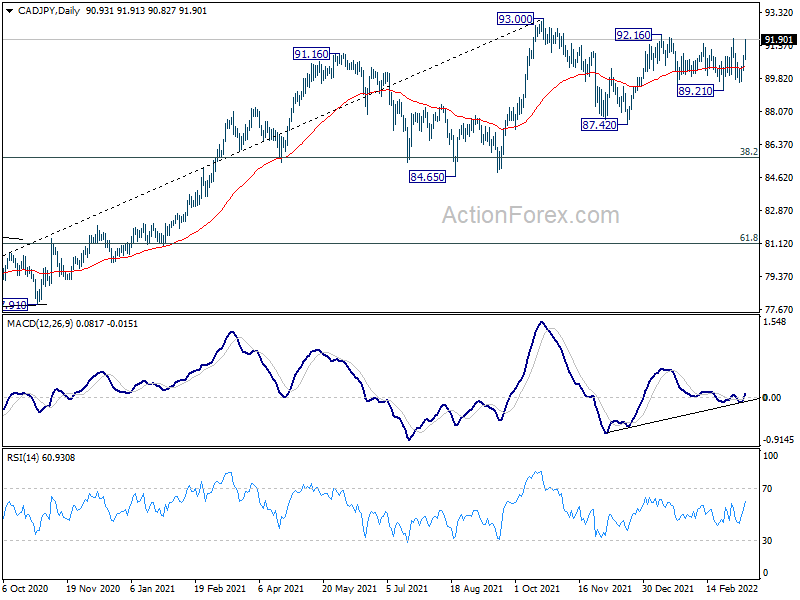
Technically, CAD/JPY looks set to break through 92.16 resistance with today's rally. 93.00 high will be the next focus and break there will resume larger down trend from 73.80. Such development would be inline with USD/JPY's break of 116.34 earlier today. Next is on when AUD/JPY would break through 86.24 resistance too.
In Europe, at the time of writing, FTSE is up 1.41%. DAX is up 3.07%. CAC is up 2.14%. Germany 10-year yield is up 0.0304 at 0.305. Earlier in Asia, Nikkei dropped -2.05%. Hong Kong HSI dropped -1.61%. China Shanghai SSE rose 0.41%. Singapore Strait Times rose 0.28%. Japan 10-year JGB yield dropped -0.0078 to 0.184.
Canada employment grew massive 337, unemployment rate close to record low
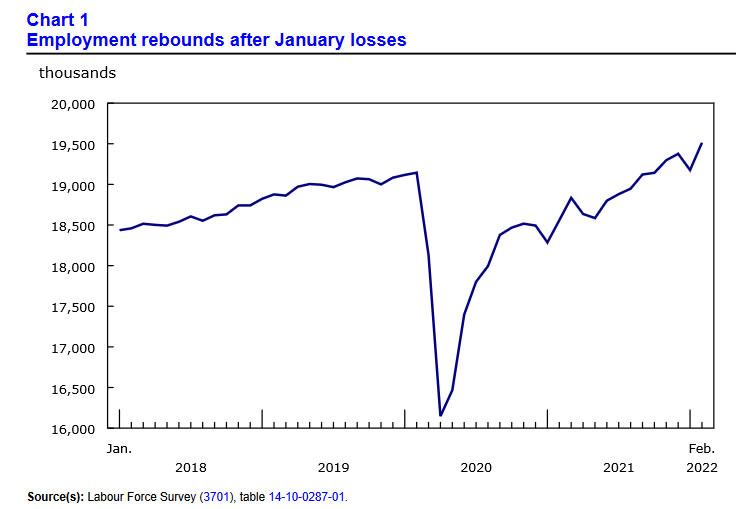
Canada added a massive 337k jobs in February, well above expectation of 123k. Full time jobs grew 122k while parti time jobs rose 215k. Goods-producing jobs rose 44k and producing jobs rose 293k.
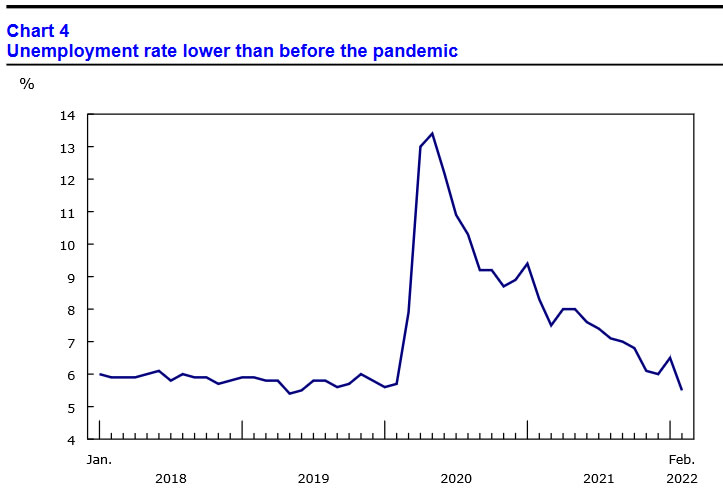
Unemployment rate dropped sharply from 6.5% to 5.5%, better than expectation of 6.2%. The level was now below pre-pandemic rate at 5.7% in February 2020, and similar to record lower of 5.4% back in May 2019.
Total hours worked also rose 3.6%, exceeding pre-pandemic level for the first time. Employment rate rose 1% to 61.8%. Labor force participation rate rose 0.4% to 65.4%.
ECB Villeroy: Interest rate rise would be very gradual
ECB Governing Council member Francois Villeroy de Galhau reiterated to BFM business radio, "we have said that if the rise in interest rates were to start, it would be very gradual. We have decided to lift our foot off the accelerator ... but there is not the automaticity we seen in other central banks."
Villeroy also dismissed the idea that rising commodity prices could drag Eurozone into recession. He said, "growth remain positive, there is no recession." Meanwhile, he expected inflation to "get back down to around 2%" from from the current 5.1% level.
Another Governing Council member Olli Rehn echoed, "any adjustments to the key ECB interest rates will take place some time after the end of the APP net purchases and will be gradual."
UK GDP grew 0.8% mom in Jan, all sectors were up
UK GDP grew 0.8% mom in January, well above expectation of 0.2% mom. All sectors grew in the month, with services up 0.8% mom, production up 0.7% mom, and construction up 1.1% mom.
GDP is now 0.8% above pre-coronavirus level in February 2020. Services is 1.3% above the pre-coronavirus level, construction 1.4% above. But production remains -2.0% below the level.
Also released, industrial production rose 0.7% mom, 2.3% yoy in January, versus expectation of 0.3% mom, 1.9% yoy. Manufacturing production rose 0.8% mom, 3.6% yoy, versus expectation of 0.2% mom, 3.1% yoy. Goods trade deficit widened to GBP -26.5B, versus expectation of GBP -12.6B.
RBA Lowe: It's prudent to plan for an interest rate increase
RBA Governor Philip Lowe said it's "plausible" for interest to be lifted from the current 0.1% this year. "It would be prudent to plan for an increase," he added. "For many borrowers that's going to come as quite an unwelcome development, although I know from the letters that I get every day when I turn up at work that many depositors have a different view,"
Meanwhile, he said "I don't feel mounting pressure," on raising rates. "We do what we think is the right thing at each of our meetings, so the pressure, it's great for media stories, but I don't feel that myself."
New Zealand BNZ manufacturing rose to 53.6, next result may see fallout from Russia/Ukraine conflict
New Zealand BNZ Performance of Manufacturing Index rose from 52.3 to 53.6 in February. Looking at some details, Production rose from 51.1 to 52.1. Employment rose from 49.5 to 51.7. New Orders rose from 53.6 to 58.2. Finished stocks dropped from 52.5 to 50.0. Deliveries dropped from 54.0 to 53.5.
BNZ Senior Economist, Craig Ebert stated that "underlying unease will certainly be piqued by the sustained high COVID case numbers as we go into March. The next PMI result may also see fallout from the Russia/Ukraine conflict, whose global impacts will be felt far and wide."
USD/JPY Mid-Day Outlook
Daily Pivots: (S1) 115.91; (P) 116.05; (R1) 116.29; More...
Intraday bias in USD/JPY remains on the upside for the moment. Current rally is part of the up trend from 102.58. Further rise should be seen to next long term resistance at 118.65. On the downside, below 116.24 minor support will turn intraday bias neutral first. But outlook will remain bullish as long as 114.40 support holds, in case of retreat.
In the bigger picture, no change in the view that rise from 102.58 is the third leg of the up trend from 101.18 (2020 low). Such rally should target a test on 118.65 (2016 high). Sustained break there will pave the way to 120.85 (2015 high) and raise the chance of long term up trend resumption. This will remain the favored case as long as 55 week EMA (now at 111.75) holds.
Economic Indicators Update
| GMT | Ccy | Events | Actual | Forecast | Previous | Revised |
|---|---|---|---|---|---|---|
| 21:30 | NZD | Business NZ PMI Feb | 53.6 | 52.1 | 52.3 | |
| 23:30 | JPY | Overall Household Spending Y/Y Jan | 6.90% | 3.60% | -0.20% | |
| 23:50 | JPY | BSI Large Manufacturing Conditions Index Q1 | -7.6 | 8.2 | 7.9 | |
| 07:00 | EUR | Germany CPI M/M Feb F | 0.90% | 0.90% | 0.90% | |
| 07:00 | EUR | Germany CPI Y/Y Feb F | 5.10% | 5.10% | 5.10% | |
| 07:00 | GBP | GDP M/M Jan | 0.80% | 0.20% | -0.20% | |
| 07:00 | GBP | Index of Services 3M/3M Jan | 1.00% | 1.20% | 1.20% | |
| 07:00 | GBP | Industrial Production M/M Jan | 0.70% | 0.30% | 0.30% | |
| 07:00 | GBP | Industrial Production Y/Y Jan | 2.30% | 1.90% | 0.40% | |
| 07:00 | GBP | Manufacturing Production M/M Jan | 0.80% | 0.20% | 0.20% | |
| 07:00 | GBP | Manufacturing Production Y/Y Jan | 3.60% | 3.10% | 1.30% | |
| 07:00 | GBP | Goods Trade Balance (GBP) Jan | -26.5B | -12.6B | -12.4B | |
| 13:30 | CAD | Net Change in Employment Feb | 336.6K | 123.0K | -200.1K | |
| 13:30 | CAD | Unemployment Rate Feb | 5.50% | 6.20% | 6.50% | |
| 15:00 | USD | Michigan Consumer Sentiment Index Mar P | 61.3 | 62.8 | ||
| 15:00 | GBP | NIESR GDP Estimate (3M) Feb | 1.10% | 0.90% |
Canada employment grew massive 337, unemployment rate close to record low
Canada added a massive 337k jobs in February, well above expectation of 123k. Full time jobs grew 122k while parti time jobs rose 215k. Goods-producing jobs rose 44k and producing jobs rose 293k.
Unemployment rate dropped sharply from 6.5% to 5.5%, better than expectation of 6.2%. The level was now below pre-pandemic rate at 5.7% in February 2020, and similar to record lower of 5.4% back in May 2019.
Total hours worked also rose 3.6%, exceeding pre-pandemic level for the first time. Employment rate rose 1% to 61.8%. Labor force participation rate rose 0.4% to 65.4%.
USD/JPY Gets Short Squeezed
USD/JPY leapt higher on Friday as short sellers were forced to close their positions and buy US dollars, leading to a textbook short squeeze in the forex pair.
At the time of writing, USD/JPY had risen to a high of 117.063, gaining over 92 pips on its opening price of 116.140. It was another momentous move in what has proven to be a spectacular week in forex.
Granted, higher global yields after yesterday’s ECB meeting played a hand at weaker Japanese yen, but it was technical traders, who shorted USD/JPY hoping that the previous bearish double top formation would pay off that played a larger part in this latest move higher.
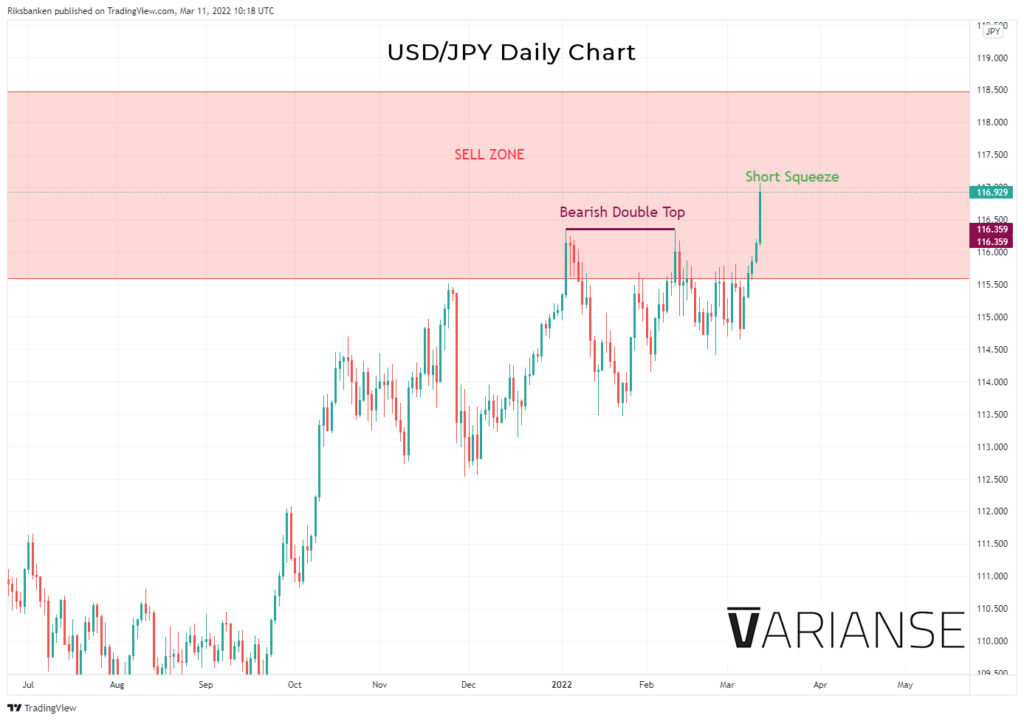
Instead, price went in the other direction, forcing them to buy back USD/JPY to close their positions and leading USD/JPY to have that upward parabolic momentum. The move is proof that at certain times technical matter just as much as fundamentals.
But more importantly, traders would be well advised to question the informational veracity of this latest move higher in USD/JPY based on its very technical nature. Regardless of their future price convictions, USD/JPY now sits almost midpoint in gigantic sell-zone between 118.477 and 115.597.
Therefore, sellers reasserting themselves, even temporarily, is a big risk at these levels. At the very least, traders should be cautious of putting too much stock in a single candle and look for further confirmation, either fundamental or technical, before laying down large positions.
Canadian Dollar Eyes Job Data
Will Canadian job data boost loonie?
It’s been a busy week for the Canadian dollar. USD/CAD started the week with strong gains, but the Canadian dollar has clawed back and recovered most of those losses.
The week will wrap up with the Canadian employment report for February. The markets are expecting a huge turnaround after a dismal January, when the economy shed 200.1 thousand jobs. The consensus estimate for February stands at 160 thousand new jobs. The unemployment rate is expected to fall from 6.5% to 6.2%.
In the turbulent economic landscape we are witnessing, there are opposing pressures on the Canadian dollar. Risk appetite has been weak lately, as the war in the Ukraine intensifies and hopes for a diplomatic solution have been dashed, as the sides haven’t even been able to reach a cease-fire truce. This has weighed on the Canadian dollar, which is risk-sensitive. At the same time, the Canadian dollar is commodity-based, and the surge in prices of oil and other commodities has helped the Canadian dollar to weather the increase in risk aversion.
In the US, headline CPI continued to accelerate, with a gain of 7.9% for February YoY. This matched the forecast and was up from 7.5% beforehand. With inflation running at 40-year high, there’s little doubt that the Fed will raise rates at next week’s meeting, most likely by 25 basis points.
The surge in oil prices has central banks on the alert for stagflation, and this could mean that expected tightening will have to be eased. This is also the case of the Bank of Canada, which raised rates from 0.25% to 0.50% last week, but may have to slow its pace of rate hikes.
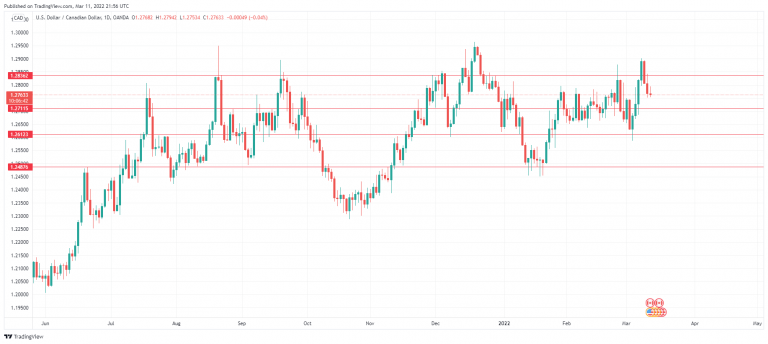
USD/CAD Technical
- USD/CAD faces resistance at 1.2835 and 1.2934
- There is support at 1.2612 and 1.2488
Japanese Yen Falls to Five-Year High
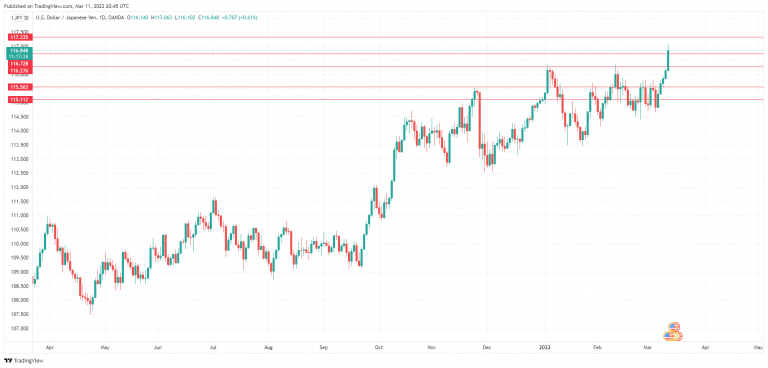
The US dollar continues to pummel the Japanese yen. USD/JPY pushed above the 117 line earlier today for the first time since January 2017. USD/JPY is up 0.61% on the day and has recorded a massive gain of 1.76% this week.
We continue to see sharp volatility in the currency markets and the Japanese yen has not been immune to the turbulence. Risk apprehension has been fluctuating, depending on developments in the Ukraine crisis. Like the US dollar, the yen is also considered a safe-haven currency, but with the US economy in much better shape than that of Japan, the US dollar has been the big winner from the recent turbulence we’re seeing in the markets. As well, commodities are priced in US dollars, so the recent surge in commodity prices has boosted the US dollar. If the Ukraine crisis worsens and commodity prices continue to soar, it is entirely feasible that the USD/JPY will continue its upswing and break above the 120 line.
US inflation jumps to 7.9%
In the US, headline CPI continued to accelerate, with a gain of 7.9% for February YoY. This matched the forecast and was up from 7.5% beforehand. With inflation running at 40-year high, there’s little doubt that the Fed will raise rates at next week’s meeting, most likely by 25 basis points.
Japan ended the week with mixed numbers. Household Spending for January showed a sharp rebound of 6.9% YoY, up from -0.2% in December and above the consensus of 3.3%. However, the BSI Manufacturing Index for Q1 came in at -7.6, down from +7.2 in Q3 and way off the consensus estimate of +8.2. The BoJ is expected to maintain a dovish stance, despite rising inflation. On Friday, a senior BoJ official stated Japan’s current and economic price conditions would make it inappropriate to respond with monetary tightening.
USD/JPY Technical
- USD/JPY continues to climb and break above resistance lines. Earlier in the day, the pair broke above resistance at 116.27 and 116.72. The next resistance is at 117.33.
- There is support at 115.56 and 115.11
USD/JPY Outlook: The Pair Could Extend to 2017 High in Dollar-Positive Environment
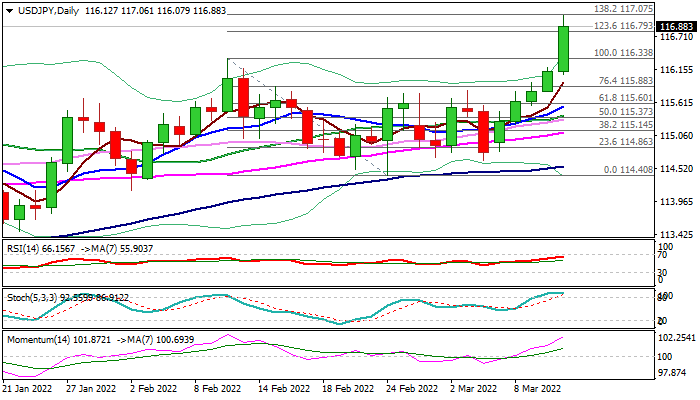
The USDJPY accelerated strongly higher on Friday (up around 0.7% in Asia/Europe), extending steep rally into fifth straight day.
Strong US inflation data (Feb CPI soared to the highest since 1982) fuel expectations for Fed rate hike in the next week’s policy meeting (0.25% hike is widely expected, but some bet for 0.5% increase) and add to dollar’s strength, as the greenback has been lifted by safe-haven buying on risk aversion over the conflict in Ukraine.
Fresh bullish acceleration broke above former 2022 high (116.35, posted on Jan 4) and probed above 117 level, hitting the highest levels since Jan 2017.
Bulls can extend further and attack Dec 2016 high (118.66) as fundamentals remain favorable for the dollar, with no significant obstacles on the way, supporting the notion.
Daily studies continue to support the action as 14-d momentum remains in steep ascend and north heading MA’s in full bullish setup, continue to track the price action.
The pair is on track for strong weekly advance (around 1.7%) and massive bullish weekly candle is expected to underpin.
Dips are expected to offer better buying opportunities, with former tops (116.33/35) now acting as strong supports which should keep the downside protected.
Res: 116.79; 117.07; 117.53; 117.81.
Sup: 116.70; 116.35; 116.07; 115.88.
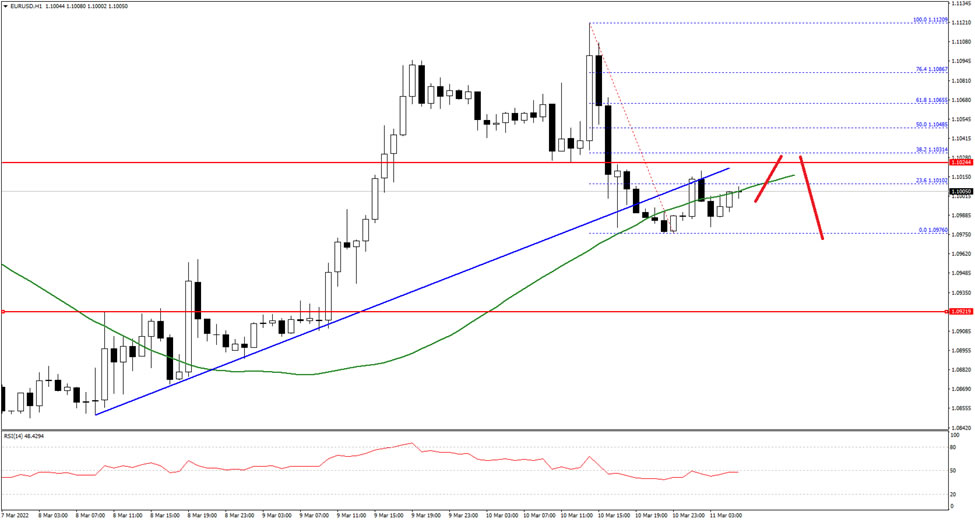
EUR/USD Consolidating Near 1.1010
The Euro started a decent recovery wave above 1.0920 against the US Dollar. The EUR/USD pair traded above the 1.1050 resistance level and the 50 hourly simple moving average.
However, it failed to clear the 1.1120 resistance and started a fresh decline. There was a break below a key bullish trend line with support near 1.1000 on the hourly chart. It is now consolidating near the 1.1010 level and the 50 hourly simple moving average.
An immediate resistance near the 1.1025 level. The next major resistance is near the 1.1035 level. A break above the 1.1025 and 1.1035 resistance levels could start a decent increase towards the 1.1080 level in the near term.
On the downside, an initial support is near 1.0975 on FXOpen. The next key support is near 1.0950, below the pair could decline towards the 1.0900 level in the near term.
GBPUSD marks yet more lower lows as bearish forces linger
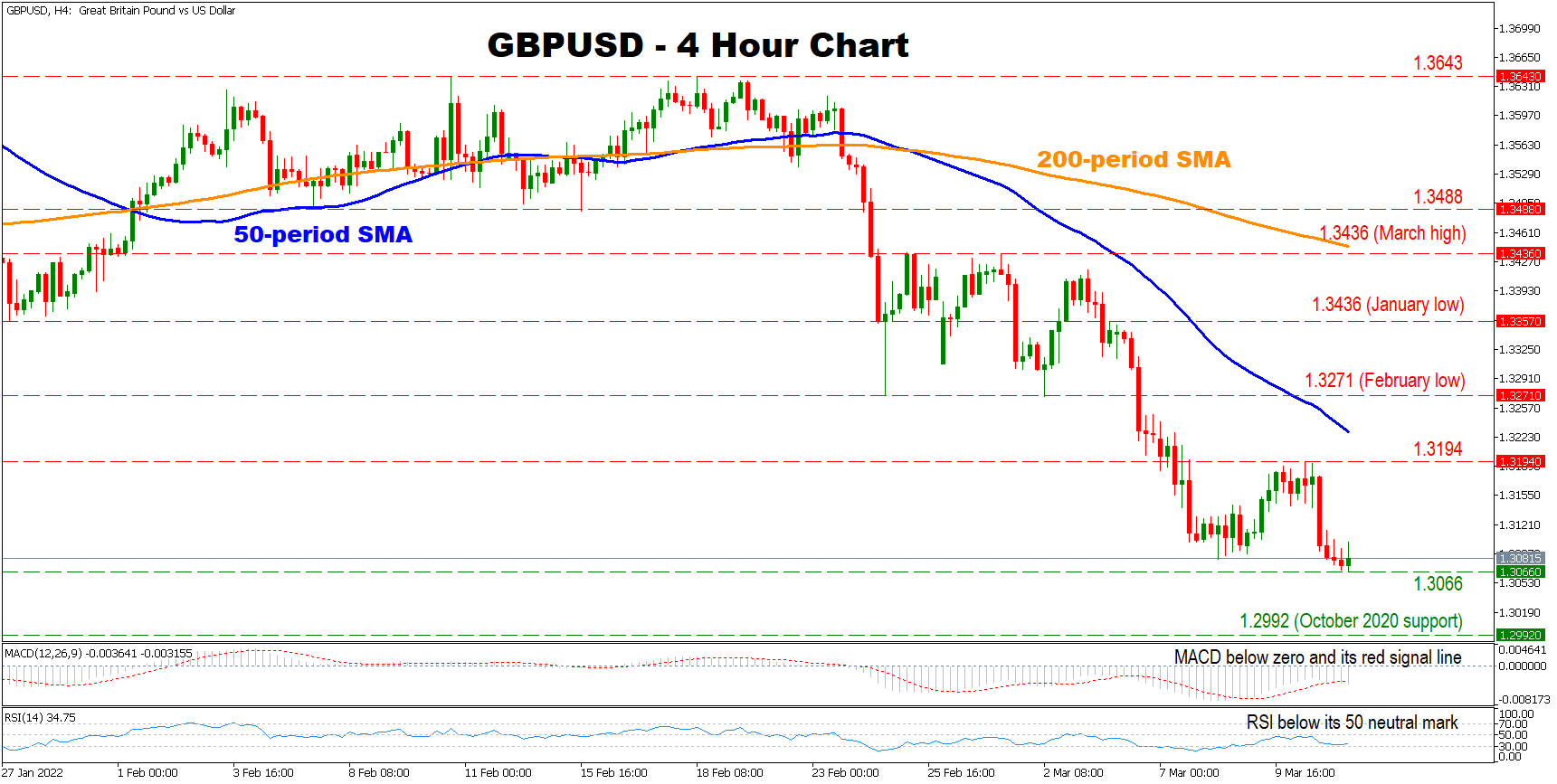
GBPUSD continues its downward trend, reaching levels last seen back in November 2020 as negative momentum persists. Moreover, the pair continues to record successive higher lows and lower highs, reflecting an overall bearish outlook.
Short-term momentum oscillators indicate a negative bias too, as the RSI is steady above its 30 oversold region. Also, the MACD is found below zero and its red signal line, which shows that the negative momentum in the price might be gaining further ground.
With the bears maintaining control over the last few trading sessions, initial support might be found at the 1.3066 level. Crossing below this point could open the door towards the October 2020 support at 1.2992. A decisive move below the latter could increase selling pressures sending the price to test its November 2020 low at 1.2854.
On the flip side, if buyers resurface, initial resistance might be found at the 1.3194 obstacle, before shifting their attention towards the 50-period SMA currently at 1.3229. A break above the latter could provide positive momentum for the pair, sending buyers to take aim at the consecutive hurdles of 1.3271 and 1.3436.
In brief, the overall outlook for the pair remains bearish amid successive lower lows. For sentiment to change, buyers would need to break above the 200-period SMA currently at 1.3450.