Sample Category Title
Stock Markets Will Likely Remain Under Pressure
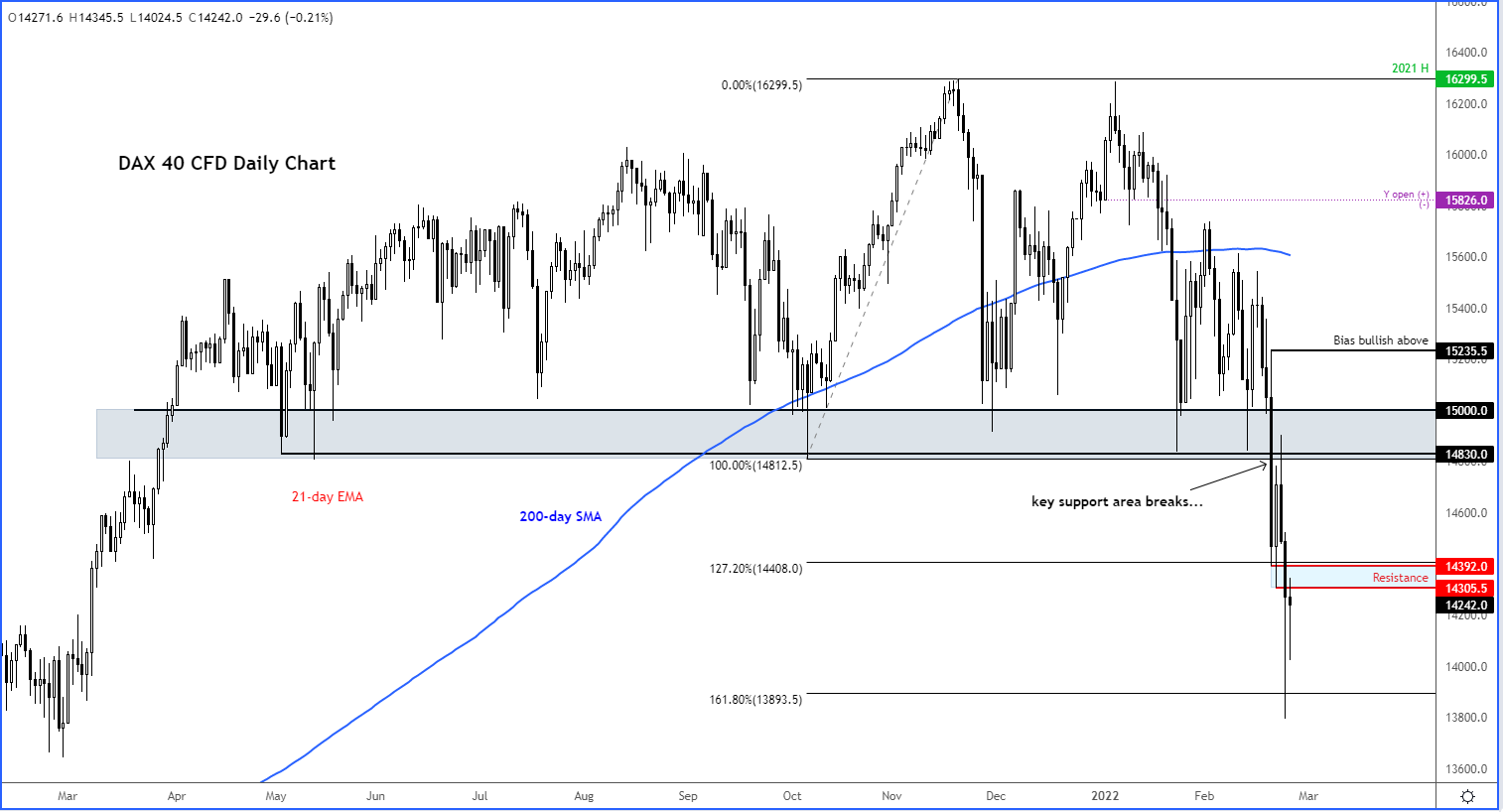
The key question investors would be asking themselves is whether Thursday’s sharp recovery off the lows for global indices marked a turning point. So far, we haven’t seen much bullish follow-through in US index futures to suggest that is the case, and you can understand why with everything happening on the ground in Ukraine. What’s more, the existing macro concerns – soaring inflation and the upcoming interest rate hikes – are further discouraging stock market investors. Today’s Core PCE Price Index, the Fed’s favourite inflation gauge, could revive those worries with a print well north of the 5.1% y/y expected.
Meanwhile safe-haven gold is currently flat on the session, after a remarkable session on Thursday when at one point it looked like it was heading to $2000, only for the sellers to step in aggressively as the US dollar rebounded sharply. But the metal is going to react more to the risk-on/risk-off trade, which means gold investors will be watching the stock markets closely today, and news from Russia and the West as they engage in a bit of tit for tat in terms of sanctions after Moscow’s invasion of Ukraine.
Given the potential for inflation to accelerate further with crude oil and gas prices finding renewed support from the Russian invasion, risk seeking might remain out of favour. There is the additional factor of the weekend risk to take into account. You wouldn’t want to go into the weekend knowing there is a good chance the market could gap against you at the next week’s open, as the situation in Ukraine could deteriorate and tensions between Russia and the West could boil over.
Against this backdrop, I wouldn’t be surprised if the markets come under renewed pressure heading into the close today.
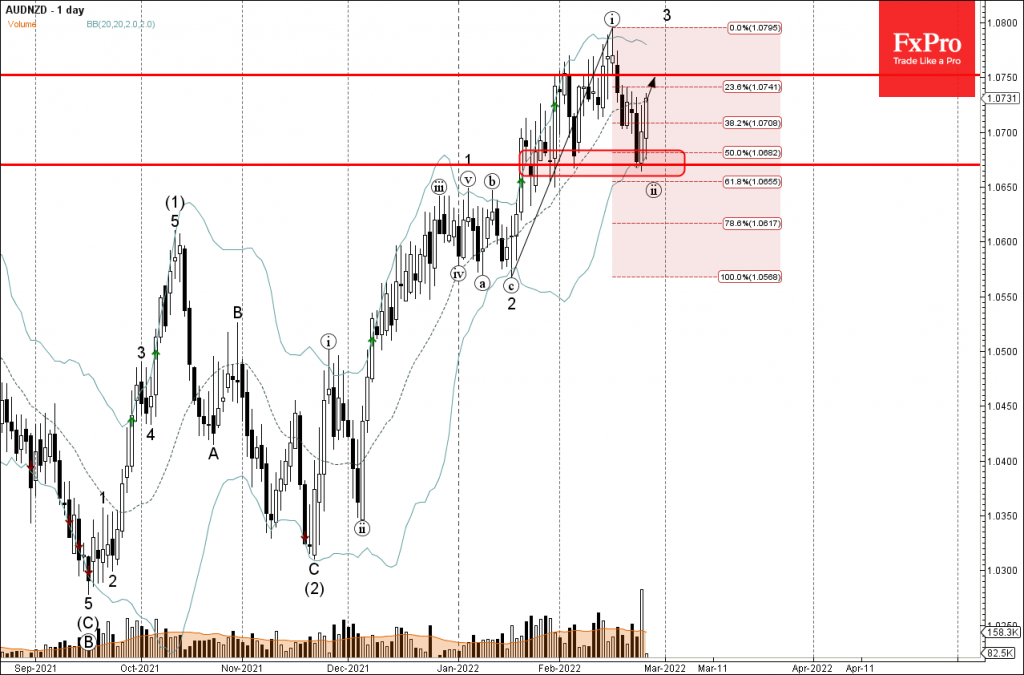
AUDNZD Wave Analysis
- AUDNZD reversed from support area
- Likely to rise to resistance level 1.0750
AUDNZD currency pair recently reversed up from the support area located between the pivotal support level 1.0670 (which has been reversing the price from January) and the lower daily Bollinger Band.
This support area was further strengthened by the 50% Fibonacci correction of the sharp upward impulse wave (i) from the middle of January.
Given the strength of the aforementioned support area – AUDNZD currency pair can be expected to rise further toward the next resistance level 1.0750.
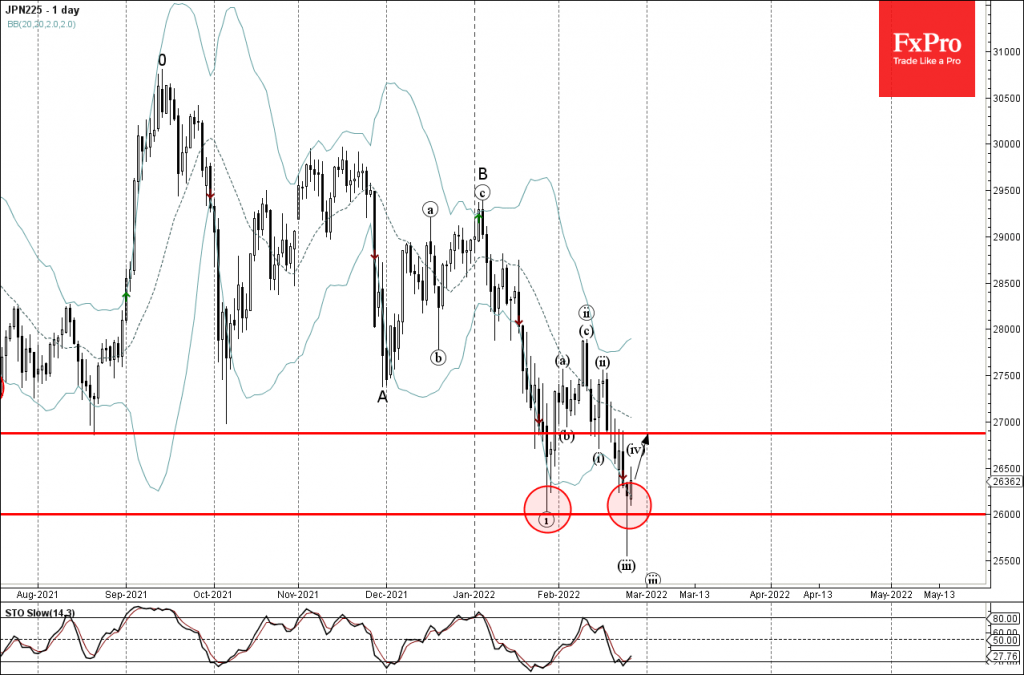
Nikkei 225 Wave Analysis
- Nikkei 225 reversed from support area
- Likely to rise to resistance level 26875.00
Nikkei 225 index recently reversed up from the support area located between the key support level 26000.00 (which stopped the previous impulse wave (i) in January) and the lower daily Bollinger Band.
The upward reversal from this support area created the daily Hammer, which stopped the previous short-term impulse wave (iii).
Given the strength of the aforementioned support area – Nikkei 225 index can be expected to rise further toward the next resistance level 26875.00 (target price for the completion of the active correction (ii)).
Big Tech Defies Ukraine Crisis to Stage Massive Turnaround
- Wall Street in sharp reversal as fears over Ukraine fallout ease a little
- Global equities also perk up, dollar retreats slightly, but oil extends gains
- Immediate focus back on inflation and Fed policy ahead of US data
Russia moves in on Kyiv but markets steadier for now
After a highly turbulent week, the mood brightened somewhat on Friday even as the tragedy unfolded in Ukraine. Stock markets around the world were rebounding from yesterday’s dramatic selloff when Russia invaded Ukraine, which prompted a huge flight to safety. Risk assets were in slightly better shape today, while safe havens such as gold and the US dollar were off their highs.
However, with Russian troops reportedly closing in on Ukraine’s capital, Kyiv, the conflict could get a lot messier and the West may have to respond with even tougher sanctions than the ones announced yesterday.
Sanctions by the United States, Britain, the European Union and others have so far mostly targeted Russian banks and individuals with close links to the Kremlin, freezing their assets and imposing travel curbs, in addition to imposing restrictions on sensitive exports. But Western leaders could not agree on the more ‘nuclear’ option of banning Russia from the international payments system SWIFT that could potentially have crippling effects on the country’s economy. They also stopped short of banning Russian oil and gas exports.
Sanctions relief, buy-the-dip propel US stocks higher
This likely came as a relief for investors as it limits the economic fallout from the crisis, at least in the short term. Moreover, after the S&P 500 entered correction territory, this was another opportunity for bargain hunters to ‘buy the dip’.
The rebound was led by technology companies as the ‘big tech’ favourites, with the exception of Apple, all rallied by at least 4%, lifting the Nasdaq Composite from a 3.5% loss to a 3.3% gain. The S&P 500 closed up 1.5% but the Dow Jones could only manage to rise by 0.3%.
Shares in Asia were boosted by Wall Street’s reversal, and a large cash injection by China’s central bank further bolstered sentiment. European stocks opened higher too, but the rally already seems to be fading as US futures have been in the red today.
Headlines about explosions in Kyiv are likely sending jitters through the markets, while the uncertainty about how the geopolitical risks will feed into monetary policy may also be why this bounce-back could prove to be very short-lived.
Too early to rule out 50bps Fed rate hike in March?
Diminishing expectations that the Federal Reserve will raise rates by 50 basis points in March is probably just about the only tailwind for US equities right now as the worst-case scenario in Ukraine materializes. However, FOMC members are clearly split on whether a double rate hike is necessary. Fed Governor Christopher Waller said there was a “strong case” for a half-point increase in overnight remarks, contrasting the somewhat more cautious views of other officials in recent days, including the traditionally hawkish Cleveland Fed head, Loretta Mester.
Hence, the incoming data may yet tilt the balance in favour of the hawks and one such data could be today’s PCE inflation and consumption figures for January.
Investors are also in the dark as to what the European Central Bank will do next as the start of war on the EU’s doorstep may push back calls of a quick exit from stimulus.
Ukraine crisis hammers euro and pound
Speculation that the ECB may delay normalizing policy because of the Ukraine invasion was one of the reasons why the euro plummeted so much on Thursday. The single currency slumped to a more than 20-month low of $1.1105, and although it has since recovered to around $1.1175, the dollar appears to be catching a bid again along with the Japanese yen.
The dollar index was last trading flat and sterling was unchanged too. The pound also tumbled sharply from the Ukraine driven selloff even though the UK economy is not as exposed to Russia as much as the Eurozone. The growing consensus at the Bank of England for “measured” rate hikes is likely what exacerbated sterling’s slide.
Commodities climb again, lift aussie and kiwi
On the other hand, the Australian and New Zealand dollars bounced back more strongly against their US counterpart today, possibly getting a boost from the broad surge in commodity prices, though the loonie was only marginally firmer.
Brent crude was back above $100 a barrel today, having pulled back from yesterday’s eight-year high of $105.79. WTI futures were on the rise again too, while gold reclaimed the $1,900/oz level after swinging wildly on Thursday between $1,974 and $1,878 amid the volatile situation in Ukraine.
NZ Dollar Steady after Wild Ride
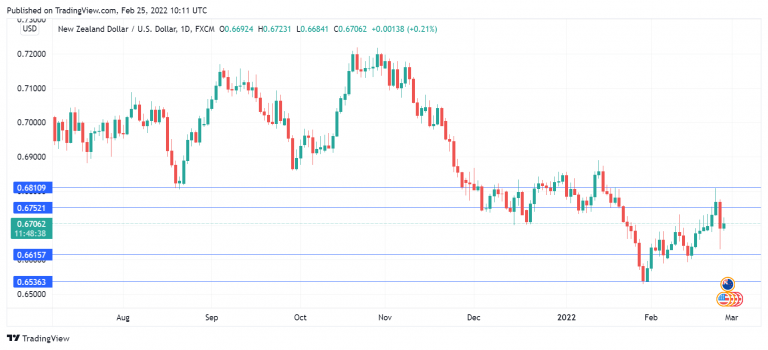
The New Zealand dollar has steadied after taking a tumble on Thursday. In the European session, NZD/USD is trading quietly at the 0.67 line.
New Zealand dollar plunges as risk apprehension soars
There was no shortage of volatility in the currency markets on Thursday, as panicky investors dumped pretty much everything and flocked to the safety of the US dollar. The old adage of buying US dollars during wartime was very much in force, although the greenback did give up some of its massive gains. The New Zealand dollar is highly sensitive to risk and fell as much as 2 per cent on Thursday before clawing back about half of those losses. Still, NZD/USD recorded its worst daily performance since September 2021.
The Russian attack on Ukraine sent NZD/USD tumbling, but the currency was able to recover after President Biden’s second round of sanctions were not as severe as anticipated. Biden is reluctant to take any steps that would raise gasoline prices for US consumers, so there were no sanctions against Russian energy entities. Also, the US could not get Europe to agree to exclude Russia from SWIFT, the global interbank payment system. This revived the markets and gave a boost to the New Zealand dollar.
The US and Europe have sharply condemned the Russian military operation but are clearly not willing to make significant sacrifices to take on Russia – in the words of one my colleagues at OANDA, Jeff Halley, the West has thrown Ukraine under the geopolitical bus. The markets seized on this as we saw a buy-the-dip move which pared much of the losses sustained on Thursday.
NZD/USD Technical
- 0.6752 was tested on Thursday and is the first line of resistance. Above there is resistance at 0.6889
- 0.6615 is providing support, followed by 0.6536
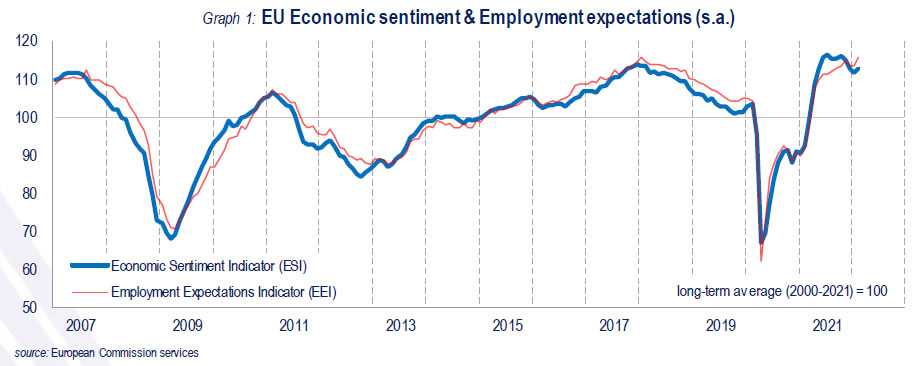
Eurozone economic sentiment indicator rose to 114.0 in Feb, EU rose to 112.8
Eurozone Economist Sentiment Indicator rose from 112.7 to 114.0 in February. Industry confidence rose from 13.9 to 14.0. Services confidence rose from 9.1 to 13.0. Consumer confidence rose from -8.5 to -8.8. Retail trade confidence rose from 3.7 to 5.4. Employment Expectation Indicator rose from 112.7 to 116.2, highest since May 2000.
EU Economic Sentiment Indicator rose from 111.6 to 112.8. Employment Expectation Indicator rose from 113.4 to 115.8, an all time high. Amongst the largest EU economies, the ESI improved in Spain (+2.4), France (+1.9), Germany (+1.2) and Italy (+1.0), whereas it weakened in the Netherlands and Poland (both -1.7).
GBPJPY’s Bearish Tone Intact Despite Bounce off 200-MA
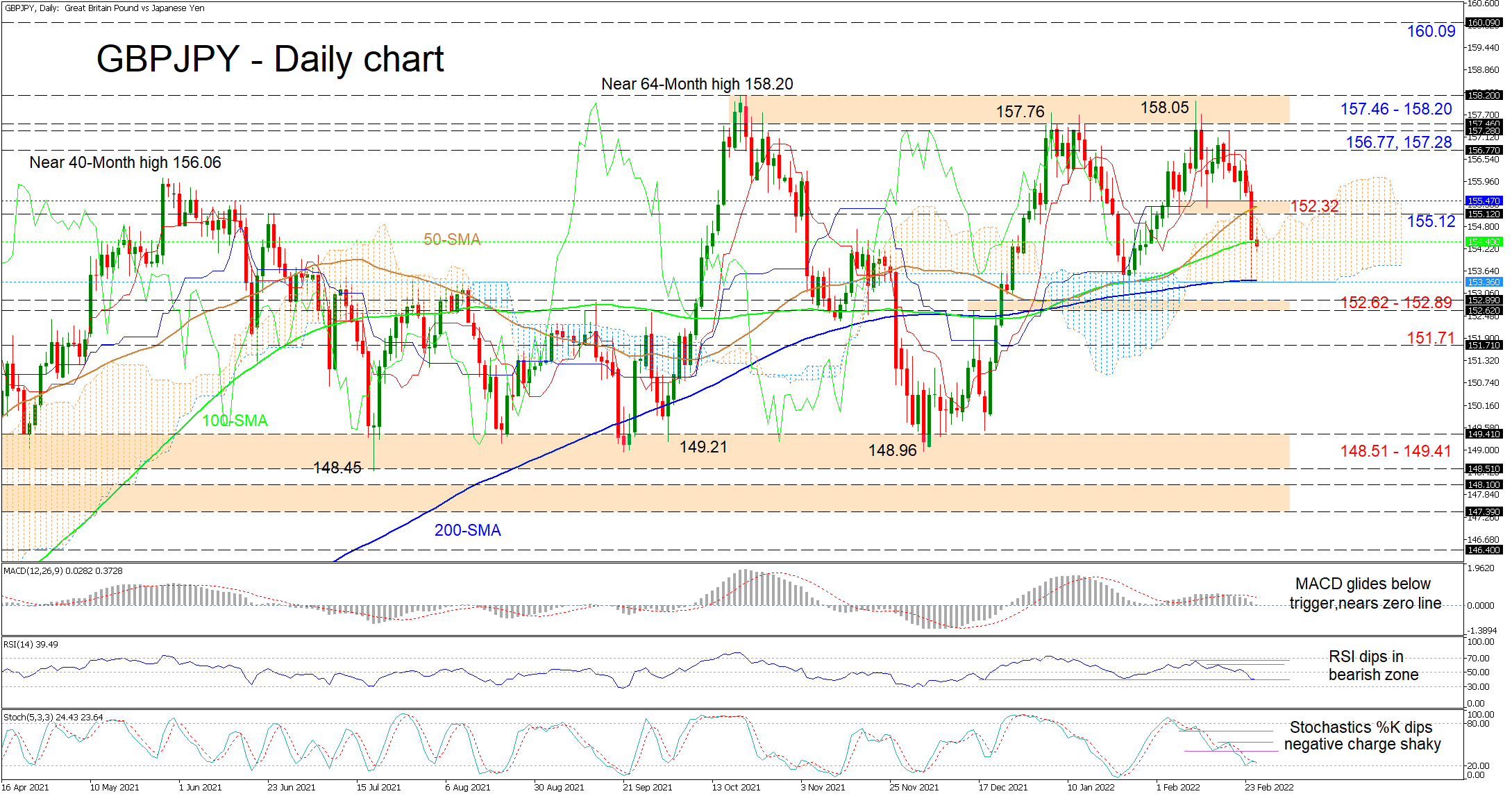
GBPJPY has stabilized around the 100-day simple moving average (SMA), currently within the Ichimoku cloud, after the latest pullback from the more than five-year ceiling recorded a rebound off the 200-day SMA, which overlaps with the Ichimoku cloud’s floor. That said, the SMAs continue to endorse a neutral-to-bullish trend preference in the pair.
The blue Kijun-sen line has yet to confirm that bearish forces are dominating, while the red Tenkan-sen line reflects the recent pickup in downward pressure. The short-term oscillators are mirroring the recent dip in the pair, not hinting of any current shift in momentum to the upside. The MACD, below its red trigger line, is testing the zero threshold, while the RSI’s downward trajectory is intact. The negative charge of the stochastic oscillator looks to be under question, but the %K line is falling again.
If the pair steers lower from the 100-day SMA at 154.40, preliminary tough support could arise at the cloud’s floor at 153.36, where the 200-day SMA also resides. Dipping beneath the 200-day SMA may confirm bearish forces are amping up again, which could cheer sellers to challenge the support border of 152.62-152.89. If the price retreats further and the 151.71 barrier fails to impede downward pressures, the price may then pursue the 148.51-149.41 support base, which has held since March 2021.
Alternatively, if the downside rejection from yesterday is a hint that the pair is regaining buoyancy, a clear nudge above the 100-day SMA at 154.40 may encourage buyers to tackle the 155.12-155.47 critical resistance zone, which begins from the cloud’s upper band. Successfully overstepping it, the bulls could then propel toward the 156.77 and 157.28 nearby highs before they take a crack at the 157.46-158.20 key ceiling, which has capped advances since October 2021. However, conquering this obstacle, buyers may then target the 160.09 high, where the price collapsed back in June 2016.
Summarizing, GBPJPY is exhibiting a bearish mood below the 157.46-158.20 resistance boundary and a price dive extending below the 200-day SMA and the 152.89 trough could reinforce negative tendencies. Yet, the broader bullish structure remains active above the 148.51-149.41 base.
USDCAD Retreats after Bullish Spike to 2-Month High
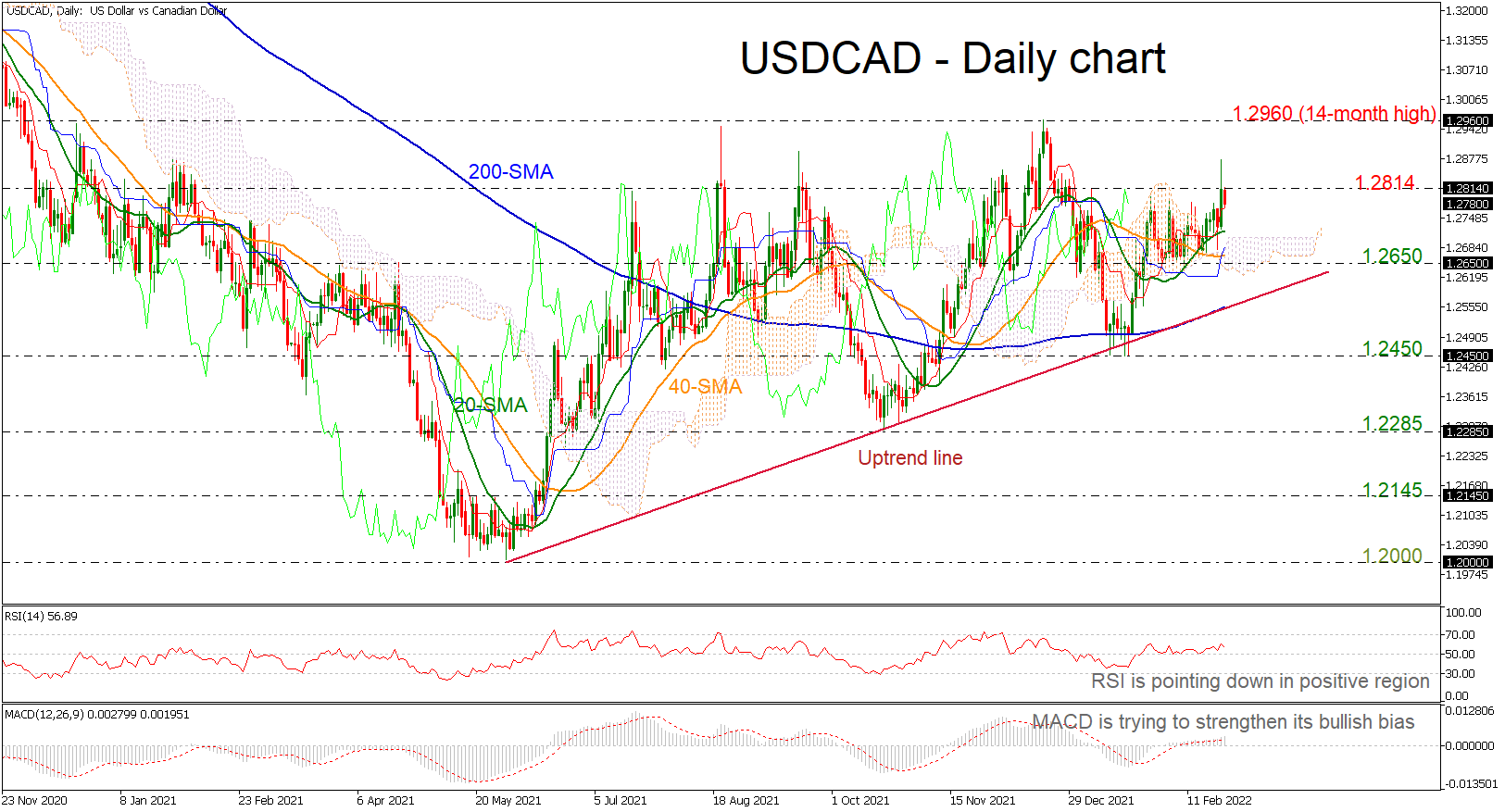
USDCAD had a bearish start to Friday after yesterday’s spike to a new two-month high of 1.2876. The pair has also increased its distance above its positively-sloped moving average lines and the Ichimoku cloud, indicating that the recent down move might not hold for long.
Momentum signals are in a confusion. The RSI has reversed lower in the positive region, while the MACD is strengthening its bullish move above its trigger and zero lines.
An upside correction could retest the 1.2814 key mark before attention turns to the 14-month high of 1.2960. Moving higher, the 1.3134 barrier from November 2020 may halt any additional bullish actions.
Should the price extend today's decline, the 20- and 40-day simple moving averages (SMAs) at 1.2720 and 1.2665 respectively may support the market ahead of the 1.2650 handle. Below that, the focus could shift straight to 1.2550, where the uptrend line is converging with the 200-day SMA. If the latter permits more weakness, the next stop could be around 1.2450.
In the short-term picture, the bullish outlook came back into play after the bridge of the 1.2814 top. An extension above that point may restore positive mode. The longer-term traders, however, will probably wait for close above 1.2960 before raising exposure in the market.
Geopolitics Will Continue to Dominate Trading for the Time Being
Markets
European stocks suffered losses of almost 4% after Putin shocked by attacking Ukraine in places beyond the Luhansk and Donetsk regions. The EuroStoxx50 closed below the pre-pandemic high of 3867. The US opened with similar losses but then staged a huge intraday turnaround. Dip-buyers hurled the Nasdaq from -3.5% losses into a 3.4% gain. Other indices finished in the green too (DJI +0.6%, S&P500 +1.5%). They might assume we’ve seen the worst after the recently upgraded batch of sanctions and provided the conflict remains contained to Ukraine. Brent oil pared a 9% gain to 2.3% and closed below $100/b. Gas priced proved way more sensitive and stuck to a more than 50% price increase. US yields erased a significant part of their almost 15 bps declines in European trading. The curve bull steepened with the belly (up to -4.1 bps) outperforming the wings (-1.6 to -2.7 bps). Several Fed governors including, Daly, Barkin, Bostic and Mester all continued to back policy normalization starting in March despite recent events. Waller this morning even tabled a 50 bps liftoff if the data comes in “hot”. About the balance sheet he said shrinking it back to 8% of GDP would be a good target. That amounts to some $1600bn compared to a $8900bn big BS. German yields were much less eager for a comeback and still closed 2.4 bps (30y) to 8 bps (5y) lower. The 10y European swap yield however only eased 3 bps and closed above 0.80% still. EUR/USD hit key support at 1.1121 (2022 low) before rebounding to 1.1192. Safe haven currencies including JPY and CHF finished well below their intraday highs. Even the Russian ruble, although at a new record low, managed to cut losses in half. As in EUR/USD, EUR/GBP sought out the recent lows around 0.83 but managed a close at 0.837.Equities in Asia recoup between 1 and 3%, drawing comfort from WS yesterday. The Russia-Ukraine conflict leaves some marks still though, which news agencies reporting missile strikes at the capital Kyiv in the early hours of the morning. Brent oil again tries to capture the symbolic $100 barrier (+2%). Core bonds are more or less unchanged. The dollar trades on the backfoot. EUR/USD cautiously moves north of 1.12. Central-European currencies except the forint feel a little selling pressure this morning. They lost out yesterday amid risk-off though closed above intraday bottom levels, the Czech koruna in particular. Geopolitics will continue to dominate trading for the time being. We would be cautious in going full risk-on ahead of the weekend in which a lot can happen. But this doesn’t mean today’s economic calendar is completely redundant. US PCE inflation (January) is due in the US and we will have a first European print of inflation for February in France ahead of the EMU-wide reading next week. It is one of the final important input to the ECB meeting on March 10. Next week in the US centers around ISM business confidence and the payrolls report.
News Headlines
The Central Bank of Russia announced that it will start interventions in the FX market and provide the banking sector with extra liquidity. The CBR will use all necessary instruments to maintain the financial stability and business continuity of financial institutions. The Russian ruble crashed yesterday together with all other assets. USD/RUB reached a new all-time high just shy of 90. It currently fell back to the 85-area, which served as the lowest ruble level on record before the current Ukrainian invasion.The GfK UK consumer confidence suffered a steep drop in February, unexpectedly plunging from -19 to -26 (vs -18 expected), the lowest level since January 2021. Details showed declining confidence in all categories, both actual and forward looking ones. The steepest drops came in personal finances the next 12 months and in economic situation the next 12 months. GfK reported clear anxiety in these findings as many consumers worry about balancing the household books at the end of the month without going further into debt. “Slowing consumer spend slows the wheels of the UK economy so this is unwelcome news. And the good news on the easing or lifting of Covid restrictions around the UK seems to be doing little to lift the public’s mood.”
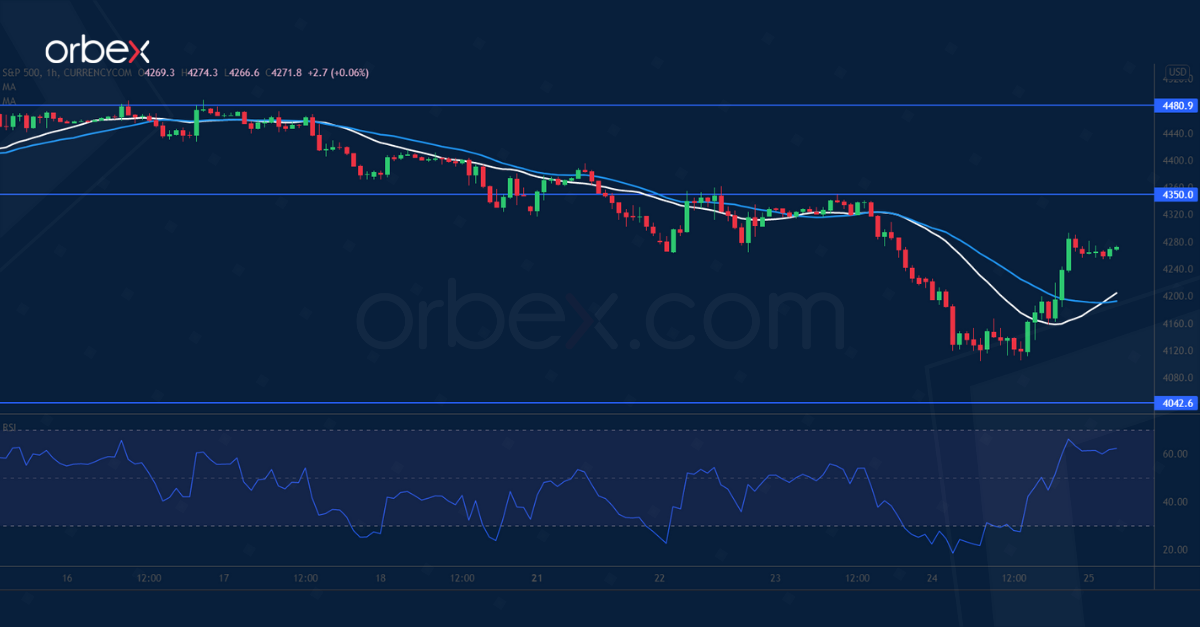
US 500 Lacks Support
The S&P 500 weakens as investors fear spillover from the conflict in Ukraine. A break below the daily support at 4280 further put the bulls on the defensive.
Last May’s lows, near 4040, are the next target as liquidation continues. The index may have entered the bear market as the sell-off could speed up in the coming weeks.
On the daily chart, the RSI’s double-dip in the oversold area may offer temporary relief. 4350 is the first hurdle ahead and the bears may look to fade any rebound amid soured sentiment.