Sample Category Title
USDCAD Finds Significant Support at 200-day SMA for Further Declines
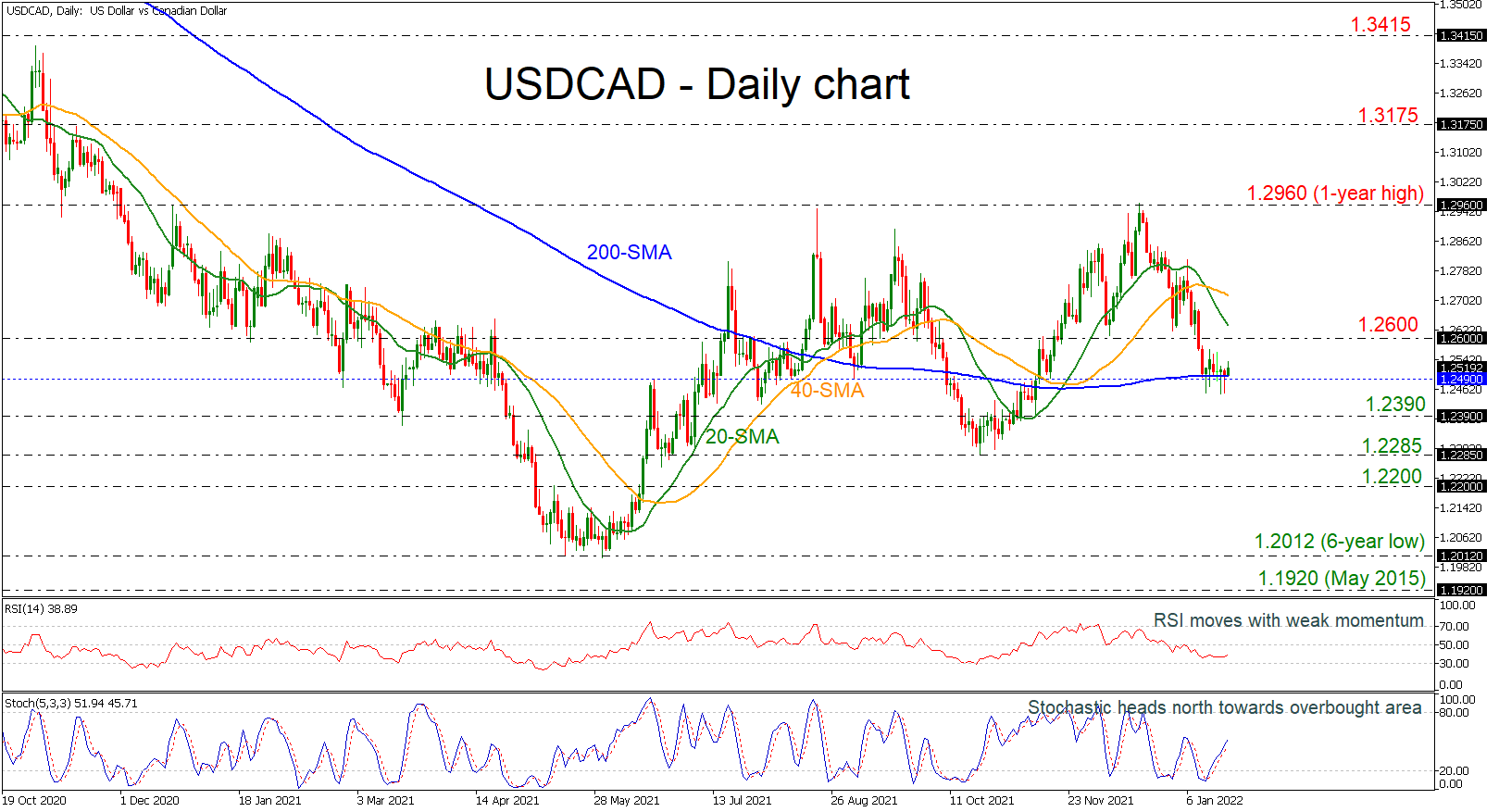
USDCAD has found strong support at the 200-day simple moving average (SMAs) over the last few sessions, remaining above the 1.2500 psychological number. The RSI indicator is also appearing weak in the negative region, while the stochastic oscillator is heading up after the bullish crossover within the %K and %D lines in the oversold zone.
In case the pair changes its very short-term neutral direction to the upside, the bulls will probably challenge the 1.2600 round number, taken from the inside swing low of December 2021. A break higher, could last until the one-year high of 1.2960. Further up the area around 1.3175 could be another potential obstacle for upward movements.
Alternatively, additional declines, penetrating the 200-day SMA may drive the price towards the 1.2390 support before 1.2285 comes into view. Beneath the latter, the 1.2200 handle could another level in focus.
Summarizing, USDCAD maintains a bullish bias in the long-term picture, whereas in the very short-term it holds a neutral profile.
Dow Jones 30 Tests Major Support
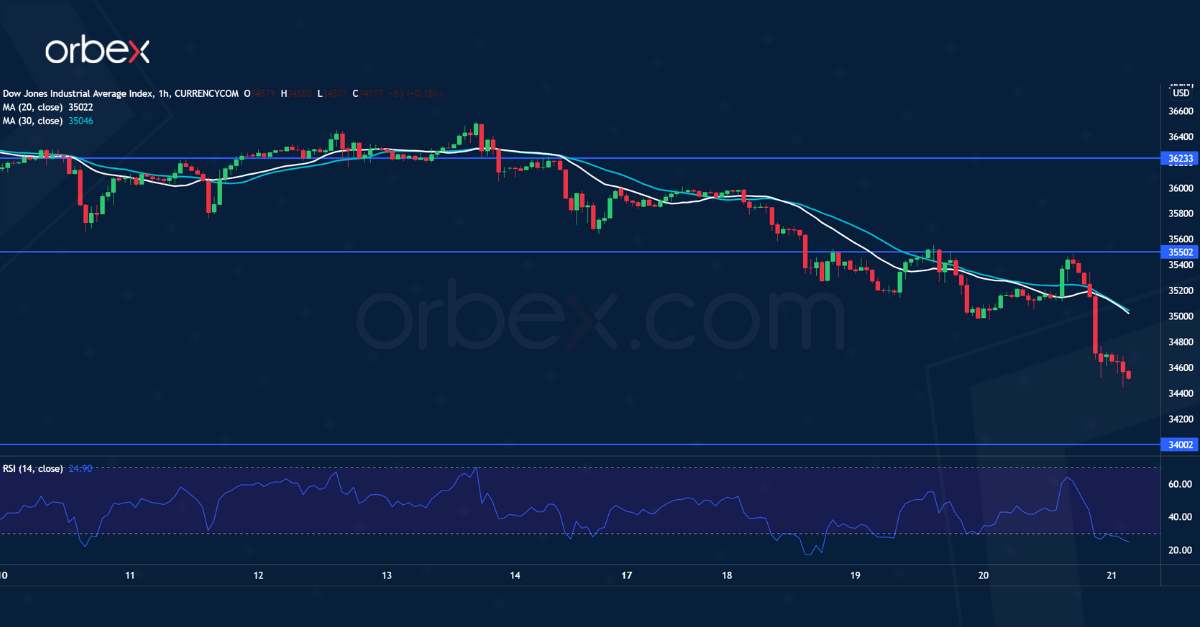
The Dow Jones 30 retreats as traders take profit ahead of next week’s Fed meeting.
The index has given up all its gains from the late December rally and fell through the daily support at 34700. This bearish breakout could extend losses to the psychological level of 34000, a critical floor to prevent a deeper correction in the medium-term.
The RSI’s oversold situation may attract some buying interest. Nonetheless, the bulls will need to lift offers around 35500 in a show of force, in order to turn sentiment around.
AUD/USD Seeks Support
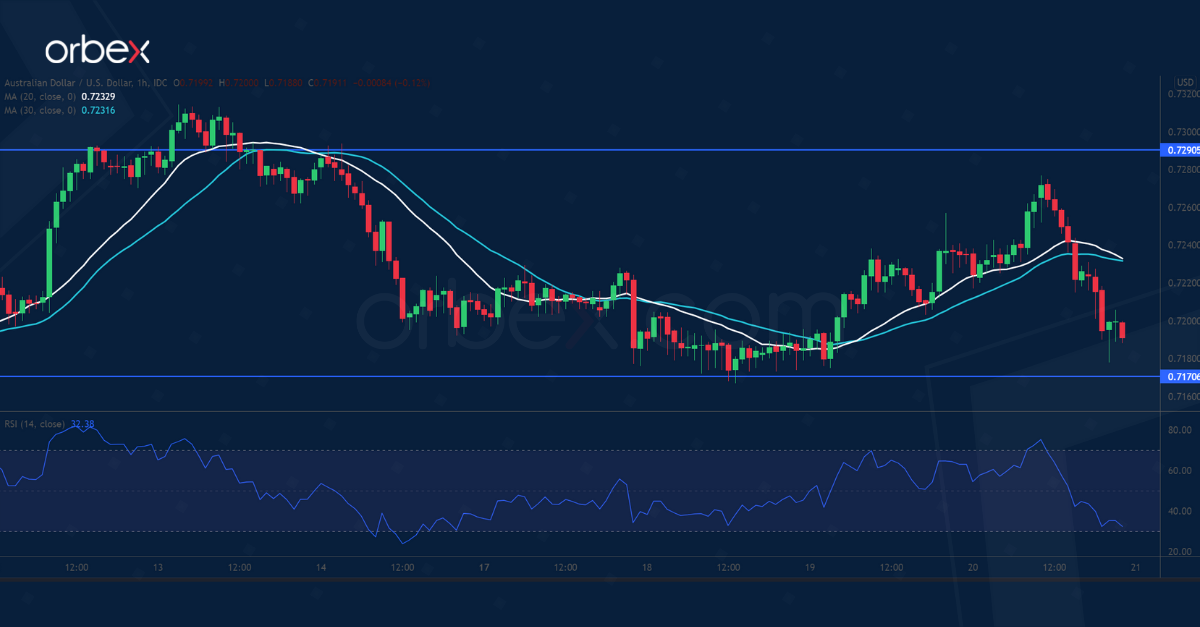
The Australian dollar climbed back after the unemployment rate dropped to 4.2% in December.
A surge above 0.7270 was the bulls’ attempt to initiate a reversal. As sellers covered their bets, the way might be open for a meaningful rebound. The follow-up correction met solid buying interest at 0.7170.
Sentiment would remain upbeat as long as price action stays above this key support. 0.7290 is an important hurdle and its breach could trigger a runaway rally towards 0.7420.
XAU/USD BreaksResistance
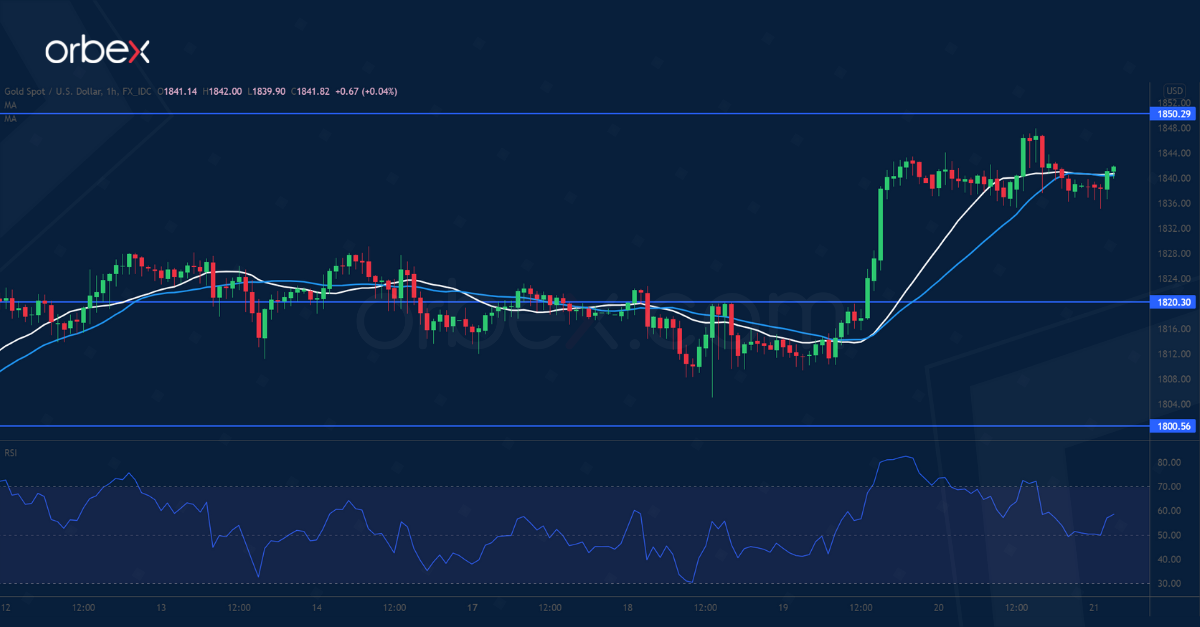
Gold surged over geopolitical tensions between the West and Russia over Ukraine.
Following a three-week-long sideways grind, the break above the triple top at 1830 indicates strong commitment from the buy-side. 1850 is the next level to clear, which would lead to November’s peak at 1877.
The RSI has shot into the overbought area, and some profit-taking could briefly drive the price lower. Buyers may see a pullback as an opportunity to join in. 1820 near the base of the recent rally is a key support in this case.
Risk-off This Time Supported a (Temporary?) Change Dynamics on Bond Markets
Markets
Yesterday, investor confidence faded throughout the day and finally resulted even in a standard risk-off repositioning. A positive risk sentiment in Asia encouraged by the outlook for further PBOC easing initially only modestly inspired European investors. US equities tried to do better despite mixed US data, including an unexpected jump in US weekly jobless claims as omicron dented activity (286k vs 231k expected). Initial US equity gains of 1.5%/2.0% apparently were seen as an opportunity to further offload risk. European indices ended near best levels of the day (EuroStoxx +0.73%). However, a late session US sell-off resulted in losses of up to 1.30%.
The risk-off this time also supported a (temporary?) change the dynamics on the bond markets. Of late, bond sales/higher rates in anticipation of accelerated Fed rate hikes weighted in risky assets. Yesterday, some investors apparently concluded that US yields had risen enough for bonds to retake their safe haven role. US yields and the end of the day declined between 3.2 bps (2-y) and 6 bps (5 & 10-y). The move was more or less equally divided between real yields and inflation expectations. A setback in oil prices didn’t help to support sentiment. European yields ended with modest losses between 0.7 bps (2-y) and 2.1 bps (30-y).
The accounts of the December ECB policy meeting showed some (hawkish) members made reservations both on the ECB’s assessment of inflation as well as on the proposed package with respect to monetary policy. Even so, it doesn’t look that the hawks had the leverage to profoundly alter the ECB’s anti-inflation strategy anytime soon.
On the FX market, the dollar initially showed no clear trend. However, at the of US dealings FX also returned to a ‘standard’ risk-off move. The yen slightly outperformed the dollar (USD/JPY close at 114.11). At the same time DXY rebounded to close at 95.73. EUR/USD drifted further south in the 1.13 big figure (close 1.1312). Sterling initially traded strong with EUR/GBP setting a new cycle low, but the UK currency returned some of its gains in the late session repositioning (close EUR/GBP 0.8317).Yesterday’s late session setback in the US is spilling over to Asia this morning with regional indices losing up to 2.%+ (Australia). Core (US) yields continue their decline. At the same time, the dollar fails to extend yesterday’s rebound. (EUR/USD 1.133, USD/JPY 113.85).
The eco calendar is thin with only the EC consumer confidence scheduled for release. Risk sentiment will continue to set the tone for trading going into the weekend. We don’t see a trigger for a short-term improvement. Markets will also keep a close eye at the meeting between US Secretary of State Blinken and the Russian Foreign minister Lavrov in Geneva. However, there are currently few signs that tensions on Ukraine will ease anytime soon.
The US 10-y yield is retesting the 1.77%/1.80% previous resistance. A break would hint on a further rebound in core bonds. The dollar takes a poor start this morning, but in a daily perspective, we give the US currency the benefit of the doubt.
UK retail sales this morning were materially weaker than expected (-3.7% M/M). Together with a poor risk sentiment, this probably caps further sterling gains in a daily perspective.
News Headlines
Japanese inflation quickened from 0.6% to 0.8% y/y in December last year. Core measures stabilized at 0.5% (excluding food) or even eased to -0.7% (excluding food and energy), suggesting broadening price pressures remain limited for the time being. The outcome pours additional cold water over BoJ rate hike speculation triggered by a Reuters report last week. While the central bank earlier this week did change its assessment of inflation risks to balanced, governor Kuroda later added that the start of policy normalization is “absolutely not” on the table. The Japanese yen gains this morning though that’s solely the result of Asian risk-off. USD/JPY trades at 113.82.UK GfK consumer confidence unexpectedly declined from -15 to -19 in January, the lowest level since the lockdowns in early 2021. Confidence in the economy one year ahead fell from -24 to -32. A three-point drop from 1 to -2 (the lowest since November 2020) reflected growing concerns over personal finances over the next 12 months. Saving intentions hover near the 2021 lows. GfK’s Staton explained consumers are “clearly bracing themselves for surging inflation, rising fuel bills and the prospect of interest rate rises”, suggesting the cost-of-living crisis took was now the major concern instead of the pandemic.
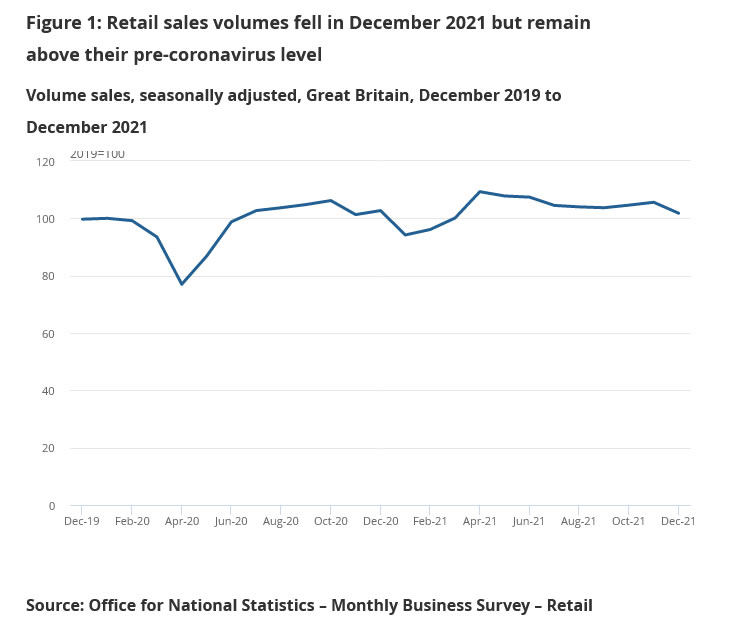
UK retail sales dropped -3.7% mom in Dec, well below expectations
UK retail sales dropped sharply by -3.7% mom in December, much worse than expectation of -0.6% mom decline. Overall retail sales volume was still 2.6% higher than their pre-coronavirus February 2020 levels. For the year, sales volume dropped -0.9% yoy, below expectation of 4.2% yoy. Between 2020 and 2021, volume of retail sales rose by 5.1%, which is the strongest since 2004.
Nasdaq 100 Rebounds as Investors Cheer Strong Corporate Earnings
American stocks made a strong comeback on Thursday as investors reflected on the strong earnings. While companies like Goldman Sachs, JP Morgan, and Citi’s earnings disappointed, most others have reported strong results. These are companies like Morgan Stanley, Procter & Gamble, and United Airlines. The results show that many companies are doing well even as inflation continues growing. The Dow Jones jumped by over 400 points while the Nasdaq 100 and S&P 500 indices rose by 260 and 60 points.
The US dollar index retreated slightly after the mixed economic data from the United States. On the one hand, numbers by the Bureau of Labor Statistics (BLS) showed that initial jobless claims rose from 231k to 286k last week. Continuing claims also rose from 1.5 million to over 1.63 million. On the other hand, data by the Philadelphia Federal Reserve showed that the manufacturing index jumped from 15.4 to 23.2 in January. Most importantly, data showed that the country’s home prices jumped at a record pace in 2021. Home sales rose to 6.12 million, the fastest pace in 15 years. Home sales started slowing in the final half of the year as supply waned.
The price of crude oil continued rising in the overnight session as investors reflected on the latest inventories data. According to the EIA, inventories rose by about 515,000 barrels last week. That was a significant increase considering that the country had a drawdown of more than 4.55 million barrels. It was the first week in eight weeks that the number of inventories rose. Analysts believe that oil demand will keep rising in the coming weeks. The key data to watch today will be the latest UK and Canadian retail sales numbers.
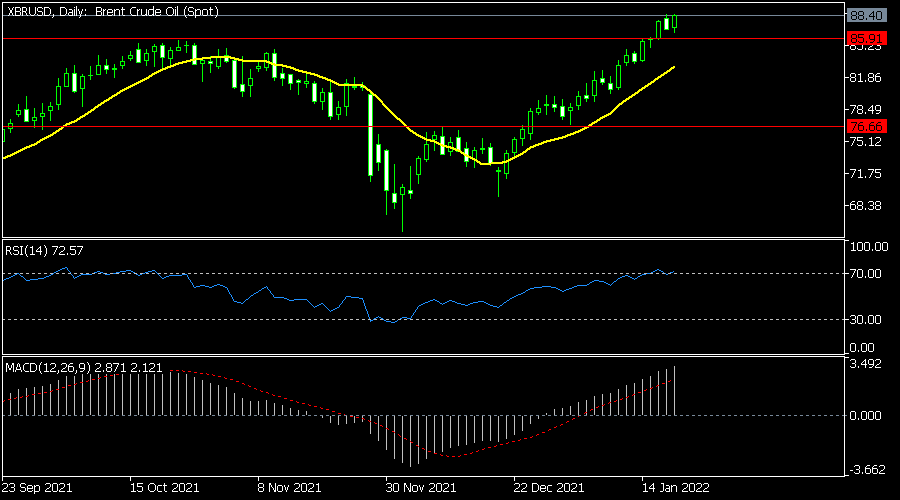
XBRUSD
The XBRUSD pair jumped to a high of 88.42, which was the highest level in over 7 years. The pair rose above the 25-day and 50-day moving averages. It also rose above the key resistance level at 85.91, which was the highest level last year. The Relative Strength Index (RSI) and MACD continued rising. Therefore, the pair will likely keep rising as bulls target the key resistance at 90.00.
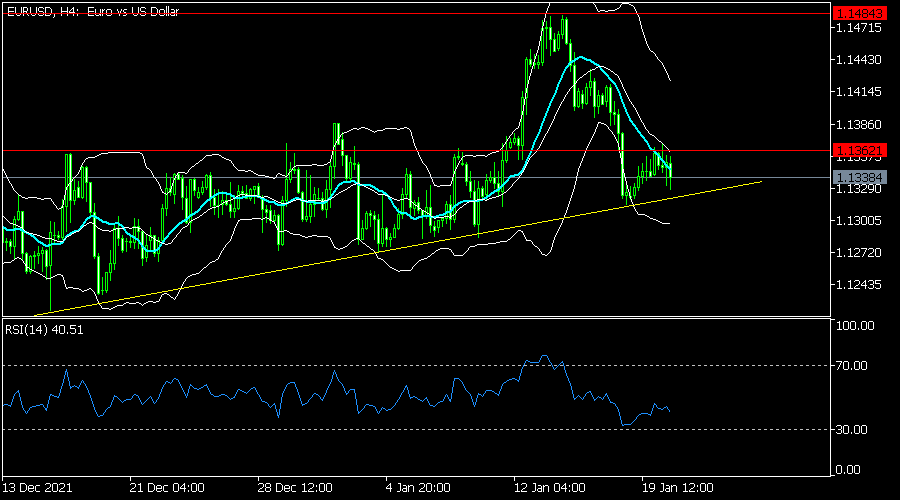
EURUSD
The EURUSD pair moved sideways in the overnight session as investors focused on the latest US housing and initial jobless claims data. It is trading at 1.1335, where it has been in the past few days. On the four-hour chart, the pair moved slightly below the key resistance at 1.1365. It is also along the 25-day moving average and is between the lower and middle lines of the Bollinger Bands. Therefore, the pair will likely have a bearish breakout later today.
NAS100
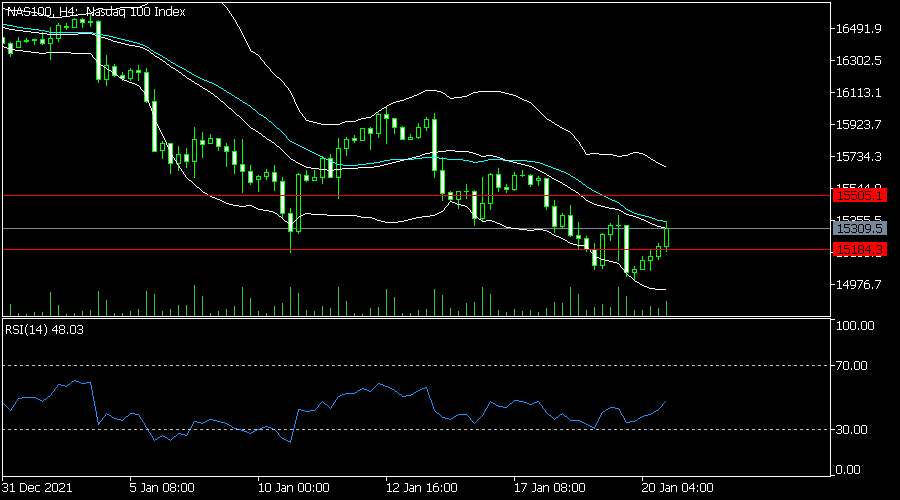
The Nasdaq 100 index bounced back as investors attempted to buy the dips. The index moved above the middle line of the Bollinger Bands. It also moved to the 25-day moving average while the Relative Strength Index (RSI) has moved above the oversold level. Therefore, the index will likely bounce back as bulls target the key resistance at $15,400.
Netflix (NFLX Stock) Disappointment Hits Market Sentiment
We saw a second day of gains then losses in major US indices. The stocks first rallied on the idea that the Federal Reserve (Fed) hawks may have gone ahead of themselves with the pricing of a 50bp rate hike in March, then gave in to the bad thoughts.
Nasdaq was trading almost 2% higher when the wind turned direction abruptly, sending the index below its 200-DMA. Nasdaq futures are down by 1% at the time of writing.
Is this the beginning of a further dive? It is possible. From a technical standpoint, the next meaningful supports stand near 14400 mark, the minor 23.6% retracement on post-pandemic rally, and near the 13000 mark, the 38.2% Fibonacci retracement, which should distinguish between the continuation of the post-pandemic positive trend a medium-term bearish reversal. It would take an additional 12% plunge before Nasdaq steps into a bear market.
Is it possible? Yes it is, because the macroeconomic environment is not necessarily supportive of the technology stocks, and small to medium sized companies have already been feeling the pinch of the prospects of higher interest rates since a couple of months now.
What kept the headline index so strong so far was the resilient Big Tech rally - which was based on expectations of strong earnings growth. And if the Big Tech doesn’t live up to expectations, Nasdaq could fall like a castle of cards.
Netflix post-earnings: A disaster
In this respect, Netflix was the first FAANG stock to announce earnings yesterday and the market reaction was a disaster.
Netflix shares dived 20% to near $400 a share after the bell, despite the announcement of better-than-expected earnings for the Q4. Netflix earnings came in higher than the analyst forecasts, but all investors saw was mediocre subscription growth forecast of 2.5 million additional subscribers, far below than the near 4 million added the first quarter of last year, and far, far below the 6.3 million expected by analysts. Raising the monthly fees may explain a part of the subscriptions slowdown, and the end of the pandemic may explain the rest. Slowdown in subscriptions will certainly take a toll on the future earnings and Netflix stock will feel the pinch of the re-pricing.
So, we could expect a carnage at the open for Netflix, and other tech stocks. Disney and Roku should suffer from a meaningful decline on their own subscriptions and shall see their share prices pulled lower by 3 to 5% in the session, as well.
And we may see other tech giants do poorly, given that the market mood wasn’t good before the Netflix earnings, and it’s certainly worse after the earnings.
50bp hike is just… too much
The Fed must fight back inflation because it’s gone just too far to threaten the economic health of the country, but they can’t do it with heavily hemorrhaging financial markets. Therefore, the idea of 50bp is certainly far stretched, and the corresponding pricing should be scaled back, which should give a certain relief to the risk assets in the coming sessions.
But of course, the corporate earnings must be strong, as the actual Big Tech pricing reflects a fantastic earnings growth for the coming quarters, and investors won’t settle with anything less than fireworks.
EUR/USD Daily Outlook
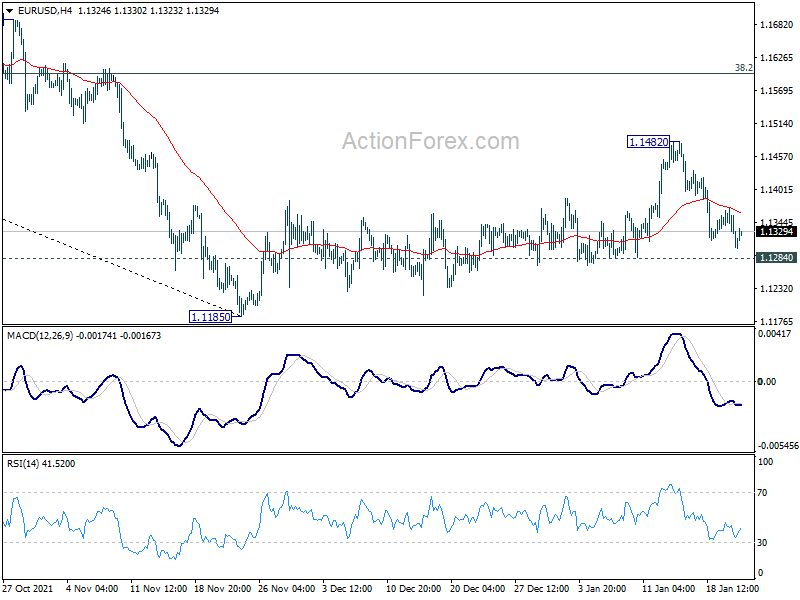
Daily Pivots: (S1) 1.1286; (P) 1.1327; (R1) 1.1352; More...
Intraday bias in EUR/USD remains neutral first. As noted before, rebound from 1.1185 is seen as corrective move. Break of 1.1284 will argue that larger down trend from 1.2348 is ready to resume. Intraday bias will be back on the downside for retesting 1.1185 low first. Also, in case of another rise, upside should be limited by 38.2% retracement of 1.2265 to 1.1185 at 1.1598 eventually.
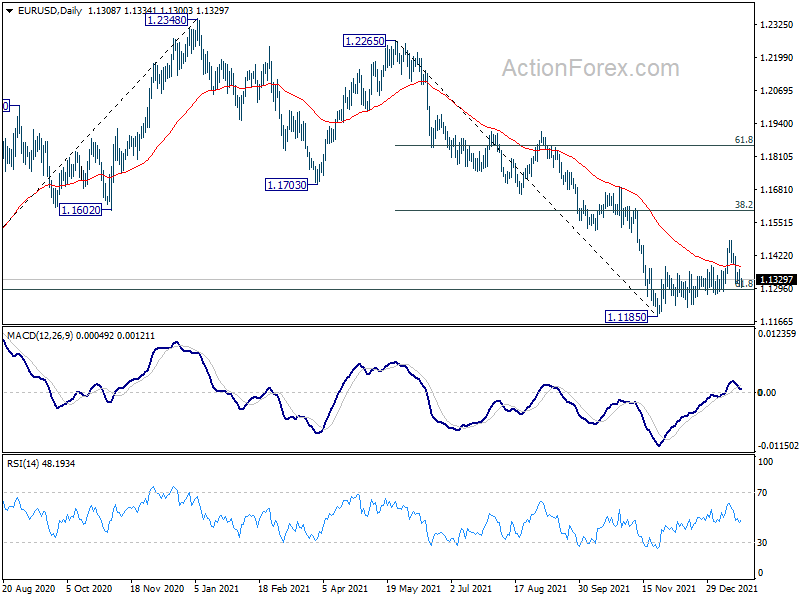
In the bigger picture, there are various ways of interpreting the fall from 1.2348 (2021 high). It could be a correction to rise from 1.0635 (2020 low), the fourth leg of a sideway pattern from 1.0339 (2017 low), or resuming long term down trend. In any case, outlook will now stay bearish as long as 1.1703 support turned resistance holds. Sustained break of 61.8% retracement of 1.0635 to 1.2348 at 1.1289 would pave the way back to 1.0635.
GBP/USD Daily Outlook
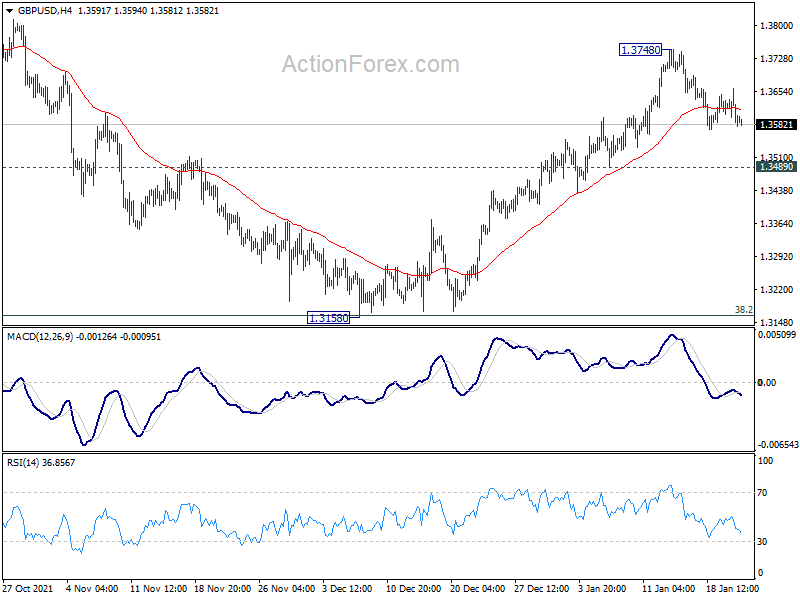
Daily Pivots: (S1) 1.3569; (P) 1.3616; (R1) 1.3644; More...
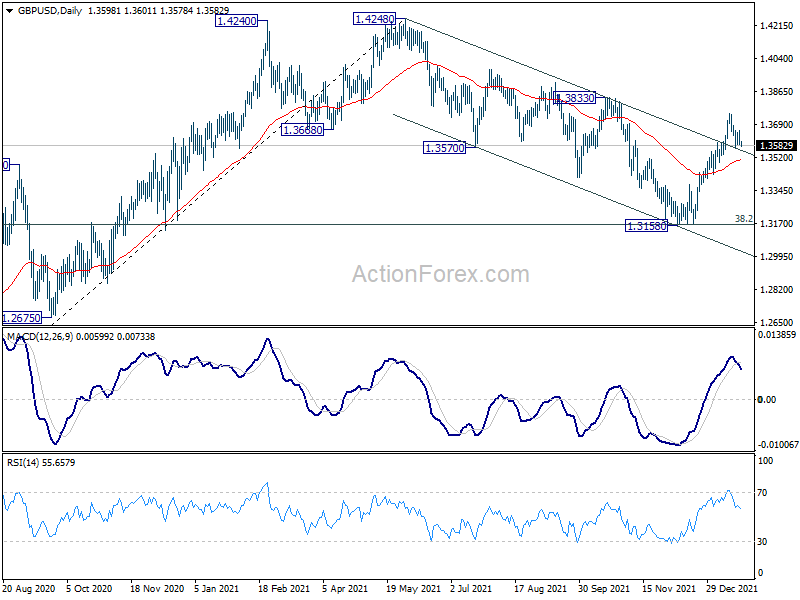
Intraday bias in GBP/USD remains neutral and outlook is unchanged. While deeper fall cannot be ruled out, downside of retreat should be contained by 1.3489 support to bring another rally. As noted before, corrective fall from 1.4282 should have completed with three waves down to 1.3158, after hitting 1.3164 medium term fibonacci level. Above 1.3748 will target 1.3833 first. Sustained break of 1.3833 will pave the way back to retest 1.4248 high.
In the bigger picture, strong support was seen from 38.2% retracement of 1.1409 to 1.4248 at 1.3164. The development suggests that up trend from 1.1409 (2020 low) is still in progress. On resumption, next target will be 38.2% retracement of 2.1161 to 1.1409 at 1.5134. Nevertheless sustained break of 1.3164 will argue that whole rise from 1.1409 has completed and bring deeper fall to 61.8% retracement at 1.2493.