Sample Category Title
Digital Revolution: Will Cryptocurrencies Take Over the World? Part II
Part II: Are Stablecoins Really "Stable"?
Summary
- Stablecoins, which are a category of digital currency, have many favorable characteristics. Payments can be settled essentially instantaneously, and "unbanked" individuals can easily use them. Their supplies are not limited, so potential problems with deflation do not arise with stablecoins as they potentially could with limited forms of digital currencies.
- Unlike other cryptocurrencies, such as Bitcoin and Ether that exhibit extreme levels of price volatility, the values of stablecoins tend to be stable. Many stablecoin issuers claim that their tokens are fully "backed" by reserves.
- However, assets that can experience their own periods of illiquidity and price dislocation represent a significant proportion of the reserves of some stablecoin issuers. If the confidence of investors in the value of their holdings is shaken, then stablecoin issuers can experience "runs," much like commercial banks before the advent of deposit insurance and the creation of a robust supervisory and regulatory framework.
- If the explosive growth that stablecoins have enjoyed in recent years continues in coming years, then periods of financial market volatility could potentially become extreme.
- Stablecoin issuers have largely operated in a regulatory vacuum until now. But regulators have become acutely aware of the potential risks that stablecoins present, and they are scrambling to catch up. Some federal agencies have recommended that Congress pass legislation that would require stablecoin issuers to become insured depository institutions, which would be subject to supervision and regulation by the appropriate regulatory bodies.
- Furthermore, private stablecoin issuers may soon face competition from central banks that are gearing up to issue their own digital currencies. We will discuss central bank digital currencies (CBDCs) in Part III of this series.
NOT A DEPOSIT. NOT PROTECTED BY SIPC. NOT FDIC INSURED. NOT GUARANTEED. MAY LOSE VALUE. NOT INSURED BY ANY FEDERAL GOVERNMENTAL AGENCY
This commentary is provided for information purposes only and does not contain any recommendations or investment advice. The Firm makes no recommendation as to the suitability of investing in digital assets, including cryptocurrencies. Investments in digital assets carry significant risks, including the possible loss of the principal amount invested. It is only for individuals with a high risk tolerance who can withstand the volatility of the digital asset market. Investors should obtain advice from their own tax, financial, legal and other advisors, and only make investment decisions on the basis of the investor's own objectives, experience and resources.
Stablecoins: Benefits of Digitization Without Price Volatility
In the first report of our series on cryptocurrencies (a.k.a. digital currencies), we discussed their ability to perform the three basic functions of money as well as some of their benefits and drawbacks. In terms of the functions of money, their use as a unit of account is limited at present. That is, prices of most goods and services continue to be expressed in terms of national currencies (e.g., U.S. dollars, euros, etc.) rather than in cryptocurrencies per se. Digital currencies are being used as mediums of exchange, albeit still well short of the volume of transactions that are being processed via national currencies at present. They can provide good stores of value, at least when held over long periods of time. But the high degree of price volatility that is inherent in digital currencies can limit their ability to serve as a store of value for individuals and businesses in the short term. Furthermore, the investment options of cryptocurrencies are limited at present, because there has been no issuance of crypto-denominated securities, to the best of our knowledge.
But there is a class of cryptocurrencies, which are known as "stablecoins," that possess the benefits of digitization without the extreme price volatility of some other digital currencies, such as Bitcoin and Ether. As the first half of their name implies, prices of stablecoins tend to be stable, because their values are essentially pegged to another asset, such as a national currency. For example, Tether, which is the most widely used stablecoin, is convertible to U.S. dollars at a ratio of 1:1 and the issuers of Tether claim that every token is fully backed by $1 worth of dollar-denominated assets.1 Since it started trading in 2015, the day-to-day price fluctuation of Tether has generally been less than one-hundredth of a cent. That said, there have been episodes when the price has moved by significantly more, a topic to which we will subsequently return. Other widely used stablecoins include USD Coin and Binance USD, which also have very low price volatility.
Stablecoins have a number of benefits, some of which are inherent to all digital currencies and some of which are specific to stablecoins. Similar to all cryptocurrencies, payments made in stablecoins can be settled essentially instantaneously. This is especially important for payments that are made across national borders, which historically have been time-consuming and characterized by high transactions costs. In addition, stablecoins could be used to make costless payments for "unbanked" individuals, which we discussed in more detail in Part I. But what sets stablecoins apart from other digital currencies is that the former do not have wild swings in value, thereby enhancing their property as a short-term store of value. Furthermore, the supply of stablecoins is not limited. Consequently, the potential deflation issue associated with a limited money supply that we discussed in our first report does not arise with stablecoins.
But stablecoins do not overcome some notable drawbacks of digital currencies. Similar to other cryptocurrencies, there has been no issuance to date, to the best of our knowledge, of securities that are denominated in stablecoins. Therefore, individuals who own stablecoins earn a rate of return of 0%, unless they place those tokens in a crypto savings account, which we briefly noted in Part 1. But because stablecoins do not have wild swings in value, corporate treasurers in coming years could potentially start to issue securities that are denominated in stablecoins, which would enhance their quality as a store of value. In addition, stablecoins could be used increasingly by individuals and businesses to make payments due to their stable values.
Stablecoins Are Potentially Vulnerable to "Runs"
But there is a more significant drawback to stablecoins that was highlighted in a recent speech by Federal Reserve Governor Christopher Waller. Specifically, stablecoins are issued by the private sector and, in essence, stablecoin issuers resemble 19th century commercial banks. As long as depositors in that bygone era were confident that they could withdraw all of their money from their bank, the system was sound. But as soon as that confidence was shaken, a "run" on the bank could ensue that could lead to the collapse of the bank. In a full-blown panic, such as what occurred in 1893 and again in 1907, the entire banking system was potentially at risk. The Federal Deposit Insurance Corporation (FDIC) estimates that about 9,000 American banks failed between 1930 and 1933, which contributed to the depth and the severity of the Great Depression.
In response, Congress created the FDIC in 1933 to guarantee the value of banking accounts. Today, the FDIC guarantees checking and savings accounts up to $250,000 per depositor, per insured bank. Furthermore, deposit-taking institutions are regulated and supervised by federal and state agencies. The existence of deposit insurance in conjunction with a robust supervisory and regulatory framework gives individuals confidence in the safety of their deposits. Bank runs, which were commonplace prior to the establishment of the FDIC and federal regulatory bodies, have been exceedingly rare since 1933.
In contrast, the value of stablecoins are not guaranteed and stablecoin issuers are not currently regulated. Many stablecoin issuers claim that their coins are "backed" by some other asset(s). For example, the issuers of Tether state that "every Tether token is always 100% backed by our reserves," which include traditional currency and cash equivalents and, from time to time, may include other assets and receivables from loans made by Tether to third parties." In that regard, the most recent independent accountant's report, which was published in September 2021, showed that "commercial paper and certificates of deposit" accounted for more than 40% of Tether's assets. Normally, the commercial paper (CP) market is deep and liquid with interest rates on high-quality CP only a few basis points above rates paid on Treasury bills (Figure 1).
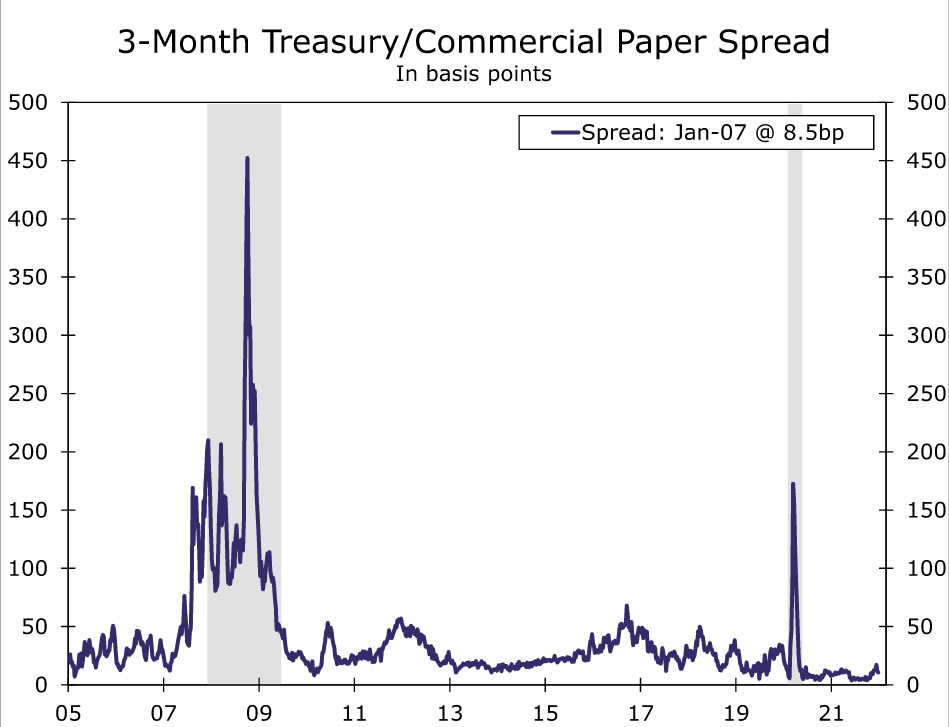
However, the CP market can become illiquid during times of financial stress. As Figure 1 makes clear, CP spreads spiked during the 2008 financial crisis and again in March 2020 when the global economy was going into free fall amid the onset of COVID-19. This sharp rise in CP interest rates relative to T-bill rates implies that prices of CP nosedived. In other words, the value of the assets that, at least in part, "back" stablecoins fell sharply, and owners of stablecoins no longer had assurance that each token they owned was fully convertible into one U.S. dollar. Selling of stablecoins ensued, causing their prices to fall. As shown in Figure 2, the price of Tether dipped to $0.97 in March 2020. The price of USD Coin also fell during that period.
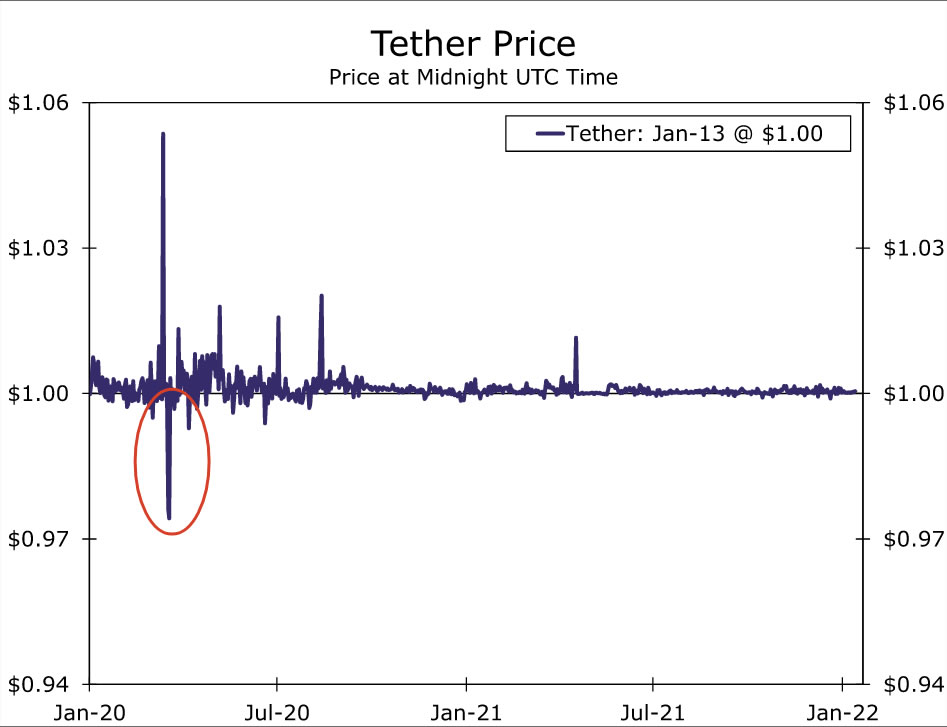
Periods of market dislocations, as occurred in March 2020, can potentially initiate negative feedback loops. That is, marked declines in CP prices can lead to weakness in stablecoin prices. Selling of CP by stablecoin issuers to finance redemptions puts added downward pressure on CP prices, which can then lead to further price declines of stablecoin prices, etc. Furthermore, dislocations in one asset market, such as the CP market, can quickly spill over to other asset markets. The Federal Reserve moved quickly to pump liquidity into financial markets in March 2020, but the price dislocations experienced in the CP and stablecoin markets during that period could have been more extreme and long-lasting had officials not acted so nimbly and adeptly. Stablecoins had not yet been created in 2008, but the sharp price declines experienced in the CP market during the global financial crisis undoubtedly would have put significant downward pressure on prices of stablecoins, had they existed at that time. Because the size of the stablecoin market has grown exponentially—the market capitalization of Tether, which is just one stablecoin among many, has shot up from about $4 billion at the beginning of 2020 to roughly $78 billion at present—stablecoins represent a potential risk to the financial system.
There is also the issue of market power. There are numerous issuers of stablecoins at present, but as demonstrated by other tech platforms over the past few decades, one company can become dominant due to network effects. For example, there initially were many "word processing" software programs available when the technology was first developed. But Microsoft Word eventually emerged as the program that essentially all individuals wanted to adopt, because a "critical mass" of other individuals were using it. The same winnowing process could eventually occur with stablecoins, which could lead to an undue amount of market power for that issuer. Is it good public policy to allow the payment system of an economy to be controlled by a small handful of private companies without public sector oversight?
Regulators Are Increasing Their Focus on Stablecoin Issuers
As noted previously, stablecoin issuers are not regulated at present. But regulators are attuned to the risks that stablecoins potentially pose, and they are increasing their focus on them. The Federal Reserve, the FDIC and the Office of the Comptroller of the Currency (OCC) recently conducted a series of "policy sprints" and, as highlighted in a recent joint statement, they plan to begin issuing guidance "on whether certain activities related to crypto-assets conducted by banking organizations are legally permissible." As these agencies note, this guidance will apply only to the activities of banks, not to other platforms. But the use of the word "sprint" reflects the sense of urgency that the explosive growth in digital currencies, and its associated implications for the financial system, has imparted on regulators.
Regarding regulation that is specific to stablecoins, the President's Working Group on Financial Markets (PWG) recently issued a report in November 2021 that asks Congress to pass legislation requiring stablecoin issuers to become insured depository institutions.2 These institutions would have access to the liquidity facilities of the Federal Reserve, and the value of the tokens that are issued by these institutions would be guaranteed, up to a limit, much as bank deposits are guaranteed up to $250,000 by the FDIC. These institutions would also be subject to supervision and regulation by the appropriate regulatory bodies and to liquidity and capital requirements, much as "traditional" depository institutions (i.e., commercial banks and credit unions) are currently subjected. Furthermore, the PWG report recommends that stablecoin issuers be restricted from affiliating with commercial entities, much as commercial banks are generally prohibited from owning or being owned by a non-bank enterprise.
It is an open question whether Congress will ultimately choose to follow the PWG's recommendations. Congress could enact its own set of guidelines or choose to ignore the issue entirely. But even in the event that Congress does not authorize a broad and comprehensive regulatory framework, there may be some limited steps, which were highlighted in a recent speech by Treasury Undersecretary Liang, that agencies can take under current authorization to provide some regulatory oversight of stablecoin issuers. In short, the days of laissez-faire in the stablecoin market are probably numbered. Not only are regulators poised to undertake some degree of oversight, but some central banks are gearing up to issue their own digital currencies, which could create competition for privately-issued stablecoins. We will turn to central bank digital currencies (CBDCs) and their implications for the financial system in Part III of this series.
Conclusion
Similar to all digital currencies, there are some significant benefits associated with stablecoins. They allow payments to be made essentially instantaneously, and "unbanked" individuals could use stablecoins provided they have a mobile phone. Issuance of stablecoins can be unlimited, so the potential deflationary risk that arises with digital currencies with limited issuance does not arise. Their attractiveness as a short-term store of value is enhanced by their generally stable values.
But there is a notable drawback to stablecoins at this time. Specifically, their values are not insured, as commercial bank deposits are, and stablecoin issuers are not regulated at present. Consequently, in periods of heightened financial stress, such as autumn 2008 and March 2020, stablecoin issuers could potentially experience destabilizing "runs." If the explosive growth that stablecoins have enjoyed in recent years continues in coming years, then periods of financial market volatility could potentially become extreme.
Government regulation usually lags developments that occur in the private sector, and stablecoin issuers have largely operated in a regulatory vacuum. But regulators are becoming attuned to the risks that stablecoins potentially present, and they are scrambling to catch up. Although it is not clear what sort of legislation Congress may eventually enact, the days of laissez-faire in the stablecoin market are probably numbered. Furthermore, private stablecoins issuers may soon face competition from digital currencies that are issued by central banks, which is the topic of our next report in this series.
Endnotes
1 tether-assurance-sept-30-2021.pdf. (Return)
2 The PWG was created in 1988, and it is chaired by the secretary of the Treasury. Other members include the chair of the Board of Governors of the Federal Reserve System, the chair of the Securities and Exchange Commission, and the chair of the Commodity Futures Trading Commission. (Return)
Forward Guidance: Inflation Pressures Loom Over Bank of Canada’s Business Outlook Survey
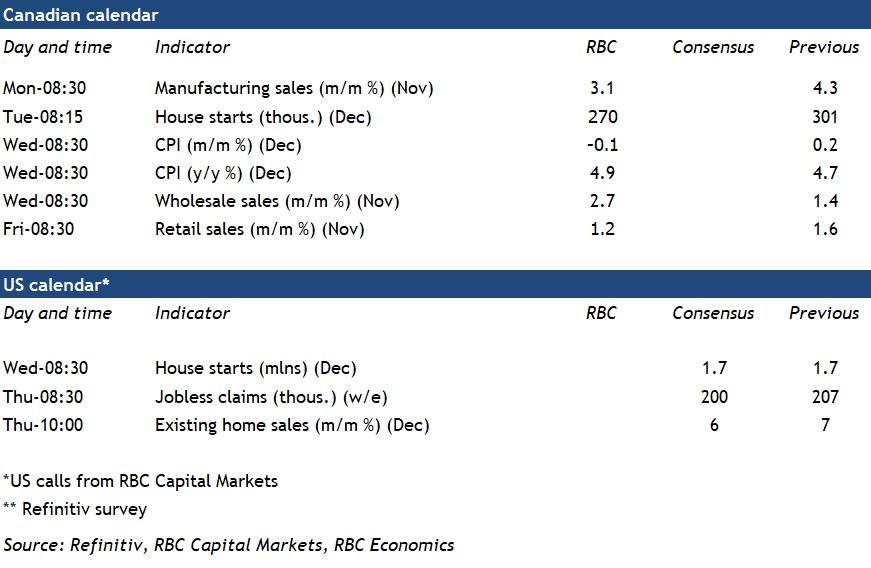
In a crowded week for Canadian data releases, we expect the headline CPI inflation rate to stand out. The measure will likely accelerate to 4.9% year-over-year from 4.7% in November. Omicron-related weakness in energy products is expected to have been offset by persistent strength in expenses tied to home and car purchases. Indeed, this is largely what we saw in U.S. CPI releases last week. Combined, homes and cars explain roughly half of the inflation in Canadian core CPI (excluding food and energy products) relative to pre-pandemic (February 2020) levels. As weaker prices early in the pandemic—especially for energy products—drop out of the year over year calculation, we expect the headline inflation rate to plateau before dialing lower in coming months. But even as those distortions fade, price pressures from ongoing supply chain challenges, higher input prices, and strong consumer demand will continue to broaden. Almost 60% of the consumer price basket has already been growing at a more than a 2% annual rate compared to pre-crisis levels.
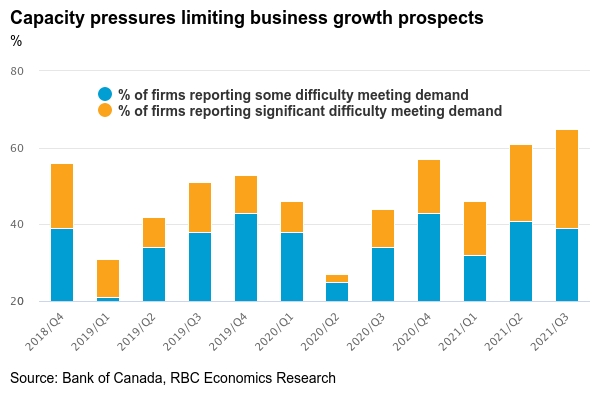
Next week’s Q4 Bank of Canada Business Outlook Survey (BOS) will be carefully scrutinized for further evidence of those price pressures. Capacity limits—including difficulties in sourcing and retaining both capital and labour—already topped business concerns in prior editions of the survey. There were tentative signs that supply chain pressures were easing late last year as the surveys suggested supplier delivery times had edged lower and Canadian auto production bounced back from disruptions tied to the global semiconductor shortage. But labour shortfalls are expected to remain a key obstacle for business growth. The latest BOS survey period (mid-November to early December) came too early to capture the full impact of Omicron, but the rapid spread of the variant and large numbers of workers required to self-isolate are likely adding to labour shortages in the near-term. The tone of the Bank of Canada commentary will be watched closely for hints at how worried the bank has grown over the latest COVID wave. However, with the economic impact of Omicron expected to be relatively short-lived and inflation and capacity pressures persisting, we don’t expect a delay in rate hikes. Central bank communications in January will likely be used to signal the first increase in March or April.
Week ahead data watch:
We see no reason to deviate from StatCan’s early estimates of a 3.1% increase in manufacturing sales for November. The increase was driven in part by higher auto production as supply chain issues eased, at least temporarily, and came despite significant transportation disruptions due to severe flooding in B.C. late in the month.
Our forecast for retail sales is in line with the advance estimate from StatCan of 1.2% for November. Our latest tracking of consumer spending suggests sales of merchandise dipped lower in December. Spending on services is not captured in the monthly retail sale data, but there was a much larger pullback in travel spending in December.
Canadian housing starts are expected to have remained solid at 270k in December after a larger 301k add in November, in line with still-strong levels of building permit issuance in recent months.
Week Ahead – Bank of Japan Meets, China Releases GDP
The Bank of Japan will be in the spotlight next week. It will likely reaffirm that rates won’t rise for a long time, leaving the yen at the mercy of foreign central bank moves and risk appetite. The People’s Bank of China will also meet and could loosen policy to empower economic growth, although its actions are usually more important for stock markets rather than FX.
BoJ - A hint of optimism
The Japanese economy is turning a corner. A weaker yen has helped boost exports, businesses are becoming more confident according to the latest Tankan survey, the unemployment rate stands at just 2.2%, and the nation has finally escaped deflation.
All that sounds good, but the economy is not out of the woods yet. Consumption remains weak, wage growth is anemic despite the tight labor market, and the Omicron wave that is sweeping through the country is a major threat to the recovery.
The inflation rate speaks for itself. It is barely positive despite massive supply disruptions and soaring energy prices, so ‘organic’ inflationary pressures remain subdued.
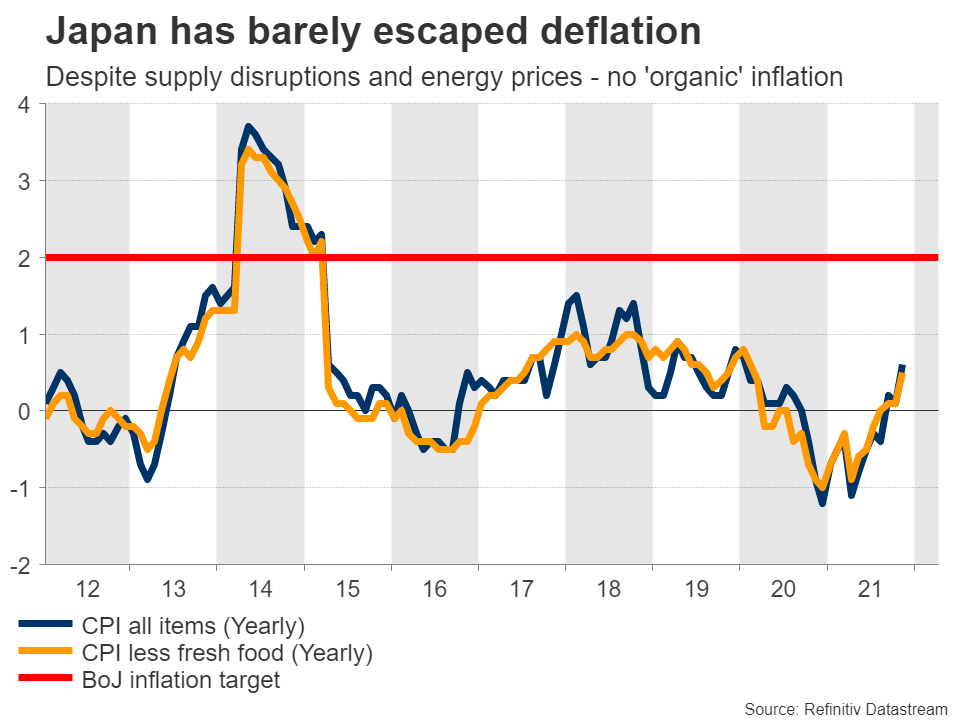
This means that while the central bank might strike a slightly more optimistic tone next week, any tightening moves are still far away. Recent media reports suggest the BoJ is debating when it can start telegraphing an eventual rate hike, but that’s unlikely to happen until next year.
As for the yen, relative monetary policy suggests the outlook remains negative, especially against the currencies that will be enjoying higher rates, like the dollar or sterling. That said, there are a couple of factors that could prevent deep losses in the yen.
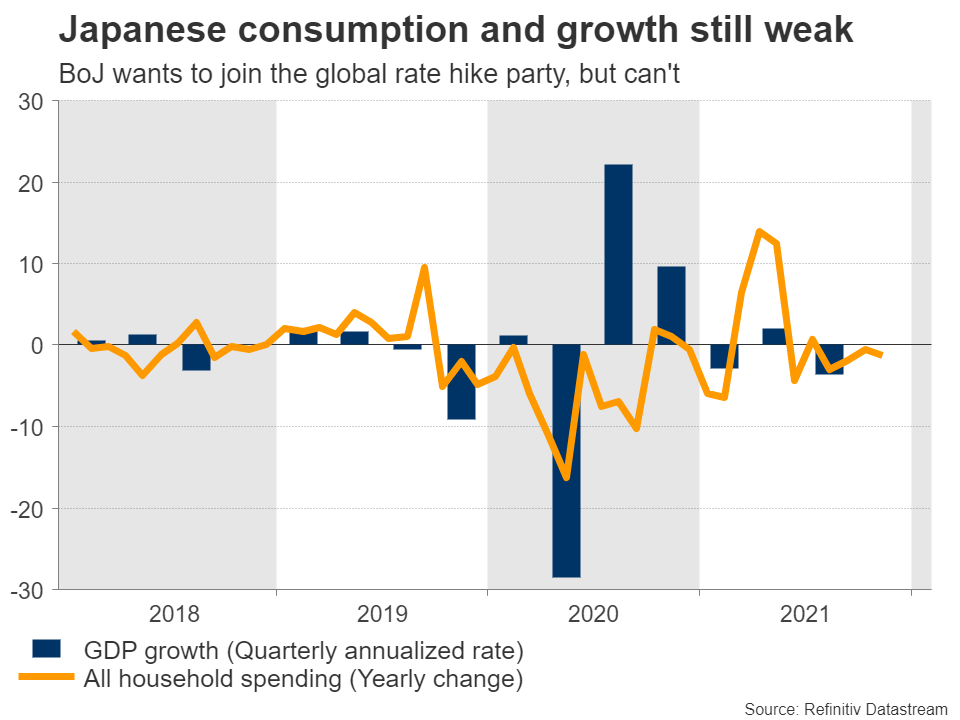
The first is the massive spending package the new Prime Minister is about to unleash to power up the recovery. Beyond that, with liquidity being withdrawn from the global financial system, volatility episodes in the markets could become more frequent, allowing the defensive yen to enjoy brief periods of strength.
The trend seems negative, but it could be a stormy ride.
Chinese GDP in focus
Over in China, the show will get going on Monday with GDP numbers for the last quarter. Retail sales, industrial production, and fixed asset investment for December will also be released. All these indicators are expected to have lost steam, with annual GDP growth slowing to 3.6% from 4.9% previously.
That’s no surprise considering the crisis in the property sector and the energy shock during that quarter, not to mention the recent lockdowns in many cities as the government sticks to its zero-covid policy.
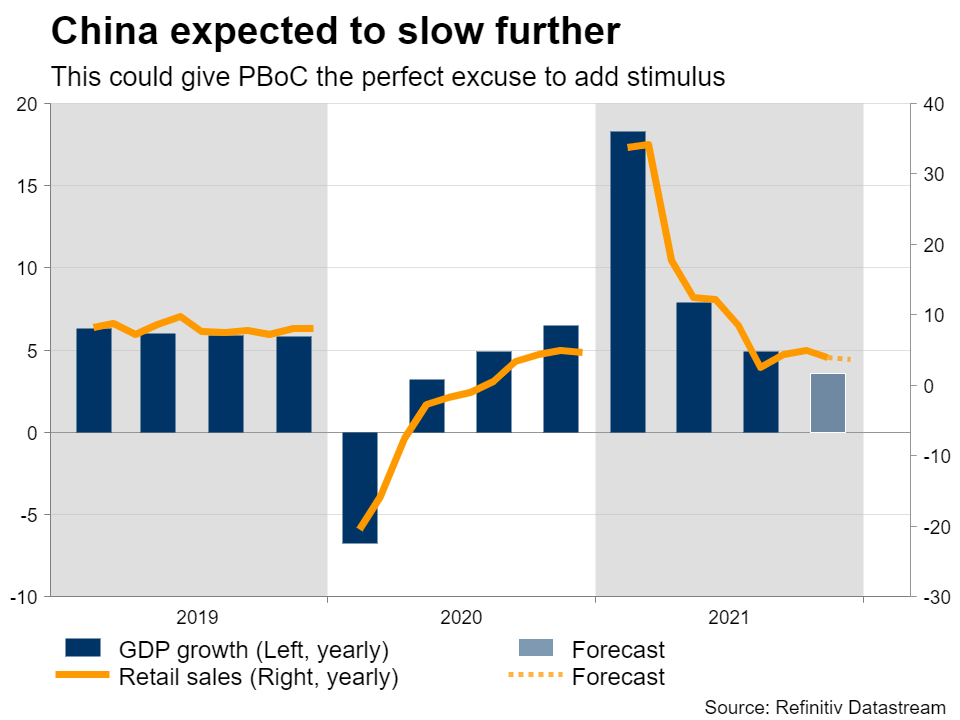
But it could be a case of ‘bad news is good news’ if GDP numbers are weak, since that would give the People’s Bank of China the perfect excuse to loosen policy again to counter the economic slowdown.
Liquidity measures from the PBoC typically impact the local stock market the most, but if traders sense this could stabilize the economy, there could be some effect on China-sensitive currencies like the Australian dollar too.
Speaking of Australia, the nation’s employment report for December will be released on Thursday. The aussie has recovered substantially lately as iron ore prices jumped, yet the outlook is still clouded.
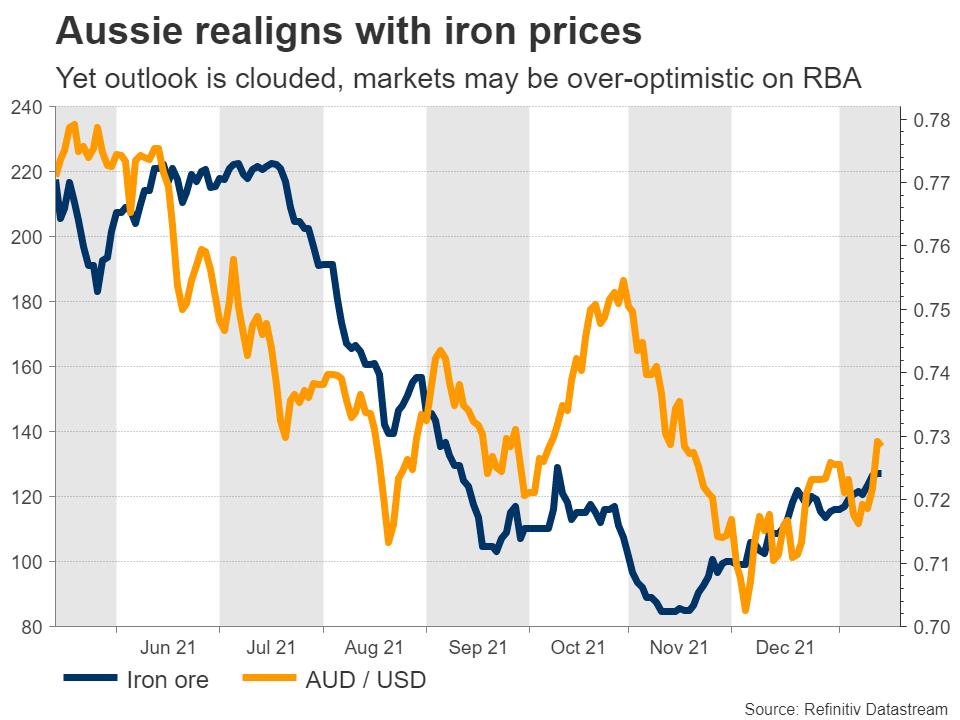
Markets are pricing in four rate hikes by the Reserve Bank this year, which seems over-optimistic and allows room for disappointment. The Australian economy is not that strong and could suffer spillover effects from China, its largest trading partner by far.
Data dump from UK
There is also a heavy barrage of data releases from the United Kingdom. The ball will get rolling with jobs numbers for November on Tuesday, ahead of inflation stats for December on Wednesday and retail sales on Friday.
Sterling enjoyed a very strong start to the year, drawing fuel from intensifying speculation that the Bank of England will raise interest rates again next month. The implied probability of a hike at that meeting currently stands at 78%.
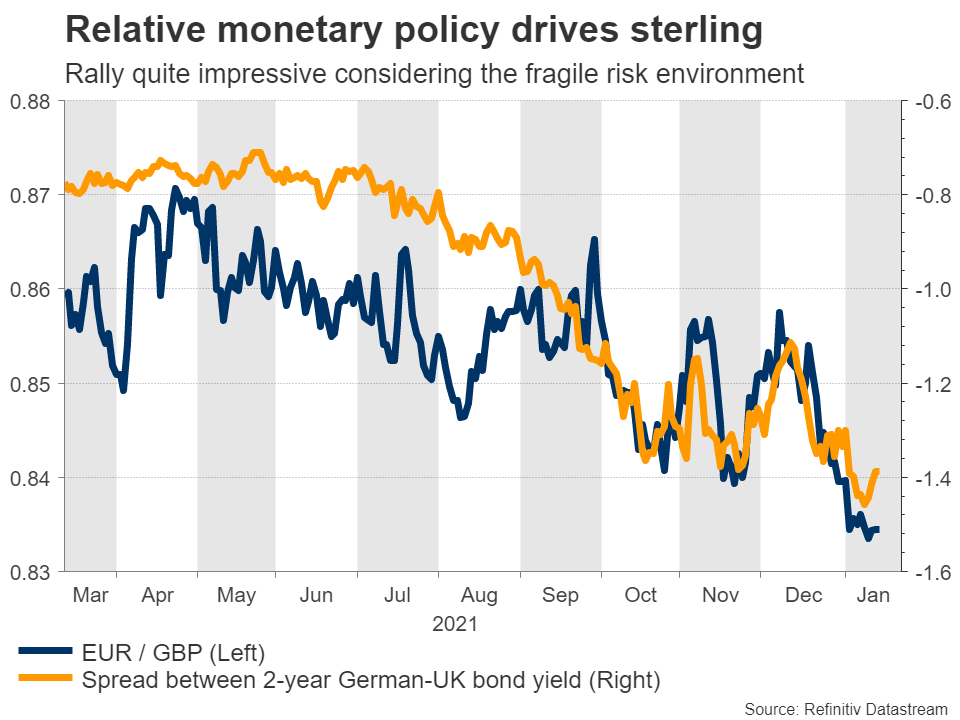
The pound’s ability to stage such a powerful rally despite weak risk sentiment in the markets is quite impressive and suggests monetary policy expectations are really what’s driving FX markets right now.
Markets get excited about Canada
Meanwhile, the Canadian economy is improving at such a dramatic pace that markets now assign an 80% chance for a rate increase this month, in contrast to the Bank of Canada’s latest guidance that April is the earliest possible date. As such, the upcoming inflation stats on Tuesday and retail sales on Friday could be crucial.
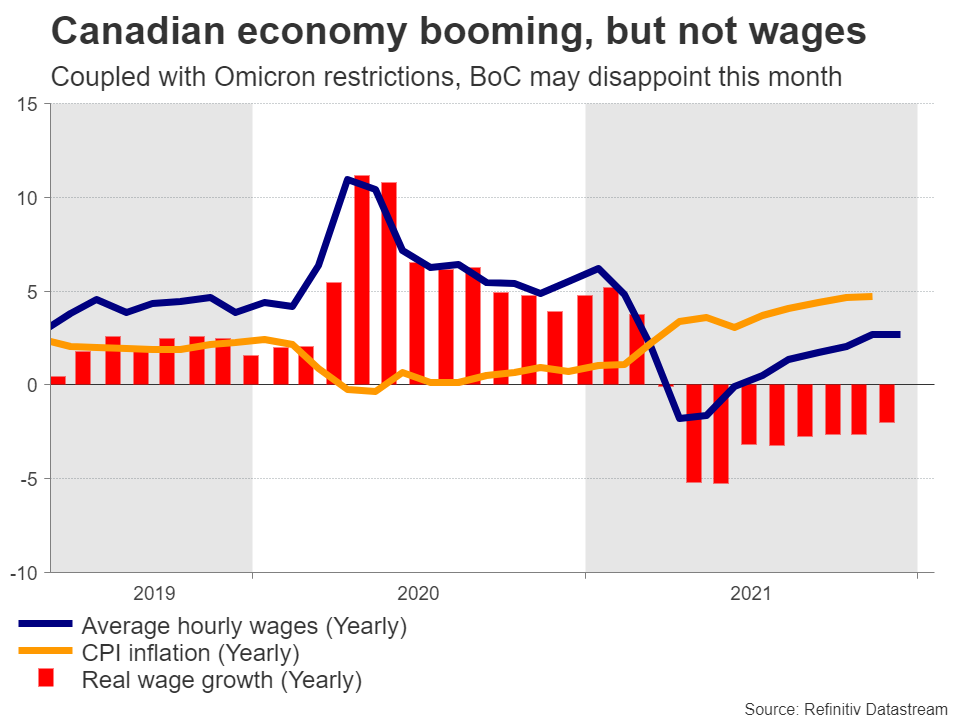
All in all, a rate increase this month seems like a bridge too far. While the labor market is booming and inflation is hot, wage growth remains below pre-pandemic levels and Omicron is rampaging through the country, with many provinces imposing tougher restrictions lately. This could keep the BoC hesitant to take any risks for now.
The loonie has bounced back with force lately thanks to this speculation and the rebound in oil prices, and although the big picture remains favorable, it may be in for a disappointment by the central bank later this month.
Weekly Focus – The Fed Preparing to Hike
Financial markets saw a shake-out early this week on the back of the more hawkish Fed, now signalling a rate hike already in March when tapering of asset purchases is done. US 10-year bond yields continued to rise to 1.8% and stock markets took a dive. Money markets now price close to 100% probability of four hikes from the Fed this year, which seems fair. However, calm was restored in the middle of the week after Fed governor Jerome Powell argued that the Fed would be able to tame inflation and that it could happen without too much damage to the economy. But yesterday stocks took a dive again in response to hawkish comments from more Fed members.
Another new high in US inflation in December at 7.0% y/y, the highest level since June 1982, was digested fairly well by markets. The increase was in line with consensus but core inflation surprised slightly to the upside rising to 5.5% y/y (consensus 5.4% y/y) from 4.9% y/y. The muted market reaction to the number would suggest that high inflation is to a wide extent already expected by the market. We look for inflation to stay high in the short term as for example the latest increase in used car prices in the US is not yet fully factored into CPI. The same goes for the CPI shelter component. But from Q2 22 we expect price increases to gradually taper off. Inflation is set to be high for all of 2022, though, and with the tightest US labour market in decades the Fed needs to act to rein in inflation.
Despite the hawkish turn of the Fed, EUR/USD moved higher this week. It has been looking technically oversold for a while and with investors still being long USD, there seems to be some profit taking on this trade. However, we see scope for USD turning stronger again as the Fed departs on its hiking journey in a few months.
In China inflation pressures are easing as producer prices (PPI) saw the biggest monthly drop (-1.2% m/m) since April 2020. The decline is due to lower commodity price inflation; we believe this will soon lead to a peak in PPI and headline CPI in US and Europe as well. Falling inflation pressure leaves room for PBOC to ease policy further in coming months.
Omicron continues to drive big waves of Covid around the world. But there are also signs of a peak in some European countries and the Northeastern US states that have been hit the worst. It adds to hope that Omicron will not overwhelm hospitals and could mark the end of the pandemic as we know it. Of course, the risk of new mutations also still looms.
Talks between Russia and US/NATO this week did not change much. Russia stated yesterday that they regarded the talks as unsuccessful but had the will to continue talks. In the paper Research Russia - Expect serious market disruptions if a war breaks out, 14 January, we look at different scenarios for the conflict.
The coming week looks to be fairly uneventful. China kicks off the week with GDP for Q4 on Monday as well as industrial production and retail sales. They will likely confirm that Q4 was weak. We look for a cut in China's policy rate. In the US we get regional business surveys (Philadelphia and Empire) and in Europe, we expect to see the German ZEW and Euro consumer confidence to decline due to the triple headwinds of Covid outbreaks, supply bottle necks and an erosion of household income from the high inflation, see Euro Macro Monitor - Tripple headwinds, 10 January 2022. On Thursday, the Turkish central bank may cut rates.
Sunset Market Commentary
Markets
December US retail sales were today’s main dish. The headline figure declined by 1.9% M/M which was significantly below near flat consensus. Core sales dropped by 2.3% on a monthly basis and the control group, seen as a proxy to calculate consumption in GDP, even fell by 3.1% M/M. Numbers are based on absolute dollar levels of purchases, suggesting somewhat weaker underlying picture given that US inflation is running at 7% Y/Y. The monthly setback is obviously related to the surging omicron-variant of the Covid-virus which kept people at home and might therefore be more of a one-off rather than a structural change in a strong spending pattern. Combined data for Q4 point to a 8.7% Q/Qa increase for headline retail sales and 5.9% Q/Qa for the control group. The retail sales failed to disturb sluggish intraday trading dynamics as US markets head into the long weekend. They close on Monday for MLK Day.
European stock markets opened around 1% weaker in a catch-up move with yesterday’s WS performance. Intraday dynamics didn’t deteriorate further with opening levels currently still on the charts. The dollar slightly recovers from this week’s beating, but moves don’t drag that far. Technical breaks in EUR/USD, DXY and USD/JPY aren’t overturned. The Japanese yen even continues outperforming the dollar in the run-up to next week’s BoJ meeting. Earlier rumours of an upgraded expected inflation trajectory were this morning followed by unconfirmed talk that the central bank would even contemplate a rate hike (next year) even if inflation is still below the central bank’s 2% target. In Bank of Japan space, such news is huge as it strikes with their multidecade easy monetary policy. US Treasuries trade choppy. US yields add 2.6 bps to 3.4 bps in a daily perspective with the belly of the curve outperforming the wings. The German yield curve bear steepens with yields rising by 0.9 bps (2-yr) to 2.2 bps (30-yr). 10-yr yield spread changes vs Germany are virtually unchanged with Greece (-3 bps) outperforming.
Next week’s eco calendar includes key UK eco data with labour market report, inflation numbers and retail sales. They are unlikely to derail the Bank of England from raising policy rates a second time in February. EMU and US eco calendars won’t inspire. Other features to watch are Chinese Q4 GDP numbers on Monday and central bank meetings in Norway and Turkey. News Headlines
Hungarian inflation rose 0.3% m/m to a higher-than-expected 7.4% y/y in December. The price increases were broadly based. Food registered the biggest month-on-month rise (+1.5% m/m), followed by restaurants & hotels (0.8%) and furnishings (0.7%). Inflation should moderate to 7% in January but the outcome is prone to statistical distortion. The new CPI weightings this year reflect consumption structure of 2020 which saw relative bigger spending in food and tradeable goods, two of the biggest contributors to today’s inflation. KBC Economics expects the Hungarian central bank to continue its tightening cycle via the one-week deposit rate by the end of January. The rate could reach a peak of 5%, up from 4% currently. Hungary’s forint underperforms peers today. EUR/HUF trades around 356.19. Just yesterday, the forint touched the strongest level since mid-September at 350.88.
In his first interview with a foreign news agency, Turkish new FM Nebati said inflation will peak months earlier and at a much lower rate than many predict today. He said the top priority in recent weeks was to stem the lira’s decline. While EUR/TRY (15.50 today) indeed stabilized in the weeks, it did so at a historically still-high (low in lira-terms) level. Nebati believes the effect of earlier lira declines will feed into the January inflation figure after which a natural decline over 2022 should kick in. With the lira issue now resolved, he said, focus turns to inflation. The government will continue to support the economy but with selective measures. Regarding monetary policy, Nebati suggested the CBRT will stick to the sidelines for a month or three to assess the impact of the earlier rate cuts.
The Return of Interest Rate Anxiety
A late sell-off in the US on Thursday is weighing heavily on sentiment around the globe with Asia ending the week on a negative note and Europe heading for a similar finish.
Tech was once again hit the hardest as interest rate anxiety kicked in. The rebound looked premature and yesterday showed investors don't have the stomach for a sustainable rebound yet. I have no doubt the dip buyers will be tempted back in soon enough but we could see a little more pain before that happens.
The Nasdaq is looking a little vulnerable, to put it mildly. The failure at 16,000 followed by the severity of the sell-off is an awful combination and it suddenly looks very weak on approach to a big support level.
A test of 15,000 looks very likely at this stage and not only would this represent a 10% correction from the highs, most of which has come in the last 10 days, but a break would take the index below the 200-day simple moving average for the first time since the start of the pandemic. That would be quite the negative signal.
Of course, earnings season may have arrived just in time and some knockout tech earnings may be enough to tempt the dip buyers back in. Not that they typically require much. But given the level of interest rate anxiety in the markets right now and the sensitivity of tech stocks to it, it wouldn't hurt.
UK GDP surpasses pre-pandemic peak
Growth in the UK was much stronger than expected in November, taking GDP above the January 2020 level for the first time since the pandemic hit. Consumer-facing services were a big driver of the outperformance, which is encouraging given the relative restrain we've seen during the recovery. However, behaviour is likely to have been more restrained in December as a result of omicron, not to mention earlier than normal Christmas spending, which should drag at the end of the year and early this. Still, a very promising report, even if the bump in the pound was relatively short-lived.
Investors seemingly not concerned by weak US Retail Sales report
The US retail sales report was rather disappointing in December, perhaps a sign of consumers being more restrained as a result of omicron, not to mention early Christmas prep in anticipation of supply issues. Markets seem a little directionless after the release, which could be a sign that investors don't know how to take the data. A strong report would have been positive for the economy but also feed into the argument for faster tightening, which is not being particularly well received at the moment. A few weak reports may, on the other hand, encourage caution from policymakers.
European energy crisis deepens, while oil continues higher
Oil prices are higher again on Friday, continuing to trade around the highest levels seen in more than seven years. We could potentially be seeing some signs of exhaustion in the rally, with momentum indicators easing despite price continuing higher, but we're not seeing it to any significant degree. Perhaps we'll see more signs in the coming sessions but it's hard to say with any conviction that prices won't just continue to rally in the near term.
The energy crisis is also deepening in Europe, raising the possibility of outages this winter as already depleted reserves continue to be drawn upon. Friction with Russia over Ukraine, not to mention the Nord Stream 2 pipeline, make the prospect of emergency supplies unlikely any time soon. And further outages at nuclear reactors in France are just compounding the problem. European leaders will be praying for warmer weather over the coming months.
Gold showing incredible resilience
Gold is a little lower at the end of the week, once again running low on momentum as it approaches what has become a major technical resistance level around $1,833. Higher yields are at least partially responsible for the wind coming out of gold's sails, although once again it's showing considerable resilience given the reaction we've seen elsewhere.
If it can break $1,833, it will be a very bullish signal for gold, especially coming at a time when investors are pricing in more aggressive tightening from central banks. It seems to be relatively immune to higher yields, perhaps generating favour from its inflation hedge reputation. Are traders sending a signal that four hikes and balance sheet reduction this year won't be enough to get to grips with inflation? Or shielding against potential declines in stock markets?
Bitcoin not feeling the love
Bitcoin isn't feeling the love that's coming gold's way at the moment, despite the claim of it being gold 2.0. The cryptocurrency looks to be far more aligned with high-risk assets and is coming under pressure once more as interest rate fear spreads throughout the market. Bitcoin ran into resistance a little shy of the December support zone and could see $40,000 come under pressure once more. This level is likely to be heavily protected so it will take a big push to break that support. If we do see a close below, it could get a lot more painful for cryptos.
U.S. Retail Sales Pulled Back in December, Capping off a Strong Year
Retail sales declined for the first time in five months, falling 1.9% m/m in December, well below the consensus estimate for a modest decline of 0.1%. November's reading was also revised down to +0.2% m/m from 0.3% m/m reported earlier.
Supply-chain disruptions continue to weigh motor vehicles and parts, where sales posted a decline of 0.4% m/m. The November reading, however, was revised up to 0.2% m/m from -0.1% m/m reported earlier.
Excluding autos, retail sales were down by 2.3% m/m. Sales at gasoline stations declined by 0.7%, partially reflecting a decline in energy prices in December.
Sales in the "control group", which exclude the most volatile components and are used in calculating personal consumption expenditures (and GDP), were down by 3.1% m/m. November's gain was also revised down (to -0.5% m/m from the advance reading of -0.1% m/m).
- Non-store retailers (-8.7% m/m) accounted for the majority of the decline in the control group, followed by department stores (-1.5% m/m), Most other holiday-sensitive categories were down, including food service & drinking places (-0.8% m/m).
- It wasn't all bad news: sales at miscellaneous stores retailers, building materials retailers and health & personal care stores were up by 1.8%, 0.9% and 0.5% m/m, respectively.
Key Implications
The report came in much weaker than expected, and from a lower base as November sales were revised down. The decline suggests that consumers, faced with rising prices, are normalizing their spending. This may also be the result of shoppers front-loading their purchases in the wake of supply chain challenges and reports of holiday shortages.
Still, 2021 exits the stage with record retail sales performance: 19.4% growth from December to December. The outsized gain can be attributed to multiple factors, including two rounds of fiscal stimulus, solid income recovery, and, less positively, accelerating price growth. The award for the most valuable player this season goes to auto sales, which accounted for nearly five percentage points of the gain – much of that due to higher prices.
Looking to the year ahead, retail trade is will slow from its record pace. The near-term outlook is clouded by the Omicron-related disruptions. While January usually suffers from the post-holiday spending fatigue, retail sales may get a boost as consumers shift preferences towards goods in their spending basket this month.
EUR/USD Mid-Day Outlook
Daily Pivots: (S1) 1.1433; (P) 1.1458; (R1) 1.1479; More...
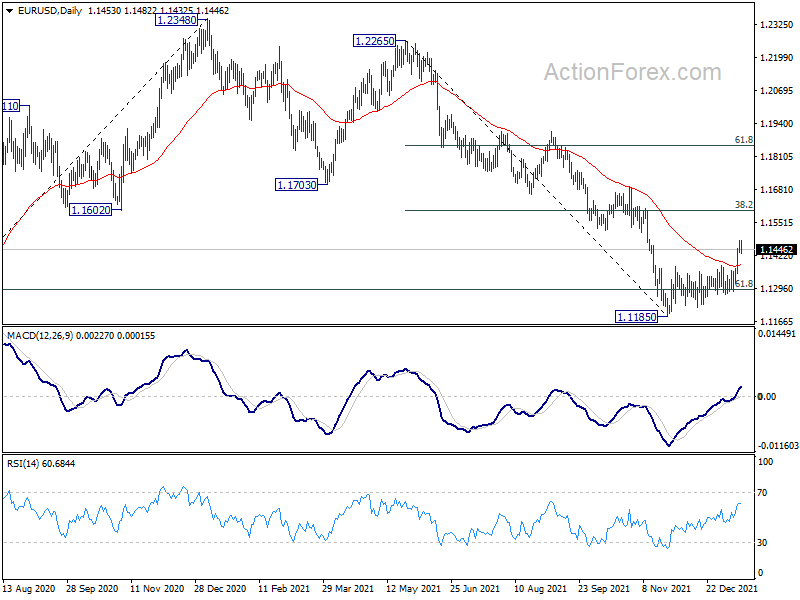
Intraday bias in EUR/USD is turned neutral for some consolidation below 1.1482 temporary top. While further rally cannot be ruled out, upside should be limited by 38.2% retracement of 1.2265 to 1.1185 at 1.1598 to finish the corrective rise from 1.1185. On the downside, below 1.1284 support will bring retest of 1.1185 low. However, sustained break of 1.1598 will argue that the trend is reversing already.
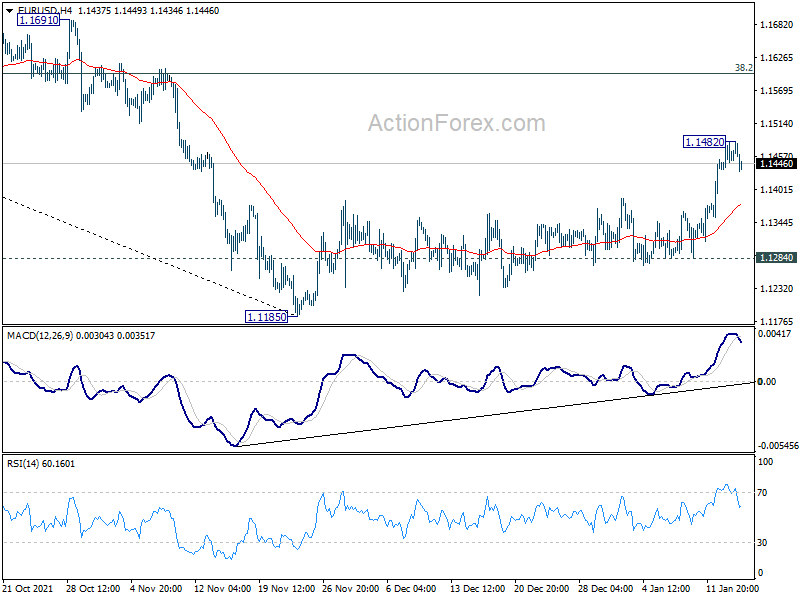
In the bigger picture, there are various ways of interpreting the fall from 1.2348 (2021 high). It could be a correction to rise from 1.0635 (2020 low), the fourth leg of a sideway pattern from 1.0339 (2017 low), or resuming long term down trend. In any case, outlook will now stay bearish as long as 1.1703 support turned resistance holds. Sustained break of 61.8% retracement of 1.0635 to 1.2348 at 1.1289 would pave the way back to 1.0635.
GBP/USD Mid-Day Outlook
Daily Pivots: (S1) 1.3690; (P) 1.3720; (R1) 1.3738; More...
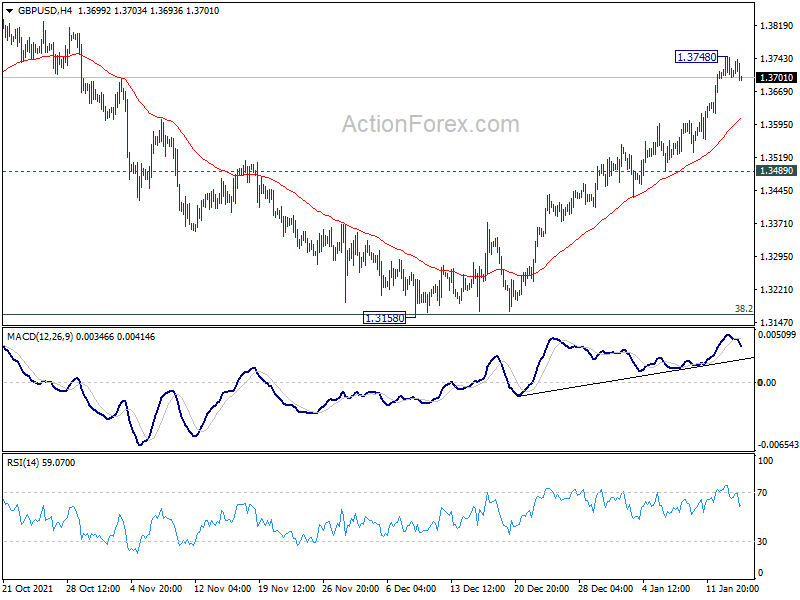
Intraday bias in GBP/USD is turned neutral first for some consolidation below 1.3748 temporary top. But downside of retreat should be contained above 1.3489 support to bring another rally. As noted before, corrective fall from 1.4282 should have completed with three waves down to 1.3158, after hitting 1.3164 medium term fibonacci level. Above 1.3748 will target 1.3833 first. Sustained break of 1.3833 will pave the way back to retest 1.4248 high.
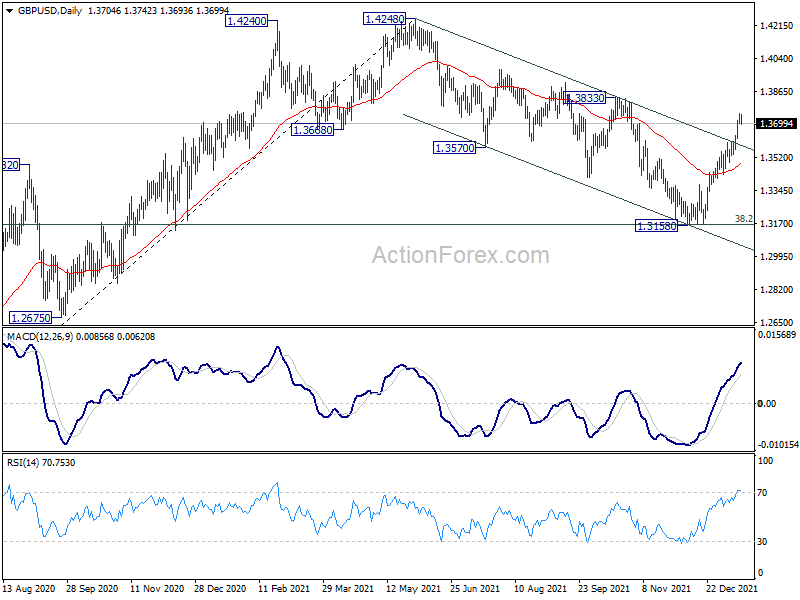
In the bigger picture, strong support was seen from 38.2% retracement of 1.1409 to 1.4248 at 1.3164. The development suggests that up trend from 1.1409 (2020 low) is still in progress. On resumption, next target will be 38.2% retracement of 2.1161 to 1.1409 at 1.5134. Nevertheless sustained break of 1.3164 will argue that whole rise from 1.1409 has completed and bring deeper fall to 61.8% retracement at 1.2493.
USD/CHF Mid-Day Outlook
Daily Pivots: (S1) 0.9087; (P) 0.9118; (R1) 0.9143; More....
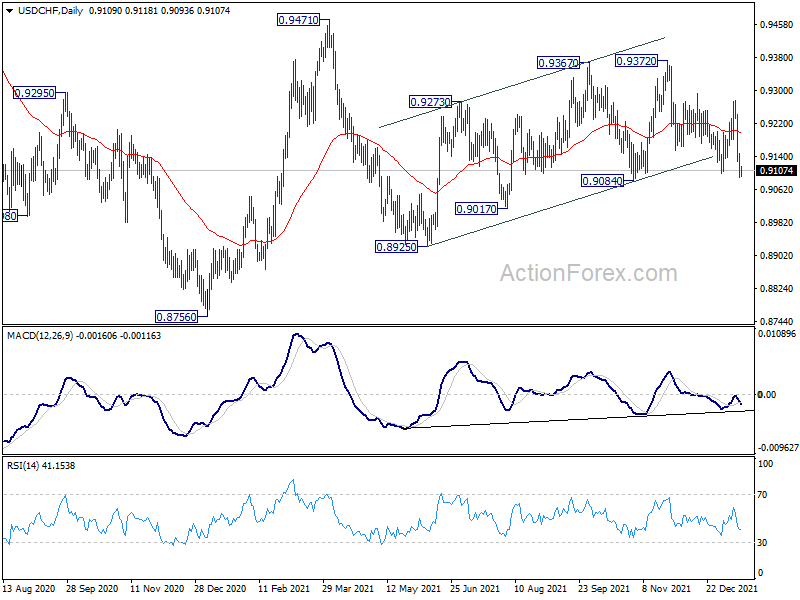
Intraday bias in USD/CHF stays on the downside for the moment. On the downside, firm break of 0.9084/0.9101 support zone will argue that choppy rise from 0.8925 has completed. Fall from 0.9471 might be ready to resuming. Further decline would be seen back to 0.8925 support first. On the upside, above 0.9147 minor resistance will turn intraday bias neutral first.
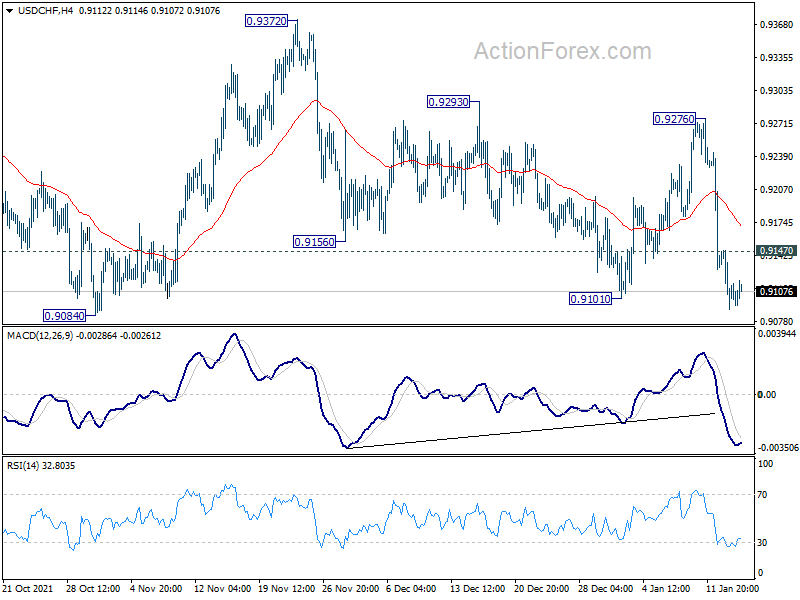
In the bigger picture, the corrective structure of the rebound from 0.8925 argues that fall from 0.9471 is not complete yet. It could either be the second leg of pattern from 0.8756 (2021 low), or resuming larger down trend from 1.0237 (2018 high). We'd pay attention to the downside momentum and assess the odds later. But for now, medium term outlook will be neutral at best as long as 0.9471 resistance holds.