

Sample Category Title
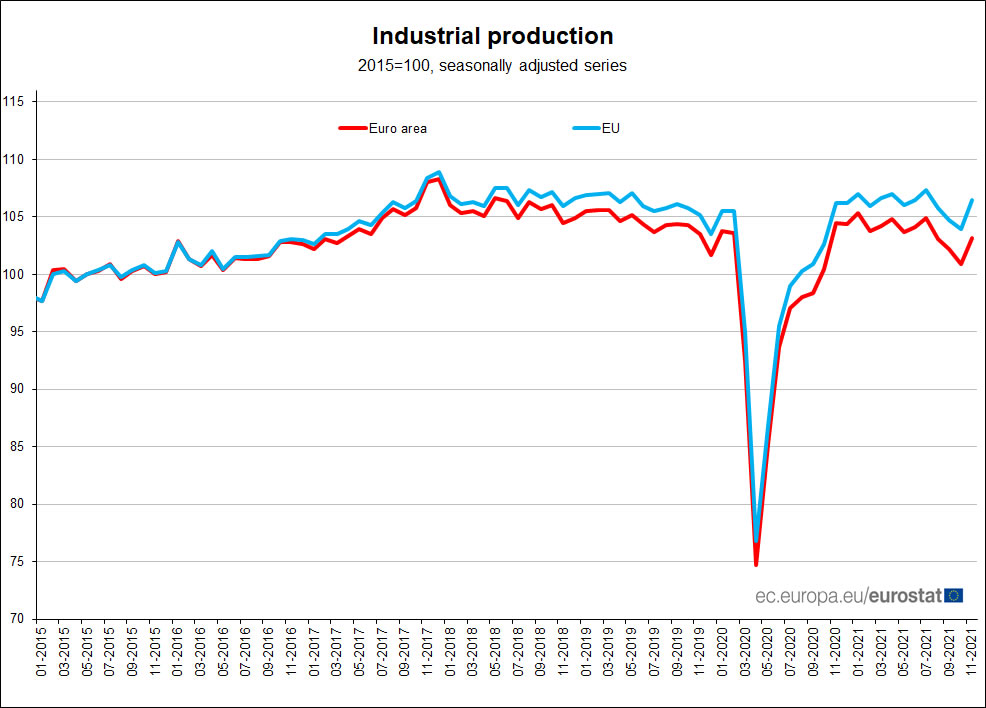
Eurozone industrial production rose 2.3% mom in Nov, EU up 2.5% mom
Eurozone industrial production rose 2.3% mom in November, well above expectation of 0.6% mom. Production of non-durable consumer goods rose by 3.2%, capital goods by 1.5%, energy by 1.2% and intermediate goods by 0.9%, while production of durable consumer goods fell by -0.2%
EU industrial production rose 2.5% mom. Among Member States for which data are available, the largest monthly increases were registered in Ireland (+37.3%), Poland (+5.9%) and Czechia (+4.8%). The highest decreases were observed in Belgium (-4.4%), Malta (-3.7%) and Luxembourg (-2.3%).
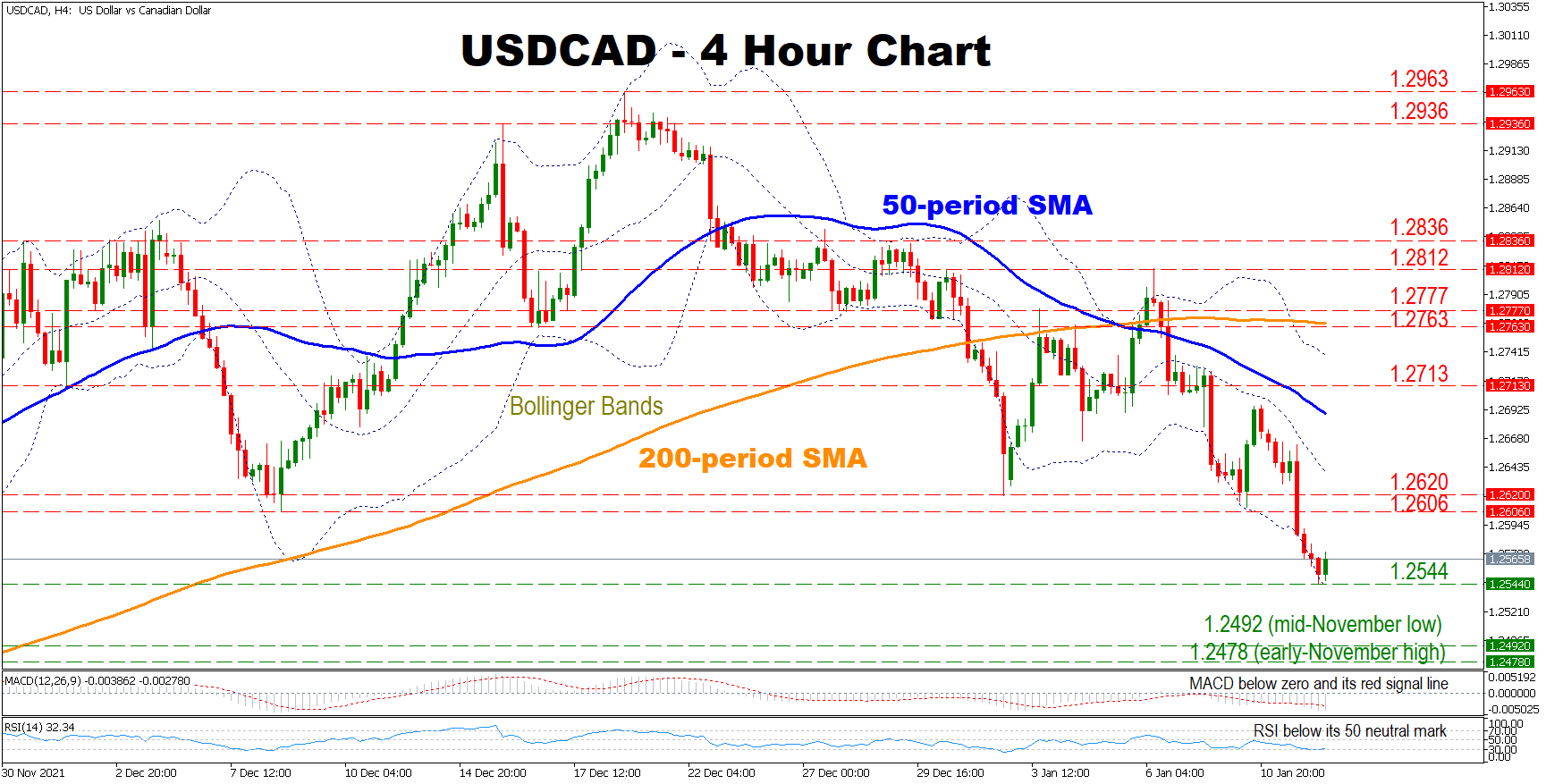
USDCAD Loses Ground as Bearish Forces Linger
USDCAD has retreated from its January high amid strengthening negative momentum, and is currently found near its lower Bollinger Band indicating that an immediate upside movement should not be ruled out. Moreover, the pair’s 50-period simple moving average (SMA) has recently crossed below its 200-period SMA, increasing fears of a sustained bearish outlook.
Short-term momentum indicators are supporting a negative bias as the RSI is located below its 50 neutral mark. Also, the MACD is found below zero and its red signal line, which could indicate that the negative bias might be gaining more traction.
Should the bears remain in charge, initial support might be found at the 1.2544 hurdle. A decisive move below this point could increase selling pressures further, opening the door towards the mid-November low at 1.2492. A break below the latter could shift sellers attention towards the early-November high at 1.2478.
On the flip side, if the price crosses above the 1.2606 level, resistance might then be found at the 1.2620 hurdle. Crossing above the latter could send the price towards its 50-period SMA currently at 1.2689. A break above that point could turn the fortunes around for the pair, paving the way towards the 1.2713 obstacle, before the bulls eye the 1.2763 barrier.
In brief, the overall outlook for the pair is bearish. For sentiment to change, sellers would need to break above the 50-period SMA.
Inflation Data to Test Powell’s Vow
- Asian stocks, US and European futures push higher
- Markets calmed by Fed Chair Powell’s reassurances, for now
- Wednesday’s inflation print could trigger more market volatility
US equities are looking to further pare 2022’s losses with futures now edging higher, potentially extending Tuesday’s rebound in which tech stocks outperformed. Asian stocks and European futures are also carrying on in similar risk-on fashion on Wednesday. The benchmark dollar index (DXY) is holding on to losses having slid below its 50-day moving average, which in turn allowed spot gold to resurface above $1800.
Stock bulls are taking a liking to Fed Chair Jerome Powell’s reassurances that the central bank could trigger rate hikes to rein in surging inflation without harming the US economic recovery. It’s intriguing how a volatile market that had dreaded the prospects of more rate hikes than previously expected has been suddenly soothed by near-term policy tightening. That said, Powell did confirm his view that the Fed expects inflation to peak mid-year. While risk sentiment is being offered some solace for the time being, it remains to be seen whether fears of a Fed policy error come to pass as 2022 gathers pace and more economic data comes to the fore.
Can the Fed tame inflation menace?
More immediately, the Fed’s intentions will be tested with inflation data due to be released today. The December US consumer price index is estimated to have surged 7% year-on-year, which would be its highest print in nearly 40 years. The CPI figures for the first quarter of 2022 could read even higher, with Omicron-related disruptions still felt along the supply chain.
Such daunting data would underscore the sheer challenge that lies before policymakers. It’s one thing for the Fed to say it can subdue inflation without breaking the US economic recovery; it’s another matter if they can actually pull it off.
Inflation obsession could trigger more volatility
The first weeks of 2022 have already seen markets scurrying to price in a steeper ramp up in the Fed’s policy normalisation intentions. The Fed Funds futures now point to an 84% chance of a March liftoff in US interest rates, significantly higher than the 63% that was priced in coming into this year.
If today’s inflation data prompt further adjustments to the expected timeline for Fed rate hikes, then that is likely to trigger further volatility across global financial markets. Bond markets will be closely monitored as to whether 10-year US Treasury yields will continue marching towards the psychologically important 2% mark. Another leg up for yields may see bullion bugs and tech aficionados scurrying for the exit once more.
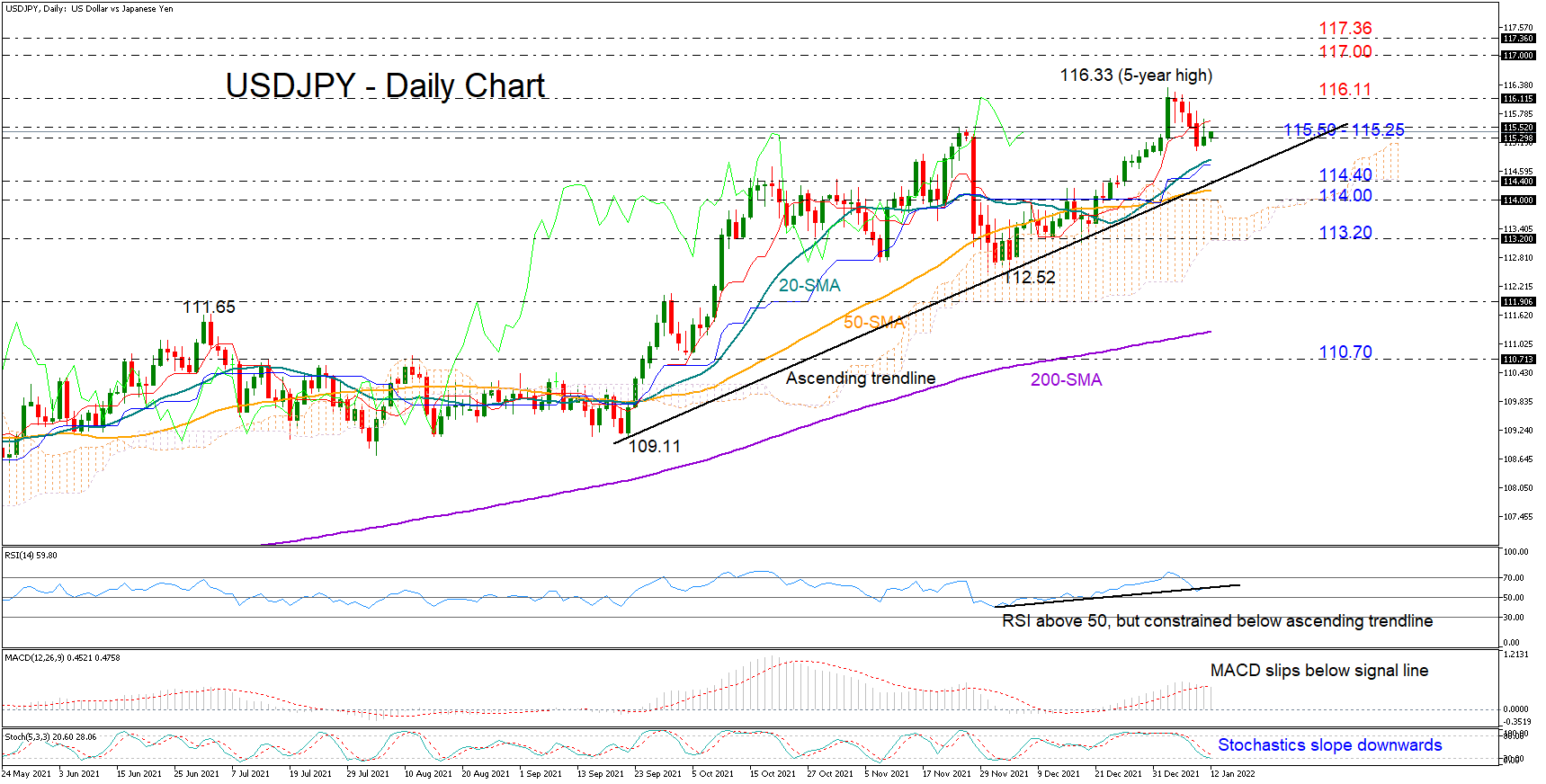
USDJPY Halts Pullback But Will It Make Fresh Highs?
USDJPY halted the pullback from the five-year high of 116.33 around the 115.00 level on Tuesday, but the close below the 115.50 – 115.25 region is still keeping downside risks alive in the market.
The technical picture is also warning that bears have some fuel in the tank as the MACD is stepping below its red signal line and the RSI is struggling to gain momentum after the dip below the overbought area.
Unless the price returns above 115.50, traders will keep staring at the descending trendline currently positioned around 114.40. A clear move below that line could immediately stall near the 114.00 mark and the surface of the Ichimoku cloud, which has been somewhat supportive early in December. Should sellers claim that zone too, the decline could stretch towards the key 113.20 number, while deeper, a move beneath November’s low of 112.52 would officially snap the almost four-month-old upward pattern.
In the bullish scenario, where the price rises comfortably above 115.50, the crucial 116.11 resistance could prove an obstacle, preventing an advance towards the 117.00 psychological mark and the 261.6% Fibonacci extension of the 115.88 – 112.52 down leg at 117.36.
Summarizing, despite yesterday’s stabilization, negative risks have not disappeared in the USDJPY market. A rebound above 115.50 could substantially reduce such risks. Otherwise, a bearish extension towards 114.40 could be possible.
Daily Technical Analysis
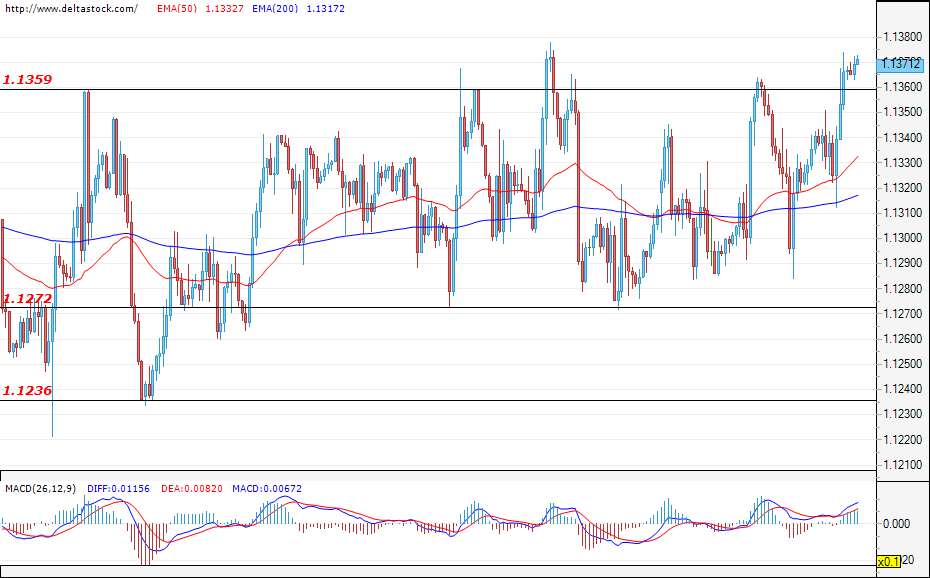
EUR/USD
Current level - 1.1371
During yesterday's trading session, the currency pair breached the resistance level of 1.1359 and the expectations are for the common European currency to continue to appreciate against the dollar. The first target for the bulls would be the psychological level of 1.1400 and the next one would be the resistance level of 1.1440. A breach of these levels would let the bulls attack 1.1510, at which point more sellers would likely be tempted to enter the market. In the negative direction, the first support is found at 1.1272. Today, volatility can be expected to pick up after the announcement of the U.S. core CPI data (13:30 GMT).
USD/JPY
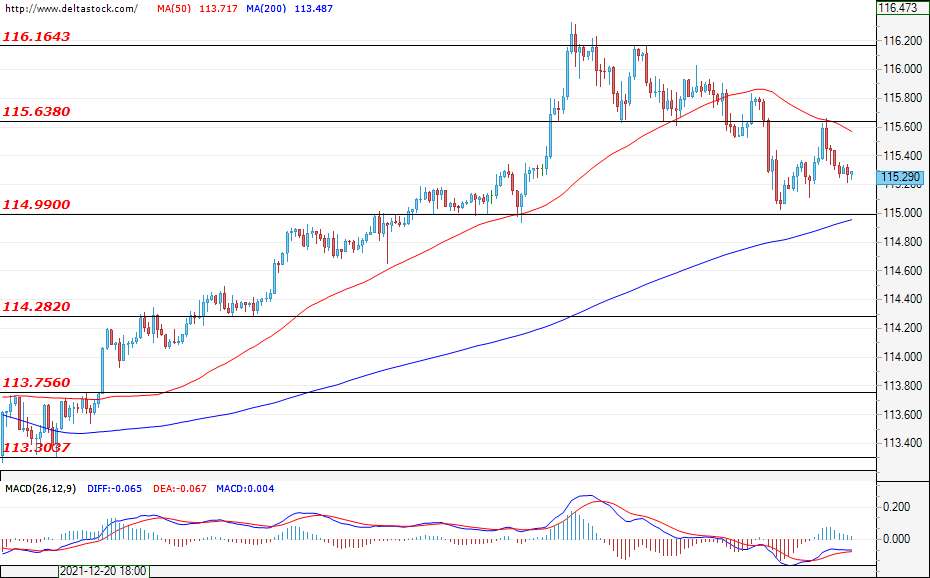
Current level - 115.29
The Ninja did not manage to breach the resistance level of 115.63 and is now headed towards the support at 114.99. In case the second test of 114.99 proves to be successful, then the dollar will most likely further depreciate against the yen and the next target for the pair would be 114.28. In the positive direction, the mentioned level of 115.63 is the first resistance for the pair.
GBP/USD
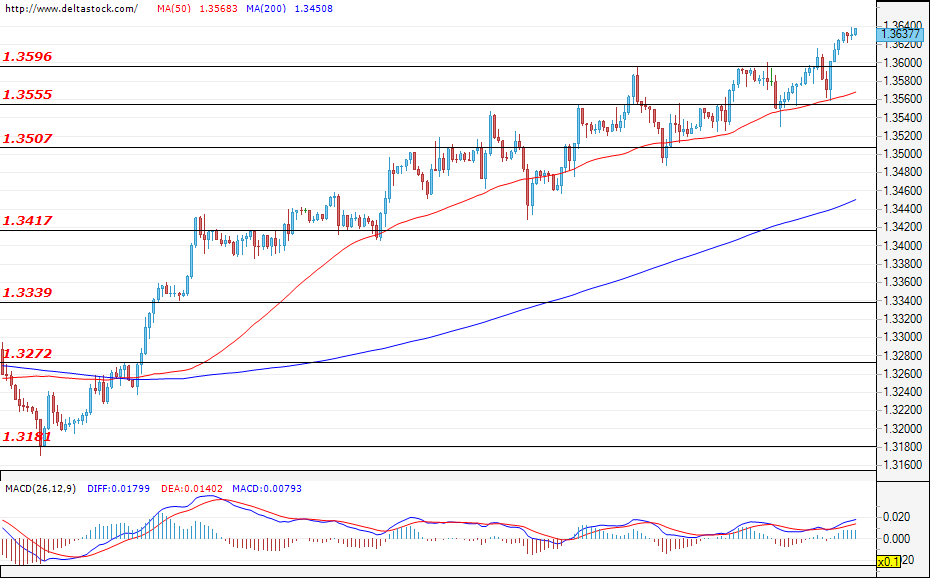
Current level - 1.3637
The British pound continues to appreciate against the dollar as, yesterday, the Cable breached the resistance level of 1.3596. The forecast is for the pair to continue rising and to head towards the resistance zone at 1.3700, which is coming from the higher time frames. The aforementioned resistance level of 1.3596 is now acting as a first support for the pair.
EUGERMANY40
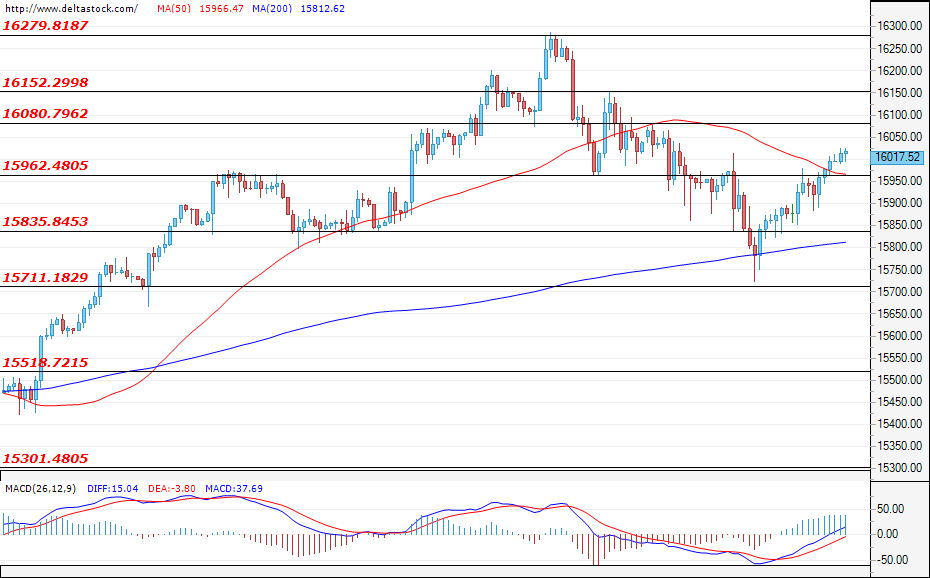
Current level - 16017
During yesterday's trading session, the German index breached the resistance level of 15962 and, in the early hours of today's session, it continues to rise towards the next resistance level of 16080. In case it manages to breach the next resistance, then it won't be а surprise for anyone if the bulls attack the record level of 16280. In the negative direction, the first support now lies at 15962 and the major support remains at 15835.
US30
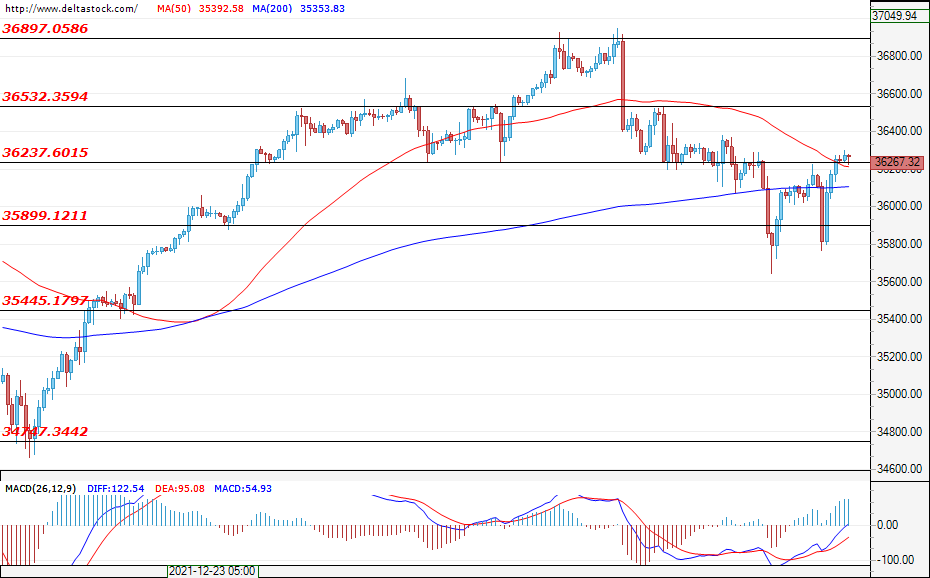
Current level - 36267
In the early hours of today's trading session, the U.S. blue-chip index breached the resistance level of 36237 and, at the time of writing, is confirming the breach, which could help the bulls reach the next resistance at 36532. In case the breach is not confirmed and the sellers take over the market, then a new test of the support level at 35899 is highly possible. Today, volatility can be expected to pick up after the announcement of the U.S. core CPI data (13:30 GMT).
USD/JPY Outlook: A Major Bearish Trend Line Forming with Resistance Near 115.50
The US Dollar declined below the 115.80 support zone against the Japanese Yen. The USD/JPY pair traded as low as 115.04 and is currently correcting higher.
The pair climbed above the 115.50 resistance, but it faced resistance near the 50 hourly simple moving average. An immediate resistance is near the 115.40 level. There is also a major bearish trend line forming with resistance near 115.50 on the hourly chart.
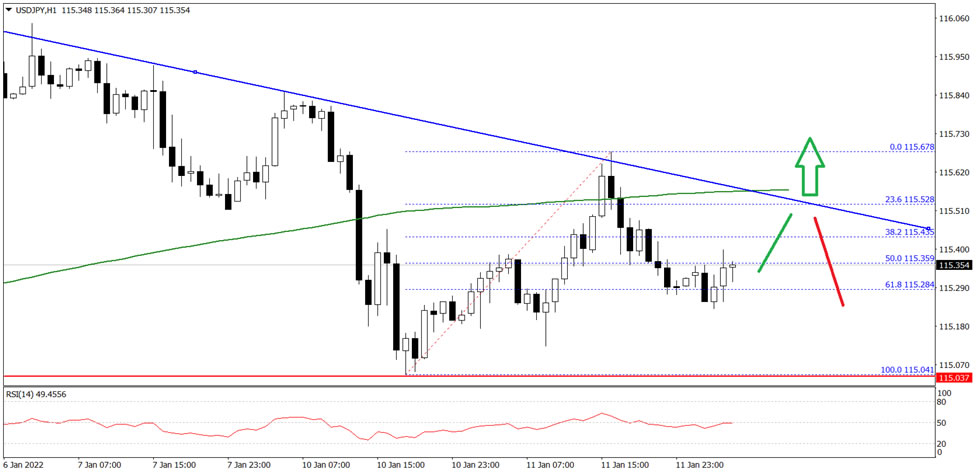
A clear break above the trend line resistance could pump the price towards 115.80 on FXOpen. The next major resistance is near the 116.20 level.
An initial support on the downside is near the 115.20 level. The next major support sits near the 115.00 level, below which there is a risk of a sharp decline. In the stated case, the pair could decline towards the 114.50 level.
EUR/JPY Maintains Uptrend
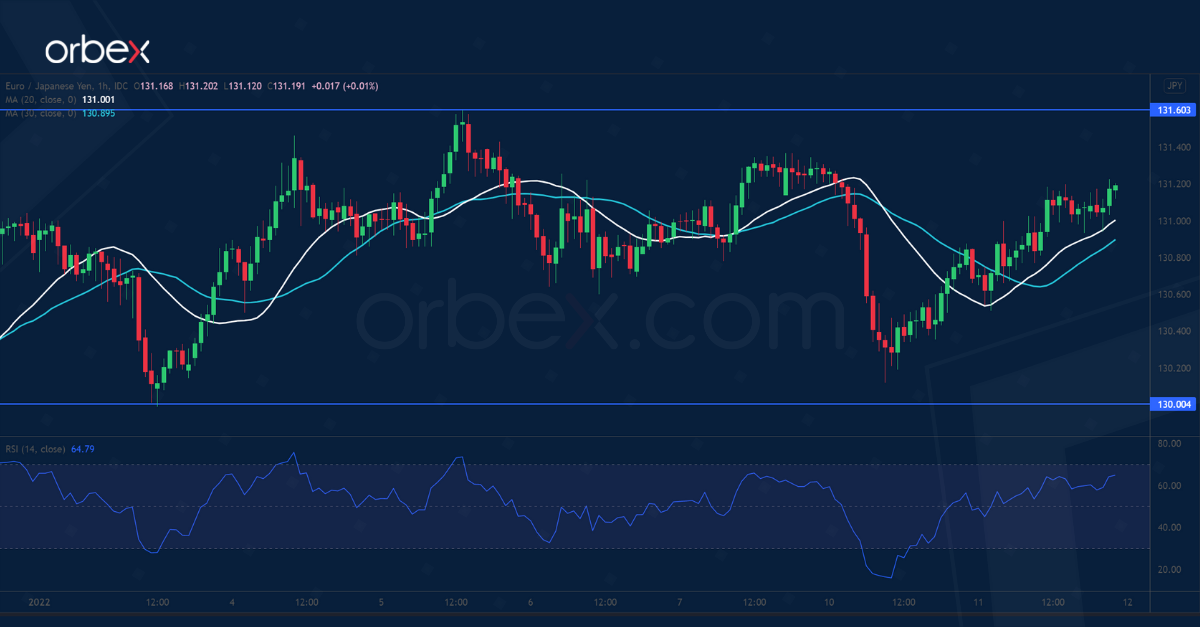
The euro recoups losses as traders dump safe-haven currencies. The fall below 130.80 has shaken out some weak hands.
Nonetheless, the upward bias remains intact after the single currency saw solid demand over the psychological level of 130.00. The RSI's oversold situation compounded the attractiveness of the discount.
A rise above 131.60 would bring in momentum traders and clear the path for an extended rally to 132.55 near last October's peak. 129.10 is the second line of defence in case of a deeper retracement.
NZD/USD Bounces Off Major Support
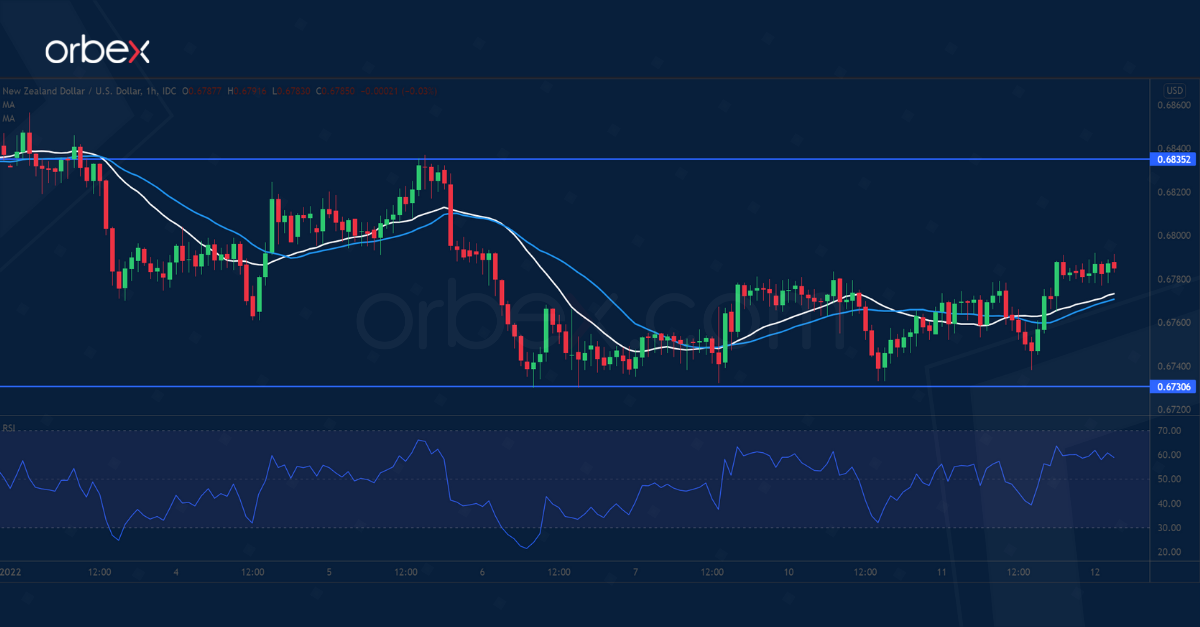
The New Zealand dollar recovers as risk appetite returns following Jerome Powell's testimony.
The previous rebound towards 0.6830 met strong selling pressure. Its failure to achieve a new high suggests that the bearish bias lingers. The drop below 0.6740 further weighs on the kiwi. A bounce could still be an opportunity to sell into strength.
The bulls need to clear 0.6835 in order to turn the tide, and 0.6730 is a fresh support. A bearish breakout may test the base of December's bounce at 0.6700.
GBP/USD Rally Gains Traction
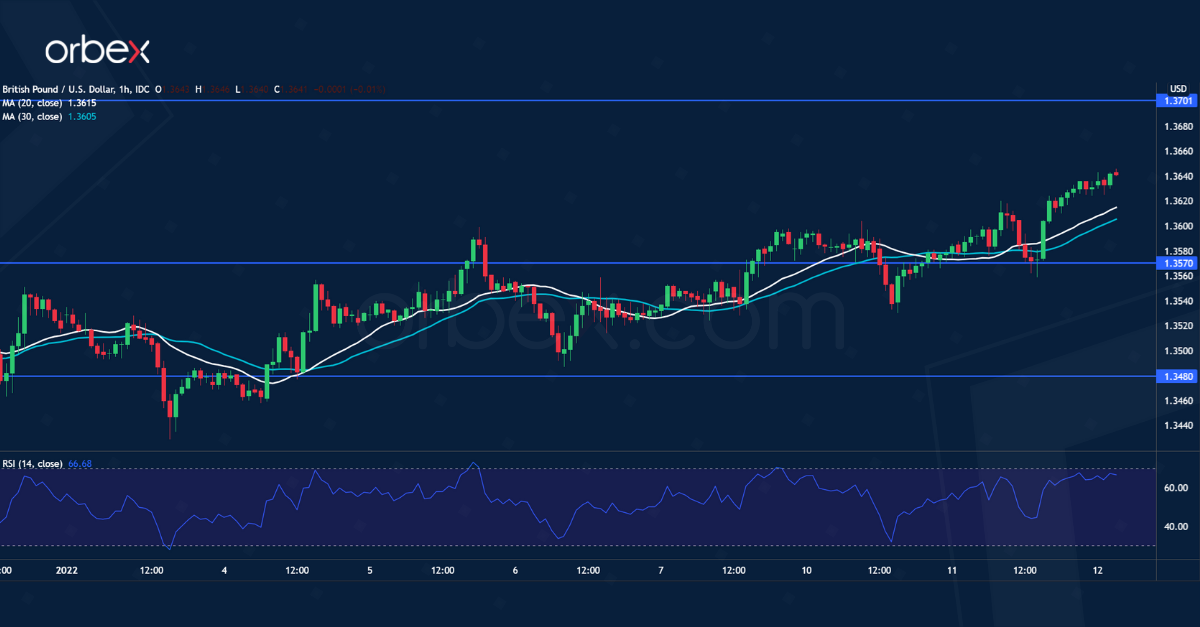
The US dollar fell after the Fed Chair's remark that no decision has been made on quantitative tightening. The pair showed some weakness near the daily resistance at 1.3600.
The RSI's double top in the overbought area led some buyers to take chips off the table. However, a follow-up close above the resistance indicates that the bulls are still in control of the direction.
Sentiment remains upbeat and 1.3700 from the start of the November sell-off would be the next target. 1.3570 is a fresh support in case of a pullback.
US Equities Move Sideways on Powell Statement
US equities were mixed in the overnight session as investors reacted to the testimony by Jerome Powell, the Federal Reserve chair. The Dow Jones and S&P 500 indices declined by about 0.25% while the Nasdaq 100 turned positive. In his testimony, the chair said that the Fed was committed to ensure that elevated levels of inflation do not become entrenched. He committed to use the bank’s tool to deal with inflation. Later today, the US will publish the latest inflation numbers, which are expected to show that the headline consumer price index jumped to about 7% in December while core CPI rose to 5.7%. The Fed will also publish its Beige Book later today.
The price of crude oil held steady in the overnight session as investors continued to focus on global demand and supply. Analysts believe that demand will rise at a faster pace than supply this year. Last week, OPEC+ members decided to continue with their planned 400k barrels per day increases in February. At the same time, global demand is expected to rise as more countries reopen. Later today, the Energy Information Administration (EIA) will publish the latest inventories numbers. Economists polled by Reuters expect the data to show that inventories declined by over 1.9 million barrels last week after falling by 2.14 million in the previous week.
The economic calendar will have no other major events today. Earlier today, data by the Chinese statistics agency revealed that inflation held steady in December. Later today, Eurostat will publish the latest industrial production numbers. Economists expect the data to show that industrial production eased from 3.3% in October to 0.6% because of the Omicron variant. Investors will also be focusing on the upcoming earnings season that will kick off officially on Friday. Before then, companies like Delta Airlines, Jefferies, and KB Home will publish their results.
XTIUSD
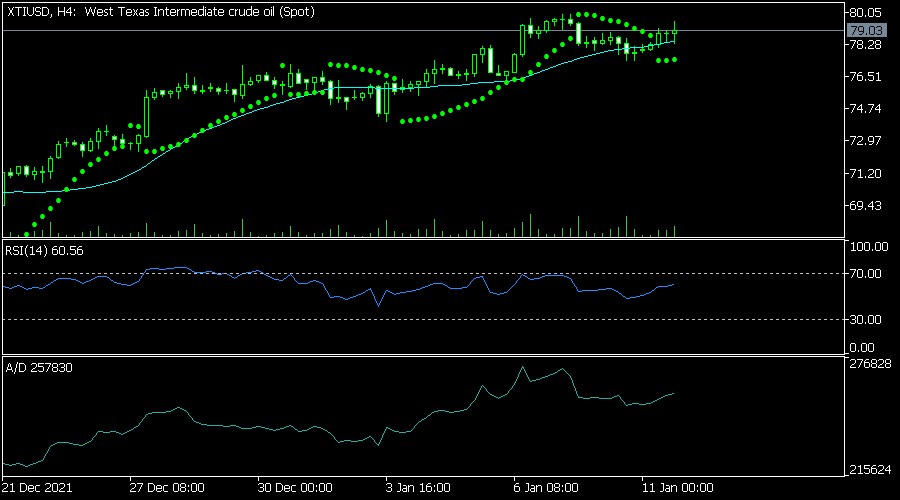
The West Texas crude oil price rose to a high of 79.20, which was the highest level since January 3rd. On the four-hour chart, the pair moved slightly above the 25-day moving average and the dots of the Parabolic SAR. The Relative Strength Index (RSI) has moved slightly above the neutral level at 61. The accumulation and distribution line has also continued rising. Therefore, the pair will likely keep rising as bulls target the key resistance at 81.
EURJPY
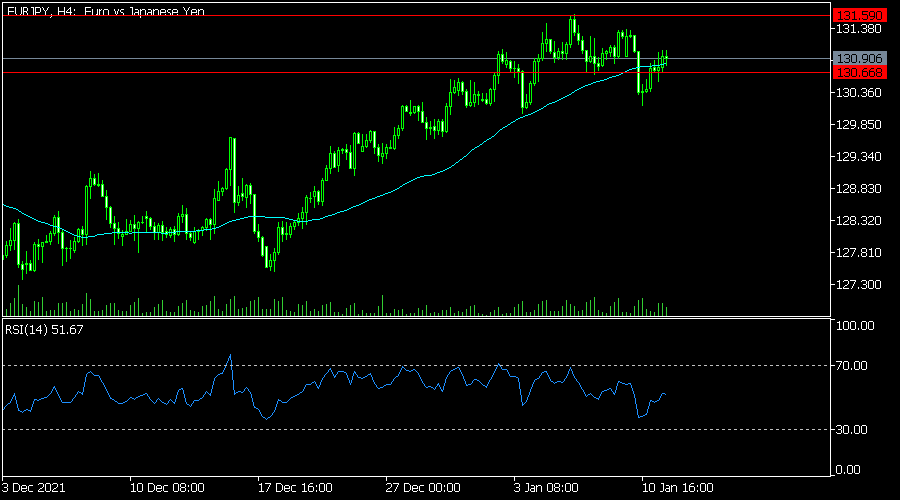
The EURJPY pair held steady ahead of the latest Eurozone industrial production data. The pair is trading at 130.95, which is slightly below this year’s high of 131.60. It also moved slightly above the 25-day and 50-day moving averages while the Relative Strength Index is at 52 and pointing upwards. It has also formed a small rising wedge pattern, meaning that the pair will likely resume the bearish trend in the near term.
EURUSD
The EURUSD pair moved sideways as Jerome Powell testified on Tuesday. The pair is trading at 1.1338, which was slightly above Tuesday’s low of 1.1310. The pair is still at the same point as the 25-day moving average and slightly below the important resistance at 1.1362. The Average True Range (ATR) has pointed upwards even though the pair has been in a tight range recently. Therefore, the pair will likely remain in this range ahead of the American inflation data.
