Sample Category Title
GBP/USD Mid-Day Outlook
Daily Pivots: (S1) 1.3262; (P) 1.3307; (R1) 1.3366; More...
Intraday bias in GBP/USD stays neutral for the moment. On the downside, below 1.3247 will resume the fall from 1.3725 to 1.3140 cluster (38.2% retracement of 1.2099 to 1.3787 at 1.3142). Strong support is expected from there to complete the corrective pattern from 1.3787. On the upside, break of 1.3526 will bring stronger rally back to 1.3725/87 resistance zone.
In the bigger picture, rise from 1.0351 (2022 low) is still seen as a corrective move. Further rally could be seen to 61.8% projection of 1.0351 to 1.3433 (2024 high) from 1.2099 (2025 low) at 1.4004. But strong resistance could emerge from 1.4248 (2021 high) to limit upside. Sustained break of 55 W EMA (now at 1.3173) will argue that a medium term top has already formed and bring deeper fall back to 1.2099.
EUR/USD Mid-Day Outlook
Daily Pivots: (S1) 1.1562; (P) 1.1588; (R1) 1.1634; More…
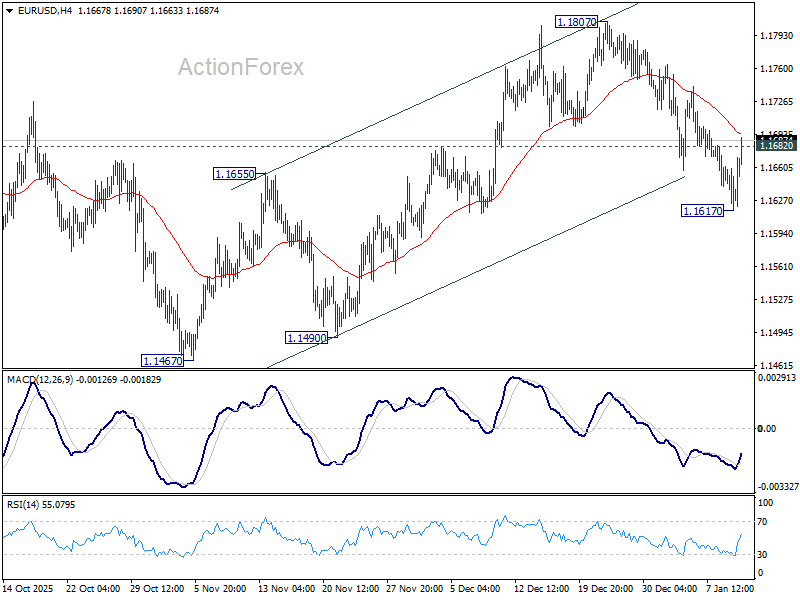
EUR/USD recovers mildly today as consolidations continue. Intraday bias remains neutral first. Deeper decline is expected as long as 1.1778 resistance holds. On the downside, break of 1.1540 will resume the fall from 1.1917 to 1.1390 , or further to 38.2% retracement of 1.0176 to 1.1917 at 1.1252.
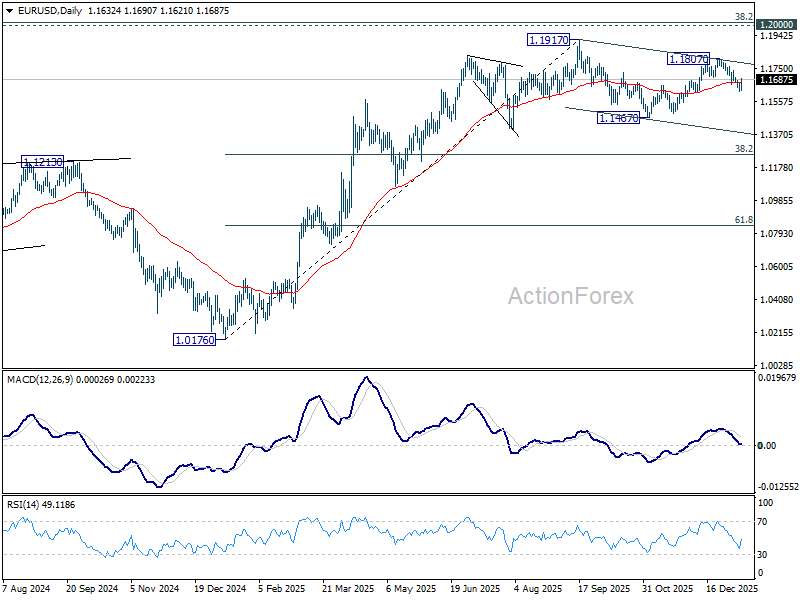
In the bigger picture, considering bearish divergence condition in D MACD, a medium term top is likely in place at 1.1917, just ahead of 1.2 key psychological level. As long as 55 W EMA (now at 1.1274) holds, the up trend from 0.9534 (2022 low) is still extended to continue. Decisive break of 1.2000 will carry larger bullish implications. However, sustained trading below 55 W EMA will argue that rise from 0.9534 has completed as a three wave corrective bounce, and keep outlook bearish.
Markets Calm as U.S.–China Trade Tensions Simmer, France’s Political Reprieve Lifts Sentiment
Global markets traded with a steady and cautious tone today, as investors balanced persistent U.S.–China trade tensions with signs of easing political risk in Europe.
Despite the looming November 1 deadline for Washington’s threatened 100% tariffs on Chinese imports, traders appeared hopeful for de-escalation, judging that both sides have incentives to avoid a severe disruption before year-end. Volatility has eased slightly after a turbulent start to the week, reflecting a shift toward defensive but stable positioning. Still, rhetoric from U.S. officials remains uncompromising. Treasury Secretary Scott Bessent told CNBC that the administration would not alter its negotiating stance toward Beijing, regardless of market swings.
In Europe, however, a measure of political stability returned after a tense week in Paris. French Prime Minister Sébastien Lecornu, reinstated after his brief resignation, announced that the government would suspend President Emmanuel Macron’s pension reform—the signature measure to raise the retirement age from 62 to 64—until January 2028. The decision represents a major concession aimed at restoring unity and calming public discontent.
Lecornu also promised not to bypass parliament on the 2026 budget, in a bid to win Socialist Party support ahead of Thursday’s no-confidence votes. With this compromise, markets now see the government’s survival as likely. The prospect that France’s cost-cutting budget will pass has helped revive investor confidence.
In currencies, Aussie continues to outperform, followed by Dollar and Euro. Loonie remains the weakest for the week, trailed by Yen and Swiss Franc. Sterling and Kiwi are trading mid-pack.
In Europe, at the time of writing, FTSE is down -0.41%. DAX is down -0.11%. CAC is up 2.22%. UK 10-year yield is down -0.036 at 4.553. Germany 10-year yield is down -0.024 at 2.587. Earlier in Asia, Nikkei rose 1.76%. Hong Kong HSI rose 1.84%. China Shanghai SSE rose 1.22%. Singapore Strait Times rose 0.32%. Japan 10-year JGB yield fell -0.007 to 1.656.
Eurozone industrial output drops -1.2% in August, Germany down -5.2%
Eurozone industrial production fell -1.2% mom in August, a smaller decline than the expected -1.8%. The data from Eurostat showed broad-based declines across key sectors, with capital goods output down -2.2%, durable consumer goods down -1.6%, energy production falling -0.6%, and intermediate goods slipping -0.2%. Only non-durable consumer goods managed a slight gain of 0.1%,.
Across the European Union as a whole, industrial output fell -1.0% mom. The regional breakdown showed significant divergence among member states: Germany, the bloc’s industrial powerhouse, suffered a sharp -5.2% decline, followed by Greece (-4.5%) and Austria (-3.1%), reflecting ongoing weakness in Europe’s core. Meanwhile, Ireland (+9.8%), Luxembourg (+4.8%), and Sweden (+3.6%) recorded the strongest gains.
RBA’s Hunter: Economy holding up, inflation still persistent in some areas
RBA Assistant Governor Sarah Hunter said in a speech on Tuesday that recent data suggest the Australian economy has been performing slightly stronger than expected, reinforcing the Bank’s decision to keep the cash rate unchanged at 3.60% at its September meeting. She noted that the RBA continues to see signs that “private demand is recovering,” “inflation may be persistent in some areas,” and that labor market conditions remain “stable.”
Hunter highlighted that GDP grew 1.8% over the year to the June quarter. “If anything, outcomes have been a little stronger than those expected in the August SMP,” she said, citing resilient private spending and steady employment as evidence that the economy remains on firmer footing than previously anticipated.
She also pointed to high-frequency indicators showing that underlying inflation in the September quarter is likely to be stronger than anticipated, suggesting that economic and labor market conditions remain “a bit tighter than we had assessed.” However, she acknowledged that employment growth has slowed "slightly" more than expected, while "elevated" global uncertainty continues to cloud the outlook.
Hunter concluded that the RBA will “continually reassess” its view on the economy and adjust policy as appropriate.
China’s CPI still negative at -0.3% in September as food prices drag
China’s consumer inflation remained in negative territory in September, highlighting continued weakness in domestic demand even as underlying price pressures showed tentative signs of improvement. Headline CPI rose from –0.4% yoy to –0.3% yoy, missing expectations of –0.2% yoy.
The National Bureau of Statistics said lower food and energy prices were the main contributors to the decline, with food prices down -4.4% yoy and consumer goods prices falling -0.8% yoy, partly offset by a 0.6% yoy increase in service prices.
However, the data also showed hints of stabilization beneath the surface. Core CPI, which excludes food and energy, rose 1.0% yoy from a year earlier, its highest level since February 2024, suggesting that domestic price momentum is slowly recovering in service sectors and other non-food categories.
Meanwhile, factory-gate prices continued to contract, with PPI rising from –2.9% yoy to –2.3% yoy, in line with expectations. This marks the 36th consecutive month of producer deflation, underscoring persistent cost pressures in manufacturing. NBS statistician Dong Lijuan said recent capacity management efforts in several industries have helped narrow the pace of decline, noting that market competition has improved as industrial supply and demand slowly rebalance.
EUR/USD Mid-Day Outlook
Daily Pivots: (S1) 1.1562; (P) 1.1588; (R1) 1.1634; More…
EUR/USD recovers mildly today as consolidations continue. Intraday bias remains neutral first. Deeper decline is expected as long as 1.1778 resistance holds. On the downside, break of 1.1540 will resume the fall from 1.1917 to 1.1390 , or further to 38.2% retracement of 1.0176 to 1.1917 at 1.1252.
In the bigger picture, considering bearish divergence condition in D MACD, a medium term top is likely in place at 1.1917, just ahead of 1.2 key psychological level. As long as 55 W EMA (now at 1.1274) holds, the up trend from 0.9534 (2022 low) is still extended to continue. Decisive break of 1.2000 will carry larger bullish implications. However, sustained trading below 55 W EMA will argue that rise from 0.9534 has completed as a three wave corrective bounce, and keep outlook bearish.
EUR/USD: Fresh Recovery Needs to Close Above Daily Cloud to Brighten Near-Term Outlook
The Euro edged higher on Wednesday morning, underpinned by weaker dollar on the latest remarks from Fed chief Powell which markets saw as more dovish and contributing to strong expectations for two rate cuts by the end of the year.
Fresh gains penetrated daily cloud (spanned between 1.1610 and 1.1686) and attempt to break above recent congestion (top lays at 1.1650 and is reinforced by daily Tenkan-sen), which acts as solid resistance and caps recovery so far.
Break of 1.1650 is seen as minimum requirement to keep recovery in play, with lift above daily cloud top (1.1680. also Fibo 38.2% of 1.1918/1.1542) to confirm signal and open way for further gains towards 1.1730 (daily Kijun-sen / 50% retracement) and 1.1774 (Fibo 61.8% / Oct 1 lower top) in extension.
However, predominantly bearish structure of daily technical studies warns of potential recovery stall, with slight bullish bias expected while the price stays above cloud base, but fresh negative signal to be expected in case on repeated daily close below daily cloud.
Res: 1.1650; 1.1686; 1.1700; 1.1730.
Sup: 1.1610; 1.1596; 1.1574; 1.1542.
Gold Price Falls from Above $4,200
The XAU/USD chart shows that gold recently climbed above the $4,200 mark for the first time. The upward momentum has been supported by the ongoing US government shutdown, central bank demand (with reports highlighting a sharp rise in reserves at the Reserve Bank of India), and market focus on US–China trade developments.
According to Trading Economics, on Tuesday President Donald Trump accused China of “economically hostile” behaviour, citing a halt in soybean imports, and warned of potential retaliatory measures.
After an 8% gain since the start of October, the market appears overbought, as reflected by the RSI, creating vulnerability to a correction. Today’s sharp drop from record levels (highlighted by the red arrow) may be seen in this context, yet bullish positions remain solid for several reasons.
Analysing gold price action (highlighted with bold lines), we can identify a rising channel that has remained relevant since late September. Signs of strong demand include:
→ persistent moves towards the channel’s upper boundary;
→ a steeper growth channel forming since 10 October;
→ the local $4,155 level shifting from resistance to support.
It is also notable that previous bearish attempts failed — each short-term plunge was followed by a strong rebound. Today’s correction could similarly precede further gains in gold.
Key levels to watch:
→ Psychological resistance at $4,250;
→ Boundaries of the orange channel and the blue median line.
In summary, the gold market currently appears extremely bullish, and it would likely take extraordinary events to reverse this pronounced trend.
Start trading commodity CFDs with tight spreads. Open your trading account now or learn more about trading commodity CFDs with FXOpen.
This article represents the opinion of the Companies operating under the FXOpen brand only. It is not to be construed as an offer, solicitation, or recommendation with respect to products and services provided by the Companies operating under the FXOpen brand, nor is it to be considered financial advice.
BTC/USD Analysis: Volatility Eases, But What’s Next?
In recent days, the cryptocurrency market has experienced extreme volatility:
A→B: Bitcoin surged sharply, partly driven by concerns around the US government shutdown, forming a historic peak above $125k.
B→C: Panic selling followed, triggered by Trump’s statements on the possible introduction of 100% tariffs on Chinese goods.
Price swings for both moves exceeded 15%. Following this “pump and dump,” crypto volatility appears to be easing, with BTC/USD consolidating between $110k and $115k.
What could happen next?
Technical Analysis of Bitcoin
Demand-side perspective:
→ BTC/USD is maintaining a long-term upward trend, highlighted by the blue channel.
→ The lower boundary (indicated by the arrow) provides solid support.
Supply-side perspective:
→ Examining price behaviour, such as the reversal from peak B, allows the construction of a descending channel (shown in red).
→ October’s record high may act as a bull trap if the August peak fails to break convincingly.
The long-term trend is supported by inflows into crypto-related ETFs, favouring the bulls. However, the A→B→C sequence reflects the characteristics of a Bearish Engulfing pattern.
As Bitcoin oscillates between the red median and the lower blue boundary, the key question remains: what will be the next move?
Assuming:
→ the market is still under the emotional impact of last Friday’s reactive sell-off;
→ the initiative may lie with the sellers.
If rebounds from the lower blue line prove weak, a bearish break could occur, potentially pushing BTC/USD down to the lower red boundary around the psychological $100k mark.
FXOpen offers the world's most popular cryptocurrency CFDs*, including Bitcoin and Ethereum. Floating spreads, 1:2 leverage — at your service. Open your trading account now or learn more about crypto CFD trading with FXOpen.
*Important: At FXOpen UK, Cryptocurrency trading via CFDs is only available to our Professional clients. They are not available for trading by Retail clients. To find out more information about how this may affect you, please get in touch with our team.
This article represents the opinion of the Companies operating under the FXOpen brand only. It is not to be construed as an offer, solicitation, or recommendation with respect to products and services provided by the Companies operating under the FXOpen brand, nor is it to be considered financial advice.
Eurozone industrial output drops -1.2% in August, Germany down -5.2%
Eurozone industrial production fell -1.2% mom in August, a smaller decline than the expected -1.8%. The data from Eurostat showed broad-based declines across key sectors, with capital goods output down -2.2%, durable consumer goods down -1.6%, energy production falling -0.6%, and intermediate goods slipping -0.2%. Only non-durable consumer goods managed a slight gain of 0.1%,.
Across the European Union as a whole, industrial output fell -1.0% mom. The regional breakdown showed significant divergence among member states: Germany, the bloc’s industrial powerhouse, suffered a sharp -5.2% decline, followed by Greece (-4.5%) and Austria (-3.1%), reflecting ongoing weakness in Europe’s core. Meanwhile, Ireland (+9.8%), Luxembourg (+4.8%), and Sweden (+3.6%) recorded the strongest gains.
British Pound Braces for Further Losses
The British pound remains under sustained pressure, driven by a weakening domestic economy and receding inflation concerns. Recent UK macroeconomic data indicate stagnation in the service sector and a continued decline in consumer spending.
At the same time, slowing wage growth is giving the Bank of England greater flexibility to adopt a more dovish stance. Market expectations now point to a high likelihood of a rate cut at one of the bank’s forthcoming meetings.
Political uncertainty is also weighing on the currency. The government’s fragile parliamentary position and deepening internal divisions over tax and fiscal policy are adding to sterling’s vulnerability. This is compounded by falling business confidence and subdued investment activity, raising concerns about the UK’s economic trajectory into the fourth quarter.
Externally, the US dollar continues to gain support. Recent remarks from Federal Reserve officials suggest a commitment to maintaining current interest rate levels through year-end, bolstering the greenback’s appeal. In addition, escalating geopolitical tensions in the Middle East and ongoing volatility in commodity markets are fuelling demand for safe-haven assets, including the dollar.
Overall, the fundamental backdrop remains tilted towards further GBP/USD depreciation in the near to medium term.
Technical Analysis: GBP/USD
H4 Chart:
A consolidation range has formed around 1.3310. A downward breakout appears likely, signalling a continuation of the third declining wave towards a local target of 1.3125. This bearish outlook is supported by the MACD indicator, whose signal line lies below zero and is pointing firmly downward.
H1 Chart:
The pair has also formed a consolidation range around 1.3310, with the third wave of the broader downtrend now largely confirmed. The first leg of this wave reached 1.3252, followed by a correction to 1.3372. A further decline toward at least 1.3244 is anticipated, with an extension of the downward structure to 1.3125 also possible. The Stochastic oscillator confirms this scenario, with its signal line below 80 and trending downward towards 20.
Conclusion
Sterling continues to face significant headwinds from both domestic and external factors. With monetary and political dynamics aligned against it and technical structure favouring the downside, GBP/USD appears set for further declines in the sessions ahead.
Crypto Market Remains Stable But Has No Reason to Grow
Market Overview
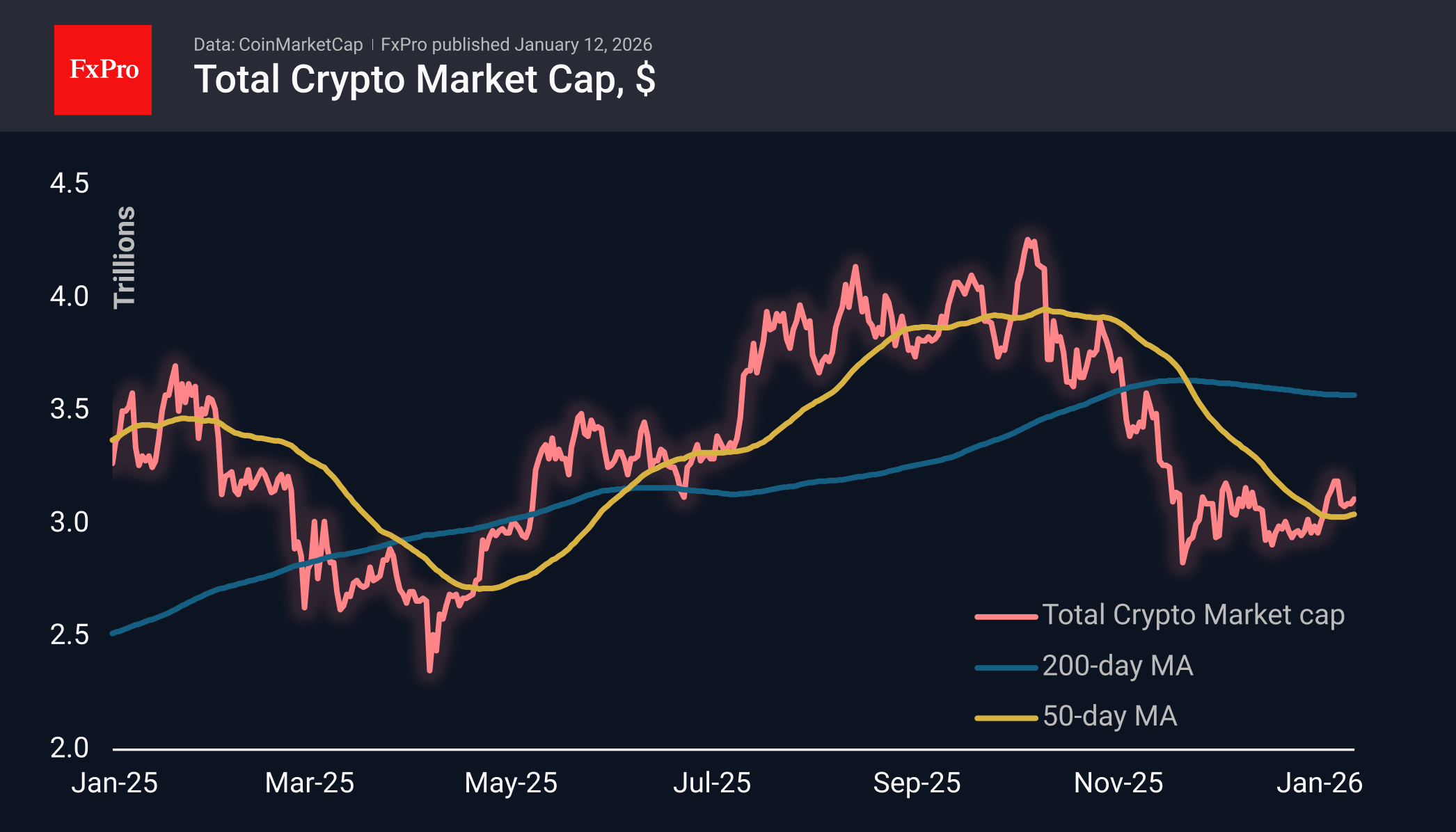
The crypto market capitalisation has changed slightly over the past day, adding 0.1% to $3.83 trillion. Monday’s recovery was interrupted by a new wave of sales, albeit less intense. The bears seem to have had their fill and are already losing some of their strength. However, potential buyers prefer to wait for a reason to buy, and trading disputes do not yet provide such a reason.
The sentiment index has fallen back to 34 (fear) from 38, where it had remained for the previous two days. Away from the ‘extreme fear’ zone, the market does not attract the most desperate speculators, leaving room for further decline.
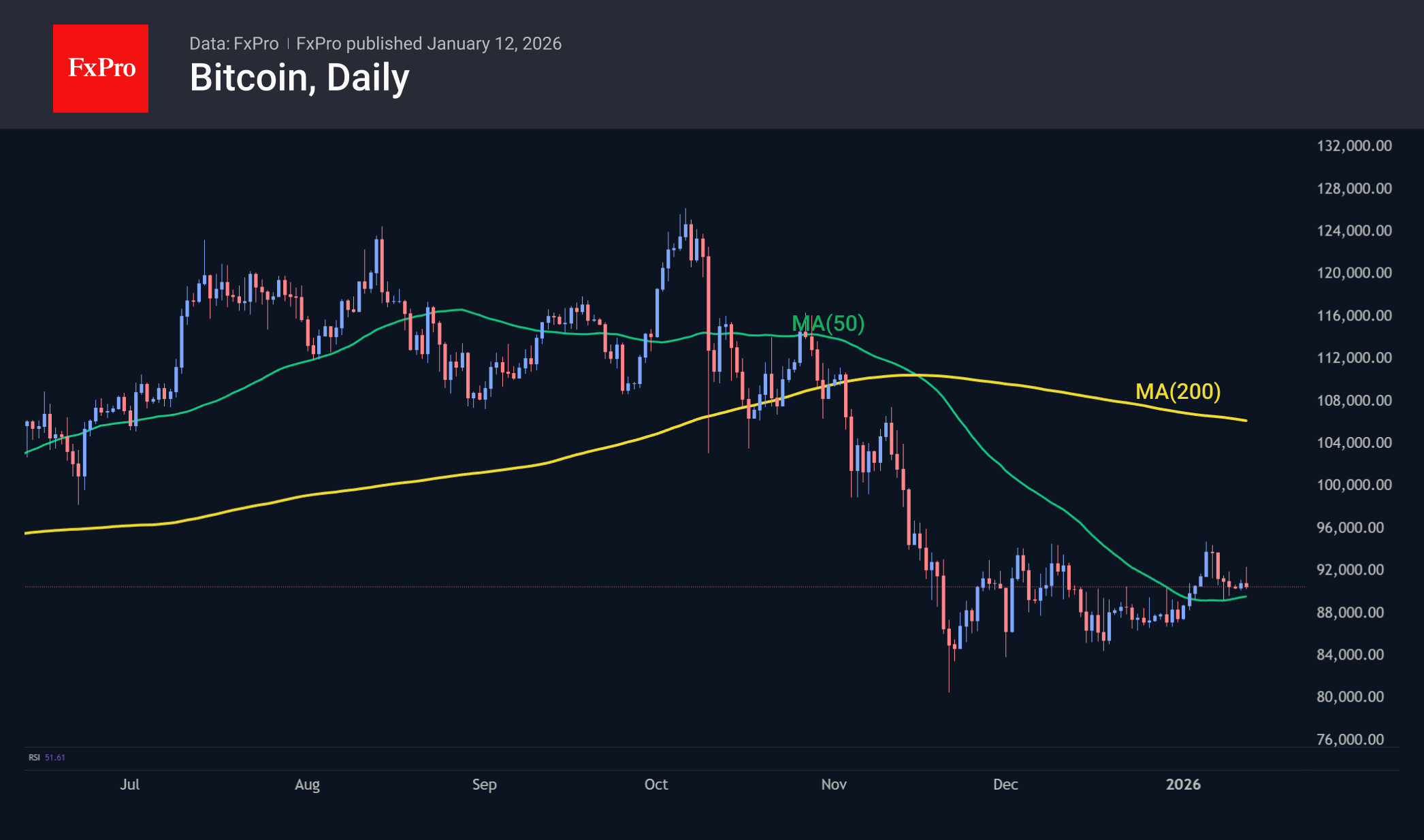
Bitcoin is trading at $112K, recovering some of Tuesday’s losses, during which the price fell from $115.6K to $110K. Since the start of the day on Wednesday, selling has prevailed again, but our focus remains on the $109–110K zone, where BTCUSD has found support in recent months. Has buyer interest remained at these levels, or has the balance of power shifted lower?
BNB is trading at $1180, almost 15% below Monday’s peak. This dynamic eloquently points to a change in cryptocurrency trading volumes, where a sustained decline is a sign of waning trading activity. From a technical analysis perspective, BinanceCoin has the potential to decline to the $1050-1100 range.
News Background
Fear and uncertainty among retail investors remain one of the most accurate signals for BTC accumulation, according to Santiment. Negative sentiment among small players has reached an annual high, which is often a signal of a reversal.
The recent market decline was not a panic sell-off, but rather a controlled deleveraging — the liquidation of leveraged positions, according to CryptoQuant.
Bitcoin’s correlation with gold has approached a historic high of 0.9. The narrative of digital gold is still alive, and the demand for protection against inflation has not disappeared, notes CryptoQuant CEO Ki Young Ju.
Ethereum developers have successfully deployed a test version of a major Ethereum update called Fusaka on the Sepolia network. The next step is to test the upgrade in Hoodi, scheduled for 28 October.
The Kingdom of Bhutan will migrate its national digital identity (NDI) system from Polygon to Ethereum to improve data security. The complete transition of the platform is expected by the first quarter of 2026.
Hang Seng Index: At Inflection Zone for Bullish Reversal, Medium-Term Uptrend Intact
Key takeaways
- The Hang Seng Index remains in a medium-term uptrend, despite a recent 9% pullback triggered by renewed US-China trade tensions.
- China’s core CPI rose to a 19-month high of 1% in September 2025, easing deflation fears and boosting market confidence.
- Technical indicators show bullish momentum, with key short-term support at 25,140 and upside resistance near 27,500.
- A sustained yuan appreciation continues to underpin Hong Kong’s equity market recovery.
The price actions of the Hong Kong 33 CFD Index (a proxy of the Hang Seng Index futures) have staged the expected bullish movement and rallied by 4.25% from 15 September 2025, surpassing the 26,940 resistance highlighted in our previous report, and hit an intraday high of 27,401 on 2 October 2025 (just whisker away from a major resistance of 27,500).
Thereafter, the Hong Kong 33 CFD Index tumbled by 9% (high to low) from 2 October 2025 to print an intraday low of 24,918 on Friday, 10 October 2025, due to renewed trade tensions between the US and China.
Let’s now examine the key macro factors that are likely to support the continuation of the medium-term bullish trends in the China and Hong Kong stock markets since April 2025 (ex-post US “Liberation Day” tariffs announcement).
China's core CPI continues to recover, reducing the risk of a deflationary spiral
Fig. 1: China CPI, Core CPI & PPI as of Sep 2025 (Source: TradingView)
China’s headline CPI prices dropped by 0.3% y/y in September 2025, steeper than the consensus estimates of a 0.1% decline but slightly less than a 0.4% drop in August 2025.
However, China’s core CPI inflation rate (stripping out food and energy) has continued to increase; it rose by 1% year-over-year (y/y) in September 2025, from 0.9% in August 2025, marking the highest reading in 19 months (see Fig. 1).
Additionally, the deceleration in China’s producer prices (PPI) has begun to slow, as they fell 2.3% year-over-year (y/y) in September 2025, easing from a 2.9% drop in August 2025, in line with consensus estimates, marking the mildest contraction since February 2025.
These latest inflationary data prints have reduced the risk of a deflationary spiral in the Chinese economy; in turn, this may see an uptick in consumer confidence in Q4 2025, which can trigger a positive feedback loop back into the China and Hong Kong stock markets.
Now, let's turn our attention to decipher the latest short-term (1 to 3 days) trajectory, key levels, and elements to watch on the Hang Kong 33 CFD Index from a technical analysis perspective.
Hong Kong 33 CFD Index minor trend as of 15 Oct 2025 (Source: TradingView)
Fig. 3: Hong Kong 33 CFD Index medium-term & major trends as of 15 Oct 2025 (Source: TradingView)
Preferred trend bias (1-3 days) – Bullish reversal at gap support
Tuesday, 14 October 2025’s minor corrective decline of 2.9% (high to low) has stalled and reversed right at the gap support formed at the start of Monday’s 13 October 2025 Asia session.
Bullish bias above 25,140 key short-term pivotal support and a clearance above the 25,860/26,060 (upside trigger level) sees the next intermediate resistance coming in at 26,935 before a test on the 27,500 major resistance (see Fig. 2).
Key elements
- The hourly RSI momentum indicator of the Hong Kong 33 CFD Index has staged a bullish momentum breakout condition on Tuesday, 14 October 2025, US session (see Fig. 2).
- The major uptrend phase of the Hong Kong 33 CFD Index has been in place since 22 January 2024 low remaining intact, supported by a steady appreciation of the offshore yuan (CNH) against the US dollar (see Fig. 3)
- The major resistance of the Hong Kong 33 CFD Index stands at 27,860, defined by the major descending trendline from the 29 January 2018 all-time high, and the upper boundary of a major ascending channel from the 22 January 2024 low.
Alternative trend bias (1 to 3 days)
Failure to hold at the 25,140 key short-term support invalidates the bullish reversal scenario on the Hong Kong 33 CFD Index for the continuation of the corrective decline sequence to expose the next intermediate supports at 24,820 and 24,260.