

Sample Category Title
GBPJPY Declines Around 40-Day SMA, Bearish Bias
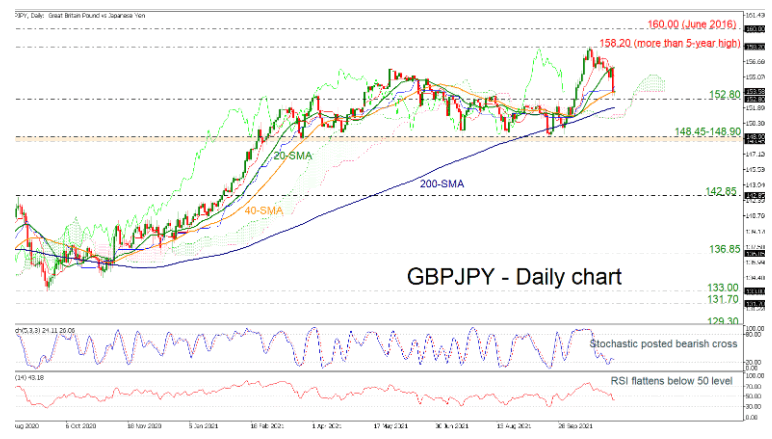
GBPJPY is retreating around the 40-day simple moving average (SMA) after a strong sell-off on Thursday. The short-term SMAs are pointing down, while the technical indicators are confirming the recent bearish bias. The stochastic is approaching the oversold zone again after the bearish cross within the %K and %D lines, and the RSI is flattening in the negative region.
If the price falls further, immediate support could come from the 152.80 barrier before meeting the 200-day SMA at 151.94. More losses could open the way for the 148.45-148.90 support zone but first it needs to penetrate the Ichimoku cloud at 151.20.
Alternatively, the bulls may test the 20-day SMA around 156.00 before challenging the more-than-five-year-high of 158.20. Even higher, the 160.00 psychological mark could attract attention, taken from the peak on June 2016.
All in all, GBPJPY have been in a negative correction since October 20 in the short-term, but in the broader outlook the market is still bullish.
USDCAD Aims For More Progress Near 200-SMA
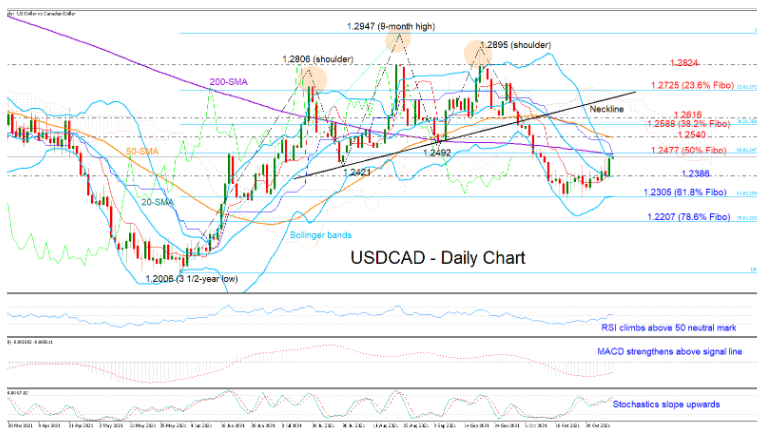
USDCAD has been rising on the support of the red Tenkan-sen line this week, reaching the limits of the 200-day simple moving average (SMA) and the 50% Fibonacci of the 1.2006 – 1.2947 upleg at 1.2477.
The compression in Bollinger bands foreshadows a significant change in volatility ahead, with the momentum indicators signaling that the breakout could be on the upside. The RSI has crawled above its 50 neutral mark, the MACD is recovering above its red signal line, and the Stochastics are sloping upwards, all painting a rosy picture for short-term trading.
If the price snaps the 1.2477 barricade, the spotlight will fall on the 50-day SMA at 1.2540. Breaching that line too, the bulls will next head for the 38.2% Fibonacci of 1.2588 and the 1.2616 hurdle, while higher, a tough resistance could develop between the broken neckline of the head and shoulder pattern at 1.2700 and the 23.6% Fibonacci of 1.2725.
Alternatively, if selling pressures resurface, the red Tenkan-sen line currently at 1.2386 could immediately take action with the help of the 20-day SMA (middle Bollinger band). Failure to pivot here could see the price swiftly diving towards the 1.2305 floor. Another step lower would dampen the short-term outlook, bringing the 78.6% Fibonacci of 1.2207 next into view.
In brief, USDCAD has the potential to further progress in the near term, though only a break above 1.2477would activate new buying orders.
Note Canadian and US jobs data will be out at 12:30 GMT today.
US 500 Grinds To New Highs
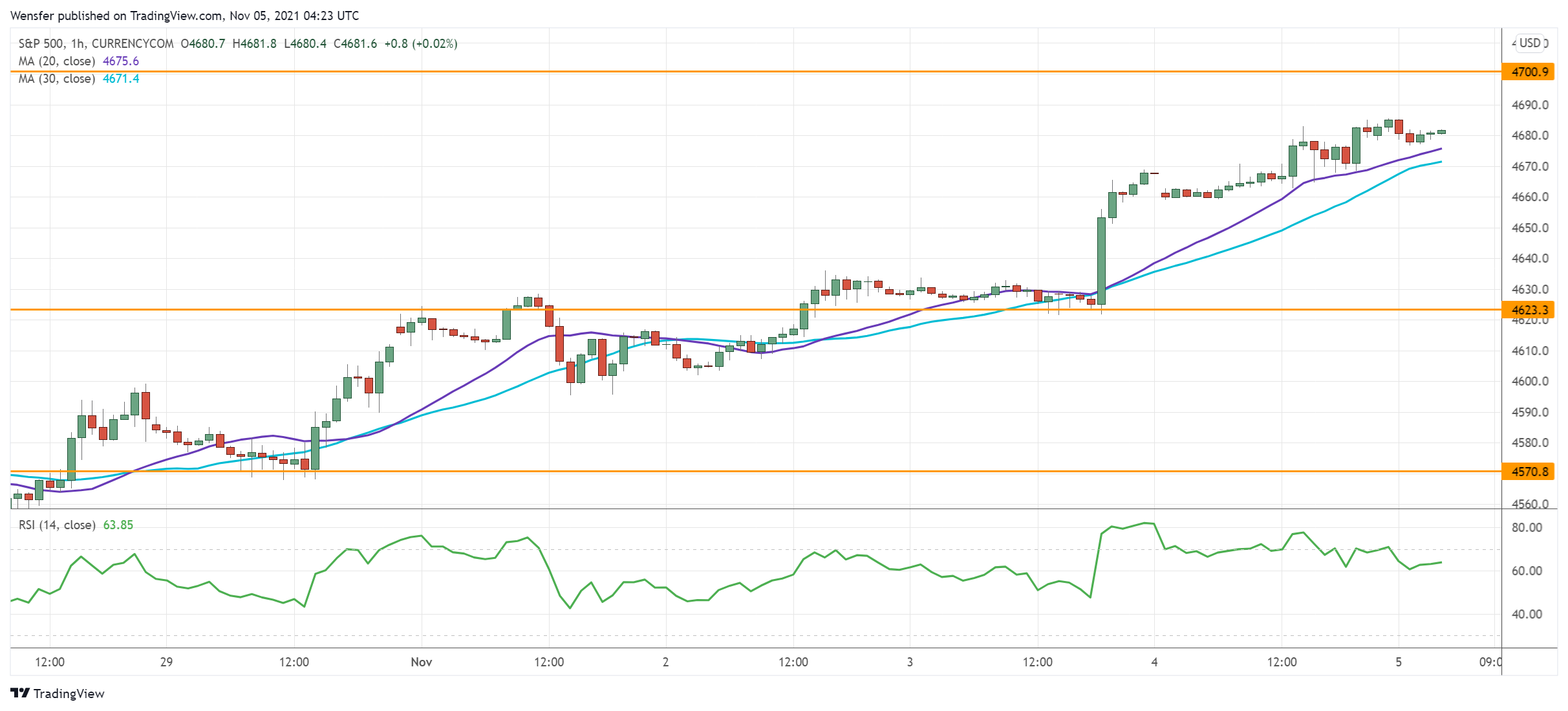
The S&P 500 continues to climb as the Fed deliberately leaves rate hikes off the table. The rally has gained momentum after the index cleared the previous peak at 4550.
Sentiment remains bullish, but an overbought RSI in the daily timeframe may call for a pause. Overextension is also on the hourly chart as the RSI repeatedly ventures above 70.
The bulls are pushing towards the psychological level of 4700. 4620 on the 30-hour moving averages may attract trend followers’ bids in case of a pullback.
USD/JPY Consolidates Gains
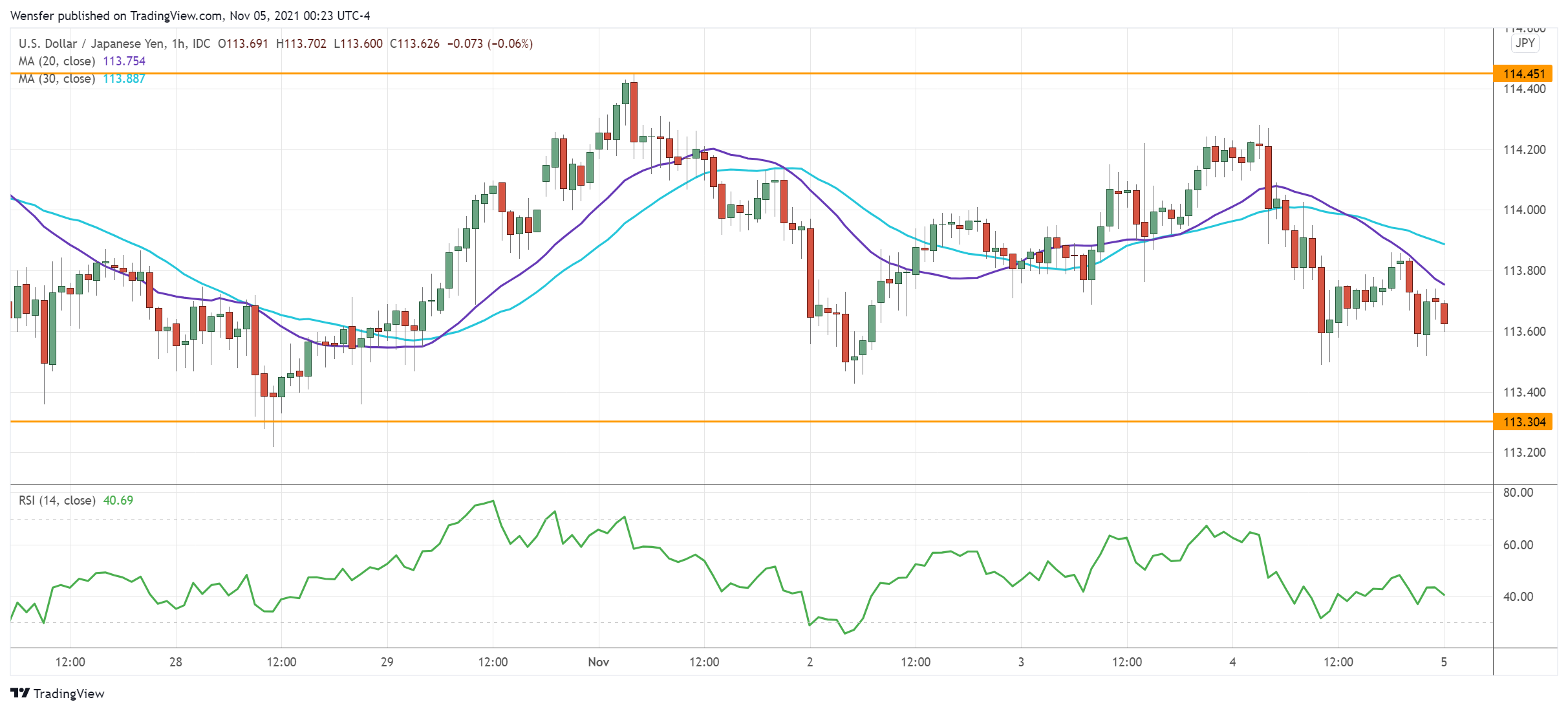
The US dollar consolidates recent gains as traders digest the start of the Fed’s taper.
The pair are seeking support around the 20-day moving average after a parabolic rise sent it to a four-year high. An overbought RSI from the daily chart is a sign of exhaustion and traders may be reluctant to push higher.
The greenback has found bids along the demand zone over 113.30. The bulls need to clear the fresh hurdle at 114.45 before they could resume the uptrend. A bearish breakout would trigger a sell-off towards 112.50.
GBP/USD Tests Key Floor
The pound plummeted after the Bank of England held interest rates against expectations.
The plunge below the daily support at 1.3570 has caught buyers off guard. Those who bet on a rebound around 1.3600 have rushed to the exit, raising volatility in the process. The September low at 1.3430 would be the next target.
An oversold RSI may attract some buying interest, though buyers might be cautious to avoid catching a falling knife. The supply zone between 1.3640 and 1.3700 could keep the sterling under pressure.
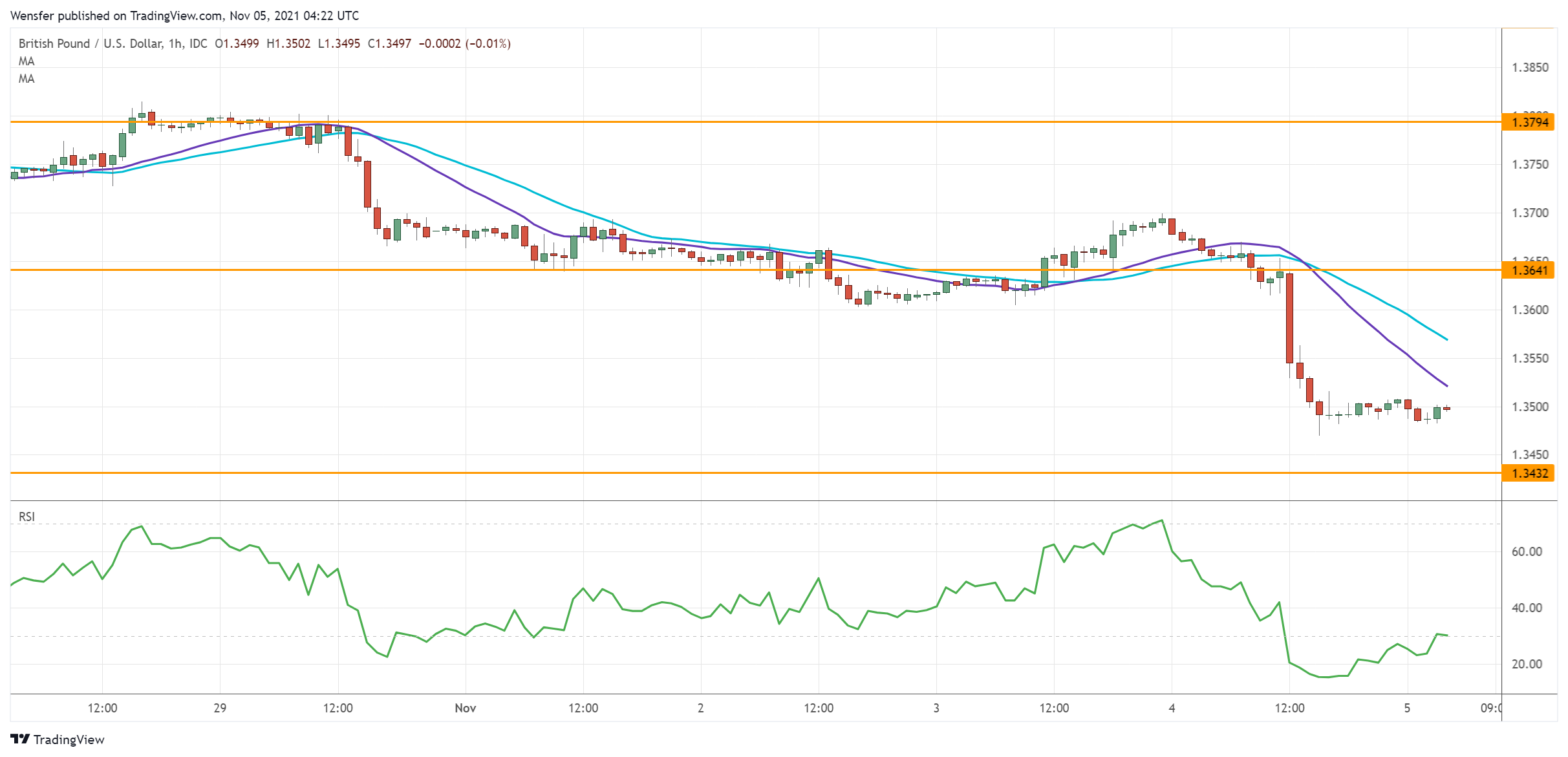
GBPUSD Sell-Off Accelerates Ahead Of US NFP Data
The British pound declined sharply on Thursday and early Friday as investors reacted to the surprise outcome of the Bank of England (BOE) decision. In the statement, the Federal Reserve announced that it would maintain interest rates at a historic low even as inflation surged. The bank expects that inflation will keep rising in the near term, with its October target being at about 4%. It will then peak to a decade high of 5% in the coming year. Notably, unlike the Federal Reserve, the bank decided to maintain its quantitative easing policy. Still, some analysts believe that rate hikes will not have an impact on inflation since prices are rising because of supply and energy issues.
The price of crude oil remained under pressure even after OPEC maintained its supply guidance. In a meeting, OPEC+ members said that they will boost oil output by about 400k barrels per month in line with the previous guidance. This happened even as the cartel is being pressured by Joe Biden, who believes that it is to blame for prices. The situation is ironic since the Biden administration has been increasing its regulations on oil and gas companies. OPEC+ believes that higher oil prices will help them recover faster. It also believes that their profits will help them invest more in clean energy sources.
The key economic data to watch today will be the US non-farm payrolls (NFP) data. Economists polled by Reuters expect the data to show that the US NFP rose from 194k in September to about 400k in October. Still, these estimates have been off in the past two months. Meanwhile, the unemployment rate is expected to decline to 4.7% while wages will rise by 4.9%. Other important data to watch will be the latest Canadian jobs numbers. The data is expected to show that Canada added 50k jobs, and the unemployment rate fell to 4.7%.
USDCAD
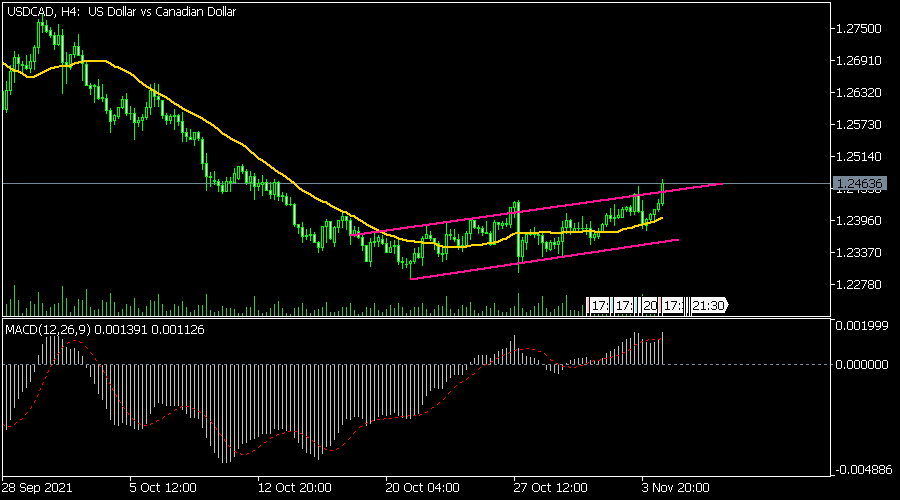
The USDCA staged a bullish breakout after the hawkish interest rate decision by the Fed. The pair rose to a high of 1.2463, which was the highest it has been since August 13. It also rose above the narrow channel where it has been in the past few days. The pair is also slightly above the 25-day moving average. Therefore, since the pair has formed a bearish flag pattern, there is a likelihood that a pullback will happen.
EURUSD
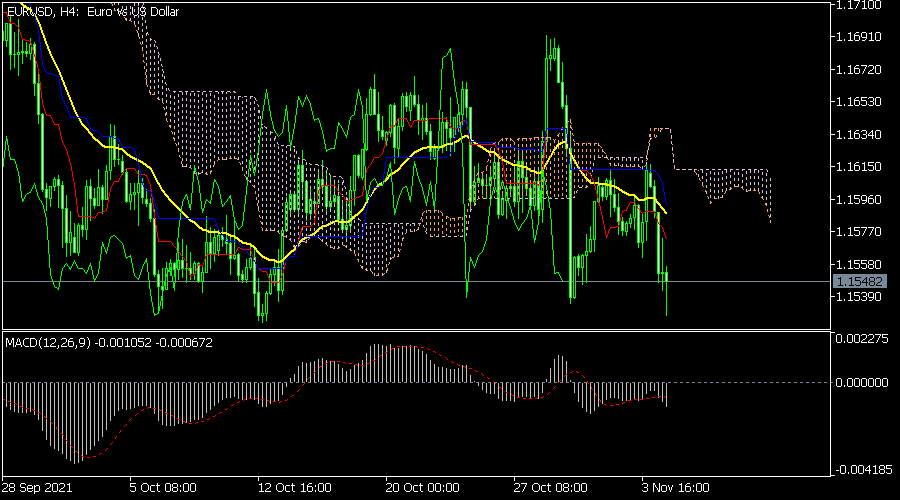
The EURUSD pair declined to a multi-month low as investors continued to reflect on the latest Fed decision. The pair is trading at 1.1545, which is slightly above its lowest level in the overnight session. It is below the Ichimoku cloud and the short and long-term moving averages. Therefore, the pair will likely keep falling as bears target the next key support at 1.1500.
GBPUSD
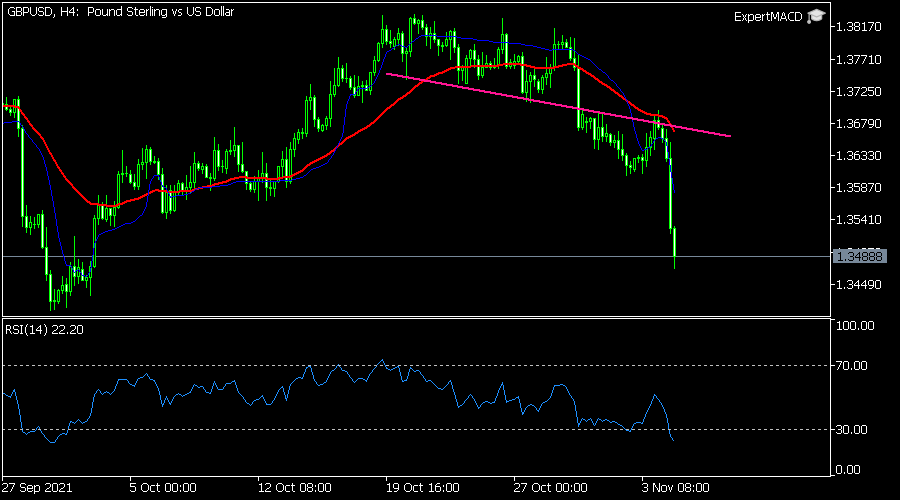
The GBPUSD pair crashed hard after the latest BOE decision. It declined to a low of 1.3472, which was the lowest it has been since the first week of October. It is along the lower line of the Bollinger Bands and below the short and longer-term moving averages. Therefore, the pair will likely keep falling as the divergence between the BOE and the Fed widens.
The US Payrolls Take Center Stage
Markets
The rebound on core bond markets accelerated yesterday. End last week/earlier this week the September/October rally (in yields) already shifted into a lower gear as investors reassessed whether (some) central bankers will address current inflation with pre-emptive rate hikes in order to avoid more aggressive action later. Recent speeches of BoE Bailey and Pill gave markets the impression of the Bank of England being one of the proponents of this approach. However, the BoE defied market trust and left its policy rate unchanged, with Bailey and Pill joining the majority for an unchanged decision. The BoE not delivering was the perfect trigger for markets to further unwind bearish bond positions, also in interest rate markets outside the UK. US yields declined between 4.15 bps (2-y) and 7.75 bps (5 & 10y), mainly due to a further decline in real yields. German yields eased up to 8.3 bps (5-y). Peripheral bonds thrived with the Italian10-y spread narrowing another 6 bps. The move also caused some damage on the technical charts with the 10-y EMU swap falling below the 0.17%/0.20 % support. Moves in FX again were much more modest than in interest rate markets. Sterling evidently took a hit. Cable lost almost two big figures to close at 1.35. EUR/GBP returned in the previous trading range (close 0.856). The yen profited from the decline in core yields (USD/JPY close 113.76), but the dollar outperformed most other majors with EUR/USD closing at 1.1554. Equity indices in Europe and the US mostly recorded gains of about 0.5%, but there was no euphoria.
Asian markets fail to capitalize on yesterday’s gains in the US and Europe. USD maintains yesterday’s gains (EUR/USD 1.1555 area) as do core bonds. Later today, the US payrolls take center stage. At the press conference, chair Powell turned the focus from inflation to the labour market. Reaching maximum employment remains key for the Fed to start hiking rates. August and September payrolls disappointed, partially due to some statistical issues. For today’s October report, markets anticipate job growth to have accelerated from 194k to 450k. The unemployment rate might drop from 4.8% to 4.7%. However, Powell stressed the Fed will assess the full employment goal by a broad series of indicators. In the respect, wage growth and a recovery in the participation rate are important too. After recent decline in yields, markets already unwound part of their bets on a pre-emptive CB action. Still, a disappointing report could extend the recent repositioning. For the US 10-y yield, 1.50% is providing intermediate support, with 1.45% the line in the sand to prevent a real weakening of the technical picture. A better-than-expected report might halt the bond rally, but it will take time from markets to regain faith in more aggressive CB action on inflation. EUR/USD stays in the defensive, but intraday moves were limited of late. Will the payrolls be strong enough to force a test of the 1.1495 support? Sterling traders might look out for comments/explanations from BoE MPC members after being wrongfooted by recent BoE guidance. Even so, investors probably won’t be in a hurry to react to any new hints on imminent rate hikes, if they were to reoccur. The downside in EUR/GBP is again better protected.
News headlines
Portugal will hold early elections on January 30, the country’s president announced yesterday. The decision follows parliament rejecting prime minister Costa’s minority Socialist government’s 2022 budget last week. The hard left, who withdrew support for Costa’s minority government after the 2019 elections, said the budget was too focused on spending controls. But having the third-highest debt ratio in the euro area, the PM is determined to ensure sound public finances. Costa is headed for the elections with a lead over the biggest opposition group, the center-right PSD.
The Japanese government will spend about 2tn yen on cash payments to households with children under 18 in spring next year, the Yomiuri newspaper reported today. The plan is part of an economic stimulus proposal that seeks to cushion the impact of the pandemic and is hoped to get passed parliament by the end of this year. Entitled household would receive 100 000 yen per child regardless of income. PM Kishida is also mulling handouts to low-income households and temporary workers. The government would tap its reserves to fund the plan rather than issue new debt.
Daily Technical Analysis
EUR/USD
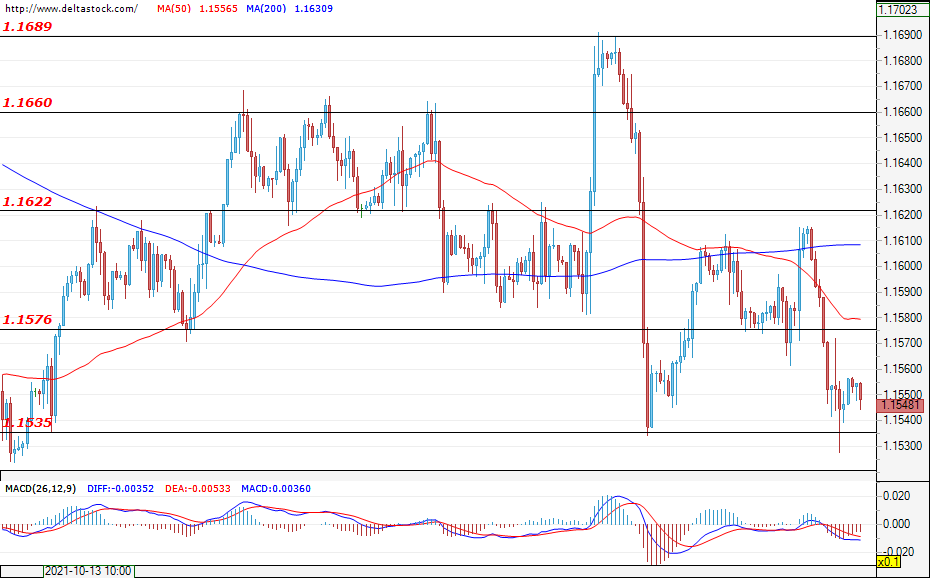
Current level - 1.1548
The currency pair continues to trade in a range between the support of 1.1535 and the resistance of 1.1660. The bears are expected to test the lower border of the mentioned range and, if they manage to violate this level, then the decline would continue towards the 1.1410 zone. In case the test of 1.1535 proves to be unsuccessful, then the bulls would take control and attack the upper border of 1.1660. The data on the non-farm payrolls for the U.S., which is to be announced today at 12:30 GMT, is expected to cause a spike in volatility and could lead to a breach of either border of the range.
| Resistance | Support | ||
| intraday | intraweek | intraday | intraweek |
| 1.1576 | 1.1690 | 1.1535 | 1.1410 |
| 1.1622 | 1.1760 | 1.1410 | 1.1350 |
USD/JPY
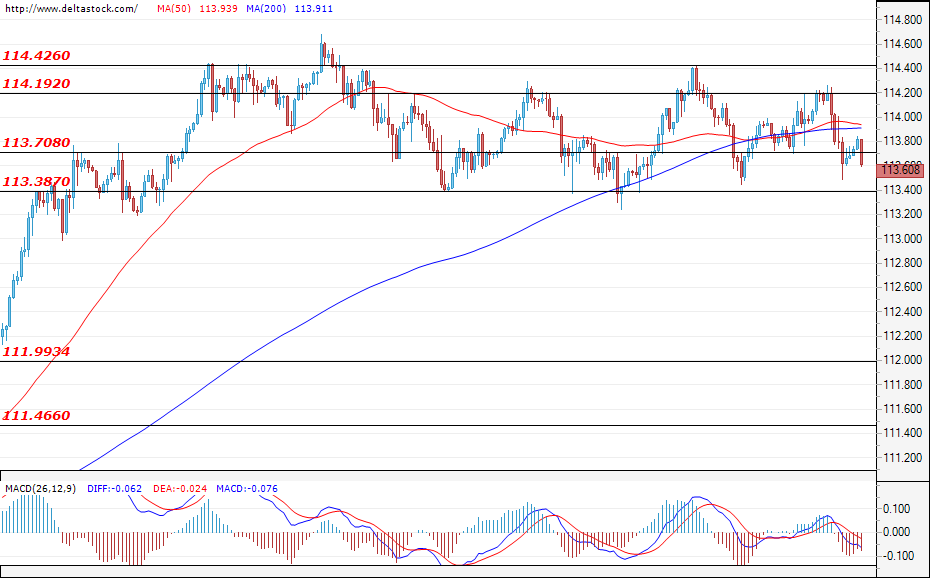
Current level - 113.60
The currency pair is trading in a relatively narrow range between 113.38 and 114.20, and neither the bulls, nor the bears are able to take control and get the pair out of this channel. However, a breach of the support of 113.38 would confirm that the corrective phase is continuing and that the bears would probably attack the next support level of 111.99. In the positive direction, a violation of 114.20 would bring back the positive sentiment, leading the pair towards the psychological level of 115.00.
| Resistance | Support | ||
| intraday | intraweek | intraday | intraweek |
| 113.70 | 115.25 | 113.38 | 111.99 |
| 114.20 | 116.20 | 111.99 | 111.49 |
GBP/USD
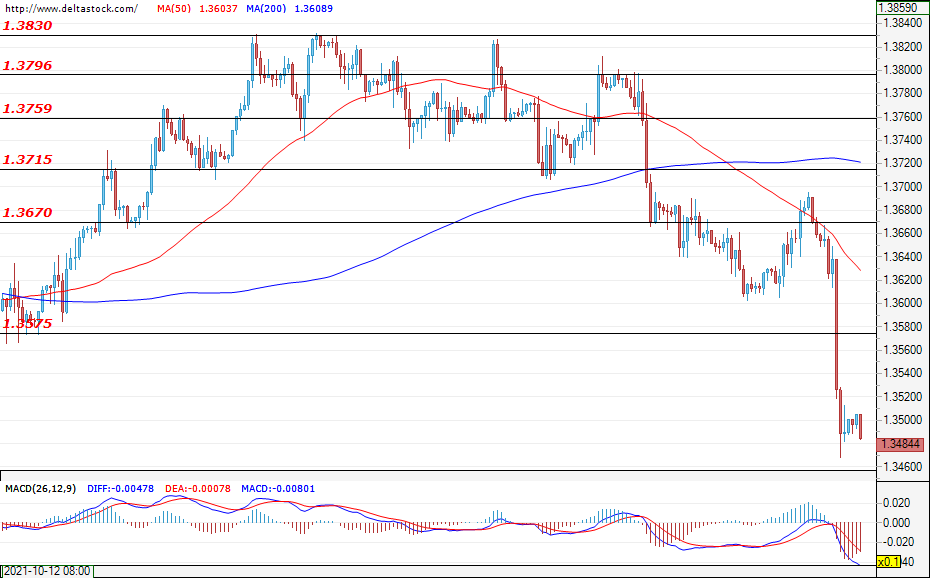
Current level - 1.3671
The sterling fell by almost 1.4% against the dollar during yesterday's trading session after the Bank of England surprisingly decided to leave the interest rate unchanged. The sentiment is now negative as the main support level of 1.3575 was violated and the price found support at the zone of around 1.3485. In the last trading session of the week, the Cable would probably consolidate at around 1.3485.
| Resistance | Support | ||
| intraday | intraweek | intraday | intraweek |
| 1.3575 | 1.3800 | 1.3485 | 1.3400 |
| 1.3670 | 1.3830 | 1.3400 | 1.3300 |
Not My Problem, Mate
We had another record-breaking trading session for the S&P500 and Nasdaq on Thursday, as investors continued celebrating Jerome Powell's reluctance to open the rate hike discussion for the US, and that, despite the threatening rise in inflation. Powell doesn't care, he just wants to continue supporting the jobs market and the economic recovery. Interestingly, the Bank of England (BoE) also refrained from raising rates yesterday, as British policymakers put the economic recovery before the rising inflation threat, as well.
And you know who else doesn't care about the energy crisis and the rising inflation? Well, it's OPEC! OPEC said that our energy crisis is not their problem and refused to give in to the US and others' pressure to increase oil supply. The cartel kept the supply increase unchanged at 400'000 bpd, while the US President Biden was forcing for double that amount. And as a response, the White House said it would use whatever tools it had at its disposal to address the energy markets.
Interestingly, oil prices took a hit amid OPEC decision to keep the supply tight, and the drama between Biden and the cartel. While the expected kneejerk reaction would have been a rebound in oil prices from the $80pb, we saw the complete opposite: the barrel of US crude is now exchanged below $80pb, and yesterday's decline sent the price below the steep up-trending channel base, that was building since mid-August. Why did that happen, and could it trigger a deeper sell-off?
One possible explanation is that the rapid rise in oil prices threatens the economic recovery, and the slower recovery means prospects of softer global demand in the future.
Another explanation is that the rapid rise in oil prices boosts inflation worldwide, and high inflation pressures boost the hawkish central bank expectations and call for a sooner than otherwise rate hikes in most economies; that's another factor that weighs on the prospects of future oil demand. And the failure to clear the $85 offers could now trigger a repositioning in the market, which would weaken the bears' hand, and send them to sleep for winter. OR NOT.
The nat gas prices remain under a decent positive pressure and that should contain the downside potential in oil prices. But for now, the US is accusing OPEC of its unwillingness ‘to use its power to help global economic recovery'. Yet, Saudis just don't care. And that brings me to the last possible explanation: the energy crisis could well turn into an energy war, in which case, the US will race to boost its own energy production, and that should bring a certain relief to the energy prices in the medium run.
It's the NFP day
The US will reveal how many new nonfarm jobs it added during October, and the expectation is 450-455Knew job additions, and higher hourly wages, where we could see almost a 5% increase year-on-year, in line with the consumer price inflation that is just above the 5% mark.
The problem with the higher wages is that they make the inflation much less transitory, and inflation less transitory should call for an adjustment in interest rates as well. So, there are two major points to watch at today's NFPs: first, the actual figure which will show how many people joined the jobs market last month, and second, by how much the average pay rose. A softer NFP figure and higher wages are normally negative for the market sentiment, while a bunch of people joining the workforce for soft pay is good. Welcome to capitalism.
RBA SoMP Makes the Case for Delayed First Rate Increase
The November SOMP provides some more detailed arguments behind the key forecasts which make the case for a delayed beginning to the rate hike cycle. Much of the detail in these cases should be interpreted that the risks are firmly pitched towards Westpac’s timing that the conditions will be appropriate for a first rate increase in February 2023.
The Reserve Bank’s Statement on Monetary Policy (SOMP) for November is less intriguing than usual because the key forecast changes were set out in the Governor’s Statement following the Board meeting earlier in the week.
The Board’s key themes were further explained by the Governor in a separate speech and Q and A session later in the afternoon following the Board meeting.
The key to the policy debate is the timing of when the Bank achieves its objectives of underlying inflation sustainably at 2.5%; full employment; and wages growth “materially higher than it is currently.”
Westpac expects those conditions will be met in time for a February 2023 beginning to the tightening cycle. The Bank’s forecasts indicate a much more delayed timetable.
Our analysis of the SOMP focuses on the Bank’s evidence to support its forecasts and associated timing of the policy change.
To recap the key forecast changes from the August SOMP.
Note that the forecasts use market pricing for the interest rate outlook which imply the first cash rate increase will be mid 2022 with the cash rate to increase to 1.5% by end 2023.
Inflation (Westpac forecast 2.8% in 2022)
Forecast growth in the Trimmed Mean (measure of underlying inflation) has been lifted from the 1.75% in the August SOMP to 2.25% in 2022 and 2.25% to 2.5% in 2023.
The SOMP does provide some useful insight into this change by noting that the 2.5% growth in the Trimmed Mean is not expected to be reached until December with the June forecast holding at 2.25% - that provides empirical support to the theme that if the Bank is prepared to anticipate a rate hike earlier than 2024 then it would be in the second half of 2023 at the earliest.
Wages (Westpac forecast 2.75% in 2022)
Forecast growth in the Wage Price Index is unchanged at 2.5% in 2022 but has been lifted from 2.75% to 3.0% in 2023, although the June 2023 forecast is for 2.75% rather than 3%.
Unemployment Rate (Westpac forecast 3.8% in 2022)
The unemployment rate forecasts are unchanged at 4.25% for December 2022 and 4% for December 2023.
Economic Activity (Westpac forecast 7.4% in 2022)
The forecast contraction in GDP in the September quarter has been revised from “more than 1%” to “around 2.5%”.
Forecast growth in 2022 has been lifted from 4.25% to 5.5%, largely reflecting the additional catch up required from the deeper than expected contraction in the September quarter. Forecast consumption growth in 2022 has been lifted from 6% to 7%; dwelling investment from –0.5% to 6.5%; and business investment from 9% to 10.75%.
The Policy Outlook
Even though the Governor’s Statement deleted reference to 2024 and the central scenario for policy lift off the SOMP clearly expresses the Board’s ongoing preference for 2024 albeit with some caveats.
This policy outlook is enunciated in the SOMP’s Overview with “Depending on the trajectory of the economy at that time, the Board judges that this outcome (central scenario) could be consistent with the first increase in the cash rate being in 2024”.
However, it is noted that some other plausible scenarios could warrant an increase in the cash rate in 2023.; but the latest data and the forecasts do not warrant an increase in the cash rate in 2022.
The most interesting aspects of the discussion on the economy were around wages; inflation and unemployment.
The commentary on the September quarter Inflation Report noted that around two thirds of the quarterly increase in the CPI were accounted for by fuel prices and home building costs- “although prices of some consumer durable goods picked up as import price pressures persisted and demand remained strong, inflation was fairly subdued in other expenditure components.”
A key driver of the pick-up in new dwelling inflation was the strong rise in raw materials costs which increased by 4% in the quarter and 8% over the year- the fastest pace since the 1980’s while the strong demand induced by subsidies also boosted prices.
The best “clue” to the Bank’s forecast for such a modest lift in inflation in 2022 (only 2.25% for the Trimmed Mean) is liaison information suggesting that firms absorbed upstream cost pressures, although it does note that household appliances and furnishings retailers have started passing higher upstream costs to consumers.
The Bank does note that “supply chain related cost pressures and the extent of pass through to consumers remain an upside risk to tradeable goods nflation in the year ahead.”
On the other hand, it is noted that since many “dining vouchers” could not be used in the September quarter they will weigh on measured market services prices in future quarters.
Rents were soft in the September quarter, although advertised rents suggest increases in the year ahead.
Inflation expectations have increased as well, in particular unions in the short term (up to 3%) and long-term expectations have increased to 2.5%.
There are a number of factors the Bank notes to justify only gradual increases in wages growth. Spare capacity remains in the labour market while it points out the inertia in the wage setting process.
On wages, the weak 0.4% print for the June quarter WPI showed soft growth across most industries. The share of jobs subject to wage freezes remained elevated particularly for individual agreements.
Information from the Bank’s liaison program suggests that rather than raise base wages many firms experiencing difficulties finding labour have been using other strategies to retain and attract employees., including sign on and retention bonuses; workplace flexibility, internal training and relying on less experienced staff. However, where shortages were acute wages growth had been strong.
Looking forward, the liaison work reports that firms are generally reporting an expected return to annual wage rises of 2-2.5% over the next year. The distribution of wage rises is generally consistent with the pre pandemic pattern with only a quarter of firms expecting wages growth to be more than 3%.
The Bank seems to be basing its forecasts on current conditions. But the risks to this gradual, almost gentle, lift in wages and inflation, seem to be to the upside particularly when even on the Bank’s more cautious forecasts the unemployment rate is set to fall to 4.25% by end 2022 – near the lows we have not seen since 2007.
Expect strong demand (over 7% growth) in 2022. There is a clear likelihood that supply restrictions including in labour markets (relief from shortages from borders reopening will be gradual; some restrictions from unvaccinated workers) will persist for longer than expected
The elimination of the subsidy for new building will boost measured prices of housing construction; price expectations are rising; some retailers are passing on costs and some employers are already having to respond to shortages.
Conclusion
The SOMP maintains a clear case for the conditions required to justify the beginning of the rate hike cycle to be 2024, with a possibility of late 2023.
The case relies on very gradual response in inflation and wages to the current developments despite a strong recovery in the economy; supply constraints in goods and labour markets; rising inflationary expectations; some evidence of firms’ asserting pricing power; and firms having to resort to various tactics to hold down wage increases.
The risks to these scenarios look to be pitched to the upside and Westpac continues to anticipate that the necessary conditions for the first-rate increase will come much sooner than envisaged in the SOMP’s forecasts.