Sample Category Title
Markets Weekly Outlook – Navigating the US Shutdown & Global Trends as Equity Markets Continue to Soar
Week in review
A week that seemed like it might be a busy one from a data perspective did not deliver. Markets were braced for US jobs numbers and the NFP report which never arrived after the US congress failed to agree on funding.
This led to a Government shutdown, something which occurred during the first Trump administration as well.
Since the official government jobs report was delayed, some people turned to the ADP employment estimate instead, a report that measures only private-sector jobs.
This report, which is sometimes unreliable compared to the official data, was quite negative this week. It showed that the US private sector lost 32,000 jobs in September.
Source: Macrobond, ING
As things stand markets continue to fully price in a rate cut at the Fed's October meetings with a December rate cut also priced in at around a 90% probability.
The current government shutdown and the resulting lack of new economic data probably won't change this long-term debate. As long as the shutdown doesn't last for an extremely long time, the affected government workers will receive all their missed pay, meaning there should be very little permanent damage to the economy.
The only uncertainty is whether the threats of widespread layoffs will actually happen.
So How did the Markets Perform?
On Friday, the major Wall Street stock indexes hit new record highs during the trading day. This continued strong rally is notable because it's happening even as the federal government shutdown enters its third day, making the economic outlook unclear due to missing data.
The positive mood in the market is being helped by excitement over Artificial Intelligence (AI), and investors seem unconcerned since markets have generally ignored shutdowns in the past.
According to the most recent survey of individual investors (AAII):
- Bullish sentiment (the belief that stocks will rise) increased to 42.9%. This is above its historical average for the third time in nine weeks, showing growing optimism.
- Bearish sentiment (the expectation that stocks will fall) remained unchanged and has been above its historical average for almost all of the past 35 weeks, indicating lingering caution.
- Neutral sentiment (the belief that stocks will stay the same) fell to 17.9%. This number has been well below its long-term average for over a year, meaning very few investors currently believe the market will simply remain flat.
US Indices were all on course for another week of gains. The Nasdaq 100 is on course for gains of around 1.20%, the Dow Jones is up 0.94% and the S&P 500 is eyeing gains of 1.16%.
In Europe and Asia the story was similar as they tracked gains from Wall Street. The STOXX 600 is set for its biggest weekly jump since April.The IBEX was ending the week strong, trading up around 0.98% on Friday.
Cross Asset Performance for the Week
Source: TradingView
How has the US Dollar Reacted?
The US dollar pulled back on Friday and is expected to finish the week with losses against several major currencies. Leading this trend, the euro rose 0.2% against the dollar to $1.1739, putting it on track for its best weekly performance in a month.
This strength in the euro caused the overall dollar index (which tracks the dollar's value against key currencies) to drop 0.1% to 97.72, setting it up for its worst weekly result since July.
The dollar also weakened against the Swiss franc, falling 0.3% and heading for its biggest weekly drop since mid-August.
Similarly, the dollar slid against the British pound, which rose 0.3% and is poised for its largest weekly gain since August. The dollar's decline accelerated after new data showed that the US services sector growth stalled in September due to a sharp drop in new business.
Meanwhile, the Japanese yen pulled back from the strong gains it made earlier in the week as traders looked ahead to a major political election this weekend and tried to predict the next move by the Bank of Japan.
In commodity markets, gold prices rose and stayed near their record highs, on track for their seventh straight weekly gain.
Finally, oil prices rose on Friday but are still heading for a large weekly loss of 7% or more, following reports that OPEC+ might increase its supply.
The Week Ahead
Next week is a quiet week from a data perspective and may be welcomed by market participants.
Obviously the US shutdown is not ideal, but after a busy few weeks of data releases and with earnings season around the corner, market participants may welcome some calm before a potential storm in Q4.
Let us take a look at what may move markets from a data perspective next week.
Asia Pacific Markets
Since Chinese markets are currently closed for the long Golden Week holidays (they won't reopen until next Thursday), the usual economic reports on inflation and trade will be delayed by a week.
Therefore, the main focus for now will be on reports detailing how much people traveled and spent money during the holiday period. It is also possible that the data on China's total new loans and credit (aggregate financing) could be released later in the week.
It is a quiet week in Japan with a speech by Governor Ueda the main highlight after the elections this weekend.
Attention will turn to the Reserve Bank of New Zealand rate decision on Wednesday. Markets are expecting the Reserve Bank of New Zealand (RBNZ) will lower its interest rate by 0.25% on October 8th, which is what most experts and market pricing currently expect.
US Government Shut Down, Euro Area & bData
The main issue next week is the government shutdown in the U.S. Depending on how long it lasts, market participants might not receive many official economic reports. Even if an agreement is reached soon, it will take time to get workers back and release schedules back on track. Reports that could be delayed next week include the trade balance, weekly jobless claims, and inventory numbers.
Despite this, the Federal Reserve (Fed) will still release the minutes from its September meeting (on Wednesday), where they cut rates by 25 basis points. We will also get the August consumer credit data and the initial October consumer sentiment index from the University of Michigan.
Consumer spending is currently stable, but confidence has already fallen sharply this year due to a weaker job market and worries about how tariffs are driving up prices. With millions of federal workers facing missed paychecks or permanent layoffs due to the shutdown, it is unlikely that consumer confidence will improve.
A quiet week for the Euro Area and the UK as well from a data perspective. The EU will release retail sales before we get a speech by ECB President Christine Lagarde.
In the UK the main highlight of the week comes from a speech by Bank of England (BoE) Governor Bailey.
For all market-moving economic releases and events, see the MarketPulse Economic Calendar. (click to enlarge)
Chart of the Week - US Dollar Index (DXY)
This week's Chart of the week is the US Dollar Index (DXY)
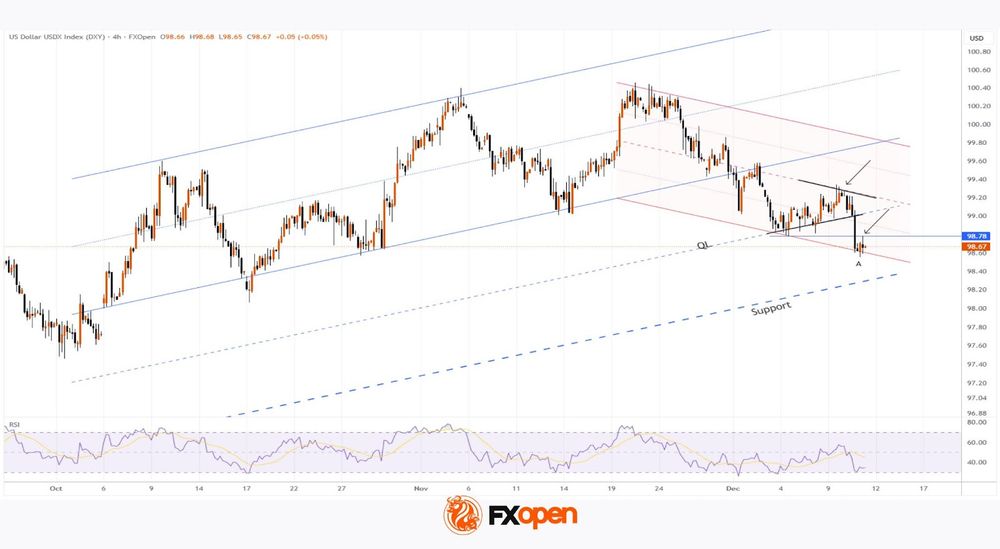
From a technical perspective, the DXY continues to hug on to a key area of support around the 97.70 handle.
Any attempt to push higher by DXY bulls is facing a challenge with the 100-day MA resting at the 98.19 handle. A move beyond that handle may find resistance at 99.58 before the psychological pivot level at 100.00 comes back into the discussion.
A move lower may find support at the swing low around the 97.20 handle before the 96.90 and YTD low 96.37 handles come into focus.
US Dollar Index (DXY) Daily Chart - October 3, 2025
Source:TradingView.Com (click to enlarge)
Safe Trades.
The Weekly Bottom Line: Shutdown Throws a Curveball at the Fed
Canadian Highlights
- Canadian equity markets continued their ascent this week, although bond yields and oil prices sent a somewhat weaker signal about economic growth prospects.
- Canadian job markets have softened, which should downwardly pressure consumption moving forward. The Bank of Canada will be no doubt be closely watching the September Labour Force Survey report out next week.
- Markets are assigning a roughly 60% chance of a BoC cut later this month. Given the weak economic backdrop and diminished inflation risks, we think the chance is much higher.
U.S. Highlights
- The U.S. government has shut down all “non-essential” services this week as Congress failed to pass a bill to fund government spending.
- In the absence of payrolls data, the ADP report took the center stage, and showed that private payrolls declined by 32,000 in September. August’s JOLTS report showed that businesses remained in low hire, low fire mode.
- The ISM manufacturing index rose slightly in September but remained in contractionary territory. Its services counterpart dropped sharply, narrowly avoiding slipping into contractionary territory.
Canada – Tough Times
The mood in Canadian financial markets was somewhat sour this week, except that the unrelenting bull run in equities continued. This is despite the U.S. government shutdown, and a fresh set of U.S. tariffs placed on lumber (10%) and kitchen cabinets, bathroom vanities, and upholstered furniture (25% each). Tariffs on the latter categories are unlikely to massively dent the Canadian economy, although if stacked on to existing duties, the lumber tariffs would yield a 45% import tax on Canadian lumber. President Trump has also pledged tariffs on branded pharmaceuticals and heavy trucks at a later time. Notably, PM Carney will meet with President Trump next week to discuss trade and other important issues.
Developments in other financial markets signaled some more concern about the economic outlook. The Canadian 10-year yield was down a few bps this week (as of writing), following its U.S. counterpart lower amid the government shutdown. Meanwhile, oil prices traded near multi-month lows, weighed down by both demand and supply worries.
There is reason to be apprehensive about Canada’s economic backdrop, with troubling signs aplenty in the jobs market (Chart 1). There were no major data releases this week (although preliminary housing data signalled cooling sales growth in key markets last month). However, September’s Labour Force Survey (LFS) data is on tap for next week. So far, the LFS has painted an ugly picture of the current jobs market, with a cumulative 100k jobs lost in July and August. Part of this story is tied to demographics and labour supply, with rapidly slowing population growth reducing the labour force so far in the third quarter. And there’s a good chance this dynamic shows itself again next week. However, labour demand is also soft - evidenced by falling job vacancies - while wage growth is slowing and the unemployment rate is on the rise.
One way a slowing jobs market will impact the economy is through household spending (Chart 2). Consumer spending was surprisingly resilient in the first half of 2025, which we chalk up to past rate cuts, a rise in housing market activity, and travelers choosing to stay (and spend) in Canada instead of heading south of the border. However, we question the durability of this spending strength, given Canada’s slowing population growth and, crucially, it’s weakening jobs market. As such, we think Canadian consumption is likely to post sub-trend growth performances moving forward.
Policymakers are certainly aware of the downside risks to Canada’s economic growth. Minutes from the Bank of Canada’s deliberations ahead of their September rate cut were released this week. And, they were dotted with dovish statements, including the observation that upward momentum in core inflation had diminished, the labour market had softened, and most counter-tariffs on U.S. products had been removed (reducing Canadian inflation risk). As of now, markets see a 60% chance of a follow-up rate cut by the BoC this month. However, we think the BoC will pull the trigger given the weak economic backdrop.
U.S. – Shutdown Throws a Curveball at the Fed
On October 1st, the U.S. government shut down all “non-essential” services, as Congress failed to pass a bill necessary to fund government in the current fiscal year. Financial markets have shrugged off the shutdown so far, with equities ending the week higher, bond yields declining, and the U.S. dollar weakening only slightly. In past shutdowns in 2013 and 2018, equities and the USD declined modestly and recovered quickly, so the reaction this time is even more muted.
If this shutdown is brief, the markets may be right to discount it. Most lost output in previous shutdowns was eventually recovered. Studies show shutdowns reduce annualized quarterly real GDP growth by up to 0.1 percentage points for each week. However, negative effects increase non-linearly the longer the shutdown lasts as disruptions accumulate.
The lack of updated official economic data is another casualty of the shutdown. September’s payrolls release has been postponed. A prolonged shutdown may delay other key indicators like the Consumer Price Index (CPI). A lack of official data complicates decision-making for the Fed. For now, the Fed will have to rely on private and internal data sources. Earlier this week, Chicago Fed President Goolsbee (who is a voting member of the FOMC) echoed that, but also acknowledged that it worries him “that we wouldn’t be getting official statistics at exactly a moment when we’re trying to figure out is the economy in transition.”
Without official payrolls data, employment surveys—such as ADP and JOLTS—filled the gap. The ADP report showed continued weakness in job growth in September, with private payrolls declining by 32,000. Though ADP data can be volatile, recent trends show greater alignment with payroll figures through 2025, especially on a three-month moving average (Chart 1). The August JOLTS report, released before the shutdown, also showed a hiring drought, with job openings below the number of unemployed for a second consecutive month (Chart 2). Although job opportunities were scarce, layoffs have remained subdued. Employers seem to be in “low hire, low fire” mode, supporting stability in the unemployment rate and helping to cushion consumer spending for now.
In terms of economic growth, ISM indexes pointed to slowing momentum in September, with businesses increasingly citing the growing impact of tariffs on their bottom lines. The ISM manufacturing index edged higher, but remained in contractionary territory, with only 5 out of 18 industries reporting growth. Activity moderated in the services sector, with the ISM non-manufacturing index declining to 50.0 from 52.0, narrowly avoiding slipping into contraction. Details were disappointing: new orders and business activity moderated, prices rose and the employment subcomponent remained in contractionary territory. While limited, this week’s data continues to support the case for additional monetary stimulus from the Fed, with another rate cut in October being nearly priced in by markets.
Weekly Economic & Financial Commentary: Shutdown Showdown
Summary
United States: Employment Friday That Wasn't
- The first Friday of the month has come, but since the U.S. federal government is shut down, it didn't bring with it the latest read on the jobs market. The manufacturing and services sector purchasing manager surveys suggest activity held up at the end of the third quarter, but underlying conditions remain uneasy.
- Next week: Trade Balance (Tue.), Consumer Credit (Tue.)
International: Mix of Economic Data from Advanced and Emerging Economies
- This week saw a range of international economic data releases. On the policy front, the Reserve Bank of Australia held its Cash Rate steady at 3.60%. In the Eurozone, inflation ticked higher but remained broadly in line with expectations. Across Asia, Japan’s Q3 Tankan survey reflected broadly favorable trends, while China’s PMI readings were more mixed but still suggested modest overall improvement.
- Next week: Japan Labor Cash Earnings (Wed.), RBNZ Policy Rate (Wed.), Norway CPI (Fri.)
Topic of the Week: Shutdown Showdown
- Fiscal year 2026 began on Wednesday, Oct. 1 with a government shutdown. The economic and financial market impact of a 1-2 week government shutdown should be modest, but a longer shutdown would be more painful, and the indefinite delay of key economic data clouds the near-term outlook for U.S. monetary policy.
Summary 10/6 – 10/10
Monday, Oct 6, 2025
| GMT | Ccy | Events | Consensus | Previous |
|---|---|---|---|---|
| 00:00 | AUD | TD-MI Inflation Gauge M/M Sep | -0.30% | |
| 05:45 | CHF | Unemployment Rate M/M Sep | 2.90% | 2.90% |
| 08:30 | EUR | Eurozone Sentix Investor Confidence Oct | -7.7 | -9.2 |
| 08:30 | GBP | Construction PMI Sep | 46.3 | 45.5 |
| 09:00 | EUR | Eurozone Retail Sales M/M Aug | 0.10% | -0.50% |
| 23:30 | AUD | Westpac Consumer Confidence Oct | -3.10% | |
| 23:30 | JPY | Overall Household Spending Y/Y Aug | 1.20% | 1.40% |
| GMT | Ccy | Events | |
|---|---|---|---|
| 00:00 | AUD | TD-MI Inflation Gauge M/M Sep | |
| Forecast: | Previous: -0.30% | ||
| 05:45 | CHF | Unemployment Rate M/M Sep | |
| Forecast: 2.90% | Previous: 2.90% | ||
| 08:30 | EUR | Eurozone Sentix Investor Confidence Oct | |
| Forecast: -7.7 | Previous: -9.2 | ||
| 08:30 | GBP | Construction PMI Sep | |
| Forecast: 46.3 | Previous: 45.5 | ||
| 09:00 | EUR | Eurozone Retail Sales M/M Aug | |
| Forecast: 0.10% | Previous: -0.50% | ||
| 23:30 | AUD | Westpac Consumer Confidence Oct | |
| Forecast: | Previous: -3.10% | ||
| 23:30 | JPY | Overall Household Spending Y/Y Aug | |
| Forecast: 1.20% | Previous: 1.40% | ||
Tuesday, Oct 7, 2025
| GMT | Ccy | Events | Consensus | Previous |
|---|---|---|---|---|
| 05:00 | JPY | Leading Economic Index Aug P | 107.2 | 106.1 |
| 06:00 | EUR | Germany Factory Orders M/M Aug | 1.20% | -2.90% |
| 07:00 | CHF | Foreign Currency Reserves (CHF) Sep | 715B | |
| 12:30 | CAD | Trade Balance (CAD) Aug | -5.7B | -4.9B |
| 12:30 | USD | Trade Balance (USD) Aug | -61.0B | -78.3B |
| 14:00 | CAD | Ivey PMI Sep | 51.2 | 50.1 |
| 23:30 | JPY | Labor Cash Earnings Y/Y Aug | 2.80% | 4.10% |
| 23:50 | JPY | Current Account (JPY) Aug | 2.24T | 1.88T |
| GMT | Ccy | Events | |
|---|---|---|---|
| 05:00 | JPY | Leading Economic Index Aug P | |
| Forecast: 107.2 | Previous: 106.1 | ||
| 06:00 | EUR | Germany Factory Orders M/M Aug | |
| Forecast: 1.20% | Previous: -2.90% | ||
| 07:00 | CHF | Foreign Currency Reserves (CHF) Sep | |
| Forecast: | Previous: 715B | ||
| 12:30 | CAD | Trade Balance (CAD) Aug | |
| Forecast: -5.7B | Previous: -4.9B | ||
| 12:30 | USD | Trade Balance (USD) Aug | |
| Forecast: -61.0B | Previous: -78.3B | ||
| 14:00 | CAD | Ivey PMI Sep | |
| Forecast: 51.2 | Previous: 50.1 | ||
| 23:30 | JPY | Labor Cash Earnings Y/Y Aug | |
| Forecast: 2.80% | Previous: 4.10% | ||
| 23:50 | JPY | Current Account (JPY) Aug | |
| Forecast: 2.24T | Previous: 1.88T | ||
Wednesday, Oct 8, 2025
| GMT | Ccy | Events | Consensus | Previous |
|---|---|---|---|---|
| 01:00 | NZD | RBNZ Interest Rate Decision | 2.75% | 3.00% |
| 05:00 | JPY | Eco Watchers Survey: Current Sep | 47.1 | 46.7 |
| 06:00 | EUR | Germany Industrial Production M/M Aug | -1.00% | 1.30% |
| 14:30 | USD | Crude Oil Inventories (Oct 3) | 1.8M | |
| 18:00 | USD | FOMC Minutes | ||
| 23:01 | GBP | RICS Housing Price Balance Sep | -17% | -19% |
| GMT | Ccy | Events | |
|---|---|---|---|
| 01:00 | NZD | RBNZ Interest Rate Decision | |
| Forecast: 2.75% | Previous: 3.00% | ||
| 05:00 | JPY | Eco Watchers Survey: Current Sep | |
| Forecast: 47.1 | Previous: 46.7 | ||
| 06:00 | EUR | Germany Industrial Production M/M Aug | |
| Forecast: -1.00% | Previous: 1.30% | ||
| 14:30 | USD | Crude Oil Inventories (Oct 3) | |
| Forecast: | Previous: 1.8M | ||
| 18:00 | USD | FOMC Minutes | |
| Forecast: | Previous: | ||
| 23:01 | GBP | RICS Housing Price Balance Sep | |
| Forecast: -17% | Previous: -19% | ||
Thursday, Oct 9, 2025
| GMT | Ccy | Events | Consensus | Previous |
|---|---|---|---|---|
| 00:00 | AUD | Consumer Inflation Expectations Oct | 4.70% | |
| 06:00 | JPY | Machine Tool Orders Y/Y Sep P | 8.10% | |
| 06:00 | EUR | Germany Trade Balance (EUR) Aug | 15.3B | 14.7B |
| 11:30 | EUR | ECB Meeting Accounts | ||
| 12:30 | USD | Initial Jobless Claims (Oct 3) | 223K | 218K |
| 14:00 | USD | Wholele Inventories Aug F | -0.20% | -0.20% |
| 14:30 | USD | Natural Gas Storage (Oct 3) | 53B | |
| 21:30 | NZD | Business NZ PMI Sep | 49.9 | |
| 23:50 | JPY | Bank Lending Y/Y Sep | 3.70% | 3.60% |
| 23:50 | JPY | PPI Y/Y Sep | 2.50% | 2.70% |
| GMT | Ccy | Events | |
|---|---|---|---|
| 00:00 | AUD | Consumer Inflation Expectations Oct | |
| Forecast: | Previous: 4.70% | ||
| 06:00 | JPY | Machine Tool Orders Y/Y Sep P | |
| Forecast: | Previous: 8.10% | ||
| 06:00 | EUR | Germany Trade Balance (EUR) Aug | |
| Forecast: 15.3B | Previous: 14.7B | ||
| 11:30 | EUR | ECB Meeting Accounts | |
| Forecast: | Previous: | ||
| 12:30 | USD | Initial Jobless Claims (Oct 3) | |
| Forecast: 223K | Previous: 218K | ||
| 14:00 | USD | Wholele Inventories Aug F | |
| Forecast: -0.20% | Previous: -0.20% | ||
| 14:30 | USD | Natural Gas Storage (Oct 3) | |
| Forecast: | Previous: 53B | ||
| 21:30 | NZD | Business NZ PMI Sep | |
| Forecast: | Previous: 49.9 | ||
| 23:50 | JPY | Bank Lending Y/Y Sep | |
| Forecast: 3.70% | Previous: 3.60% | ||
| 23:50 | JPY | PPI Y/Y Sep | |
| Forecast: 2.50% | Previous: 2.70% | ||
Friday, Oct 10, 2025
| GMT | Ccy | Events | Consensus | Previous |
|---|---|---|---|---|
| 12:30 | CAD | Net Change in Employment Sep | 5.0K | -65.5K |
| 12:30 | CAD | Unemployment Rate Sep | 7.10% | 7.10% |
| 14:00 | USD | UoM Consumer Sentiment Oct P | 55 | 55.1 |
| 14:00 | USD | UoM 1-Yr Inflation Expectations Oct P | 4.70% |
| GMT | Ccy | Events | |
|---|---|---|---|
| 12:30 | CAD | Net Change in Employment Sep | |
| Forecast: 5.0K | Previous: -65.5K | ||
| 12:30 | CAD | Unemployment Rate Sep | |
| Forecast: 7.10% | Previous: 7.10% | ||
| 14:00 | USD | UoM Consumer Sentiment Oct P | |
| Forecast: 55 | Previous: 55.1 | ||
| 14:00 | USD | UoM 1-Yr Inflation Expectations Oct P | |
| Forecast: | Previous: 4.70% | ||
Week Ahead – Fed and ECB Minutes Eyed Amid Shutdown Drama, RBNZ Meets
- Fed minutes to distract markets as shutdown derails US data releases.
- ECB minutes and OPEC+ meeting also on the agenda.
- Yen awaits outcome of LDP leadership election.
- RBNZ set to cut rates; will it be 25bps or 50bps?
US data delays add to Dollar’s choppiness
The US dollar has been on a bit of a rollercoaster since mid-September amid fluctuating expectations about Fed rate cuts, with investors none-the-wiser about the pace of easing even after the September FOMC decision. As if the economic outlook wasn’t uncertain enough amidst President Trump’s constantly evolving tariff policy, the US government shutdown has complicated the policy path further, perhaps not so much from the direct impact perspective, but more so from the resulting delays to the releases of key reports such as Nonfarm Payrolls.
Heading into next week, there is considerable uncertainty about the release schedule. If the Republicans and Democrats are able to strike a bi-partisan deal on a stopgap funding bill early in the week, there’s a reasonable chance that the September jobs report will be published the following Friday. The forecasts point to a slight improvement in the number of jobs created of 50k, even after the negative print of the ADP private employment survey. Nevertheless, the risks are tilted to the downside, potentially bolstering rate-cut expectations.
However, rate cut bets will probably get boosted even in the absence of the jobs data, just by the government shutdown dragging on further, as the Fed will be more likely to lower borrowing costs if there’s a big jump in the temporary layoff of federal employees and the loss of economic output from government departments being shut.
Fed minutes may highlight split
Aside from the developments on Capitol Hill, investors will also be keeping an eye on the minutes of the Fed’s September gathering on Wednesday, amid growing divisions among policymakers about the health of the labour market.
The latest dot plot indicated a widening of views among the most hawkish and dovish members. Hence, any additional insight on where officials stand on rate cuts could spur some reaction.
On Friday, the preliminary consumer sentiment survey by the University of Michigan will be important too, particularly the inflation expectations component. It will also be a busy week for Treasury auctions. The impasse in Congress risks hurting demand for US debt, and coupled with a possible spike in consumer inflation expectations, Treasury yields could turn higher over the coming week, although this may not necessarily be positive for the dollar.
Will ECB minutes keep rate cut hopes alive?
The European Central Bank will too be publishing the minutes of its September meeting, due Thursday. Headline inflation picked up from 2.0% to 2.2% in September, but the core measure that excludes food and energy rose slightly more than forecast to 2.4%, while service CPI edged up to 3.2%.
The CPI readings suggest that for now at least, the risk of inflation significantly undershooting the ECB’s 2% target is quite low. Still, if a substantial number of ECB governing council members are worried about inflation dropping below 2.0% over the coming months, the euro could come under slight pressure, although rate cut odds are unlikely to change much.
On the data front, traders will be watching German industrial orders and industrial output on Tuesday and Wednesday, respectively. Germany is currently the weak link in the Eurozone economy so any big surprises in the data could have some impact on ECB easing expectations.
OPEC+ ponders larger output hike
OPEC and its non-OPEC allies will hold their monthly online meeting on Sunday to discuss by how much to raise output in November. At the previous meeting, the oil cartel decided to raise production by 137,000 bpd in October. The decision to continue reversing the production cuts of 2023 was somewhat unexpected, so it’s even more surprising that OPEC+ is considering yet another output hike for November.
According to Reuters, the range being discussed is between 274,000 bpd and 411,000 bpd. An announcement on Sunday of a figure at the higher end of that range is likely to weigh on oil prices at the start of trading on Monday. However, a number closer to 200,000 bpd would spark a small relief rally.
Yen rally faces LDP leadership test
The Japanese yen has had one of its strongest weeks for at least two months amid renewed speculation that the Bank of Japan is getting ready to raise interest rates again. However, policymakers won’t be making up their minds just yet as crucial to their decision will be the outcome of Japan’s ruling LDP party’s leadership contest on October 4.
The frontrunners are Sanae Takaichi and Shinjiro Koizumi. Takaichi has broken ranks with her party to push for greater fiscal stimulus to boost growth and has questioned the Bank of Japan’s stance to normalize policy. In contrast, Koizumi is keen to maintain fiscal discipline and is less likely to fall out of lockstep with the BoJ.
The yen, therefore, could face some selling pressure if Takaichi is voted as party leader and looks set to be approved as prime minister as well, but a win for Koizumi would allow the currency to extend its gains.
One of the hot political issues for Japanese voters as well as the Bank of Japan is the sluggish growth in real wages. Household spending figures on Tuesday and cash earnings data on Wednesday will be monitored by policymakers, along with corporate goods prices on Friday.
Will the RBNZ opt for a 50-bps reduction?
Staying in the region, the Reserve Bank of New Zealand will be in the limelight as it’s widely expected to slash interest rates on Wednesday. The big question mark, however, is the size of the cut, as investors have priced in about a 44% probability for a 50-basis-point reduction.
The swing towards a larger move came after the Q2 GDP figures, which showed an unexpected quarterly contraction of 0.9%. New Zealand’s economy has been struggling to grow since late 2022 but sticky inflation has been a concern. The annual CPI rate accelerated to 2.7% in the second quarter, and this may be the determining factor between a 25- and 50-bps cut.
The RBNZ meets again in November for the final time this year and so officials may prefer to play it safe and wait a few more weeks before deciding if more aggressive easing is required.
Either way, incoming governor, Anna Breman, faces a challenge to stimulate growth when she takes the helm in December.
Canadian jobs data on tap
Finally, employment readings out of Canada will attract some attention on Friday as traders hunt for clues on the prospect of further easing by the Bank of Canada. The BoC doesn’t meet until the end of the month so there are several releases due before then. But this will be the last jobs report for policymakers to gauge what’s happening to the labour market.
After employment fell in both July and August by a cumulative 106.3k, another drop in September could tip the odds for an October cut, which are currently seen as a coin toss, to more than 50%. The next CPI numbers will be just as important, but on the whole, there’s not a huge deal of optimism for the Canadian economy. Prime Minister Mark Carney has not been very successful in the trade negotiations with the United States, meaning that additional rate cuts are more likely than not and this is keeping the Canadian dollar on the backfoot versus the greenback.
Forward Guidance: Labour and Trade Reports Critical for BoC’s Next Rate Decision
Canadian labour market and international trade reports will be closely watched ahead of the Bank of Canada’s next interest rate decision on Oct. 29 after last month’s cut.
The BoC made the move in September following a deterioration in the labour market over the summer, and highlighted the evolution of exports as a key indicator for considering the need for additional cuts, given uncertainty about the impact of U.S. tariff policy.
We expect labour market data to show signs of stabilizing in September with 10,000 jobs added, which would leave the unemployment rate unchanged at 7.1%. The labour market weakened significantly through July and August, but early data on hiring demand (indeed.com job openings), and business confidence are not pointing to more significant deterioration.
Beyond the headline, heavily trade exposed sectors, particularly manufacturing, are expected to remain under pressure. The numbers will be analyzed for further signs that weakness is (or not) spreading more broadly across the economy. As of August this year, Canadian employment is down 25,000 in the manufacturing sector, but still up 38,000 overall (and up 1% from a year ago).
The composition of jobs also matters. Any rebound that leans on part-time work would provide less reassurance about underlying strength in the market compared to gains in full-time positions. The increase in employment as of August this year is entirely a result of growth in part-time positions. Hours worked will also be in focus as a key signal for Q3 gross domestic product momentum.
Canada’s trade data to be released despite U.S. government shutdown
Meanwhile, tracking exports could become more difficult if the U.S. government shutdown continues to drag on. Statistics Canada relies on import data from the U.S. Census Bureau to create Canadian export estimates, and that will not be provided by the U.S. agency as long as the shutdown lasts.
For now, our understanding is the data for Canadian trade in August had already been collected, and will be released as scheduled on Tuesday. We expect the Canadian trade deficit to widen slightly to $5.4 billion, although in large part due to a 4.8% pullback in energy prices.
Other important detailed data from U.S. sources, for example, tariff revenues collected by country and product, will not be available until the U.S. Census Bureau is back on the job.
Week ahead data watch:
U.S. trade deficit likely narrowed to $60.4 billion, down from $78.3 billion in the previous month. According to the U.S. advance trade report for August, goods imports fell by 7%, fully reversing July's gain, largely due to pullbacks in industrial supplies. Exports also declined, but to a lesser extent, dropping by 1.3%.
Weekly Focus – US Government Shuts Down Amid Labour Market Focus
The US labour market is the focus in markets and for the economic outlook. This week we received some weak signals from the private ADP employment report and the Challenger report. The ADP report showed private employment growth stalling in both August and September against expectations of continued moderate rises. The Challenger report revealed that firms' hiring plans continued to drop sharply. On the other hand, actual layoffs continued to decline while the JOLTs job openings data landed close to expectations. Hence, the US job market indicators are sending mixed signals. Overall, most indicators are consistent with the view that job growth is slowing mainly due to weaker supply growth and not indicating an urgent need for more demand stimulus. This was also underscored by the ISM manufacturing data that remained at 49 as expected. Yet, the risk picture of the US labour market is shifting to the downside. Due to the government shutdown, we will not receive the September labour market report, which could have a significant impact on the view of the labour market and Federal Reserve outlook.
US politics remains in focus following the government shutdown and the supreme court ruling on Fed's Lisa Cook. The government shut down as deep partisan divisions have prevented Congress and the White House from reaching a funding agreement. The direct macroeconomic impact is expected to be limited, but markets are likely to focus on two key implications: delays in the publication of US economic data, and the potential layoffs of public sector workers as highlighted by the White House. While these factors may not significantly alter the macroeconomic outlook, they could, all else being equal, modestly increase the likelihood of the Fed considering a rate cut in October. At the October meeting Fed governor Lisa Cook will attend since the Supreme Court temporarily blocked Trump's attempt to remove her, deferring the case until January 2026. This marks a significant victory for both Governor Cook and the independence of the Federal Reserve.
In the euro area, inflation rose to 2.2% y/y in September from 2.0% y/y as expected. The main reason for the rise in inflation was base effects on energy prices that drove up energy inflation. This was visible as core inflation held steady at 2.3% y/y. Monthly price increases in services and core goods were like recent months so there was not much new in the September report, but a continuation of the recent inflation developments. The unemployment data was also similar to recent months with almost no change in the number of unemployed persons, despite the unemployment rate rising to 6.3% from 6.2%. As this week's data was close to expectations it supports view that the ECB is done cutting rates.
In Asia, the Chinese PMIs came out better than expected and suggests that the weakness over the summer was partly affected by temporary weather events. It also revealed that Chinese exports continued to cope well despite the US tariffs, while domestic demand suffers and needs further stimulus. In Japan, the Tankan business survey showed stable but high business conditions, which means BoJ can continue hiking the policy rate in our view.
Next week we have a very light calendar with no tier-1 global macro data scheduled but we might get the delayed US labour market report if the government shutdown ends. We do receive the private University of Michigan consumer confidence as well as FOMC minutes in the US, sentix and retail sales in euro area, and wage data in Japan.
Sunset Market Commentary
Markets
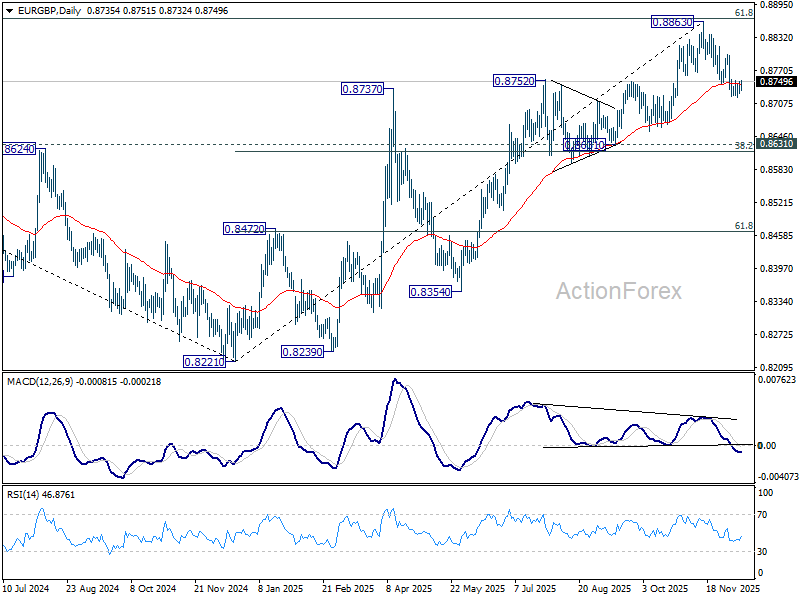
US yields currently are changing between +1.5 bps (2-y) and 0.5 bps (30-y). Similar story for the German yield curve (2-y +0.5 bps; 30 y -1 bp). This looks like being the new normal, potentially for some time to come. Admittedly, the US services ISM still to be released after finishing this report, gives markets one of the few timely indicators bringing some ‘new eco news’. However, with markets currently almost fully discounting two additional 25 bps rate cuts for the two remaining Fed meetings (end Oct; Dec), we don’t expect an outsized reaction. Even a big (positive?) surprise probably isn’t enough for markets to change their expectations on some additional ‘risk management’ Fed easing going forward. There were few comments from Fed members on policy today. In this respect markets now look forward to next week’s Minutes of the 17 September Fed policy meeting to get some insight on the internal debate on the need/pace of further easing. This insight for sure will be interesting. Even so, it remains a bit of old news and the huge dispersion in the dots suggests that some more detailed comments won’t solve the issue of contradicting views and the absence of visibility on the Fed reaction function going forward. Maybe, the most valuable market information on the ‘real’ demand/supply balance in US interest markets might come from the mid-month US auction series next week (3-y, 10-y, 30-y). Regarding ECB policy, Belgian ECB council member Pierre Wunsch reiterated that the central bank currently is in ‘ a good place’. Aside from the current policy stance, the governor of the National Bank of Belgium showed quite some criticism on the implications of the protracted period of low policy rates that preceded the inflation, including in terms of fiscal discipline in a number of countries. Wunsch also raised questions on the effectiveness of massive asset purchases and the consequences of the bank making losses for a long period. On markets outside FI, overall low volatility keeps US and European indices (Eurostoxx 50) near all-time highs, but momentum eases compared to stronger dynamics earlier this week. On FX markets, the dollar is still holding tight ranges (DXY 97.8, EUR/USD 1.1735 from 1.1715). The yen weakened slightly this morning after balanced comments from governor Ueda. Markets now keep a close eye at the nomination of a new LDP leader/Prime minister. Will the yen be able to resume its rebound once this political event risk is out of the way? Sterling this week avoided a test of the key EUR/GBP 0.8769 area, but at 0.8723 and with an attempt of the UK currency to regain the 0.87 mark failing, the picture for sterling still looks vulnerable.
News & Views
With polling stations opening in the Czech Republic, the ANO movement appears poised for victory with around 30% support in election polls. The key question now revolves around its choice of coalition partners, which will shape the contours of future policy. Potential allies include SPD, Stačilo, and Motorists—all critical of the EU and NATO. Parties need at least 5% of the vote to enter parliament. One thing is already clear: the upcoming four-year electoral cycle will bring no meaningful progress on euro adoption in the Czech Republic. Earlier this year, both the Ministry of Finance and the Czech National Bank recommended that the government should refrain from setting a target date for euro adoption. If the next Czech electoral cycle is once again a non-starter, the earliest realistic date for joining the eurozone would be 2034.
The United Nation’s FAO Food price Index declined slightly for a second straight month in September, from 129.7 to 128.8. That’s nevertheless still the third highest reading since February 2023. Drops in sugar and dairy prices led the decline. The FAO Sugar Price Index (-4.1%) reached its lowest level since March 2021 driven by higher-than-expected sugar production in Brazil and favourable harvest prospects in India and Thailand, following ample monsoon rains and expanded plantings. The FAO Dairy Price Index declined by 2.6%, partly reflecting waning demand for ice cream in the Northern Hemisphere and higher production prospects in Oceania. The FAO Meat Price Index was the only to increase (+0.7% M/M; +6.6% Y/Y). Cereal and vegetable oil prices recorded declines of respectively 0.6% and 0.7% in September.
US September ISM Services PMI Miss Expectations – Market Reactions
In the absence of Bureau of Labor Statistics data, preventing a more interesting day, participants are focusing on today's ISM Services PMI report closely
Markets just received the report for the US ISM Services PMI, which slipped right around contraction territory at 50.0, missing expectations of 51.6 and down from the prior 52.0.
The services sector — which makes up the bulk of US economic activity — is closely monitored as it reflects both consumer and business demand momentum,
PMIs, particularly for the services sector, had been holding strong despite tariffs starting to bite into companies' profit-margins and activities, but things are starting to change.
Now a few months after the July tariff implementation, the data is reflecting more and more the Trump Policies.
The essential Services PMI is now at the border of contraction.
Markets also received the Global PMI report about 15 minutes ago (53.9 vs 53.6 exp) but this one is less of a mover.
Discover the reactions in the main assets classes including US Equities (Nasdaq), US Treasuries, and the DXY just below.
A few market reactions
Everything seems to be selling off for now!
A global market picture after the September Services PMI report, October 3, 2025 – Source: TradingView
Safe Trades!
US ISM services sinks to 50, GDP barely expanding by 0.4%
US services activity slowed sharply in September, with ISM Services PMI falling from 52.0 to 50.0, missing expectations of 52.0. Business activity dropped from 55.0 into contraction at 49.9, its first negative reading since May 2020. New orders tumbled from 56.0 to 50.4. The weakness suggests that demand conditions in the largest part of the US economy have cooled significantly.
Employment remained in contraction for a fourth straight month at 47.2, underscoring persistent softness in labor conditions. Prices paid ticked higher to 69.4, staying well above the 60 mark for a 10th month.
Industry-level data reinforced the slowdown: only ten industries reported growth in September, two fewer than August, while the number in contraction rose to seven. Based on historical correlations, ISM said the September PMI level corresponds to a modest 0.4% annualized GDP increase.