

Sample Category Title
EUR/GBP Daily Outlook
Daily Pivots: (S1) 0.8528; (P) 0.8562; (R1) 0.8580; More...
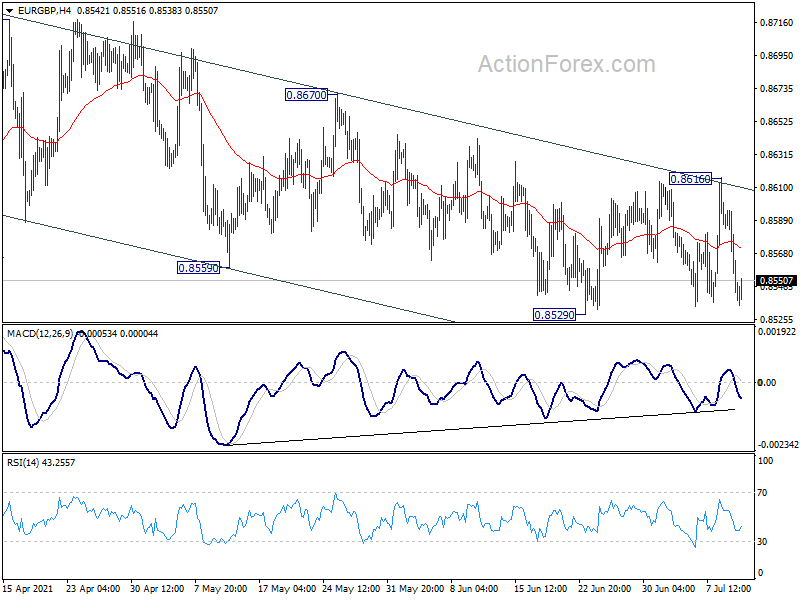
Range trading continues in EUR/GBP and intraday bias remains neutral first. On the downside, , break of of 0.8529 will resume the choppy decline towards retesting 0.8470 low. On the upside, decisive break of 0.8616 resistance will argue that corrective fall from 0.8718 has completed. Further rise would be seen to 0.8670 resistance for confirmation.
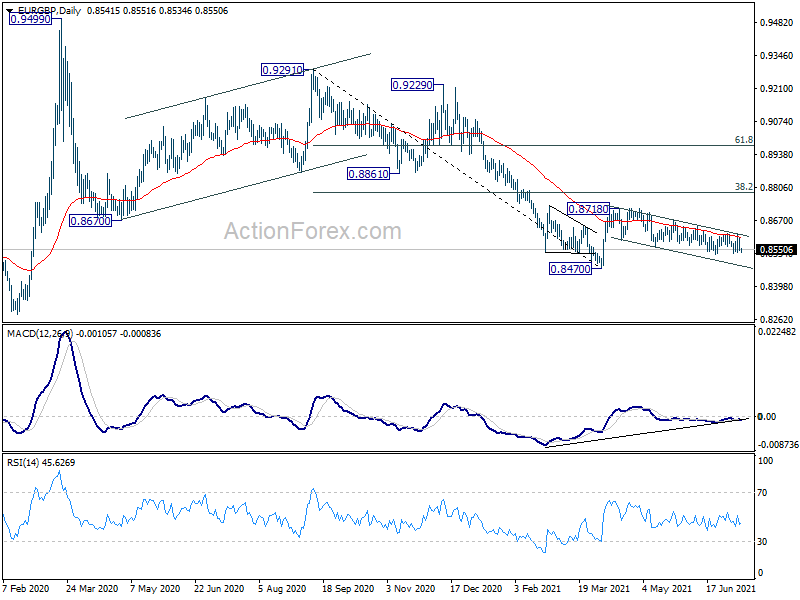
In the bigger picture, price actions from 0.9499 are still seen as developing into a corrective pattern. That is, up trend from 0.6935 (2015 low) would resume at a later stage. This will remain the favored case as long as 0.8276 support holds. However, firm break of 0.8276 support will suggest that rise from 0.6935 has completed and turn medium term outlook bearish.
EUR/AUD Daily Outlook
Daily Pivots: (S1) 1.5811; (P) 1.5893; (R1) 1.5941; More...
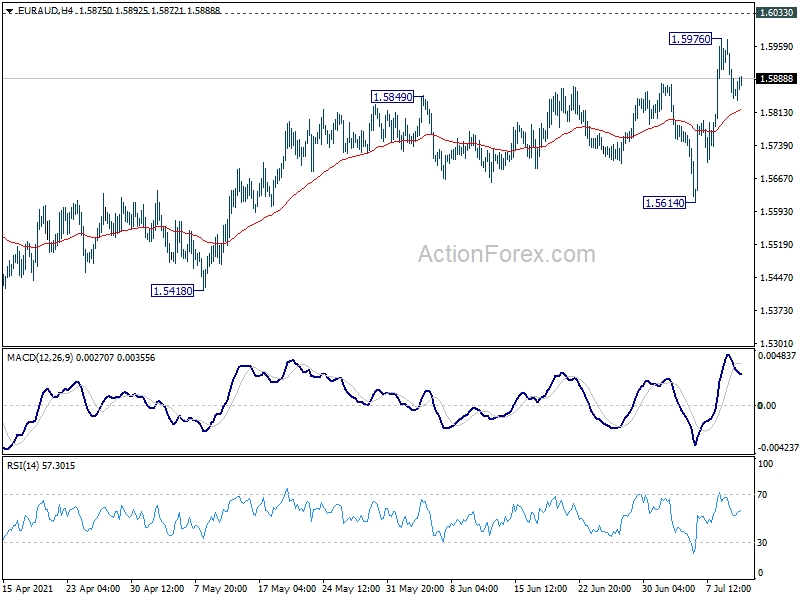
Intraday bias in EUR/AUD stays neutral at this point, for consolidation below 1.5976 temporary top. On the upside, break of 1.5976 will resume the choppy rise from 1.5250 to 1.6033 key support turned resistance next. Sustained break there will argue that longer term trend has reversed, and target 1.6827 resistance for confirmation.
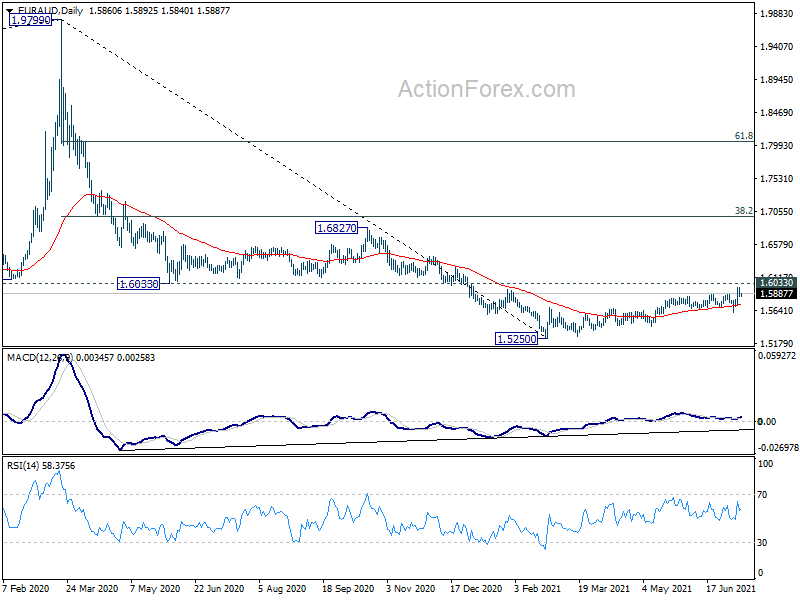
In the bigger picture, outlook stays bearish with 1.6033 support turned resistance intact for now. Fall from 1.9799, as a correction to to long term up trend from 1.1602 (2012 low) is still in favor to resume through 1.5250 later. However, However, firm break of 1.6033 will argue that such decline has completed. Stronger rebound would then be seen 38.2% retracement of 1.9799 to 1.5250 at 1.6988.
EUR/CHF Daily Outlook
Daily Pivots: (S1) 1.0835; (P) 1.0851; (R1) 1.0871; More....
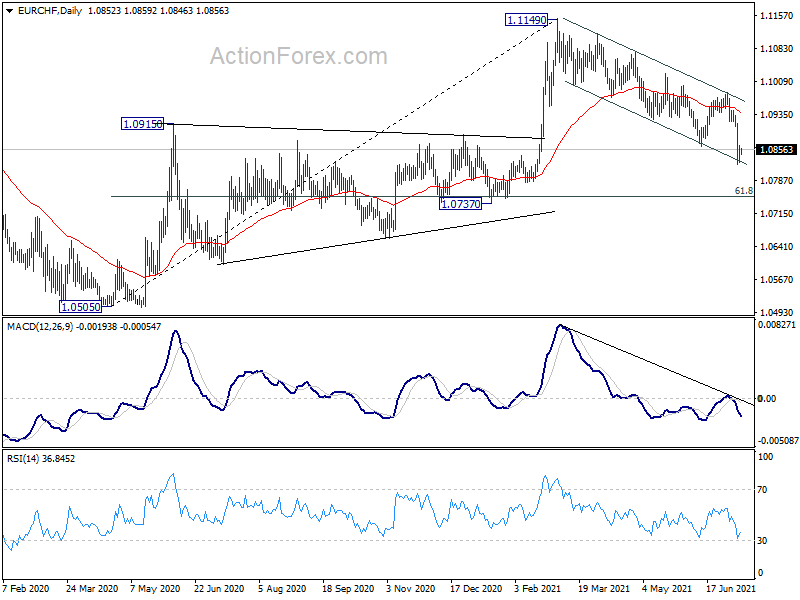
Intraday bias in EUR/CHF remains neutral for consolidation above 1.0823 temporary low first. But outlook stays bearish as long as 1.0985 resistance holds. Break of 1.0823 will resume the whole fall from 1.1149, to 1.0737 cluster support next.
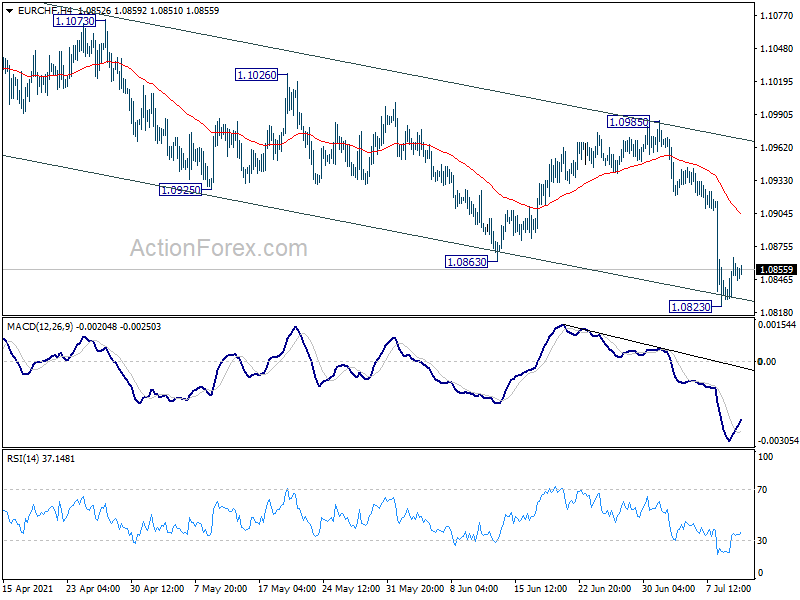
In the bigger picture, current development argues that rebound from 1.0505 (2020 low) might be completed with three waves up to 1.1149 already. Sustained trading below 55 week EMA (now at 1.0885) will affirm this bearish case. Further break of 1.0737 cluster support (61.8% retracement of 1.0505 to 1.1149 at 1.0751) will bring retest of 1.0505 low.
EUR/JPY Daily Outlook
Daily Pivots: (S1) 130.19; (P) 130.53; (R1) 131.13; More....
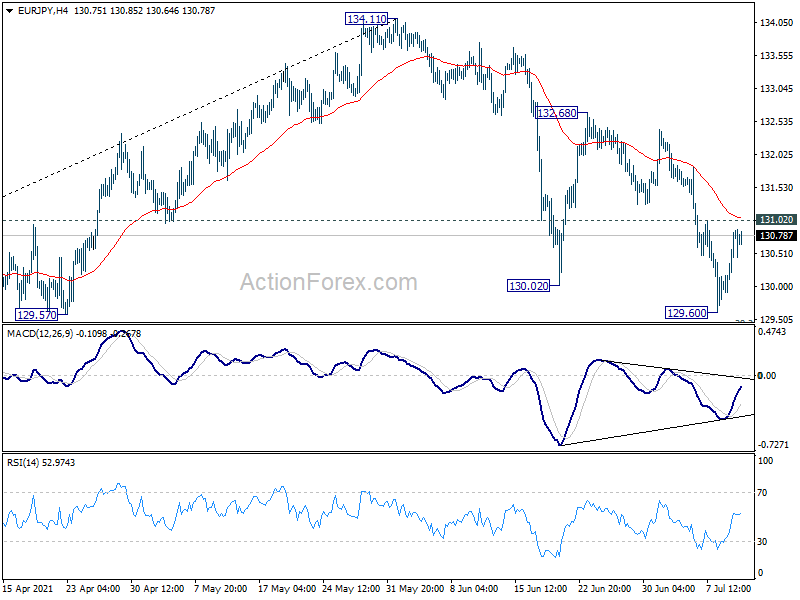
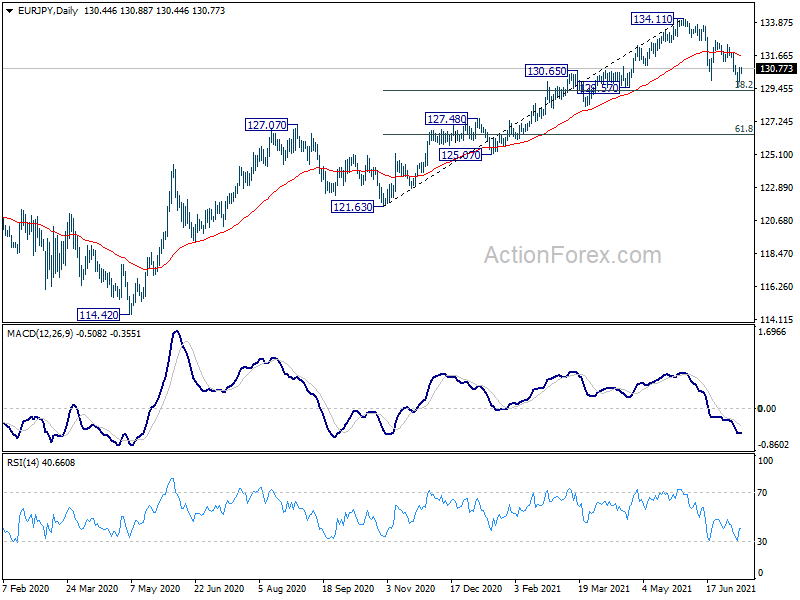
Intraday bias in EUR/JPY remains neutral first. On the upside, firm break of 131.02 resistance will argue that corrective fall from 134.11 might have completed with three waves down to 129.60 already, on bullish convergence condition in 4 hour MACD. Intraday bias will be turned back to the upside for 132.68 resistance and above. On the downside, break of 129.60 will resume the the correction. But we'd expect strong support from 38.2% retracement of 121.63 to 134.11 at 129.34 to bring rebound.
In the bigger picture, rise from 114.42 is seen as a medium term rising leg inside a long term sideway pattern. Next target is 137.49 (2018 high). Decisive break there will open up the possibility that it's indeed resuming the up trend from 94.11 (2012 low). For now, outlook will stay bullish as long as 127.07 resistance turned support holds, in case of pull back.
GBPUSD Double-Bottom
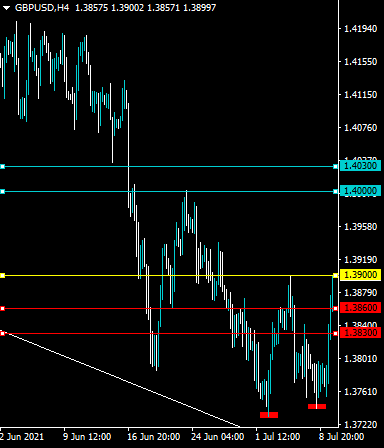
The British pound has bounced back towards the 1.3900 level against the US dollar currency after the greenback failed to hold onto its weekly gains last Friday. Bears beware as the GBPUSD pair has formed a bullish double-bottom price pattern on the four-hour time frame. Sustained gains above the 1.3900 level could easily see the GBPUSD pair rallying towards the 1.4030 level this week.
The GBPUSD pair is only bullish while trading above the 1.3900 level, key resistance is found at the 1.4000 and the 1.4030 levels.
If the GBPUSD pair trades below the 1.3900, sellers may test the 1.3860 and 1.3830 support levels.
BTCUSD $33,000 Must Hold
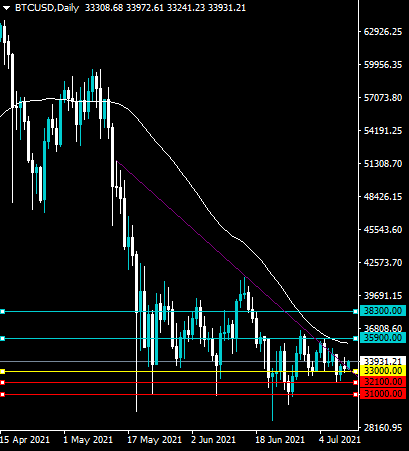
Bitcoin has started the week with a neutral bias as the short-term outlook for the top cryptocurrency still remains largely uncertain. The daily time frame shows that a bullish breakout from a falling price channel remains valid while the BTCUSD pair holds above the $33,000 level. Bulls could take aim at the $35,900 resistance zone if the price holds above the $33,000 level this week.
The BTCUSD pair is only bullish while trading above the $33,000 level, key resistance is found at the $35,900 and the $38,300 levels.
If the BTCUSD pair trades below the $33,000 level, sellers may test the $32,100 and $31,000 levels.
EURUSD 1.1900 Remains Key
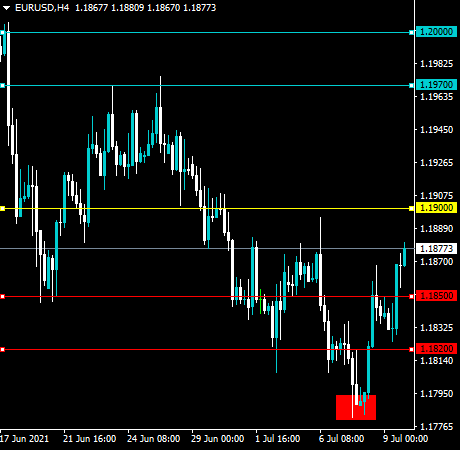
The euro currency is looking more bullish against the US dollar after traders aggressively bought the recent price dip under the 1.1800 level. Bulls need to anchor the EURUSD pair above the 1.1900 level this week to encourage more short and medium-term technical buying. The 1.1970 and 1.2000 levels are likely to be the main bullish targets if EURUSD buyers can break through the 1.1900 level.
The EURUSD pair is only bullish while trading above the 1.1900 level, key resistance is found at the 1.1970 and 1.2000 levels.
EURUSD pair is only bearish while trading below the 1.1900 level, key support is found at the 1.1850 and 1.1820 levels.
RBNZ Preview – Strong GDP Growth and Inflation Expectations to Anchor RBNZ Optimism
Strong first quarter GDP growth and rapidly rising inflation pressure suggest that the RBNZ would at least maintain a hawkish stance at this week's meeting. While the monetary policy measures will stay unchanged, policymakers will likely react to market expectations of a rate hike in November, compared with RBNZ's projection of next year in May. The language in the accompanying statement should be amended to reflect stronger economic outlook.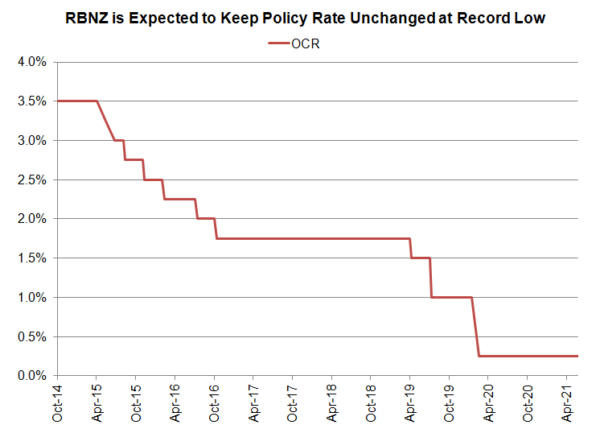
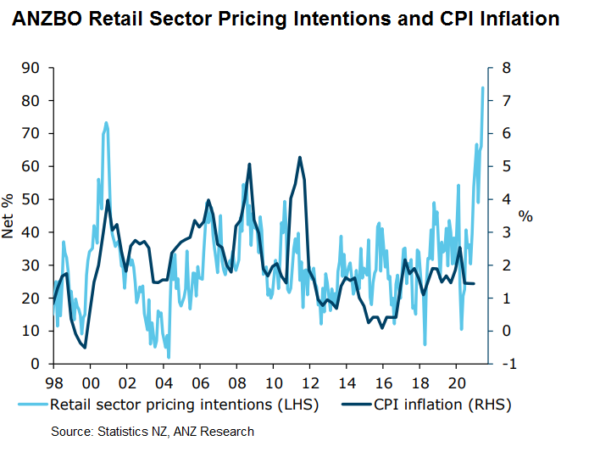
On the dataflow, GDP expanded +1.6% q/q in 1Q21, after contracting -1% a quarter ago. From the same period last year, the economy grew +2.4%, compared with a -0.8% decline in 4Q20. Inflation risk has intensified. In the June ANZ Business Outlook survey, it’s shown that 84% (pricing intention) of retailers intended to increase prices. Inflation expectations also reached +2.41%, significantly above RBNZ’s target range midpoint of 2%. The job market has also improved. Westpac’s quarterly Employment Confidence Index gained +4.4 points to 103.9 in 2Q21 amidst expectations of more vacancy. As suggested in the accompanying report, “the most notable result from the June survey was a strong lift in perceptions about current job opportunities, which are now above pre-Covid levels”.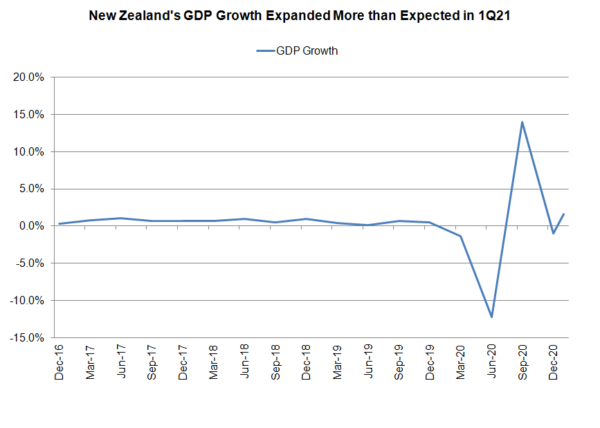
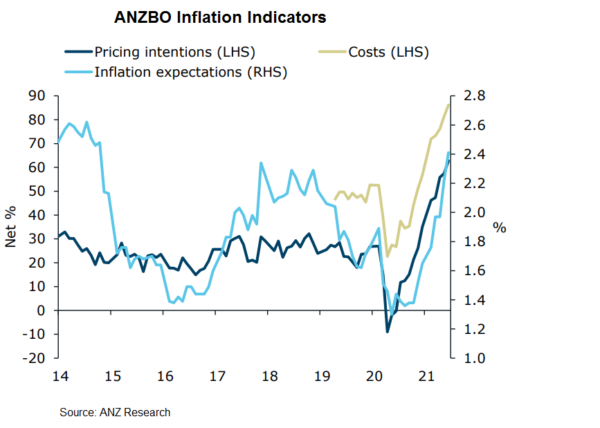
 At the May meeting, the RBNZ turned more hawkish and pushed forward the first rate hike to 3Q22. Economic developments and the pandemic situation since then have led the market to anticipate an even earlier rate hike. Major banks such as ANZ and Westpac now expect to see the first rate hike in November. The market is already pricing in almost 90% odds of a hike by November, and “one and a half’ hikes by February. The central bank will leave the monetary policy unchanged but should indicated that rate hike could come earlier than previously suggested.
In May, the RBNZ took note of “the weak level of business investment” but there was a pleasant in the first quarter GDP data. It also suggested that “medium-term inflation and employment would likely remain below its Remit targets in the absence of prolonged monetary stimulus”. Yet, price pressure has been rising rapidly while the market has turned more optimistic about the job market. These references are now obsolete and should be amended.
The central bank also suggested in previous meetings that current levels of stimulus will remain in place for a “considerable” time. This can also be adjusted as the RBNZ prepares the market for a normalization of monetary policy.
S&P 500, DOW JONES Retreat As Earnings Season Kicks Off
The Japanese yen was little changed against the US dollar after relatively positive Japanese economic data. According to the Ministry of Finance, the country’s producer price index rose to 5.0% in June, better than the median estimate of 4.7%. It rose by 0.6% on a month-on-month basis. Further data showed that core machinery orders rose by 7.8% on a MoM basis and by 12.2% on a YoY basis. These numbers provide some evidence that the Japanese economy is doing relatively well as local and international demand rises.
US futures declined today as traders started looking ahead to the upcoming earning season. Dow Jones, S&P 500, and Nasdaq 1000 futures dropped by less than 0.10%. The earning season will start this week as big banks like JP Morgan, Wells Fargo, and Bank of America release their results. Other top companies that will publish their results are Delta, Blackrock, and UnitedHealth Group. Analysts will be focusing on growth at a time when valuations are stretched. The S&P 500 has even recorded 38 record closes this year. According to FactSet, analysts expect that S&P 500 companies revenue rose by 64% in Q2 from a year earlier.
The New Zealand dollar declined slightly after the latest electronic sales from the country. According to the statistics agency, retail sales declined from 1.7% in May to 0.9% in June. This decline led to a year-on-year increase of 4.0%. This decline is part of the normalisation as the country stages a relatively stronger recovery. Further data showed that business confidence rose sharply, leading more analysts to forecast a hawkish Reserve Bank of New Zealand. Many companies said that they expect business conditions to improve as the local and international market reopens.
NZDUSD
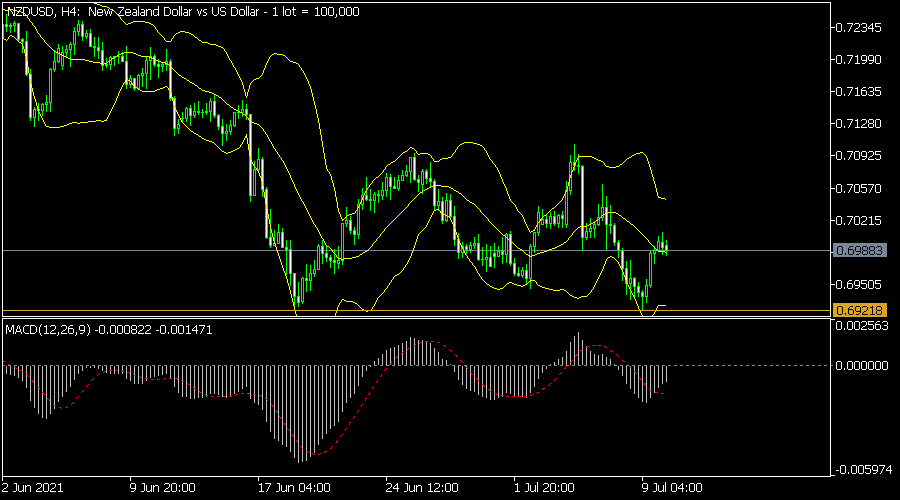
The NZDUSD pair declined to 0.6988 after the latest New Zealand electronic sales data. On the four-hour chart, the pair has moved to the middle line of the Bollinger Bands. It is also slightly above the neckline of the double-top pattern at 0.6945. It also formed a double-bottom pattern at 0.6921. Therefore, the pair will likely remain within this range today with the key support and resistance levels being at 0.6950 and 0.7050.
EURUSD
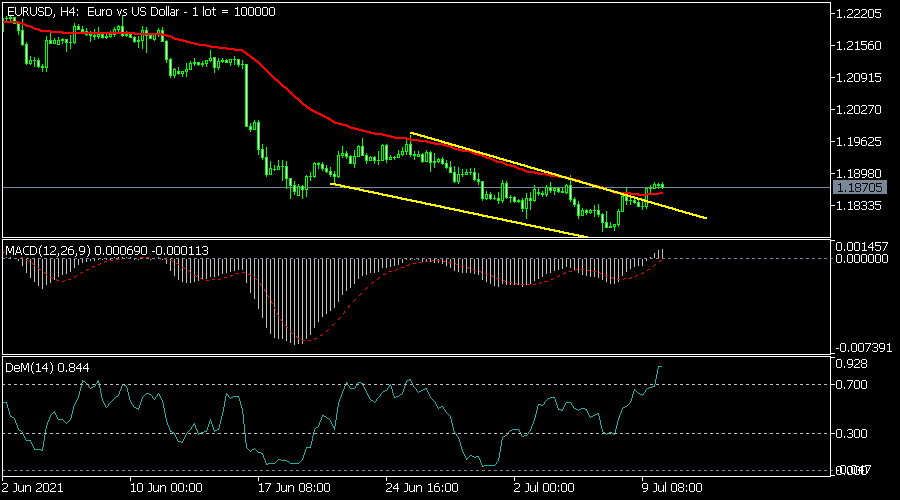
The EURUSD pair rose to 1.1870 in the Asian session. On the four-hour chart, the pair moved above the upper side of the descending channel. It also rose above the 25-day exponential moving average while the DeMarker has moved to the overbought level. The signal and histogram of the MACD have risen above the neutral level. The pair will likely resume the downward trend as bears attempt to move back to the descending channel.
USDJPY
The USDJPY pair was little changed after the latest Japanese machinery and PPI data. It moved to 110.10, which was above last week’s low at 109.50. On the four-hour chart, the pair is slightly below the 25-day moving average while the moving average of oscillator has moved above the neutral level. The MACD has also made a bullish divergence pattern. Still, the pair may resume the downward trend as bears attempt to test last week’s low at 109.50.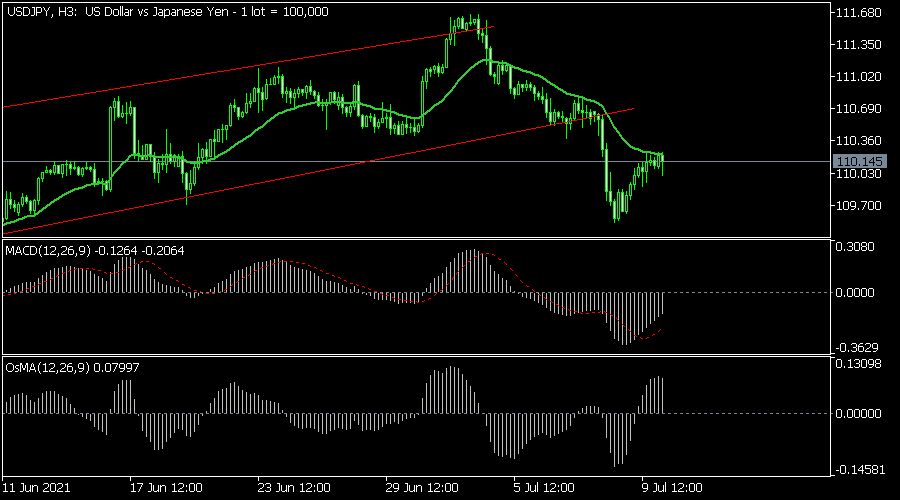
ECB Lagarde Indicated Additional Clarity On The Post-PEPP Period
Markets
An interview by ECB President Lagarde with Bloomberg TV grabs most headlines this morning. Her main message is that the next policy meeting (July 22) will be an important one including some interesting variations and changes. The sudden hyping of a normally dull summer meeting comes after the ECB last week completed its strategic review sooner than expected. They swapped the close to, but below 2% inflation target for a hard 2% one while allowing for temporary deviations. Lagarde added that this new inflation target might take a little longer to reach and stressed the acceptance and tolerance of temporary higher inflation. The new inflation target calls for new wordings around forward guidance on both interest rates and asset purchases, something the ECB will update next week. Apart from the semantics, ECB Lagarde indicated additional clarity on the post-PEPP period. The ECB’s current €1.85tn Pandemic Emergency Purchase Programme runs at least until March 2022. Since March, the weekly pace stands at €15/20bn. We argued before that around that timing, the ECB could temporary raise asset purchases under the regular APP (currently €20bn/month) in order to smoothen the eventual exit process. Lagarde hinted in that direction by talking about a “transition into a new format”. By tackling the asset purchases issue already in July, the ECB avoids an unwarranted build-up in tapering expectations: “We need to be very flexible and not start creating the anticipation that the exit is in the next few weeks, months”. Besides clearing the air on future policy (= removing uncertainty), the central bank will simultaneously extend the time frame for which ultra-easy monetary policy conditions will remain in place. By doing so, she breaks ranks with the current views inside the Fed (tapering discussion ongoing) and BoE (net asset buying to end by the end of the year).
Today’s eco calendar isn’t really enticing though the US Treasury starts its mid-month refinancing operation with 3-yr and 10-yr Note auctions. The empty calendar and last week’s setback in US yields suggests that Friday correction higher could be extended in a daily perspective. US yields added 1.9 bps (2-yr) to 6.7 bps (10-yr), but remain significantly lower on a weekly basis. ECB’s Lagarde interview could still be interpreted as dovish, though we’ve already had a setback in (EU) real yields as well last week. The single currency or core bonds don’t react in tomorrow’s Asian dealings. Asian equity markets follow the end of last week’s bounce in Europe and in the US. Other items to watch this week are US CPI inflation numbers (tomorrow) and retail sales (Friday), the start of Q2 earnings season, the US 30-yr bond auction, Fed Powell’s semi-annual testimony in US Congress and UK inflation/employment figures.
News headlines
Bulgarian parliamentary elections delivered another inconclusive outcome. Former PM Borissov’s Gerb party won about 24% with almost 90% of the votes counted, followed by 23.5% for the anti-establishment group ITN. The Socialists secured 13.7% of the votes. It was the second ballot in just a few months’ time after a better-than-expected result for ITN prevented Borissov from a fourth term in April as all other parties refused to work with him. Bulgarian president Radev will give the winner of the election a first chance to forge a coalition before passing the baton to the runner-up. If that fails too, a third candidate is chosen by the president for a final try before new elections are called.
In the wake of the G7 early June, the G20 over the weekend agreed to set a minimum tax of 15% for corporates with a revenue of more than $890 million. They also decided to redirect some of the taxes in a way that multinationals with a turnover of more than $23.8 bn pay to countries where the (often digital) products and services are effectively sold. The new system is expected to take effect in 2023 and has been agreed to by 132 countries. Because of the tax deal and under intense pressure from the US, the EU is backing down on its own proposals for a digital levy. The bloc was due unveil proposals this week but has pushed that date back to July 20.