

Sample Category Title
EUR/JPY Daily Outlook
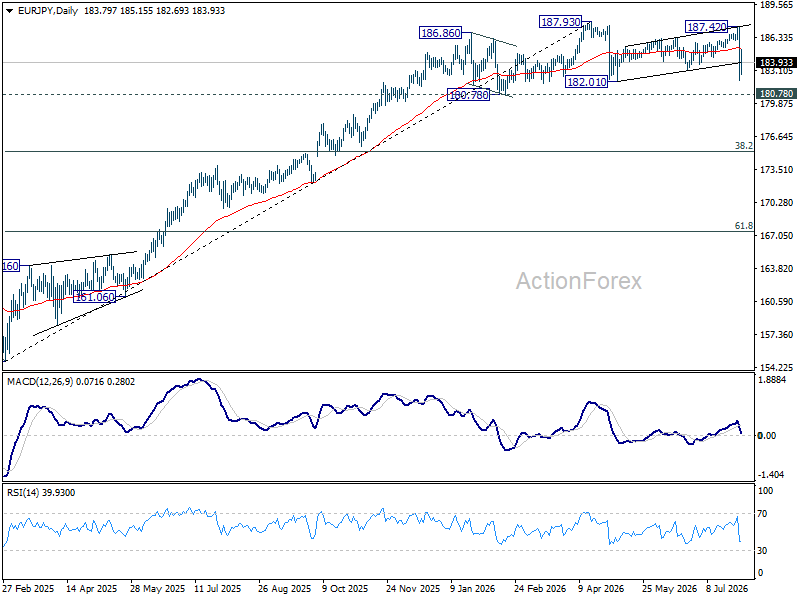
Outlook is unchanged in EUR/JPY. Fall from 187.42 is seen as the third leg of the corrective pattern from 187.93. Deeper decline could be seen to 180.78 support. But downside should be contained there to bring rebound.
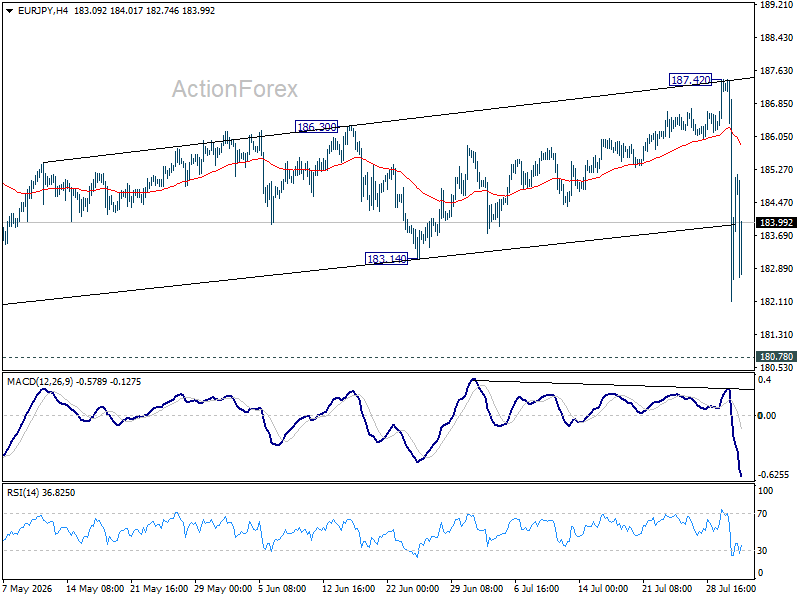
In the bigger picture, uptrend from 114.42 (2020 low) is still expected to resume at a later stage to 78.6% projection of 124.37 (2022 low) to 175.41 (2025 high) from 154.77 at 194.88. However, sustained break of 55 W EMA (now at 180.40) will argue that it's already in a medium term down trend to 175.41 resistance turned support and below.
EUR/GBP Daily Outlook
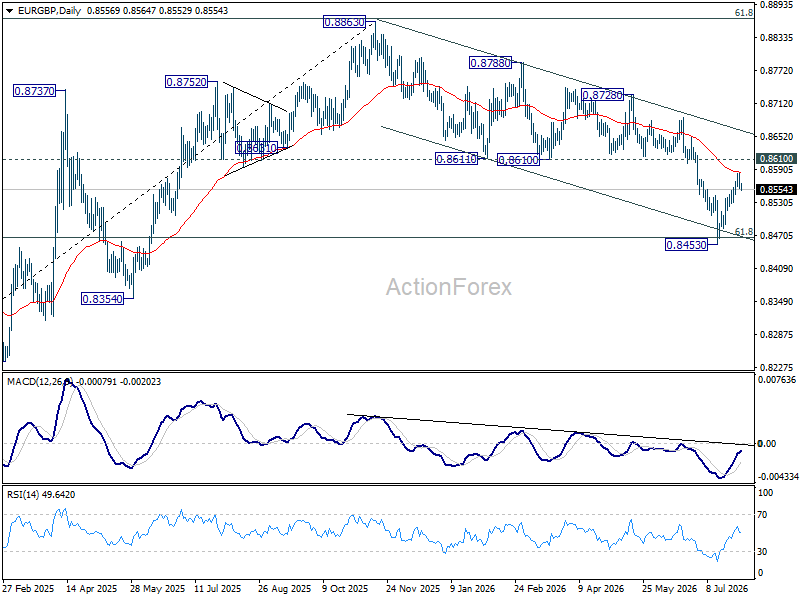
Intraday bias in EUR/GBP is turned neutral with current retreat. While another rise cannot be ruled out, strong resistance should be seen from 0.8610 support turned resistance to limit upside. On the downside, break of 0.8258 support will argue that the corrective rebound from 0.8453 has completed, and turn bias back to the downside for retesting this low.
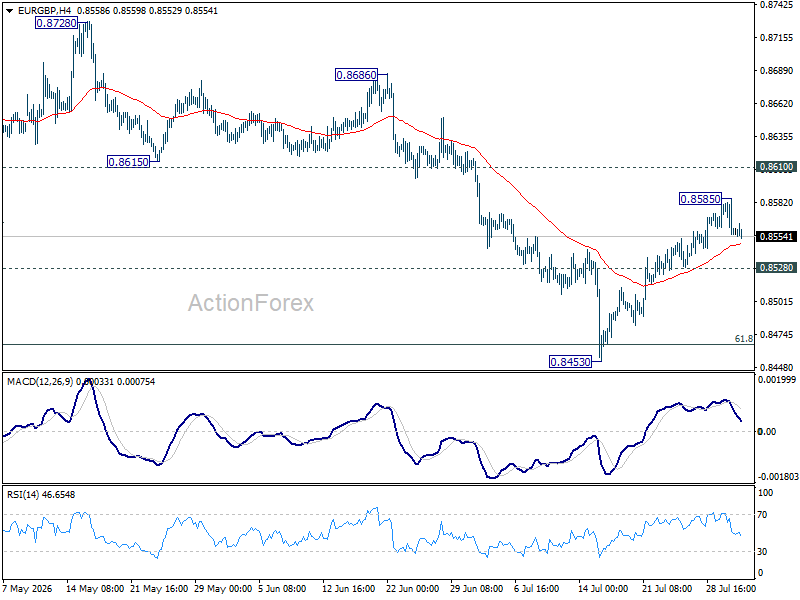
In the bigger picture, rise from 0.8221 (2024 low) should have completed at 0.8863, just ahead of 38.2% retracement of 0.9267 (2025 high) to 0.8221 at 0.8867. Deeper fall would be seen back to 0.8221. For now, outlook will be neutral at best as long as 0.8610 support turned resistance hold.
EUR/AUD Daily Outlook
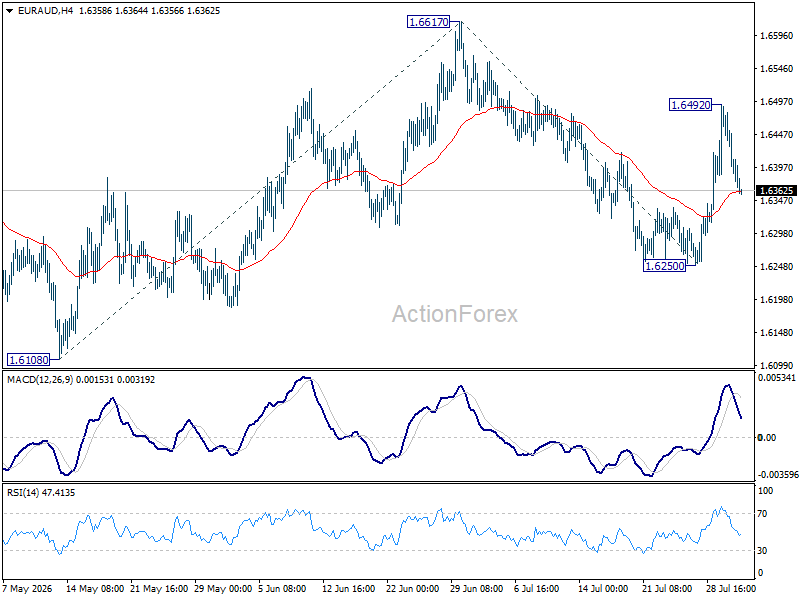
Intraday bias in EUR/AUD is turned neutral first with current retreat. Outlook is unchanged that pullback from 1.6617 has completed as a correction at 1.6250. Above 1.6492 will bring retest of 1.6617 first. Firm break there will target 100% projection 1.6108 to 1.6617 from 1.6250 at 1.6759. However, break of 1.6250 will revive the bearish case and target a retest on 1.6108 low instead.
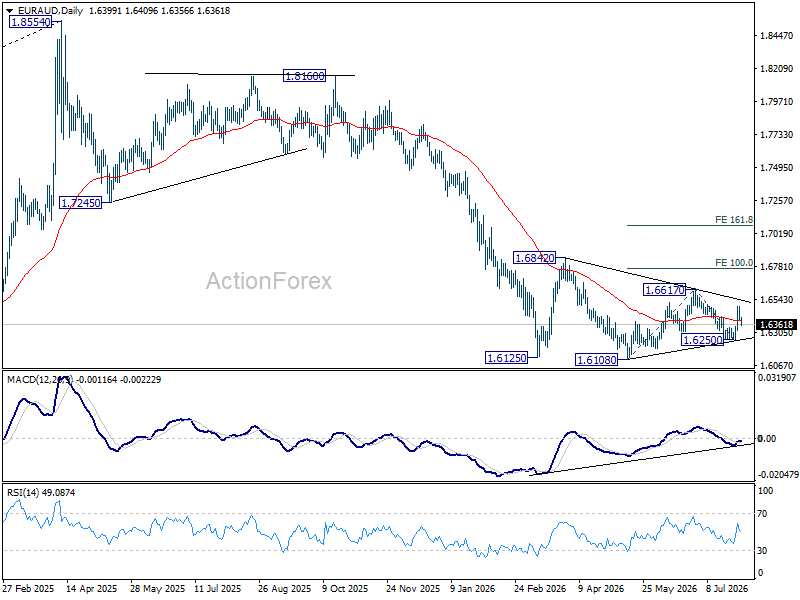
In the bigger picture, outlook will stay bearish as long as 1.6842 resistance holds. Fall from 1.8554 (2025 high) is expected to continue to 61.8% retracement of 1.4281 to 1.8554 at 1.5913. Decisive break there will pave the way back to 1.4281 (2022 low). However, firm break of 1.6842 should confirm medium term bottoming, and bring stronger rally.
EUR/CHF Daily Outlook
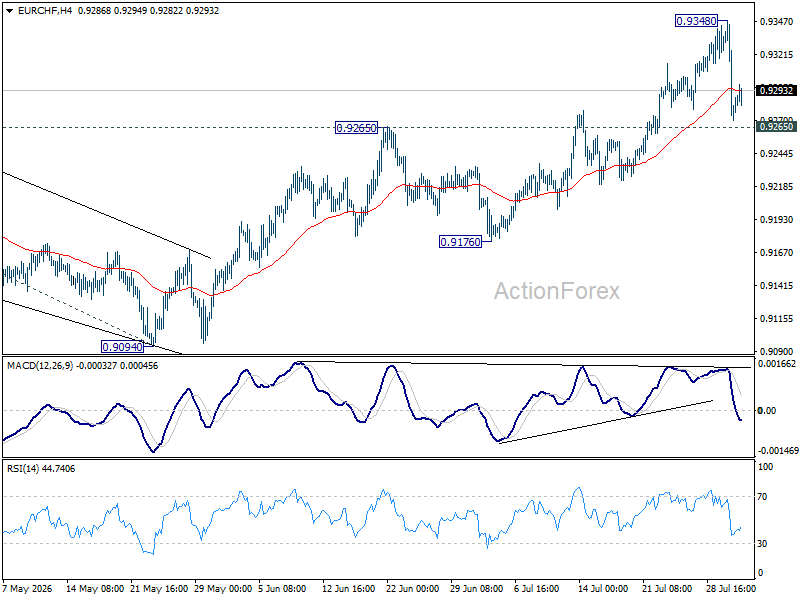
Intraday bias in EUR/CHF is turned neutral with current retreat. Some consolidations would be seen below 0.9348 first. But further rally is expected as long as 0.9265 resistance turned support holds. Above 0.9348 will resume larger rally to 100% projection of 0.8979 to 0.9264 from 0.9094 at 0.9379. However, firm break of 0.9265 will indicate that deeper correction is underway to 55 D EMA (now at 0.9230).
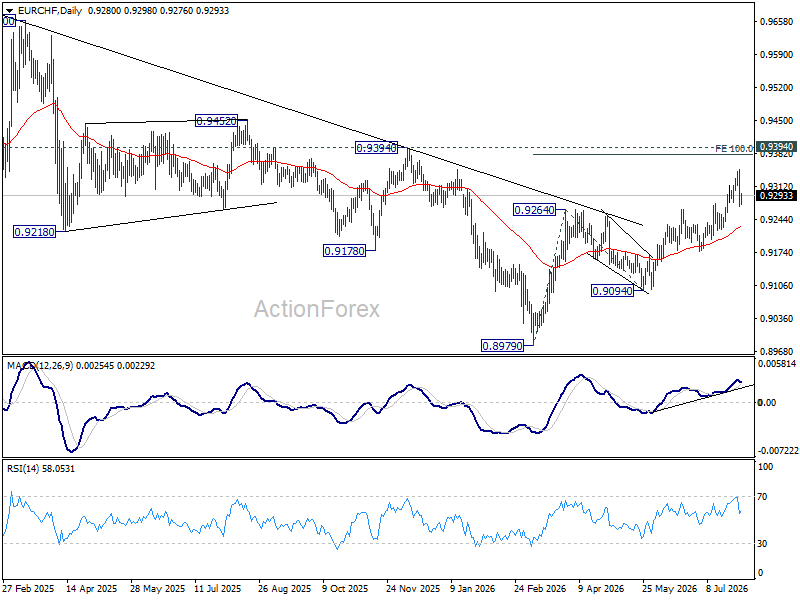
In the bigger picture, the break of medium term falling trend line resistance indicates that 0.8979 is already a medium term bottom. Considering bullish convergence condition in W MACD, rise from there should at least be reversing the fall from 0.9928, with prospect of developing into a medium term up trend. Firm break of 0.9394 resistance will add more credence to this case. For now risk will remain on the upside as long as 0.9094 support holds, in case of retreat.
Eurozone Core Inflation Unexpectedly Accelerates to 2.5%, Reinforcing ECB Hawkishness
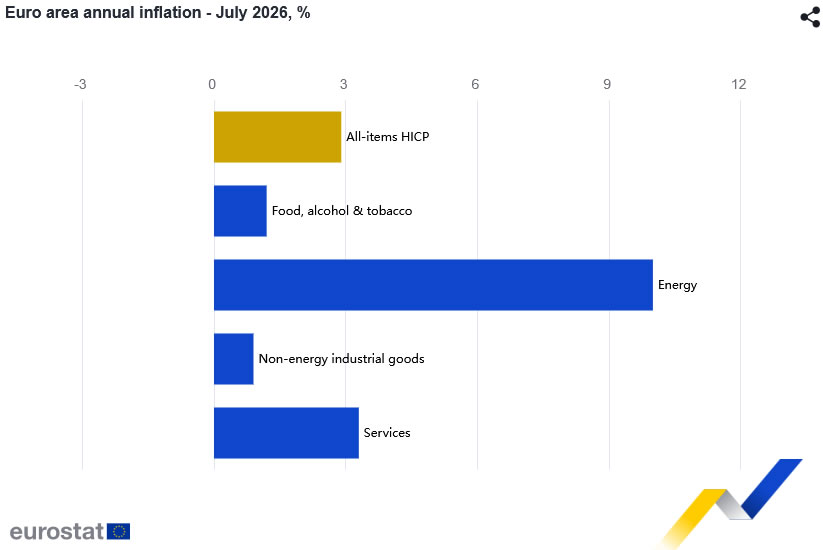
Eurozone inflation remained elevated in July, with headline CPI holding at 2.9% year-over-year, matching expectations and edging up from 2.8% in June. The bigger surprise came from core inflation, which accelerated to 2.5% from 2.4%, beating expectations for an unchanged reading. While the headline increase was largely driven by higher energy prices, the pickup in core inflation suggests underlying price pressures are proving more persistent than markets had anticipated.
The details of the report reinforced that message. Energy inflation accelerated sharply from 8.5% to 10.0% as higher oil prices fed into consumer prices. More importantly for the European Central Bank, services inflation edged up from 3.2% to 3.3%, highlighting continued domestic price pressures linked to wages and labor costs. Non-energy industrial goods inflation also firmed from 0.7% to 0.9%, while food, alcohol and tobacco inflation eased further from 1.5% to 1.2%. The combination suggests inflation is becoming broader, with cooling food prices masking renewed firmness elsewhere in the basket.
For the ECB, the report lends further support to the cautious hawkish tone struck after last week's policy meeting. President Christine Lagarde warned that inflation is likely to remain above target well into 2027, while policymakers such as Peter Kazimir have argued that another rate increase may still be needed. With underlying inflation firming before the full second-round effects of higher energy costs have filtered through the economy, today's data lower the hurdle for a September "insurance hike", even if they stop short of making another increase a foregone conclusion.
Economic Data Summary
| Indicator | Actual | Expected | Previous |
|---|---|---|---|
| Headline CPI Y/Y (Jul P) | 2.9% | 2.9% | 2.8% |
| Core CPI Y/Y (Jul P) | 2.5% | 2.4% | 2.4% |
Inflation Components
| Component | Current | Previous | Trend |
|---|---|---|---|
| Energy | 10.0% | 8.5% | ↑ Accelerated sharply |
| Services | 3.3% | 3.2% | ↑ Sticky, edged higher |
| Non-energy industrial goods | 0.9% | 0.7% | ↑ Firmed |
| Food, alcohol & tobacco | 1.2% | 1.5% | ↓ Continued easing |
Key Takeaways
- Headline inflation edged higher while core inflation surprised to the upside. Eurozone headline CPI rose from 2.8% to 2.9%, matching expectations, while core CPI accelerated unexpectedly from 2.4% to 2.5%.
- Services inflation remains stubbornly elevated. Services CPI increased from 3.2% to 3.3%, indicating domestic price pressures linked to wages continue to prove persistent.
- Energy inflation is reaccelerating. Energy inflation jumped from 8.5% to 10.0% as higher oil prices began feeding into consumer prices.
- Goods inflation also strengthened. Non-energy industrial goods inflation rose from 0.7% to 0.9%, suggesting price pressures are broadening beyond energy alone.
- Food continues to be the main disinflation driver. Food, alcohol and tobacco inflation slowed from 1.5% to 1.2%, helping contain the rise in headline CPI.
- The composition matters more than the headline. Stronger services, energy and goods inflation outweighed easing food prices, pointing to broader underlying inflationary pressures.
- The report supports the ECB's hawkish bias. While not guaranteeing a September rate hike, the upside surprise in core inflation strengthens the case for another "insurance hike" if inflation remains persistent.
NASDAQ 100: 48 Hours of Chaos, One Trendline Standing in the Way
Wall Street just lived through one of its wildest 48 hours of the year. On Wednesday, the Fed held rates steady at 3.50%-3.75%, but three FOMC members broke ranks to demand a hike—an unusually hawkish dissent that sent the Dow plunging over 1,100 points, its worst session since April 2025. Treasury yields spiked, with the 30-year touching levels unseen since 2007, as renewed US-Iran strikes pushed oil higher and reignited inflation fears. The Nasdaq 100 briefly slid into correction territory, down 11% from its June record high.
Then came the reversal. Thursday's blockbuster earnings from Microsoft, whose Azure cloud business surged, alongside a rebound in beaten-down semiconductor stocks, powered the Nasdaq Composite (US Tech Mini on FXOpen) to a 2.8% gain, snapping a six-day losing streak.
The whiplash captures the market's core dilemma perfectly: a Fed chair in Kevin Warsh determined to prove his inflation-fighting credentials, a Middle East conflict refusing to fade, and a tech sector whose AI-driven earnings power may be the only thing strong enough to override both.
Technical Analysis of the Nasdaq 100 Chart
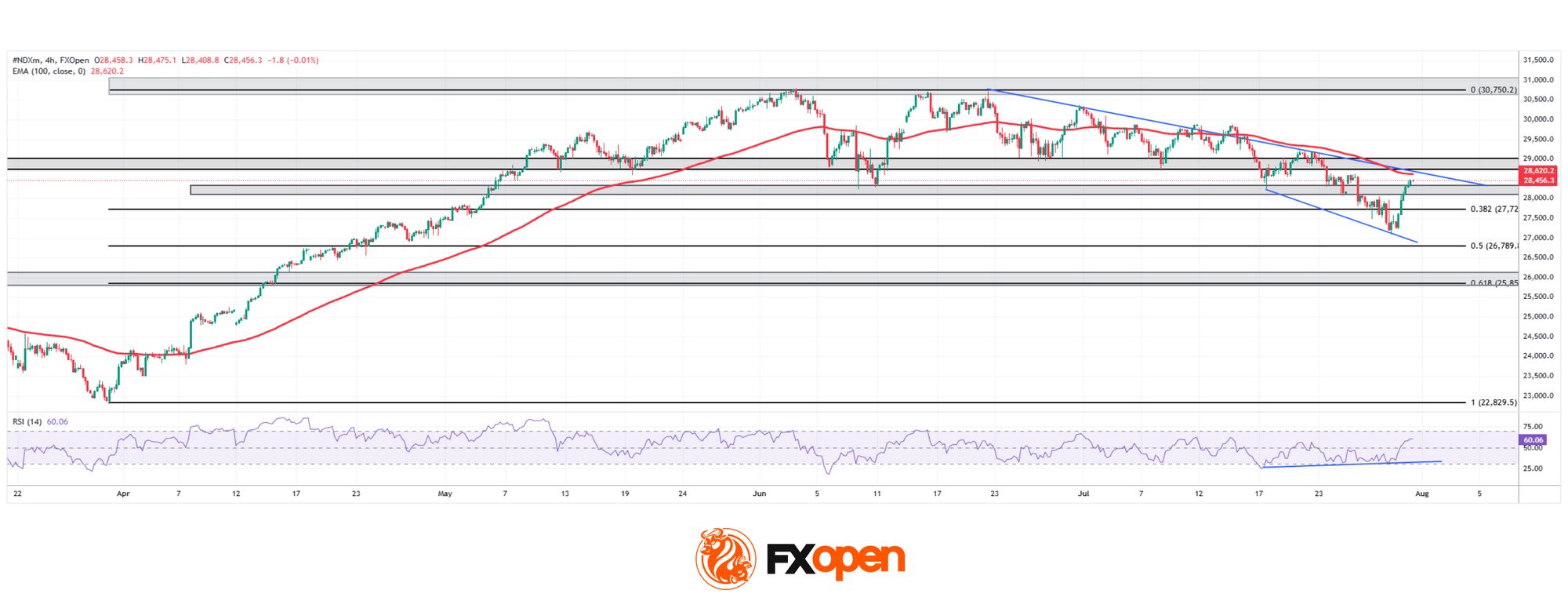
As the chart shows, the Nasdaq 100 (US Tech 100 Mini on FXOpen) is currently testing the descending trendline that has guided its decline from late June's highs, with price also pressing against the 100-period EMA near 28,620, a confluence that has repeatedly capped rallies over the past several sessions. Adding weight to this setup, the RSI is showing a bullish divergence, printing higher lows even as price carved a fresh low in late July.
Bullish Scenario
Should buyers finally break above both the descending trendline and the 100-period EMA, the divergence would gain real technical credibility, opening the path toward the 28,800-29,000 resistance zone and, beyond that, a retest of the 30,750 highs from June.
Bearish Scenario
Conversely, a rejection at this trendline-EMA confluence would invalidate the bullish divergence for now, sending price back toward the 27,720 area, the 0.382 Fibonacci retracement of the March-June rally. A deeper break would expose the 0.5 and 0.618 retracements near 26,789 and 25,850, levels that previously acted as key support during the spring advance.
With price coiled right beneath a trendline it has yet to conquer, and the RSI quietly hinting at renewed strength underneath, the Nasdaq 100 chart (US Tech 100 Mini on FXOpen) looks ready to answer the question markets have been asking all week: was this correction just noise, or the start of something bigger?
Trade global index CFDs with zero commission and tight spreads (additional fees may apply). Open your FXOpen account now or learn more about trading index CFDs with FXOpen.
This article represents the opinion of the Companies operating under the FXOpen brand only. It is not to be construed as an offer, solicitation, or recommendation with respect to products and services provided by the Companies operating under the FXOpen brand, nor is it to be considered financial advice.
Dow Jones Futures Wave 2 Pullback Targets 51,182–49,991
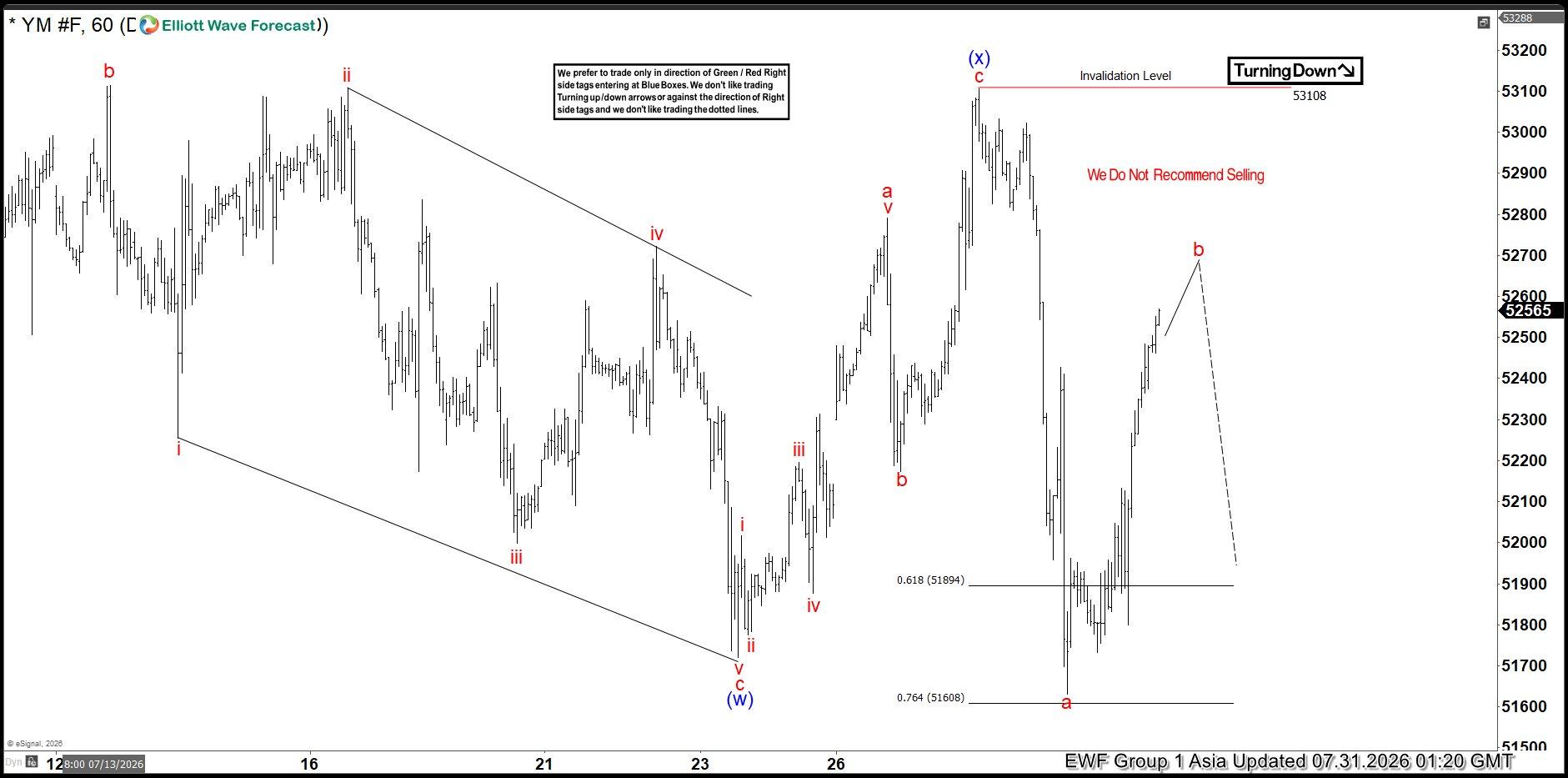
Dow Jones Futures (YM) is pulling back to correct the cycle from the 45,430 low in wave 2. The Elliott Wave structure suggests that the index remains vulnerable to further downside in the near term, as long as it stays below the 53,105 high. The decline from the peak completed three swings within wave (w), followed by a corrective bounce in wave (x). This bounce ended at 53,105, and YM has since turned lower again. The current structure suggests that the index is developing another five-wave decline in wave (y), which could complete the larger wave 2 correction.
We expect wave (y) to extend toward the 51,182–49,991 area. This zone represents the 100%–161.8% Fibonacci extension of wave (w) and could provide an important area for the next reaction. How YM responds there will help determine whether the entire wave 2 pullback has ended or whether the current decline represents only part of a larger correction.
In the next 24 hours, we expect any bounce to fail in 3, 7 or 11 swings to continue downside while remaining below 53,105. However, the wave 2 pullback still appears relatively shallow compared with the previous advance from 45,430. Therefore, there is a possibility that the correction could extend further and develop into a larger 7- or 11-swing structure.
For now, the near-term bias remains lower, with 51,182–49,991 serving as the key zone to watch for signs of support and a potential change in structure.
YM #F 60 Min. Elliott Wave Chart
Dow Jones Futures (YM) Video Analysis
https://www.youtube.com/watch?v=NORoOn4TnAQ
Sunrise Market Commentary
There will be no KBC Sunrise from Monday August 3 until Monday August 10. We resume our publication on Tuesday August 12.
Markets
Markets yesterday had plenty of data to keep an eye on. Despite headwinds from the conflict in the Middle East, preliminary EMU Q2 GDP growth surprised positively (0.4% Q/Q 1.0% Y/Y) even as we have to wait for further details for in depth analysis. At first glance, US Q2 growth (1.5% QoQ annualised) was a bit disappointing, but underlying series still showed solid domestic demand. The US inflation data (PCE deflators) was close to expectations. Ahead of the flash July EMU CPI estimate to be published today, German and Spanish CPI data yesterday mostly were marginally stronger than expected. The data only had a limited impact on trading. On interest rate markets, curve steepening post Wednesday's press conference of Fed Chair Warsh continued (US 2-y -2.7 bps, 30-y +1.3 bps). This move was even a bit more pronounced in EMU (2-y -5.9 bps; 30-y +1.2 bp). The dollar weakened further. (EUR/USD close 1.153). Initially, this was mostly some follow-through price action in the aftermath of Wednesday's Fed policy meeting. Later, the dollar fell further after (unconfirmed) interventions by Japan to block the fall of the yen. USD/JPY closed at 159.5 (from 163.4). Stock exchanges put their AI fears on hold (for a while?) (Nasdaq +2.78%, Eurostoxx 50 +1.53%).
The Bank of England (BoE) kept its policy rate unchanged at 3.75%. The impact of the conflict in the Middle East on both growth and inflation is highly uncertain. For now, the BoE doesn't see much second round inflation effects. Growth and the labour market are also assessed being rather weak. This should temper inflation. 3 MPC members voted to raise the interest rate anyway. The majority (including chairman Bailey) hopes to be able to avoid increases as much as possible so as not to unnecessarily slow down growth. The market mainly picked up on that last signal. The British 2-year yield fell 11 bpn. The market pushed the expectation of a possible rate hike further backwards (Sept 30%). Still, the sterling gained some ground, but that was probably more due to a better overall risk sentiment as EUR/GBP closed near 0.856.
This morning, the BOJ kept its policy rate unchanged at 1.0%, but new forecasts suggest further hikes are needed. The BOJ slightly upward revised its forecast for this (0.6%) and next year (0.7%). The projected rate of increase in the CPI (all items less fresh food) for fiscal 2026 is lower, but this was due to factors such as the effects of government's measures to reduce the household burden of higher energy prices. Still core inflation measures for this and next year are seen holding well above the 2.0% target. With regard to the risk balance, risks to economic activity are generally seen as balanced. Regarding the outlook for the CPI, risks are seen skewed to the upside. USD/JPY after yesterday's (likely) interventions is holding near 160.4. Bloomberg also mentions people with knowledge of the matter referring to US rate checking. US Treasury Secretary Scott Bessent in an interview assessed the yen as being very undervalued. Asian markets this morning mostly join the positive sentiment from the US yesterday. Later today, among others, we keep an eye at the EMU Flash CPI estimated. Headline inflation is expected slightly higher at 0.1% M/M and 2.9% Y/Y (from 2.8%). Core is expected stable at 2.4%.
News & Views
The official China July PMI data this morning surprised substantially to the downside. The composite index dropped from 50.6 to 49.3. Manufacturing activity also fell below the 50 reference (49.2 from 50.3). Non-manufacturing also fell from 50.2 to 49.0. Most sub-indices confirmed underlying eco weakness. The data suggest that authorities might consider additional monetary and fiscal stimulus in a not that distant future. The yuan this morning still held strong at USD/CNY 6.7475, but over here some USD weakness might be in play.
Why Aren’t Gold and Silver Keeping Up With the Falling Dollar?
TL;DR: A weaker Dollar usually lifts Gold and Silver, but this week's decline is being driven by fading Fed hike bets and a stock rally rather than falling real yields or safe-haven demand — leaving precious metals without their usual tailwind.
Why the Usual Dollar-Gold Relationship Isn't Holding
A weaker Dollar is usually regarded as a straightforward bullish signal for Gold and Silver. This week has been a timely reminder that the relationship is far more complicated. The Dollar has fallen broadly, with EUR/USD gaining around 1.3% for the week so far, yet the rebound in precious metals has been comparatively subdued.
Rather than confirming the familiar inverse Dollar-Gold relationship, the latest price action highlights a more important point: Gold and Silver respond not to the Dollar itself, but to the forces driving the Dollar.
What Kind of Dollar Weakness Actually Matters
The key lies in understanding what kind of Dollar weakness the market is experiencing. Gold and Silver typically perform best when the Dollar is pressured by fear — during financial crises, recession fears, or aggressive declines in real interest rates. In those environments, a weaker Dollar and stronger safe-haven demand reinforce each other, often producing powerful rallies in precious metals.
This week's price action, however, has been driven by almost the opposite set of forces.
Why the Dollar Actually Fell This Week
The Dollar has softened because markets are becoming less convinced the Federal Reserve needs to tighten policy again in the near term. Wednesday's FOMC meeting was interpreted as patient rather than urgent, despite three policymakers dissenting in favor of an immediate rate hike, and that view was reinforced by Thursday's weaker-than-expected second-quarter GDP report and another cooling reading on core PCE inflation.
At the same time, risk-on sentiment staged a massive return. Microsoft's blockbuster earnings and stronger cloud growth triggered a more than 15% rally in the stock, helping propel the NASDAQ up 2.78% and the Dow 1.19% on Thursday. Optimism spilled into Asia, where the KOSPI surged 17.91%. Rather than rotating into defensive assets, investors have been rotating into equities.
Why This Distinction Matters for Precious Metals
That distinction explains why Gold and Silver have struggled to capitalize on the weaker Dollar. Precious metals don't trade against the Dollar in isolation; they trade primarily off real interest rates and demand for protection. The Dollar often serves as a convenient proxy because it usually moves alongside US real yields.
When real yields fall, the Dollar weakens and the opportunity cost of holding non-yielding assets declines, creating a powerful tailwind for Gold. Likewise, when markets become anxious, both the Dollar and Gold often benefit from safe-haven demand, though Gold can outperform if falling yields dominate. Those overlapping relationships are why the inverse Dollar-Gold correlation has become conventional wisdom.
Why Those Relationships Have Diverged This Week
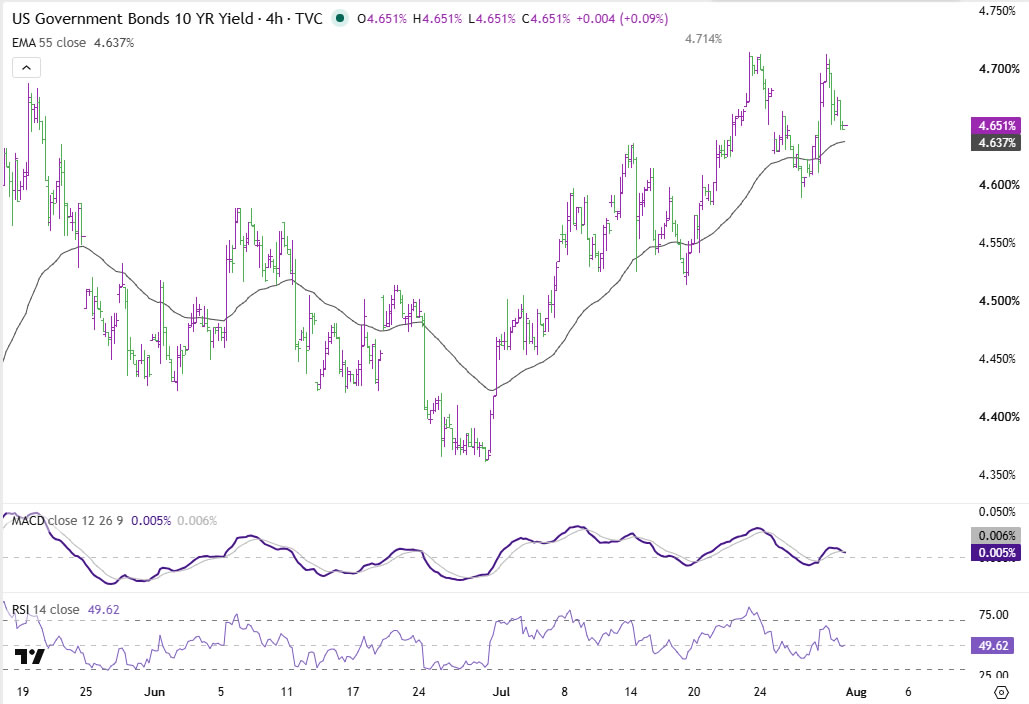
This week, however, those relationships have diverged. Treasury markets have remained remarkably stable, with the 10-year yield holding comfortably within its recent 4.6%–4.7% range instead of falling alongside the Dollar. Without a meaningful decline in real yields, Gold has lost one of its most important fundamental supports.
At the same time, surging equity markets have reduced the need for portfolio hedges, weakening safe-haven demand. As a result, the weaker Dollar has provided only a modest lift, while the absence of lower real yields and the strength of risk appetite have prevented Gold and Silver from mounting the kind of breakout investors often associate with broad Dollar weakness.
ActionForex's Technical View on Gold and Silver
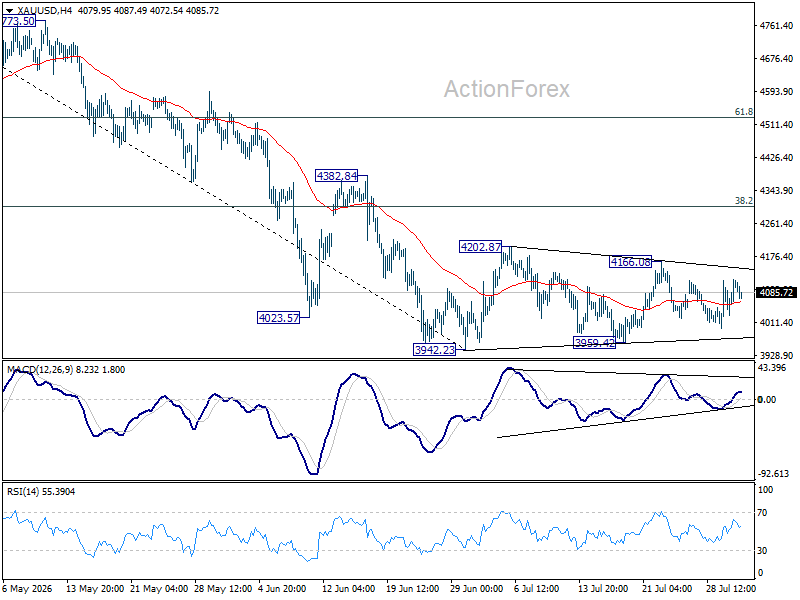
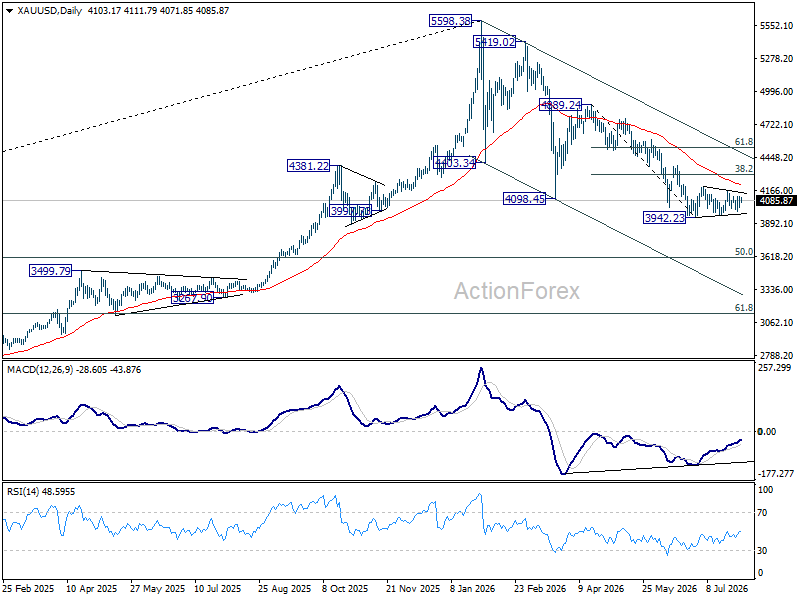
Technically, Gold's latest rebound delays rather than negates the broader bearish outlook. The consolidation from 3,942.23 appears to be extending into another recovery leg, with a break of 4,116.08 resistance now possible. However, gains should be capped by the falling 55-day EMA, currently at 4,214.50. Once the consolidation completes, a break below 3,942.23 remains the preferred scenario to resume the broader decline from 5,598.38.
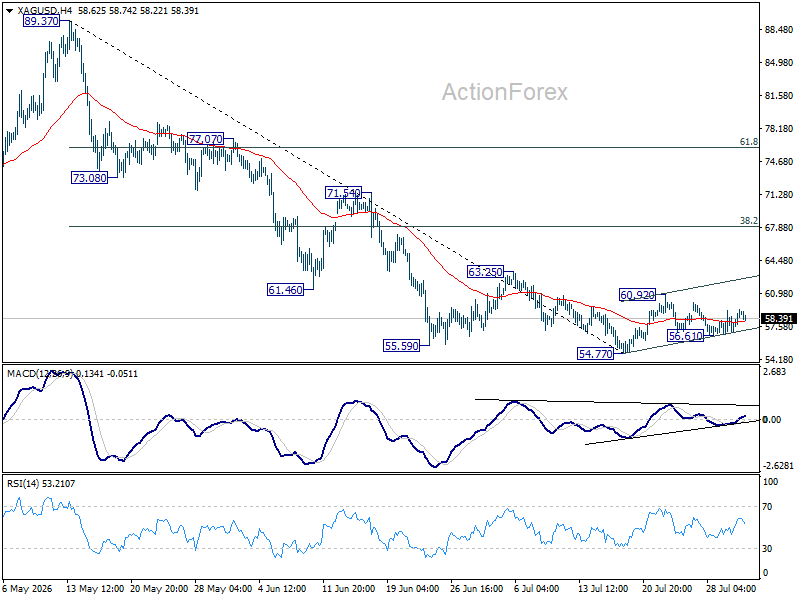
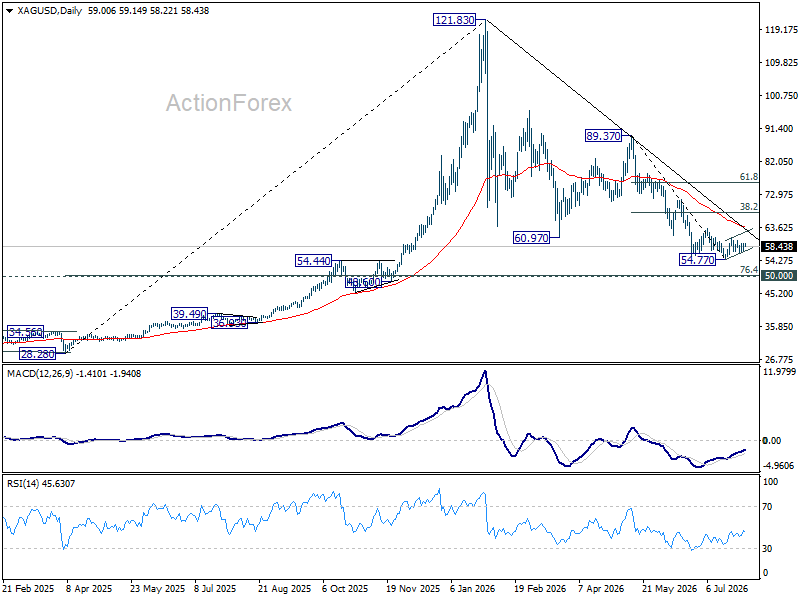
Silver presents a similar technical picture. The corrective rebound from 54.77 could extend toward 60.92, but the falling 55-day EMA, now at 63.67, is expected to limit upside. Once the current consolidation phase runs its course, the broader downtrend is expected to resume with a break below 54.77.
Key Takeaways
- Gold and Silver have lagged this week's broad Dollar decline because the weakness stems from fading Fed hike bets, not falling real yields or safe-haven demand.
- The 10-year Treasury yield has held steady within 4.6%–4.7%, denying Gold the real-yield tailwind it typically needs to rally alongside a weaker Dollar.
- A risk-on surge — led by Microsoft's earnings and a 17.91% KOSPI rally — has reduced demand for defensive hedges, further capping precious metals.
- Gold's consolidation from 3,942.23 may extend toward 4,116.08, but the falling 55-day EMA at 4,214.50 should cap gains ahead of a resumed decline.
- Silver's rebound from 54.77 faces a similar ceiling near its falling 55-day EMA at 63.67, with the broader downtrend expected to resume below 54.77.
BoJ Holds Steady, Hawkish Dissent and Outlook Keep October Hike in Focus
Bank of Japan left its policy rate unchanged at 1.00%, as widely expected, but delivered a policy package that reinforced its gradual normalization message. The decision was approved by an 8-1 vote, with Takata Hajime dissenting in favor of an immediate 25 basis point hike to 1.25%. Takata argued that Japan had entered "a new phase" requiring "a nimble approach" to address upside inflation risks arising from overseas demand shocks and changes in global financial conditions. While the majority opted to wait, the dissent underscored growing confidence within the Policy Board that inflation risks are becoming increasingly skewed to the upside.
The updated Outlook Report painted a nuanced but constructive picture. The BoJ modestly raised its median GDP forecasts for fiscal 2026 and 2027 while lowering its fiscal 2026 core CPI projection to 2.5% from 2.8%, reflecting an expectation that the impact of higher crude oil prices will gradually fade. At the same time, the Bank lifted its fiscal 2027 inflation forecast to 2.4% from 2.3%, suggesting policymakers see inflation becoming more durable rather than simply driven by temporary energy shocks.
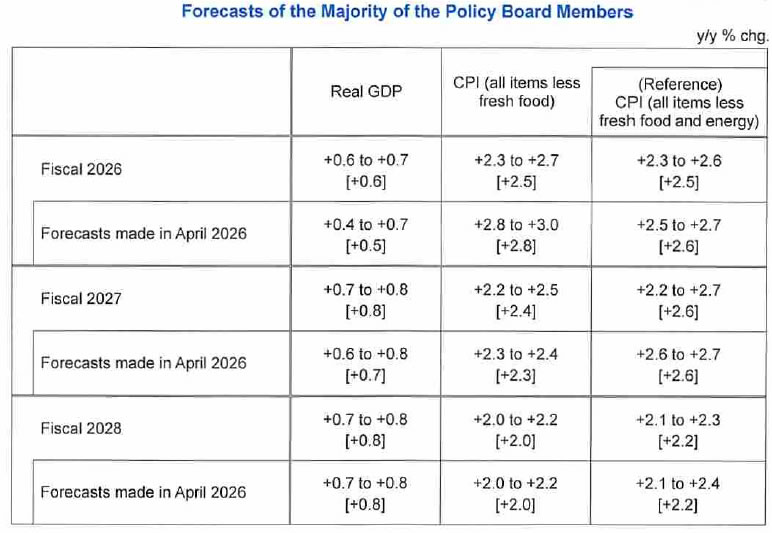
The report stated that CPI inflation is "likely to accelerate to a level clearly above 2 percent" in the second half of fiscal 2026 before easing toward the target as oil effects fade. More importantly, it emphasized that "the mechanism in which wages and prices rise moderately in interaction with each other will be maintained," allowing underlying inflation to gradually converge with the Bank's price stability objective.
Perhaps the strongest signal came from the Bank's forward guidance. The BoJ reiterated that "risks to the outlook for the CPI are skewed to the upside" and warned of the risk that inflation could "deviate upward to a level above the 2 percent price stability target" as firms continue raising wages and prices. It also stated explicitly that it "will continue to raise the policy interest rate and adjust the degree of monetary accommodation" while assessing economic activity, prices and financial conditions. Policymakers highlighted the Middle East, AI-related global demand and exchange-rate developments as key uncertainties.
Taken together, the decision was less about today's unchanged rate than reinforcing the direction of travel. The BoJ stopped short of signaling when the next move will come, but it made clear that further normalization remains the baseline rather than merely a possibility.
Key Takeaways
- BoJ kept the policy rate unchanged at 1.00%, as widely expected. The decision was approved by an 8-1 vote, but the lone dissent made the meeting more hawkish than the headline suggests.
- Takata Hajime voted for an immediate rate hike to 1.25%. He argued Japan has entered "a new phase" requiring "a nimble approach" to address upside inflation risks stemming from overseas demand shocks and changes in global financial conditions.
- The medium-term inflation outlook improved despite a lower FY2026 forecast. While the median FY2026 core CPI forecast was lowered from 2.8% to 2.5%, the FY2027 projection was raised from 2.3% to 2.4%, indicating the BoJ sees inflation becoming more durable rather than merely driven by temporary energy shocks.
- The BoJ expects inflation to stay above target in the near term. The Outlook Report said CPI is "likely to accelerate to a level clearly above 2 percent" in the second half of fiscal 2026 before gradually easing toward the target as oil-price effects fade.
- The wage-price cycle remains central to the BoJ's confidence. The Bank said "the mechanism in which wages and prices rise moderately in interaction with each other will be maintained," supporting a gradual rise in underlying inflation.
- Policy guidance became more explicit. The BoJ stated it "will continue to raise the policy interest rate and adjust the degree of monetary accommodation" while assessing economic activity, prices and financial conditions, reinforcing that further normalization remains the baseline scenario.
- Inflation risks are now explicitly tilted upward. The Bank said risks to economic activity are "generally balanced," but "risks to the outlook for the CPI are skewed to the upside," citing the Middle East, AI-related global demand and exchange-rate developments as key uncertainties.