

Sample Category Title
EUR/JPY Daily Outlook
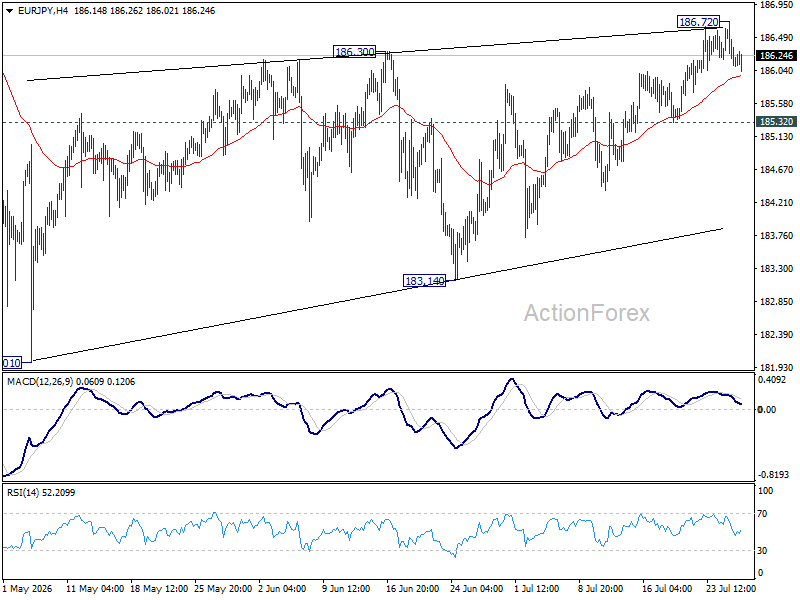
Intraday bias in EUR/JPY is turned neutral with current retreat. Rebound from 182.10 could still extend higher. Nevertheless, since this rebound is viewed as a corrective move, strong resistance should be seen from 187.93 to limit upside. On the downside, below 185.32 support will turn intraday bias back to the downside for 183.14 support.
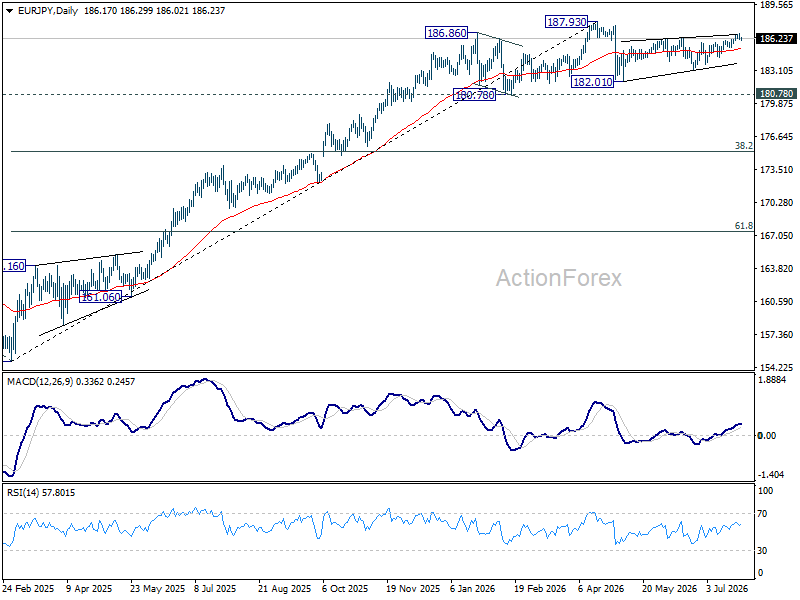
In the bigger picture, uptrend from 114.42 (2020 low) is still expected to resume at a later stage to 78.6% projection of 124.37 (2022 low) to 175.41 (2025 high) from 154.77 at 194.88. However, sustained break of 55 W EMA (now at 180.40) will argue that it's already in a medium term down trend to 175.41 resistance turned support and below.
EUR/GBP Daily Outlook
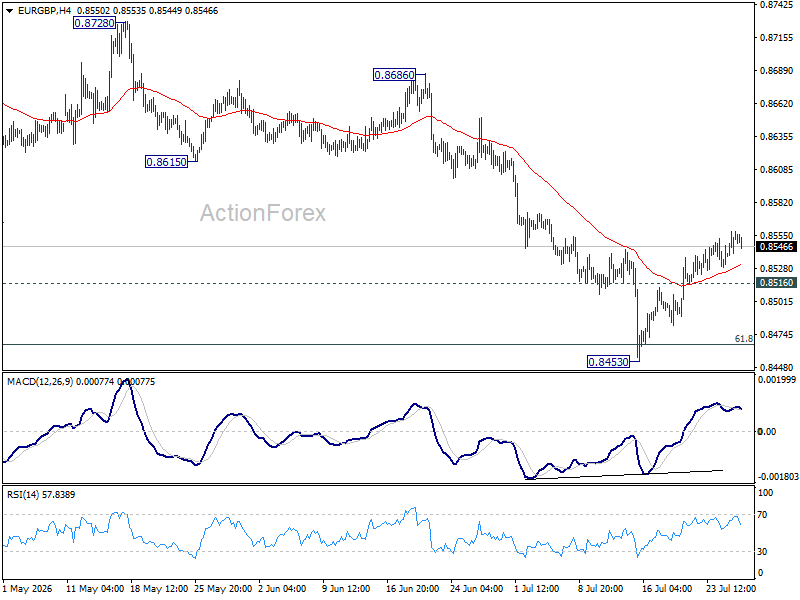
EUR/GBP's corrective rebound from 0.8453 could still extend higher to 55 D EMA (now at 0.8578). But strong resistance should be seen from 0.8610 to limit upside. On the downside, below 0.8516 minor support will bring retest of 0.8453 low.
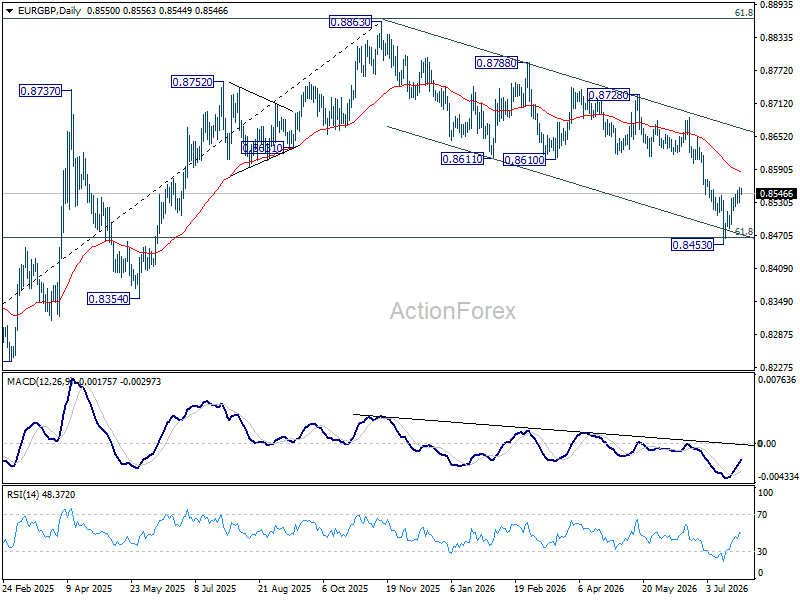
In the bigger picture, rise from 0.8221 (2024 low) should have completed at 0.8863, just ahead of 38.2% retracement of 0.9267 (2025 high) to 0.8221 at 0.8867. Deeper fall would be seen back to 0.8221. For now, outlook will be neutral at best as long as 0.8610 support turned resistance hold.
EUR/AUD Daily Outlook
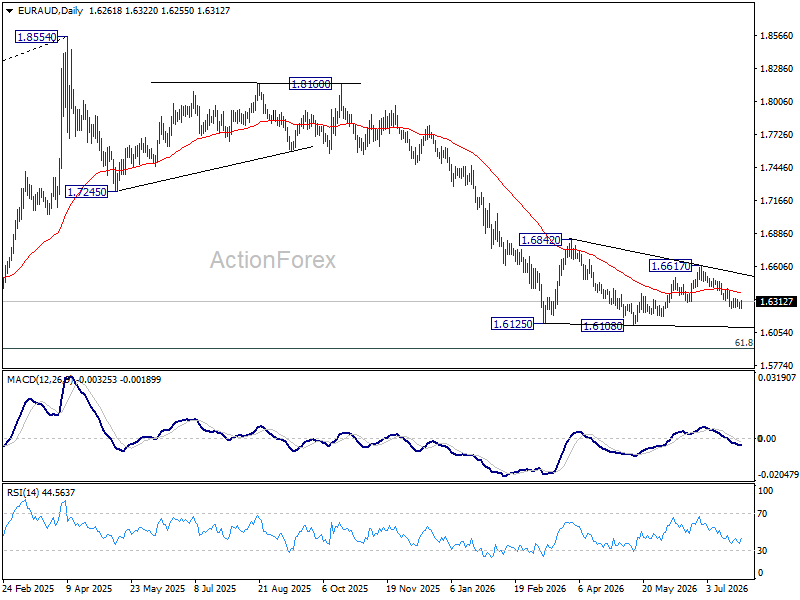
Intraday bias in EUR/AUD remains neutral and outlook is unchanged. Rebound from 1.6108 should have completed as a correction at 1.6617. Further fall is expected as long as 1.6419 resistance holds. Below 1.6250 will target a retest of 1.6108 low. Firm break there will resume larger down trend.
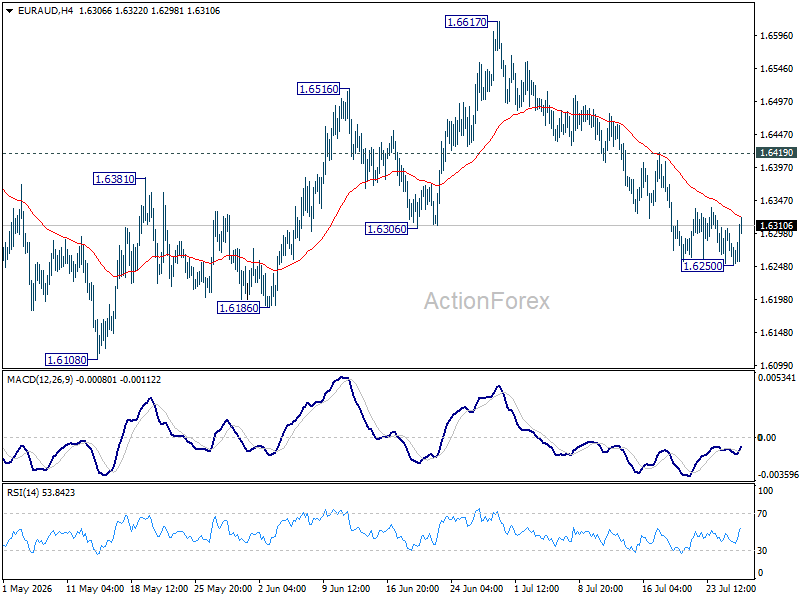
In the bigger picture, outlook will stay bearish as long as 1.6842 resistance holds. Fall from 1.8554 (2025 high) is expected to continue to 61.8% retracement of 1.4281 to 1.8554 at 1.5913. Decisive break there will pave the way back to 1.4281 (2022 low). However, firm break of 1.6842 should confirm medium term bottoming, and bring stronger rally.
EUR/CHF Daily Outlook
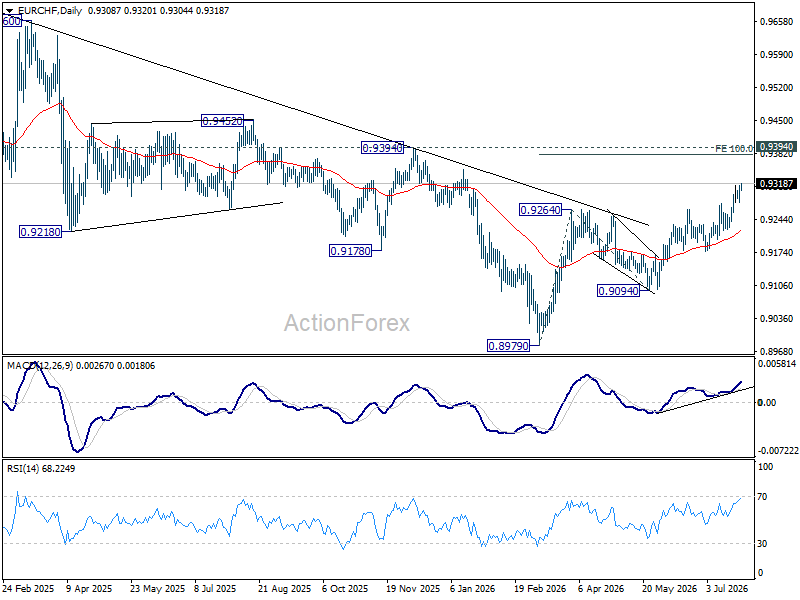
EUR/CHF's rally resumed after brief consolidations and intraday bias is back on the upside. Current rise from 0.8979 should target 100% projection of 0.8979 to 0.9264 from 0.9094 at 0.9379. On the downside, below 0.9278 minor support will turn intraday bias neutral and bring consolidations again, before staging another rally.
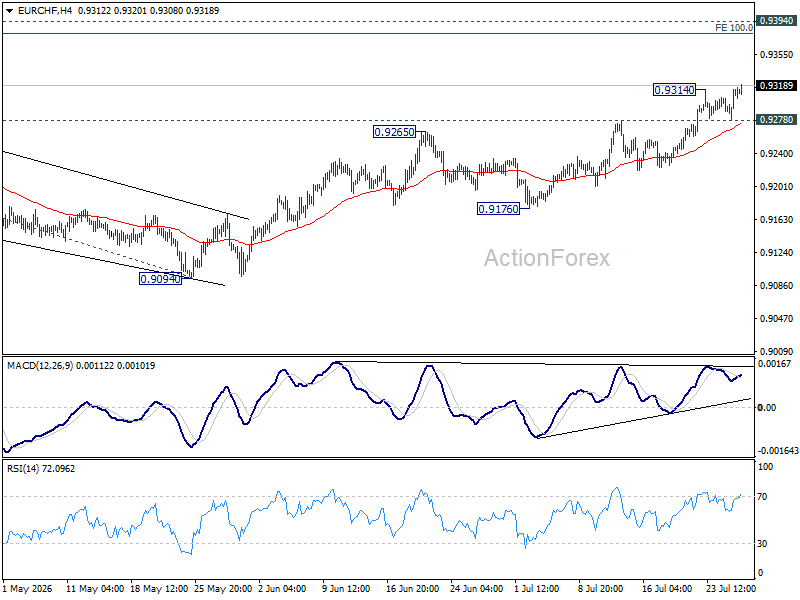
In the bigger picture, the break of medium term falling trend line resistance indicates that 0.8979 is already a medium term bottom. Considering bullish convergence condition in W MACD, rise from there should at least be reversing the fall from 0.9928, with prospect of developing into a medium term up trend. Firm break of 0.9394 resistance will add more credence to this case. For now risk will remain on the upside as long as 0.9094 support holds, in case of retreat.
WTI Analysis: Gap Breaks Short-Term Trend as Price Remains Trapped Between the Poc and Profile Boundary
WTI crude oil plunged by more than 7% on 27 July 2026 after the US suspended a series of strikes against Iran over the weekend, raising hopes of a diplomatic solution and the reopening of shipping through the Strait of Hormuz, according to CNBC. Brent crude also fell below $90 per barrel. Meanwhile, Bloomberg reported that Yemen's Houthi movement had claimed attacks on Saudi Aramco facilities in Jizan and Yanbu, suggesting that the conflict remains far from resolved.
WTI Technical Analysis
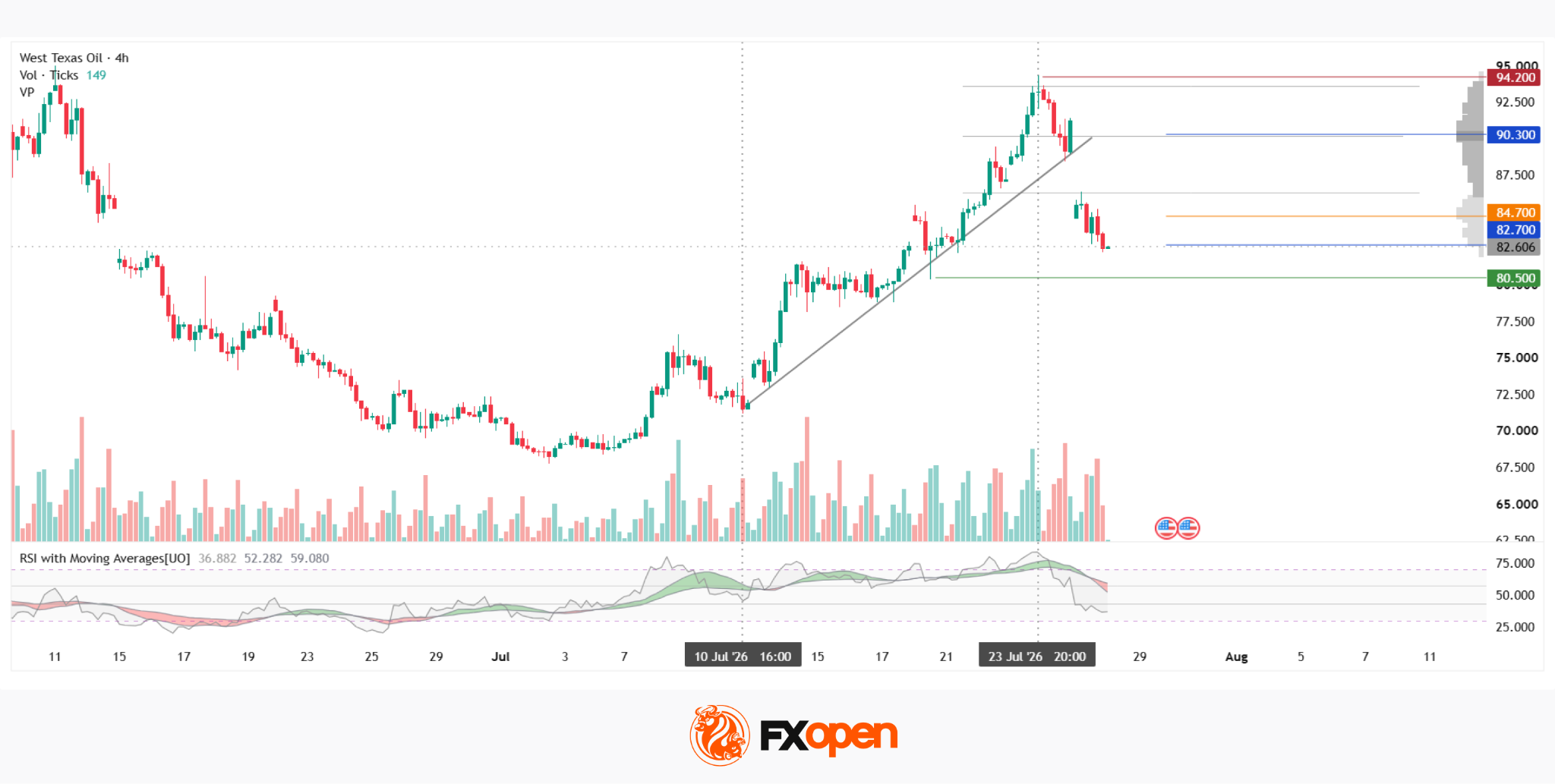
Since the beginning of July, XTIUSD had been developing a short-term uptrend. A rebound from the $68 area on 2 July evolved into a sustained rally, supported by an ascending trendline. This trendline held until the market peaked near $94.2, but it was broken on 27 July following a sharp gap lower. Since then, the price has been attempting to move through two key levels within the current market profile: the POC at $84.7 and the lower profile boundary at $82.7. If this area fails to hold and the decline continues, the green support level at $80.5 could become increasingly important. Notably, the gap occurred on relatively modest trading volume considering the scale of the price move.
Above current levels lies the upper boundary of the market profile at $90.3, which could become the next upside target if the market reverses. Beyond that, traders will be watching the red resistance level at $94.2. The RSI + MAs indicator currently reads 36, 55 and 60, suggesting that the market remains unbalanced and is still searching for equilibrium.
Summary
The relatively low trading volume accompanying the gap suggests that the sell-off may have been driven largely by emotion, leaving room for buyers to return if the geopolitical risk premium begins to rebuild. For now, oil prices remain confined to a narrow range between the POC and the lower boundary of the market profile, where momentum for the next significant move may be building.
Start trading commodity CFDs with tight spreads (additional fees may apply). Open your trading account now or learn more about trading commodity CFDs with FXOpen.
This article represents the opinion of the Companies operating under the FXOpen brand only. It is not to be construed as an offer, solicitation, or recommendation with respect to products and services provided by the Companies operating under the FXOpen brand, nor is it to be considered financial advice.
Sunrise Market Commentary
Markets
The 'new' ceasefire between the US and Iran led to further relaxation in markets. President Trump again sees opportunities for a solution. Iran and Oman are apparently negotiating a solution for the passage through the Strait of Hormuz. However, the 'optimism/relief' was not equally pronounced across different parts of the market. In the energy markets, oil closed below $89 p/barrel. The reference European/Dutch contract for gas (TTF) also fell sharply (€58 p/Kwh compared to > €63 last week). Interest rate markets still took a more cautious approach. US yields declined 0.8 (2-y) to 3 bps (10-y). A 2-y $69 bln US Treasury auction yesterday attracted solid investors demand. Buying in a 5-y $70 bln sale again was less enthusiastic. Capital goods shipments (non-defense ex aircraft +1.9%) in the durable orders report were again solid but with little impact on markets. Markets still see about 35% chance of Fed rate hike already at tomorrow's Fed meeting. A 'risk premium' of the no-forward guidance era? European bond markets outperformed slightly with German yields easing 3.0 (30-y) to 3.6 bps (2-y). This certainly isn't spectacular given the sharp increases earlier this month. For both the ECB and the Fed, the market still sees a 25 bpn hike in September (Fed) or October (ECB) at the latest, with even some follow-up action still discounted for early next year. Even at the current, slightly lower energy prices, the market assumes that both the Fed and the ECB may still have to act to keep inflation under control. On equity markets, doubts about AI valuations were at least as great as the positive impact of lower oil prices. (Eurostoxx little changed, Nasdaq -0.18%) On FX markets, the dollar held the upper hand. An attempt by EUR/USD to recapture 1.14 stalled before it had even started. The market apparently does not want to be 'USD short' in the run-up to the Fed interest rate decision tomorrow (EUR/USD close 1.137). Could Warsh surprise after all? Sterling also didn't profit from the broader easing due to lower energy prices, despite a better than expected CBI distributive trades report. EUR/GBP again trended slightly higher to close near 0.855.
This morning, uncertainty on Tech valuations still dominates sentiment on most Asian equity markets (Nikkei currently -4.35%, Kospi -10.5%). US yields are again ceding 1-2 bps across the curve. Brent oil trades below $88 p/b. The dollar marginally outperforms (DXY 101.5, EUR/USD 1.137).
Later today there is again plenty of US data (Trade balance, house prices, consumer confidence) but they probably do not outweigh the 'headline risk' regarding developments in the Middle East and sentiment on equity markets. The shadow of tomorrows Fed decision apparently favors the dollar for the time being. The US Treasury will auction $44 bln of 7-year notes.
News & Views
According to Bloomberg reporting, referring to people familiar with the thinking inside the Swiss National Bank (SNB), the bank intends to keep the policy rate at zero until the end of 2027. Afterwards it can raise it. This internal analysis is said to be mainly based on current forecasts for inflation and assumes no major shocks. The assessment is also influenced by the recent weakening of the franc against the euro and the interest rate differential between the franc and the single currency. Negative rates are not the base case, but still can be applied in case of a negative economic scenario. Even after yesterday's Bloomberg report, markets still discount a first 25 bps SNB rate hike by the March meeting of next year. Swiss June headline inflation was reported at 0.5% Y/Y and core inflation at 0.3% Y/Y, both in the lower part of the 0%-2.0% corridor that the SNB sees as price stability. At its June 18 policy meeting SNB forecasted inflation at 0.6% this and next year and at 0.7% in 2028. It also repeated its increased willingness to intervene in the foreign exchange market to counter a rapid and excessive appreciation of the Swiss franc, which would jeopardize price stability. After briefly touching levels below EUR/CHF 0.90 early March, the franc gradually softened (driven by SNB interventions in Q1). The franc gradually weakened further to currently trade near EUR/CHF. The Swiss currency also lost some modest further ground yesterday.
Riding EURUSD Sellside
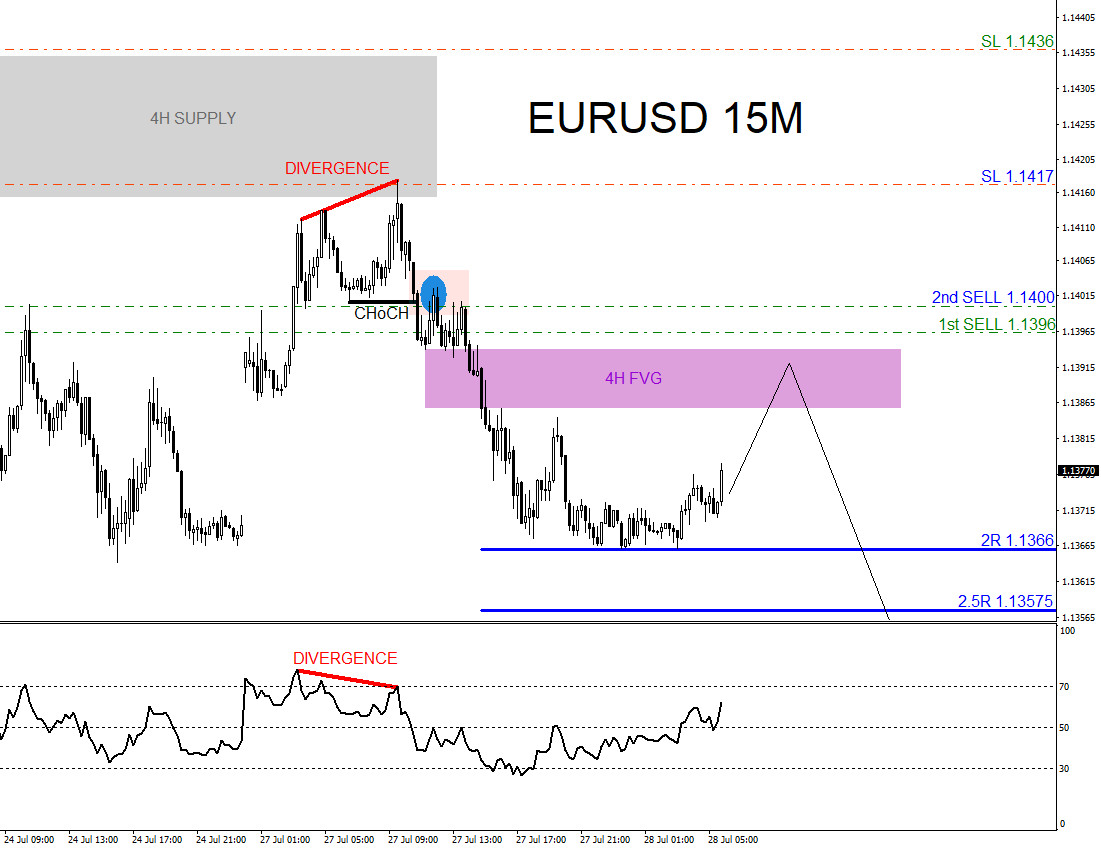
I am already riding two EURUSD sell entries. Another possible sell opportunity could be forming for traders that are not in yet.
EURUSD Possible Bearish Scenario
- Watch for price to tap 4 Hour FVG (Purple) first.
- Watch for a bearish shift and bearish reversal signs in the FVG zone.
- Wait for all above to play out first then plan the sell entry, stops and targets with confidence.
If price continues higher and breaks above the July 27 2026 high then trade setup is cancelled and if price breaks below the July 27 2026 low without tapping the 4H FVG then trade setup is cancelled.
EURUSD 15 Minute Chart July 27 2026
 A trader should always have multiple strategies all lined up before entering a trade. Never trade off one simple strategy. When multiple strategies all line up it allows a trader to see a clearer trade setup. We at EWF never say we are always right. No market service provider can forecast markets with 100% accuracy. Only thing we at EWF 100%, is that we are RIGHT more than we are WRONG.
Of course, like any strategy/technique, there will be times when the strategy/technique fails so proper money/risk management should always be used on every trade. Hope you enjoyed this article and follow me on social media for updates and questions> @AidanFX
At Elliottwave-Forecast we cover 78 instruments (Forex, Commodities, Indices, Cryptos, Stocks and ETFs) in 4 different time frames and we offer 5 Live Session Webinars everyday. We do Daily Technical Videos, Elliott Wave Trade Setup Videos and we have a 24 Hour Chat Room. Our clients are always in the loop for the next market move.
RBA’s Bullock Keeps Rate Hike Option Alive Despite Policy Lags
Speaking in Sydney today, Reserve Bank of Australia Governor Michele Bullock reaffirmed that the Board remains firmly focused on restoring price stability while leaving the door open to further monetary tightening if inflation proves more persistent than expected. Although she acknowledged that "the global environment has changed and the outlook is uncertain," Bullock stressed that the RBA's objectives "haven't changed," with the Board remaining committed to delivering both price stability and full employment. She also emphasized that the full effects of the cash rate increases delivered earlier this year "will take time to materialize," making it too early to judge whether existing policy settings are sufficiently restrictive.
Bullock warned that even if the latest disruption to global oil supplies proves temporary, inflation risks have not disappeared. She noted that "underlying inflation is still expected to be higher as fuel price rises flow through to other prices," while reminding markets that "inflation and capacity pressures in the domestic economy were already too high prior to the recent shock." Although there is evidence that domestic demand and labor market conditions have been easing, she argued that the economy continues to face significant capacity constraints and that the Board remains focused on "preventing elevated cost pressures from entrenching inflation."
While acknowledging that further moderation in demand may still be required, Bullock stopped short of signaling an imminent policy move, instead framing the coming months as a test of whether earlier tightening will be sufficient. She reiterated that monetary policy cannot solve Australia's weak productivity growth, but can make its greatest contribution by maintaining "low and stable inflation" alongside sustainable full employment. The speech nevertheless preserved the RBA's tightening bias, with Bullock concluding that the Board "is prepared to act as required to achieve its mandate, including by increasing the cash rate further if needed."
Key Takeaways
- Policy stance: RBA retains a conditional tightening bias and remains prepared to raise the cash rate again if inflation proves persistent.
- Policy lags: Bullock emphasized it is too early to judge whether the earlier rate hikes have been sufficiently restrictive, as their full effects are still working through the economy.
- Inflation: Even if oil supply disruptions ease quickly, higher fuel prices are expected to lift underlying inflation through broader cost pass-through.
- Domestic economy: Demand and labour market conditions are cooling, but capacity pressures remain elevated and inflation was already too high before the latest oil shock.
- Long-term challenge: Weak productivity continues to constrain Australia's non-inflationary growth potential, a problem monetary policy cannot solve.
- Market implication: The speech pushes back against expectations of an early policy pivot and reinforces the RBA's data-dependent tightening bias.
Bitcoin Joins Tech Selloff as Circular Financing Fears Hit Nvidia and AI Trade
TL;DR: Nvidia's near-5% overnight drop over expanding circular financing deals with OpenAI triggered a broad Asian tech selloff and dragged Bitcoin below key retracement support, as investors reassess whether AI demand is genuinely end-user driven or increasingly vendor-financed.
Why This Selloff Matters
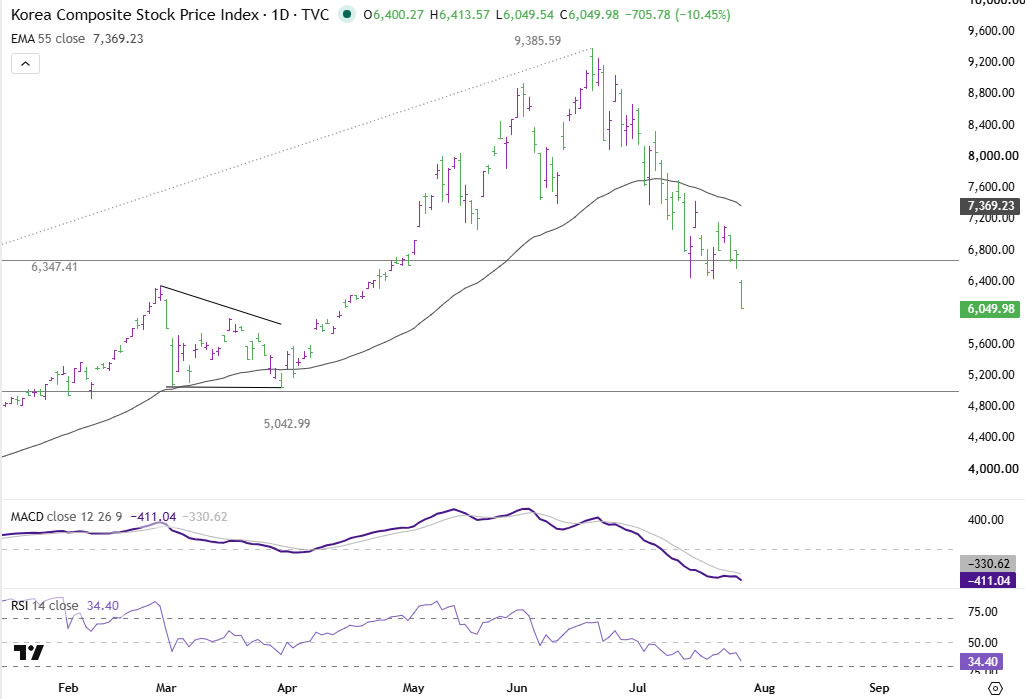
Asian technology stocks came under heavy selling pressure on Tuesday as concerns over Nvidia's expanding financing commitments spilled across the global AI supply chain, triggering sharp declines in semiconductor shares and weighing on cryptocurrencies. South Korea's KOSPI bore the brunt of the selloff, plunging enough to trigger market circuit breakers for the second time this month, while Japan's Nikkei also suffered steep losses.
The retreat came despite a modest easing in geopolitical tensions, underscoring that investor attention has shifted from Middle East risk back to a more fundamental question: is the AI investment boom sustainable, or is it increasingly propped up by financing rather than organic demand?
What Triggered the Move: Nvidia's Financing Web
The catalyst was Nvidia's nearly -5% decline overnight — its biggest one-day loss since February — which pushed the stock below the psychologically important $200 level. Reports from the Wall Street Journal and Bloomberg indicated that Nvidia is in discussions to guarantee up to $250 billion in financing for OpenAI to lease a 10-gigawatt data center in Ohio being developed by a SoftBank subsidiary.
That proposal comes on top of previously reported plans to support roughly $350 billion of financing for OpenAI's purchases of Nvidia chips. Separately, Nvidia has also agreed to back Ilya Sutskever's Safe Superintelligence — reinforcing the perception that the company is becoming increasingly intertwined with the financing needs of the very customers driving demand for its products.
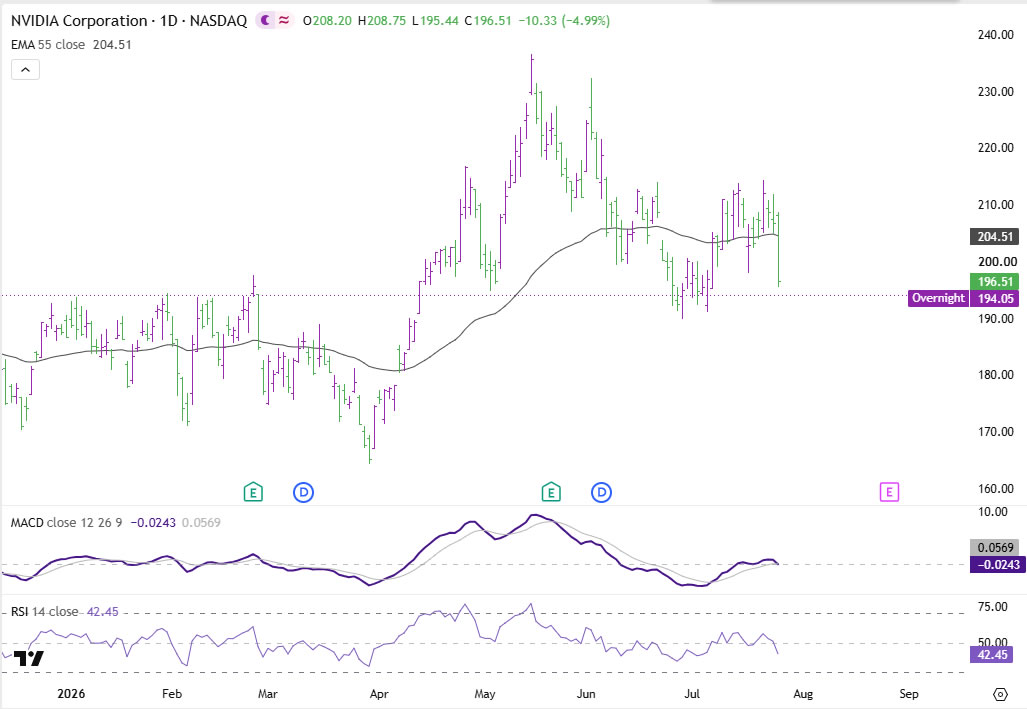
The Circular Financing Debate
Those reports revived a debate that has quietly simmered beneath the AI rally for much of the year: whether Nvidia is evolving from a chip supplier into a financier of its own ecosystem. The concern centers on so-called "circular financing," in which a supplier helps finance customers who then use those funds to purchase the supplier's own products — allowing revenue to flow back to the lender.
Investors have drawn comparisons with vendor-financing practices from previous technology booms — not because the business models are identical, but because both raise the same question: is reported demand being increasingly supported by financing rather than by independently funded end customers?
Why Credit Markets Are the Real Signal
Perhaps the most telling market reaction came not from equities but from credit. The cost of insuring Nvidia's five-year debt against default reportedly recorded its largest single-day increase on record. Although absolute credit spreads remain relatively low, the sharp move suggests bond investors are beginning to reassess the risks tied to Nvidia's growing financial commitments.
ActionForex analysis suggests credit markets often focus more heavily on balance-sheet strength than equity investors do, making the CDS move an important signal that concerns are extending beyond short-term valuation into structural financing risk.
Why Asia Absorbed the Shock First
Asia quickly absorbed the shock because it sits at the center of the global AI hardware supply chain. South Korea's market — dominated by memory-chip manufacturers supplying high-bandwidth memory used in AI accelerators — suffered the largest declines. Taiwan's benchmark also fell sharply, while Japan's losses reflected pressure on semiconductor equipment makers and precision manufacturers closely tied to AI capital expenditure.
Rather than a broad-based risk-off move, the selloff was concentrated in markets with the greatest exposure to continued AI infrastructure spending — a distinction that matters for gauging how far the contagion could spread.
ActionForex's Technical View on Bitcoin
The deterioration in sentiment also spread into digital assets, with Bitcoin and Ethereum both declining as investors reduced exposure to high-beta, technology-linked assets.
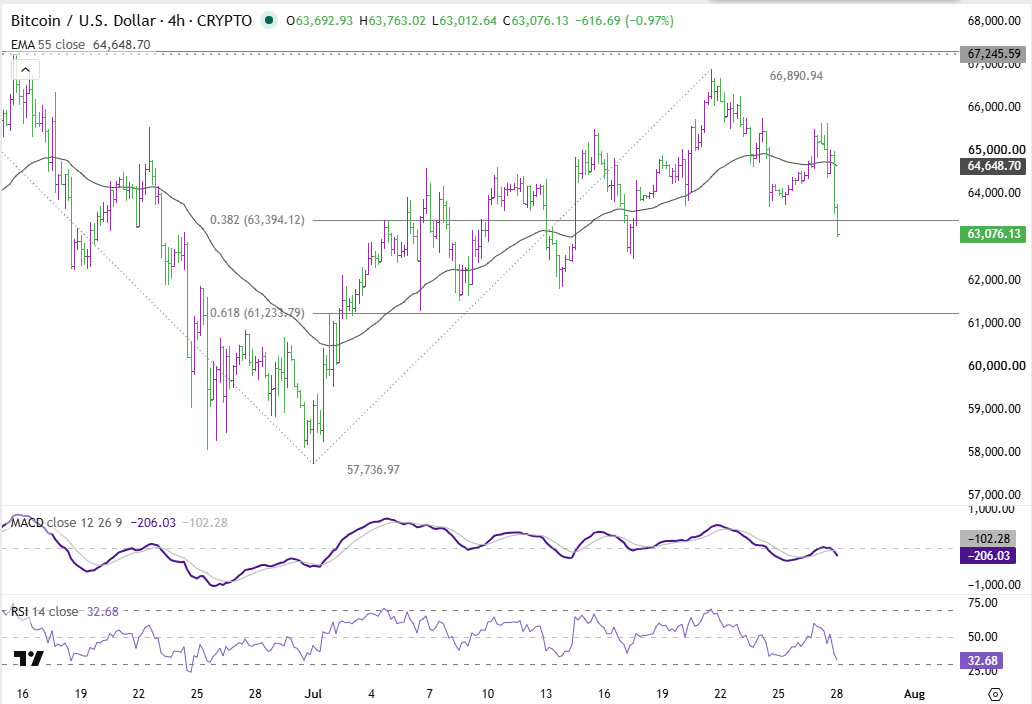
Technically, Bitcoin's break below the 38.2% retracement of the 57,736 to 66,890 rebound, at 63,394, suggests the recovery has likely run its course. A deeper fall should first be seen to the 61.8% retracement at 61,233, with a decisive break there opening the way for a retest of the 57,736 low.
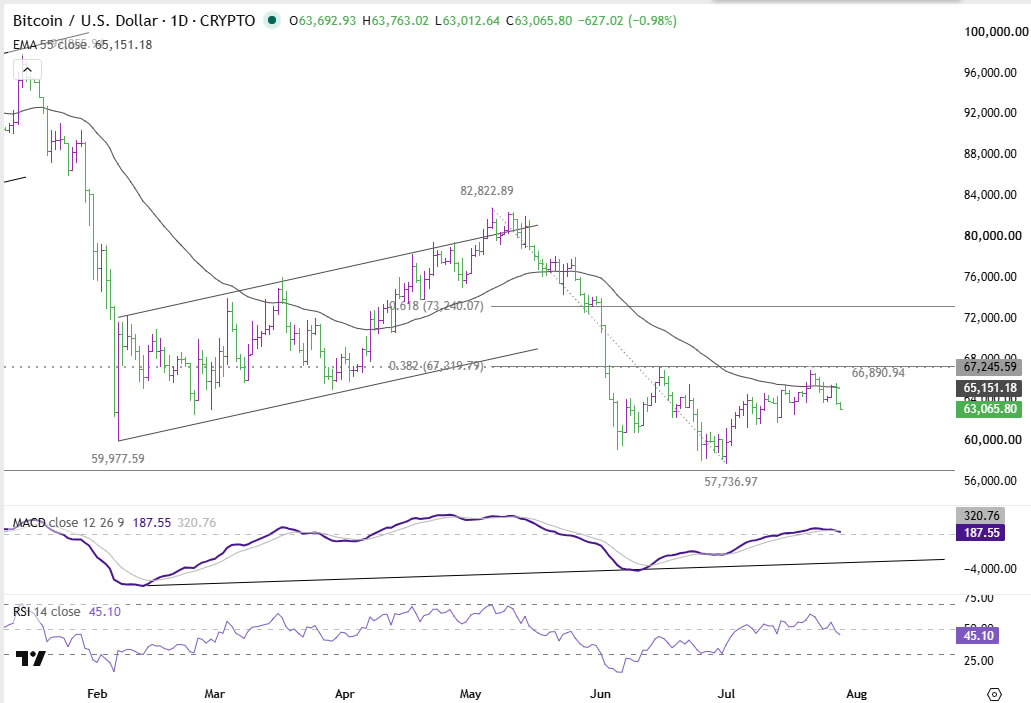
The broader technical picture also remains unfavorable. Bitcoin was previously rejected by the 67,245 cluster resistance (38.2% retracement of 82,822 to 57,736 at 67,319), while repeated failures to reclaim the 55-day EMA reinforce the bearish medium-term outlook.
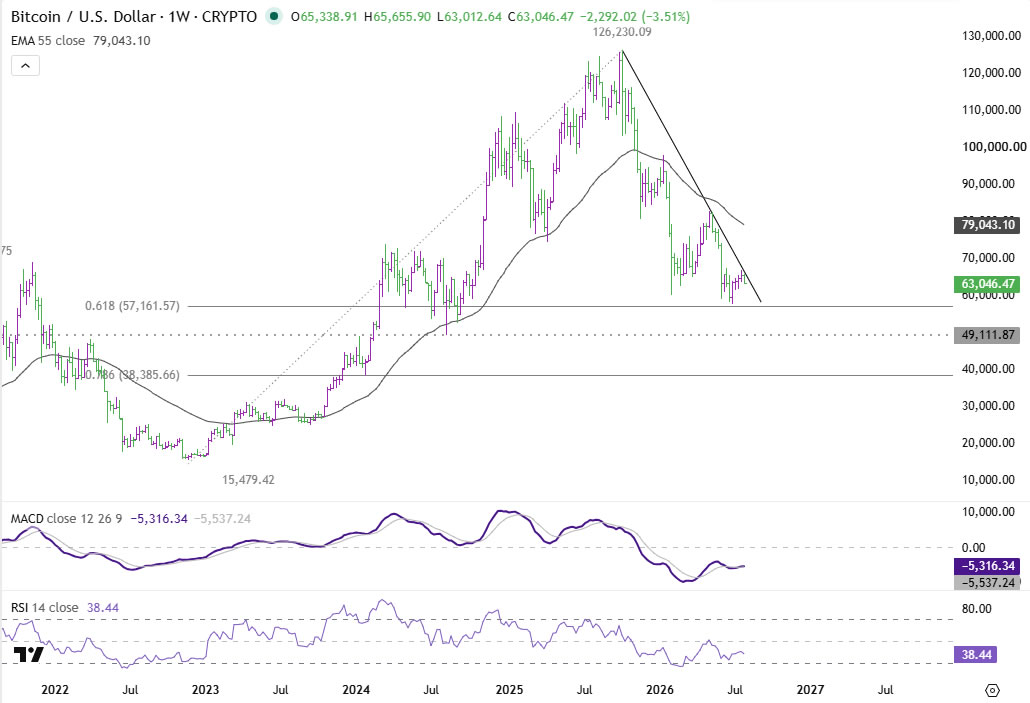
Whether the current decline proves to be another consolidation phase or the start of a fresh leg lower from the broader peak at 126,230 will depend on the strength of selling momentum over the coming sessions.
Key Takeaways
- Nvidia fell nearly 5% overnight — its worst day since February — after reports of up to $250B in financing guarantees for OpenAI, on top of an existing $350B chip-purchase financing plan
- The "circular financing" concern: is AI demand genuinely end-user driven, or increasingly supported by supplier-backed financing that loops revenue back to Nvidia?
- Nvidia's 5-year CDS spread saw its largest single-day increase on record — a credit-market signal that often precedes equity repricing
- South Korea's KOSPI hit circuit breakers for the second time this month; the selloff was concentrated in AI-supply-chain-exposed markets, not broad risk-off
- Bitcoin broke below 63,394 support, opening downside toward 61,233 and, if breached, a retest of the 57,736 low
GBP/USD Falls Back Under Pressure as Sellers Tighten Their Grip
Key Highlights
- GBP/USD started a fresh decline from the 1.3550 resistance zone.
- It traded below a bullish trend line with support at 1.3435 on the 4-hour chart.
- Bitcoin could aim for an upside break if it clears $66,500.
- USD/JPY seems to be aiming for more gains above 164.00.
GBP/USD Technical Analysis
The British Pound failed to clear 1.3550 and trimmed gains against the US Dollar. GBP/USD started a fresh decline below 1.3500 and 1.3450.
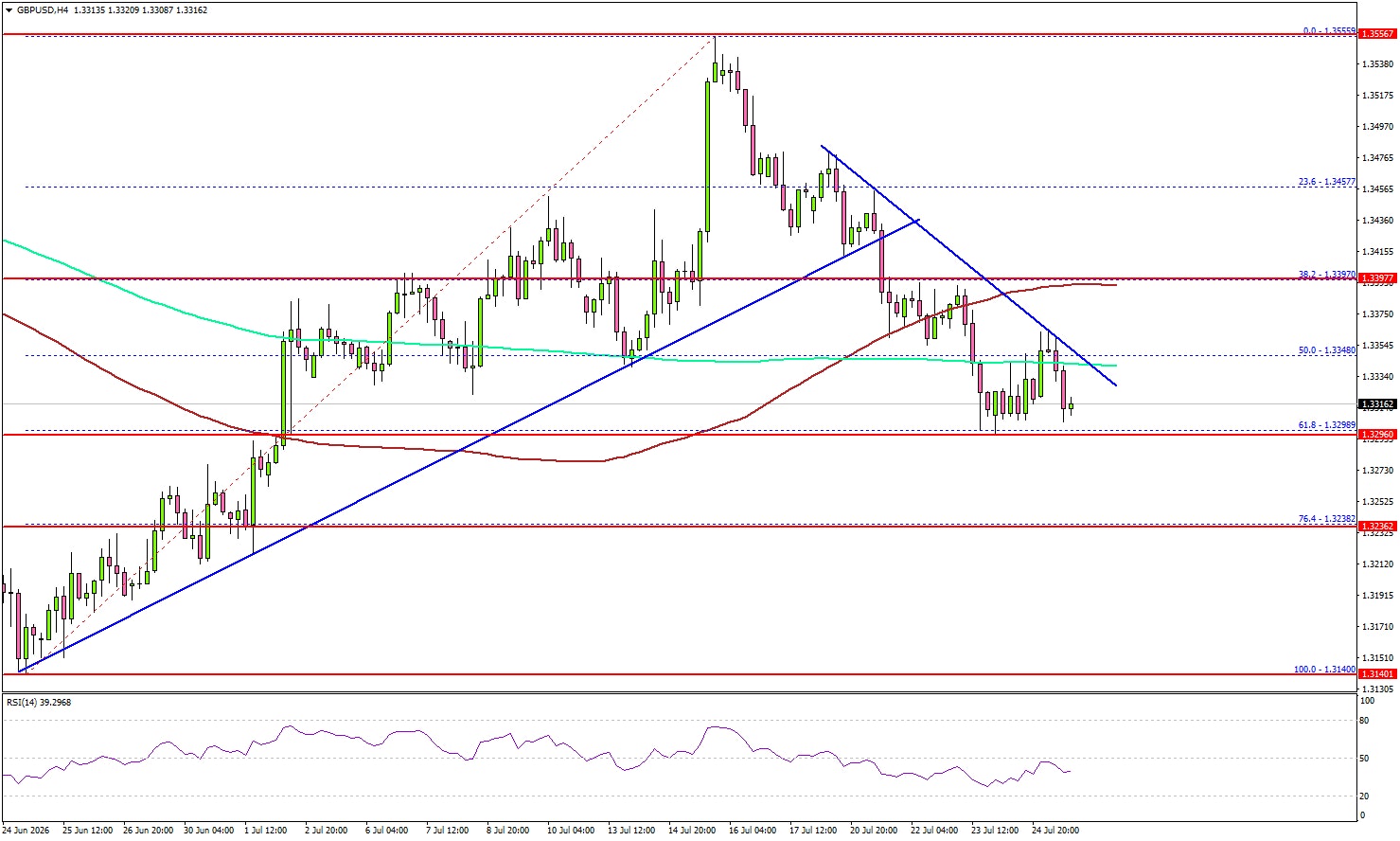
Looking at the 4-hour chart, the pair settled below 1.3400, the 100 simple moving average (red, 4-hour), and the 200 simple moving average (green, 4-hour). There was a drop below the 50% Fib retracement level of the upward move from the 1.3140 swing low to the 1.3555 high.
Besides, the pair traded below a bullish trend line with support at 1.3435. If the bears remain in action, they could aim for a test of the 76.4% Fib retracement level at 1.3238.
The next major support could be near 1.3220. The main support might be 1.3200. A downside break and close below 1.3200 might send the pair toward 1.3050. Any more losses could open the doors for a test of 1.3000.
On the upside, the pair could face resistance near 1.3350. The next major resistance might be 1.3400 and the 100 simple moving average (red, 4-hour). A close above 1.3400 could start another steady increase. In the stated case, the bulls could aim for a move to 1.3450. Any more gains might open the doors for a test of 1.3550.
Looking at Bitcoin, the price is slowly attempting a recovery wave, and if it settles above $66,500, there could be more gains.
Upcoming Key Economic Events:
- US Housing Price Index for May 2026 (MoM) - Forecast +0.2%, versus -0.1% previous.
- US ADP Employment Change 4-week Average - Forecast 12K, versus 16.5K previous.
- US Wholesale Inventories for June 2026 (preliminary) – Forecast +0.2%, versus +0.1% previous.