

Sample Category Title
USD Index – Bulls Eye 2026 High
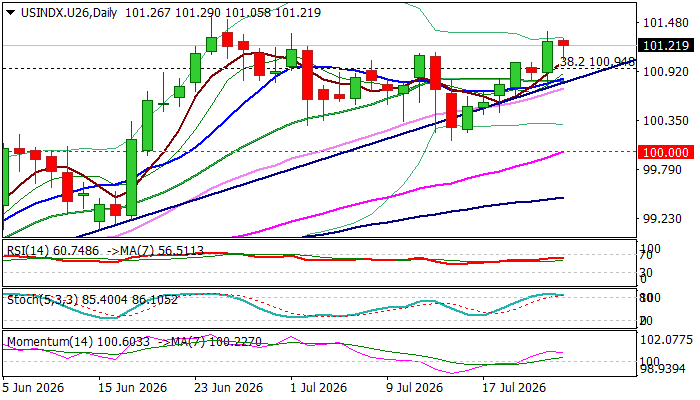
The dollar consolidates after Thursday’s 0.35% jump but keeps firm tone and remains on track for weekly gain of over 0.5%.
Bulls regained traction after two-legged pullback from new 2026 peak (101.55) registered a false break below trendline support (bull trendline drawn off 97.40 zone higher base), with subsequent bounce retracing the largest part of 101.55/100.12 pullback and shifting near term focus higher again.
Predominantly bullish daily studies underpin the action, primarily driven by supportive fundamentals.
The latest escalation in the Middle East lifted oil prices to the highest in over two months, sparking concerns of growing inflationary pressure that would prompt Fed to take more hawkish stance on monetary policy and lift the greenback further.
Consolidation should hold above broken Fibo level at 100.94 (38.2% of 110.00/95.35 descend) and trendline support (100.83) to keep bulls intact for retest of year-to-date high and possible extension towards 102.67/77 (50% retracement / weekly Ichimoku cloud top) in persisting favorable fundamentals.
Res: 101.37; 101.55; 102.00; 102.67
Sup: 100.94; 100.83; 100.42; 100.00
GBPCAD Wave Analysis
GBPCAD: ⬆️ Buy
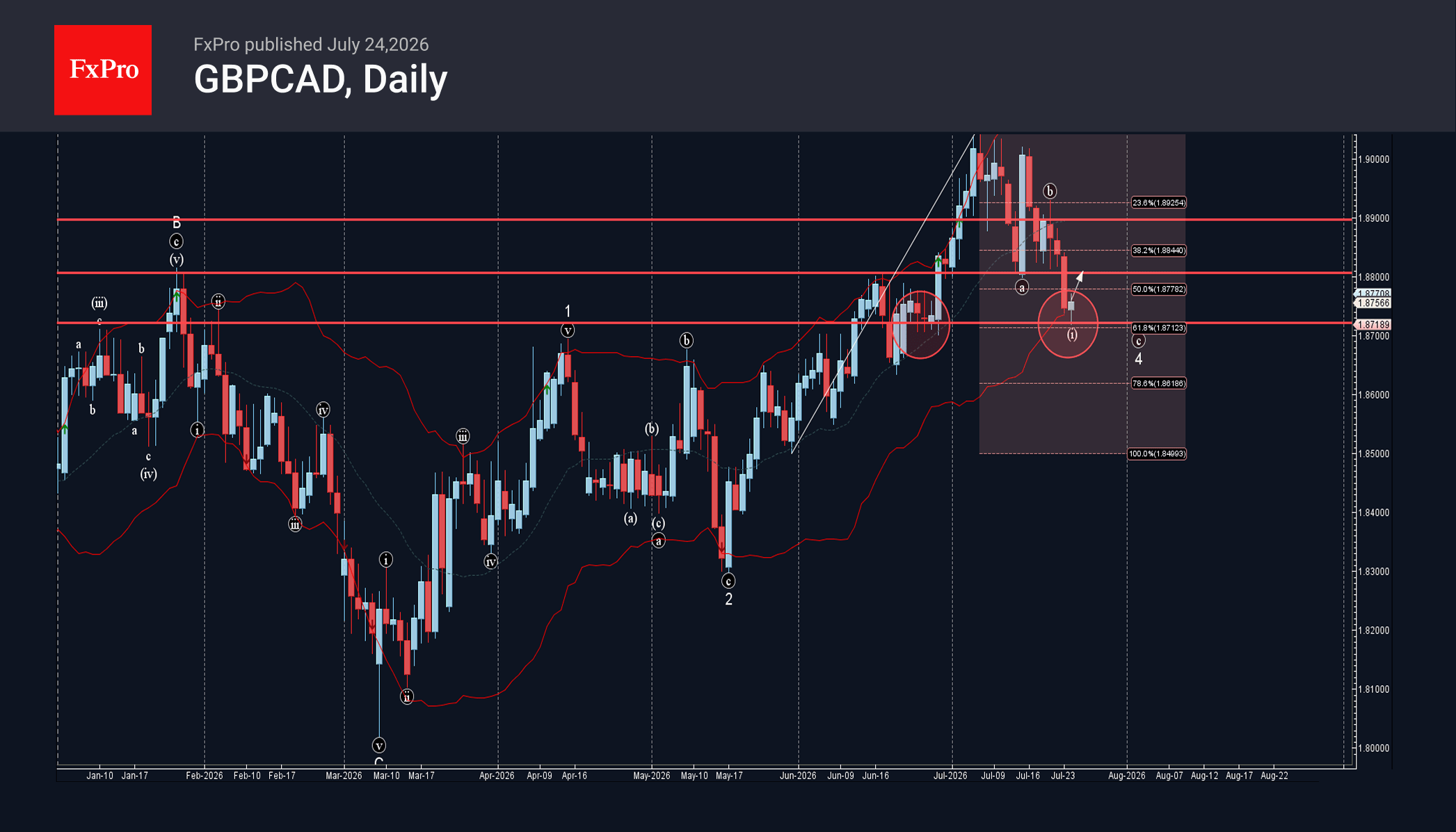
– GBPCAD reversed from the support area
– Likely to rise to resistance level 1.8800
GBPCAD currency pair recently reversed from the support area between the support level 1.8720 (which reversed the price multiple times at the end of June), lower daily Bollinger Band and the 61.8% Fibonacci correction of the upward impulse from May.
The upward reversal from this support zone stopped wave c of the earlier ABC retracement 4 from the start of July.
GBPCAD currency pair can be expected to rise to the next resistance level 1.8800 – former low of the previous correction a.
Markets Brace for Weekend Shock as Oil and Tariffs Threaten Global Recovery
Currency markets are heading into the weekend in a cautious mood, with traders reluctant to take large directional positions ahead of what could prove to be a defining 48 hours for global markets. Dollar is ending the week broadly firmer but has been unable to force a convincing breakout against Euro despite another rise in US Treasury yields. Instead, higher yields and elevated oil prices are exerting greater pressure on traditional low-yielding funding currencies, leaving Yen and Swiss Franc among the week's weakest performers. The price action suggests investors are not yet embracing a broad Dollar-safe-haven trade, preferring instead to wait for clarity on the geopolitical front before making more decisive allocations.
Markets Brace for Binary Weekend Risk from Trump's Iran Decision
That caution is understandable given President Donald Trump's latest comments on Iran. In an interview with Axios, Trump said he was considering a "massive attack" on Iran that could be "bigger than before" and indicated he was close to making a decision, though he declined to provide a timetable. He also said Israel would join the operation "in two minutes if I ask them to," while acknowledging that such involvement could trigger Iranian retaliation. Those remarks have left markets facing the possibility that significant military developments could unfold while exchanges are closed over the weekend.
Oil traders remain particularly sensitive to that risk. Brent crude briefly surged above $100 a barrel on Thursday before easing back to around $97 as no immediate escalation followed. However, the retreat has done little to ease concerns that supply risks could rapidly intensify if US military action materializes. A weekend strike could leave markets reopening with sizeable gaps on Monday, potentially pushing Brent back toward the April high at $119.50. Such a move would almost certainly trigger another reassessment of the inflation outlook, driving Treasury yields higher and complicating expectations for monetary policy across major central banks.
US Tariffs Shifts from Temporary to Structural
Trade policy has simultaneously become another source of concern for investors. At 12:01 a.m. ET on Friday, the Trump administration replaced its temporary global tariff regime with new duties ranging from 10% to 12.5% covering around 60 trading partners and roughly 99.4% of US trade. While the move largely maintains the broad tariff structure that markets had already been operating under rather than introducing a fresh shock, it reinforces the administration's commitment to a more protectionist trade framework. Combined with this week's additional tariffs targeting Canada and Brazil, it marks another incremental increase in global trade friction.
Perhaps more importantly, Washington has made clear that the current tariffs are not the final stage of its trade agenda. The administration is continuing a separate investigation into countries accused of overproducing and depressing global prices, a process that could ultimately justify substantially higher duties on selected imports. Although any such measures may not arrive until after the US midterm elections, the investigation itself is likely to discourage businesses from assuming trade tensions will ease in the foreseeable future. Instead, companies may increasingly delay investment decisions or continue diversifying supply chains in anticipation of further policy shifts.
Can the Manufacturing-Leg Recovery Survive?
Ironically, these geopolitical and trade risks are emerging just as incoming economic data point to a healthier global economy. Flash PMI surveys released across Australia, Japan, Eurozone and the UK painted a remarkably consistent picture of improving business activity at the start of the third quarter. Manufacturing has overtaken services as the principal driver of growth, supported by firmer export demand, rebuilding industrial production, recovering technology investment and inventory replenishment. Germany and Japan stood out as leading beneficiaries of the revival in global trade, suggesting industrial activity is beginning to recover after a prolonged downturn.
The surveys also carried a reassuring message on inflation. Businesses across all four economies generally reported easing cost pressures during the first half of July as lower oil prices and improving supply conditions reduced input-cost inflation. That moderation offered central banks some breathing room after months of persistent price pressures. Yet the optimism came with a strikingly similar caveat: every survey cited the Middle East as the biggest source of uncertainty. Some manufacturers also acknowledged building precautionary inventories in anticipation of potential supply disruptions, highlighting growing concerns that geopolitical developments could interrupt production and trade.
Taken together, the week's developments leave markets balancing two opposing forces. On one hand, the global economy appears to be entering the third quarter with stronger momentum than expected, driven by a broad-based revival in manufacturing. On the other, both higher energy prices and expanding trade barriers threaten to raise production costs and keep inflation elevated even as growth improves. That combination would represent a classic stagflationary challenge, potentially forcing central banks to keep monetary policy tighter than markets currently anticipate. Whether the encouraging macro backdrop or the mounting geopolitical risks dominate trading next week may depend largely on events over the weekend.
Gold and Silver Tumble as Oil Link Returns; Trump's Looming Decision on Iran Adds Binary Risk
Gold and Silver are once again trading in line with traditional macro fundamentals after briefly defying higher oil prices and Treasury yields earlier in the week. With Brent above $100 reviving inflation concerns and reinforcing higher-for-longer Fed expectations, precious metals have come under renewed pressure. Trump's looming decision on Iran now presents a binary risk: a major escalation could send oil and yields sharply higher, deepening losses in Gold and Silver, while a negotiated settlement could trigger a powerful rebound through falling oil and lower yields.
Read More.
UK PMI Composite Returns to Expansion at 52.1 as Manufacturing Leads Strongest Growth in Nearly Two Years
UK business activity returned to expansion in July, with the Flash Composite PMI rising to 52.1 as manufacturing recorded its strongest output growth in nearly two years. Services also recovered, supported by domestic tourism and seasonal demand, while easing cost pressures offered some relief on inflation. However, supply chain disruptions and rising oil prices linked to the Middle East remain key risks to the outlook. Read More.
Eurozone PMI Composite Rebounds to 51.6 as Manufacturing Powers Strongest Growth Since 2022
Eurozone business activity returned to expansion in July as the Composite PMI climbed to 51.9, its highest level in five months. Manufacturing led the recovery with the strongest production growth since March 2022, while services also moved back into expansion. Germany returned to growth, cost pressures eased, and firms added staff for the first time this year, although rising oil prices and Middle East tensions remain key risks to the recovery. Read More.
UK Retail Sales Surge 1.0% mom as Online Spending Leads Broad-Based June Rebound
UK retail sales surprised strongly to the upside in June, rising 1.0% against expectations for a decline. The strength was driven by online retailers, clothing stores and other non-food outlets as warm weather and promotional activity encouraged spending. Fuel sales remained the main drag, but the overall report points to resilient household demand heading into the second half of the year. Read More.
Germany's GfK Consumer Climate Slips to -29.6 as Income Outlook Weakens and Saving Stays Elevated
Germany's GfK Consumer Climate slipped slightly to -29.6 for August, showing that household confidence remains firmly depressed. While consumers became somewhat more willing to make purchases and less pessimistic about the economy, weaker income expectations and a renewed increase in precautionary saving outweighed those gains. The survey suggests German households remain cautious, limiting the prospects for a consumption-led recovery. Read More.
Japan Core CPI Picks Up to 1.6% in June, but Underlying Inflation Remains Contained
Japan's core CPI accelerated from 1.4% to 1.6% in June, while headline inflation rose from 1.5% to 1.7%. Food costs remained the main driver, although inflation excluding fresh food slowed from 3.5% to 3.1%. Government subsidies continued to restrain energy prices, while core-core inflation eased from 1.8% to 1.7%, suggesting underlying price pressures remained contained. Read More.
Japan PMI Composite rises to 53.1 as AI Demand Boosts Manufacturing
Japan's private sector expanded at its fastest pace since February in July, with the Flash Composite PMI rising to 53.1 and extending the current growth streak to 16 months. Manufacturing was the clear outperformer, as factory output accelerated on continued demand from the semiconductor and AI sectors, while services activity eased modestly. Read More.
Australia PMI Composite Hits 2026 High at 52.6 as Domestic Demand Rebounds
Australia's private sector gathered momentum in July, with the Flash Composite PMI rising from 50.4 to 52.6, its strongest reading of 2026. Growth was led by the services sector, while manufacturing continued to stabilize and new orders increased for the first time in five months, pointing to a recovery in domestic demand. Businesses also reported easing cost pressures, suggesting inflation continues to moderate even as activity improves. Although firms remained cautious about the outlook amid global uncertainty, the survey indicates Australia's economy entered the second half of the year on firmer footing. Read More.
USD/CAD Daily Outlook
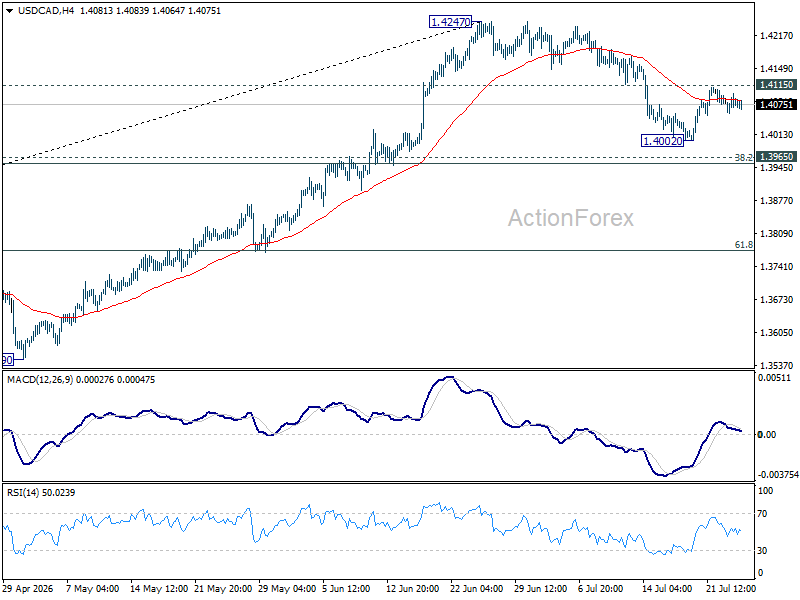
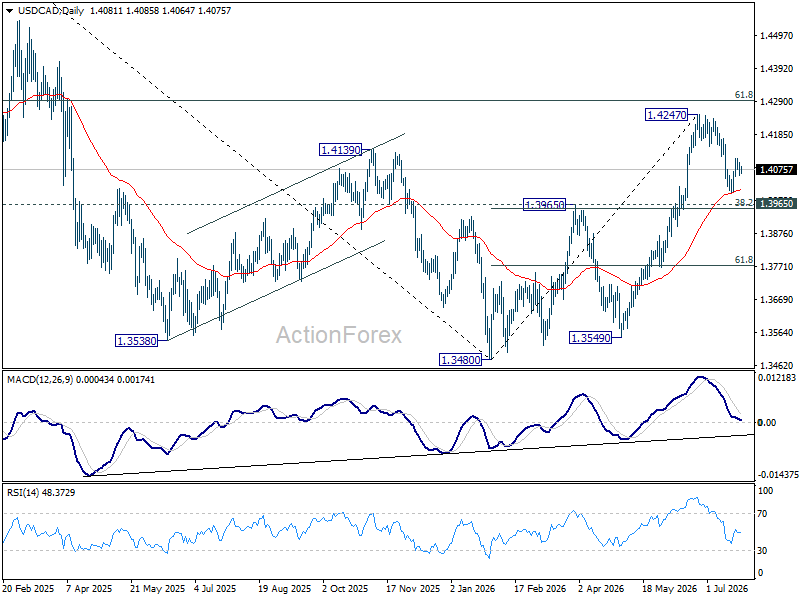
No change in USD/CAD's outlook and intraday bias remains neutral. On the upside, firm break of 1.4115 will suggest that pullback from 1.4247 has completed, ahead of 38.2% retracement of 1.3480 to 1.4247 at 1.3954. Retest of 1.4247 should be seen next. For now, outlook will remain bullish as long as 1.3954 holds, in case of another dip.
In the bigger picture, current development suggests that fall from 1.4791 has completed as a three wave correction to 1.3480. It's still early to judge if rise from there a corrective bounce, or resumption of the larger up trend from 1.2005 (2021 low). But in either case, retest of 1.4791 high should be seen next.
EURCHF Wave Analysis
EURCHF: ⬆️ Buy
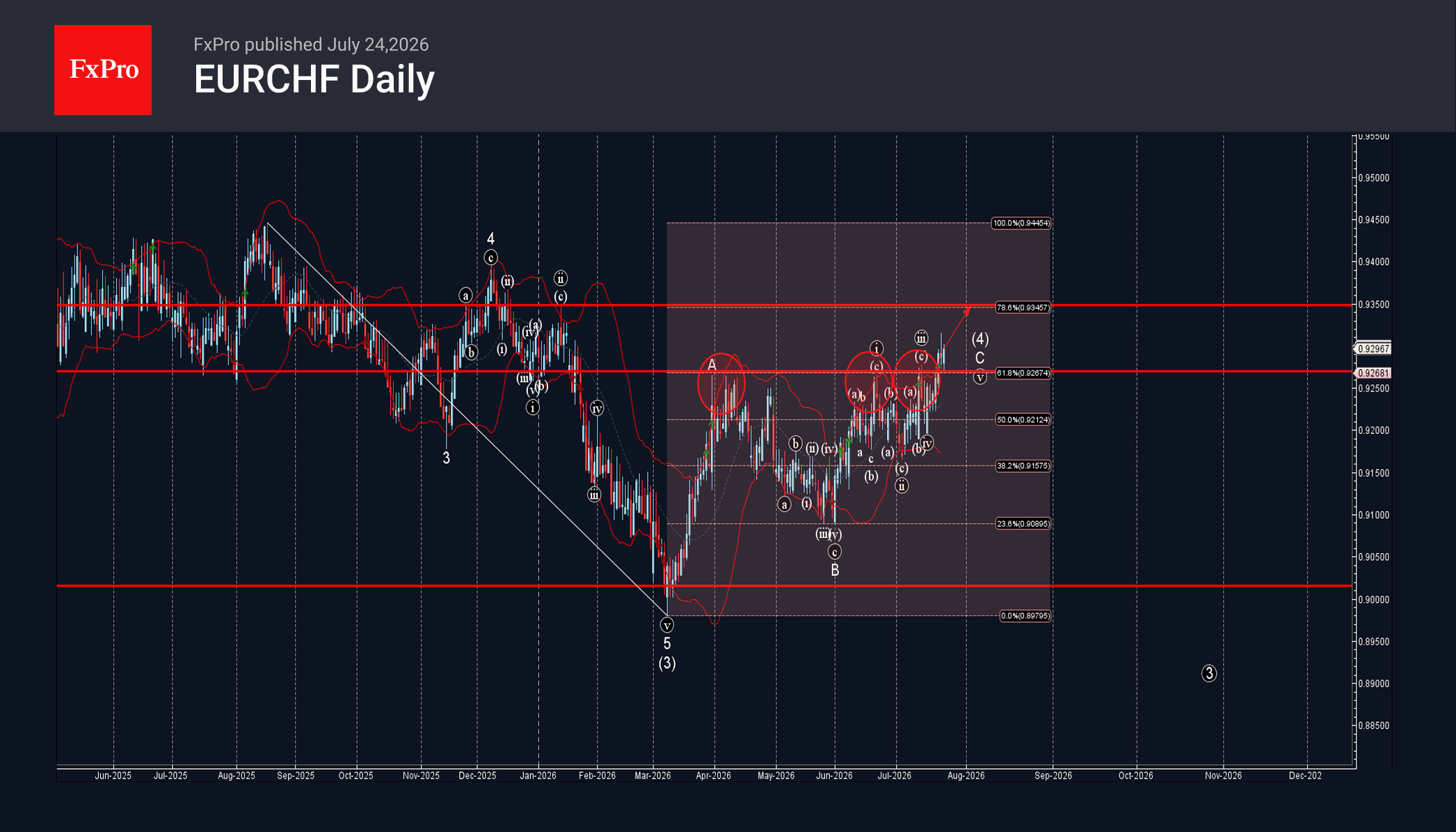
– EURCHF broke resistance level 0.9270
– Likely to rise to resistance level 0.9350
EURCHF currency pair recently broke the resistance zone between the resistance level 0.9270 (which has been reversing the price from March) and the 61.8% Fibonacci correction of the earlier downward impulse from last August.
The breakout of this resistance zone accelerated the active minor impulse wave C of the intermediate ABC correction (4) from the start of March.
EURCHF currency pair can be expected to rise further to the next resistance level 0.9350 – former resistance from the end of 2025.
Dollar: Oil Leaves the Fed with No Choice
- The Brent crude rally is a bigger ‘bearish’ factor for EURUSD than the ECB.
- The Fed may spring a surprise as early as July.
The US dollar paid no heed to the ECB’s hawkish rhetoric and continued its advance against major global currencies, including the euro. The European Central Bank left its deposit rate at 2.25%, keeping the door open to further hikes. Christine Lagarde noted that several Governing Council members had considered acting again now, but a unanimous decision was made to wait.
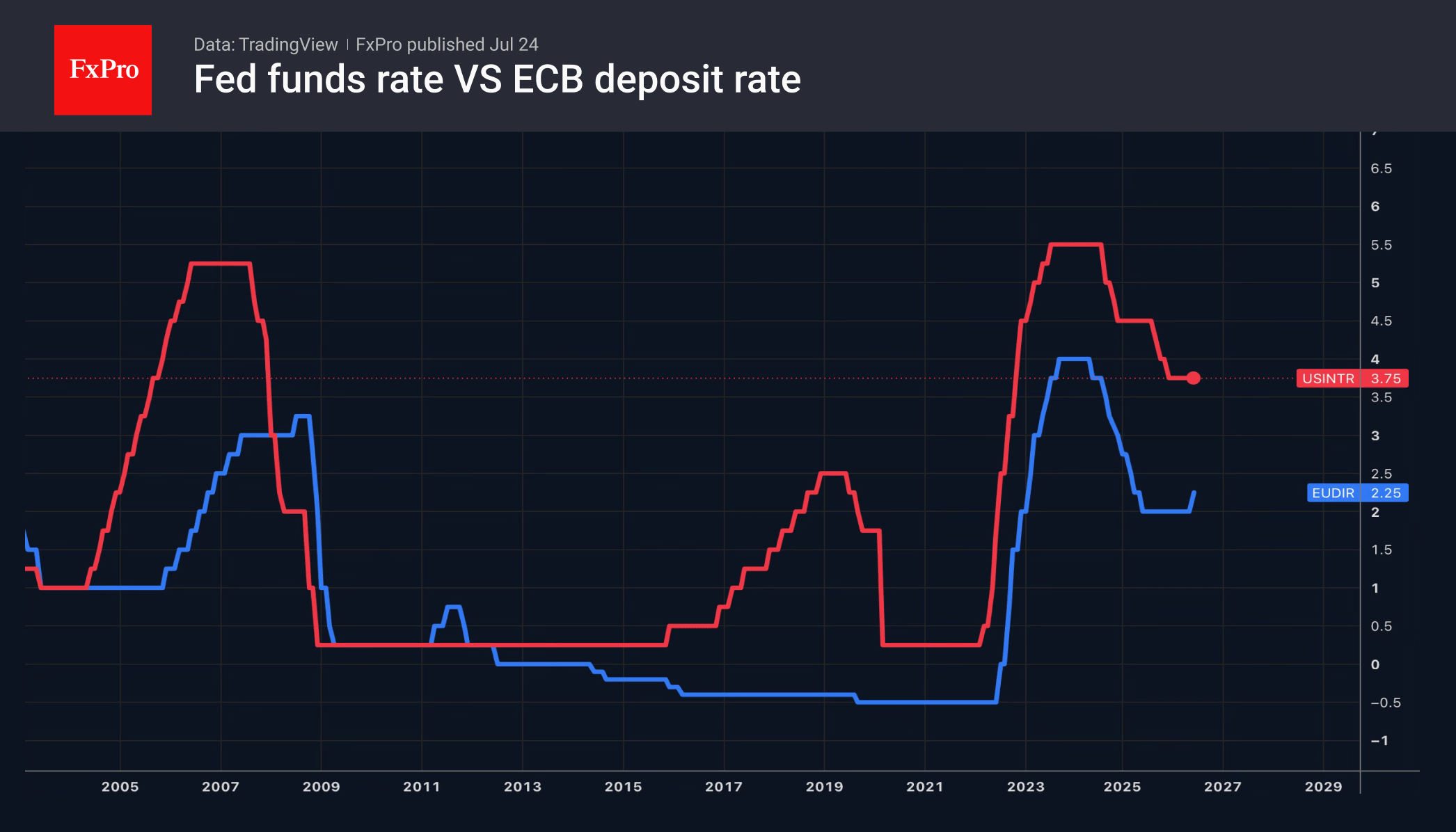
The ECB was the first of the world’s leading central banks to react to the conflict in the Middle East, tightening monetary policy in June. It has room for manoeuvre. The deposit rate is 150 basis points below the Fed’s, so there is scope for it to rise. The futures market is pricing in two rounds of monetary tightening in 2026, with the first expected in September or October.
However, the fate of the EURUSD is decided not in Frankfurt, but in Washington. In the FOMC’s latest rate forecasts, half of the officials expected a rate hike, whilst the rest expected rates to remain unchanged. At the same time, oil prices are rising above the critical $100 per barrel level, increasing the chances of a move up by the Fed as early as its July meeting. CME derivatives currently put the probability of this at 34%.
Meanwhile, the White House has announced the introduction of new tariffs of 10–12.5% on several dozen countries, covering more than 99% of total US imports. These will replace the temporary 10% import duties, which are due to expire on 24 July. As the rates differ little from the previous ones, this has had little impact on the markets. Nevertheless, Washington’s intention to continue pursuing trade wars, despite the Supreme Court’s rulings, should be a cause for concern among investors.
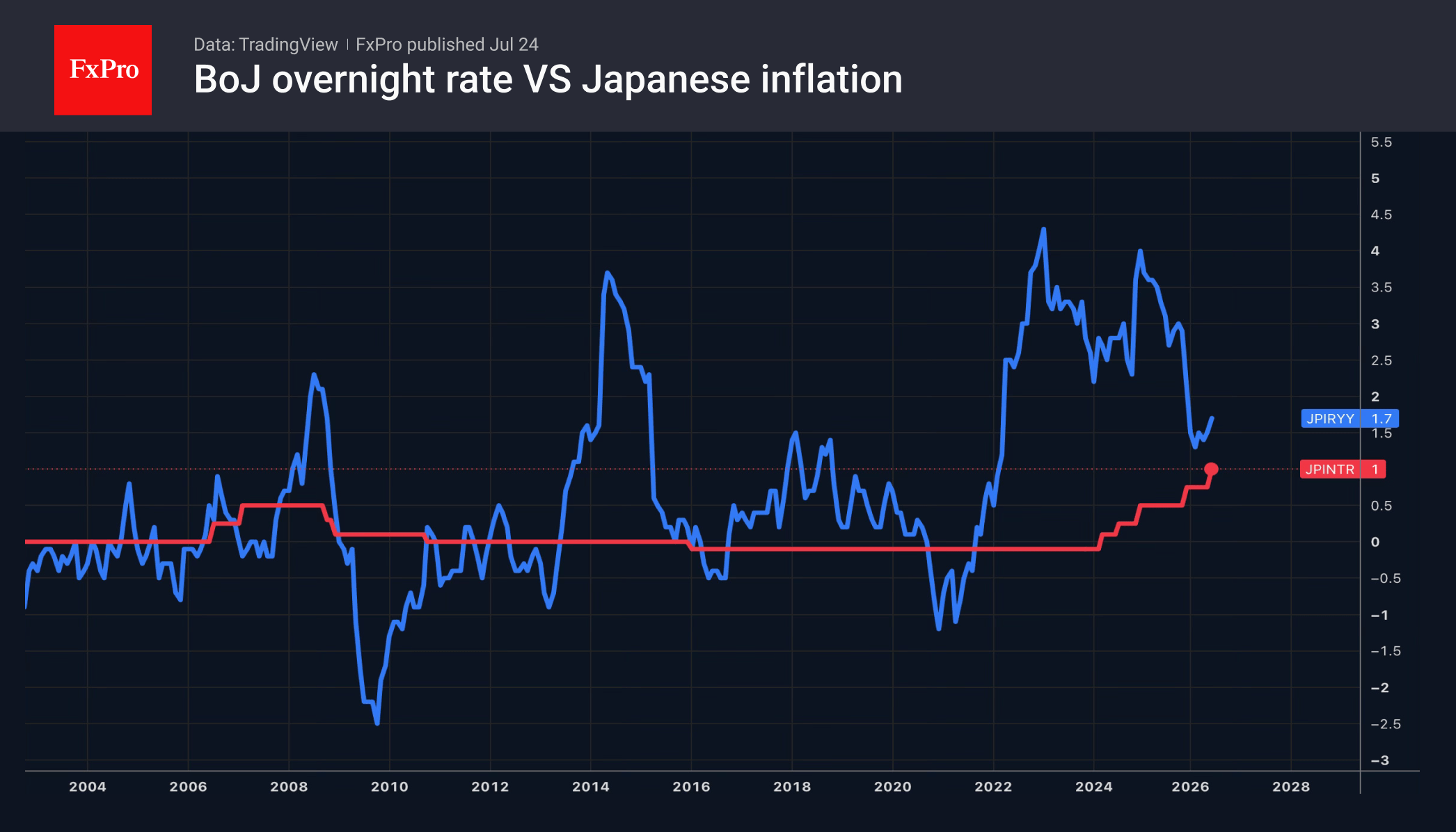
The yen is on track for its biggest weekly loss in the last two months, as investors brush aside the government’s verbal interventions and rumours of faster monetary tightening by the Bank of Japan than the markets expect.
The BoJ now has another reason to act in June, the key inflation indicator rose for the first time in three months, reaching 1.6%. Nevertheless, investors do not expect an overnight rate hike at the Policy Board’s July meeting. As a result, USDJPY is rising steadily.
The FxPro Analyst Team
USD/JPY Breaks Records: Nothing Slows the Yen’s Decline
USD/JPY soared to 163.81 on Friday, marking a new 40-year high. Repeated warnings of possible currency intervention have so far failed to halt the yen's decline amid a broad strengthening of the US dollar.
The market paid little attention to the Japanese Finance Minister's statement that authorities are ready to take decisive action. Reports that the Bank of Japan may allow a faster pace of rate hikes than markets currently expect also failed to provide support.
Additional pressure on the yen is coming from concerns over Prime Minister Sanae Takaichi's fiscal policy and the escalating US–Iran conflict. Japan is heavily dependent on energy imports, making the economy and trade balance particularly vulnerable to rising oil prices.
Headline inflation in Japan hit a six-month high in June, reinforcing expectations of further rate hikes. However, the yen has already lost 0.8% since the start of the week and is on track for its worst weekly performance since May.
Technical Analysis
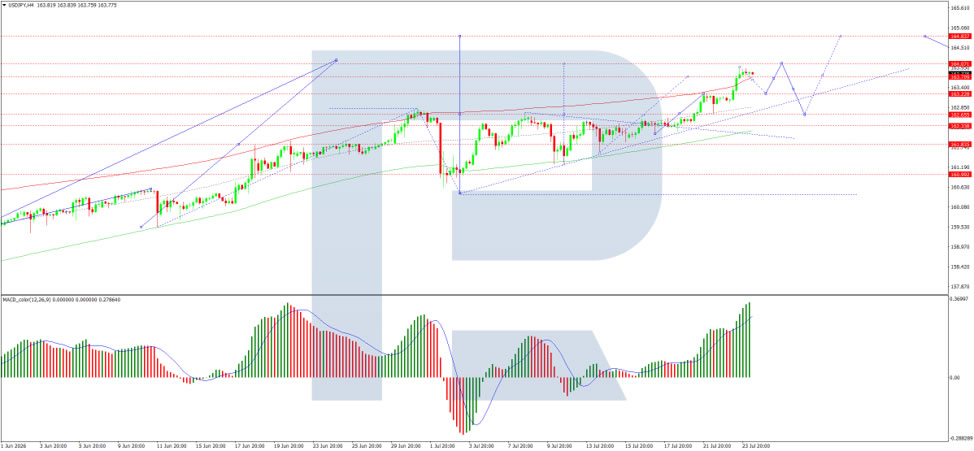
On the H4 USD/JPY chart, the market is forming a consolidation range around the 163.70 level, currently extending between 163.97 and 163.70. A rise to 164.27 is expected today, with scope for the trend to extend to 164.84. The MACD indicator supports this scenario, with its signal line above zero and pointing firmly upwards.
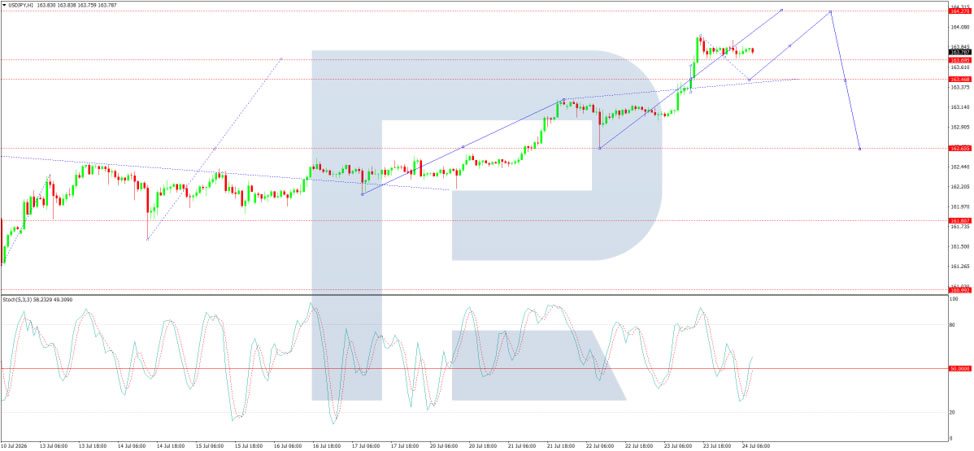
On the H1 chart, USD/JPY has completed a downward move to the 163.50 level, with a possible extension towards 163.30. Thereafter, a move higher towards at least 164.30 is expected. A breakout above this level would open the way for a continuation towards 164.84. The Stochastic oscillator confirms this scenario, with its signal line below 50 and pointing downwards towards 20, indicating short-term downside pressure before a potential reversal.
Conclusion
USD/JPY has surged to a fresh 40-year high as the yen remains under pressure amid a strong dollar and persistent headwinds. Despite official warnings of potential intervention and indications that the Bank of Japan may tolerate a faster pace of rate hikes, markets remain largely unresponsive. The currency continues to face pressure from concerns over fiscal policy, escalating Middle East tensions, and Japan's reliance on energy imports. Although domestic inflation has accelerated to a six-month high, the yen is on track for its worst weekly performance since May. Technically, further upside towards 164.27–164.84 appears likely, with intervention risks remaining a key wildcard.
Crypto Shrugs Off a Stronger Dollar
Market Overview
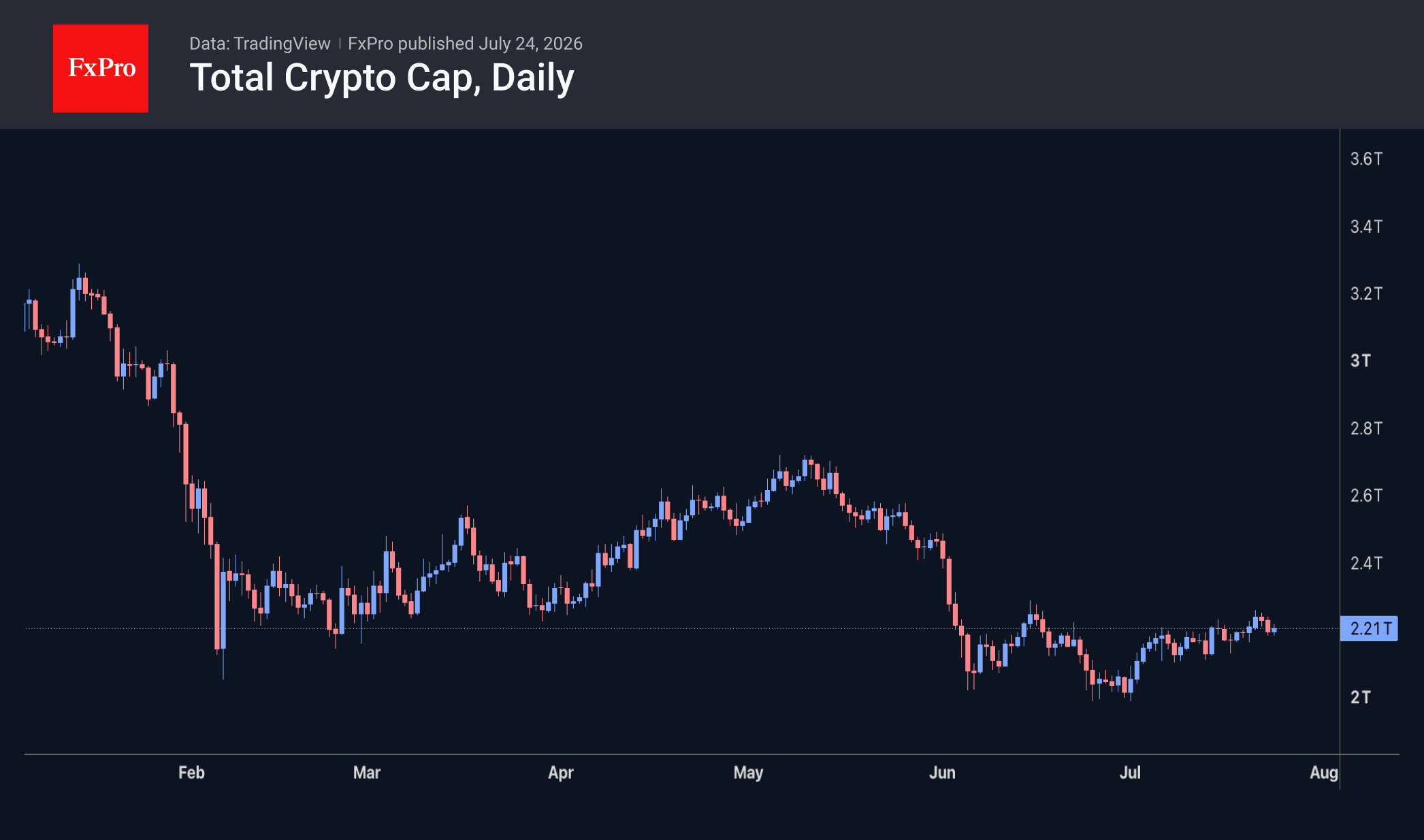
Cryptocurrencies have been affected by jitters in traditional financial markets, losing 0.8% of their market capitalisation over the past 24 hours to $2.23T, dipping to a low of $2.21T at the start of active trading in Asia. The subsequent resumption of growth indicates that the upward trend remains intact and that market participants are keen to buy into local dips, regardless of the rising dollar. The loss of much of the correlation with the equity market has begun to work in cryptocurrencies’ favour after a prolonged period of underperformance. Among the top coins over the past day, the leaders in growth were Tezos (+2.6%), SushiSwap (+2.3%) and Near Protocol (+1.7%). Avalanche (-4%), Dogecoin (-3.3%) and Hedera (-3.2%) lost ground more than the others.
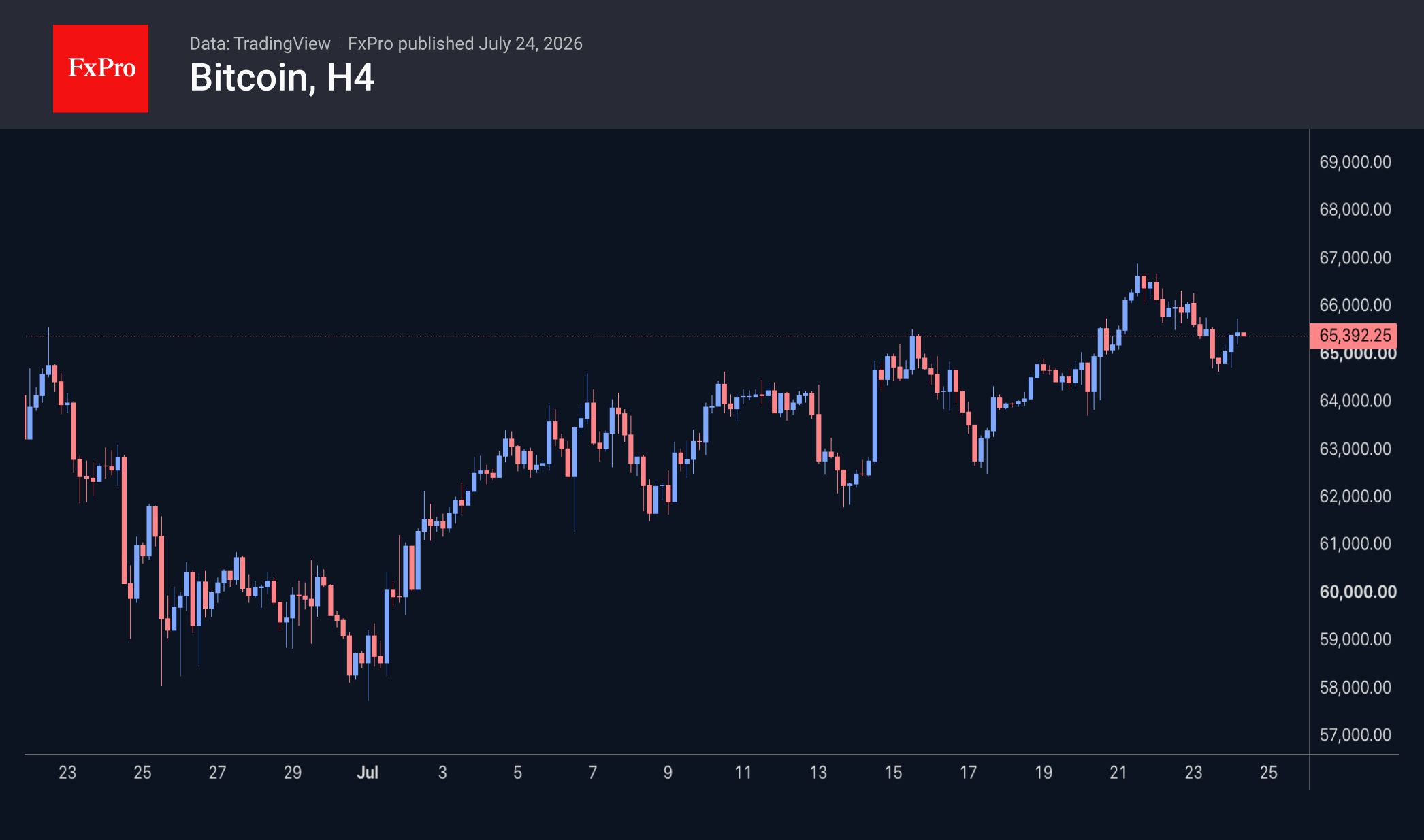
Bitcoin fell during the day from $65.8K to $64.6K, where it found support from buyers. This proved sufficient to push the price back up to $65.5K, forming the seventh consecutive local low higher than the previous one since the start of July. Higher lows have now formed for seven consecutive sessions, but higher highs have yet to develop with the same consistency. As a result, the market is best described as being in an uptrend rather than a well-defined ascending channel.
News Background
Demand for Bitcoin among long-term investors and institutional investors is falling rapidly, according to CryptoQuant. Speculative activity in futures markets remains positive but is below previous levels. The current BTC price is being supported primarily by traders rather than by inflows of new capital.
Inflows into US spot Bitcoin ETFs have continued for seven consecutive trading sessions. According to SoSoValue, investors have injected nearly $1 billion during this period, recouping 22% of June’s outflows. The stabilisation of inflows into BTC ETFs is the most encouraging sign for a calm summer market, notes K33 Research.
Grayscale hopes that if the Fed refrains from further rate hikes and the US economy remains stable, Bitcoin will be able to hold onto its lows for the year and form a cycle bottom. BTC has ‘matured’ as an asset and may complete its decline before autumn, as dictated by the four-year cycle.
Strategy has announced the launch of the Bitcoin Security Consortium, comprising ARK Invest, BlackRock, Blockstream, Coinbase, Fidelity Digital Assets, Galaxy and others. The partners plan to invest $15 million over three years in the long-term security of the BTC network.
Asset management firms that enable investors to generate income from crypto assets, as well as crypto lending, fall under securities law, US SEC Commissioner Hester Peirce stated. The regulator will assess each product on a case-by-case basis, taking into account the specific circumstances.
The FxPro Analyst Team
EUR/USD Daily Outlook
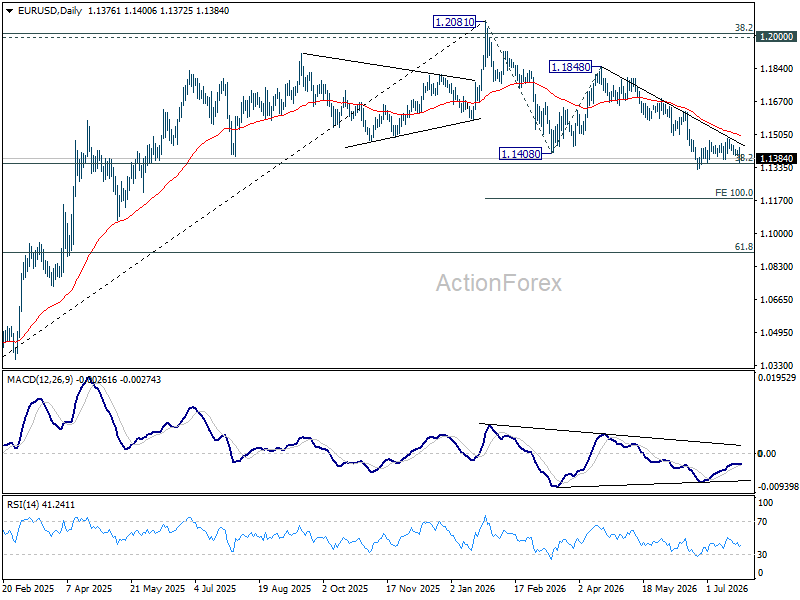
EUR/USD is still bounded in consolidations above 1.1323 and intraday bias stays neutral. With 1.1499 support turned resistance intact, further decline is expected. On the downside, break of 1.1323 will resume the fall from 1.2081 to 100% projection of 1.2081 to 1.1408 from 1.1848 at 1.1175. However, decisive break of 1.1499 will turn bias back to the upside for 1.1621 resistance.
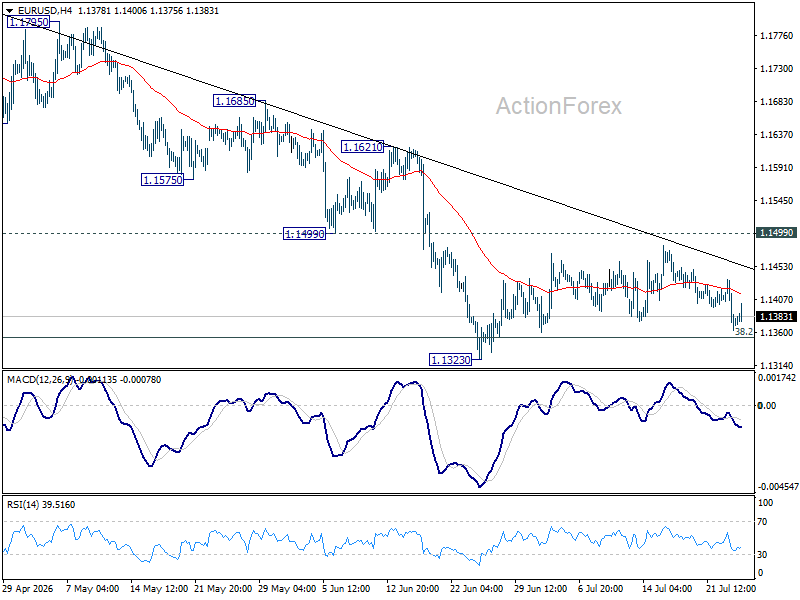
In the bigger picture, focus is back on 38.2% retracement of 1.0176 to 1.2081 at 1.1353. Decisive break there will revive the case of medium term bearish trend reversal after rejection by 1.2 key cluster resistance level. Further fall should be seen to 61.8% retracement at 1.0904. Nevertheless, strong rebound from 1.1353, followed by break of 1.1621 resistance, will retain medium term bullishness.
USD/JPY Daily Outlook
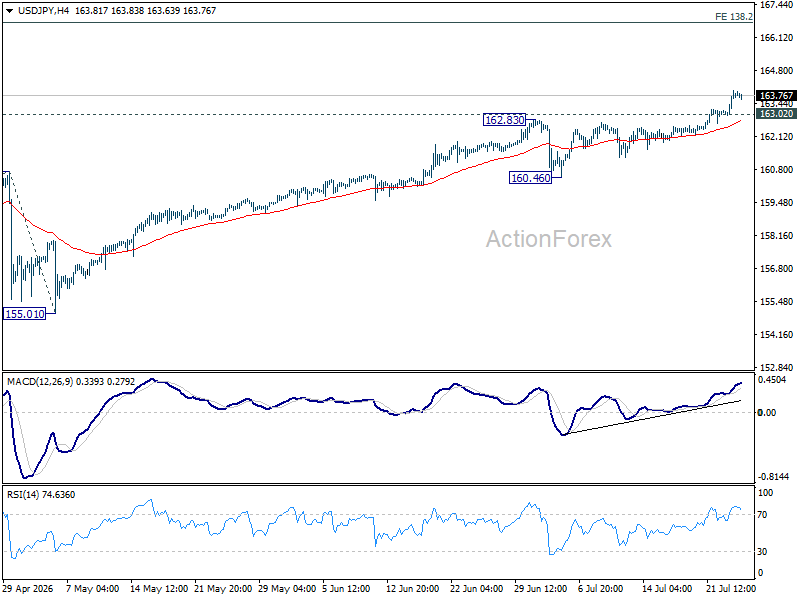
USD/JPY's rally is still in progress and there is not sign of topping. Intraday bias remains on the upside. Next target is 138.2% projection of 152.25 to 160.71 from 155.01 at 166.07. On the downside, below 163.02 minor support will turn intraday bias neutral first. But outlook will stay bullish as long as 160.46 support holds, in case of retreat.
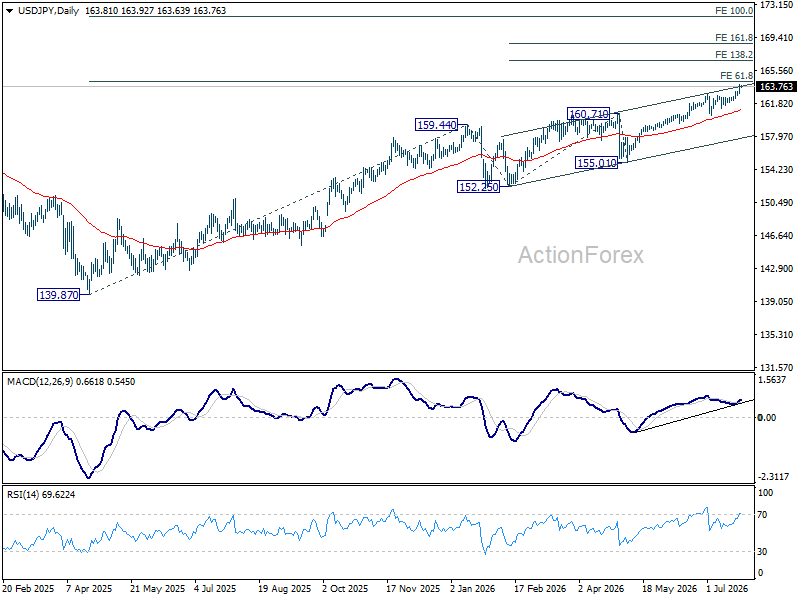
In the bigger picture, rise from 139.87 (2025 low) is seen as another rising leg of the long term up trend. Next target is 61.8% projection of 139.87 to 159.44 from 152.25 at 164.34. Firm break break there will target 100% projection at 171.82. For now, outlook will remain bullish as long as 159.44 resistance turned support holds, even in case of deep pullback.
UK PMI Composite Returns to Expansion at 52.1 as Manufacturing Leads Strongest Growth in Nearly Two Years
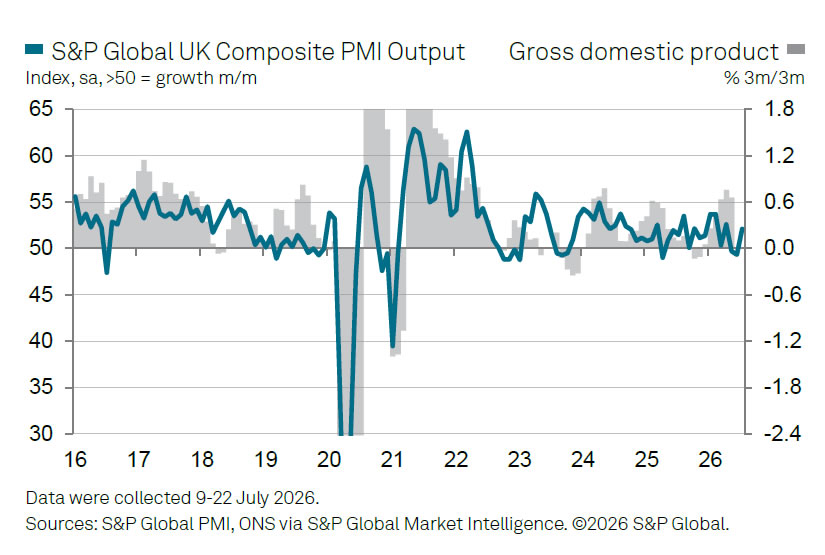
UK private-sector activity returned to expansion in July, with the Flash Composite PMI rising to 52.1 from 49.3, its highest level in three months. Both manufacturing and services improved, marking the first expansion in overall business activity since April. The survey points to a firmer start to the third quarter, supported by stronger domestic demand and resilient export activity.
Manufacturing remained the standout performer. The Manufacturing Output Index climbed to 53.6 from 52.6, its highest level in 22 months, while the Manufacturing PMI edged up to 52.8 from 52.5. Services also returned to growth, with the Business Activity Index rising to 51.8 from 48.8, helped by warm weather, the FIFA World Cup and stronger domestic tourism. However, S&P Global noted that services growth remained relatively subdued as cost-of-living pressures continued to weigh on household spending, while part of the manufacturing strength reflected precautionary inventory building linked to Middle East-related supply chain disruptions.
The survey also pointed to easing price pressures as lower oil prices during the first half of July helped moderate input costs, reducing immediate pressure on Bank of England to tighten policy further. Nevertheless, inflation remained elevated due to the broader energy shock and supply constraints, while businesses continued to reduce headcount as higher costs weighed on hiring.
Business confidence improved during the survey period as geopolitical tensions temporarily eased, but renewed instability in the Middle East and rising oil prices could yet challenge both the inflation outlook and the durability of the recovery.
Economic Data
| Component | Current | Previous | Trend |
|---|---|---|---|
| Composite PMI Output | 52.1 | 49.3 | ▲ 3-month high |
| Services PMI Business Activity | 51.8 | 48.8 | ▲ 3-month high |
| Manufacturing Output Index | 53.6 | 52.6 | ▲ 22-month high |
| Manufacturing PMI | 52.8 | 52.5 | ▲ 2-month high |
Key Takeaways
- UK Composite PMI rose from 49.3 to 52.1, moving back into expansion territory for the first time since April and signaling a stronger start to Q3.
- Manufacturing continued to outperform services, with the Manufacturing Output Index climbing to 53.6, its highest level in 22 months.
- Manufacturing PMI edged up from 52.5 to 52.8, indicating factory activity remained firmly in expansion.
- Services returned to growth, with the Business Activity Index rising from 48.8 to 51.8, supported by warm weather, the FIFA World Cup and stronger domestic holiday spending.
- Manufacturing growth was also supported by precautionary inventory building, as firms sought to mitigate supply chain risks linked to the Middle East conflict, raising questions about the sustainability of the recent factory rebound.
- Input cost inflation eased during the first half of July as oil prices softened, reducing immediate pressure on the Bank of England to tighten policy further.
- However, businesses continued to report elevated cost pressures, ongoing job losses and uncertainty related to energy markets and geopolitical tensions.
- Business optimism improved to its highest level in several months, though renewed increases in oil prices and shipping disruptions could quickly reverse recent gains.