Mon, Feb 16, 2026 10:58 GMT
More

    Sample Category Title

    GBPUSD – Yesterday’s Long Bearish Candle Weighs, Firm Break Below Bull-Channel Support To Trigger Further Weakness

    Windsor Brokers Ltd

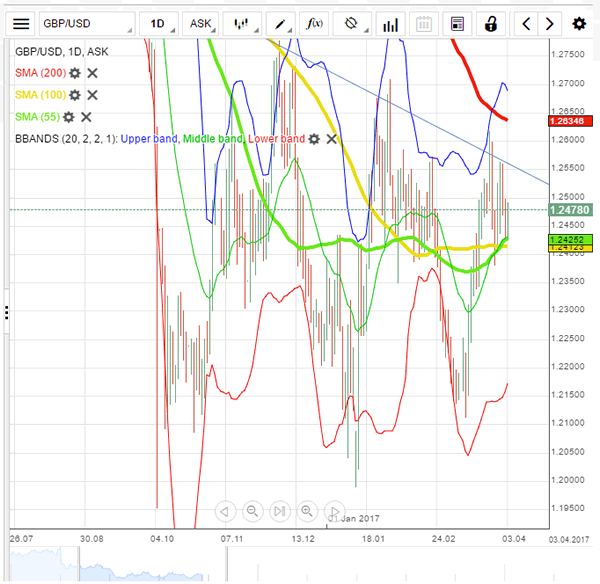
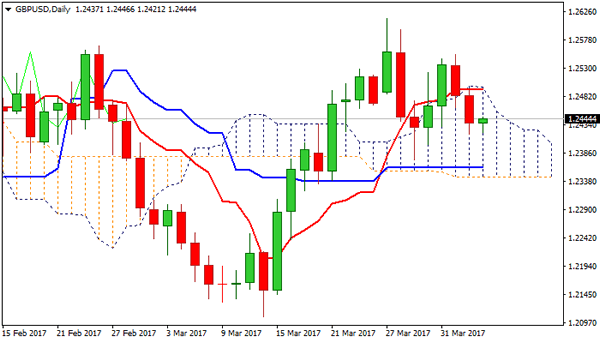
    Cable is consolidating above bull-channel support at 1.2500 that contained yesterday's strong fall.

    Long bearish daily candle that was formed yesterday weighs on market and risks further weakness.

    Break below channel support would open way towards next strong supports at 1.2430 (daily cloud top) and 1.2411 (31 Jan former correction low).

    Extended corrective upticks from 1.2500 support zone should stay capped under 1.2600/30 pivots, with repeated close below daily Tenkan-sen line (currently at 1.2557) needed for stronger bearish signal.

    Release of US NFP data is expected to be key market driver today that would give clearer direction picture.

    Res: 1.2557, 1.2582, 1.2600, 1.2630
    Sup: 1.2500, 1.2430, 1.2411, 1.2395

    EURUSD – Strong Upside Rejection Increases Risk Of Reversal, Daily Tenkan-Sen Marks The First Trigger At 1.0723

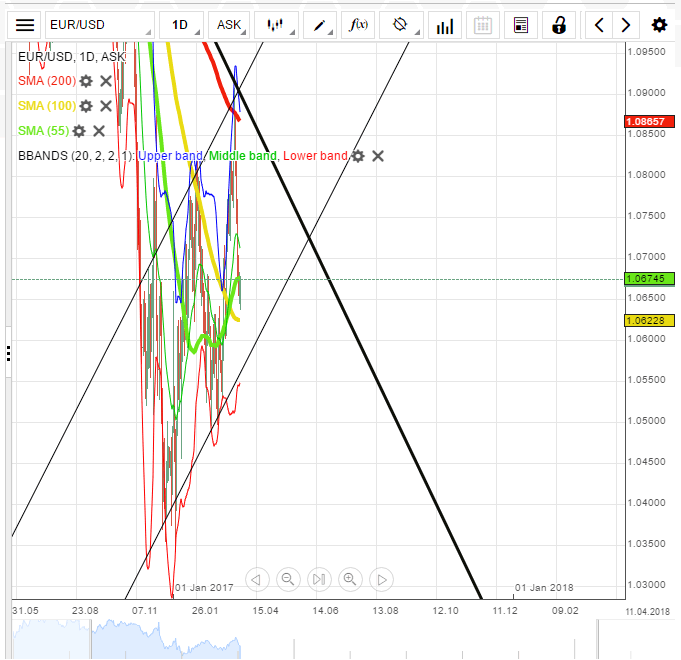
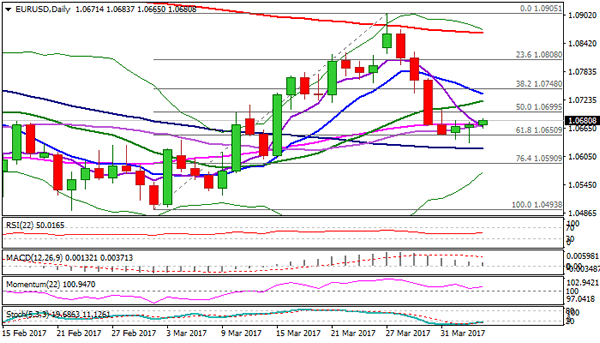
    The pair is struggling at key barriers, as yesterday's strong rejection at daily cloud top formed Shooting Star pattern and generated reversal signal.

    Near-term studies are in mixed mode, while bullish structure on daily chart wouldn't be harmed significantly while lower pivots at 1.0738/23 (rising 10 SMA / daily Tenkan-sen) stay intact.

    This may leave space for fresh upside attempts, however, plethora of strong barriers that lies ahead (falling 100SMA at 1.0787 and daily cloud top / upper 20d Bollinger band at 1.0824) may limit rallies.

    Also, markets are awaiting today's release of US jobs data for stronger trading signals.

    Expect increased downside pressure on firm break below 1.0738/23 pivots that would trigger fresh bearish acceleration.

    Conversely, sustained break above daily cloud is needed to signal bullish continuation.

    Res: 1.0770, 1.0787, 1.0810, 1.0824
    Sup: 1.0738, 1.0723, 1.0683, 1.0641

    GBPUSD Aiming For Higher Levels, Wave 2 Correction In The Making

    On the updated chart of GBP/USD, we see price undergoing a flat correction in blue wave 2, after a five wave movement unfolded in the previous wave 1. As such we are now undergoing a wave C) fall on intraday basis, which can make a reversal higher around the 1.2411 level.

    GBPUSD, 4H

    Bank Of England Revises Up Its Forecasts But Leaves Interest Rates On Hold, Construction Falls In January

    'If we do see a situation where there is faster growth and wages than we anticipated or spending doesn't decelerate later in the year, one can anticipate there would be an adjustment of interest rates'. -Mark Carney, BoE

    On Thursday, the Bank of England's Monetary Policy Committee voted to hold interest rates at historic lows of 0.25% and let their 60 billion-pound bond purchases end this month as scheduled. Moreover, policymakers left unchanged the Bank's corporate bond buying program. The majority of analysts suggest that the BoE's interest rates would probably remain unchanged until the middle of 2019, the projected date of Britain's exit from the EU. In addition, the Central bank revised its forecasts for 2017. Thus, the jobless rate is likely to fall from its current levels of 4.8% to 4.5%, whereas it was initially expected to climb to 5%. This could allow the BoE to keep its interest rates low for a longer period. Furthermore, the Bank revised upwards its 2017 economic growth forecast from the previously estimated 1.4% to 2.0%. Back in August, the BoE slashed its growth forecast for 2017 to 0.8% amid the post-Brexit vote uncertainty. As to inflation, the Central bank now expects inflation to hit its inflationary target of 2% and probably go even higher due to the weak Pound, which dropped around 20% against the Greenback since the referendum. Separately, Markit/CIPS reported on Thursday its Construction PMI for Britain fell to 52.2 in January after four months in expansion. Meanwhile, analysts expected the Index to drop from November's 54.2 to 53.9.

    Initial Jobless Claims Fall More Than Expected Last Week

    '...with gradual adjustments in the stance of monetary policy, economic activity will expand at a moderate pace, labor market conditions will strengthen somewhat further and inflation will rise to 2% over the medium term'. - Federal Reserve

    The number of Americans filing for unemployment benefits dropped more than expected last week, official figures revealed on Thursday. The Labor Department reported initial jobless claims fell to a seasonally adjusted 246,000 in the week ending January 28 from the preceding week's upwardly revised 260,000, while analysts anticipated a slighter decline to 251,000. The result marked 100 weeks below the 300,000 level, the longest streak since 1973. At the Federal Reserve's last meeting, policymakers kept its benchmark overnight rate unchanged in a range of 0.50% to 0.75%. Thursday's data also showed that the four-moving average of claims, considered a better measure of labour market trends, advanced 2,250 to 248,000 last week. Furthermore, continuing claims declined 39,000 to 2.06 million during the week ended January 21, while their four-week moving average fell 13,000 to 2.08 million. Last week's claims report has no impact on the NFP data for January, set for release on Friday. Economists expect nonfarm payrolls to show a gain of 170,000 jobs, following a sluggish December, when private companies created just 156,000 new jobs, missing the 175,000 gain forecast. Moreover, the unemployment rate is excepted to remain unchanged at 4.7% in January. Wage growth is likely to boost consumer spending and support economic growth in the Q1 of 2017.

    Payrolls To Change Fortunes In Favour Of The Dollar?


    Sunrise Market Commentary

    • Rates: Strong payrolls should weigh on US Treasuries
      All eyes are on the US payrolls today. Consensus expects a strong net job creation of 180k with risks even on the upside of expectations. The unemployment rate will remain near cycle lows while earnings might also be higher than expected. This mix is unequivocally negative for US Treasuries.
    • Currencies: Payrolls to change fortunes in favour of the dollar?
      Yesterday, the dollar was slightly in the defensive in the wake of a soft Fed statement and as risk sentiment remained cautious. Today, focus turns to the US payrolls. We see risks for an above consensus labour market report. If so, it might help to put a floor for the recent USD correction

    The Sunrise Headlines

    • US stock markets traded choppy near opening levels ahead of today’s payrolls. Overnight, Asian stock markets trade mixed as well with China slightly underperforming after a 5-day Lunar NY holiday.
    • China's central bank surprised financial markets by raising short-term interest rates on the first day back from a long holiday, in a further sign that it is slowly moving to a tighter policy bias as the economy shows signs of steadying.
    • Growth in China’s manufacturing sector slowed markedly at the start of the year as the flow of new business slowed despite a boost in export orders, according to the Caixin-Markit manufacturing PMI (decline from 51.9 to 51.0).
    • Amazon disclosed a weaker-than-expected 22% rise in quarterly sales, along with a disappointing revenue outlook, sending the e-commerce heavyweight’s shares down in after-hours trading.
    • US defence secretary Mattis warned Pyongyang that Washington would respond to the use of nuclear weapons with “effective and overwhelming” force, days after the White House launched a comprehensive review of North Korea policy.
    • Japanese government bond yields and the yen have swung wildly in morning trade after the Bank of Japan bought more bonds than expected in its market operations.
    • Romania faced some of the biggest anti-government demonstrations since the fall of communist leader Ceausescu. At least 200k people demonstrated against an emergency decreed that opponents say hinders the fight against corruption
    • Today’s main events are US payrolls, non-manufacturing ISM and a speech by Fed governors Evans. The EMU (final) and UK services PMI’s will also be released.

    Currencies: Payrolls To Change Fortunes In Favour Of The Dollar?

    Will payrolls change USD fortunes for the better?

    Yesterday, there were few important eco data in the US and Europe. So, Wednesday evening’s relatively soft Fed statement and a cautious global market sentiment drove USD trading. Both elements were slightly negative for the dollar. EUR/USD set a new ST correction top north of 1.08, but finished the session off the intraday highs at 1.0759. USD/JPY tested the recent low of 112.08, but a break didn’t occur as investors await today’s key US payrolls report.

    Overnight, Asian markets show a mixed picture as Chinese investors return from the Lunar New Year holidays. Most Asian equities trade mixed. Japan outperformance as USD/JPY rebounds of yesterday’s low. The BOJ caused some intraday volatility with the execution of its bond buying programme. Japanese yields end the yen jumped temporary higher, but this was countered by a successful fixed rate unlimited buying operation of 5-to10 year government bonds. The yen finally weakened further. USD/JPY trades currently just north of the 113 big figure. At the same time, the dollar is slightly better bid compared to yesterday. EUR/USD trades in the 1.0755 area.

    Today, the US payrolls will be the key feature for USD trading. The market expects 180K net January payrolls growth. The unemployment rate is expected unchanged at 4.7%. Average hourly earnings are expected at a strong 0.3% M/M and 2.8% Y/Y. In December, it was even stronger at 0.4% M/M and 2.9% Y/Y, the cycle high. Based on other recent data evidence (ISM, ADP , claims) and technical factors, we see risks for stronger than expected payrolls growth. Regarding the unemployment rate, we side with the consensus. Regarding wages (AHE) we have no reasons to distance us from consensus, but are cautious as many states raised the minimum wage, sometimes quite substantially. Earlier this week, the dollar rebounded intraday after the strong ADP report/manufacturing ISM. So, despite rising uncertainty on the impact of Trump’s policy, strong key US data might support the dollar as they could finally push the Fed to take a next step in its normalisation process. We see a decent chance that today’s payrolls might be USD supportive. If so, the dollar might drift further away from the key support of USD/JPY 112.06/08 and the EUR/USD 1.0874 resistance. Trump-driven (USD) uncertainty might temporary move a bit to the background.

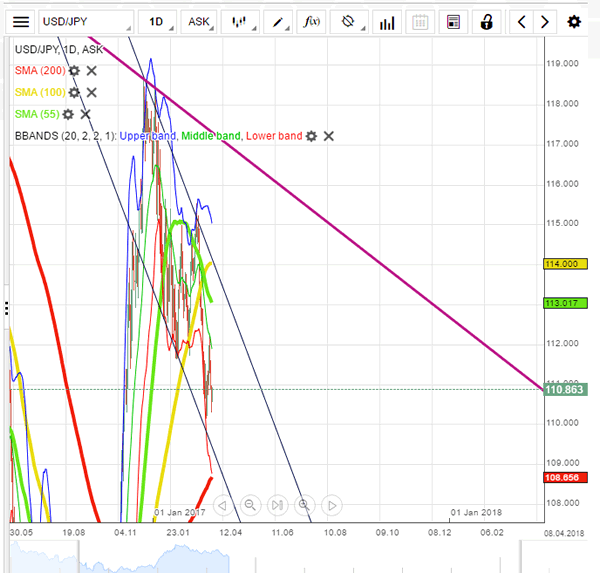
    Global context. The USD rally due to the Trump reflation trade petered out of late. Even more, Trump politics/communication is becoming a sources of global uncertainty that weighs on the dollar, at least temporary. EUR/USD broke a minor resistance at 1.0775. Next resistance is coming in at 1.0874. The day-to-day USD momentum has become more fragile. A return above EUR/USD 1.0874 would question the short-term USD positive outlook. At some point, the absolute interest rate support should provide a USD floor. We wait for technical signals that the USD correction has run its course. Today’s payrolls, if strong, might provide such a signal. USD/JPY is trading well off the post-Trump highs (118.60/66). The recent rebound off the lows (112.08) wasn’t convincing. USD/JPY 111.16 (38% retracement of the 99.02/118.66 rally) is the next key support.

    EUR/USD: dollar to profit from a strong payrolls report

    EUR/GBP

    Sterling developing a topping out process?

    Yesterday, EUR/GBP drifted higher going into the BoE’s policy announcement. The BoE left its policy rate unchanged and didn’t expand the APP. The BoE acknowledged the ongoing resilience of the UK economy and raised its growth forecasts. At the same time, the BoE basically maintained its inflation forecast. Some members indicated that the inflation overshoot is coming a little closer to its limits. Even so, the BoE still sees substantial risks from the Brexit process. An early rate hike isn’t on the cards. This absence of potential additional interest rate support in the near to medium term hammered sterling. EUR/GBP jumped temporary back above the 0.86 barrier, but closed the session at 0.8588. Cable lost well over 1 big figure and closed the session at 1.2527.

    Today, the UK services PMI is expected to ease slightly from 56.2 to 55.8. We don’t have as strong reason to take a different view from the consensus. Of late, UK eco data showed decent resilience. That said, after yesterday’s soft BoE assessment on inflation, sterling might again become a bit more sensitive to negative eco news or turbulence from the Brexit process. Of course, later in the session, the overall USD swings in the dollar will also affect the sterling cross rates. After yesterday’s rebound, EUR/GBP 0.8450 support looks again a bit better protected. We look for confirmation that a bottoming process is coming in place. The price action in cable at least suggests that further sterling gains against the dollar won’t be easy.

    EUR/GBP: 0.8450 support better protected after soft BoE policy assessment

    Download entire Sunrise Market Commentary

    Daily Technical Outlook And Review

    A note on lower timeframe confirming price action…

    Waiting for lower timeframe confirmation is our main tool to confirm strength within higher timeframe zones, and has really been the key to our trading success. It takes a little time to understand the subtle nuances, however, as each trade is never the same, but once you master the rhythm so to speak, you will be saved from countless unnecessary losing trades. The following is a list of what we look for:

    • A break/retest of supply or demand dependent on which way you're trading.
    • A trendline break/retest.
    • Buying/selling tails – essentially we look for a cluster of very obvious spikes off of lower timeframe support and resistance levels within the higher timeframe zone.
    • Candlestick patterns. We tend to only stick with pin bars and engulfing bars as these have proven to be the most effective.

    EUR/USD

    Trade update: stopped out at breakeven – for details please see Thursday's report.

    The EUR closed marginally lower yesterday after snowballing south from the weekly resistance level seen at 1.0819, which, as far as we can see, was also aided by the better-than-expected US jobless claims report. With this in mind, we feel there is a good chance that price will likely take out the H4 support area at 1.0765-1.0753 today, and maybe pull down to the 1.07 boundary. Still, to get past this psychological number, the bears would not only have to overcome 1.07, but also a H4 demand area at 1.0684-1.0709 and a daily support hurdle coming in at 1.0710 (the next downside target on the daily timeframe).

    Our suggestions: Watch for a H4 close to form beyond the current H4 support area, and then look to take advantage of any retest seen to the underside of this zone as resistance. In an ideal world, we'd also like to see the retest accompanied by a lower-timeframe sell signal (see the top of this report), since this will likely get you in at a better price and allow for a smaller stop. Should this come to fruition, 50% of the position is to be liquidated around the 1.07 region, and risk reduced to breakeven. Today's non-farm employment change is expected to come in at 170K for January, which could help push the EUR in our direction.

    Data points to consider: US employment report at 1.30pm, FOMC member Evans speaks at 2.15pm and the US ISM non-manufacturing reading at 3pm GMT.

    Levels to watch/live orders:

    • Buys: Flat (stop loss: N/A).
    • Sells: Watch for a H4 close to be seen below 1.0765-1.0753 and then look to trade any retest seen thereafter ([waiting for a lower-timeframe confirming setup to form following the retest is advised prior to pulling the trigger] stop loss: dependent on where one confirms this area).

    GBP/USD

    For those who read our previous report on the GBP you may remember that we highlighted the 1.27 region as a potential level to sell from, given its surrounding confluence (H4 Quasimodo resistance at 1.2699 and housed within a daily supply at 1.2728-1.2657, as well as positioned only 25 or so pips above the weekly Quasimodo resistance at 1.2673). Helped by the BoE signaling that interest-rate hikes may not be seen for a while the unit reacted from this angle almost to-the-pip, consequently snapping a two day bullish phase and ending the day forming a bearish engulfing candle. Well done to any of our readers who managed to lock in a position here!!!

    As of current prices, the H4 candles recently shook hands with a H4 support area drawn from 1.2490-1.2531, which is positioned around the top edge of a daily support area at 1.2510-1.2415, and also houses both the 1.25 hurdle and December's opening base at 1.2514. While this zone looks prime to support a rotation to the upside today, our only concern is that the weekly chart indicates that there's room for sterling to move lower down to weekly support coming in at 1.2329.

    Our suggestions: With the weekly signaling that further selling could be on the cards, our team has come to a consensus that the current H4 support area will only be considered a valid buy zone if, and only if, we see a reasonably sized bullish candle form that closes above the H4 mid-way resistance level at 1.2550.

    Data points to consider: UK services PMI at 9.30am. US employment report at 1.30pm, FOMC member Evans speaks at 2.15pm and the US ISM non-manufacturing reading can be viewed at 3pm GMT.

    Levels to watch/live orders:

    • Buys: 1.2490-1.2531 ([wait for a H4 bull candle to form before looking to execute a trade] stop loss: ideally beyond the trigger candle).
    • Sells: Flat (stop loss: N/A).

    AUD/USD

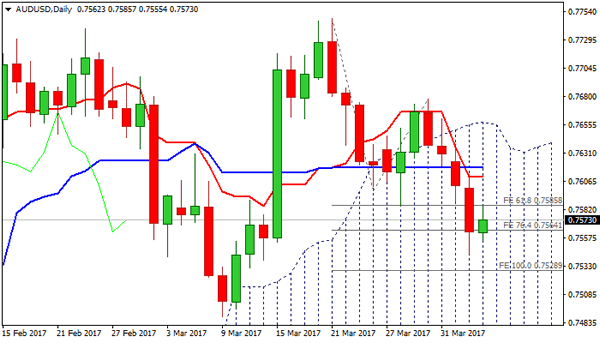
    Yesterday's action began with Australia's trade balance reporting a $3.5b surplus in December, up from $2.0 b in November. The Aussie bulls immediately rose up and took charge, rallying over 70 pips on the day (open/close). Psychological resistance 0.76 was consumed during the bullish assault, allowing price to challenge the H4 channel resistance extended from the high 0.7569. As you can see, price whipsawed through this upper barrier and missed connecting with the 0.77 handle by only a few pips before descending lower into the close. With the H4 candles now trading back within the H4 ascending channel, will we see price tumble lower to connect with the H4 channel support drawn from the low 0.7449?

    According to the higher-timeframe structures, the only way is up! Both the weekly and daily charts show little resistance on the horizon, with the closest barrier set at 0.7720: a daily resistance level that is located 30 or so pips ahead of a weekly supply at 0.7849-0.7752 (the next upside target on the weekly scale).

    Our suggestions: While it is tempting to short back into the H4 channel zone, we feel the better location to trade from is around the 0.76 boundary. Building a case for entry here we have the following: the H4 channel support taken from the low 0.7449, a H4 61.8% Fib support at 0.7580, February's opening level at 0.7577 and of course, the top edge of a daily support area at 0.7581 (yellow rectangle). This trade zone will remain valid as long as price does NOT connect with the above noted daily resistance beforehand.

    Data points to consider: Chinese Caixin Manufacturing PMI at 1.45am. US employment report at 1.30pm, FOMC member Evans speaks at 2.15pm and the US ISM non-manufacturing reading can be viewed at 3pm GMT

    Levels to watch/live orders:

    • Buys: 0.7577/0.76 ([possible area to look at buying from without the need for additional confirmation] stop loss: 0.7574).
    • Sells: Flat (stop loss: N/A).

    USD/JPY

    In recent sessions, the USD/JPY dive bombed deep into the jaws of a H4 demand zone at 112.05-112.37, and, as you can see, just as aggressively rotated back to the upside. This H4 demand boasts support from the top edge of a daily demand coming in at 111.35-112.37, which itself is reinforced by a weekly support area penciled in at 111.44-110.10. While the H4 candles are currently seen hovering above February's opening base at 112.77, the bulls still have to contend with the opposing 113 handle, before the pathway north is potentially cleared up to the 114 neighborhood.

    Our suggestions: Wait for a H4 close above the 113 handle to take shape. To our way of seeing things, this would not only further confirm upside strength from the aforementioned daily demand, but also possibly give traders the opportunity to trade any (confirmed) retest seen at 113 as support.

    Data points to consider: US employment report at 1.30pm, FOMC member Evans speaks at 2.15pm and the US ISM non-manufacturing reading can be viewed at 3pm GMT.

    Levels to watch/live orders:

    • Buys: Watch for a H4 close to be seen above 113 and then look to trade any retest seen thereafter ([waiting for a reasonably sized H4 bull candle to form following the retest is advised prior to pulling the trigger] stop loss: dependent on where one confirms this area).
    • Sells: Flat (stop loss: N/A).

    USD/CAD:  

    Using a top/down approach this morning, the weekly timeframe shows that the buyers and sellers remain battling for position around the lower edge of a weekly demand base drawn in at 1.3006-1.3115. In the event of this zone giving way, the next downside objective falls in around a weekly trendline support taken from the high 1.1278. Winding down into the daily timeframe, a daily trendline support extended from the low 1.2654 is seen in play at the moment. The next upside hurdle from this angle comes in at 1.3169-1.3116: a daily supply. Conversely, should the buyers fail to uphold this trendline, daily demand at 1.2822-1.2883 will likely be the next target on the hit list, which happens to converge beautifully with the above noted weekly trendline support!

    Stepping across to the H4 candles, we can see that the combined 1.30 psychological band/H4 trendline support from the low 1.3080 was sufficient enough to rebound price yesterday. Well done to any of our readers who managed to lock down a position from here as this was a noted zone to watch for potential long opportunities.

    Our suggestions: Right now, the only area that jumps out to us is the 1.30 region again. A retest of this boundary, alongside a lower-timeframe confirmed buy setup (see the top of this report) would be enough to buy this market, in our opinion, targeting the H4 mid-way resistance point 1.3050 as an initial take-profit zone.

    Data points to consider: US employment report at 1.30pm, FOMC member Evans speaks at 2.15pm and the US ISM non-manufacturing reading can be viewed at 3pm GMT.

    Levels to watch/live orders:

    • Buys: 1.30 region ([wait for a lower-timeframe confirming buy setup to form before looking to execute a trade] stop loss: ideally beyond the trigger candle).
    • Sells: Flat (stop loss: N/A).

    USD/CHF

    USD/CHF prices are little changed this morning, despite ranging around 70 pips on the day. To make a long story short, here is what our eyes are drawn to on the H4 chart currently:

    • Parity (1.0000). A number watched by the majority of the market.
    • Three H4 trendline resistances that merge beautifully with 1.0000 (0.9959/1.0335/1.0122).
    • H4 Fib extension 161.8% at 1.0012.
    • H4 Fib retracement 78.6% at 1.0005.
    • 1.0000 also sits just below a daily trendline resistance drawn from the high 0.9956.

    With confluence as strong as the above, we would usually place a pending order. However, seeing as there is a 2016 yearly opening level lurking just above this region at 1.0029, we may have to wait for confirmation in order to avoid any potential fakeout.

    Our suggestions: Simply, keep an eye on the 1.0000 region today. Should price strike this zone, look for signs on the lower timeframes that the bulls are weakening. This could be either a demand engulf followed by a retest as supply, a trendline break/retest or simply a collection of well-defined selling wicks around the big number.

    Data points to consider: US employment report at 1.30pm, FOMC member Evans speaks at 2.15pm and the US ISM non-manufacturing reading can be viewed at 3pm GMT.

    Levels to watch/live orders:

    • Buys: Flat (stop loss: N/A).
    • Sells: 1.0000 neighborhood ([wait for a lower-timeframe confirming setup to form before looking to execute a trade] stop loss: dependent on where one confirms this area).

    DOW 30

    US equities closed unchanged for a second consecutive day yesterday, consequently leaving the H4 candles loitering mid-range between a daily resistance level at 19964 and a H4 demand coming in at 19785-19803. Given this, much of the following report will echo thoughts put forward in yesterday's analysis…

    Up on the weekly chart, the index is currently hovering just ahead of the 2017 yearly opening level at 19769. A decisive weekly close beyond this range could spark another wave of selling down to the weekly demand area at 19071-19222. Before this can be achieved, however, a daily close below the daily support at 19747 would, of course, need to be seen!

    With the above noted H4 demand likely weakened by Tuesday's deep test, the next level of interest on our radar is still 19759: a sneaky H4 Quasimodo support that is bolstered by the 2017 yearly opening base and the nearby daily support.

    Our suggestions: With the confluence in place around the current H4 Quasimodo support, our team still has a pending buy order placed at 19760, and a stop set just below the apex of the Quasimodo formation (see black arrow) at 19730. Be that as it may, in that we have the US employment report hitting the wire later on, we may, dependent on the figures, consider removing our order.

    Data points to consider: US employment report at 1.30pm, FOMC member Evans speaks at 2.15pm and the US ISM non-manufacturing reading can be viewed at 3pm GMT.

    Levels to watch/live orders:

    • Buys: 19760 ([pending order] stop loss: 19730).
    • Sells: Flat (stop loss: N/A).

    GOLD

    Across the board, we saw the US dollar catch a bid from lows of 99.23 (see the US dollar index), which, as you can see, led to a selloff being seen in the gold market. In order for the H4 candles to continue pushing lower, however, February's opening level at 1211.5 will need to be consumed. The next area of interest seen beyond this monthly base is a H4 demand coming in at 1196.0-1201.0.

    Looking over to the daily chart, yesterday's trading managed to chalk in a relatively nice-looking daily selling wick that pierced the top edge of a daily supply zone at 1220.9-1212.0. What's interesting here is that the above noted H4 demand sits on top of a daily support area at 1197.4-1187.7 – the next downside target on the daily timeframe!

    Our suggestions: While both the H4 and daily charts suggest lower prices might be at hand, the weekly candle is currently hovering ABOVE a weekly trendline resistance etched from the low 1130.1. Therefore, to sell this market we would require not only a H4 close beyond Feb's opening level, but also a retest followed up by a lower-timeframe sell signal (see the top of this report). In addition to this, it may be worth noting that the might NFP is just around the corner. Trading 30 minutes pre/post this event is something we would not advise!

    Levels to watch/live orders:

    • Buys: Flat (stop loss: N/A).
    • Sells: Watch for a H4 close to be seen below 1211.5 and then look to trade any retest seen thereafter ([waiting for a lower-timeframe signal to form following the retest is advised prior to pulling the trigger] stop loss: dependent on where one confirms this area).

    EUR/USD, GBP/USD Break Wedge And Decline With 5 Waves

    Currency pair EUR/USD

    The EUR/USD showed a 2nd bearish bounce at the 88.6% level resistance level, which keeps the wave 2 (brown) structure intact. A break below the support (blue) trend line is needed before a bearish breakout is possible.

    The EUR/USD is completing a bearish 5 wave pattern (blue) which could be either a wave A or 1 (purple).

    Currency pair GBP/USD

    The GBP/USD showed a bearish bounce at the resistance trend line (red) and Fibonacci levels of wave X vs W. Price is now retesting the support trend line (blue) which is a bounce or break zone. A bearish breakout could price test the Fibonacci levels of wave B vs A (blue).

    The GBP/USD broke below the rising wedge chart pattern (dotted greens) and fall impulsively in 5 bearish waves (grey). This price action could either be a wave 1 or wave A (purple) and a bullish bounce could be part of wave 2 or B (purple). The Fibonacci levels of wave B (purple) could stop price from moving higher but is invalidated if price breaks above the 100% Fibonacci level.

    Currency pair USD/JPY

    The USD/JPY is retracing back to the Fibonacci levels of wave 4 (purple). Either the 38.2% or 50% are likely bounce spots for such a wave 4 (purple).

    The USD/JPY broke above the resistance trend line (dotted orange) and is building a bullish ABC (orange) zigzag within wave X (brown). A break above the next resistance trend line (red) could price test the Fibonacci levels of wave C vs A.

    NFP Preview: Upside Surprise on the Cards?

    Today, the US employment report for January will captivate market attention. The forecast is for nonfarm payrolls to have risen by 175k, more than the 156k in December. This would be a number consistent with further tightening in the labor market. We see upside risks to the NFP forecast, considering that the ADP report for the month crushed expectations and came in at 246k, and that the employment sub-index of the ISM manufacturing PMI rose notably. The unemployment rate is expected to have held steady at 4.7%, while average hourly earnings are expected to have slowed on a monthly basis, albeit slightly. We don't think that a modest slowdown in earnings would be particularly worrisome, given the strong acceleration in December. As such, we believe that this could be another month of solid employment gains in the US economy, something that could bring forth market expectations with regards to the timing of the next Fed rate increase and thus, reverse some of the dollar's recent losses.

    Looking ahead with regards to employment, we see the case for a modest slowdown in nonfarm payrolls from February onwards. The Trump administration has frozen hiring in the public sector immediately after the President took office. Even though this is unlikely to impact January's NFP print that much, since the freeze was only in effect for one third of the month, it is likely to shave some thousands of jobs off the NFP prints in coming months.

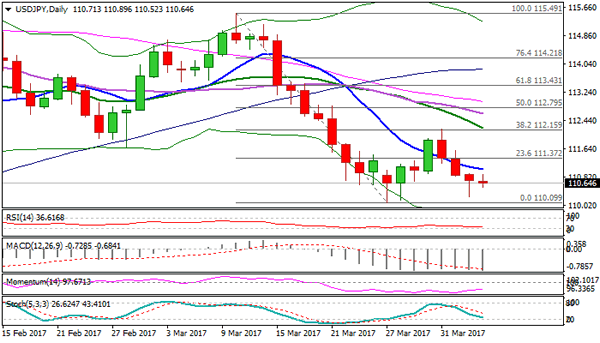
    USD/JPY traded lower yesterday, but hit once again support at the 112.00 (S2) barrier and rebounded back above 112.60 (S1). The fact that the rate is back within the range between that support and the resistance of 115.50 makes us keep our flat stance with regards to the short-term path. Nevertheless, there is the possibility for the pair to trade higher within the range, especially if the NFP number surprises to the upside. At the time of writing, the pair is testing the 113.25 (R1) level, where a break is possible to initially aim for our next resistance of 114.00 (R2).

    The pair also experienced some rollercoaster trading overnight, primarily due to the BoJ's bond-buying operations. As was reported, the BoJ bought fewer bonds than market participants had anticipated, sending yields on JGBs higher and the pair lower. However, this reaction was short-lived, as the BoJ announced in the following hours that it is willing to buy 5-10 year JGBs in unlimited amounts, though at fixed rates. This dovish commitment caused USD/JPY to rebound and trade even higher. As we have stressed in the past, given the BoJ's more or less "passive" yield-control framework, we think that the direction of USD/JPY is likely to be determined primarily by developments in the dollar, and less so by news surrounding the yen (unless in the case of a global risk-off event). As such, we see the case for the pair to gain in coming days, supported by solid US employment data and some clarity around Trump's fiscal plans.

    BoE remains neutral; signals it will continue to overlook inflation

    The Bank of England kept interest rates unchanged yesterday via a unanimous vote, as was widely expected. We received a plethora of signals from policymakers, but none more important than the fact that they remain willing to "look through" above-target inflation, suggesting that borrowing costs are unlikely to be raised anytime soon. However, "some" members of the MPC have moved a little closer to their limits for tolerating such an overshoot. In our view, this suggests that there may be growing division among the MPC with regards to whether policy should be tightened in the future in order to curb inflation, which makes us believe we are likely to see some hawkish dissents in the upcoming policy meetings. With regards to the economic forecasts, the Bank raised its GDP growth expectations for 2017 to +2.0% from +1.4% previously, though it kept its inflation forecasts for the next years more or less unchanged.

    GBP/USD spiked somewhat higher on the decision to hit resistance a few pips below the 1.2720 barrier, perhaps as a result of the notable upgrade in the GDP forecasts. However, it quickly reversed its gains and tumbled even lower in the following minutes, as investors read through the meeting minutes and found very few hints regarding the possibility of a rate hike in the foreseeable future. This may have pushed back expectations for the next BoE rate hike, thereby triggering a fresh round of selling in the pound. The pair hit support near the 1.2505 (S1) level, and if the bears manage to overcome it on a potentially strong US employment report, we could see the rate testing the 1.2465 (S2) minor support or the 1.2410 (S3) key obstacle.

    Our view with regards to the broader direction of the pound remains cautiously negative, for two factors. Firstly, the BoE has signaled that speculation regarding policy tightening is still premature at this stage, implying that sterling is unlikely to get any support from market expectations regarding BoE rate hikes. On top of that, political developments are not likely to support the pound either. With what we know so far, the outlook suggests we are headed for a "hard Brexit" as we approach the triggering of Article 50 in March. Therefore, we think that the latest relief rally in GBP/USD - triggered in the aftermath of PM May's speech - could be reaching its final stages. Even if we were to see another rebound in Cable, it is likely to remain limited below the key zone of 1.2850, in our view.

    As for the rest of today's highlights:

    During the European day, we get the final services PMIs for January from several European countries and the Eurozone as a whole, though the final figures are usually not major market movers.

    In the UK, the services PMI for January is due out and the forecast is for the index to tick down, but to remain elevated notably above the key 50 barrier that separates expansion from contraction in the sector. A modest decline in the index may hurt sterling somewhat, but considering that the survey is expected to indicate that the economy's largest sector continues to perform at a robust pace, we do not expect this to influence the BoE's outlook.

    From the US, besides the jobs data we also get the ISM non-manufacturing PMI for January and expectations are for the index to decline slightly, but to remain well-above the 50 mark. Even though this may prove somewhat negative for USD, we think that the currency's short-term direction is likely to be decided by the employment data. We also get the nation's factory orders for December.

    We have only one speaker scheduled for today: Philadelphia Fed President Patrick Harker.

    GBP/JPY Daily Outlook

    Daily Pivots: (S1) 140.16; (P) 141.84; (R1) 142.94; More...

    GBP/JPY is staying in range of 140.43/144.77 and intraday bias remains neutral first. With 140.43 minor support intact, further rise is mildly in favor. Above 144.77 will extend the rise from 136.44 to 148.42 resistance next. Break there will resume whole rise from 122.46 and target 150.42 long term fibonacci level next. On the downside, however, below 140.43 minors support will turn bias to the downside to extend the pattern from 148.42 with another falling leg, possibly through 136.44.

    In the bigger picture, price actions from 122.36 medium term bottom are still seen as a corrective pattern even. Main focus is on 38.2% retracement of 195.86 to 122.36 at 150.42. Rejection from there will turn the cross into medium term sideway pattern. Though, sustained break will extend the rebound towards 61.8% retracement at 167.78.

    GBP/JPY 4 Hours Chart

    GBP/JPY Daily Chart

    Subscribe to our daily and mid-day newsletter to get this report delivered to your mail box